Tag: GPS trackers

  • Virtual Fences for Cats 2025: Safer Outdoor Freedom with Smart GPS Boundaries 🐾

    Virtual Fences for Cats 2025: Safer Outdoor Freedom with Smart GPS Boundaries 🐾

    Affiliate disclaimer: This guide includes affiliate links (Amazon and brand partners). If you purchase through our links, we may earn a small commission at no extra cost to you. We only recommend products that support feline safety and well-being.

    Cats are curious explorers. We love that energy—until it collides with cars, coyotes, or a neighbor’s garage. Virtual fences for cats 2025 let you define safe zones on a map and get instant alerts when your cat wanders past the boundary. Unlike physical fencing, a virtual fence is invisible: it uses a lightweight tracker on the collar, GPS/LTE triangulation, and an app that notifies you the moment your feline drifts “out of bounds.” Done right, these systems add oversight without ruining your cat’s sense of freedom.

    This pillar breaks down how virtual fences for cats 2025 work, the pros and limits, vet-informed training, and our top picks you can confidently use this year.


    What exactly is a “virtual fence” for cats?

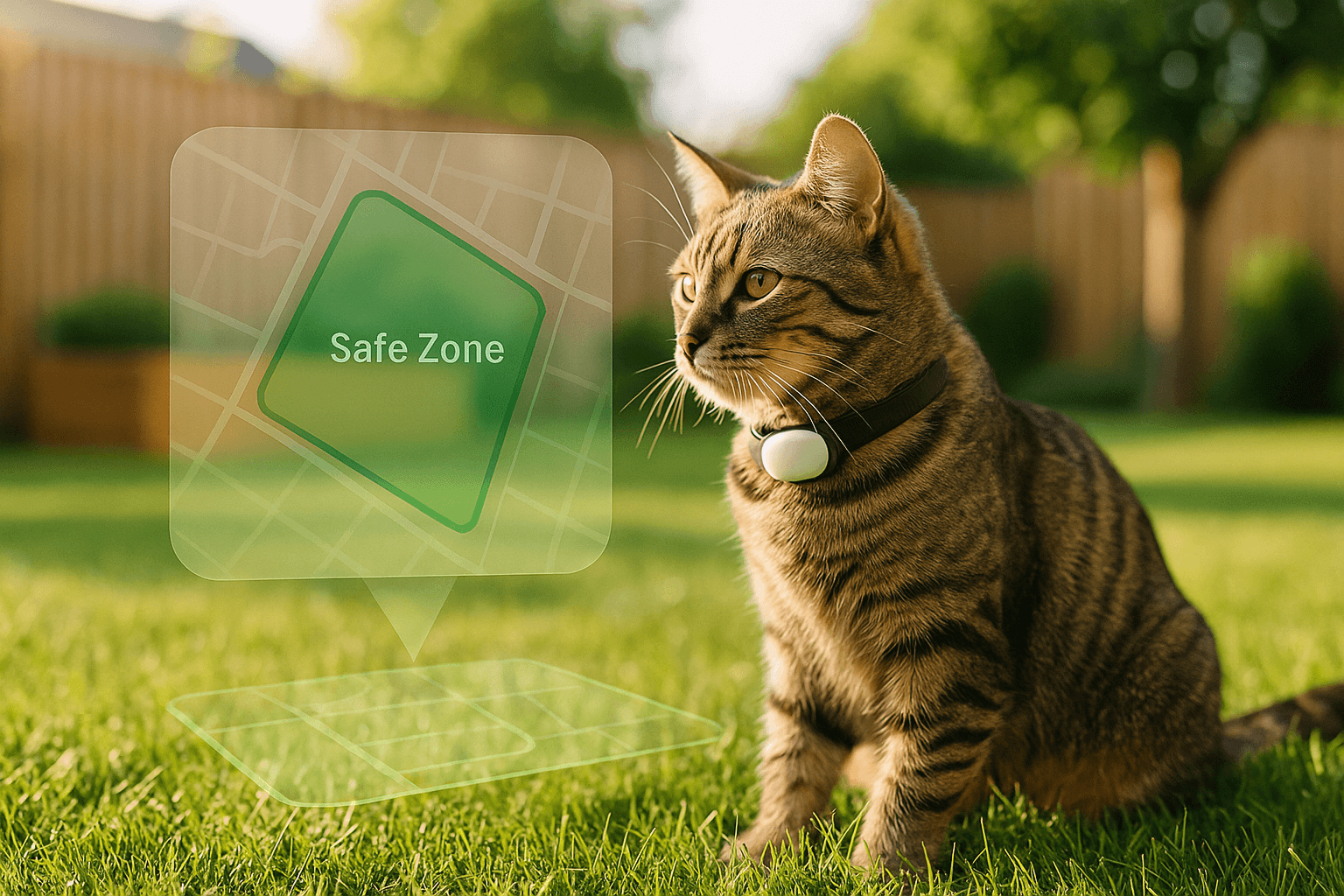
    A virtual fence is a geo-fenced area you draw in the app—your yard, the block, the campground. When your cat’s tracker crosses that line, you get a push alert and a live map with turn-by-turn directions back to your pet. Modern virtual fences for cats 2025 typically include:

    • GPS + LTE (or LTE-M/NB-IoT): wide-area location and dependable alerts.
    • App-based safe zones: draw multiple fences (home, cabin, RV park).
    • Live tracking: refreshes every few seconds so you can intercept early.
    • Activity & wellness logs: steps, rest cycles, routes.
    • Sound/vibration cues (select models): non-aversive guidance to redirect your cat.

    Important: We do not recommend shock-based systems. Cats are sensitive; humane guidance means alerts for humans and at most tone/vibration for redirection. For behavior and welfare, we follow guidance from the AVMA and the Cornell Feline Health Center on humane training, stress reduction, and environmental safety.


    Benefits (and limits) of virtual fences for cats

    Why they help

    • Early warning = fewer emergencies. You’ll know in seconds if your cat slips beyond the yard.
    • Better outdoor enrichment. Cats keep the freedom to explore while you keep the safety net.
    • Data you can act on. See patterns: favorite routes, high-risk zones, time outside.
    • Travel-friendly. At a campsite or a new home, redraw the fence in 30 seconds.

    What they don’t do

    • They don’t physically stop a cat. They warn you (and in some cases offer a gentle cue), but they aren’t a barrier.
    • Battery and signal matter. Dense trees, tall buildings, or dead batteries reduce accuracy.
    • Training is essential. You’ll still need a harness/leash routine and recall practice.

    If you accept these realities, virtual fences for cats 2025 can meaningfully lower risk while supporting healthy exploration.


    How virtual fences work (quick tech explainer)

    • Positioning: GPS + assisted networks (cellular/Wi-Fi/Bluetooth) locate the tracker.
    • Geofencing: You outline “safe zones” in the app (e.g., your backyard).
    • Threshold: If the tracker leaves the polygon, the app fires an out-of-zone alert.
    • Live mode: Switch to high-frequency pings (every 2–3 s) to navigate to your cat.
    • Optional cues: Some devices trigger tone/vibration so your cat associates the boundary with turning back—paired with reward-based training only.

    Vet-informed safety & training (read this before you start)

    • Reward over punishment. Per veterinary guidance (AVMA; Cornell Feline Health Center), use positive reinforcement: treats, praise, or play when your cat responds to a recall cue.
    • Short sessions. Cats learn best in 3–5 minute blocks, 1–2 times/day.
    • Warm-up indoors. Introduce the tracker inside so the collar and beeps aren’t novel outdoors.
    • Leash + harness first. Combine virtual fences for cats 2025 with a smart harness or standard H-harness while you teach recall.
    • No shock. Ever. Choose humane systems; avoid aversive corrections.

    The best Virtual Fences for Cats (2025 tested picks)

    Below are three solid options available on Amazon with proven geofencing. We chose models that balance accuracy, humane features, and US support.

    1) Tractive CAT Mini GPS TrackerBest overall for live tracking + geofences
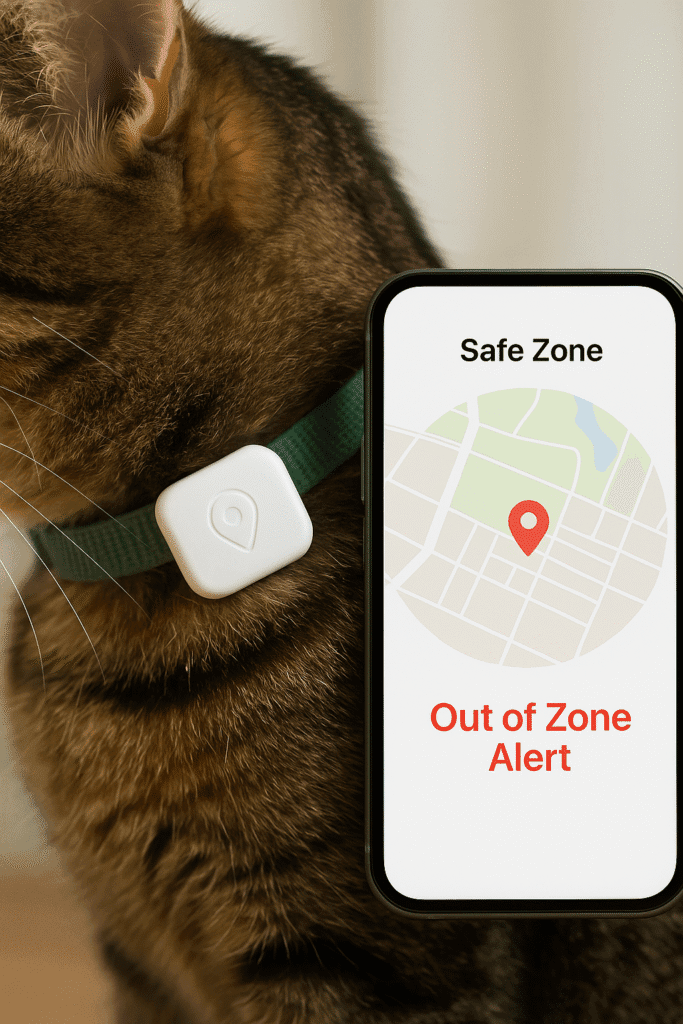
    Tractive CAT Mini with app showing virtual fence alert.

    Why it stands out: A compact, cat-specific tracker with GPS + LTE, robust virtual fence tools, and live location refresh every few seconds. You can set multiple safe zones (home, grandma’s yard, RV park), view location history, and monitor activity. Battery life is typically up to 7 days depending on coverage and how often you use Live Mode.

    What we like

    • Fast, reliable out-of-zone alerts.
    • Clear app with shareable tracking (pet sitters, family).
    • Waterproof, lightweight, comfortable for most adult cats.

    Considerations

    • Requires a subscription for cellular tracking.
    • Performance depends on regional network quality.

    Best for: Most cat households that want dependable virtual fences for cats 2025 without over-complicating setup.
    View Tractive CAT Mini on Amazon → https://amzn.to/4nLYQqv


    2) Halo Collar 3Best for multi-fence setups and humane guidance
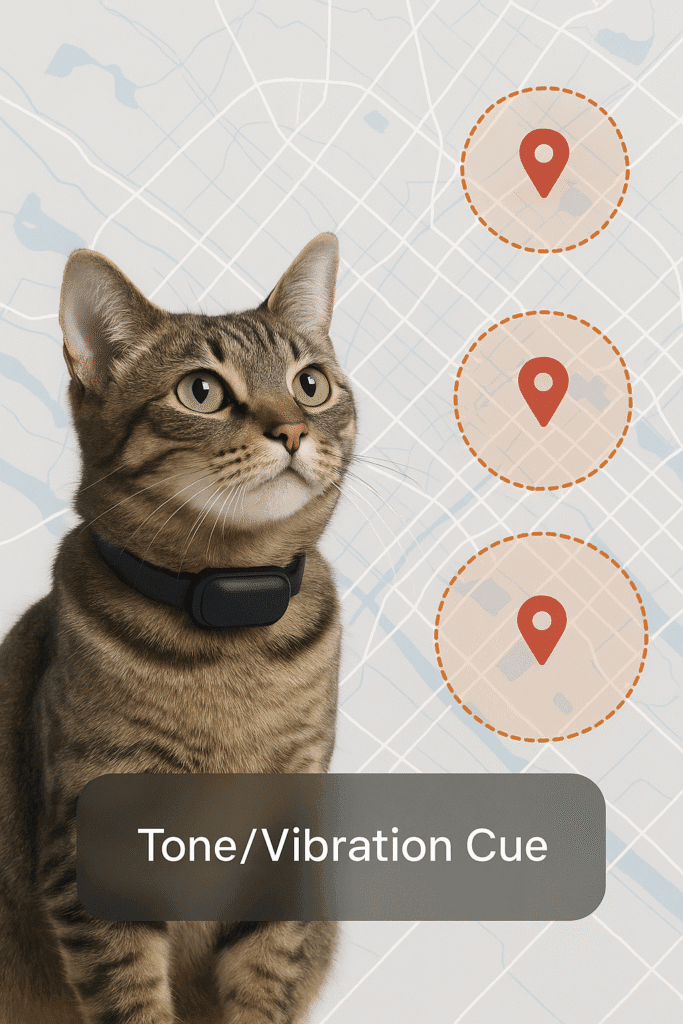
    Halo Collar 3 for cats with tone/vibration cue zones.

    Why it stands out: Combines GPS + cellular with app-based virtual fences and optional tone/vibration cues to help redirect. While historically dog-focused, the latest generation supports small-pet sizing when fitted correctly. You can create 20+ fence zones, add training tones, and review detailed tracking.

    What we like

    • Rich fence management; quick redraw when traveling.
    • Tone/vibration options for gentle boundary cues (no shocks).
    • Solid battery, strong build, and polished training content.

    Considerations

    • Collar size/weight: confirm fit for smaller cats; many owners use it for bigger breeds only.
    • Subscription for premium features; price is higher than tag-style trackers.

    Best for: Confident gear users who want advanced virtual fences for cats 2025 with humane cue options and lots of zones.
    View Halo Collar 3 on Amazon → https://amzn.to/48M3PmH


    3) Pawfit Lite for CatsBest lightweight budget pick with geofence alerts
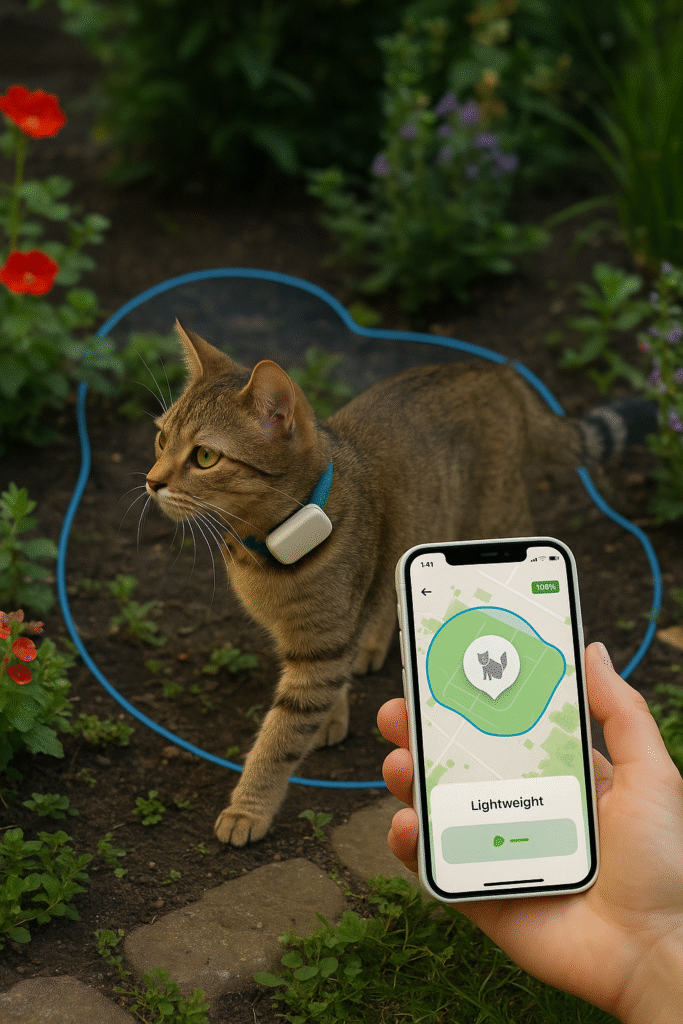
    Pawfit Lite tag with geofence boundary for a small cat.

    Why it stands out: A lightweight tracker aiming squarely at cats and small pets. You get GPS-based virtual fences, voice recall (through the device/app), IP-rated durability, and multi-day battery in a compact tag. It’s an appealing entry point if you need geofencing without a premium price.

    What we like

    • Cat-friendly weight and form factor.
    • Geofence alerts plus simple recall tools.
    • Value pricing on both device and subscription tiers.

    Considerations

    • App polish and accuracy can vary with signal conditions.
    • Fewer “extras” than Halo; not as rapid in live refresh as top-end units.

    Best for: Budget-minded owners who still want practical virtual fences for cats 2025 and a light tag for smaller felines.
    View Pawfit Lite for Cats on Amazon → https://amzn.to/46QMV4X


    How to set up a virtual fence for cats (step-by-step plan)
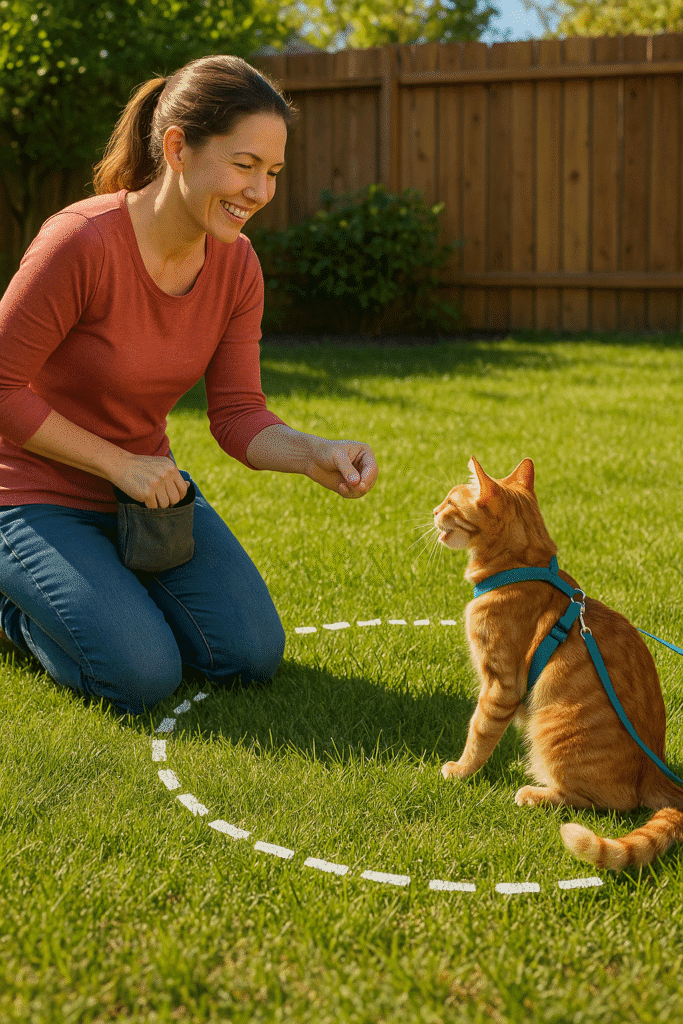
    Reward-based recall training at the edge of a virtual fences for cats 2025.

    Day 0 — Prep

    • Charge the tracker to 100%.
    • Fit collar snug (you should slide two fingers under it).
    • Enable app notifications; add a trusted contact.

    Day 1 — Indoor familiarization

    • Put the tracker on your cat for short indoor sessions (5–10 min).
    • Pair a neutral attention sound (kissy noise or clicker) with a treat.

    Day 2 — Harness + backyard boundary (leashed)

    • Walk the boundary on a leash/harness.
    • When the app pings for “near boundary,” say your recall word, guide back, reward.

    Day 3 — Short off-leash trial (supervised)

    • In a quiet time, allow 5–10 min off-leash in the yard.
    • If an out-of-zone alert fires, use Live Mode, recall, reward, finish.

    Day 4–7 — Expand and repeat

    • Add a second safe zone (front yard or neighbor’s lawn with permission).
    • Keep sessions short and positive.
    • Log patterns (heat, traffic, wildlife) and adjust fence shape.

    Travel tip: At a new location, set a temporary fence before you open the carrier. Do a 2-minute leashed perimeter walk so your cat understands the new edges.


    Troubleshooting & pro tips

    • False alerts near edges? Expand the fence 5–10 feet beyond the true boundary to allow GPS drift.
    • Battery drain? Live Mode eats battery—use it only when needed, then switch back.
    • Cat slipping collar? Try a breakaway collar with a secure fit or a cat harness designed for GPS tags.
    • Dense trees/buildings? Expect occasional jumps; prioritize trackers with LTE assist and Wi-Fi sniffing for urban accuracy.
    • Anxious cats? Start with 2–3 minute outdoor sessions; pair every recall with a high-value reward (lickable treat or a favorite toy chaser).

    Ethics, privacy & data

    • No shock. We repeat it because it matters. Humane systems use alerts for humans and optionally tone/vibration—never pain.
    • Data stewardship. Use unique passwords, enable two-factor authentication, and review app data settings.
    • Respect wildlife & neighbors. Virtual fences for cats 2025 should reduce nuisance roaming; be proactive and courteous.

    For health or anxiety concerns, consult your veterinarian; the AVMA and Cornell Feline Health Center publish excellent guidance on feline behavior, stress reduction, and safe outdoor enrichment.


    FAQs — Virtual Fences for Cats 2025

    Do virtual fences actually keep my cat in the yard?
    They notify you the instant your cat leaves; they don’t physically stop a cat. Think “early-warning system” + training + supervision.

    Are they safe?
    Yes, when used with humane settings (alerts + tone/vibration only) and positive reinforcement. Avoid shock.

    Indoor-only cats: worth it?
    If your cat is strictly indoors, you probably don’t need geofences. However, a tracker helps in escape scenarios or when traveling.

    What about battery life?
    Most cat trackers last 3–10 days depending on refresh rate and signal. Build charging into your routine.

    Can I create multiple fences?
    Yes—many systems let you save several zones (home, friend’s place, vacation rental).


    The bottom line

    Virtual fences for cats 2025 won’t replace good supervision—but they dramatically improve your response time and confidence. Start with a reliable GPS tracker, pair it with a humane training plan, and keep outdoor time enriching and safe. Our current favorites:

    Ready to set a safe zone?
    Check today’s prices on Amazon and pick the tracker that fits your routine.


    Internal interlinks

    Authoritative references (add outbound links)

  • Smart Outdoor Safety for Cats: How Tech Makes Every Adventure Safer 🧭

    Smart Outdoor Safety for Cats: How Tech Makes Every Adventure Safer 🧭

    Letting your cat explore the world beyond your front door is exciting, but it also introduces unfamiliar variables: cars, predators, toxic plants, heat, and noise. The good news is that modern pet technology turns uncertainty into control. With GPS trackers, AI-enhanced harnesses, smart carriers, and real-time monitoring, you can design outdoor time that is genuinely safe, enriching, and predictable for your cat. In this guide, we lay out a complete blueprint — smart outdoor cat safety.

    Why a Tech-First Approach Works

    Outdoor enrichment supports mental health and reduces boredom, but unmanaged risk can erase those benefits. A tech-first approach gives you objective signals: location, temperature, hydration, and activity trends. With that information, you can intervene before a problem escalates—cutting short a walk if the heat index spikes, finding a cat that slipped a fence, or recognizing early fatigue after a long hike. Authoritative resources like the AVMA and the Cornell Feline Health Center emphasize supervised exploration, identification, and preparation. Outdoor enrichment, done thoughtfully, can be part of a healthy routine when paired with the right tools and training. Outdoor enrichment supports mental health — smart outdoor cat safety.

    GPS Trackers: Non-Negotiable for Outdoor Time

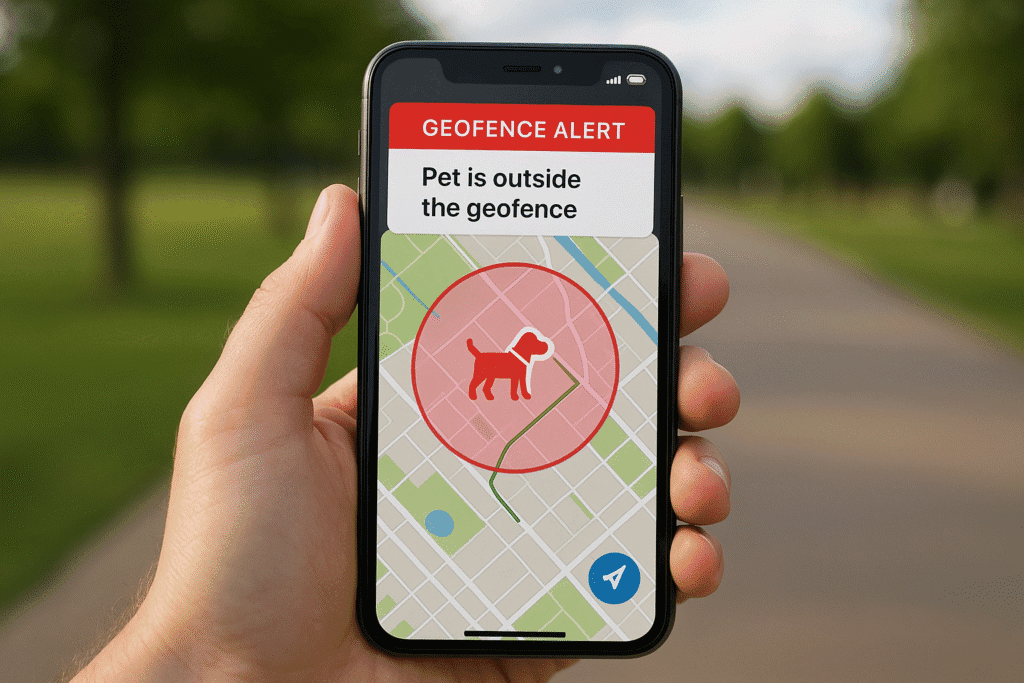
    Live pet-tracking app showing location and geofence alert.

    A lightweight GPS tracker is the foundation of any safe outing. The best devices deliver minute-by-minute location updates, escape-zone alerts, and route history. Crucially, they also reveal context—how fast your cat is moving, where they tend to stop, and whether their activity aligns with their baseline. Look for:

    • Real-time precision with reliable cellular coverage and fallback locating.
    • Virtual fences that ping you the second a boundary is crossed.
    • Activity & wellness data (rest, calories, steps) to spot overexertion.
    • Battery life measured in days, not hours, and water resistance for rain or dew.

    If you already own a tracker for indoor monitoring, verify outdoor accuracy in your neighborhood before heading to trails. Test recall: place your cat with a safe handler, step out of sight, and confirm the app’s live location and alert timings. A lightweight GPS tracker is the foundation — smart outdoor cat safety.

    Smart Harnesses: Fit, Feedback, and Visibility

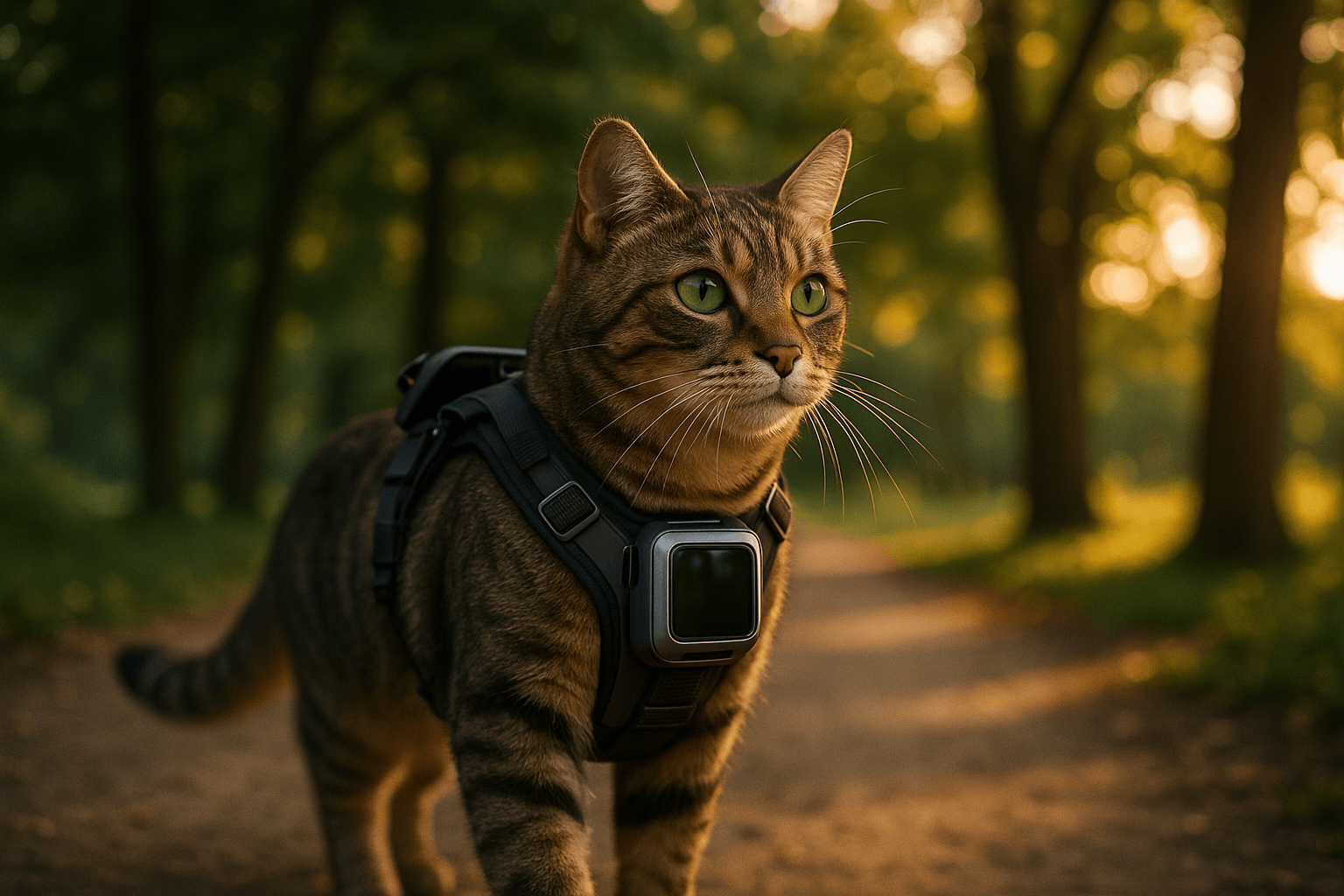
    Smart cat harness with reflective elements and secure buckles.

    A good harness prevents escapes; a smart harness adds information. Newer models distribute pressure across the chest to avoid choking, integrate reflective materials for dusk walks, and pair with apps to flag stress-related movement (rapid head turns, crouching, tail tucking). What to prioritize:

    • Escape-resistant design (Y-shaped front, secure belly strap, double buckles).
    • Adjustability at neck and girth to accommodate seasonal weight changes.
    • High-visibility elements or clip-on beacons for night routes.
    • Sensor integration, from inertial units to BLE modules, when available.

    Practice indoors first: three 5-minute sessions a day for a week. Reward calm standing, then short steps, then longer corridors. Do not attach a leash until your cat reliably accepts the harness without bunny-kicking or freezing. A good harness prevents escapes — smart outdoor cat safety.

    Smart Carriers and Travel Systems

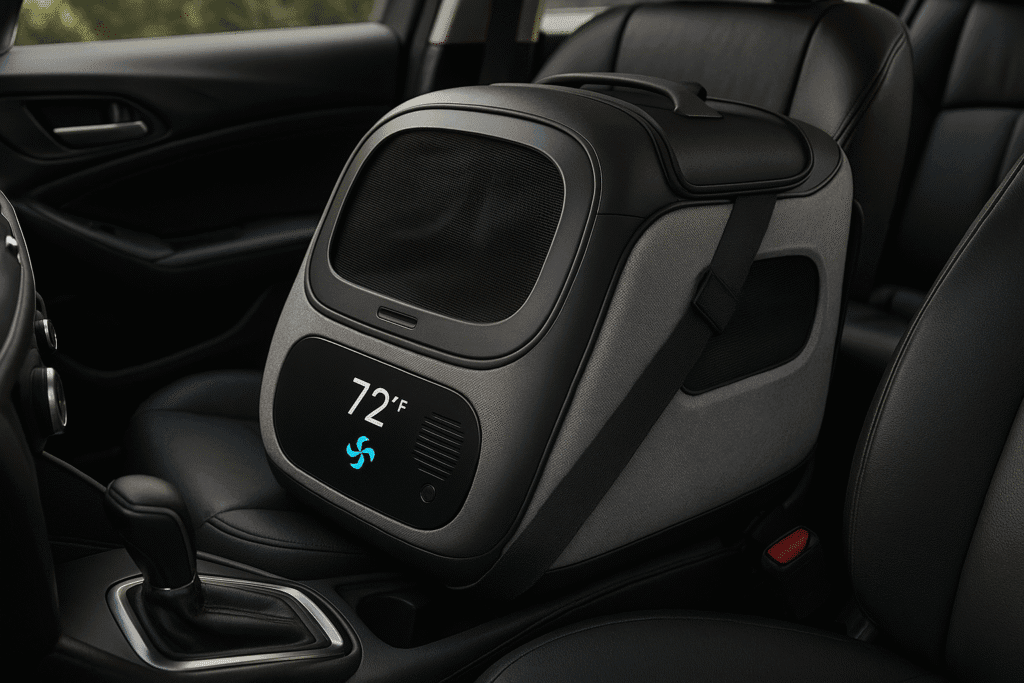
    Smart pet carrier with climate readouts secured on a car seat.

    For car or public transport, a well-ventilated, crash-tested carrier is essential. Smart carriers go further with temperature, humidity, and air-quality sensors you can check from your phone. Many include adjustable fans, UV-blocking panels, and interior lights for low-stress checks in dim parking garages.

    Checklist:

    • Rigid frame or verified crash protection.
    • Sensor readouts for internal climate.
    • Secure seat-belt anchors and zipper locks.
    • USB pass-through to power trackers or fans on long trips.

    Pair the carrier with a non-spill water bowl and a cooling mat in warm months. In winter, use an insulating pad and pre-warm the car to avoid cold shock. For car or public transport — smart outdoor cat safety.

    Portable Cameras and Live Monitoring

    Pocket-sized action cams can clip to a harness or mount on a chest plate, while compact Wi-Fi cameras can ride inside the carrier. They are not about “surveillance” so much as behavior translation: reviewing footage reveals what startled your cat, where they felt most comfortable, and how they signaled fatigue. Over time, you’ll build a route library—quiet streets at noon, shaded paths at 5 p.m.—that minimizes triggers. Pocket-sized action cams — smart outdoor cat safety.

    Heat, Hydration, and Environmental Sensors

    Heatstroke and dehydration are the most common preventable outdoor emergencies. Wearables that flag elevated body temperature or sudden lethargy give you minutes of head start. Combine that with a collapsible bottle-and-bowl system and scheduled water breaks every 15–20 minutes in warm weather. If your route lacks shade, plan micro-stops under trees and avoid dark pavement that radiates stored heat. Heatstroke and dehydration — smart outdoor cat safety.

    Add an air-quality and pollen check to your pre-walk routine. High particulate loads or grass surges can irritate airways, especially in brachycephalic cats. Consider paw balm for hot sidewalks and rinse paws after winter salt exposure.

    Training for Calm, Confident Exploration

    Technology is a support, not a substitute, for training. Use a shaping plan:

    1. Harness neutrality indoors (no treats needed to tolerate it).
    2. Leash introduction with gentle, slack handling—never drag.
    3. Door thresholds: pause, look, treat; teach patience at exits.
    4. Short yard sessions (<5 minutes), building to sidewalk loops.
    5. Recovery rituals: water, grooming, and a calm hideaway on return.

    Mark progress in your tracking app. If a session yields more startle events than the previous week, shorten the next outing and add decompression play at home. Technology is a support — smart outdoor cat safety.

    Route and Risk Planning

    Before each session, do a 60-second check:

    • Forecast and UV index; skip mid-day heat.
    • Traffic and construction noise on your intended route.
    • Dog walking hours in your park (ask regulars or rangers).
    • Wildlife reports (raccoons, coyotes) and local leash rules.

    Create two route templates: “confidence walks” (predictable, quiet) and “novelty walks” (new sights with low risk). Before each session — smart outdoor cat safety.

    Turn Device Data into Safer Habits

    Your apps are collecting gold: peaks in activity, typical rest points, the minute of the day your cat tends to spook. Translate those patterns into decisions.

    • If heat alerts cluster after 20 minutes, cap sessions at 15 and add shade breaks.
    • If escapes happen at gates, build a “sit and watch” routine at every threshold.
    • If night walks produce fewer startles, shift your schedule and add reflective gear.

    Periodic reviews also surface gear tweaks: a different harness cut, a lighter camera, or a battery pack for trips that run long. Your apps are collecting gold — smart outdoor cat safety.

    Recommended Gear Framework (Build Your Kit)

    • GPS tracker with live tracking and safe zones.
    • Smart harness with reflective elements and secure buckles.
    • Leash (4–6 ft) with a bit of shock absorption.
    • Smart carrier with climate sensors for car rides.
    • Hydration kit (collapsible bottle + bowl).
    • Clip-on light for twilight visibility.

    Buy once, cry never: prioritize reliability, service support, and replaceable parts over cosmetic features. Buy once, cry never — smart outdoor cat safety.

    Affiliate Picks

    Choose vendors you trust and keep firmware updated; new releases routinely improve accuracy and battery life. Choose vendors you trust — smart outdoor cat safety.

    Pre-Adventure Checklist (Save This)

    • Battery levels: tracker, phone, beacons, fans.
    • Fit check: two-finger rule at neck and girth, buckles locked.
    • Weather logic: shade plan, water schedule, paw-pad safety.
    • ID and microchip registered with current contact info.
    • Route options A/B if noise or dogs appear.
    • Post-walk recovery: cool water, wipe paws, quiet space.

    Battery levels — smart outdoor cat safety.

    FAQ

    Is outdoor time safe for every cat?
    Not always. Very anxious cats, those with cardiac or respiratory disease, or cats in extreme climates may be better served by enclosed patios (catios) and stroller exploration. Speak with your veterinarian before starting. Not always. Very anxious cats — smart outdoor cat safety.

    Do I still need ID if I have a tracker?
    Yes. Collars with tags and a registered microchip backstop technology failures and help neighbors return your cat quickly if they find them.

    Conclusion: Freedom, But Make It Planned

    You do not need to choose between enrichment and safety. With deliberate training, thoughtful routes, and trustworthy devices, outdoor exploration becomes a predictable, restorative routine. Start small, log your data, and keep iterating—your cat will tell you, in posture and pace, when the plan is working. You do not need to choose — smart outdoor cat safety.

    As you iterate, keep a simple note in your app: smart outdoor cat safety is a habit, not a one-time setup.


    Authoritative Resources (Outbound)

    • Cornell Feline Health Center — enrichment, stress reduction, environmental risks.
    • AVMA — travel checklists, restraint advice, heat safety for pets.
    • ASPCA — toxic plants database for yards and walking routes.
      Use these alongside your veterinarian’s advice, especially for medical conditions or extreme climates.

    Internal Links to Explore Next (Build Topic Authority)

    Ready to Gear Up?

    Start with one reliable tracker and a harness your cat actually enjoys wearing. Add a climate-aware carrier if you travel by car or transit. When you’re ready, review our curated picks and compare prices across Amazon, PETKIT, and Whisker to support your preferred vendor.

    Affiliate Disclaimer
    This article contains affiliate links. PetTech AI may earn a commission from Amazon, Whisker, and PETKIT at no extra cost to you. We only recommend products we would use with our own cats. Our selections support smart outdoor cat safety across devices and scenarios.