Most people searching CATLINK vs PETKIT are not really asking which brand has more products.
They are asking which ecosystem becomes less annoying after the first week.
That is the real decision. Not app screenshots. Not spec inflation. Not whichever product page sounds more “AI-powered.”
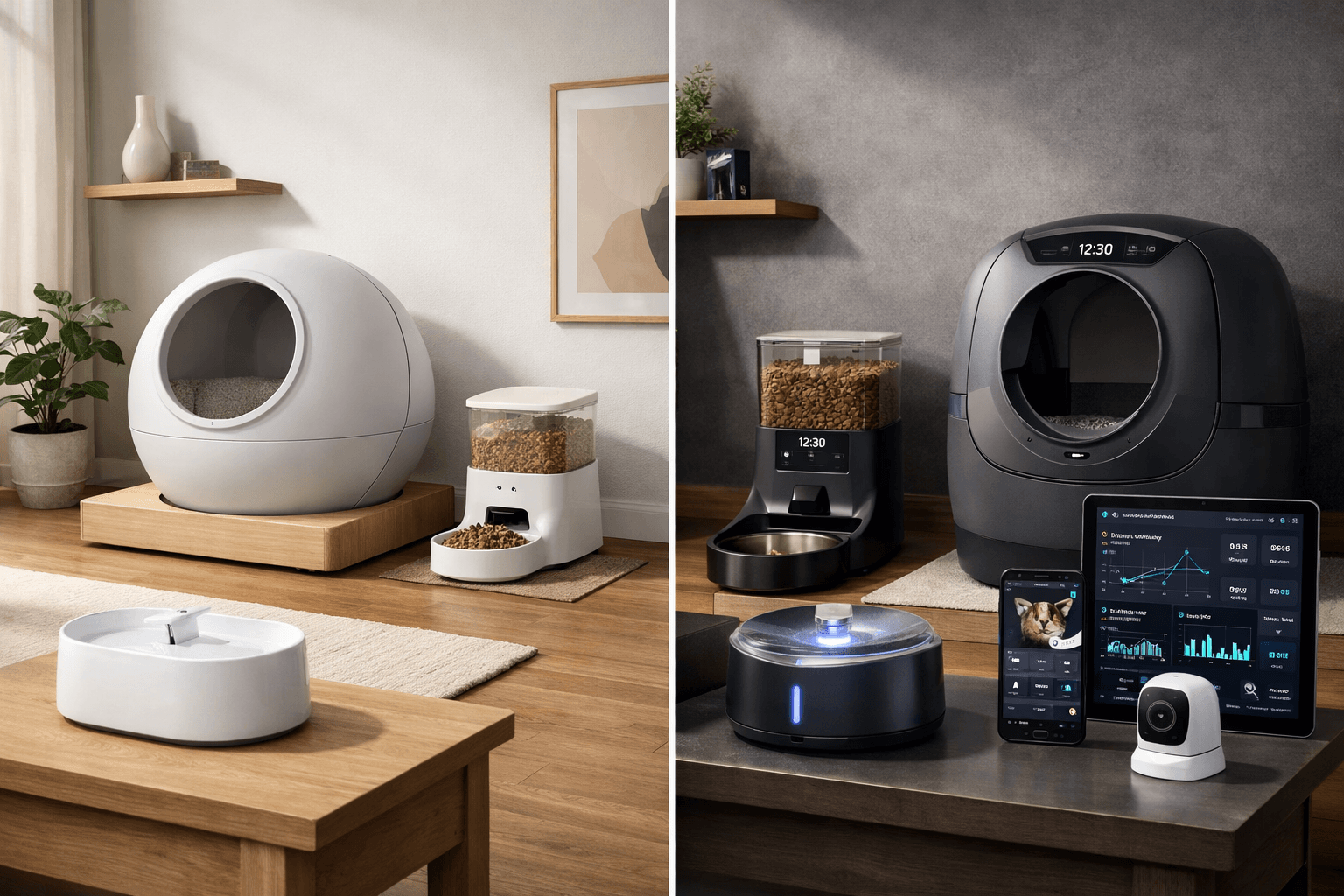
Both brands now operate as full smart pet ecosystems, not single-product brands. PETKIT runs a connected lineup across litter boxes, feeders, fountains, and app-based monitoring, while CATLINK does the same but leans harder into health-tracking language, multi-cat identification, and higher-control automation logic.
That means this is not a brand-loyalty decision. It is a friction decision.
Choose the system that matches how you actually live with cat tech, and both brands can make sense. Choose the wrong one, and the “smarter” ecosystem becomes the one you resent faster.
What you’re actually choosing
At a distance, CATLINK and PETKIT look like direct substitutes.
They are not.
PETKIT’s ecosystem is built around connected daily care. Its app messaging emphasizes unified device management, and its current product family clearly spans self-cleaning litter boxes, feeders, and fountains under one management layer. PETKIT’s newer feeder products also lean heavily into camera-led monitoring and remote interaction.
CATLINK’s ecosystem feels more control-heavy. Its app explicitly promotes remote management for litter box, feeder, and fountain, while also framing itself around toileting behavior analysis, weight trends, frequency tracking, and multi-cat insight. CATLINK’s current lineup also shows stronger emphasis on identity-aware and camera-enabled litter box variants.
So the choice is cleaner than it looks:
PETKIT is usually the better fit when you want a broader smart-care system that feels more lifestyle-oriented and modular.
CATLINK is usually the better fit when you want a more control-heavy system that behaves like a monitoring layer as much as a convenience layer.
PETKIT: better when you want the ecosystem to feel lighter
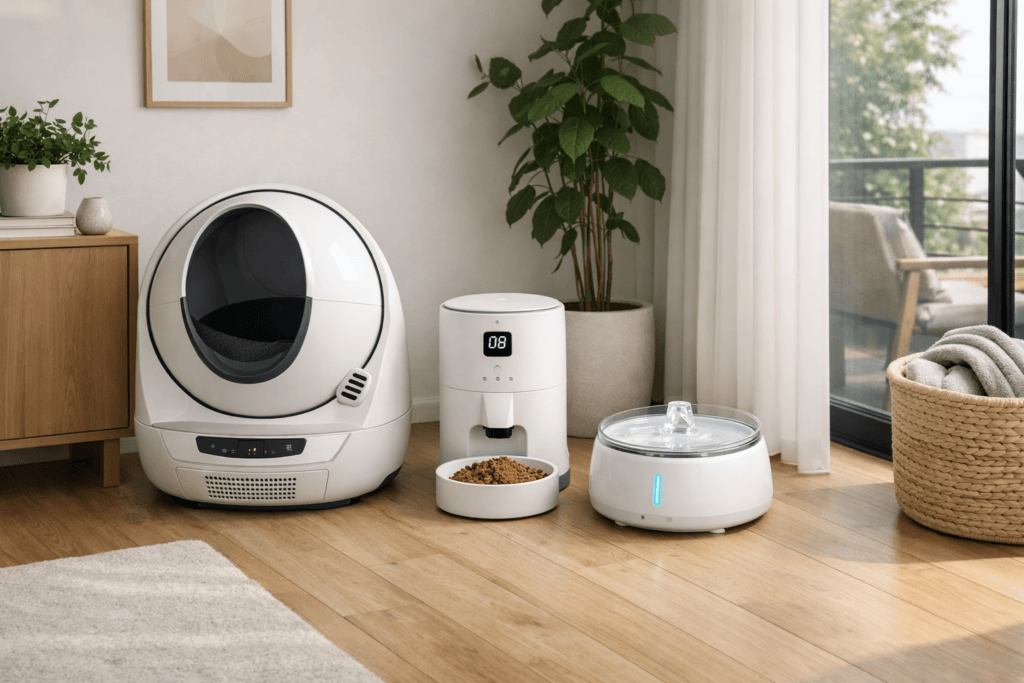
PETKIT’s biggest strength is that its ecosystem reads like a connected pet-care environment rather than a single-purpose hardware stack.
Its official app language is simple: manage all PETKIT devices in one place. The broader storefront reinforces that positioning by spanning litter boxes, feeders, and fountains, while the feeder lineup in particular shows PETKIT pushing camera-based interaction and remote oversight more aggressively than before.
That matters because many buyers do not actually want a “health analytics platform.” They want:
- easier feeding,
- easier cleaning,
- fewer routine interruptions,
- and one app that does not feel like work.
PETKIT is often stronger when the goal is exactly that. The brand’s ecosystem is broad enough to feel complete, but it does not market itself with the same heavy diagnostic tone CATLINK increasingly uses.
That is also PETKIT’s weakness.
If your real problem is multi-cat differentiation, behavior monitoring, or tighter cat-by-cat insight, PETKIT can start to feel less decisive. It has plenty of smart capability, but the brand reads more like “connected care convenience” than “precision household control.” That distinction matters much more in real life than most comparison pages admit.
CATLINK: better when you want the system to tell you more
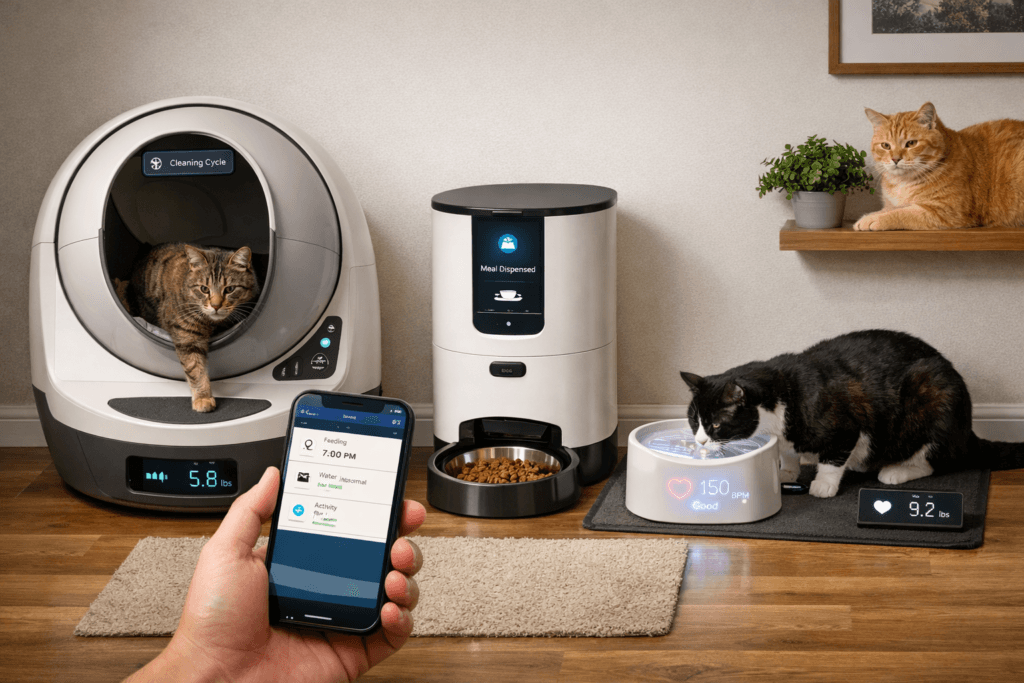
CATLINK’s ecosystem is more explicit about what it wants to be.
Its app page does not just sell remote control. It sells analysis: toileting behavior, weight trends, frequency, manual control, schedules, and health-oriented alerts. The product lineup backs that up with litter box messaging focused on multi-cat identify, odor guard, and camera-enabled monitoring on certain models.
That gives CATLINK a real advantage in specific homes:
- multi-cat households,
- owners who want more individualized insight,
- people who care about usage patterns, not just automation,
- buyers who are willing to tolerate more system “presence” in exchange for more visibility.
This is where CATLINK becomes easier to buy for the right reason.
But it also becomes easier to overbuy.
A lot of homes do not need a pet ecosystem that feels like a lightweight analytics platform. They need fewer chores and a stable routine. In those homes, CATLINK’s strengths can become extra cognitive load rather than genuine value.
The real difference is not features. It is tolerance.
This is the part most affiliate articles miss because it is harder to reduce to bullets.
PETKIT and CATLINK do not just compete on hardware. They compete on how much system-awareness you want in your home.
PETKIT generally makes more sense if your tolerance for smart pet tech is moderate. You want the benefits, but you do not want the ecosystem to dominate the experience. One app, connected products, remote control, some monitoring, cleaner routines. That is the pitch.
CATLINK makes more sense if your tolerance is higher. You are more willing to manage a system that does more, tells you more, and sometimes demands more attention in return. That trade-off is worth it only if the household complexity is real.
This is why the same buyer can love one ecosystem and regret the other without either brand being “bad.”
Where buyer regret actually comes from
Buyer regret with PETKIT usually comes from expecting more precision than the ecosystem is really built around.
The brand is good at making connected care feel attractive. But if the household problem is truly about differentiation between cats, tighter monitoring, or higher-control workflows, PETKIT can end up feeling softer than expected. The system is smart, but not always pointed in the most control-heavy direction.
Buyer regret with CATLINK usually comes from the opposite error.
People buy it because it sounds more advanced, more diagnostic, more complete. Then they realize their actual household did not need that much system logic in the first place. If your real goal was just cleaner routines and app-based control, the extra ecosystem intensity can feel like complexity you never asked for.
That is the whole comparison in one sentence:
PETKIT is easier to underbuy for control. CATLINK is easier to overbuy for complexity.
Which one makes more sense by use case
In smaller homes or simpler routines, PETKIT usually makes more sense. The ecosystem is broad, app-connected, and modern without leaning as hard into “health guardian” positioning. That tends to create less friction for buyers who just want the home to run more smoothly.
In multi-cat homes, CATLINK becomes more compelling. Its own product and app messaging are much more explicit about multi-cat identify, behavior tracking, weight trends, and health-oriented monitoring. That is not branding fluff. It is a different ecosystem philosophy.
For owners who travel often and want remote reassurance, PETKIT has become more interesting because its feeder line now leans hard into camera-led remote interaction. That can be more emotionally useful than raw analytics for some buyers.
For owners who want the system to tell them more about what is happening rather than simply automate chores, CATLINK is the stronger fit.
Decision matrix
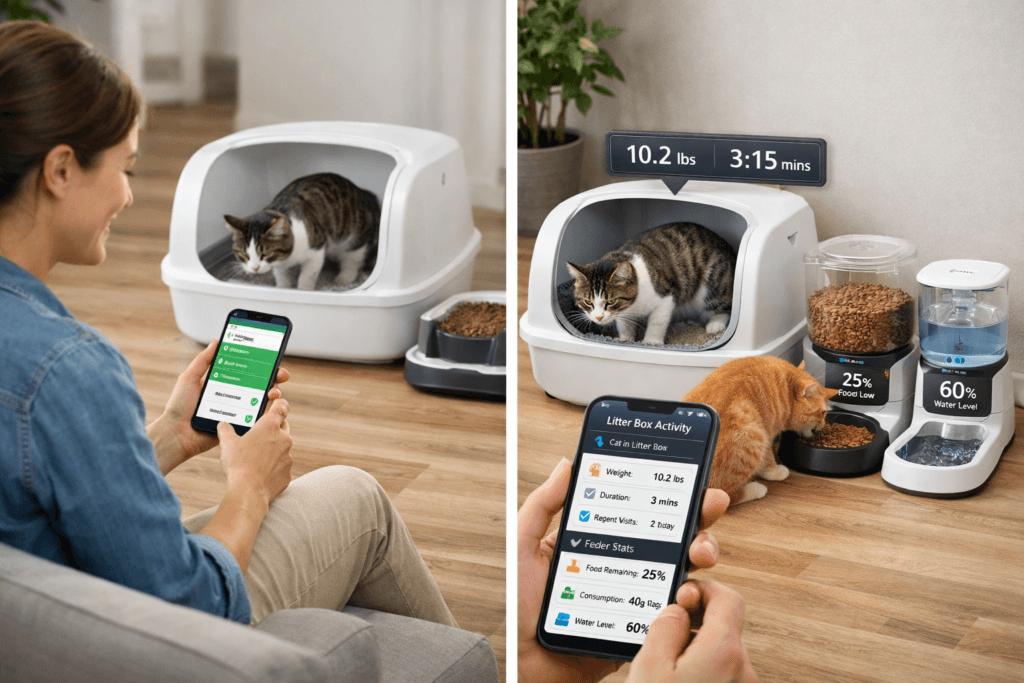
Choose PETKIT if the priority is a connected but lower-friction smart-care ecosystem. It is usually the better fit for buyers who want litter, feeding, and hydration products living inside one app without the whole system feeling excessively clinical or control-heavy.
Choose CATLINK if the priority is monitoring depth, multi-cat handling, and stronger cat-by-cat behavioral visibility. It is often the more rational choice when the household complexity is real enough to justify that extra system intensity.
Choose PETKIT if you value convenience and modularity more than tight control.
Choose CATLINK if you value insight and differentiation more than simplicity.
Final verdict
Choose PETKIT if you want the ecosystem that is easier to live with for most homes.
That is the safer recommendation because most buyers are not actually trying to build a higher-control pet-monitoring stack. They want a smart litter box, a smart feeder, a smart fountain, and one app that makes those things easier to manage. PETKIT fits that use case well.
Choose CATLINK if your household is complex enough that added control is the point.
That means multi-cat dynamics, higher sensitivity to health-pattern tracking, or a genuine need for more individualized system behavior. In that use case, CATLINK’s ecosystem philosophy is more coherent and more useful.
Most comparison articles frame this as “which smart ecosystem is better.”
That is the wrong question.
The right question is which ecosystem becomes less irritating once you stop being impressed by the features.
For readers comparing PETKIT and Whisker directly at ecosystem level, the sharper next internal read is PETKIT vs Litter-Robot Ecosystem (2026): What Actually Works Better.
If your real decision is inside feeding rather than litter tech, the cleaner next read is PETKIT vs Feeder-Robot vs CATLINK: Which Smart Feeding System Actually Works?
References
- PETKIT app page and official ecosystem pages.
- CATLINK app page and official ecosystem pages.
Disclosure
PetTech AI may earn a commission when readers buy through affiliate links. That does not change how products are framed or compared. Comparisons are built around real purchase logic, long-term friction, and ecosystem fit rather than feature inflation or brand loyalty. Smart pet products are easy to overbuy because brands make every workflow sound essential. In practice, the right ecosystem is usually the one that solves your actual household problem with the least complexity. Product lineups, app features, pricing, and availability can change over time, so always verify current details directly with the manufacturer before buying.