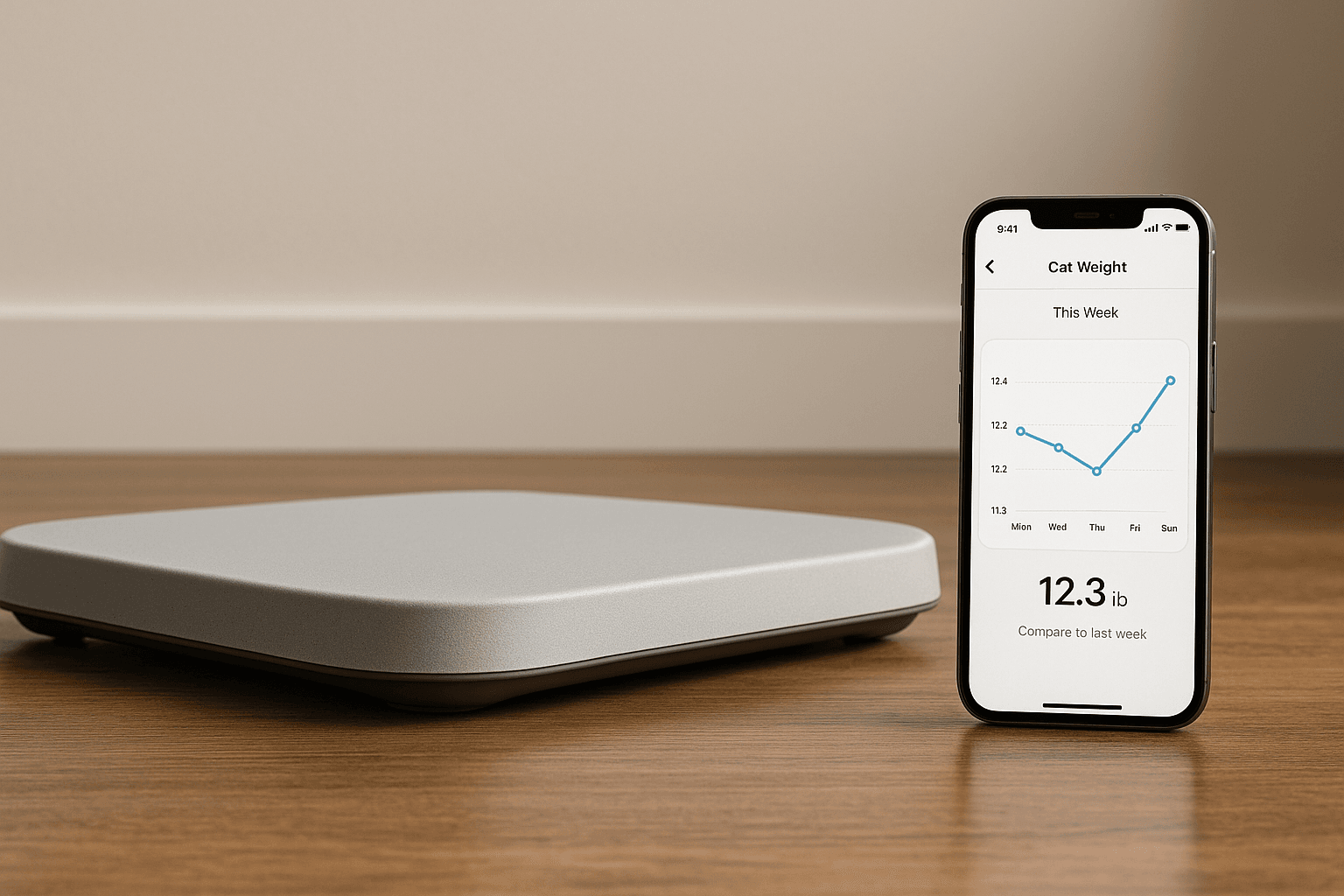
Smart cat weight scales 2025 aren’t just bathroom scales in pet clothing—they’re the backbone of early health detection. Whether you choose a standalone scale or a litter box with integrated weighing, consistent data lets you flag gradual loss, sudden gain, or subtle changes tied to hydration, GI issues, or endocrine disease. This guide compares the best approaches, what data really matters, and how to use it with your veterinarian.
Why Weight Trends Matter (More Than Single Readings)
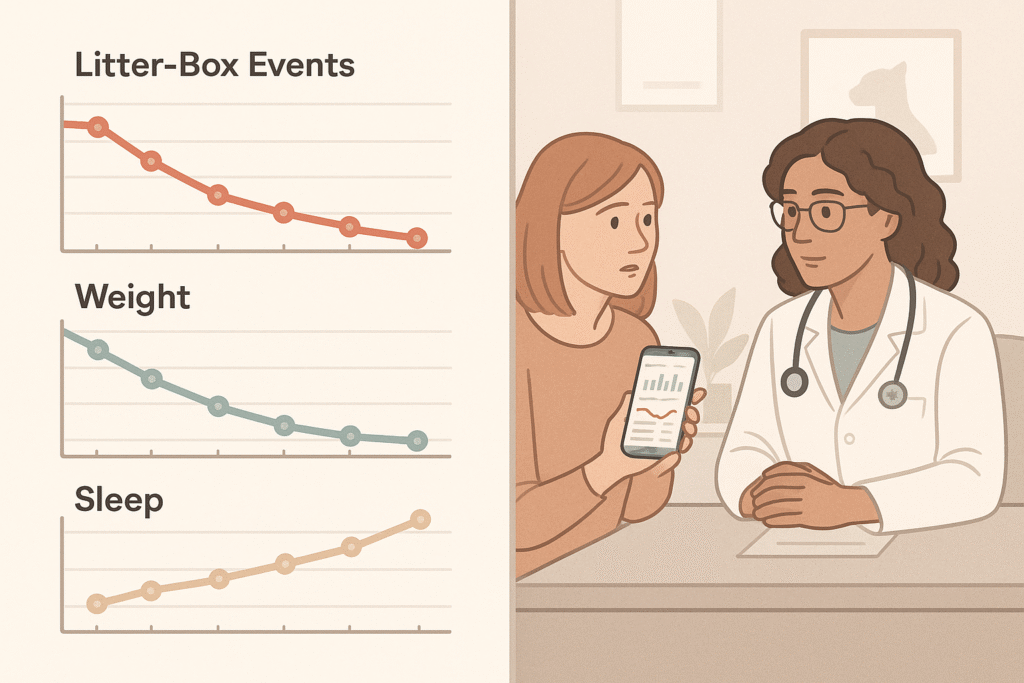
Cats hide discomfort. Small, sustained drifts in weight often precede visible illness. Litter-box changes (frequency, straining, painful urination) can also signal medical problems, and cats may avoid the box if they associate it with pain. Cornell summarizes this clearly: medical issues commonly drive litter-box problems, including painful and more frequent urination. vet.cornell.edu Regular checkups remain essential—guidelines indicate at least annual wellness exams, with more frequent visits based on age and risk. avma.org
Key idea: use smart cat weight scales 2025 to establish a baseline and watch the trend, then bring charts to the vet.
The Two Paths: Standalone Scales vs. Built-In Litter-Box Scales
1) Standalone “Platform” Scales (Bluetooth/App)
Standalone pet scales give you deliberate, repeatable weigh-ins you can schedule (e.g., weekly). Models like Healthy Pet Connect’s Smart Pet Body Weight Scale pair via Bluetooth to log readings up to 20 kg with a low, stable platform. You’ll also find “baby/pet” smart scales with companion apps (example: GROWNSY) that track trends across time. amazon.com
Pros
- Controlled, repeatable environment; easy to verify accuracy
- Works with any litter setup; no ecosystem lock-in
- Useful when you need frequent weigh-ins (e.g., diet, recovery)
Cons
- Manual routine (you must place the cat)
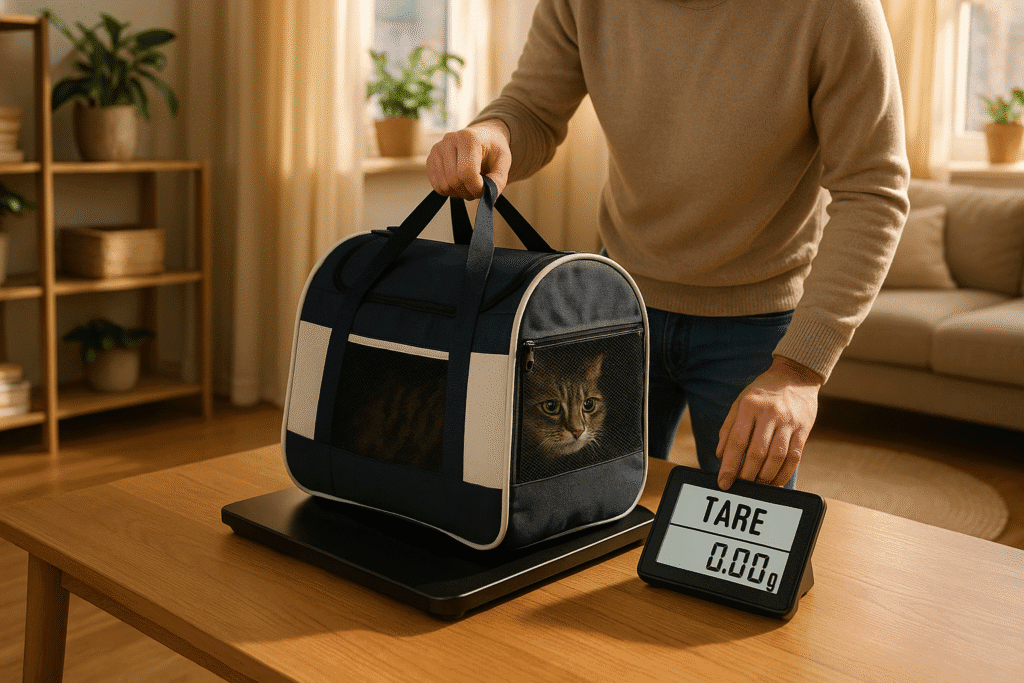
- Some cats resist standing still—use a carrier or weigh-subtract method
Who should start here: owners focused on pure weight accuracy and multi-cat homes that want per-cat logs without changing litter boxes.
2) Built-In Scales Inside Smart Litter Boxes
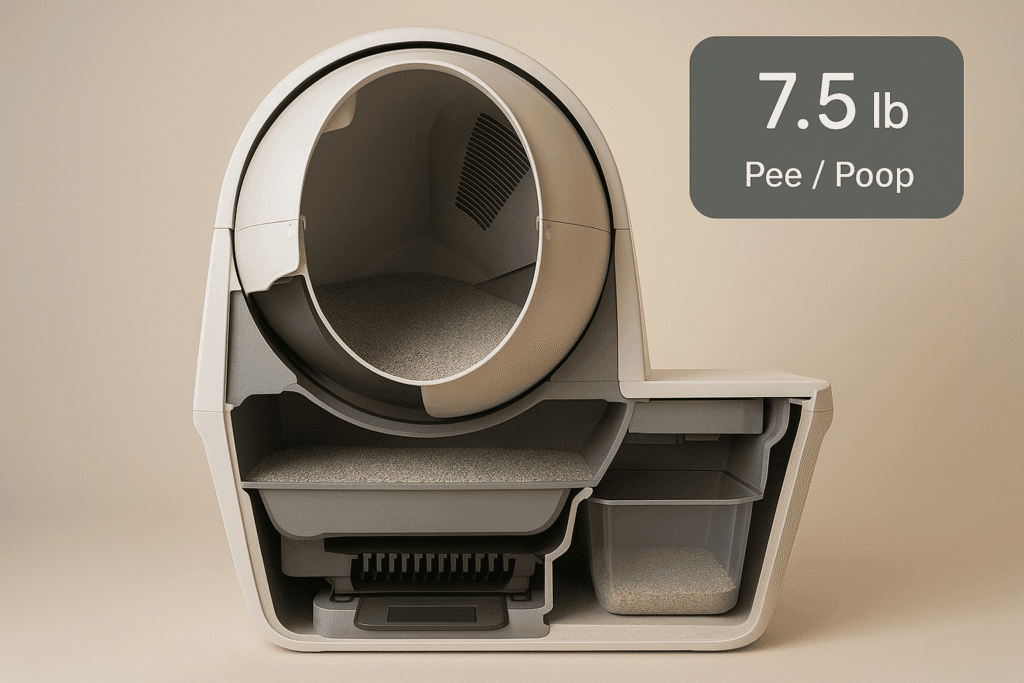
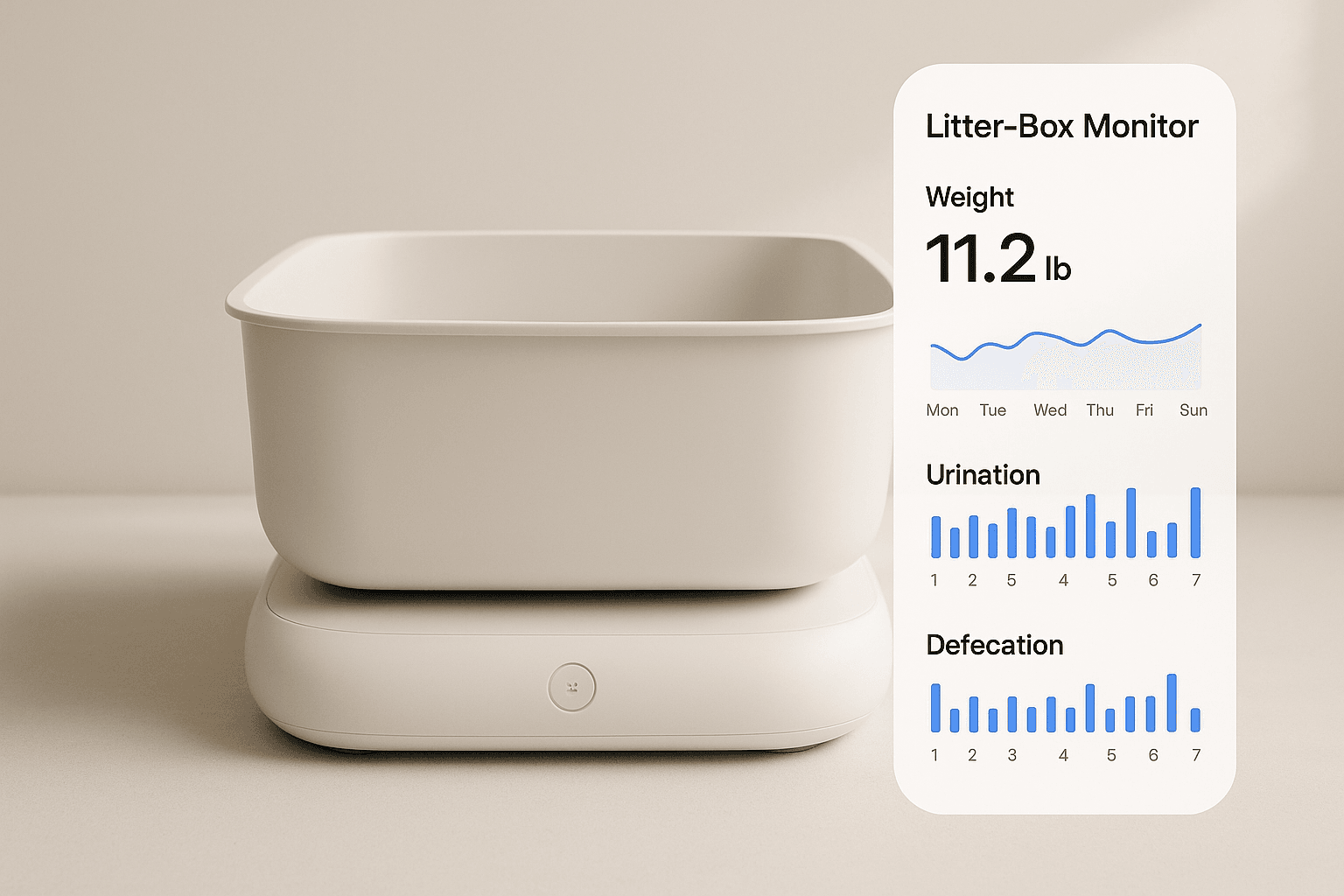
Modern litter robots weigh the cat every visit and combine that with AI event detection. The Purina Petivity Smart Litter Box Monitor (a scale placed under your existing box) tracks weight plus urination/defecation events and sends AI alerts when patterns deviate (Check on Amazon). The PETKIT Pura Max 2 adds per-cat usage, weight trends, and notifications for potential urinary issues (PETKIT / Amazon) CATLINK’s 2025 Ultra models layer in AI camera features on top of health monitoring and 5 GHz connectivity. (Amazon)
Pros
- Automatic, high-frequency data (every litter visit)
- Behavior context (frequency, duration, pee/poop classification with some systems)
- Great for trend detection across weeks/months
Cons
- Ecosystem commitment; features vary by exact SKU
- Requires steady placement and calibration discipline
- Some cats need acclimation time to enclosed drums
Who should start here: busy households that want passive, high-resolution trends or already shopping for a self-cleaning box.
What to Look For in Smart Cat Weight Scales 2025
- Accuracy & Resolution: Aim for ±10–20 g resolution if listed; if not, verify consistency with repeat tests.
- Per-Cat Differentiation: Multi-cat homes need profiles; systems like Petivity learn patterns over time.
- Data Access: App charts, CSV/PDF export, monthly reports (Petivity emails summaries).
- Health Context: Visit type (urination/defecation), frequency, and time-of-day add meaning to weight trends.
- Support & Updates: Check firmware/app cadence, Wi-Fi stability (5 GHz on newer CATLINK), and warranty (PETKIT Pura Max 2 lists a 1-year warranty). Amazon.com
This is where smart cat weight scales 2025 separate into basic “weight-only” devices and full analytics platforms.
How Weight Data Connects to Nutrition and Feeding Habits
Smart cat weight scales 2025 become even more powerful when paired with automated feeders. Small fluctuations often reflect changes in calorie intake or hydration, not just illness. By syncing your scale data with a smart feeder app—like PETKIT or Catlink—you can track how feeding schedules influence weight stability. Gradual weight gain might mean your cat’s portion size is too generous, while steady loss could signal underfeeding or absorption problems. Reviewing these graphs weekly helps you fine-tune nutrition plans and detect imbalances early, long before clinical symptoms appear.
Editor’s Picks (Standalone & Built-In)
Best Overall (Standalone): Healthy Pet Connect Smart Pet Scale
Low deck for feline stability, Bluetooth logging, and app trend graphs up to 20 kg. A pragmatic choice if you want simple, reliable weight data without changing litter habits.
Best Litter-Box Add-On: Purina Petivity Smart Litter Box Monitor
AI classification of weight, urination, defecation, app charts + monthly reports and alerts for deviations. Because it fits under a normal box, you keep your substrate and routine. Amazon
Best Self-Cleaning with Health Trends: PETKIT Pura Max 2
Self-cleaning convenience plus per-cat usage and weight tracking with notifications for abnormal patterns, like potential urinary blockage. PETKIT / Amazon
Most Feature-Rich Ecosystem: CATLINK Ultra (with AI Camera)
Self-cleaning, health monitoring, AI camera clips, 5 GHz Wi-Fi—confirm model to ensure you get the camera/analytics combo. Amazon
If you’re short on time: start with smart cat weight scales 2025 that are automatic (Petivity or a self-cleaning box). You’ll get more data with less effort.
How to Weigh Correctly (and Get Trustworthy Trends)
- Fix the schedule. Weigh weekly—same day, same time, ideally before breakfast.
- Stabilize the setup. Flat surface; avoid moving platforms or litter robots mid-baseline (they recalibrate).
- Use the carrier trick. Weigh the carrier, then the cat + carrier; subtract. This improves compliance.
- Baseline first. Give built-in systems 10–14 days to learn patterns per cat.
- Track the trend. A single odd reading? Ignore. A 2–3 week drift? Call your vet.
Pair smart cat weight scales 2025 with elimination data: more frequent tiny pees + weight loss = time-sensitive vet consult.
Interpreting Changes (When to Worry)
- Slow weight loss (even 5–10% over weeks) can indicate systemic disease—bring logs to the exam.
- Frequent, painful, or bloody urination is urgent; male cats can obstruct—seek care immediately.
- Diarrhea/constipation patterns alongside weight change deserve prompt attention.
- Senior cats: consider twice-yearly vet checks; bring graphs from your app.
Smart cat weight scales 2025 give you the signal; your veterinarian provides the diagnosis.
Product Snapshots (Specs & Notable Details)
Purina Petivity Smart Litter Box Monitor — AI tracks weight + urination + defecation, app charts, monthly email reports, deviation alerts. Works under a standard litter box for multi-cat homes.
PETKIT Pura Max 2 — Self-cleaning drum; app monitors per-cat visits and weight, with real-time notifications and urinary-health warnings; 1-year warranty listed on retail pages.
CATLINK Ultra (AI Camera variants) — Self-cleaning with health monitoring, AI camera, and 5 GHz Wi-Fi; verify exact model/kit for camera inclusion.
Healthy Pet Connect Smart Pet Scale (Standalone) — Low platform, up to 20 kg, Bluetooth app logging for trend tracking and sharing.
PETKIT “Fresh” Smart Bowl (Built-In Food Scale) — Not a body-weight scale, but useful to control portion size with a built-in digital scale integrated with the PETKIT app—great companion to smart cat weight scales 2025. Amazon
Pros & Cons Summary
Pros
- Passive, frequent measurements (built-in) or controlled accuracy (standalone)
- App charts, monthly reports, and multi-cat learning (on some systems)
- Strong preventive-care value when paired with regular vet checks
Cons
- Ecosystem lock-in; features differ by SKU (camera, 5 GHz, etc.)
- Some cats resist enclosed drums; allow acclimation time
- Standalone scales require a human routine (schedule + handling)
Verdict: Which Path Fits Your Home?
If you want maximum signal with minimum effort, choose a litter-box solution (Petivity add-on or a self-cleaner). If you need deliberate accuracy and direct control, pick a Bluetooth standalone scale. Many households do both: a self-cleaning box for passive data plus a weekly check on a platform scale to confirm trends. Either way, smart cat weight scales 2025 turn vague hunches into actionable charts your vet can use.
FAQs
Do I need both a platform scale and a smart litter box?
Not required, but the combo improves confidence: passive daily data + a weekly “gold-standard” weigh-in.
Will a built-in scale work in a multi-cat home?
Yes—systems learn patterns and weights over time; create separate profiles to accelerate accuracy.
How often should I weigh a healthy adult cat?
Weekly at home is great; at least annual vet exams (twice-yearly for seniors) for physical checks and labs.
Can these devices diagnose disease?
No. They flag changes. Diagnosis belongs to your veterinarian.
Internal Links (PetTech AI)
- AI Cat Health Trackers 2025 — how weight pairs with activity, sleep, and litter analytics
- PETKIT Fresh Element Infinity Review (2025) — feeding precision + habit data to complement weight trends
- Smart Litter Accessories 2025 — deodorizers, mats, and hygiene add-ons for cleaner data collection
Authoritative Outbound Links
- Cornell Feline Health Center — House Soiling/Litter-Box Problems (medical causes, painful/frequent urination). vet.cornell.edu
- AAHA-AVMA Feline Preventive Healthcare Guidelines (exam frequency; baseline care). avma.org
Disclaimer
This article is for educational purposes only and does not replace professional veterinary advice. Smart cat weight scales 2025 can reveal trends in your cat’s weight and litter-box behavior, but they cannot diagnose disease. If you notice persistent weight loss or gain, painful or frequent urination, blood in urine or stool, vomiting, diarrhea, lethargy, or behavior changes, contact your veterinarian promptly. Some links in this post are affiliate links. If you purchase through them, PetTech AI may earn a small commission at no extra cost to you, helping us maintain independent testing and in-depth, unbiased guides.