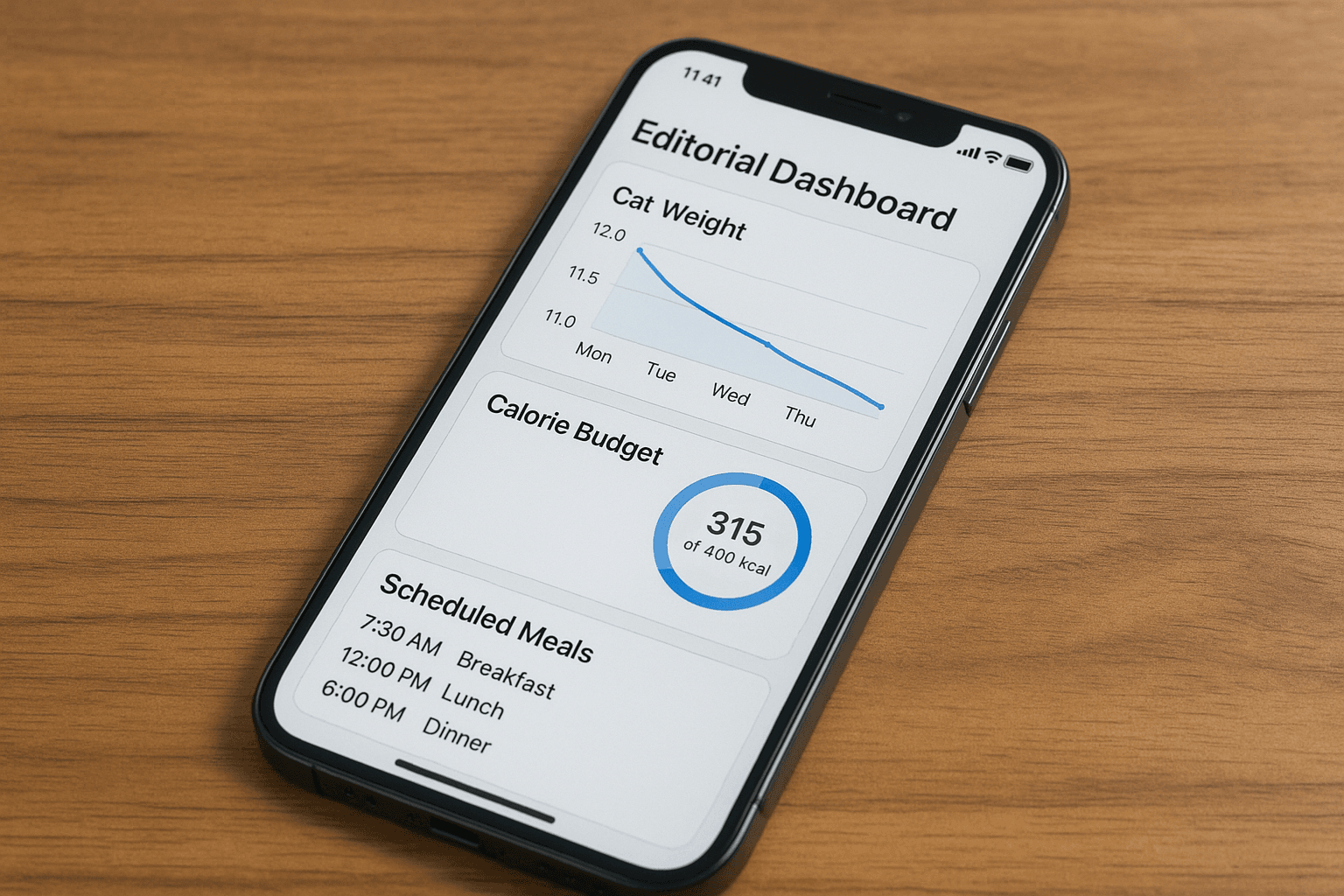
AI nutrition apps for cats 2025 are turning daily feeding into data-driven care. Instead of guessing portions or hoping a new diet works, these tools analyze weight trends, meal timing, and treat intake to recommend small, safe adjustments. Used well, AI nutrition apps for cats 2025 help you stabilize weight, prevent overfeeding, and bring clearer info to your veterinarian.
Why This Matters Now
Cats mask discomfort, and weight drift is often the first warning sign. AI nutrition apps for cats 2025 pair routine logs with device data (smart feeders, scales, and litter analytics) to highlight meaningful change—not just single “blip” readings. That means you can react earlier, adjust portions thoughtfully, and keep a clean record to share at wellness exams. In multi-cat homes, these apps also reduce confusion about who ate what and when.
How AI Nutrition Apps Work

Most AI nutrition apps for cats 2025 blend three layers:
- Inputs: weight entries (manual or from a smart scale), meal sizes/times from connected feeders, treat counts, and notes (hairball day, meds, travel).
- Models: simple baselines + machine-learning signals trained on patterns like slow weight gain, “treat creep,” or irregular meal spacing.
- Outputs: gentle, reversible suggestions—e.g., “reduce dinner by 6–8 kCal,” “shift the PM meal 30 minutes earlier,” or “treats exceeded 10% today.”
Because the best AI nutrition apps for cats 2025 focus on trends, you’ll see nudges over weeks, not whiplash changes overnight.
What to Look For Before You Download
- Evidence-based targets: daily kCal estimates by age/condition, and guidance that respects veterinary standards.
- Device integrations: smart feeders (portion + schedule), scales (weekly “truth check”), and—optionally—litter/health trackers for context.
- Clear levers you control: portion size, schedule windows, treat caps, hydration prompts.
- Data exports: graphs you can email or show at the clinic.
- Privacy basics: what’s stored locally vs. cloud; easy data deletion.
- Fail-safe UX: if devices go offline, the app should still log and coach. The better AI nutrition apps for cats 2025 degrade gracefully when Wi-Fi doesn’t.
The Daily Routine That Actually Works
Start simple: weigh your cat weekly before breakfast, log the number, and let the app project a 4–6 week trend. Pair that with two predictable meals plus tiny, scheduled treat windows. The point isn’t to micromanage; it’s to make nutrition boring and repeatable. With AI nutrition apps for cats 2025, you’ll get small, data-based adjustments that keep weight steady without drama.
App Snapshots (Capabilities You’ll See in the Wild)
- Feeder-linked apps: Pair a connected feeder to enforce portions, set weekday/weekend schedules, and auto-log what was actually dispensed. Many AI nutrition apps for cats 2025 will then suggest fine-tuning (e.g., “move 10% of breakfast to lunch to reduce late-day begging”).
- Scale-aware apps: A weekly weigh-in populates a rolling average; the app flags when a trend line crosses ±5% from baseline and reminds you to check treats/hydration.
- Ecosystem dashboards: If you run an all-in-one brand, you’ll see feeding, weight, and sometimes litter patterns in one timeline. That’s where AI nutrition apps for cats 2025 shine—one place to read the whole story.
Healthy Rules of Thumb (Vetted by Vets)
- Treats ≤10–15% of daily calories for healthy adults; subtract a little from meals when you train.
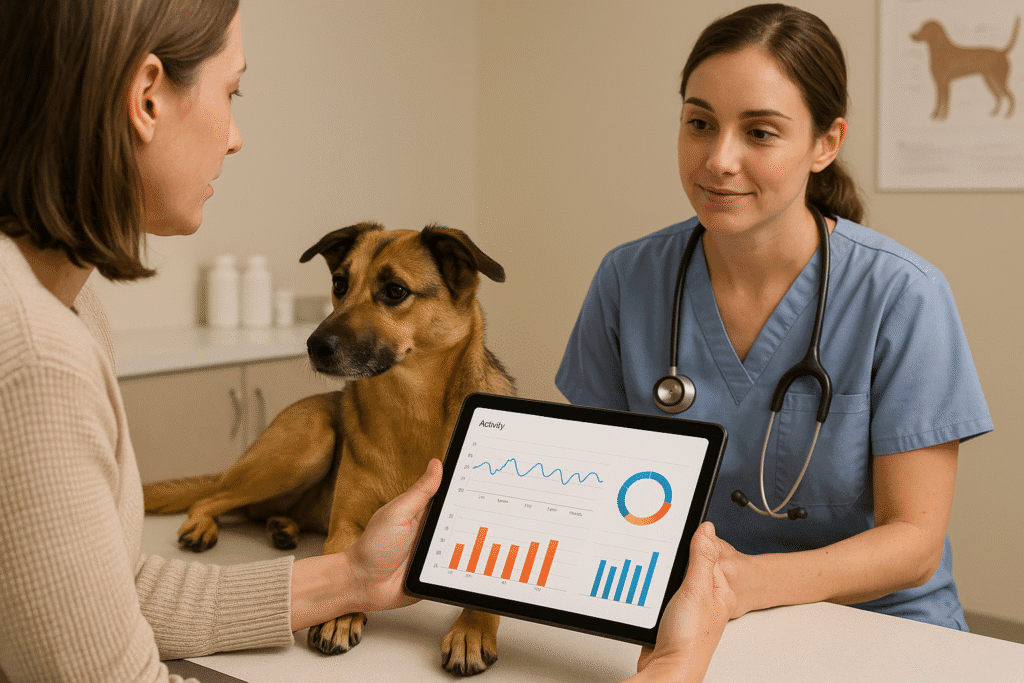
- Annual wellness exams at minimum (semiannual for seniors/at-risk). Bring your app graphs—trend lines make clinical conversations faster and clearer.
- Act on patterns, not one-offs. If the app shows two to three weeks of loss or gain, or if appetite and litter habits change together, call your vet.
These principles anchor the recommendations most AI nutrition apps for cats 2025 will generate—and keep the tech honest.
Pros & Cons
Pros
- Turns vague routines into measurable plans you can adjust gradually.
- Works with feeders/scales to reduce human error.
- Exports help your veterinarian see the real-life picture, not a memory guess.
Cons
- Subscriptions and device ecosystems can add cost.
- Over-nudging can cause alert fatigue—mute low-priority tips.
- Not a diagnosis tool: even the smartest AI nutrition apps for cats 2025 can only flag trends, not tell you why they happen.
Setup Checklist (5 Steps, 15 Minutes)
- Define a calorie target (per your vet or app’s calculator).
- Fix meal windows (AM/PM), then let treats live in tiny, scheduled micro-windows.
- Choose one metric to start (weight). Add hydration or treat caps later.
- Connect devices if you have them; if not, manual logs still work.
- Review weekly, not hourly. That’s how AI nutrition apps for cats 2025 add signal without stress.
Privacy & Data: What’s Worth Asking
- Can you export or delete everything with one tap?
- Is video or exact location collected (usually not needed for nutrition)?
- If the app uses AI, what’s trained locally vs. cloud?
Good AI nutrition apps for cats 2025 are transparent: you own the data, and audits/logs are easy to find.
Real-World Use Cases
- Weight plateau: the app suggests moving 5–8% of breakfast to a small mid-day snack to curb evening overeating.
- Treat creep: you get a weekly digest: “Treats averaged 13% of calories; consider 2 g less at dinner.”
- Senior cat: weight dips 4% across 3 weeks; the app flags yellow, and you schedule a checkup—with charts in hand.
These small, boring moves—exactly what AI nutrition apps for cats 2025 are good at—prevent big swings later.
Verdict: Should You Use One?
Yes—if you’re willing to log weekly weight and follow small, consistent changes. AI nutrition apps for cats 2025 won’t replace your veterinarian or treat underlying disease. But they do remove guesswork, reinforce routine, and make it easier to keep calories honest—especially when paired with a smart feeder and a simple, weekly scale ritual.
FAQs
Do I need smart devices for the app to help?
No. Manual weight + meal logs are enough to start; devices just automate the boring parts.
What if my cat free-feeds?
Transition to time-boxed, portioned meals. AI nutrition apps for cats 2025 work best when the schedule is predictable.
Are these apps safe for cats with medical diets?
Ask your vet for calorie targets and approved foods; the app can track and visualize, but your vet sets the medical plan.
How soon will I see results?
Expect gentle trends across 4–6 weeks. Fast drops or gains are a reason to call your vet, not a “win.”
Internal Links (PetTech AI)
- Smart Cat Weight Scales 2025 — how to get trustworthy weekly weigh-ins
- PETKIT Fresh Element Infinity Review (2025) — precision feeding that pairs with app guidance
- PetTech Ecosystem 2025 — connect feeders, scales, and litter analytics for a full picture
Authoritative Outbound Links
- Cornell Feline Health Center — guidance on feeding basics, weight control, and why routine matters.
- AVMA Preventive Care — exam frequency and the role of home monitoring in early detection.
Disclaimer
The content on PetTech AI is for educational purposes only and does not replace professional veterinary advice. AI nutrition apps for cats 2025 can help you track calories, weight, and schedules, but they cannot diagnose disease. If your cat shows weight loss or gain, appetite changes, vomiting, diarrhea, excessive thirst, painful or frequent urination, lethargy, or behavior shifts, contact your veterinarian promptly. Some links in this article may be affiliate links, meaning PetTech AI could earn a commission at no extra cost to you. This supports rigorous testing and allows us to maintain independent, evidence-based reviews.