AI cat health trackers 2025 went from “nice-to-have gadgets” to practical early-warning systems. In 2025, the best tools don’t just count steps—they analyze litter-box patterns, weight trends, sleep/activity changes, and even vital signs to flag subtle shifts you’d likely miss. Below, you’ll find a field-tested guide to the most useful categories, the standout products, what they really measure, and how to turn notifications into better veterinary care.
Why AI Cat Health Trackers 2025 Matters (and What It Can—and Can’t—Do)
Cats are notoriously good at hiding discomfort. Changes in urination/defecation, litter-box avoidance, or frequency/strain can signal urinary, kidney, thyroid, or GI issues—long before obvious symptoms show up. Cornell notes that medical problems commonly drive litter-box changes; increased drinking/urination is associated with kidney or thyroid disease and diabetes, and pain can lead to out-of-box accidents. vet.cornell.edu Likewise, hallmark signs of feline lower urinary tract disease (FLUTD) include painful, frequent urination and crying while urinating—red flags you must not ignore. vet.cornell.edu
AI trackers don’t diagnose; they surface patterns (e.g., weight trending down, nighttime restlessness, more frequent, smaller pees) so you can consult your veterinarian sooner. AVMA-endorsed preventive care guidance is clear: every cat needs regular wellness exams, and many benefit from more frequent visits based on risk. avma.org
Bottom line: AI health data helps you notice change. Your vet still interprets meaning.
The Main Types of AI Cat Health Trackers 2025
1) Litter-Box Analytics (Weight + Pee/Poop Recognition)
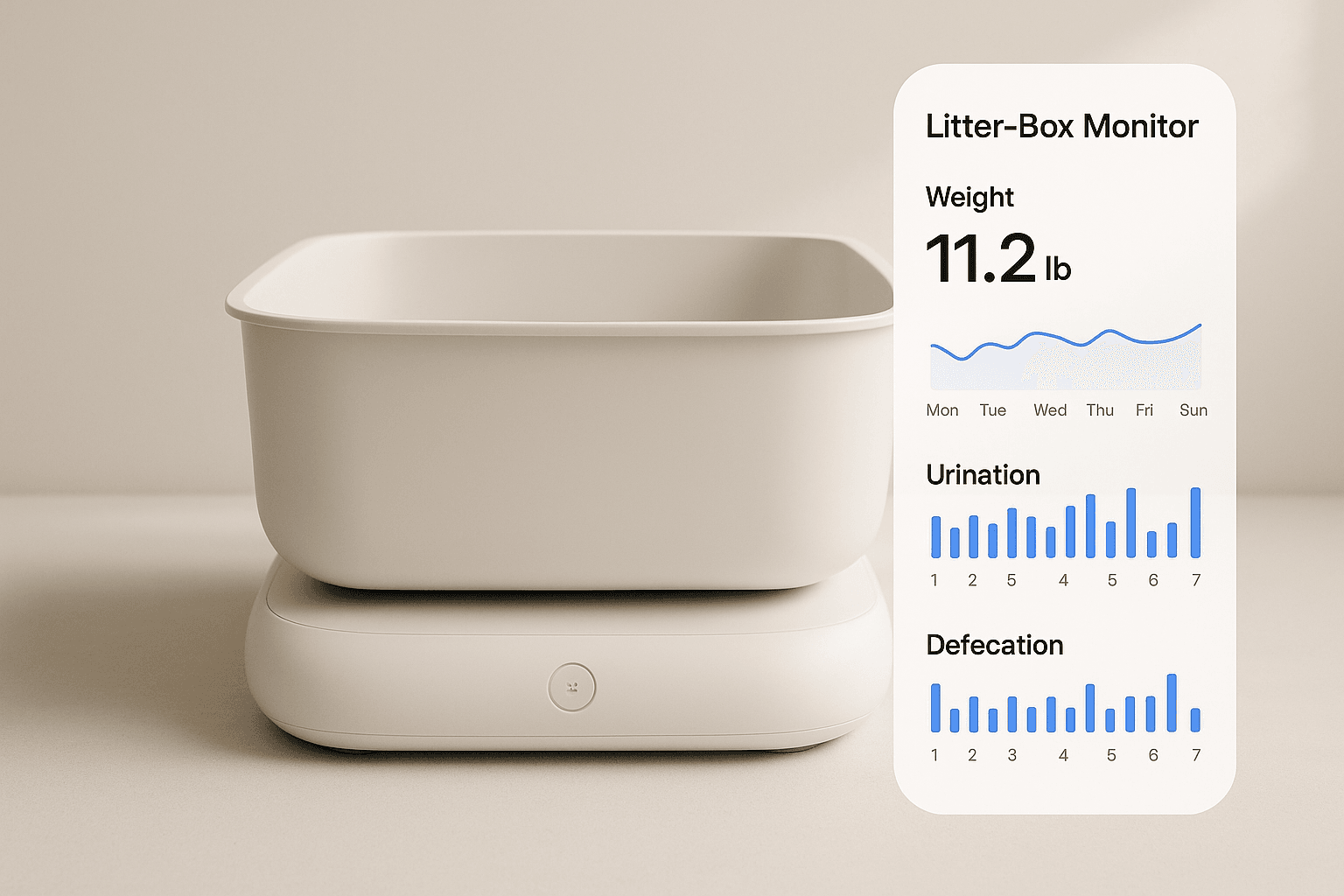
These platforms place a smart scale under/inside the box or integrate with a self-cleaning unit, then use algorithms to distinguish events and cats.
- Purina Petivity Smart Litter Box Monitor – Uses AI to identify your cat’s weight plus urination and defecation events at each visit, visualizes trends in the app, and sends alerts when behavior deviates from baseline. Amazon
- Catlink Scooper/Ultra Series – Catlink’s app tracks per-cat litter-box habits and weight with long-term health insights and instant alerts (select models add 5 GHz Wi-Fi and even an AI camera in the newest “2025 Ultra” SKU). Amazon
What they’re best at: spotting weight drift, constipation/diarrhea patterns, increased frequency/strain, and multi-cat comparisons.
2) Wearable Vital-Sign & Behavior Collars
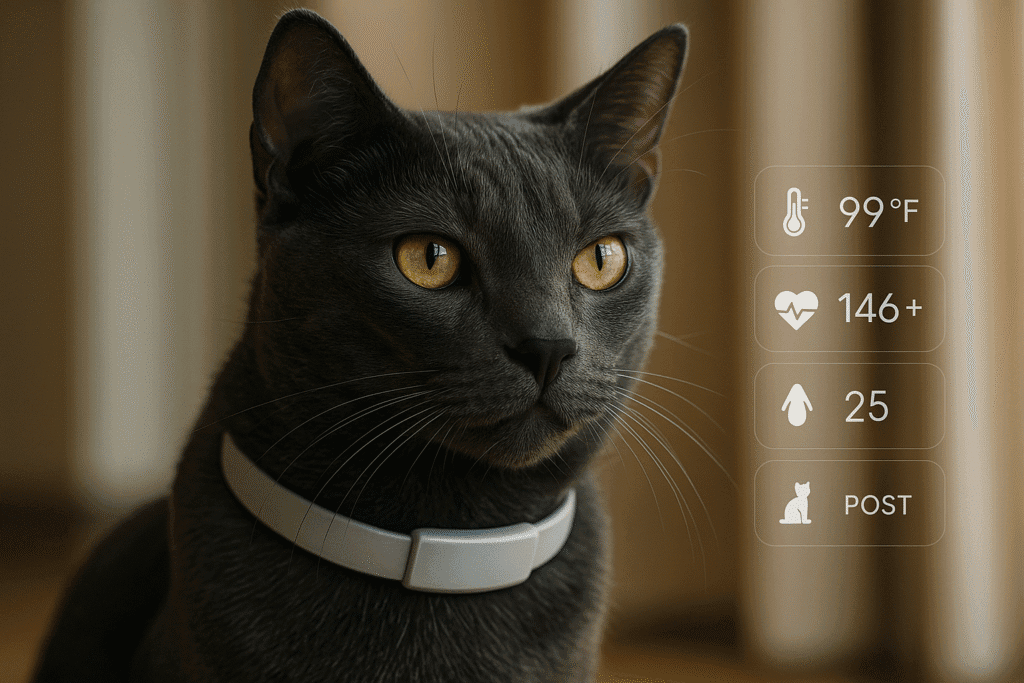
Collars (or pendants) collect movement, posture, and in advanced cases, vital signs—then apply AI to classify behavior and risk.
- PetPace AI Smart Collar (Cats & Dogs) – Tracks temperature, pulse, respiration, posture/behavior, and HRV-based “stress,” with near real-time alerts and telehealth integrations for sharing data with your vet; PetPace announced an AI telehealth/telemedicine platform expansion in 2025. Amazon
What they’re best at: continuous trending of vitals and behavior (lethargy, restlessness, pain-like postures). Requires cat-sized fit and tolerance for collars.
3) GPS Activity Trackers with Health Insights
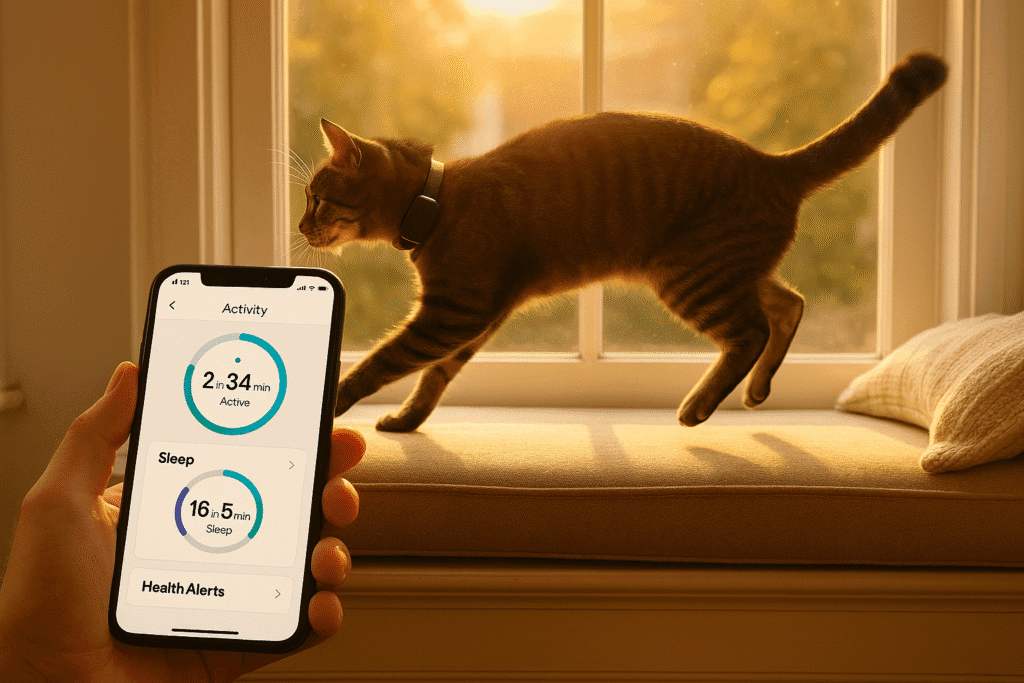
Not strictly “medical,” but modern GPS tags now layer in AI-driven wellness alerts.
- Tractive for Cats – Provides activity/sleep dashboards and sends “Health Alerts” when routine changes are detected over weeks or months (e.g., declining activity, disrupted sleep). Amazon
- Fi Mini (2025) – A very small GPS tracker sized for cats and toy breeds; tracks activity/sleep and is rolling out AI behavior detection (barking/scratching first, with broader behavior insights on the roadmap). The Verge Industry note: Tractive acquired Whistle and is shutting down the Whistle platform as of August 31, 2025; migration options exist for former Whistle users. The Verge
What they’re best at: macro trends (more/less active, restless nights), escape alerts, and outdoor cats where location + wellness context matters.
Quick Picks: Best AI Cat Health Trackers by Use-Case
- Best for Multi-Cat Litter-Box Insights: Purina Petivity if you want a brand-agnostic scale solution with AI event detection; Catlink Scooper/Ultra if you prefer a self-cleaning ecosystem with per-cat profiles and alerts.
- Best for Deep Health/Vitals: PetPace for continuous vitals + posture and vet-shareable analytics.
- Best Lightweight GPS + Routines: Tractive Cat for proven sleep/activity & health alerts; Fi Mini if you want a tiny form factor and Apple Watch roadmap.
How to Read the Data (Without Overreacting)
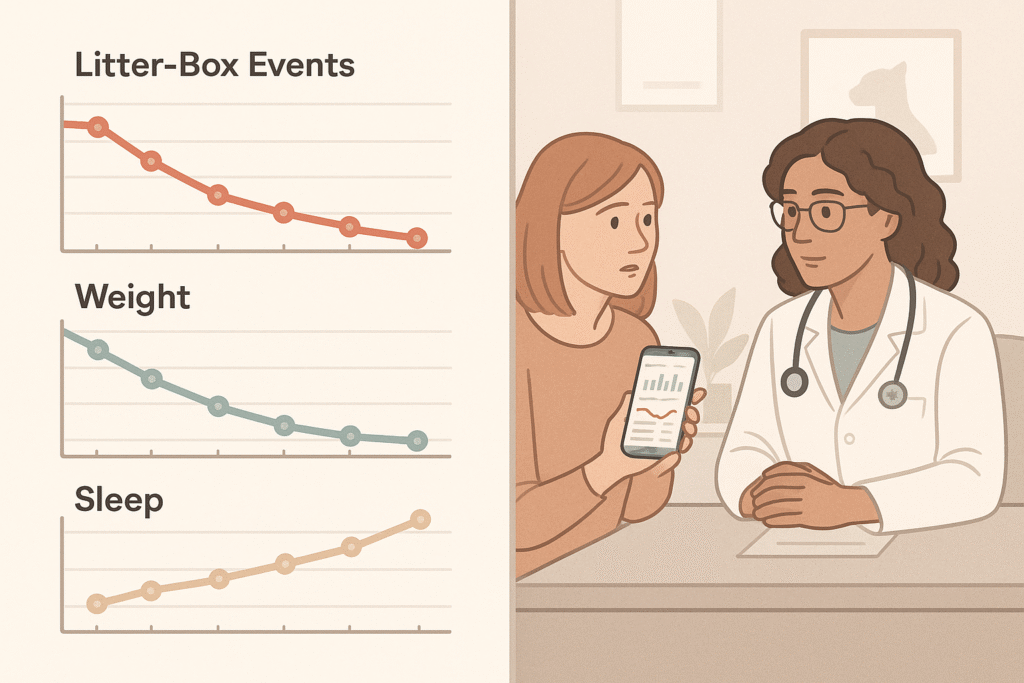
- Watch the baseline, not a single spike. Algorithms are most reliable when they compare your cat to your cat over time. A one-day blip is less meaningful than a 7- to 14-day trend.
- Prioritize changes tied to vet-relevant systems:
- Urination – more frequent, straining, vocalizing, blood → call your vet promptly; FLUTD can be emergent, especially in males. vet.cornell.edu
- Defecation – hard stools/constipation or diarrhea trends (frequency/volume) merit attention. vet.cornell.edu
- Weight – steady loss (even small) is concerning; trends matter more than single readings. Petivity
- Sleep & activity – persistent lethargy or disrupted nights can be early illness signs. Tractive
- Always pair data with clinical judgment. AVMA guidelines emphasize routine wellness exams; bring your tracker reports to visits. avma.org
Product Snapshots (Specs & Notable Features)
Purina Petivity Smart Litter Box Monitor
- Core: Under-box smart scale detects weight, pee/poop, visit timing; AI classifies events and flags deviations; app charts and monthly reports. Petivity
- Good for: Any standard litter box, multi-cat homes (with pattern learning).
- Considerations: Requires stable placement and some acclimation; per-cat accuracy improves over time as the model learns your household.
Catlink Scooper/Ultra with Health Insights (select models)
- Core: Self-cleaning drum plus weight sensor; app shows per-cat usage and long-term insights; newer “2025 Ultra” mentions AI camera + 5 GHz Wi-Fi (model-specific). CATLINK
- Good for: Hands-off waste management + health flags in one unit.
- Considerations: Ecosystem lock-in; ensure the exact SKU has the features you expect (app health insights are standard; AI camera varies).
PetPace AI Smart Collar
- Core: Tracks pulse, temperature, respiration, posture/behavior, HRV; near real-time alerts; data share + telehealth. PetPace
- Good for: Senior cats, chronic conditions, or owners who want continuous vitals.
- Considerations: Collar acceptance, charging cadence, subscription/services; confirm cat-appropriate size and weight.
Tractive Cat GPS + Wellness
- Core: Live GPS plus activity/sleep insights; “Health Alerts” when routines shift across weeks/months. Tractive
- Good for: Outdoor cats or door-dashers; owners who want both safety and trend-level wellness.
- Considerations: Requires subscription/cellular coverage; collar/harness fit; alerts are trend-based (not medical diagnostics).
Fi Mini (2025)
- Core: Tiny GPS for small pets, activity/sleep, planned AI behavior detection; IP68; up to ~3 weeks battery (longer with base); annual plan. The Verge
- Good for: Cats that won’t tolerate larger devices.
- Considerations: New product ramp; confirm ship dates and feature rollouts.
Pros and Cons of AI Health Trackers for Cats
Pros
- Early detection of meaningful changes (weight, elimination, sleep/activity).
- Objective logs you can share with your veterinarian for context during exams.
- Multi-cat differentiation (on litter systems) and habit baselining reduce guesswork.
Cons
- False positives/notification fatigue if you react to every blip; trends matter.
- Hardware acceptance (collars) and fit can be challenging for some cats.
- Ecosystem lock-in and subscriptions; feature sets vary by model and SKU.
Set-Up & Best Practices (Retention-Friendly, Real-World Tips)
- Baseline first. Give your tracker 10–14 days to learn your cat(s) before you draw conclusions.
- Optimize placement. For scales/monitors, keep the box on a flat, stable surface; avoid shifting the unit during calibration.
- Label the cats. If your ecosystem supports per-cat IDs, complete profiles with photos/weights to speed up model learning.
- Sync with vet cadence. Export monthly charts and bring them to wellness exams (AVMA recommends at least annual visits). avma.org
- Know your red flags. Painful/frequent urination, blood, straining, or inability to pass urine is urgent—seek veterinary care immediately. vet.cornell.edu
Verdict: Who Should Buy What in 2025
- Apartment or multi-cat households: Start with a litter-box AI system (Petivity or Catlink). You’ll get the highest clinical signal-to-noise for cats, where elimination and weight trends are gold.
- Senior cats or chronic conditions: Add PetPace for vitals/behavior and sharable analytics.
- Outdoor cats/flight risks: Pair a GPS wellness tracker (Tractive or Fi Mini) with a litter monitor to connect activity and elimination data.
Among all AI cat health trackers 2025, litter-box monitors remain the most actionable tools for daily health tracking.
FAQs
Are AI trackers accurate for multi-cat homes?
They improve as the model learns patterns (visit times, body weight). For the cleanest data, keep the setup stable and maintain profiles for each cat.
Do I still need vet visits if I’m tracking data?
Yes. Trackers surface changes; veterinarians diagnose and treat. Annual (or more frequent) wellness checks remain essential. avma.org
Which metric matters most?
For cats: elimination patterns and weight trends, followed by persistent sleep/activity changes. Painful/frequent urination or straining is urgent. vet.cornell.edu
Are GPS wellness features useful for indoor-only cats?
Yes—escape alerts aside, sleep/activity and routine-change alerts still provide value for indoor cats.
Internal Links
- PETKIT Fresh Element Infinity Review (2025) — smart feeding + weight tracking synergy with health data
- Smart Cat Doors 2025 — safety & access control for multi-cat homes
- Best Smart Cat Cameras 2025 — behavior context while you’re away
- Smart Litter Accessories 2025 — deodorizers, mats, and hygiene add-ons
(Use your standard internal URLs/taxonomy when publishing.)
Authoritative Outbound Links
- Cornell Feline Health Center — litter-box problems & medical causes (FLUTD, endocrine, GI): early signs to watch. vet.cornell.edu
- AVMA Preventive Healthcare Guidelines — why routine exams and baseline tracking matter. avma.org
Disclaimer
The information in this article is for educational purposes only and is not a substitute for professional veterinary diagnosis or treatment. AI cat health trackers can help you recognize patterns and changes in your cat’s routine, but they cannot diagnose disease. If you notice signs of illness—such as painful or frequent urination, blood in urine or stool, lethargy, vomiting, diarrhea, weight loss, or behavior changes—contact your veterinarian promptly. This post may contain affiliate links. If you purchase through these links, PetTech AI may earn a small commission at no extra cost to you, which helps us keep producing in-depth, unbiased reviews.