
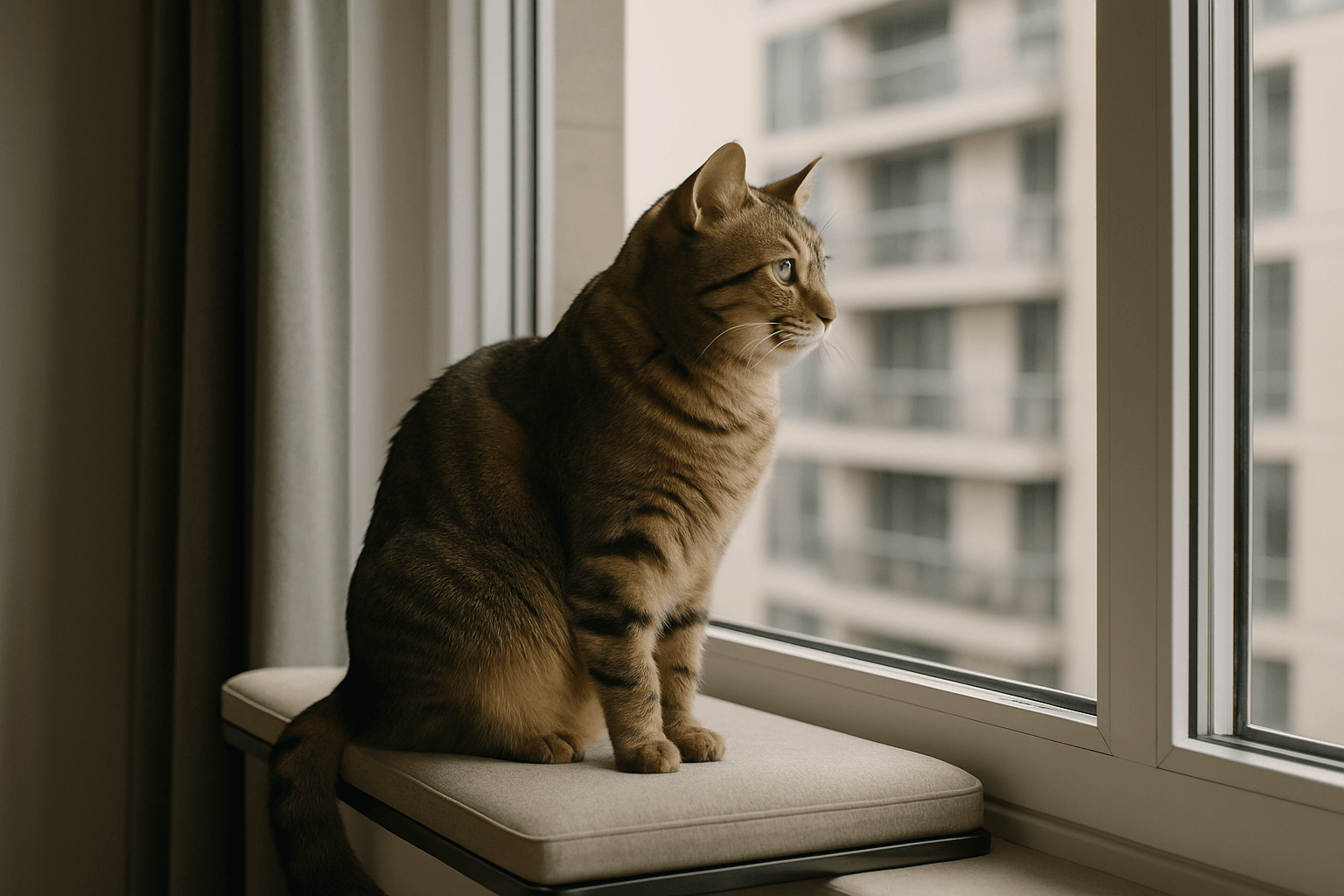
If you’ve ever watched your cat stare at a wall like it’s hosting a private TED Talk, you’ve already met the core problem. Why indoor cats get bored isn’t a cute personality quirk—it’s a predictable result of modern indoor life: fewer threats, fewer puzzles, fewer hunts, and a lot of repetitive days.
In 2025, indoor cats are living safer than any generation before them. They’re also more likely to develop boredom-driven behaviors that owners mislabel as “attitude,” “neediness,” or “random aggression.” The point of this guide is simple: explain why indoor cats get bored, how to recognize it early, and how to build a home routine that keeps your cat mentally busy without turning your life into a full-time enrichment program.
The Real Reason Why Indoor Cats Get Bored
Here’s the blunt truth: a cat’s brain is built for problem-solving around hunting. Indoor life removes most of the problem-solving while keeping the energy and instincts intact. That mismatch is why indoor cats get bored—they have capacity with nowhere to spend it.
Common “boredom accelerators” in 2025 homes include:
- predictable food access (no effort required)
- single-room living (no territory complexity)
- low vertical space (no climbing, no surveying)
- minimal novelty (same toys, same locations, same smells)
- little “agency” (cat can’t choose where to perch, hide, hunt, or explore)
Boredom isn’t always “lack of toys.” It’s often lack of control, variety, and earned outcomes.
Boredom vs. Stress vs. Illness: Don’t Guess
Before you treat boredom, you have to confirm it. The reason this matters is that some signs overlap with stress, pain, or medical issues. Why indoor cats get bored is a behavior question; pain and illness are health questions.
If you see sudden changes like:
- new litter box avoidance
- dramatic appetite increase or weight loss
- hiding constantly
- yowling at night out of nowhere
- aggression that escalates quickly
…rule out medical causes first. A bored cat can be annoying. A sick cat can look “bored” because they’re shutting down.
Once health is cleared, boredom becomes the most common—and most fixable—explanation.
The Hidden Signs: What Boredom Looks Like in Real Homes
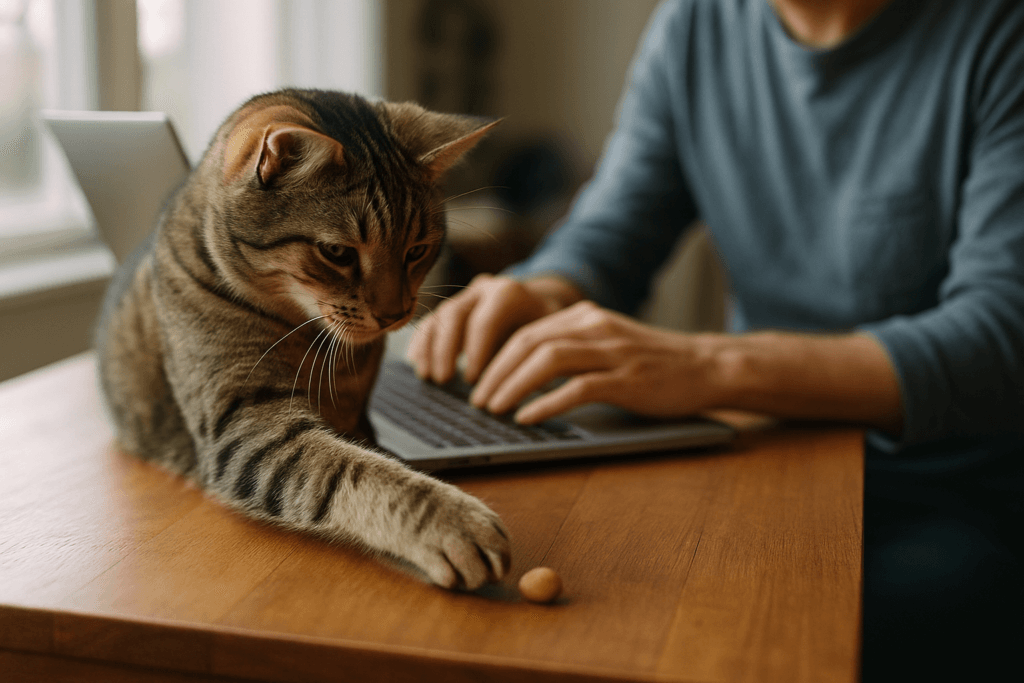
Most owners expect boredom to look like “sleeping all day.” That’s normal for cats. The more useful question is: what does boredom look like when it turns into a pattern?
These are the signs that typically show up when why indoor cats get bored becomes your daily reality:
- food obsession: begging, stealing, waking you up early, constant hovering near the kitchen
- attention hijacking: knocking objects off surfaces to force interaction
- hyper bursts at predictable times (often 10–30 minutes after you sit down)
- overgrooming or repetitive licking without a skin issue
- toy “hoarding”: carrying toys to food/water areas or sleeping spots
- sudden bitey play: pouncing on ankles, grabbing hands, “ambush” behavior
- screen fixation: staring at reflections, shadows, or TV movement for long periods
A key pattern: boredom behaviors are often repeatable. Same time. Same trigger. Same outcome.
Why Indoor Cats Get Bored Faster in 2025 Than You Think
The modern home is optimized for humans, not predators. Quiet spaces, clean surfaces, and predictable routines reduce randomness. That’s great for productivity. It’s also why indoor cats get bored faster than owners expect.
In 2025, boredom is amplified by:
- remote work (cats learn when you’re “available” and create behaviors to interrupt)
- automated feeding (zero effort meals can remove a major daily activity)
- smaller urban apartments (less territory, fewer zones)
- fewer natural sensory inputs (sealed windows, filtered air, limited outdoor scents)
Even a loving home can feel like a loop: same smells, same routes, same outcomes. Cats notice.
The 3-Pillar Fix: Hunt, Climb, and Choose
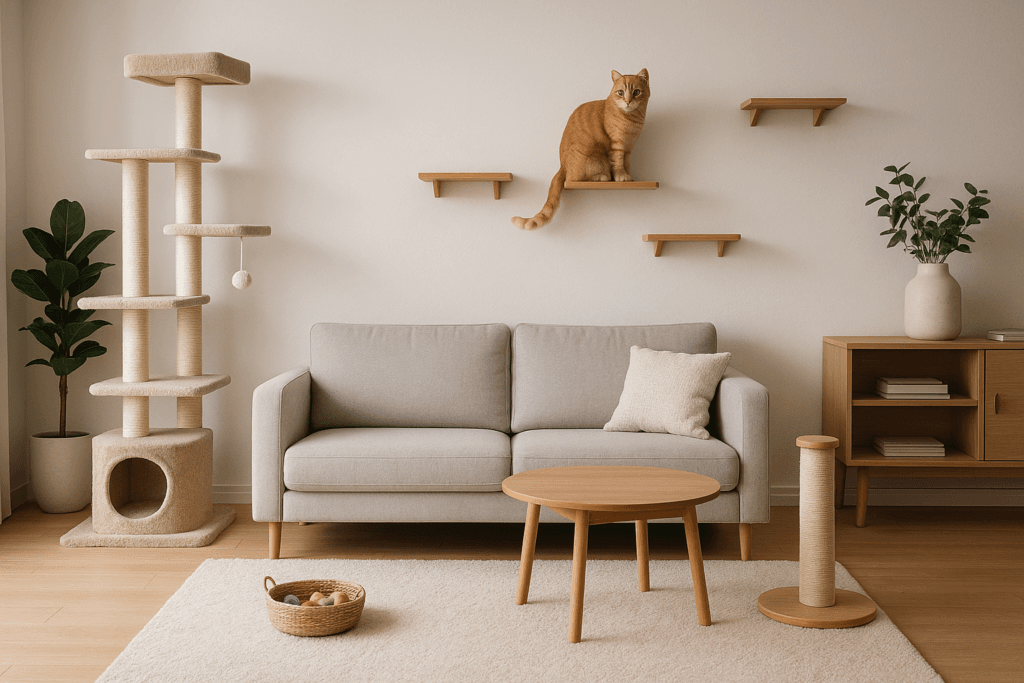
When people ask why indoor cats get bored, they often want a shopping list. That’s not the real solution. The real solution is building three pillars into daily life:
- Hunt (earned rewards)
- Climb (territory complexity)
- Choose (agency and options)
If your cat gets at least one daily “hunt,” one meaningful vertical route, and multiple choices for resting and observing, boredom drops sharply—even without expensive gadgets.
Practical Fixes That Don’t Require More Free Time
You don’t need to entertain your cat for hours. You need short, repeatable systems.
1) Turn One Meal Into a “Work Meal”
This is one of the fastest ways to address why indoor cats get bored and food obsession at the same time: make your cat earn part of their calories.
- puzzle feeders
- scatter feeding (controlled, not chaotic)
- treat balls
- simple DIY “foraging” (kibble in folded paper, under cups)
If your cat is already overeating or begging nonstop, this pairs perfectly with a structured feeding plan.
If overeating is part of the picture, check out our guide “How to Stop a Cat From Overeating (2025): Vet-Backed Strategies & Smart Feeding Tech.”
2) Use “Play Windows,” Not Random Play
Random play teaches your cat to demand entertainment. Scheduled play teaches your cat to anticipate it. That predictability reduces chaos and makes boredom less likely—which is exactly why indoor cats get bored less in homes with a consistent routine.
- 5–10 minutes before a meal
- 5–10 minutes in the evening
- stop while your cat is still engaged
3) Rotate Toys Like a Subscription, Not a Drawer
Leaving 20 toys out all week doesn’t create variety. It creates clutter.
Rotate 4–6 toys every 3–4 days. Old toys feel new again.
If you want toys that reliably hold attention (not “played with once”), see “Best Interactive Cat Toys 2025: Vet-Informed Picks to Bust Boredom & Boost Play.”
Smart Tech in 2025: What Helps, What’s Hype
Used correctly, tech can reduce boredom. Used lazily, it can worsen it. The mistake is thinking automation replaces stimulation. That’s not why indoor cats get bored gets solved—it’s how it gets ignored.
Smart feeders
Helpful when they:
- support consistent meal timing
- prevent accidental overfeeding
- enable micro-meals that reduce food fixation
Not helpful when they:
- remove all “earned” feeding opportunities
- become a constant snack button via app
Pet cameras
Helpful when they:
- reveal boredom triggers (pacing, door watching, stress patterns)
- let you time enrichment where it matters
Not helpful when they:
- encourage you to “talk to your cat” instead of changing the environment
Automated toys
Helpful when they:
- fill dead time when you’re away
- create short novelty bursts
Not helpful when they:
- run all day (cats habituate fast)
- replace real play that completes the stalk-chase-pounce sequence
The Environment Upgrade Most People Miss: Vertical Routes
If you want the simplest answer to why indoor cats get bored, it’s this: flat homes are boring. Verticality turns a small space into territory.
Three quick wins:
- one tall cat tree by a window
- one shelf route or “step ladder” path to a high perch
- one covered hiding space (not a cramped carrier—an actual retreat)
The goal is not “more furniture.” The goal is more zones: observe, hide, hunt, rest, and travel.
If you’ve already built a “smart living” setup, this is where it should connect: air quality, calming zones, structured feeding, and play zones all reinforce each other.
Training as Enrichment: The Underused Solution
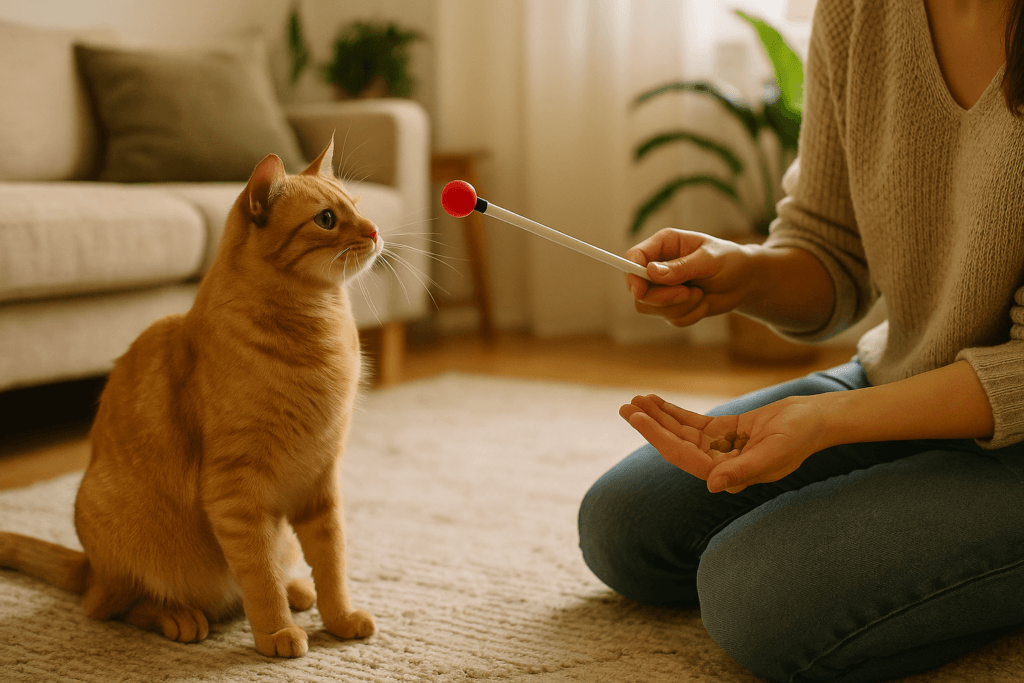
Training sounds like “dog stuff.” In reality, training is mental enrichment—and it directly addresses why indoor cats get bored by giving them a puzzle with a reward.
Start with:
- target touch
- sit on a mat
- come when called
- carrier comfort steps
- cooperative handling (touch paw → treat)
You don’t need perfection. You need your cat to practice thinking.
For a clean, practical system, use “Cat Training Tips 2025: Practical, Science-Based Advice for Better Behavior & Bonding.”
The “Boredom Loop” That Makes Problems Worse
Here’s the loop that traps most owners, and it’s exactly why indoor cats get bored spirals:
- Cat is under-stimulated
- Cat creates annoying behavior (begging, knocking things over)
- Owner responds (attention appears)
- Cat learns: annoying behavior = interaction
- Behavior repeats, boredom deepens
The fix is counterintuitive: stop paying the nuisance behavior, and start paying calm, appropriate behavior. Reward your cat when they sit on the perch. When they play with the approved toy. When they rest quietly near you. That’s how you rewire the home.
When It’s Not Boredom: Red Flags to Take Seriously
Even if you understand why indoor cats get bored, you still need to know when boredom is not the explanation.
Get a vet check (or at least a call) if you see:
- increased appetite with weight loss
- sudden drinking/urination changes
- frequent vomiting
- sudden aggression in an older cat
- hiding plus reduced grooming
- loud vocalization with restlessness that is new
Boredom is common. Medical causes are not rare. Don’t gamble.
Internal Resources
If you’re working on boredom-driven overeating, chaotic mealtimes, or attention-seeking behavior, these deeper guides can help you build a full system (not just a one-off fix):
- How to Stop a Cat From Overeating (2025): Vet-Backed Strategies & Smart Feeding Tech breaks down structured portions and routines that reduce food-obsessed behavior.
- Best Interactive Cat Toys 2025: Vet-Informed Picks to Bust Boredom & Boost Play focuses on toys that consistently hold attention and support daily energy release.
- Cat Training Tips 2025: Practical, Science-Based Advice for Better Behavior & Bonding shows how short training sessions can become mental enrichment and reduce boredom loops.
- If you’re refining your home setup, smart living articles can support the same goal: more vertical zones, predictable routines, and fewer boredom triggers.
References
- Cornell Feline Health Center — educational resources on feline behavior, stress reduction, and welfare factors that influence appetite and daily routines.
- American Veterinary Medical Association (AVMA) — animal welfare and behavior guidance relevant to humane management, enrichment, and stress-related behavior patterns.
- AAFP / ISFM Feline Environmental Needs Guidelines — evidence-based recommendations for environmental enrichment, predictability, and supporting normal feline behaviors indoors.
- VCA Animal Hospitals — practical veterinary guidance on behavior changes, stress indicators, and when to rule out medical causes.
Disclaimer
This article is for educational purposes only and does not replace professional veterinary advice, diagnosis, or treatment. If your cat shows sudden behavior changes, persistent hiding, aggression, vomiting, litter box issues, or appetite shifts—especially when paired with weight loss or increased thirst—contact your veterinarian. Enrichment and training should be tailored to your cat’s age, health status, and temperament, and changes should be introduced gradually.
PetTech AI participates in affiliate programs, including Amazon Associates and CJ. We may earn a commission if you purchase products through links on this page, at no extra cost to you. Recommendations are based on independent research and practical use-cases, not paid placement.