Category: Smart Living

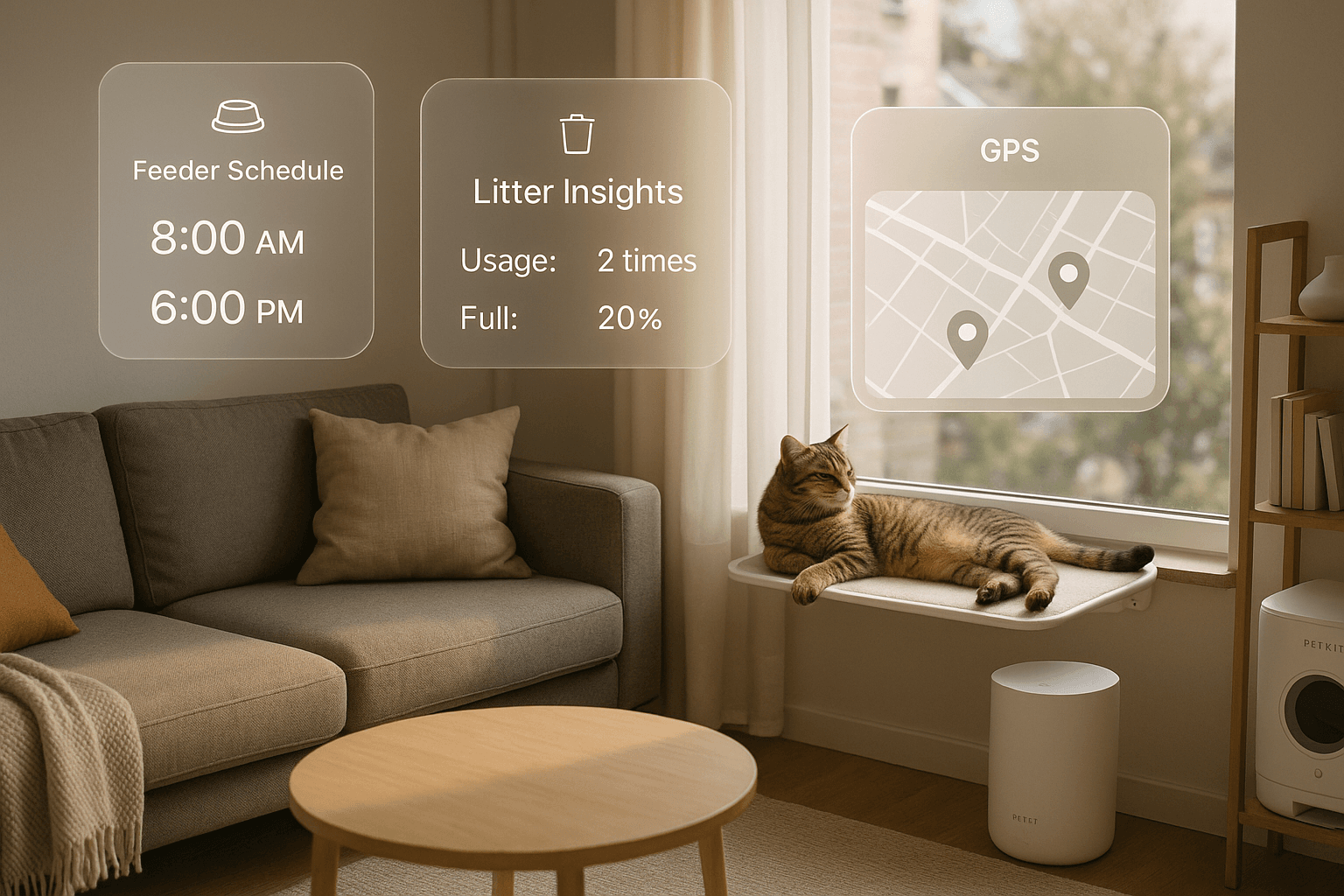
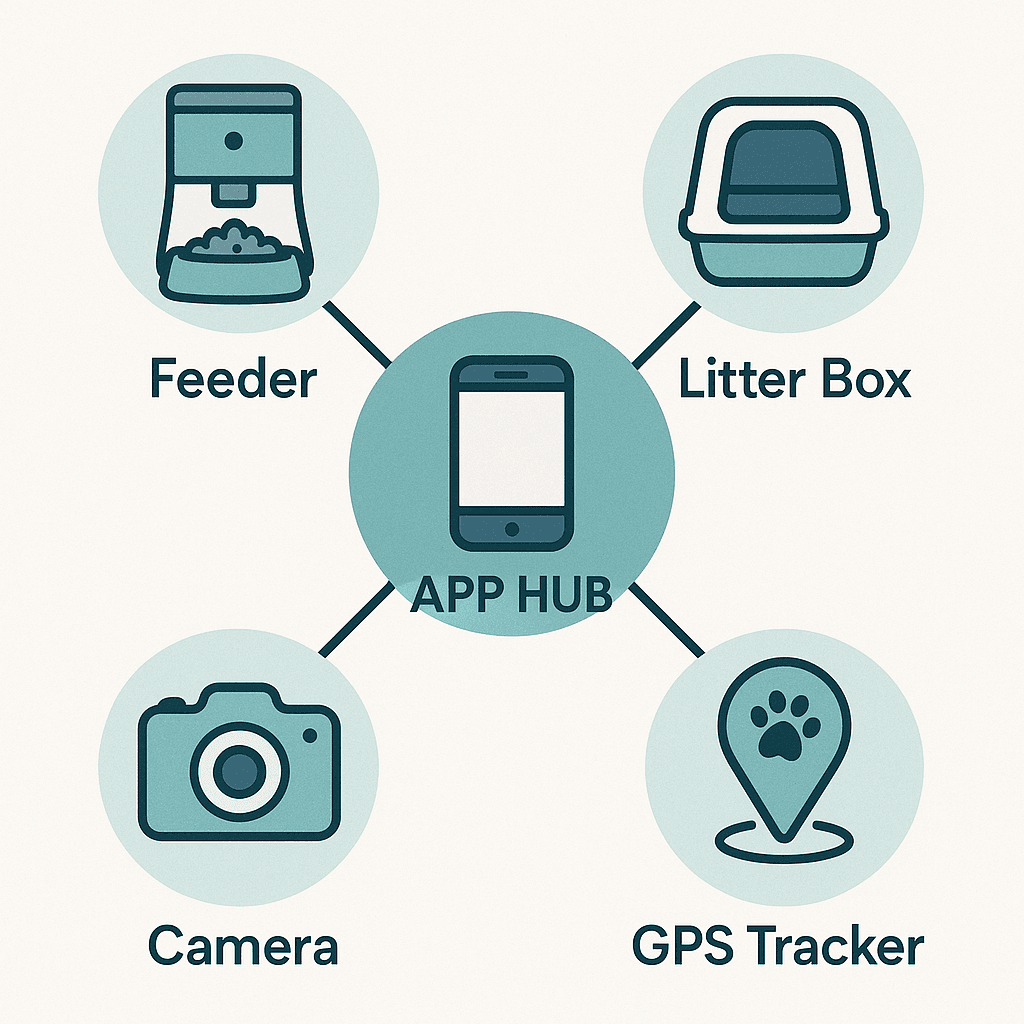
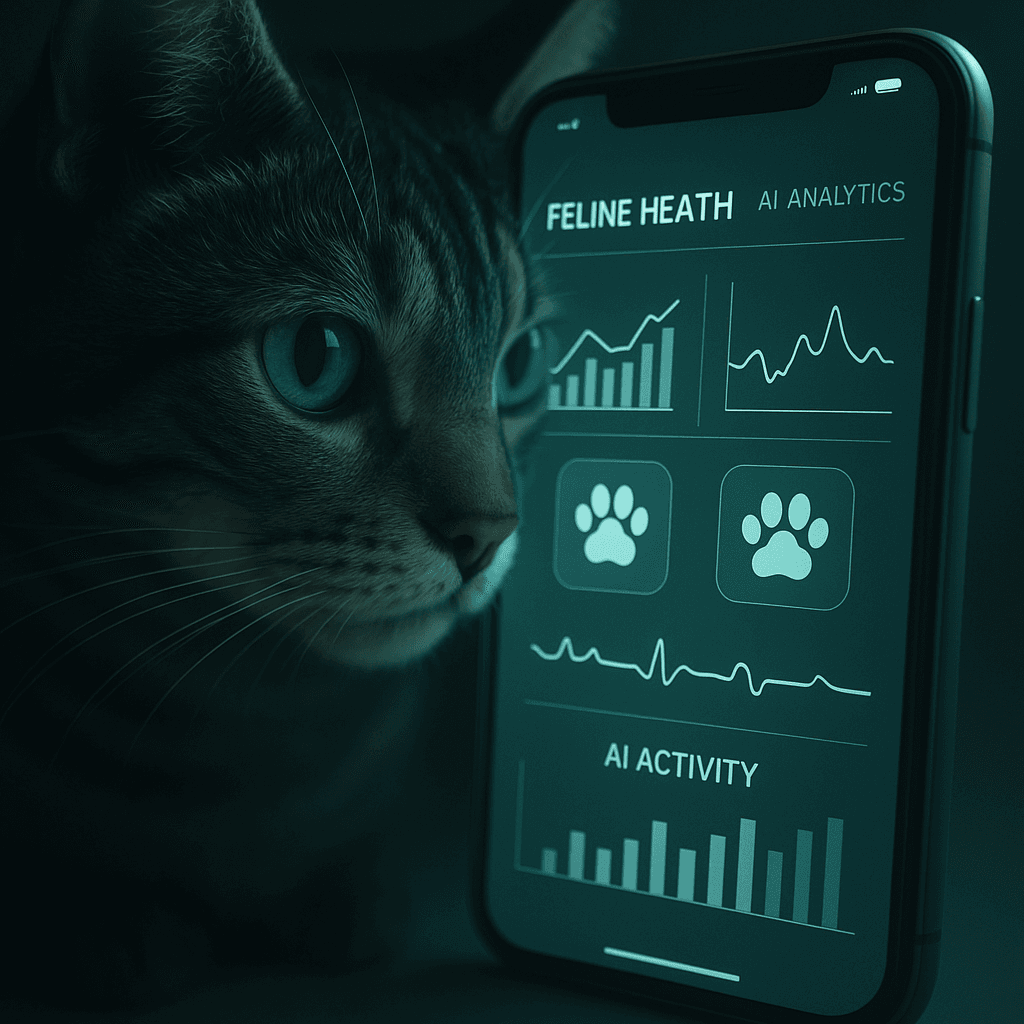
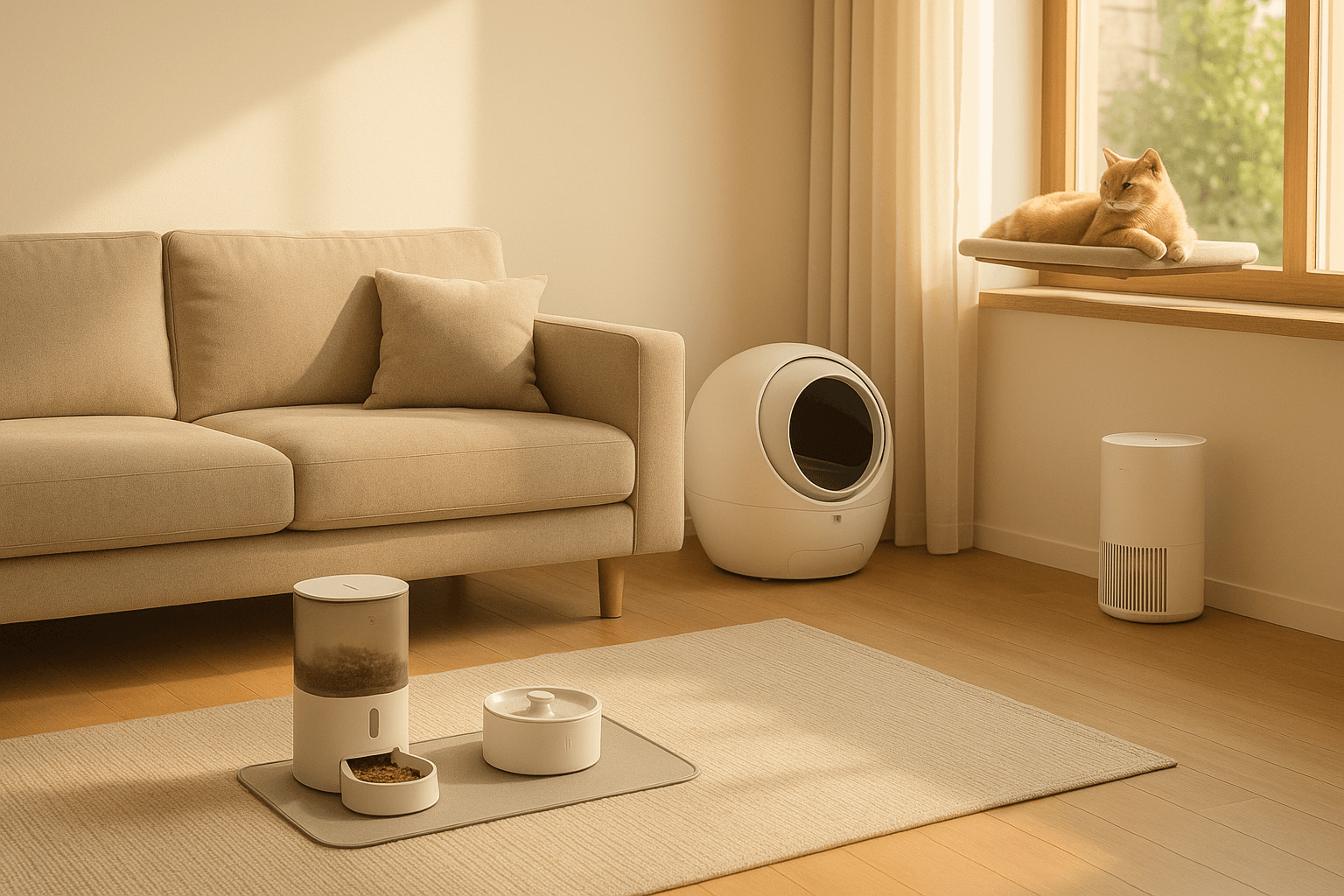
Discover how smart technology is transforming everyday life for cats. From connected feeders to AI-powered health monitors, our Smart Living guides show how to build a safer, happier, and more efficient home for your feline companion.

  • 3 Common Mistakes Cat Owners Still Make in 2025 — and How to Fix Them 🐾

    3 Common Mistakes Cat Owners Still Make in 2025 — and How to Fix Them 🐾

    Affiliate Disclaimer: PetTech AI may earn a small commission if you buy through links on this page. We only recommend products that support feline safety, comfort, and long-term wellbeing.

    If you’ve ever googled “why is my cat doing this?” at 2 a.m., you’re not alone. Most cat owner mistakes aren’t about being careless; they’re about missing small, boring details that matter a lot to cats: predictable routines, clean litter, safe space to play and rest, and early detection when something’s off. In 2025, the win is using light automation and better layout to make those basics effortless.

    This guide distills the three cat owner mistakes we still see every day—and the exact, modern fixes (including smart tools) that reduce stress for both of you.


    TL;DR (for busy humans)

    • Mistake #1: Inconsistent routines (meals, litter care, play).
      Fix: Automate the schedule; keep changes gradual and predictable.
    • Mistake #2: “Hidden” environmental stress (box too small, air quality, no vertical choice).
      Fix: Right-size the litter setup, add a purifier, give safe highs and hides.
    • Mistake #3: Ignoring early pattern changes (food, water, litter, sleep).
      Fix: Track lightly with smart devices; call your vet if trends look off for 48–72 hours.

    Along the way, we’ll flag the cat owner mistakes that quietly tank litter habits, hydration, and behavior—plus simple, affordable upgrades that actually work.


    Mistake #1: Inconsistent routines (and “weekend roulette”)

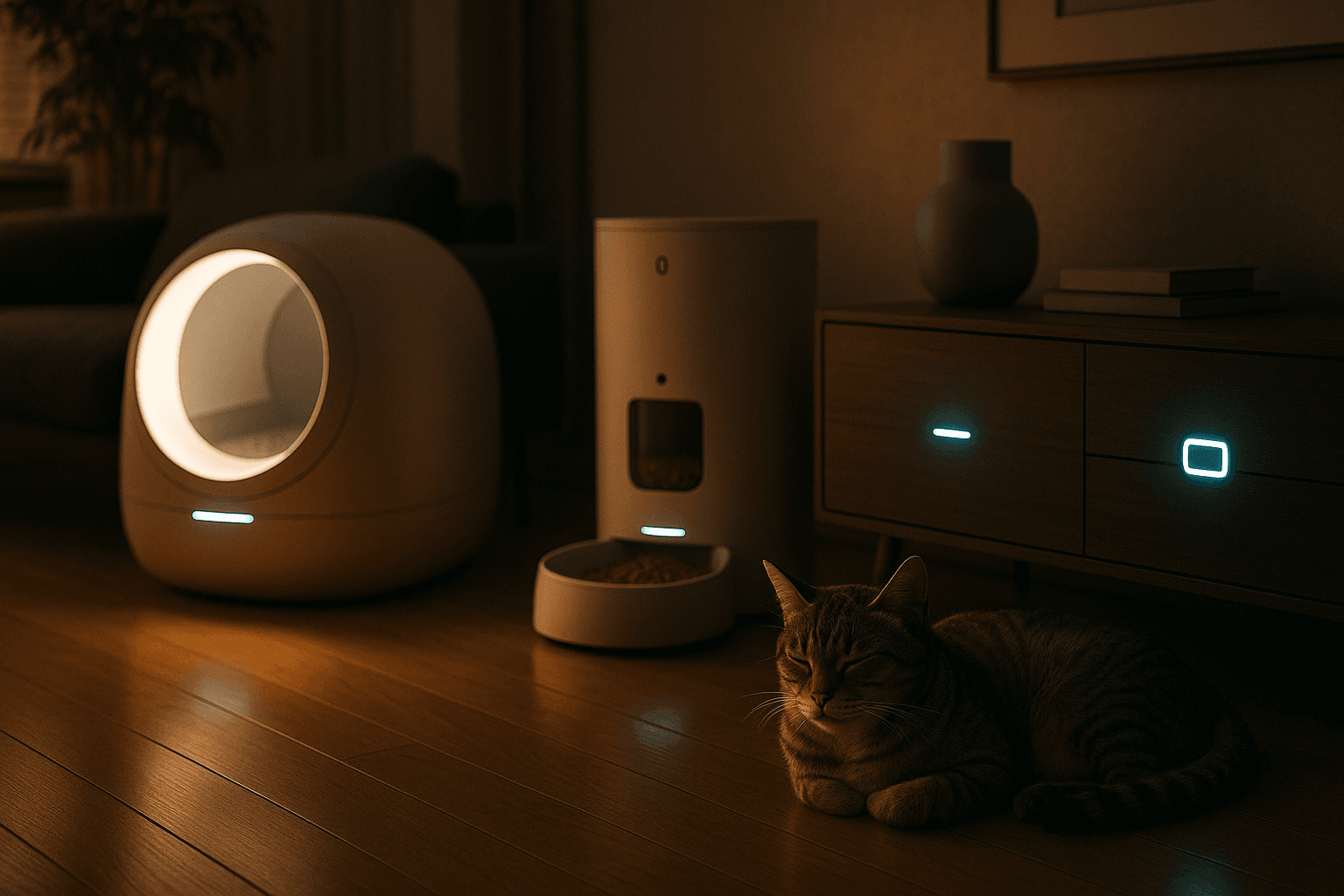
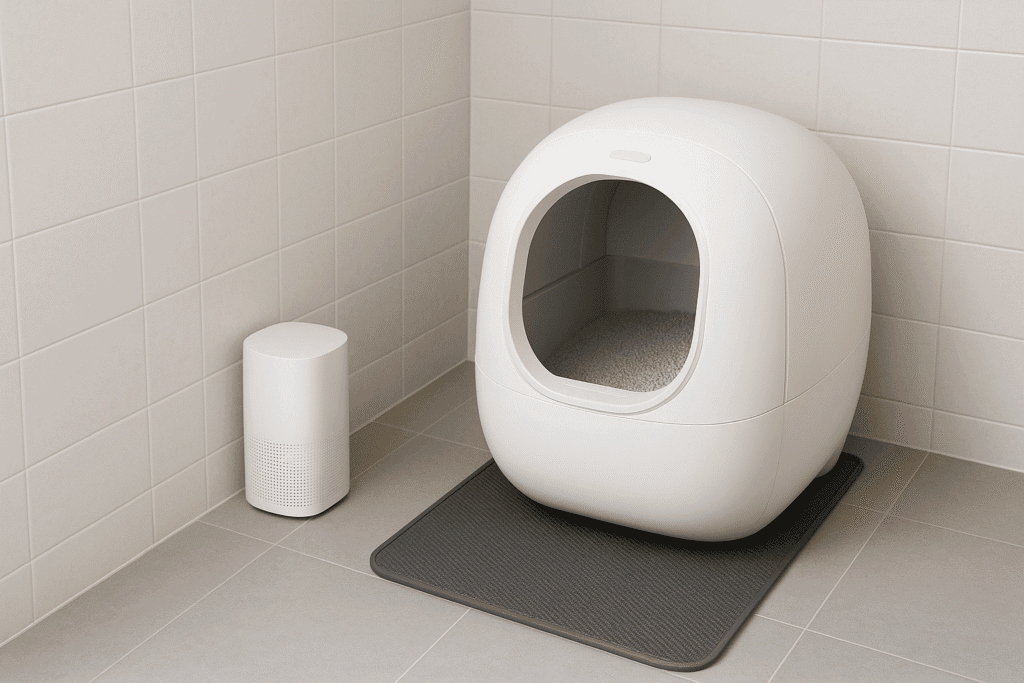
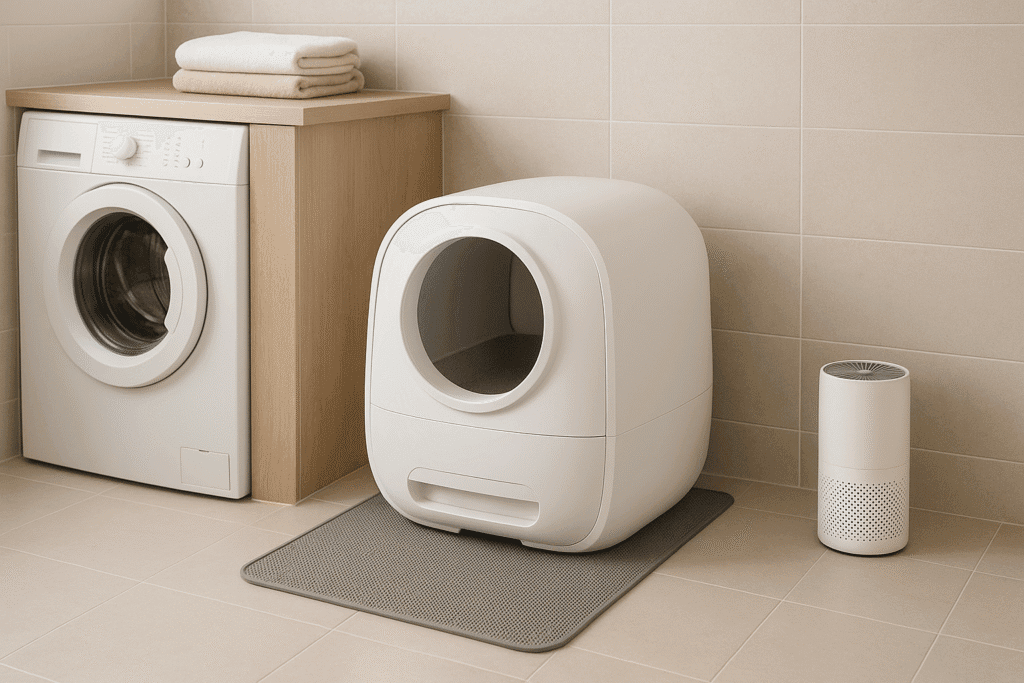
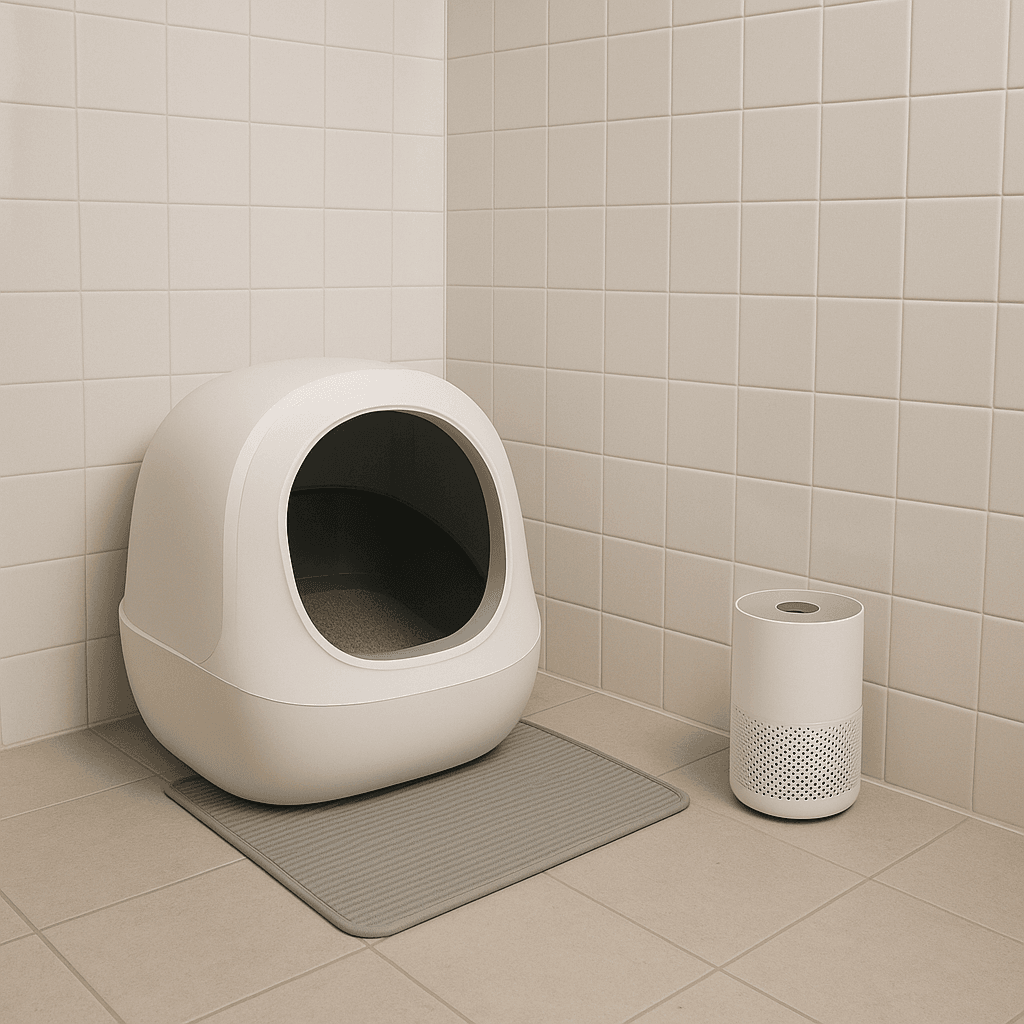
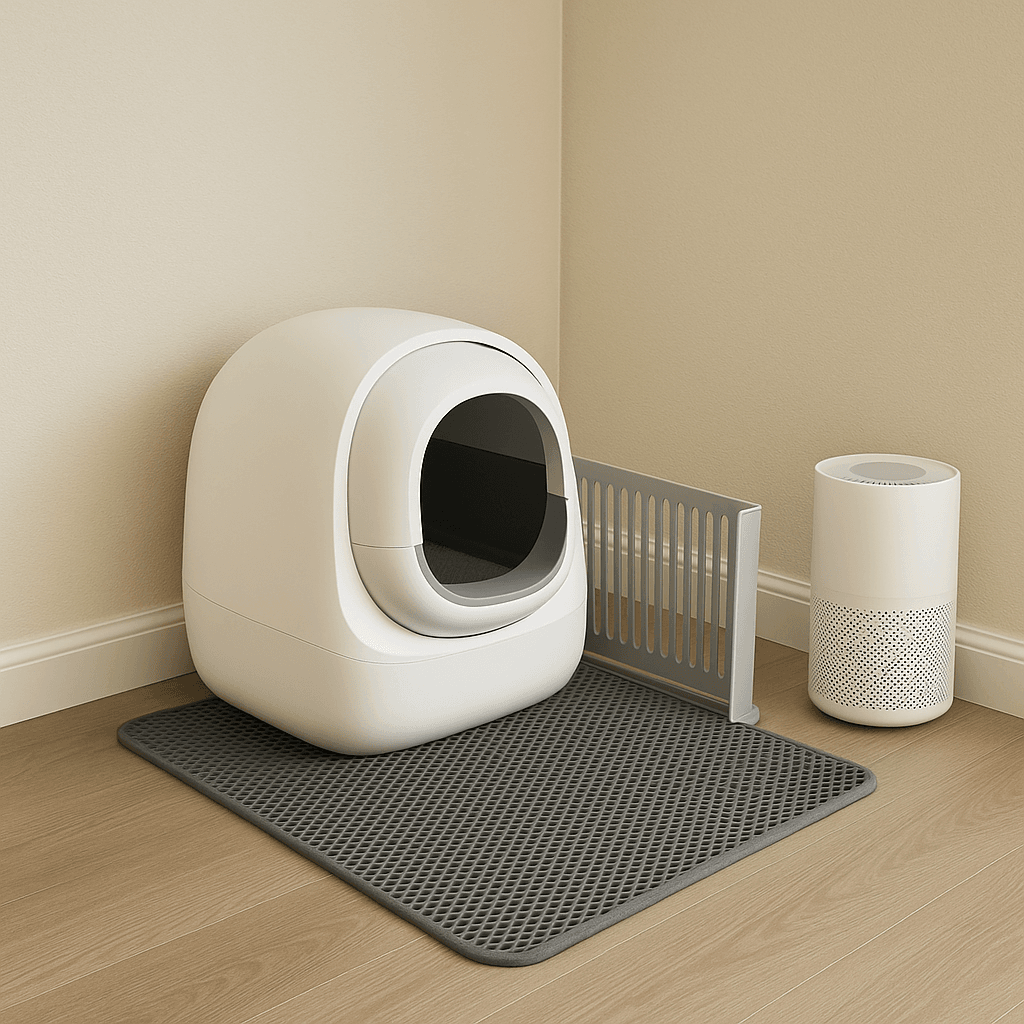
    Smart litter corner with purifier for odor and dust control. Cat owner mistakes.

    Why it’s a problem
    Cats love patterns. When meal times jump around, the litter isn’t cleaned on a cadence, or playtime is skipped for days and then overdone, stress builds. According to the Cornell Feline Health Center and the AVMA, predictable feeding, clean toileting, and daily enrichment are foundational. Breaking those rhythms is among the most common cat owner mistakes—and the easiest to fix.

    What it looks like at home

    • Breakfast sometimes at 6 a.m., sometimes at 10 a.m.
    • Litter scooped “whenever I remember.”
    • Play sessions only on weekends (then too long, too exciting).
    • Treats replacing structured meals (blood sugar roller coaster).

    The smart fix (keep it boring)

    1. Automate meals. Use an automatic feeder (e.g., PETKIT or Whisker Feeder-Robot) to lock timing and portion size. Start by mirroring your current schedule, then adjust slowly.
      Shop top-rated smart feeders → Amazon
    2. Lock hydration. A smart fountain (e.g., PETKIT Eversweet on Amazon) boosts drinking and reminds you about filter changes.
      See best-selling cat fountains → Amazon
    3. Put scooping on rails. Either commit to twice-daily manual scoops or move to a self-cleaning litter box (e.g., Litter-Robot 4) so “clean” is the default.
      Check Litter-Robot 4 availability → Whisker
    4. Schedule play like brushing teeth. Two sessions/day × 10–15 minutes with a wand toy; end with a small snack. Keep it consistent.

    Pro tip
    Set one push alert per day (not ten). Over-notification is one of those sneaky cat owner mistakes that leads to ignoring the app entirely.

    Interlinks


    Mistake #2: Environmental stress you don’t notice (box size, odor, air, space)

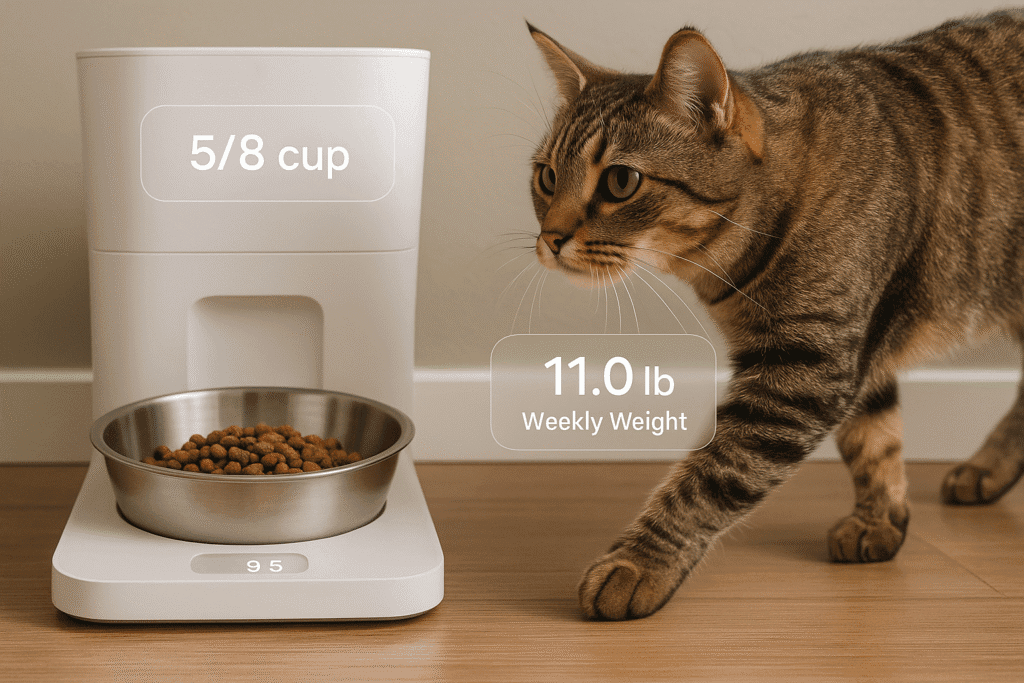
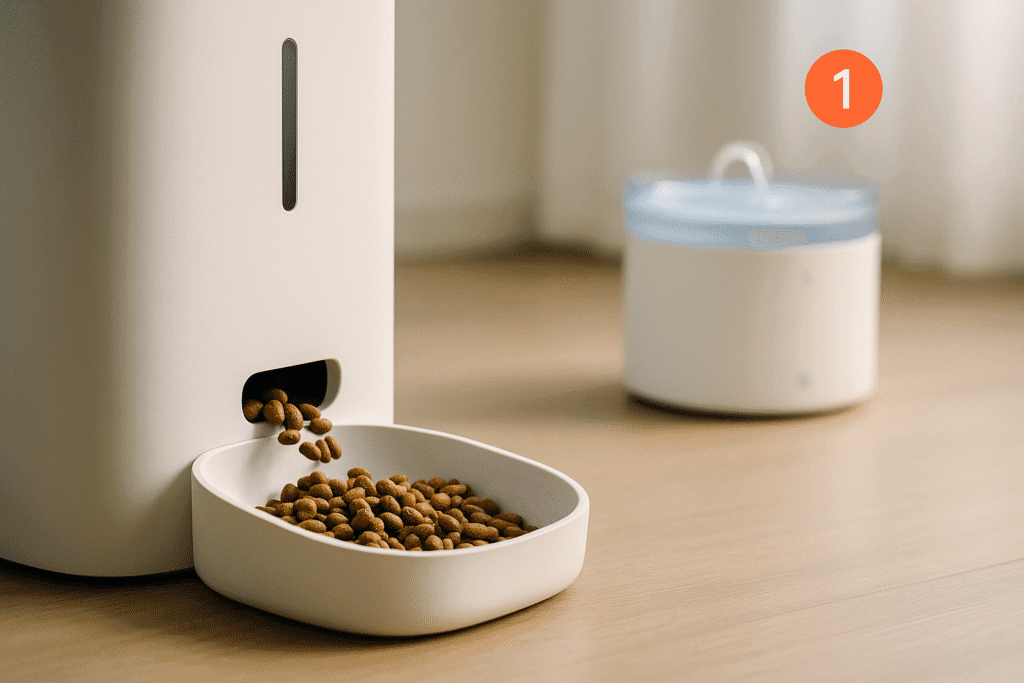
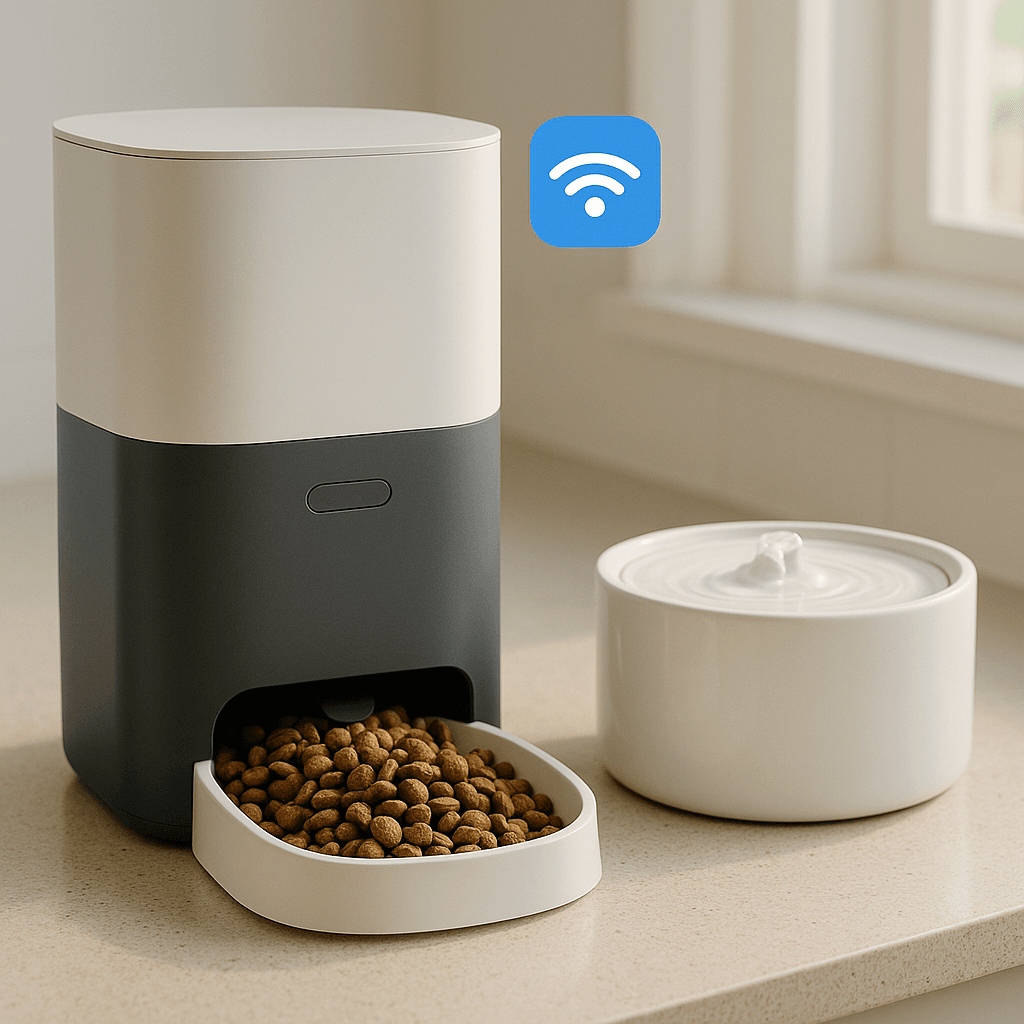
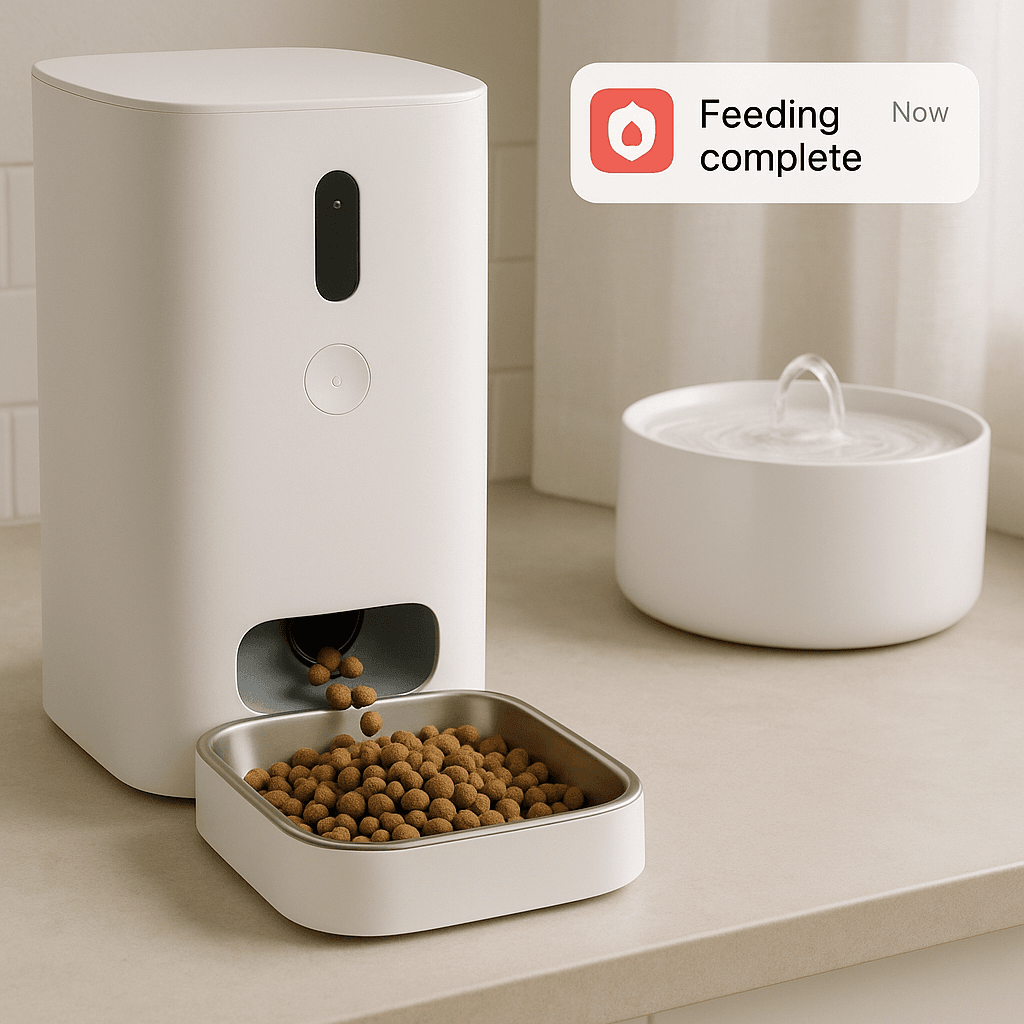
    Automatic feeder and smart fountain placed for better hydration.

    Why it’s a problem
    Cats are masters of quiet discomfort. A litter box that’s too small, an ammonia whiff after scooping, no safe vertical rest spot—these are high-impact cat owner mistakes. They don’t scream for attention, but they fuel avoidance, night zoomies, and “mystery” meowing.

    Checklist of hidden stressors

    • Litter box ergonomics: The footprint should be ~1.5× your cat’s body length in width and ~2× in length. If they can’t turn fully, it’s too small.
    • Odor spikes: Even a clean box can smell right after use; lingering odor pushes cats to “cleaner” floors, rugs, or beds.
    • Air quality: Dander and dust build up fastest in small rooms and apartments.
    • No vertical choice: Without perches/shelves, cats feel trapped at ground level.

    The smart fix (design the room, not just the box)

    • Upgrade the litter “zone,” not just the box.
      • Consider a self-cleaning litter box to stabilize cleanliness.
      • Add a slim litter mat and a purifier nearby to flatten odor/dust spikes.
      • Use smart accessories (e.g., PETKIT ramps/fences) to reduce scatter and help seniors.
        Explore smart litter accessories → Amazon
    • Purify the air quietly. A HEPA purifier with pet carbon (e.g., LEVOIT Core series on Amazon) removes fine particles and odor. Sleep Mode keeps it unobtrusive.
      View LEVOIT pet-care purifiers → Amazon
    • Give safe highs and hides. Add one elevated perch and one covered hideaway per cat. This single change solves a shocking number of multi-cat scuffles.

    Behavior science note
    Cats choose the path of least resistance. Reducing odor and giving vertical options resolve more problems than scolding ever will. Not providing these options sits high on the list of cat owner mistakes, even among loving, experienced owners.

    Interlinks


    Mistake #3: Ignoring pattern changes until they’re big

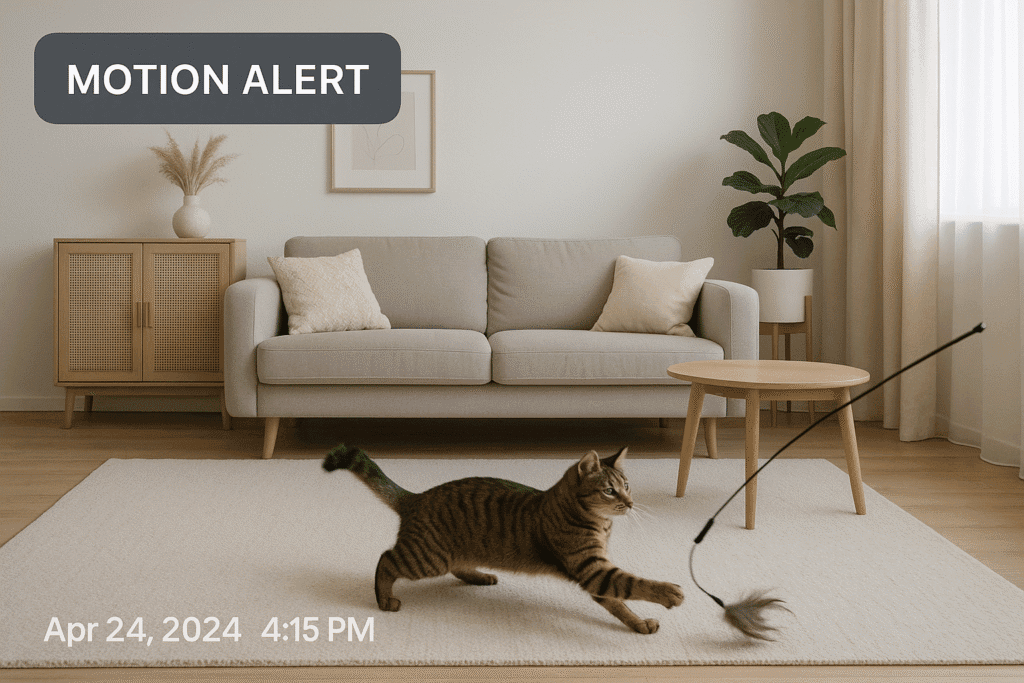
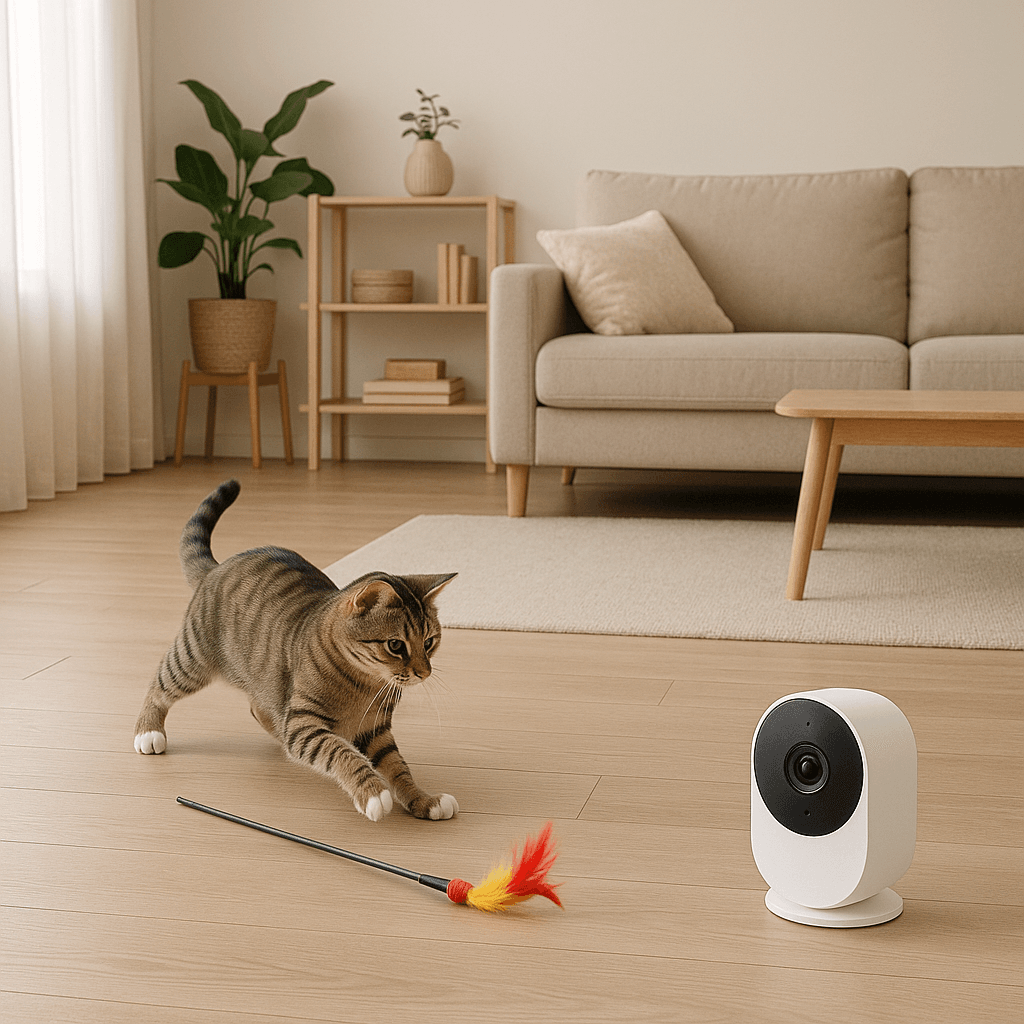
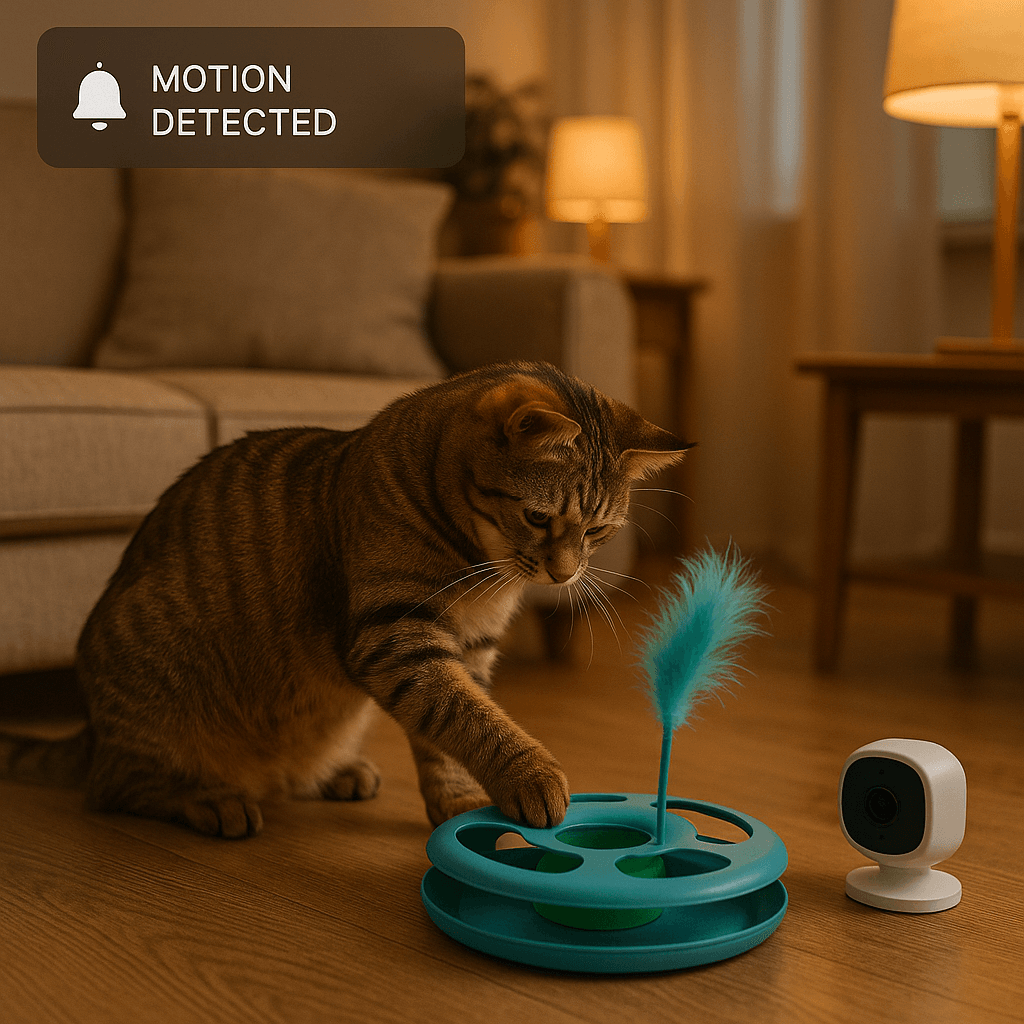
    Play session with indoor camera monitoring.

    Why it’s a problem
    Cats hide discomfort; the earliest signals are boring: a missed micro-meal, an extra litter visit, less time at the fountain, a shorter jump onto the couch. Dismissing these as “cat things” is one of the most costly cat owner mistakes because it delays care.

    What to watch (light-touch, not obsessive)

    • Food intake: sudden drop or unusual grazing.
    • Water intake: less interest in the fountain, or frequent trips without much drinking.
    • Litter patterns: more/less frequent visits, straining, vocalizing, or box avoidance.
    • Rest/activity: decreases in play or unusual nighttime pacing.

    The smart fix (simple data, clear thresholds)

    • Use devices that keep a quiet log:
      • Feeder/fountain apps for intake trends.
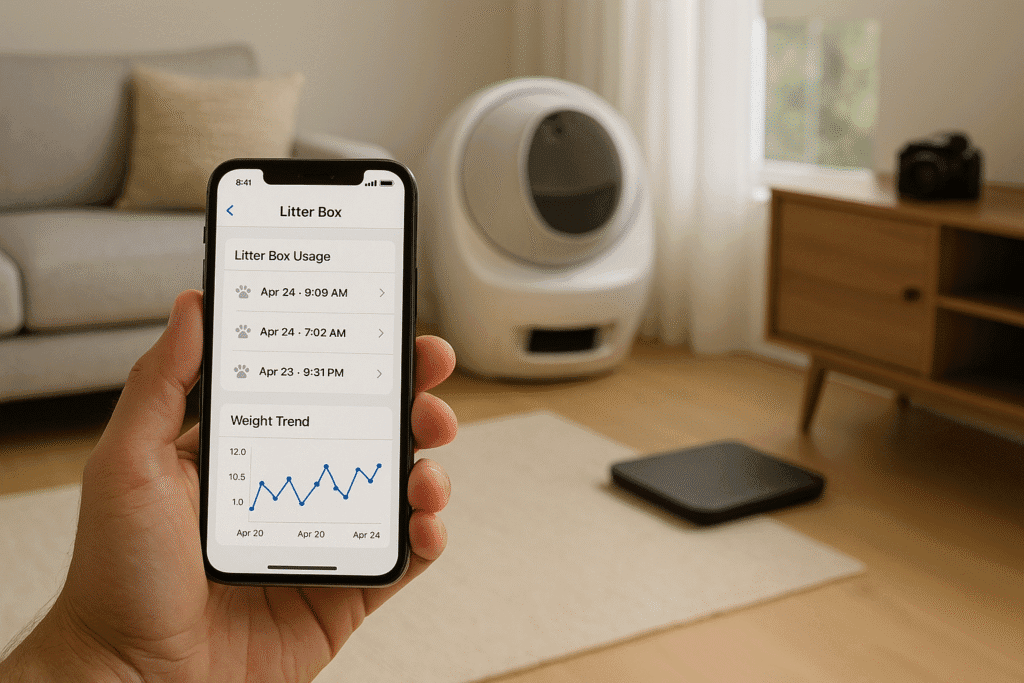
      • Self-cleaning litter boxes for visit frequencies/weight changes.
      • Indoor cameras (e.g., Petcube on Amazon) for short check-ins and motion summaries.
        See Petcube indoor cameras → Amazon
    • Set two rules for your household:
      1. We check trends weekly (not hourly).
      2. If a trend looks off for 48–72 hours, we call the vet.
        This avoids two classic cat owner mistakes—panic over blips or ignoring true patterns.

    Vet alignment
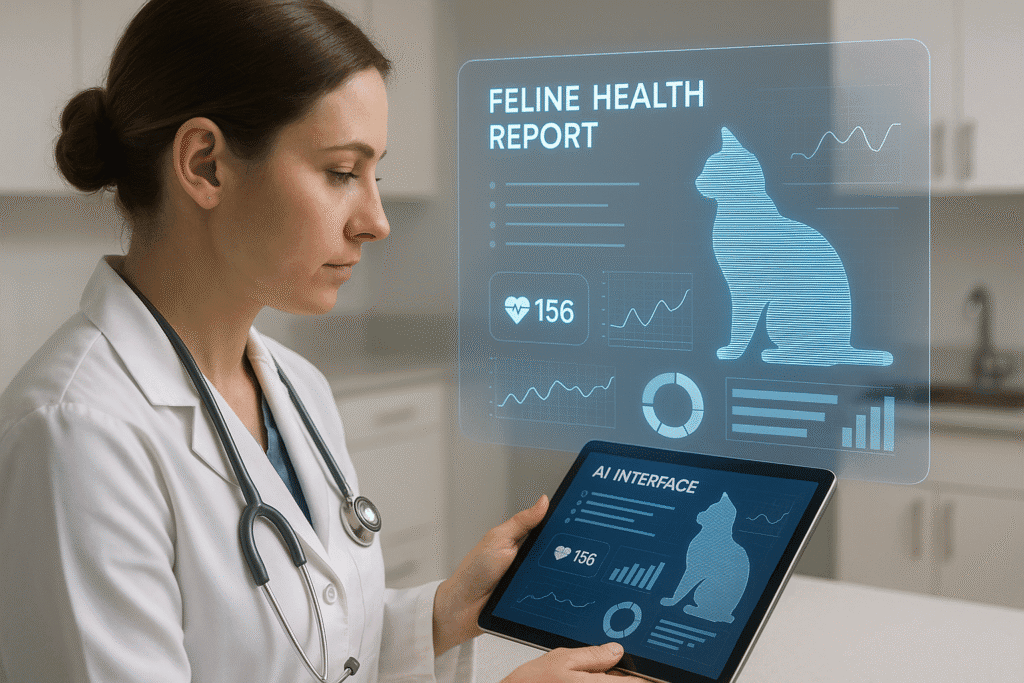
    The AVMA and Cornell both emphasize that sustained changes in eating, drinking, toileting, or behavior warrant evaluation. Smart tools help you notice; your vet confirms.

    Interlinks


    Bonus: Three small wins that pay off forever

    These aren’t dramatic, but they quietly undo several cat owner mistakes in one shot:

    1. Separate food and water by 1–2 meters. Many cats drink more when water isn’t next to food.
    2. Two play sessions/day × 10–15 minutes. End with a small snack to complete the “prey sequence.”
    3. One calm wall per room. Keep feeders/fountains and litter/purifier aligned along a wall, center open. Movement feels safer.

    Product quick picks

    • Automatic feeders → schedule control, portion precision PetKit / Whisker / Amazon
    • Smart fountains → cleaner, moving water + filter reminders PetKit / Amazon
    • Self-cleaning litter boxes → odor control + usage logs Whisker / Amazon / PetKit
    • HEPA purifiers → reduce dander/odor (LEVOIT Core series on Amazon).
    • Indoor cameras → short check-ins, motion summaries (Petcube on Amazon).

    These remove friction from routine, the root cause behind many cat owner mistakes.


    The 7-day reset plan (copy this)

    Day 1–2: Mirror your current meal times in a feeder; place fountain 1–2 m away.
    Day 3: Add a litter mat and set a daily scoop time (or initiate self-cleaning).
    Day 4: Two play sessions (10–15 min) and a small post-play snack.
    Day 5: Place purifier near litter zone; enable Sleep Mode at night.
    Day 6: Create one elevated perch + one covered hide.
    Day 7: Review app summaries (food/water/litter). If anything looks off for 48–72 hrs, call your vet.

    This is how you quietly erase the most common cat owner mistakes without overwhelming yourself (or your cat).


    Bonus: The Emotional Side of Cat Ownership 🧠💛

    Behind every one of these cat owner mistakes, there’s usually the same feeling — guilt.
    You come home late, the feeder’s empty, or you forgot to scoop the litter before bed, and suddenly you feel like a bad cat parent. The truth? Perfection doesn’t exist in feline care. What matters is pattern, not panic. Cats thrive when life feels stable, not flawless.

    If you’ve already made one of these cat owner mistakes, the best move isn’t to overcorrect — it’s to return to predictability. Feed at roughly the same times, keep your tone calm, and end each day with one positive interaction (a short play, a treat, a nap near you). Emotional consistency does more for your cat than any gadget ever could.

    Technology helps, but empathy teaches you how to use it:
    a smart feeder means freedom from guilt, a purifier means you can breathe together, and a camera means you’re connected even when apart.
    That’s the real purpose of pet tech — not control, but comfort.


    Final thoughts

    Great cat care is empathy plus design. Lock the routine, right-size the environment, and use smart tools to catch small changes early. Do that, and most cat owner mistakes become non-issues. Your home stays calmer, your cat more confident—and you finally get to enjoy the best part of living with a cat: the soft, predictable, purring kind of normal.

    Authority links

  • Smart Cat Spaces: Designing Rooms That Think for You (2025)

    Smart Cat Spaces: Designing Rooms That Think for You (2025)

    Affiliate Disclaimer: PetTech AI may earn a small commission if you buy through links on this page. We only recommend products that enhance feline safety, comfort, and wellbeing.

    Modern pet tech isn’t about flashy gadgets—it’s about environmental design that reduces stress, simplifies care, and surfaces useful signals. That’s the promise of smart cat spaces: rooms arranged and equipped so your cat’s core needs—eating, drinking, toileting, resting, and playing—happen predictably with minimal friction. When placement, routine, and automation work together, your home starts to “think” for your cat (and for you).

    This guide shows you how to plan, equip, and maintain smart cat spaces room by room. You’ll learn which devices matter, where to place them in apartments and houses, and how to use data lightly—never obsessively—to spot what needs attention early.


    What “smart” actually means for cats (and what it doesn’t)

    A smart setup isn’t a gadget dump. According to the Cornell Feline Health Center and the AVMA, the bedrock of feline health is routine, enrichment, and low-stress hygiene. Tech is valuable when it reinforces those pillars.

    In practice, smart cat spaces do four things:

    1. Lower friction in daily care (scheduled feeds, self-cleaning litter).
    2. Increase consistency (clean water, stable climate, predictable play).
    3. Provide gentle signals (app reminders for filters, litter use, water levels).
    4. Respect feline ergonomics (quiet corners, vertical choices, clear paths).

    They do not replace human attention or veterinary care. Data helps; your relationship and judgment do the rest.


    Core principles that make smart cat spaces work

    • Zones over clutter. Define feeding, litter, rest, and play zones; avoid moving them around. Cats rely on stable maps.
    • One change at a time. Add one new device each week; fast overhauls create anxiety.
    • Quiet by default. Choose low-noise motors and sleep modes; sound consistency reduces arousal.
    • Vertical choice. Perches and shelves provide security and reduce conflict in multi-cat homes.
    • Light-touch data. Review weekly, not hourly. Trends over 48–72 hours matter more than single spikes.

    Design around those rules and your smart cat spaces will feel almost invisible—because they simply work.


    Living room: the hub of observation and bonding

    The living room blends your routines with your cat’s. Keep it calm, visible, and easy to maintain.

    Smart additions

    • Indoor camera with two-way audio & night vision (e.g., Petcube on Amazon): quick check-ins during workdays, smart motion alerts for irregular nighttime activity.
      See Petcube indoor cameras → Amazon
    • HEPA air purifier with pet carbon (e.g., LEVOIT Core series on Amazon): traps dander/litter dust and neutralizes odor, improving comfort for both of you.
      View pet-focused air purifiers → Amazon
    • Vertical highways (shelves/ramps with subtle motion-activated LEDs): safe movement and high resting spots lower territorial tension.

    Placement

    • Camera angle should capture the resting perch and a slice of the play area.
    • Purifier near the high-traffic route, not hidden behind furniture.

    Get these right and your living room anchors your smart cat spaces with comfort and clarity.

    Internal interlink:


    Kitchen & feeding corner: predictability with a purpose

    Smart feeder and fountain placed for routine hydration.

    Meal timing shapes the day. Predictable feeding reduces food-related anxiety and nighttime wake-ups.

    Devices to consider

    • Automatic feeder (e.g., PETKIT or Whisker Feeder-Robot): portion control, schedule consistency, and intake logs—ideal for weight management or multi-cat households.
      Shop top-rated smart feeders → Amazon
    • Smart fountain (e.g., PETKIT Eversweet on Amazon): quiet flow, multi-layer filtration, and reminders to replace filters—hydration is key for urinary health.
      See best-selling cat fountains → Amazon
    • Smart bowl with scale (e.g., PETKIT Fresh Metal Digital Pet Bowl on Amazon): weighs meals, helps transition diets gradually.

    Placement

    • Put fountain 1–2 meters away from the feeder; many cats drink more when water is separate from food.
    • Use a thin silicone mat for splash control and easy wiping.

    Consistent feeding routines turn this corner into one of your most reliable smart cat spaces—and they’re backed by behavioral science.

    Internal interlinks:


    Bathroom or laundry: the hygiene nerve center

    Litter corner with purifier for odor and dust control.

    Nothing affects feline stress like litter quality. Cleanliness, ergonomics, and odor control decide whether the box feels “safe.”

    Devices to consider

    • Self-cleaning litter box (e.g., Whisker Litter-Robot 4): automatic cycling, weight tracking, usage logs, and odor control.
      Check Litter-Robot 4 availability → Whisker
    • Smart accessories (PETKIT ramps/fences/mats; urine-indicator litter): reduce scatter, catch early pH anomalies you can discuss with your vet.
      Explore smart litter accessories → Amazon

    Ergonomics

    • Box footprint ≈ 1.5× your cat’s body length in width and 2× in length; height they can step into without strain.
    • Semi-private but not isolated: cats prefer sightlines and escape routes.

    When the litter zone is stable and data-informed, your smart cat spaces gain the most important ingredient: peace of mind.

    Internal interlinks:


    Bedroom: sanctuary for sleep and recovery

    Cats sleep 12–16 hours daily; make the bedroom a cue for calm.

    Smart comfort

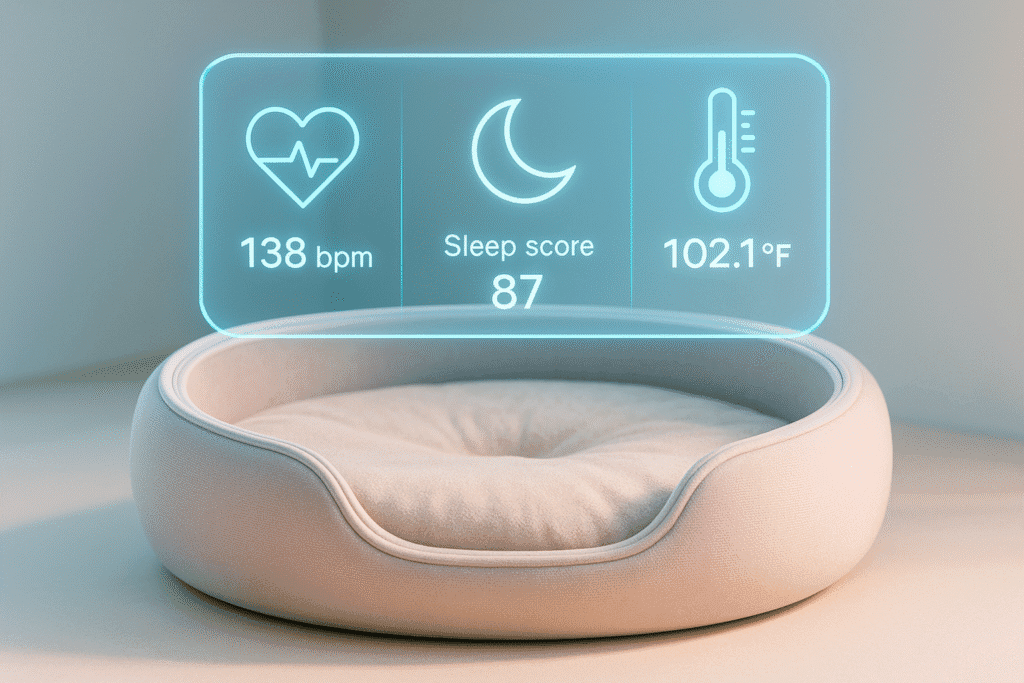
    • Temperature-aware bed/warming mat: helps seniors or short-haired cats maintain comfort in winter.
    • Circadian-friendly lighting (smart bulbs dimmed warm in the evening): lowers arousal before bedtime.
    • Gentle ambient sound (smart speakers with white noise): masks hallway noise in apartments.

    Layout

    • Provide two resting options: one elevated, one hidden. Choice reduces anxiety and improves sleep.
      This quiet sanctuary completes your smart cat spaces by giving your cat a predictable, low-stimulus retreat.

    Entryways & travel staging: movement without chaos

    Doorways, corridors, and carriers are stress points. Plan them to be predictable.

    Tech + design

    • Microchip-access doors for controlled ingress/egress in homes that allow outdoor access.
    • GPS trackers with geofence (e.g., Tractive Cat Mini on Amazon) for balcony/escape risk scenarios.
      See top-rated cat GPS trackers → Amazon
    • Carrier staging area with a soft mat, in view but unobtrusive—let the carrier “live” in the home so it stops being a threat cue.

    Smooth transitions keep smart cat spaces feeling safe even at the edge of your home.

    Internal interlinks:


    Micro-apartments vs. houses: two proven blueprints

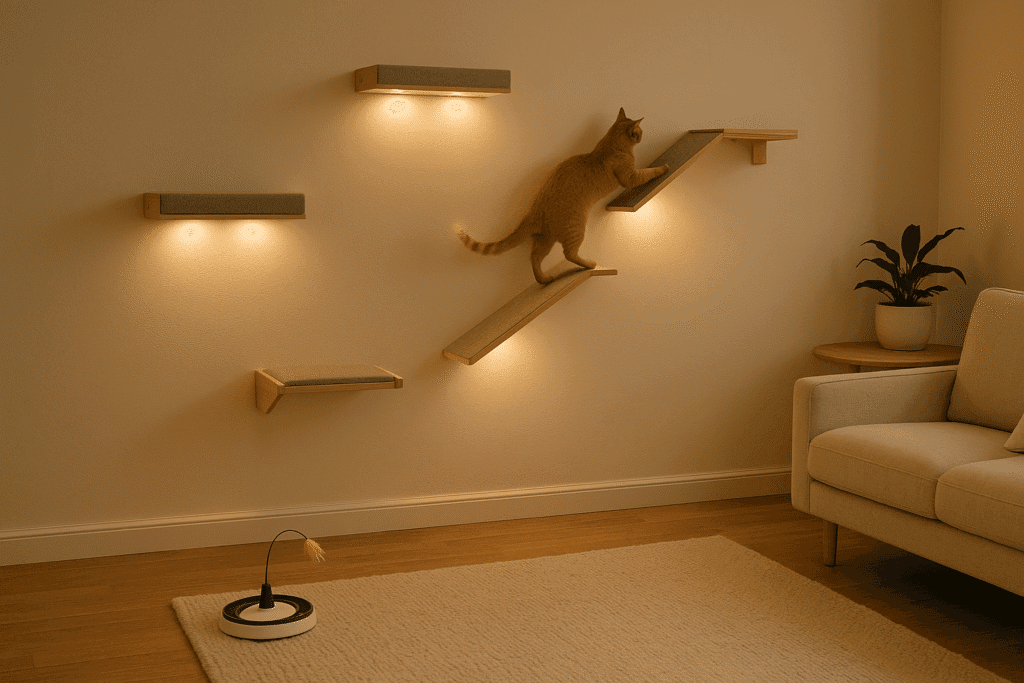
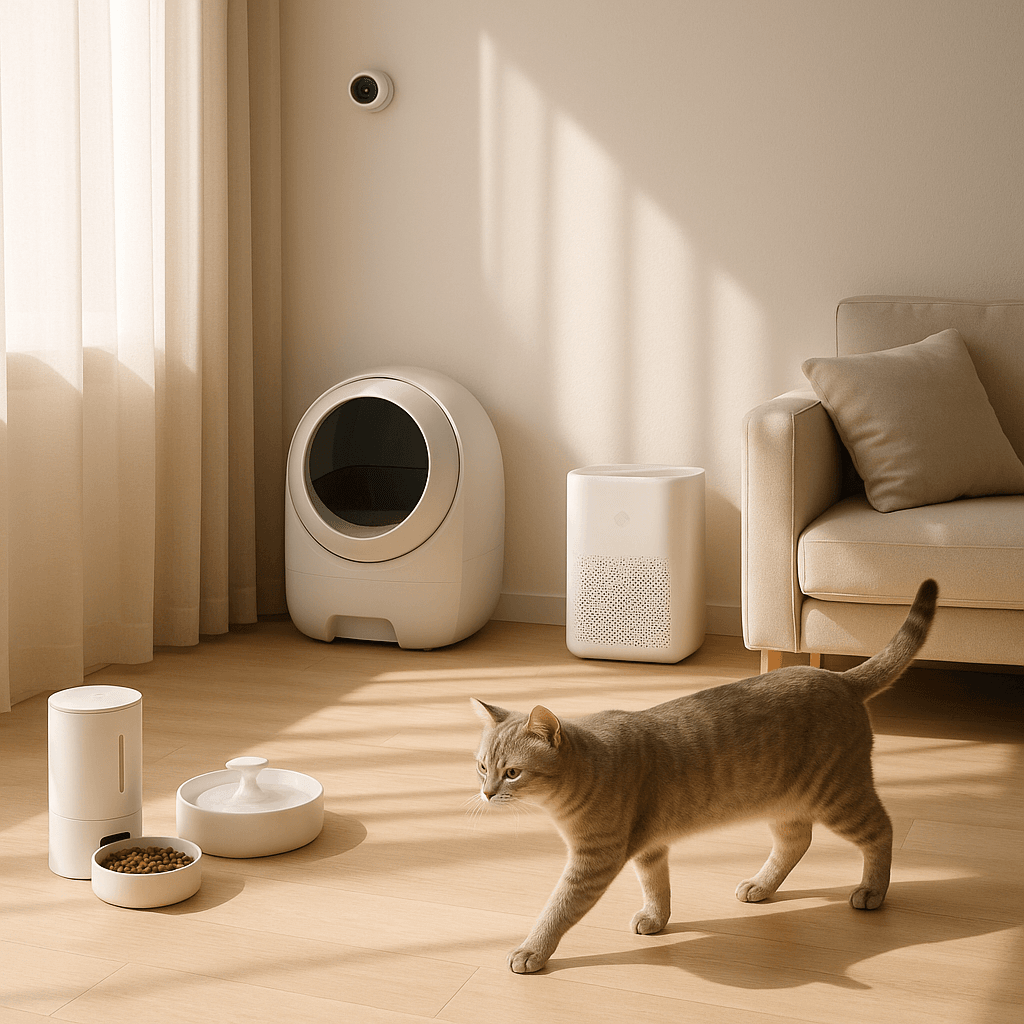
    Vertical play shelves with gentle lighting in a smart cat spaces.

    Studio / one-room flow

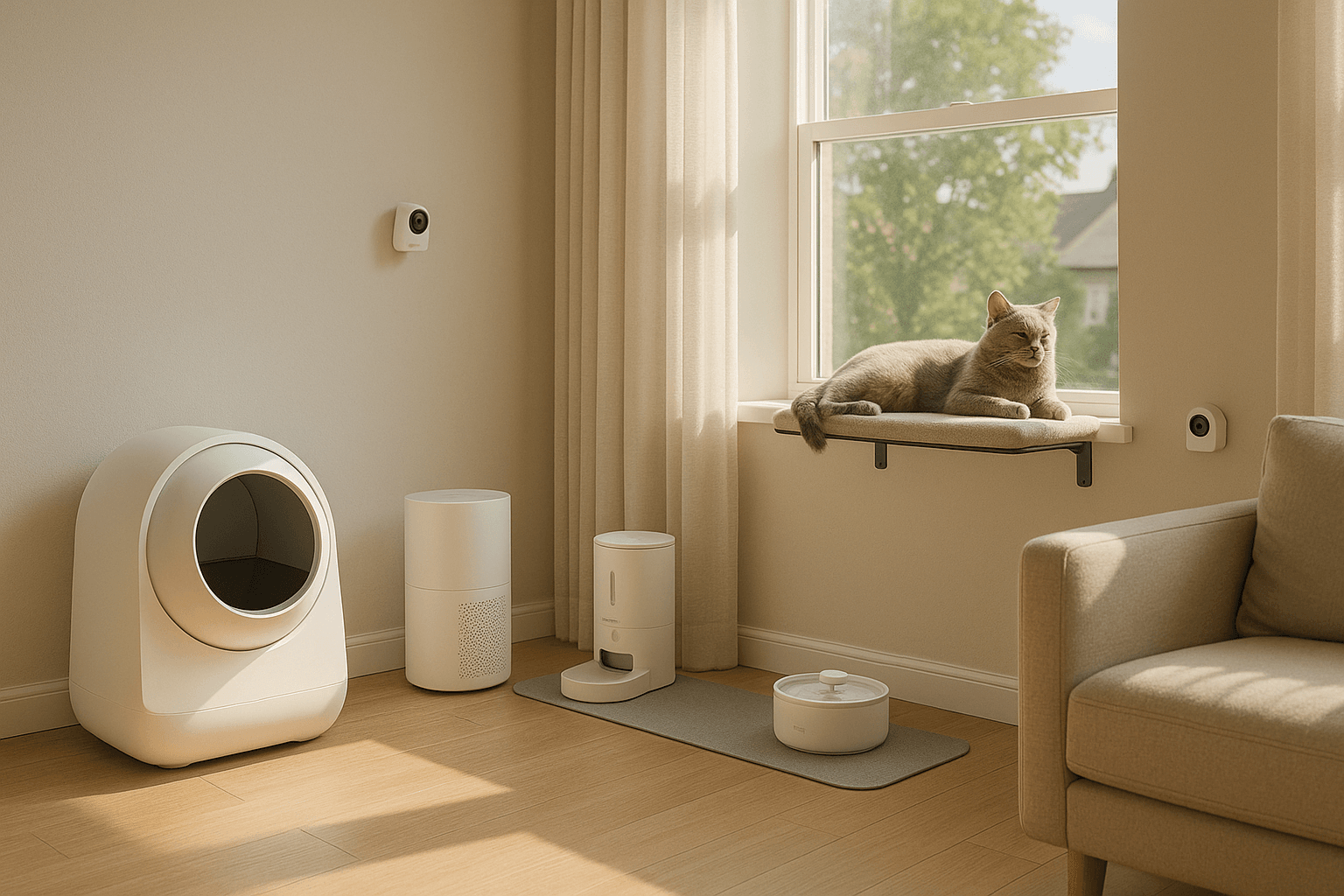
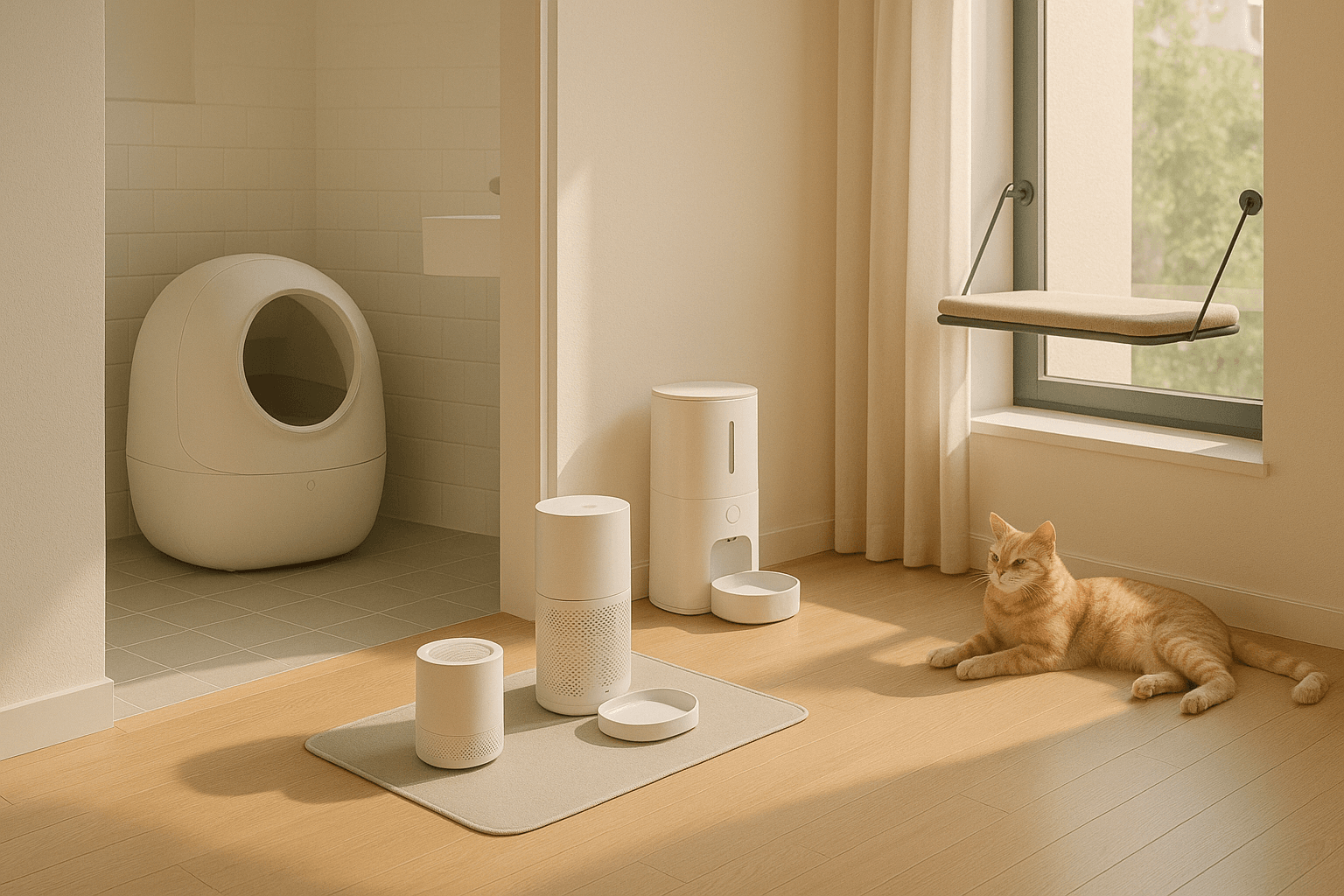
    • One calm wall: litter + purifier at one end; feeder + fountain on a mat at the other; camera captures both.
    • Center open for movement; window perch on the opposite side.
    • Result: compact smart cat spaces without visual clutter.

    Multi-room home

    • Kitchen edge: feeder/fountain
    • Bathroom/laundry: litter + purifier
    • Living room: vertical play + camera
    • Bedroom: rest sanctuary
    • Result: two to three zones reduce crowding and behavioral spillover.

    The data layer: just enough to notice

    Track only what helps action:

    • Feeding & water (missed meals, low intake)
    • Litter visits & weight (constipation/UTI flags)
    • Activity & rest (recovery, weight management)

    If something looks off for 48–72 hours, call your vet. The AVMA reminds that behavior changes can indicate medical issues; smart cat spaces turn guesswork into trend awareness you can share with your clinic.


    Budget tiers to build at your pace

    Starter (~$150–$250)

    • Smart fountain
    • Interactive toy or puzzle feeder
    • Compact HEPA purifier
      → The fastest, most noticeable upgrade to beginner smart cat spaces.

    Core (~$400–$900)

    • Automatic feeder
    • Smart fountain
    • Self-cleaning litter box or quality manual box + health add-on
    • HEPA purifier
      → Routine, hygiene, and basic data in one balanced setup.

    Complete ($1,200+)

    • Self-cleaning litter box with app
    • Automatic feeder with robust scheduling
    • Smart fountain with filter reminders
    • HEPA purifier + indoor camera
    • Optional GPS tracker
      → Fully realized smart cat spaces with minimal daily friction.

    Quick shop:


    Safety & maintenance: the quiet “must”

    • Keep dryer heat low; stop if your cat pants (heat stress).
    • Cable management for fountains/cameras; pumps must stay submerged.
    • Laser toys only with auto-shutoff; avoid direct eye exposure.
    • Replace filters and pads on schedule.
    • Avoid overcrowding corners; clear escape paths reduce panic.

    Maintenance is what keeps smart cat spaces working month after month.


    Troubleshooting: quick fixes that actually work

    • Ignores the fountain: move it 1–2 meters from food; keep water cool and at max line; replace filters.
    • Scared of the litter robot: disable auto-cycle for 48 hours; turn on once they’re using it comfortably.
    • Night zoomies: evening play (10–15 min) → small snack → warm, dim light in the bedroom.
    • Food guarding: micro-feeds at staggered times; add a second bowl in a different room.

    As routines stabilize, your smart cat spaces will require fewer interventions and deliver more calm.


    Your 7-step setup checklist (printable)

    1. Map zones: food/water, litter, rest, play.
    2. Add one device per week; never overhaul overnight.
    3. Mirror current schedule; shift gradually to ideal times.
    4. Set only essential app alerts; review data weekly.
    5. Play twice daily; end with a small reward.
    6. Replace filters on schedule; wipe mats daily.
    7. Reassess layout every quarter—smart cat spaces evolve with your cat.

    Final take

    When design, routine, and light automation align, smart cat spaces feel humane and low-effort. You get quietly clean air, predictable meals, a litter box that stays fresh, play that happens on time, and gentle signals when something changes. It’s empathy turned into engineering—so your cat can do what cats do best: relax, observe, and thrive.


    Internal interlinks


    Authority links

  • How to Create a Cat-Friendly Smart Apartment: A Calm, Connected Home That Works on Its Own

    How to Create a Cat-Friendly Smart Apartment: A Calm, Connected Home That Works on Its Own

    Affiliate Disclaimer: PetTech AI may earn a small commission if you buy through links on this page. We only feature products that support safety, comfort, and long-term feline wellbeing.

    Designing a smart apartment for cats isn’t about stuffing gadgets into a small space. It’s about building a calm routine where food, water, litter care, air quality, and play happen predictably with minimal friction. When devices are placed thoughtfully and connected through simple apps, your home becomes an easy, low-stress habitat—for both of you.

    This guide shows how to plan zones, choose the right gear, and create a data-lite system you can actually maintain. Whether you’re in a studio or a one-bedroom, a smart apartment for cats can be quiet, elegant, and genuinely helpful.


    The core idea: routine + gentle automation

    A smart apartment for cats supports what science says cats need most: predictable meals, clean litter, safe places to rest, and daily play. The Cornell Feline Health Center and AVMA emphasize routine, low-stress handling, and environmental enrichment as foundations of feline health. Smart devices simply make those foundations easier to keep every day.

    What “smart” means here

    • Consistency: automatic feeding times, constant access to fresh water, and reliably clean litter.
    • Signals: basic app notifications (low water, full bin, unusual litter visits).
    • Comfort: quiet motors, stable temperatures, and good air.
      A smart apartment for cats is successful when it feels almost invisible.

    Step 1 — Map your space into 4 zones

    Space is premium, so planning beats impulse buying. Sketch your floor plan and mark four zones around the perimeter (keep the center open for movement):

    1. Food & Water Zone — kitchen edge or dining nook
    2. Litter Zone — bathroom corner or entry closet with ventilation
    3. Rest & Hide Zone — bedroom corner or sofa-side nook
    4. Play & Observation Zone — window line or hallway track

    A smart apartment for cats works best when each zone is stable. Moving devices weekly confuses patterns and can cause stress or accidents.


    Step 2 — Feeding & hydration: predictability first

    Smart feeder and fountain setup for apartment living.

    What to add

    • Automatic feeder (e.g., PETKIT or Whisker feeder): precise portions on schedule, optional profiles for multiple cats.
      Shop top-rated smart feeders → Amazon
    • Smart fountain (e.g., PETKIT Eversweet on Amazon): quiet pump, multi-layer filtration, filter reminders.
      See best-selling cat fountains → Amazon

    Apartment tips

    • Place feeder and fountain 1–2 meters apart—many cats drink more when water is away from food.
    • Protect floors with a thin silicone mat; wipe daily.
    • Start by mirroring your current routine; shift times gradually over 7–10 days so your smart apartment for cats doesn’t feel like a shock.

    Internal interlinks:


    Step 3 — Litter & hygiene: peace-of-mind automation

    Apartment litter corner with HEPA purifier.

    In small spaces, odor and mess are the enemy. A smart apartment for cats lives or dies by litter quality.

    What to add

    • Self-cleaning litter box (e.g., Whisker Litter-Robot 4 on Amazon): automatic cycling, odor control, usage logs, and weight tracking.
      Check Litter-Robot 4 availability → Whisker (REALSIMPLE50 for a 50$ discount)
    • Smart accessories (PETKIT ramps/fences/mats; pH-indicator litter): reduce tracking, spot early urinary issues.
      Explore smart litter accessories → Amazon

    Apartment tips

    • If possible, use a vented bathroom corner.
    • Add a narrow litter mat; empty daily to keep granules off rugs.
    • For sensitive cats, disable auto-cycle for the first 48 hours; let them adopt it as a “dumb box,” then enable automation.

    A smart apartment for cats with a tidy litter corner prevents most house-soiling problems and keeps the living area truly livable.

    Internal interlinks:


    Step 4 — Air quality & odor control: the invisible upgrade

    Small rooms concentrate smells and dander. A compact purifier changes the entire vibe.

    What to add

    • HEPA purifier with pet carbon (e.g., LEVOIT Core P350 on Amazon) near the litter or grooming corner.
      View LEVOIT pet-care purifiers → Amazon

    Apartment tips

    • Run Sleep Mode for ultra-quiet filtration at night.
    • Replace filters on schedule; the filter is the performance.
      A smart apartment for cats is surprisingly serene when the air is clean.

    Internal interlink:


    Step 5 — Cameras & gentle monitoring: reassurance, not surveillance

    Cameras can help when you work long shifts or are easing separation stress.

    What to add

    • Indoor camera with night vision and two-way audio (e.g., Petcube on Amazon): motion alerts, quick check-ins, no 24/7 obsession.
      See Petcube indoor cameras → Amazon

    Apartment tips

    • Aim one cam to cover feeder + fountain, another (optional) facing the litter area.
    • Keep cams out of bedrooms/bathrooms to respect privacy.
      Used wisely, cams make a smart apartment for cats feel safe for you and routine for your cat.

    Internal interlink:


    Step 6 — Enrichment & play: the stress-relief engine

    Apartment play session with indoor camera view. Smart apartment for cats.

    Tech matters, but play is the heart of behavior health. A smart apartment for cats schedules enrichment like clockwork.

    What to add

    • Interactive toys and puzzle feeders (Amazon): motion or schedule-based toys, low-noise auto-laser with safety cutoff, food puzzles for natural foraging.
      Browse top interactive toys → Amazon

    Routine

    • Two sessions/day × 10–15 minutes; finish with a small snack.
    • Rotate toys weekly to avoid novelty burnout.
    • Add a window perch; sun + view = effortless enrichment in a smart apartment for cats.

    Internal interlink:


    Step 7 — Micro-layouts that actually fit (studio & one-bedroom)

    Studio layout (one wall approach)

    • Left: slim litter corner + purifier
    • Center: sofa and rest/hide nook
    • Right: feeder/fountain on a mat; small cam covers both
      A smart apartment for cats in a studio thrives on one calm wall and an uncluttered center.

    One-bedroom layout (two-zone approach)

    • Kitchen edge: feeder/fountain
    • Bathroom corner: litter + purifier
    • Bedroom: rest/hide + window perch
    • Living room: play zone + cam
      A smart apartment for cats with two zones reduces crowding and confusion.

    The data layer: enough to notice, never to panic

    Track only what helps decisions:

    • Feeding & drinking (missed meals, low-water alerts)
    • Litter visits & weight (UTI/constipation flags)
    • Activity & rest (post-op care, seniors, weight management)

    If trends look off for 48–72 hours, call your vet. The AVMA reminds that behavior changes can indicate medical issues; a smart apartment for cats lets you catch those changes early without obsessing.


    Budget builds (pick your tier)

    Starter (~$150–$250)

    • Smart fountain
    • Interactive toy or puzzle feeder
    • Compact HEPA purifier
      → Low effort, high impact; the fastest way to feel the “smart” difference in a smart apartment for cats.

    Core (~$400–$900)

    • Automatic feeder
    • Smart fountain
    • Self-cleaning litter box or high-quality manual box + health add-on
    • HEPA purifier
      → Big routines handled, clear signals when something changes.

    Complete ($1,200+)

    • Self-cleaning litter box with app
    • Automatic feeder with robust scheduling
    • Smart fountain with filter reminders
    • HEPA purifier + indoor cam
    • Optional GPS tracker for balcony/escape risk
      → Fully featured smart apartment for cats with minimal daily friction.

    Safety & maintenance (non-negotiables)

    • Keep dryer heat low; stop if your cat pants (heat stress).
    • Ensure fountain cables are protected and pumps submerged.
    • Use laser toys with auto-shutoff only.
    • Replace filters (fountain + purifier) on schedule.
      A safe smart apartment for cats is about quiet systems and boringly regular upkeep.

    Troubleshooting quick wins

    • My cat ignores the fountain. Move it 1–2 meters from food; use fresh, cool water; keep level high.
    • Scared of the litter robot. Start manual; enable auto-cycle after 2 days of normal use.
    • Over-snacking from the feeder. Switch to micro-feeds and add puzzle time after play.
    • Night zoomies in a studio. Early-evening play + small feed; black-out the play zone to signal “night.”

    With small, steady tweaks, a smart apartment for cats becomes a stable routine generator.


    7-Step checklist (print this)

    1. Sketch zones (food/water, litter, rest, play).
    2. Add one device at a time.
    3. Mirror old schedule; shift gradually.
    4. Keep apps quiet (only essential alerts).
    5. Play twice daily; end with a snack.
    6. Clean filters on schedule.
    7. Review layout every 3 months.

    This is the minimal, sustainable way to run a smart apartment for cats without tech fatigue.


    Final take

    A smart apartment for cats is empathy turned into design: predictable meals, clean litter, good air, gentle check-ins, and daily play—stitched together by simple apps. Start with one zone, keep changes small, and your tech will quietly do its job while your cat does what cats do best: relax, observe, and thrive.

    Quick shop:


    Internal interlinks


    Authority links

  • Building a Smart Home for Your Cat: The Ultimate 2025 Guide

    Building a Smart Home for Your Cat: The Ultimate 2025 Guide

    Affiliate Disclaimer: PetTech AI may earn a small commission if you buy through links on this page. We only recommend products that support feline safety, comfort, and wellbeing.

    Designing a smart home for cats isn’t about filling your apartment with gadgets. It’s about building a calm, predictable environment where your cat’s routines—eating, drinking, toileting, resting, and playing—are supported by tech that reduces stress for both of you. The right devices automate the boring parts, surface useful health insights, and free your time for the fun stuff: bonding and enrichment.

    This Ultimate 2025 Guide walks you through the essentials, from feeders and fountains to litter automation, air quality, cameras, enrichment, travel safety, and the data layer that ties everything together. By the end, you’ll know exactly how to assemble a smart home for cats that suits your space, budget, and feline personality.


    What “smart” means in feline living (and what it doesn’t)

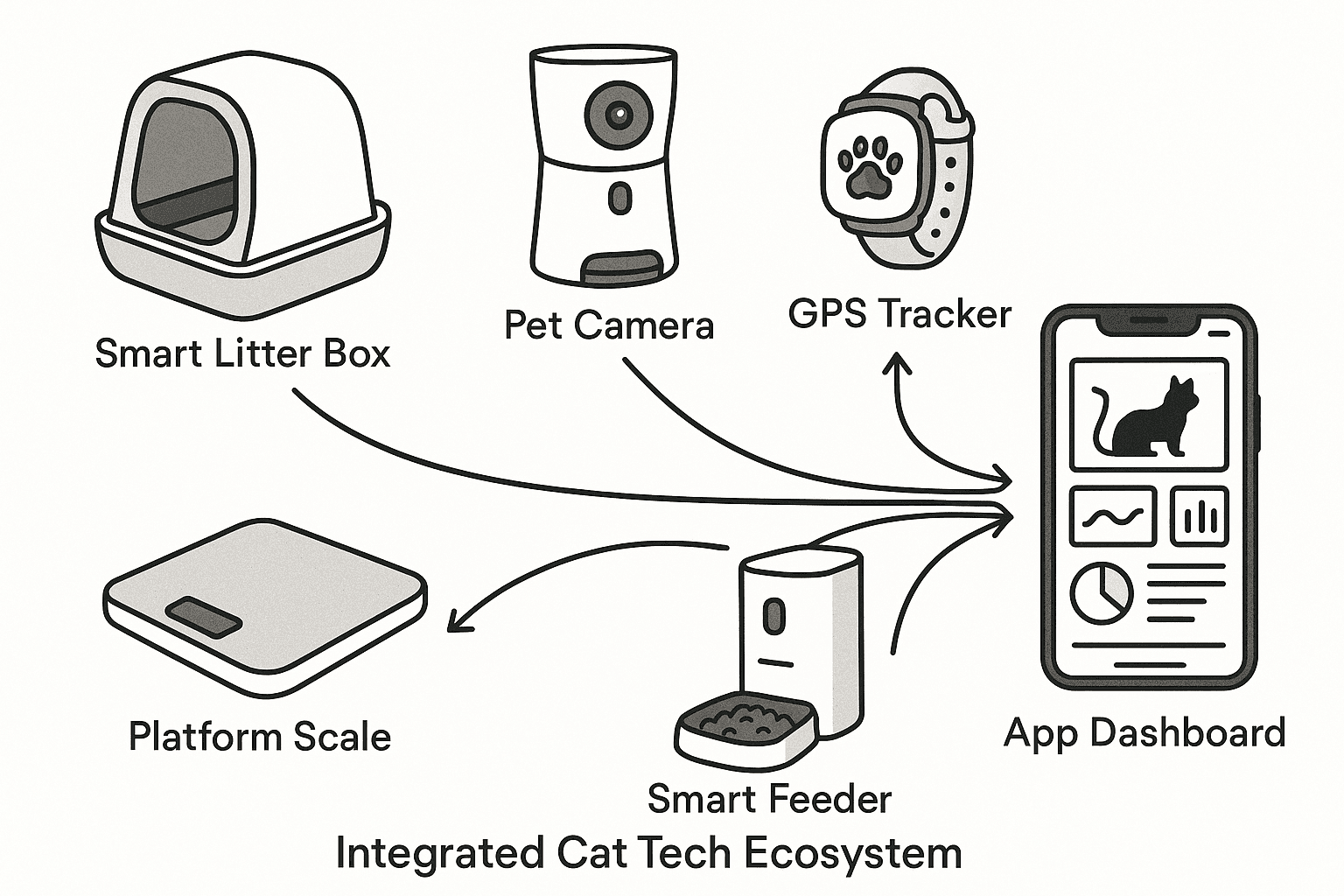
    A smart home for cats uses connected devices that:

    • Lower friction in daily care (feeders, fountains, litter automation).
    • Increase consistency (timed meals, clean litter, stable climate).
    • Provide signals you can act on (weight, activity, sleep, bathroom trends).
    • Reduce stress through predictability and gentle automation.

    It does not replace you. Cats thrive on human interaction and environmental stability; tech should amplify that, not erase it.

    Authority note: The Cornell Feline Health Center emphasizes routine, enrichment, and clean litter as pillars of behavior health. The AVMA (American Veterinary Medical Association) similarly stresses low-stress handling and safe home environments. A smart home for cats leans into those evidence-based basics—then adds data and automation.


    Pillar 1: Smart feeding & hydration (calm routines, better data)

    Smart feeder dispensing food next to a quiet cat fountain. Smart home for cats.

    Why it matters: Meal timing and water intake are two of the biggest levers for feline wellbeing. Predictable feeding supports digestion and reduces food-related anxiety. Flowing, filtered water boosts hydration—vital for urinary health.

    Core devices for a smart home for cats

    • Automatic feeders (e.g., PETKIT or Feeder-Robot by Whisker on Amazon): schedule precise portions, manage multi-cat conflicts, and log intake.
      Shop top-rated smart feeders → PetKit or Amazon/ Whisker (REALSIMPLE50 for a 50$ discount)/ Others (Amazon)
    • Smart water fountains (e.g., PETKIT Eversweet on Amazon): quiet pumps, multi-layer filtration, low-water and filter alerts, and sometimes TDS sensors.
      See best-selling cat fountains → Petkit or Amazon/ Others (Amazon)

    Pro Tips

    • Start by mirroring your current schedule in the app, then nudge to the ideal routine over a week.
    • For multi-cat homes, create staggered micro-feeds to reduce crowding at the bowl.
    • Replace carbon/foam filters on schedule; it’s the simplest win in any smart home for cats.

    Internal interlinks:


    Pillar 2: Smart litter & hygiene (the peace-of-mind engine)

    A smart home for cats lives or dies by litter box quality. Dirty boxes create the fastest path to anxiety and house-soiling. Automation stabilizes cleanliness and gives you early-warning signals.

    Devices

    Why this belongs in a smart home for cats

    • Cleanliness → compliance. The cleaner and more accessible the box, the more reliably a cat uses it.
    • Data → detection. Subtle changes in box visits or clump size/weight may hint at UTI, constipation, or stress—flags you can discuss with your vet.

    Authority note: The AVMA highlights that sudden changes in litter habits warrant a health review. Automation helps you notice those changes earlier.

    Internal interlinks:


    Pillar 3: Air quality & odor control (your invisible comfort layer)

    Self-cleaning litter box with mat and HEPA purifier in a tidy corner.

    Even a well-maintained box releases dander and odors after scooping or cycling. An air purifier smooths that out and supports both human and feline respiratory comfort—a quiet win for any smart home for cats.

    Device to consider

    • HEPA air purifier with pet-focused carbon (e.g., LEVOIT Core P350 on Amazon): traps dander and neutralizes odors in small rooms or litter areas.
      View LEVOIT pet-care purifiers → Amazon

    Setup

    • Place near the litter zone or grooming corner; run Sleep Mode for quiet filtration.
    • Change filters on schedule; the filter is where the magic happens.

    Internal interlinks:


    Pillar 4: Cameras, activity & behavior (see what matters, skip what doesn’t)

    Cameras and sensors in a smart home for cats aren’t for surveillance—they’re for reassurance and pattern tracking. The best use-cases:

    • Check-ins during long workdays.
    • Separation stress support (watch wake/play cycles).
    • Night motion around the litter area after a food change.
    • Post-op monitoring (jumping, licking, appetite).

    Devices

    • Indoor cameras with two-way audio & night vision (e.g., Petcube on Amazon): smart motion alerts, set-and-forget Live View when you need it.
      See Petcube indoor cameras → Amazon

    Privacy, ethically: Place cams in common areas only; avoid bedrooms and bathrooms. A smart home for cats respects boundaries—for you and your pet.

    Internal interlinks:


    Pillar 5: Enrichment & play (where stress relief actually happens)

    Cat plays with interactive toy while an indoor camera monitors.

    No smart home for cats works without daily play. Interactive toys stimulate their prey sequence (stalk–chase–pounce–capture), which improves sleep and reduces “zoomies” and 3 a.m. yowls.

    Devices

    • Interactive toys & puzzle feeders (e.g., motion toys, auto-laser with safety protocols, smart puzzles that dispense kibble).
      Browse top interactive toys → Amazon

    Routine

    • 2 sessions/day × 10–15 minutes; end with a small food reward.
    • Swap toys weekly to avoid novelty burn-out.

    Internal interlinks:


    Pillar 6: Travel & outdoor safety (extending your smart home for cats beyond the door)

    When you leave home—or bring your cat along—carry the smart home for cats mindset with you.

    Devices

    • Smart carriers & strollers (e.g., PETKIT Breezy Dome on Amazon and PETKIT store; strollers on PETKIT store).
    • GPS trackers & virtual fences (e.g., Tractive Cat Mini on Amazon): geofencing and live tracking for adventure cats.
      See cat travel essentials & GPS trackers → Amazon

    Internal interlinks:


    The data layer: tying your ecosystem together

    A smart home for cats shines when devices talk to you clearly. What to track:

    • Feeding & water trends (missed meals, low intake spikes).
    • Litter visits & weight (constipation, UTI hints).
    • Activity & rest (post-surgery, senior cats, weight management).

    Use it like a journal: If something looks off for 48–72 hours, call your vet. Data should empower—not alarm—you.

    Authority note: Cornell recommends tracking behavior changes to catch health issues early. The right smart home for cats turns guesswork into patterns you can share with your clinic.


    Setups by budget (pick your path)

    Even the smallest kit can deliver a meaningful smart home for cats experience. Build in tiers:

    Starter (~$150–$250)

    • Smart fountain
    • Interactive toy or basic puzzle feeder
    • Compact HEPA purifier
    • (Optional) low-cost indoor cam
      → Predictable hydration, better air, daily enrichment.

    Core (~$400–$900)

    • Automatic feeder
    • Smart fountain
    • Self-cleaning litter box or high-quality manual + health-add-on
    • HEPA purifier
      → Real impact on routines, cleanliness, and data.

    Complete ($1,200+)

    • Self-cleaning litter box with app
    • Automatic feeder with robust scheduling
    • Smart fountain with filter alerts
    • HEPA purifier + indoor cam
    • GPS tracker for adventure cats
      → A fully featured smart home for cats with clear signals and minimal friction.

    Apartment vs. house: placement that actually works

    • Apartments: keep the litter and purifier away from the kitchen; use a low-profile cam that covers both feeding and litter zones.
    • Houses: distribute devices by “activity hubs” (sleeping area, feeding corridor, litter room). A smart home for cats should match your cat’s daily path.
    • Multi-cat homes: stagger feeders; offer multiple litter stations (1 box per cat + 1).

    Safety first (and always)

    A smart home for cats stays safe by design:

    • Never use excessive dryer heat; watch for panting (heat stress).
    • Keep fountain cables tidy and pumps submerged.
    • Avoid laser toys without auto-cutoff; eyes matter.
    • Replace filters and worn accessories on schedule—maintenance is the real “smart.”

    Authority note: The AVMA reminds that “new tech” isn’t a substitute for veterinary care. If data or behavior worries you, call your vet.


    Troubleshooting quick hits

    • My cat ignores the feeder. Start with small, frequent micro-feeds at usual times; add a pinch of their favorite topper.
    • Won’t drink from the fountain. Lower noise, move it away from food by ~1–2 meters, and keep water level high.
    • Scared of the litter robot. Disable auto-cycle for 48 hours; let them use it “as a dumb box,” then activate cycling after they’re comfortable.
    • Camera anxiety. Short check-ins only; cams are for reassurance, not surveillance marathons.

    A calm environment + gradual introductions = a reliable smart home for cats.


    The 7-step roadmap (save this)

    1. Map your cat’s routine (sleep–eat–drink–toilet–play).
    2. Add one device per week; never overhaul all at once.
    3. Keep everything predictable for 14 days.
    4. Use app data as a weekly checkpoint, not a panic button.
    5. Pair play sessions with meal endings.
    6. Maintain filters and parts on schedule.
    7. Reassess layout quarterly—your smart home for cats evolves with your cat.

    Internal Interlinks


    Authority Links

    AVMA — Low-stress handling, safe home care, and behavior red flags

    Cornell Feline Health Center — Grooming, stress, and home environment basics