
Affiliate Disclaimer: PetTech AI may earn a small commission if you buy through links on this page. We only recommend products that support feline safety, comfort, and wellbeing.
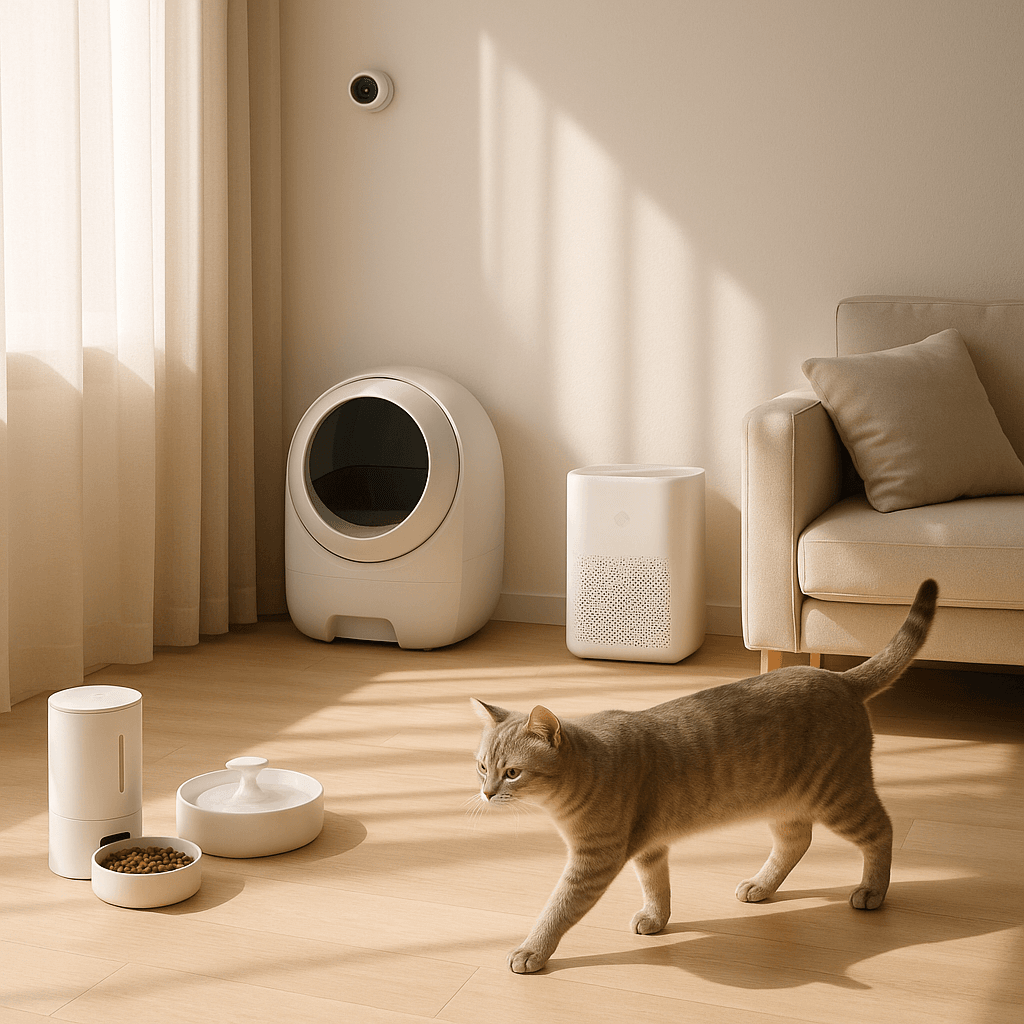
Designing a smart home for cats isn’t about filling your apartment with gadgets. It’s about building a calm, predictable environment where your cat’s routines—eating, drinking, toileting, resting, and playing—are supported by tech that reduces stress for both of you. The right devices automate the boring parts, surface useful health insights, and free your time for the fun stuff: bonding and enrichment.
This Ultimate 2025 Guide walks you through the essentials, from feeders and fountains to litter automation, air quality, cameras, enrichment, travel safety, and the data layer that ties everything together. By the end, you’ll know exactly how to assemble a smart home for cats that suits your space, budget, and feline personality.
What “smart” means in feline living (and what it doesn’t)
A smart home for cats uses connected devices that:
- Lower friction in daily care (feeders, fountains, litter automation).
- Increase consistency (timed meals, clean litter, stable climate).
- Provide signals you can act on (weight, activity, sleep, bathroom trends).
- Reduce stress through predictability and gentle automation.
It does not replace you. Cats thrive on human interaction and environmental stability; tech should amplify that, not erase it.
Authority note: The Cornell Feline Health Center emphasizes routine, enrichment, and clean litter as pillars of behavior health. The AVMA (American Veterinary Medical Association) similarly stresses low-stress handling and safe home environments. A smart home for cats leans into those evidence-based basics—then adds data and automation.
Pillar 1: Smart feeding & hydration (calm routines, better data)
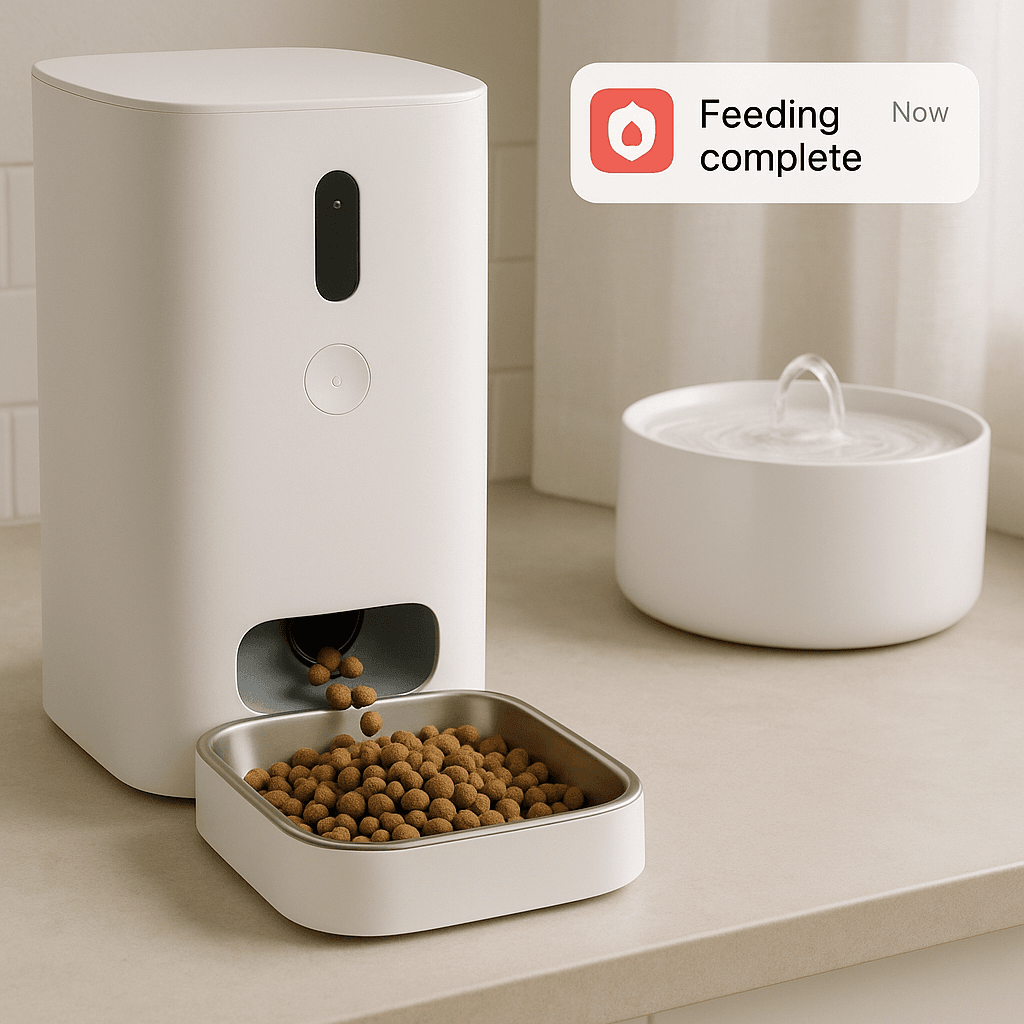
Why it matters: Meal timing and water intake are two of the biggest levers for feline wellbeing. Predictable feeding supports digestion and reduces food-related anxiety. Flowing, filtered water boosts hydration—vital for urinary health.
Core devices for a smart home for cats
- Automatic feeders (e.g., PETKIT or Feeder-Robot by Whisker on Amazon): schedule precise portions, manage multi-cat conflicts, and log intake.
Shop top-rated smart feeders → PetKit or Amazon/ Whisker (REALSIMPLE50 for a 50$ discount)/ Others (Amazon) - Smart water fountains (e.g., PETKIT Eversweet on Amazon): quiet pumps, multi-layer filtration, low-water and filter alerts, and sometimes TDS sensors.
See best-selling cat fountains → Petkit or Amazon/ Others (Amazon)
Pro Tips
- Start by mirroring your current schedule in the app, then nudge to the ideal routine over a week.
- For multi-cat homes, create staggered micro-feeds to reduce crowding at the bowl.
- Replace carbon/foam filters on schedule; it’s the simplest win in any smart home for cats.
Internal interlinks:
- Best Automatic Cat Feeders 2025 — Top Picks for Cat Lovers
- Best Smart Water Fountains 2025 — Cleaner, Safer Hydration
Pillar 2: Smart litter & hygiene (the peace-of-mind engine)
A smart home for cats lives or dies by litter box quality. Dirty boxes create the fastest path to anxiety and house-soiling. Automation stabilizes cleanliness and gives you early-warning signals.
Devices
- Self-cleaning litter boxes (e.g., Whisker Litter-Robot 4 on Amazon): automatic cycling, odor control, weight tracking, usage logs, and app alerts.
Check Litter-Robot 4 availability → Get Litter-Robot 4 — $50 Off with Code REALSIMPLE50 - Smart litter accessories (e.g., PETKIT ramps/fences, mats, urine health indicator litter): reduce scatter, track pH changes, and contain mess.
Explore smart litter accessories → PetKit
Why this belongs in a smart home for cats
- Cleanliness → compliance. The cleaner and more accessible the box, the more reliably a cat uses it.
- Data → detection. Subtle changes in box visits or clump size/weight may hint at UTI, constipation, or stress—flags you can discuss with your vet.
Authority note: The AVMA highlights that sudden changes in litter habits warrant a health review. Automation helps you notice those changes earlier.
Internal interlinks:
- Best Smart Litter Boxes 2025 — Hassle-Free Solutions
- Smart Litter Accessories 2025 — Odor, Tracking & Health Signals
Pillar 3: Air quality & odor control (your invisible comfort layer)
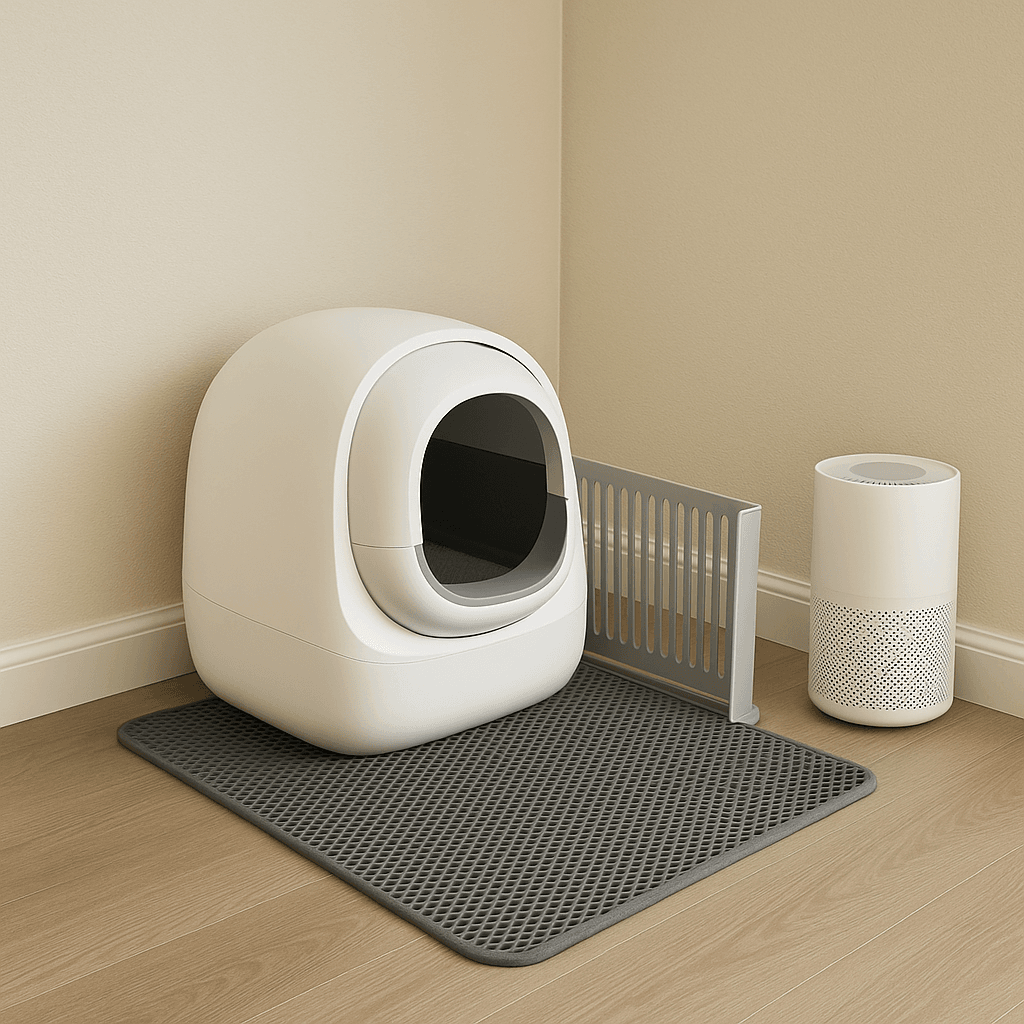
Even a well-maintained box releases dander and odors after scooping or cycling. An air purifier smooths that out and supports both human and feline respiratory comfort—a quiet win for any smart home for cats.
Device to consider
- HEPA air purifier with pet-focused carbon (e.g., LEVOIT Core P350 on Amazon): traps dander and neutralizes odors in small rooms or litter areas.
View LEVOIT pet-care purifiers → Amazon
Setup
- Place near the litter zone or grooming corner; run Sleep Mode for quiet filtration.
- Change filters on schedule; the filter is where the magic happens.
Internal interlinks:
Pillar 4: Cameras, activity & behavior (see what matters, skip what doesn’t)
Cameras and sensors in a smart home for cats aren’t for surveillance—they’re for reassurance and pattern tracking. The best use-cases:
- Check-ins during long workdays.
- Separation stress support (watch wake/play cycles).
- Night motion around the litter area after a food change.
- Post-op monitoring (jumping, licking, appetite).
Devices
- Indoor cameras with two-way audio & night vision (e.g., Petcube on Amazon): smart motion alerts, set-and-forget Live View when you need it.
See Petcube indoor cameras → Amazon
Privacy, ethically: Place cams in common areas only; avoid bedrooms and bathrooms. A smart home for cats respects boundaries—for you and your pet.
Internal interlinks:
Pillar 5: Enrichment & play (where stress relief actually happens)
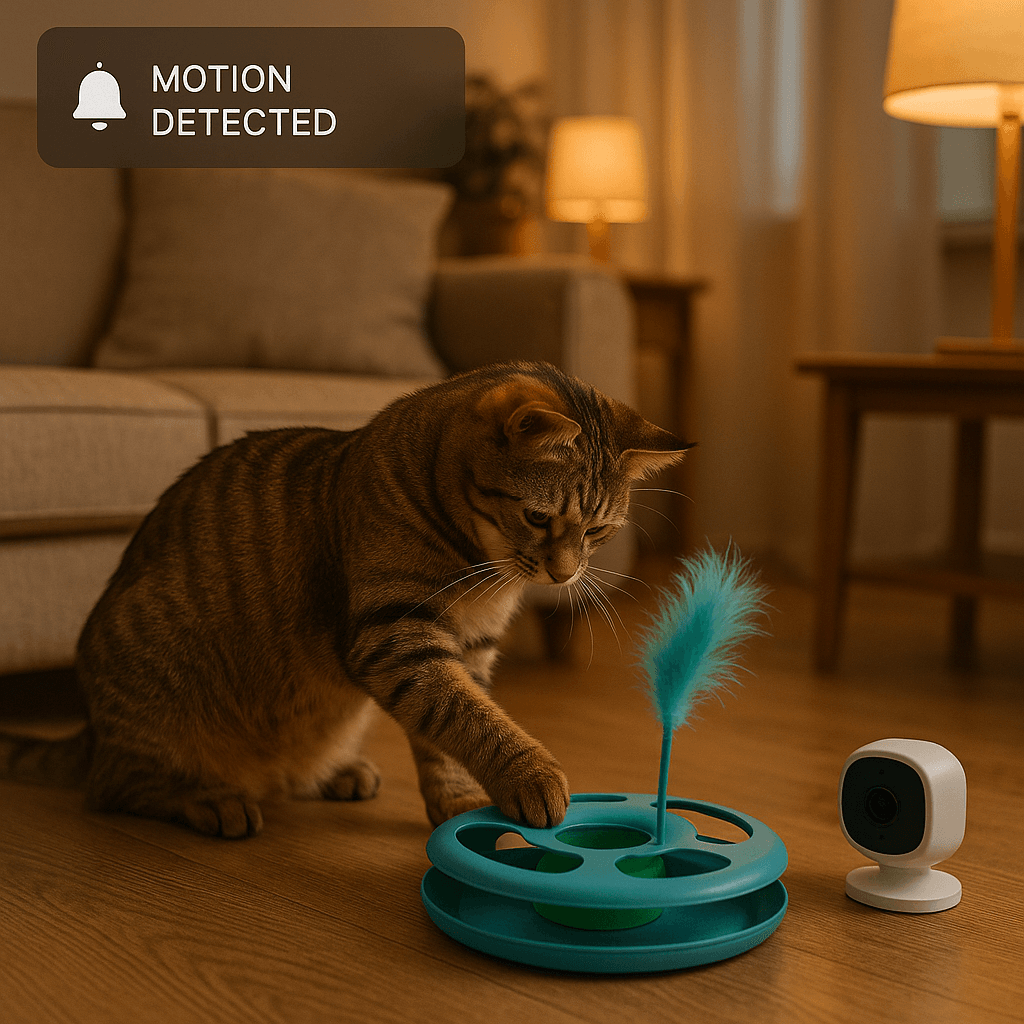
No smart home for cats works without daily play. Interactive toys stimulate their prey sequence (stalk–chase–pounce–capture), which improves sleep and reduces “zoomies” and 3 a.m. yowls.
Devices
- Interactive toys & puzzle feeders (e.g., motion toys, auto-laser with safety protocols, smart puzzles that dispense kibble).
Browse top interactive toys → Amazon
Routine
- 2 sessions/day × 10–15 minutes; end with a small food reward.
- Swap toys weekly to avoid novelty burn-out.
Internal interlinks:
Pillar 6: Travel & outdoor safety (extending your smart home for cats beyond the door)
When you leave home—or bring your cat along—carry the smart home for cats mindset with you.
Devices
- Smart carriers & strollers (e.g., PETKIT Breezy Dome on Amazon and PETKIT store; strollers on PETKIT store).
- GPS trackers & virtual fences (e.g., Tractive Cat Mini on Amazon): geofencing and live tracking for adventure cats.
See cat travel essentials & GPS trackers → Amazon
Internal interlinks:
- Cat Travel Essentials 2025 — Smart Carriers & Accessories
- Virtual Fences for Cats 2025 — GPS Boundaries & Alerts
The data layer: tying your ecosystem together
A smart home for cats shines when devices talk to you clearly. What to track:
- Feeding & water trends (missed meals, low intake spikes).
- Litter visits & weight (constipation, UTI hints).
- Activity & rest (post-surgery, senior cats, weight management).
Use it like a journal: If something looks off for 48–72 hours, call your vet. Data should empower—not alarm—you.
Authority note: Cornell recommends tracking behavior changes to catch health issues early. The right smart home for cats turns guesswork into patterns you can share with your clinic.
Setups by budget (pick your path)
Even the smallest kit can deliver a meaningful smart home for cats experience. Build in tiers:
Starter (~$150–$250)
- Smart fountain
- Interactive toy or basic puzzle feeder
- Compact HEPA purifier
- (Optional) low-cost indoor cam
→ Predictable hydration, better air, daily enrichment.
Core (~$400–$900)
- Automatic feeder
- Smart fountain
- Self-cleaning litter box or high-quality manual + health-add-on
- HEPA purifier
→ Real impact on routines, cleanliness, and data.
Complete ($1,200+)
- Self-cleaning litter box with app
- Automatic feeder with robust scheduling
- Smart fountain with filter alerts
- HEPA purifier + indoor cam
- GPS tracker for adventure cats
→ A fully featured smart home for cats with clear signals and minimal friction.
Apartment vs. house: placement that actually works
- Apartments: keep the litter and purifier away from the kitchen; use a low-profile cam that covers both feeding and litter zones.
- Houses: distribute devices by “activity hubs” (sleeping area, feeding corridor, litter room). A smart home for cats should match your cat’s daily path.
- Multi-cat homes: stagger feeders; offer multiple litter stations (1 box per cat + 1).
Safety first (and always)
A smart home for cats stays safe by design:
- Never use excessive dryer heat; watch for panting (heat stress).
- Keep fountain cables tidy and pumps submerged.
- Avoid laser toys without auto-cutoff; eyes matter.
- Replace filters and worn accessories on schedule—maintenance is the real “smart.”
Authority note: The AVMA reminds that “new tech” isn’t a substitute for veterinary care. If data or behavior worries you, call your vet.
Troubleshooting quick hits
- My cat ignores the feeder. Start with small, frequent micro-feeds at usual times; add a pinch of their favorite topper.
- Won’t drink from the fountain. Lower noise, move it away from food by ~1–2 meters, and keep water level high.
- Scared of the litter robot. Disable auto-cycle for 48 hours; let them use it “as a dumb box,” then activate cycling after they’re comfortable.
- Camera anxiety. Short check-ins only; cams are for reassurance, not surveillance marathons.
A calm environment + gradual introductions = a reliable smart home for cats.
The 7-step roadmap (save this)
- Map your cat’s routine (sleep–eat–drink–toilet–play).
- Add one device per week; never overhaul all at once.
- Keep everything predictable for 14 days.
- Use app data as a weekly checkpoint, not a panic button.
- Pair play sessions with meal endings.
- Maintain filters and parts on schedule.
- Reassess layout quarterly—your smart home for cats evolves with your cat.
Internal Interlinks
- Best Automatic Cat Feeders 2025 — Top Picks for Cat Lovers
- Best Smart Litter Boxes 2025 — Hassle-Free Solutions
- Smart Litter Accessories 2025 — Odor, Tracking & Health Signals
- Smart Cat Bathing 2025 — Inside the AirSalon Era
- Cat Travel Essentials 2025 — Smart Carriers & Accessories
- Virtual Fences for Cats 2025 — GPS Boundaries & Alerts
- Smart Outdoor Safety for Cats — How Tech Makes Adventures Safer
Authority Links
AVMA — Low-stress handling, safe home care, and behavior red flags
Cornell Feline Health Center — Grooming, stress, and home environment basics