Affiliate Disclaimer: PetTech AI may earn a small commission if you buy through links on this page. We only recommend products that enhance feline safety, comfort, and wellbeing.
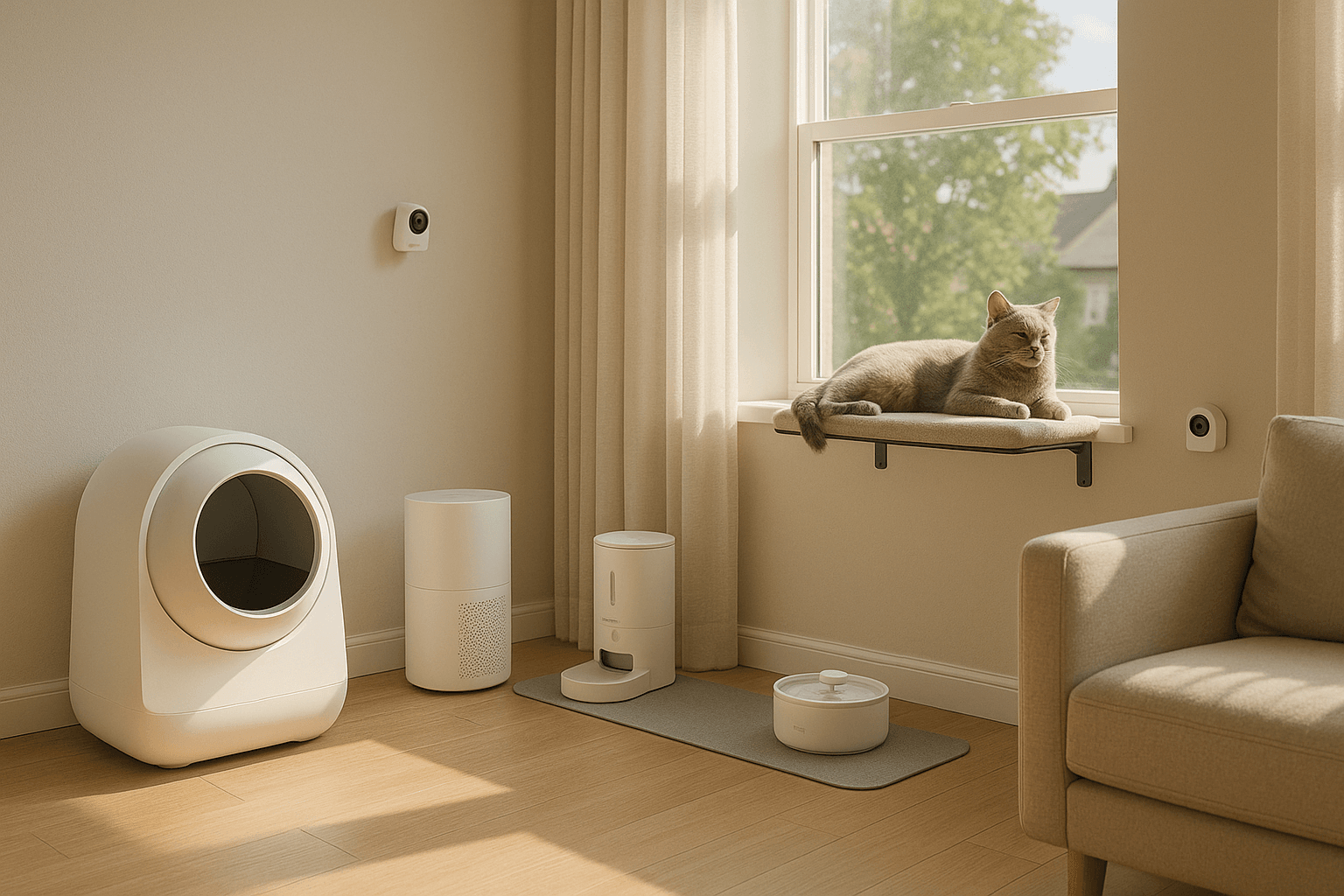
Modern pet tech isn’t about flashy gadgets—it’s about environmental design that reduces stress, simplifies care, and surfaces useful signals. That’s the promise of smart cat spaces: rooms arranged and equipped so your cat’s core needs—eating, drinking, toileting, resting, and playing—happen predictably with minimal friction. When placement, routine, and automation work together, your home starts to “think” for your cat (and for you).
This guide shows you how to plan, equip, and maintain smart cat spaces room by room. You’ll learn which devices matter, where to place them in apartments and houses, and how to use data lightly—never obsessively—to spot what needs attention early.
What “smart” actually means for cats (and what it doesn’t)
A smart setup isn’t a gadget dump. According to the Cornell Feline Health Center and the AVMA, the bedrock of feline health is routine, enrichment, and low-stress hygiene. Tech is valuable when it reinforces those pillars.
In practice, smart cat spaces do four things:
- Lower friction in daily care (scheduled feeds, self-cleaning litter).
- Increase consistency (clean water, stable climate, predictable play).
- Provide gentle signals (app reminders for filters, litter use, water levels).
- Respect feline ergonomics (quiet corners, vertical choices, clear paths).
They do not replace human attention or veterinary care. Data helps; your relationship and judgment do the rest.
Core principles that make smart cat spaces work
- Zones over clutter. Define feeding, litter, rest, and play zones; avoid moving them around. Cats rely on stable maps.
- One change at a time. Add one new device each week; fast overhauls create anxiety.
- Quiet by default. Choose low-noise motors and sleep modes; sound consistency reduces arousal.
- Vertical choice. Perches and shelves provide security and reduce conflict in multi-cat homes.
- Light-touch data. Review weekly, not hourly. Trends over 48–72 hours matter more than single spikes.
Design around those rules and your smart cat spaces will feel almost invisible—because they simply work.
Living room: the hub of observation and bonding
The living room blends your routines with your cat’s. Keep it calm, visible, and easy to maintain.
Smart additions
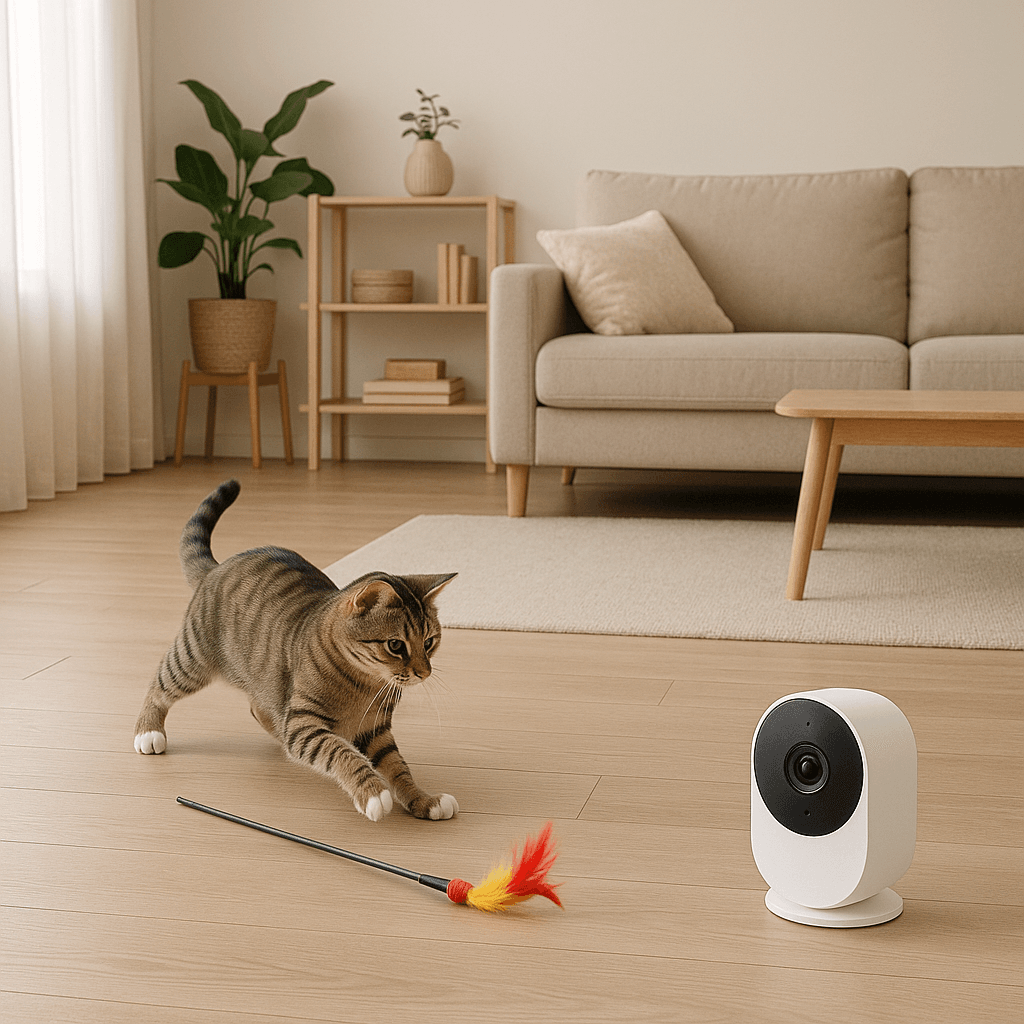
- Indoor camera with two-way audio & night vision (e.g., Petcube on Amazon): quick check-ins during workdays, smart motion alerts for irregular nighttime activity.
See Petcube indoor cameras → Amazon - HEPA air purifier with pet carbon (e.g., LEVOIT Core series on Amazon): traps dander/litter dust and neutralizes odor, improving comfort for both of you.
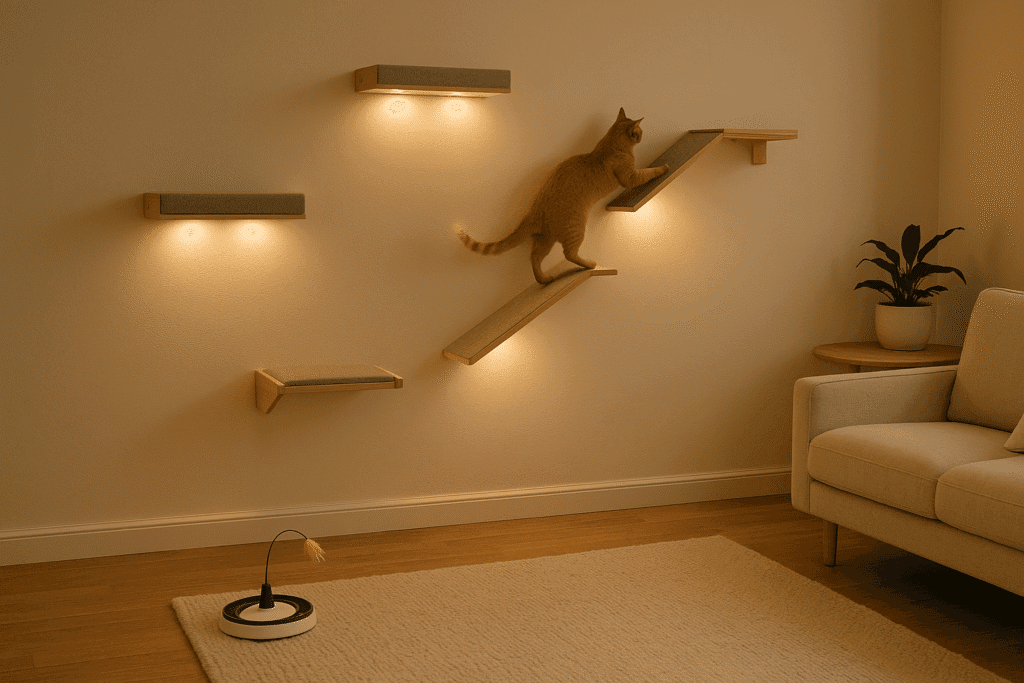
View pet-focused air purifiers → Amazon - Vertical highways (shelves/ramps with subtle motion-activated LEDs): safe movement and high resting spots lower territorial tension.
Placement
- Camera angle should capture the resting perch and a slice of the play area.
- Purifier near the high-traffic route, not hidden behind furniture.
Get these right and your living room anchors your smart cat spaces with comfort and clarity.
Internal interlink:
Kitchen & feeding corner: predictability with a purpose
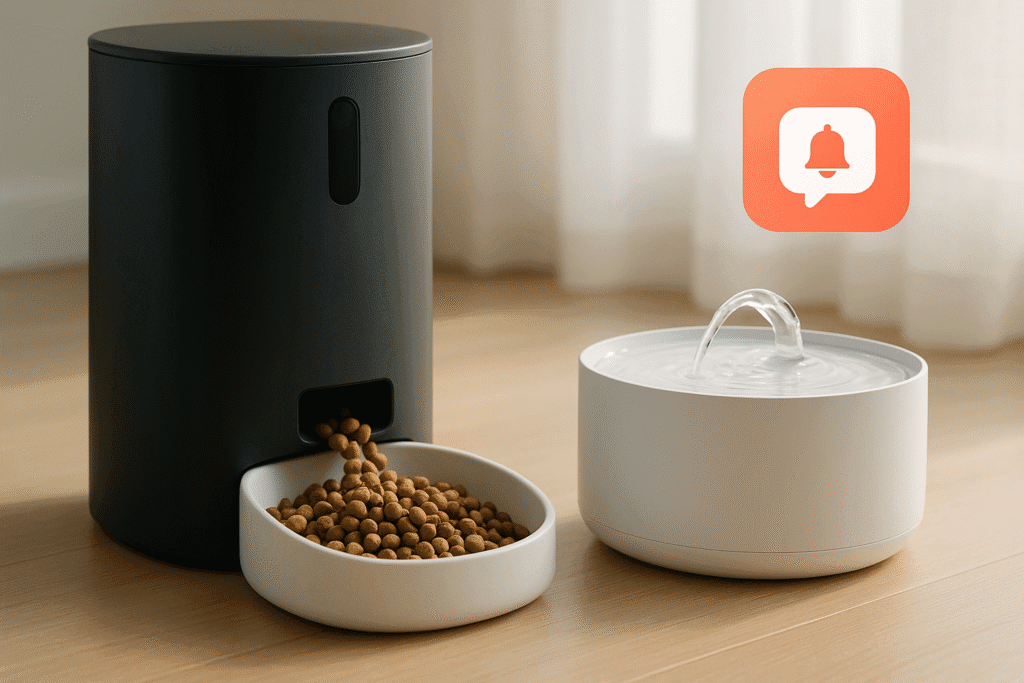
Meal timing shapes the day. Predictable feeding reduces food-related anxiety and nighttime wake-ups.
Devices to consider
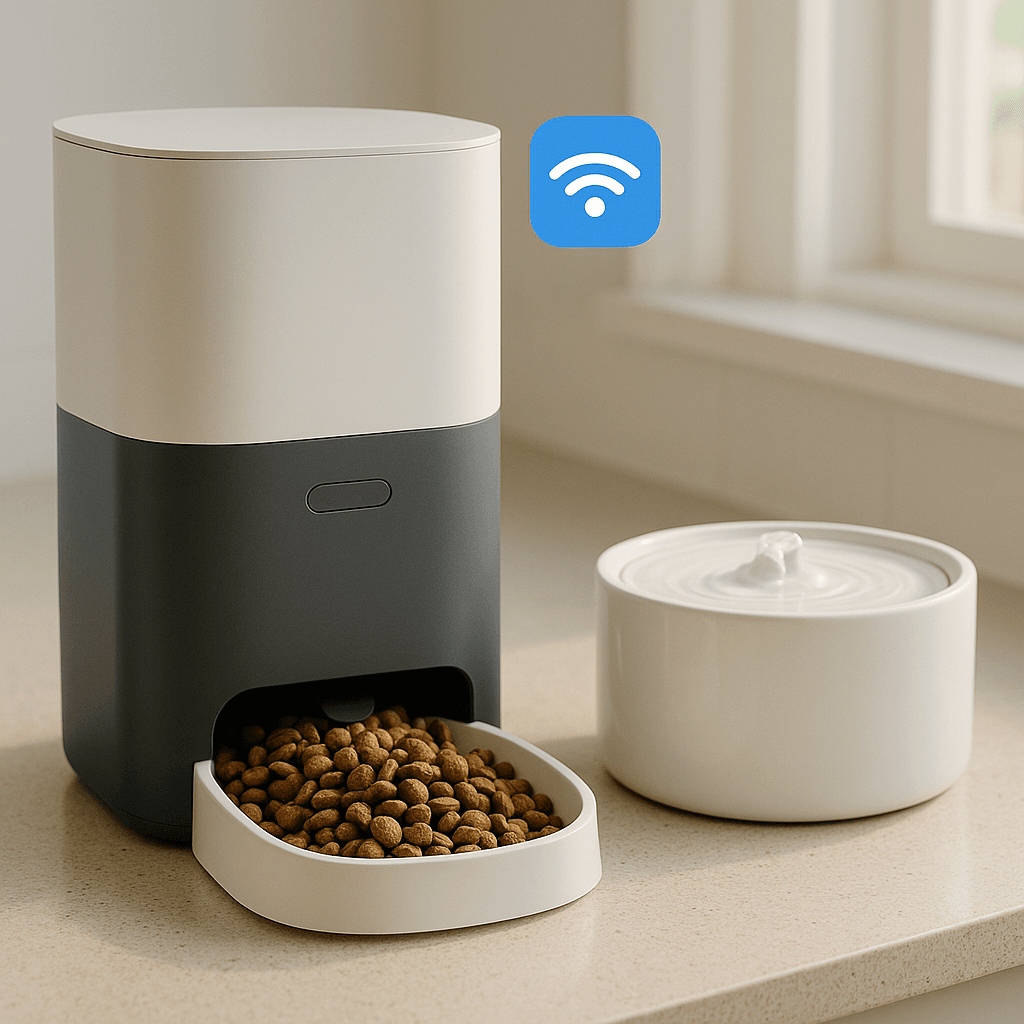
- Automatic feeder (e.g., PETKIT or Whisker Feeder-Robot): portion control, schedule consistency, and intake logs—ideal for weight management or multi-cat households.
Shop top-rated smart feeders → Amazon - Smart fountain (e.g., PETKIT Eversweet on Amazon): quiet flow, multi-layer filtration, and reminders to replace filters—hydration is key for urinary health.
See best-selling cat fountains → Amazon - Smart bowl with scale (e.g., PETKIT Fresh Metal Digital Pet Bowl on Amazon): weighs meals, helps transition diets gradually.
Placement
- Put fountain 1–2 meters away from the feeder; many cats drink more when water is separate from food.
- Use a thin silicone mat for splash control and easy wiping.
Consistent feeding routines turn this corner into one of your most reliable smart cat spaces—and they’re backed by behavioral science.
Internal interlinks:
- Best Automatic Cat Feeders 2025 — Top Picks for Cat Lovers
- Best Smart Water Fountains 2025 — Cleaner, Safer Hydration
Bathroom or laundry: the hygiene nerve center
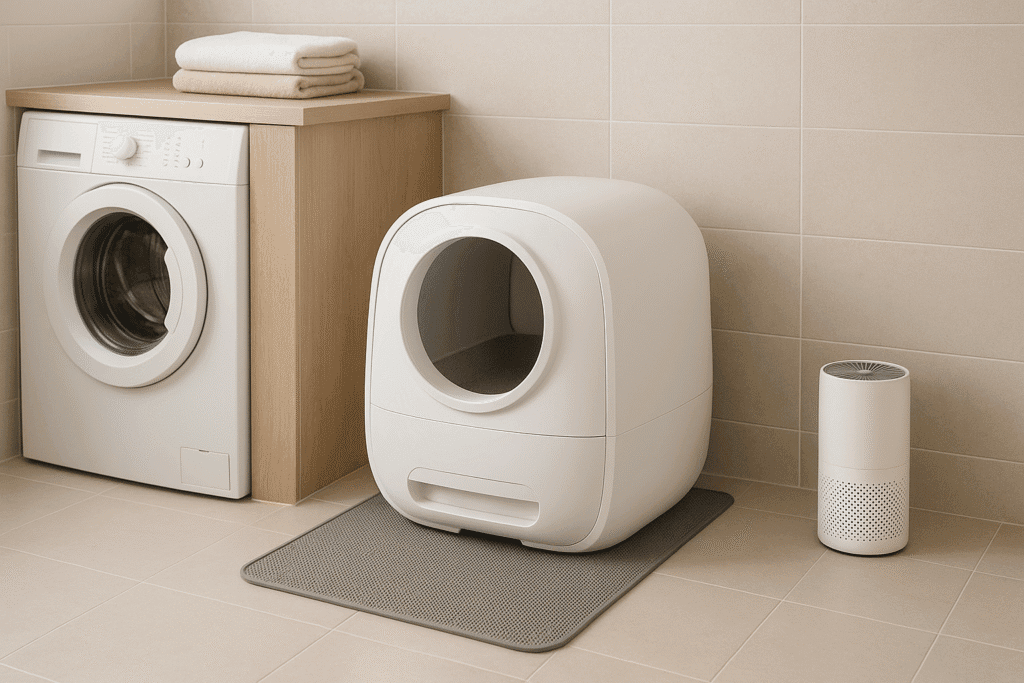
Nothing affects feline stress like litter quality. Cleanliness, ergonomics, and odor control decide whether the box feels “safe.”
Devices to consider
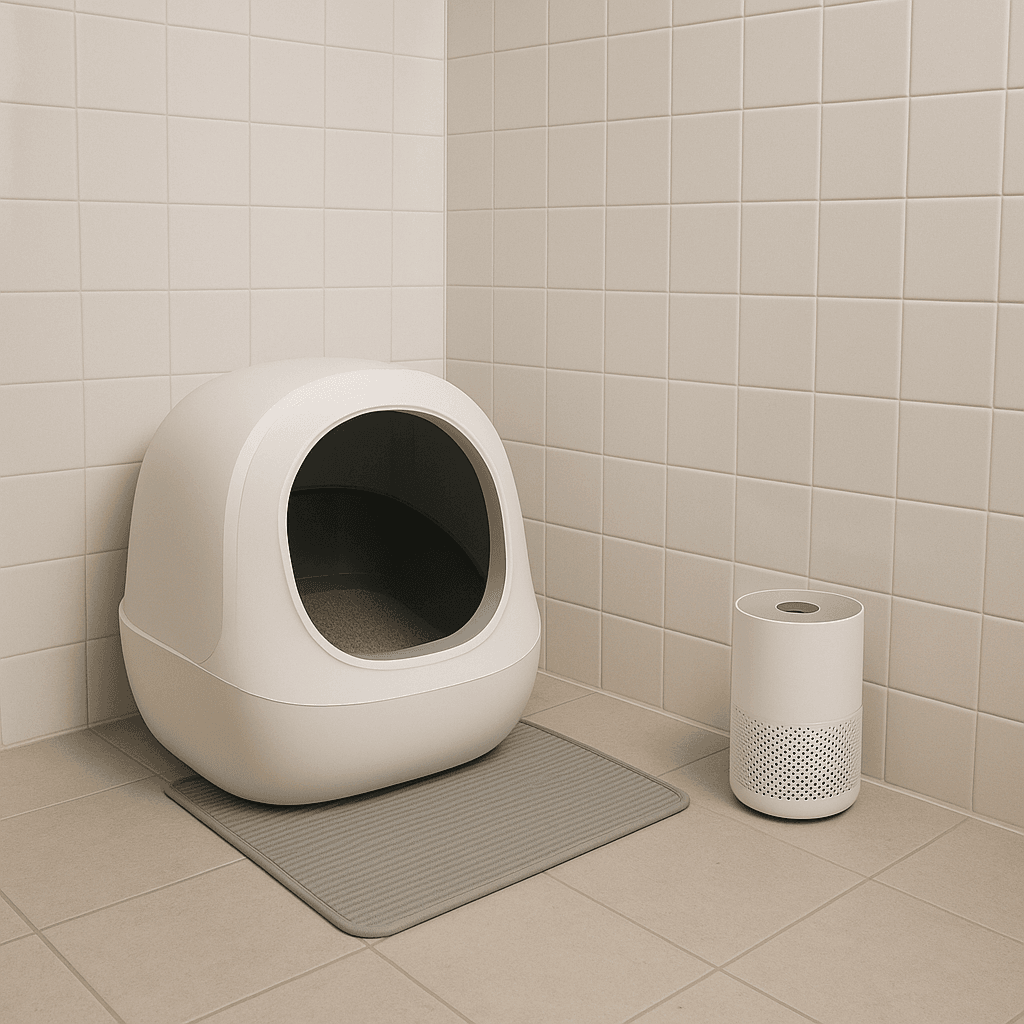
- Self-cleaning litter box (e.g., Whisker Litter-Robot 4): automatic cycling, weight tracking, usage logs, and odor control.
Check Litter-Robot 4 availability → Whisker - Smart accessories (PETKIT ramps/fences/mats; urine-indicator litter): reduce scatter, catch early pH anomalies you can discuss with your vet.
Explore smart litter accessories → Amazon
Ergonomics
- Box footprint ≈ 1.5× your cat’s body length in width and 2× in length; height they can step into without strain.
- Semi-private but not isolated: cats prefer sightlines and escape routes.
When the litter zone is stable and data-informed, your smart cat spaces gain the most important ingredient: peace of mind.
Internal interlinks:
- Best Smart Litter Boxes 2025 — Hassle-Free Solutions
- Smart Litter Accessories 2025 — Odor, Tracking & Health Signals
Bedroom: sanctuary for sleep and recovery
Cats sleep 12–16 hours daily; make the bedroom a cue for calm.
Smart comfort
- Temperature-aware bed/warming mat: helps seniors or short-haired cats maintain comfort in winter.
- Circadian-friendly lighting (smart bulbs dimmed warm in the evening): lowers arousal before bedtime.
- Gentle ambient sound (smart speakers with white noise): masks hallway noise in apartments.
Layout
- Provide two resting options: one elevated, one hidden. Choice reduces anxiety and improves sleep.
This quiet sanctuary completes your smart cat spaces by giving your cat a predictable, low-stimulus retreat.
Entryways & travel staging: movement without chaos
Doorways, corridors, and carriers are stress points. Plan them to be predictable.
Tech + design
- Microchip-access doors for controlled ingress/egress in homes that allow outdoor access.
- GPS trackers with geofence (e.g., Tractive Cat Mini on Amazon) for balcony/escape risk scenarios.
See top-rated cat GPS trackers → Amazon - Carrier staging area with a soft mat, in view but unobtrusive—let the carrier “live” in the home so it stops being a threat cue.
Smooth transitions keep smart cat spaces feeling safe even at the edge of your home.
Internal interlinks:
- Cat Travel Essentials 2025 — Smart Carriers & Accessories
- Virtual Fences for Cats 2025 — GPS Boundaries & Alerts
Micro-apartments vs. houses: two proven blueprints
Studio / one-room flow
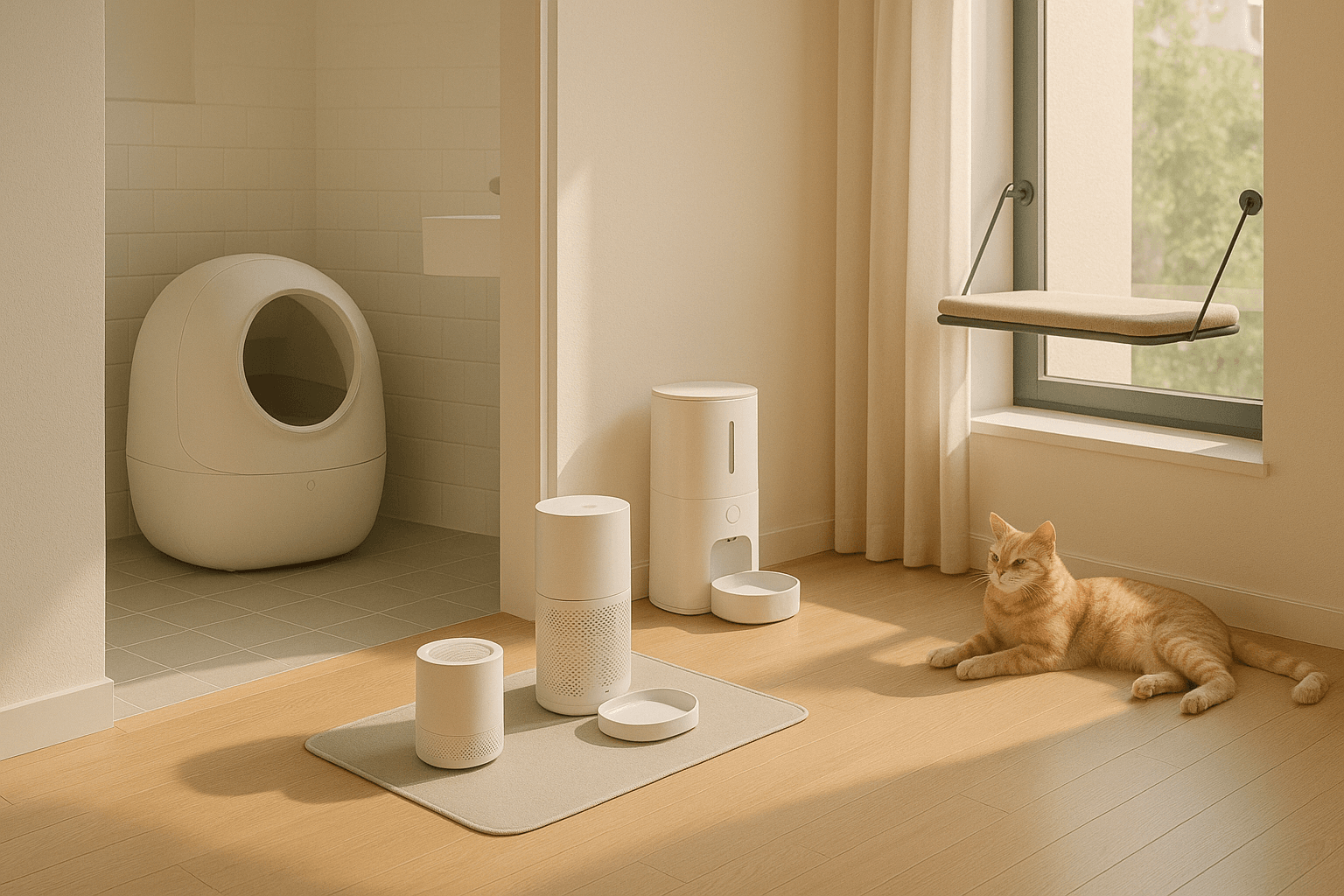
- One calm wall: litter + purifier at one end; feeder + fountain on a mat at the other; camera captures both.
- Center open for movement; window perch on the opposite side.
- Result: compact smart cat spaces without visual clutter.
Multi-room home
- Kitchen edge: feeder/fountain
- Bathroom/laundry: litter + purifier
- Living room: vertical play + camera
- Bedroom: rest sanctuary
- Result: two to three zones reduce crowding and behavioral spillover.
The data layer: just enough to notice
Track only what helps action:
- Feeding & water (missed meals, low intake)
- Litter visits & weight (constipation/UTI flags)
- Activity & rest (recovery, weight management)
If something looks off for 48–72 hours, call your vet. The AVMA reminds that behavior changes can indicate medical issues; smart cat spaces turn guesswork into trend awareness you can share with your clinic.
Budget tiers to build at your pace
Starter (~$150–$250)
- Smart fountain
- Interactive toy or puzzle feeder
- Compact HEPA purifier
→ The fastest, most noticeable upgrade to beginner smart cat spaces.
Core (~$400–$900)
- Automatic feeder
- Smart fountain
- Self-cleaning litter box or quality manual box + health add-on
- HEPA purifier
→ Routine, hygiene, and basic data in one balanced setup.
Complete ($1,200+)
- Self-cleaning litter box with app
- Automatic feeder with robust scheduling
- Smart fountain with filter reminders
- HEPA purifier + indoor camera
- Optional GPS tracker
→ Fully realized smart cat spaces with minimal daily friction.
Quick shop:
- Smart feeders & fountains → Amazon / PetKit / Whisker
- Self-cleaning litter boxes → Whisker / Amazon / PetKit
- Smart litter accessories → PETKIT & Amazon
- Air purifiers & cameras → Amazon / Amazon
Safety & maintenance: the quiet “must”
- Keep dryer heat low; stop if your cat pants (heat stress).
- Cable management for fountains/cameras; pumps must stay submerged.
- Laser toys only with auto-shutoff; avoid direct eye exposure.
- Replace filters and pads on schedule.
- Avoid overcrowding corners; clear escape paths reduce panic.
Maintenance is what keeps smart cat spaces working month after month.
Troubleshooting: quick fixes that actually work
- Ignores the fountain: move it 1–2 meters from food; keep water cool and at max line; replace filters.
- Scared of the litter robot: disable auto-cycle for 48 hours; turn on once they’re using it comfortably.
- Night zoomies: evening play (10–15 min) → small snack → warm, dim light in the bedroom.
- Food guarding: micro-feeds at staggered times; add a second bowl in a different room.
As routines stabilize, your smart cat spaces will require fewer interventions and deliver more calm.
Your 7-step setup checklist (printable)
- Map zones: food/water, litter, rest, play.
- Add one device per week; never overhaul overnight.
- Mirror current schedule; shift gradually to ideal times.
- Set only essential app alerts; review data weekly.
- Play twice daily; end with a small reward.
- Replace filters on schedule; wipe mats daily.
- Reassess layout every quarter—smart cat spaces evolve with your cat.
Final take
When design, routine, and light automation align, smart cat spaces feel humane and low-effort. You get quietly clean air, predictable meals, a litter box that stays fresh, play that happens on time, and gentle signals when something changes. It’s empathy turned into engineering—so your cat can do what cats do best: relax, observe, and thrive.
Internal interlinks
- Building a Smart Home for Your Cat — The Ultimate 2025 Guide
- Smart Apartment for Cats — How Tech Simplifies Urban Living
- Best Smart Litter Boxes 2025 — Hassle-Free Solutions
- Smart Litter Accessories 2025 — Odor, Tracking & Health Signals
- Best Automatic Cat Feeders 2025 — Top Picks for Cat Lovers
- Smart Cat Cameras 2025 — Real-World Picks & Setups
- Virtual Fences for Cats 2025 — GPS Boundaries & Alerts
- Cat Travel Essentials 2025 — Smart Carriers & Accessories