Tag: cat enrichment

  • Best Smart Cat Tech 2026: What’s Actually Worth Buying (and What Isn’t)

    Best Smart Cat Tech 2026: What’s Actually Worth Buying (and What Isn’t)

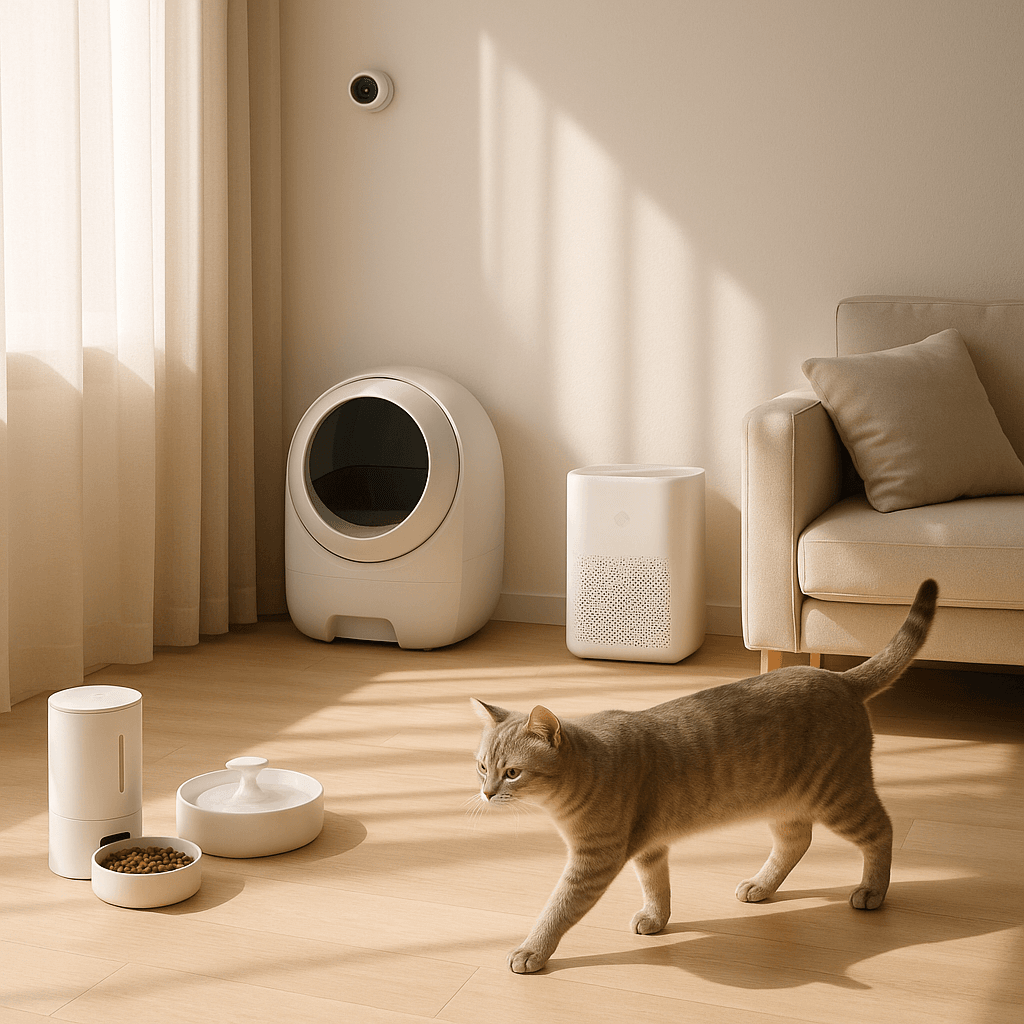
    Smart gadgets don’t automatically equal a better life for a cat. In 2026, the best products are the ones that reduce friction for humans without breaking a cat’s routine, safety, or sense of control. That means fewer “cute” features, more boring (but meaningful) ones: reliable portioning, safer litter cycles, cleaner water, better monitoring, and enrichment that doesn’t overstimulate.

    This guide to best smart cat tech 2026 focuses on real, buyable gear on Amazon US, with a simple filter: does it measurably improve daily care—or just add noise to your home? If you want one page to plan a smart setup that actually makes sense, start here. Best smart cat tech 2026 is about building a system, not stacking gadgets.


    What “Best” Means in Best Smart Cat Tech 2026 (My Non-Negotiables)

    Before products, standards. Best smart cat tech 2026 should hit at least three of these:

    • Safety-first design (sensors, lockouts, stable materials, predictable behavior)
    • Routine support (consistent meal timing, cleaner litter, quieter operation)
    • Low-maintenance hygiene (stainless where it matters, easy disassembly, washable parts)
    • Useful data (not “AI” fluff—actual behavior insights you can act on)
    • No forced subscription for basic functionality (alerts and advanced features can be paid, but core use should stand)

    Feeding: The Smart Upgrade That Actually Changes Outcomes

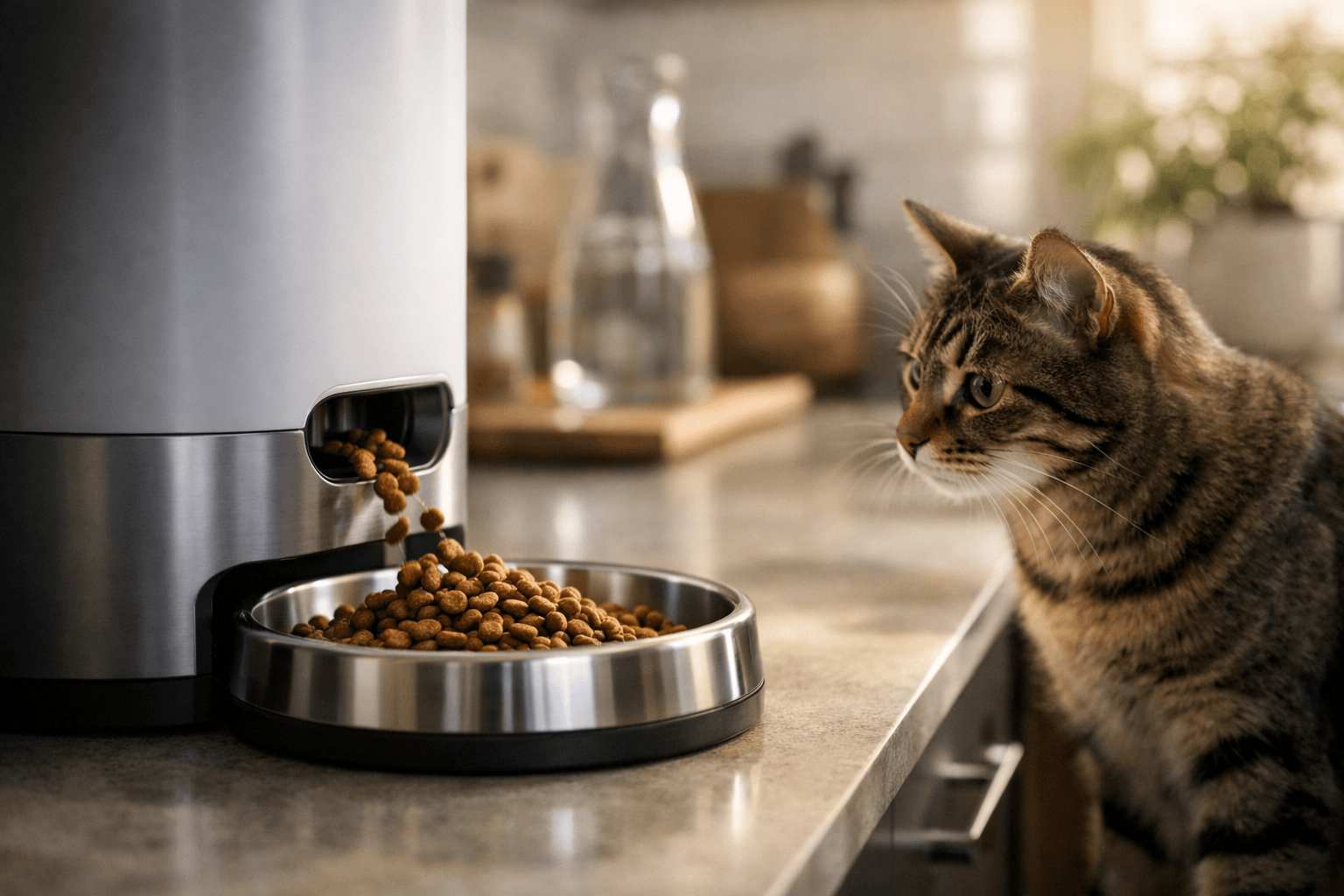
    Overfeeding is one of the most common, most expensive mistakes in cat care long-term. A solid feeder is core best smart cat tech 2026 because it controls the thing humans routinely mess up: portions and consistency.

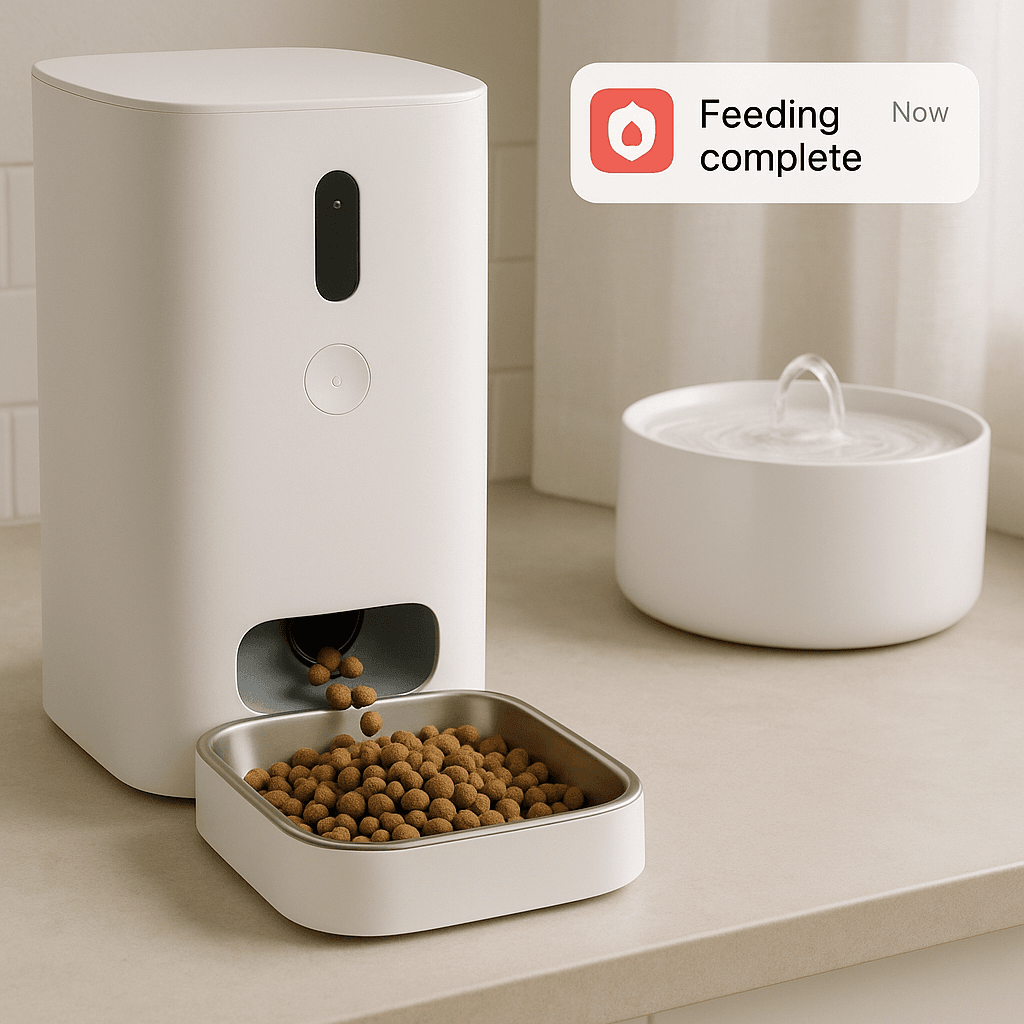
    PETKIT Fresh Element Infinity (Smart Feeder)
    Amazon (Solo)/ Amazon (Dual Hopper) / Amazon (Camera) / PetKit Store

    A strong pick if you want a feeder that’s built like a real appliance, not a toy. It’s designed for scheduled meals and controlled portions, which is where most “my cat is always hungry” problems begin.

    Why it belongs in best smart cat tech 2026

    • Scheduled feeding helps reduce chaotic begging loops.
    • Better portion control beats willpower every time.

    Quick pros

    • Great for routine feeding and portion discipline
    • Feels like a premium build in day-to-day use

    Quick cons

    • Still requires you to choose sensible portions (no device fixes math you won’t do)

    Want a deeper, hands-on breakdown before you buy? Read PETKIT Fresh Element Infinity Review 2025 | Smart Feeder Tested by PetTech AI.
    If you’re comparing brands first, use Best Smart Cat Feeders 2025 to shortlist models by use-case.

    (And yes: best smart cat tech 2026 for feeding is mostly about consistency, not “features.”)


    Litter Boxes: Where “Smart” Is Worth Paying For (If You Choose Carefully)
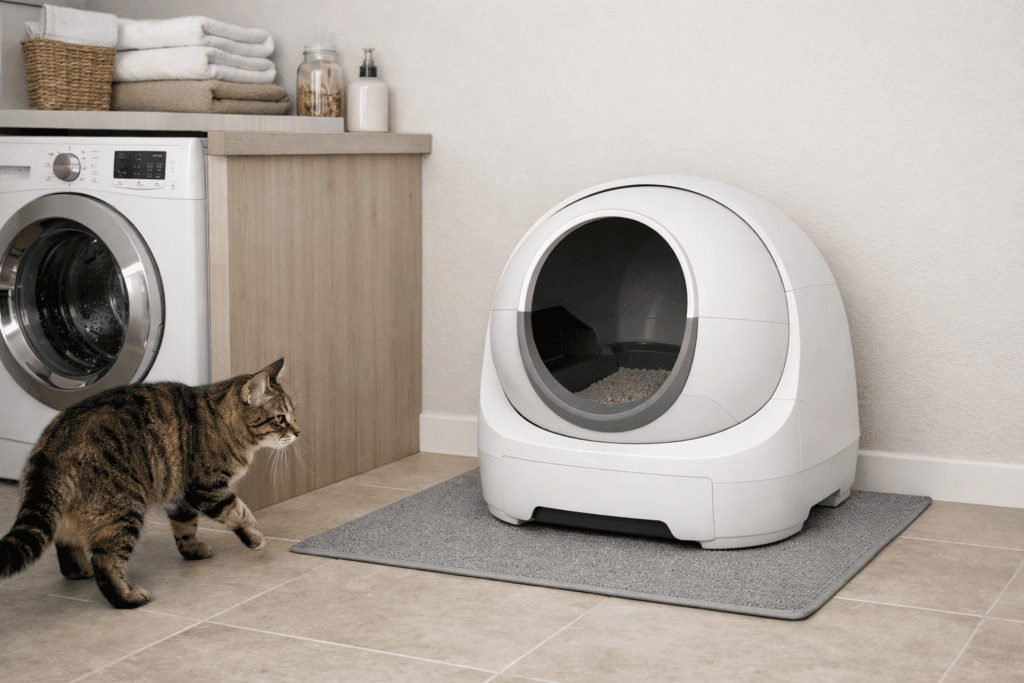
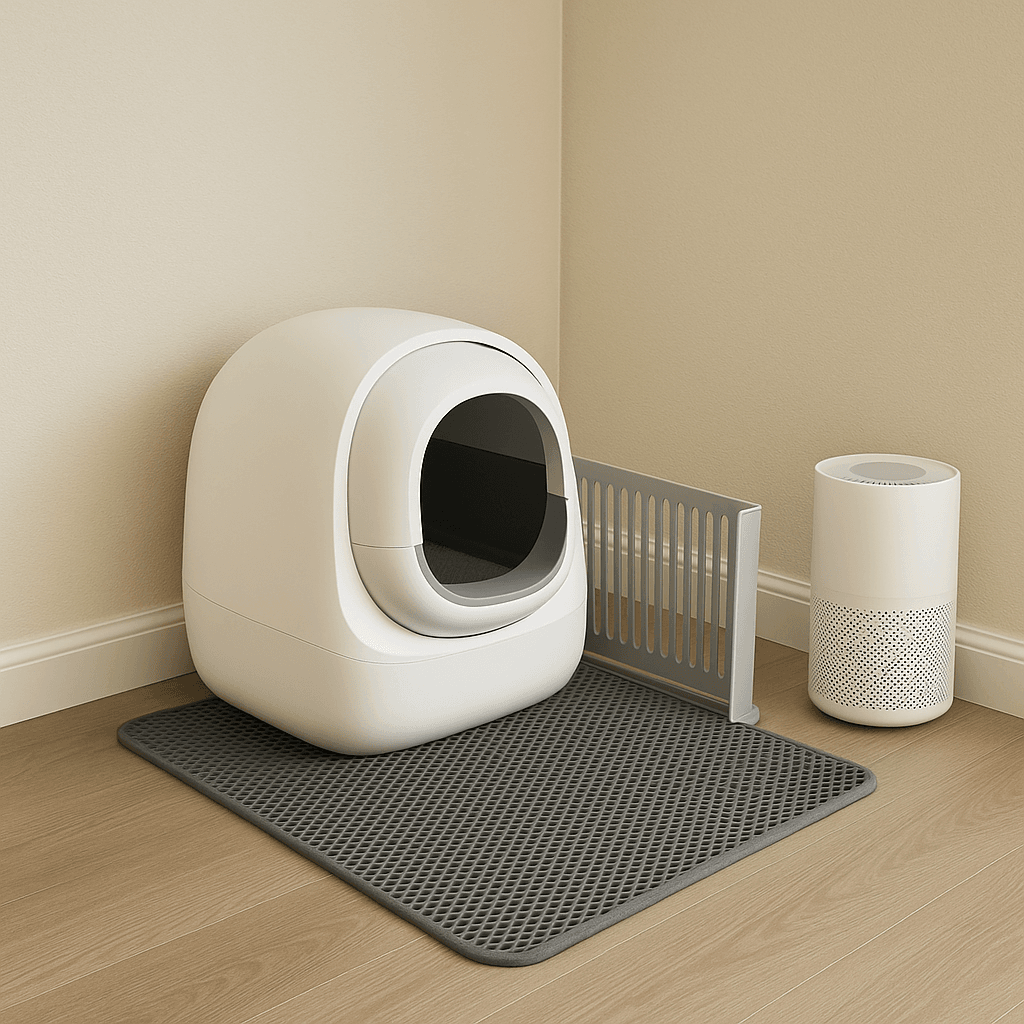
    Self-cleaning litter box setup designed for cleanliness and safety

    Self-cleaning litter is the most expensive category—and also where the difference between “smart” and “dangerous” matters. For best smart cat tech 2026, the bar is: redundant safety sensors, stable cycling behavior, and reasonable maintenance.

    PETKIT PuraMax 2 (Self-Cleaning Litter Box)

    This model is popular because it blends hands-off cleaning with the kind of sensor safety modern boxes need. It’s not “set and forget”—it’s “set and maintain.”

    Why it belongs in best smart cat tech 2026

    • More consistent cleanliness typically reduces litter avoidance.
    • App control is useful only if the hardware is safe and stable.

    Quick pros

    • Self-cleaning reduces human lag time (the #1 reason boxes get gross)
    • Designed around safety sensors (a baseline requirement)

    Quick cons

    • You still have to manage litter choice, waste bags, and cleaning cycles
    • Not every cat tolerates automated motion—slow introductions matter

    PETKIT N50 Odor Eliminator 2.0 (Accessory)

    Not a magic wand, but a practical add-on if odor is the limiting factor for where the box can live.

    Why it belongs in best smart cat tech 2026

    • Odor control affects box placement. Box placement affects usage. Usage affects everything.

    Quick pros

    • Straightforward, targeted odor support for compatible PETKIT units
      Quick cons
    • Doesn’t replace basic hygiene (regular bin changes still win)

    See also PuraMax vs Litter-Robot

    If you only buy one “big” product from this entire best smart cat tech 2026 list, it’s usually either a feeder or a litter box—because those are the two friction points that destroy consistency.


    Hydration: The Quiet Health Lever Most People Ignore

    Cats are famously under-hydrated. A fountain can help, but only if it’s clean, stable, and easy to maintain. In best smart cat tech 2026, a fountain’s “smart” value is mostly: reminders, modes, and build choices that make cleaning more likely.

    PETKIT EVERSWEET (Solo 2 / MAX variants)

    PETKIT’s fountain line is popular for a reason: these are designed as real home devices with usability in mind.

    Why it belongs in best smart cat tech 2026

    • Better hydration habits can support urinary health and overall well-being.
    • Easier cleaning = higher chance you’ll actually maintain it.

    Quick pros

    • Multiple operating modes (helpful for night + noise control)
    • Practical for multi-cat homes if you stay on cleaning schedule

    Quick cons

    • Any fountain becomes a bacteria project if you “forget” maintenance
    • Filters and parts are ongoing costs (that’s normal)

    Cameras: Not for Spying—For Behavior Signals You’d Otherwise Miss
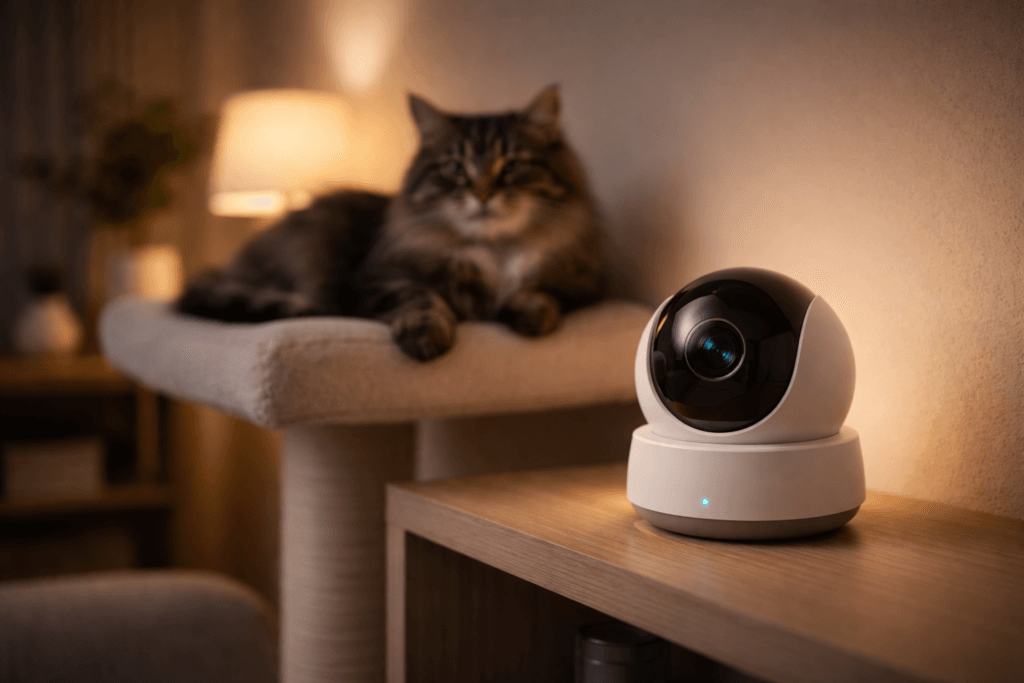
    360-degree pet camera monitoring a cat’s behavior at home

    A camera is only part of best smart cat tech 2026 if it does one thing well: gives you actionable visibility (activity changes, stress behaviors, conflicts in multi-cat homes). The rest is entertainment.

    Petcube Cam 360 (Pan/Tilt Pet Camera)

    A strong option if you want full-room coverage and simple check-ins. The 360-style coverage is practical in real spaces where cats move vertically and hide.

    Why it belongs in best smart cat tech 2026

    • Helps you see patterns: when they eat, where they rest, what triggers stress.
    • Useful for separation anxiety monitoring without disrupting the cat.

    Quick pros

    • 360° coverage reduces blind spots
    • Helpful for multi-room “spot checking” behaviors

    Quick cons

    • A camera doesn’t fix behavior; it only shows it
    • Over-monitoring can make owners anxious and reactive (don’t do that)

    Furbo 360° Cat Camera (Treat + Interaction)

    This category can be useful if treats are part of your training/enrichment. But the value depends on whether the camera works well without forcing a subscription for basic use (models vary—check the exact listing).

    Why it belongs in best smart cat tech 2026

    • Treat interaction can support remote enrichment in small doses.

    Quick pros

    • Interactive engagement when used sparingly
      Quick cons
    • Treat tossing can encourage overeating if you’re not disciplined

    GPS Tracking: Real Safety, Real Tradeoffs

    GPS trackers are part of best smart cat tech 2026 if your cat goes outdoors or has any escape risk. The tradeoffs are subscription and collar tolerance. Still, if your cat disappears, you will not care about subscription fees.

    Tractive GPS Cat Tracker

    A well-known option for real-time tracking and location history—useful for escape alerts and “where do they actually go?” reality checks.

    Why it belongs in best smart cat tech 2026

    • Escape alerts + location history are practical, not gimmicky.
    • Helps you make smarter decisions about outdoor time.

    Quick pros

    • Real-time tracking + history features are genuinely useful
      Quick cons
    • Subscription is part of the model
    • Collar acceptance varies—some cats hate it

    Enrichment: Smart Toys That Don’t Turn Your House Into a Casino
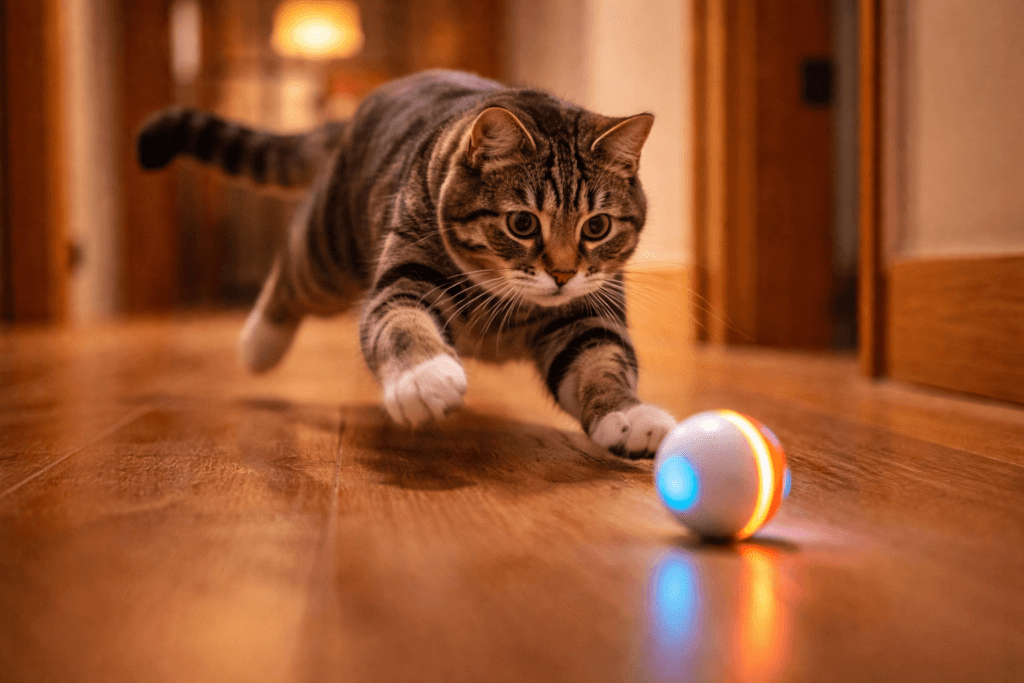
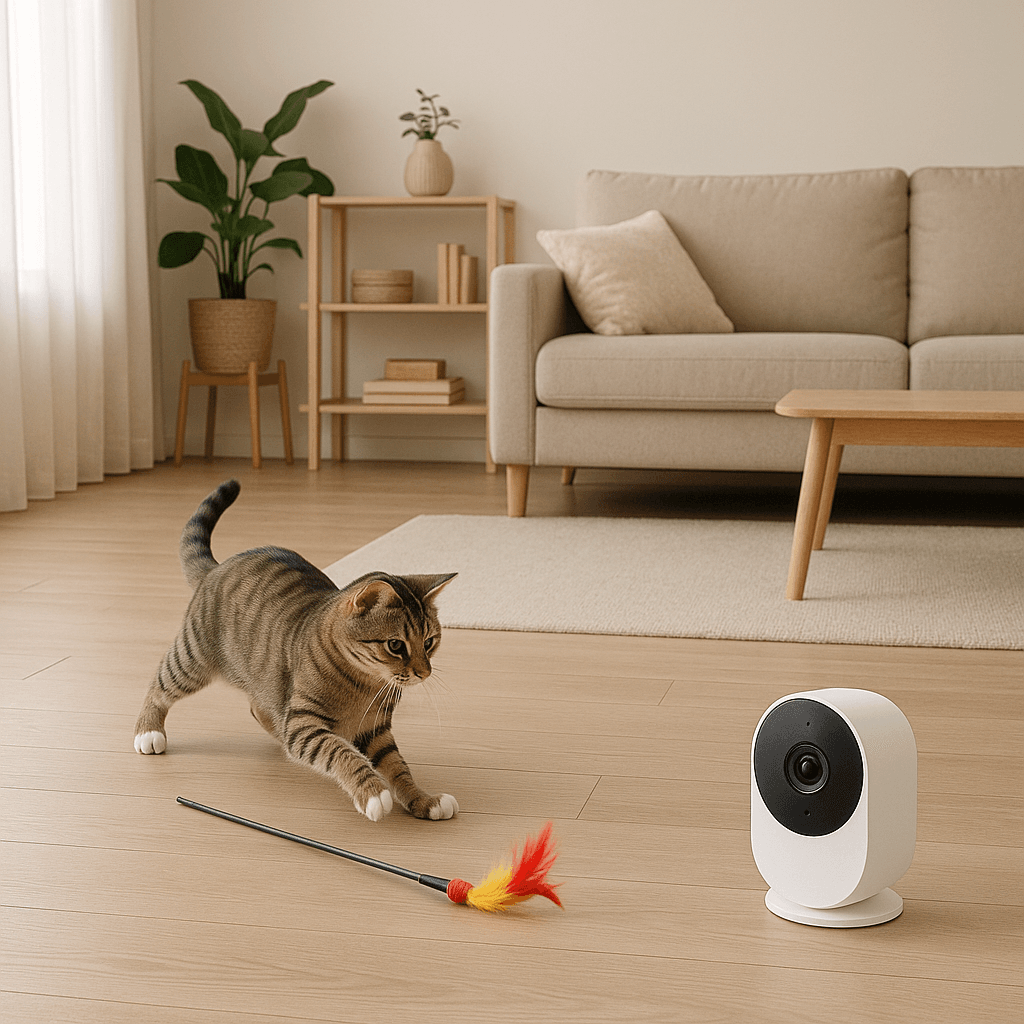
    Cat playing with an interactive toy for indoor enrichment and exercise

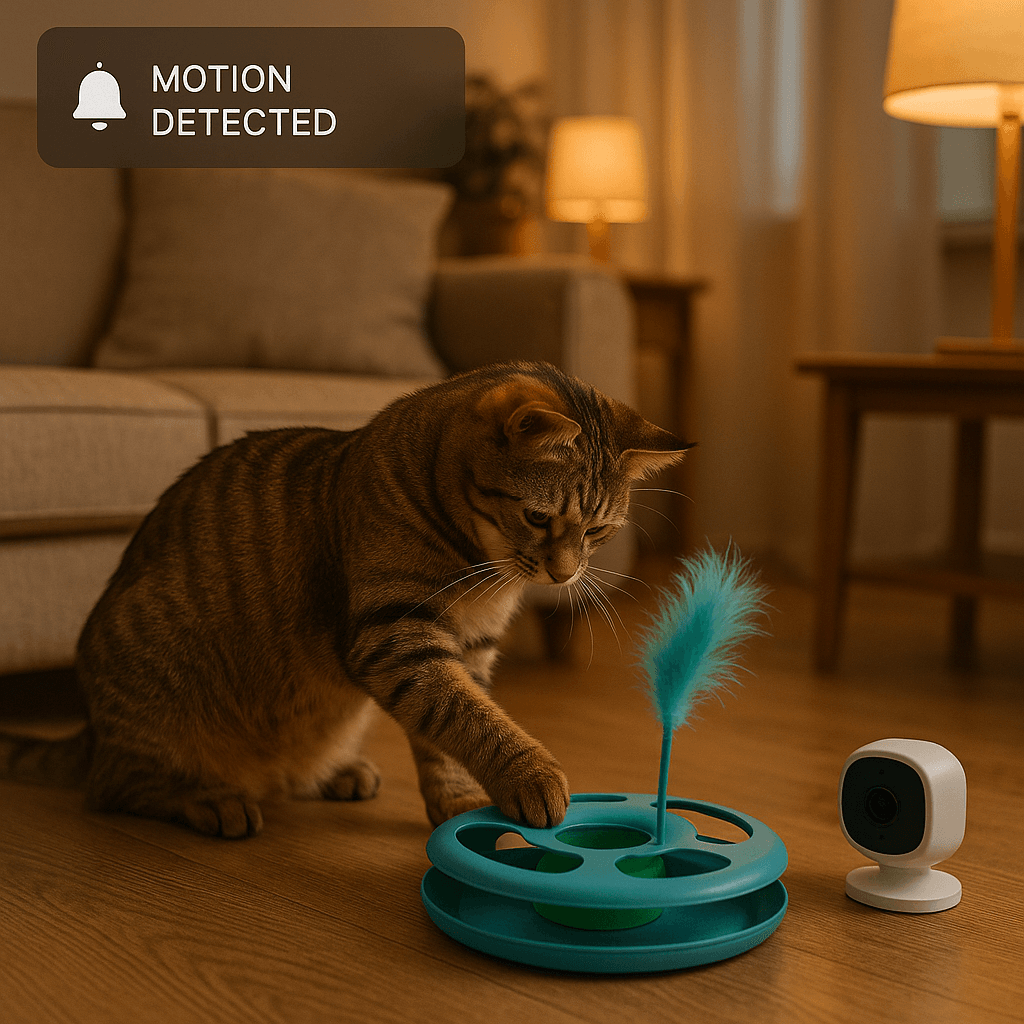
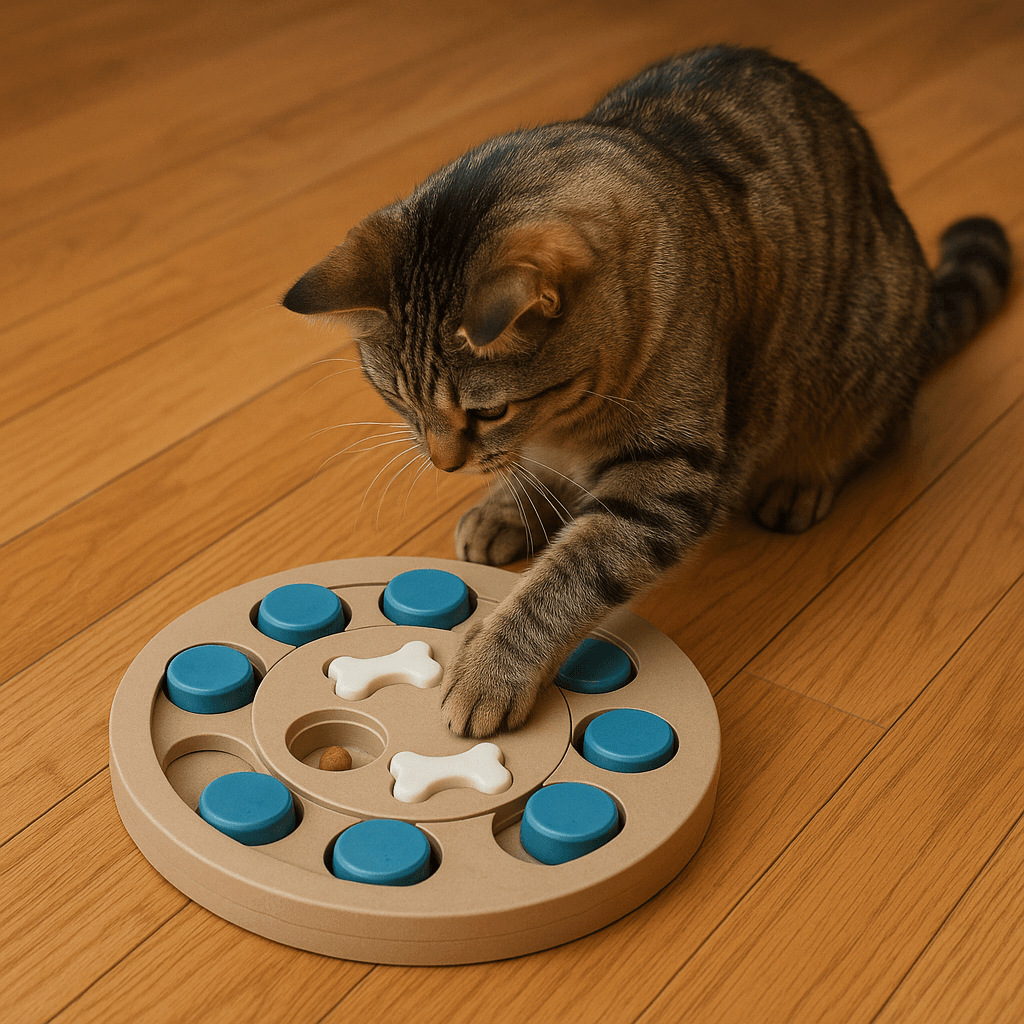
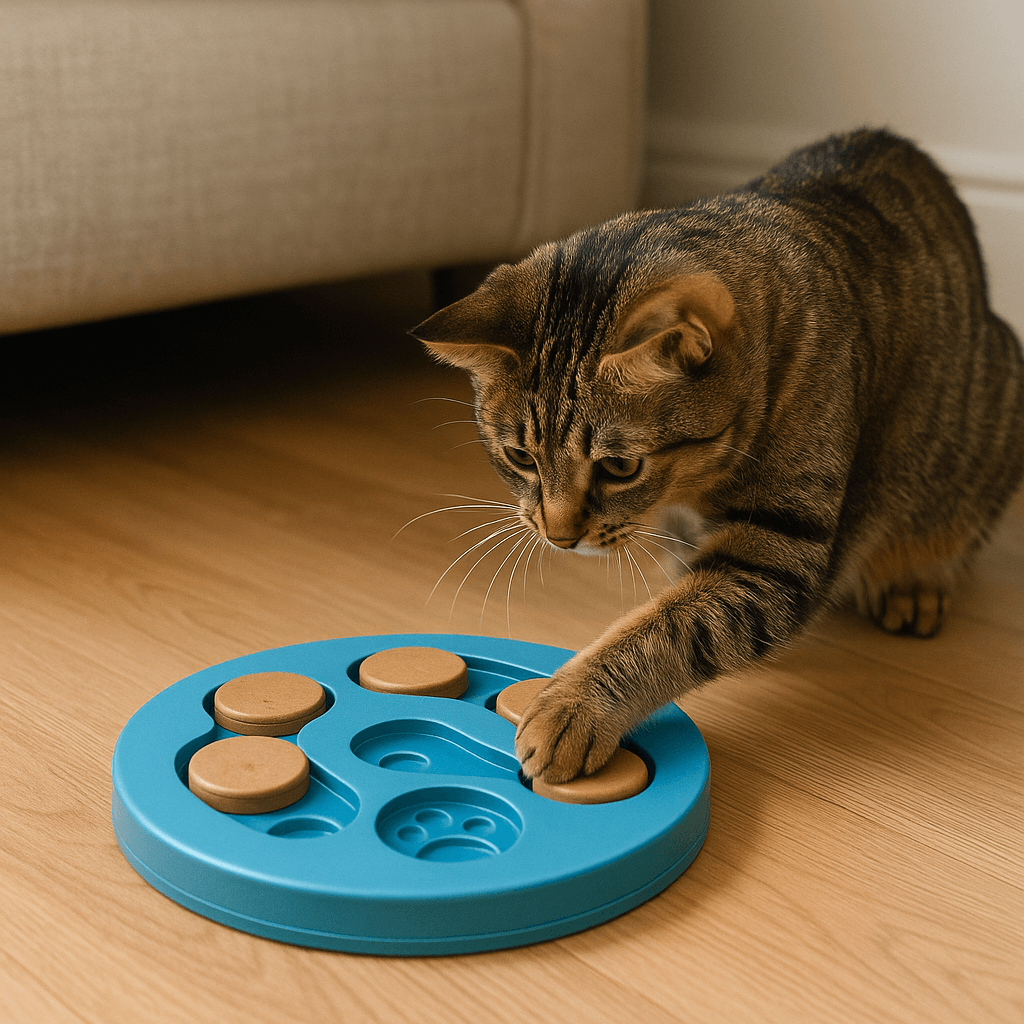
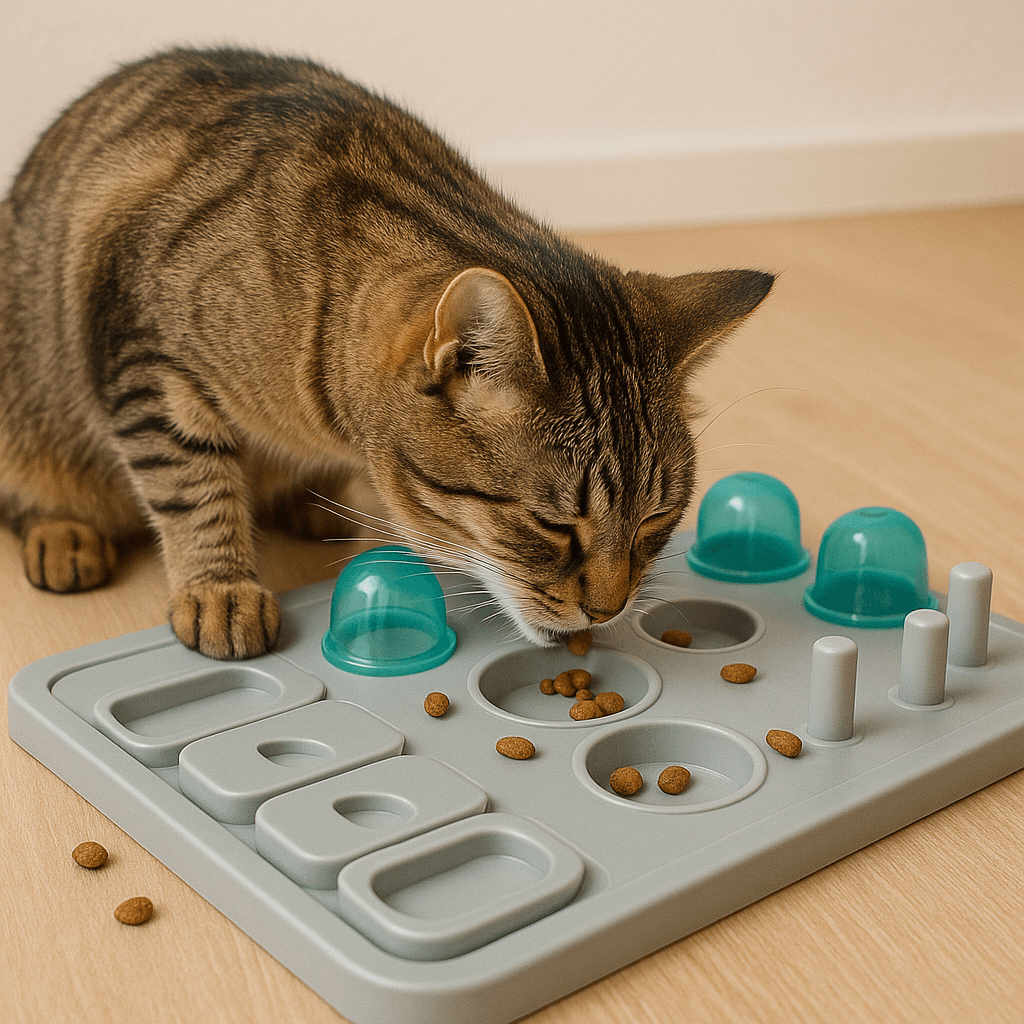
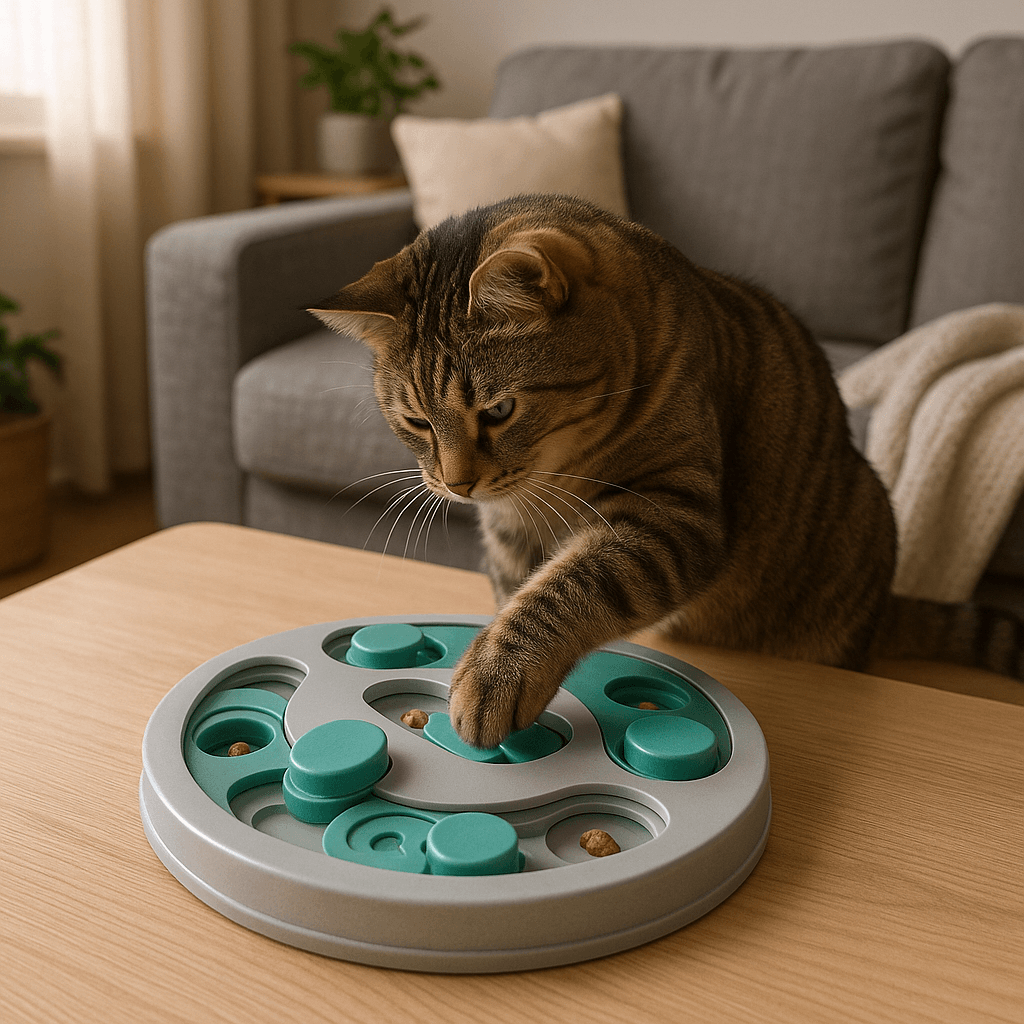
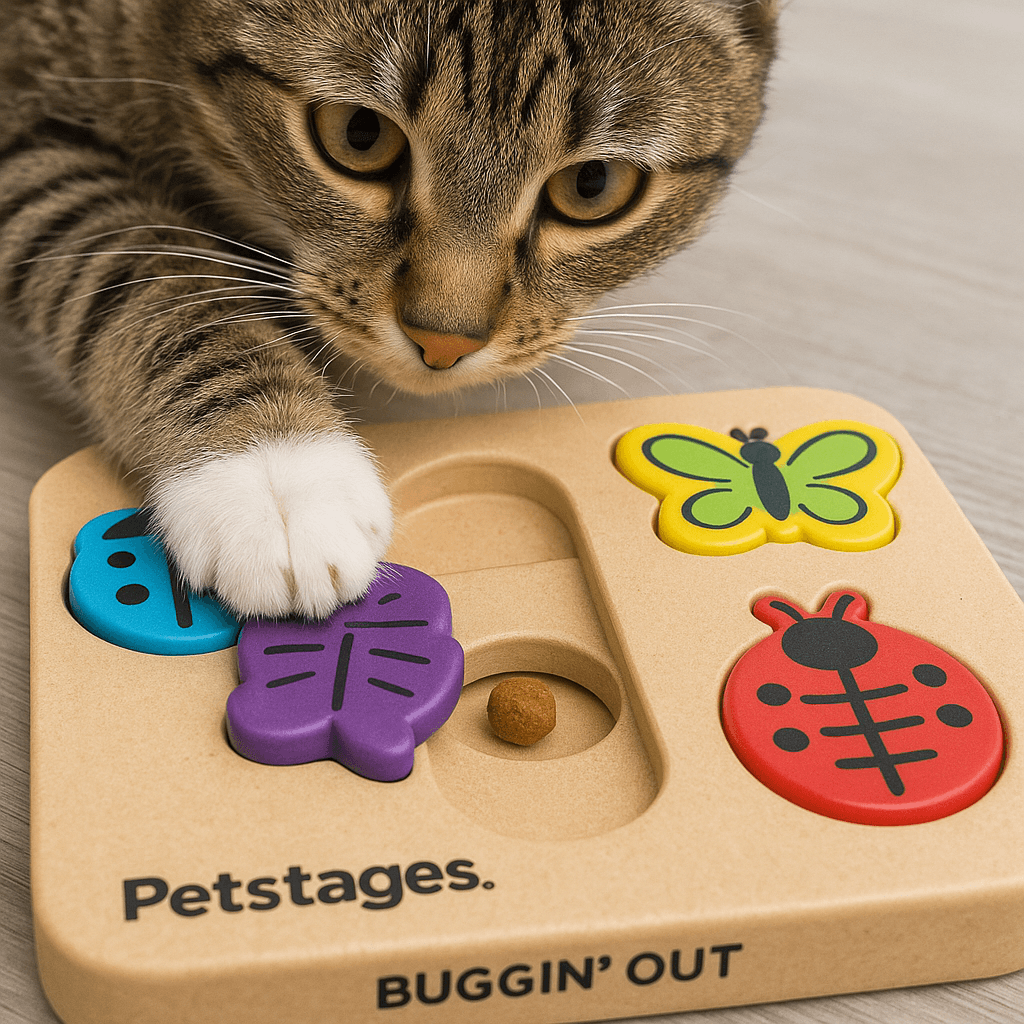
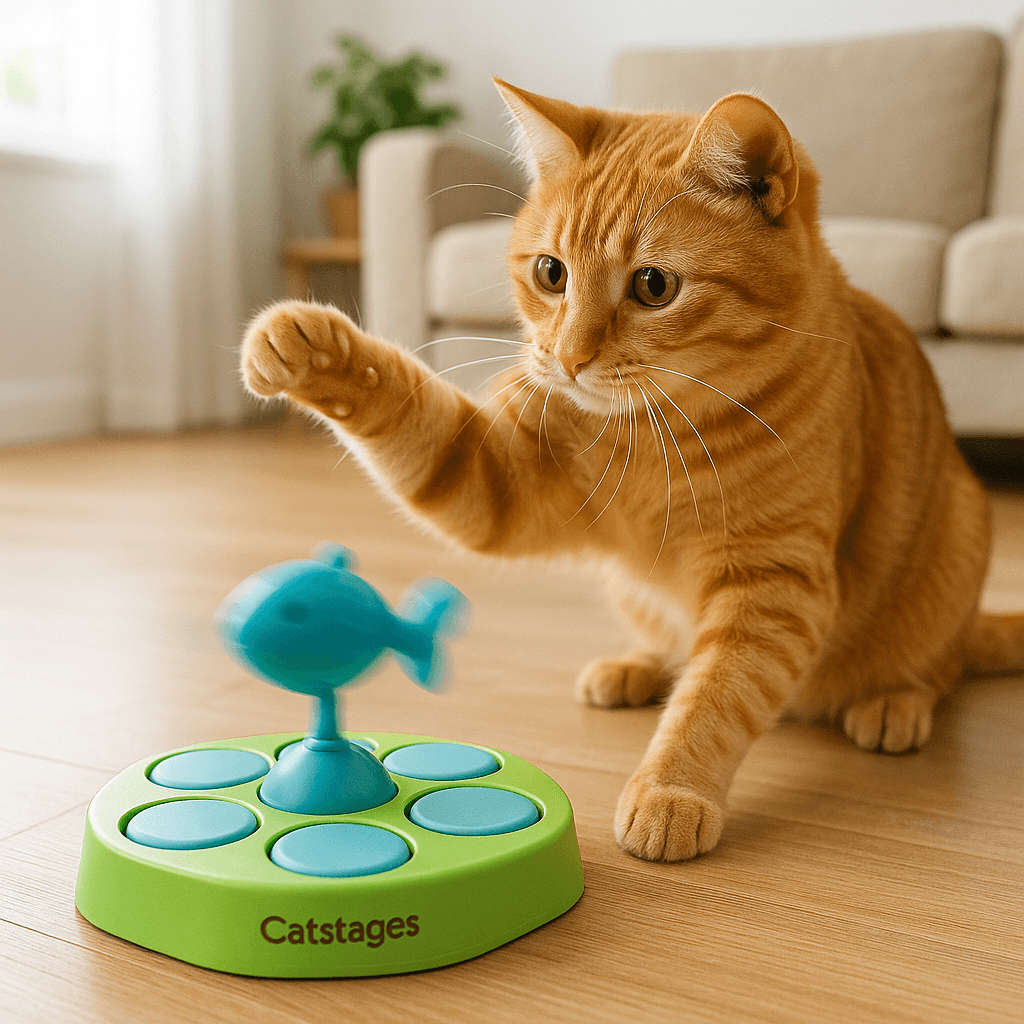
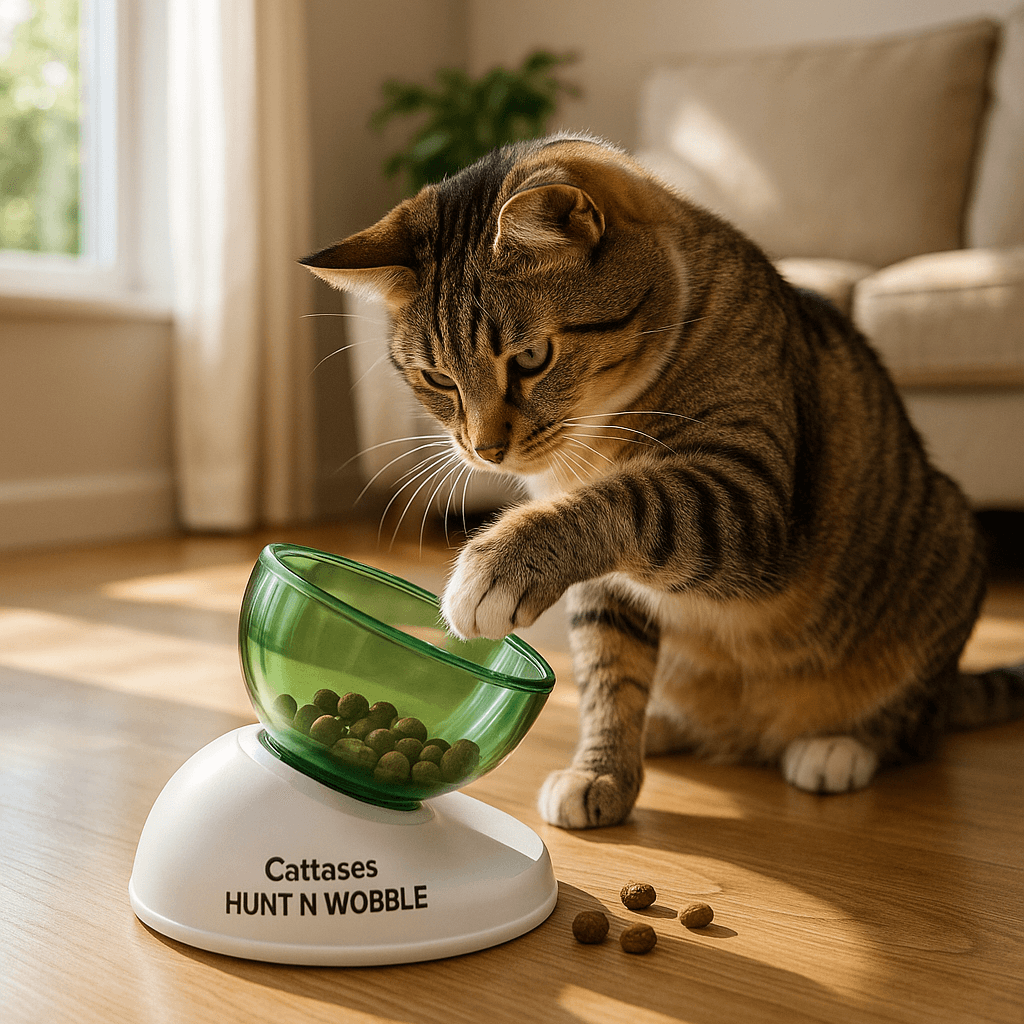
    Cats need play and problem-solving. Cornell’s feline health resources point out that safe toys and enrichment help support natural behaviors and can reduce boredom-related issues. Cornell Vet Med In best smart cat tech 2026, “smart enrichment” should be simple: movement, novelty rotation, and predator-style play—not constant stimulation.

    Cheerble Interactive Cat Ball (Automatic Moving Toy)

    Great for many indoor cats—especially if you use it like a tool, not a babysitter.

    Why it belongs in best smart cat tech 2026

    • Gets cats moving when owners are busy.
    • Works best in short, controlled sessions.

    Quick pros

    • Automatic motion can trigger chase behavior
      Quick cons
    • Some cats get overstimulated—limit session length

    Catit Senses 2.0 Super Circuit (Track Toy)

    Not “smart” in the Wi-Fi sense, but it’s one of the most reliable boredom tools because it’s modular, predictable, and easy to rotate.

    Why it belongs in best smart cat tech 2026

    • Rotation matters more than novelty. A simple toy that’s easy to reconfigure stays useful longer.

    Quick pros

    • Great for multi-cat and kitten energy
      Quick cons
    • Not every cat is a track-toy cat (some prefer wand play)

    Want to pick enrichment that matches your cat’s play style (not your taste)? Read Best Interactive Cat Toys 2025: Vet-Informed Picks to Bust Boredom & Boost Play.
    For the “why this works” science, see Indoor Cat Enrichment 2025: Science-Based Guide to Stress, Play & Smart Living.


    The Ecosystem Reality Check: The Best Smart Cat Tech 2026 Isn’t One Brand

    People want one app to control everything. Reality: you’ll probably mix brands. That’s fine—just choose a “spine” for the setup:

    • Feeding spine: PETKIT feeder (routine + portions)
    • Hygiene spine: PETKIT litter box (cleanliness + safety)
    • Visibility spine: Petcube (behavior insight)
    • Safety spine: Tractive (escape protection)
    • Enrichment spine: rotate Cheerble + Catit + human-led play

    That stack is what best smart cat tech 2026 looks like in real homes: a few high-impact anchors, not a drawer full of gadgets.


    What’s Overhyped in 2026 (Spend Less, Win More)

    If you’re trying to buy “future” vibes, here are common mistakes:

    • Buying a camera instead of fixing routines (feeding/litter first)
    • Over-automating play and accidentally creating frustration or overstimulation
    • Chasing “AI health claims” without clear, validated, actionable outputs
    • Ignoring maintenance reality (fountains and litter boxes don’t stay clean by optimism)

    The best best smart cat tech 2026 purchase is the one you’ll actually maintain.


    Verdict: My Shortlist for Best Smart Cat Tech 2026

    If you want a clean, defensible setup:

    • Start with feeding: PETKIT Fresh Element Infinity (portion control + routine)
    • Then litter: PETKIT PuraMax 2 (cleanliness + safety sensor approach)
    • Add hydration: PETKIT EVERSWEET (if you’ll clean it consistently)
    • Add visibility: Petcube Cam 360 (behavior patterns, multi-cat dynamics)
    • Add safety: Tractive GPS Cat Tracker (if outdoors/escape risk exists)
    • Add enrichment: Cheerble ball + Catit Super Circuit (rotate, don’t spam)

    That’s best smart cat tech 2026 in one sentence: control the basics, reduce friction, and use data only when it changes decisions.


    FAQ: Best Smart Cat Tech 2026

    1) What’s the single best smart cat tech 2026 upgrade for most homes?

    A smart feeder with reliable portion control—because consistent feeding routines directly reduce overeating patterns and begging spirals. For many households, that’s the highest ROI “smart” purchase in best smart cat tech 2026.

    2) Are self-cleaning litter boxes safe?

    Some are, some aren’t. For best smart cat tech 2026, choose models with multiple safety sensors and predictable cycling behavior, and introduce them slowly. Automated motion can stress certain cats, even when hardware is safe.

    3) Do fountains actually help cats drink more?

    They can, especially for cats attracted to moving water—but only if the fountain is kept clean. Maintenance is the difference between “health support” and “biofilm machine.” Vca

    4) Is a pet camera worth it if I’m home most of the time?

    Sometimes yes—because it shows behavior you don’t notice (night activity, multi-cat conflict, changes in routine). But it’s not a substitute for enrichment and consistent care.

    5) Do GPS trackers work for cats?

    Yes, with tradeoffs: subscription, collar tolerance, and battery management. If your cat can escape or goes outdoors, GPS can be one of the most practical safety buys inside best smart cat tech 2026.


    Internal Links


    References

    • Cornell Feline Health Center — “Safe Toys and Gifts” (why structured play and safe toys matter for natural behaviors and preventing boredom-related issues). Cornell Vet Med
    • AAFP (via AVMA news) — consensus framing on feeding cats, including the need to consider play/predation needs as part of feeding programs. AVMA
    • AAFP/ISFM Feline Environmental Needs Guidelines — core framework (“pillars”) connecting environment to feline wellbeing and behavior. SAGE Journals

    Disclaimer

    PetTech AI publishes educational content to help cat owners make safer, more informed decisions about everyday care, behavior, and pet technology. Some articles contain affiliate links, including Amazon Associate links and other affiliate partnerships. If you click a link and make a qualifying purchase, PetTech AI may earn a small commission at no extra cost to you. These commissions help support testing time, research, and ongoing site maintenance. Product availability and features can change over time, so always confirm the latest details on the retailer’s page. Nothing on this site replaces veterinary advice for medical concerns.

  • Why Indoor Cats Get Bored in 2025: Vet-Informed Causes, Hidden Signs, and Fixes That Actually Work

    Why Indoor Cats Get Bored in 2025: Vet-Informed Causes, Hidden Signs, and Fixes That Actually Work

    If you’ve ever watched your cat stare at a wall like it’s hosting a private TED Talk, you’ve already met the core problem. Why indoor cats get bored isn’t a cute personality quirk—it’s a predictable result of modern indoor life: fewer threats, fewer puzzles, fewer hunts, and a lot of repetitive days.

    In 2025, indoor cats are living safer than any generation before them. They’re also more likely to develop boredom-driven behaviors that owners mislabel as “attitude,” “neediness,” or “random aggression.” The point of this guide is simple: explain why indoor cats get bored, how to recognize it early, and how to build a home routine that keeps your cat mentally busy without turning your life into a full-time enrichment program.


    The Real Reason Why Indoor Cats Get Bored

    Here’s the blunt truth: a cat’s brain is built for problem-solving around hunting. Indoor life removes most of the problem-solving while keeping the energy and instincts intact. That mismatch is why indoor cats get bored—they have capacity with nowhere to spend it.

    Common “boredom accelerators” in 2025 homes include:

    • predictable food access (no effort required)
    • single-room living (no territory complexity)
    • low vertical space (no climbing, no surveying)
    • minimal novelty (same toys, same locations, same smells)
    • little “agency” (cat can’t choose where to perch, hide, hunt, or explore)

    Boredom isn’t always “lack of toys.” It’s often lack of control, variety, and earned outcomes.


    Boredom vs. Stress vs. Illness: Don’t Guess

    Before you treat boredom, you have to confirm it. The reason this matters is that some signs overlap with stress, pain, or medical issues. Why indoor cats get bored is a behavior question; pain and illness are health questions.

    If you see sudden changes like:

    • new litter box avoidance
    • dramatic appetite increase or weight loss
    • hiding constantly
    • yowling at night out of nowhere
    • aggression that escalates quickly

    …rule out medical causes first. A bored cat can be annoying. A sick cat can look “bored” because they’re shutting down.

    Once health is cleared, boredom becomes the most common—and most fixable—explanation.


    The Hidden Signs: What Boredom Looks Like in Real Homes

    Cat knocking objects for attention—classic boredom behavior

    Most owners expect boredom to look like “sleeping all day.” That’s normal for cats. The more useful question is: what does boredom look like when it turns into a pattern?

    These are the signs that typically show up when why indoor cats get bored becomes your daily reality:

    • food obsession: begging, stealing, waking you up early, constant hovering near the kitchen
    • attention hijacking: knocking objects off surfaces to force interaction
    • hyper bursts at predictable times (often 10–30 minutes after you sit down)
    • overgrooming or repetitive licking without a skin issue
    • toy “hoarding”: carrying toys to food/water areas or sleeping spots
    • sudden bitey play: pouncing on ankles, grabbing hands, “ambush” behavior
    • screen fixation: staring at reflections, shadows, or TV movement for long periods

    A key pattern: boredom behaviors are often repeatable. Same time. Same trigger. Same outcome.


    Why Indoor Cats Get Bored Faster in 2025 Than You Think

    The modern home is optimized for humans, not predators. Quiet spaces, clean surfaces, and predictable routines reduce randomness. That’s great for productivity. It’s also why indoor cats get bored faster than owners expect.

    In 2025, boredom is amplified by:

    • remote work (cats learn when you’re “available” and create behaviors to interrupt)
    • automated feeding (zero effort meals can remove a major daily activity)
    • smaller urban apartments (less territory, fewer zones)
    • fewer natural sensory inputs (sealed windows, filtered air, limited outdoor scents)

    Even a loving home can feel like a loop: same smells, same routes, same outcomes. Cats notice.


    The 3-Pillar Fix: Hunt, Climb, and Choose

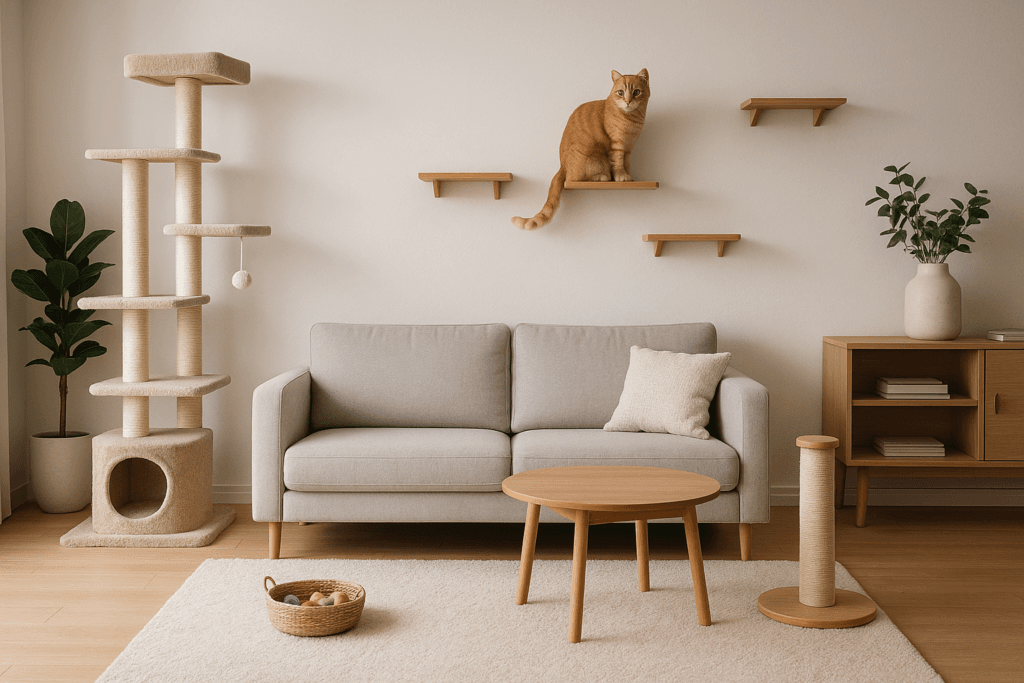
    Indoor enrichment setup with vertical routes and toy rotation

    When people ask why indoor cats get bored, they often want a shopping list. That’s not the real solution. The real solution is building three pillars into daily life:

    1. Hunt (earned rewards)
    2. Climb (territory complexity)
    3. Choose (agency and options)

    If your cat gets at least one daily “hunt,” one meaningful vertical route, and multiple choices for resting and observing, boredom drops sharply—even without expensive gadgets.


    Practical Fixes That Don’t Require More Free Time

    You don’t need to entertain your cat for hours. You need short, repeatable systems.

    1) Turn One Meal Into a “Work Meal”

    This is one of the fastest ways to address why indoor cats get bored and food obsession at the same time: make your cat earn part of their calories.

    • puzzle feeders
    • scatter feeding (controlled, not chaotic)
    • treat balls
    • simple DIY “foraging” (kibble in folded paper, under cups)

    If your cat is already overeating or begging nonstop, this pairs perfectly with a structured feeding plan.

    If overeating is part of the picture, check out our guide How to Stop a Cat From Overeating (2025): Vet-Backed Strategies & Smart Feeding Tech.

    2) Use “Play Windows,” Not Random Play

    Random play teaches your cat to demand entertainment. Scheduled play teaches your cat to anticipate it. That predictability reduces chaos and makes boredom less likely—which is exactly why indoor cats get bored less in homes with a consistent routine.

    • 5–10 minutes before a meal
    • 5–10 minutes in the evening
    • stop while your cat is still engaged

    3) Rotate Toys Like a Subscription, Not a Drawer

    Leaving 20 toys out all week doesn’t create variety. It creates clutter.
    Rotate 4–6 toys every 3–4 days. Old toys feel new again.

    If you want toys that reliably hold attention (not “played with once”), see Best Interactive Cat Toys 2025: Vet-Informed Picks to Bust Boredom & Boost Play.


    Smart Tech in 2025: What Helps, What’s Hype

    Used correctly, tech can reduce boredom. Used lazily, it can worsen it. The mistake is thinking automation replaces stimulation. That’s not why indoor cats get bored gets solved—it’s how it gets ignored.

    Smart feeders

    Helpful when they:

    • support consistent meal timing
    • prevent accidental overfeeding
    • enable micro-meals that reduce food fixation

    Not helpful when they:

    • remove all “earned” feeding opportunities
    • become a constant snack button via app

    Pet cameras

    Helpful when they:

    • reveal boredom triggers (pacing, door watching, stress patterns)
    • let you time enrichment where it matters

    Not helpful when they:

    • encourage you to “talk to your cat” instead of changing the environment

    Automated toys

    Helpful when they:

    • fill dead time when you’re away
    • create short novelty bursts

    Not helpful when they:

    • run all day (cats habituate fast)
    • replace real play that completes the stalk-chase-pounce sequence

    The Environment Upgrade Most People Miss: Vertical Routes

    If you want the simplest answer to why indoor cats get bored, it’s this: flat homes are boring. Verticality turns a small space into territory.

    Three quick wins:

    • one tall cat tree by a window
    • one shelf route or “step ladder” path to a high perch
    • one covered hiding space (not a cramped carrier—an actual retreat)

    The goal is not “more furniture.” The goal is more zones: observe, hide, hunt, rest, and travel.

    If you’ve already built a “smart living” setup, this is where it should connect: air quality, calming zones, structured feeding, and play zones all reinforce each other.


    Training as Enrichment: The Underused Solution

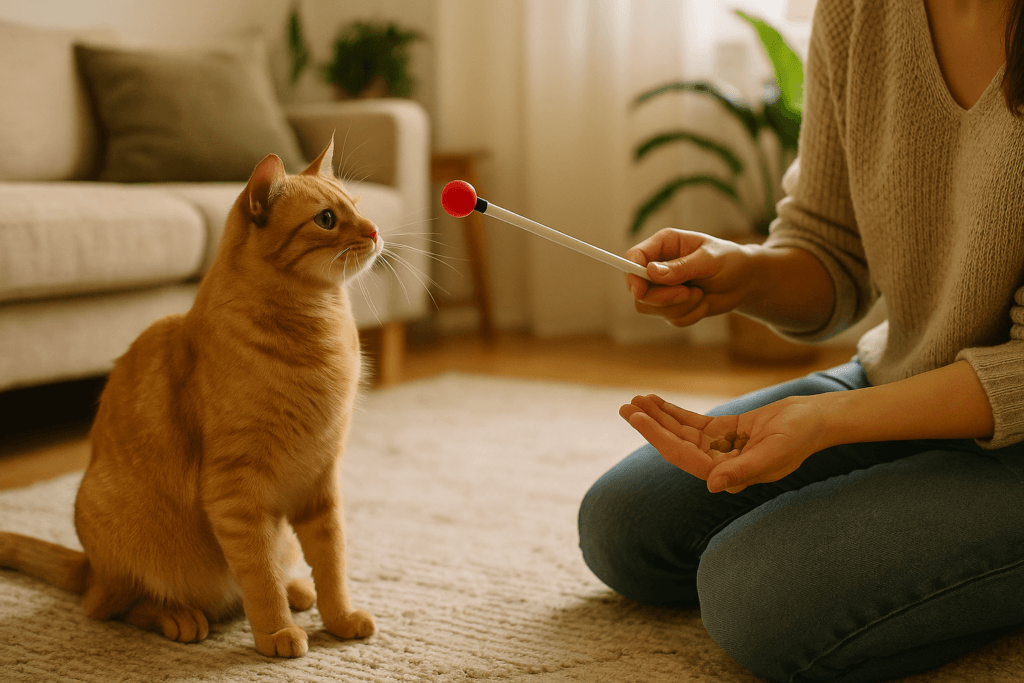
    Short training sessions help prevent indoor cat boredom

    Training sounds like “dog stuff.” In reality, training is mental enrichment—and it directly addresses why indoor cats get bored by giving them a puzzle with a reward.

    Start with:

    • target touch
    • sit on a mat
    • come when called
    • carrier comfort steps
    • cooperative handling (touch paw → treat)

    You don’t need perfection. You need your cat to practice thinking.

    For a clean, practical system, use Cat Training Tips 2025: Practical, Science-Based Advice for Better Behavior & Bonding.


    The “Boredom Loop” That Makes Problems Worse

    Here’s the loop that traps most owners, and it’s exactly why indoor cats get bored spirals:

    1. Cat is under-stimulated
    2. Cat creates annoying behavior (begging, knocking things over)
    3. Owner responds (attention appears)
    4. Cat learns: annoying behavior = interaction
    5. Behavior repeats, boredom deepens

    The fix is counterintuitive: stop paying the nuisance behavior, and start paying calm, appropriate behavior. Reward your cat when they sit on the perch. When they play with the approved toy. When they rest quietly near you. That’s how you rewire the home.


    When It’s Not Boredom: Red Flags to Take Seriously

    Even if you understand why indoor cats get bored, you still need to know when boredom is not the explanation.

    Get a vet check (or at least a call) if you see:

    • increased appetite with weight loss
    • sudden drinking/urination changes
    • frequent vomiting
    • sudden aggression in an older cat
    • hiding plus reduced grooming
    • loud vocalization with restlessness that is new

    Boredom is common. Medical causes are not rare. Don’t gamble.


    Internal Resources

    If you’re working on boredom-driven overeating, chaotic mealtimes, or attention-seeking behavior, these deeper guides can help you build a full system (not just a one-off fix):


    References

    • Cornell Feline Health Center — educational resources on feline behavior, stress reduction, and welfare factors that influence appetite and daily routines.
    • American Veterinary Medical Association (AVMA) — animal welfare and behavior guidance relevant to humane management, enrichment, and stress-related behavior patterns.
    • AAFP / ISFM Feline Environmental Needs Guidelines — evidence-based recommendations for environmental enrichment, predictability, and supporting normal feline behaviors indoors.
    • VCA Animal Hospitals — practical veterinary guidance on behavior changes, stress indicators, and when to rule out medical causes.

    Disclaimer

    This article is for educational purposes only and does not replace professional veterinary advice, diagnosis, or treatment. If your cat shows sudden behavior changes, persistent hiding, aggression, vomiting, litter box issues, or appetite shifts—especially when paired with weight loss or increased thirst—contact your veterinarian. Enrichment and training should be tailored to your cat’s age, health status, and temperament, and changes should be introduced gradually.

    PetTech AI participates in affiliate programs, including Amazon Associates and CJ. We may earn a commission if you purchase products through links on this page, at no extra cost to you. Recommendations are based on independent research and practical use-cases, not paid placement.

  • Smart Cat Gifts 2025: Holiday Tech & Cozy Accessories Your Cat Will Actually Use 🎁

    Smart Cat Gifts 2025: Holiday Tech & Cozy Accessories Your Cat Will Actually Use 🎁

    If you’re hunting for smart cat gifts 2025 that aren’t just “cute for Instagram” but genuinely useful for your cat’s health, safety, and daily life, you’re in the right place. In this guide we’ll mix proper pet tech (GPS trackers, smart feeders, heated beds) with festive wearables and Christmas toy bundles that still align with what vets call enrichment and welfare, not just pure cosplay.Cornell Vet College

    Below you’ll find a curated list of smart cat gifts 2025 that are all available on Amazon right now, split into logical categories so you can pick one “hero” gift or build a full ecosystem around your feline.


    Why “Smart Cat Gifts 2025” Are Different From Random Cat Stuff

    There’s a big gap between a novelty toy your cat ignores after two days and smart cat gifts 2025 that actually change daily life:

    • They integrate with apps, data, or automation (feeding, GPS, camera, temperature).
    • They support real feline needs: hunting, climbing, hiding, scratching, resting.
    • They help you monitor health (weight, activity, litter box patterns) or safety (location, cold/heat risks).Cornell Vet College

    If you choose well, these smart cat gifts don’t just look cool under the Christmas tree – they quietly reduce risk, vet bills and owner stress for the whole of 2025.


    How to Choose the Best Smart Cat Gifts 2025

    Before you click “Buy now”, filter smart cat gifts 2025 with three questions:

    1. Does it solve a real problem?
      • Cat goes missing? GPS tracker.
      • Vomits when free-fed? Smart feeder with slow feed and portion control.
      • Hogs the radiator or hides in cold corners? Heated bed with proper safety.
    2. Is it compatible with your existing ecosystem?
      Whenever possible, stay inside one app (e.g. PETKIT or Tractive) so automations, notifications and updates live in one place instead of three different logins.
    3. Is it safe and evidence-aligned?
      • Vets and organizations like the Cornell Feline Health Center and AVMA stress safe toys, safe environments and temperature control over “cute but risky” gear.
      • Avoid sharp edges, strangulation risks, and uncontrolled heat sources.

    With that in mind, let’s dive into specific smart cat gifts 2025 you can put into your Amazon cart.


    Smart Tech Gifts: Feeders, GPS & Comfort Devices

    PETKIT Automatic Cat Feeder with Camera (YumShare / Camera Series)

    YumShare Solo Automatic Feeder with Camera

    This PETKIT automatic feeder with 1080p HD camera, night vision, 2-way audio and Wi-Fi is basically a monitoring hub plus smart feeder in one device. Amazon / PetKit

    Why it’s a smart cat gift 2025:

    • App-controlled feeding: Schedule meals, adjust portions, and trigger manual feeds from your phone – ideal for weight control and consistent routines.
    • Built-in camera: 1080p wide-angle video plus IR night vision lets you see if your cat actually eats or if another pet steals the food.
    • 2-way audio & AI motion capture: Talk to your cat, record clips, and let the AI auto-capture highlight moments for you.

    Perfect for: Busy owners, multi-cat households, and anyone turning feeding into part of their smart home system. Among smart cat gifts 2025, this is one that pays for itself in peace of mind.


    PetSafe Smart Feed Automatic Pet Feeder (2nd Gen)

    PetSafe’s Smart Feed is one of the most established connected feeders on the US market. It connects to Wi-Fi and works with the My PetSafe app to schedule up to 12 meals per day. Amazon

    Key smart features:

    • App + Alexa control: Start “Feed Now”, pause or adjust schedules from your phone, or use voice control via Alexa.
    • Slow Feed option: Spreads a meal over 15 minutes to reduce gobbling and vomiting.
    • Low-food alerts: Sensors ping your phone when the hopper is running low or empty.

    If you already use PetSafe gear, this is one of the most logical smart cat gifts 2025 you can add, especially for cats with strict feeding plans or prone to scarf-and-barf behavior.


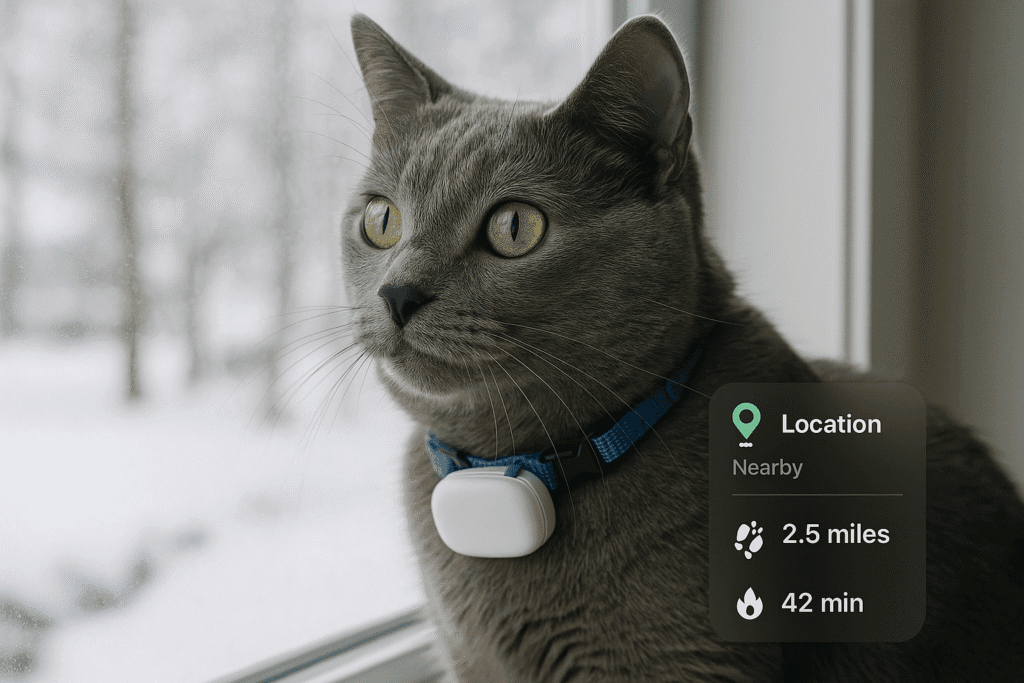
    Tractive Smart Cat GPS Tracker

    Grey cat wearing a GPS tracker collar with activity stats overlay

    Tractive’s cat-specific tracker offers real-time GPS with unlimited range plus health and sleep monitoring, territory maps, and virtual fences. Amazon

    Why it stands out:

    • Live tracking every 2–3 seconds instead of once per minute – huge difference when you’re actually searching.
    • Health & sleep insights help you spot unusual inactivity or restlessness that might signal illness.
    • Virtual fences send alerts if your cat leaves your yard or “safe zone”.

    Yes, Tractive requires a subscription, but as smart cat gifts 2025 go, this is arguably the highest-impact choice if your cat has outdoor access.


    Thermotex Far Infrared Heated Pet Bed

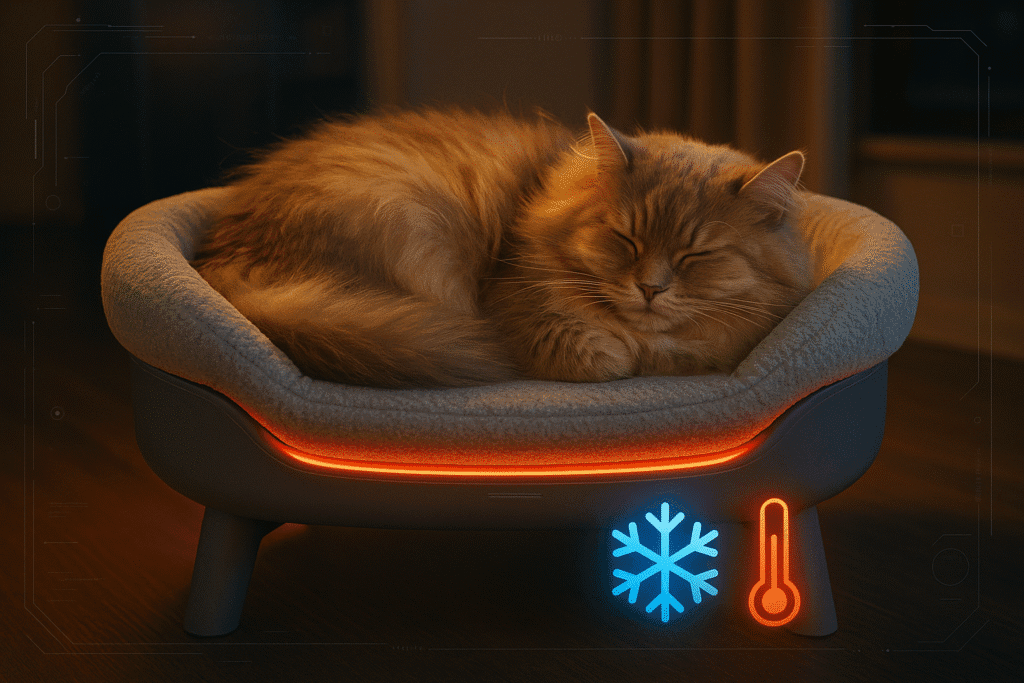
    Cat sleeping in a smart heated bed.

    If you’re looking for smart cat gifts 2025 that genuinely improve your cat’s wellbeing—not just seasonal décor—this Thermotex infrared bed is one of the most functional comfort upgrades you can buy. Unlike standard heated beds that warm only the surface, Thermotex uses far-infrared technology to deliver deep, penetrating heat that reaches up to 10× deeper into joints and soft tissue. This makes a noticeable difference for elderly cats, pets with arthritis, post-injury recovery, or those who struggle to maintain body temperature in winter. Amazon

    What makes it “smart”:

    • The bed reaches a safe therapeutic range of 42–48°C
    • Targeted, time-limited use (e.g. heating mode up to 48 hours) aligns with safety guidance around heat exposure.American Veterinary Medical Association

    Among smart cat gifts 2025, this one is particularly useful for senior cats, arthritic cats, or breeds sensitive to temperature swings.


    Smart & Wearable Gifts for Cats

    You also wanted a category specifically focused on “wearables.” These smart cat gifts 2025 sit on your cat’s body or are directly worn, so fit, safety, and comfort matter.

    Tractive Smart Cat GPS Tracker (as a Wearable)

    We’ve already covered the features, but from a wearable perspective:

    • It’s lightweight (about 0.9 oz), designed specifically for cats 6.5 lbs and up.Amazon
    • Breakaway collar included, which is crucial for outdoor safety.
    • Rated waterproof and rugged, so it survives rain and rolling in the dirt.

    If you’re choosing just one wearable from your shortlist of smart cat gifts 2025, this is the data-driven, safety-oriented pick.


    Festive Yet Practical Wearable Gifts (Non-Tech but Smart Choices)

    These aren’t electronics, but they still count as “smart” choices because they respect feline comfort and safety while delivering holiday vibes.

    Azuza Christmas Cat Collars (2-Pack, Breakaway)

    • Adjustable from 8″–12″, with a breakaway buckle and metal D-ring.
    • Includes removable bowtie with Christmas tree and glitter antler.
    • Polyester strap, lightweight, and designed for everyday comfort.

    This sits in the “wearable” slice of smart cat gifts 2025 because it’s festive but still built around safe, breakaway hardware instead of rigid costume pieces.

    Vehomy Christmas Sweater for Cats & Small Dogs

    • Multiple sizes (XS–XL) with detailed weight guidance, which is critical to avoid restricting movement.
    • 100% acrylic, soft and warm, easy to put on and machine washable.
    • Classic red reindeer/snowflake pattern for holiday photos and chilly apartments.

    Use it sparingly and always watch your cat’s body language; AVMA reminds owners not to overdress pets in ways that restrict movement or cause overheating. American Veterinary Medical Association


    “Non-Tech” Smart Gifts – Enrichment & Holiday Bundles

    Not every item in smart cat gifts 2025 needs Bluetooth. Some are “smart” because they align with what enrichment research says cats actually need. Cornell Vet College

    Calibonbon Christmas Cat Toy Set (5-Piece Gift Bundle)

    This bundle includes:

    • Interactive feather wand with bells
    • Chirping robin toy
    • Plush Santa truck stuffed with catnip and a squeaker
    • Reindeer antler cape
    • Reusable Christmas gift bag

    Why it belongs in a smart cat gifts 2025 list:

    • Combines prey-like motion (wand) and sound (chirping bird), which fits the stalk–pounce–grab–kill sequence Cornell highlights when talking about “good toys.”Cornell Vet College
    • The gift bag makes it ready-to-give for another cat parent.

    Christmas Cat Trees & Towers: Built-In Play + Decor

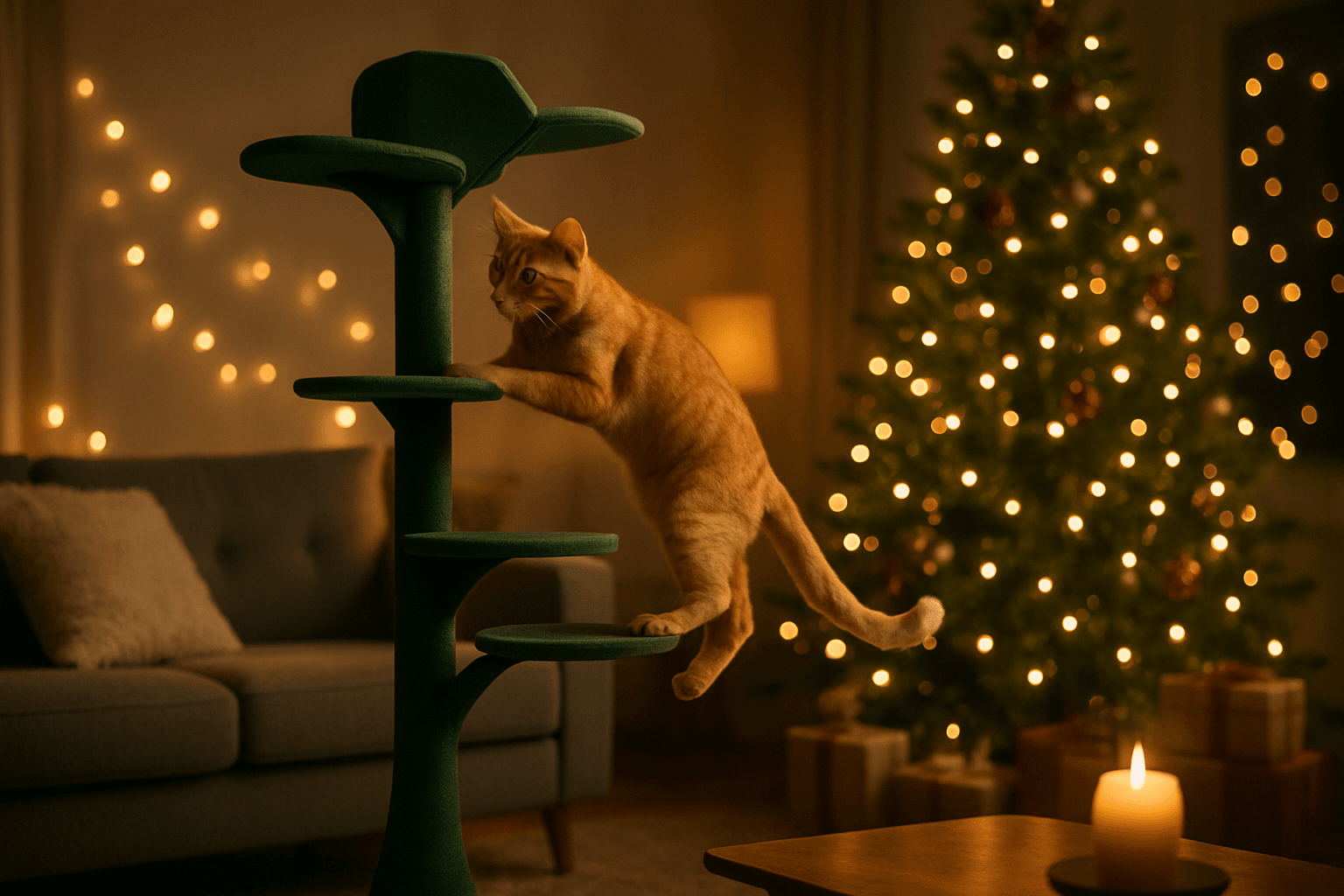
    If you want a gift that’s both furniture and decoration, these three Christmas-themed towers work as enriched vertical space plus festive centerpiece.

    PuzzlePaw Christmas Cat Tree Tower

    • 36″ tall, with spacious Christmas-tree-shaped nest, sisal scratching post, and handmade toys (sock + spring gift box).
    • Faux fur + sisal, floor-mounted – simple, stable design.

    Great starter pick if you want smart cat gifts 2025 under $40 that still add a full “zone” of vertical space.

    LUCKLIFE 52″ Christmas Cat Tree

    • Taller (about 50″ high), with cozy hideouts shaped like ornaments, plush perches and anti-tip kit for wall anchoring.
    • Designed like a full Christmas tree with felt ornaments and star topper.

    From an enrichment angle this is stronger: multiple levels, hideouts and perches tick the Cornell boxes on climbing and resting.Cornell Vet College

    YARUOMY Christmas Cat Tree with LED Lights

    • Multi-level tower with two condos, top perch and thickened sisal posts.
    • Comes with DIY Christmas stickers and LED string lights (use only when supervised).

    This is a good candidate when you want smart cat gifts 2025 that serve as both cat playground and holiday décor, as long as you manage cable and light strip safety.


    How to Combine These Smart Cat Gifts 2025 into a Coherent Setup

    Instead of buying random stuff, build a small “ecosystem”:

    • Core tech trio:
      • PETKIT feeder with camera
      • Tractive GPS tracker
      • Thermotex cat bed
    • Festive add-ons:
      • One Christmas cat tree (LUCKLIFE if you have jumpy climbers)
      • One wearable set (Azuza collar + Vehomy sweater)
      • Calibonbon toy bundle for active play sessions

    That gives you a complete smart cat gifts 2025 package that covers feeding, safety, rest and play – exactly what vet-aligned enrichment frameworks recommend. Cornell Vet College


    Verdict: Which Smart Cat Gifts 2025 Should You Prioritize?

    If you’re on a budget, prioritize function over festive:

    1. Tractive Smart Cat GPS Tracker – safety first, especially for outdoor cats.
    2. PETKIT or PetSafe smart feeder – daily automation and better nutrition control.
    3. One enriched vertical space (LUCKLIFE or YARUOMY tree) – climbing + scratching + resting.

    Then layer in the more aesthetic smart cat gifts 2025 like sweaters, collars and themed toy sets once the essentials are covered.


    FAQ – Smart Cat Gifts 2025

    Are smart cat gifts 2025 safe to leave running when I’m not home?

    Most reputable smart cat gifts 2025 (feeders, GPS trackers, heated beds) are tested for continuous use, but you should still follow manufacturer instructions, avoid DIY modifications, and periodically check cables and housings for wear. For heated items, AVMA and other vet sources recommend using them intermittently and providing a non-heated alternative bed nearby. American Veterinary Medical Association


    Do cats actually benefit from tech, or is it just for humans?

    When aligned with science-based enrichment, smart cat gifts 2025 can absolutely help cats: safe outdoor access via GPS, more stable feeding routines, consistent access to comfortable temperatures, and well-designed toys that promote hunting behaviors and exercise.


    Should I worry about data subscriptions (e.g. Tractive) and app lock-in?

    Yes, factor in subscriptions for GPS trackers and premium cloud features on feeders. The “smart” move is to choose smart cat gifts 2025 from brands you’re comfortable committing to for several years so your ecosystem doesn’t feel fragmented.


    Are Christmas trees and lights safe around cats?

    Holiday safety guidelines from AVMA and other vet organizations warn about electrical cords, tinsel and fragile ornaments. Secure your tree, use shatter-resistant ornaments, avoid tinsel, and only use LED light strings on cat trees when supervised to prevent chewing or entanglement.


    Internal & External Links

    Suggested external links:


    Disclaimer

    The information in this smart cat gifts 2025 guide is for educational purposes only and is not a substitute for professional veterinary advice, diagnosis or treatment. Always consult your veterinarian before introducing new products, especially for cats with medical conditions, mobility issues or behavioral concerns. Product availability, pricing and features may change at any time on Amazon or brand websites, and we cannot guarantee stock status or current discounts. PetTech AI participates in affiliate programs, which means we may earn a small commission if you purchase through links on this page, at no extra cost to you.
  • AI Cat Companions 2025: The Most Promising Robot “Pets” for Enrichment, Bonding, and Remote Interaction

    AI Cat Companions 2025: The Most Promising Robot “Pets” for Enrichment, Bonding, and Remote Interaction

    AI Cat Companions 2025 are no longer sci-fi. They’re camera-equipped, sensor-rich, app-controlled robots designed to entertain, comfort, and interact—with features ranging from gesture/voice recognition to self-charging docks. Used well, AI Cat Companions 2025 can extend play when you’re away, reduce boredom, and even double as mobile monitors. This guide curates three models available on Amazon, plus setup and safety notes grounded in veterinary guidance.


    Why AI companions now?

    Cats thrive on short, frequent play bursts. When work or travel interrupts that cadence, AI Cat Companions 2025 can provide motion, novelty, and responsive feedback—without replacing human care. Paired with good routines (feeding, hydration, vet checks), AI Cat Companions 2025 help maintain enrichment on days when time is tight.


    How we chose these picks

    • Confirmed on Amazon US with current listings.
    • Interaction first: motion, cues, or two-way communication rather than passive noise/lights.
    • Household fit: self-charging or long battery, stable connection, sensible privacy posture.
    • Clear use cases for cat households (play, “check-in” camera, or calming companionship).

    Top AI Cat Companions 2025 (with direct Amazon links)

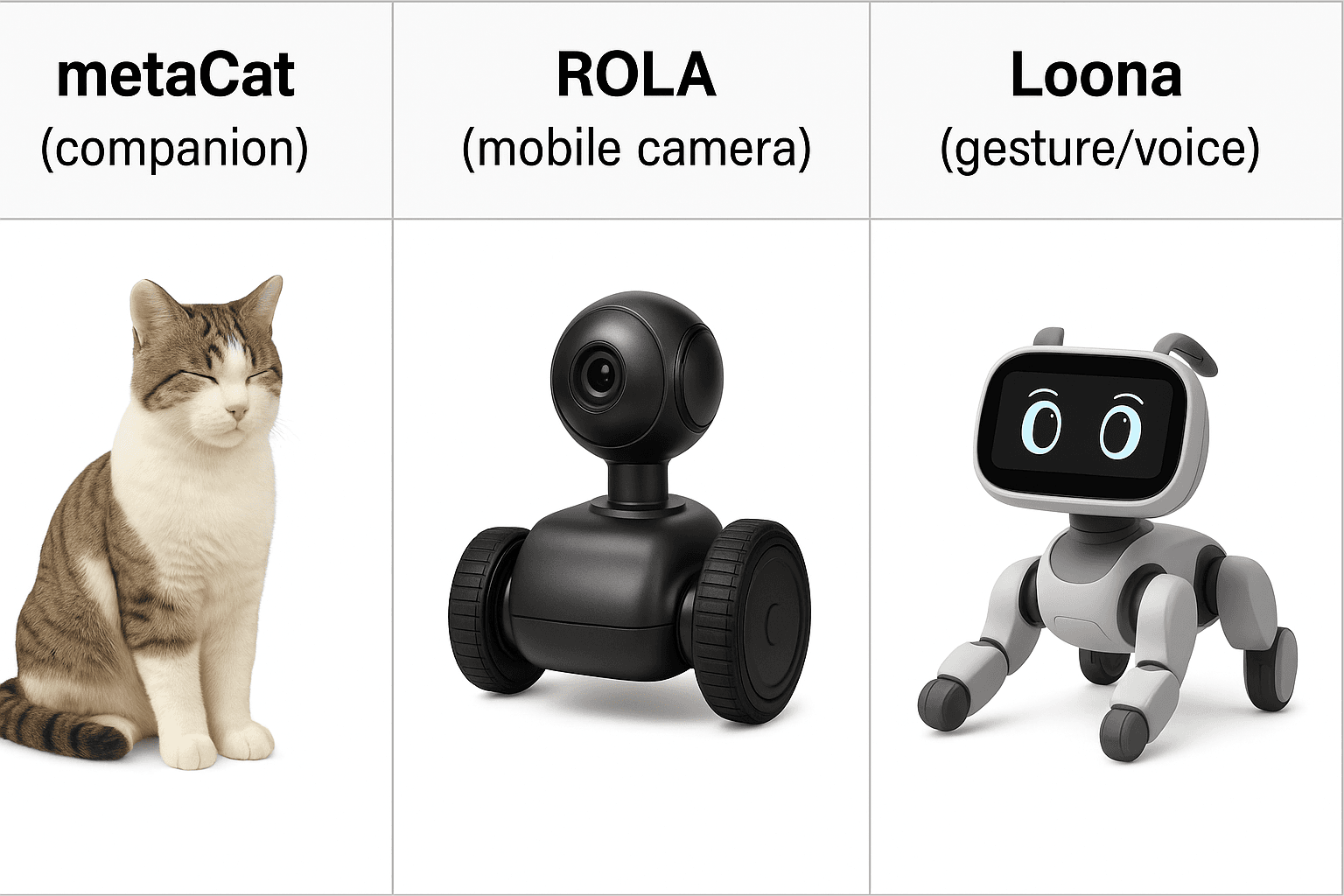
    1) metaCat Smart Robot Cat (Elephant Robotics)

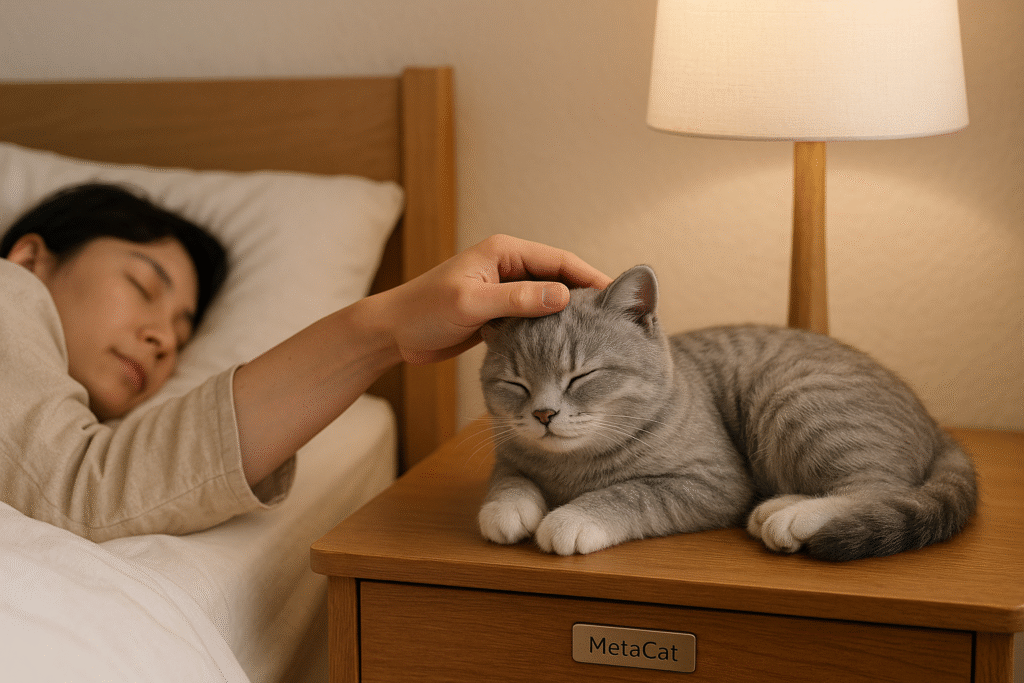
    Calm bedroom; metaCat robotic cat purring on side table; person gently petting. One of the top AI cat companions 2025.

    A lifelike robotic cat for companionship, touch/voice interaction, and low-effort enrichment.

    👉 Check current deal on Amazon: ELEPHANT ROBOTICS metaCat (various styles) — Ragdoll/Bicolor/Persian

    Why it’s trending: Built for companionship more than chase-play. Responds to touch, voice cues (20+), and exhibits purring/heartbeat effects that many owners find calming. AI Cat Companions 2025 aren’t only about high-speed zooming robots—metaCat fills the “quiet presence” niche.

    Specs at a glance: voice/touch interaction, animated facial/ear movements, Type-C charging, multiple fur styles.
    Best for: households needing low-stimulation comfort (post-surgery downtime, anxious cats, or human companions who want a soothing presence).
    Watch-outs: not a mobile camera; treat it like an interactive plush robot, not a patrol bot.


    2) Enabot ROLA PetPal Robot Pet Companion

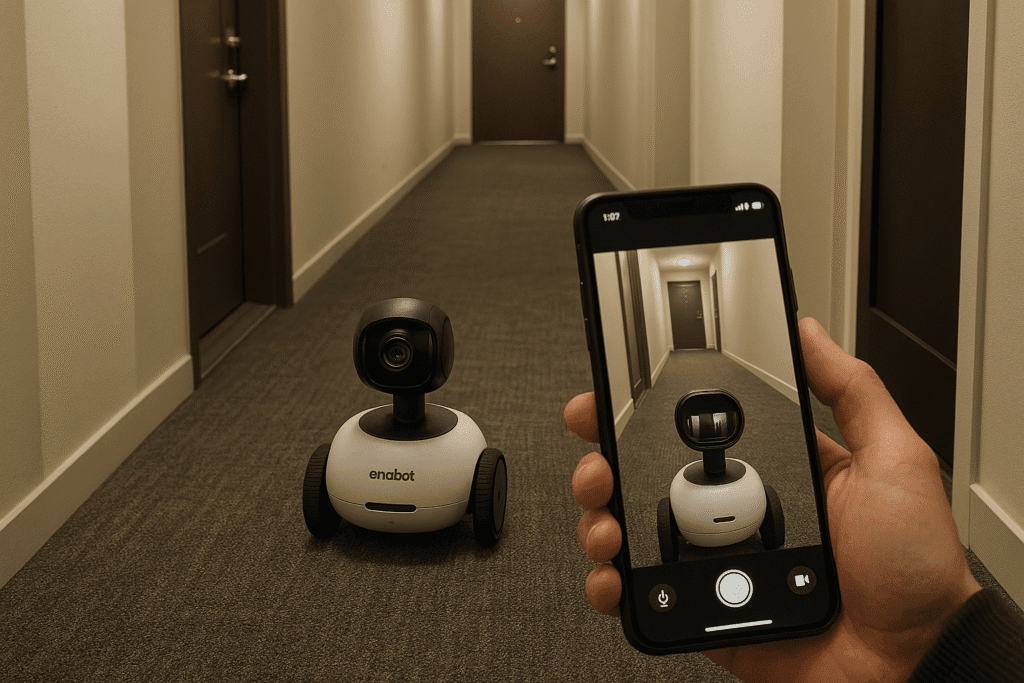
    Enabot ROLA PetPal robot monitoring at home.

    A mobile “pet pal” with camera and app control that can roam, interact, and (with add-ons) dispense treats.

    👉 Check current deal on Amazon: Enabot EBO ROLA PetPal FamilyBot 2.5K Camera Robot
    https://amzn.to/4nBPcG1

    Why it’s trending: A true roaming robot: remote steering, two-way audio, night vision, and optional teaser/treat modules for interactive play. Many readers looking at AI Cat Companions 2025 want an on-wheels buddy that checks in across rooms—ROLA fits that brief.

    Specs at a glance: 2.5K camera (model-specific), Wi-Fi app control, self-navigation features, two-way talk, optional attachments.
    Best for: multi-room apartments/houses, guardians who want video check-ins and light enrichment between play sessions.
    Watch-outs: rolling bots can startle nervous cats—introduce with short, predictable routes.


    3) Loona Smart AI-Powered Companion (with Dock Recharge)

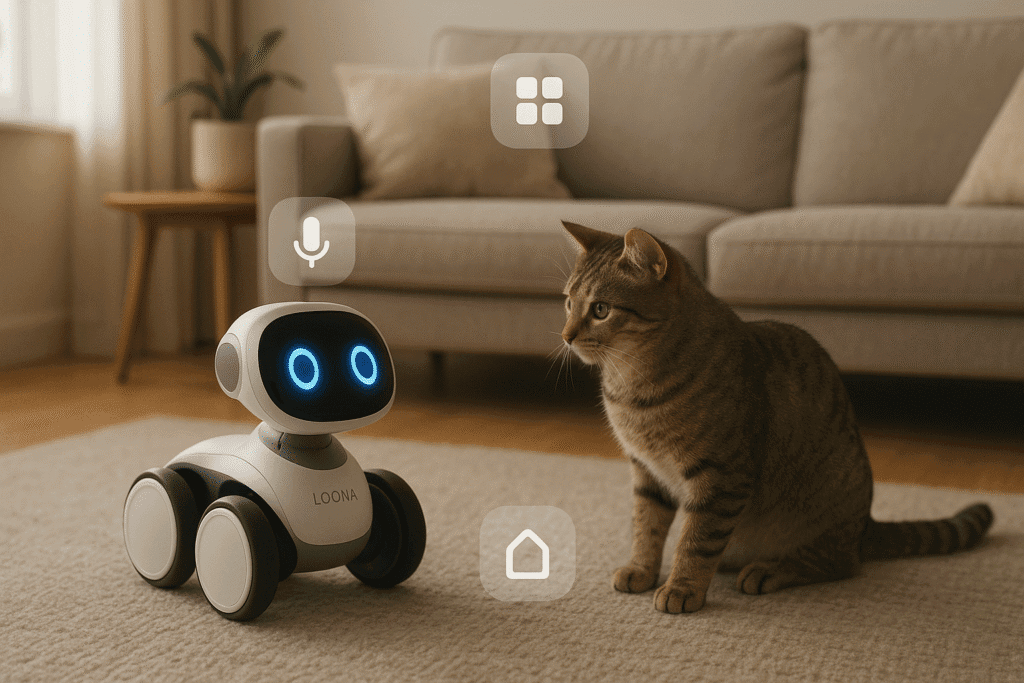
    Loona robot engaging a cat in a living room.

    An expressive, ChatGPT-enabled companion robot with gesture/voice recognition and auto-recharge.

    👉 Check current deal on Amazon: “Loona Robot Pet Dog ChatGPT-4o Smart AI-Powered Companion… (with Dock)”
    https://amzn.to/4hN8sPH

    Why it’s trending: Combines computer vision (face/gesture recognition) with natural-language responses. For readers exploring AI Cat Companions 2025 who also want family entertainment and smart-home flavor, Loona is the most “alive” feeling pick.

    Specs at a glance: HD RGB cam + ToF depth sensor, voice/gesture control, auto-dock charging, Wi-Fi & hotspot options, app for remote interaction.
    Best for: tech-forward homes wanting an expressive robot that can follow, react, and perform party-trick interactions.
    Watch-outs: faster movement + “big personality” can overwhelm some cats—introduce gradually.


    Setup guide: introducing robots to real cats (in 3 days)

    Day 1 — curiosity, no chase: park the robot off near a scent-neutral area. Let your cat sniff it. Reward calm curiosity.
    Day 2 — low-motion demos: enable slow modes only; keep the robot 1–2 meters away, no sudden turns. Pair with 2–3 tosses of a favorite treat.
    Day 3 — short missions: 2–3 minute patrols, then stop. For rolling bots, set predictable routes; for Loona, limit voice-interaction bursts.

    Cats learn fast. With AI Cat Companions 2025, the goal is predictability, not chaos.


    Health & safety notes (vet-aligned)

    • Treat moderation: keep treats ≤10–15% of daily calories—even during robot-assisted play. This is standard guidance from Cornell and VCA. Cornell Vet School
    • Routine care: gadgets don’t replace exams. All cats should have at least annual veterinary visits; seniors/at-risk cats may need more frequent checks per AVMA guidelines. AVMA

    Pro tip: use robot time before meals to simulate hunt-→-eat-→-groom-→-sleep cycles. That’s how AI Cat Companions 2025 can support calm evenings.


    Pros & cons of AI Cat Companions 2025

    Pros

    • Extend enrichment when you’re away; support consistent micro-play.
    • Camera/two-way audio can reduce “are they okay?” anxiety.
    • Some models self-charge; Loona even recognizes gestures/faces.

    Cons

    • Over-stimulation risk if sessions run long.
    • Rolling robots can spook timid cats; introductions must be staged.
    • Subscriptions/app updates may gate features; always read listing details.

    Buying checklist (what actually matters)

    • Noise & speed controls: look for “quiet” modes and adjustable speed.
    • Battery & auto-dock: if you travel, self-charging is worth it.
    • App permissions & privacy: confirm what’s stored in cloud vs. local.
    • Floor type: wheels/clearance matter on rugs and thresholds.
    • Replacement parts: bumpers, wheels, or accessories should be orderable.

    Comparison quick-table (at a glance)

    • metaCat (Elephant Robotics): stationary companion with touch/voice focus → calming presence, not a patrol bot. Amazon
    • Enabot ROLA PetPal: mobile camera + app robot, optional teaser/treat modules → light enrichment + check-ins. Amazon
    • Loona (with dock): vision + language interactions, expressive behaviors, auto-recharge → most “alive” feel. Amazon

    Verdict: who should buy AI Cat Companions 2025?

    If you want structured enrichment and the ability to peek in during the day, AI Cat Companions 2025 deliver. Choose metaCat for quiet companionship, Enabot ROLA PetPal for roaming check-ins, or Loona for expressive, multi-modal interaction. These devices don’t replace wand toys or human time—but they do keep play regular, which matters more than we admit.


    The Future of AI Cat Companions (Beyond 2025)

    The AI revolution in pet tech is just beginning. By late 2025–2026, manufacturers are blending machine learning with emotional mapping—robots that not only recognize motion or speech but respond to mood.
    Companies like Elephant Robotics and Loona’s developers are already testing adaptive personality engines, meaning that your AI companion could learn whether your cat prefers silent observation or fast chases.

    Expect future versions of AI Cat Companions 2025 to sync with smart feeders and health trackers. For example, if your cat skips a meal, the robot could switch to gentle interaction to reduce stress, or even notify you through the same app you use for feeding or litter updates.
    This ecosystem approach—one connected network of devices per cat—is the direction every brand is heading. It’s not about flashy robots; it’s about personalized feline wellbeing through AI-assisted observation.

    PetTech AI predicts that within two years, major brands (PETKIT, Enabot, Loona) will introduce cross-device automation, where your AI companion not only entertains but also adjusts feeder portions, water flow, or lighting based on your cat’s emotional cues.


    Training Your Cat to Coexist with Robots

    Successful integration of AI Cat Companions 2025 depends on how you teach your cat that the robot is predictable and safe.
    Here’s a quick conditioning plan inspired by behaviorists at Cornell’s Feline Center and Fear Free Pets:

    • Step 1 — Passive Presence: Leave the robot idle for an hour a day so your cat associates it with stillness, not threat.
    • Step 2 — Low-Speed Motion: Run short, predictable routes or gestures. Use a soft treat or clicker to reinforce calm behavior.
    • Step 3 — Associative Play: Once the cat approaches voluntarily, use toys or treats dispensed by the robot (Enabot ROLA’s add-on is perfect).
    • Step 4 — Predictable Sound: Cats fear irregular noises. Record your robot’s startup tone and play it occasionally even when it’s off—this desensitizes your cat to movement cues.

    The goal isn’t to make your cat love the robot; it’s to make the robot part of the background of safety.
    When that happens, even timid cats may benefit from the structured movement and soft vocal tones of their AI Cat Companions 2025.


    FAQs

    Do these robots replace human play?
    No. AI Cat Companions 2025 are supplements. Keep daily wand play (5–10 min bursts), then let robots fill gaps.

    Are moving robots safe for furniture?
    Yes, if routes are predictable and bumpers are intact. Start with low-speed, open floor plans.

    Can my cat ride on Loona/ROLA?
    Don’t encourage it. Weight limits and motors aren’t designed for passengers.

    Do I need subscriptions?
    Many features work without subscriptions; read each Amazon listing for cloud features, storage, and app updates.


    Internal links (PetTech AI)


    Authoritative outbound links

    • Cornell Feline Health Center — Feeding Your Cat (treats ≤10–15% of daily calories). Cornell Vet School
    • AAHA-AVMA Feline Preventive Healthcare Guidelines (annual wellness exams; more often for seniors). AVMA

    Disclaimer

    PetTech AI content is educational and not a substitute for veterinary advice. AI Cat Companions 2025 can support enrichment and monitoring, but they do not diagnose or treat medical conditions. If your cat shows weight change, appetite loss, vomiting, diarrhea, excessive thirst, urinary issues, lethargy, or behavior shifts, contact your veterinarian promptly. Some links on this page are affiliate links to Amazon; if you buy through them, PetTech AI may earn a commission at no extra cost to you. This supports hands-on testing and lets us keep guides independent, transparent, and regularly updated.

  • Smart Cat Spaces: Designing Rooms That Think for You (2025)

    Smart Cat Spaces: Designing Rooms That Think for You (2025)

    Affiliate Disclaimer: PetTech AI may earn a small commission if you buy through links on this page. We only recommend products that enhance feline safety, comfort, and wellbeing.

    Modern pet tech isn’t about flashy gadgets—it’s about environmental design that reduces stress, simplifies care, and surfaces useful signals. That’s the promise of smart cat spaces: rooms arranged and equipped so your cat’s core needs—eating, drinking, toileting, resting, and playing—happen predictably with minimal friction. When placement, routine, and automation work together, your home starts to “think” for your cat (and for you).

    This guide shows you how to plan, equip, and maintain smart cat spaces room by room. You’ll learn which devices matter, where to place them in apartments and houses, and how to use data lightly—never obsessively—to spot what needs attention early.


    What “smart” actually means for cats (and what it doesn’t)

    A smart setup isn’t a gadget dump. According to the Cornell Feline Health Center and the AVMA, the bedrock of feline health is routine, enrichment, and low-stress hygiene. Tech is valuable when it reinforces those pillars.

    In practice, smart cat spaces do four things:

    1. Lower friction in daily care (scheduled feeds, self-cleaning litter).
    2. Increase consistency (clean water, stable climate, predictable play).
    3. Provide gentle signals (app reminders for filters, litter use, water levels).
    4. Respect feline ergonomics (quiet corners, vertical choices, clear paths).

    They do not replace human attention or veterinary care. Data helps; your relationship and judgment do the rest.


    Core principles that make smart cat spaces work

    • Zones over clutter. Define feeding, litter, rest, and play zones; avoid moving them around. Cats rely on stable maps.
    • One change at a time. Add one new device each week; fast overhauls create anxiety.
    • Quiet by default. Choose low-noise motors and sleep modes; sound consistency reduces arousal.
    • Vertical choice. Perches and shelves provide security and reduce conflict in multi-cat homes.
    • Light-touch data. Review weekly, not hourly. Trends over 48–72 hours matter more than single spikes.

    Design around those rules and your smart cat spaces will feel almost invisible—because they simply work.


    Living room: the hub of observation and bonding

    The living room blends your routines with your cat’s. Keep it calm, visible, and easy to maintain.

    Smart additions

    • Indoor camera with two-way audio & night vision (e.g., Petcube on Amazon): quick check-ins during workdays, smart motion alerts for irregular nighttime activity.
      See Petcube indoor cameras → Amazon
    • HEPA air purifier with pet carbon (e.g., LEVOIT Core series on Amazon): traps dander/litter dust and neutralizes odor, improving comfort for both of you.
      View pet-focused air purifiers → Amazon
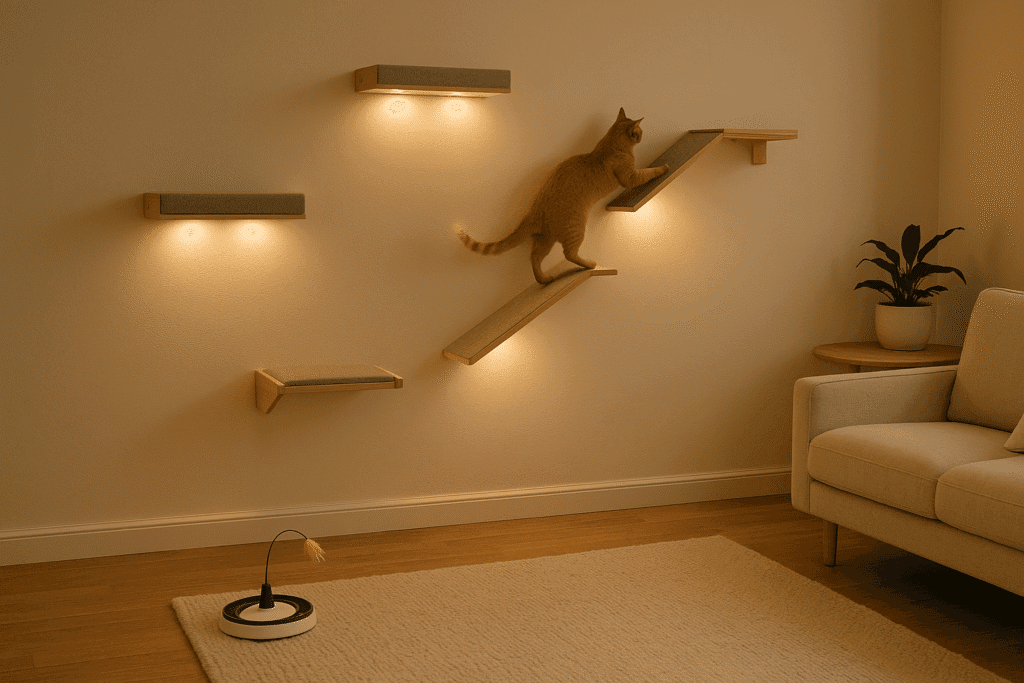
    • Vertical highways (shelves/ramps with subtle motion-activated LEDs): safe movement and high resting spots lower territorial tension.

    Placement

    • Camera angle should capture the resting perch and a slice of the play area.
    • Purifier near the high-traffic route, not hidden behind furniture.

    Get these right and your living room anchors your smart cat spaces with comfort and clarity.

    Internal interlink:


    Kitchen & feeding corner: predictability with a purpose

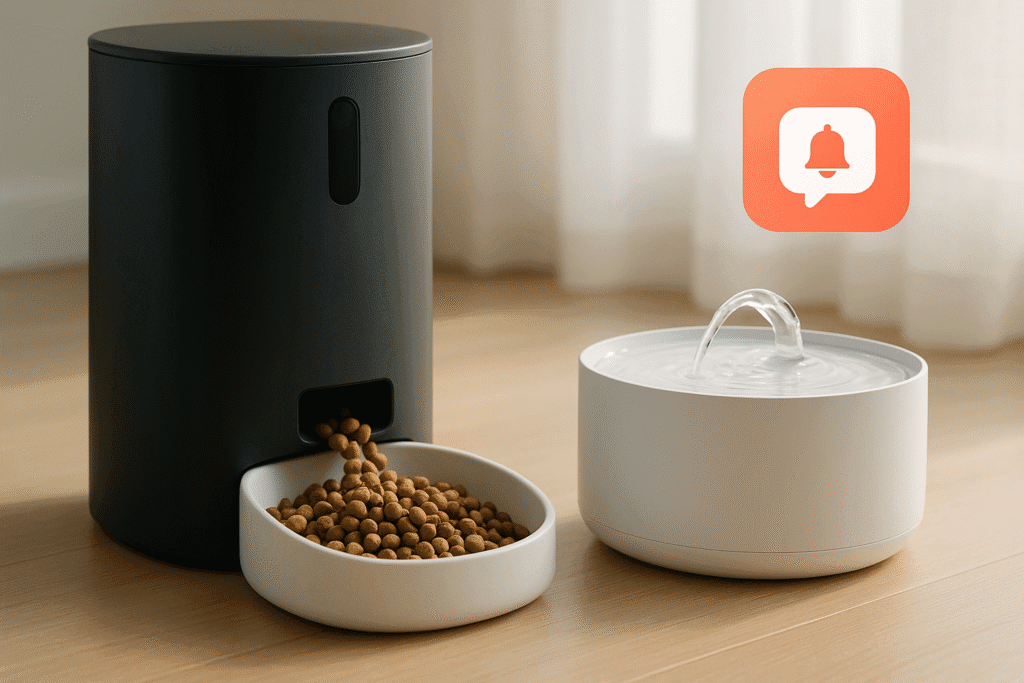
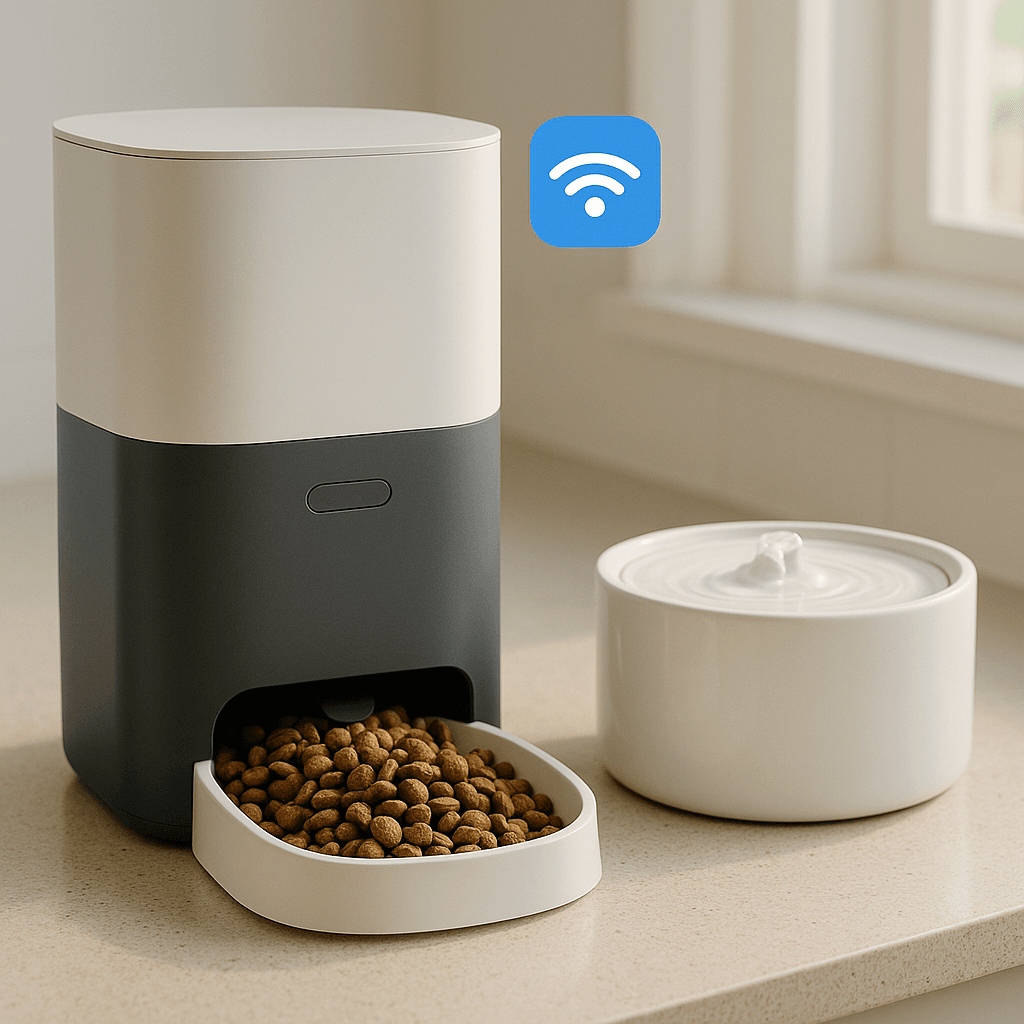
    Smart feeder and fountain placed for routine hydration.

    Meal timing shapes the day. Predictable feeding reduces food-related anxiety and nighttime wake-ups.

    Devices to consider

    • Automatic feeder (e.g., PETKIT or Whisker Feeder-Robot): portion control, schedule consistency, and intake logs—ideal for weight management or multi-cat households.
      Shop top-rated smart feeders → Amazon
    • Smart fountain (e.g., PETKIT Eversweet on Amazon): quiet flow, multi-layer filtration, and reminders to replace filters—hydration is key for urinary health.
      See best-selling cat fountains → Amazon
    • Smart bowl with scale (e.g., PETKIT Fresh Metal Digital Pet Bowl on Amazon): weighs meals, helps transition diets gradually.

    Placement

    • Put fountain 1–2 meters away from the feeder; many cats drink more when water is separate from food.
    • Use a thin silicone mat for splash control and easy wiping.

    Consistent feeding routines turn this corner into one of your most reliable smart cat spaces—and they’re backed by behavioral science.

    Internal interlinks:


    Bathroom or laundry: the hygiene nerve center

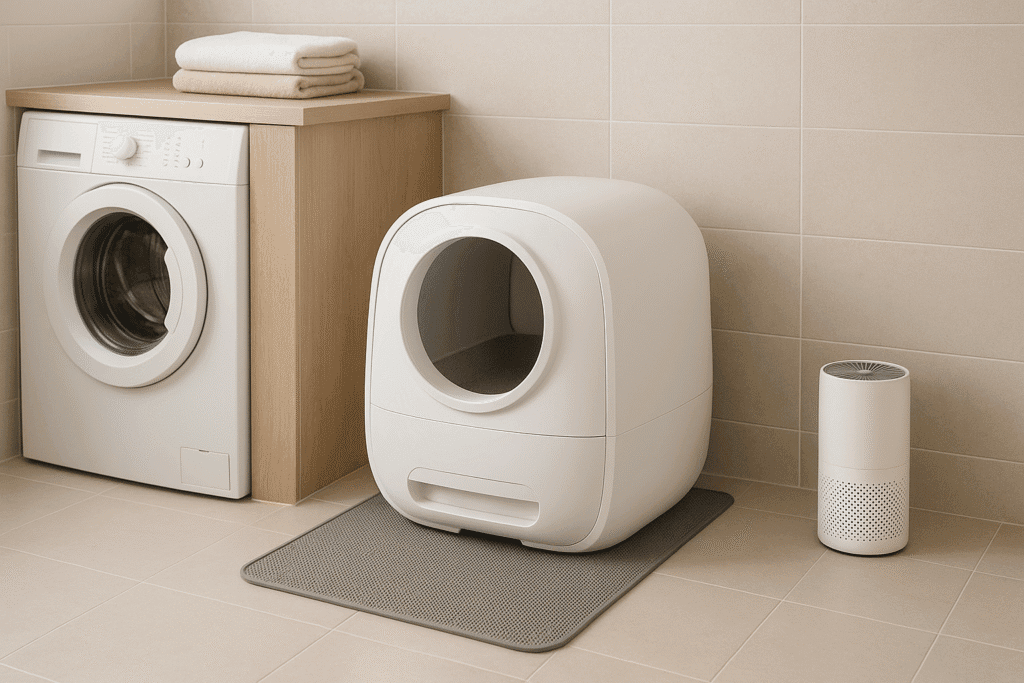
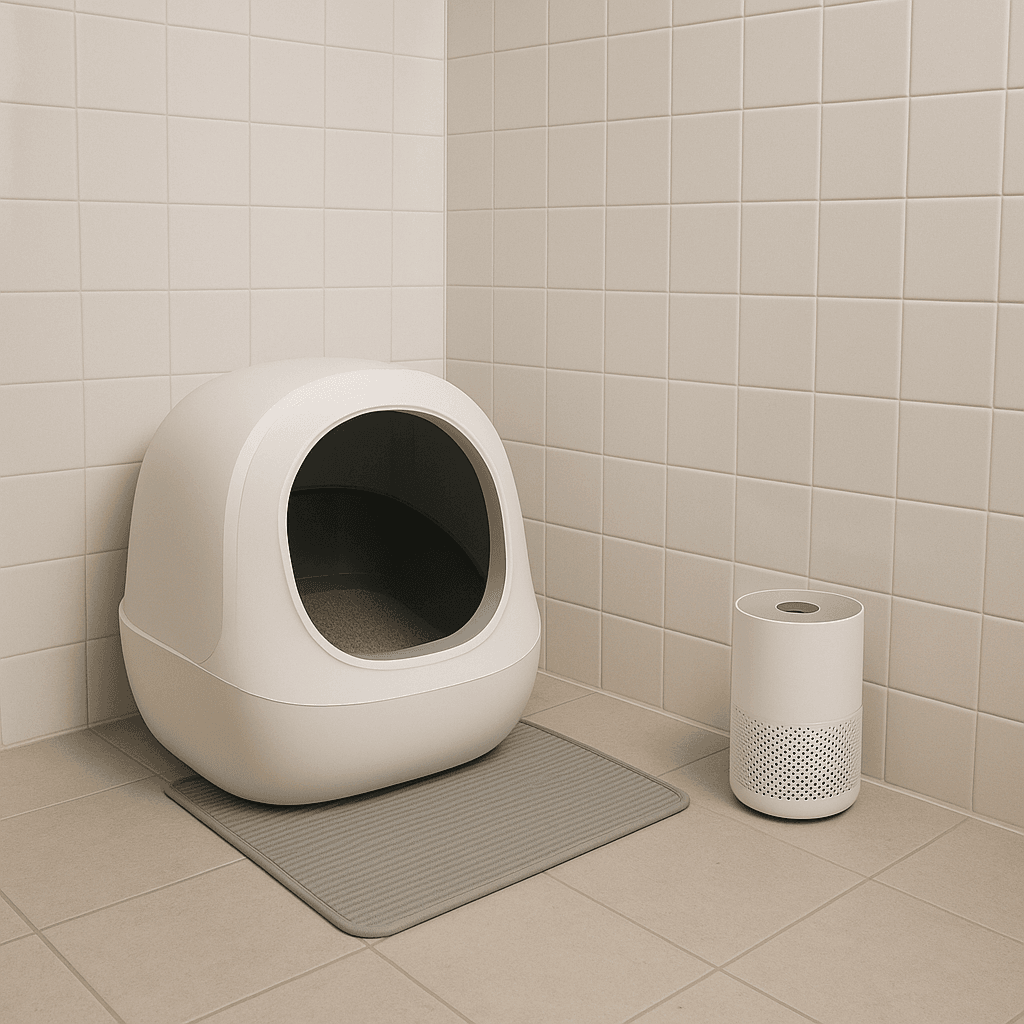
    Litter corner with purifier for odor and dust control.

    Nothing affects feline stress like litter quality. Cleanliness, ergonomics, and odor control decide whether the box feels “safe.”

    Devices to consider

    • Self-cleaning litter box (e.g., Whisker Litter-Robot 4): automatic cycling, weight tracking, usage logs, and odor control.
      Check Litter-Robot 4 availability → Whisker
    • Smart accessories (PETKIT ramps/fences/mats; urine-indicator litter): reduce scatter, catch early pH anomalies you can discuss with your vet.
      Explore smart litter accessories → Amazon

    Ergonomics

    • Box footprint ≈ 1.5× your cat’s body length in width and 2× in length; height they can step into without strain.
    • Semi-private but not isolated: cats prefer sightlines and escape routes.

    When the litter zone is stable and data-informed, your smart cat spaces gain the most important ingredient: peace of mind.

    Internal interlinks:


    Bedroom: sanctuary for sleep and recovery

    Cats sleep 12–16 hours daily; make the bedroom a cue for calm.

    Smart comfort

    • Temperature-aware bed/warming mat: helps seniors or short-haired cats maintain comfort in winter.
    • Circadian-friendly lighting (smart bulbs dimmed warm in the evening): lowers arousal before bedtime.
    • Gentle ambient sound (smart speakers with white noise): masks hallway noise in apartments.

    Layout

    • Provide two resting options: one elevated, one hidden. Choice reduces anxiety and improves sleep.
      This quiet sanctuary completes your smart cat spaces by giving your cat a predictable, low-stimulus retreat.

    Entryways & travel staging: movement without chaos

    Doorways, corridors, and carriers are stress points. Plan them to be predictable.

    Tech + design

    • Microchip-access doors for controlled ingress/egress in homes that allow outdoor access.
    • GPS trackers with geofence (e.g., Tractive Cat Mini on Amazon) for balcony/escape risk scenarios.
      See top-rated cat GPS trackers → Amazon
    • Carrier staging area with a soft mat, in view but unobtrusive—let the carrier “live” in the home so it stops being a threat cue.

    Smooth transitions keep smart cat spaces feeling safe even at the edge of your home.

    Internal interlinks:


    Micro-apartments vs. houses: two proven blueprints

    Vertical play shelves with gentle lighting in a smart cat spaces.

    Studio / one-room flow

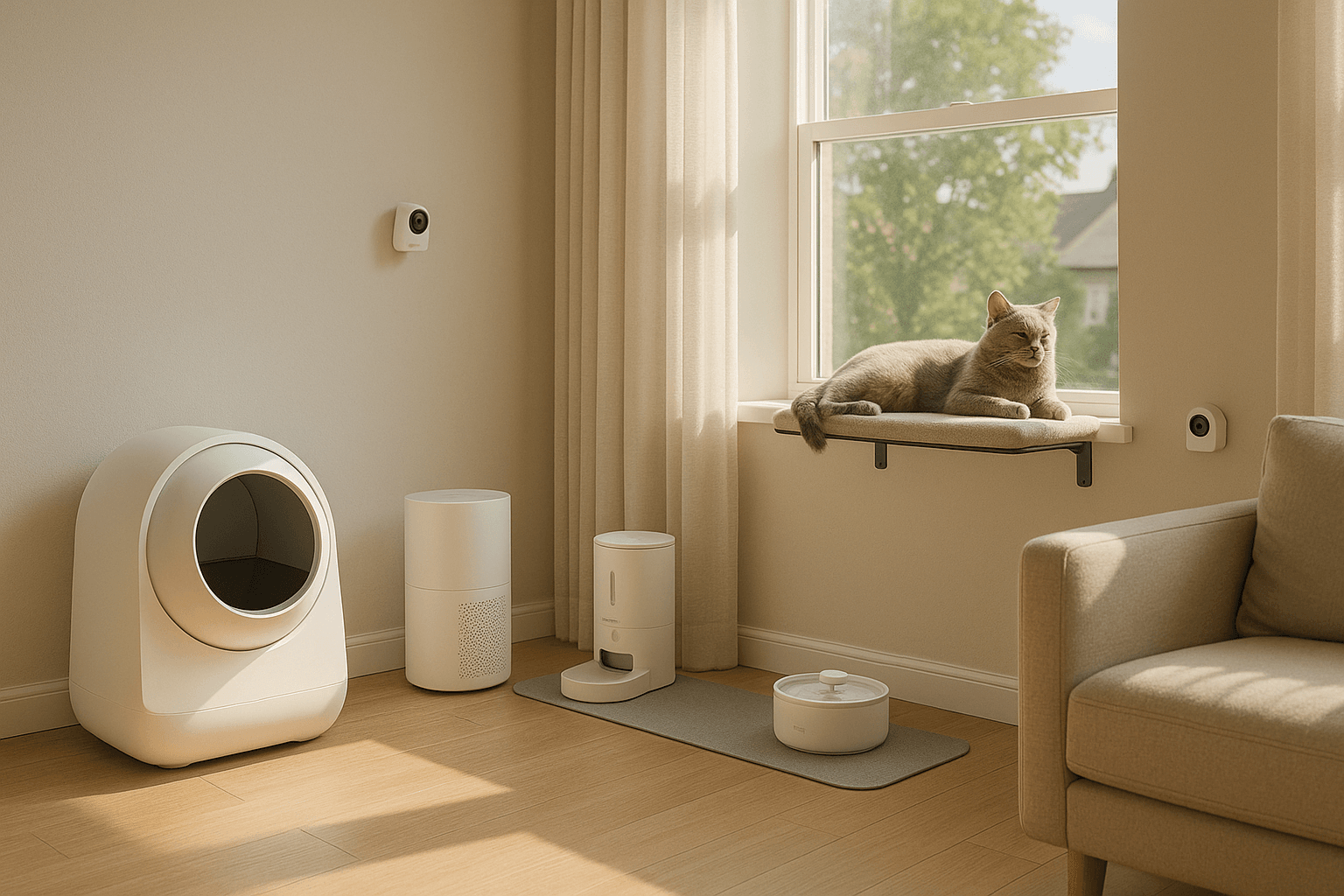
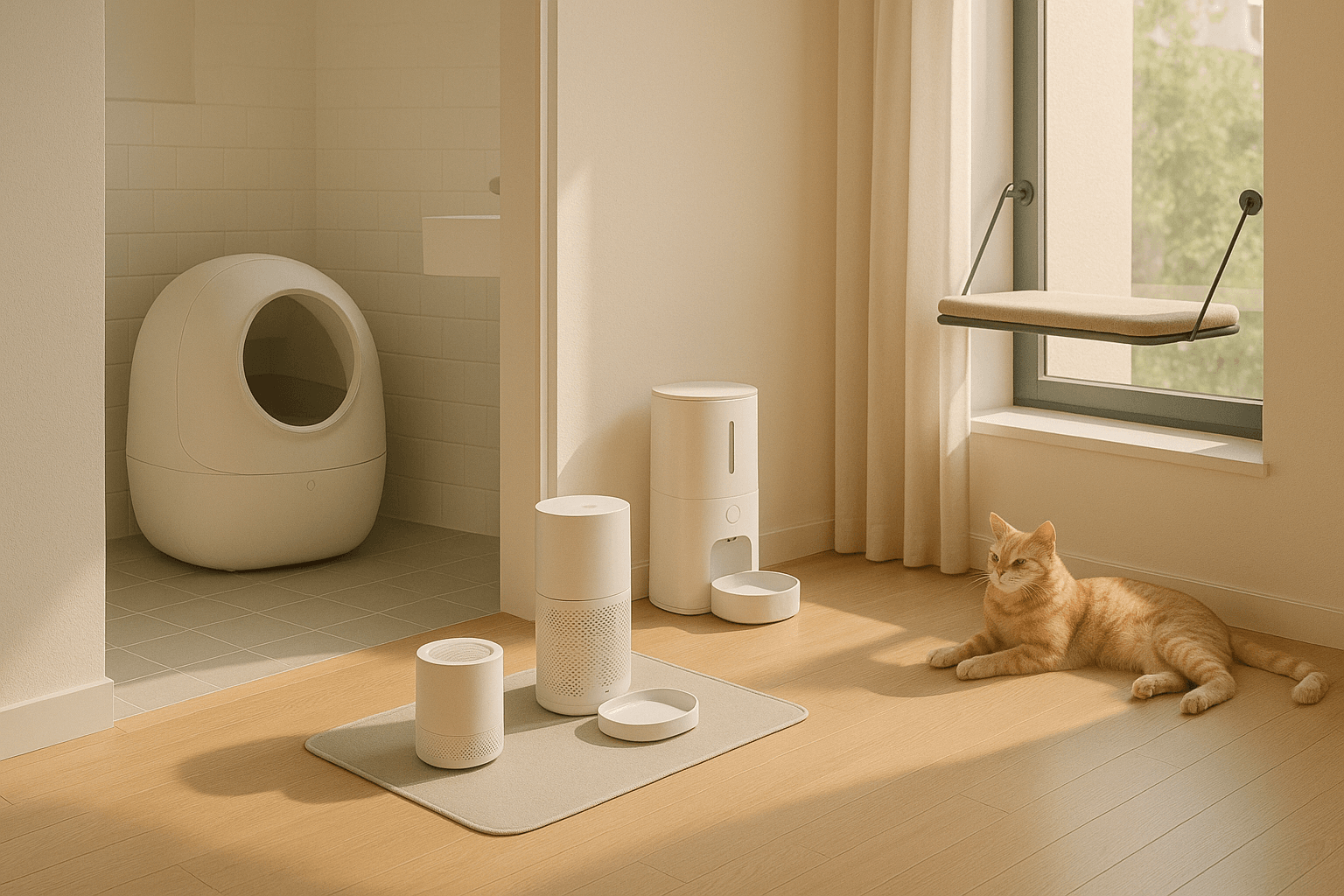
    • One calm wall: litter + purifier at one end; feeder + fountain on a mat at the other; camera captures both.
    • Center open for movement; window perch on the opposite side.
    • Result: compact smart cat spaces without visual clutter.

    Multi-room home

    • Kitchen edge: feeder/fountain
    • Bathroom/laundry: litter + purifier
    • Living room: vertical play + camera
    • Bedroom: rest sanctuary
    • Result: two to three zones reduce crowding and behavioral spillover.

    The data layer: just enough to notice

    Track only what helps action:

    • Feeding & water (missed meals, low intake)
    • Litter visits & weight (constipation/UTI flags)
    • Activity & rest (recovery, weight management)

    If something looks off for 48–72 hours, call your vet. The AVMA reminds that behavior changes can indicate medical issues; smart cat spaces turn guesswork into trend awareness you can share with your clinic.


    Budget tiers to build at your pace

    Starter (~$150–$250)

    • Smart fountain
    • Interactive toy or puzzle feeder
    • Compact HEPA purifier
      → The fastest, most noticeable upgrade to beginner smart cat spaces.

    Core (~$400–$900)

    • Automatic feeder
    • Smart fountain
    • Self-cleaning litter box or quality manual box + health add-on
    • HEPA purifier
      → Routine, hygiene, and basic data in one balanced setup.

    Complete ($1,200+)

    • Self-cleaning litter box with app
    • Automatic feeder with robust scheduling
    • Smart fountain with filter reminders
    • HEPA purifier + indoor camera
    • Optional GPS tracker
      → Fully realized smart cat spaces with minimal daily friction.

    Quick shop:


    Safety & maintenance: the quiet “must”

    • Keep dryer heat low; stop if your cat pants (heat stress).
    • Cable management for fountains/cameras; pumps must stay submerged.
    • Laser toys only with auto-shutoff; avoid direct eye exposure.
    • Replace filters and pads on schedule.
    • Avoid overcrowding corners; clear escape paths reduce panic.

    Maintenance is what keeps smart cat spaces working month after month.


    Troubleshooting: quick fixes that actually work

    • Ignores the fountain: move it 1–2 meters from food; keep water cool and at max line; replace filters.
    • Scared of the litter robot: disable auto-cycle for 48 hours; turn on once they’re using it comfortably.
    • Night zoomies: evening play (10–15 min) → small snack → warm, dim light in the bedroom.
    • Food guarding: micro-feeds at staggered times; add a second bowl in a different room.

    As routines stabilize, your smart cat spaces will require fewer interventions and deliver more calm.


    Your 7-step setup checklist (printable)

    1. Map zones: food/water, litter, rest, play.
    2. Add one device per week; never overhaul overnight.
    3. Mirror current schedule; shift gradually to ideal times.
    4. Set only essential app alerts; review data weekly.
    5. Play twice daily; end with a small reward.
    6. Replace filters on schedule; wipe mats daily.
    7. Reassess layout every quarter—smart cat spaces evolve with your cat.

    Final take

    When design, routine, and light automation align, smart cat spaces feel humane and low-effort. You get quietly clean air, predictable meals, a litter box that stays fresh, play that happens on time, and gentle signals when something changes. It’s empathy turned into engineering—so your cat can do what cats do best: relax, observe, and thrive.


    Internal interlinks


    Authority links

  • How to Create a Cat-Friendly Smart Apartment: A Calm, Connected Home That Works on Its Own

    How to Create a Cat-Friendly Smart Apartment: A Calm, Connected Home That Works on Its Own

    Affiliate Disclaimer: PetTech AI may earn a small commission if you buy through links on this page. We only feature products that support safety, comfort, and long-term feline wellbeing.

    Designing a smart apartment for cats isn’t about stuffing gadgets into a small space. It’s about building a calm routine where food, water, litter care, air quality, and play happen predictably with minimal friction. When devices are placed thoughtfully and connected through simple apps, your home becomes an easy, low-stress habitat—for both of you.

    This guide shows how to plan zones, choose the right gear, and create a data-lite system you can actually maintain. Whether you’re in a studio or a one-bedroom, a smart apartment for cats can be quiet, elegant, and genuinely helpful.


    The core idea: routine + gentle automation

    A smart apartment for cats supports what science says cats need most: predictable meals, clean litter, safe places to rest, and daily play. The Cornell Feline Health Center and AVMA emphasize routine, low-stress handling, and environmental enrichment as foundations of feline health. Smart devices simply make those foundations easier to keep every day.

    What “smart” means here

    • Consistency: automatic feeding times, constant access to fresh water, and reliably clean litter.
    • Signals: basic app notifications (low water, full bin, unusual litter visits).
    • Comfort: quiet motors, stable temperatures, and good air.
      A smart apartment for cats is successful when it feels almost invisible.

    Step 1 — Map your space into 4 zones

    Space is premium, so planning beats impulse buying. Sketch your floor plan and mark four zones around the perimeter (keep the center open for movement):

    1. Food & Water Zone — kitchen edge or dining nook
    2. Litter Zone — bathroom corner or entry closet with ventilation
    3. Rest & Hide Zone — bedroom corner or sofa-side nook
    4. Play & Observation Zone — window line or hallway track

    A smart apartment for cats works best when each zone is stable. Moving devices weekly confuses patterns and can cause stress or accidents.


    Step 2 — Feeding & hydration: predictability first

    Smart feeder and fountain setup for apartment living.

    What to add

    • Automatic feeder (e.g., PETKIT or Whisker feeder): precise portions on schedule, optional profiles for multiple cats.
      Shop top-rated smart feeders → Amazon
    • Smart fountain (e.g., PETKIT Eversweet on Amazon): quiet pump, multi-layer filtration, filter reminders.
      See best-selling cat fountains → Amazon

    Apartment tips

    • Place feeder and fountain 1–2 meters apart—many cats drink more when water is away from food.
    • Protect floors with a thin silicone mat; wipe daily.
    • Start by mirroring your current routine; shift times gradually over 7–10 days so your smart apartment for cats doesn’t feel like a shock.

    Internal interlinks:


    Step 3 — Litter & hygiene: peace-of-mind automation

    Apartment litter corner with HEPA purifier.

    In small spaces, odor and mess are the enemy. A smart apartment for cats lives or dies by litter quality.

    What to add

    • Self-cleaning litter box (e.g., Whisker Litter-Robot 4 on Amazon): automatic cycling, odor control, usage logs, and weight tracking.
      Check Litter-Robot 4 availability → Whisker (REALSIMPLE50 for a 50$ discount)
    • Smart accessories (PETKIT ramps/fences/mats; pH-indicator litter): reduce tracking, spot early urinary issues.
      Explore smart litter accessories → Amazon

    Apartment tips

    • If possible, use a vented bathroom corner.
    • Add a narrow litter mat; empty daily to keep granules off rugs.
    • For sensitive cats, disable auto-cycle for the first 48 hours; let them adopt it as a “dumb box,” then enable automation.

    A smart apartment for cats with a tidy litter corner prevents most house-soiling problems and keeps the living area truly livable.

    Internal interlinks:


    Step 4 — Air quality & odor control: the invisible upgrade

    Small rooms concentrate smells and dander. A compact purifier changes the entire vibe.

    What to add

    • HEPA purifier with pet carbon (e.g., LEVOIT Core P350 on Amazon) near the litter or grooming corner.
      View LEVOIT pet-care purifiers → Amazon

    Apartment tips

    • Run Sleep Mode for ultra-quiet filtration at night.
    • Replace filters on schedule; the filter is the performance.
      A smart apartment for cats is surprisingly serene when the air is clean.

    Internal interlink:


    Step 5 — Cameras & gentle monitoring: reassurance, not surveillance

    Cameras can help when you work long shifts or are easing separation stress.

    What to add

    • Indoor camera with night vision and two-way audio (e.g., Petcube on Amazon): motion alerts, quick check-ins, no 24/7 obsession.
      See Petcube indoor cameras → Amazon

    Apartment tips

    • Aim one cam to cover feeder + fountain, another (optional) facing the litter area.
    • Keep cams out of bedrooms/bathrooms to respect privacy.
      Used wisely, cams make a smart apartment for cats feel safe for you and routine for your cat.

    Internal interlink:


    Step 6 — Enrichment & play: the stress-relief engine

    Apartment play session with indoor camera view. Smart apartment for cats.

    Tech matters, but play is the heart of behavior health. A smart apartment for cats schedules enrichment like clockwork.

    What to add

    • Interactive toys and puzzle feeders (Amazon): motion or schedule-based toys, low-noise auto-laser with safety cutoff, food puzzles for natural foraging.
      Browse top interactive toys → Amazon

    Routine

    • Two sessions/day × 10–15 minutes; finish with a small snack.
    • Rotate toys weekly to avoid novelty burnout.
    • Add a window perch; sun + view = effortless enrichment in a smart apartment for cats.

    Internal interlink:


    Step 7 — Micro-layouts that actually fit (studio & one-bedroom)

    Studio layout (one wall approach)

    • Left: slim litter corner + purifier
    • Center: sofa and rest/hide nook
    • Right: feeder/fountain on a mat; small cam covers both
      A smart apartment for cats in a studio thrives on one calm wall and an uncluttered center.

    One-bedroom layout (two-zone approach)

    • Kitchen edge: feeder/fountain
    • Bathroom corner: litter + purifier
    • Bedroom: rest/hide + window perch
    • Living room: play zone + cam
      A smart apartment for cats with two zones reduces crowding and confusion.

    The data layer: enough to notice, never to panic

    Track only what helps decisions:

    • Feeding & drinking (missed meals, low-water alerts)
    • Litter visits & weight (UTI/constipation flags)
    • Activity & rest (post-op care, seniors, weight management)

    If trends look off for 48–72 hours, call your vet. The AVMA reminds that behavior changes can indicate medical issues; a smart apartment for cats lets you catch those changes early without obsessing.


    Budget builds (pick your tier)

    Starter (~$150–$250)

    • Smart fountain
    • Interactive toy or puzzle feeder
    • Compact HEPA purifier
      → Low effort, high impact; the fastest way to feel the “smart” difference in a smart apartment for cats.

    Core (~$400–$900)

    • Automatic feeder
    • Smart fountain
    • Self-cleaning litter box or high-quality manual box + health add-on
    • HEPA purifier
      → Big routines handled, clear signals when something changes.

    Complete ($1,200+)

    • Self-cleaning litter box with app
    • Automatic feeder with robust scheduling
    • Smart fountain with filter reminders
    • HEPA purifier + indoor cam
    • Optional GPS tracker for balcony/escape risk
      → Fully featured smart apartment for cats with minimal daily friction.

    Safety & maintenance (non-negotiables)

    • Keep dryer heat low; stop if your cat pants (heat stress).
    • Ensure fountain cables are protected and pumps submerged.
    • Use laser toys with auto-shutoff only.
    • Replace filters (fountain + purifier) on schedule.
      A safe smart apartment for cats is about quiet systems and boringly regular upkeep.

    Troubleshooting quick wins

    • My cat ignores the fountain. Move it 1–2 meters from food; use fresh, cool water; keep level high.
    • Scared of the litter robot. Start manual; enable auto-cycle after 2 days of normal use.
    • Over-snacking from the feeder. Switch to micro-feeds and add puzzle time after play.
    • Night zoomies in a studio. Early-evening play + small feed; black-out the play zone to signal “night.”

    With small, steady tweaks, a smart apartment for cats becomes a stable routine generator.


    7-Step checklist (print this)

    1. Sketch zones (food/water, litter, rest, play).
    2. Add one device at a time.
    3. Mirror old schedule; shift gradually.
    4. Keep apps quiet (only essential alerts).
    5. Play twice daily; end with a snack.
    6. Clean filters on schedule.
    7. Review layout every 3 months.

    This is the minimal, sustainable way to run a smart apartment for cats without tech fatigue.


    Final take

    A smart apartment for cats is empathy turned into design: predictable meals, clean litter, good air, gentle check-ins, and daily play—stitched together by simple apps. Start with one zone, keep changes small, and your tech will quietly do its job while your cat does what cats do best: relax, observe, and thrive.

    Quick shop:


    Internal interlinks


    Authority links

  • Building a Smart Home for Your Cat: The Ultimate 2025 Guide

    Building a Smart Home for Your Cat: The Ultimate 2025 Guide

    Affiliate Disclaimer: PetTech AI may earn a small commission if you buy through links on this page. We only recommend products that support feline safety, comfort, and wellbeing.

    Designing a smart home for cats isn’t about filling your apartment with gadgets. It’s about building a calm, predictable environment where your cat’s routines—eating, drinking, toileting, resting, and playing—are supported by tech that reduces stress for both of you. The right devices automate the boring parts, surface useful health insights, and free your time for the fun stuff: bonding and enrichment.

    This Ultimate 2025 Guide walks you through the essentials, from feeders and fountains to litter automation, air quality, cameras, enrichment, travel safety, and the data layer that ties everything together. By the end, you’ll know exactly how to assemble a smart home for cats that suits your space, budget, and feline personality.


    What “smart” means in feline living (and what it doesn’t)

    A smart home for cats uses connected devices that:

    • Lower friction in daily care (feeders, fountains, litter automation).
    • Increase consistency (timed meals, clean litter, stable climate).
    • Provide signals you can act on (weight, activity, sleep, bathroom trends).
    • Reduce stress through predictability and gentle automation.

    It does not replace you. Cats thrive on human interaction and environmental stability; tech should amplify that, not erase it.

    Authority note: The Cornell Feline Health Center emphasizes routine, enrichment, and clean litter as pillars of behavior health. The AVMA (American Veterinary Medical Association) similarly stresses low-stress handling and safe home environments. A smart home for cats leans into those evidence-based basics—then adds data and automation.


    Pillar 1: Smart feeding & hydration (calm routines, better data)

    Smart feeder dispensing food next to a quiet cat fountain. Smart home for cats.

    Why it matters: Meal timing and water intake are two of the biggest levers for feline wellbeing. Predictable feeding supports digestion and reduces food-related anxiety. Flowing, filtered water boosts hydration—vital for urinary health.

    Core devices for a smart home for cats

    • Automatic feeders (e.g., PETKIT or Feeder-Robot by Whisker on Amazon): schedule precise portions, manage multi-cat conflicts, and log intake.
      Shop top-rated smart feeders → PetKit or Amazon/ Whisker (REALSIMPLE50 for a 50$ discount)/ Others (Amazon)
    • Smart water fountains (e.g., PETKIT Eversweet on Amazon): quiet pumps, multi-layer filtration, low-water and filter alerts, and sometimes TDS sensors.
      See best-selling cat fountains → Petkit or Amazon/ Others (Amazon)

    Pro Tips

    • Start by mirroring your current schedule in the app, then nudge to the ideal routine over a week.
    • For multi-cat homes, create staggered micro-feeds to reduce crowding at the bowl.
    • Replace carbon/foam filters on schedule; it’s the simplest win in any smart home for cats.

    Internal interlinks:


    Pillar 2: Smart litter & hygiene (the peace-of-mind engine)

    A smart home for cats lives or dies by litter box quality. Dirty boxes create the fastest path to anxiety and house-soiling. Automation stabilizes cleanliness and gives you early-warning signals.

    Devices

    Why this belongs in a smart home for cats

    • Cleanliness → compliance. The cleaner and more accessible the box, the more reliably a cat uses it.
    • Data → detection. Subtle changes in box visits or clump size/weight may hint at UTI, constipation, or stress—flags you can discuss with your vet.

    Authority note: The AVMA highlights that sudden changes in litter habits warrant a health review. Automation helps you notice those changes earlier.

    Internal interlinks:


    Pillar 3: Air quality & odor control (your invisible comfort layer)

    Self-cleaning litter box with mat and HEPA purifier in a tidy corner.

    Even a well-maintained box releases dander and odors after scooping or cycling. An air purifier smooths that out and supports both human and feline respiratory comfort—a quiet win for any smart home for cats.

    Device to consider

    • HEPA air purifier with pet-focused carbon (e.g., LEVOIT Core P350 on Amazon): traps dander and neutralizes odors in small rooms or litter areas.
      View LEVOIT pet-care purifiers → Amazon

    Setup

    • Place near the litter zone or grooming corner; run Sleep Mode for quiet filtration.
    • Change filters on schedule; the filter is where the magic happens.

    Internal interlinks:


    Pillar 4: Cameras, activity & behavior (see what matters, skip what doesn’t)

    Cameras and sensors in a smart home for cats aren’t for surveillance—they’re for reassurance and pattern tracking. The best use-cases:

    • Check-ins during long workdays.
    • Separation stress support (watch wake/play cycles).
    • Night motion around the litter area after a food change.
    • Post-op monitoring (jumping, licking, appetite).

    Devices

    • Indoor cameras with two-way audio & night vision (e.g., Petcube on Amazon): smart motion alerts, set-and-forget Live View when you need it.
      See Petcube indoor cameras → Amazon

    Privacy, ethically: Place cams in common areas only; avoid bedrooms and bathrooms. A smart home for cats respects boundaries—for you and your pet.

    Internal interlinks:


    Pillar 5: Enrichment & play (where stress relief actually happens)

    Cat plays with interactive toy while an indoor camera monitors.

    No smart home for cats works without daily play. Interactive toys stimulate their prey sequence (stalk–chase–pounce–capture), which improves sleep and reduces “zoomies” and 3 a.m. yowls.

    Devices

    • Interactive toys & puzzle feeders (e.g., motion toys, auto-laser with safety protocols, smart puzzles that dispense kibble).
      Browse top interactive toys → Amazon

    Routine

    • 2 sessions/day × 10–15 minutes; end with a small food reward.
    • Swap toys weekly to avoid novelty burn-out.

    Internal interlinks:


    Pillar 6: Travel & outdoor safety (extending your smart home for cats beyond the door)

    When you leave home—or bring your cat along—carry the smart home for cats mindset with you.

    Devices

    • Smart carriers & strollers (e.g., PETKIT Breezy Dome on Amazon and PETKIT store; strollers on PETKIT store).
    • GPS trackers & virtual fences (e.g., Tractive Cat Mini on Amazon): geofencing and live tracking for adventure cats.
      See cat travel essentials & GPS trackers → Amazon

    Internal interlinks:


    The data layer: tying your ecosystem together

    A smart home for cats shines when devices talk to you clearly. What to track:

    • Feeding & water trends (missed meals, low intake spikes).
    • Litter visits & weight (constipation, UTI hints).
    • Activity & rest (post-surgery, senior cats, weight management).

    Use it like a journal: If something looks off for 48–72 hours, call your vet. Data should empower—not alarm—you.

    Authority note: Cornell recommends tracking behavior changes to catch health issues early. The right smart home for cats turns guesswork into patterns you can share with your clinic.


    Setups by budget (pick your path)

    Even the smallest kit can deliver a meaningful smart home for cats experience. Build in tiers:

    Starter (~$150–$250)

    • Smart fountain
    • Interactive toy or basic puzzle feeder
    • Compact HEPA purifier
    • (Optional) low-cost indoor cam
      → Predictable hydration, better air, daily enrichment.

    Core (~$400–$900)

    • Automatic feeder
    • Smart fountain
    • Self-cleaning litter box or high-quality manual + health-add-on
    • HEPA purifier
      → Real impact on routines, cleanliness, and data.

    Complete ($1,200+)

    • Self-cleaning litter box with app
    • Automatic feeder with robust scheduling
    • Smart fountain with filter alerts
    • HEPA purifier + indoor cam
    • GPS tracker for adventure cats
      → A fully featured smart home for cats with clear signals and minimal friction.

    Apartment vs. house: placement that actually works

    • Apartments: keep the litter and purifier away from the kitchen; use a low-profile cam that covers both feeding and litter zones.
    • Houses: distribute devices by “activity hubs” (sleeping area, feeding corridor, litter room). A smart home for cats should match your cat’s daily path.
    • Multi-cat homes: stagger feeders; offer multiple litter stations (1 box per cat + 1).

    Safety first (and always)

    A smart home for cats stays safe by design:

    • Never use excessive dryer heat; watch for panting (heat stress).
    • Keep fountain cables tidy and pumps submerged.
    • Avoid laser toys without auto-cutoff; eyes matter.
    • Replace filters and worn accessories on schedule—maintenance is the real “smart.”

    Authority note: The AVMA reminds that “new tech” isn’t a substitute for veterinary care. If data or behavior worries you, call your vet.


    Troubleshooting quick hits

    • My cat ignores the feeder. Start with small, frequent micro-feeds at usual times; add a pinch of their favorite topper.
    • Won’t drink from the fountain. Lower noise, move it away from food by ~1–2 meters, and keep water level high.
    • Scared of the litter robot. Disable auto-cycle for 48 hours; let them use it “as a dumb box,” then activate cycling after they’re comfortable.
    • Camera anxiety. Short check-ins only; cams are for reassurance, not surveillance marathons.

    A calm environment + gradual introductions = a reliable smart home for cats.


    The 7-step roadmap (save this)

    1. Map your cat’s routine (sleep–eat–drink–toilet–play).
    2. Add one device per week; never overhaul all at once.
    3. Keep everything predictable for 14 days.
    4. Use app data as a weekly checkpoint, not a panic button.
    5. Pair play sessions with meal endings.
    6. Maintain filters and parts on schedule.
    7. Reassess layout quarterly—your smart home for cats evolves with your cat.

    Internal Interlinks


    Authority Links

    AVMA — Low-stress handling, safe home care, and behavior red flags

    Cornell Feline Health Center — Grooming, stress, and home environment basics

  • 🧠 Stimulate Your Cat’s Intelligence at Home – 2025 Enrichment Guide

    🧠 Stimulate Your Cat’s Intelligence at Home – 2025 Enrichment Guide

    Why Stimulating Your Cat’s Intelligence Matters

    Cats aren’t just playful—they’re highly intelligent. Left unstimulated, especially indoors, they can develop stress, destructive behaviors, or even health issues related to inactivity. Stimulating your cat’s intelligence keeps them mentally sharp, physically active, and emotionally balanced.

    The Cornell Feline Health Center emphasizes that enrichment—mental and physical activity tailored to cats’ natural instincts—is vital for feline health. By providing challenges, puzzles, and interactive play, you mimic hunting, problem-solving, and exploration behaviors that keep their brains engaged.


    6 Proven Ways to Stimulate Your Cat’s Intelligence

    1. Introduce Smart Puzzle Toys

    Cat playing with smart puzzle toy for treats

    Puzzle toys encourage cats to “work” for treats or kibble. These games challenge problem-solving skills and reward persistence. Consider options like smart puzzle toys for cats or interactive cat toys that vary in complexity.

    Tip: Start with easier puzzles and gradually increase difficulty to avoid frustration.


    2. Use Interactive Feeders

    Cat eating from interactive puzzle feeder

    Instead of a plain food bowl, try automatic cat feeders or slow-feeding puzzles. These feeders encourage your cat to strategize while eating, keeping mealtime both mentally and physically engaging.

    Tip: Rotate between puzzle feeders and smart feeders to combine variety with health monitoring.


    3. Encourage Hunting Behaviors Indoors

    Cats are natural hunters. Simulating this instinct prevents boredom and reduces stress. Use toys that move unpredictably—wand toys, motorized mice, or treat-dispensing balls.

    Tip: Hide treats around the house to create mini “treasure hunts.” This builds problem-solving skills and adds excitement to daily routines.


    4. Provide Climbing and Exploration Spaces

    Cat climbing tree structure for mental and physical stimulation

    Intelligence isn’t only mental—it’s also physical. Cat trees, shelves, and tunnels give your cat safe spaces to climb, hide, and explore. These activities promote confidence and spatial awareness.

    Tip: Rearranging climbing areas or adding new hiding spots prevents monotony and sparks curiosity.


    5. Try Clicker Training and Commands

    Yes, cats can be trained. With patience and treats, clicker training teaches commands like “sit,” “high five,” or even agility routines. Training builds trust and stimulates your cat’s problem-solving skills.

    Tip: Keep sessions short—5 minutes is enough to stimulate without overwhelming your cat.


    6. Rotate Toys and Activities

    Cats get bored when exposed to the same toys daily. Rotating toys every week keeps novelty high. Mixing smart health devices for cats with enrichment toys ensures both stimulation and monitoring.

    Tip: Keep 2–3 toys hidden and swap them out weekly to maintain interest.


    Enrichment for Indoor Cats

    Indoor cats face a unique challenge: they lack the natural stimulation that comes from outdoor exploration. While this protects them from dangers like traffic, predators, or disease, it also removes the mental and physical exercise they would normally get from hunting and exploring.

    That’s why indoor enrichment is critical. Creating a stimulating environment reduces boredom, stress, and destructive behaviors such as scratching furniture or excessive meowing. Practical ideas include:

    • Setting up window perches so cats can watch birds or outdoor life.
    • Using cardboard boxes and tunnels to encourage exploration.
    • Creating “foraging stations” by hiding kibble in multiple spots.
    • Incorporating puzzle toys that mimic natural hunting.

    The Cornell Feline Health Center recommends environmental enrichment as part of preventive care for indoor cats. It not only improves quality of life but also strengthens the bond between pet and owner.


    Long-Term Benefits of Cognitive Stimulation

    Stimulating your cat’s intelligence isn’t just about entertainment—it has long-term health benefits. Mental challenges can:

    • Prevent obesity: Active, engaged cats are less likely to overeat.
    • Reduce anxiety: Stimulation redirects nervous energy into play.
    • Support senior cats: Older cats benefit from keeping their minds sharp, reducing cognitive decline.
    • Improve vet visits: Cats accustomed to new experiences and challenges are often less stressed at the clinic.

    Enrichment also complements technology. Combining toys with smart health devices for cats means you not only stimulate your cat’s brain but also monitor weight, activity, and bathroom habits. Together, these strategies form a complete wellness approach that covers both mental and physical health.


    The Science Behind Feline Intelligence

    Cats may seem mysterious, but research shows they possess strong memory and learning abilities. Studies suggest cats have both short-term and long-term memory—enabling them to remember problem-solving strategies and even routines for weeks or months.

    Experiments in feline cognition demonstrate that cats can distinguish patterns, recognize human voices, and associate actions with outcomes. In practical terms, this means your cat can learn commands, adapt to puzzles, and anticipate mealtimes. By offering daily stimulation, you reinforce neural pathways that keep the brain healthy and responsive.

    For older cats, this mental exercise may even help slow down age-related decline. Stimulating play sessions are like “brain workouts” that support long-term cognitive health.


    DIY Ideas to Stimulate Your Cat’s Mind

    You don’t always need to buy expensive toys to challenge your cat. DIY enrichment can be just as effective:

    • Cut holes in a cardboard box and hide treats inside.
    • Fill a plastic bottle with kibble and let your cat roll it around to release food.
    • Create a blanket “snuffle mat” by tying strips of fabric together and hiding treats within.
    • Rearrange furniture occasionally so your cat has to explore new paths.

    These homemade activities keep your cat curious, engaged, and entertained—proving that stimulating your cat’s intelligence doesn’t have to break the bank.


    How to Build a Daily Enrichment Routine

    Consistency is key. Building a structured routine ensures your cat receives daily stimulation:

    • Morning: Use a puzzle feeder for breakfast.
    • Afternoon: Provide exploration—open curtains for bird watching, add new hiding spots.
    • Evening: Play with interactive toys or try clicker training for 5–10 minutes.
    • Night: End with a calming activity like gentle brushing or soft play.

    This balanced approach not only stimulates your cat’s intelligence but also regulates energy levels, reducing hyperactivity at night and promoting restful sleep.


    Expert Insights

    Simply put, stimulating your cat’s intelligence is backed by science—it’s not just fun, it’s preventive care.


    FAQs on Stimulating Your Cat’s Intelligence

    Can all cats benefit from mental stimulation?
    Yes. From kittens to seniors, every cat benefits from activities that challenge the brain.

    Do I need expensive toys?
    Not always. Even simple DIY puzzles, like hiding kibble in cardboard boxes, can be effective.

    How often should I stimulate my cat?
    Daily. Short, consistent sessions (5–10 minutes) are more effective than long, irregular play.

    What if my cat gets frustrated?
    Start with easy activities. Gradually increase complexity as they succeed. Encouragement matters as much as the challenge.

    Are puzzle toys safe?
    Yes, when made by reputable brands. Always supervise at first to ensure safe play.


    Related Articles


    Call to Action

    Your cat’s intelligence is a gift—don’t let it go unstimulated. Start today with puzzle toys, interactive feeders, or clicker training to enrich their daily life.

    👉 Explore smart cat toys and feeders on Amazon


    Affiliate Disclaimer

    This article contains affiliate links. As an Amazon Associate, we may earn a commission if you purchase through our links, at no extra cost to you.

  • Smart Puzzle Toys for Cats 2025: Keep Your Cat Engaged & Healthy

    Smart Puzzle Toys for Cats 2025: Keep Your Cat Engaged & Healthy

    Why Smart Puzzle Toys for Cats Matter

    Cats are natural hunters. Indoors, without enough stimulation, they can get bored, anxious, or even overweight. That’s where smart puzzle toys for cats come in. These interactive tools engage your cat’s mind and body, turning treats and mealtime into fun challenges that mimic natural hunting behaviors.

    By offering daily enrichment, smart puzzle toys prevent destructive habits, reduce stress, and promote healthy eating patterns. More importantly, they give indoor cats something they crave: the thrill of working for a reward.

    According to the Cornell Feline Health Center, mental stimulation is a key part of feline wellness, especially for indoor cats. Simple activities that challenge your cat’s brain can improve quality of life and even reduce medical risks linked to stress or obesity.


    Benefits of Smart Puzzle Toys for Cats

    • Mental enrichment: Keeps your cat’s brain active and reduces boredom.
    • Weight management: Encourages movement and slows down eating.
    • Stress relief: Redirects destructive behaviors into positive play.
    • Suitable for all ages: From curious kittens to senior cats needing light stimulation.
    • Bonding opportunity: Watching your cat “solve” puzzles strengthens your connection.

    Puzzle toys are also great when combined with automatic cat feeders or interactive cat toys, creating a balanced enrichment setup at home.


    Best Smart Puzzle Toys for Cats in 2025

    1) Petstages Buggin’ Out Puzzle & Play

    Cat using Petstages Buggin’ Out puzzle toy with treats. One of the best smart puzzle toys for cats

    👉 Check Petstages Buggin’ Out Puzzle & Play on Amazon

    This toy challenges your cat with sliding pieces and hidden compartments that release treats when solved. It’s one of the most popular smart puzzle toys for cats, offering a medium difficulty level that keeps most cats interested without being too frustrating.

    Pros

    • Affordable and durable design
    • Engaging treat-hunting challenge
    • Encourages problem-solving skills

    Cons

    • Works best with small dry treats only
    • Some cats may master it quickly

    Best for: Cats new to puzzle toys or those who need moderate stimulation.


    2) Catit Senses Treat Puzzle

    👉 Discover Catit Senses Treat Puzzle on Amazon

    This modular toy has multiple compartments and varying levels of difficulty. Cats must reach, paw, and strategize to access treats, providing hours of enrichment.

    Pros

    • Multi-level design prevents boredom
    • Easy to clean and refill
    • High-quality materials

    Cons

    • Takes up more space than compact toys
    • Works best on stable surfaces

    Best for: Cats needing advanced stimulation and variety in play.


    3) Catstages 2-in-1 Spinning Fish Toy

    Cat playing with Catstages 2-in-1 spinning fish toy

    👉 Shop Catstages Spinning Fish Puzzle Toy on Amazon

    Combining movement and puzzle-solving, this toy spins while cats try to bat and retrieve hidden rewards. It stimulates both mental and physical activity.

    Pros

    • Combines puzzle with motion play
    • Affordable entry-level toy
    • Lightweight and easy to move

    Cons

    • Not as durable as other models
    • Works best under supervision

    Best for: Active cats that enjoy movement with mental challenges.


    4) KONG Puzzlements Forage Toy

    👉 See KONG Puzzlements Forage Toy on Amazon

    KONG brings its well-known durability to the puzzle space. This plush toy has hidden pockets where you can stash treats or catnip, encouraging sniffing and searching behaviors.

    Pros

    • Soft plush design cats love
    • Can be used with catnip or treats
    • Lightweight and portable

    Cons

    • Not as complex as plastic puzzle toys
    • Requires regular washing

    Best for: Cats that love plush toys and gentle, food-motivated puzzles.


    5) Catstages Hunt N Wobble

    Cat solving Catstages Hunt N Wobble puzzle feeder toy

    👉 Explore Catstages Hunt N Wobble on Amazon

    Shaped like a wobbling fruit bowl, this toy moves unpredictably as cats bat at it. Treats fall through as rewards, keeping cats engaged and active.

    Pros

    • Stimulates both balance and hunting instincts
    • Easy to fill and clean
    • Fun wobble movement

    Cons

    • Limited to dry treats or kibble
    • Works best on hard floors

    Best for: Food-motivated cats that need more physical movement.


    6) All For Paws Interactive Puzzle

    👉 Buy All For Paws Interactive Puzzle on Amazon

    This maze-like puzzle slows down fast eaters while providing mental challenges. Cats paw through different paths to find hidden kibble.

    Pros

    • Doubles as slow feeder
    • Engaging maze design
    • Sturdy build

    Cons

    • Larger footprint than other toys
    • Some cats need guidance at first

    Best for: Cats prone to overeating or those needing long-lasting puzzles.


    Comparison Table

    ProductTypeDifficultyBest FeatureIdeal For
    Petstages Buggin’ OutTreat puzzleMediumSliding piecesBeginners & curious cats
    Catit Senses PuzzleModular puzzleAdvancedMulti-level compartmentsSmart/active cats
    Catstages Spinning FishMotion + puzzleEasySpinning movementActive cats
    KONG ForagePlush puzzleEasyHide treats/catnipPlush lovers
    Catstages Hunt N WobbleWobble feederMediumUnpredictable movementFood-driven cats
    All For Paws PuzzleMaze feederMedium/HighSlow-feeding mazeOvereaters

    Tips for Using Puzzle Toys Successfully

    • Start simple: Introduce easy puzzles before advanced ones.
    • Use healthy treats: Avoid excess calories; use part of daily food allowance.
    • Rotate toys: Keep engagement fresh by alternating puzzles.
    • Supervise at first: Some cats need help learning the mechanics.
    • Maintain cleanliness: Wash or wipe down toys regularly.

    Puzzle feeders pair well with smart health devices for cats, giving you both enrichment and health data in one setup.


    Expert Insights & Science

    Veterinary research supports puzzle play as a key enrichment strategy. The Cornell Feline Health Center stresses that mental stimulation helps prevent obesity, anxiety, and destructive behavior in indoor cats.

    The American Veterinary Medical Association (AVMA) also encourages interactive feeding methods to mimic natural hunting and foraging behaviors. By using puzzle toys, cats engage their senses of smell, sight, and touch, which keeps them sharp as they age.

    A study from the Journal of Feline Medicine and Surgery found that cats using puzzle feeders were more active, less stressed, and maintained healthier body weights compared to those fed in bowls.

    In short: smart puzzle toys for cats aren’t gimmicks—they’re science-backed tools to improve feline well-being.


    FAQs on Smart Puzzle Toys for Cats

    Are puzzle toys safe for cats?
    Yes. Reputable brands use non-toxic materials and designs safe for daily play.

    Do cats really use puzzle toys?
    Most cats respond well, though some may need encouragement at first. Treats help motivate them.

    Can kittens and senior cats benefit?
    Absolutely. Kittens build problem-solving skills, while seniors stay mentally sharp.

    How often should I use puzzle toys?
    Daily use is fine, especially if you rotate toys to avoid predictability.

    Which is better: puzzle feeders or toys?
    Puzzle feeders support weight control, while puzzle toys provide enrichment. The best setup uses both.


    Related Articles


    Call to Action

    Don’t wait until boredom leads to scratching your sofa or overeating. Add one or two of the best smart puzzle toys for cats to your home today. These tools provide fun, enrichment, and health benefits that last for years.

    👉 Explore smart puzzle toys for cats on Amazon


    Affiliate Disclaimer

    This article contains affiliate links. As an Amazon Associate, we may earn a commission if you purchase through our links, at no extra cost to you.