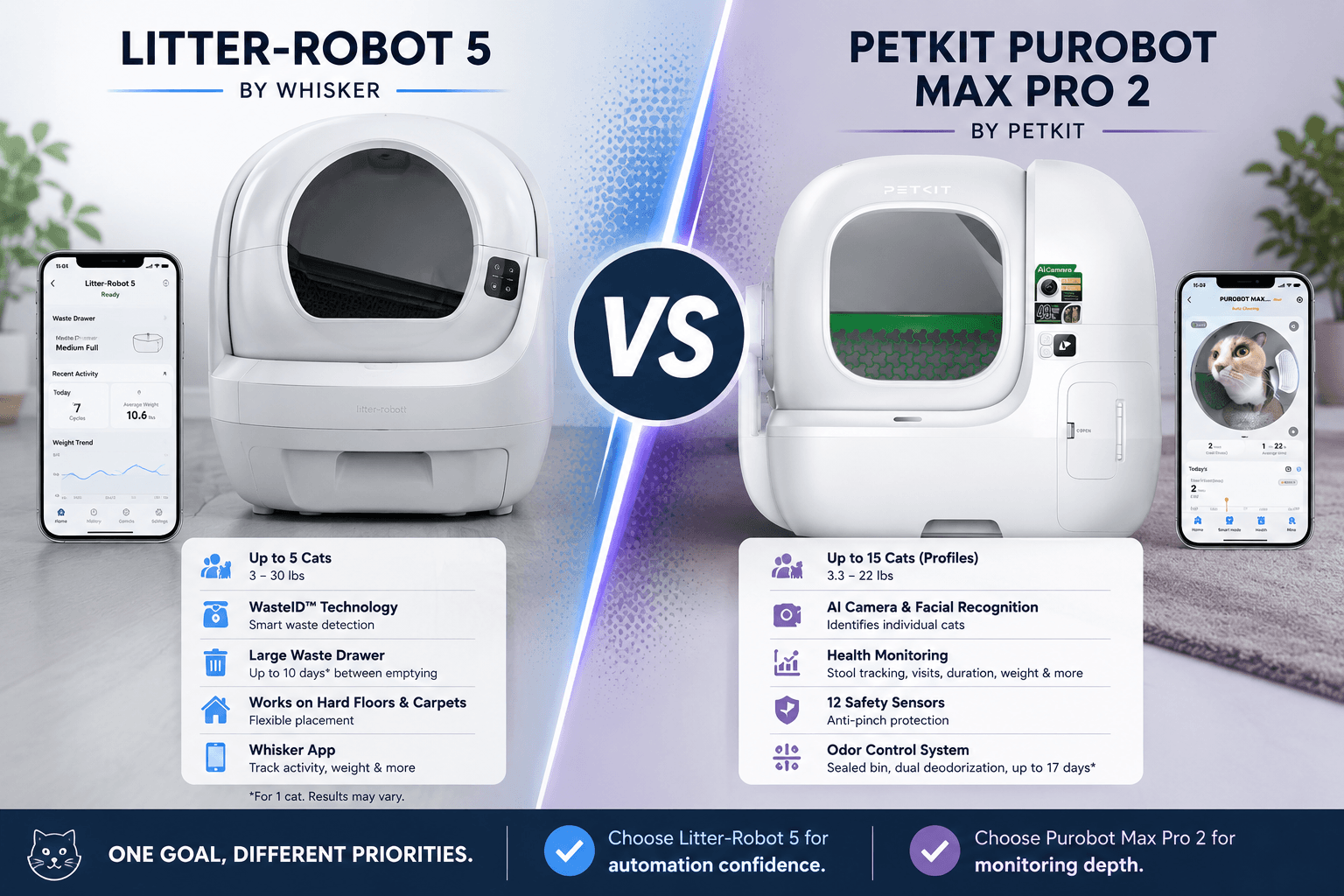
Litter-Robot 5 and PETKIT Purobot Max Pro 2 both clean automatically, track litter-box activity and promise to make cat ownership slightly less fragrant.
They do not solve the same problem.
Litter-Robot 5 is built to make litter management more dependable.
It supports larger cats, works on carpet or hard flooring, uses WasteID to distinguish urine from solid waste and focuses on making the physical routine disappear into the background.
Purobot Max Pro 2 is built to make litter-box behavior more visible.
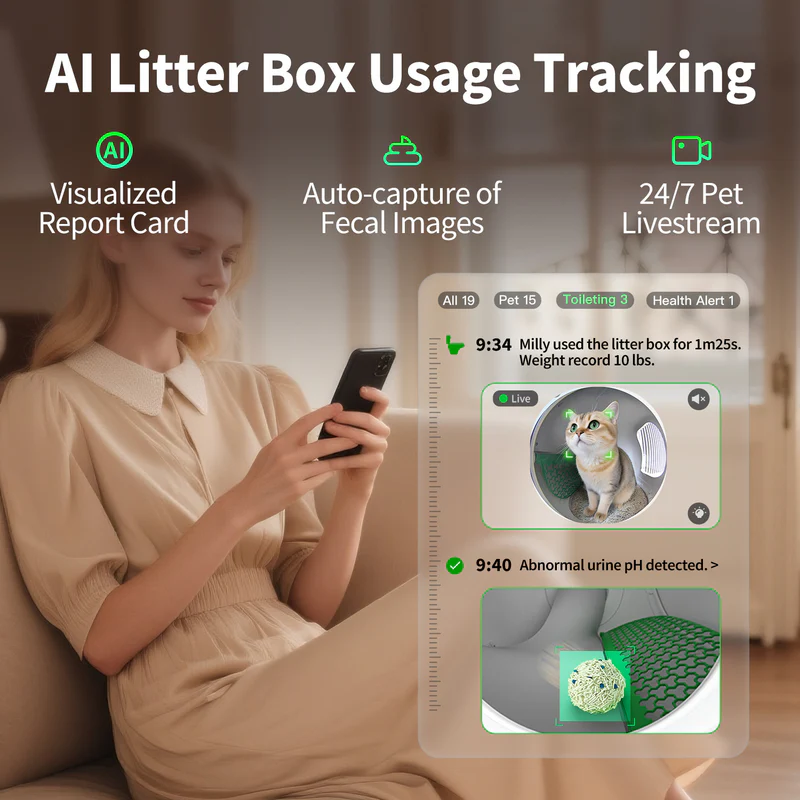
Its AI camera, facial recognition and individual histories are designed to answer the question a shared litter box usually hides:
Which cat did this?
For most households that mainly want less scooping, Litter-Robot 5 is the safer choice.
Choose Purobot Max Pro 2 when individual identification is not merely interesting, but useful enough to change how you monitor one or more cats.
The Purobot sees more.
Litter-Robot 5 asks less of your attention.
That is the decision.
Research Note
This is a research-led comparison based on current official product documentation, software terms and available ownership evidence.
PetTech AI has not conducted a long-term side-by-side test of both models.
Quick Verdict
| Your household or priority | Better choice | Why |
|---|---|---|
| Large cat or mixed-size household | Litter-Robot 5 | Broader cat-size compatibility |
| Up to five cats with straightforward automation needs | Litter-Robot 5 | Larger automation-first platform |
| Similar-weight cats that are difficult to identify | Purobot Max Pro 2 | Camera and weight data work together |
| Camera-free ownership | Litter-Robot 5 | No integrated video monitoring |
| Carpeted litter area | Litter-Robot 5 | More flexible floor placement |
| Individual visit videos and separate timelines | Purobot Max Pro 2 | Visual identification and recorded context |
| Owner unlikely to review app histories | Litter-Robot 5 | Less of its value depends on active monitoring |
| Monitoring-focused PETKIT household | Purobot Max Pro 2 | Fits PETKIT’s broader connected-care ecosystem |
Recommendation strength
Litter-Robot 5: Strong recommendation for automation-first households.
Purobot Max Pro 2: Strong but conditional recommendation for owners who will genuinely use individual monitoring.
PetTech AI may earn a commission from qualifying purchases.
Purobot Max Pro 2 fits your household? Check current availability at PETKIT.
As an Amazon Associate I earn from qualifying purchases.
Prefer Amazon checkout? Check Purobot Max Pro 2 price and availability on Amazon.
The Real Difference: Less Work or More Context?
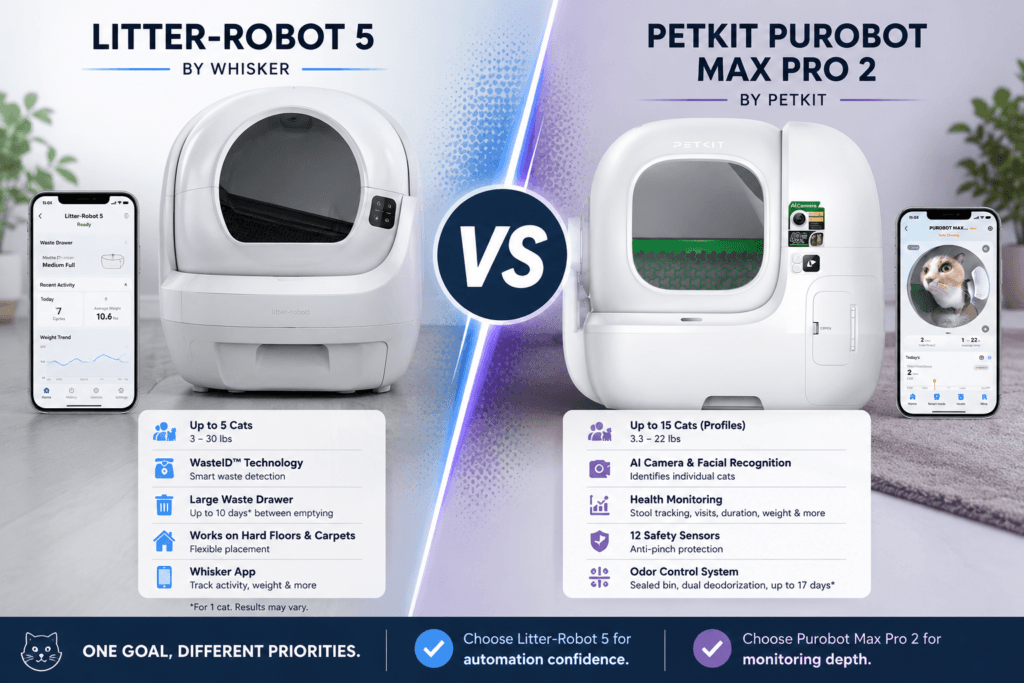
Litter-Robot 5 uses technology primarily to improve the cleaning process.
WasteID distinguishes urine from solid waste so the machine can apply more appropriate cycle timing. Its larger platform, waste drawer, app alerts and broad cat compatibility all support the same goal:
Make litter management more predictable and less intrusive.
Purobot Max Pro 2 uses technology to interpret each visit.
Its camera and weight sensors can identify individual cats, separate their histories and record visual context around litter-box use. PETKIT also positions the system around observing changes in visit frequency, duration, stool appearance and vocalization.
One product is trying to become a better appliance.
The other is applying for an unpaid internship in feline behavioral observation.
Neither approach is inherently better.
The relevant question is what remains uncertain in your household.
If the problem is waste management, choose the stronger appliance.
If the problem is identifying which cat produced a change, the camera system has a clearer reason to exist.
Who Should Choose Litter-Robot 5?
Litter-Robot 5 is the stronger default because its value does not depend on how often you open the app.
It supports cats across a broader size range and households with up to five cats. Its larger interior makes it the safer candidate for large or long-bodied animals, while its flexible placement is useful when the litter area includes carpet or rugs.
Choose Litter-Robot 5 when:
- one or more cats may be too large for the Purobot;
- waste handling matters more than recorded video;
- you want WasteID without cameras;
- carpet placement is necessary;
- your cats are easy enough to distinguish through weight data;
- you want automation to work quietly in the background.
This is the model for owners who want information, but do not want litter-box monitoring to become a hobby.
The app can show weight, visits, waste type and machine status. For many households, that is enough to notice a meaningful change without reviewing footage of every ordinary event.
Its main weakness is individual identification.
Weight-based tracking works best when cats occupy clearly different weight ranges. When two animals weigh almost the same, the data can become less certain.
That is where Purobot earns its place in the comparison.
For the wider Whisker decision, read Litter-Robot 5 vs 5 Pro vs EVO.
Who Should Choose Purobot Max Pro 2?
Purobot Max Pro 2 is the stronger choice when a shared box is hiding information you actually need.
Its AI camera combines visual recognition with weight data to maintain separate profiles and recorded histories.
That can matter when:
- two or more cats have similar weights;
- one animal is older or requires closer observation;
- you need to confirm which cat produced a repeated change;
- visit videos would add useful context;
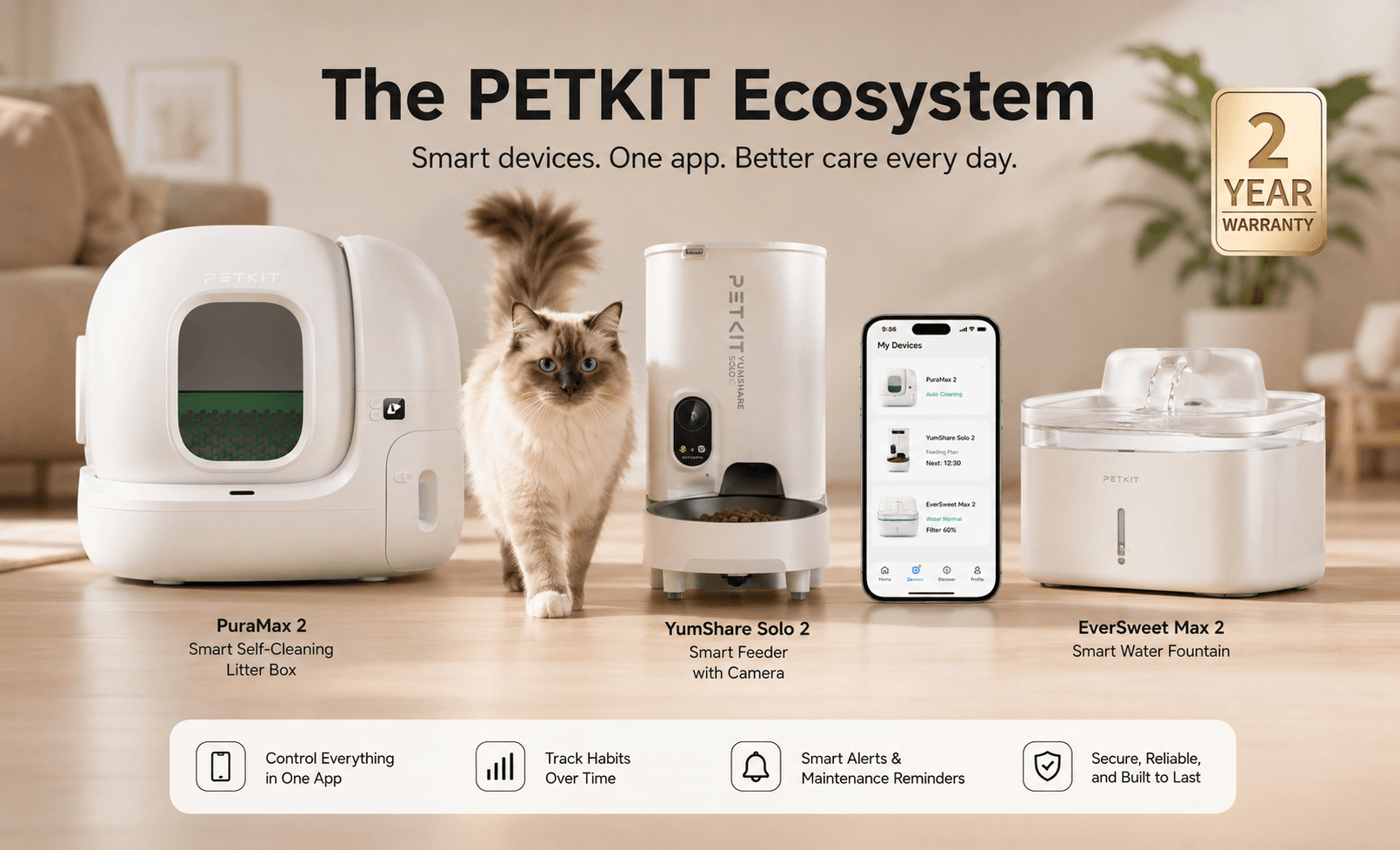
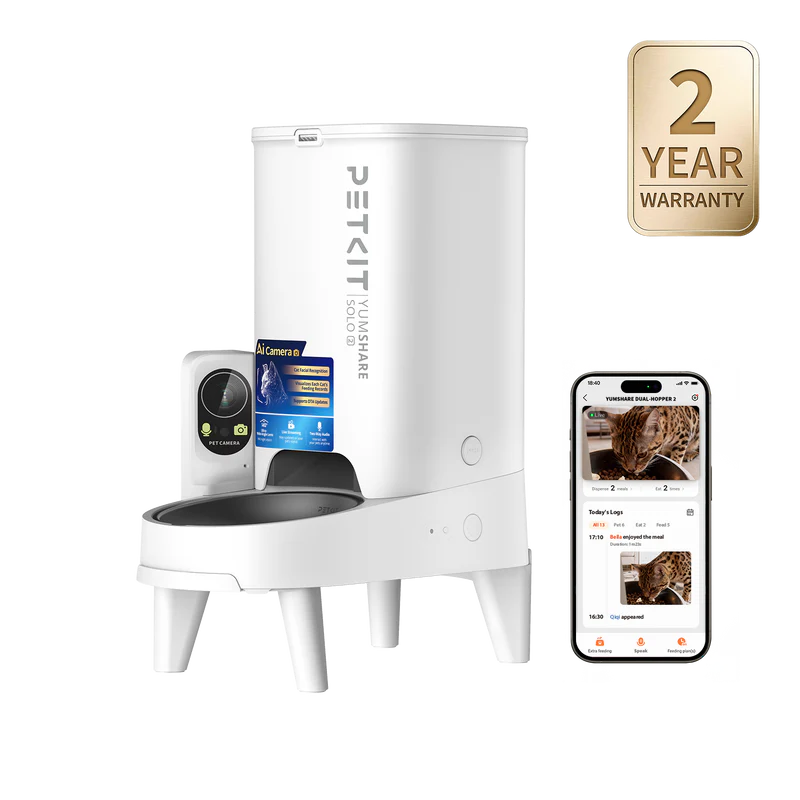
- you already use PETKIT feeders, fountains or monitoring devices;
- you will continue reviewing the information after the novelty disappears.
The last point is the most important.
Monitoring only creates value when it changes the next step.
A useful recorded event might lead you to clean the box, adjust resource placement, watch one cat more closely or contact a veterinarian.
An unused recorded event is simply cloud storage containing footage of a private moment nobody needed to preserve.
Purobot is not the stronger choice because it collects more data.
It is stronger when that data resolves ambiguity.
For a closer analysis of PETKIT’s camera model, read Purobot Max Pro 2 Review.
The Baron Test: Your Cat Still Gets a Vote
Imagine Baron, a large tabby with the confidence of a minor European monarch.
You install the Litter-Robot 5, complete the app setup and stand nearby admiring the machine you have researched for six hours.
Baron approaches.
He inspects the entrance.
He looks at you.
He turns around and uses the old plastic tray beside it.
This is the part no comparison table can solve.
Cat acceptance depends on:
- entrance size and height;
- interior room;
- noise and movement;
- box location;
- litter familiarity;
- whether the transition was gradual;
- whether the cat considers your expensive purchase an obvious personal insult.
Litter-Robot 5 has the advantage for exceptionally large cats because of its broader supported size range and roomier format.
Purobot Max Pro 2 offers a relatively low-access design and an enlarged opening compared with its predecessor, which may suit some senior, short-legged or mobility-sensitive cats.
Neither design guarantees acceptance.
A specification can tell you that the cat should fit.
Baron retains the constitutional right to disagree.
Placement Matters More Than the Product Photography Suggests
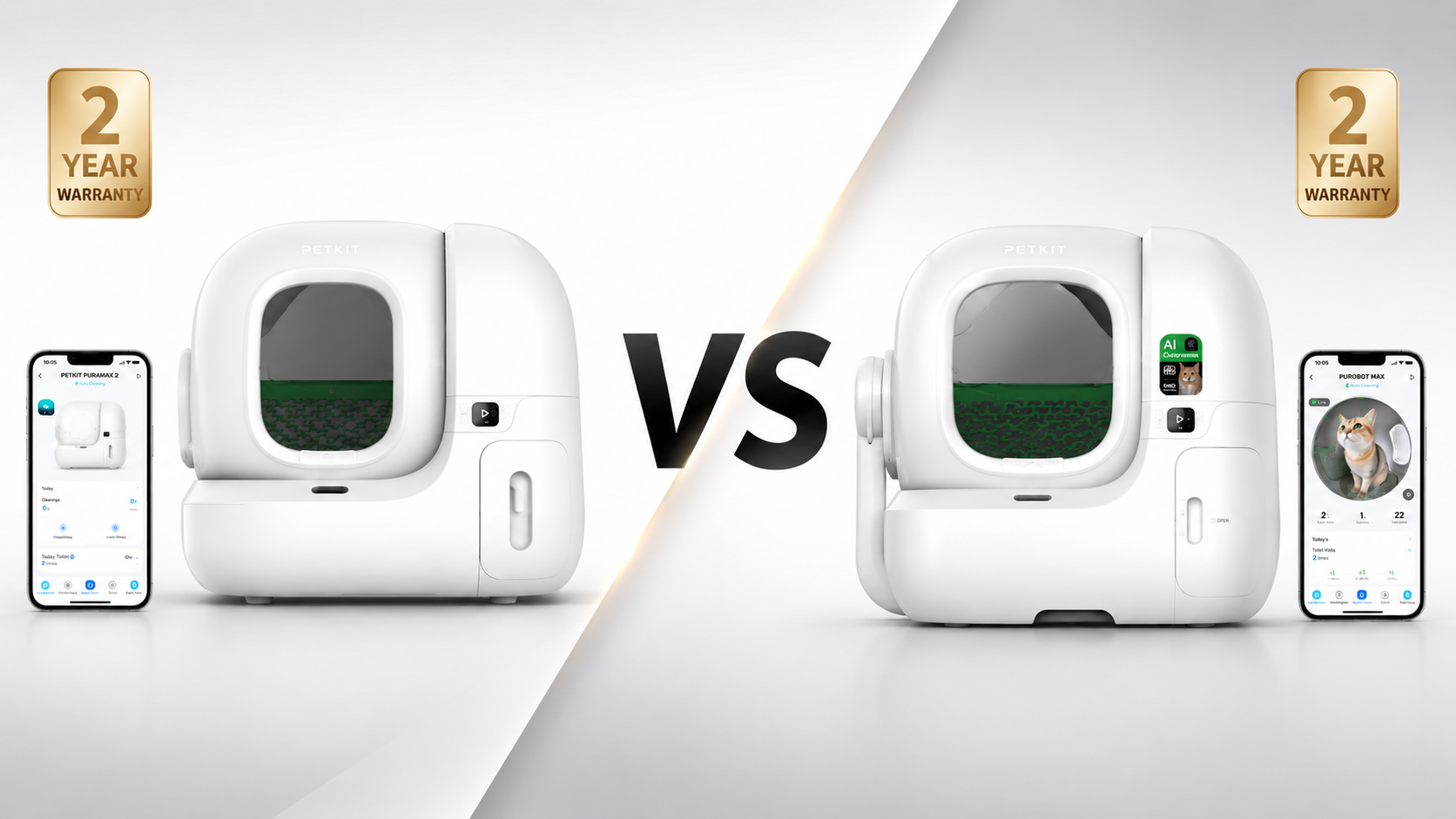
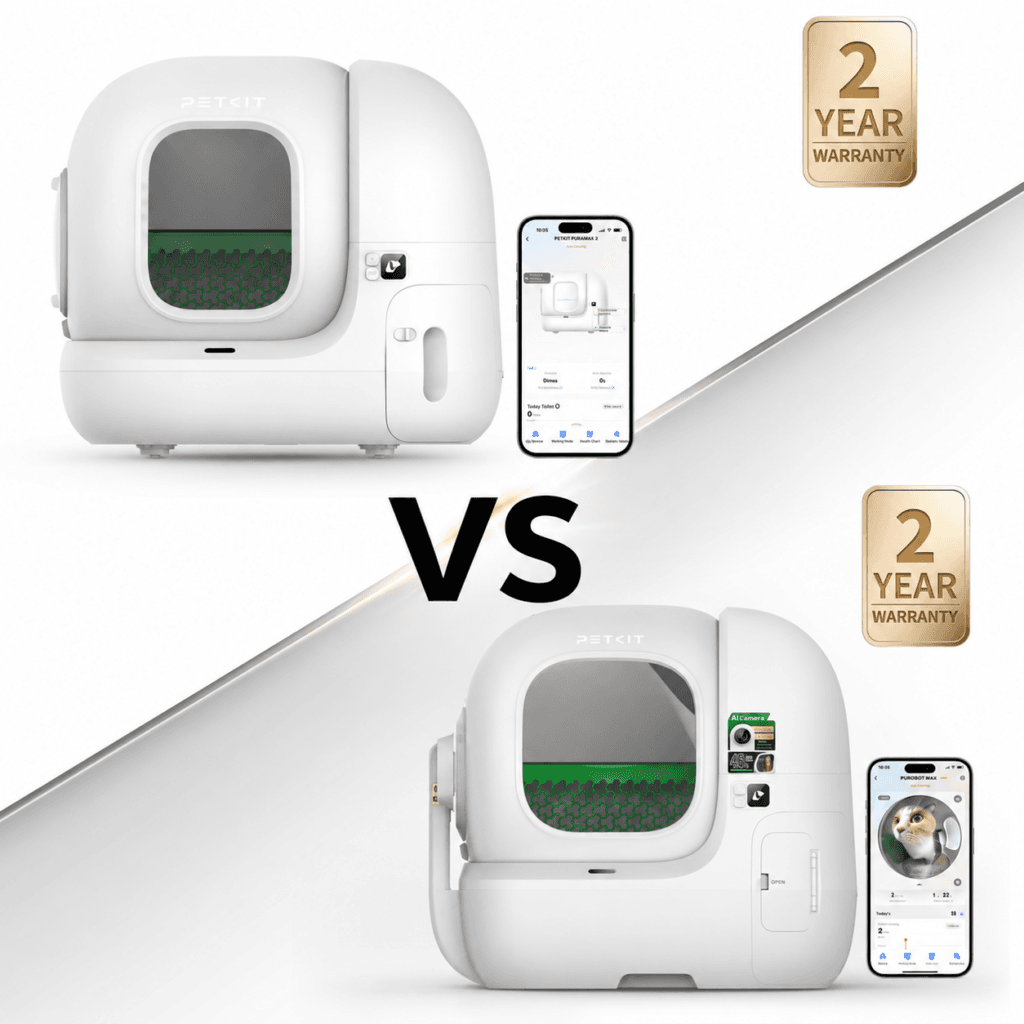
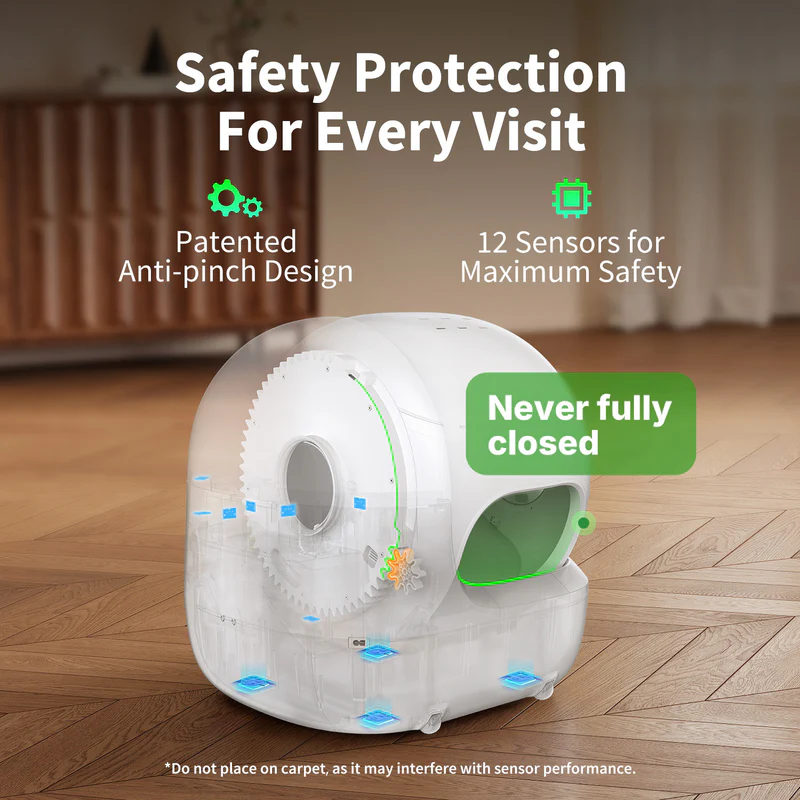
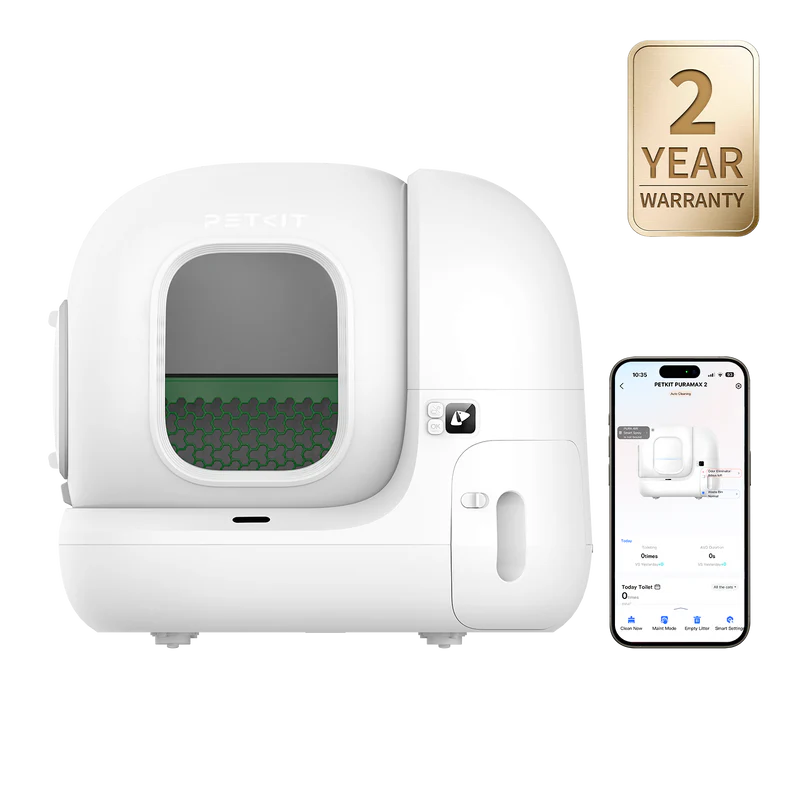
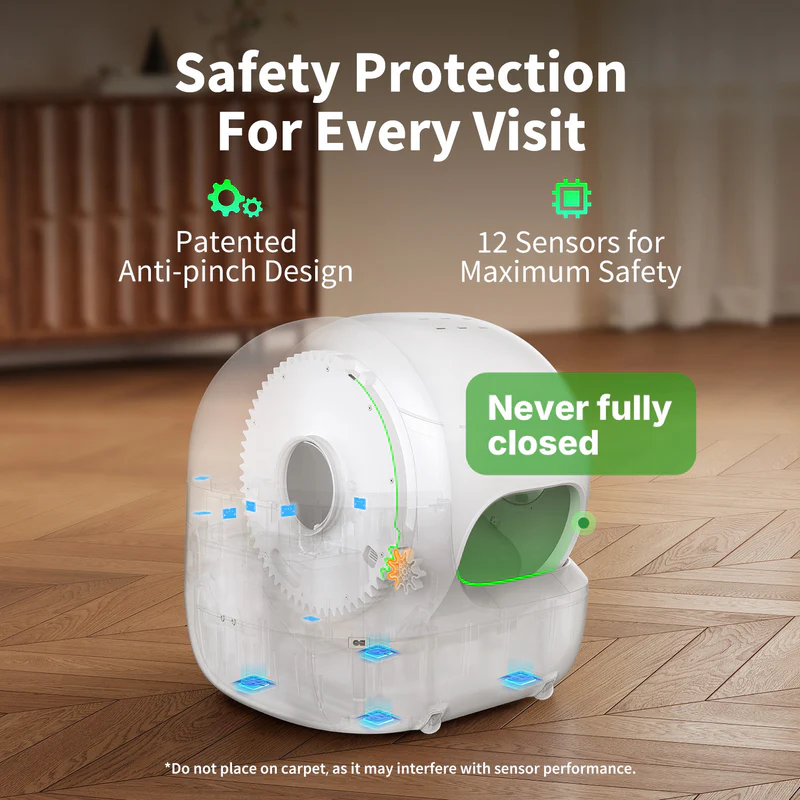
Purobot Max Pro 2 requires a firm, level surface.
PETKIT advises against placing it directly on carpet because soft or unstable flooring can affect its weight sensors and individual tracking.
That requirement is not a minor footnote when the only available litter area is carpeted.
The camera system becomes considerably less impressive when the machine cannot be placed where you need it.
Litter-Robot 5 is more flexible in this respect and can operate on carpet or hard floors.
Choose according to the room that exists—not the immaculate laundry room used in promotional photography, where no human appears to store detergent, towels or evidence of ordinary life.
Monitoring: Useful Insight or More Reasons to Worry?
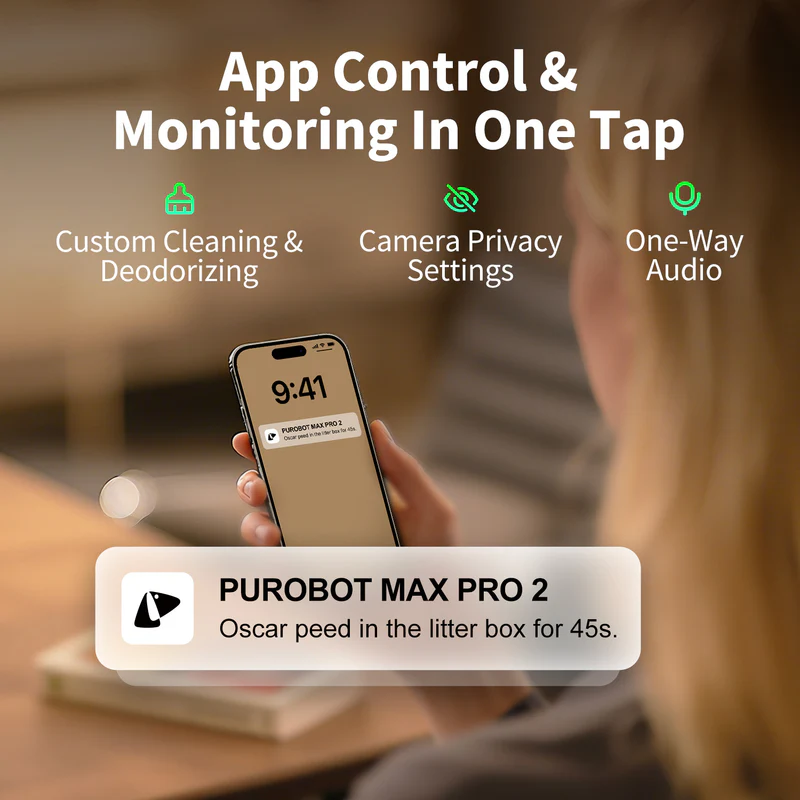
Purobot Max Pro 2 can provide a richer record than the standard Litter-Robot 5.
That record may include individual identification, visit video, duration, stool-related observations and unusual vocalization.
These signals can help owners notice that something changed.
They cannot determine why.
A cat may visit repeatedly because of urinary discomfort, constipation, stress, litter preference, territorial tension or another cause entirely.
The camera documents behavior.
It does not receive a veterinary degree when connected to Wi-Fi.
The correct response to a repeated or concerning change is:
- verify the pattern;
- observe the cat directly;
- consider the wider environment;
- seek veterinary guidance when appropriate.
The incorrect response is interpreting every minor variation as a diagnostic event because the app supplied a graph and used the word “AI.”
For the broader distinction between useful visibility and unnecessary data, read Smart Cat Monitoring vs Automation.
The Whisker side of this comparison deserves a closer look because several of its most distinctive monitoring features depend on Whisker+. See our complete Litter-Robot 5 Pro review.
Cameras, Privacy and the Premium Software Layer
The camera is Purobot’s defining advantage and its clearest trade-off.
PETKIT allows owners to schedule monitoring periods, pause recording or disable the camera. Buyers must still decide whether a connected camera in the litter area fits their privacy preferences.
Turning the camera off permanently is possible.
It also raises the reasonable question of why you purchased the camera litter box.
Extended video history and some deeper features may depend on PETKIT’s premium service layer. That means buyers choosing Purobot for long-term visual records should consider software access as part of the ownership model—not as an optional detail discovered after checkout.
Ask:
- Do I need occasional visual confirmation?
- Do I need retained histories?
- Will I review individual timelines?
- Would the information influence a real decision?
- Am I comfortable with the ongoing software relationship?
Five honest yes answers make the Purobot easier to justify.
Five enthusiastic maybes usually mean the marketing has done more work than the household requirement.
Odor Control and Daily Maintenance
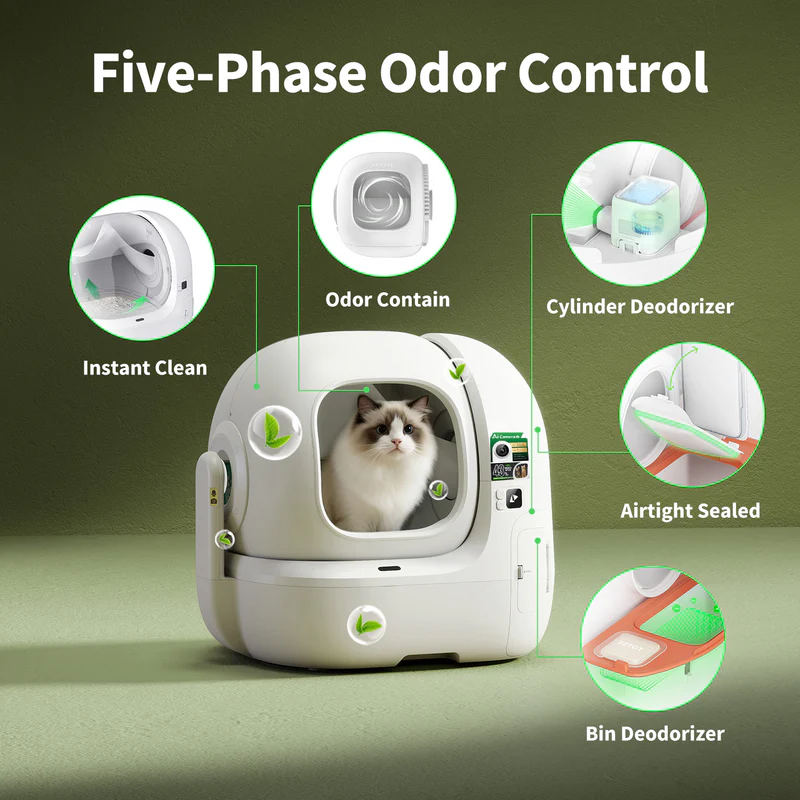
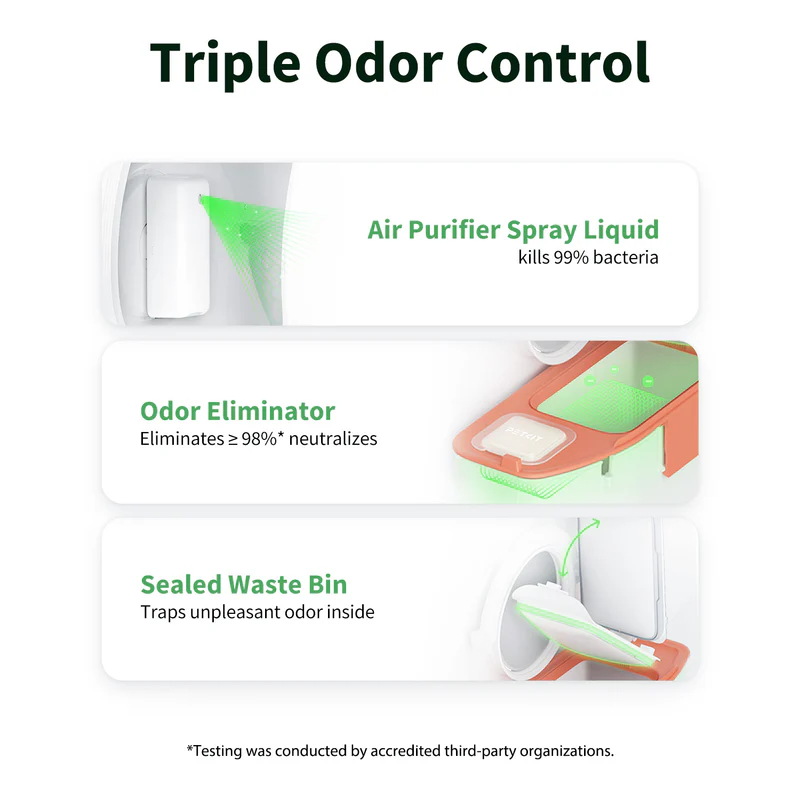
Both models remove waste from the exposed litter bed and store it in an enclosed compartment.
Litter-Robot 5 uses WasteID, a sealed drawer, carbon filtration and optional odor-control accessories.
Purobot Max Pro 2 combines an enclosed cylinder, sealed bin, deodorizing filters and contactless drawstring waste packing.
Purobot offers more odor-focused hardware.
Litter-Robot 5 offers a more familiar drawer workflow and uses WasteID to improve cycle timing.
Neither product eliminates:
- waste bags or liners;
- deodorizing consumables;
- residue inside the machine;
- sensor cleaning;
- periodic deeper maintenance;
- the consequences of leaving a full drawer untouched.
The machine can remove waste from sight.
It cannot prevent an owner from ignoring three notifications and then blaming the carbon filter.
Which Is Better for Multiple Cats?
Litter-Robot 5 has the advantage when the main multi-cat problem is capacity.
It supports up to five cats and provides a broad physical platform for mixed-size households.
Purobot Max Pro 2 has the advantage when the main multi-cat problem is identity.
It is particularly relevant when cats have overlapping weights or when one animal’s routine must be separated from the activity of the group.
Three differently sized cats may be easy for weight-based tracking to distinguish.
Two nearly identical cats may make visual recognition far more valuable.
Cat count alone does not decide the purchase.
The real variable is how difficult the household is to interpret.
Neither model eliminates the possible need for additional litter stations. Automation reduces labor; it does not abolish territorial preferences because the machine has a polished app.
Buyer Regret in One Sentence
Litter-Robot 5 regret means discovering that weight data cannot reliably separate similar cats; Purobot regret means buying an AI monitoring system and gradually using it as a more elaborate full-drawer alert.
Final Verdict
Choose Litter-Robot 5 when you want broader cat compatibility, flexible floor placement, WasteID and dependable camera-free automation.
It is the stronger recommendation for most households because its value remains clear even when nobody reviews the app every day.
Choose PETKIT Purobot Max Pro 2 when individual identification is the unresolved problem.
Its camera, facial recognition and event history can reveal what a shared litter box normally hides—especially when similar-weight cats make sensor-only data ambiguous.
Litter-Robot 5 is the better appliance.
Purobot Max Pro 2 is the better observer.
The correct choice depends on whether you want the litter routine to become less visible or the cats using it to become more visible.
Buy the system that resolves a real problem.
Baron will provide enough unpredictability for free.
For the broader brand-level decision, read PETKIT vs Litter-Robot Ecosystem.
Frequently Asked Questions
Is Litter-Robot 5 better than Purobot Max Pro 2?
Litter-Robot 5 is better for larger cats, broader household capacity, carpet placement and camera-free automation.
Purobot Max Pro 2 is better for visual multi-cat identification and recorded visit context.
Which is better for similar-weight cats?
Purobot Max Pro 2.
Its camera and facial recognition add another identification layer when weight data alone is ambiguous.
Which is better for large cats?
Litter-Robot 5 has the broader supported cat-size range and is the safer choice for exceptionally large cats.
Can Purobot Max Pro 2 sit on carpet?
PETKIT recommends placing it on a firm, level surface rather than directly on carpet because unstable flooring can interfere with sensor accuracy.
Does Litter-Robot 5 have a camera?
No.
Camera monitoring is available on Litter-Robot 5 Pro, not the standard Litter-Robot 5.
Does Purobot Max Pro 2 require a subscription?
Its core cleaning and connected features do not depend entirely on a subscription, but extended video history and deeper monitoring functions may involve PETKIT’s premium service layer.
Can either model diagnose health problems?
No.
Both can reveal changes in activity, weight or litter-box behavior, but neither can diagnose the cause or replace veterinary assessment.
References
Whisker — Litter-Robot 5 product documentation
Whisker — Current Litter-Robot comparison chart
PETKIT — Purobot Max Pro 2 product documentation and FAQ
PETKIT — PETKIT Care+ feature information
Cornell Feline Health Center — Feline litter-box behavior and house-soiling guidance
Image Credits
Official PETKIT and Whisker product imagery used for editorial comparison.
Editorial Disclosure
PetTech AI may earn a commission from qualifying purchases. This does not influence our recommendations, comparisons or editorial judgments.