Tag: enrichment

  • Smart Feeder Mistakes That Cause Weight Gain in Cats (2026)

    Smart Feeder Mistakes That Cause Weight Gain in Cats (2026)

    Smart feeders are supposed to solve the boring part of cat nutrition: consistent portions, predictable timing, fewer accidental “top-offs.” In reality, smart feeders don’t prevent weight gain. They either enforce a well-built feeding system—or automate a broken one.

    Feline obesity is not a niche issue. It’s common, it’s medically meaningful, and it’s easy to worsen with well-intentioned mistakes. Cornell’s Feline Health Center explicitly warns against sudden “starvation diets” because rapid restriction can trigger serious complications like hepatic lipidosis; weight loss should be gradual and veterinarian-guided.

    So if a feeder is making things worse, it’s usually not because the hardware failed. It’s because the setup quietly bakes bad assumptions into daily routine—then repeats them with perfect consistency.


    The key truth: a smart feeder amplifies whatever rules you set

    If your current feeding logic is:

    • guesswork portions
    • reactive snack drops
    • inconsistent overrides
    • boredom mistaken for hunger

    …automation won’t fix it. It will scale it.

    If your logic is:

    • BCS-aware portions
    • predictable timing
    • minimal overrides
    • enrichment that competes with food

    …automation can make it easier to execute reliably.


    Mistake #1: Setting portions without checking Body Condition Score (BCS)
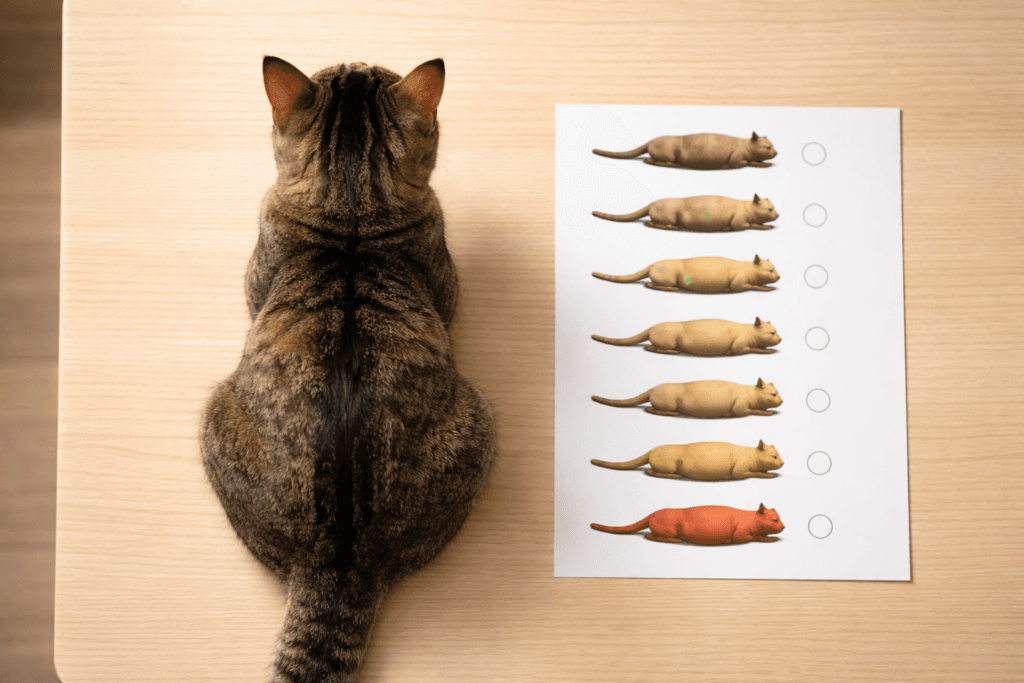
    Visual check for waistline as part of body condition scoring in cats

    Most people program feeders by “looks” or by what the cat used to get. That’s how weight gain becomes permanent.

    A 9-point Body Condition Score (BCS) is the standard reference many veterinary systems use. WSAVA’s cat BCS chart shows the 1–9 scale, with BCS 5 as ideal and higher scores indicating increasing fat cover and reduced waist/abdominal tuck.

    What goes wrong in practice:
    If your cat is already BCS 6–7, programming “normal” portions based on habit is still overfeeding. A feeder will then overfeed the same amount, every day, forever—until you intervene.


    Mistake #2: Treating the app like a “snack button”

    This is the most common self-sabotage pattern.

    • Cat vocalizes → you tap “feed”
    • Cat stalks the feeder → you tap “feed”
    • You feel guilty → you tap “feed”

    Now the feeder isn’t delivering nutrition. It’s delivering reinforcement.

    AVMA owner guidance on healthy weight emphasizes non-food rewards (play, attention, interaction) and warns that pets can come to rely on food for comfort if that’s the default reward loop.

    Fix: lock snacks into a separate, intentional allowance (or eliminate them temporarily). If you need to “give something,” give play.


    Mistake #3: “Micro-meals” with no structure (constant food focus)

    Small, frequent meals can be useful—especially for some cats and some health contexts—but “micro-feeding” often turns into continuous food cueing.

    If a cat receives food every time they pass the feeder, you create:

    • constant anticipation
    • constant checking
    • constant food fixation

    Even if calories are technically controlled, behavior can deteriorate and owners tend to compensate with “just a little more.”

    Fix: schedule real meal blocks (e.g., 3–6 timed meals) rather than a drip-feed pattern that trains surveillance.


    Mistake #4: Ignoring the five-pillar environment problem

    If your cat’s day is empty, food becomes the highlight.

    The AAFP/ISFM environmental needs guidelines frame feline wellbeing around core environmental principles (“pillars”), emphasizing that wellbeing and behavior are tightly linked to meeting environmental needs.

    Translation for feeding:
    A feeder can control calories, but it can’t create:

    • hunting/foraging outlets
    • play routines
    • safe territory separation
    • control over social contact

    When a cat is bored or stressed, overeating is often a symptom—not the root problem.


    Mistake #5: One feeder for multiple cats (competition = chaos)
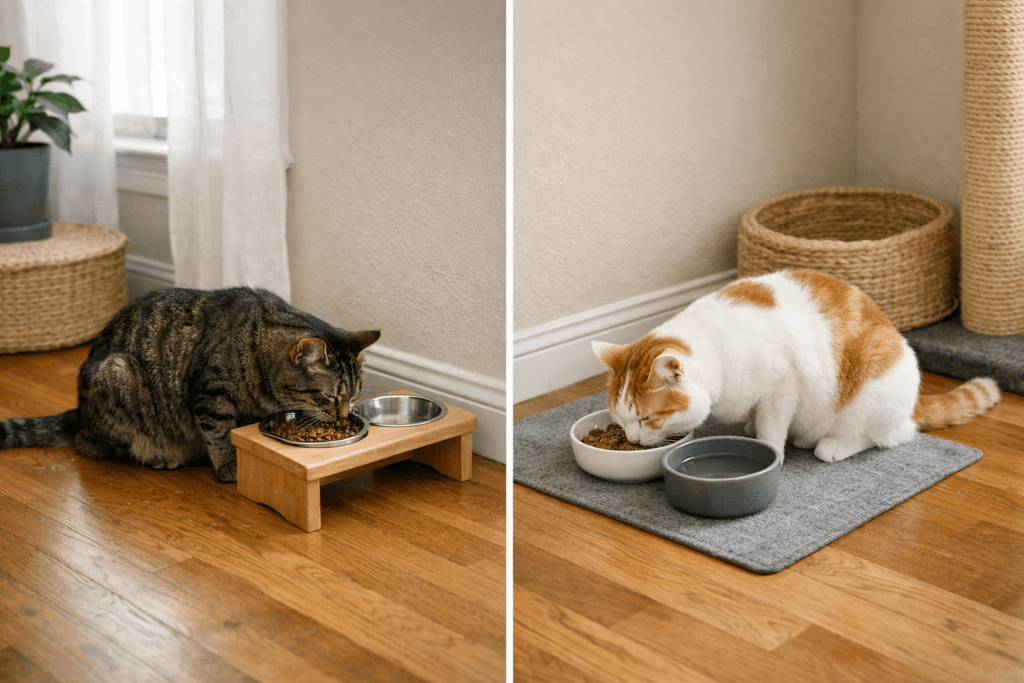
    Separate feeding stations reduce competition in multi-cat homes

    Multi-cat homes create silent feeding distortions:

    • the confident cat eats twice
    • the anxious cat eats fast (then overeats later)
    • guarding happens off-camera
    • weight diverges dramatically between cats

    AAFP/ISFM guidelines explicitly recommend separate feeding stations for each cat and adequate resource separation in multi-cat households.

    Fix: multiple feeding stations, spaced apart (and if needed, physically separated). One feeder is rarely “fair.”


    Mistake #6: Placing the feeder in a high-traffic, high-stress location

    Kitchen = convenient for humans, not always for cats.

    Bad placement increases:

    • resource guarding
    • anxiety eating
    • conflict spikes between cats
    • “drive-by snacking” triggered by household movement

    Fix: place feeders where cats can eat without being startled, cornered, or ambushed.


    Mistake #7: “Cutting hard” because the feeder makes it easy

    This one is dangerous.

    Cornell warns that sudden starvation diets can put cats at risk of serious illness like hepatic lipidosis; weight loss should be gradual (often framed around ~1–2% per week) under veterinary supervision.

    How feeders enable the mistake:
    You drop portions aggressively, the cat panics, begging escalates, and owners either cave with extra feeds—or push restriction further.

    Fix: slow, measurable adjustment with monitoring (weight trend + BCS). Never crash-diet a cat.


    Mistake #8: Not measuring food in grams (calorie creep goes invisible)

    Most feeder “portion” systems are not intuitive. “Cups” and “scoops” are blunt tools. Kibble density varies by brand, shape, and formula.

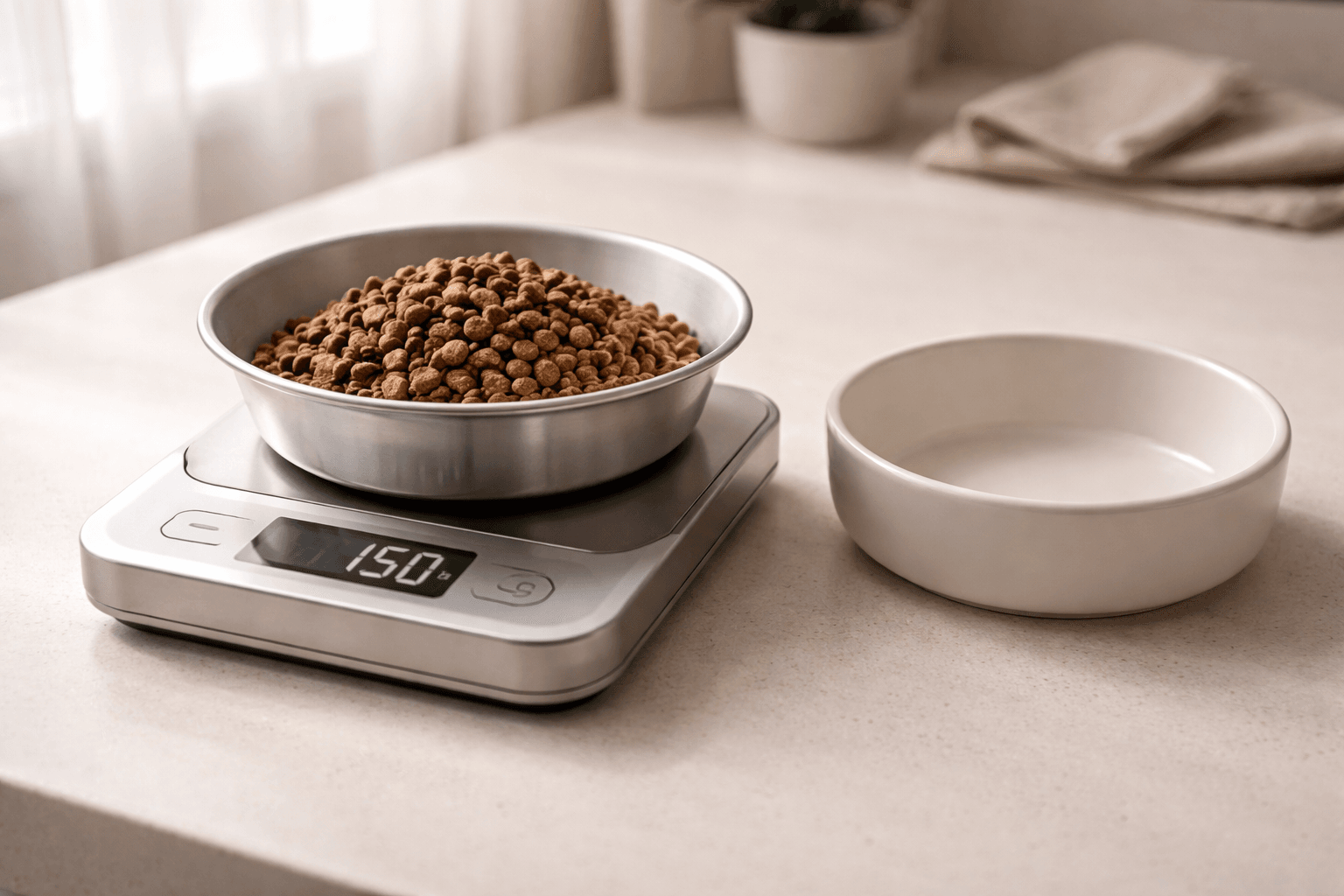
    Fix: weigh the daily amount in grams and make the feeder deliver that total across scheduled meals. You don’t need perfection—just repeatability you can audit.


    Mistake #9: Treats and human food aren’t tracked at all

    A feeder can be perfectly programmed and still fail because:

    • treats are constant
    • table food appears “sometimes”
    • training rewards are uncounted

    AVMA’s healthy weight guidance highlights how quickly extras add up and encourages shifting reward toward play/interaction rather than food.

    Fix: set a daily “treat budget,” or temporarily remove treats until weight stabilizes.


    Mistake #10: Assuming weight is the only metric that matters

    Weight changes slowly. Behavior changes faster.

    A better monitoring loop:

    • BCS monthly (visual + hands-on)
    • weight weekly (same scale, same time of day)
    • track begging intensity, pacing, and food fixation

    Cornell recommends owner monitoring and emphasizes gradual management.


    A quick smart-feeder audit (use this as your “pass/fail” checklist)

    If you answer YES to any of these, your feeder is likely supporting weight gain:

    • Do you dispense “extra” meals from the app more than once a week?
    • Do multiple people override the schedule?
    • Is the feeder a shared resource for multiple cats?
    • Have you never checked BCS using a standardized chart?
    • Do treats happen daily without a measured budget?
    • Is the feeder placed where other cats can block access?

    Fix the system first. The hardware will follow.


    Verdict

    Smart feeders don’t cause weight gain. They make weight gain easier to automate when feeding decisions are emotional, inconsistent, or poorly measured.

    Used correctly, smart feeders can be one of the cleanest tools for:

    • consistent portions
    • predictable timing
    • eliminating double-feeding
    • reducing human variability

    Used carelessly, they become:

    • a snack machine
    • a conflict magnet in multi-cat homes
    • a stealth calorie pipeline

    Internal Links
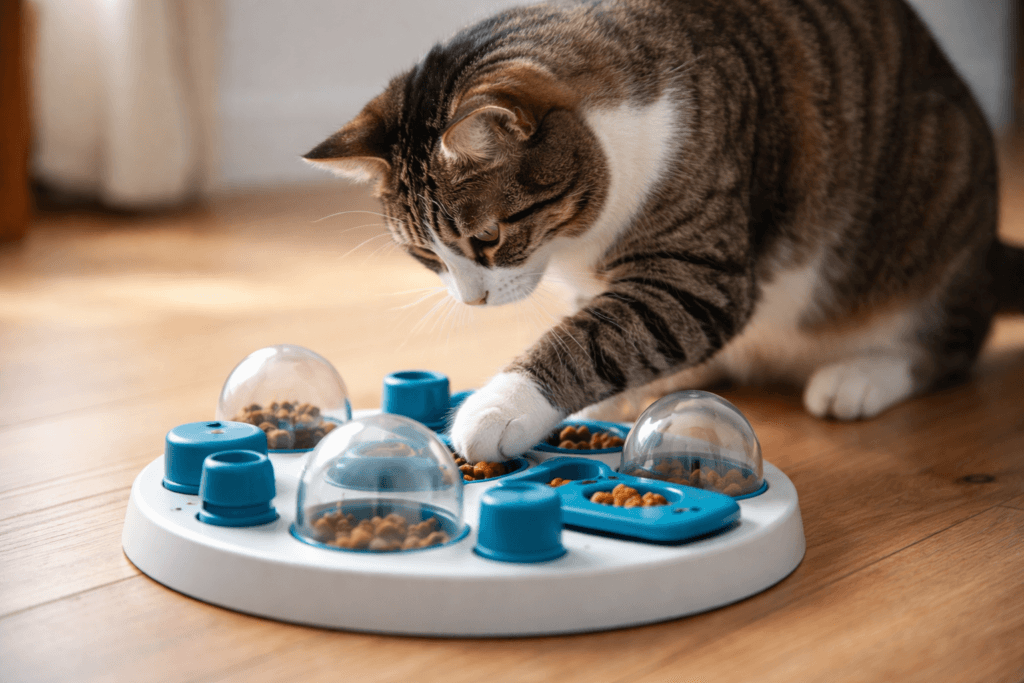
    Food puzzle enrichment reduces boredom-driven overeating

    If portion control and consistent meal timing are the priority, PETKIT Fresh Element Infinity Review 2025 shows how automated scheduling can stabilize daily intake. For a broader comparison of feeder designs and real-world use cases, Best Smart Cat Feeders 2025 helps you pick the right model for your home.

    When overeating is already established—especially begging, food obsession, or constant “I’m hungry” behavior—Stop a Cat From Overeating focuses on the behavioral and environmental drivers that a feeder can’t solve on its own. If excessive eating overlaps with restlessness or boredom, Indoor Cat Enrichment 2025 and Best Interactive Cat Toys 2025 explain how diet and enrichment work as one system, not isolated fixes.


    References

    • Cornell Feline Health CenterObesity (gradual weight loss; warning against sudden starvation diets; hepatic lipidosis risk).
    • Cornell Feline Health CenterHepatic Lipidosis (risk context; obesity as an underlying factor in many cases).
    • AAFP/ISFMFeline Environmental Needs Guidelines (2013) (environmental pillars; separate feeding stations and resource separation in multi-cat homes).
    • AVMAYour pet’s healthy weight (healthy-weight framing and owner guidance).
    • AVMA brochureYour pet’s healthy weight (PDF) (non-food rewards; reliance on food for comfort).
    • WSAVACat Body Condition Score (BCS) chart (9-point scale reference).

    Disclaimer

    PetTech AI publishes educational content to help cat owners make informed decisions about feline health, behavior, and pet technology. Some links on this page may be affiliate links, including Amazon Associate links and other affiliate partnerships. If you click a link and make a qualifying purchase, PetTech AI may earn a commission at no additional cost to you. These commissions support research, content production, and site maintenance. This article is not a substitute for veterinary diagnosis or treatment. For overweight cats, weight-loss plans should be discussed with a veterinarian to avoid unsafe calorie restriction and related risks.

  • Smart Treat Dispensers for Cats 2025: Best Amazon Picks, Setup Tips, and Healthy Use

    Smart Treat Dispensers for Cats 2025: Best Amazon Picks, Setup Tips, and Healthy Use

    Smart treat dispensers for cats 2025 aren’t just “cute tossers.” When used well, they’re structured enrichment and micro-training tools that break up boredom, reward calm behavior, and help you bond remotely—without blowing your cat’s calorie budget. Below you’ll find the best Amazon-available models, clear setup guidance, and vet-aligned nutrition notes so you can use smart treat dispensers for cats 2025 like a pro.


    Why use smart treat dispensers for cats 2025?

    Indoor cats thrive on routine and short, predictable interactions. Timed or on-demand tosses create “micro-sessions” that reinforce calm sits, carrier desensitization, or recall to a mat. The right smart treat dispensers for cats 2025 also let you check in by video, talk to your cat, and log when dispensing happens—useful for multi-person households.

    Key idea: smart treat dispensers for cats 2025 are timers + clickers + (optional) cameras in one.


    The 3 best smart treat dispensers for cats 2025 (Amazon picks)

    Petcube Bites 2 Lite vs Bites 2 camera angles and features.

    All three links go straight to their Amazon product pages (US).

    1) Petcube Bites 2 Lite — best value pick

    Amazon link
    Why it stands out: true 1080p video with 110° wide angle, 30-ft night vision, 8× digital zoom, and two-way audio; a dishwasher-safe treat container (~1.5 lb) lets you toss treats short/medium/long or schedule auto-dispensing in the Petcube app. Motion/sound alerts are supported (advanced AI under optional Care plan). Amazon

    Good for: first smart dispenser, renters, and anyone who wants camera + dispenser in a single affordable unit.


    2) Petcube Bites 2 — best camera + connectivity

    Amazon link
    Why it stands out: 1080p video with an ultra-wide 160° view, two-way audio, night vision, and fast setup; supports both 2.4 GHz and 5 GHz Wi-Fi (handy if you’ve modernized your home network). Alexa Built-in rounds out voice control basics. Amazon

    Good for: folks who want a wider room view and robust Wi-Fi flexibility in their smart treat dispensers for cats 2025 short-list.


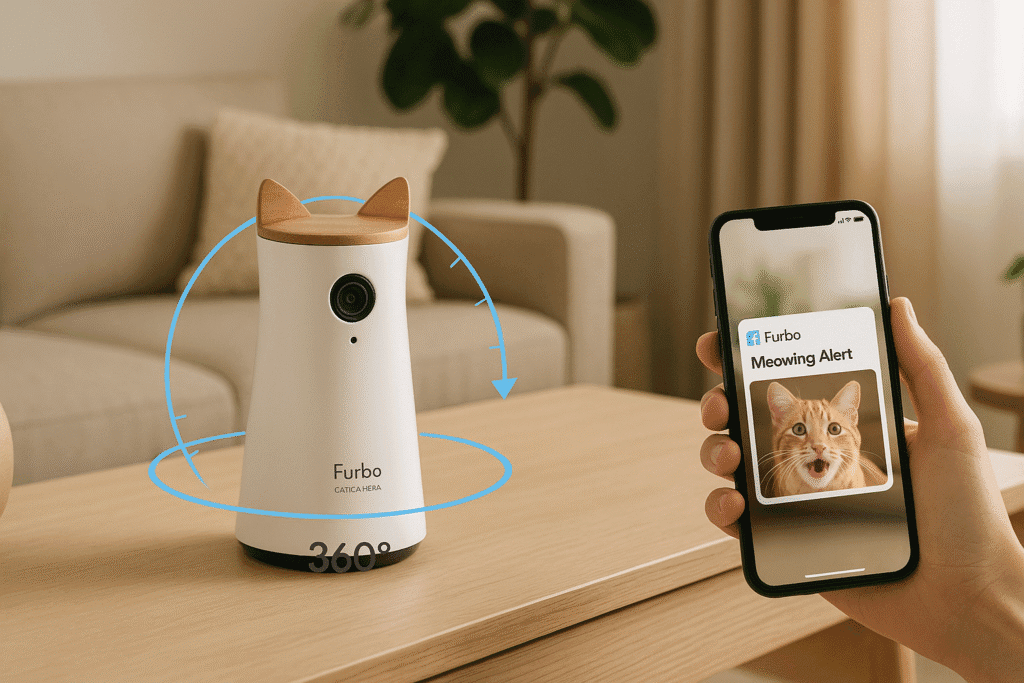
    3) Furbo 360° Cat Camera — best for meowing alerts + 360° pan

    Furbo 360 Cat Camera with 360° rotating view and meowing alerts.

    Amazon link
    Why it stands out: 1080p camera with 360° rotating view, two-way audio, treat toss via phone app, and meowing alerts designed for cat households. “Standard see/talk/toss” features are usable without a subscription; some advanced features (e.g., historical event clips) may sit behind Furbo plans. Amazon

    Good for: owners who want full-room coverage and audio-based alerts inside their smart treat dispensers for cats 2025 ecosystem.


    How to choose (features that truly matter)

    • Treat size tolerance & anti-clog design: Small, uniform, crunchy treats (≈8–12 mm) jam less. Look for a smooth, sloped chute.
    • Scheduling + manual toss: The best smart treat dispensers for cats 2025 let you run 1–3 micro-windows daily and still toss ad-hoc.
    • Video quality & night vision: 1080p + decent night vision helps with shy cats and nighttime check-ins (both Petcube models provide this). Amazon
    • Connectivity: If your router is 5 GHz-only in the install spot, note that Bites 2 supports 2.4/5 GHz; Bites 2 Lite works on 2.4 GHz. Amazon
    • App polish & alerts: Motion/sound alerts are common; “meowing alerts” are Furbo’s standout. Amazon

    Setup that actually works (and keeps cats calm)

    1. Station selection: waist-high shelf or wall mount in a quiet area—don’t aim toward doors where guarding or dashing can happen.
    2. Mat zone: place a small mat 1–2 m in front. Only toss when your cat is on the mat (prevents “begging at the machine”).
    3. Treat test: run 10–20 test tosses with your chosen treat and vacuum dust from the tray to reduce clogs.
    4. Short windows: schedule two micro-windows (AM and early evening, ≤90 seconds). You can still manually toss during training.
    5. Pair with play: after the evening toss, 3–5 minutes of wand play; end with one treat to signal “all done.”

    Health & nutrition: how many treats are okay?

    Treats are not balanced food. Cornell notes a good rule of thumb: treats shouldn’t exceed ~10–15% of daily calories for healthy adult cats. vet.cornell.edu The simplest plan is to log treat calories and shave a bit off dinner to keep weight stable. Routine veterinary exams remain essential (AAHA-AVMA guidelines advise at least annual wellness visits, more often for seniors/at-risk). avma.org

    Pro tip: if your cat suddenly eats less, vocalizes more, or changes litter-box habits, don’t assume it’s “behavior.” Medical causes are common drivers of house-soiling and box avoidance—call your vet. vet.cornell.edu


    Smart Treat Dispensers as Part of a Balanced Feeding Routine

    Used correctly, smart treat dispensers for cats 2025 can support—not disrupt—a healthy diet. The key is integration: schedule treat sessions around meal times to reinforce positive habits rather than create random snacking. Many owners find that offering a few measured treats before scheduled meals reduces anxiety and prevents “food guarding” behavior. When linked with smart feeders or weight scales, these devices can provide calorie insights over time, helping you fine-tune daily intake. The result is a routine where treats become training tools and data points instead of dietary risks.
    Cornell veterinarians emphasize that predictability reduces stress-related overeating and maintains stable digestion. Aligning smart treat schedules with consistent meal times is the simplest way to create a healthier, calmer feeding rhythm—especially in multi-cat households.


    Real-world playbooks (using smart treat dispensers for cats 2025)

    Calm mat training with a smart treat dispenser using smart treat dispensers for cats 2025.
    • Carrier confidence: dispenser by the carrier → toss for approach → paws in → close door briefly → quiet release → treat.
    • Nail-trim desensitization: treat for calm on the mat before/after one nail tip.
    • Night routine: 8–9 pm micro-window + short wand play + final treat; reduces 3 am zoomies.
    • Multi-cat fairness: two identical devices or two zones; synchronize drops to avoid crowding or guarding.

    The through-line: smart treat dispensers for cats 2025 should reward calm, quiet behavior—not meowing at the machine.


    Product snapshots (quick specs you’ll care about)

    • Petcube Bites 2 Lite — 1080p, 110° view, 30-ft night vision, 8× digital zoom, two-way audio, scheduled or remote toss; dishwasher-safe treat container (~1.5 lb); motion/sound alerts (advanced AI requires Petcube Care). Amazon
    • Petcube Bites 2 — 1080p, 160° ultra-wide view, two-way audio, night vision; 2.4 GHz + 5 GHz Wi-Fi support; Alexa Built-in. Amazon
    • Furbo 360° Cat Camera — 1080p, 360° rotating view, treat toss via app, two-way audio, meowing alerts; standard see/talk/toss features usable without a subscription (advanced features may require a plan). Amazon

    Pros & cons of smart treat dispensers for cats 2025

    Pros

    • Adds structure and enrichment during workdays.
    • Remote rewards for training and recall, plus check-ins by video.
    • App logs help you spot overuse or begging patterns.

    Cons

    • Over-treating → weight creep; stick to the 10% rule. vet.cornell.edu
    • Soft/crumbly treats can jam chutes; choose small, uniform kibbles.
    • Some cats fear loud tossers—pick quieter models and go slow.

    Buying advice (price, reliability, ecosystem)

    If you already run a home on Petcube or Furbo, staying within that app reduces friction. For pure value in smart treat dispensers for cats 2025, start with Petcube Bites 2 Lite; for top camera coverage + dual-band Wi-Fi, Petcube Bites 2; if you want 360° + meowing alerts, Furbo 360° Cat Camera is the most “cat-specific” option.


    Troubleshooting (fast fixes)

    • Treats don’t toss: switch to a smaller, rounder treat; clean dust; run 10 test tosses.
    • Drops cause crowding: in multi-cat homes, mirror-schedule two devices in opposite corners.
    • Connectivity weirdness: confirm 2.4 GHz availability (Bites 2 Lite) or use 5 GHz-capable hardware (Bites 2).
    • Anxious cat: turn down toss distance; pair with quiet verbal praise via two-way audio.

    Verdict: which smart treat dispensers for cats 2025 should you buy?

    If you want reliable tosses and a solid app at the best price, pick Petcube Bites 2 Lite. If you need the widest camera view and 5 GHz support, go Petcube Bites 2. If your priority is meowing alerts and full-room coverage, get Furbo 360° Cat Camera. All three are strong smart treat dispensers for cats 2025 when used with short schedules, the right treats, and a strict calorie cap.


    FAQs (quick answers)

    Do I need a camera?
    Not strictly. But camera + two-way audio improves training timing and peace of mind (Petcube/Furbo do this well).

    What size treats work best?
    Small, uniform, crunchy bits (≈8–12 mm). Avoid soft cubes and crumbly freeze-dried chunks unless the brand specifies support.

    How many treats per day?
    Keep treats to ≤10–15% of your cat’s daily calories and adjust meal portions to compensate. vet.cornell.edu

    Are sudden litter-box changes behavioral?
    Sometimes—but medical causes are common, so call your vet if habits change. vet.cornell.edu


    Internal links (PetTech AI)


    Authoritative outbound links

    • Cornell Feline Health Center — Feeding Your Cat (treats ≤10–15% of calories). vet.cornell.edu
    • AAHA-AVMA Feline Preventive Healthcare Guidelines (at least annual vet exams). avma.org

    Disclaimer

    This guide is for educational purposes only and does not replace professional veterinary advice. Smart treat dispensers for cats 2025 are tools for enrichment and training—not meal replacements. Keep total treats under 10–15% of daily calories, monitor weight weekly, and consult your veterinarian if you notice changes in appetite, thirst, litter-box habits, activity, or behavior. Some products mentioned include affiliate links to Amazon. If you purchase through these links, PetTech AI may earn a small commission at no extra cost to you. This helps fund independent testing and maintain evidence-based, unbiased reviews.

  • Smart Cat Cameras 2025: The Best Picks for Safer, Happier, Better-Monitored Cats

    Smart Cat Cameras 2025: The Best Picks for Safer, Happier, Better-Monitored Cats

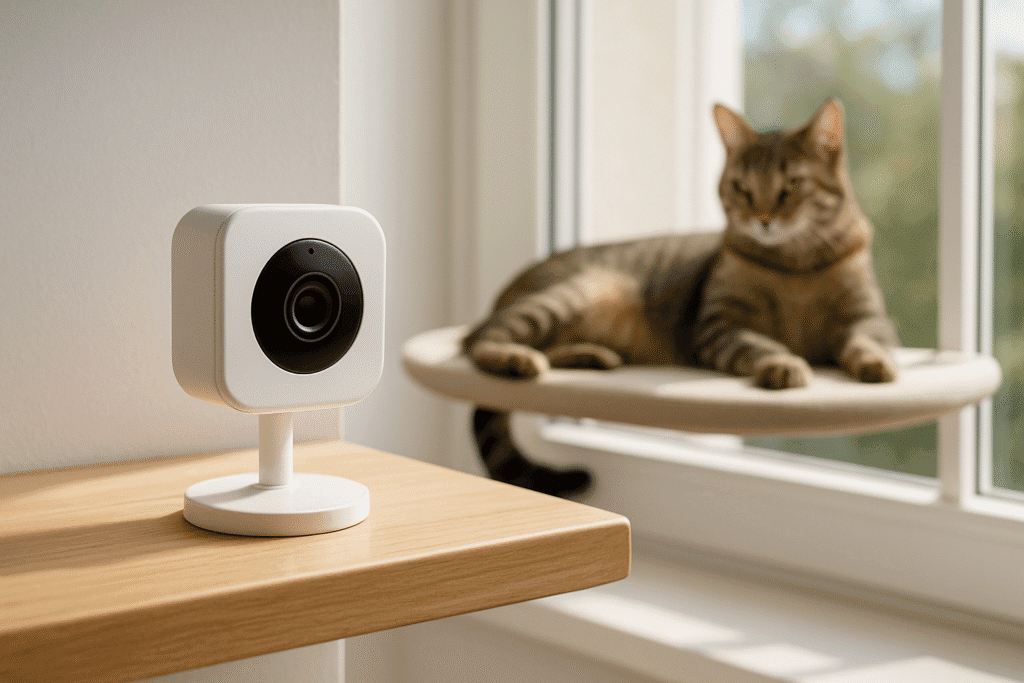
    Modern cat parents want peace of mind when they’re not home. Smart cat cameras 2025 deliver that calm: you can check in, talk to your cat, capture adorable moments, and spot issues early (stress, overeating, house mischief). In this guide, we break down the best models, how to choose, and how to set them up so they help your cat’s well-being—not just your FOMO.

    Affiliate disclaimer: This article contains affiliate links (Amazon, brand partners). If you buy through our links, we may earn a small commission at no extra cost to you. We only recommend products that support feline health, safety, and good home hygiene.


    Why a “cat-first” camera matters

    Cameras aren’t only for security. When used thoughtfully, they support better cat care: you’ll learn your cat’s natural rhythms, identify stressors (noisy appliances, hallway traffic), and confirm that enrichment plans are working. The Cornell Feline Health Center reminds us that predictable routines and calm environments reduce anxiety; a camera helps you observe and optimize that routine. The AVMA also highlights monitoring as part of responsible pet ownership (especially for seniors or cats with medical needs). Both perspectives align perfectly with the promise of smart cat cameras 2025.


    How we test (and what features actually matter)

    If you’re overwhelmed by spec sheets, use this simple checklist before ordering any smart cat cameras 2025:

    • Video fidelity, low-light vision: 1080p minimum with clear infrared or color night mode—so you can see whiskers and pupils, not grainy blobs.
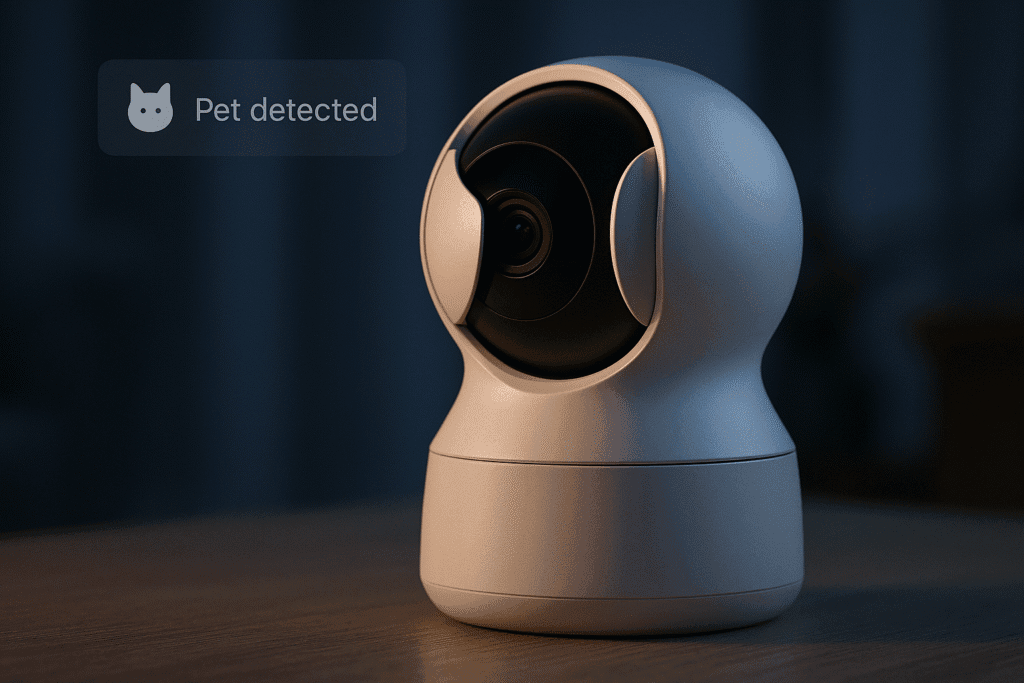
    • Pet-aware alerts: “Animal” or “pet” filtering beats generic motion alerts; fewer false pings = less notification fatigue.
    • Two-way audio quality: Crisp audio avoids startling your cat. You want a warm “Hey buddy!” not a robot voice.
    • Pan/tilt or wide coverage: Cats love vertical spaces; a cam that follows motion or covers wide angles is gold.
    • App reliability + cloud options: Solid push alerts, stable streams, and a transparent approach to subscriptions.
    • Privacy controls: Physical lens covers, local video options, or quick privacy modes so cameras aren’t “always on.”
    • Ecosystem fit: If you already use Alexa or Ring, or you want a feeder-camera combo, pick accordingly.

    We also consider price, warranty/support, and whether the brand is easy to set up for first-timers.


    Best smart cat cameras of 2025 (tested & recommended)

    Below you’ll find five excellent choices that collectively cover most needs and budgets—all available via Amazon. Each pick includes the role it plays in the smart cat cameras 2025 landscape, plus practical pros/cons.

    1) Petcube Play 2 — Best for play + interaction (built-in laser)

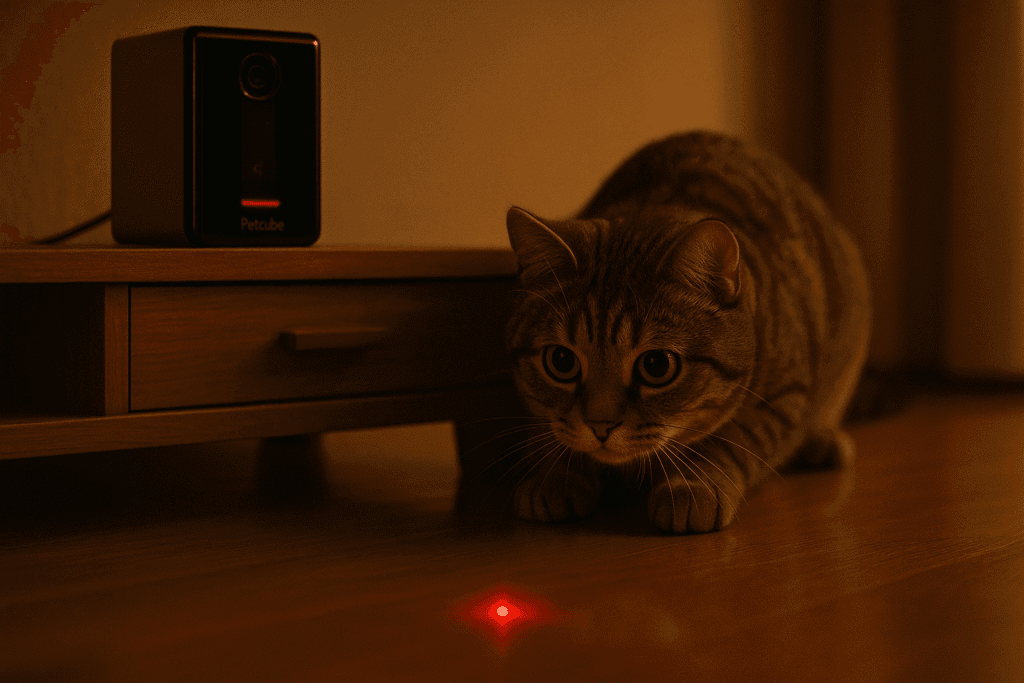
    Cat following a laser from a Petcube Play 2 smart cat cameras 2025.

    If you want to do more than watch, Petcube Play 2 is your jam. It’s an indoor 1080p camera with night vision, two-way audio, sound & motion alerts, and a controllable laser toy in the app—great for quick enrichment breaks during your workday. Among smart cat cameras 2025, it’s the most “interactive.”

    Why we like it

    • The laser is actually usable: responsive, smooth, and engaging for energetic cats.
    • Motion + sound alerts are configurable, so you get signal without spam.
    • Works with Alexa; optional cloud history.

    Keep in mind

    • Laser play should be short and structured (avoid over-stimulation).
    • Requires a stable 2.4/5 GHz Wi-Fi and a good mounting angle for vertical play areas.

    Best for: Cat parents who want remote play sessions, kittens, and high-energy cats that benefit from short daily bursts of engagement using smart cat cameras 2025.


    2) Petlibro Granary Dual-Bowl Feeder Cam — Best feeder + camera combo (multi-cat)

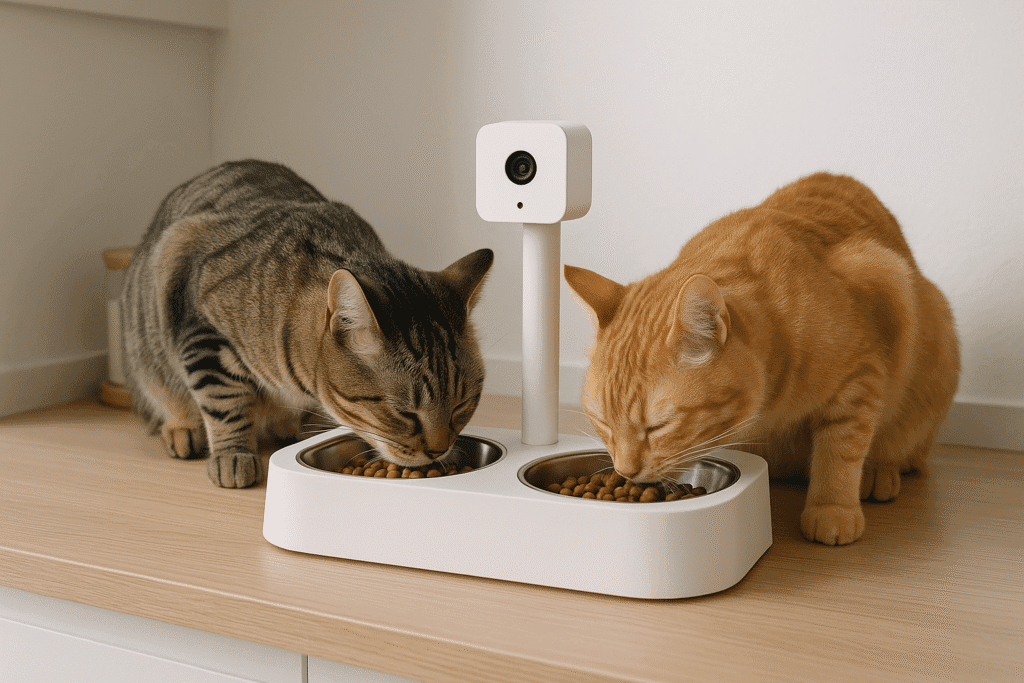
    Two cats eating from a Petlibro Granary feeder with built-in camera.

    Feeding and monitoring in one device. This Petlibro unit includes 1080p video with night vision, dual trays for two cats, 5 GHz Wi-Fi, two-way audio, and motion/sound/low-food alerts. It’s a tidy hub that lets you verify mealtime behavior, portions, and manners—live.

    Why we like it

    • “Camera for Two Cats” is more than a slogan: the dual trays simplify multi-cat routines.
    • Great for verifying that each cat eats the right portion (and that a bully cat isn’t stealing bites).
    • Alert set matches what cat parents need: motion, sound, and low-food notifications.

    Keep in mind

    • Feeder cams sit low; for best viewing, pair with a side cam or mount the feeder near a wall to capture both cats’ faces.
    • Cloud functionality and app reliability vary by network—test before long trips.

    Best for: Multi-cat households and owners who want fewer devices. In the smart cat cameras 2025 category, it’s the best “do-it-all” feeding station.


    3) Petcube Cam (Indoor) — Best budget Petcube (simple & reliable)

    Petcube Cam Indoor watching a cat on a window perch.

    Sometimes you just want a good indoor cam from a brand you trust. The compact Petcube Cam delivers 1080p video, night vision, two-way sound, and smart motion alerts in a slim package. It’s a strong “set-and-forget” baseline camera.

    Why we like it

    • Tiny footprint with a clean app experience.
    • Night vision is clear enough to see subtle behaviors (loafing, blinking).

    Keep in mind

    • No laser or treats; think of it as your dependable daily monitor.
    • Works best when angled toward cat “hot spots” (favorite shelf, tower, or litter room entry).

    Best for: Budget-friendly, dependable monitoring—perfect first step into smart cat cameras 2025.


    4) Xiaomi C500 Dual 2K — Best clarity + AI pet detection

    Xiaomi C500 2K detecting a cat with privacy lens shield.

    This 5MP dual-lens HDR camera with AI pet detection, ultra-low-light color mode, physical lens shield, and an MJA1 security chip brings serious clarity and privacy controls. A powerful pan/tilt helps follow cats as they leap between perches.

    Why we like it

    • AI pet detection filters human-only motion, so your alerts stay relevant.
    • Color night mode in very low light is unusually good for spotting coat patterns.
    • Hardware privacy cover and security-chip comfort privacy-conscious owners.

    Keep in mind

    • It’s a general smart cam (not pet-specific), so positioning matters for catching vertical play.
    • Verify Amazon US model for app region support and 2.4/5 GHz compatibility.

    Best for: Cat parents who prioritize image quality, privacy toggles, and smarter alerts—an advanced entry in smart cat cameras 2025.


    5) Ring Indoor Cam (2nd Gen) — Best for Alexa & multi-room coverage

    Multi-room monitoring with Ring Indoor Cam for a cat-friendly home.

    If your home already runs on Alexa or Ring, this is the easiest way to blanket the house. 1080p HD video, color night vision, custom motion zones, Advanced Pre-Roll previews, manual privacy cover, and deep Alexa integration make it a flexible choice. Subscriptions (Ring Protect) unlock longer video storage and enhanced detections.

    Why we like it

    • Great multi-camera scaling; simple to add a second or third room.
    • Color night vision and Pre-Roll provide more context around each event.

    Keep in mind

    • Full feature set shines with a subscription.
    • This is a home-security cam adapted for pets—placement is everything.

    Best for: Homes already using Amazon/Ring gear and anyone wanting smart cat cameras 2025 with true multi-room visibility.


    Quick compare: which smart cam is right for you?

    • Want playtime? Petcube Play 2 (laser + talk)
    • Want feeding oversight? Petlibro Granary Dual-Bowl Feeder Cam
    • Want small & simple? Petcube Cam Indoor
    • Want stunning video + privacy? Xiaomi C500 Dual 2K
    • Want Alexa ecosystem & scaling? Ring Indoor Cam (2nd Gen)

    Tip: many cat homes thrive with two devices—one “action” cam in the living room and one “behavior” cam near the litter or feeding area. In the smart cat cameras 2025 field, thoughtful placement beats raw specs.


    Setup & placement: get better footage (and happier cats)

    • Map your cat’s routes. Follow the “cat highway” (sofa → shelf → window). Aim the camera where movement happens.
    • Mind the height. Mid-height mounts (chest-to-head height for a seated human) often capture both floor play and shelves.
    • Avoid backlighting. Point the camera away from bright windows to keep your cat properly exposed.
    • Test the mic. Say your cat’s name once. If they perk up calmly, the audio is right; if they flinch, lower volume or distance.
    • Curfew alerts. Use motion zones and schedules so notifications align with your cat’s active times. This is where smart cat cameras 2025 stand out vs old cams.

    Privacy, storage, and subscriptions (read this before you buy)

    Most cameras provide some free live view and alerts. Cloud recording, smart detection tiers, or multi-camera history often require a subscription. Consider:

    • Do you need history? If you travel or have a sitter, 3–30 days of clips can be invaluable.
    • Who can view? Set up a “view-only” role for family/sitters.
    • Physical privacy cover (Ring) or a lens shield (Xiaomi) is a reassuring quick-off.
    • Network hygiene: unique Wi-Fi passwords, app updates, and two-factor auth protect your data.

    Health & behavior: what to watch for on camera

    Use smart cat cameras 2025 to spot trends that actually matter:

    • Litter box traffic: more trips or straining could indicate urinary issues—contact your vet quickly.
    • Hiding & pacing: anxiety or pain cues; adjust environment, enrichment, or consult a professional.
    • Feeding fairness: ensure timid cats aren’t pushed aside.
    • Play confidence: short, frequent play is healthier than occasional chaos.

    For medical decisions, rely on your veterinarian; the AVMA and Cornell Feline Health Center are excellent resources for interpreting behavior changes and when to seek care.


    FAQs — Smart Cat Cameras

    Are smart cat cameras 2025 worth it if I’m home most days?
    Yes—behavior insights are valuable even if you’re home a lot. Plus, vacations or long days happen.

    Do indoor cameras stress cats?
    Not when placed thoughtfully. Avoid bright indicator LEDs in the cat’s line of sight, and don’t overuse the speaker.

    Which is better, laser or treat tossing?
    For cats, laser (in moderation) is typically safer than treats; close sessions with a real toy to let them “catch” something.

    Can I use a security cam as a pet cam?
    Absolutely—many do. Just tune motion zones and height for feline movement.


    The bottom line

    The best smart cat cameras 2025 help you care better, not just peek in. Choose based on what you’ll do with the footage—play, feed, analyze behavior, or secure multiple rooms. Start with one of our picks above, place it where your cat actually spends time, and let data guide your daily routine.

    Quick shop (affiliate-friendly):

    • Petcube Play 2 (interactive laser + talk) — Amazon
    • Petlibro Granary Dual-Bowl Feeder Cam (feeding + video) — Amazon
    • Petcube Cam Indoor (compact baseline cam) — Amazon
    • Xiaomi C500 Dual 2K (clarity + pet AI + privacy) — Amazon
    • Ring Indoor Cam 2nd Gen (Alexa ecosystem, color night vision) — Amazon

    Internal links (add your site URLs)

    Authority links