Why Stimulating Your Cat’s Intelligence Matters
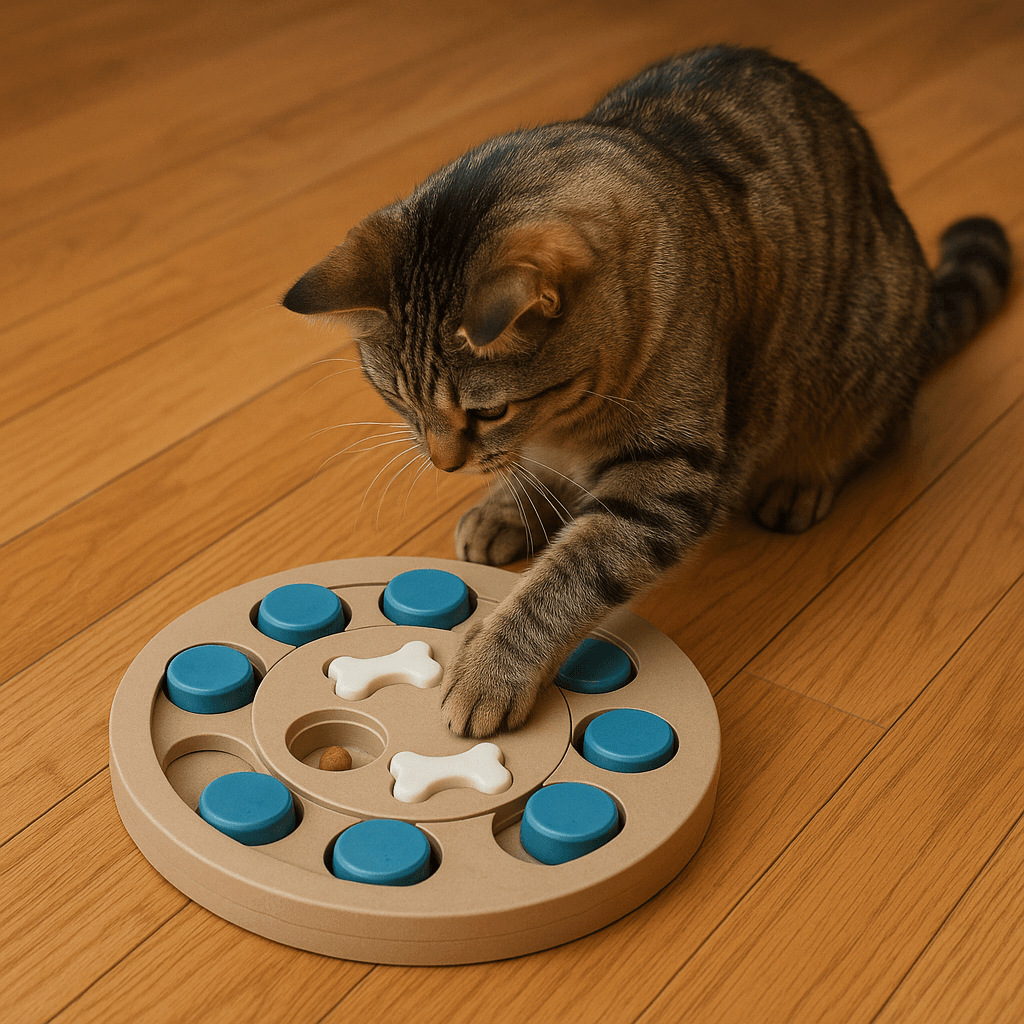
Cats aren’t just playful—they’re highly intelligent. Left unstimulated, especially indoors, they can develop stress, destructive behaviors, or even health issues related to inactivity. Stimulating your cat’s intelligence keeps them mentally sharp, physically active, and emotionally balanced.
The Cornell Feline Health Center emphasizes that enrichment—mental and physical activity tailored to cats’ natural instincts—is vital for feline health. By providing challenges, puzzles, and interactive play, you mimic hunting, problem-solving, and exploration behaviors that keep their brains engaged.
6 Proven Ways to Stimulate Your Cat’s Intelligence
1. Introduce Smart Puzzle Toys
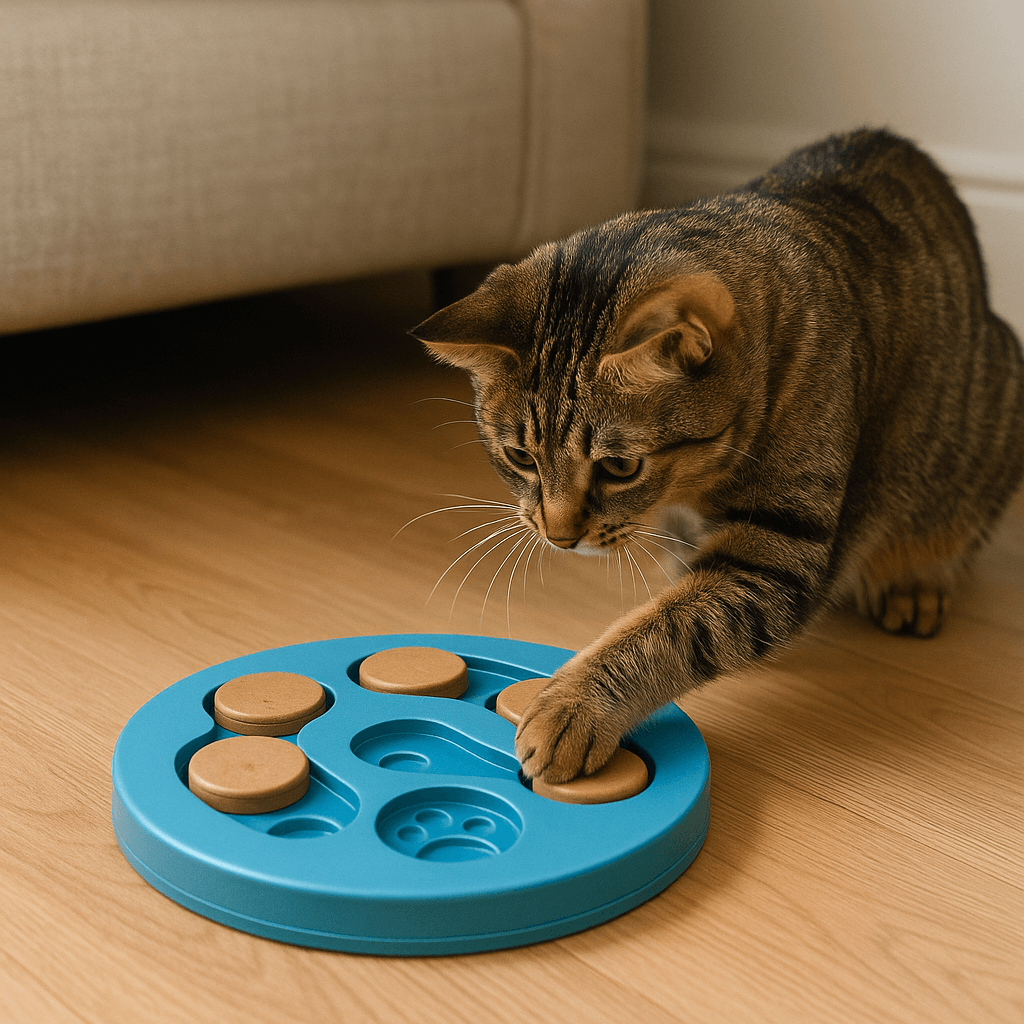
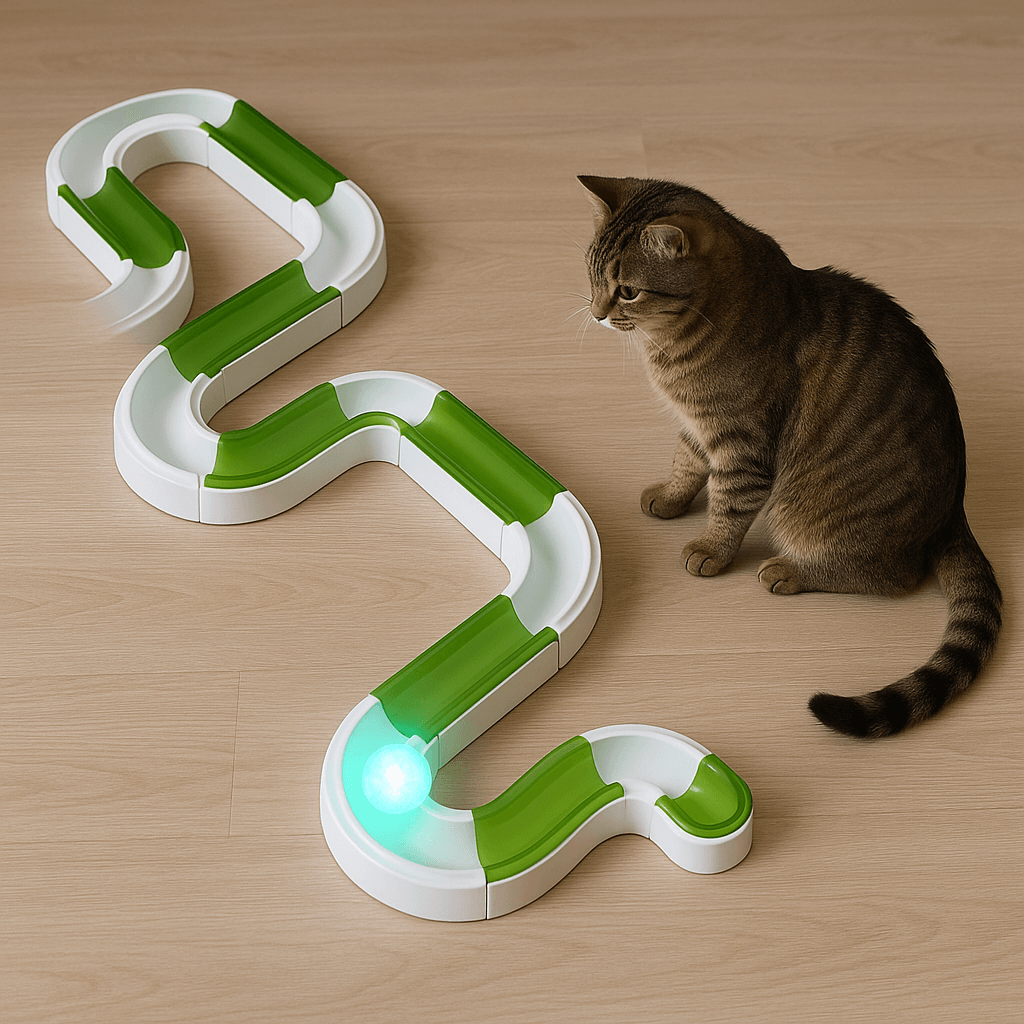
Puzzle toys encourage cats to “work” for treats or kibble. These games challenge problem-solving skills and reward persistence. Consider options like smart puzzle toys for cats or interactive cat toys that vary in complexity.
Tip: Start with easier puzzles and gradually increase difficulty to avoid frustration.
2. Use Interactive Feeders
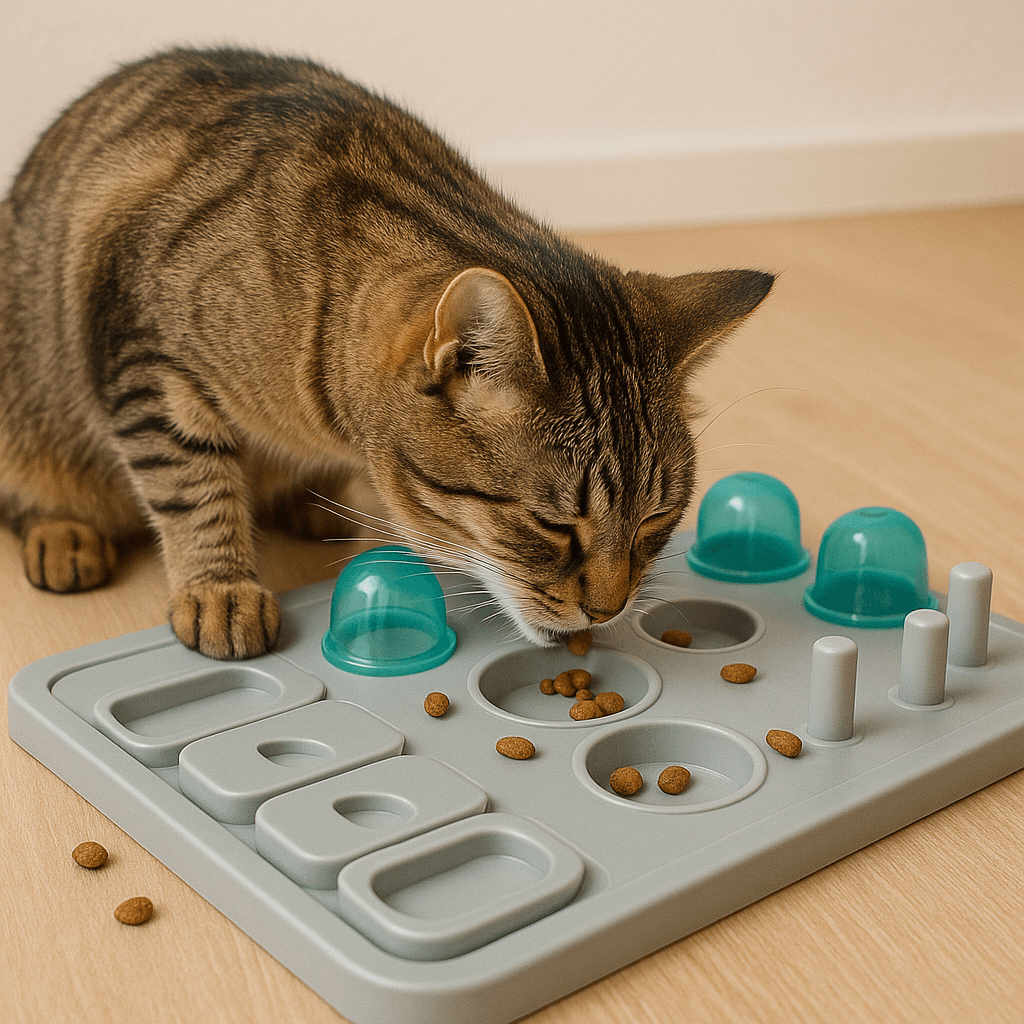
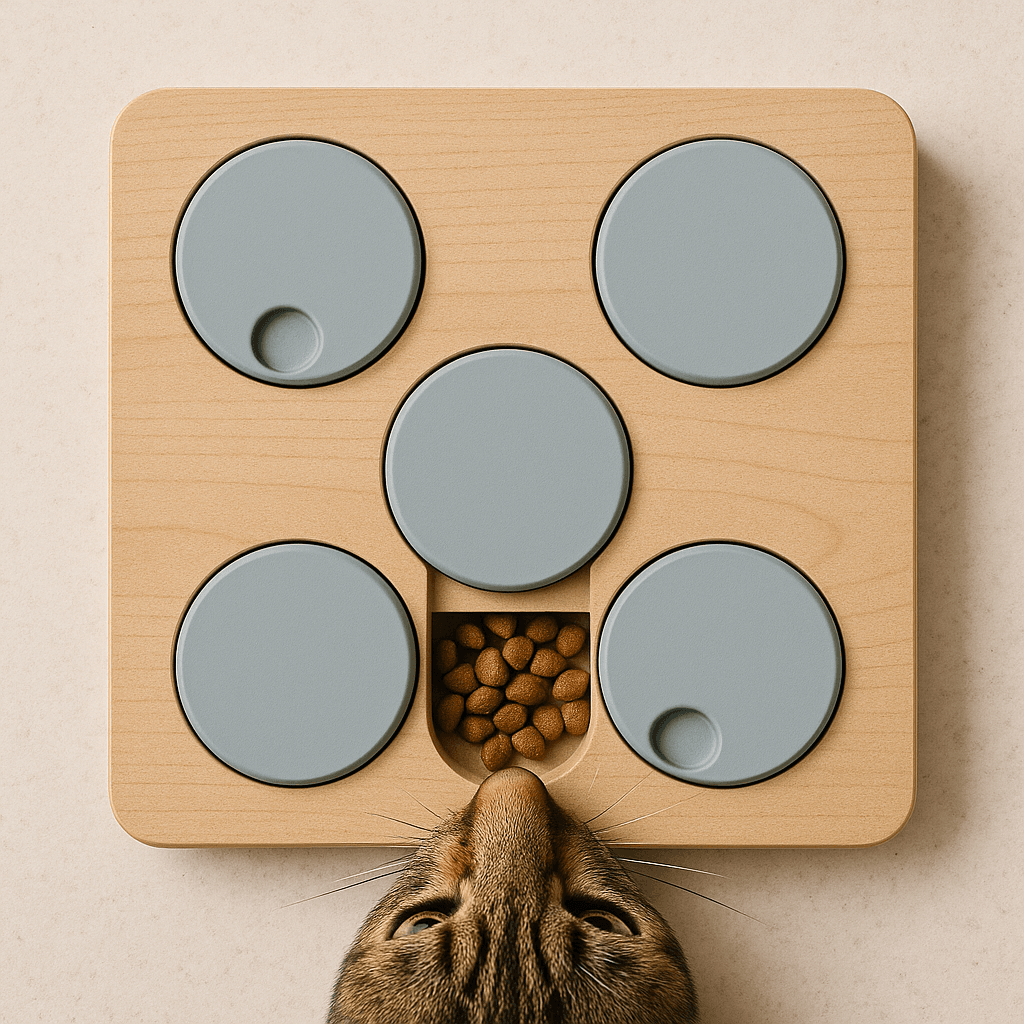
Instead of a plain food bowl, try automatic cat feeders or slow-feeding puzzles. These feeders encourage your cat to strategize while eating, keeping mealtime both mentally and physically engaging.
Tip: Rotate between puzzle feeders and smart feeders to combine variety with health monitoring.
3. Encourage Hunting Behaviors Indoors
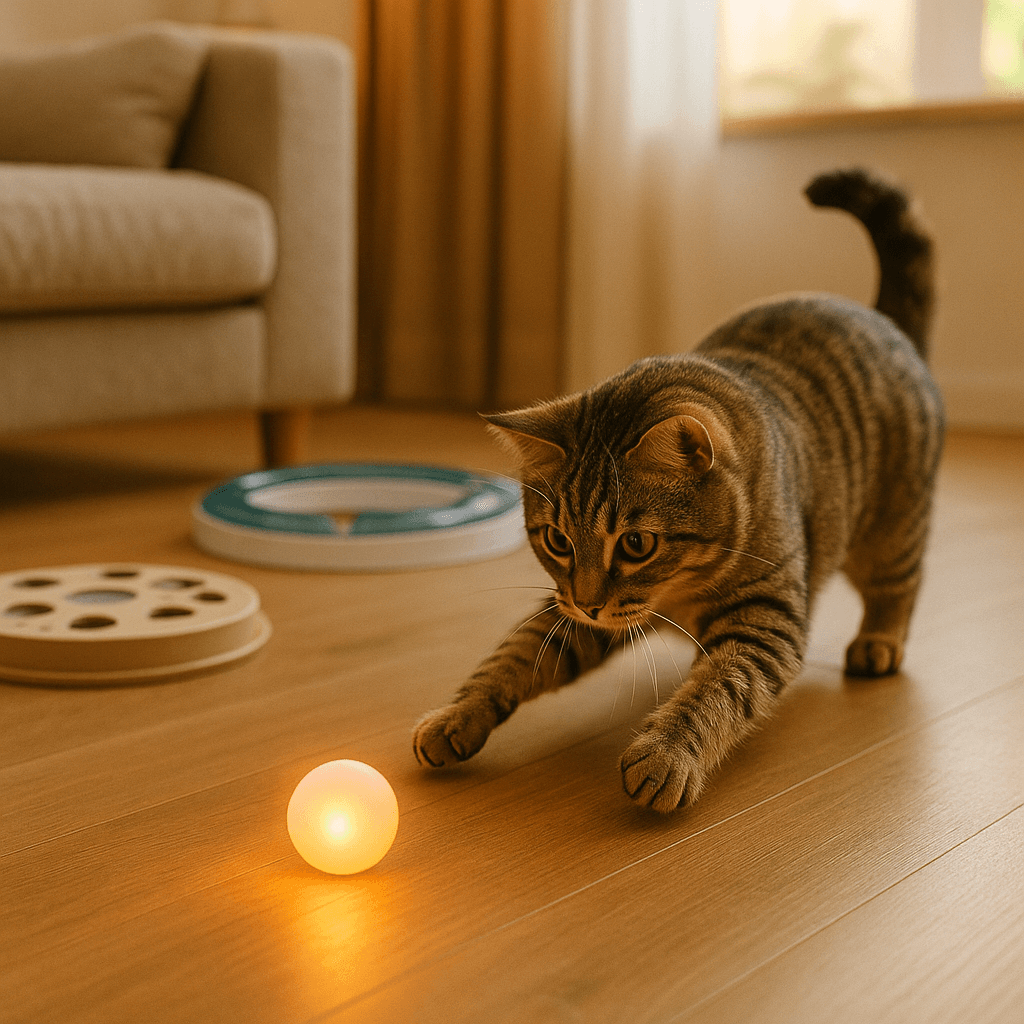
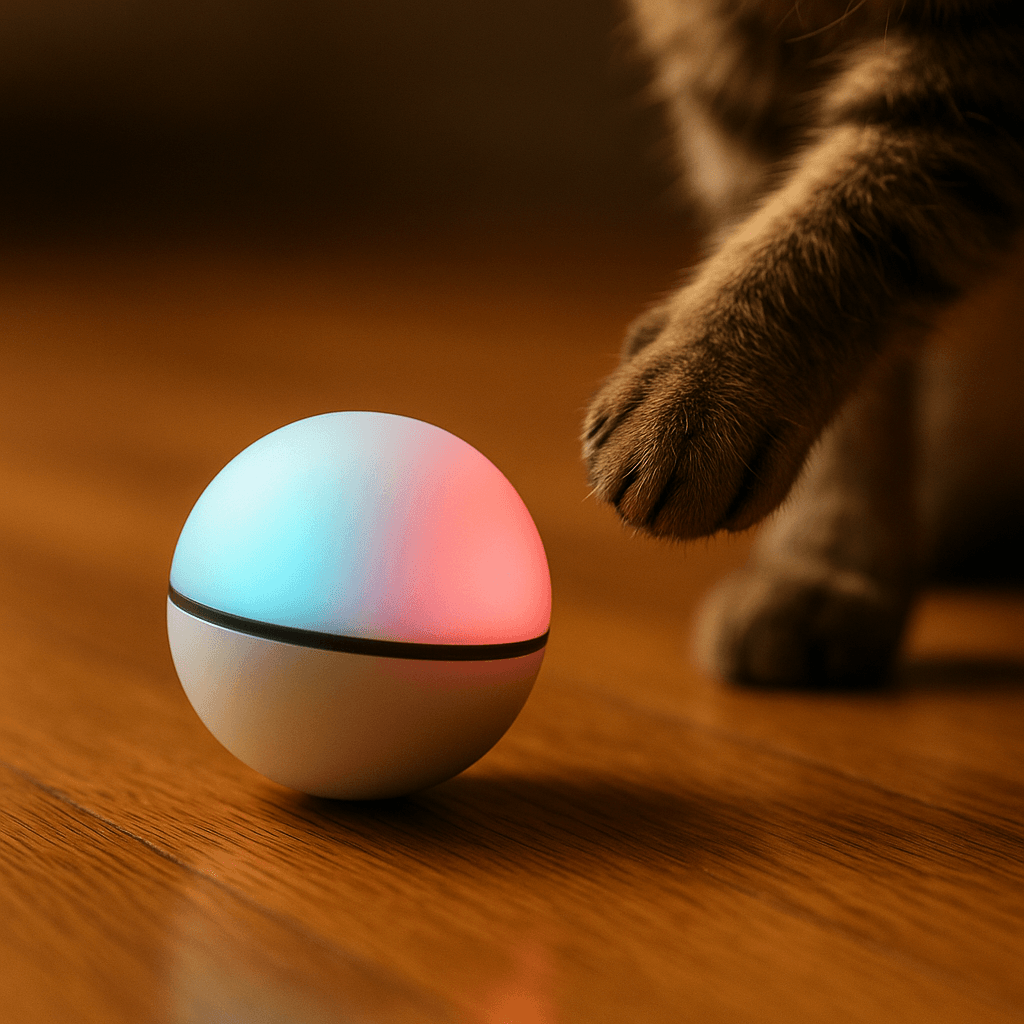
Cats are natural hunters. Simulating this instinct prevents boredom and reduces stress. Use toys that move unpredictably—wand toys, motorized mice, or treat-dispensing balls.
Tip: Hide treats around the house to create mini “treasure hunts.” This builds problem-solving skills and adds excitement to daily routines.
4. Provide Climbing and Exploration Spaces
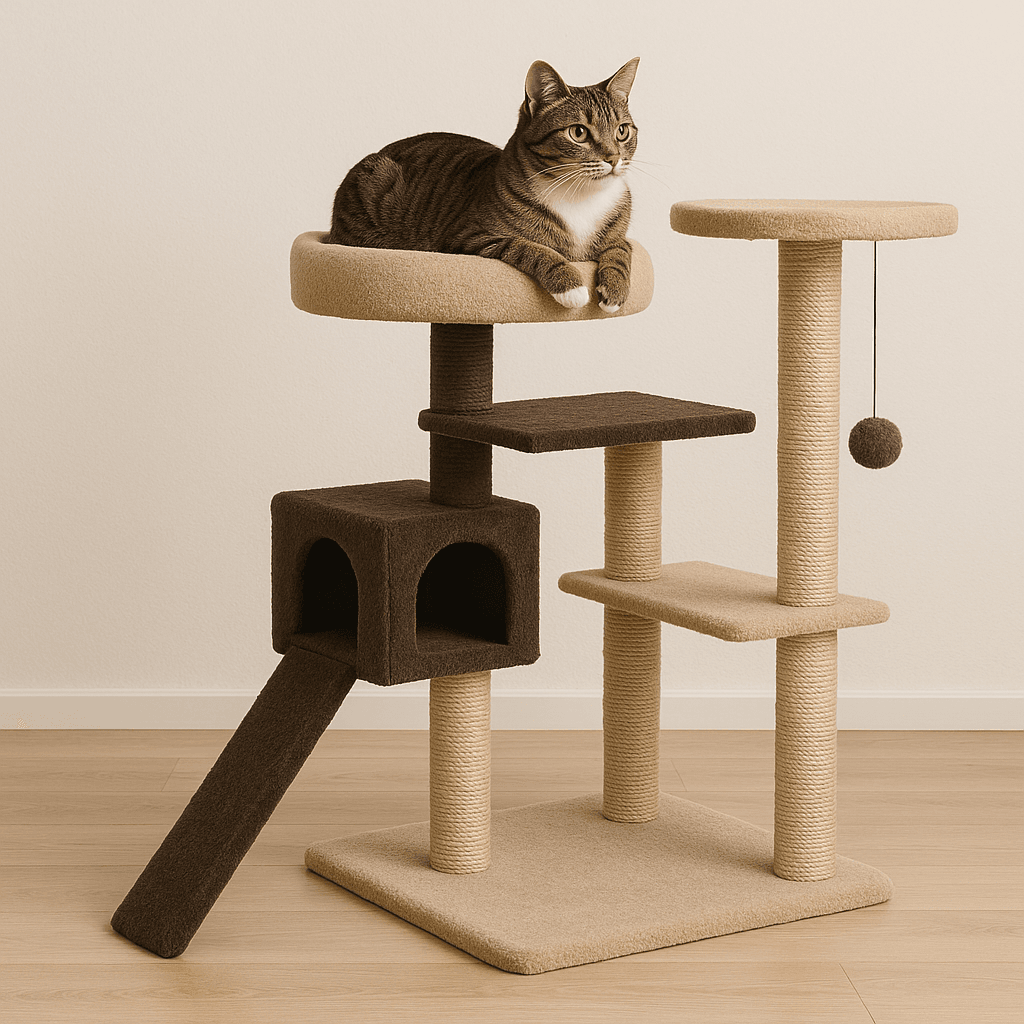
Intelligence isn’t only mental—it’s also physical. Cat trees, shelves, and tunnels give your cat safe spaces to climb, hide, and explore. These activities promote confidence and spatial awareness.
Tip: Rearranging climbing areas or adding new hiding spots prevents monotony and sparks curiosity.
5. Try Clicker Training and Commands
Yes, cats can be trained. With patience and treats, clicker training teaches commands like “sit,” “high five,” or even agility routines. Training builds trust and stimulates your cat’s problem-solving skills.
Tip: Keep sessions short—5 minutes is enough to stimulate without overwhelming your cat.
6. Rotate Toys and Activities
Cats get bored when exposed to the same toys daily. Rotating toys every week keeps novelty high. Mixing smart health devices for cats with enrichment toys ensures both stimulation and monitoring.
Tip: Keep 2–3 toys hidden and swap them out weekly to maintain interest.
Enrichment for Indoor Cats
Indoor cats face a unique challenge: they lack the natural stimulation that comes from outdoor exploration. While this protects them from dangers like traffic, predators, or disease, it also removes the mental and physical exercise they would normally get from hunting and exploring.
That’s why indoor enrichment is critical. Creating a stimulating environment reduces boredom, stress, and destructive behaviors such as scratching furniture or excessive meowing. Practical ideas include:
- Setting up window perches so cats can watch birds or outdoor life.
- Using cardboard boxes and tunnels to encourage exploration.
- Creating “foraging stations” by hiding kibble in multiple spots.
- Incorporating puzzle toys that mimic natural hunting.
The Cornell Feline Health Center recommends environmental enrichment as part of preventive care for indoor cats. It not only improves quality of life but also strengthens the bond between pet and owner.
Long-Term Benefits of Cognitive Stimulation
Stimulating your cat’s intelligence isn’t just about entertainment—it has long-term health benefits. Mental challenges can:
- Prevent obesity: Active, engaged cats are less likely to overeat.
- Reduce anxiety: Stimulation redirects nervous energy into play.
- Support senior cats: Older cats benefit from keeping their minds sharp, reducing cognitive decline.
- Improve vet visits: Cats accustomed to new experiences and challenges are often less stressed at the clinic.
Enrichment also complements technology. Combining toys with smart health devices for cats means you not only stimulate your cat’s brain but also monitor weight, activity, and bathroom habits. Together, these strategies form a complete wellness approach that covers both mental and physical health.
The Science Behind Feline Intelligence
Cats may seem mysterious, but research shows they possess strong memory and learning abilities. Studies suggest cats have both short-term and long-term memory—enabling them to remember problem-solving strategies and even routines for weeks or months.
Experiments in feline cognition demonstrate that cats can distinguish patterns, recognize human voices, and associate actions with outcomes. In practical terms, this means your cat can learn commands, adapt to puzzles, and anticipate mealtimes. By offering daily stimulation, you reinforce neural pathways that keep the brain healthy and responsive.
For older cats, this mental exercise may even help slow down age-related decline. Stimulating play sessions are like “brain workouts” that support long-term cognitive health.
DIY Ideas to Stimulate Your Cat’s Mind
You don’t always need to buy expensive toys to challenge your cat. DIY enrichment can be just as effective:
- Cut holes in a cardboard box and hide treats inside.
- Fill a plastic bottle with kibble and let your cat roll it around to release food.
- Create a blanket “snuffle mat” by tying strips of fabric together and hiding treats within.
- Rearrange furniture occasionally so your cat has to explore new paths.
These homemade activities keep your cat curious, engaged, and entertained—proving that stimulating your cat’s intelligence doesn’t have to break the bank.
How to Build a Daily Enrichment Routine
Consistency is key. Building a structured routine ensures your cat receives daily stimulation:
- Morning: Use a puzzle feeder for breakfast.
- Afternoon: Provide exploration—open curtains for bird watching, add new hiding spots.
- Evening: Play with interactive toys or try clicker training for 5–10 minutes.
- Night: End with a calming activity like gentle brushing or soft play.
This balanced approach not only stimulates your cat’s intelligence but also regulates energy levels, reducing hyperactivity at night and promoting restful sleep.
Expert Insights
- Cornell Feline Health Center: Mental stimulation prevents obesity, anxiety, and stress-related illness in indoor cats.
- American Veterinary Medical Association (AVMA): Interactive feeding mimics natural hunting behavior, improving health and happiness.
- Journal of Feline Medicine and Surgery: Studies show puzzle feeders increase activity and decrease stress in domestic cats.
Simply put, stimulating your cat’s intelligence is backed by science—it’s not just fun, it’s preventive care.
FAQs on Stimulating Your Cat’s Intelligence
Can all cats benefit from mental stimulation?
Yes. From kittens to seniors, every cat benefits from activities that challenge the brain.
Do I need expensive toys?
Not always. Even simple DIY puzzles, like hiding kibble in cardboard boxes, can be effective.
How often should I stimulate my cat?
Daily. Short, consistent sessions (5–10 minutes) are more effective than long, irregular play.
What if my cat gets frustrated?
Start with easy activities. Gradually increase complexity as they succeed. Encouragement matters as much as the challenge.
Are puzzle toys safe?
Yes, when made by reputable brands. Always supervise at first to ensure safe play.
Related Articles
- Best Interactive Cat Toys 2025
- Smart Puzzle Toys for Cats
- Best Automatic Cat Feeders 2025
- Smart Health Devices for Cats
Call to Action
Your cat’s intelligence is a gift—don’t let it go unstimulated. Start today with puzzle toys, interactive feeders, or clicker training to enrich their daily life.
👉 Explore smart cat toys and feeders on Amazon
Affiliate Disclaimer
This article contains affiliate links. As an Amazon Associate, we may earn a commission if you purchase through our links, at no extra cost to you.