Tag: indoor cat enrichment

  • Cat Separation Anxiety 2026: How to Reduce Stress Without Making It Worse

    Cat Separation Anxiety 2026: How to Reduce Stress Without Making It Worse

    “Cat separation anxiety” is one of those labels people throw at any distress behavior that happens when they leave the house. In 2026, that’s a mistake. Most cats aren’t panicking because they “miss you” like a dog might. They’re stressed because their environment stops feeling predictable—and in a cat’s brain, unpredictability inside their territory equals risk.

    This guide on cat separation anxiety 2026 is built around what actually changes outcomes: stable routines, environmental control, and enrichment that supports feline agency. We’ll cover the real signs, the most common “fixes” that backfire, and the specific kinds of smart tech that can help—without turning your home into a chaos machine.


    Cat Separation Anxiety 2026: What It Really Is (and What It Isn’t)

    In cat separation anxiety 2026, the most useful model isn’t “attachment” first—it’s stress physiology + territorial control. Cats are wired to scan their environment for predictability: food access, safe resting spots, escape routes, social friction, noise, smells, and resource stability.

    Separation-related stress tends to show up when:

    • your schedule changes (remote work → travel → remote again)
    • resources feel “owned” by the human (food appears only when you’re present)
    • the environment suddenly flips from active to silent, then back again
    • the cat has limited agency (boring indoor life, no hunting/foraging outlets)

    The AAFP / ISFM environmental needs guidelines are blunt about it: a cat’s comfort with its environment is linked to physical health, emotional wellbeing, and behavior, and meeting environmental needs isn’t optional. CVMA

    That’s the framework for cat separation anxiety 2026: reduce uncertainty, increase agency.


    Signs of Cat Separation Anxiety 2026 You Should Take Seriously

    Not every “weird behavior” is separation anxiety. But these patterns—especially if they cluster—deserve attention:

    • Vocalization that’s time-linked to departure (not random chatting)
    • Pacing / restlessness / inability to settle
    • Overgrooming or sudden “licking too much” patterns
    • Appetite swings (skipping meals or frantic eating)
    • House soiling (after medical causes are ruled out)
    • Destruction near doors/windows (escape attempts or barrier frustration)

    VCA’s anxiety overview aligns with the body-language side of this: pacing, fidgeting, freezing, hiding, and other fear signals are common when animals feel unsafe or aroused. Vca

    Important: sudden behavior changes can be medical. If the change is abrupt, your first stop is a vet, not a shopping cart.


    Interpreting Separation-Related Stress Behaviors in Cats

    To make these patterns easier to interpret, the table below links common separation-related behaviors to their most likely underlying drivers and the most effective interventions.

    Observed BehaviorMost Likely Underlying DriverWhat’s Actually HappeningWhat Helps (and What Doesn’t)
    Persistent vocalization after you leaveLoss of routine predictabilityThe cat is scanning for environmental confirmation that “normal time” is still happening✔ Fixed feeding times and consistent daily cues
    ✘ Talking randomly through cameras
    Pacing or inability to settleExcess arousal + lack of agencyEnergy has no structured outlet, leading to vigilance loops✔ Scheduled play + independent enrichment
    ✘ Leaving noisy toys running all day
    Overgrooming or sudden hair thinningChronic low-grade stressSelf-soothing behavior triggered by prolonged uncertainty✔ Stable routines + environmental simplification
    ✘ Increasing stimulation
    Sudden changes in appetiteAnticipatory anxiety around food accessFood has become a variable resource tied to human presence✔ Automated feeding with fixed timing
    ✘ Hand-feeding before leaving
    Scratching or destructive behavior near doors/windowsBarrier frustrationThe cat is focused on the exit as a perceived “solution”✔ Redirected enrichment + vertical territory
    ✘ Punishment or deterrent sprays
    Litter box avoidance with no medical causeStress-related elimination behaviorThe litter box is no longer perceived as a safe, neutral resource✔ Environmental stability + location review
    ✘ Changing litter type repeatedly
    Hyper-attachment when you returnRebound arousal, not affectionStress accumulates during absence and discharges on reunion✔ Calm, low-key arrivals
    ✘ Overexcited greetings
    Increased tension in multi-cat homesSocial instability when supervision disappearsHuman presence was masking unresolved social stress✔ Resource duplication + space separation
    ✘ Forcing shared spaces

    The #1 Mistake in Cat Separation Anxiety 2026: “Remote Reassurance”

    People buy a camera, then talk to their cat all day. It feels caring. For many cats, it’s not.

    Why it can backfire in cat separation anxiety 2026:

    • A disembodied voice is an unpredictable stimulus
    • The cat hears “you,” but can’t complete the social loop
    • Random interaction spikes arousal (alert → search → frustration → stress)

    If you use a camera, treat it like a diagnostic tool, not a relationship simulator. Use it to observe patterns (pacing, door fixation, conflict with other pets), not to inject noise into the environment.


    The Core Fix for Cat Separation Anxiety 2026: Predictable Routines

    Cats don’t need constant attention. They need repeatable outcomes.

    In cat separation anxiety 2026, routines matter most in four areas:

    1. Feeding schedule (time + portion consistency)
    2. Play schedule (short, predatory-style sessions)
    3. Resource layout (multiple key resources, separated)
    4. Quiet safety zones (resting spots, hideouts, vertical space)

    The AVMA has explicitly emphasized that indoor cats need more than physical safety—without adequate enrichment, distress can develop and contribute to behavioral disorders. AVMA

    Translation: your cat can be “safe” and still be psychologically unstable.


    Smart Tech That Actually Helps Cat Separation Anxiety 2026

    This is where most articles become product spam. We’re not doing that. The only tech that belongs in cat separation anxiety 2026 is tech that improves predictability or agency.

    1) Smart Feeders: Routine Anchors (High ROI)

    Smart feeder delivering consistent portions to support a predictable routine

    A smart feeder is one of the cleanest behavioral tools because it removes human variability. If breakfast appears at random times, your cat learns to stay on alert. If meals are predictable, vigilance drops.

    PETKIT feeders
    PETKIT’s feeder lineup is available on Amazon via its official store pages, including automatic feeders with camera options. Amazon

    Pros

    • Strong routine support (consistent timing reduces anticipatory stress)
    • Portioning reduces “panic eating” patterns in some cats

    Cons

    • Doesn’t fix boredom on its own
    • If portions are wrong, automation just repeats the mistake

    If feeding chaos is part of the problem, start with PETKIT Fresh Element Infinity Review 2025 (portion logic + routine setup), then compare models in Best Smart Cat Feeders 2025.

    2) 360 Cameras: Pattern Detection, Not Noise
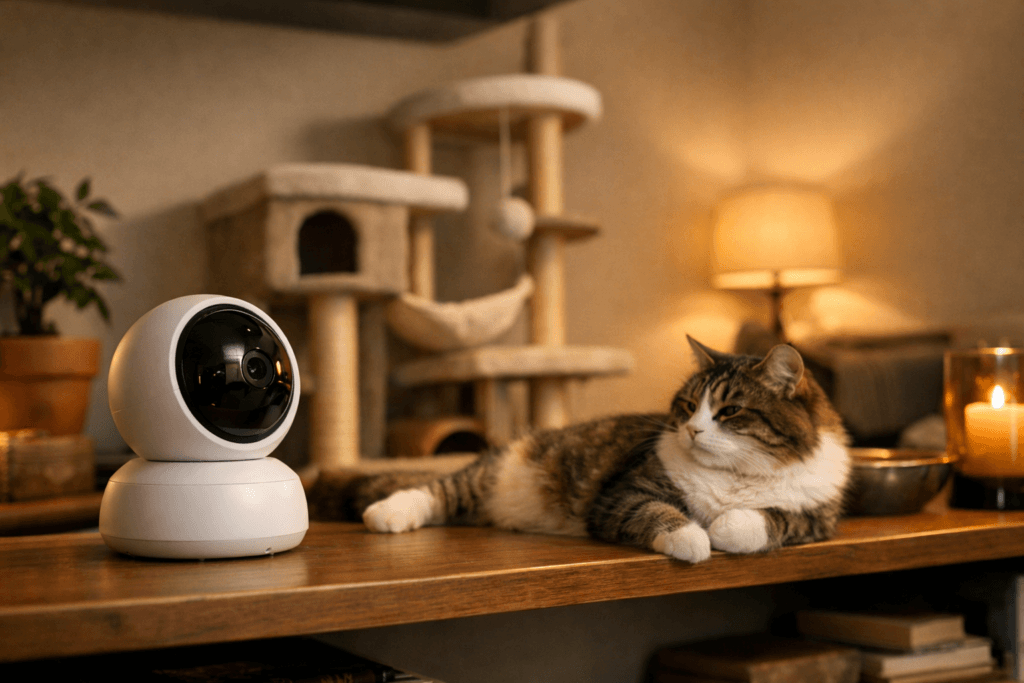
    Pet camera used to observe a cat’s behavior patterns while home alone

    A camera can help you spot triggers you miss: door fixation, conflict with another pet, or pacing loops.

    Petcube Cam 360
    Petcube’s Cam 360 is actively listed on Amazon US, with 1080p video and pan/tilt coverage. Amazon+1

    Pros

    • Great for full-room coverage and behavior monitoring
    • Helps you confirm whether “anxiety” is actually boredom + restless energy

    Cons

    • Two-way audio is easy to misuse (don’t create random stimuli)
    • Many “smart” features may require a plan (check the listing)

    3) Interactive Cameras (Treat Toss): Use Like a Training Tool

    Treat-toss cameras can be useful if you use them predictably, not randomly.

    Furbo 360° Cat Camera
    Furbo’s 360° Cat Camera is listed on Amazon US. Amazon

    Pros

    • Can reinforce calm alone-time routines (when scheduled)
    • Useful for controlled enrichment

    Cons

    • Random treat tossing can worsen food obsession
    • Some models may require a paid setup plan—verify the exact model before buying Amazon

    Enrichment That Reduces Cat Separation Anxiety 2026 (Without Overstimulation)
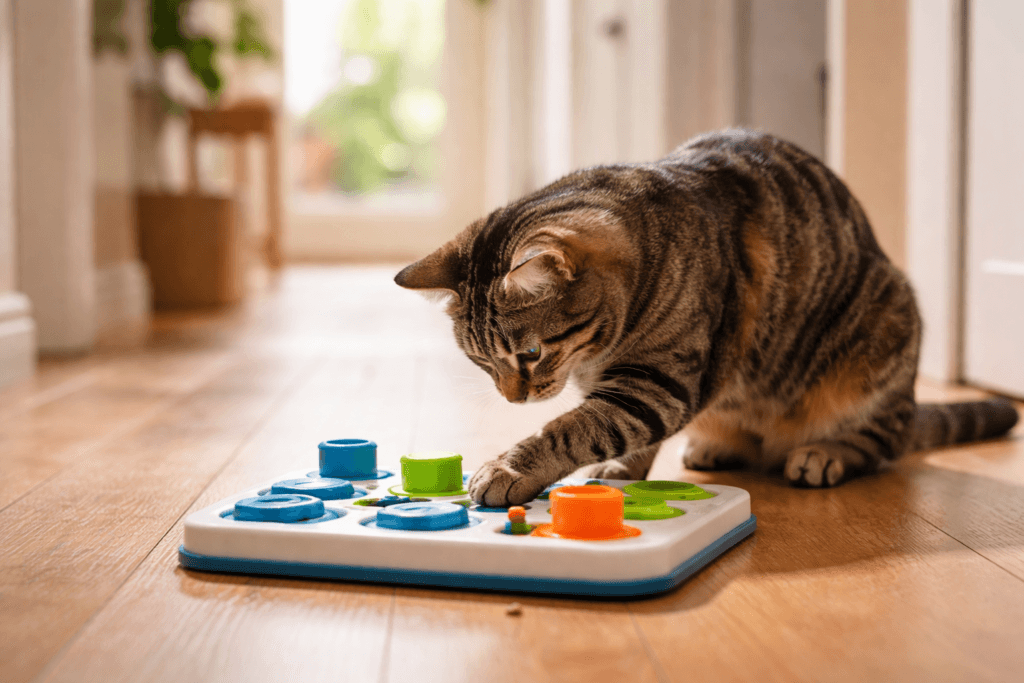
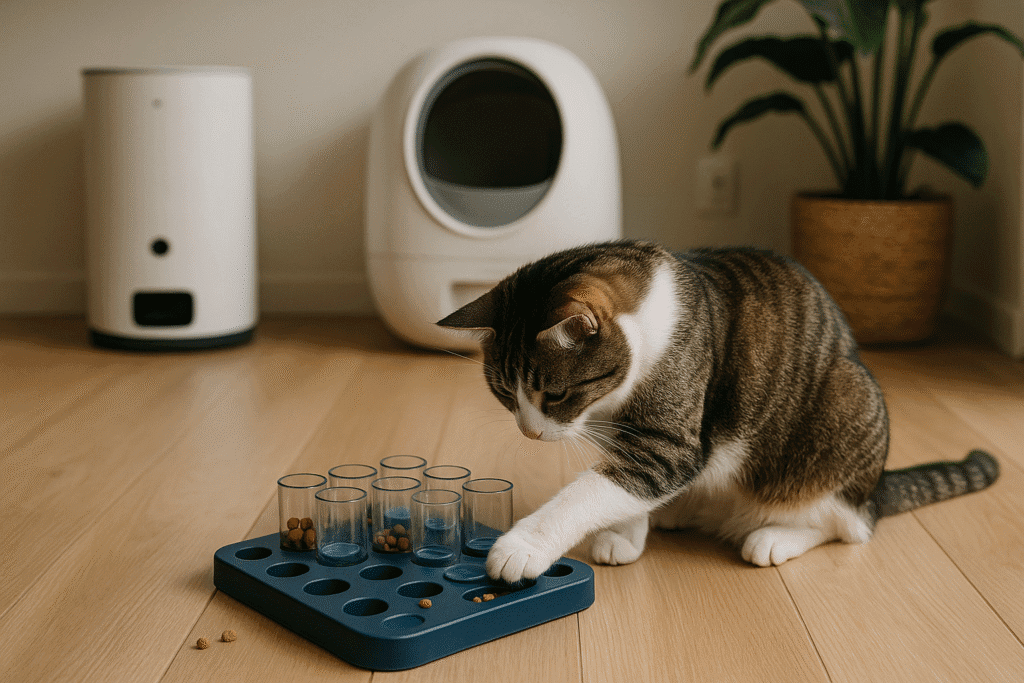
    Foraging enrichment activity that supports independent engagement

    A huge chunk of cat separation anxiety 2026 is “I have nothing to do, so I scan the door and spiral.”

    The stress-in-owned-cats literature supports environmental enrichment as a major strategy to reduce stress-related behavior problems. PMC
    The AAFP also has position statements on environmental enrichment emphasizing its role in physical and mental health. catvets.com

    Practical enrichment that works:

    • Foraging / puzzle feeding (hunting substitute)
    • Toy rotation (not “more toys,” better novelty cycles)
    • Vertical territory (perches, shelves, window views)
    • Predictable play windows (10–15 minutes, 1–2x/day)

    Avoid: leaving a cat in constant stimulation mode (noisy toys all day). That’s not enrichment—it’s fatigue.

    For curated solo-play options, see the Best Interactive Cat Toys 2025. For the behavioral “why,” Indoor Cat Enrichment 2025.


    Multi-Cat Homes: The Hidden Driver of “Separation Anxiety”

    A lot of “my cat panics when I leave” is really “my cat feels unsafe when supervision disappears.”

    When humans are home, cats often keep distance or rely on human presence as a buffer. When humans leave, tension can surface.

    AAHA guidance on tension among cats highlights how unresolved conflict can escalate and affect household peace. AAHA

    If you suspect this:

    • add duplicate resources (multiple food/water/litter stations)
    • increase vertical separation
    • monitor camera footage for blocking/guarding behaviors

    When Cat Separation Anxiety 2026 Is Not the Right Label

    Even strong routines won’t fix:

    • pain
    • GI discomfort
    • urinary issues
    • cognitive dysfunction in seniors

    If the anxiety appears abruptly, or if you see house soiling or appetite changes, rule out medical causes first. This is non-negotiable.


    Verdict: A Practical Plan for Cat Separation Anxiety 2026

    If you want the simplest plan that actually works:

    1. Lock a feeding routine (same times daily; smart feeder if needed)
    2. Schedule predictable play before departure (short, prey-style)
    3. Build agency (foraging + vertical territory + safe hideouts)
    4. Use cameras to observe, not to “talk”
    5. If multi-cat, assume tension exists until proven otherwise

    That’s cat separation anxiety 2026 handled like a systems problem, not a feelings problem.


    FAQ: Cat Separation Anxiety 2026

    1) Do cats really get separation anxiety?

    Yes, some cats develop separation-related distress, but in cat separation anxiety 2026 the more accurate lens is environmental stress: unpredictability, low agency, and unstable cues. PubMed

    2) Should I talk to my cat through a pet camera?

    Usually: no, or at least not randomly. If you use audio, keep it consistent and rare. Random voice events can increase vigilance and frustration. Vca

    3) What’s the best smart tech to start with?

    A smart feeder—because it stabilizes the strongest daily cue: food timing and portion predictability. PETKIT’s feeder lineup is available on Amazon US. Amazon

    4) Can boredom look like separation anxiety?

    Absolutely. Under-enrichment is a major driver of stress behaviors in indoor cats, and enrichment is consistently recommended as prevention/management. AVMA

    5) When should I see a vet?

    If signs appear suddenly, intensify rapidly, include house soiling, vomiting, appetite changes, or if your cat seems physically uncomfortable.


    Internal Links

    If unpredictable meals are fueling stress or frantic behavior, read our “PETKIT Fresh Element Infinity Review 2025 to see how structured feeding can stabilize routines and reduce “anticipation spirals.” If you’re still comparing models, open “Best Smart Cat Feeders 2025 to pick the right feeder for your home and your cat’s eating style.

    If your cat’s anxiety looks like restless energy or destructive boredom, check “Best Interactive Cat Toys 2025 for independent-play options that don’t overstimulate. For the deeper, science-based framework that connects environment to stress and behavior, visit “Indoor Cat Enrichment 2025.


    References

    AAFP / ISFM Feline Environmental Needs Guidelines — foundational framework linking environmental comfort to physical health, emotional wellbeing, and behavior; emphasizes environmental needs as essential. CVMA

    AVMA — Indoor cats require more than physical safety; without adequate enrichment, distress may develop and contribute to behavioral disorders. AVMA

    Amat et al. (2015) — review on stress in owned cats; highlights environmental enrichment and management strategies as key to preventing/reducing stress-related behavioral problems. PMC

    VCA Hospitals — overview of fear/anxiety signals (pacing, freezing, hiding, subtle stress body language) useful for interpreting feline distress behaviors. Vca

    AAHA — guidance on addressing tension among cats; relevant when separation-related distress is actually conflict triggered by unsupervised social dynamics. AAHA


    Disclaimer

    PetTech AI publishes educational content to help cat owners make informed decisions about feline care, behavior, and pet technology. Some articles include affiliate links, including Amazon Associate links and other affiliate partnerships. If you click a link and make a qualifying purchase, PetTech AI may earn a small commission at no extra cost to you. These commissions help support research, testing time, and ongoing site maintenance. Product availability and features can change, so always confirm current details on the retailer’s listing before buying. Nothing on this website replaces veterinary diagnosis or treatment for medical or behavioral conditions.
  • Cat Training Tips 2025: Practical, Science-Based Advice for Better Behavior & Bonding

    Cat Training Tips 2025: Practical, Science-Based Advice for Better Behavior & Bonding

    If you live with a cat in 2025, you’re not just sharing a couch with a “small indoor tiger.” You’re managing a predator, a routine-driven creature, and an animal that learns faster than most people think.

    Searches for cat training tips 2025 are exploding because people are finally realizing two things:

    • untrained cats are more stressed, not more “free”
    • most behavior problems are learned, reinforced and totally reversible with the right approach

    In this guide, we’ll strip via all the vague advice and give you cat training tips 2025 that are short, realistic and grounded in what feline behavior research actually supports. You’ll also get a dedicated kitty training tips 2025 section if you’re starting from zero with a new cat or kitten.


    How Cats Really Learn (And Why Punishment Fails)

    Before we dive into specific cat training tips 2025, you need a 30-second crash course in how cats learn:

    • Positive reinforcement – behavior → reward → behavior increases
    • Negative punishment – behavior → reward disappears → behavior fades
    • Punishment (yelling, spraying, hitting) – behavior → fear → new problems

    Cats don’t understand “good” and “bad” in the moral sense. They understand what works:

    • “When I scratch the sofa, I get attention.”
    • “When I meow at 4 a.m., the human stands up and feeds me.”
    • “When I jump on the counter, sometimes food appears.”

    Most modern guidelines (Cornell, AVMA, behaviorists) converge on the same line:
    👉 Reward what you want. Make what you don’t want useless. Never punish.

    All the cat training tips 2025 that follow are based exactly on this principle.


    10 Cat Training Tips 2025 That Actually Work

    1. Train in Micro-Sessions (3–5 Minutes, Max)

    One of the most underrated cat training tips 2025 is also the simplest: keep sessions short.

    Cats learn best when:

    • they’re a bit hungry (before a meal, not after)
    • you stop while they’re still interested
    • you don’t push them past the “I’m done” point

    Set a timer for 3–5 minutes. Pick one behavior (come, target touch, sit on a mat). End on a small win, reward, and walk away.

    Keep a small jar of high-value treats near your training spot so you can launch a 3-minute session whenever your cat is naturally alert and curious.


    2. Pick One Clear Goal Per Week

    A brutal but honest truth: most “training fails” happen because humans try to fix 6 things at once.

    For effective cat training tips 2025, keep it to:

    • Week 1: “Teach my cat to come when called.”
    • Week 2: “Train a calm cue for nail trims.”
    • Week 3: “Redirect scratching from sofa to post.”

    Write the goal down. Every day, ask: Did I give my cat at least one chance to earn a reward for this specific behavior?


    3. Build Routines With Food: Let the Schedule Train for You

    One of the smartest cat training tips 2025 is to let your feeding schedule do half the work. Cats are routine-driven. If you anchor training to meals, you don’t have to “remember”—the cat will remind you.

    • Call your cat by name before placing the bowl down → recall training.
    • Ask for a simple behavior (sit on mat, touch target) before the bowl appears.
    • For night zoomies, move some calories into interactive food puzzles in the evening.

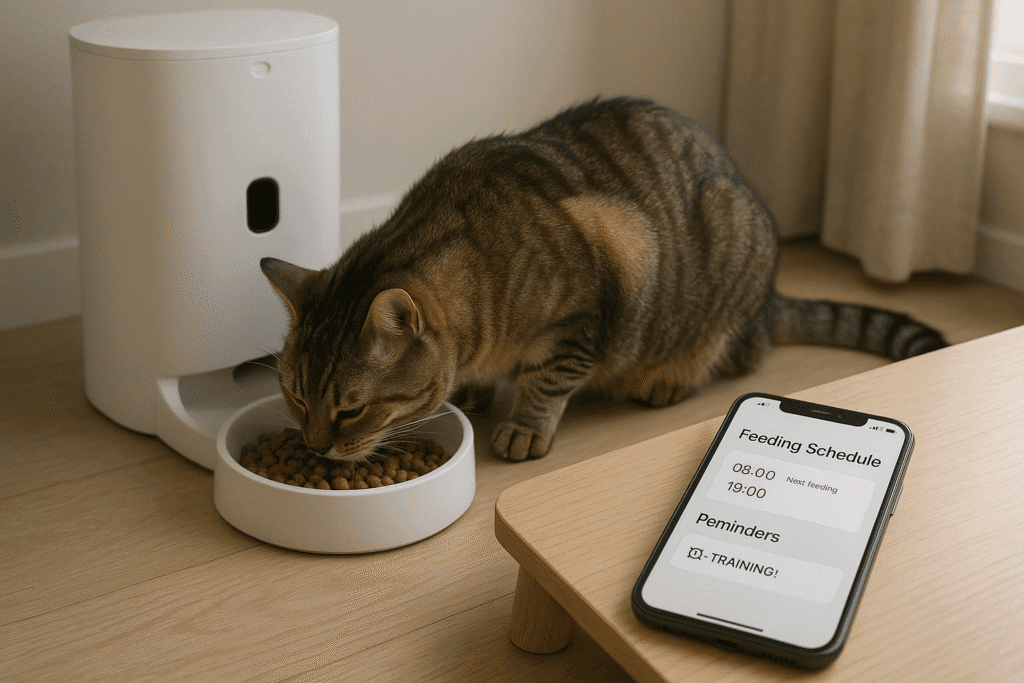
    Smart feeders can support this by delivering small, predictable meals, while you reserve some of the daily ration for manual training and puzzle toys.

    If you already use a smart feeder, set one feeding to “manual” and use that portion exclusively for training rewards.


    4. Reward Calm, Not Just “Tricks”

    Another underrated cat training tips 2025 principle: calm is a trainable behavior.

    If your cat only gets attention when they’re:

    • meowing
    • pawing at you
    • walking on your keyboard

    …you’re teaching them that chaos = connection.

    Invert it:

    • Quietly drop a treat next to your cat when they’re resting near you.
    • Stroke or talk softly only when they’re calm, not when they’re clawing.
    • Reward them for sitting on an approved perch while you work.

    You’ll be surprised how fast they start offering calm behaviors if calm gets paid.


    5. Make “No” Useless by Redirecting, Not Fighting

    Punishing a cat for scratching the wrong thing or jumping on counters almost always backfires.

    A core of cat training tips 2025 is:

    “Don’t just say no. Say: ‘Not here, do it there and get paid.’”

    Practical examples:

    • Scratching: place a sturdy scratching post right next to the sofa corner they like. Every time they stretch there, gently move them to the post, reward when claws hit the right surface.
    • Counter surfing: create a high, legal perch nearby (cat tree, shelf). Whenever they jump up, lure them to the perch, reward, and sometimes toss treats there before they jump, so the perch becomes the default.

    6. Use Play as Currency, Not Just Treats

    Food is powerful, but some cats are more play-driven. Modern cat training tips 2025 leverage that:

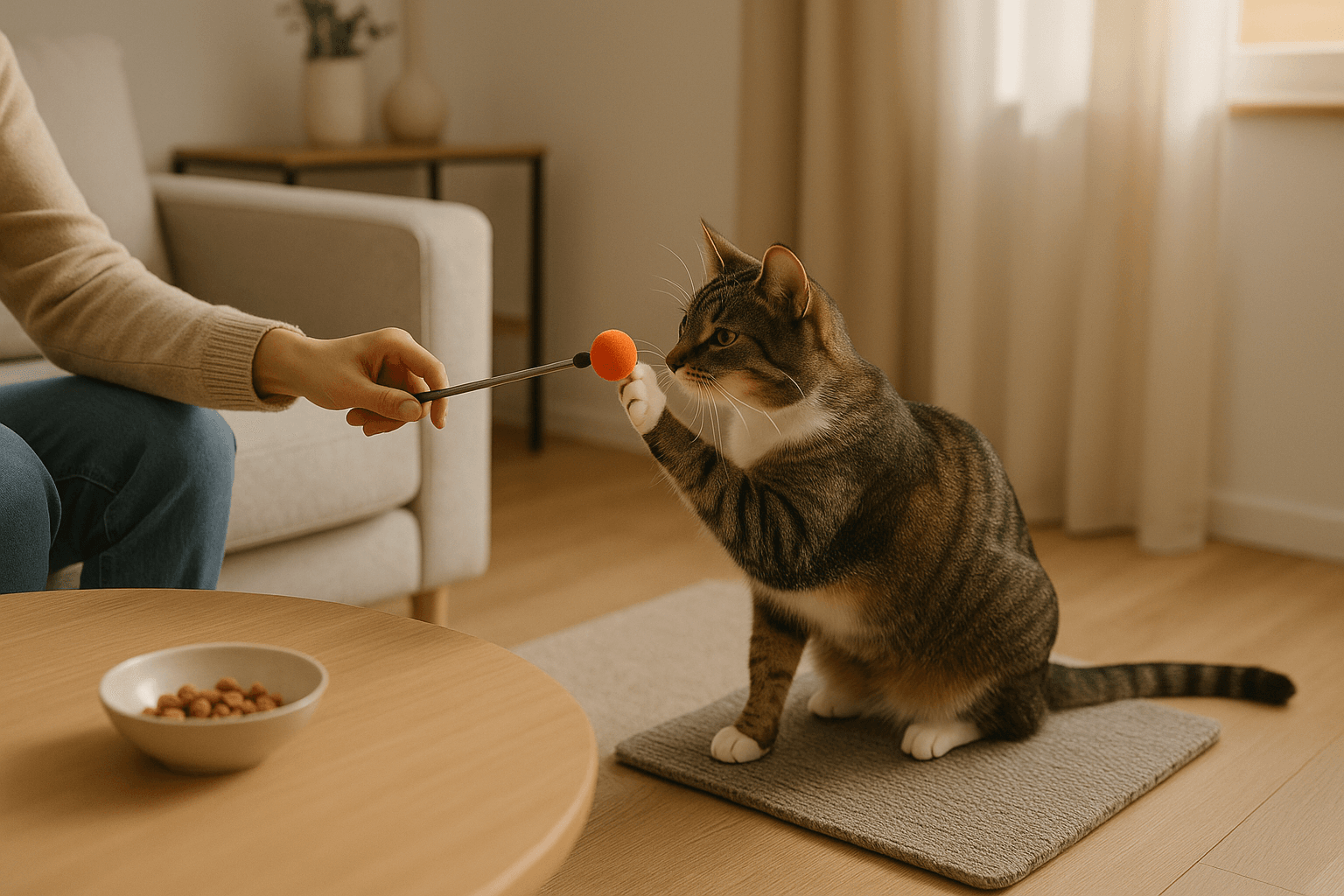
    • Use a wand toy as “salary” for coming when called.
    • Reward a successful carrier entry with a 2-minute intense play burst.
    • End training sessions with a quick prey-style game: stalk → chase → pounce → catch.

    This aligns with the natural predatory sequence and burns off the extra energy that often shows up later as “bad behavior.”

    Not sure which toys will actually work for your cat? Our ‘Best Interactive Cat Toys 2025’ guide breaks down the options that keep indoor cats active and focused during training.


    7. Respect Overstimulation Limits

    One of the most important cat training tips 2025 has nothing to do with commands — it’s about recognizing your cat’s body language.

    Common overstimulation signs:

    • tail flicking sharply
    • skin twitching
    • ears starting to angle back
    • sudden head turns toward your hand

    If you push past that, you teach your cat: “petting becomes biting unpredictably.” Instead, stop before the threshold and give a treat or a break. Over time, most cats tolerate longer, calmer contact because they trust you to stop on time.


    8. Turn “Scary” Into “Predictable” With Gradual Exposure

    Carrier, nail trims, vet visits—this is where cat training tips 2025 really pay off.

    Break scary events into micro-steps:

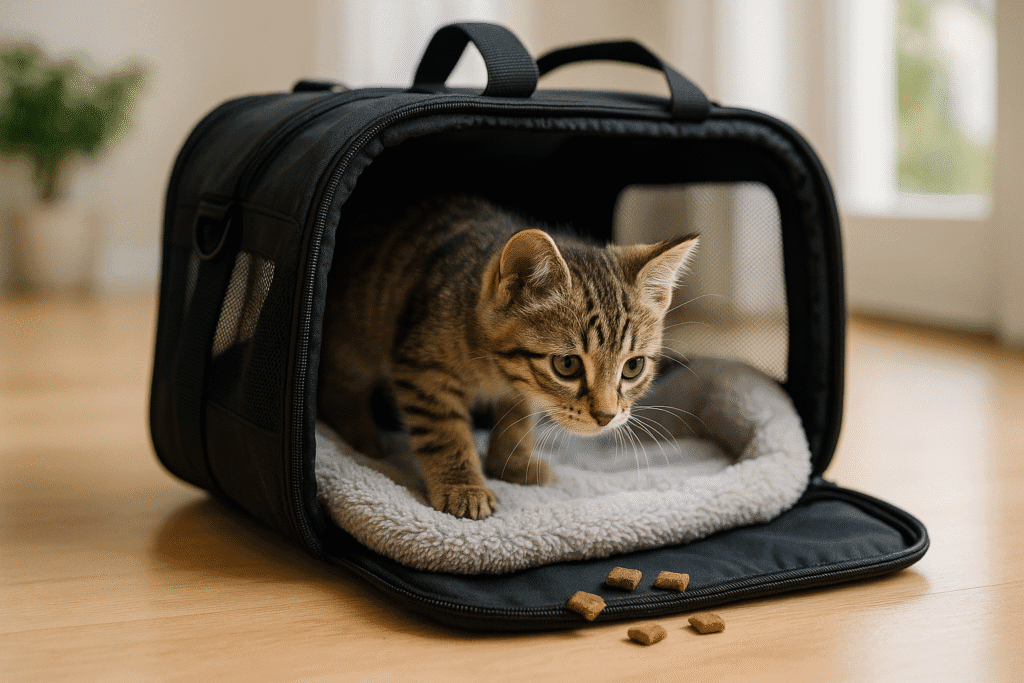
    • Carrier always open in the living room, lined with soft bedding.
    • Toss treats or feed occasional meals inside the carrier.
    • Touch paw → treat. Hold paw → treat. Brief nail touch → treat. Clip one nail → jackpot, stop.

    If your cat freaks out during handling, you haven’t failed—they simply need smaller steps.

    Store a special “only for scary training” treat that never appears elsewhere. The contrast makes stressful training 10x easier.


    9. Use Environment Design as a Silent Trainer

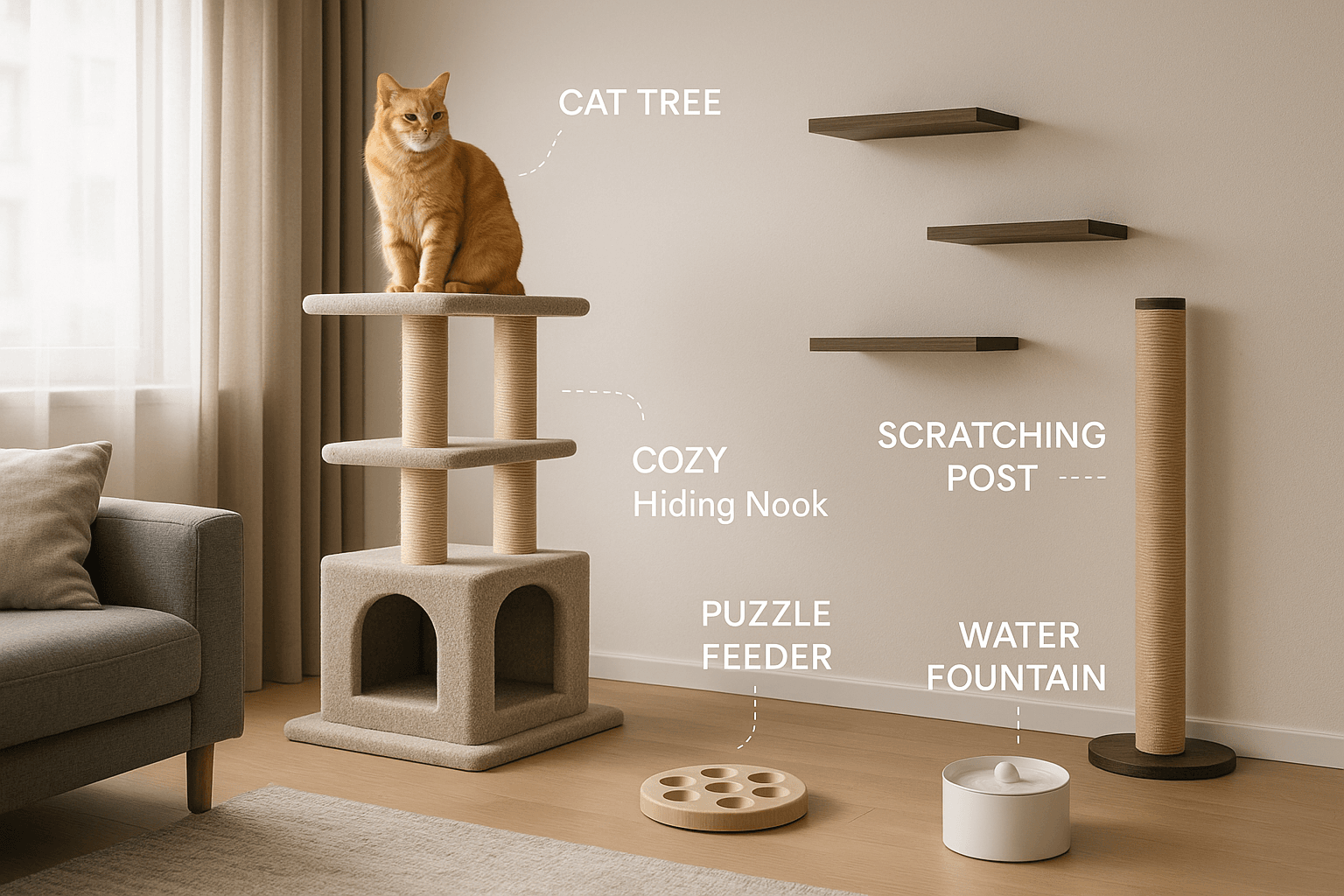
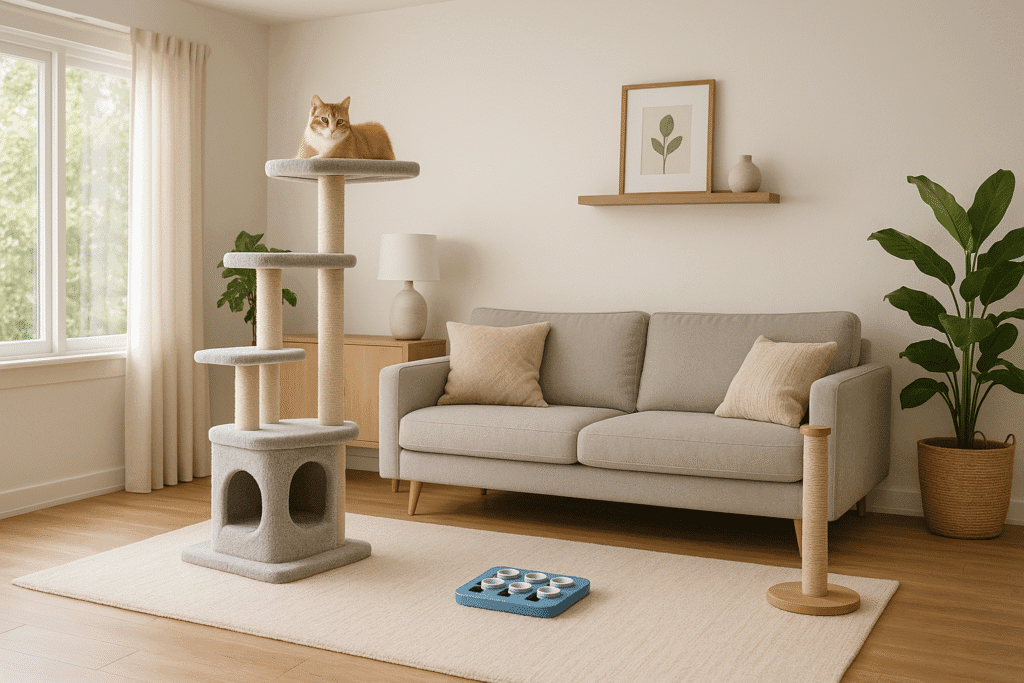
    Cat-friendly living room with tree, scratching post and puzzle feeder

    Some of the best cat training tips 2025 are actually environment hacks:

    • Put the cat tree next to the window they already love → you’ve “trained” them to use it.
    • Place a soft mat or blanket in the exact spot they already nap on your desk → they’ll choose it because it’s familiar and comfy.
    • Use motion-activated deterrents (air puff, harmless beeps) only for safety zones (stove, delicate plants), never as a general discipline tool.

    Smart home tech can help here: indoor cameras show you where your cat spends time when you’re away, so you can move resources there instead of guessing.


    10. Track Progress Weekly, Not Daily

    Last core block: don’t evaluate training day by day.

    Cats have off days. You do too. What matters is:

    • Does the unwanted behavior happen less often over 2–3 weeks?
    • Does your cat recover faster from stress?
    • Are training sessions calmer, even if the behavior isn’t “perfect” yet?

    Keeping a simple note on your phone with dates and quick observations (“3/10: came when called 4/5 times”) makes the impact of these cat training tips 2025 brutally obvious.


    Kitty Training Tips 2025: Fast-Track Basics for New Cat Parents

    Kitten exploring an open carrier as part of training

    If you’re just starting out and looking for kitty training tips 2025, focus on four core pillars: litter habits, handling, carrier comfort, and daily routine.

    Litter Training

    • Keep the box simple: open, unscented, large.
    • Show the kitten the box after eating, playing, and waking up.
    • If an accident happens, move the soiled material into the box and clean the spot thoroughly—don’t punish.

    Handling & Nail Trim Foundations

    • Touch paws briefly during calm moments, then treat.
    • Lift for 1–2 seconds, place down, treat.
    • Short, predictable handling sessions build trust faster than long wrestling matches.

    Carrier Training

    • Make the carrier part of the furniture: leave it open, add a blanket, toss treats inside.
    • Feed near or inside it once a day.
    • Practice closing the door for 1–2 seconds, then open and reward.

    Routine & Sleep

    Most kitty training tips 2025 overlook this:

    • Feed kittens multiple small meals at consistent times.
    • Schedule a play session before bed to reduce night zoomies.
    • Avoid responding to 4 a.m. meows with food, or you’ll teach them “scream = breakfast.”

    Tech & Tools That Make Training Easier

    Cat eating from a smart feeder with training reminders on a smartphone

    Training isn’t just voice and treats. Smart gear can make many cat training tips 2025 easier to apply consistently:

    • Smart feeders help lock in predictable routines, especially for recall and pre-meal training.
    • Interactive toys and motion toys handle the “energy burn” part when you’re busy, so your sessions can focus on skills, not just zoomie management.
    • Cameras let you see what actually triggers problem behaviors when you’re not home.
    • Smart litter boxes give early data on stress-related issues (more frequent peeing, constipation) that might explain sudden behavior changes.

    If you’re implementing these cat training tips 2025 and still feel like your cat is bouncing off the walls, upgrading to a combination of smart feeder, interactive toys and a good scratching setup can make the whole system much easier to manage.


    When Training Isn’t Enough: Red Flags

    Even the best cat training tips 2025 can’t solve the following issues:

    • sudden aggression in a cat that was previously calm
    • new litter box issues in a well-trained cat
    • rapid weight loss or gain + behavior changes
    • constant hiding, overgrooming, or vocalization

    These are medical or high-stress red flags, not simple “disobedience.” In those cases:

    • call your veterinarian first
    • ask if a pain source, urinary issue, thyroid disease or other condition might be involved
    • if the vet rules out medical problems, ask for a referral to a veterinary behaviorist

    Good training amplifies welfare. It can’t compensate for pain, fear, or illness.


    References

    • Cornell Feline Health Center – resources on behavior, enrichment, and stress in indoor cats
    • AVMA – guidelines and articles on feline welfare, obesity, and humane training

    Disclaimer

    The information in this article is for educational purposes only and is not a substitute for professional veterinary advice, diagnosis or treatment. Always consult your veterinarian if your cat shows sudden behavior changes, signs of pain, or persistent litter box, grooming or aggression issues. Training tips and tools should be adapted to your individual cat’s health, age and temperament.

    PetTech AI participates in affiliate programs, including Amazon Associates and CJ. This means we may earn a small commission if you purchase products through links on this page, at no extra cost to you. Our recommendations are based on independent research and expert sources, not paid placement.

  • Indoor Cat Enrichment in 2025: What Science Really Says About Stress, Play, and Smart Living

    Indoor Cat Enrichment in 2025: What Science Really Says About Stress, Play, and Smart Living

    Abstract

    Keeping cats indoors protects them from cars, disease, and wildlife—but the science is now brutally clear: physical safety alone is not enough. Indoor cats with poor enrichment are more likely to develop obesity, stress-related disease, and behavior problems such as inappropriate elimination and overgrooming.

    This whitepaper synthesizes current guidelines from Cornell, AVMA, VCA, and feline behavior literature into a practical framework you can actually use at home. We’ll break down the five core environmental systems (physical, nutritional, social, elimination, behavioral) and map them to real-world design choices, including where modern smart devices genuinely help—and where they’re just expensive distractions.


    1. Why Indoor Cats Need More Than “Safety”

    Most major veterinary bodies now tell owners to keep cats indoors or in protected outdoor spaces. Lifespan data backs that up: indoor cats live significantly longer than free-roaming cats and face fewer risks from trauma, infectious disease, and wildlife.

    The problem: a growing body of research shows that an indoor life without adequate enrichment can create a different set of welfare problems:

    • Boredom and obesity are described as “very common” in indoor cats and linked to medical and behavioral issues.
    • A 2019 systematic review concluded that the impact of an indoor lifestyle on feline welfare is under-recognized and that many behavior disorders stem from environmental deficits.
    • AVMA notes that indoor cats without sufficient enrichment may develop distress, defined as an inability to cope, which can manifest as aggression, inappropriate urination, overgrooming, or withdrawal.

    In other words:

    “Safe but boring” is not an upgrade—it’s just a different kind of problem.

    The answer is environmental enrichment: deliberately designing the cat’s living space and routines so they can express natural behaviors—hunt, climb, hide, explore, scratch, and rest—without being exposed to outdoor dangers.


    2. Scientific Frameworks: Five Systems and Five Pillars

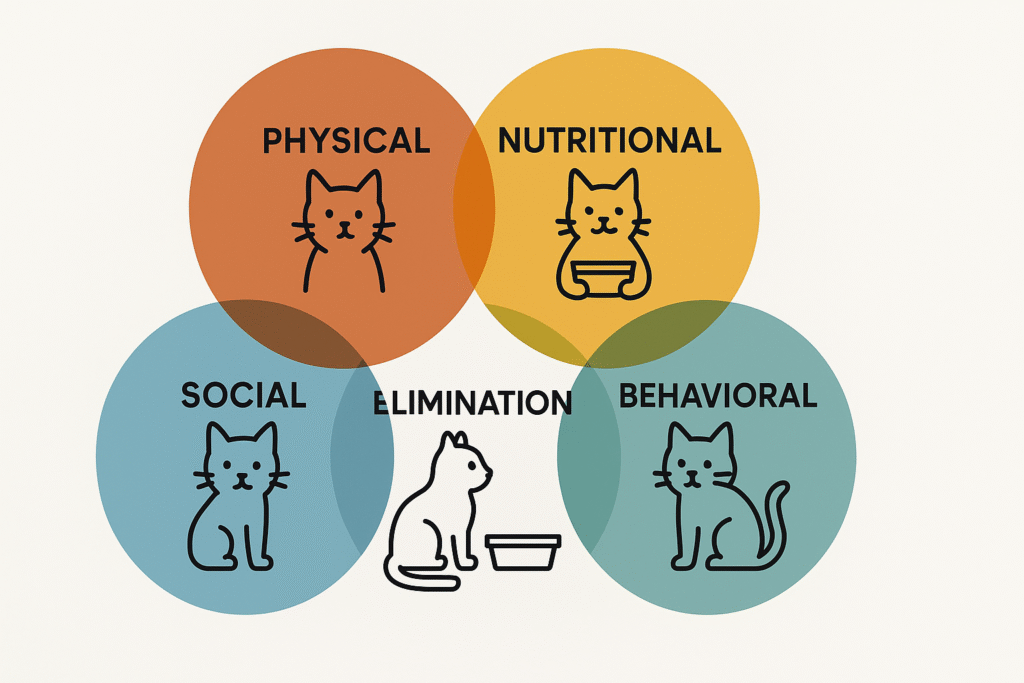
    Infographic of the five environmental systems for indoor cats

    Two frameworks show up again and again in the literature:

    2.1 The Five Environmental Systems

    Herron & Buffington’s work on indoor cat environments organizes the cat’s world into five systems:

    1. Physical – space, structures, hiding places, vertical territory
    2. Nutritional – how and where food is delivered, not just what is fed
    3. Social – interactions with humans and other animals
    4. Elimination – litter boxes, location, cleanliness, substrate
    5. Behavioral – opportunities for play, predation, exploration, and choice

    Weakness in any system can contribute to stress and disease. Behavior consultations often start by walking through each system and asking: “Where is this cat’s environment failing them?”

    2.2 The Five Pillars of a Healthy Feline Environment

    The AAFP/ISFM Feline Environmental Needs Guidelines and related resources describe five “pillars” indoor cats need:

    1. Safe places (hiding spots, elevated vantage points)
    2. Multiple and separated key resources (food, water, litter, scratching, resting areas)
    3. Opportunity for play and predatory behavior
    4. Positive, predictable human–cat interaction
    5. An environment that respects the cat’s sense of smell

    Viewed together, these frameworks give you a blueprint:

    A good indoor home isn’t just four walls—it’s a system that meets physical, emotional, and behavioral needs at the same time.


    3. The Physical System: Space, Verticality, and Safety

    3.1 What Goes Wrong

    Common failures in the physical environment:

    • No vertical space (no shelves, no cat trees, nothing to climb)
    • No hiding places that feel safe and quiet
    • Overstimulating layouts (busy windows with constant noise, no retreat zones)
    • “Dead” rooms with nothing interesting to explore

    Multiple clinical guidelines emphasize that vertical space and safe hiding spots directly reduce stress.

    3.2 Design Principles

    Evidence-based adjustments that improve the physical system:

    • Vertical territory: cat trees, sturdy shelves, or cleared tops of furniture at different heights (low perches for seniors, higher for confident cats).
    • Hiding spots: boxes, covered beds, carriers left open, quiet corners—with at least one safe resting/hiding area for each cat in each key room.
    • Scratch zones: vertical and horizontal scratching options, placed where the cat actually wants to be (near human spaces, doors, transitions), not banished to a hallway.

    Smart devices here play a supporting role at best (e.g., cameras to check how spaces are actually used), but they do not replace the need for physical structures.


    4. The Nutritional System: How You Feed Matters as Much as What You Feed

    4.1 Free-Feeding and Obesity

    Static bowls filled all day are convenient—but they remove one of the cat’s most important jobs: working for food. Many sources highlight that boredom and obesity are tightly linked, and that feeding style is a major driver of both.

    4.2 Enrichment Through Feeding

    VCA and other veterinary resources emphasize using food puzzles, foraging, and varied delivery to add both physical and mental exercise:

    • Puzzle feeders and slow feeders
    • Scatter feeding/hiding small amounts of kibble in safe spots
    • Rotating locations of bowls or puzzles (while keeping litter and water predictable)

    Smart feeders can help with:

    • Portion control and schedule consistency (useful for weight management)
    • Night feeds without disturbing humans
    • Data on portions and compliance

    But:

    A smart feeder that always drops food in the same bowl, in the same spot, with no puzzle aspect is not enrichment. It’s just automation.

    The highest-impact approach is often a hybrid: a smart feeder controlling total intake plus 1–2 daily meals delivered via puzzle or foraging setups.


    5. The Social System: Predictability Over Constant Attention

    5.1 Social Stress and “Invisible” Problems

    Indoor cats face social stressors that outdoor cats can escape:

    • Crowded multi-cat homes
    • Dogs or children with unrestricted access
    • Humans who overschedule cuddles or handle roughly

    Behavior literature notes that many aggression, fear, and elimination problems trace back to social and environmental mismatches, not “bad cats.”

    5.2 Evidence-Based Social Design

    Key principles from guidelines:

    • Choice and control: give cats the ability to approach or retreat from humans and other animals.
    • Predictable interactions: short, consistent sessions of play, grooming, or petting are better than random bursts of intense attention.
    • Separated resources: multiple feeding stations, litter boxes, and resting spots reduce competition and bullying.

    Smart cameras and treat-dispensing devices can support remote interaction, but they don’t replace the value of calm, respectful in-person contact that follows the cat’s lead.


    6. The Elimination System: Litter Boxes as a Welfare Indicator

    Litter boxes are often treated as a housekeeping problem. Clinically, they’re a welfare barometer. The environmental guidelines are consistent:

    • Number: at least n+1 boxes for n cats
    • Placement: quiet, accessible, away from food/water
    • Substrate: fine, unscented clumping litter often preferred
    • Cleanliness: scooped daily, fully changed regularly

    Failing this system leads to:

    • House-soiling
    • Urinary tract disease exacerbation
    • Stress-related cystitis (feline idiopathic cystitis)

    Smart litter boxes help with:

    • Objective data on frequency and volume of visits
    • Early warning of changes in elimination patterns
    • Reducing scooping workload so humans maintain cleanliness standards

    But they can worsen welfare if:

    • noise or cycles scare the cat
    • they’re the only box available and malfunction or misread presence
    • humans rely on “smart” features and ignore obvious environmental issues (privacy, access, substrate)

    The science is clear: smart boxes are tools, not magic. The underlying litter box system design must still respect feline preferences.


    7. The Behavioral System: Play, Predation, and Cognitive Load

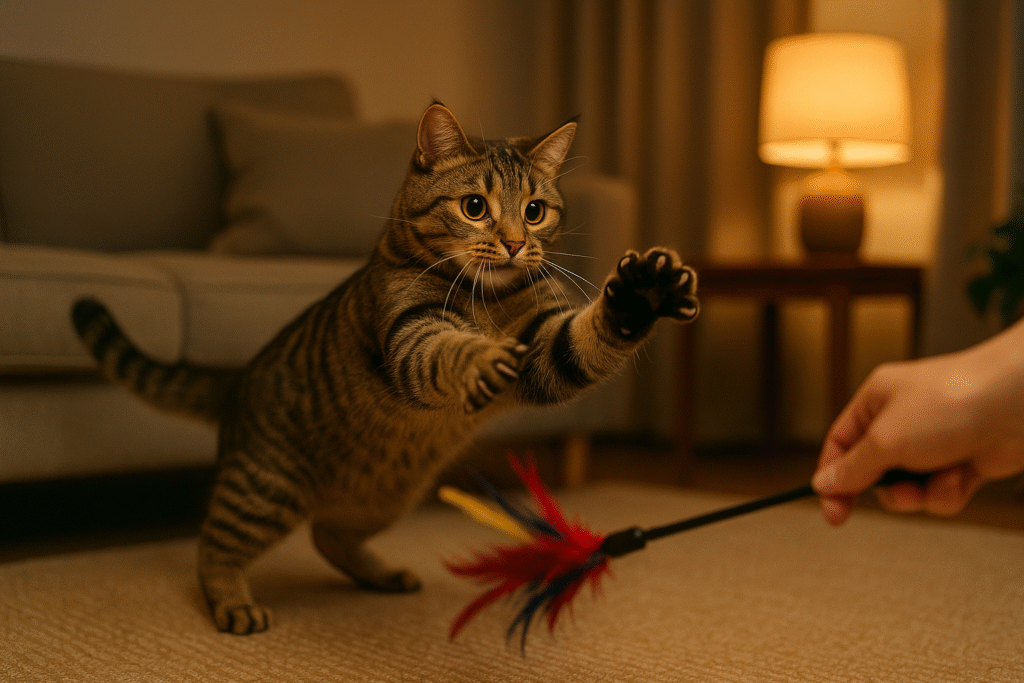
    Indoor cat engaged in predatory play with a wand toy

    7.1 Why Play Is Non-Negotiable

    Multiple guidelines and reviews converge on one point: play and predatory behavior are mandatory, not optional, for indoor cats.

    Without opportunities to stalk, chase, pounce, and “kill”:

    • Energy is redirected into aggression, furniture destruction, or self-injury
    • Obesity and muscle loss progress faster
    • Anxiety and frustration increase

    7.2 Structured vs. Passive Enrichment

    Effective enrichment combines:

    • Structured sessions – human-led play with wand toys and interactive games, ideally 5–10 minutes once or twice daily.
    • Passive enrichment – toys, scratching posts, views, and puzzles available when humans are busy.

    Cornell highlights toys as key tools to encourage exercise and problem-solving while strengthening the human–cat bond, warning that lack of stimulation can lead to obesity and behavior problems.

    Smart toys (motion toys, interactive balls, laser devices) can increase activity, but only if:

    • They match the cat’s play style
    • Sessions are limited and not overwhelming
    • Laser play ends with a “catchable” toy or treat to prevent frustration, as many behavior resources recommend.

    8. Measuring Welfare: How Do You Know It’s Working?

    Most owners underestimate their cat’s stress level. Research and guidelines suggest watching for:

    Positive indicators:

    • Regular play and exploration
    • Normal appetite and grooming
    • Relaxed resting postures in multiple locations
    • Social interactions initiated by the cat

    Warning signs:

    • Hiding most of the day
    • Sudden changes in litter box use
    • Overgrooming, bald patches
    • Aggression toward humans or other pets
    • Hypervigilance (startles easily, constantly on edge)

    If these appear, the literature is clear: you don’t just “discipline” the cat—you re-evaluate the environment across the five systems and, if needed, consult a veterinarian or veterinary behaviorist.

    Smart devices with logging (litter metrics, feeder logs, activity trackers) can help identify trends—sudden drops in activity, changes in elimination frequency—but interpretation still requires clinical judgment.


    9. Where Smart Pet Tech Helps—and Where It Doesn’t

    Indoor cat using puzzle feeder alongside smart pet devices in a modern home

    From a scientific standpoint, smart devices are environmental modifiers, not core needs. The question is not “Do you have gadgets?” but:

    “Does this device help your cat express natural behavior or reduce stress in a measurable way?”

    9.1 Clear Wins

    Based on current guidelines and common clinical scenarios, tech clearly helps when it:

    • Makes it easier to keep resources clean and consistent (smart feeders, automated litter scooping, fountain flow reminders)
    • Provides objective data that can be shared with vets (feeding logs, litter visit frequency, activity trends)
    • Supplements, not replaces, interactive play (e.g., motion toys that run during work hours plus wand sessions at night)

    9.2 Neutral or Risky Uses

    Tech is neutral—or harmful—when it:

    • Adds noise and movement with no escape or choice
    • Overcomplicates basic needs (e.g., complex feeders that malfunction, leaving no backup food)
    • Encourages owners to ignore behavior changes because “the app says everything is fine”

    The literature warns that environmental complexity must still be controllable and predictable from the cat’s perspective. More devices do not automatically mean better welfare.

    For a site like PetTech AI, the responsible framing is:

    • Smart devices are tools to support the five systems and five pillars,
    • not a shortcut to “enrichment without effort.”

    10. Implementation Roadmap: A 30-Day Enrichment Plan

    To translate the science into action, here’s a realistic plan for a typical one- or two-cat indoor home.

    Week 1 – Audit and Fix the Basics

    • Map food, water, litter, scratching, resting, and play areas.
    • Add at least one safe hiding place and one vertical perch in each main living area.
    • Check litter box number, size, and location (n+1 rule; quiet, accessible).

    Week 2 – Upgrade Feeding and Play

    • Convert one meal per day into puzzle or foraging form.
    • Start two 5–10 minute wand-play sessions per day, ideally before meals.
    • Introduce a small rotation of toys; put some away and reintroduce weekly.

    Week 3 – Add Smart Tools Strategically

    • If using a smart feeder: program consistent schedules and portions, but keep at least one meal “earned” via play or puzzle.
    • If considering a smart litter box: keep at least one standard box available while the cat acclimates; monitor usage closely.
    • Use cameras or basic trackers to observe what your cat actually does when you’re away—then adjust the environment accordingly.

    Week 4 – Fine-Tune Social and Sensory Environment

    • Establish predictable daily “contact windows” for petting, grooming, and play—always letting the cat decide how long.
    • Reduce loud, unpredictable stimuli in key cat areas; provide scent stability (avoid heavy room deodorizers; use familiar bedding).
    • Watch for subtle improvements: more relaxed resting, voluntary play, less hiding, fewer minor conflicts.

    If problems persist—especially elimination issues, aggression, or self-harm—guidelines are unequivocal: involve a veterinarian or veterinary behaviorist.


    References


    Disclaimer

    The information in this whitepaper is provided for educational purposes only and does not replace professional veterinary advice, diagnosis, or treatment. Always consult your veterinarian or a qualified veterinary behaviorist before making major changes to your cat’s environment, diet, or activity level—especially if your cat has existing medical or behavioral issues.

    PetTech AI participates in affiliate programs, including Amazon Associates and other partner networks. We may earn a commission when you purchase products through links on our site, at no additional cost to you. Our content and evaluations are based on independent research and expert sources, not paid placement.

  • Best Cat Toys 2025: Vet-Informed Picks to Keep Indoor Cats Moving

    Best Cat Toys 2025: Vet-Informed Picks to Keep Indoor Cats Moving

    Indoor cats are safer than outdoor ones, but they pay a price: boredom, weight gain, and stressy behavior. Good toys are not “extras” – they’re part of basic welfare. Cornell’s Feline Health Center notes that toys help cats exercise, think, and express normal hunting behavior, reducing obesity and destructive habits.Cornell Vet School The best cat toys 2025 are the ones that actually get used, not just the ones that look cute on Instagram.

    This guide cuts out the junk and focuses on nine proven toys: simple, interactive, puzzle, budget, and smart tech – all available on Amazon US, all with real user data behind them.


    How We Chose the Best Cat Toys 2025

    To decide what deserved to be called the best cat toys 2025, we combined:

    • Veterinary guidance on enrichment for indoor cats (Cornell, AVMA, VCA, peer-reviewed articles). Cornell Vet School
    • Focus on core needs: hunting, stalking, pouncing, problem-solving, and play that strengthens the bond with the human.
    • Safety filters: no loose strings to swallow, no tiny detachable parts, no sketchy materials – fully aligned with Cornell’s “safe toys and gifts” guidance. Cornell Vet School
    • Real-world performance: strong review profiles and long-term popularity, not just sponsored launches.
    • Coverage of different play styles: aerial hunters, ground chasers, chewers/kickers, tech-friendly households.

    You’ll see the focus keyword best cat toys 2025 in headings and text because we’re playing this for SEO too – but every recommendation is grounded in actual product data and feline behavior science.


    Best Overall Cat Toys 2025

    These are the best cat toys 2025 to buy if you want maximum impact with minimal overthinking. They work for most cats, including older indoor cats who haven’t played in a while.

    Cat Dancer 101 – Original Cat Dancer Toy

    Best for: almost any cat, especially those who like quick, jerky movements.

    The Cat Dancer 101 is brutally simple: a 35″ spring-steel wire with rolled cardboard twists at the end. That’s it. And that’s why it works. The wire flexes in unpredictable ways, mimicking a flying or skittering insect.Cat Dancer Products Amazon

    Why it earns a place among the best cat toys 2025

    • The movement is “alive” without batteries or motors.
    • It forces true interactive play – you move it, your cat hunts it, which is exactly what behaviorists want people to do. Facebook
    • It’s one of the few toys that consistently works even with picky or older cats.

    Pros

    • Extremely cheap but insanely effective
    • Great for short, intense sessions that actually tire the cat out
    • No electronics to break

    Cons

    • Must be put away after play (wire + cardboard = supervision only)
    • Heavy chewers may shred the cardboard tips quickly

    CTA:

    Start with a Cat Dancer, then watch how your cat moves. That will tell you which other best cat toys 2025 you should add next.


    Jackson Galaxy Air Prey Wand

    Best for: high-energy cats that love to jump and chase “birds.”

    Jackson Galaxy’s Air Prey wand uses a telescoping rod with a lightweight attachment designed to simulate flying prey. The whole idea is to move it through the air like a bird, not just wiggle it in place. Jackson Galaxy Amazon

    Why it belongs in a best cat toys 2025 list

    • It’s made to follow the classic “hunt, catch, kill, eat” cycle: move like prey, let the cat catch it sometimes, then feed. Jackson Galaxy Amazon
    • The telescoping wand gives you reach in small apartments and lets you adjust intensity for kittens vs seniors.

    Pros

    • Excellent for burning off energy in 5–10 minutes
    • Can be used as “air prey” or dragged as “ground prey”
    • Great bond-building tool

    Cons

    • Needs human time and energy
    • Feathers/attachments may need replacement over time

    CTA:

    If your cat is still bouncing off walls at night, add one structured Air Prey session before bedtime and see what happens over a week.


    Best Interactive & Motion Cat Toys 2025

    These best cat toys 2025 move on their own, giving your cat something to chase while you’re working, on calls, or out of the house.

    SmartyKat Hot Pursuit – Concealed Motion Toy

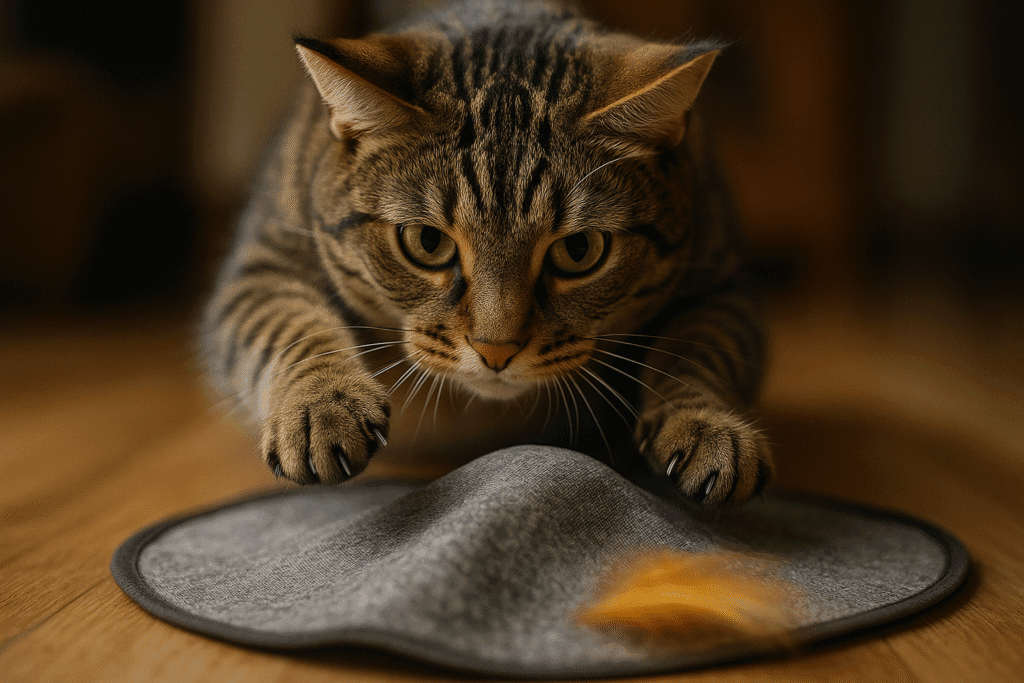
    Tabby cat pouncing on a concealed motion interactive cat toy

    Best for: ground hunters who love “mysterious movement under the blanket.”

    Hot Pursuit hides a rotating wand under a fabric cover. The feather/tail spins with sudden direction changes and built-in lights, mimicking prey moving under something. Smartykat Amazon

    Why it’s one of the best cat toys 2025

    • The prey is hidden, which taps into the “there’s something under there” instinct.
    • Two speed settings let you tune it for lazy or hyper cats.
    • It directly addresses the “inactive indoor cat” problem by turning play into exercise. Smartykat Amazon

    Pros

    • More autonomous than a wand but still very stimulating
    • Simple on/off use – no app
    • Good option for multi-cat households

    Cons

    • Fabric and wand are consumables; they will eventually wear
    • Some very timid cats may need gradual introduction to the noise

    CTA:

    Set Hot Pursuit up in a quiet room, start on the slower speed, and let your cat discover it without pressure.


    Cheerble Interactive Ball (Wicked-Style Smart Ball)

    Best for: bored apartment cats with limited floor space.

    Cheerble’s interactive balls are self-moving toys with three modes (usually gentle/normal/active), LED lights, and obstacle avoidance. They roll and bounce unpredictably for a few minutes, then pause, then restart when touched. Cheerble Amazon

    Why it deserves a slot in the best cat toys 2025

    • Designed specifically to keep indoor cats moving without needing giant cat trees or tracks.nypost.com
    • Smart play–rest cycles (e.g., 10 minutes on, 30 off) encourage bursts of activity without overstimulation. Cheerble Amazon

    Pros

    • Great for solo play while you’re working
    • Textured exterior and lights increase engagement
    • Rechargeable – no battery waste

    Cons

    • Works best on hard floors or low-pile carpet
    • Noise + LEDs might overwhelm very shy cats

    CTA:

    If your cat ignores static balls, try one Cheerble ball plus one classic wand toy – it’s a powerful combo for daily enrichment.


    Best Puzzle & Enrichment Toys 2025

    Puzzle-style best cat toys 2025 make cats think as well as move, which is key for indoor welfare. PMC

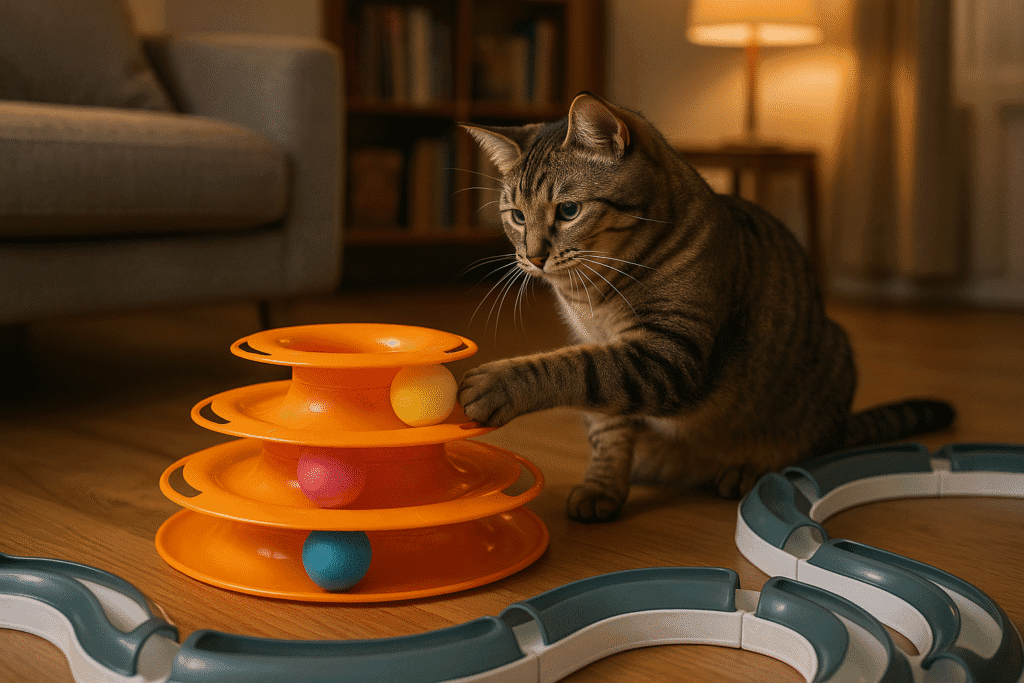
    Petstages Tower of Tracks

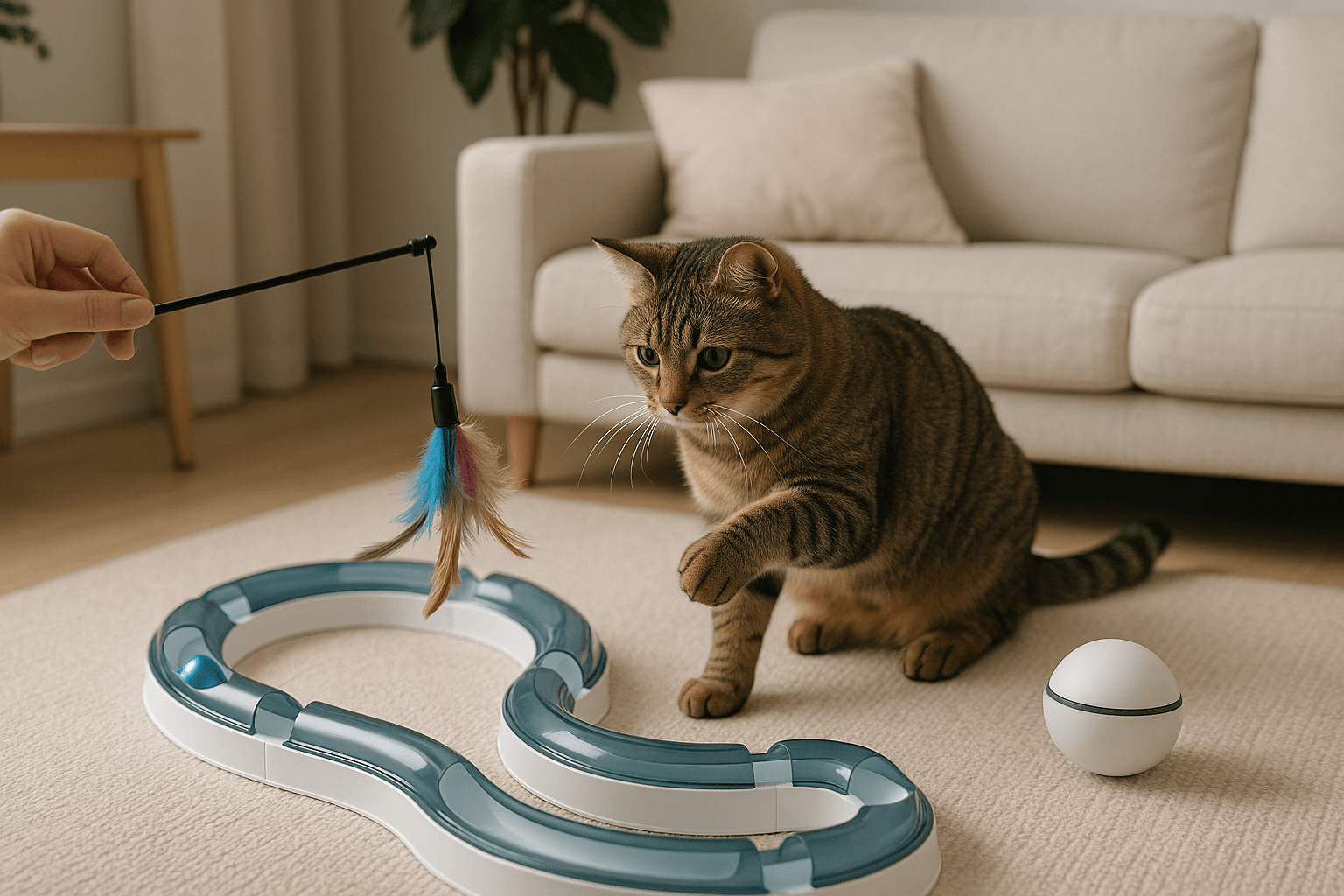
    Indoor cat using tower and track puzzle toys for enrichment

    Best for: curious cats and multi-cat homes.

    Tower of Tracks is a three-tier circular tower with a ball in each track. Cats bat at the balls and they keep circling around. Many households report multiple cats playing at once. Amazon

    Why it’s among the best cat toys 2025

    • Encourages repeated batting and tracking – low-impact but high repetition.
    • Works even when you’re not actively “playing” with the cat.

    Pros

    • Very stable compared to cheap knock-offs
    • Good for kittens, adults, and seniors
    • Easy to leave out as background enrichment

    Cons

    • Some cats will get bored if it always stays in the same spot – rotation helps. Facebook
    • No sound or scent component unless you pair it with other toys.

    CTA:

    Place Tower of Tracks in a “cat zone” with a scratching post and bed, and rotate it to a different room every week to keep interest high.


    Catit Senses 2.0 Super Circuit

    Best for: cats that love to chase moving objects along a track.

    The Catit Senses 2.0 Super Circuit is a modular track system with a ball inside enclosed rails and “peek-a-boo” openings. You can reconfigure the pieces into dozens of layouts.Catit Amazon

    Why it’s one of the best cat toys 2025

    • Modular design lets you keep changing the track shape, which is exactly what enrichment experts recommend: change the environment, not just the toy. PMC
    • Good bridge between full-on puzzle feeders and pure motion toys.

    Pros

    • Big long-term value because you can rebuild it in new patterns
    • Safe enclosed ball – no choking risk from loose balls rolling under furniture
    • Works alone or with you nudging the ball to kick-start play

    Cons

    • Needs some floor space
    • Some cats prefer balls that rattle or include catnip

    CTA:

    Build one simple loop layout first. Once your cat is hooked, expand to more pieces and complex shapes to extend engagement.


    Best Budget Cat Toy 2025

    Yeowww! Organic Catnip Banana

    Best for: cats that love to grab and bunny-kick.

    The Yeowww! banana is a curved fabric kicker stuffed with 100% organically grown catnip in a durable cotton twill shell. No fillers, no foam, just dense catnip.Yeowww! Amazon

    Why it belongs in any best cat toys 2025 list

    • Behaviorists and experienced cat guardians recommend high-quality catnip toys as an easy way to trigger play in otherwise lazy cats. IAABC FOUNDATION JOURNAL
    • The banana shape is perfect for hugging and kicking, which relieves tension and satisfies predatory patterns.

    Pros

    • Super simple and extremely cat-appealing if your cat responds to catnip
    • No electronics to fail
    • Great price-to-engagement ratio

    Cons

    • Around 30% of cats don’t react to catnip at all (genetic).
    • Over time the scent fades; you’ll eventually need to replace it.

    CTA:

    If your budget is tight, grab a Yeowww! banana plus one wand toy – it’s the cheapest “starter kit” for meaningful enrichment.


    Best Smart Tech & Laser Cat Toys 2025

    Smart devices won’t replace you, but used strategically they can support the best cat toys 2025 core lineup.

    Enabot EBO SE – Mobile Pet Robot Camera

    Best for: tech-friendly homes, guardians who travel or work long hours.

    Enabot EBO SE is a small robot on wheels with a 1080p camera, app control, two-way audio, and motion capabilities. It can patrol your home, stream video to your phone, and roll around near your cat like a moving companion.Enabot Amazon

    Why it makes the best cat toys 2025 short list

    • It’s not just a camera: many cats actually chase or stalk it, turning “monitoring” into low-key play.
    • You can log in from work, drive it around, and deliberately create micro play sessions.

    Pros

    • Combines welfare monitoring and enrichment
    • Great fit if you already use smart feeders, fountains, or cameras
    • App control lets you tailor speed and movement to your cat

    Cons

    • Not cheap compared with classic toys
    • Some nervous cats may need a slow, reward-based introduction

    CTA:

    Don’t buy EBO SE as your first toy. Use it to upgrade an already healthy play routine, not as a substitute for it.


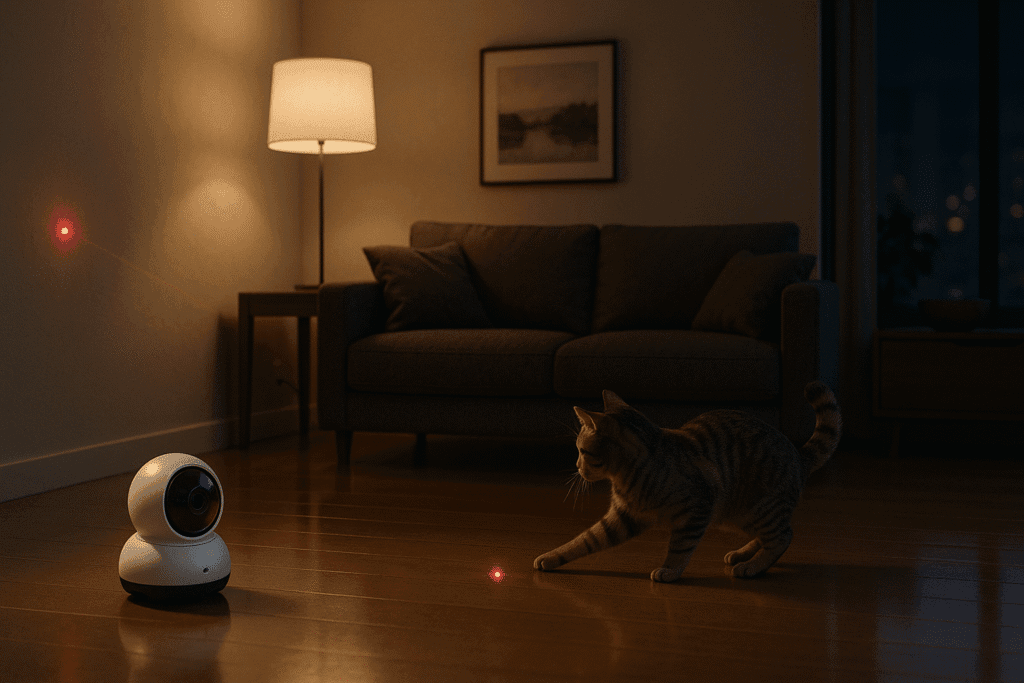
    PetSafe Dancing Dot – Automatic Laser Toy

    Cat interacting with smart robot and laser toy in a modern home

    Best for: cats that are obsessed with laser dots, with boundaries.

    The Dancing Dot laser toy has two modes: One-Time-Play (about 15 minutes) and Play-All-Day, which runs 15-minute sessions every 2 hours for up to 6 hours. It uses a certified Class 1 laser and random patterns to stimulate chasing and pouncing.PetSafe Amazon

    Why it’s in the best cat toys 2025 list

    • Built-in timers reduce the risk of overdoing laser play.
    • The scheduled breaks align with enrichment guidance that favors short, intense play sessions over marathon chases. veterinarypartner.vin.com

    Pros

    • Set-and-forget sessions while you cook or work
    • Flexible placement (flat surface or door handle) for different room layouts
    • Good for high-energy cats with strong chase drives

    Cons

    • Laser toys can frustrate some cats if you never let them “catch” anything
    • Requires batteries and responsible use (follow manufacturer warnings)

    CTA:

    Always end a laser session by tossing a physical toy or treat your cat can actually catch. That single habit prevents a lot of built-up frustration.


    How to Use the Best Cat Toys 2025 in a Daily Routine

    Enrichment research on indoor cats is clear: short, regular, varied play is far more effective than infrequent long sessions.PMC

    A simple, realistic daily plan using the best cat toys 2025:

    • Morning (5–10 minutes):
      • Fast wand session (Cat Dancer or Air Prey) before breakfast.
    • Daytime:
      • Hot Pursuit, Cheerble ball, Tower of Tracks, or Catit circuit left accessible for autonomous play.
    • Evening (5–10 minutes):
      • Another wand session, then Yeowww! banana kicker for comedown.
    • Optional smart layer:
      • EBO SE patrol + occasional Dancing Dot session when you’re busy, never as a replacement for interactive play.

    Rotate toys weekly and move them around the home to keep things novel – Cornell explicitly recommends rotating and refreshing toys rather than dumping everything in one corner. Cornell Vet School Facebook


    Verdict: Which Best Cat Toys 2025 Should You Buy First?

    If you want a brutally honest hierarchy:

    • On a tight budget:
      • Cat Dancer 101 + Yeowww! catnip banana
    • For a bored indoor cat in a small apartment:
      • Cheerble ball + Petstages Tower of Tracks + 1 wand toy
    • For a tech-heavy smart home:
      • Build the basics first (wand, puzzle, kicker), then add Enabot EBO SE + Dancing Dot as your “remote engagement” layer.

    The best cat toys 2025 aren’t the fanciest ones. They’re the ones that match your cat’s instincts, your schedule, and your space – and that you actually use every single day.


    FAQ – Best Cat Toys 2025

    1. How often should I play with my indoor cat?

    Behavior and enrichment guidelines suggest multiple short sessions are ideal – think 5–10 minutes of focused play once or twice a day, plus access to passive toys like towers and circuits. veterinarypartner.vin.com

    2. Are laser toys like Dancing Dot safe for cats?

    Class 1 lasers used in pet toys are designed to be safe when used as directed (no direct eye exposure). The bigger risk is psychological: always follow laser play with a catchable toy or treat so your cat’s “hunt” cycle ends in a win.

    3. What if my cat ignores new toys?

    Common fixes: introduce toys in a quiet room, combine them with treats, and move them in a way that mimics real prey (fast, then slow, then “hide”). If a toy still fails after several attempts and variations, park it and try a different category – some cats are pure ground hunters, others are aerial.PMC

    4. Do I really need smart pet robots and lasers?

    No. Research on indoor cat enrichment focuses on play, vertical space, hiding spots and predictable routines – not on gadgets.PMC Smart toys are optional upgrades, not foundations.

    5. How do these toys fit in a bigger smart cat ecosystem?

    You can sync them with:

    • Smart feeders (snack after play)
    • Smart fountains (fresh water following intense activity)
    • Pet cameras (to see which toys actually get used when you’re away)

    For a deeper dive, link to your existing PetTech AI pillars on smart homes, GPS trackers, and smart litter boxes.


    References

    • Cornell Feline Health Center – Safe toys and gifts; benefits of play for exercise and cognition. Cornell Vet School
    • AVMA – Indoor cats: wellbeing requires more than physical safety; need for enrichment to prevent distress. American Veterinary Medical Association
    • Herron, M.E. Environmental Enrichment for Indoor Cats. Journal of Feline Medicine and Surgery / PMC. PMC
    • VCA Animal Hospitals – Cat Behavior and Training – Enrichment for Indoor Cats. Vca
    • VeterinaryPartner (VIN) – Feline Enrichment: Meeting the Essential Needs of Cats. veterinarypartner.vin.com
    • Product manufacturers and retailers for specific toy design details: Cat Dancer, Jackson Galaxy, SmartyKat, Cheerble, Catit, Yeowww!, Enabot, PetSafe.

    Disclaimer

    The information in this article is provided for educational purposes only and is not a substitute for professional veterinary advice, diagnosis, or treatment. Always consult your veterinarian before changing your cat’s activity level, especially if your cat has medical, mobility, or behavioral issues.

    PetTech AI participates in affiliate programs, including Amazon Associates and other partner networks. This means we may earn a commission when you purchase products through links on this page, at no additional cost to you. Our reviews and rankings are based on independent research, product specifications, and user feedback, not paid placement or sponsorship.


    Internal Links (PetTech AI)

  • Best Smart Cat Window Perches 2025: Give Your Cat the Ultimate View

    Best Smart Cat Window Perches 2025: Give Your Cat the Ultimate View

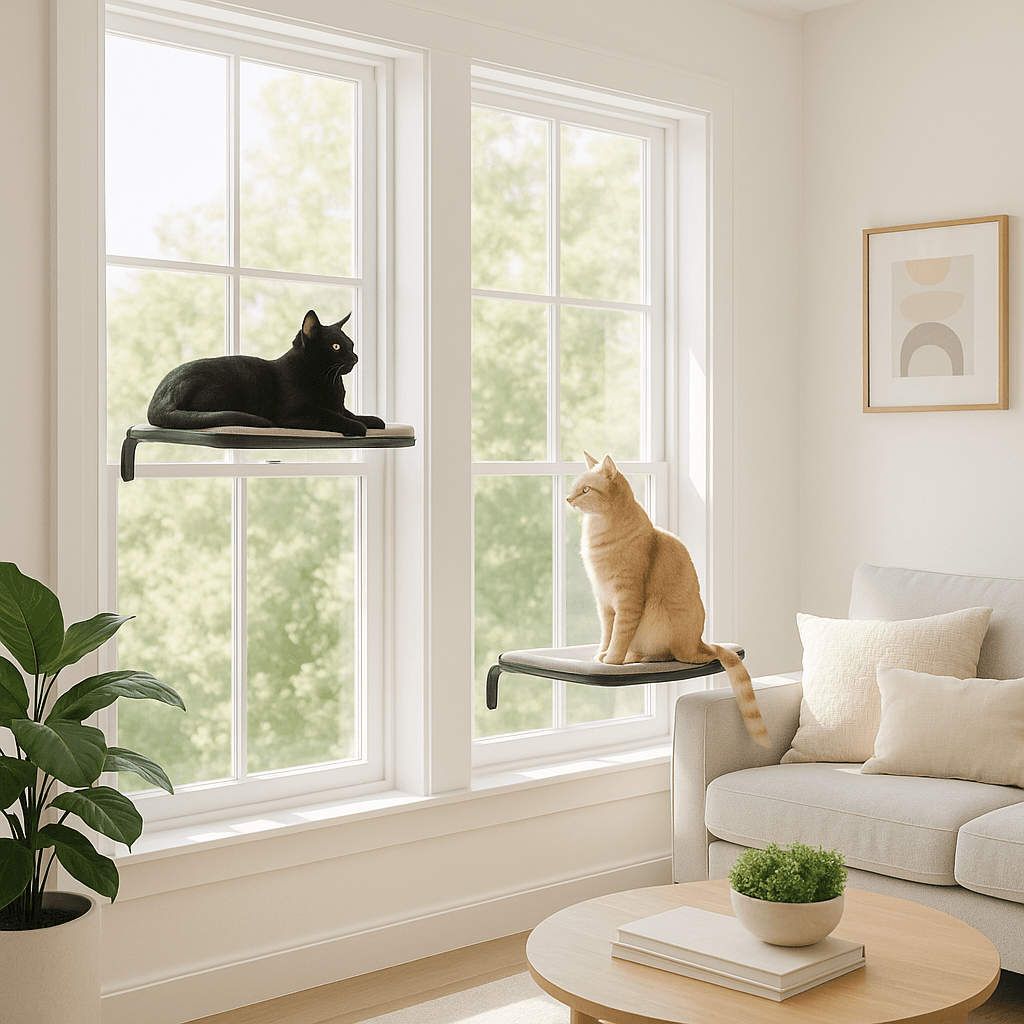
    Does your indoor cat spend hours staring longingly out the window? Watching the world go by is one of the simplest pleasures for indoor cats. From chirping birds to falling leaves, windows provide endless entertainment and mental stimulation. But not every windowsill is cat-friendly, and not every cat owner wants claw marks on curtains or scratched wood.

    That’s where smart cat window perches 2025 come in. These innovative platforms attach securely to windows or sills, offering your feline a safe, comfortable spot to lounge and watch the world outside. In this guide, we’ll explore the best smart cat window perches of 2025, along with tips on installation, training, and safety.


    Why Window Perches Matter for Indoor Cats

    Indoor cats need more enrichment than their outdoor counterparts. Without access to natural hunting grounds, they risk boredom, obesity, and stress. Window perches provide:

    • Mental stimulation: cats can track birds, squirrels, or even passing cars.
    • A sense of safety: elevated views make cats feel secure.
    • Reduced stress: observing the outdoors helps alleviate anxiety.
    • Health benefits: stretching and jumping onto perches keeps muscles strong.

    Veterinary behaviorists emphasize that providing safe vertical spaces is one of the most effective ways to improve indoor cat welfare.


    What Makes a Window Perch “Smart”?

    “Smart” doesn’t always mean digital. In 2025, the best cat perches incorporate clever features that improve usability for both cats and owners:

    • Ergonomic design: memory foam cushions or breathable fabrics.
    • Safety systems: industrial-strength suction cups or sturdy screw-in mounts.
    • Innovative add-ons: foldable frames, washable covers, or heating pads.
    • Modern aesthetics: stylish enough to blend seamlessly with home décor.

    A truly smart perch is one that your cat loves—and that you don’t mind seeing in your living room.


    Top 3 Smart Cat Window Perches 2025

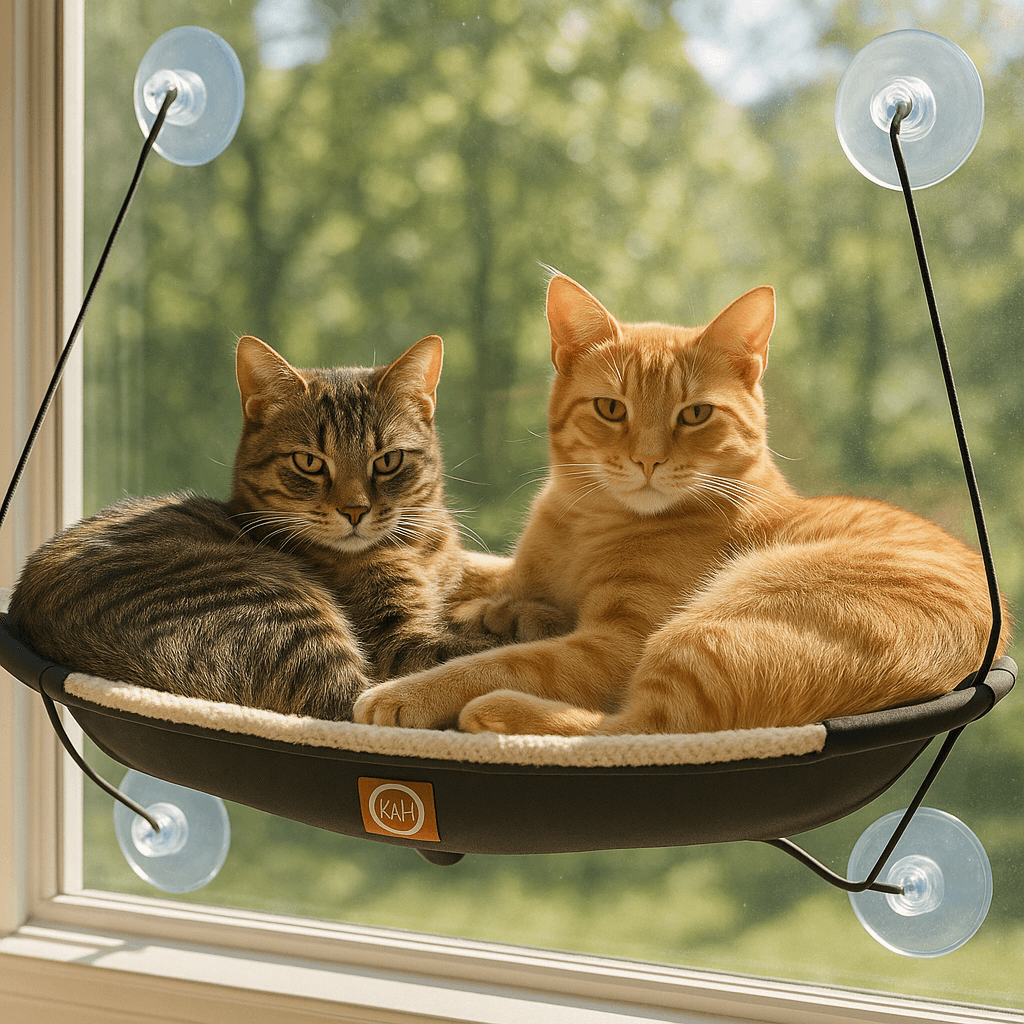
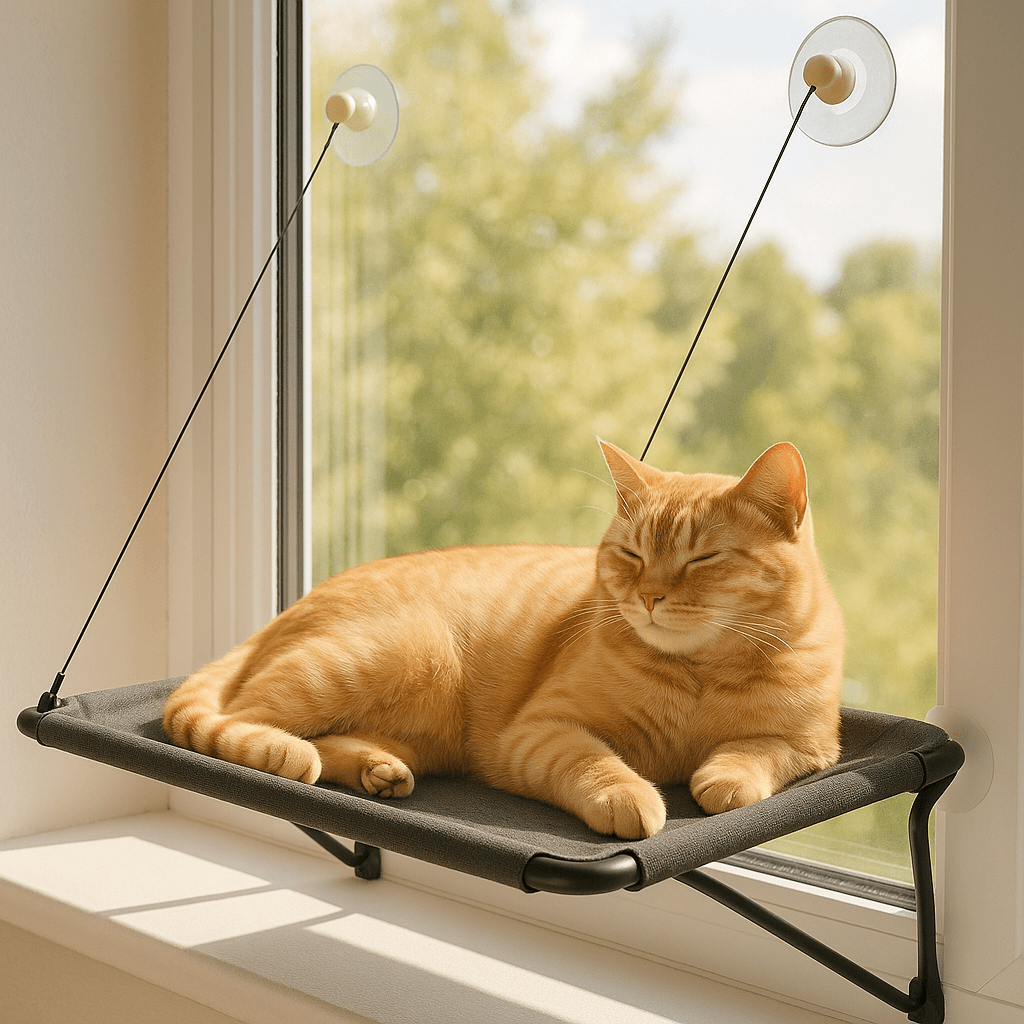
    🐾 K&H Pet Products EZ Window Mount Cat Bed

    K&H EZ window mount cat perch with cats lounging. One of the best smart cat window perches 2025

    One of the most trusted names in pet furniture, K&H delivers a durable and spacious perch.

    • 🟢 Holds up to 50 lbs, perfect for multi-cat households
    • 🟢 Sturdy steel frame with heavy-duty suction cups
    • 🟢 Washable cover for easy maintenance
    • 🔴 Requires a consistently clean window surface for best adhesion

    Check Price on Amazon


    🐾 PETPAWJOY Foldable Cat Window Perch

    PETPAWJOY foldable cat window perch with fabric surface

    A budget-friendly option that doesn’t sacrifice functionality.

    • 🟢 360° free of dead corner sunbath, foldable
    • 🟢 Breathable fabric surface for all-season comfort
    • 🟢 Easy installation with suction cups
    • 🔴 No heating element, best for temperate climates

    Check Price on Amazon


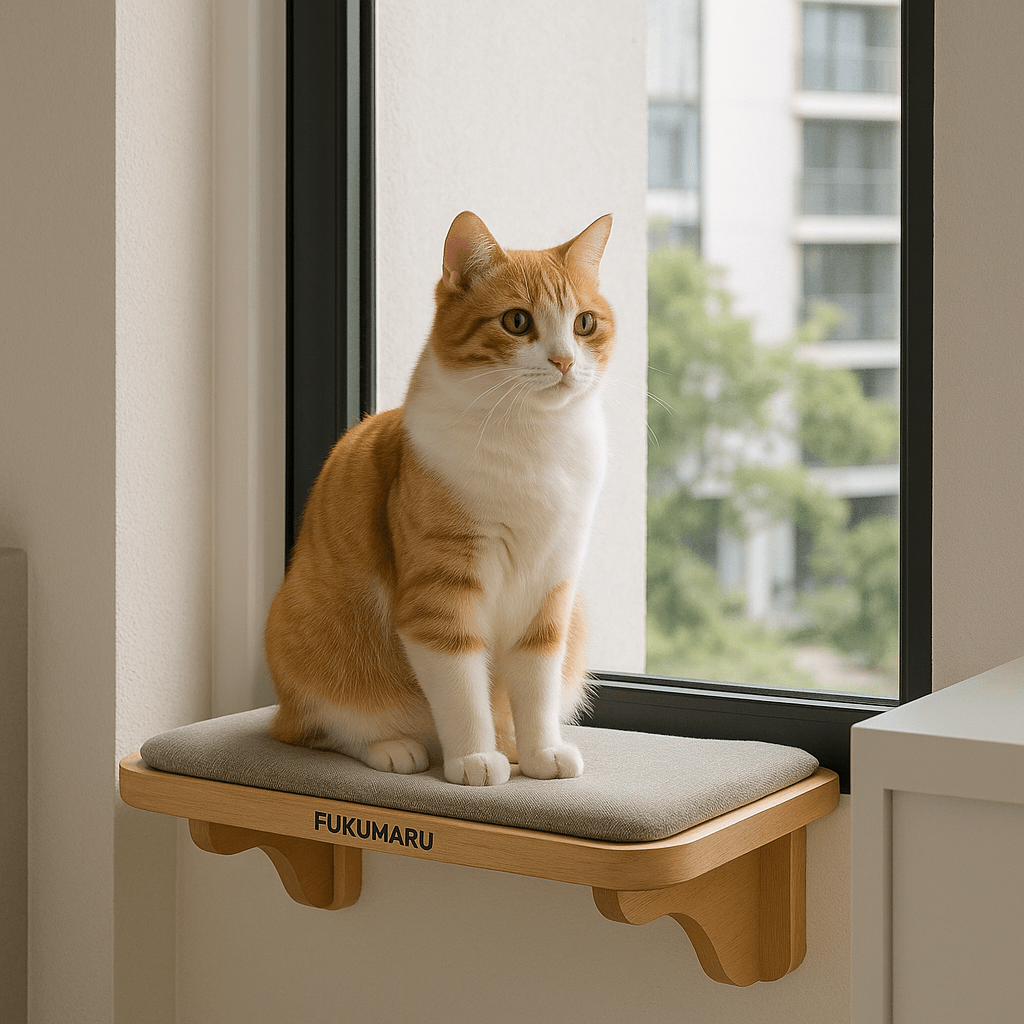
    🐾 Fukumaru Wooden Window Perch with Cushion

    Fukumaru wooden window cat perch with cushion

    For owners who prefer a permanent, stylish installation.

    • 🟢 Wooden base with modern look, fits minimalist homes
    • 🟢 Includes soft cushion with removable cover
    • 🟢 Mounts to window sills with hardware instead of suction cups
    • 🔴 Requires tools and installation effort

    Check Price on Amazon


    How to Choose the Right Window Perch

    Not all perches are created equal. Here’s what to consider before buying:

    • Weight capacity: always choose a model that supports more than your cat’s weight—especially if you have multiple cats.
    • Mount type: suction cups are removable and renter-friendly, while screw-in mounts are sturdier but permanent.
    • Comfort level: look for padded cushions or heated options if your home gets cold.
    • Space: foldable models are ideal for small apartments.

    Matching the perch to your cat’s needs ensures both safety and long-term use.


    How to Introduce a Window Perch to Your Cat

    Cats are naturally curious, but some need encouragement to try new furniture.

    1. Place the perch near your cat’s favorite resting spot.
    2. Add familiar items like a blanket or toy.
    3. Sprinkle catnip or treats on the perch to attract them.
    4. Avoid forcing—let your cat explore at their own pace.

    Patience pays off. Within days, most cats claim the perch as their new favorite throne.


    Maintenance & Safety Tips

    • Inspect suction cups weekly for secure adhesion.
    • Wash covers or cushions at least once a month.
    • Avoid placing perches in direct sunlight if overheating is a concern.
    • Rotate perch positions occasionally to keep your cat engaged.

    A little upkeep ensures safety and maximizes your cat’s enjoyment.


    Further Resources

    For more expert advice on enriching the lives of indoor cats, visit:
    🔗 Cornell Feline Health Center


    Final Thoughts

    Smart cat window perches are more than cozy beds—they’re enrichment tools that improve your cat’s quality of life. By giving your feline a secure spot to observe the outside world, you provide both comfort and mental stimulation.

    👉 Looking for more enrichment ideas? Check out our guides to Best Smart Cat Scratchers 2025 and Best Modern Cat Trees 2025.


    Affiliate Disclaimer

    This article contains affiliate links. If you purchase through these links, we may earn a commission at no extra cost to you.

  • Best Modern Cat Trees 2025: Stylish Towers for Play and Relaxation

    Best Modern Cat Trees 2025: Stylish Towers for Play and Relaxation

    Looking for a cat tree that’s as stylish as it is functional? Most traditional cat trees may offer scratching posts and climbing platforms, but they often clash with your home decor. Modern cat trees, on the other hand, combine beautiful design with features your cat will love — from cozy hideaways to sturdy climbing frames.

    In this guide, we review the best modern cat trees of 2025 that blend seamlessly into your living space while giving your cat a perfect playground.


    Why Choose a Modern Cat Tree?

    Modern cat trees are designed with both aesthetic appeal and practical function in mind.
    They offer:

    • Minimalist and stylish designs that match modern interiors.
    • Quality materials like natural wood, linen, and sisal rope.
    • Multifunctionality — climbing, scratching, lounging, and even napping.
    • Space-saving layouts for apartments and smaller homes.

    For pet owners who care about design, a modern cat tree is the ideal balance between your home’s style and your cat’s enrichment.


    Key Features to Look For

    When shopping for a modern cat tree, pay attention to:

    • Quality Materials — solid wood, durable sisal, and premium fabrics.
    • Stability — wide base and strong build to support active cats.
    • Comfort — padded beds, spacious platforms, and cozy hideouts.
    • Easy Maintenance — removable, washable covers for hygiene.

    Top 3 Modern Cat Trees for 2025

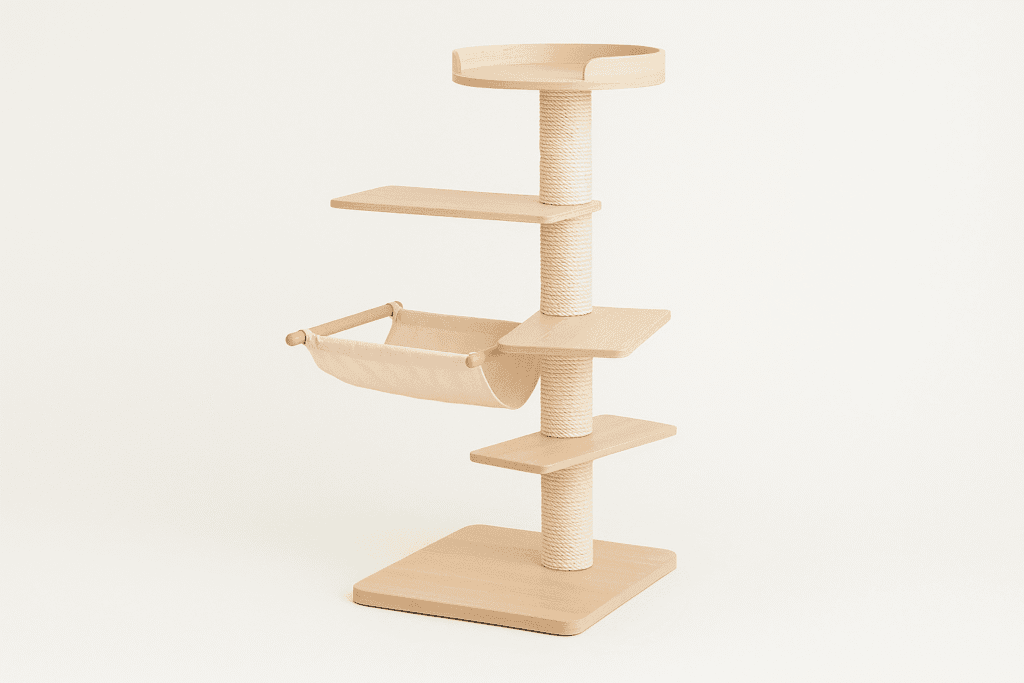
    1. FEANDREA Modern Cat Tree with Hammock

    Modern cat tree in light wood with a cotton hammock and multiple platforms for cats to climb and lounge.

    🟢 Sleek light wood finish with a soft cotton hammock and multiple platforms.
    🟢 Compact design suitable for apartments.
    🔴 Not ideal for very large cats.

    Check Price on Amazon


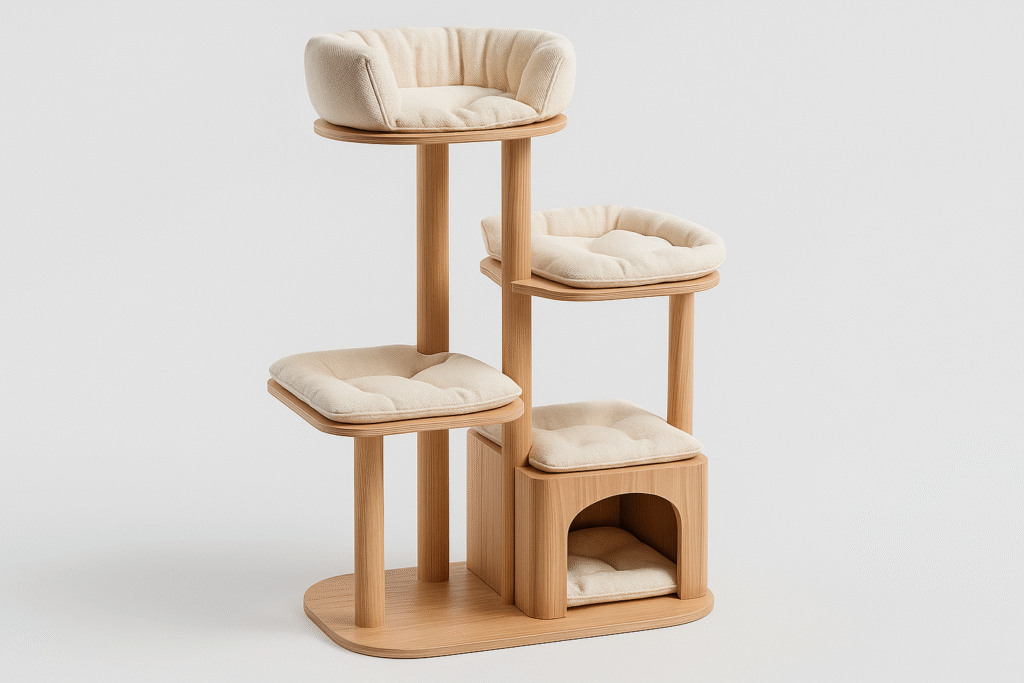
    2. Vesper V-High Base Modern Cat Furniture

    Elegant modern cat tree with wooden structure, washable cushions, and multiple levels for climbing and resting.

    🟢 Sturdy wooden structure with washable cushions.
    🟢 Multiple levels for climbing and lounging.
    🔴 Higher price point, but matches premium build quality.

    Check Price on Amazon


    3. Leo&Lexi Real Wood Modern Cat Tree Tower

    Premium eco-friendly modern cat trees 2025 with hideaways and natural wood finish, perfect for cats.

    🟢 Premium design with eco-friendly materials.
    🟢 Scratching Post.
    🔴 Slightly larger footprint compared to ultra-compact models.

    Check Price on Amazon


    Tips for Introducing a New Cat Tree

    • Place it in a high-traffic or window area where your cat naturally spends time.
    • Encourage exploration with treats or favorite toys.
    • Give it time — some cats may take a few days to fully explore a new piece of furniture.

    Additional Resources

    For more information on how to enrich your cat’s environment, visit the
    Cornell Feline Health Center – Enrichment for Indoor Cats.


    Final Thoughts

    A modern cat tree is more than just pet furniture — it’s a lifestyle upgrade for your feline friend. By choosing one that fits both your cat’s needs and your interior style, you’ll be giving them a safe, enriching, and beautiful place to climb, rest, and watch the world go by.

    Looking for more smart pet solutions? Check out our guide to Smart Puzzle Toys for Cats and discover ways to keep your feline mentally and physically stimulated in 2025.


    Affiliate Disclaimer

    This article contains affiliate links. If you purchase through these links, we may earn a commission at no extra cost to you.