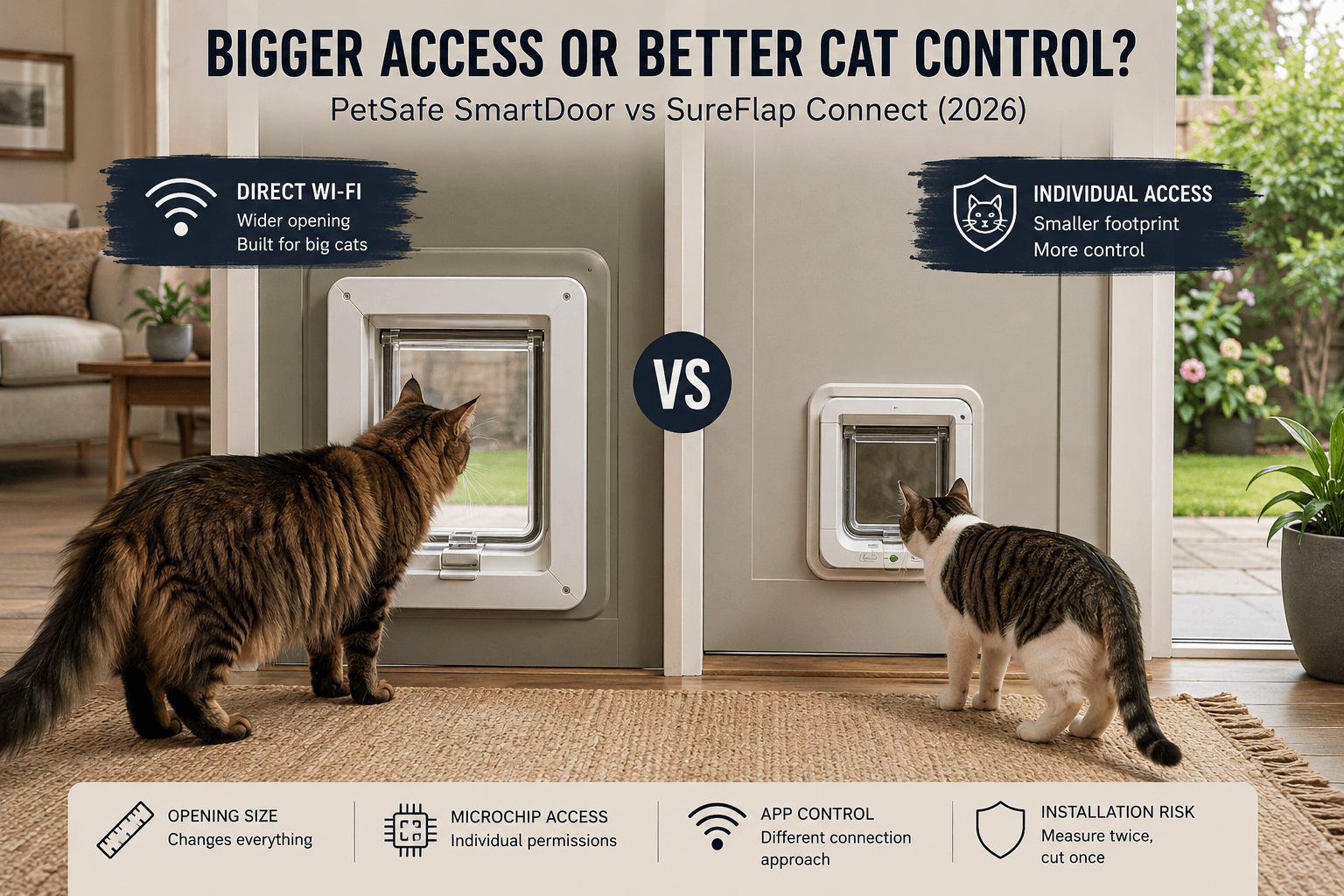
PetSafe SmartDoor Connected and SureFlap Connect both promise to manage outdoor access without requiring you to work the night shift as your cat’s unpaid concierge.
The products take different routes. PetSafe offers a larger opening, direct Wi-Fi and more substantial weather protection. SureFlap uses a smaller, cat-specific design with granular microchip permissions—but demands that another small white box move permanently beside your router.
SureFlap Connect is the lower-regret choice for most average-size cats. PetSafe only makes sense when its wider passage solves a problem the smaller flap physically cannot.
Overall verdict: Conditional.
Quick Verdict
| PetSafe SmartDoor Connected Medium | SureFlap Microchip Cat Door Connect | |
|---|---|---|
| Best for | Large cats, wider passage and direct Wi-Fi | Average-size cats and individual access control |
| Identification | Compatible microchip or collar key | Compatible microchip or RFID collar tag |
| Opening | 7.1 × 7.8 inches | About 5.6 × 4.7 inches |
| Connection | Direct 2.4 GHz Wi-Fi | Separate Hub connected to router |
| Power | Four C batteries or optional adapter | Four AA batteries |
| Main concern | Large permanent installation and weaker owner-feedback signals | Smaller opening and required Hub |
| Verdict | Not Recommended for most cat homes | Conditional |
PetTech AI may earn a commission from qualifying purchases. As an Amazon Associate I earn from qualifying purchases.
Need the wider opening? Check the PetSafe SmartDoor Connected Medium on Amazon.
Prefer the more cat-specific system? Check the SureFlap Connect bundle on Amazon.
Before cutting anything, compare the wider category in our best smart cat doors guide. The product can be returned. The rectangle missing from your door is usually less cooperative.
Research Note
This is a research-led comparison based on current manufacturer documentation, installation requirements, warranty policies and owner-feedback patterns. PetTech AI has not physically installed either door.
The Opening Size Changes the Entire Decision
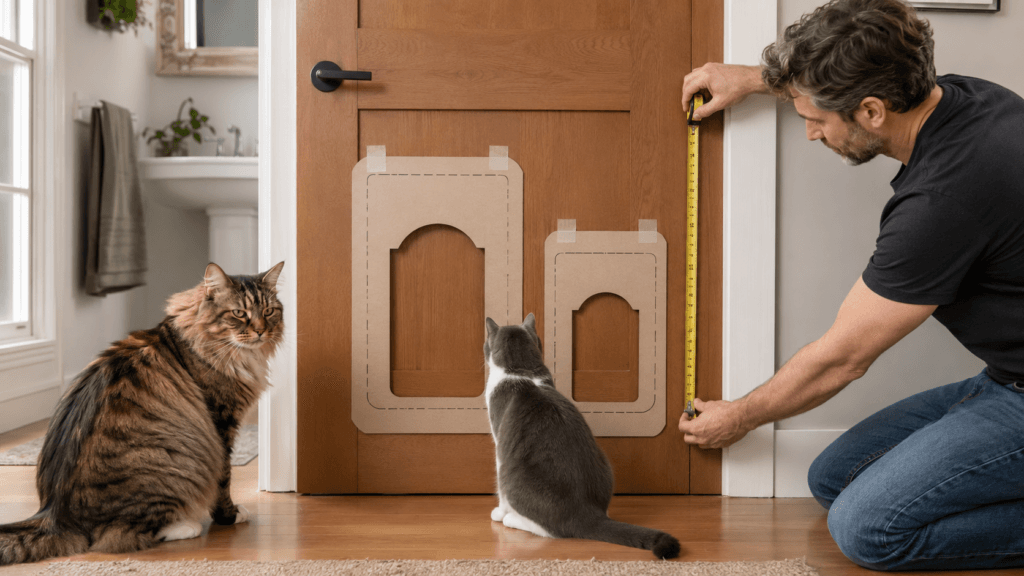
PetSafe SmartDoor Connected Medium provides a 7.1-by-7.8-inch passage and is intended for pets weighing up to 25 pounds. SureFlap Connect uses a much smaller opening of roughly 5.6 by 4.7 inches.
That makes PetSafe the more realistic option for:
- large or long-bodied cats;
- cats reluctant to squeeze through narrow flaps;
- homes where differently sized pets share one door;
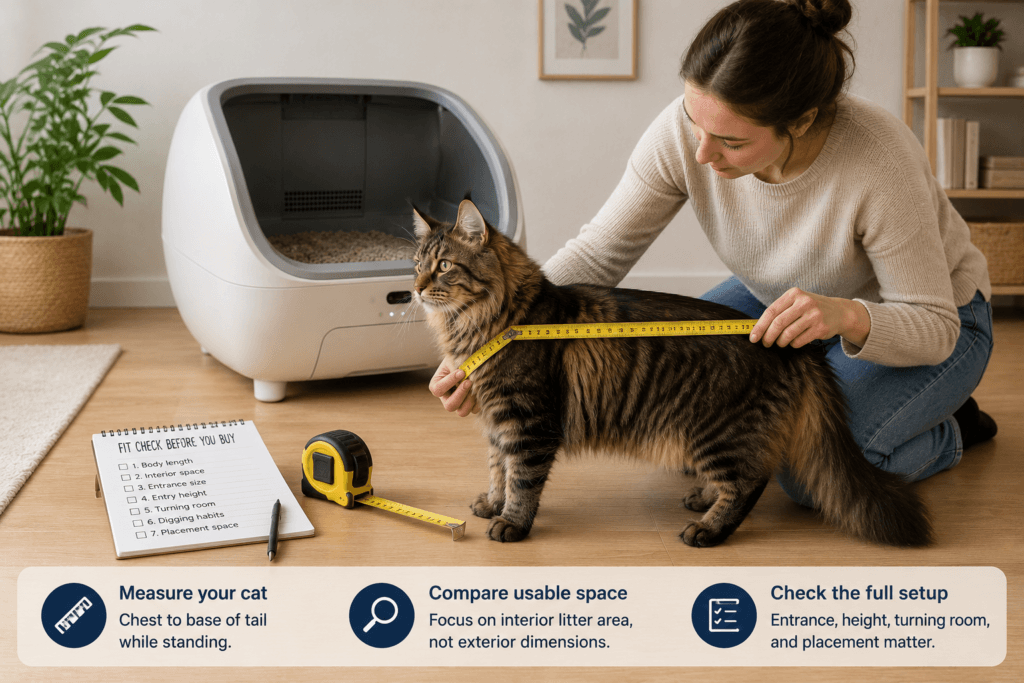
- owners who measured the actual cat rather than trusting that “Medium” corresponds to a universal feline standard.
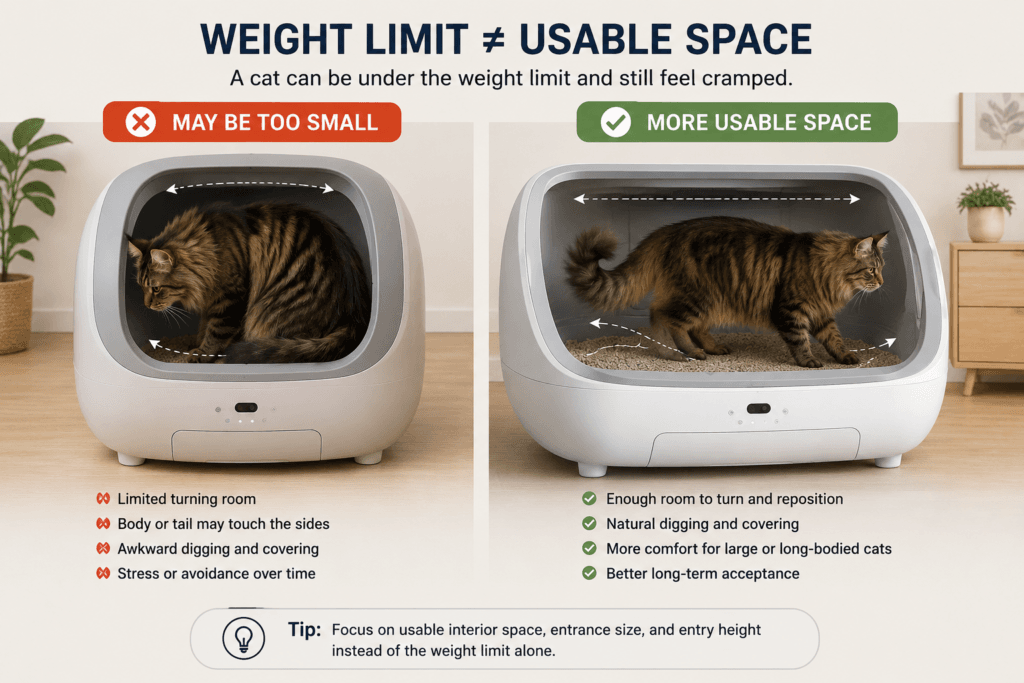
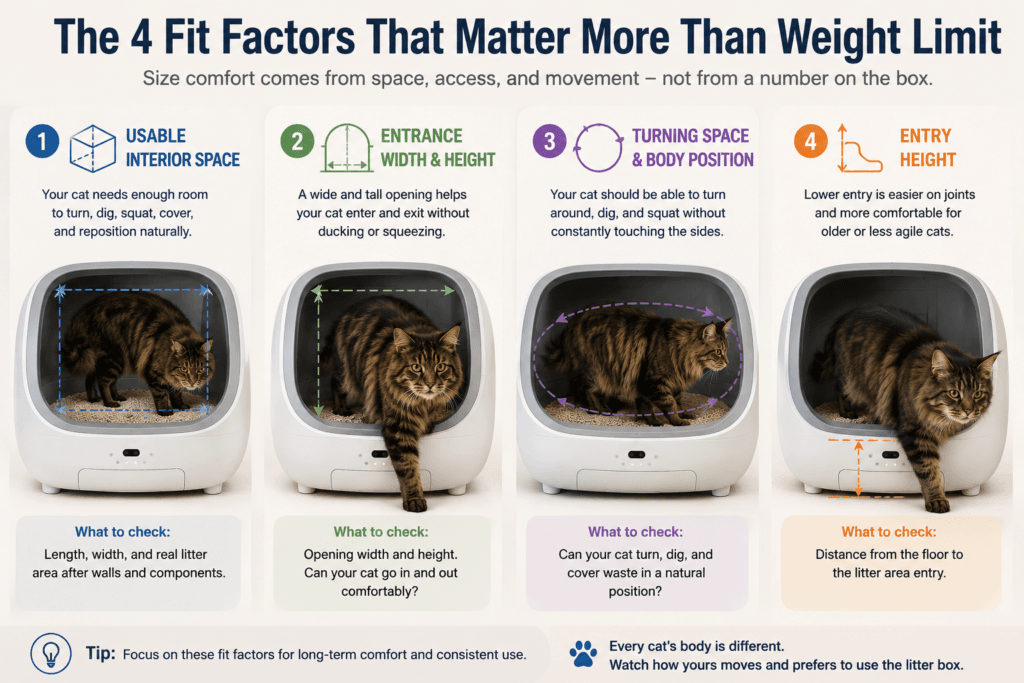
SureFlap is appropriate for many ordinary domestic cats, but not every Bengal, Maine Coon or generously engineered rescue will approve. Weight limits help; shoulder width and body depth still exist despite marketing’s repeated attempts to ignore them.
The installation footprint also differs sharply. SureFlap asks for a smaller opening and therefore a smaller leap of faith. PetSafe arrives with the architectural confidence of a product that assumes you already own a jigsaw.
Microchip Access and Individual Permissions
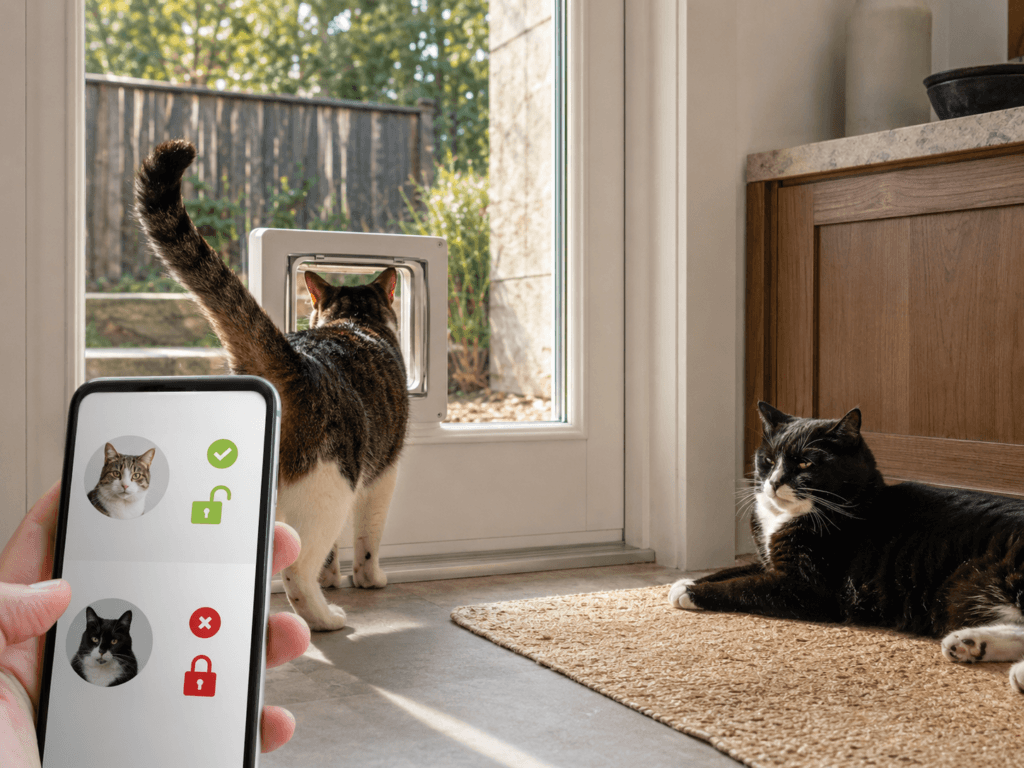
Both systems can block unfamiliar animals and assign rules to individual pets.
The Medium PetSafe SmartDoor supports selected microchip formats and can also use a Pet Door Key attached to the collar. Through the app, owners can create individual schedules, control entry and exit, lock the door remotely and receive activity notifications.
The important limitation is compatibility: not every microchip works directly. Cats with unsupported chips need the collar key, which introduces another object capable of being lost beneath a sofa, buried in the garden or removed during Gerald’s private expedition.
SureFlap reads common microchips and can register multiple pets. Its DualScan system reads cats moving both inward and outward, allowing different exit permissions for different animals.
That is useful when:
- one cat may go outside while another must remain indoors;
- a recovering cat needs temporary restrictions;
- a newly adopted cat is still acclimating;
- one household member has lost neighborhood privileges following a diplomatic incident.
Both systems are capable. SureFlap simply feels more deliberately designed around cat-specific access control, while PetSafe combines microchip recognition with a broader key-based pet-door platform.
Direct Wi-Fi vs Another Dependent Near the Router
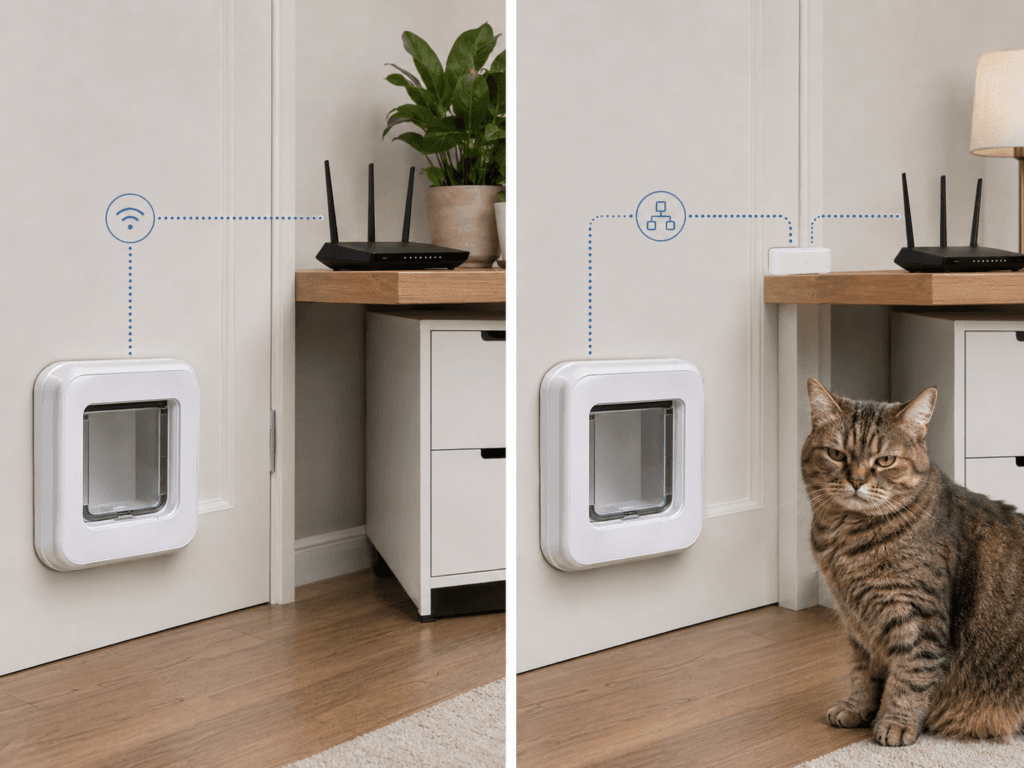
PetSafe connects directly to a 2.4 GHz Wi-Fi network. The My PetSafe app handles access rules, remote locking, schedules, notifications and battery alerts.
SureFlap Connect requires the Sure Petcare Hub. The bundle identified for this comparison includes it, but the Hub still needs power, an Ethernet connection to the router and sufficient range to communicate with the flap.
PetSafe therefore wins on network simplicity.
The SureFlap Hub is not a disaster. It is simply another white plastic dependent moving permanently beside your router, contributing nothing to household expenses and blinking occasionally to confirm that it remains your responsibility.
For homes with limited Ethernet ports, awkward router placement or an existing collection of smart-home bridges, that extra component may be more irritating than the product page suggests.
Power and Daily Ownership
PetSafe Medium uses four C-cell batteries. It can also run through an optional wall adapter, with batteries retained as backup during an outage.
SureFlap uses four AA batteries and claims months of normal operation, although actual battery life will depend on usage, signal quality and how often the cat treats the door as revolving entertainment.
PetSafe offers the more flexible power arrangement. SureFlap uses cheaper, more familiar batteries.
Neither option is maintenance-free. Batteries still need replacement, sensors need cleaning and access rules occasionally need adjustment. A smart cat door with dead batteries is just a normal flap that has developed administrative problems.
Weather Protection and Physical Security
PetSafe uses a rigid flap, dynamic weather sealing, magnetic closure and a multi-point locking mechanism. Its larger, heavier design is more convincing for exposed exterior doors or homes where drafts matter.
SureFlap’s smaller footprint reduces the amount of interrupted door surface and prevents unauthorized entry through microchip recognition, but it is not positioned as a heavy-duty extreme-weather barrier.
PetSafe therefore has a legitimate advantage in colder, windier or more exposed locations. Still, no pet door becomes thermally invisible through confidence alone. Installation quality, wall thickness, sealing and placement remain important.
For outdoor safety beyond the doorway, remember that selective access does not tell you where the cat goes afterward. Our best cat trackers guide covers that separate problem before Napoleon interprets “authorized exit” as permission to cross state lines.
A smart door controls who crosses the threshold; it does not create a boundary once the cat is outside. Our best virtual fences for cats guide explains how GPS safe zones and escape alerts handle that separate problem.
Installation Is the Real Buyer-Regret Zone
Both doors can be installed in doors and walls. Certain glass, metal or masonry installations may require adapters, tunnel extensions or professional work.
PetSafe requires the larger cutout. SureFlap’s smaller dimensions make it less invasive and more compatible with typical cat-door placements.
Before installation:
- verify the microchip format;
- measure the cat’s shoulders and body height;
- create a cardboard test opening;
- identify the door or wall material;
- power and configure the device;
- register every cat;
- test the locking behavior;
- only then create the permanent opening.
This sequence is not cinematic, but it is considerably cheaper than discovering afterward that Biscuit considers the flap an architectural insult.
A return policy protects the electronic product. It does not restore timber, glass, insulation or domestic harmony.
Returns and Warranties
PetSafe offers a direct-purchase return window and a standard limited warranty of one year. Installation, removal and restoration costs are not covered.
Sure Petcare provides a three-year warranty on its microchip doors and the associated Hub.
That longer protection matters. These products contain readers, locks, motors, wireless components and battery systems, yet they are installed as semi-permanent fixtures. One year of coverage is not especially comforting for a product whose hole may outlive your router, your phone and your current enthusiasm for home automation.
SureFlap therefore has the stronger long-term ownership case.
Why PetSafe Is Not Recommended for Most Cat Homes
PetSafe’s wider entrance, direct Wi-Fi and weather-oriented hardware are genuine advantages. The problem is that those advantages come with a much larger installation commitment and weaker owner-feedback signals than we would want from a device that permanently alters the property.
PetSafe remains worth considering when:
- the cat cannot comfortably use SureFlap’s opening;
- direct Wi-Fi is essential;
- the door is exposed to difficult weather;
- the owner accepts the larger cutout;
- the system can be fully tested before final installation.
For everyone else, the risk-to-benefit ratio is uncomfortable.
Verdict: Not Recommended for most cat households.
Large cats deserve access. Their owners do not need to suspend skepticism in the name of flap width.
If the larger passage is genuinely necessary, check the PetSafe SmartDoor Connected Medium on Amazon and verify the current listing, dimensions and return terms before installing it.
Why SureFlap Is Better—but Still Conditional
SureFlap Connect offers the more coherent feline package:
- smaller installation footprint;
- direct microchip recognition;
- individual exit permissions;
- app-controlled curfews;
- longer warranty;
- a Hub included in the identified bundle.
Its limitations prevent a stronger recommendation:
- the opening may be too small for large cats;
- app connectivity requires the Hub;
- power is battery-only;
- installation remains permanent;
- the connected model adds complexity that some households do not need.
Verdict: Conditional.
SureFlap is the better choice for an average-size cat when selective access genuinely matters and the household accepts the Hub. Owners who only need to block unfamiliar animals may be better served by a simpler non-connected microchip flap.
For individual access control with the smaller cutout, check the SureFlap Connect bundle on Amazon.
Final Verdict
SureFlap Connect wins this comparison, but not by enough to earn a universal recommendation.
It offers more focused cat management, a smaller installation footprint and stronger warranty coverage. PetSafe counters with direct Wi-Fi, better weather-oriented hardware and a much wider passage—but also carries the greater installation risk.
Choose SureFlap Connect for compact, cat-specific control. Consider PetSafe only when the larger opening solves a problem SureFlap cannot.
For some households, the smartest decision remains a non-connected microchip flap. The cat gains selective access, unfamiliar animals remain outside and the router avoids adopting another dependent.
Frequently Asked Questions
Can PetSafe SmartDoor use a cat’s existing microchip?
The Medium version supports selected microchip formats. Cats with incompatible chips must use the supplied collar key. Compatibility should be checked before installation.
Does SureFlap Connect require the Hub?
Yes. The Hub connects the flap to the Sure Petcare app and enables remote locking, notifications, curfews and activity records. The Amazon bundle evaluated for this comparison includes the Hub.
Which door is better for a large cat?
PetSafe SmartDoor Connected Medium has the larger opening and is the more plausible fit for large cats. Measure shoulder width and body height rather than relying only on weight.
Can either door stop one cat from going outside?
Yes. Both systems support individual access rules. SureFlap’s DualScan design is particularly focused on assigning different exit permissions to different cats.
References
PetSafe — SmartDoor Connected Product Documentation
PetSafe — SmartDoor Microchip Compatibility Guide
PetSafe — Return and Warranty Information
Sure Petcare — Microchip Cat Door Connect Documentation
Sure Petcare — Hub and App Documentation
Sure Petcare — Warranty Policy
Editorial Disclosure
PetTech AI may earn a commission from qualifying purchases. This does not influence our recommendations, comparisons or editorial judgments.
Image Disclosure
Official manufacturer images are used when available and authorized.
AI-generated images may also be used as editorial illustrations. They should not be treated as exact representations of product dimensions, materials, controls or physical features. Always verify current official product information before purchasing.