Tag: portion control

  • Smart Feeder Mistakes That Cause Weight Gain in Cats (2026)

    Smart Feeder Mistakes That Cause Weight Gain in Cats (2026)

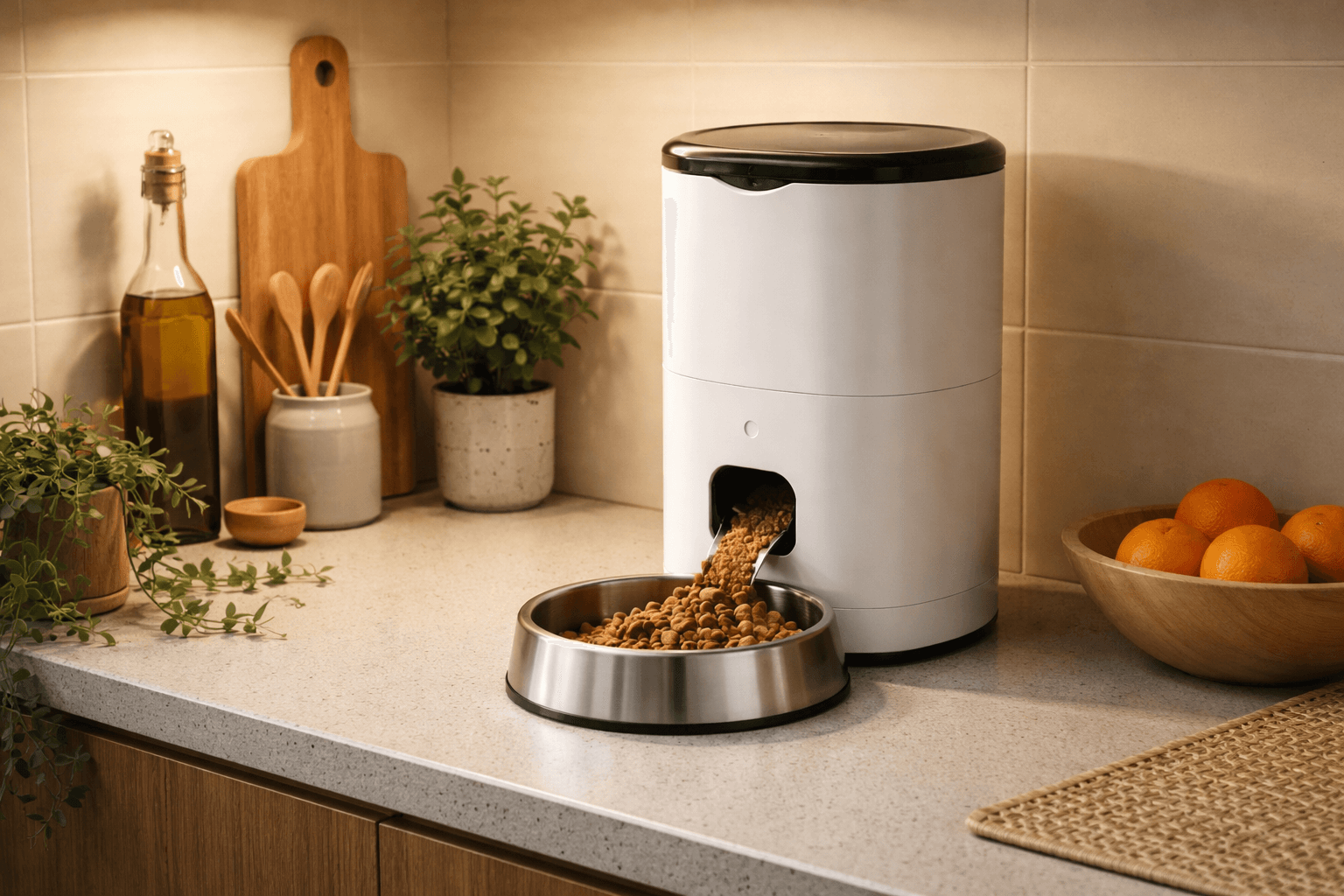
    Smart feeders are supposed to solve the boring part of cat nutrition: consistent portions, predictable timing, fewer accidental “top-offs.” In reality, smart feeders don’t prevent weight gain. They either enforce a well-built feeding system—or automate a broken one.

    Feline obesity is not a niche issue. It’s common, it’s medically meaningful, and it’s easy to worsen with well-intentioned mistakes. Cornell’s Feline Health Center explicitly warns against sudden “starvation diets” because rapid restriction can trigger serious complications like hepatic lipidosis; weight loss should be gradual and veterinarian-guided.

    So if a feeder is making things worse, it’s usually not because the hardware failed. It’s because the setup quietly bakes bad assumptions into daily routine—then repeats them with perfect consistency.


    The key truth: a smart feeder amplifies whatever rules you set

    If your current feeding logic is:

    • guesswork portions
    • reactive snack drops
    • inconsistent overrides
    • boredom mistaken for hunger

    …automation won’t fix it. It will scale it.

    If your logic is:

    • BCS-aware portions
    • predictable timing
    • minimal overrides
    • enrichment that competes with food

    …automation can make it easier to execute reliably.


    Mistake #1: Setting portions without checking Body Condition Score (BCS)
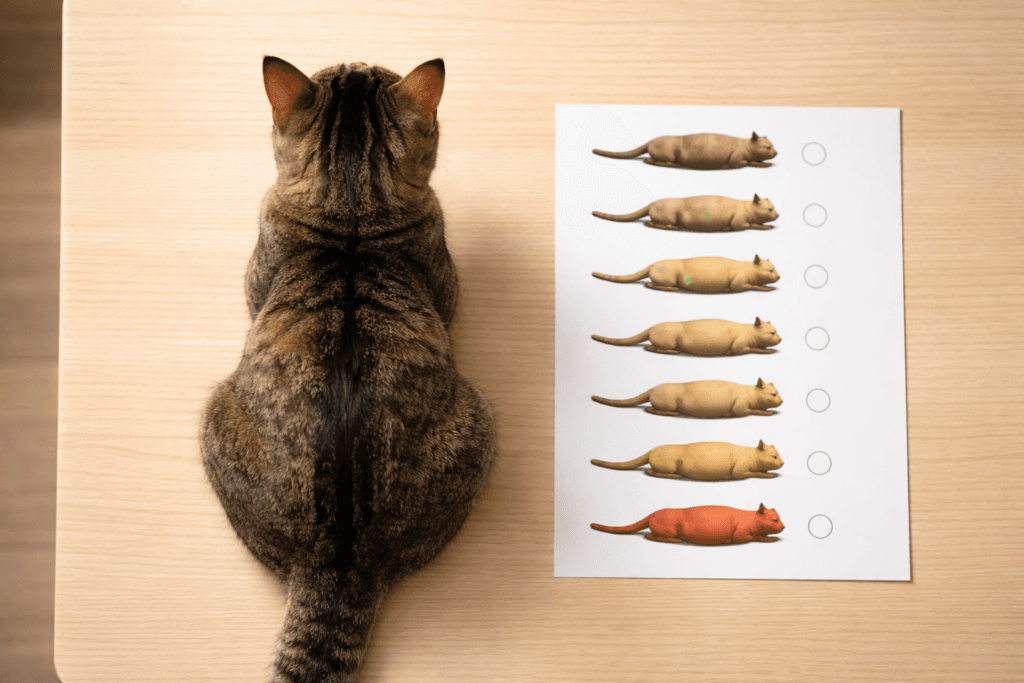
    Visual check for waistline as part of body condition scoring in cats

    Most people program feeders by “looks” or by what the cat used to get. That’s how weight gain becomes permanent.

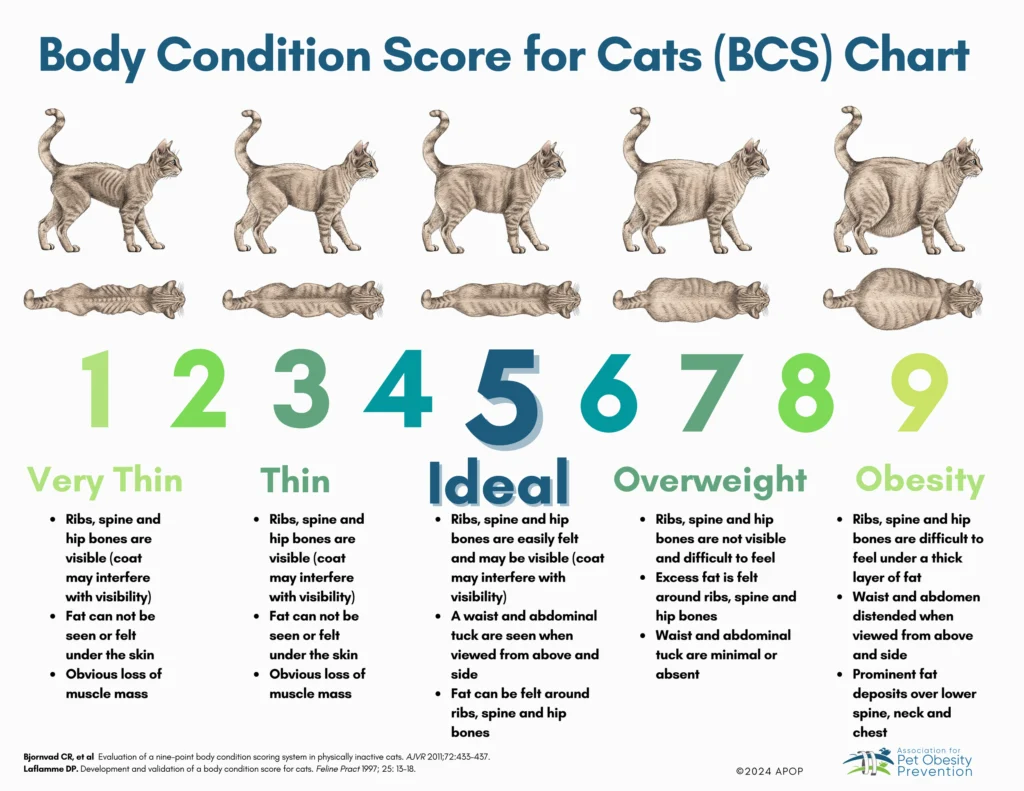
    A 9-point Body Condition Score (BCS) is the standard reference many veterinary systems use. WSAVA’s cat BCS chart shows the 1–9 scale, with BCS 5 as ideal and higher scores indicating increasing fat cover and reduced waist/abdominal tuck.

    What goes wrong in practice:
    If your cat is already BCS 6–7, programming “normal” portions based on habit is still overfeeding. A feeder will then overfeed the same amount, every day, forever—until you intervene.


    Mistake #2: Treating the app like a “snack button”

    This is the most common self-sabotage pattern.

    • Cat vocalizes → you tap “feed”
    • Cat stalks the feeder → you tap “feed”
    • You feel guilty → you tap “feed”

    Now the feeder isn’t delivering nutrition. It’s delivering reinforcement.

    AVMA owner guidance on healthy weight emphasizes non-food rewards (play, attention, interaction) and warns that pets can come to rely on food for comfort if that’s the default reward loop.

    Fix: lock snacks into a separate, intentional allowance (or eliminate them temporarily). If you need to “give something,” give play.


    Mistake #3: “Micro-meals” with no structure (constant food focus)

    Small, frequent meals can be useful—especially for some cats and some health contexts—but “micro-feeding” often turns into continuous food cueing.

    If a cat receives food every time they pass the feeder, you create:

    • constant anticipation
    • constant checking
    • constant food fixation

    Even if calories are technically controlled, behavior can deteriorate and owners tend to compensate with “just a little more.”

    Fix: schedule real meal blocks (e.g., 3–6 timed meals) rather than a drip-feed pattern that trains surveillance.


    Mistake #4: Ignoring the five-pillar environment problem

    If your cat’s day is empty, food becomes the highlight.

    The AAFP/ISFM environmental needs guidelines frame feline wellbeing around core environmental principles (“pillars”), emphasizing that wellbeing and behavior are tightly linked to meeting environmental needs.

    Translation for feeding:
    A feeder can control calories, but it can’t create:

    • hunting/foraging outlets
    • play routines
    • safe territory separation
    • control over social contact

    When a cat is bored or stressed, overeating is often a symptom—not the root problem.


    Mistake #5: One feeder for multiple cats (competition = chaos)
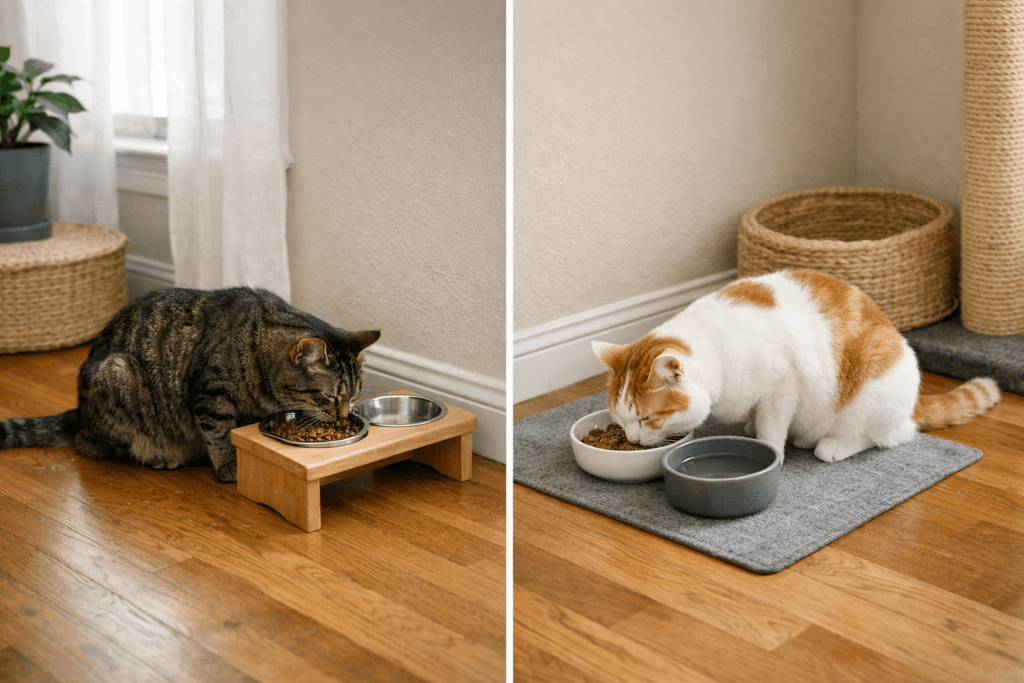
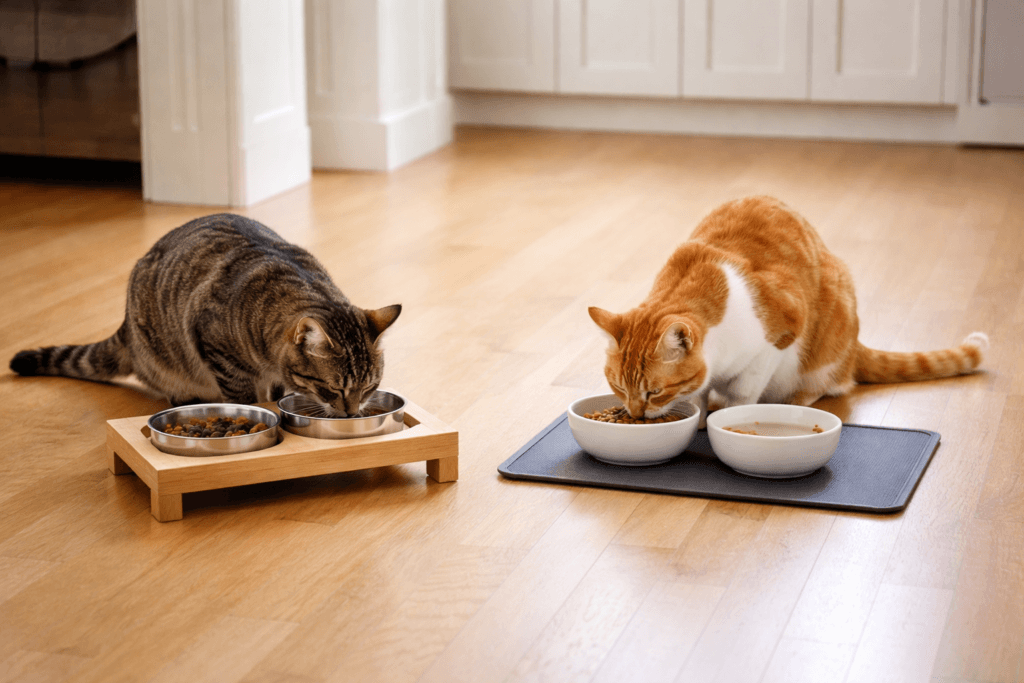
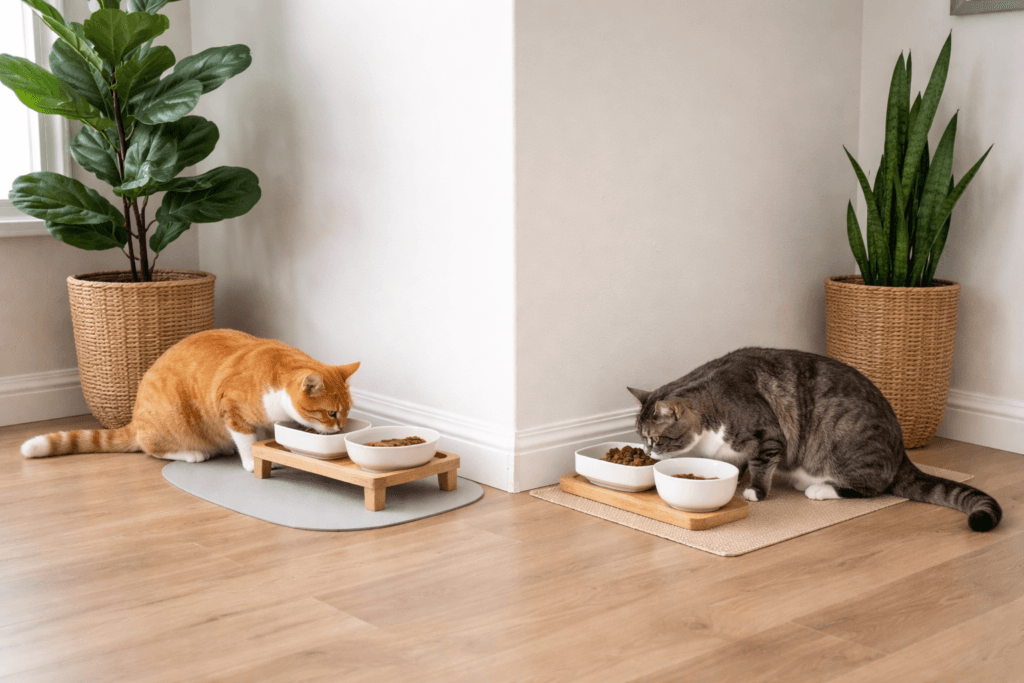
    Separate feeding stations reduce competition in multi-cat homes

    Multi-cat homes create silent feeding distortions:

    • the confident cat eats twice
    • the anxious cat eats fast (then overeats later)
    • guarding happens off-camera
    • weight diverges dramatically between cats

    AAFP/ISFM guidelines explicitly recommend separate feeding stations for each cat and adequate resource separation in multi-cat households.

    Fix: multiple feeding stations, spaced apart (and if needed, physically separated). One feeder is rarely “fair.”


    Mistake #6: Placing the feeder in a high-traffic, high-stress location

    Kitchen = convenient for humans, not always for cats.

    Bad placement increases:

    • resource guarding
    • anxiety eating
    • conflict spikes between cats
    • “drive-by snacking” triggered by household movement

    Fix: place feeders where cats can eat without being startled, cornered, or ambushed.


    Mistake #7: “Cutting hard” because the feeder makes it easy

    This one is dangerous.

    Cornell warns that sudden starvation diets can put cats at risk of serious illness like hepatic lipidosis; weight loss should be gradual (often framed around ~1–2% per week) under veterinary supervision.

    How feeders enable the mistake:
    You drop portions aggressively, the cat panics, begging escalates, and owners either cave with extra feeds—or push restriction further.

    Fix: slow, measurable adjustment with monitoring (weight trend + BCS). Never crash-diet a cat.


    Mistake #8: Not measuring food in grams (calorie creep goes invisible)

    Most feeder “portion” systems are not intuitive. “Cups” and “scoops” are blunt tools. Kibble density varies by brand, shape, and formula.

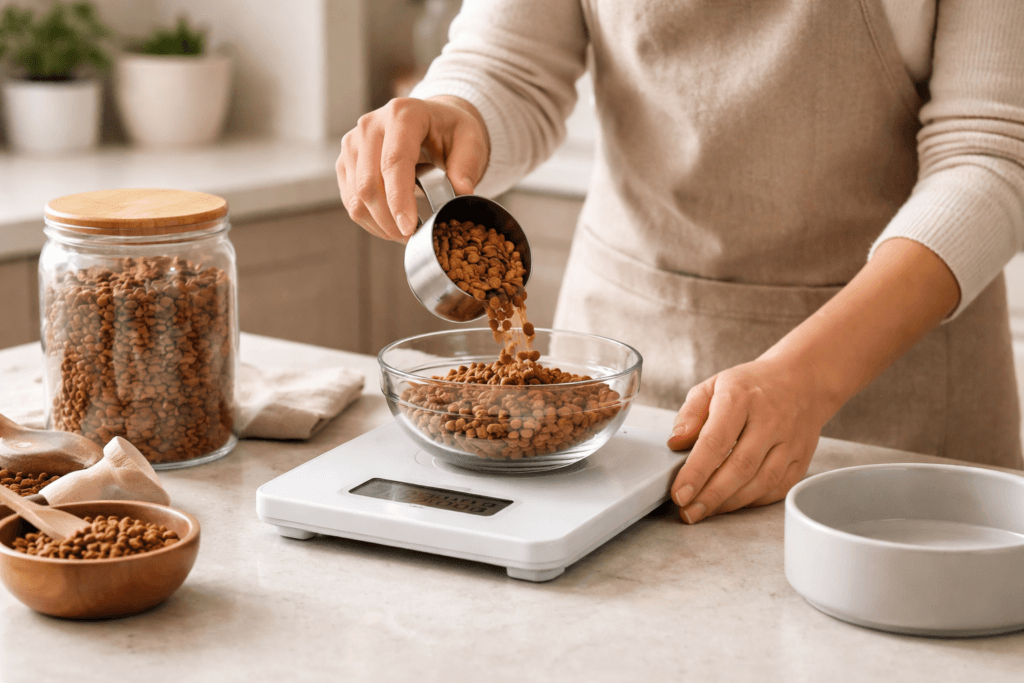
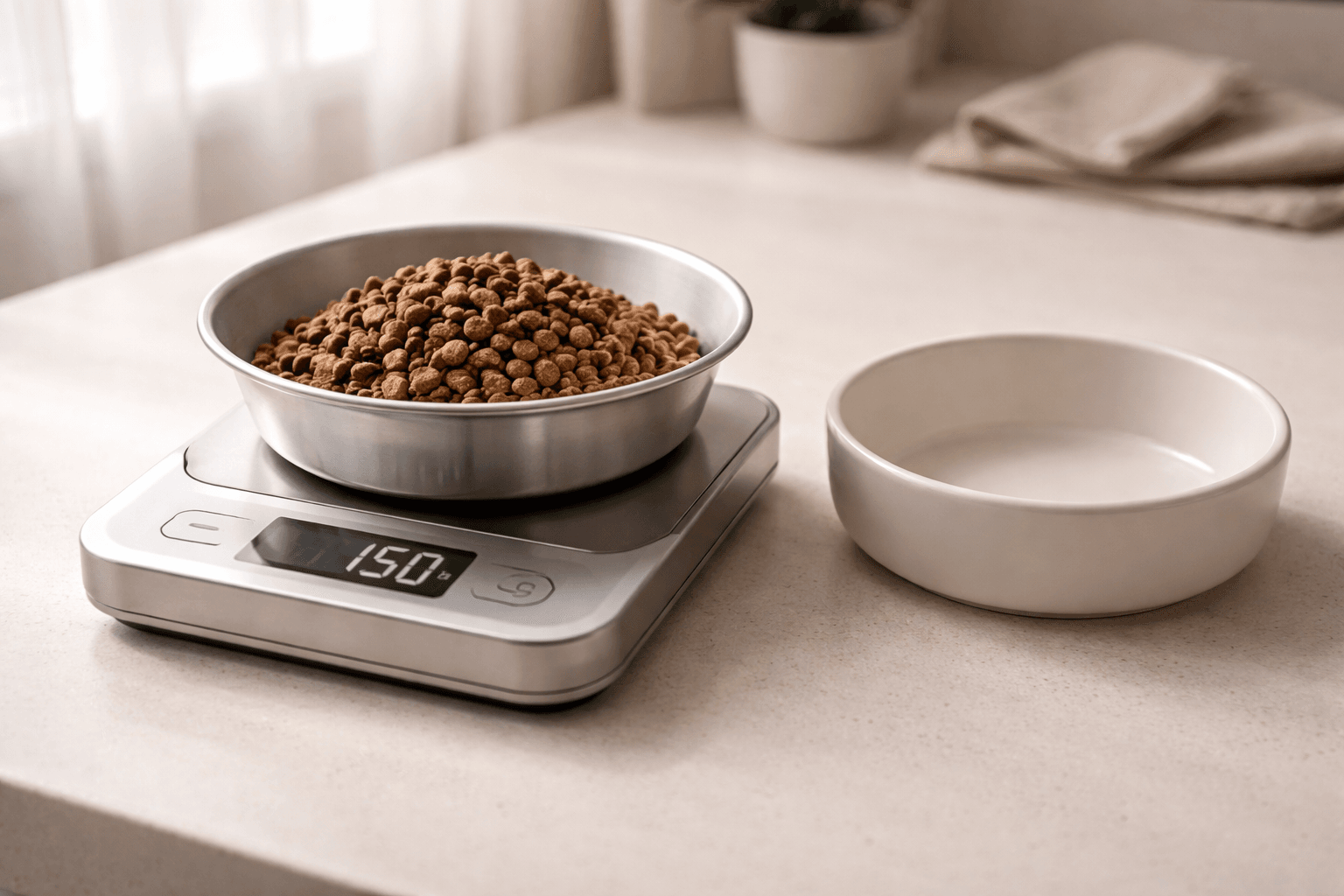
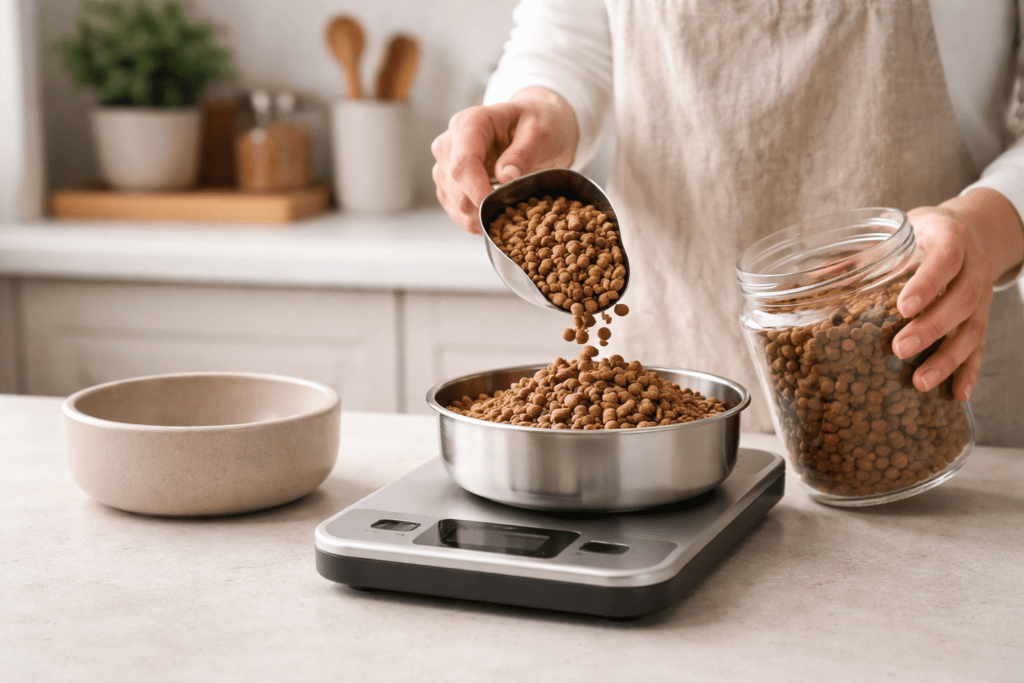
    Fix: weigh the daily amount in grams and make the feeder deliver that total across scheduled meals. You don’t need perfection—just repeatability you can audit.


    Mistake #9: Treats and human food aren’t tracked at all

    A feeder can be perfectly programmed and still fail because:

    • treats are constant
    • table food appears “sometimes”
    • training rewards are uncounted

    AVMA’s healthy weight guidance highlights how quickly extras add up and encourages shifting reward toward play/interaction rather than food.

    Fix: set a daily “treat budget,” or temporarily remove treats until weight stabilizes.


    Mistake #10: Assuming weight is the only metric that matters

    Weight changes slowly. Behavior changes faster.

    A better monitoring loop:

    • BCS monthly (visual + hands-on)
    • weight weekly (same scale, same time of day)
    • track begging intensity, pacing, and food fixation

    Cornell recommends owner monitoring and emphasizes gradual management.


    A quick smart-feeder audit (use this as your “pass/fail” checklist)

    If you answer YES to any of these, your feeder is likely supporting weight gain:

    • Do you dispense “extra” meals from the app more than once a week?
    • Do multiple people override the schedule?
    • Is the feeder a shared resource for multiple cats?
    • Have you never checked BCS using a standardized chart?
    • Do treats happen daily without a measured budget?
    • Is the feeder placed where other cats can block access?

    Fix the system first. The hardware will follow.


    Verdict

    Smart feeders don’t cause weight gain. They make weight gain easier to automate when feeding decisions are emotional, inconsistent, or poorly measured.

    Used correctly, smart feeders can be one of the cleanest tools for:

    • consistent portions
    • predictable timing
    • eliminating double-feeding
    • reducing human variability

    Used carelessly, they become:

    • a snack machine
    • a conflict magnet in multi-cat homes
    • a stealth calorie pipeline

    Internal Links
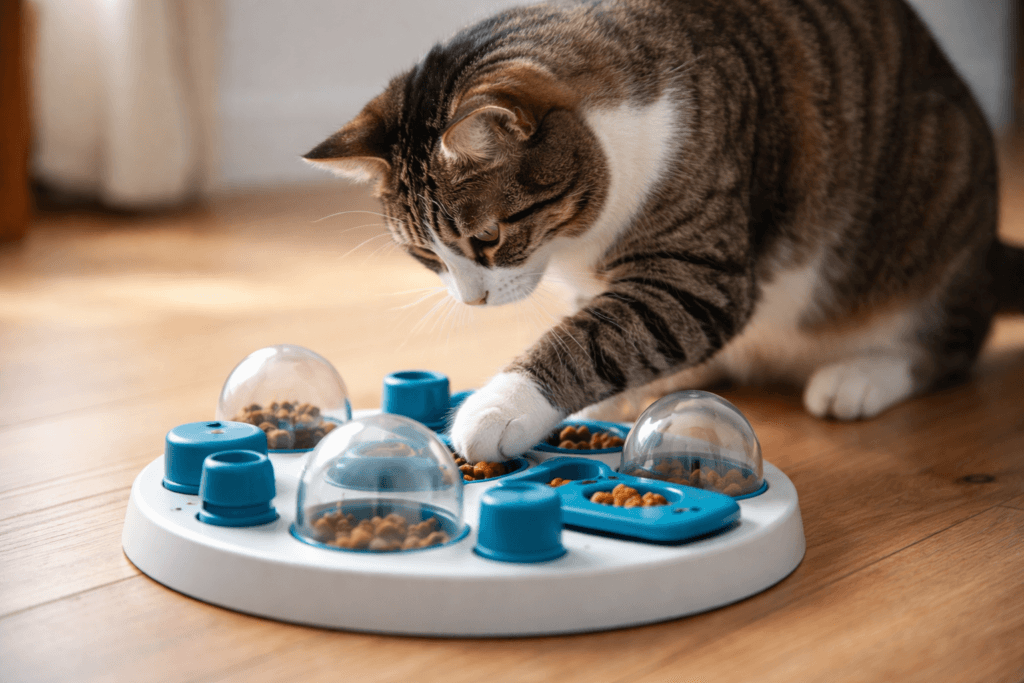
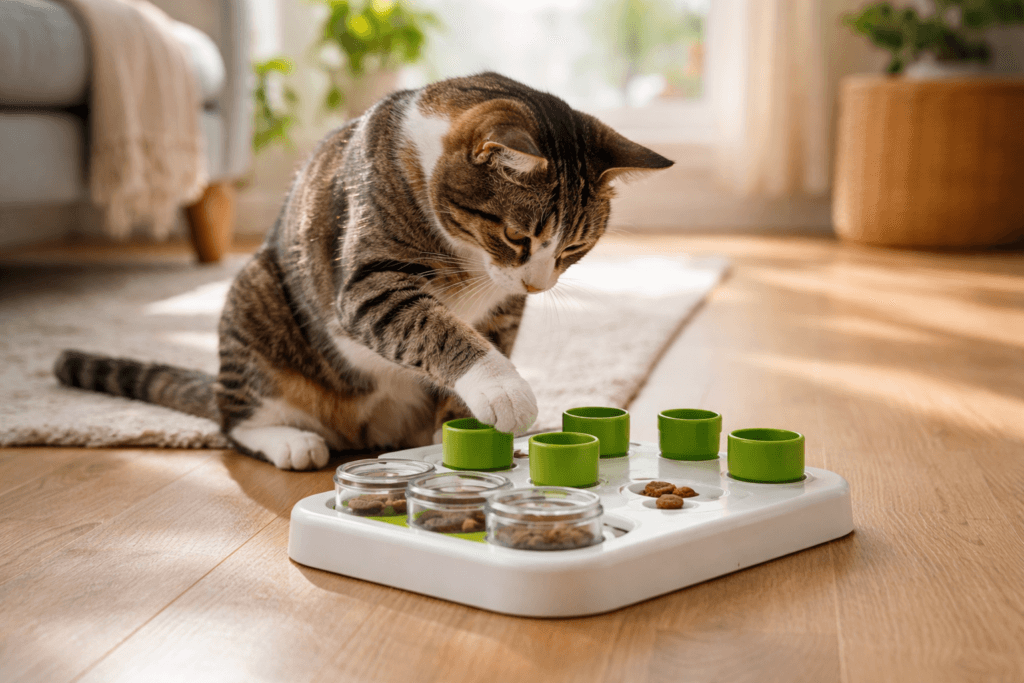
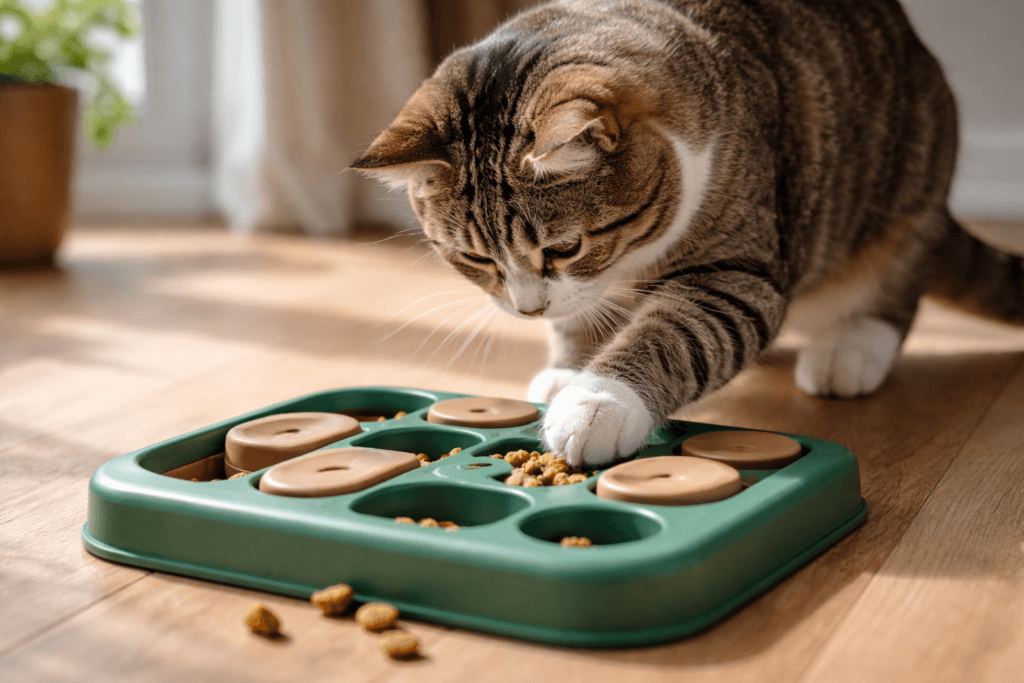
    Food puzzle enrichment reduces boredom-driven overeating

    If portion control and consistent meal timing are the priority, PETKIT Fresh Element Infinity Review 2025 shows how automated scheduling can stabilize daily intake. For a broader comparison of feeder designs and real-world use cases, Best Smart Cat Feeders 2025 helps you pick the right model for your home.

    When overeating is already established—especially begging, food obsession, or constant “I’m hungry” behavior—Stop a Cat From Overeating focuses on the behavioral and environmental drivers that a feeder can’t solve on its own. If excessive eating overlaps with restlessness or boredom, Indoor Cat Enrichment 2025 and Best Interactive Cat Toys 2025 explain how diet and enrichment work as one system, not isolated fixes.


    References

    • Cornell Feline Health CenterObesity (gradual weight loss; warning against sudden starvation diets; hepatic lipidosis risk).
    • Cornell Feline Health CenterHepatic Lipidosis (risk context; obesity as an underlying factor in many cases).
    • AAFP/ISFMFeline Environmental Needs Guidelines (2013) (environmental pillars; separate feeding stations and resource separation in multi-cat homes).
    • AVMAYour pet’s healthy weight (healthy-weight framing and owner guidance).
    • AVMA brochureYour pet’s healthy weight (PDF) (non-food rewards; reliance on food for comfort).
    • WSAVACat Body Condition Score (BCS) chart (9-point scale reference).

    Disclaimer

    PetTech AI publishes educational content to help cat owners make informed decisions about feline health, behavior, and pet technology. Some links on this page may be affiliate links, including Amazon Associate links and other affiliate partnerships. If you click a link and make a qualifying purchase, PetTech AI may earn a commission at no additional cost to you. These commissions support research, content production, and site maintenance. This article is not a substitute for veterinary diagnosis or treatment. For overweight cats, weight-loss plans should be discussed with a veterinarian to avoid unsafe calorie restriction and related risks.
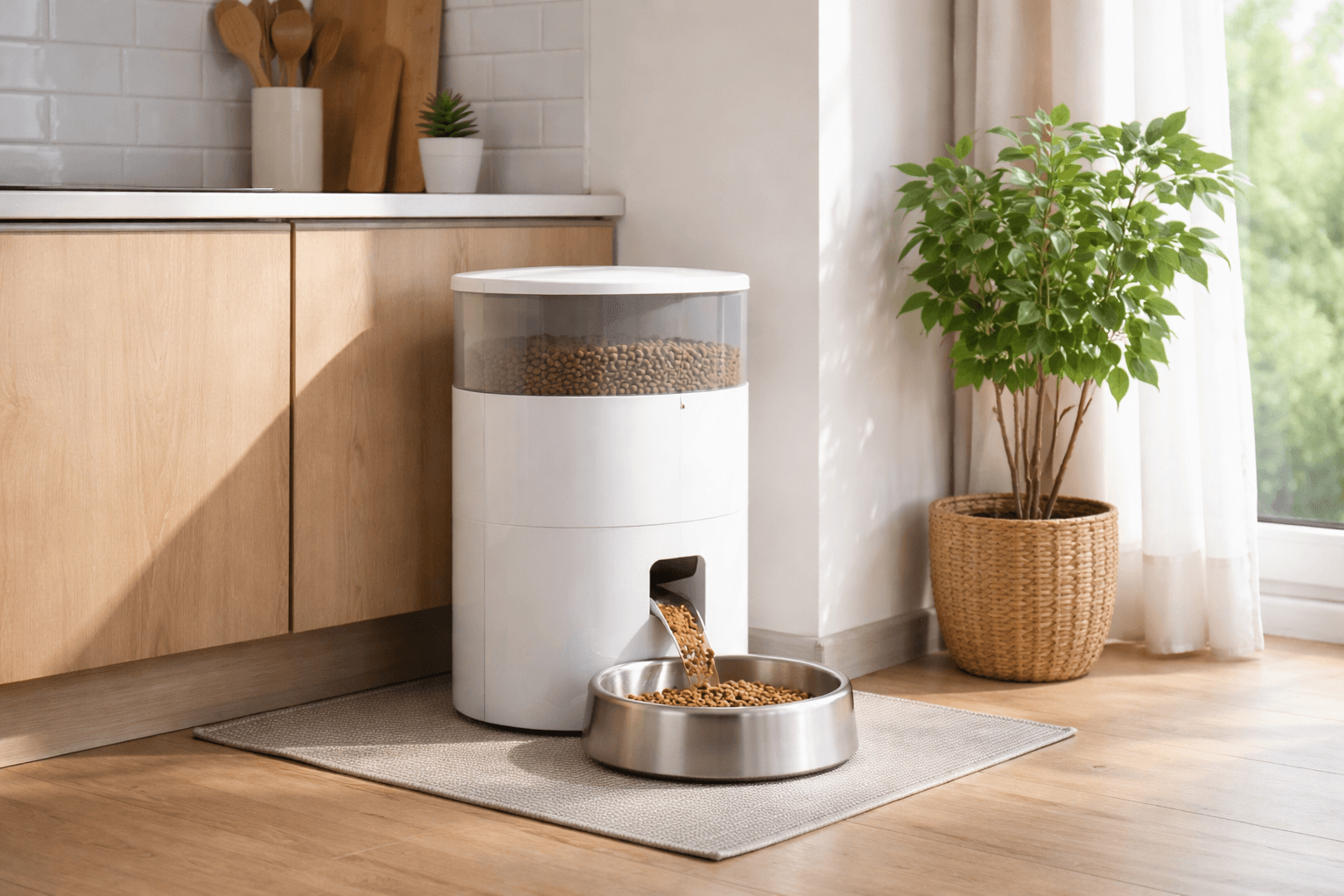
  • Do Smart Feeders Reduce Cat Obesity — or Just Make Overfeeding Easier? (2026)

    Do Smart Feeders Reduce Cat Obesity — or Just Make Overfeeding Easier? (2026)

    Smart feeders are marketed as a fix for feline obesity: measurable portions, scheduled meals, fewer “accidental” refills. In theory, automation removes the human from the equation—and therefore removes the problem.

    In real homes, smart feeders don’t reduce obesity by default. They either enforce discipline or quietly automate the same overfeeding habits that caused weight gain in the first place. The device doesn’t decide anything. The setup does.

    Cornell’s Feline Health Center is blunt about the basics: obesity is common, weight-loss should be gradual, and crash dieting can be dangerous (including risk of hepatic lipidosis). Cornell Vet College That matters because “tech fixes” often encourage people to move fast, restrict hard, and assume the feeder can do the thinking.

    It can’t.


    Cat obesity isn’t a “willpower” issue — it’s an environment issue

    If you zoom out, obesity usually happens when food becomes:

    • always available (free feeding)
    • emotionally deployed (“he seems sad, I’ll give him something”)
    • the main daily stimulation in an under-enriched indoor life

    The AAFP/ISFM Feline Environmental Needs Guidelines make a foundational point: a cat’s comfort with its environment is intrinsically linked to physical health, emotional wellbeing, and behavior—and addressing environmental needs is essential, not optional. PubMed Feeding is not just nutrition; it’s a core resource within that environment.

    If the environment pushes a cat toward food-seeking, a feeder won’t “fix” it—unless it changes the environment’s rules.


    Understanding Body Condition Score (BCS) in Cats

    Body condition score for cats chart

    Before changing feeding methods or cutting calories, it’s essential to establish whether a cat is actually overweight. The most widely used clinical tool for this is the Body Condition Score (BCS), a visual and hands-on scale that evaluates body fat rather than relying on weight alone.

    Veterinary guidelines typically use a 9-point BCS scale, where:

    • BCS 4–5 is considered ideal
    • BCS 6–7 indicates overweight
    • BCS 8–9 reflects obesity

    A cat at an ideal BCS has a visible waist when viewed from above, minimal abdominal fat, and ribs that can be felt easily under a light fat layer. As BCS increases, the waist disappears, fat pads become more pronounced, and mobility often declines—even before weight gain looks “dramatic.”

    According to guidance from the Cornell Feline Health Center, BCS is a more reliable indicator of health risk than body weight alone, especially in indoor cats with low activity levels. While BCS is not a medical diagnosis, it provides a practical reference point for deciding whether feeding routines and portion sizes need adjustment—and how urgently.


    The only mechanism by which smart feeders help: predictability + portion control

    Smart feeders reduce obesity only when they do two things consistently:

    1. Lock in portions
    2. Lock in timing

    That’s it. Everything else (app controls, cameras, voice prompts) is secondary.

    Why this works:

    • Portions reduce silent calorie creep.
    • Predictable timing reduces constant grazing and can reduce “learned begging” in many households.

    Cornell’s feeding guidance emphasizes the risks tied to overweight and obesity, and frames weight management as a practical, measured process—not a quick reset. Cornell Vet College A feeder that delivers consistent portions can support that process if the numbers are correct.

    But “consistent” isn’t the same as “correct.”

    A perfectly consistent wrong setting is how obesity gets automated.


    The quiet failure mode: smart feeders make it easier to overfeed without noticing

    This is the part the industry doesn’t like to talk about.

    Smart feeders can hide overfeeding because they:

    • remove the physical act of scooping (your brain stops tracking quantity)
    • make “just a little more” a button press
    • encourage micro-feeding that feels harmless but adds up

    When obesity persists in a smart-feeder home, it’s usually one of these:

    1) Portion math is wrong

    People program by “cups” or “scoops” instead of calories. Then they wonder why nothing changes.

    2) The app becomes a treat dispenser

    Random “bonus” feeds train food obsession and inflate intake.

    3) Household discipline collapses

    One person uses the feeder schedule. Another overrides it “sometimes.” The cat learns the system is negotiable.

    Automation doesn’t stop inconsistency. It makes it easier to be inconsistent more often.


    Free feeding vs scheduled feeding: the obesity hinge point

    Measuring cat food by weight to prevent portion creep

    Free feeding is one of the most common patterns linked to weight gain in cats—especially when dry food is available all day. Cornell’s obesity guidance discusses free-feeding as a major factor behind feline obesity and pushes measured, veterinarian-guided plans. Cornell Vet College

    Scheduled feeding changes the control surface:

    • you can measure intake
    • you can notice changes earlier
    • you can actually implement a weight plan

    A feeder supports scheduled feeding well—if you don’t sabotage it.


    “But my cat acts starving”: hunger vs food arousal

    This is where most owners get played.

    Many cats show intense pre-meal behaviors:

    • vocalizing
    • pacing
    • hovering near the feeder
    • increased reactivity

    That behavior isn’t proof the cat needs more calories. It’s proof the cat has learned a high-reward pattern.

    If you respond to that arousal by dispensing extra food, you train:

    • more arousal
    • more persistence
    • more food obsession

    The AAFP/ISFM framework and resource-based environmental models emphasize predictable, separated key resources and the importance of giving cats control and stability. SAGE Journals Food becomes a problem when it’s the only consistent “event” in the home.


    Multi-cat homes: obesity often comes from competition, not appetite

    Separate feeding stations reduce competition in multi-cat homes

    In multi-cat households, “one cat got fat” often means:

    • one cat guards the resource
    • one cat rushes eating (then returns for leftovers)
    • one cat under-eats, then compensates later
    • stress increases overall food fixation

    AAFP/ISFM-aligned guidance recommends multiple and separated key resources, including feeding stations, to reduce stress and competition. SAGE Journals

    Smart feeders can help here in a practical way:

    • multiple feeders
    • separated placement
    • consistent timing

    One feeder in one location can worsen competition. Two feeders in two territories can reduce it.


    The risk people ignore: aggressive calorie cuts can be dangerous

    This is non-negotiable.

    Cornell warns that sudden starvation diets can put cats at risk for hepatic lipidosis and recommends gradual weight loss (often framed around roughly 1–2% per week) under veterinary guidance. Cornell Vet College

    A feeder makes restriction easy. Too easy.
    If you use automation to slash intake without a plan, you can create a medical risk.

    If your cat is obese, the correct move is:

    • vet-guided calorie target
    • slow reductions
    • monitoring (weight + body condition score)
    • adjustments over time

    Automation helps execution, not diagnosis.


    The honest verdict

    Smart feeders reduce obesity when:

    • portions are set correctly and measured
    • schedule is consistent
    • overrides are rare
    • enrichment replaces boredom-driven eating
    • multi-cat resources are separated

    Smart feeders make obesity easier when:

    • “bonus” feeding becomes normal
    • portion settings are guessed
    • household members override unpredictably
    • the feeder becomes the cat’s main stimulation

    If you want the blunt version:
    smart feeders don’t prevent obesity. They prevent humans from noticing they’re overfeeding—unless they use the feeder as a discipline tool.


    What to do if you’re considering automation

    Food puzzle enrichment reduces boredom-driven overeating

    If your problem is portion creep, inconsistent schedules, or double-feeding, smart feeding can help—but only if you treat setup like a protocol, not a toy.

    Ready to tighten portions and timing without guesswork?
    Start with our PETKIT Fresh Element Infinity Review 2025 (practical scheduling + routine control), then compare models and use-cases in Best Smart Cat Feeders 2025 to find the right fit.

    And if your cat’s overeating looks behavioral—not nutritional—use Stop a Cat From Overeating as your first-line playbook before you change hardware.


    FAQ

    Do smart feeders automatically help cats lose weight?

    No. They help only if the programmed portions match an appropriate calorie target and overrides are controlled. Cornell Vet College

    Is free feeding bad for cats?

    For many indoor cats, it increases the risk of overeating and weight gain. Weight control is harder without measured meals. Cornell Vet College

    Can a feeder reduce stress-related eating?

    Sometimes. Predictability can help, but environmental needs still matter. The AAFP/ISFM guidelines treat environment as essential to wellbeing and behavior. PubMed

    What about multi-cat homes?

    Separate resources and feeding stations reduce competition. AAFP/ISFM-aligned guidance emphasizes multiple, separated resources including feeding areas. SAGE Journals

    Is rapid weight loss dangerous in cats?

    Yes. Cornell warns against sudden starvation diets due to hepatic lipidosis risk and recommends gradual, monitored loss. Cornell Vet College


    Internal Links

    If consistent portions and fixed feeding times are the main priority, PETKIT Fresh Element Infinity Review 2025 shows how a properly configured smart feeder can remove daily variability and enforce routine without guesswork. For owners who want to compare different feeder designs, control methods, and real-world use cases, Best Smart Cat Feeders 2025 offers a broader, side-by-side evaluation.

    When overeating is already established—especially in cases of persistent begging, food obsession, or constant “I’m hungry” behavior—Stop a Cat From Overeating focuses on behavioral and environmental drivers that feeding hardware alone can’t solve. And when excessive eating overlaps with restlessness or boredom, Indoor Cat Enrichment 2025 and Best Interactive Cat Toys 2025 explore how diet and enrichment work together as a single system, rather than isolated fixes.


    References

    • Cornell Feline Health Center — Obesity (risk, safe weight loss, hepatic lipidosis warning, gradual loss guidance). Cornell Vet College
    • Cornell Feline Health Center — How often should you feed your cat? (health risks tied to overweight/obesity and feeding guidance). Cornell Vet College
    • Ellis et al. (2013) — AAFP and ISFM Feline Environmental Needs Guidelines (key resources and the link between environment, health, and behavior). SAGE Journals
    • VCA Hospitals — Feline Environmental Needs Guidelines (overview) (multiple/separated resources including feeding stations). Vca
    • AVMA — Your pet’s healthy weight (owner guidance and obesity/healthy weight framing). avma.org

    Disclaimer

    PetTech AI publishes educational content to help cat owners make informed decisions about feline health, behavior, and pet technology. Some links on this page may be affiliate links, including Amazon Associate links and other affiliate partnerships. If you click a link and make a qualifying purchase, PetTech AI may earn a small commission at no additional cost to you. These commissions help support research, content production, and site maintenance. This article is not a substitute for veterinary diagnosis or treatment. For obese cats, weight-loss plans should be discussed with a veterinarian to avoid unsafe calorie restriction and related risks.
  • Smart Feeders vs Manual Feeding 2026: What Actually Changes a Cat’s Behavior (Not What You Think)

    Smart Feeders vs Manual Feeding 2026: What Actually Changes a Cat’s Behavior (Not What You Think)

    If we’re talking without filters, the “smart feeders are lazy” vs “manual feeding is love” debate is mostly human projection. Cats don’t evaluate your intentions. They respond to predictability, resource control, and environmental stability—and feeding is one of the strongest daily signals a cat gets.

    This smart feeders vs manual feeding 2026 analysis focuses on what changes in real homes: begging, anticipatory pacing, food obsession, multi-cat tension, and stress behaviors that owners mislabel as “attitude.” The goal isn’t to crown a winner. It’s to identify which system produces behavioral stability and which one quietly creates the mess.


    The uncomfortable baseline of smart feeders vs manual feeding 2026

    A cat’s relationship with food is rarely “just food.” It’s a structured ritual that touches:

    • circadian timing (when the day “starts”)
    • territory and safety (where the resource lives)
    • social dynamics (who controls access)
    • arousal cycles (anticipation → outcome → recovery)

    The AAFP/ISFM environmental needs guidelines are blunt: a cat’s comfort with its environment is linked to physical health, emotional wellbeing, and behavior—and meeting those environmental needs is essential. PubMed

    So in smart feeders vs manual feeding 2026, the real question is:

    Which system makes the environment more predictable and controllable—for the cat?


    Manual feeding: what it gets right (and where it typically fails)

    Measuring cat food portions during manual feeding for consistency

    Manual feeding can be excellent. It’s flexible, responsive, and it can be used for training. The problem is: most humans don’t execute it like a disciplined protocol. They execute it like a mood.

    Manual feeding tends to work when:

    • meals happen at consistent times
    • portions are measured
    • all household members follow the same rulebook
    • food isn’t used to “fix feelings” (yours or the cat’s)

    Manual feeding fails in predictable ways:

    • timing drift (weekends, late nights, travel)
    • double-feeding (multiple people “just topping it off”)
    • demand feeding (cat begs → human rewards → begging escalates)

    A major veterinary behavior insight here: once you reinforce begging, removing that reinforcement can cause a temporary spike (“extinction burst”) where the behavior gets louder before it fades. That’s not a “worse cat.” That’s learning. PMC

    So in smart feeders vs manual feeding 2026, manual feeding isn’t “bad.” It’s simply high variance.


    Smart feeders: what actually changes (when configured correctly)

    A smart feeder isn’t magic. It’s a consistency machine. The behavioral effect comes from one thing:

    it removes human variability from the feeding loop.

    When smart feeding is done correctly, the cat experiences:

    • reliable timing (less vigilance)
    • consistent portions (less food uncertainty)
    • less dependence on human presence for resource access

    That predictability matters because cats show anticipatory behaviors as feeding time approaches—activity rises, arousal ramps, and the cat becomes more reactive. Scheduled feeding can reduce begging, but it can also concentrate anticipation around predictable mealtimes. PMC

    This is why smart feeders vs manual feeding 2026 is not “automation vs love.” It’s structure vs noise.


    The “predictability paradox”: why some cats pace more on schedules

    Here’s the nuance most blogs miss.

    Scheduled feeding can reduce all-day begging, but it can increase short-window anticipation near the scheduled time. PMC

    That doesn’t mean schedules are wrong. It means you need to manage anticipation:

    • break daily intake into predictable, spaced meals
    • pair feeding with calm pre-meal routines (quiet, not hype)
    • avoid cues that artificially spike arousal (shouting “dinner!” + running to the bowl)

    There’s even a welfare literature on quantifying anticipatory response in cats using conditioned cues, showing cats can develop measurable anticipatory patterns when food becomes predictable. Cambridge University Press & Assessment

    So in smart feeders vs manual feeding 2026, “predictability” is good—but predictability plus overstimulation is not.


    Where smart feeders make behavior worse

    Smart feeders fail when humans turn them into slot machines.

    Common sabotage patterns:

    • random “bonus snacks” via app
    • inconsistent overrides (“I’ll just feed early today”)
    • using food as entertainment
    • portions set wrong, repeated perfectly every day (automation of a mistake)

    Automation without discipline doesn’t reduce uncertainty—it industrializes it.

    That’s the real split in smart feeders vs manual feeding 2026:
    Are you using the feeder to enforce structure, or to express impulses?


    Multi-cat homes: the part nobody wants to admit

    Separate feeding stations to reduce competition in multi-cat homes

    A large chunk of “behavior problems” in multi-cat homes are resource problems disguised as personality.

    AAFP/ISFM guidelines explicitly recommend thoughtful resource distribution, including feeding locations that reduce competition and stress. CVMA

    Manual feeding in multi-cat homes often creates:

    • guarding
    • rushed eating
    • “I didn’t eat” deception (one cat steals, the other complains)
    • conflict spikes when the human isn’t supervising

    Smart feeders can help if they support separation (multiple stations, controlled access). If they become a single contested hotspot, they can worsen tension.

    That’s why smart feeders vs manual feeding 2026 is partly a household design question, not just a feeding preference.


    Weight, overeating, and the myth of “self-regulation”

    If your cat is free-fed dry food and gaining weight, you don’t have a “weak will” cat. You have a system that makes overeating easy.

    Cornell’s Feline Health Center explicitly calls out “free feeding” as a major contributor to feline obesity. vet.cornell.edu
    Cornell also emphasizes weight management as a core part of feeding decisions. vet.cornell.edu

    Research on meal frequency and metabolic outcomes in cats suggests feeding patterns can affect activity and physiological markers; in one controlled study, feeding once daily showed differences relevant to satiety and lean mass outcomes compared with multiple meals (context matters, but the takeaway is: feeding structure changes physiology, not just behavior). PLOS

    So in smart feeders vs manual feeding 2026, automation can be a behavioral tool because it can enforce measured intake—but only if you set it correctly.


    Amazon-verified products that fit this debate

    PETKIT has an official Amazon store page for feeding products, including automatic feeders (some with camera features). amazon.com

    • PETKIT automatic feeders (Amazon US official store page) — good for consistent scheduling and portion control when configured correctly. amazon.com

    If your biggest problem is inconsistent portions or mealtimes, start with our PETKIT Fresh Element Infinity Review 2025 to see how automated scheduling can reduce food-related chaos—then compare alternatives in Best Smart Cat Feeders 2025 to find the best fit for your setup.


    The real conclusion of smart feeders vs manual feeding 2026

    Food puzzle enrichment that reduces boredom-driven food obsession

    Most people who claim manual feeding is “better for bonding” are actually defending inconsistency.
    And most people who buy a smart feeder hoping it will “fix behavior” are trying to outsource discipline.

    Cats don’t care about the story. They care about outcomes.

    In smart feeders vs manual feeding 2026, behavior improves when:

    • timing is stable
    • portions are measured
    • the environment is predictable
    • enrichment replaces boredom-driven food obsession

    Behavior worsens when:

    • feeding becomes emotional
    • rules change daily
    • food is used as a remote-control device for guilt

    Practical decision point

    Choose manual feeding if you can honestly commit to:

    • consistent meal times
    • measured portions
    • one household rulebook
    • no demand-feeding

    Choose a smart feeder if:

    • your schedule is irregular
    • multiple people feed the cat
    • you’re managing overeating / food obsession
    • you need structure you can’t reliably maintain manually

    That’s the real smart feeders vs manual feeding 2026 verdict:
    structure wins—whatever tool delivers it.


    FAQ: smart feeders vs manual feeding 2026

    Do smart feeders reduce begging?
    Often, yes—because scheduled feeding reduces reinforcement for “ask and receive,” though you may see anticipation near mealtimes. PMC

    Can scheduled feeding increase pacing?
    It can concentrate anticipation into predictable windows; this is a known welfare/behavior phenomenon in cats. Cambridge University Press & Assessment

    Is free-feeding actually harmful?
    In many cats it contributes to excess intake and weight gain; Cornell specifically flags free feeding as a major factor in feline obesity. vet.cornell.edu

    What matters more: number of meals or consistency?
    Consistency is the backbone; meal frequency should be chosen based on the cat’s health, behavior, and the household’s ability to maintain routine. Evidence shows feeding patterns can influence activity and metabolic markers. PLOS

    What if my cat seems anxious when I leave?
    Food predictability can reduce baseline vigilance, but separation-related stress is often environmental; the AAFP/ISFM framework emphasizes environment as essential for wellbeing. PubMed


    Internal Links

    Want a structured, real-world example of automated feeding done right? Read our PETKIT Fresh Element Infinity Review 2025 and see how scheduling and portion control can reduce daily feeding chaos. If you’re still comparing options, use Best Smart Cat Feeders 2025 to pick the right model for your home and your cat’s eating style.

    If overeating is already the main symptom, don’t guess—jump to our Stop a Cat From Overeating guide for behavior-first tactics that pair diet with environment. And if the root issue is boredom-driven food fixation, Indoor Cat Enrichment 2025 plus Best Interactive Cat Toys 2025 show how to redirect arousal away from the bowl.


    References

    • AAFP/ISFM Feline Environmental Needs Guidelines (2013) — environment as essential for wellbeing; guidance on resources including feeding distribution and competition reduction. PubMed
    • Delgado (2020) Feeding Cats for Optimal Mental and Behavioral Well-Being — scheduled feeding, begging, anticipatory behavior, reinforcement dynamics. PMC
    • Camara et al. (2020) PLOS ONE — meal frequency and effects on activity/metabolic markers in cats (feeding pattern matters). PLOS
    • Cornell Feline Health Center — obesity and feeding guidance; free-feeding as a major contributor; feeding and weight management basics. vet.cornell.edu
    • Tomi et al. (2011) — protocol to quantify anticipatory response in cats (predictable food cues shape behavior). Cambridge University Press & Assessment

    Disclaimer

    PetTech AI publishes educational content to help cat owners understand feline behavior, health, and pet technology. Some pages include affiliate links, including Amazon Associate links and other affiliate partnerships. If you click a link and make a qualifying purchase, PetTech AI may earn a commission at no extra cost to you. These commissions support research time, product testing, and site maintenance. Product availability and features can change, so always confirm current details on the retailer’s listing before purchasing. This article is not a substitute for veterinary diagnosis, treatment, or individualized nutrition planning—especially for cats with medical conditions.

  • Smart Treat Dispensers for Cats 2025: Best Amazon Picks, Setup Tips, and Healthy Use

    Smart Treat Dispensers for Cats 2025: Best Amazon Picks, Setup Tips, and Healthy Use

    Smart treat dispensers for cats 2025 aren’t just “cute tossers.” When used well, they’re structured enrichment and micro-training tools that break up boredom, reward calm behavior, and help you bond remotely—without blowing your cat’s calorie budget. Below you’ll find the best Amazon-available models, clear setup guidance, and vet-aligned nutrition notes so you can use smart treat dispensers for cats 2025 like a pro.


    Why use smart treat dispensers for cats 2025?

    Indoor cats thrive on routine and short, predictable interactions. Timed or on-demand tosses create “micro-sessions” that reinforce calm sits, carrier desensitization, or recall to a mat. The right smart treat dispensers for cats 2025 also let you check in by video, talk to your cat, and log when dispensing happens—useful for multi-person households.

    Key idea: smart treat dispensers for cats 2025 are timers + clickers + (optional) cameras in one.


    The 3 best smart treat dispensers for cats 2025 (Amazon picks)

    Petcube Bites 2 Lite vs Bites 2 camera angles and features.

    All three links go straight to their Amazon product pages (US).

    1) Petcube Bites 2 Lite — best value pick

    Amazon link
    Why it stands out: true 1080p video with 110° wide angle, 30-ft night vision, 8× digital zoom, and two-way audio; a dishwasher-safe treat container (~1.5 lb) lets you toss treats short/medium/long or schedule auto-dispensing in the Petcube app. Motion/sound alerts are supported (advanced AI under optional Care plan). Amazon

    Good for: first smart dispenser, renters, and anyone who wants camera + dispenser in a single affordable unit.


    2) Petcube Bites 2 — best camera + connectivity

    Amazon link
    Why it stands out: 1080p video with an ultra-wide 160° view, two-way audio, night vision, and fast setup; supports both 2.4 GHz and 5 GHz Wi-Fi (handy if you’ve modernized your home network). Alexa Built-in rounds out voice control basics. Amazon

    Good for: folks who want a wider room view and robust Wi-Fi flexibility in their smart treat dispensers for cats 2025 short-list.


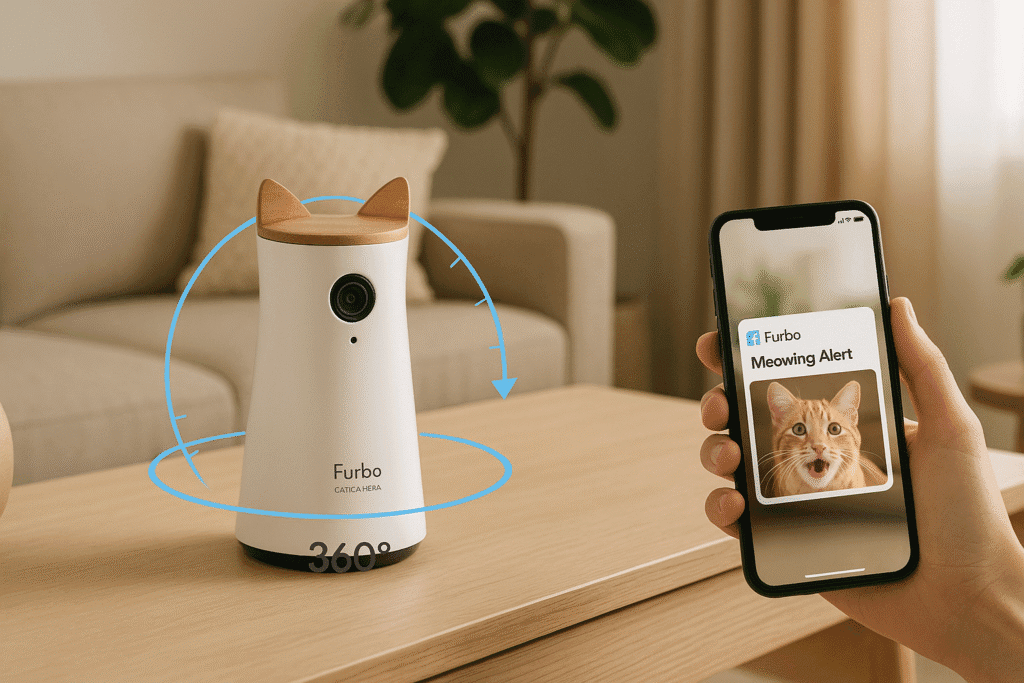
    3) Furbo 360° Cat Camera — best for meowing alerts + 360° pan

    Furbo 360 Cat Camera with 360° rotating view and meowing alerts.

    Amazon link
    Why it stands out: 1080p camera with 360° rotating view, two-way audio, treat toss via phone app, and meowing alerts designed for cat households. “Standard see/talk/toss” features are usable without a subscription; some advanced features (e.g., historical event clips) may sit behind Furbo plans. Amazon

    Good for: owners who want full-room coverage and audio-based alerts inside their smart treat dispensers for cats 2025 ecosystem.


    How to choose (features that truly matter)

    • Treat size tolerance & anti-clog design: Small, uniform, crunchy treats (≈8–12 mm) jam less. Look for a smooth, sloped chute.
    • Scheduling + manual toss: The best smart treat dispensers for cats 2025 let you run 1–3 micro-windows daily and still toss ad-hoc.
    • Video quality & night vision: 1080p + decent night vision helps with shy cats and nighttime check-ins (both Petcube models provide this). Amazon
    • Connectivity: If your router is 5 GHz-only in the install spot, note that Bites 2 supports 2.4/5 GHz; Bites 2 Lite works on 2.4 GHz. Amazon
    • App polish & alerts: Motion/sound alerts are common; “meowing alerts” are Furbo’s standout. Amazon

    Setup that actually works (and keeps cats calm)

    1. Station selection: waist-high shelf or wall mount in a quiet area—don’t aim toward doors where guarding or dashing can happen.
    2. Mat zone: place a small mat 1–2 m in front. Only toss when your cat is on the mat (prevents “begging at the machine”).
    3. Treat test: run 10–20 test tosses with your chosen treat and vacuum dust from the tray to reduce clogs.
    4. Short windows: schedule two micro-windows (AM and early evening, ≤90 seconds). You can still manually toss during training.
    5. Pair with play: after the evening toss, 3–5 minutes of wand play; end with one treat to signal “all done.”

    Health & nutrition: how many treats are okay?

    Treats are not balanced food. Cornell notes a good rule of thumb: treats shouldn’t exceed ~10–15% of daily calories for healthy adult cats. vet.cornell.edu The simplest plan is to log treat calories and shave a bit off dinner to keep weight stable. Routine veterinary exams remain essential (AAHA-AVMA guidelines advise at least annual wellness visits, more often for seniors/at-risk). avma.org

    Pro tip: if your cat suddenly eats less, vocalizes more, or changes litter-box habits, don’t assume it’s “behavior.” Medical causes are common drivers of house-soiling and box avoidance—call your vet. vet.cornell.edu


    Smart Treat Dispensers as Part of a Balanced Feeding Routine

    Used correctly, smart treat dispensers for cats 2025 can support—not disrupt—a healthy diet. The key is integration: schedule treat sessions around meal times to reinforce positive habits rather than create random snacking. Many owners find that offering a few measured treats before scheduled meals reduces anxiety and prevents “food guarding” behavior. When linked with smart feeders or weight scales, these devices can provide calorie insights over time, helping you fine-tune daily intake. The result is a routine where treats become training tools and data points instead of dietary risks.
    Cornell veterinarians emphasize that predictability reduces stress-related overeating and maintains stable digestion. Aligning smart treat schedules with consistent meal times is the simplest way to create a healthier, calmer feeding rhythm—especially in multi-cat households.


    Real-world playbooks (using smart treat dispensers for cats 2025)

    Calm mat training with a smart treat dispenser using smart treat dispensers for cats 2025.
    • Carrier confidence: dispenser by the carrier → toss for approach → paws in → close door briefly → quiet release → treat.
    • Nail-trim desensitization: treat for calm on the mat before/after one nail tip.
    • Night routine: 8–9 pm micro-window + short wand play + final treat; reduces 3 am zoomies.
    • Multi-cat fairness: two identical devices or two zones; synchronize drops to avoid crowding or guarding.

    The through-line: smart treat dispensers for cats 2025 should reward calm, quiet behavior—not meowing at the machine.


    Product snapshots (quick specs you’ll care about)

    • Petcube Bites 2 Lite — 1080p, 110° view, 30-ft night vision, 8× digital zoom, two-way audio, scheduled or remote toss; dishwasher-safe treat container (~1.5 lb); motion/sound alerts (advanced AI requires Petcube Care). Amazon
    • Petcube Bites 2 — 1080p, 160° ultra-wide view, two-way audio, night vision; 2.4 GHz + 5 GHz Wi-Fi support; Alexa Built-in. Amazon
    • Furbo 360° Cat Camera — 1080p, 360° rotating view, treat toss via app, two-way audio, meowing alerts; standard see/talk/toss features usable without a subscription (advanced features may require a plan). Amazon

    Pros & cons of smart treat dispensers for cats 2025

    Pros

    • Adds structure and enrichment during workdays.
    • Remote rewards for training and recall, plus check-ins by video.
    • App logs help you spot overuse or begging patterns.

    Cons

    • Over-treating → weight creep; stick to the 10% rule. vet.cornell.edu
    • Soft/crumbly treats can jam chutes; choose small, uniform kibbles.
    • Some cats fear loud tossers—pick quieter models and go slow.

    Buying advice (price, reliability, ecosystem)

    If you already run a home on Petcube or Furbo, staying within that app reduces friction. For pure value in smart treat dispensers for cats 2025, start with Petcube Bites 2 Lite; for top camera coverage + dual-band Wi-Fi, Petcube Bites 2; if you want 360° + meowing alerts, Furbo 360° Cat Camera is the most “cat-specific” option.


    Troubleshooting (fast fixes)

    • Treats don’t toss: switch to a smaller, rounder treat; clean dust; run 10 test tosses.
    • Drops cause crowding: in multi-cat homes, mirror-schedule two devices in opposite corners.
    • Connectivity weirdness: confirm 2.4 GHz availability (Bites 2 Lite) or use 5 GHz-capable hardware (Bites 2).
    • Anxious cat: turn down toss distance; pair with quiet verbal praise via two-way audio.

    Verdict: which smart treat dispensers for cats 2025 should you buy?

    If you want reliable tosses and a solid app at the best price, pick Petcube Bites 2 Lite. If you need the widest camera view and 5 GHz support, go Petcube Bites 2. If your priority is meowing alerts and full-room coverage, get Furbo 360° Cat Camera. All three are strong smart treat dispensers for cats 2025 when used with short schedules, the right treats, and a strict calorie cap.


    FAQs (quick answers)

    Do I need a camera?
    Not strictly. But camera + two-way audio improves training timing and peace of mind (Petcube/Furbo do this well).

    What size treats work best?
    Small, uniform, crunchy bits (≈8–12 mm). Avoid soft cubes and crumbly freeze-dried chunks unless the brand specifies support.

    How many treats per day?
    Keep treats to ≤10–15% of your cat’s daily calories and adjust meal portions to compensate. vet.cornell.edu

    Are sudden litter-box changes behavioral?
    Sometimes—but medical causes are common, so call your vet if habits change. vet.cornell.edu


    Internal links (PetTech AI)


    Authoritative outbound links

    • Cornell Feline Health Center — Feeding Your Cat (treats ≤10–15% of calories). vet.cornell.edu
    • AAHA-AVMA Feline Preventive Healthcare Guidelines (at least annual vet exams). avma.org

    Disclaimer

    This guide is for educational purposes only and does not replace professional veterinary advice. Smart treat dispensers for cats 2025 are tools for enrichment and training—not meal replacements. Keep total treats under 10–15% of daily calories, monitor weight weekly, and consult your veterinarian if you notice changes in appetite, thirst, litter-box habits, activity, or behavior. Some products mentioned include affiliate links to Amazon. If you purchase through these links, PetTech AI may earn a small commission at no extra cost to you. This helps fund independent testing and maintain evidence-based, unbiased reviews.