Tag: positive reinforcement

  • Kitty Training Recommendations 2025: Expert Tips to Raise a Well-Behaved Cat

    Kitty Training Recommendations 2025: Expert Tips to Raise a Well-Behaved Cat

    Affiliate Disclaimer: PetTech AI participates in the Amazon Associates, Petkit, and Whisker affiliate programs. We may earn a small commission from qualifying purchases at no extra cost to you. We only recommend products that support feline wellbeing and safety.

    Training a cat isn’t about obedience for its own sake—it’s about safety, confidence, and reducing stress for your kitty and your household. With the right plan, your cat can learn reliable litter habits, scratch in the right places, accept handling and grooming, enjoy carrier time, and come when called. This guide distills proven behavior science into clear, gentle steps—designed for busy people and curious cats. If you’re looking for kitty training recommendations 2025, you’re in the right place.


    1) The science behind success: reinforcement beats punishment

    Cats repeat what works for them. That means positively reinforcing the behaviors you want (with food, play, or praise) and making unwanted options less rewarding. Punishment creates fear and avoidance; it does not teach what to do instead. The Cornell Feline Health Center and the AVMA both emphasize routine, predictable environments, and low-stress handling as pillars of feline behavior care—exactly the basis for kitty training recommendations 2025.

    Why it works

    • Rewards build clear associations faster than corrections.
    • Short, frequent sessions prevent frustration.
    • Consistent cues + consistent timing = reliable habits.

    2) House rules that keep training on track

    Before “tricks,” lock in the basics: stable meal times, environmental layout, and a daily play cadence. Many problems vanish when your cat knows what to expect and where.

    Your checklist

    • Feed at the same times daily.
    • structured play (10–15 minutes) using a wand toy; end with a small snack.
    • Keep food, water, litter in distinct zones (cats prefer separation).
    • Add vertical choices (shelves/perches) so your cat feels in control.

    If you only remember one line from these kitty training recommendations 2025: consistency teaches faster than correction.


    3) Litter habits that stick (and stay)

    Self-cleaning litter box in a clean, accessible corner.

    Goal: your cat prefers the litter box because it’s the most comfortable, consistent option.

    Steps

    1. Right size: the pan should be ~1.5× your cat’s body length in width and ~2× in length; many commercial boxes are too small.
    2. Location: quiet, visible, with an escape route; not next to washers/doors or right by food.
    3. Cleanliness: scoop daily (or use a self-cleaning litter box, e.g., Purobot on Petkit).
    4. Surface: most cats prefer clumping, unscented litter.

    If accidents happen, don’t punish. Block the spot, clean with enzymatic cleaner, and make the box more attractive (bigger, cleaner, easier to reach). Reliable litter behavior is non-negotiable in kitty training recommendations 2025.

    Looking for low-maintenance hygiene? See self-cleaning litter boxes → Amazon / PetKit


    4) Scratch here, not there (redirect the urge—not the cat)
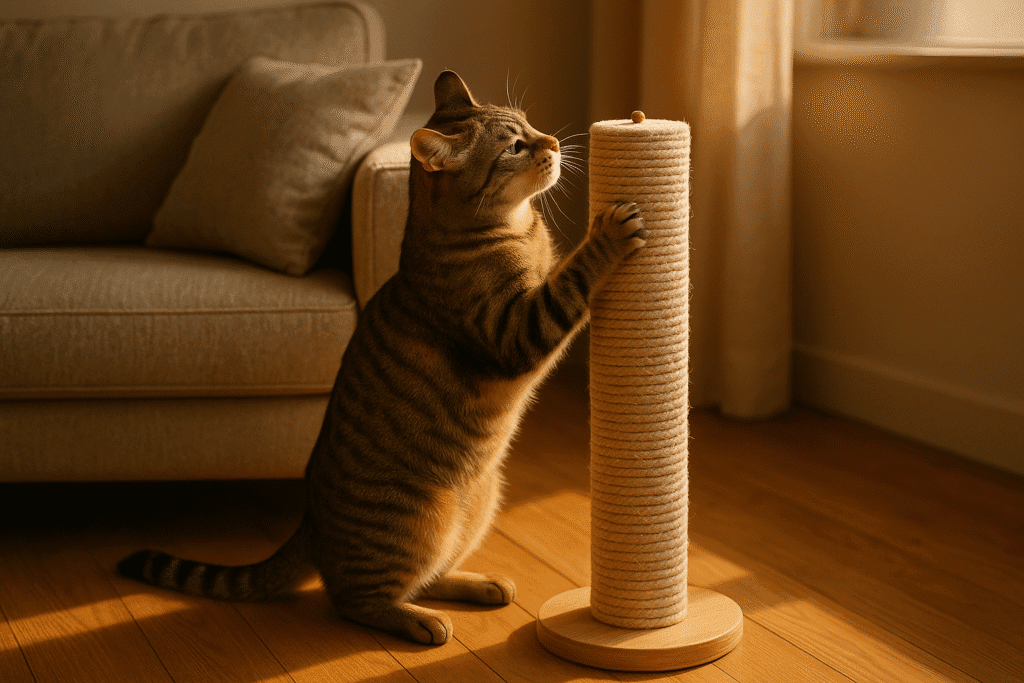
    Cat scratching a tall sisal post near the couch.

    Scratching is normal: it marks territory, maintains claws, and stretches muscles. Your job is to provide irresistible scratch zones where you want them to scratch.

    Make it easy to choose right

    • Multiple scratchers: vertical sisal post (tall, stable), horizontal cardboard pad, and one near the favored “wrong” area.
    • Prime with play: dangle a toy over the post; reward any contact.
    • Swap discouragement for distance: move valuable items; use double-sided tape temporarily on wrong spots, then remove when the habit forms.

    In every living-room training plan, these kitty training recommendations 2025 hinge on making the correct behavior the most rewarding one.

    Need a refresh? Shop cat scratchers and refills → Amazon


    5) Handling & grooming without drama

    Handling isn’t cosmetic—it’s medical readiness. Teach your cat to accept light restraint, brushing, ear inspection, and tooth peeks so vet visits don’t become battles.

    Protocol (3–5 minutes, 1–2×/day)

    1. Touch shoulder → treat.
    2. Lift paw → treat.
    3. Open mouth 1 second → treat.
    4. Brush 2–3 strokes → treat.
    5. Pause before your cat pulls away (end on success).

    These micro-steps embody kitty training recommendations 2025: micro-sessions, positive associations, and early practice.

    Grooming easier with calm airflow? See PETKIT AirSalon Max Pet Dryer Box → PetKit


    6) Carrier confidence & stress-free travel
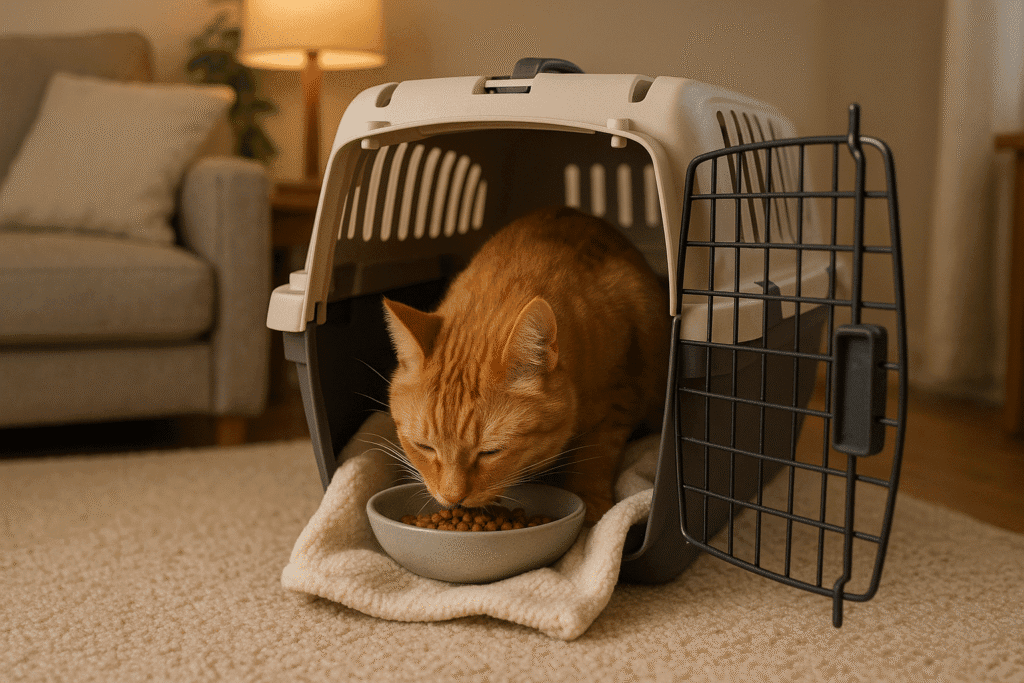
    Cat eating a treat inside an open carrier during training. Kitty training recommendations 2025.

    The carrier should be a bedroom, not a trap. Keep it out all year with a soft blanket and the door off.

    Carrier-positive plan

    • Feed in the carrier once a day.
    • Click/treat for approaching, stepping in, then relaxing inside.
    • Add a favorite toy or worn T-shirt for scent.
    • Practice short closures (2–3 seconds → treat), then short hallway trips.

    When travel day arrives, your cat has a history of good outcomes. This is core to kitty training recommendations 2025 (and your future sanity).

    Shopping carriers and calming add-ons? Explore top-rated smart carriers → Amazon


    7) Clicker training 101 (or use a marker word)

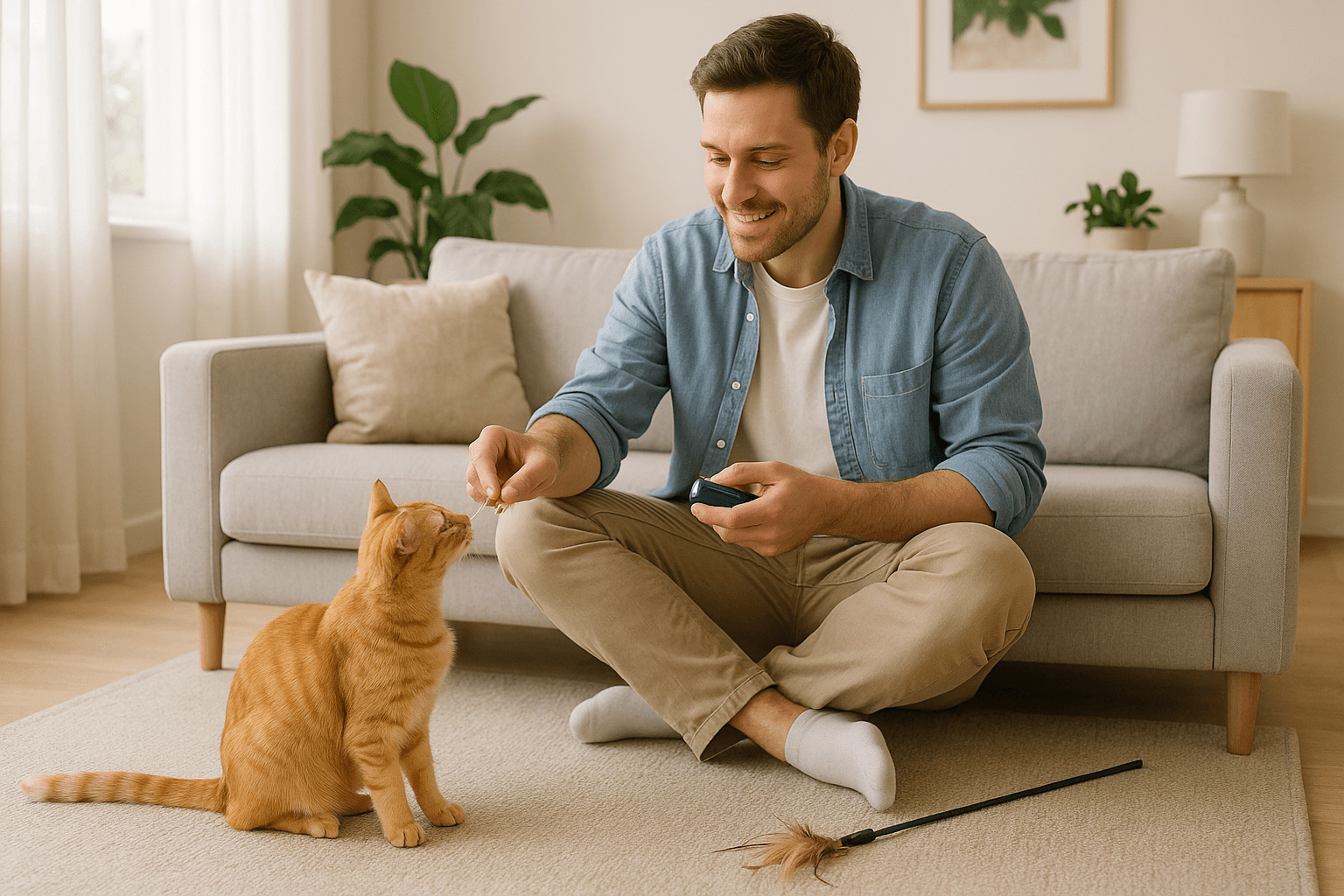
    A clicker (or the word “Yes!”) marks the exact moment your cat does the thing you like. Pair the click/word with a treat every time at first, so it retains meaning.

    Starter behaviors

    • Targeting: let your cat boop a target stick or your finger.
    • Sit: lure over the head; when the bottom touches, mark + treat.
    • Come when called: say name once; when head turns or steps toward you, mark + treat; build distance gradually.

    Clicker sessions are the most “fun” part of kitty training recommendations 2025 because they show fast, measurable progress.

    New to markers? Grab a clicker and small treat pouch → Amazon


    8) Mealtime manners & routine calm

    Jumping on counters or swatting at bowls is usually anticipation energy. Fix the routine, and manners follow.

    • Feed on predictable times.
    • Ask for one easy cue before meals (e.g., sit on a mat).
    • Use a puzzle feeder once a day to slow eating and satisfy hunting instinct.
    • Keep water separate from food (1–2 meters) to encourage drinking.

    Every reliable plan for kitty training recommendations 2025 includes structure at the bowl.

    Looking for routine helpers? Smart feeders & fountains → Petkit/Amazon


    9) Enrichment: the daily “off switch”

    A bored cat invents “jobs” (door scratching, 3 a.m. zoomies). Enrichment is how you prevent that.

    • Hunt sequence twice daily: chase (wand) → catch (soft toy) → “kill” (tug) → eat (small snack).
    • Vertical routes: one high perch per cat; reduces tension and creates quiet nap zones.
    • Scent play: rotate catnip/valerian/silvervine weekly.
    • Quiet observation: window perch + bird feeder outside for safe watching.

    When enrichment is built-in, kitty training recommendations 2025 need less troubleshooting.

    Build a boredom-proof set: Interactive toys & puzzle feeders → Amazon


    10) Calm independence & alone-time practice

    Clinginess and door-crying often reduce when you rehearse departures without stakes.

    • Scatter small treats a minute before you leave.
    • Low-arousal goodbye: avoid long speeches; a neutral tone prevents anticipatory stress.
    • Background sound (white noise) if hallway noise triggers vigilance.
    • Indoor camera (e.g., Petcube on Amazon) for short check-ins; look for signs of settling within 5–10 minutes.

    Teaching independence is a pillar of kitty training recommendations 2025—not coldness, but calm predictability.

    CTA: Want eyes on things? See indoor cameras with night vision → Amazon


    11) Troubleshooting common hiccups (quick fixes that work)

    • Biting during play: you’re moving hands like prey. Switch to a wand; hands only deliver treats/pets.
    • Door dashing: train a wait at thresholds; reward stillness on a mat; never open on a lunge.
    • Meowing at dawn: shift calories later; late play → snack → dim warm light in the bedroom.
    • Litter suddenly messy: check size/cleanliness; rule out UTI/constipation with your vet if changes persist 48–72 hours.

    You’ll see these in many threads; the fastest answers mirror kitty training recommendations 2025: routine, ergonomics, and positive reinforcement.


    12) Tools that speed learning (starter → advanced)

    Starter kit

    • Wand toy + puzzle feeder
    • Clicker/marker word
    • Enzymatic cleaner (for accidents)

    Core upgrades

    • Automatic feeder (stable schedule)
    • Smart fountain (hydration)
    • Tall sisal scratcher + horizontal pad

    Advanced

    • Self-cleaning litter box (odor + data)
    • Indoor camera (short check-ins)
    • Carrier + comfort inserts (routine trips)

    These fit naturally into the kitty training recommendations 2025 approach—less friction, more learning.


    13) A simple 4-week plan you can actually follow

    Week 1

    • Map zones (food/water/litter/rest).
    • Two play sessions daily.
    • Start sit + target (3 minutes).

    Week 2

    • Add puzzle feeder.
    • Begin carrier feeding; door off.
    • Scratchers by “wrong” spots; reward correct use.

    Week 3

    • Introduce short carrier closures (2–3 sec).
    • Practice recall (“come”) across one room.
    • Brush 2–3 strokes → treat.

    Week 4

    • Short hallway carrier rides.
    • Solidify mealtime manners (sit on mat).
    • Review progress; adjust what’s hard, keep what’s easy.

    By now, you’ve implemented the backbone of kitty training recommendations 2025—and your cat will show it.


    14) FAQ (fast, factual answers)

    Can adult cats learn?
    Yes. Adults may take longer to change habits, but they learn faster than you expect when rewards are clear.

    How long should a session be?
    2–5 minutes. Stop while your cat is still engaged.

    What treats work best?
    Soft, tiny, stinky; think “one-lick size.” Rotate flavors to prevent boredom.

    What about punishment?
    Skip it. It damages trust and doesn’t teach alternatives. Everything in kitty training recommendations 2025 is built around reinforcing what you do want.


    15) When to call your vet

    Any sudden change in litter habits, appetite, water intake, activity, or temperament that persists for 48–72 hours warrants a veterinary check. Medical issues often look like “behavior problems” at first. The AVMA and Cornell both stress early intervention—a core safety clause inside responsible kitty training recommendations 2025.


    Final take

    Training isn’t about creating a robot cat—it’s about making life easier and safer. Lock the routine, design the space, reward what you love, and you’ll see progress quickly. If these kitty training recommendations 2025 helped, explore our hands-on guides and product picks designed to simplify daily care.

    👉 Discover more training & enrichment guides in our Play & Enrichment hub (plus feeders, fountains, and smart toys chosen for safety and real-life usability).


    Interlinks


    Authority links

  • Cat Training Aids 2025: Smart Tools to Build Better Behavior

    Cat Training Aids 2025: Smart Tools to Build Better Behavior

    If you’ve ever tried to teach a cat to come when called, tolerate the carrier, or stop door-dashing, you already know the truth: success is 70% routine and 30% tools. The tools matter because they make the routine repeatable, rewarding, and low-friction for both of you. In cat training aids 2025, the winning formula blends classic behavior gear (clickers, targets, treat delivery) with lightweight “smart” accessories that shape the environment—ramps, fences, mats, and even health-aware litter. This guide to cat training aids 2025 shows how to use modern accessories to create reliable behaviors without stress.


    Why tech belongs in training (even for cats)

    Cats learn via operant conditioning just like dogs do—behavior → consequence → repetition. What changes in cat training aids 2025 is how easy it has become to deliver consequences (rewards), control the setup, and read signals (comfort, willingness, hydration, toileting patterns). Smart accessories reduce friction: they guide the body (ramps, fences), guide the nose (odor control so the box remains attractive), and guide your decisions (simple health cues so you reinforce the right moments). Result: calmer sessions, faster success.

    Authoritative guidance backs this approach. The Cornell Feline Health Center and the AVMA emphasize environment, predictability, and positive reinforcement over punishment. The practical takeaway for cat training aids 2025 is to pair humane methods with gear that keeps sessions brief, rewarding, and safe.


    What counts as “training aid” in 2025?

    Think beyond gadgets. In cat training aids 2025, anything that makes the desired behavior easier and the undesired behavior harder qualifies:

    • Reinforcement tools: clicker + target stick, treat pouches, interactive treat dispensers (Amazon).
    • Environmental shapers: ramps and fences that guide movement and reduce slips or scatter (PETKIT).
    • Focus & engagement: rechargeable laser pointers (industry note: Whisker’s rechargeable laser), feather teasers, puzzle toys (Amazon).
    • Health–behavior bridges: urine-monitor litter that flags issues early (PETKIT), so you don’t misread a “refusal” that is actually discomfort.

    When you assemble cat training aids 2025, the point isn’t buying more; it’s removing resistance—so you can repeat short, successful reps daily.


    The core kit (tech + classic) you actually need

    Below are the PETKIT and Amazon picks you can rely on, plus how each fits into a real training plan.

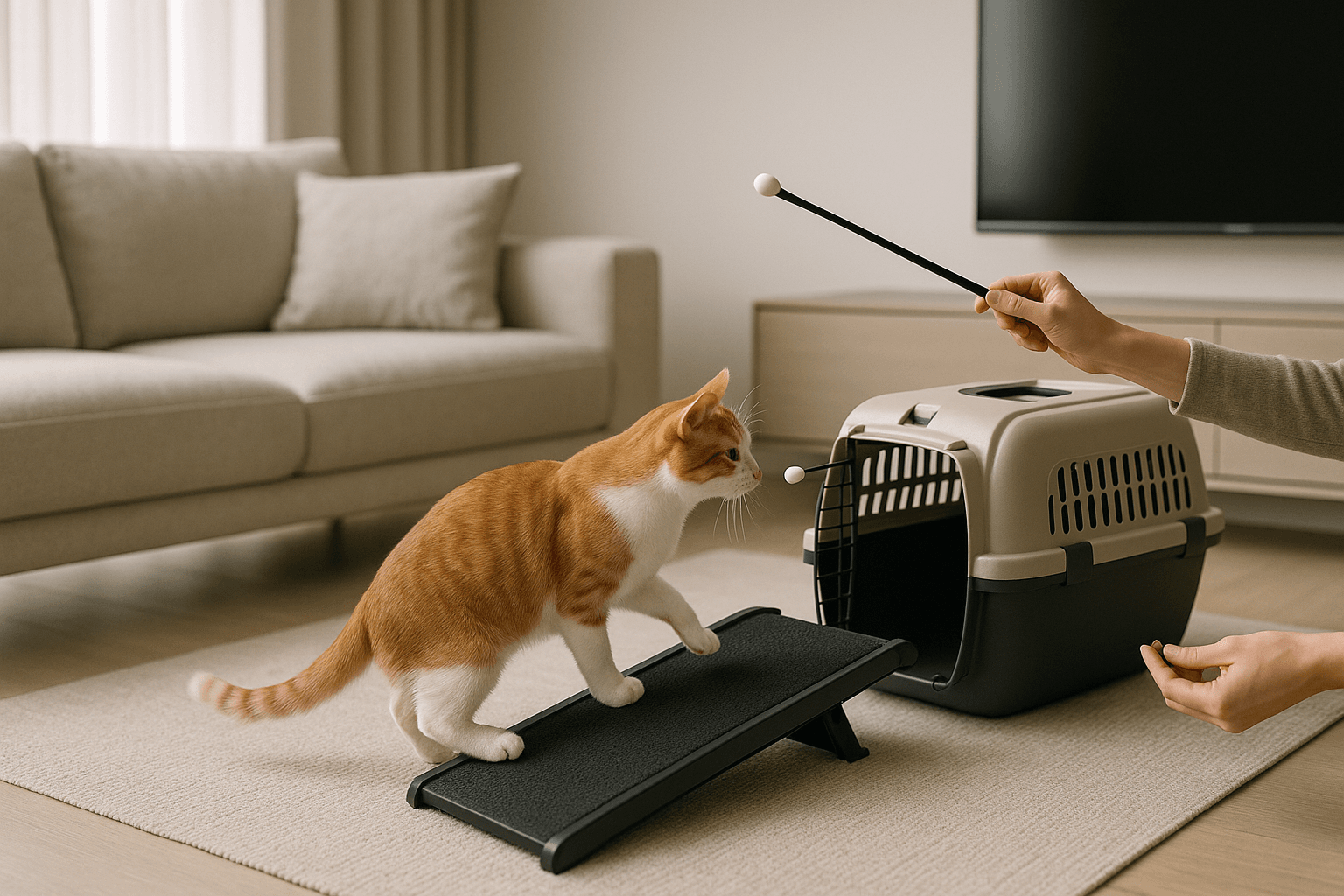
    1) PETKIT Easy-Step Pedal Ramp (2° page) – guide movement, build confidence

    A low-slope, soft-grip ramp helps kittens, seniors, or anxious cats approach a goal (carrier, litter, perch) without jumping. In cat training aids 2025, ramps double as behavior scaffolding: they give your cat a clear path and reduce hesitation, so you can mark and reward forward motion more often.

    How to use it

    • Place the ramp at the target (litter box, carrier, sofa).
    • Shape micro-steps: look → paw on ramp → two paws → full climb.
    • Mark each step with a click and deliver a small treat on the ramp surface.
    • Fade the ramp only after you’ve gotten 3–5 calm repetitions per day for a week.

    Affiliate CTA: Compare PETKIT Easy-Step Pedal Ramp on PETKIT Store or Amazon.


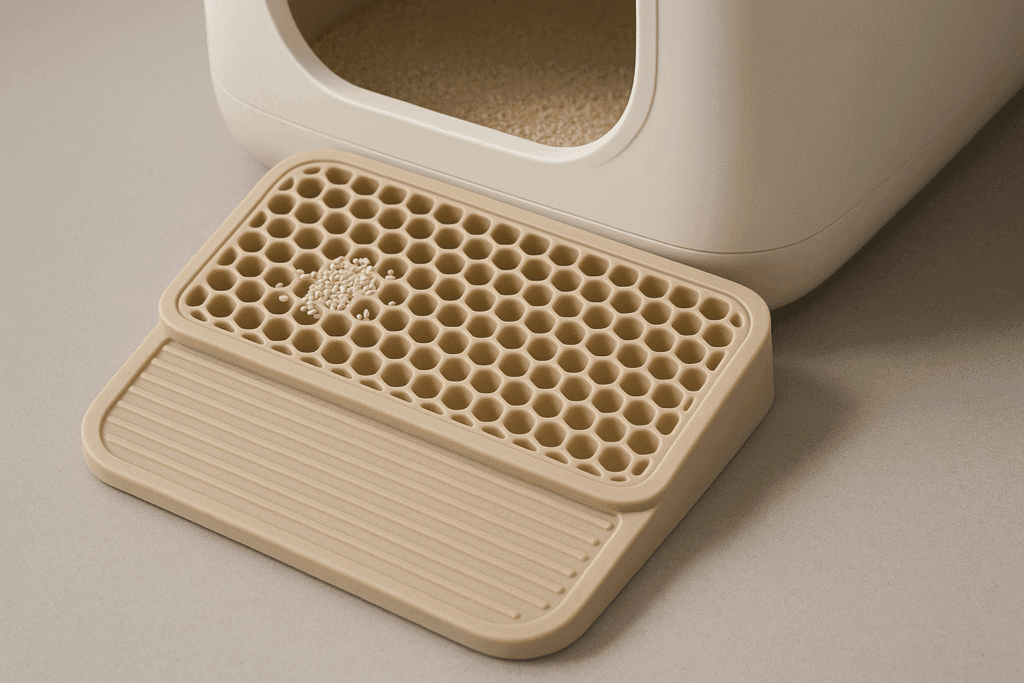
    2) PETKIT Cat Litter Ramp (2° page) — reduce scatter, create a “training runway”

    PETKIT litter ramp catching granules to support calm, tidy exits. Cat training aids 2025.

    This two-layer, anti-slip ramp catches granules and slows the exit from the litter area. That slow, predictable exit is gold for cat training aids 2025: it lets you mark calm behavior (no sprinting, no shaking pellets everywhere) and pay your cat for using the box appropriately.

    Pro tip

    • Place a small treat dish just beyond the ramp. When your cat exits calmly, deliver a single high-value treat. You’re not “rewarding elimination”—you’re reinforcing calm exits, which reduces zoom-outs and tracking.

    Affiliate CTA: Explore PETKIT Cat Litter Ramp on PETKIT Store or Amazon.


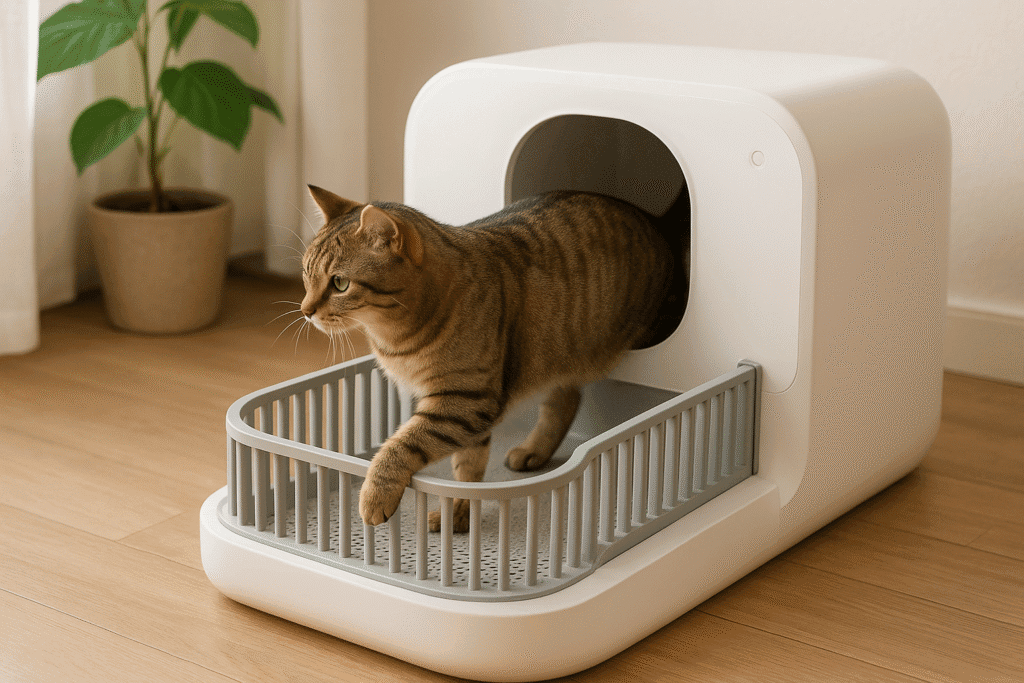
    3) PETKIT PuraMax Fence (3° page) — shape where paws and litter go

    PETKIT PuraMax Fence guiding clean entry into the litter box.

    A simple “fence” that raises the entry ridge can prevent splash, kicked litter, and mis-steps. In cat training aids 2025, environmental micro-barriers like this save you from constantly interrupting. Cats prefer clear boundaries; the PuraMax Fence channels movement so the correct step becomes the easiest step.

    Behavior use cases

    • For young or vigorous diggers, the fence reduces “overshoot.”
    • For anxious cats, fewer messes mean fewer human corrections—a calmer loop that accelerates learning.

    Affiliate CTA: Check PETKIT PuraMax Fence on PETKIT Store or Amazon.


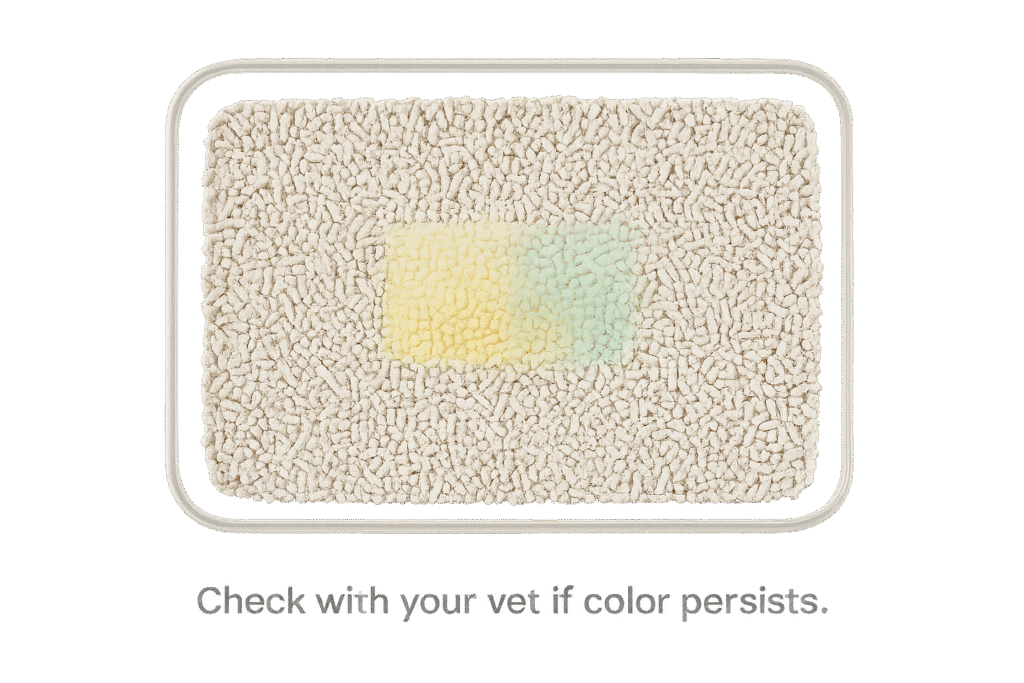
    4) PETKIT Urine Monitor Cat Litter (4° page) — health data that protects progress

    Urine-monitor litter providing simple health cues during training.

    Training stalls if a cat is uncomfortable. This litter changes color with urinary anomalies (pH-related cues), giving you a first look at potential issues. In cat training aids 2025, health-aware materials prevent false interpretations (“she’s stubborn”) and keep you reinforcing the right behavior at the right time.

    How to use it without overthinking

    • Run it for a few days during new routines (box relocation, travel, diet shifts).
    • If color shifts persist, pause advanced goals and call your vet. Don’t punish avoidance—solve comfort first.

    Affiliate CTA: See PETKIT Urine Monitor Litter on PETKIT Store or Amazon.


    5) Amazon classic kit — the essential reinforcement trio

    Even in cat training aids 2025, the classic trio wins: clicker + target stick + small treats. A compact treat dispenser or pouch keeps your reward timing tight.

    How to use it

    • Clicker marks the exact behavior (touch target, step into carrier, break eye contact from a trigger).
    • Target stick gives a clear action: “boop the tip,” “follow to perch,” “turn to the litter ramp.”
    • Treat dispenser/pouch speeds delivery and keeps sessions under 60 seconds—perfect for cats.

    Affiliate CTA: Shop Amazon for “cat clicker & target stick combo” and “mini treat pouch/dispenser”.


    6) Focus & play for motivation — short note on laser pointers

    Cats chase light because it mimics prey movement. Industry-wide, rechargeable laser pointers (e.g., Whisker’s rechargeable model) exist to spark engagement, but always pair with a tangible catch (feather or treat) at the end. In cat training aids 2025, lasers are best used as warm-ups—30 seconds to raise interest, then swap to a toy they can physically “win.”


    Put the pieces together: a 14-day micro-plan

    The exact devices matter less than what you do with them. Use this repeatable plan to apply cat training aids 2025 without burning out.

    Days 1–3: Create a “win path.”

    • Place the PETKIT ramp to the target (carrier or litter).
    • 3–5 reps/day of micro-steps: nose → one paw → two paws → stand → step off.
    • Click & treat each tiny success; end while your cat still wants more.

    Days 4–6: Add environmental clarity.

    • Install the PuraMax Fence; reduce scatter and splashes.
    • Reinforce calm exits off the litter ramp (treat dish beyond the ramp).

    Days 7–10: Layer classic reinforcement.

    • Introduce target stick: touch → follow → perch or “park” mat.
    • Keep treats pea-sized; 5–8 rewards per 60-second session.

    Days 11–14: Health check + carrier confidence.

    • Use PETKIT Urine Monitor Litter during schedule changes; if colors normalize, advance.
    • Pair ramp + target to enter the carrier voluntarily; click for paws inside, then brief door close/open with treat rain.

    This “stacking” approach is the backbone of cat training aids 2025: shape movement, add clarity, reward micro-wins, verify comfort, repeat.


    Troubleshooting: if progress stalls

    • Cat freezes on the ramp. Lower criteria: reward a head turn toward the ramp, then a nose touch to the first ridge. In cat training aids 2025, shrinking the step is not failure; it’s strategy.
    • Zoom-outs after the litter box. Move the treat 2–3 feet past the ramp so the natural route is calm → treat → groom.
    • Carrier avoidance returns. Split the behavior: target to ramp near carrier, then target to ramp touching carrier, then paws inside, then full step in. Each stage = its own success day.

    Safety & welfare notes (always read)

    • Never punish (sprays, loud noises). It increases avoidance and hides pain signals.
    • Session length: 30–60 seconds, 2–5 times/day. Cats learn fast in micro-bursts.
    • Environment: quiet, ventilated, non-slip surfaces.
    • Vet first: sudden litter changes, straining, or vocalizing deserve a medical check.

    The AVMA and Cornell both stress environmental control and positive reinforcement; cat training aids 2025 simply makes those principles easier to execute.


    How to choose the right mix (decision tree)

    1. Goal is movement confidence (litter, carrier, couch) → PETKIT Easy-Step Pedal Ramp first.
    2. Goal is tidy habits (less scatter, calm exits) → PETKIT Cat Litter Ramp + treat dish past ramp.
    3. Goal is boundary clarity (less splash, better digging) → PETKIT PuraMax Fence.
    4. Goal is rule-out health blockers → PETKIT Urine Monitor Litter for 3–5 days.
    5. Goal is precise behaviors (recall, station, nose target) → Amazon clicker + target stick combo.
    6. Goal is jump-start engagement → brief rechargeable laser warm-up, then reward a physical catch.

    That’s the minimal, low-risk path through cat training aids 2025—start with environmental wins, then layer precision tools.


    Frequently Asked Questions

    Isn’t training “not for cats”?
    Cats learn every day. Training just makes that learning intentional and humane.

    Do I need app-connected gadgets?
    No. In cat training aids 2025, the smartest choice is often the one that reduces friction, not the one with the most features.

    How much should I spend?
    Start cheap: clicker + target + treats. Add one PETKIT accessory that solves your biggest pain (scatter, access, clarity). Evaluate results in a week before buying more.

    What if I live with multiple cats?
    Train individually first (one cat in, one cat out), then merge. Environmental aids (ramp/fence) benefit everyone passively.


    Internal links to reinforce topical authority


    Authoritative references


    Ready to train?

    Pick one behavior and one accessory to make it easy. Keep sessions short, reinforce tiny wins, and track comfort with simple health cues. With the right cat training aids 2025, progress feels effortless—because the environment does half the work.

    Shop verified picks:

    Affiliate Disclaimer
    This article contains affiliate links. As an Amazon Associate—and partner of PETKIT and Whisker—PetTech AI may earn commissions from qualifying purchases at no extra cost to you. We only recommend products that support cat welfare and user experience.