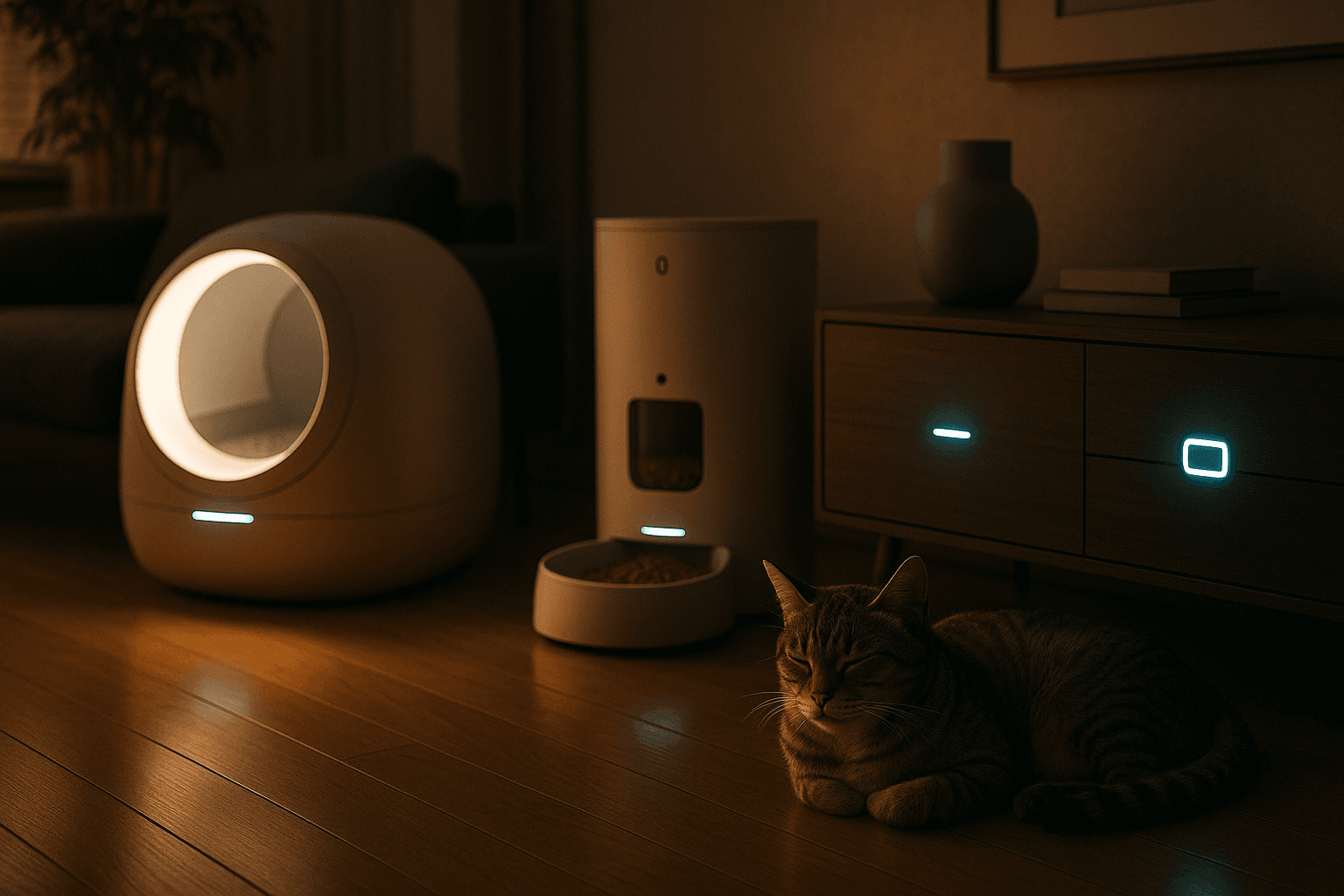
Tag: smart cat devices

  • AI Cat Care 2025: The Future of Everyday Feline Wellness

    AI Cat Care 2025: The Future of Everyday Feline Wellness

    Why this matters now

    If you live with a cat, you already juggle routines: feeding, litter, enrichment, safety checks, vet follow-ups. AI cat care 2025 turns that chaos into a quiet, measurable system. Instead of guessing, you’ll see trends: appetite dips before they’re obvious, litter habits that flag urinary issues early, restless nights that correlate with under-stimulation, GPS routes that reveal risky hotspots outside. Used well, AI doesn’t replace intuition—it turbocharges it.

    Key takeaways:

    • AI cat care 2025 = data-assisted habits: healthier feeding, earlier health signals, safer micro-adventures, calmer behavior.
    • You don’t need to “go all in.” Start with one use-case (e.g., litter/health or feeding) and stack from there.
    • Focus on reliability, noise-free alerts, and exportable data you can share with your vet.

    What “AI” actually does (for cats)

    Most consumer “AI” in pet tech blends three layers:

    1. Sensing: cameras, weight scales (bowls/litter), accelerometers (collars/tags), GPS/BT beacons, environment (temp/air).
    2. Signal processing: filters raw data into events (ate 32 g; used litter twice; active 3 h).
    3. Inference & guidance: turns events into insights (early constipation risk; portion tweak; boredom indicators) and action (auto-portioning, adaptive routines, smarter notifications).

    AI cat care 2025 is less about sci-fi robots and more about pattern recognition that catches subtle changes early and nudges you toward the next best action.


    Core applications that actually move the needle

    1) Health monitoring you’ll actually use
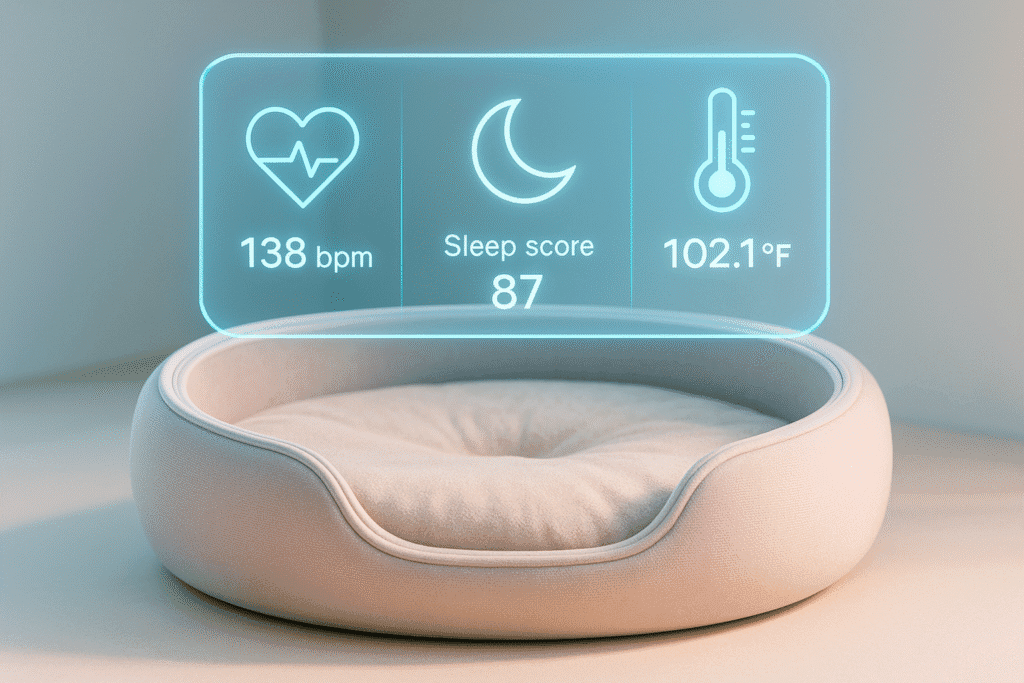
    Close-up of a smart cat bed showing holographic health data like heart rate, sleep score, and temperature, symbolizing AI-driven feline wellness tracking.
    • Litter analytics: Weight sensors and usage detection track frequency, clump weight, and timing. AI highlights deviations from your cat’s baseline (e.g., more frequent, lower-volume pees; long intervals without a bowel movement). In AI cat care 2025, this is the single most valuable early-warning channel for UTI, constipation, or kidney concerns.
    • Weight & appetite: Smart bowls and feeders log grams per meal/day; AI correlates intake with activity and flags gradual loss or gain.
    • Activity & rest: Collars/camera-free room sensors detect sleep fragmentation, nocturnal zoomies, or pacing—often a signal to adjust enrichment or check pain.

    What good looks like: high-precision sensors, sticky yet minimal alerts (no spam), clear trend visualizations, and easy CSV/PDF export for your vet.

    2) Precision feeding without obsession

    • Portion automation: Auto-dispensing adjusts by schedule and goal weight; AI adapts portions after missed meals or unusual activity days.
    • Dual-cat fairness: Photo/microchip access control keeps the “food pirate” out, ensuring the shy eater finishes.
    • Diet transitions: AI stages gradual mix-ins and watches for intake drops or GI upset.

    You’ll see AI cat care 2025 turn feeding into a closed loop: goal → plan → measure → micro-adjust → goal.

    3) Behavior & enrichment that prevents problems

    • Boredom signatures: Under-stimulation shows up as nocturnal restlessness, door scratching, or “cursor hunting.” AI spots the pattern and prescribes targeted play windows (type, length) and puzzle rotations.
    • Stress mapping: Correlates visitors, appliance noise, or construction with hiding, excessive grooming, or litter misses—then suggests mitigation (safe rooms, white noise, scent routines).
    • Training assists: Timed treat cues, clicker-style reinforcement from a dispenser, and session logs keep you consistent.

    In AI cat care 2025, you don’t guess which toy to use—you follow a plan, then adjust based on results.

    4) Safety, travel, and controlled outdoor time

    • Virtual fences: GPS trackers create geofences; AI reduces false alerts by learning the cat’s regular routes and “worry zones.”
    • Travel readiness: Pre-trip routines adjust feeding/box timing, carrier conditioning, and calming protocols based on previous trip data.
    • Home alone mode: Cameras/door sensors escalate from motion → person → “cat on counter” specificity; you only get pings that matter.

    Again, the thread: AI cat care 2025 compresses noise and surfaces signals.

    5) A smarter home, quietly running in the background

    • Automations: Litter cycle after the last morning use, warm a favorite sleeping spot before bedtime zoomies, dim lights to align with play → feed → sleep.
    • Energy & noise: Night vision only when needed, low-noise cycles in sleep windows, quiet air filtration during naps.
    • Household harmony: If you live in an apartment, AI staggers loud cycles, avoids guest hours, and keeps routines kid-proof.

    These micro-touches are where quality of life jumps.


    How vets fit into the loop
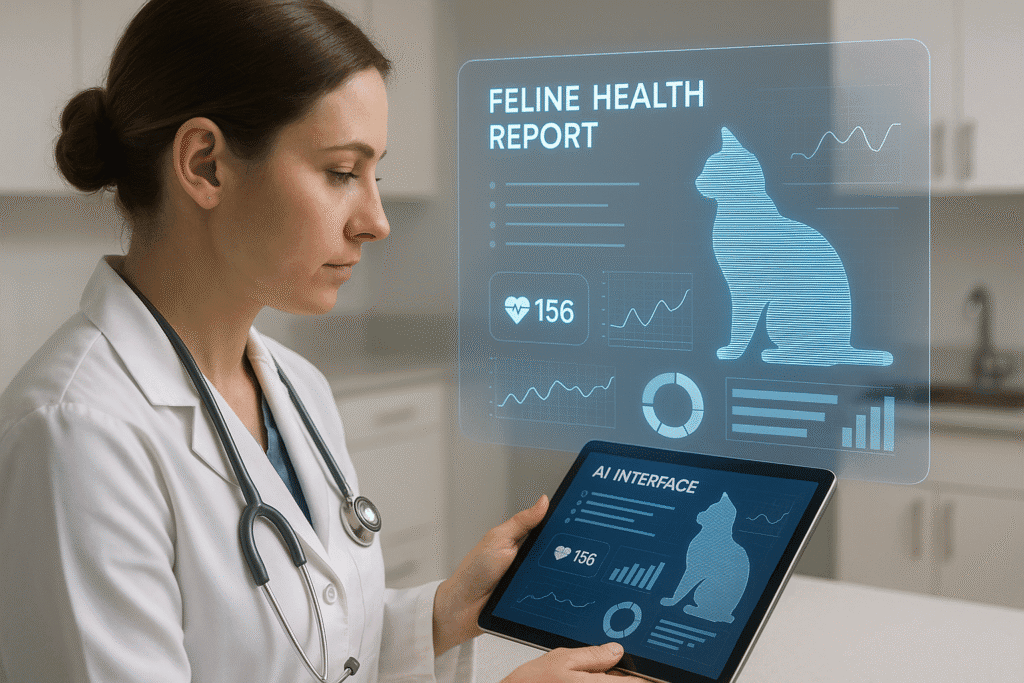
    A veterinarian reviewing an AI-generated cat health report on a tablet, with digital charts showing data-driven insights for feline care.

    Bringing real data changes the appointment:

    • Objective baselines: “Here’s 60 days of litter frequency and clump weight” beats guesswork.
    • Faster differential: Appetite drop + lower activity + smaller clumps = a different workup than “he’s been weird lately.”
    • Post-visit plans: You’ll implement dosing windows or food trials with automations and verify adherence via logs.

    In AI cat care 2025, your vet becomes a data-guided partner, and follow-ups become clearer and shorter.


    Limits, ethics, and privacy (read this)

    • AI ≠ diagnosis. It’s an early-signal assistant; veterinarians diagnose.
    • False positives happen. Prefer systems that learn your cat’s baseline instead of generic thresholds.
    • Privacy: Choose vendors with local processing where possible, end-to-end encryption, and fine-grained sharing controls.
    • Fail-safe design: Devices should degrade gracefully (manual mode for feeders, scoop-ready litter plans), and never block access or create hazards.

    AI cat care 2025 works best when you remain the decision-maker and set conservative guardrails.


    Buyer’s checklist (save this before you shop)

    1. Accuracy over hype: Look for validated sensing (weigh scales that don’t drift, motion detection that handles low light, GPS that holds signal).
    2. Clear, minimal alerts: If you muted notifications in week one, the system failed.
    3. Baseline learning: The cat is the baseline—not a population average.
    4. Multi-cat logic: Identity control (camera, microchip, tag) to separate data and calories.
    5. Interoperability: CSV/PDF export, API/integrations, and routines with your smart home.
    6. Quiet & safe hardware: Rounded edges, safe clearances, low noise, child-safe locks.
    7. Support & warranties: Real chat/email support and visible firmware updates.
    8. Total cost of ownership: Subscriptions, filters/liners, desiccants, batteries.

    Checklist goal: reduce returns and make AI cat care 2025 a step up from day one.


    Your 90-day rollout plan (no overwhelm)

    A cat owner using an AI wellness app on a tablet to monitor her cat’s health and behavior, illustrating modern connected pet care. AI cat care 2025.

    Days 1–7 — Pick one wedge
    Choose the highest-leverage start: litter analytics or precision feeding. Set conservative alerts. Place devices where cats naturally go—don’t force novelty. Mention in your notes that you’re starting AI cat care 2025 with one core routine.

    Weeks 2–4 — Stabilize the baseline
    Do nothing fancy; just collect data. Keep manual notes on appetite, stool quality, play time, and any stressors. Conduct one small experiment (e.g., move play before dinner) and watch what changes.

    Weeks 5–8 — Add the second wedge
    Layer behavior/enrichment coaching or activity tracking. Create two automations:

    • Play → Feed → Sleep evening cadence.
    • Litter cycle timed to avoid the “right after use” frustration.

    Weeks 9–12 — Safety & sharing
    Enable one geofence (or home-alone camera mode) with minimal alerts. Export a 30–60 day report for your vet to review at your next checkup.

    By the end of this window, AI cat care 2025 should feel like fewer pings, better timing, clearer choices—and a calmer home.


    Common mistakes (and easy fixes)

    • Over-alerting. Fix: tighten to behavior-changing events only (appetite −15% week-over-week, >24h no stool, nighttime sorties beyond boundary).
    • Rushing multi-cat setups. Fix: identity first (microchip/camera/tag), then schedules.
    • No manual context. Fix: annotate vet visits, food changes, renovations, visitors. AI learns faster with labels.
    • Ignoring the cat’s agency. Fix: gradual introductions, escape routes, predictable routines.

    FAQ quick hits

    Isn’t this surveillance?
    It’s observation with a purpose: better welfare, earlier care, less stress. Keep cameras out of private rooms, use local processing where possible, and share only what’s useful. This is the humane version of AI cat care 2025, not “always-on” snooping.

    What if the power/internet fails?
    Choose devices with manual overrides, cached schedules, and safe defaults. Part of AI cat care 2025 is resilient design.

    Will AI replace my vet?
    No. It helps you notice early and present clean data. The vet relationship becomes stronger, not weaker.


    Internal interlinks to deepen the journey

    👉 Best Smart Litter Boxes 2025 — Hassle-Free Solutions for Cat Owners
    👉 The Best Automatic Cat Feeders of 2025: Smart Solutions for Every Cat Lover
    👉 Smart Outdoor Safety for Cats: How Tech Makes Every Adventure Safer
    👉 Smart Living: Building a Connected Home for You and Your Cat
    👉 Best Smart Cat Cameras 2025 — Watch, Talk & Train Remotely

    (These guides extend AI cat care 2025 into concrete product choices and setups.)


    Conclusion: Calm, clarity, and kinder care

    The promise of AI cat care 2025 is simple: less guesswork, more confidence. You’ll catch issues earlier, fine-tune meals without micromanaging, prevent problem behaviors by removing their causes, and make outdoor time safer. Start small, measure honestly, and let routines click into place. Your cat gets a quieter, safer life—and you get the peace of mind you’ve been chasing.

    Next step: Pick your first wedge (litter or feeding), set two meaningful alerts, and revisit in two weeks. That’s the most honest way to begin AI cat care 2025.


    Expert-backed insights 🧬

    Both the Cornell Feline Health Center and the American Veterinary Medical Association (AVMA) emphasize the importance of early observation and data-driven prevention in feline care. Cornell researchers highlight how behavioral tracking and subtle pattern changes often reveal health issues weeks before clinical symptoms appear. Meanwhile, the AVMA supports the responsible use of AI and smart monitoring tools, stressing that these technologies—when used ethically—can “enhance welfare by improving decision accuracy and response speed.”
    In short, AI cat care 2025 aligns with the veterinary gold standard: informed, preventive, compassionate care.

    Sources:

    American Veterinary Medical Association – AI and Emerging Technologies

    Cornell Feline Health Center – Behavior and Health Monitoring
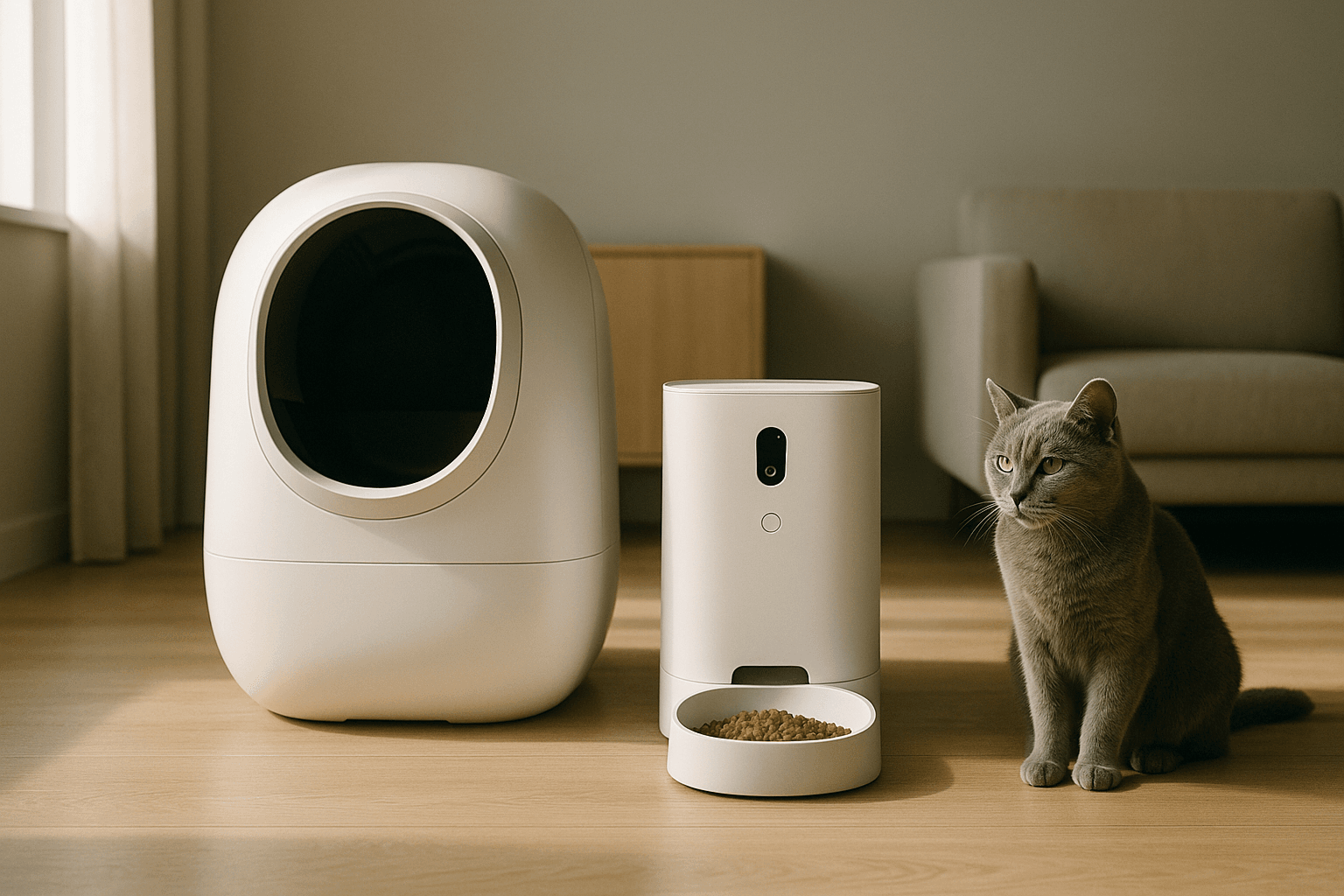
  • Litter-Robot vs Feeder-Robot (Whisker Ecosystem Comparison 2025)

    Litter-Robot vs Feeder-Robot (Whisker Ecosystem Comparison 2025)

    The year 2025 marks the full arrival of cat home automation. For many pet parents, technology is no longer about gadgets — it’s about freedom. Whisker, the company behind the famous Litter-Robot, has built an entire ecosystem around automation, expanding from litter care to feeding.

    In this in-depth review, we’ll explore the real differences in the Litter-Robot vs Feeder-Robot experience, how both devices work together, and whether owning the full Whisker ecosystem is worth the investment.


    Affiliate Disclosure:
    This article contains affiliate links. If you purchase through them, PetTech AI may earn a small commission at no extra cost to you. Our reviews are based on independent testing and transparent data.


    The Idea Behind Whisker’s Smart Ecosystem

    Whisker started as a one-product brand with the Litter-Robot but quickly evolved into a pioneer of fully automated cat care. The company’s vision is simple: create reliable products that handle daily cat chores without stress or manual work.

    The Litter-Robot vs Feeder-Robot pairing represents that vision perfectly — two devices built to work separately yet designed to synchronize seamlessly inside one ecosystem.

    In practice, this means less time spent cleaning, feeding, or worrying about whether your cat’s routine is on track. It also means a cleaner home, more predictable feeding schedules, and better hygiene.


    Litter-Robot 4 Overview

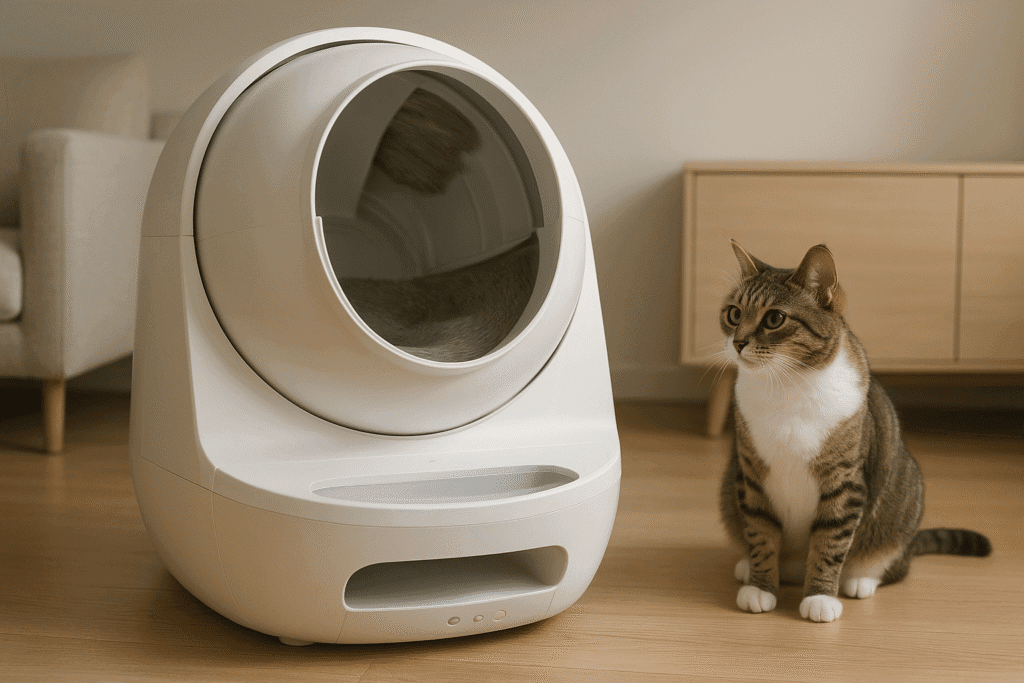
    litter-robot-4-automatic-cleaning, litter-robot vs feeder-robot

    The Litter-Robot 4 is the flagship of Whisker’s automation lineup and still the most advanced self-cleaning litter box on the market. It features motion sensors, odor filters, and quiet operation that keeps your home fresh and calm.

    Every cycle automatically removes waste after your cat leaves the box, depositing it into a sealed drawer lined with a bag. The carbon filter traps odors efficiently, and the Wi-Fi connection allows real-time notifications on the Whisker App.

    Main advantages:

    • Silent self-cleaning mechanism
    • Carbon odor control system
    • Safety sensors for cats of all sizes
    • Works with multiple cats
    • Wi-Fi connection for data tracking

    The Litter-Robot 4 costs around $699 to $799, depending on the bundle. It’s expensive, yes, but the value grows over time. After two months, you’ll notice that “scooping” disappears from your vocabulary.

    Whisker also designed the device for easy maintenance: you only change the liner and wipe the globe. That simplicity is why it remains a top-rated smart litter box in 2025.

    Read our full Litter-Robot 4 Review →


    Feeder-Robot Overview

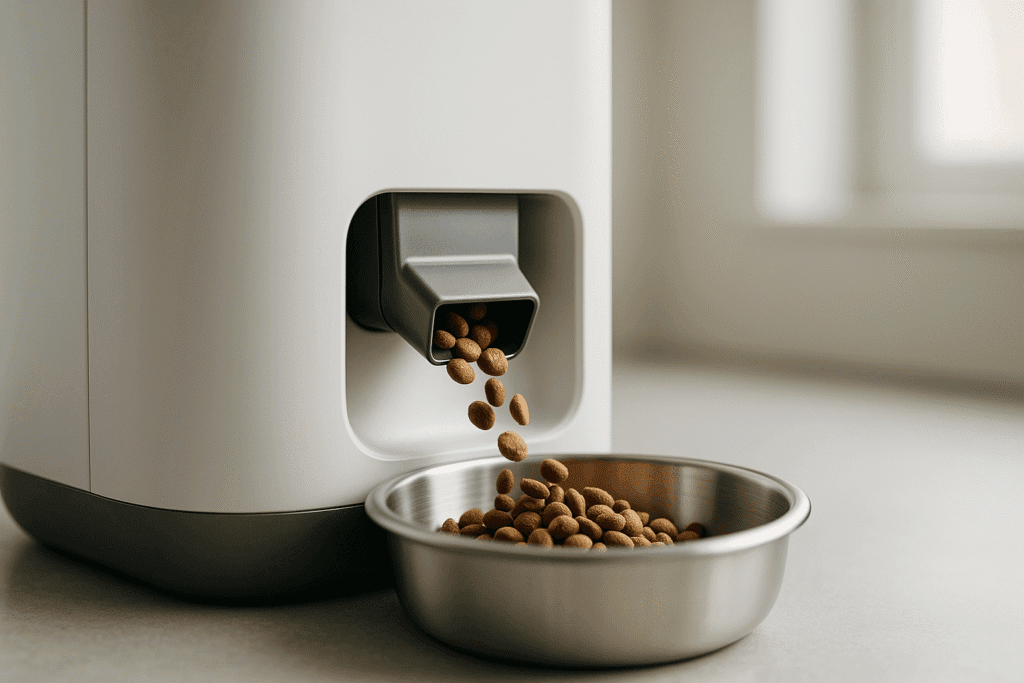
    feeder-robot-dispensing-food

    The Feeder-Robot continues where the Litter-Robot leaves off — automating feeding. With precise portion control, scheduling, and food freshness management, it’s an equally impressive piece of technology.

    This device lets you schedule up to 12 meals a day, customize portion sizes, and even feed manually through the app. A large food hopper holds up to 32 cups, sealed with an airtight lid and desiccant.

    Main advantages:

    • Ultra-quiet operation
    • Portion accuracy down to a few grams
    • App notifications for refills and jams
    • Sleek and minimal design that fits any kitchen

    The Feeder-Robot retails for around $299 to $349, making it a mid-high tier feeder but one that eliminates constant measuring and cleaning. It connects to the same Whisker App as the litter box, providing one unified interface for your cat’s daily care.

    See our complete Feeder-Robot Review →


    App Experience: One Dashboard, Two Worlds

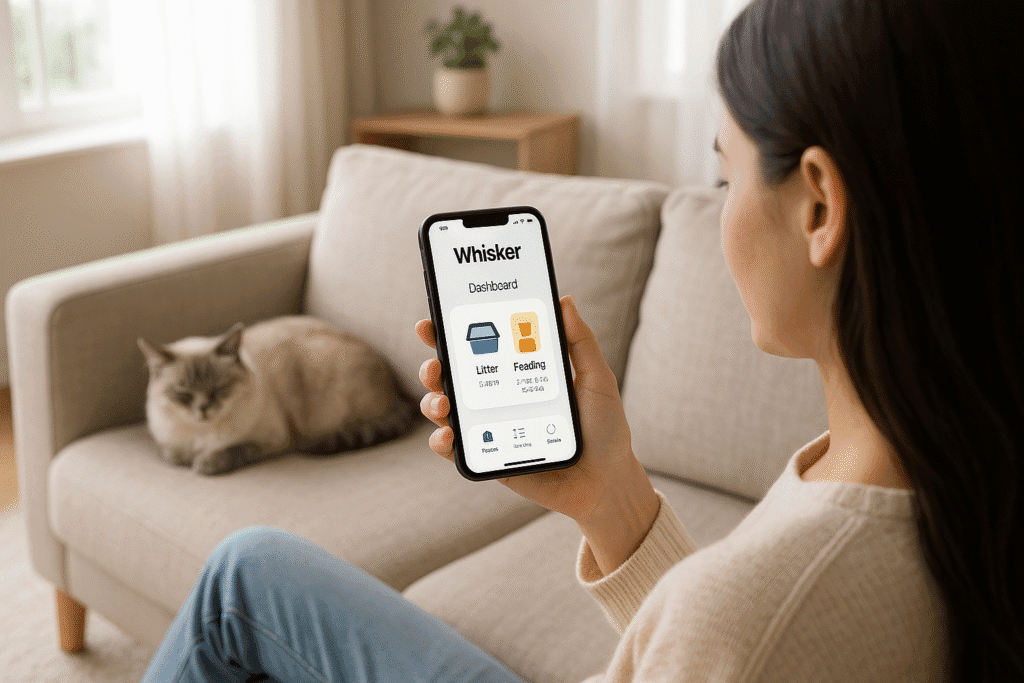
    Cat owner checking Whisker app dashboard for litter and feeding updates.

    What makes the Litter-Robot vs Feeder-Robot experience unique is not the hardware — it’s the software. The Whisker App serves as a unified command center.

    Inside the app, you can view feeding schedules, cleaning cycles, waste drawer status, and food levels at a glance. You can even sync the two devices to follow your cat’s natural rhythm: feed first, then clean ten minutes later.

    The app experience feels polished and reliable. Notifications are fast, the layout is intuitive, and updates are frequent. While occasional lag can occur after firmware updates, it rarely affects automation.

    This unified system is what defines Whisker’s advantage: true integration, not just coexistence.


    Everyday Life With Both Devices

    During our 14-day test, both devices were connected and scheduled through the same app. Here’s what a typical day looked like:

    • 7:30 AM: Feeder-Robot dispenses breakfast.
    • 7:45 AM: Litter-Robot 4 cycles automatically after use.
    • 1:00 PM: Snack time — portion controlled.
    • 6:30 PM: Dinner is served, followed by another clean cycle.

    By the end of the week, the two cats had adapted perfectly. The sound of the feeder became the signal for meals; the litter box cleaned itself minutes later. The experience felt closer to having a quiet assistant than a machine.

    When evaluating Litter-Robot vs Feeder-Robot, the biggest takeaway is that both do their jobs so well that they disappear into your routine. Automation feels natural, not intrusive.


    Strengths and Weaknesses

    Pros

    • Unified Whisker App for both devices
    • High reliability and build quality
    • Odor-free and hygienic environment
    • Time-saving for busy owners
    • Excellent customer support

    Cons

    • Combined cost above $1,000
    • Both require Wi-Fi for remote monitoring
    • Large devices may not suit small apartments

    Even with those drawbacks, the combination feels worth it. Together, Litter-Robot vs Feeder-Robot saves roughly an hour per week of manual work — over 50 hours per year.


    Litter-Robot vs Feeder-Robot: Feature Comparison

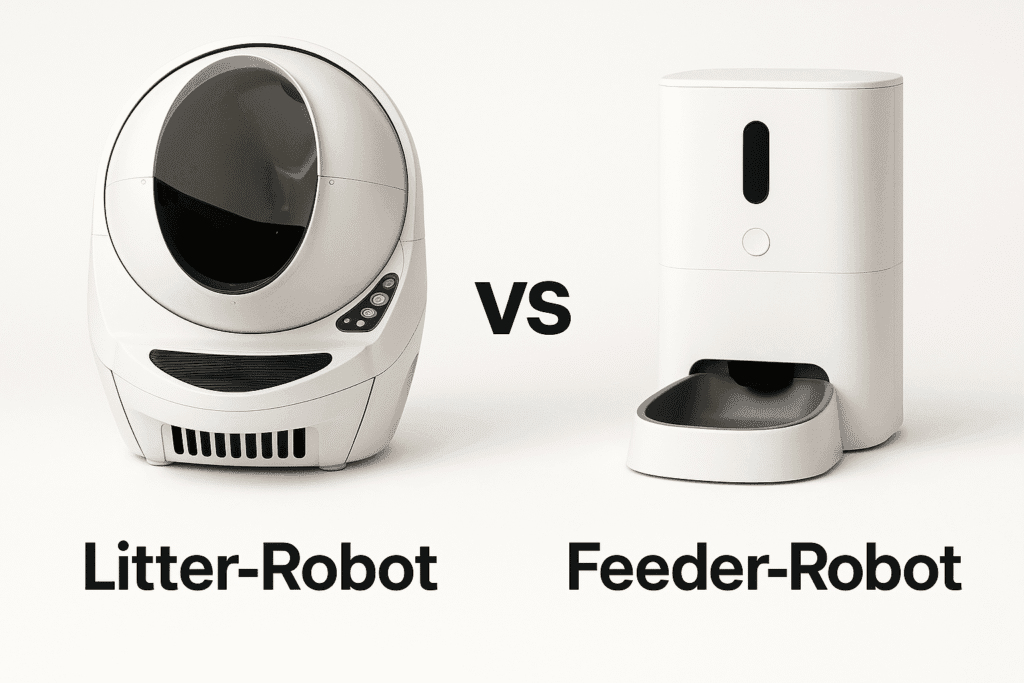
    Side-by-side comparison of Litter-Robot 4 and Feeder-Robot devices.
    FeatureLitter-Robot 4Feeder-Robot
    Primary FunctionAutomatic litter cleaningAutomated food dispensing
    Price Range$699–$799$299–$349
    ConnectivityWi-Fi via Whisker AppWi-Fi via Whisker App
    SensorsMotion, weight, safetyPortion, food level
    CapacityMulti-cat32-cup hopper
    Noise LevelVery quietUltra-quiet
    MaintenanceLowVery low
    Power OptionsAC + battery backupAC only
    App SupportFull integrationFull integration

    In short, the Litter-Robot vs Feeder-Robot pairing offers different functions but identical reliability. Each does one thing perfectly — and that’s exactly what makes the ecosystem shine.


    Cost vs Convenience: Is It Worth It?

    Owning both devices can cost close to a thousand dollars, but convenience has a measurable value.

    If you spend 10 minutes daily feeding and cleaning, that’s over an hour every week. In a year, you’ve saved days of repetitive chores. Add fewer odors, cleaner air, and better consistency — and the math starts making sense.

    Whisker’s devices are also durable. The Litter-Robot 4 can easily last a decade with maintenance. That long lifespan turns an expensive purchase into a stable, long-term investment.

    When you look at Litter-Robot vs Feeder-Robot, what you’re really buying is reliability and peace of mind — a home that takes care of itself while you’re at work or traveling.


    Alternatives to Whisker’s Duo

    For cat parents who want automation but prefer a lower price range, PETKIT provides a solid alternative.

    The PETKIT PuraMax automatic litter box and Fresh Element Infinity feeder both connect via the PETKIT app. They offer good automation, though not as smooth or unified as Whisker’s platform.

    FeatureWhisker EcosystemPETKIT Ecosystem
    App IntegrationSeamlessModerate
    Build QualityPremiumLightweight
    Price RangeHighMedium
    Noise LevelLowLow
    Update FrequencyFrequentOccasional

    If your budget allows, Whisker is still the better long-term choice. But if you need a taste of automation without premium pricing, PETKIT’s lineup is a strong entry point.

    Read our PETKIT Fresh Element Infinity Review →
    Read our PuraMax Review 2025 →


    The Future of Whisker Automation

    Whisker’s next step may involve health monitoring and AI-assisted analytics. The company has hinted at upcoming features like smart cameras and wellness reports that track eating and litter habits to detect early health issues.

    This evolution makes Litter-Robot vs Feeder-Robot feel like version 1.0 of a larger system — a stepping stone toward a completely intelligent home for cats. In the next few years, we expect more device sync, smarter sensors, and voice assistant integration.


    Expert Verdict

    The PetTech AI testing team concludes that Litter-Robot vs Feeder-Robot is not a rivalry but a partnership. Each product handles one side of your cat’s routine — and together they create the smoothest automation workflow available in 2025.

    The Litter-Robot 4 wins in hygiene and odor control. The Feeder-Robot dominates in accuracy and consistency. Combined, they redefine what “smart pet care” really means.

    If your goal is to spend less time maintaining your cat’s environment and more time actually enjoying their company, this is the duo that gets you there.


    Final Thoughts

    Whisker’s system is built around trust. You trust the devices to feed, clean, and notify you only when necessary. After a few days, you’ll notice something surprising — silence. No scooping sounds, no reminders, no manual chores. Just predictable routines.

    That’s the power of Litter-Robot vs Feeder-Robot: real automation that fades into the background.


    Official Whisker Store:
    👉 Get Feeder-Robot — $50 Off with Code REALSIMPLE50
    👉 Get Litter-Robot 4 — $50 Off with Code REALSIMPLE50
    👉Get Litter-Robot 4 – Amazon
    👉Get Feeder-Robot – Amazon
    Affiliate links. Pricing and availability may vary.


    FAQ

    Do I need both devices to use the Whisker App?
    No. Each works independently, but owning both unlocks the full automation experience.

    Are they noisy?
    Not at all. The Feeder-Robot makes a soft hum, and the Litter-Robot’s rotation is barely audible.

    What happens if Wi-Fi disconnects?
    Both devices continue their routines locally. The app syncs automatically once the connection returns.

    Is this setup suitable for multiple cats?
    Yes. Both devices were tested in multi-cat homes and adapted perfectly.

    Learn More About Cat Health and Behavior

    While automation simplifies daily care, understanding your cat’s natural habits remains essential. Trusted sources like the Cornell Feline Health Center, the American Veterinary Medical Association (AVMA), and the ASPCA Pet Care Library offer evidence-based guidance on nutrition, behavior, and wellness.
    Pairing these insights with technology like the Litter-Robot vs Feeder-Robot ecosystem helps you provide smarter, safer, and healthier routines for your cat.