Cats hide discomfort. By the time you notice a symptom, the early window to act may be gone. Smart Cat Health Monitors 2025 flips that script with sensors, clean dashboards, real-time alerts, and—on advanced systems—AI that spots trends in weight, hydration, activity, and litter habits. The outcome is simple: stronger prevention, fewer “surprises,” and better decisions between vet visits.
This guide explains how the tech works, which devices fit different homes and personalities, and how to combine litter, water, feeder, and activity data into a single, sensible routine.
Why data beats guesswork
Your intuition remains valuable, but Smart Cat Health Monitors 2025 adds three practical wins:
- Trends, not snapshots. Tiny changes in weight or water intake, stacked over weeks, reveal risk long before a single “look test.”
- Contextual signals. Eating less and more time in the litter box? That combo matters more than either datapoint alone.
- Timely nudges. Sensible notifications for out-of-pattern behavior (low appetite, scant drinking, prolonged litter sessions).
These tools don’t replace your veterinarian; they augment care with clean history.
How the tech works (quick overview)
Most Smart Cat Health Monitors 2025 blend:
- Sensors – scale plates in litter units or floor pads, water-flow counters in fountains, load cells in feeders, and accelerometers in collar tags to read activity and sleep.
- App + cloud – Wi-Fi/Bluetooth sync, daily/weekly charts, exportable reports, and sharable timelines.
- Logic/AI – rules and models that compare today’s behavior against your cat’s baseline and, where available, anonymized population norms.
If a metric drifts (say, −7% body weight in 10 days), you get an alert. You then decide: watch closely, tweak home management (water/food/ambience/play), or move up your vet appointment.
The best choices by category in 2025
We focus on ecosystems and devices commonly available in the US/EU and realistic for home use. Always check current availability in your region.
1) One-app ecosystems (litter + feeder + fountain)
Ideal if you want one login and coherent data across devices.
Petkit ecosystem (litter + feeder + fountain)
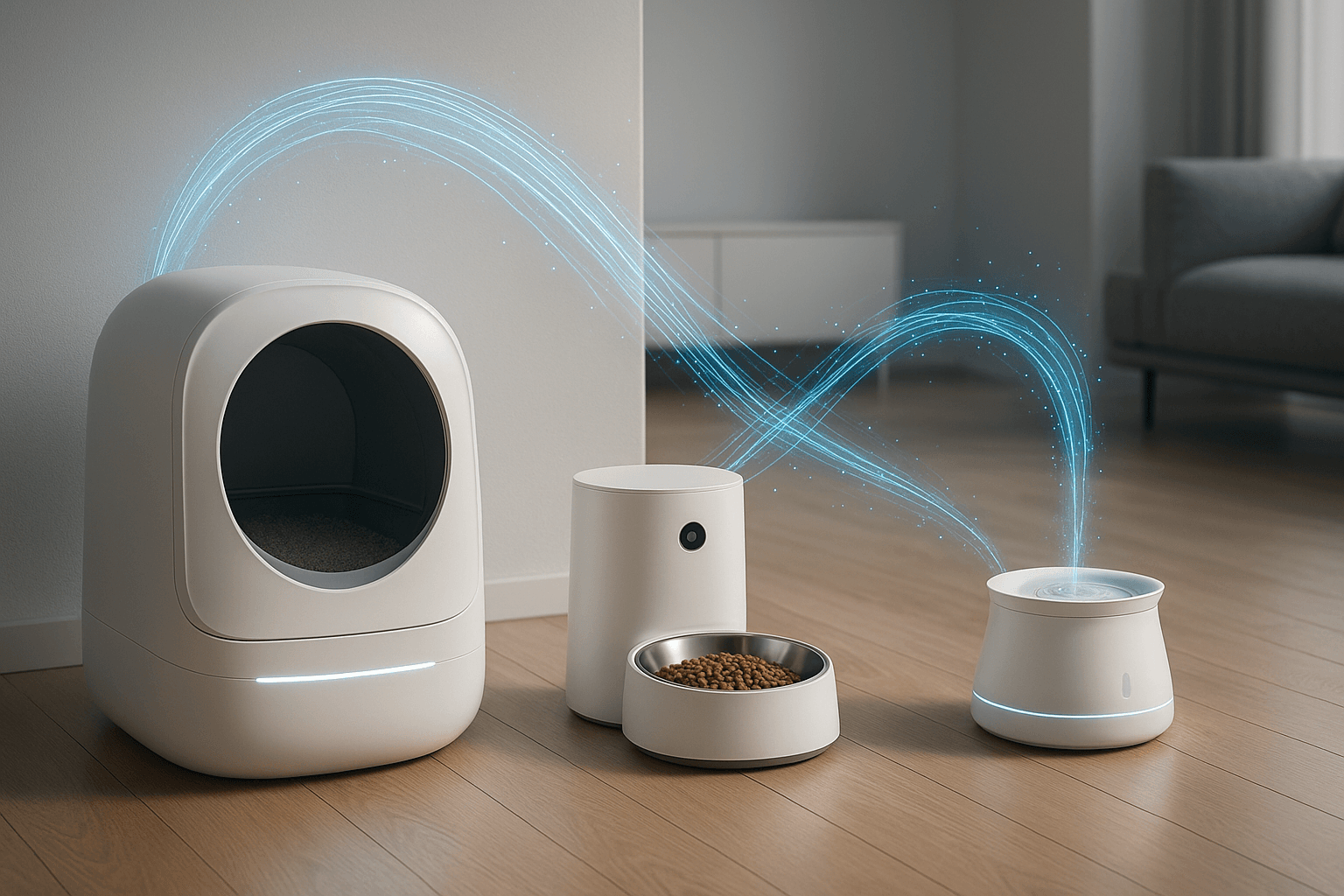
A connected litter box logs entries, duration, and weight; the smart feeder tracks meal size and timing; the fountain logs filter status and flow. In the world of Smart Cat Health Monitors 2025, this triangulation (weight, hydration, elimination) is the backbone of practical prevention.
Pros: 360° view, mature app, useful alerts.
Cons: Works best if you stay in-brand; needs stable Wi-Fi.
Whisker ecosystem (EVO/5 line + Whisker+)
Whisker leans into litter analytics: frequency, dwell time, time-of-day patterns, and deviations from baseline. With Whisker+ (the premium app tier), you get deeper behavior insights and historical comparisons that make litter data genuinely actionable.
Pros: Strong analytics for bathroom habits; clear trend visuals.
Cons: Premium features sit behind a subscription; feeder/fountain aren’t the main focus.
2) Activity & sleep trackers (collar tags)
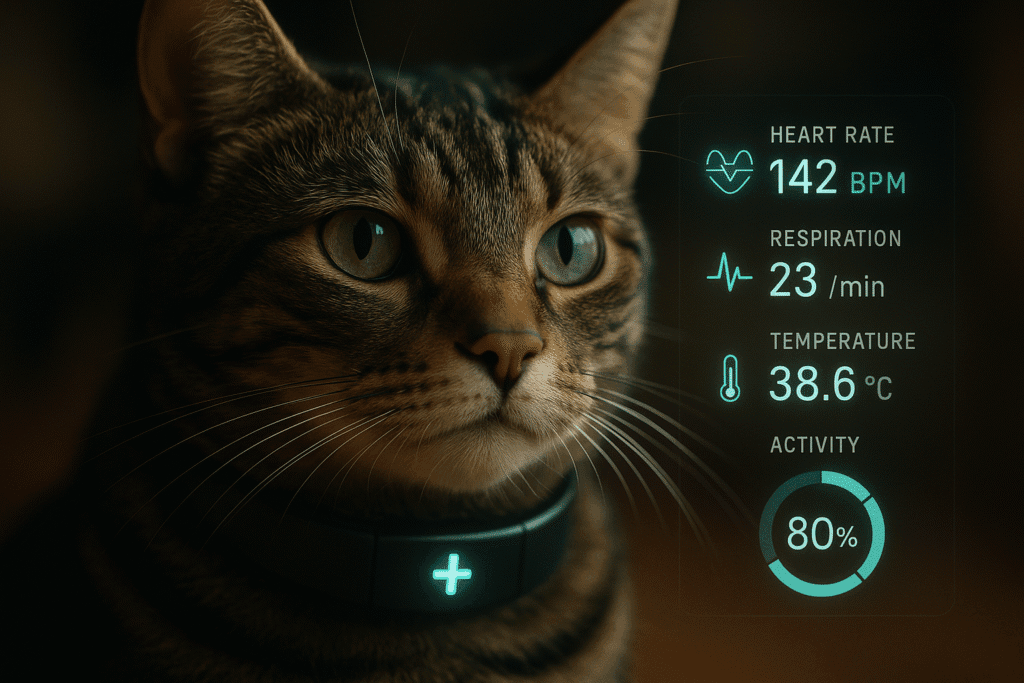
Best if your cat explores, free-roams, or you want movement and rest data on top of home devices.
Tractive (Cat Mini with Health/Activity)
Beyond GPS, Tractive’s health module tracks movement, rest, and routine. Within Smart Cat Health Monitors 2025, it adds valuable context: if activity dips while litter time rises, that double signal deserves attention.
Pros: Brand-agnostic; works indoors and outdoors.
Cons: Doesn’t measure food/water directly; needs charging.
Sure Petcare (activity/behavior focus)
Lightweight tags monitor activity, sleep, scratching, and more. If you’re already using microchip feeders or doors, you can build a broader picture: meal attribution + access patterns + movement.
Pros: Simple, light, clear app.
Cons: No direct hydration data; no litter analytics.
3) Dedicated weigh stations
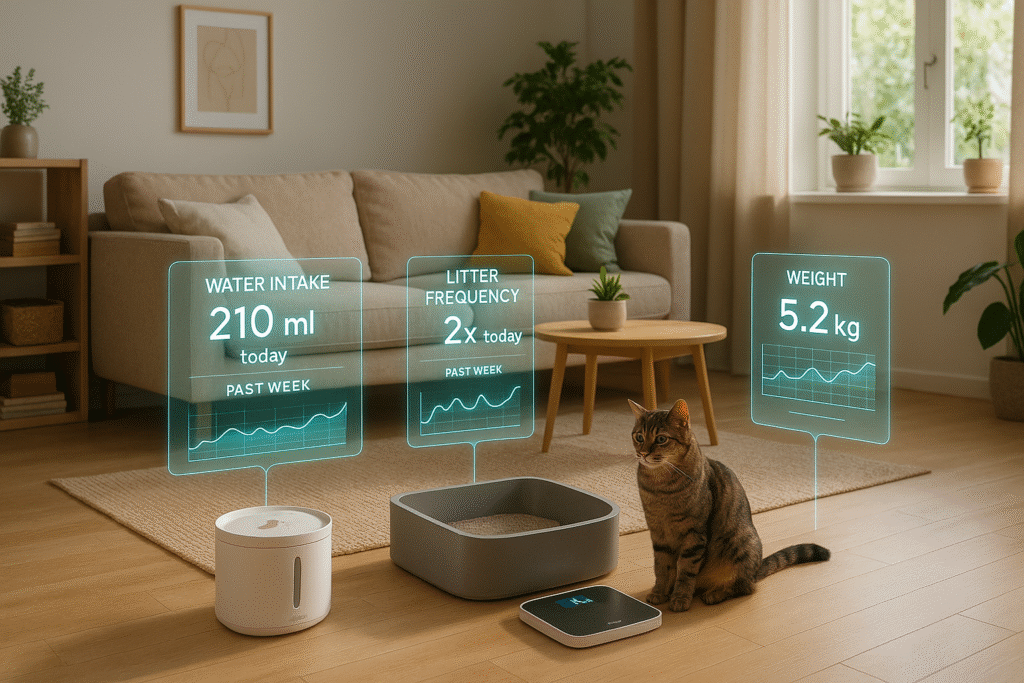
The missing piece in many homes is a consistent weight routine. A small, low-profile scale near the feeding zone produces a daily number you can trust. In Smart Cat Health Monitors 2025, body weight is still the cleanest health marker you can collect at home.
Tip: weigh at the same time each day, ideally before the main meal. Use a treat/target stick to keep it positive.
What type of pet parent are you?
| Profile | Primary goal | Best fit |
|---|---|---|
| “One app for everything” | Litter + water + food | Petkit-style ecosystem (litter + feeder + fountain) |
| “Litter patterns first” | Bathroom analytics | Whisker litter unit + Whisker+ |
| “Explorer cat” | Activity & sleep | Tractive (activity/sleep module) |
| “Back to basics” | Reliable weight trend | Daily weigh station near meals |
| “Multi-cat chaos” | Who did what? | Litter with profiling + individual feeders |
How to read alerts like a pro
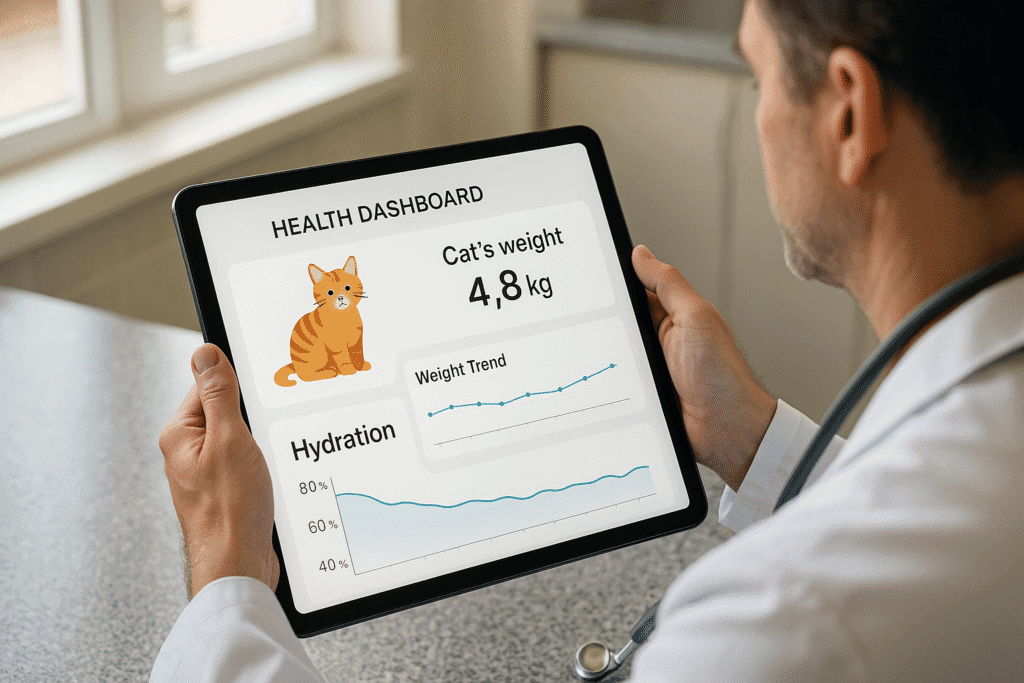
Smart Cat Health Monitors 2025 give the best signal when you read alerts in context:
- Weight ↓ + water ↑ + long litter sessions → possible urinary/renal issue → call your vet.
- Weight ↑ + extra meals + activity ↓ → creeping overweight → adjust calories and schedule active play.
- Fragmented sleep + scratching ↑ → stress or dermatologic itch → enrich environment, separate resources, consider vet visit.
Save screenshots and trend PDFs. They become a neat, objective “mini medical record” to bring to appointments.
Ten-minute setup that actually works
- Network & placement: keep devices within Wi-Fi range; avoid thick metal and multiple walls.
- 14-day baseline: avoid changes to diet/routine while the system learns “normal.”
- Consistent weighing: same surface, same hour.
- Fountain hygiene: filter reminders matter—good water means more drinking and cleaner data.
- Multi-cat calibration: if possible, use microchip/ID, or short “solo sessions” to train attribution.
- Sane thresholds: start conservative; tighten once you know your cat’s true variance.
That discipline is what turns Smart Cat Health Monitors 2025 from “cool app” into a practical health tool.
The real win is integration
Smart Cat Health Monitors 2025 shine when you layer data:
- Litter + fountain + feeder: you see what goes in (water/food) and what comes out (urine/poop).
- Weight + activity: separate true weight change from short-term post-meal bounces.
- Routine + events: new late-night urination, or sudden early-morning pacing, are early flags.
Turn on native integrations when offered; otherwise, use a simple notes app for manual events (vomit, diarrhea, diet switch, stressors).
Privacy & safety
- Encryption & policy: health graphs are still health data—pick vendors with clear privacy docs.
- Accounts & permissions: 2FA where available; share access only with actual caregivers.
- Backups: export PDF/CSV every 3–6 months for your own archive.
What Cornell & AVMA emphasize (and how this tech helps)
Authoritative sources like the Cornell Feline Health Center and the AVMA consistently stress the value of tracking body weight, water intake, appetite, and litter habits for prevention. Devices don’t diagnose; they tighten timing—you notice meaningful change faster and show up to your vet with organized history rather than vague impressions.
Pair those guidelines with the steady trendlines from Smart Cat Health Monitors 2025, and you’ll spot trouble earlier with less second-guessing.
Buying guide (short and useful)
- Home & Wi-Fi: in an apartment, a single ecosystem is efficient. In multi-story homes, consider a mesh network.
- Temperament: anxious cats prefer quiet motors and gradual introductions.
- Multi-cat households: invest in event attribution (profiled litter, individual feeders).
- App quality: clean charts, PDF/CSV export, manual notes, filter/med reminders.
- Recurring costs: filters, liners, and any premium app plans—pay only if insights are tangibly better.
- Support & spares: active user communities and easy parts matter after month 12.
Those criteria keep Smart Cat Health Monitors 2025 useful for years, not months.
FAQ
Can I start with only a smart litter box?
Yes—but adding weight and water roughly doubles the diagnostic value of your at-home picture. That’s the essence of Smart Cat Health Monitors 2025.
The app sends too many alerts. Should I worry?
First, tune the thresholds. Alerts should prompt timely checks, not constant alarm. If a pattern repeats over several days, contact your vet.
Two identical cats. How do I attribute?
Microchip feeders/doors, lightweight ID tags, or brief, controlled access sessions to teach the system. Consistency wins.
What if the internet drops?
Most devices buffer locally and resync later. If your network is flaky, a decent mesh or UPS-backed router helps a lot.
Conclusion
The right question isn’t “do I really need this?” but “which signals must I see in time to act?” With Smart Cat Health Monitors 2025, you bring a small prevention lab home. If litter routines shift, water dips, or weight drifts, you’ll know early—backed by tidy graphs your veterinarian can actually use. That’s how everyday care turns into smarter prevention.
✅ Internal interlinks
- Best Smart Litter Boxes 2025 → https://pettechai.com/best-smart-litter-boxes-2025/
- Smart Cat Feeders 2025 → The Best Automatic Cat Feeders of 2025: Smart Solutions for Every Cat Lover
- Smart Cat Cameras 2025 → Smart Cat Cameras 2025: The Best Picks for Safer, Happier, Better-Monitored Cats
- AI Cat Care 2025 → AI Cat Care 2025: The Future of Everyday Feline Wellness
- Smart Cat Doors 2025 → Smart Cat Doors 2025: Safer Access, Cleaner Homes, Happier Cats
- Smart Cat Water Fountains → Why smart cat water fountains 2025 are a must-have
🔗 Authoritative external links
- Cornell Feline Health Center – Feline health resources
- AVMA – Preventive care & wellness guidance
- Petkit – ecosystem overview
⚠️ Disclaimer
This article is for educational and informational purposes only and should not be taken as veterinary or medical advice. Always consult a licensed veterinarian before making any health, diet, or treatment decisions for your cat.
Some of the product links included in this article are affiliate links, meaning PetTech AI may earn a small commission if you purchase through them—at no additional cost to you. These commissions help support our research and maintain high-quality, unbiased content for readers like you.