Tag: smart feeders

  • Do Smart Feeders Reduce Cat Obesity — or Just Make Overfeeding Easier? (2026)

    Do Smart Feeders Reduce Cat Obesity — or Just Make Overfeeding Easier? (2026)

    Smart feeders are marketed as a fix for feline obesity: measurable portions, scheduled meals, fewer “accidental” refills. In theory, automation removes the human from the equation—and therefore removes the problem.

    In real homes, smart feeders don’t reduce obesity by default. They either enforce discipline or quietly automate the same overfeeding habits that caused weight gain in the first place. The device doesn’t decide anything. The setup does.

    Cornell’s Feline Health Center is blunt about the basics: obesity is common, weight-loss should be gradual, and crash dieting can be dangerous (including risk of hepatic lipidosis). Cornell Vet College That matters because “tech fixes” often encourage people to move fast, restrict hard, and assume the feeder can do the thinking.

    It can’t.


    Cat obesity isn’t a “willpower” issue — it’s an environment issue

    If you zoom out, obesity usually happens when food becomes:

    • always available (free feeding)
    • emotionally deployed (“he seems sad, I’ll give him something”)
    • the main daily stimulation in an under-enriched indoor life

    The AAFP/ISFM Feline Environmental Needs Guidelines make a foundational point: a cat’s comfort with its environment is intrinsically linked to physical health, emotional wellbeing, and behavior—and addressing environmental needs is essential, not optional. PubMed Feeding is not just nutrition; it’s a core resource within that environment.

    If the environment pushes a cat toward food-seeking, a feeder won’t “fix” it—unless it changes the environment’s rules.


    Understanding Body Condition Score (BCS) in Cats
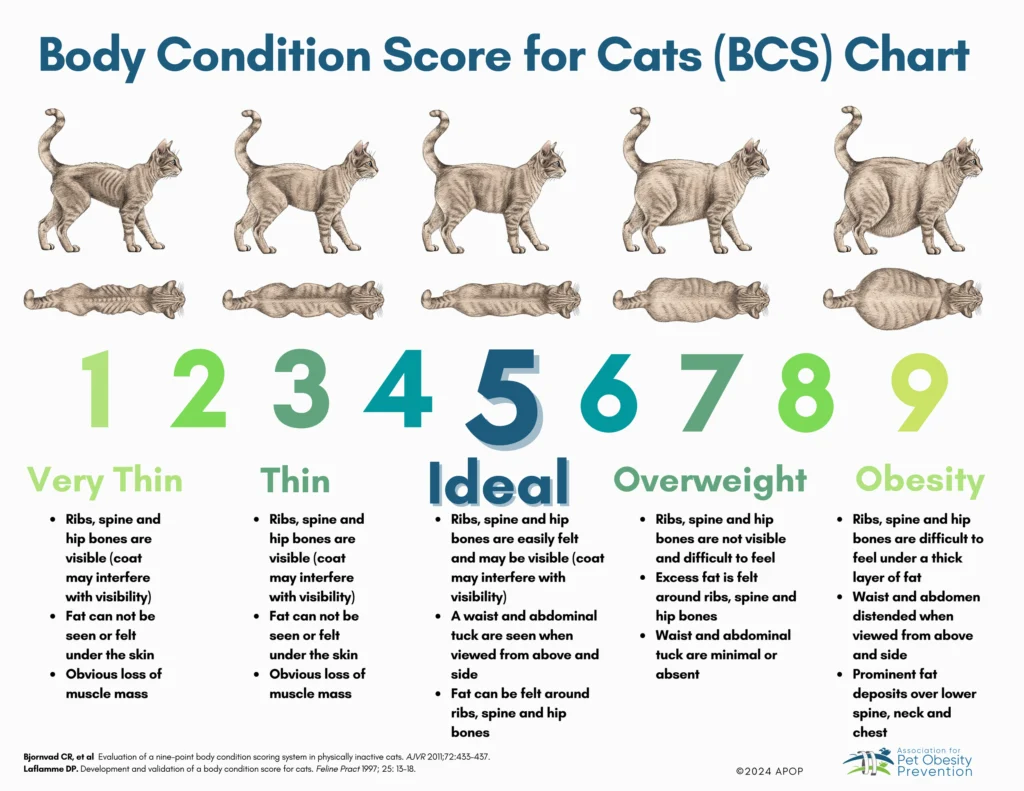
    Body condition score for cats chart

    Before changing feeding methods or cutting calories, it’s essential to establish whether a cat is actually overweight. The most widely used clinical tool for this is the Body Condition Score (BCS), a visual and hands-on scale that evaluates body fat rather than relying on weight alone.

    Veterinary guidelines typically use a 9-point BCS scale, where:

    • BCS 4–5 is considered ideal
    • BCS 6–7 indicates overweight
    • BCS 8–9 reflects obesity

    A cat at an ideal BCS has a visible waist when viewed from above, minimal abdominal fat, and ribs that can be felt easily under a light fat layer. As BCS increases, the waist disappears, fat pads become more pronounced, and mobility often declines—even before weight gain looks “dramatic.”

    According to guidance from the Cornell Feline Health Center, BCS is a more reliable indicator of health risk than body weight alone, especially in indoor cats with low activity levels. While BCS is not a medical diagnosis, it provides a practical reference point for deciding whether feeding routines and portion sizes need adjustment—and how urgently.


    The only mechanism by which smart feeders help: predictability + portion control

    Smart feeders reduce obesity only when they do two things consistently:

    1. Lock in portions
    2. Lock in timing

    That’s it. Everything else (app controls, cameras, voice prompts) is secondary.

    Why this works:

    • Portions reduce silent calorie creep.
    • Predictable timing reduces constant grazing and can reduce “learned begging” in many households.

    Cornell’s feeding guidance emphasizes the risks tied to overweight and obesity, and frames weight management as a practical, measured process—not a quick reset. Cornell Vet College A feeder that delivers consistent portions can support that process if the numbers are correct.

    But “consistent” isn’t the same as “correct.”

    A perfectly consistent wrong setting is how obesity gets automated.


    The quiet failure mode: smart feeders make it easier to overfeed without noticing

    This is the part the industry doesn’t like to talk about.

    Smart feeders can hide overfeeding because they:

    • remove the physical act of scooping (your brain stops tracking quantity)
    • make “just a little more” a button press
    • encourage micro-feeding that feels harmless but adds up

    When obesity persists in a smart-feeder home, it’s usually one of these:

    1) Portion math is wrong

    People program by “cups” or “scoops” instead of calories. Then they wonder why nothing changes.

    2) The app becomes a treat dispenser

    Random “bonus” feeds train food obsession and inflate intake.

    3) Household discipline collapses

    One person uses the feeder schedule. Another overrides it “sometimes.” The cat learns the system is negotiable.

    Automation doesn’t stop inconsistency. It makes it easier to be inconsistent more often.


    Free feeding vs scheduled feeding: the obesity hinge point

    Measuring cat food by weight to prevent portion creep

    Free feeding is one of the most common patterns linked to weight gain in cats—especially when dry food is available all day. Cornell’s obesity guidance discusses free-feeding as a major factor behind feline obesity and pushes measured, veterinarian-guided plans. Cornell Vet College

    Scheduled feeding changes the control surface:

    • you can measure intake
    • you can notice changes earlier
    • you can actually implement a weight plan

    A feeder supports scheduled feeding well—if you don’t sabotage it.


    “But my cat acts starving”: hunger vs food arousal

    This is where most owners get played.

    Many cats show intense pre-meal behaviors:

    • vocalizing
    • pacing
    • hovering near the feeder
    • increased reactivity

    That behavior isn’t proof the cat needs more calories. It’s proof the cat has learned a high-reward pattern.

    If you respond to that arousal by dispensing extra food, you train:

    • more arousal
    • more persistence
    • more food obsession

    The AAFP/ISFM framework and resource-based environmental models emphasize predictable, separated key resources and the importance of giving cats control and stability. SAGE Journals Food becomes a problem when it’s the only consistent “event” in the home.


    Multi-cat homes: obesity often comes from competition, not appetite
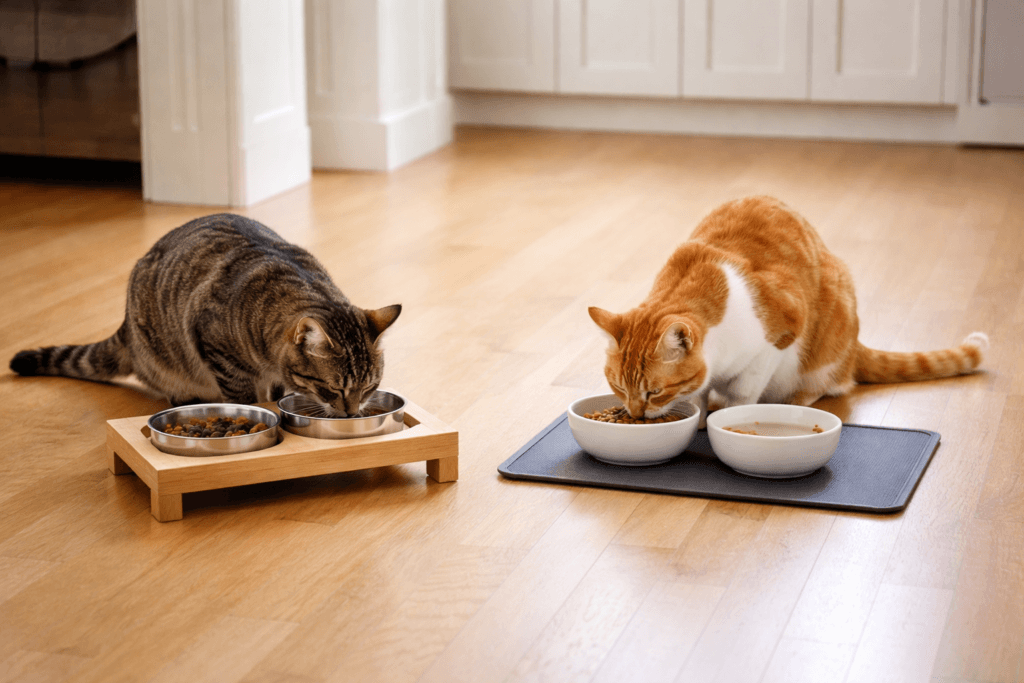
    Separate feeding stations reduce competition in multi-cat homes

    In multi-cat households, “one cat got fat” often means:

    • one cat guards the resource
    • one cat rushes eating (then returns for leftovers)
    • one cat under-eats, then compensates later
    • stress increases overall food fixation

    AAFP/ISFM-aligned guidance recommends multiple and separated key resources, including feeding stations, to reduce stress and competition. SAGE Journals

    Smart feeders can help here in a practical way:

    • multiple feeders
    • separated placement
    • consistent timing

    One feeder in one location can worsen competition. Two feeders in two territories can reduce it.


    The risk people ignore: aggressive calorie cuts can be dangerous

    This is non-negotiable.

    Cornell warns that sudden starvation diets can put cats at risk for hepatic lipidosis and recommends gradual weight loss (often framed around roughly 1–2% per week) under veterinary guidance. Cornell Vet College

    A feeder makes restriction easy. Too easy.
    If you use automation to slash intake without a plan, you can create a medical risk.

    If your cat is obese, the correct move is:

    • vet-guided calorie target
    • slow reductions
    • monitoring (weight + body condition score)
    • adjustments over time

    Automation helps execution, not diagnosis.


    The honest verdict

    Smart feeders reduce obesity when:

    • portions are set correctly and measured
    • schedule is consistent
    • overrides are rare
    • enrichment replaces boredom-driven eating
    • multi-cat resources are separated

    Smart feeders make obesity easier when:

    • “bonus” feeding becomes normal
    • portion settings are guessed
    • household members override unpredictably
    • the feeder becomes the cat’s main stimulation

    If you want the blunt version:
    smart feeders don’t prevent obesity. They prevent humans from noticing they’re overfeeding—unless they use the feeder as a discipline tool.


    What to do if you’re considering automation
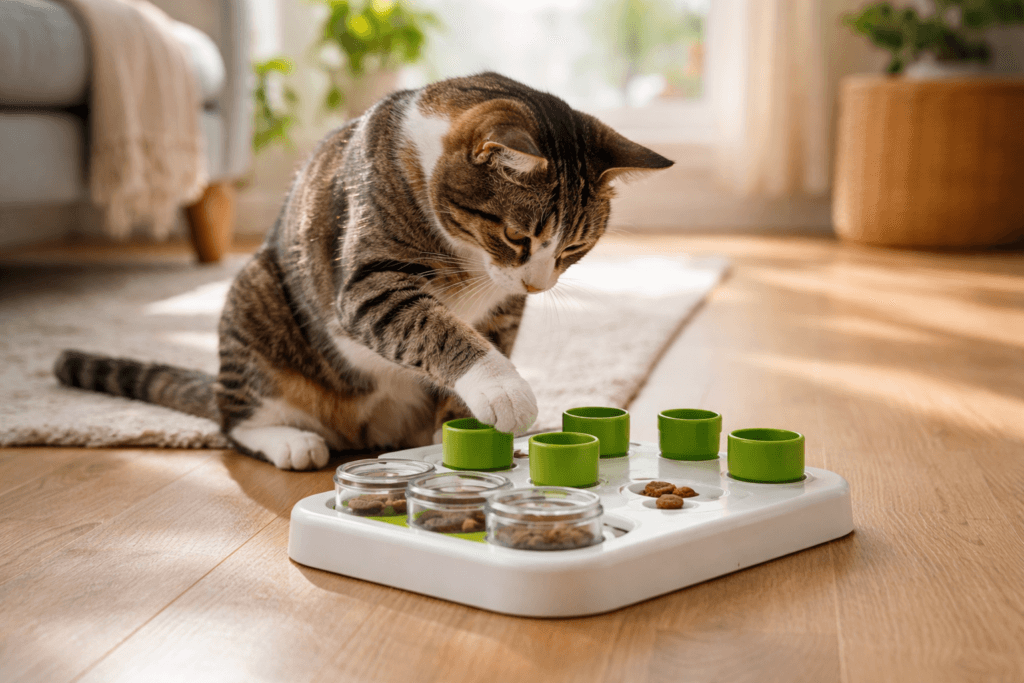
    Food puzzle enrichment reduces boredom-driven overeating

    If your problem is portion creep, inconsistent schedules, or double-feeding, smart feeding can help—but only if you treat setup like a protocol, not a toy.

    Ready to tighten portions and timing without guesswork?
    Start with our PETKIT Fresh Element Infinity Review 2025 (practical scheduling + routine control), then compare models and use-cases in Best Smart Cat Feeders 2025 to find the right fit.

    And if your cat’s overeating looks behavioral—not nutritional—use Stop a Cat From Overeating as your first-line playbook before you change hardware.


    FAQ

    Do smart feeders automatically help cats lose weight?

    No. They help only if the programmed portions match an appropriate calorie target and overrides are controlled. Cornell Vet College

    Is free feeding bad for cats?

    For many indoor cats, it increases the risk of overeating and weight gain. Weight control is harder without measured meals. Cornell Vet College

    Can a feeder reduce stress-related eating?

    Sometimes. Predictability can help, but environmental needs still matter. The AAFP/ISFM guidelines treat environment as essential to wellbeing and behavior. PubMed

    What about multi-cat homes?

    Separate resources and feeding stations reduce competition. AAFP/ISFM-aligned guidance emphasizes multiple, separated resources including feeding areas. SAGE Journals

    Is rapid weight loss dangerous in cats?

    Yes. Cornell warns against sudden starvation diets due to hepatic lipidosis risk and recommends gradual, monitored loss. Cornell Vet College


    Internal Links

    If consistent portions and fixed feeding times are the main priority, PETKIT Fresh Element Infinity Review 2025 shows how a properly configured smart feeder can remove daily variability and enforce routine without guesswork. For owners who want to compare different feeder designs, control methods, and real-world use cases, Best Smart Cat Feeders 2025 offers a broader, side-by-side evaluation.

    When overeating is already established—especially in cases of persistent begging, food obsession, or constant “I’m hungry” behavior—Stop a Cat From Overeating focuses on behavioral and environmental drivers that feeding hardware alone can’t solve. And when excessive eating overlaps with restlessness or boredom, Indoor Cat Enrichment 2025 and Best Interactive Cat Toys 2025 explore how diet and enrichment work together as a single system, rather than isolated fixes.


    References

    • Cornell Feline Health Center — Obesity (risk, safe weight loss, hepatic lipidosis warning, gradual loss guidance). Cornell Vet College
    • Cornell Feline Health Center — How often should you feed your cat? (health risks tied to overweight/obesity and feeding guidance). Cornell Vet College
    • Ellis et al. (2013) — AAFP and ISFM Feline Environmental Needs Guidelines (key resources and the link between environment, health, and behavior). SAGE Journals
    • VCA Hospitals — Feline Environmental Needs Guidelines (overview) (multiple/separated resources including feeding stations). Vca
    • AVMA — Your pet’s healthy weight (owner guidance and obesity/healthy weight framing). avma.org

    Disclaimer

    PetTech AI publishes educational content to help cat owners make informed decisions about feline health, behavior, and pet technology. Some links on this page may be affiliate links, including Amazon Associate links and other affiliate partnerships. If you click a link and make a qualifying purchase, PetTech AI may earn a small commission at no additional cost to you. These commissions help support research, content production, and site maintenance. This article is not a substitute for veterinary diagnosis or treatment. For obese cats, weight-loss plans should be discussed with a veterinarian to avoid unsafe calorie restriction and related risks.
  • Why Do Cats Throw Up After Eating? Science-Backed Causes & How to Help

    Why Do Cats Throw Up After Eating? Science-Backed Causes & How to Help

    Watching your cat eat, walk away, and then immediately vomit is stressful as hell. It’s also confusing: is this “just hairballs,” eating too fast, or a sign of something serious? Cornell’s Feline Health Center is very clear: occasional vomiting can be normal, but frequent or persistent episodes are a clinical red flag, not just a quirky cat trait. vet.cornell.edu

    In this guide we’ll unpack why do cats throw up after eating, when you can monitor at home, when you should call your vet, and how smarter feeding setups and tech can actually reduce post-meal vomiting over time.


    Vomiting vs. Regurgitation: First, Know What You’re Looking At

    Before you answer why do cats throw up after eating, you need to be sure your cat is actually vomiting and not regurgitating.

    • Vomiting = active process
      • Nausea, licking lips, drooling
      • Retching, abdominal heaving
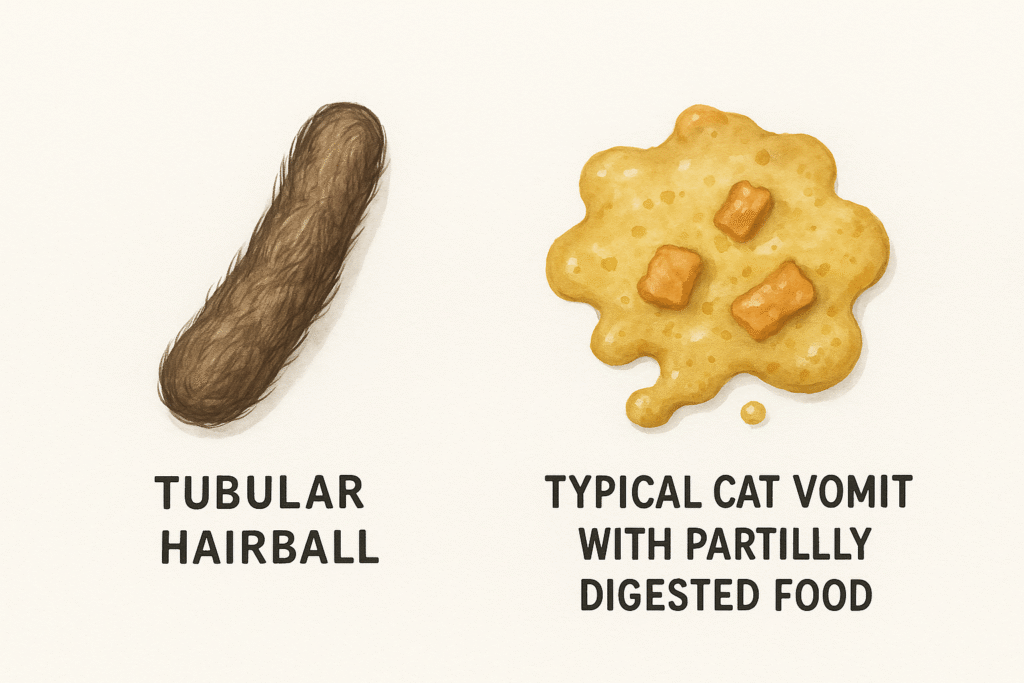
      • Contents may include partially digested food, bile, hair, foam Merck Veterinary Manual
    • Regurgitation = more passive
      • Often happens soon after eating
      • Food comes up in a tubular, undigested form
      • Less effort, minimal heaving

    Owners often describe both as “throwing up,” but the distinction matters. Regurgitation points more toward esophageal issues or eating too fast, while true vomiting can involve the stomach, intestines, or systemic disease. Merck Veterinary Manual


    Infographic comparing a cat hairball with typical vomit after eating

    When “Why Do Cats Throw Up After Eating” Might Be Mild

    Not every post-meal episode means an emergency. There are a few scenarios where why do cats throw up after eating may have a relatively benign explanation—provided it’s infrequent and your cat is otherwise normal.

    1. Hairballs

    Cornell notes that one of the most common benign causes of feline vomiting is expelling hairballs: damp, cylindrical masses of fur mixed with bile. vet.cornell.edu

    • Occasional hairball every week or two can be normal. vet.cornell.edu
    • If your cat otherwise eats, drinks, and plays normally, it’s likely low risk.

    However, newer AAFP guidance suggests that cats vomiting hairballs more than once per week likely have underlying nausea or GI issues, not just “normal grooming.” catvets.com

    2. Eating Too Fast (“Scarf and Barf”)

    Some cats inhale their food, then promptly bring it back up. Many clinics now explicitly link rapid eating and post-meal vomiting, and even mention that puzzle or slow-feeder bowls can reduce this behavior. Northeast Veterinary Referral Hospital

    Clues it’s speed-related:

    • Vomit appears quickly after eating (minutes)
    • Food is mostly undigested
    • Cat seems normal before and after

    3. Minor Diet Upset

    A sudden brand change, new treats, or access to rich human food can trigger temporary GI irritation. If your cat vomits once, then returns to normal appetite and energy, why do cats throw up after eating might be answered by “abrupt diet change” rather than disease.


    When Vomiting After Eating Is a Red Flag

    Cornell emphasizes that frequent vomiting—especially more than once per week or associated with other signs like lethargy, decreased appetite, increased thirst, or diarrhea—warrants veterinary attention. vet.cornell.edu

    You should stop asking why do cats throw up after eating and start calling your vet if you see:

    • Vomiting more than 2–3 times in 24 hours or more than three times overall per episode Best Friends Animal Society
    • Vomiting after meals persisting beyond a day or two Maddie’s Fund
    • Blood in the vomit, coffee-ground material, or dark brown fluid
    • Weight loss, weakness, hiding, or behavior change
    • Increased thirst and urination (possible kidney or endocrine disease) vet.cornell.edu
    • Painful abdomen, bloating, or straining to vomit with nothing coming up
    • Known or suspected toxin exposure (lilies, human meds, household chemicals) vet.cornell.edu

    Those scenarios are “call your vet now” territory, not “wait and see.”


    Main Science-Backed Causes of Post-Meal Vomiting in Cats

    There isn’t a single answer to why do cats throw up after eating. Vomiting is a symptom, not a diagnosis. Major categories include:

    1. Dietary Causes

    • Eating too fast – “scarf and barf” behavior
    • Sudden diet changes
    • Food intolerance or sensitivity to specific proteins or ingredients
    • Spoiled food or trash-raiding

    These often cause acute vomiting, sometimes right after meals, and may resolve once the trigger is removed.

    2. Hairballs & GI Motility Issues

    Hair ingestion during grooming is normal, but if GI motility is altered, hairballs may accumulate and trigger vomiting soon after eating. Cornell warns that if a hairball passes into the intestines and isn’t expelled, it can cause life-threatening obstruction. vet.cornell.edu

    AAFP material also notes that cats vomiting hairballs more than once weekly likely have an underlying nausea problem that needs investigation. catvets.com

    3. Gastrointestinal Disease

    Merck’s Veterinary Manual and AVMA-linked research list a broad range of GI disorders that cause vomiting—often chronic or recurrent and not limited to meals: Merck Veterinary Manual

    • Chronic small bowel disease / inflammatory bowel disease (IBD)
    • Intestinal lymphoma or other cancers
    • Constipation and megacolon
    • Ulcers or gastritis
    • GI parasites (roundworms, hookworms, etc.)

    In these cases, why do cats throw up after eating is often answered by “chronic intestinal disease” rather than simple dietary indiscretion.

    4. Systemic Disease

    Cornell lists multiple metabolic diseases that can present with vomiting: diabetes, chronic kidney disease (CKD), and hyperthyroidism among them. vet.cornell.edu

    Here, vomiting may not always be meal-linked, but owners often notice it shortly after eating because that’s when they’re watching the cat.

    5. Toxins and Foreign Bodies

    • Toxic plants, human medications, antifreeze, and certain foods (like onions or chocolate) are classic causes. vet.cornell.edu
    • Foreign objects (string, rubber bands, small toys) can lodge in the stomach or intestines, causing vomiting, often worsened after meals.

    These scenarios can escalate fast and often require emergency care.


    How Vets Work Up a Cat That Throws Up After Eating

    When you bring in a cat because “why do cats throw up after eating?”, your vet isn’t guessing—they’re running a structured workup.

    According to Cornell and major veterinary references, the process often includes: vet.cornell.edu

    1. Detailed history
      • When vomiting started
      • Relation to meals (immediately, 30 minutes, hours later)
      • Diet type, any recent changes, treats, access to toxins
      • Frequency, appearance of vomit (food, bile, hair, blood)
    2. Physical exam
      • Dehydration, weight, body condition
      • Abdominal pain or masses
      • Thyroid enlargement in older cats
      • Oral exam (foreign bodies, ulcers)
    3. Baseline tests
      • CBC, biochemistry, electrolytes
      • Urinalysis
      • Fecal exam for parasites
    4. Imaging
      • X-rays for foreign objects, obstruction, constipation
      • Ultrasound to evaluate intestinal wall, pancreas, liver
    5. Advanced diagnostics
      • Endoscopy for foreign bodies or biopsy
      • Surgical exploration and biopsy in chronic or severe cases

    Treatment is then targeted: dewormers for parasites, diet change for IBD, specific therapy for CKD, hyperthyroidism, diabetes, or surgery for obstructions. vet.cornell.edu


    Evidence-Based Ways to Help at Home (When It’s Appropriate)

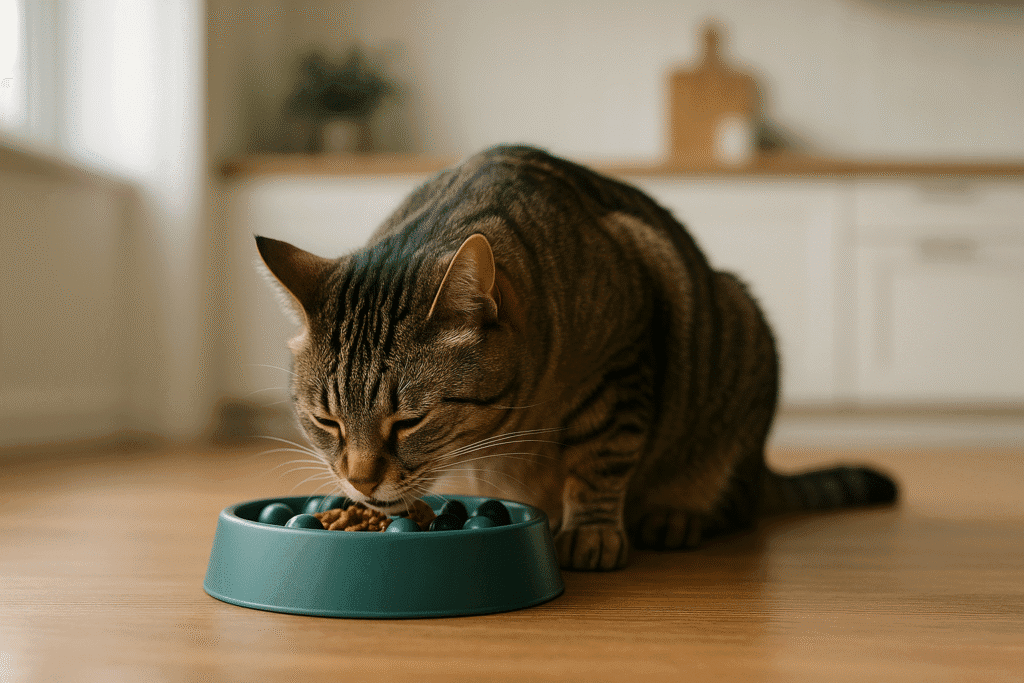
    Tabby cat eating slowly from a modern slow-feeder bowl to reduce vomiting after meals

    If your cat has had a single mild episode of vomiting after eating, is bright, hydrated, and otherwise normal, you can often monitor at home. Veterinary guidelines and AAFP resources suggest: catvets.com

    • Pause food briefly (not water) for a few hours, then offer a small, bland meal if your vet agrees.
    • Switch to smaller, more frequent meals rather than one or two large ones.
    • Transition diets slowly over 7–10 days when changing food.
    • Brush regularly and consider hairball-control diets for long-haired cats.
    • Monitor hydration (skin turgor, gum moisture, urine output).

    If anything worsens or vomiting continues, you’re done with home care: it’s vet time.


    When to Call the Vet or Head to Emergency

    You shouldn’t stay in “Google mode” on why do cats throw up after eating if any of these apply:

    Call your regular vet ASAP if:

    • Vomiting happens more than once per week or more than 2–3 times in a day vet.cornell.edu
    • Your cat starts refusing food or water
    • You notice weight loss, chronic loose stools, or coat decline
    • Vomiting is chronic but your cat “seems ok” (this still needs workup)

    Seek emergency care if:

    • Repeated vomiting and nothing staying down
    • Vomit with blood or “coffee-grounds” material GSVS
    • Distended, painful belly, or straining without producing anything
    • Severe lethargy, pale gums, trouble breathing, collapse
    • Known ingestion of lily, rodenticide, or human medications

    AVMA-aligned first-aid guidance also stresses: never induce vomiting at home without direct veterinary or poison-control instructions, especially in cats. AVMA


    How PetTech Tools Can Reduce Vomiting After Meals

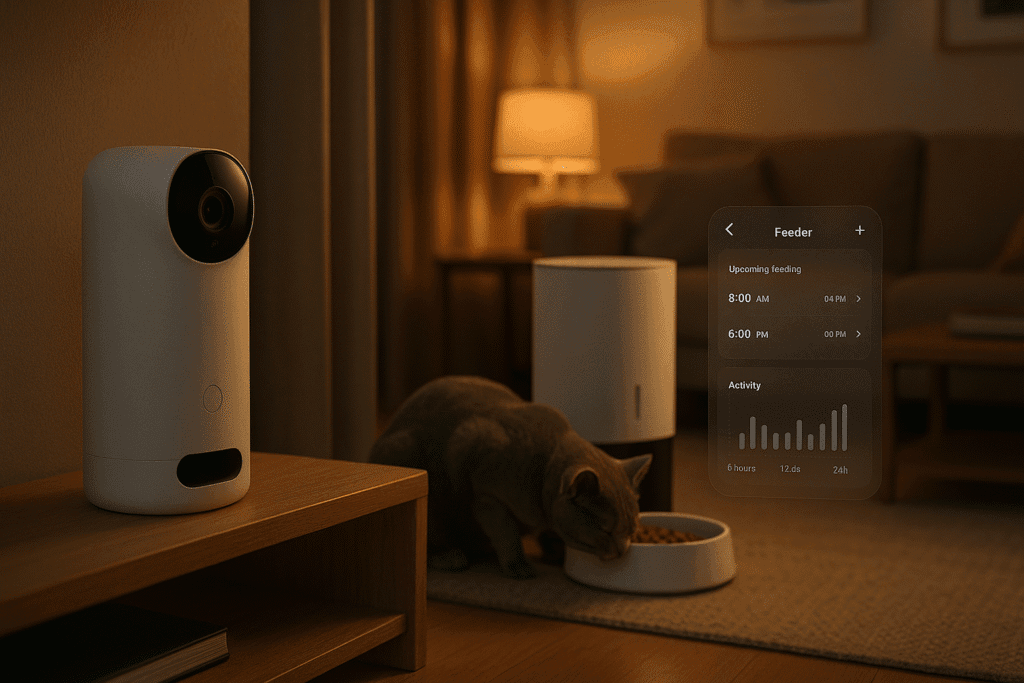
    Smart pet camera and automatic feeder monitoring a cat prone to vomiting after eating

    Here è where PetTech AI comes in. Tech won’t cure IBD or kidney disease, but it can help with some mechanical and behavioral causes of why do cats throw up after eating.

    1. Smart Feeders & Slow-Feed Bowls

    Studies and case reports in veterinary behavior literature show that food puzzles and foraging toys can slow rapid eating and reduce post-meal vomiting in some cats. AVMA Journals

    Practical picks you can link to:

    • Smart automatic feeders with:
      • Small, scheduled portions
      • Multiple small meals per day
      • App-controlled feeding logs
    • Slow-feeder bowls / puzzle feeders that:
      • Force the cat to work for each bite
      • Reduce “scarf and barf” events
      • Provide mental enrichment

    2. Smart Water Fountains

    Chronic vomiting can worsen dehydration. Smart fountains encourage drinking with:

    • Constantly circulated, filtered water
    • App alerts when the reservoir is low
    • Some models track usage trends

    3. Cat Cameras & Activity Trackers

    If you’re not home when it happens, you don’t really know how often your cat vomits or what happens right before.

    • Smart pet cameras let you replay episodes, see posture, and note timing relative to meals.
    • Wearable trackers can reveal subtle activity drops that match periods of nausea or GI flare-ups.

    These tools don’t replace your vet, but they give better data, which directly improves diagnosis and treatment decisions.


    Verdict: Vomiting After Eating Is a Symptom, Not a Personality Trait

    If you came to this article asking why do cats throw up after eating, the hard truth is:

    • Occasional, isolated episodes can be benign (hairballs, mild diet errors).
    • Recurrent or persistent vomiting is never “just normal” for cats. Mallard Creek Animal Hospital
    • The underlying cause can range from simple to life-threatening—and only a vet can sort that out.

    Your job as a cat guardian is to track patterns, intervene early, and use tools—like smart feeders, slow-feed bowls, and cameras—to reduce avoidable triggers and give your vet the best possible information.


    Disclosure

    This article is for educational purposes only and is not a substitute for professional veterinary diagnosis or treatment. Always consult your veterinarian if your cat is vomiting, seems unwell, or if you have any concerns about their health. Do not start, stop, or change medications or diets based solely on online content. PetTech AI participates in affiliate programs such as Amazon Associates and CJ; this means we may earn a commission if you purchase products through links on our site, at no additional cost to you. These commissions help us keep producing evidence-based content.

  • 3 Common Mistakes Cat Owners Still Make in 2025 — and How to Fix Them 🐾

    3 Common Mistakes Cat Owners Still Make in 2025 — and How to Fix Them 🐾

    Affiliate Disclaimer: PetTech AI may earn a small commission if you buy through links on this page. We only recommend products that support feline safety, comfort, and long-term wellbeing.

    If you’ve ever googled “why is my cat doing this?” at 2 a.m., you’re not alone. Most cat owner mistakes aren’t about being careless; they’re about missing small, boring details that matter a lot to cats: predictable routines, clean litter, safe space to play and rest, and early detection when something’s off. In 2025, the win is using light automation and better layout to make those basics effortless.

    This guide distills the three cat owner mistakes we still see every day—and the exact, modern fixes (including smart tools) that reduce stress for both of you.


    TL;DR (for busy humans)

    • Mistake #1: Inconsistent routines (meals, litter care, play).
      Fix: Automate the schedule; keep changes gradual and predictable.
    • Mistake #2: “Hidden” environmental stress (box too small, air quality, no vertical choice).
      Fix: Right-size the litter setup, add a purifier, give safe highs and hides.
    • Mistake #3: Ignoring early pattern changes (food, water, litter, sleep).
      Fix: Track lightly with smart devices; call your vet if trends look off for 48–72 hours.

    Along the way, we’ll flag the cat owner mistakes that quietly tank litter habits, hydration, and behavior—plus simple, affordable upgrades that actually work.


    Mistake #1: Inconsistent routines (and “weekend roulette”)

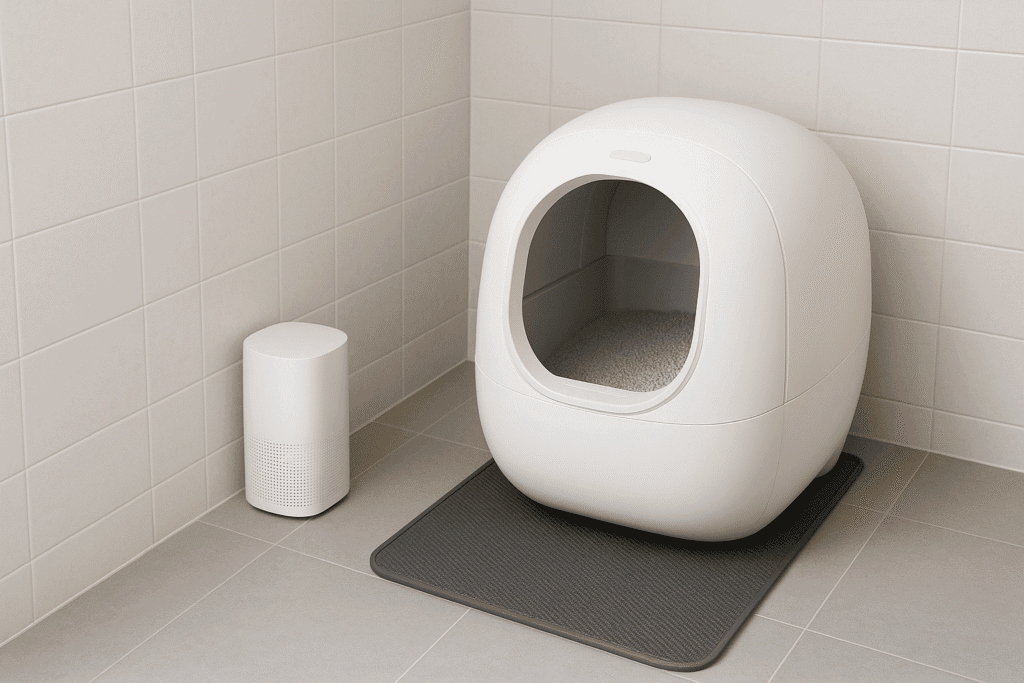
    Smart litter corner with purifier for odor and dust control. Cat owner mistakes.

    Why it’s a problem
    Cats love patterns. When meal times jump around, the litter isn’t cleaned on a cadence, or playtime is skipped for days and then overdone, stress builds. According to the Cornell Feline Health Center and the AVMA, predictable feeding, clean toileting, and daily enrichment are foundational. Breaking those rhythms is among the most common cat owner mistakes—and the easiest to fix.

    What it looks like at home

    • Breakfast sometimes at 6 a.m., sometimes at 10 a.m.
    • Litter scooped “whenever I remember.”
    • Play sessions only on weekends (then too long, too exciting).
    • Treats replacing structured meals (blood sugar roller coaster).

    The smart fix (keep it boring)

    1. Automate meals. Use an automatic feeder (e.g., PETKIT or Whisker Feeder-Robot) to lock timing and portion size. Start by mirroring your current schedule, then adjust slowly.
      Shop top-rated smart feeders → Amazon
    2. Lock hydration. A smart fountain (e.g., PETKIT Eversweet on Amazon) boosts drinking and reminds you about filter changes.
      See best-selling cat fountains → Amazon
    3. Put scooping on rails. Either commit to twice-daily manual scoops or move to a self-cleaning litter box (e.g., Litter-Robot 4) so “clean” is the default.
      Check Litter-Robot 4 availability → Whisker
    4. Schedule play like brushing teeth. Two sessions/day × 10–15 minutes with a wand toy; end with a small snack. Keep it consistent.

    Pro tip
    Set one push alert per day (not ten). Over-notification is one of those sneaky cat owner mistakes that leads to ignoring the app entirely.

    Interlinks


    Mistake #2: Environmental stress you don’t notice (box size, odor, air, space)

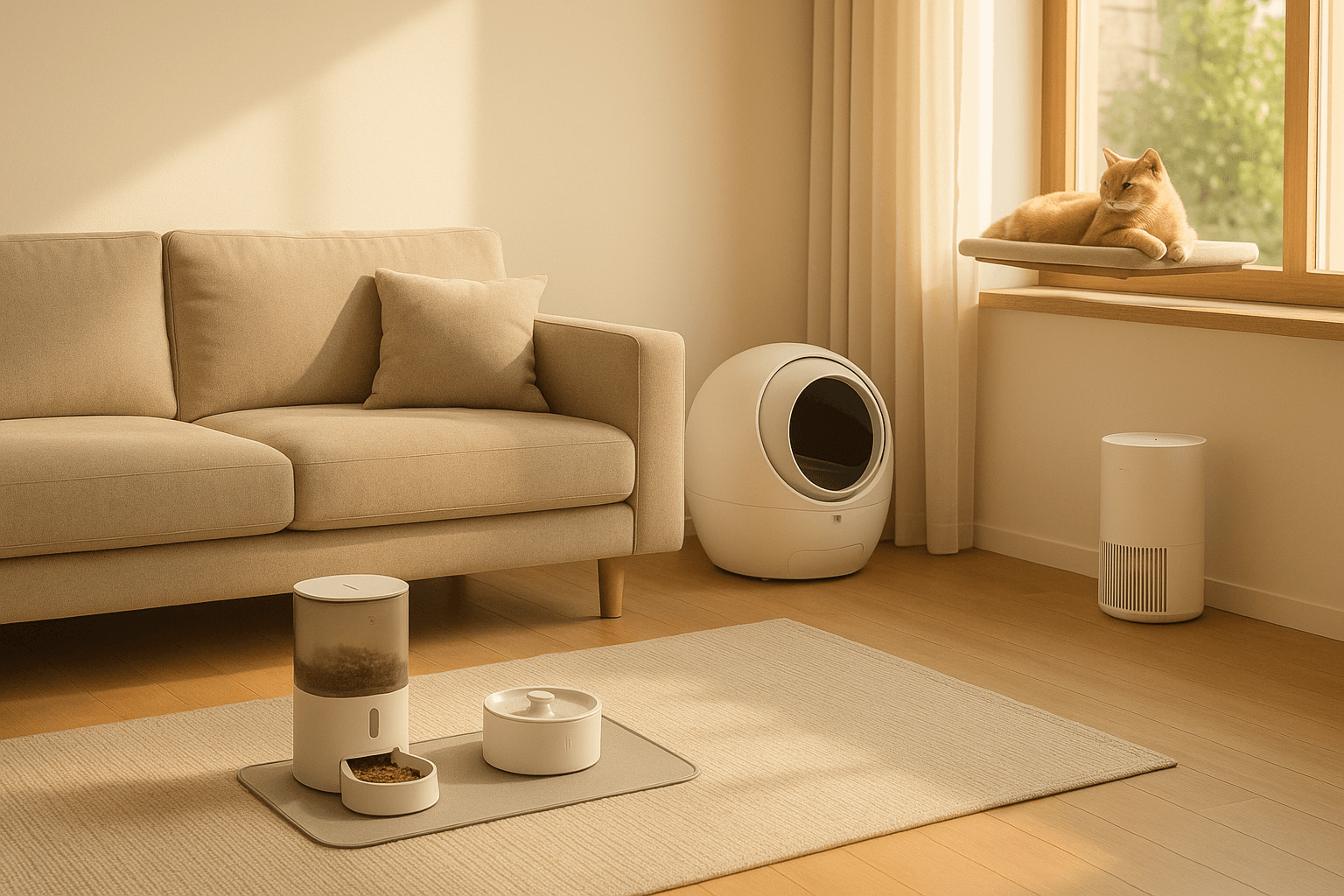
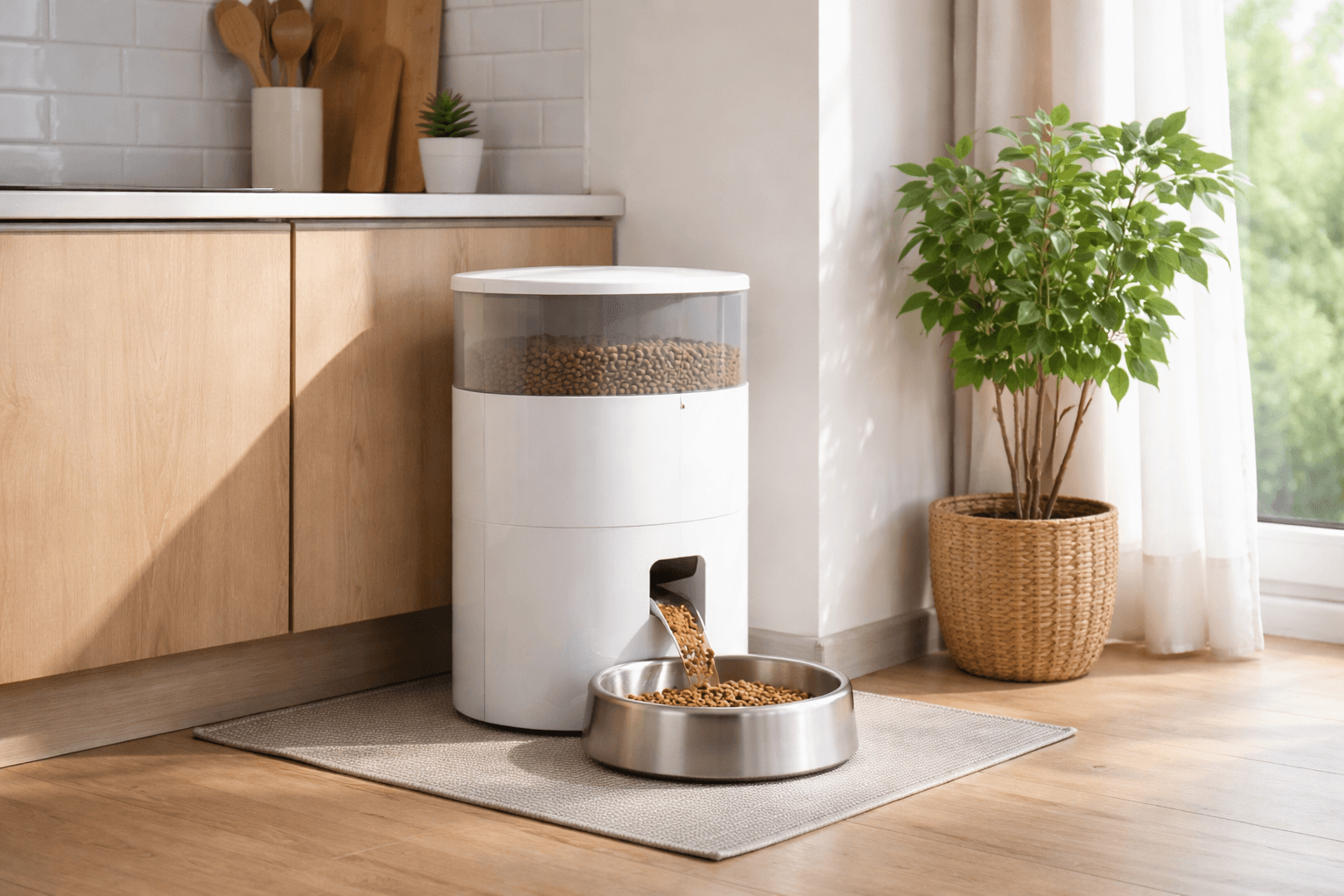
    Automatic feeder and smart fountain placed for better hydration.

    Why it’s a problem
    Cats are masters of quiet discomfort. A litter box that’s too small, an ammonia whiff after scooping, no safe vertical rest spot—these are high-impact cat owner mistakes. They don’t scream for attention, but they fuel avoidance, night zoomies, and “mystery” meowing.

    Checklist of hidden stressors

    • Litter box ergonomics: The footprint should be ~1.5× your cat’s body length in width and ~2× in length. If they can’t turn fully, it’s too small.
    • Odor spikes: Even a clean box can smell right after use; lingering odor pushes cats to “cleaner” floors, rugs, or beds.
    • Air quality: Dander and dust build up fastest in small rooms and apartments.
    • No vertical choice: Without perches/shelves, cats feel trapped at ground level.

    The smart fix (design the room, not just the box)

    • Upgrade the litter “zone,” not just the box.
      • Consider a self-cleaning litter box to stabilize cleanliness.
      • Add a slim litter mat and a purifier nearby to flatten odor/dust spikes.
      • Use smart accessories (e.g., PETKIT ramps/fences) to reduce scatter and help seniors.
        Explore smart litter accessories → Amazon
    • Purify the air quietly. A HEPA purifier with pet carbon (e.g., LEVOIT Core series on Amazon) removes fine particles and odor. Sleep Mode keeps it unobtrusive.
      View LEVOIT pet-care purifiers → Amazon
    • Give safe highs and hides. Add one elevated perch and one covered hideaway per cat. This single change solves a shocking number of multi-cat scuffles.

    Behavior science note
    Cats choose the path of least resistance. Reducing odor and giving vertical options resolve more problems than scolding ever will. Not providing these options sits high on the list of cat owner mistakes, even among loving, experienced owners.

    Interlinks


    Mistake #3: Ignoring pattern changes until they’re big

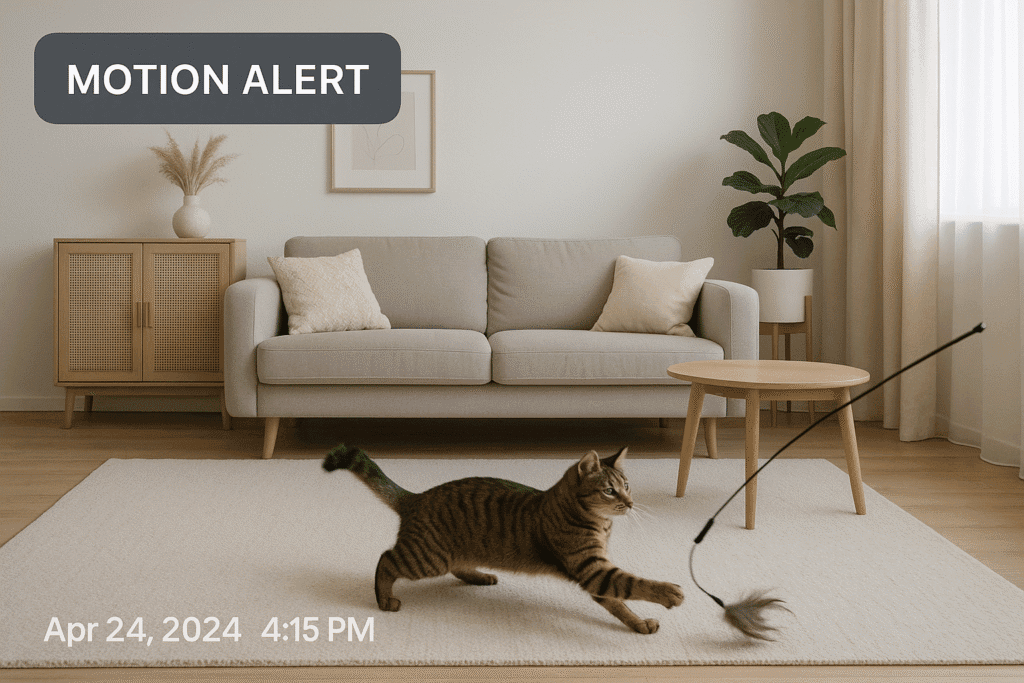
    Play session with indoor camera monitoring.

    Why it’s a problem
    Cats hide discomfort; the earliest signals are boring: a missed micro-meal, an extra litter visit, less time at the fountain, a shorter jump onto the couch. Dismissing these as “cat things” is one of the most costly cat owner mistakes because it delays care.

    What to watch (light-touch, not obsessive)

    • Food intake: sudden drop or unusual grazing.
    • Water intake: less interest in the fountain, or frequent trips without much drinking.
    • Litter patterns: more/less frequent visits, straining, vocalizing, or box avoidance.
    • Rest/activity: decreases in play or unusual nighttime pacing.

    The smart fix (simple data, clear thresholds)

    • Use devices that keep a quiet log:
      • Feeder/fountain apps for intake trends.
      • Self-cleaning litter boxes for visit frequencies/weight changes.
      • Indoor cameras (e.g., Petcube on Amazon) for short check-ins and motion summaries.
        See Petcube indoor cameras → Amazon
    • Set two rules for your household:
      1. We check trends weekly (not hourly).
      2. If a trend looks off for 48–72 hours, we call the vet.
        This avoids two classic cat owner mistakes—panic over blips or ignoring true patterns.

    Vet alignment
    The AVMA and Cornell both emphasize that sustained changes in eating, drinking, toileting, or behavior warrant evaluation. Smart tools help you notice; your vet confirms.

    Interlinks


    Bonus: Three small wins that pay off forever

    These aren’t dramatic, but they quietly undo several cat owner mistakes in one shot:

    1. Separate food and water by 1–2 meters. Many cats drink more when water isn’t next to food.
    2. Two play sessions/day × 10–15 minutes. End with a small snack to complete the “prey sequence.”
    3. One calm wall per room. Keep feeders/fountains and litter/purifier aligned along a wall, center open. Movement feels safer.

    Product quick picks

    • Automatic feeders → schedule control, portion precision PetKit / Whisker / Amazon
    • Smart fountains → cleaner, moving water + filter reminders PetKit / Amazon
    • Self-cleaning litter boxes → odor control + usage logs Whisker / Amazon / PetKit
    • HEPA purifiers → reduce dander/odor (LEVOIT Core series on Amazon).
    • Indoor cameras → short check-ins, motion summaries (Petcube on Amazon).

    These remove friction from routine, the root cause behind many cat owner mistakes.


    The 7-day reset plan (copy this)

    Day 1–2: Mirror your current meal times in a feeder; place fountain 1–2 m away.
    Day 3: Add a litter mat and set a daily scoop time (or initiate self-cleaning).
    Day 4: Two play sessions (10–15 min) and a small post-play snack.
    Day 5: Place purifier near litter zone; enable Sleep Mode at night.
    Day 6: Create one elevated perch + one covered hide.
    Day 7: Review app summaries (food/water/litter). If anything looks off for 48–72 hrs, call your vet.

    This is how you quietly erase the most common cat owner mistakes without overwhelming yourself (or your cat).


    Bonus: The Emotional Side of Cat Ownership 🧠💛

    Behind every one of these cat owner mistakes, there’s usually the same feeling — guilt.
    You come home late, the feeder’s empty, or you forgot to scoop the litter before bed, and suddenly you feel like a bad cat parent. The truth? Perfection doesn’t exist in feline care. What matters is pattern, not panic. Cats thrive when life feels stable, not flawless.

    If you’ve already made one of these cat owner mistakes, the best move isn’t to overcorrect — it’s to return to predictability. Feed at roughly the same times, keep your tone calm, and end each day with one positive interaction (a short play, a treat, a nap near you). Emotional consistency does more for your cat than any gadget ever could.

    Technology helps, but empathy teaches you how to use it:
    a smart feeder means freedom from guilt, a purifier means you can breathe together, and a camera means you’re connected even when apart.
    That’s the real purpose of pet tech — not control, but comfort.


    Final thoughts

    Great cat care is empathy plus design. Lock the routine, right-size the environment, and use smart tools to catch small changes early. Do that, and most cat owner mistakes become non-issues. Your home stays calmer, your cat more confident—and you finally get to enjoy the best part of living with a cat: the soft, predictable, purring kind of normal.

    Authority links