Tag: Sure Petcare

  • PetSafe SmartDoor vs SureFlap Connect (2026): Bigger Access or Better Cat Control?

    PetSafe SmartDoor vs SureFlap Connect (2026): Bigger Access or Better Cat Control?

    PetSafe SmartDoor Connected and SureFlap Connect both promise to manage outdoor access without requiring you to work the night shift as your cat’s unpaid concierge.

    The products take different routes. PetSafe offers a larger opening, direct Wi-Fi and more substantial weather protection. SureFlap uses a smaller, cat-specific design with granular microchip permissions—but demands that another small white box move permanently beside your router.

    SureFlap Connect is the lower-regret choice for most average-size cats. PetSafe only makes sense when its wider passage solves a problem the smaller flap physically cannot.

    Overall verdict: Conditional.

    Quick Verdict

    PetSafe SmartDoor Connected MediumSureFlap Microchip Cat Door Connect
    Best forLarge cats, wider passage and direct Wi-FiAverage-size cats and individual access control
    IdentificationCompatible microchip or collar keyCompatible microchip or RFID collar tag
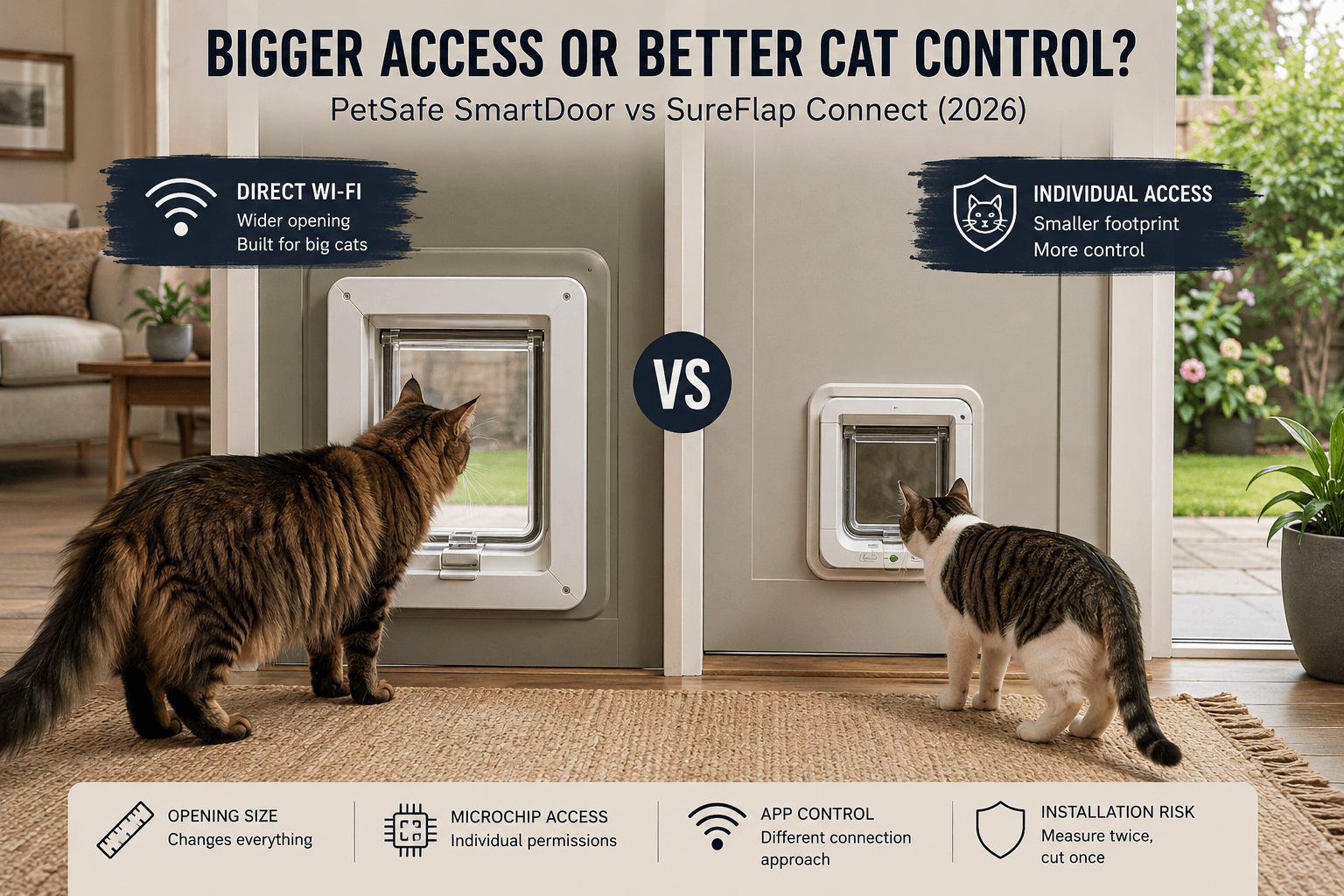
    Opening7.1 × 7.8 inchesAbout 5.6 × 4.7 inches
    ConnectionDirect 2.4 GHz Wi-FiSeparate Hub connected to router
    PowerFour C batteries or optional adapterFour AA batteries
    Main concernLarge permanent installation and weaker owner-feedback signalsSmaller opening and required Hub
    VerdictNot Recommended for most cat homesConditional

    PetTech AI may earn a commission from qualifying purchases. As an Amazon Associate I earn from qualifying purchases.

    Need the wider opening? Check the PetSafe SmartDoor Connected Medium on Amazon.

    Prefer the more cat-specific system? Check the SureFlap Connect bundle on Amazon.

    Before cutting anything, compare the wider category in our best smart cat doors guide. The product can be returned. The rectangle missing from your door is usually less cooperative.

    Research Note

    This is a research-led comparison based on current manufacturer documentation, installation requirements, warranty policies and owner-feedback patterns. PetTech AI has not physically installed either door.

    The Opening Size Changes the Entire Decision
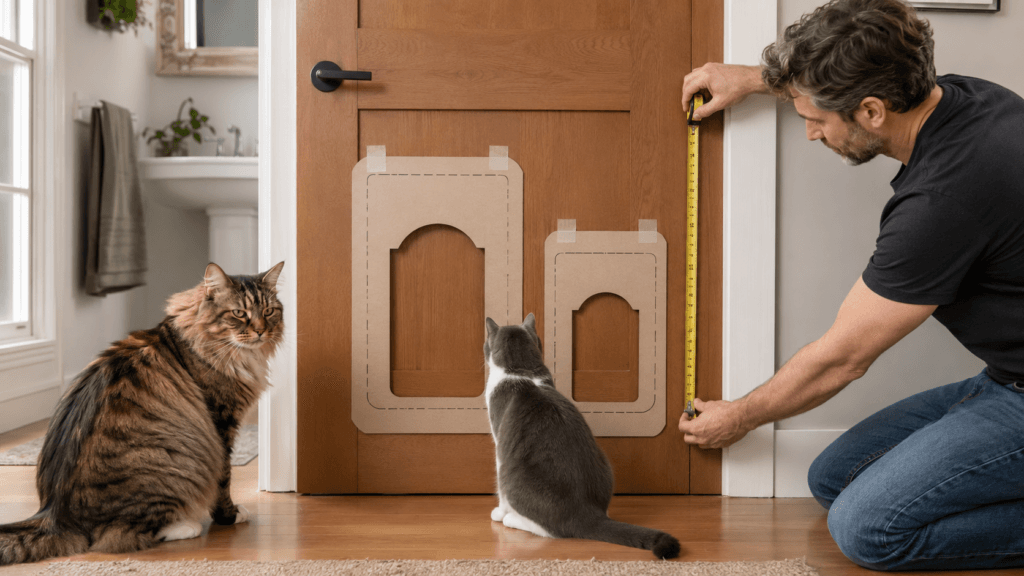
    Large cat comparing wide and compact smart cat door openings before installation.
    The product can be returned. The missing rectangle in the door usually has a stricter policy.

    PetSafe SmartDoor Connected Medium provides a 7.1-by-7.8-inch passage and is intended for pets weighing up to 25 pounds. SureFlap Connect uses a much smaller opening of roughly 5.6 by 4.7 inches.

    That makes PetSafe the more realistic option for:

    • large or long-bodied cats;
    • cats reluctant to squeeze through narrow flaps;
    • homes where differently sized pets share one door;
    • owners who measured the actual cat rather than trusting that “Medium” corresponds to a universal feline standard.

    SureFlap is appropriate for many ordinary domestic cats, but not every Bengal, Maine Coon or generously engineered rescue will approve. Weight limits help; shoulder width and body depth still exist despite marketing’s repeated attempts to ignore them.

    The installation footprint also differs sharply. SureFlap asks for a smaller opening and therefore a smaller leap of faith. PetSafe arrives with the architectural confidence of a product that assumes you already own a jigsaw.

    Microchip Access and Individual Permissions
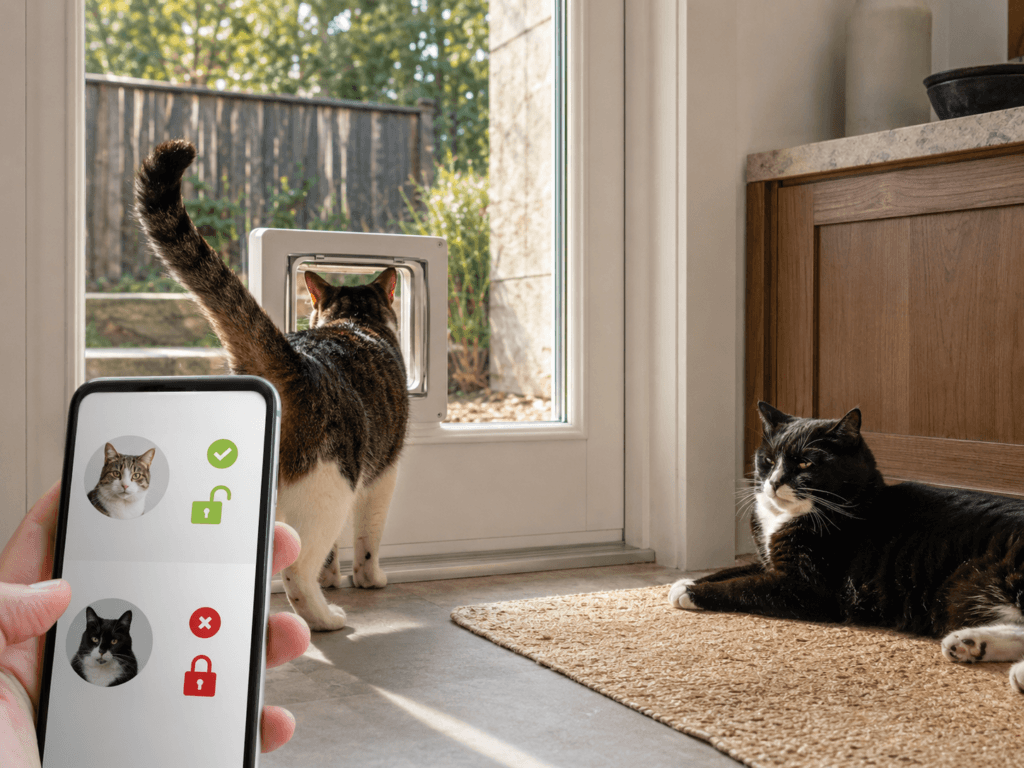
    Two cats receiving different outdoor access permissions through a microchip cat door app.
    Individual permissions matter when one cat may explore and another is temporarily under house arrest.

    Both systems can block unfamiliar animals and assign rules to individual pets.

    The Medium PetSafe SmartDoor supports selected microchip formats and can also use a Pet Door Key attached to the collar. Through the app, owners can create individual schedules, control entry and exit, lock the door remotely and receive activity notifications.

    The important limitation is compatibility: not every microchip works directly. Cats with unsupported chips need the collar key, which introduces another object capable of being lost beneath a sofa, buried in the garden or removed during Gerald’s private expedition.

    SureFlap reads common microchips and can register multiple pets. Its DualScan system reads cats moving both inward and outward, allowing different exit permissions for different animals.

    That is useful when:

    • one cat may go outside while another must remain indoors;
    • a recovering cat needs temporary restrictions;
    • a newly adopted cat is still acclimating;
    • one household member has lost neighborhood privileges following a diplomatic incident.

    Both systems are capable. SureFlap simply feels more deliberately designed around cat-specific access control, while PetSafe combines microchip recognition with a broader key-based pet-door platform.

    Direct Wi-Fi vs Another Dependent Near the Router
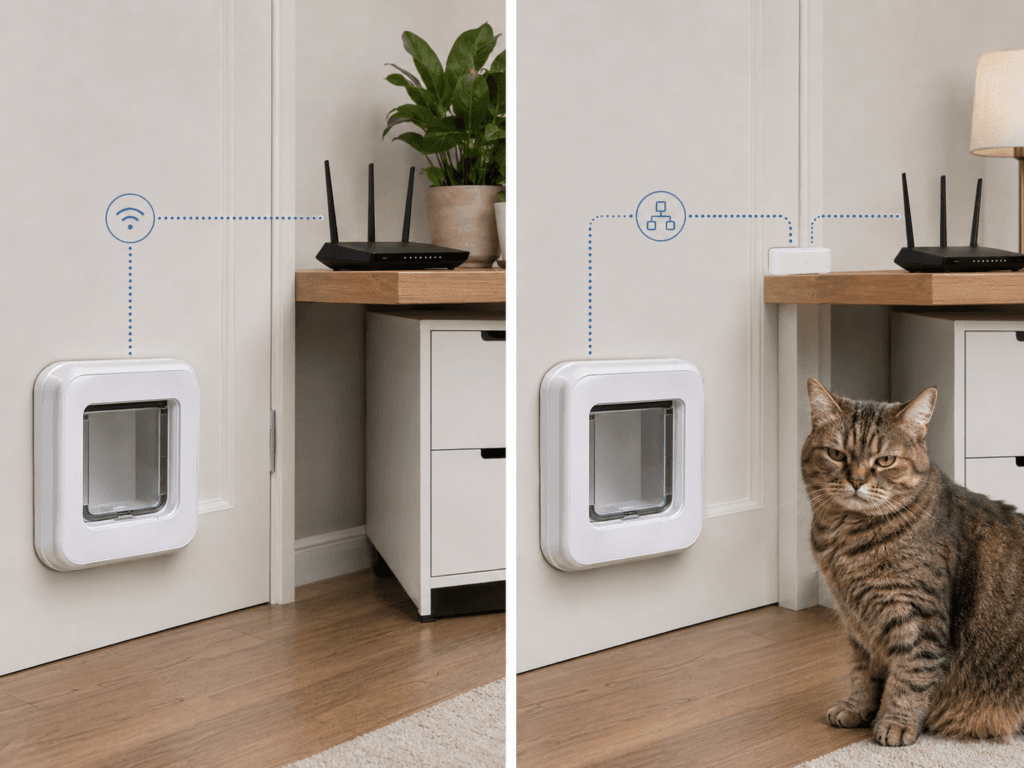
    Smart cat door connected directly to Wi-Fi compared with another system using a router Hub.
    PetSafe connects directly to Wi-Fi. SureFlap introduces another small plastic citizen beside the router.

    PetSafe connects directly to a 2.4 GHz Wi-Fi network. The My PetSafe app handles access rules, remote locking, schedules, notifications and battery alerts.

    SureFlap Connect requires the Sure Petcare Hub. The bundle identified for this comparison includes it, but the Hub still needs power, an Ethernet connection to the router and sufficient range to communicate with the flap.

    PetSafe therefore wins on network simplicity.

    The SureFlap Hub is not a disaster. It is simply another white plastic dependent moving permanently beside your router, contributing nothing to household expenses and blinking occasionally to confirm that it remains your responsibility.

    For homes with limited Ethernet ports, awkward router placement or an existing collection of smart-home bridges, that extra component may be more irritating than the product page suggests.

    Power and Daily Ownership

    PetSafe Medium uses four C-cell batteries. It can also run through an optional wall adapter, with batteries retained as backup during an outage.

    SureFlap uses four AA batteries and claims months of normal operation, although actual battery life will depend on usage, signal quality and how often the cat treats the door as revolving entertainment.

    PetSafe offers the more flexible power arrangement. SureFlap uses cheaper, more familiar batteries.

    Neither option is maintenance-free. Batteries still need replacement, sensors need cleaning and access rules occasionally need adjustment. A smart cat door with dead batteries is just a normal flap that has developed administrative problems.

    Weather Protection and Physical Security

    PetSafe uses a rigid flap, dynamic weather sealing, magnetic closure and a multi-point locking mechanism. Its larger, heavier design is more convincing for exposed exterior doors or homes where drafts matter.

    SureFlap’s smaller footprint reduces the amount of interrupted door surface and prevents unauthorized entry through microchip recognition, but it is not positioned as a heavy-duty extreme-weather barrier.

    PetSafe therefore has a legitimate advantage in colder, windier or more exposed locations. Still, no pet door becomes thermally invisible through confidence alone. Installation quality, wall thickness, sealing and placement remain important.

    For outdoor safety beyond the doorway, remember that selective access does not tell you where the cat goes afterward. Our best cat trackers guide covers that separate problem before Napoleon interprets “authorized exit” as permission to cross state lines.

    A smart door controls who crosses the threshold; it does not create a boundary once the cat is outside. Our best virtual fences for cats guide explains how GPS safe zones and escape alerts handle that separate problem.

    Installation Is the Real Buyer-Regret Zone

    Both doors can be installed in doors and walls. Certain glass, metal or masonry installations may require adapters, tunnel extensions or professional work.

    PetSafe requires the larger cutout. SureFlap’s smaller dimensions make it less invasive and more compatible with typical cat-door placements.

    Before installation:

    1. verify the microchip format;
    2. measure the cat’s shoulders and body height;
    3. create a cardboard test opening;
    4. identify the door or wall material;
    5. power and configure the device;
    6. register every cat;
    7. test the locking behavior;
    8. only then create the permanent opening.

    This sequence is not cinematic, but it is considerably cheaper than discovering afterward that Biscuit considers the flap an architectural insult.

    A return policy protects the electronic product. It does not restore timber, glass, insulation or domestic harmony.

    Returns and Warranties

    PetSafe offers a direct-purchase return window and a standard limited warranty of one year. Installation, removal and restoration costs are not covered.

    Sure Petcare provides a three-year warranty on its microchip doors and the associated Hub.

    That longer protection matters. These products contain readers, locks, motors, wireless components and battery systems, yet they are installed as semi-permanent fixtures. One year of coverage is not especially comforting for a product whose hole may outlive your router, your phone and your current enthusiasm for home automation.

    SureFlap therefore has the stronger long-term ownership case.

    Why PetSafe Is Not Recommended for Most Cat Homes

    PetSafe’s wider entrance, direct Wi-Fi and weather-oriented hardware are genuine advantages. The problem is that those advantages come with a much larger installation commitment and weaker owner-feedback signals than we would want from a device that permanently alters the property.

    PetSafe remains worth considering when:

    • the cat cannot comfortably use SureFlap’s opening;
    • direct Wi-Fi is essential;
    • the door is exposed to difficult weather;
    • the owner accepts the larger cutout;
    • the system can be fully tested before final installation.

    For everyone else, the risk-to-benefit ratio is uncomfortable.

    Verdict: Not Recommended for most cat households.

    Large cats deserve access. Their owners do not need to suspend skepticism in the name of flap width.

    If the larger passage is genuinely necessary, check the PetSafe SmartDoor Connected Medium on Amazon and verify the current listing, dimensions and return terms before installing it.

    Why SureFlap Is Better—but Still Conditional

    SureFlap Connect offers the more coherent feline package:

    • smaller installation footprint;
    • direct microchip recognition;
    • individual exit permissions;
    • app-controlled curfews;
    • longer warranty;
    • a Hub included in the identified bundle.

    Its limitations prevent a stronger recommendation:

    • the opening may be too small for large cats;
    • app connectivity requires the Hub;
    • power is battery-only;
    • installation remains permanent;
    • the connected model adds complexity that some households do not need.

    Verdict: Conditional.

    SureFlap is the better choice for an average-size cat when selective access genuinely matters and the household accepts the Hub. Owners who only need to block unfamiliar animals may be better served by a simpler non-connected microchip flap.

    For individual access control with the smaller cutout, check the SureFlap Connect bundle on Amazon.

    Final Verdict

    SureFlap Connect wins this comparison, but not by enough to earn a universal recommendation.

    It offers more focused cat management, a smaller installation footprint and stronger warranty coverage. PetSafe counters with direct Wi-Fi, better weather-oriented hardware and a much wider passage—but also carries the greater installation risk.

    Choose SureFlap Connect for compact, cat-specific control. Consider PetSafe only when the larger opening solves a problem SureFlap cannot.

    For some households, the smartest decision remains a non-connected microchip flap. The cat gains selective access, unfamiliar animals remain outside and the router avoids adopting another dependent.

    Frequently Asked Questions

    Can PetSafe SmartDoor use a cat’s existing microchip?

    The Medium version supports selected microchip formats. Cats with incompatible chips must use the supplied collar key. Compatibility should be checked before installation.

    Does SureFlap Connect require the Hub?

    Yes. The Hub connects the flap to the Sure Petcare app and enables remote locking, notifications, curfews and activity records. The Amazon bundle evaluated for this comparison includes the Hub.

    Which door is better for a large cat?

    PetSafe SmartDoor Connected Medium has the larger opening and is the more plausible fit for large cats. Measure shoulder width and body height rather than relying only on weight.

    Can either door stop one cat from going outside?

    Yes. Both systems support individual access rules. SureFlap’s DualScan design is particularly focused on assigning different exit permissions to different cats.

    References

    PetSafe — SmartDoor Connected Product Documentation
    PetSafe — SmartDoor Microchip Compatibility Guide
    PetSafe — Return and Warranty Information
    Sure Petcare — Microchip Cat Door Connect Documentation
    Sure Petcare — Hub and App Documentation
    Sure Petcare — Warranty Policy

    Editorial Disclosure

    PetTech AI may earn a commission from qualifying purchases. This does not influence our recommendations, comparisons or editorial judgments.

    Image Disclosure

    Official manufacturer images are used when available and authorized.

    AI-generated images may also be used as editorial illustrations. They should not be treated as exact representations of product dimensions, materials, controls or physical features. Always verify current official product information before purchasing.
  • Best Pet Tech Apps for Cats (2026): Useful Control or Notification Hell?

    Best Pet Tech Apps for Cats (2026): Useful Control or Notification Hell?

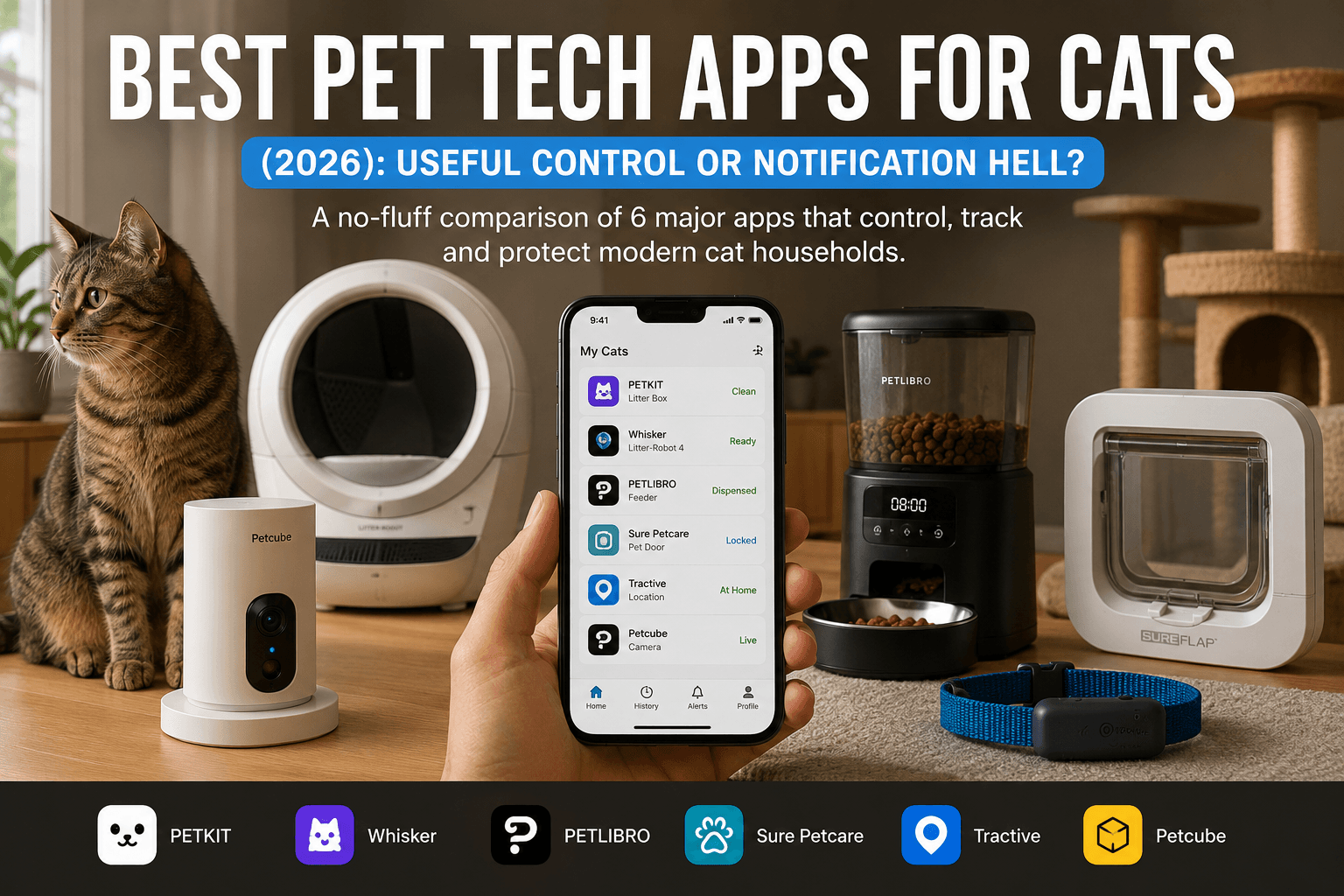
    Smart-pet apps promise one calm dashboard for feeding, litter care, cameras and safety.

    In practice, many homes end up with five accounts, three subscriptions and fourteen notifications confirming that Gerald has approached a bowl.

    The best pet tech app is not the one with the most graphs. It is the one that makes compatible hardware easier to control, presents useful information clearly and tells you something you can actually act on.

    This guide compares six major cat-focused platforms by software experience—not by how aggressively each brand has inserted the word “AI” into its marketing.

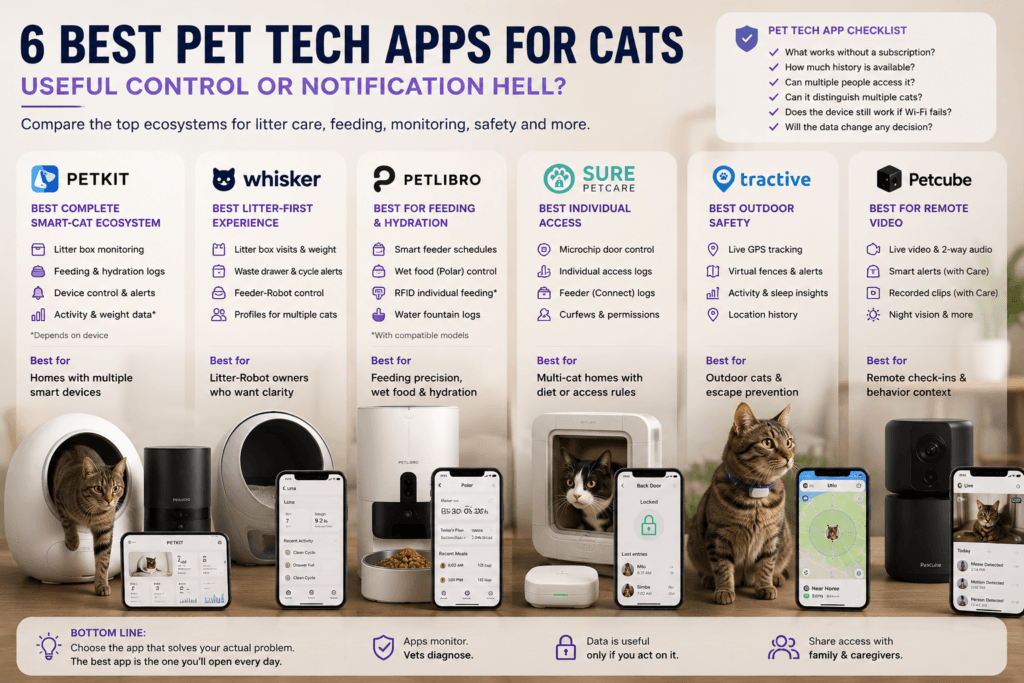
    Quick Verdict

    Comparison of PETKIT, Whisker, PETLIBRO, Sure Petcare, Tractive and Petcube app ecosystems
    The leading pet tech apps solve different problems—from litter automation and feeding to access control, GPS tracking and remote video. AI-generated editorial comparison; verify current app features and compatibility.
    AppBest forPetTech AI verdictMain limitation
    PETKITBroadest smart-cat ecosystemRecommendedStrong ecosystem lock-in
    WhiskerAutomatic litter care and feedingRecommendedNarrower device range
    PETLIBROFeeding and hydrationRecommended with ConditionsCompatibility varies by model and app
    Sure PetcareIndividual access in multi-cat homesRecommended with ConditionsRequires compatible Connect hardware and usually a Hub
    TractiveOutdoor GPS and activity trackingStrong Recommendation with ConditionsMandatory subscription and collar dependence
    PetcubeRemote video monitoringConditional RecommendationSmart alerts and useful history depend heavily on Petcube Care

    Best overall: PETKIT offers the widest cat-specific hardware ecosystem inside one app.

    Best focused experience: Whisker is easier to understand because it concentrates on litter care and scheduled feeding.

    Best app for outdoor cats: Tractive, provided your cat accepts the collar and the recurring subscription makes sense.

    Research Note

    This is a research-led comparison based on current official app listings, manufacturer documentation and PetTech AI’s individual product audits.

    PetTech AI has not conducted identical long-term hands-on testing across every app, device and subscription tier.

    Features can vary by hardware generation, operating system, country and paid membership. Always verify that the exact product you are buying works with the app and functions discussed here.

    PetTech AI may earn a commission from qualifying purchases. As an Amazon Associate I earn from qualifying purchases.

    What Makes a Pet Tech App Actually Useful?

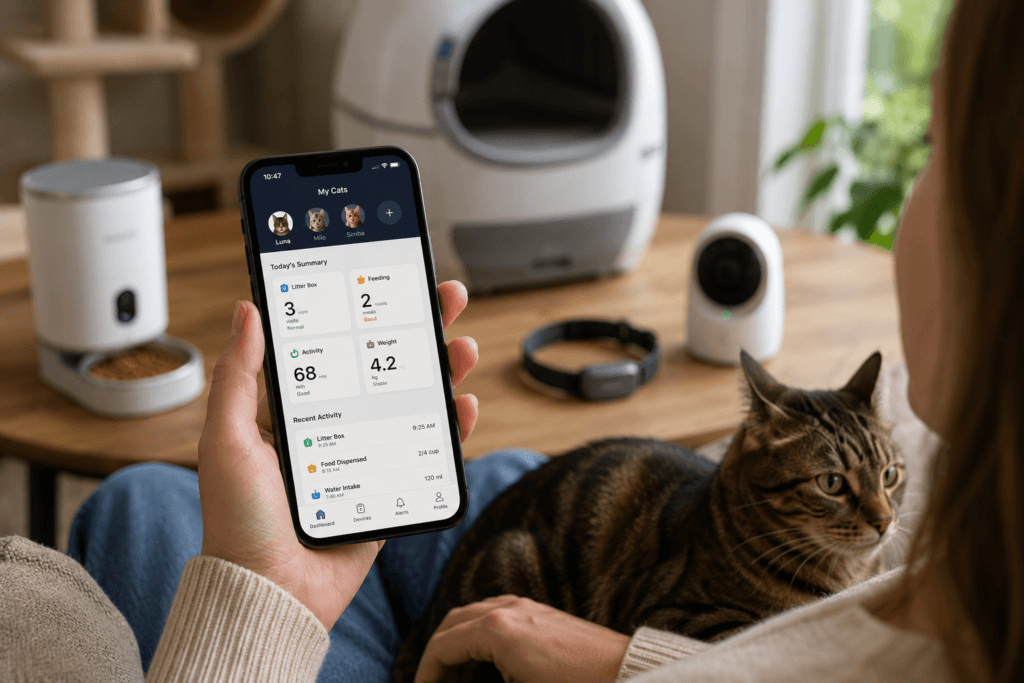
    Cat owner reviewing feeding, litter, activity and weight records on a smartphone while holding a cat
    App records become useful only when owners review meaningful trends and combine them with direct observation—not when notifications simply accumulate. AI-generated editorial illustration.

    A pet app earns its place when it performs at least one of four jobs well:

    • controls a device reliably;
    • presents trends more clearly than raw event logs;
    • sends alerts that deserve attention;
    • reduces routine work without creating a second administrative job.

    It should also make clear what happened.

    “Device event detected” is technically a notification. It is not necessarily information.

    Before choosing an ecosystem, ask:

    1. Which features work without a subscription?
    2. How much history remains available?
    3. Can several people access the household?
    4. Can the app distinguish individual cats?
    5. Does the device continue its core job if Wi-Fi fails?
    6. Will the collected data change any decision?

    No app should diagnose a medical condition. Persistent or concerning changes in appetite, activity, weight or litter-box behavior still need direct observation and veterinary interpretation. Cornell advises veterinary assessment when cats show meaningful acute or gradual behavioral or health changes.

    PETKIT App: Best Complete Smart-Cat Ecosystem

    Verdict: Recommended

    PETKIT has the broadest cat-focused software environment in this comparison.

    Depending on the connected hardware, the app can manage:

    • automatic litter boxes;
    • camera feeders;
    • conventional smart feeders;
    • water fountains;
    • environmental products;
    • feeding, drinking, weight and litter-use records.

    PETKIT’s current app listing presents litter activity, meals, hydration and general activity in one account, although the actual data available depends entirely on the connected device.

    Where PETKIT wins

    PETKIT makes the most sense when you want several categories under one login.

    A household can begin with a PuraMax 2, add a YumShare feeder and later connect an EverSweet fountain without creating an entirely separate software relationship for every appliance.

    That does not mean the devices automatically collaborate.

    The app aggregates several product categories, but it should not be mistaken for a clinical intelligence system that safely converts litter, feeding and hydration records into one medical conclusion.

    Where it disappoints

    Its usefulness creates pressure to remain inside the PETKIT catalog.

    Once several products share profiles, alerts and maintenance records, replacing one category with another brand becomes slightly more annoying. The app is free; the expanding collection of hardware required to make it fascinating is where the economic subplot begins.

    Choose PETKIT when:

    • you expect to own devices in several categories;
    • litter care is the likely starting point;
    • one account matters more than complete brand flexibility;
    • you will review trends without treating them as diagnoses.

    Skip it when you only need one simple device and do not care about ecosystem expansion.

    Does a broad PETKIT setup fit your home? Explore current PETKIT devices.

    Prefer Amazon?

    Read our PETKIT Ecosystem Review before transforming the utility room into a regional branch office.

    Whisker App: Best Litter-First Experience

    Verdict: Recommended

    The Whisker app controls the current Litter-Robot line and Feeder-Robot.

    Depending on the model and membership, it can show:

    • litter-box visits;
    • weight trends;
    • waste-drawer status;
    • cleaning-cycle alerts;
    • remote controls and settings;
    • feeding schedules;
    • high-level feeding trends;
    • personalized cat profiles.

    Whisker states that all its robots can be managed in the same app. It also explicitly notes that the devices do not interact with one another; they simply coexist under the same account and profiles. That is an important distinction between unified control and actual automation.

    Where Whisker wins

    The narrower ecosystem makes the app easier to understand.

    Whisker is not trying to control fountains, doors, trackers, climate pods and whatever Archibald may request during the next fiscal quarter. It focuses on two repetitive jobs:

    • cleaning litter;
    • dispensing dry food.

    That produces a cleaner software proposition for homes already centered on Litter-Robot.

    Where it disappoints

    Some deeper history and individualized insights vary by Litter-Robot model and Whisker+ membership. The most advanced experience therefore belongs to owners who have already purchased premium hardware and may accept another software layer.

    Choose Whisker when:

    • automatic litter care is the main priority;
    • you already own or plan to buy Litter-Robot;
    • weight and bathroom trends matter;
    • a focused app is preferable to a sprawling ecosystem.

    Skip it when you want feeding, hydration, doors and GPS inside one platform.

    For the hardware decision, read Litter-Robot 5 vs 5 Pro vs EVO.

    PETLIBRO App: Best for Feeding and Hydration

    Verdict: Recommended with Conditions

    PETLIBRO’s app focuses primarily on food and water.

    The current app connects with compatible products from lines including Granary, Polar, Dockstream, Space and Air. Depending on the model, owners can manage schedules, review feeding or drinking activity, receive maintenance alerts and remotely control supported functions.

    Where PETLIBRO wins

    The ecosystem remains easier to understand than PETKIT’s.

    It is strongest when the household wants:

    • scheduled dry food;
    • refrigerated wet-food scheduling;
    • individual feeding access;
    • connected water fountains;
    • camera-assisted meal checks.

    PETLIBRO also offers several genuinely different feeding solutions rather than five cosmetic variations of the same hopper.

    Where it disappoints

    Compatibility is fragmented.

    Not every PETLIBRO product is smart, not every connected product offers the same data, and PETLIBRO and PETLIBRO Lite are separate apps for different hardware generations. Check the listing before buying rather than assuming the logo guarantees one software experience.

    Choose PETLIBRO when:

    • feeding is the primary problem;
    • you want wet-food, RFID or camera options;
    • hydration may become a second category;
    • you are willing to verify app compatibility carefully.

    Skip it when litter automation is central or you want one broad whole-home ecosystem.

    Need app-controlled wet-food scheduling? Check PETLIBRO Polar on Amazon.

    Our PETLIBRO Polar Review explains why refrigeration claims still require more nuance than “tiny cat refrigerator.”

    The app experience also depends on the hardware: PETLIBRO connects directly to Wi-Fi, while SureFeed Connect requires a separate Hub. Our PETLIBRO One RFID vs SureFeed Connect guide covers the full trade-off.

    Sure Petcare App: Best for Individual Access

    Verdict: Recommended with Conditions

    Sure Petcare is less about general automation and more about controlling who gets access.

    With compatible Connect products, its app can manage and record functions such as:

    • pet-door locking and curfews;
    • entry and exit events;
    • individual access permissions;
    • food-consumption records on compatible feeders;
    • household sharing.

    The critical word is Connect.

    Standard microchip products may recognize a cat without offering app control. Compatible Connect devices communicate through the Sure Petcare Hub, which links them to the internet and app. The Hub can support multiple connected products in one household.

    Where Sure Petcare wins

    It solves concrete multi-cat problems:

    • one cat steals another’s food;
    • an indoor cat must not use the door;
    • curfews need to change remotely;
    • owners want individual entry or feeding records.

    This is more useful than collecting vague “wellness” scores while Biscuit continues eating everyone’s prescription diet.

    Where it disappoints

    The product naming and additional Hub requirement create friction.

    A buyer can easily purchase a microchip feeder and later discover that the device performs access control perfectly well—but has no intention of reporting lunch to a smartphone.

    Choose Sure Petcare when individual access is the actual problem.

    Skip it when you simply want scheduled feeding or generic activity monitoring.

    Would microchip-controlled access solve food theft or door conflict? Check Sure Petcare Connect products on Amazon.

    Tractive App: Best for Outdoor Safety

    Verdict: Strong Recommendation with Conditions

    Tractive has the clearest app purpose in this roundup:

    find the cat.

    Its current cat trackers support live GPS, virtual fences, location history, activity and sleep monitoring. Some current hardware and plans add further wellness information, but the central value remains location and escape alerts.

    Where Tractive wins

    For an outdoor, traveling or escape-prone cat, location data can answer an urgent question rather than create another lifestyle graph.

    The app can:

    • show live location;
    • alert when the cat crosses a virtual boundary;
    • display previous routes and territory;
    • track activity and sleep;
    • share access with family members on supported plans.

    Where it disappoints

    A subscription is mandatory because the tracker uses cellular networks. Each tracker requires its own plan, and longer commitments reduce the effective monthly cost at the expense of flexibility.

    The cat must also tolerate:

    • a collar;
    • the tracker’s weight;
    • regular charging;
    • a safety-release setup appropriate for outdoor use.

    The most sophisticated GPS app remains useless when Napoleon removes the collar beneath the first available hedge.

    Choose Tractive when location is genuinely important.

    Skip it for a fully indoor cat when activity data alone would not change care.

    Need live location and virtual-fence alerts? Check the current Tractive cat tracker on Amazon.

    See Virtual Fences for Cats for the full outdoor-safety comparison.

    Petcube App: Best for Remote Video

    Verdict: Conditional Recommendation

    Petcube’s app connects supported cameras for live viewing, two-way audio and model-specific interactive functions.

    Its real differentiator is Petcube Care, which adds features such as:

    • smart sound and motion alerts;
    • recognition of pets, people, barking and meowing;
    • automatically recorded clips;
    • cloud history;
    • longer event review.

    Those smarter alerts and extended history are subscription features rather than a universal free layer.

    Where Petcube wins

    A camera can answer questions that feeder and litter logs cannot:

    • Did the cat approach the meal?
    • Is one cat guarding a doorway?
    • Was the nighttime sound a distressed cat or Gerald attacking packaging?
    • Is movement visibly different?

    Where it disappoints

    Without useful event history, a camera depends heavily on someone opening the live feed at the correct moment.

    Petcube Care solves that problem, but turns a hardware purchase into an ongoing software decision. Without the subscription, the camera still sees the cat. It simply becomes considerably less interested in explaining what happened while you were gone.

    Choose Petcube when recorded visual context is worth paying for.

    Skip it when a basic live camera already answers the question.

    Would recorded alerts add useful context while you are away? Check Petcube Cam 360 on Amazon.

    Free Features vs Subscription Creep

    The app itself is usually free.

    The useful experience may not be.

    Usually tied to hardware rather than a mandatory plan

    • basic PETKIT controls and logs;
    • core Whisker controls;
    • PETLIBRO device scheduling;
    • Sure Petcare controls after buying compatible hardware and Hub.

    Requires or strongly benefits from a subscription

    • Tractive: subscription required for cellular tracking;
    • Petcube: Care unlocks smart alerts and useful video history;
    • Whisker: some deeper reports and history depend on model and Whisker+;
    • PETKIT: certain camera histories or premium services may vary by product.

    Never evaluate the device price alone.

    Ask what the app becomes after the introductory period ends. A cheap camera with permanent cloud fees may cost more over time than a better camera with local storage.

    App Lock-In: When Your Phone Becomes a Brand Embassy

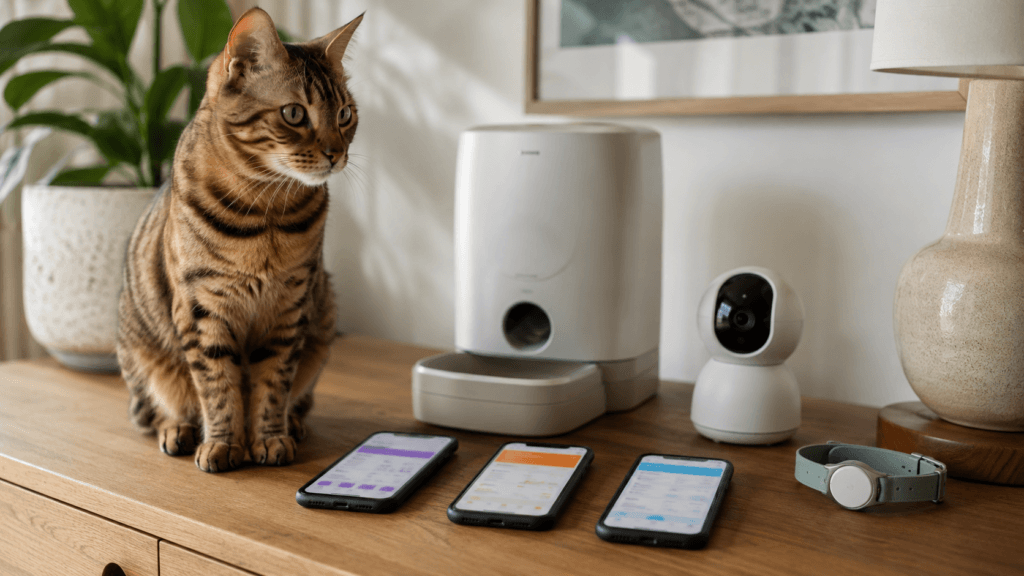
    Cat beside three smartphones, an automatic feeder, pet camera and wearable tracker
    Multiple apps can add useful specialist functions, but every extra ecosystem also brings another account, interface and compatibility decision. AI-generated editorial illustration.

    A unified app reduces friction.

    It also makes switching brands harder.

    The lock-in usually develops in three stages:

    1. one useful device;
    2. shared profiles and familiar controls;
    3. mild resentment at installing another app for a better competing product.

    Do not buy weaker hardware solely to preserve dashboard purity.

    Choose one ecosystem when several of its devices independently fit the household. Mix brands when a specialist product solves the problem better.

    One account is convenient.

    Owning the wrong feeder for six years because it matches the litter-box login is dedication to administrative tidiness, not pet care.

    Buyer-Regret Risk

    Pet-app regret usually comes from expecting software to create intelligence that the hardware never measured.

    Common failures include:

    • assuming every product from a brand supports the same app;
    • buying a non-Connect version by mistake;
    • overlooking subscription costs;
    • confusing a dispensing event with confirmed eating;
    • confusing a litter visit with a medical conclusion;
    • enabling so many alerts that all alerts become wallpaper;
    • collecting records without reviewing them;
    • expecting different brands to exchange data automatically.

    Before buying, define one app outcome:

    “I need to know whether Cat A ate.”

    “I need to control the door remotely.”

    “I need to find the cat outdoors.”

    “I need recorded video when nobody is home.”

    That is a purchase criterion.

    “I want a smart ecosystem” is how Emperor Maximilian acquires four incompatible accounts and a folder named Pet Apps.

    Final Verdict

    PETKIT is the best overall pet tech app for cats when you want litter, feeding and hydration devices inside one broad ecosystem.

    Whisker is the best litter-first app, with clear controls and useful routine data across Litter-Robot and Feeder-Robot.

    PETLIBRO is the best feeding-focused option, especially for wet food, RFID access and connected fountains—but compatibility must be checked model by model.

    Sure Petcare is the best access-control platform for multi-cat diets and connected doors.

    Tractive is the strongest outdoor-safety app, provided the subscription and collar requirements fit the cat.

    Petcube is best for recorded visual context, but much of its real value lives inside Petcube Care.

    Choose the app attached to the problem you need to solve.

    Do not choose the problem that best justifies downloading another app.

    Frequently Asked Questions

    Can pet tech apps diagnose illness?

    No. They can record changes in feeding, weight, activity or litter-box behavior. Those records may help a veterinarian understand a pattern, but they cannot identify the medical cause.

    Which app is best for several types of cat technology?

    PETKIT currently covers the broadest range of cat-focused product categories, including litter boxes, feeders and fountains.

    Which cat app works best without a subscription?

    Core PETKIT, Whisker and PETLIBRO controls generally depend on owning compatible hardware rather than maintaining a mandatory cellular plan. Advanced histories and services can still vary.

    Does Tractive work without a subscription?

    No. Its GPS tracker uses cellular connectivity, so an active plan is required.

    Can different pet tech apps share their data?

    Usually not in a meaningful, automatic way. Some may support voice assistants or limited external integrations, but owners should expect separate ecosystems rather than one universal cat-care dashboard.

    References

    • PETKIT — App Service and official app documentation
    • Whisker — Whisker App and Whisker+ documentation
    • PETLIBRO — Official app listings and compatibility documentation
    • Sure Petcare — Connect product and Hub documentation
    • Tractive — Cat tracker and subscription documentation
    • Petcube — Petcube App, Smart Alerts and Petcube Care documentation
    • Cornell Feline Health Center — Feline health and behavioral guidance

    Image Disclosure

    Official manufacturer images are used when available and authorized.

    AI-generated images may also be used as editorial illustrations. They should not be treated as exact representations of product dimensions, materials, controls or physical features. Always verify current official product information before purchasing.
    Editorial Disclosure

    PetTech AI may earn a commission from qualifying purchases. This does not influence our recommendations, comparisons or editorial judgments.