Why remote health monitoring for cats is suddenly everywhere
Open any pet tech page in 2025 and you’ll see the same promise: health reports, wellness insights, AI monitoring for your cat. Remote health monitoring for cats sounds amazing—your devices quietly collect data while you’re at work and warn you when something’s off.
But what do these “health reports” actually track? How much can smart litter boxes, feeders, fountains and GPS trackers really tell you—and where do they hit a hard limit compared with a real vet exam?
In this guide, we break down how remote health monitoring for cats works in practice, which metrics matter, where the tech is genuinely useful, and where it’s mostly marketing. We’ll use real examples from PETKIT, Whisker (Litter-Robot, Feeder-Robot), CATLINK and Tractive so you can decide if this ecosystem is worth the investment.
What “remote health monitoring for cats” really means
When brands talk about remote health monitoring for cats, they’re not diagnosing disease. They’re tracking patterns:
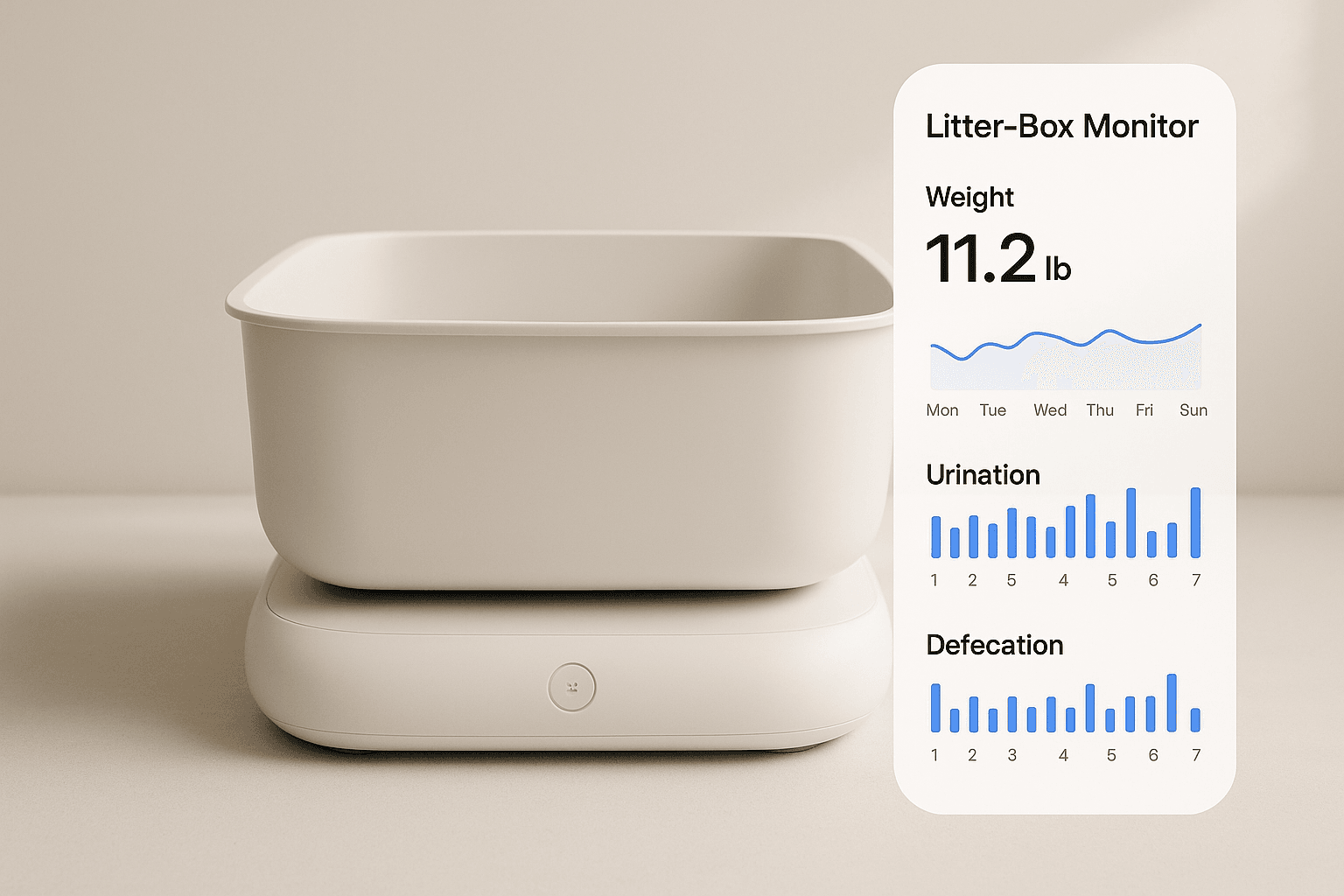
- Litter box data – visits per day, duration, weight trends, sometimes even waste characteristics. PETKIT PuraMax 2, CATLINK Scooper Pro and Whisker’s Litter-Robot 5 all log usage and cat weight through their apps.
- Feeding data – how much, how often, and which cat is eating. CATLINK RFID feeders and Whisker’s Feeder-Robot can generate daily health reports about eating patterns.
- Hydration data – drinking frequency, volume and duration from smart fountains like PETKIT Eversweet 3 Pro and CATLINK Pure 2 / W03 AI fountains with health report features.
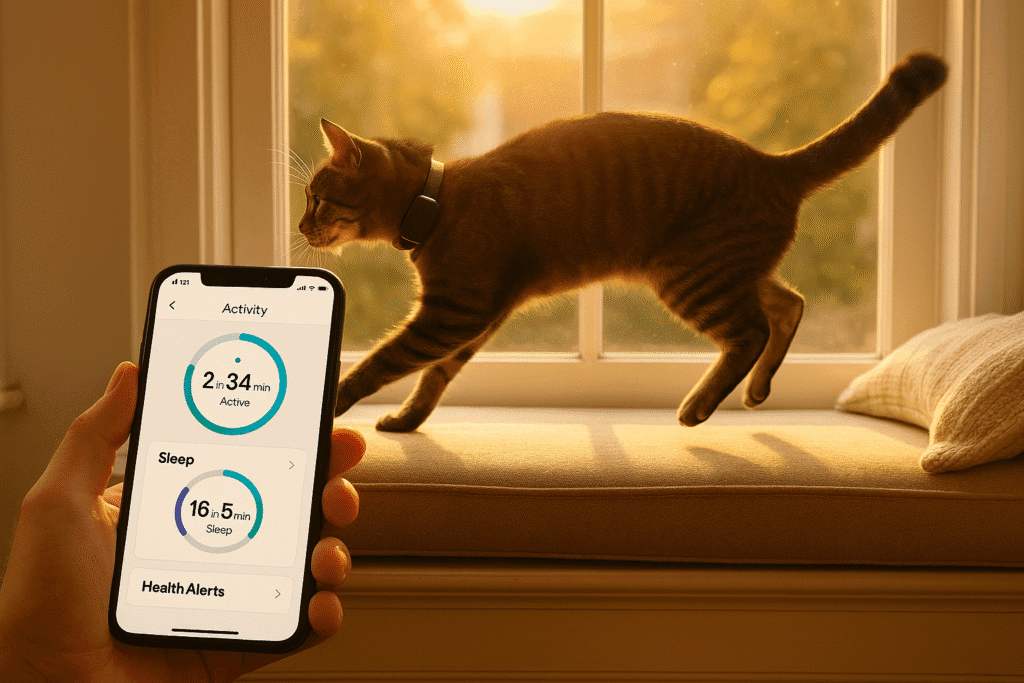
- Activity & sleep – GPS trackers such as Tractive Cat Mini and newer devices like the Fi Mini log activity, rest and sometimes behavior trends.
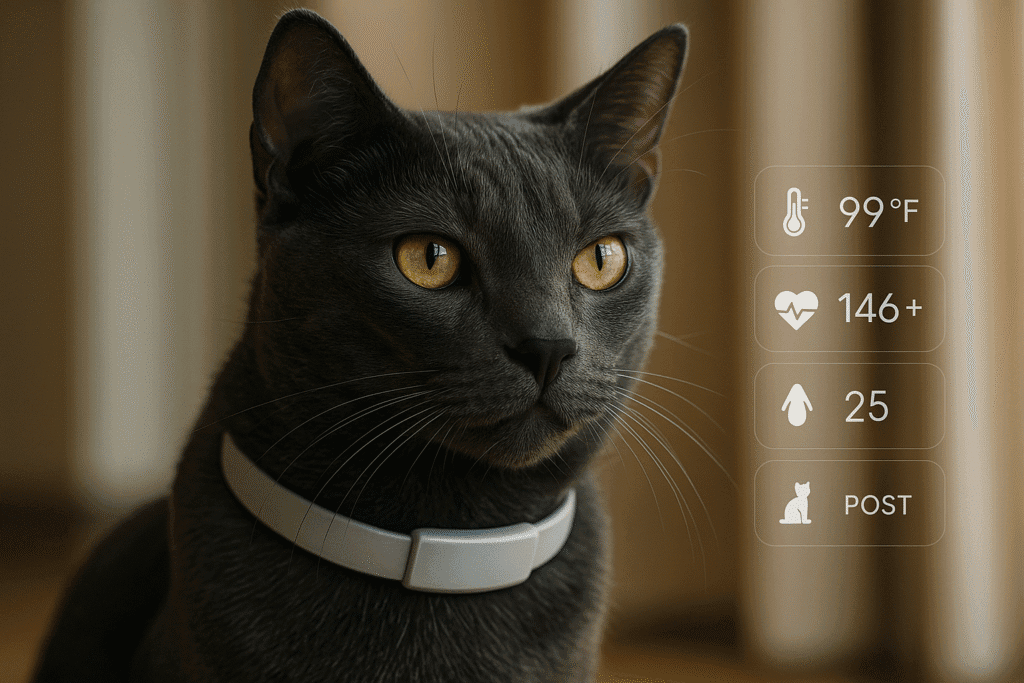
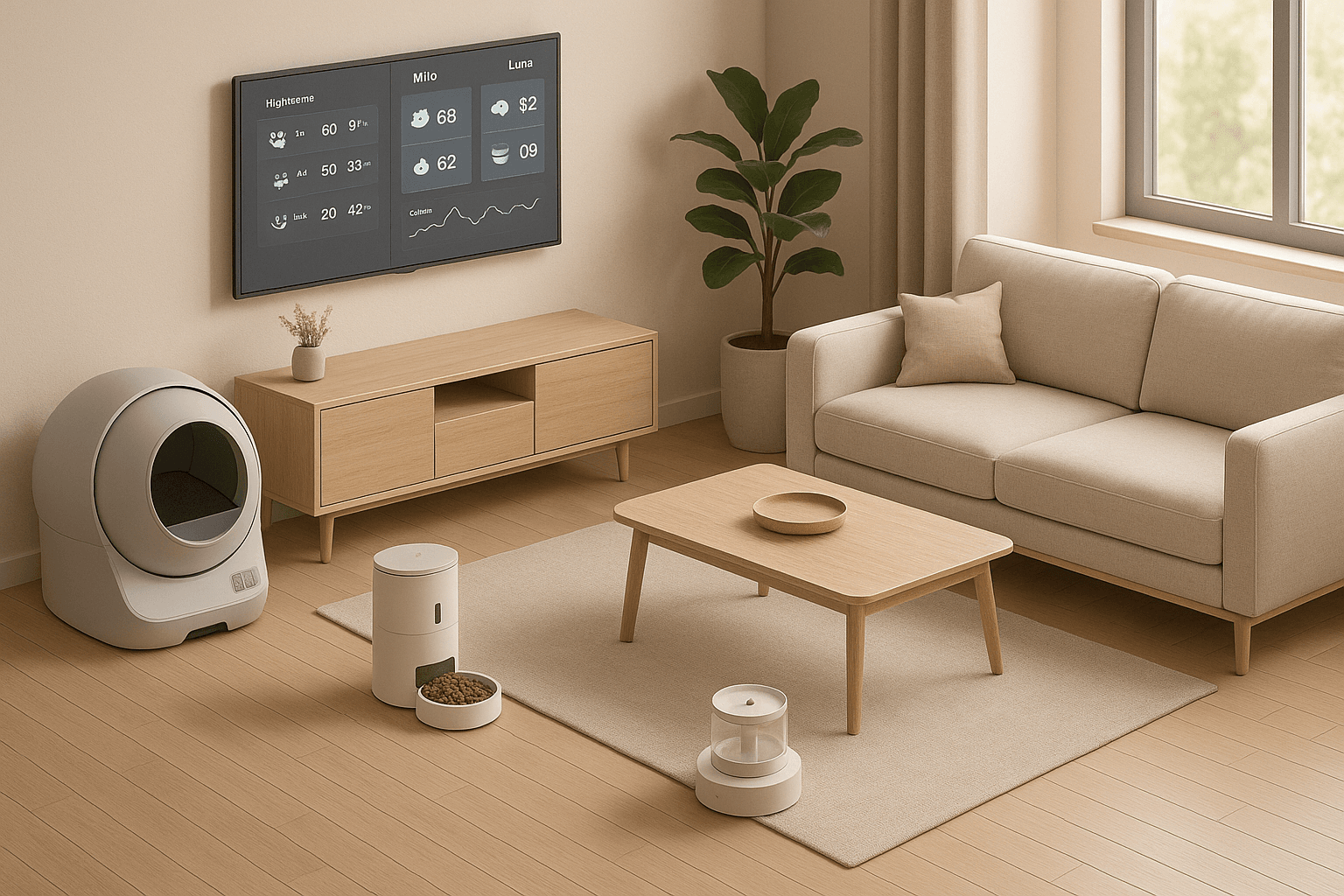
Put together, this is remote health monitoring for cats in 2025: continuous tracking of input (food, water), output (urine, feces), weight, and activity, viewed through a single or multi-app dashboard.
It’s powerful—but only if you know what you’re looking at.
The litter box: still the strongest health signal
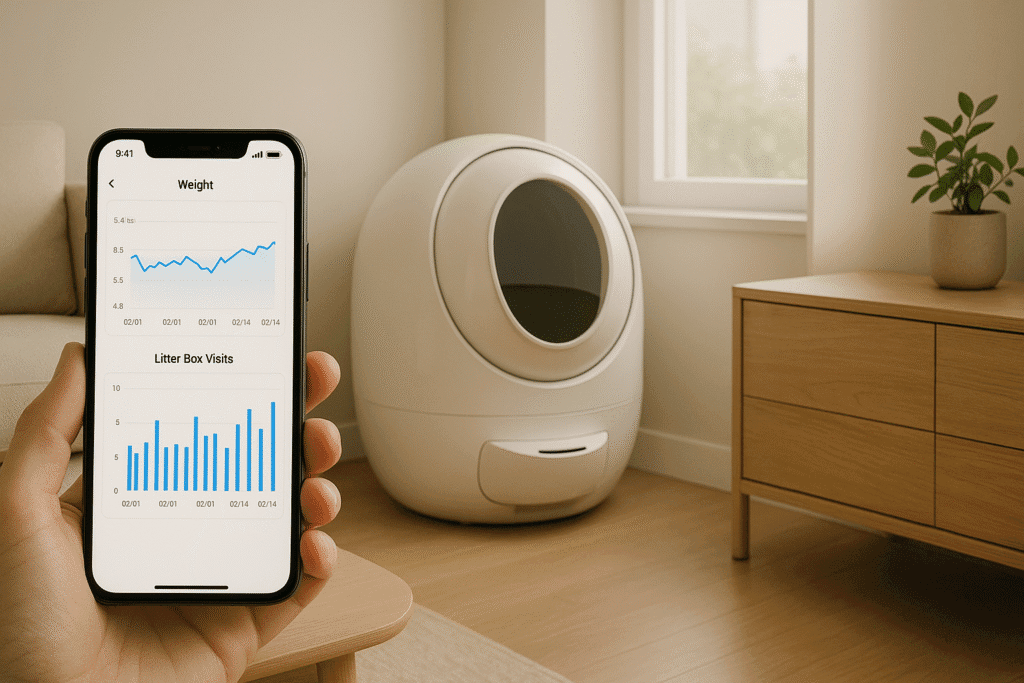
If you want remote health monitoring for cats that actually matters, the litter box is still the MVP. Changes in urination and defecation are early red flags for urinary disease, kidney issues, diabetes, constipation, diarrhea and pain.
Key devices to know:
PETKIT PuraMax 2 – data-driven urinary tracking
PETKIT’s PuraMax 2 combines automatic cleaning with granular tracking of litter box visits and cat weight via the PETKIT app. It logs frequency, duration and weight trends for each cat in multi-cat homes, and flags abnormal patterns that may suggest urinary blockage or other problems.
Pros
- Strong app with visual trends for weight and box usage
- Good fit with the wider PETKIT ecosystem (feeders, fountains)
- Triple odor control and quiet operation make it easy to live with
Cons
- Requires consistent app use to get real value from the data
- Still can’t tell you why your cat is peeing more—only that the pattern changed
If you want remote health monitoring for cats without going full “AI camera in the litter box” yet, PuraMax 2 is one of the most balanced choices to start with.
Whisker Litter-Robot 5 Pro – deeper AI insights
Whisker’s new Litter-Robot 5 Pro leans heavily into health analytics. Pair it with the Whisker app and you get detailed usage statistics, weight charts and daily summaries per cat. The Pro model uses AI to identify individual cats and alert you to abnormal patterns that might signal disease.
Pros
- Best-in-class insights for multi-cat homes
- Tight integration with Feeder-Robot inside the same app
- Whisker+ subscription adds more detailed health trends
Cons
- Expensive upfront, especially if you add feeder + subscription
- Data is very rich—easy to get anxious if you don’t know how to interpret it
CATLINK Scooper series – holistic “input + output” vision
CATLINK’s self-cleaning litter boxes track visits, weight changes and usage patterns across multiple cats, matching them with data from CATLINK feeders and fountains through a “holistic health monitoring system.”
Pros
- Designed from the start as part of a full health-tracking ecosystem
- Multi-cat recognition and long-term pattern tracking
- Strong value if you plan to commit to several CATLINK devices
Cons
- App and hardware occasionally get mixed feedback on stability
- Best results require going “all in” on the brand
Bottom line: If you care about remote health monitoring for cats, a smart litter box with decent app analytics is the first device that actually moves the needle.
Smart fountains with health reports: hydration finally quantified
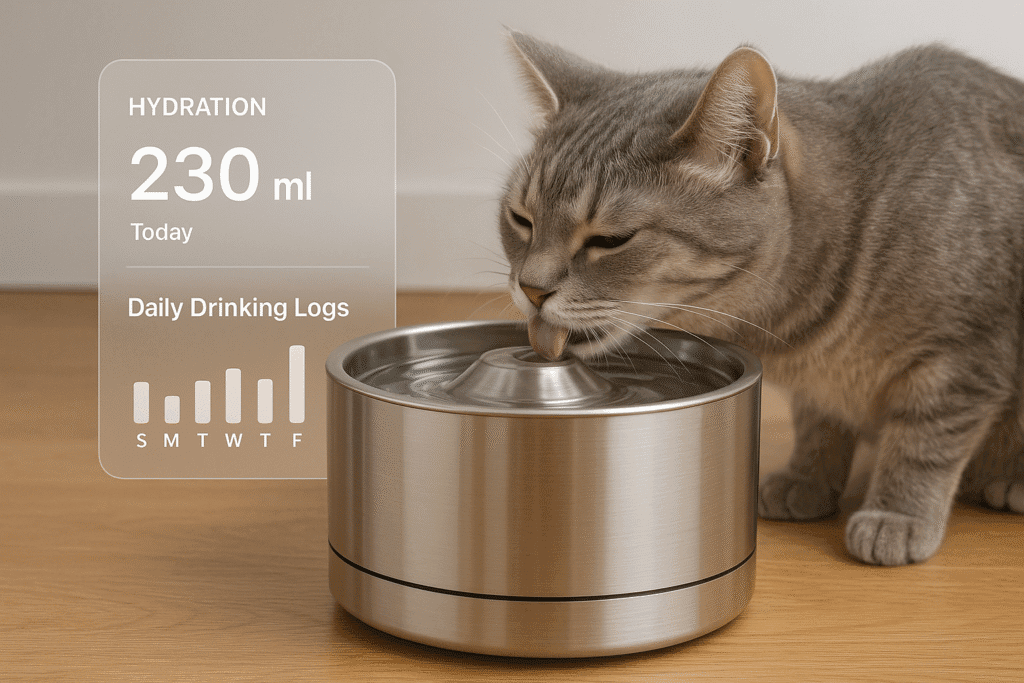
Chronic kidney disease and urinary problems are common in cats, and early signs include increased drinking, more frequent urination and subtle weight changes.
Smart fountains with health reports aim to make hydration quantifiable instead of guesswork.
PETKIT Eversweet 3 Pro – smarter tracking, better hygiene
The Eversweet 3 Pro is a stainless-steel smart fountain with a wireless pump and app connectivity. You can monitor drinking frequency and tweak modes (standard, smart, night) from the PETKIT app.
Pros
- Stainless steel bowl and wireless pump reduce biofilm risk and cleaning hassle
- Integration with the PETKIT ecosystem if you already use their feeders or litter box
- Ultra-quiet operation fits well in bedrooms and studios
Cons
- “Health monitoring” here is still basic—mostly usage trends, not medical analysis
- App value depends on how often you actually check the stats
CATLINK Pure 2 / W03 AI Water Fountain – full hydration health report
CATLINK’s Pure 2 and W03 AI water fountains go harder on the “health report” promise: they log drinking frequency, duration and volume, and the app can generate hydration logs and health reports that tie into broader CATLINK ecosystem data.
Pros
- Detailed water-intake logs with alerts for abnormal patterns
- Ultrafiltration and multi-stage filtration improve water quality
- Wireless pump + battery options support flexible placement
Cons
- Still no direct medical interpretation—you get data, not diagnoses
- Filter maintenance is non-optional if you want safe water
If you already invested in a smart litter box, pairing it with a health-report fountain is one of the cleanest ways to level up remote health monitoring for cats without stressing your cat (no collars, no cameras).
Smart feeders with health reports: catching silent weight creep
Obesity is one of the biggest, and most underrated, health threats for indoor cats. AVMA-linked research shows that obesity increases the risk of diabetes, orthopedic disease, skin issues and more. Regular weight tracking and portion control are strongly recommended in the veterinary literature.
Smart feeders with health reports give you three layers of control:
- Who ate (via RFID or facial recognition)
- How much they ate (portion logs)
- How patterns change over weeks and months
CATLINK Fresh 2 / F04 Pro RFID Feeder
CATLINK’s smart feeders are built around multi-cat recognition and daily health reports. They log eating time, amount and which cat ate, and can generate customized daily reports to help spot early drops or spikes in appetite.
Pros
- True per-cat logging in multi-cat homes
- App-based schedules plus manual “snack” control
- Great combo with CATLINK litter boxes and fountains for full input/output tracking
Cons
- Works best if each cat reliably wears a compatible tag
- Some cats will test the lid or try to steal each other’s food anyway
Whisker Feeder-Robot
Feeder-Robot integrates tightly with the Whisker app, which already tracks litter box activity and weight. You get feeding trends, portion histories and the ability to sync patterns across robots.
Pros
- Unified app with Litter-Robot 5 data
- Very useful if you’re already “in” the Whisker ecosystem
- Great for cats on strict calorie or therapeutic diets
Cons
- Overkill if you only have one healthy, easy-keeper cat
- Health value collapses if you leave food in “free-for-all” mode with no rules
If your cat is edging into the “maybe a bit chubby” zone, combining smart feeding with remote health monitoring for cats is one of the few tech moves that can realistically add healthy years to their life.
GPS & wellness trackers: behavior data you’d never see otherwise
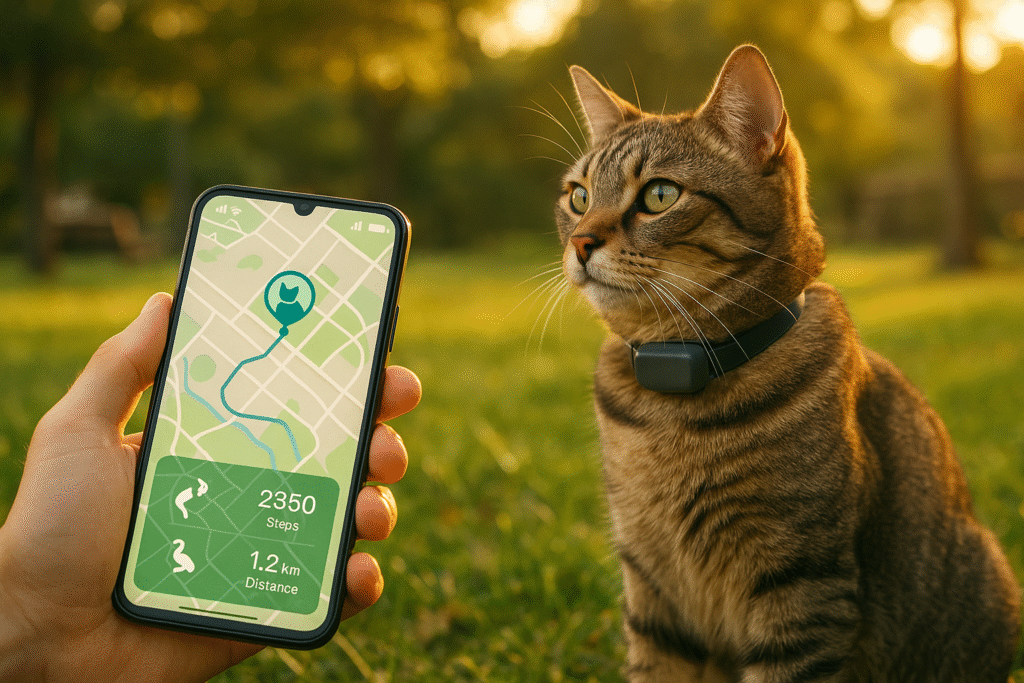
Litter, food and water cover what goes in and out. GPS and wellness trackers cover how your cat actually lives in between.
Devices like Tractive’s cat tracker monitor:
- Real-time location and escape alerts
- Activity levels and calorie burn
- Sleep duration and patterns
- Health alerts when behavior deviates from normal
Newer devices such as the Fi Mini push even further, adding AI-powered behavior detection (scratching, licking, etc.) and extended battery life in a clip-on form factor sized for cats.
Pros
- The only way to get real outdoor data for roaming cats
- Useful for weight management: calories and activity aren’t guesses anymore
- Strong fit for anxious owners of escape-artist cats
Cons
- Subscription fees add up over years
- Collars can be lost; some cats hate wearing anything at all
Where they fit:
If your cat is strictly indoors and already monitored via smart litter and feeder, trackers are “nice to have.” For outdoor or door-darting cats, they become the backbone of remote health monitoring for cats, because you finally see what actually happens outside.
How to read all this data without losing your mind
Here’s the unfiltered truth:
Remote health monitoring for cats is amazing at spotting patterns, terrible at explaining causes.
Vets and feline health centers are very clear on this: weight changes, litter box changes, appetite shifts and hydration changes are among the most important red-flag signs in cats—but they’re non-specific.
Use the data like this:
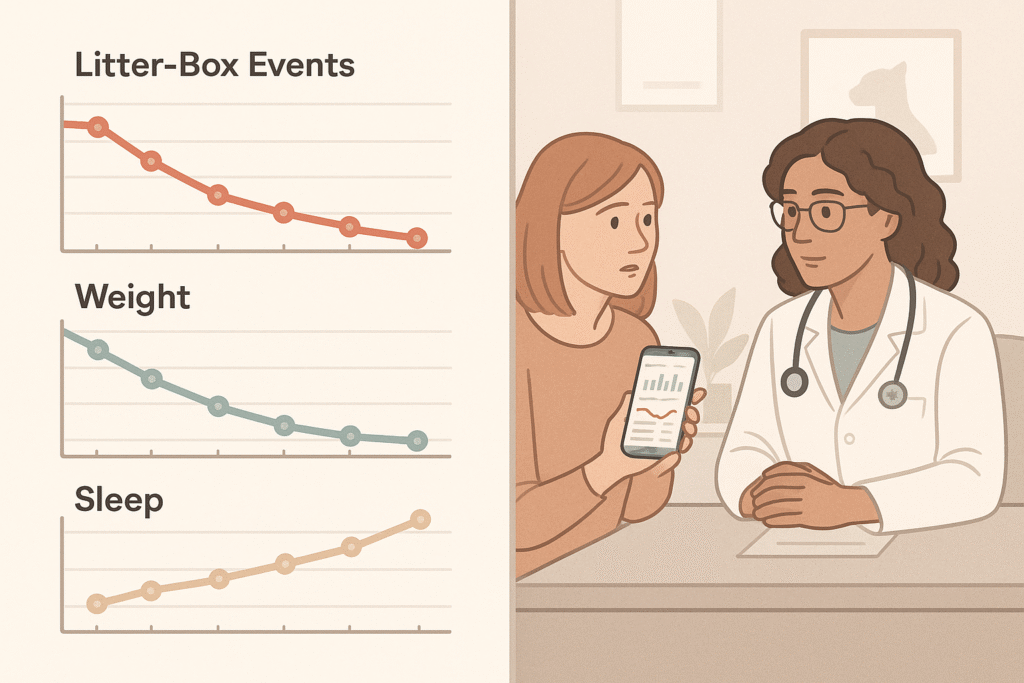
- Weight trend steadily down over weeks (with normal or increased appetite) → flag for hyperthyroidism, diabetes, cancer or kidney disease; schedule a vet check.
- Sharp spike in litter box visits or straining, blood, vocalizing → emergency risk for urinary obstruction, especially in males; this is a same-day vet visit, not an app problem.
- Gradual drop in activity + increased sleep + weight gain → strong signal to discuss obesity and joint pain with your vet; remote health monitoring for cats just makes this harder to ignore.
What the devices can’t do:
- Diagnose specific diseases
- Replace physical exams, blood work, or urinalysis
- Tell the difference between stress, bullying, pain and “just getting older”
Treat remote health monitoring for cats as an early-warning radar. When your devices start drawing weird graphs, your next click shouldn’t be “buy more tech”—it should be “book a vet appointment.”
Who actually benefits from a full health-monitoring ecosystem?
Remote health monitoring for cats isn’t equally useful for everyone. It’s high-leverage for:
- Senior cats (10+ years) – where small weight or litter changes can signal major disease.
- Multi-cat homes – where it’s almost impossible to know who ate or peed what without tech help.
- Cats with known urinary, kidney or diabetic issues – hydration and litter data can catch relapses earlier.
- Owners who travel or work long hours – remote dashboards are far better than guessing via the sniff test.
If you’re living with one young, healthy indoor cat and a normal work schedule, a full ecosystem may be overkill. In that case, start small: a solid smart litter box or feeder is often enough for meaningful remote health monitoring for cats.
Internal links
- “PETKIT PuraMax 2 Review 2025: A Smarter Self-Cleaning Litter Box for Modern Cat Parents” – for readers who want a deep dive into PuraMax 2.
- “Best Smart Litter Boxes 2025 — Hassle-Free Solutions for Cat Owners” – for people comparing multiple brands.
- “The Best GPS Trackers for Cats in 2025” – for readers interested in Tractive, Fi and similar trackers.
- “Smart Cat Fountains 2025: App-Connected Picks to Keep Cats Hydrated” – to cover the fountain side in more detail.
References
- Cornell Feline Health Center – Special Needs of the Senior Cat (weight loss, kidney disease, aging signs).
- AVMA / AVMA-indexed research – on weight monitoring, obesity risks and body condition scoring in cats.
Disclaimer
The information in this article is for educational purposes only and is not a substitute for professional veterinary advice, diagnosis or treatment. Always consult your veterinarian if you notice changes in your cat’s behavior, appetite, weight, litter box habits or activity level, or before making significant changes to their care.
PetTech AI participates in affiliate programs, including Amazon Associates and CJ. This means we may earn a small commission if you purchase products through links on this page, at no extra cost to you. Our reviews and recommendations are based on independent research, testing when possible, and analysis of verified user feedback.