
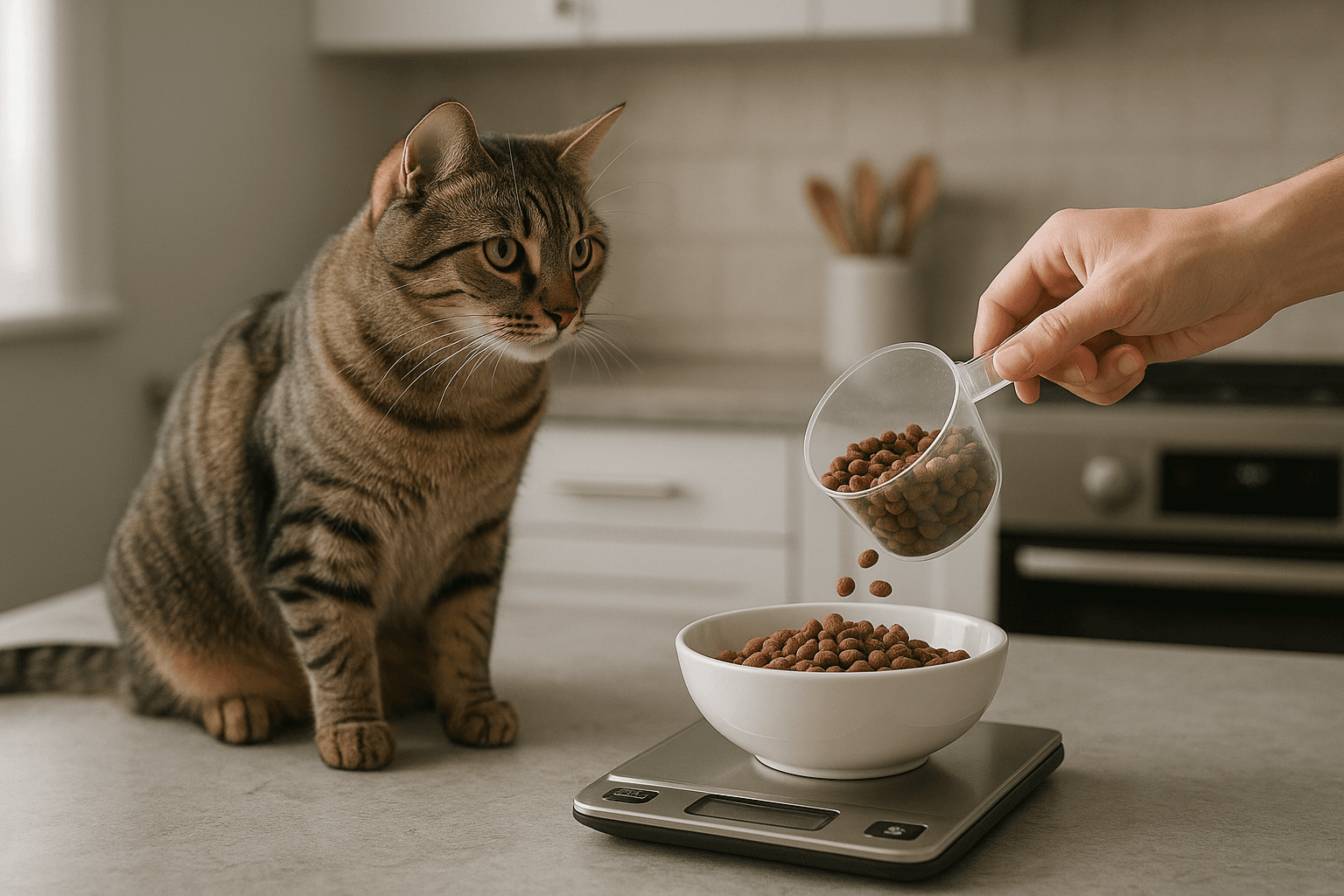
Indoor cats in 2025 have a strange problem: they’re safer than ever, but surrounded by constant calories. Bottomless bowls, high-calorie dry food, and boredom all work together until you’re asking the same question as thousands of other owners: how do I actually stop a cat from overeating without making them miserable?
The short answer: you don’t “fix” it with one gadget or a smaller scoop. To stop a cat from overeating in a sustainable way, you have to work on three fronts at once:
- Calories and portions (how much they eat)
- Feeding structure (when and how they eat)
- Environment and boredom (why they’re so focused on food)
This guide walks through all three, with practical steps and smart-home tools you can plug into your existing setup.
Why Overeating Is a Bigger Deal Than “A Few Extra Pounds”
A lot of owners only try to stop a cat from overeating when the belly is already obvious. That’s late.
Excess weight in cats is strongly linked to:
- diabetes mellitus
- arthritis and joint pain
- heart and respiratory strain
- lower activity and more frustration
- shorter overall lifespan
The brutal part: cats are small. An extra 1–2 pounds on a 10-pound cat is the equivalent of a human gaining dozens of pounds. Letting overeating slide for “just a bit” can quietly turn into chronic disease.
If your cat:
- finishes food instantly
- begs between meals
- raids other bowls
- or vomits from eating too fast
…you’re beyond a “quirk” and firmly in behavior + management problem territory. That’s exactly where you can still turn it around.
Step One: Is Your Cat Overeating or Just Underfed?
You can’t stop a cat from overeating if you’re misreading hunger signals. Some cats are genuinely underfed; others are just opportunists.
Check three things first:
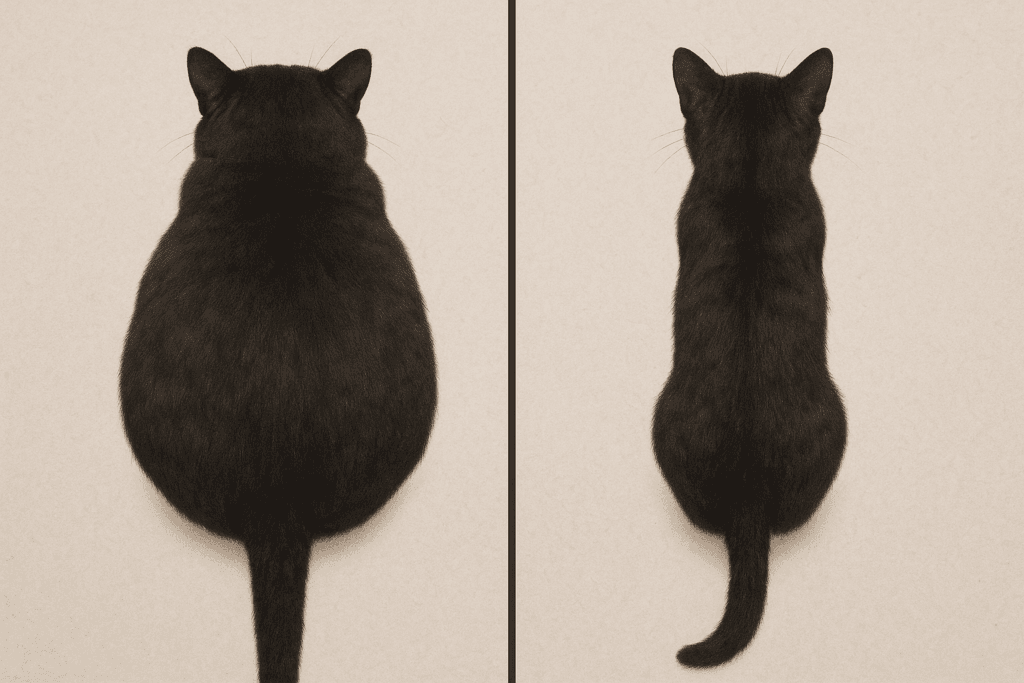
- Body condition score (BCS)
- Can you feel ribs with a light touch but not see them?
- Is there a defined waist from above?
- If your cat is rounded with no waist and a belly pouch that swings, that’s excess fat, not just “fluff.”
- Daily calories vs. ideal weight
- Many indoor adults do well around 180–220 kcal/day, but it depends on size, age, and activity.
- If you’re free-pouring kibble or “eyeballing” portions, you have no idea where you are.
- Feeding pattern
- Free access to dry food?
- Extra snacks “whenever they ask”?
- Multiple family members feeding without coordination?
If BCS is high and calories are unmeasured, you’re not dealing with true hunger. You’re dealing with a system that silently taught your cat that food is always available if they push hard enough.
Why Cats Obsess Over Food: Root Causes You Can Actually Fix
To stop a cat from overeating, you have to hit the upstream causes, not just clamp down on portions and hope for the best.
Common drivers:
- Free-feeding habits – the bowl is always full, so eating becomes a hobby.
- Boredom and lack of enrichment – nothing to do, nowhere to climb, no predictable play → food becomes the main event.
- Stress and resource competition – in multi-cat homes, anxious cats may eat fast or guard food because they’re afraid it will be taken.
- Highly palatable food – energy-dense dry diets with lots of fat and flavor can push cats to eat past satiety.
The good news: every one of these can be modified with a combination of routine, environment, and smart tools.
How to Stop a Cat From Overeating: Core Feeding Strategy
Here’s the spine of the system you want to build.
1. Ditch Bottomless Bowls
You cannot stop a cat from overeating if the food is literally never “over.”
- Move to meal feeding: 2–4 small meals per day, depending on your cat’s age and health.
- Measure food with a real measuring cup or gram scale. “Half a scoop” is not a unit.
If you’re worried about your schedule, this is where smart feeders start to earn their place.
If you want a practical, low-effort way to manage portions and feeding schedules, check out our PETKIT Fresh Element Infinity Review 2025 or explore our Best Smart Cat Feeders 2025 guide.
2. Set a Realistic Calorie Target
To stop a cat from overeating safely, you need a target — not guesswork.
- Ask your vet for an ideal weight and calorie plan, especially if your cat is already overweight.
- As a rough orientation:
- many indoor neutered cats land around 20 kcal per pound of ideal weight per day, then adjusted up or down based on response
- Divide that daily total into 2–4 meals.
If weight is dropping too fast (more than ~1–2% of body weight per week), increase calories and talk to your vet. Too rapid loss can be dangerous for cats.
3. Use Slow Feeding to Break the “Inhale and Panic” Cycle
If you want to stop a cat from overeating and curb vomiting, how they eat is as important as how much.
Tools that help:
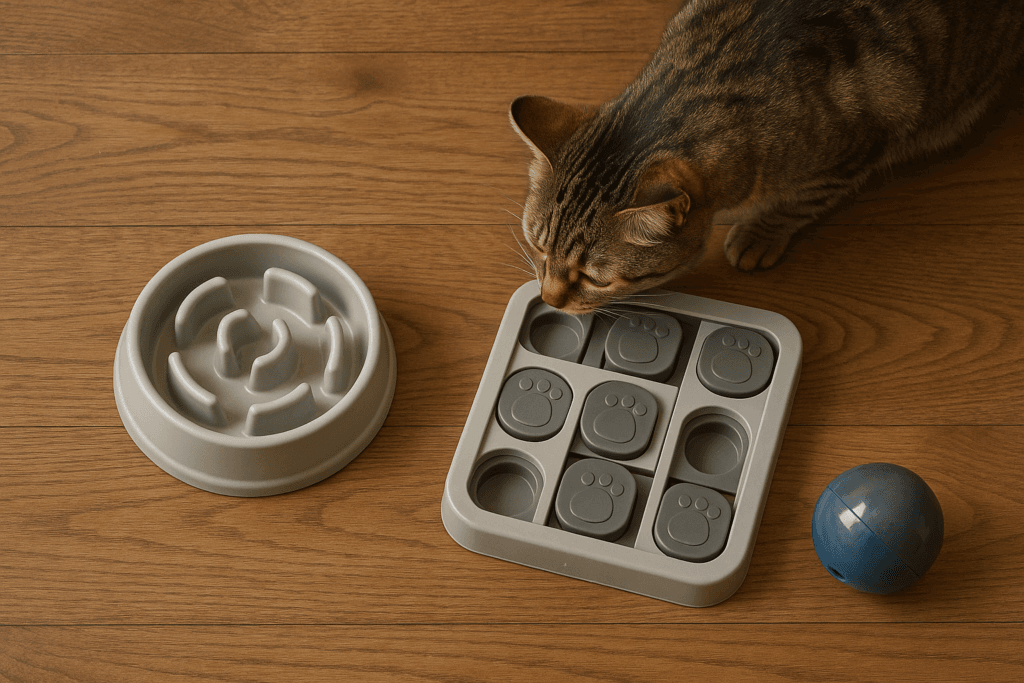
- Slow-feed bowls with ridges that force smaller mouthfuls
- Puzzle feeders that require batting, nudging or hunting for kibble
- Treat balls or tracks that reward movement with food
Behaviorally, this:
- stretches meal time
- adds mental and physical effort
- reduces the “I must inhale everything in 30 seconds” reflex
If you want toys that support weight control and reduce food-obsessed behavior, take a look at our Best Interactive Cat Toys 2025 guide — and browse our recommended puzzle and foraging feeders for extra enrichment.
4. Anchor Meals to a Predictable Schedule
Cats thrive on routine. An underrated way to stop a cat from overeating is to make feeding times boringly predictable.
- Feed at the same times each day, as much as your life allows.
- Ignore begging outside those windows — no eye contact, no talking, no “just a little snack.”
- Use a smart feeder for early-morning or late-night slots so you’re not being trained by 4 a.m. meowing.
Within 1–2 weeks, most cats adapt: they shift from constant lobbying to anticipating the real meal times.
5. Replace “Food Attention” With “Play Attention”
Many owners subconsciously reward food obsession with engagement: every meow gets a comment, every trip to the kitchen gets a follower.
If your cat learns that:
“Any time I scream about food, I get interaction,”
…food becomes their primary communication tool.
To stop a cat from overeating long-term, you have to break that link:
- Keep food interactions neutral and brief.
- Schedule play sessions (5–10 minutes) at predictable times, especially before meals and in the evening.
- Reward calm resting near you with petting or quiet praise, not just food.
You’re teaching your cat that attention is abundant, but food is structured.
Using Smart Pet Tech Without Letting It Backfire
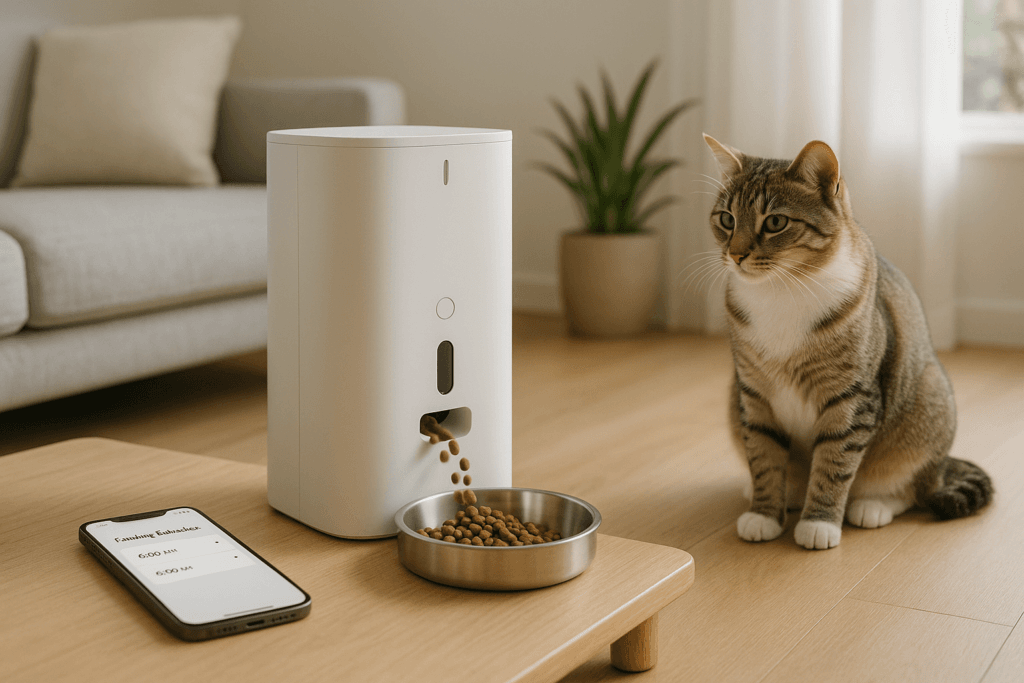
Smart feeders and ecosystems are powerful, but they can also silently sabotage your attempt to stop a cat from overeating if used badly.
Smart Feeders: When They Help
They’re genuinely useful when you:
- need consistent portion sizes and timing
- are away for long hours or shifts
- are prone to “just one extra scoop” decisions
A well-set-up device like the PETKIT Fresh Element Infinity or similar smart feeders can:
- split daily calories into multiple small meals
- log exactly how much was dispensed and when
- prevent one cat from bullying another away from the bowl (paired with microchip/RFID feeders)
Used correctly, smart feeders make it easier, not harder, to stop a cat from overeating because they take your mood and guilt out of the equation.
Smart Feeders: When They Hurt
They’re a problem when you:
- constantly trigger extra “snack” portions from the app
- ignore the logs and keep adding “just in case”
- combine auto-feeding with a second open bowl “for backup”
Tech doesn’t fix discipline. It just makes your decision more visible — or more consistently wrong.
Multi-Cat Homes: Stopping One Cat From Overeating Without Starving the Others
If you live with more than one cat, it’s almost impossible to stop a cat from overeating without some version of controlled access.
Options:
- Feed in separate rooms and pick up bowls after 20–30 minutes.
- Use microchip or RFID feeders so only the intended cat can access a specific bowl.
- Elevate food for agile cats only when you have one overweight cat and one older or mobility-impaired cat who needs more calories.
The goal is simple:
Every cat gets their calories, and no one gets the chance to mop up everyone else’s leftovers.
14-Day Transition Plan to Stop a Cat From Overeating
Here’s a realistic timeline to change the system without blowing up your relationship.
Days 1–3: Audit and Adjust
- Measure what you’re actually feeding now.
- Start measuring with a cup or scale, even if portions stay the same.
- Introduce one slow feeder or puzzle for part of one meal.
Days 4–7: Structure & Slow
- Move from free-feeding to set meal times (start with 3–4 per day).
- Replace at least half of each meal with a slow or puzzle feeder.
- Start ignoring begging outside meal windows (this is the hardest part).
Days 8–14: Calorie Correction
- If your vet has given you a calorie target, gradually taper portions down to that level over this week.
- Maintain consistent schedules — no “cheat snacks.”
- Add one short play session before an evening meal; this burns energy and helps your cat settle after eating.
By the end of two weeks, most owners see:
- slower eating
- fewer vomit episodes from bolting food
- slightly calmer behavior around the bowl
You’re not finished, but you’ve finally created a system that can stop a cat from overeating over the long haul.
When Overeating Is a Symptom, Not a Behavior Problem
There’s a hard line here: even the best system to stop a cat from overeating won’t work if overeating is driven by disease.
Red flags to call your vet now, not “after we try a new feeder”:
- Rapid increase in appetite with weight loss instead of gain
- Drinking and urinating much more than before
- Sudden food obsession in a senior cat
- Panting, weakness, or obvious discomfort
Conditions like hyperthyroidism, diabetes, intestinal disease, or certain medications can make cats genuinely hungrier. In those cases, trying to stop a cat from overeating purely with portion control is like trying to fix a fever by turning down the thermostat. You need a medical diagnosis first.
Internal Links
For readers who want to dive deeper into structured feeding, enrichment, and smart-home solutions for cats, PetTech AI offers several in-depth guides:
- Our PETKIT Fresh Element Infinity Review 2025 | Smart Feeder Tested by PetTech AI provides a detailed look at how automated portion control and multi-meal scheduling can support healthier eating habits.
- The Best Smart Cat Feeders 2025 roundup compares the top models for owners who need precise meal timing and consistent portion sizes.
- To complement feeding changes with proper energy outlets, the Best Interactive Cat Toys 2025: Vet-Informed Picks to Bust Boredom & Boost Play guide highlights toys that help reduce food-seeking behavior driven by boredom.
- For a broader look at stress reduction and environmental design, Indoor Cat Enrichment 2025: Science-Based Guide to Stress, Play & Smart Living explains how daily stimulation lowers overeating triggers.
These resources provide practical support for building a healthier feeding routine and reducing overeating long-term.
References
Cornell Feline Health Center — scientific guidance on feline weight management, calorie requirements, portion control and indoor nutrition.
American Veterinary Medical Association (AVMA) — evidence-based recommendations on obesity prevention, feeding practices, and healthy behavior patterns in cats.
AAHA / AAFP Feline Life Stage Guidelines — veterinary standards on diet, weight monitoring and structured feeding across all feline life stages.
VCA Animal Hospitals — clinical resources on safe weight loss, feeding schedules, and identifying medical conditions that cause increased appetite.
Disclaimer
The information in this article is for educational purposes only and does not replace professional veterinary advice, diagnosis or treatment. Always consult your veterinarian before changing your cat’s diet, feeding schedule or weight-loss plan, especially if your cat has existing medical conditions or is a senior. Sudden changes in appetite, weight, thirst or litter box habits should be evaluated by a vet as soon as possible.
PetTech AI participates in affiliate programs, including Amazon Associates and CJ. We may earn a small commission if you purchase products through links on this page, at no extra cost to you. Our recommendations are based on independent research and expert sources, not paid placement.