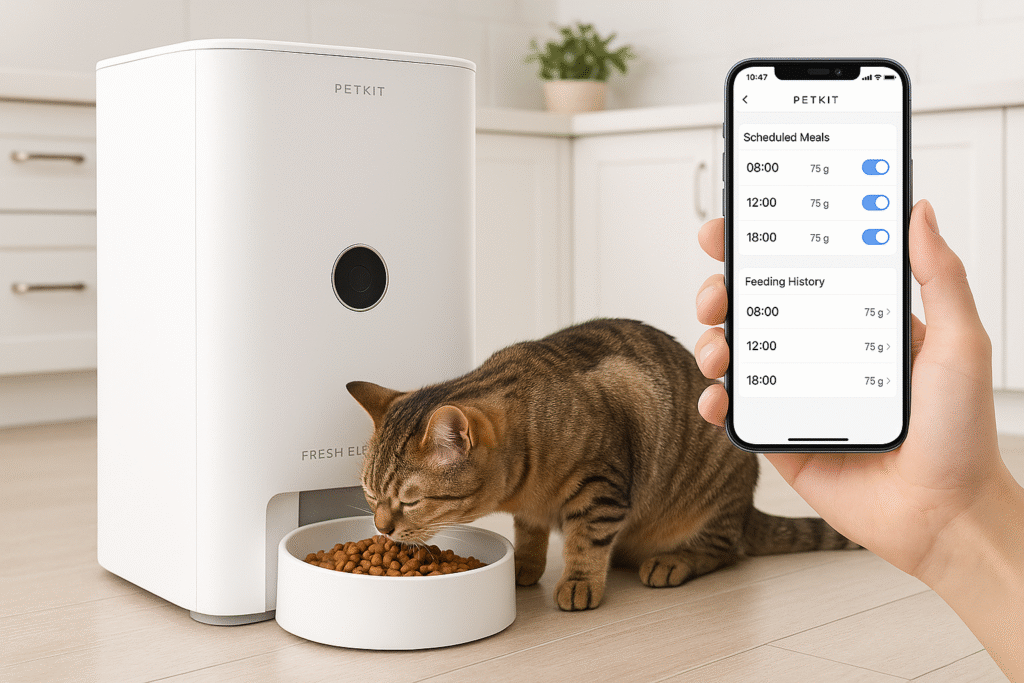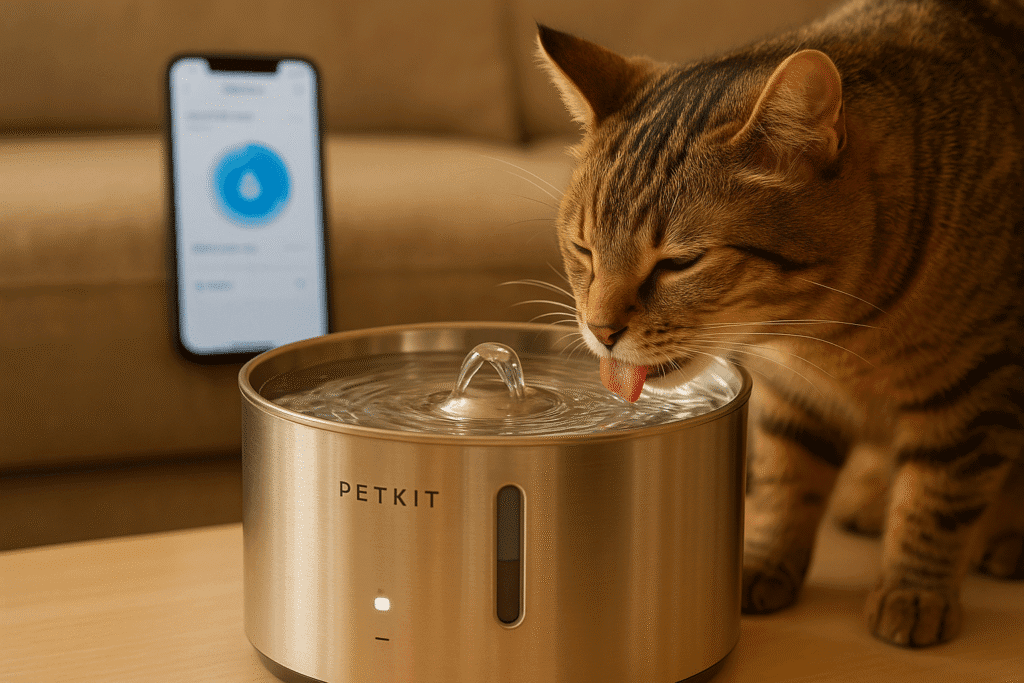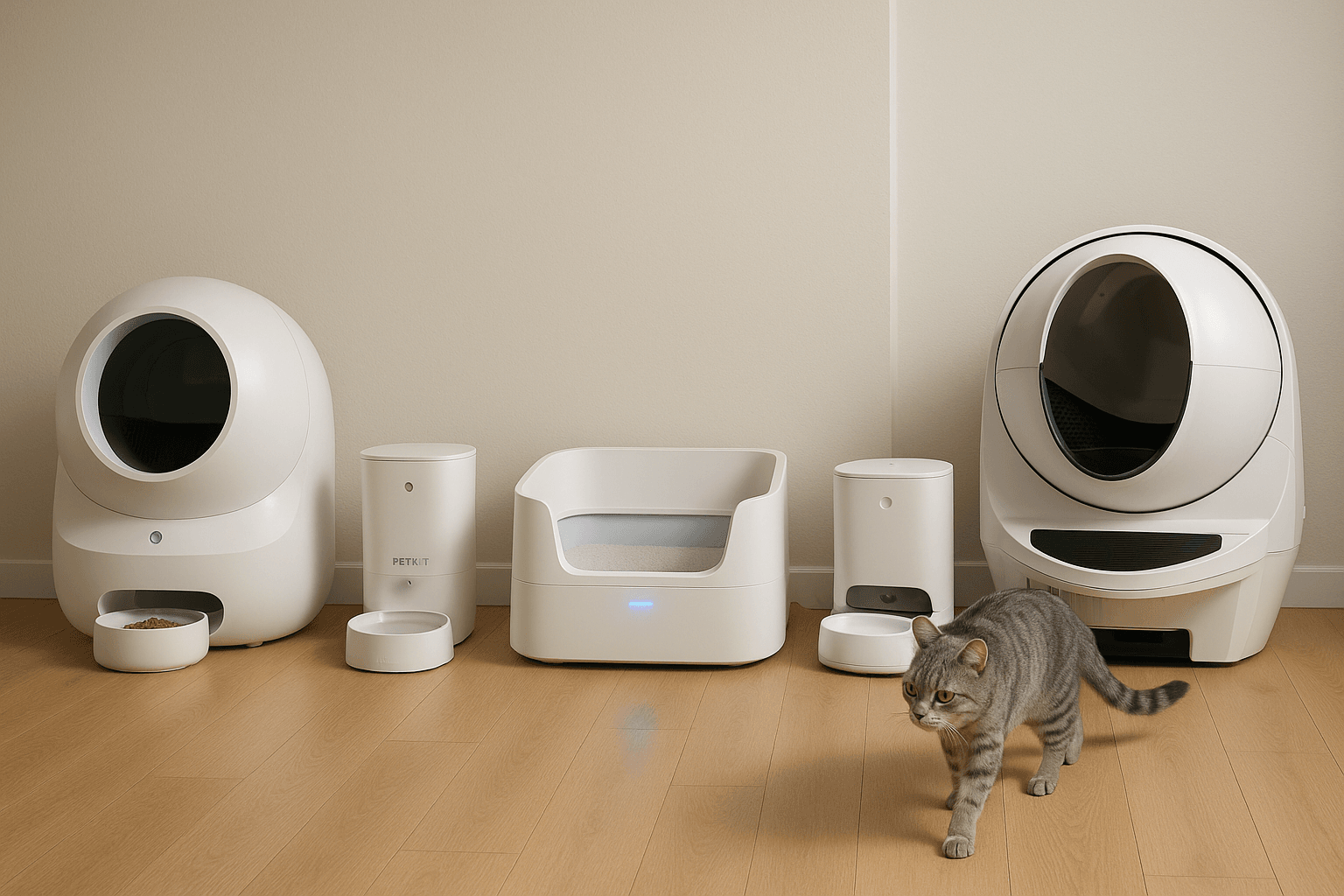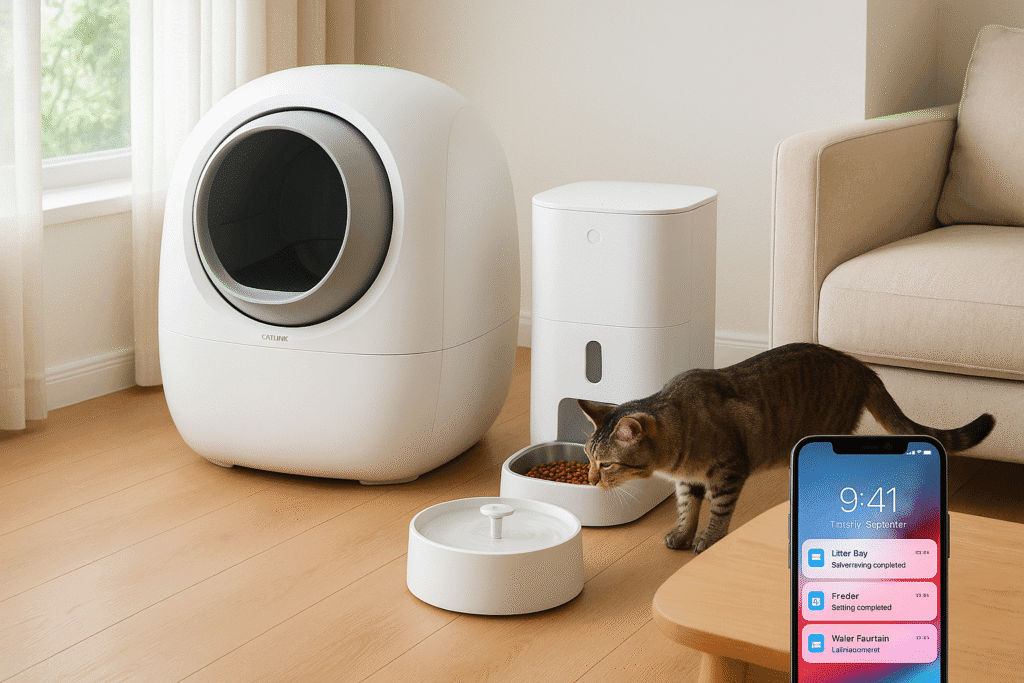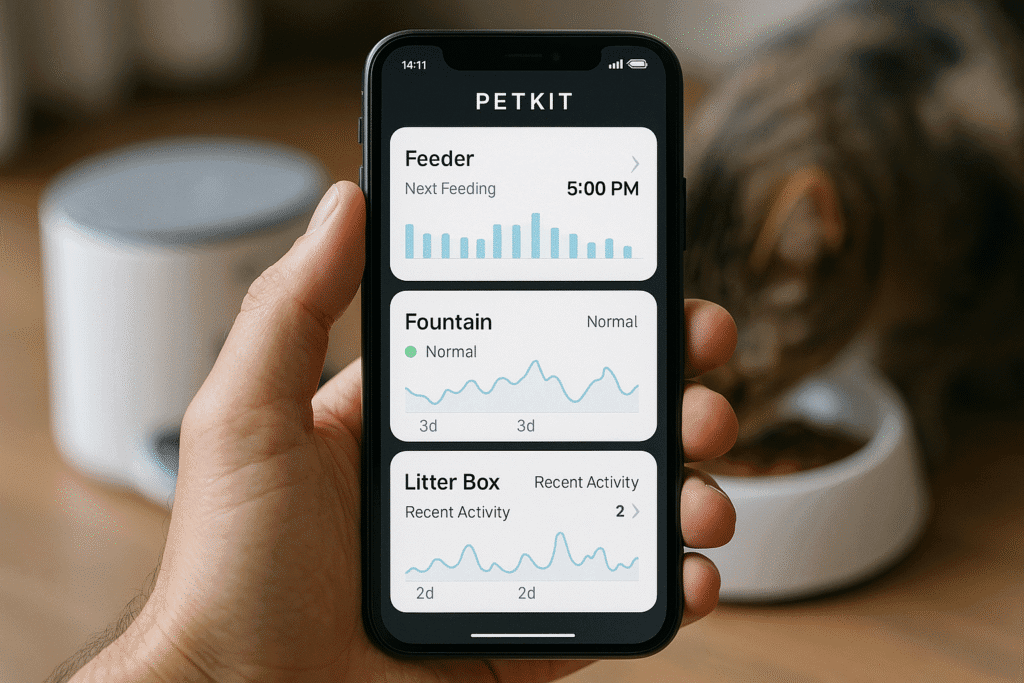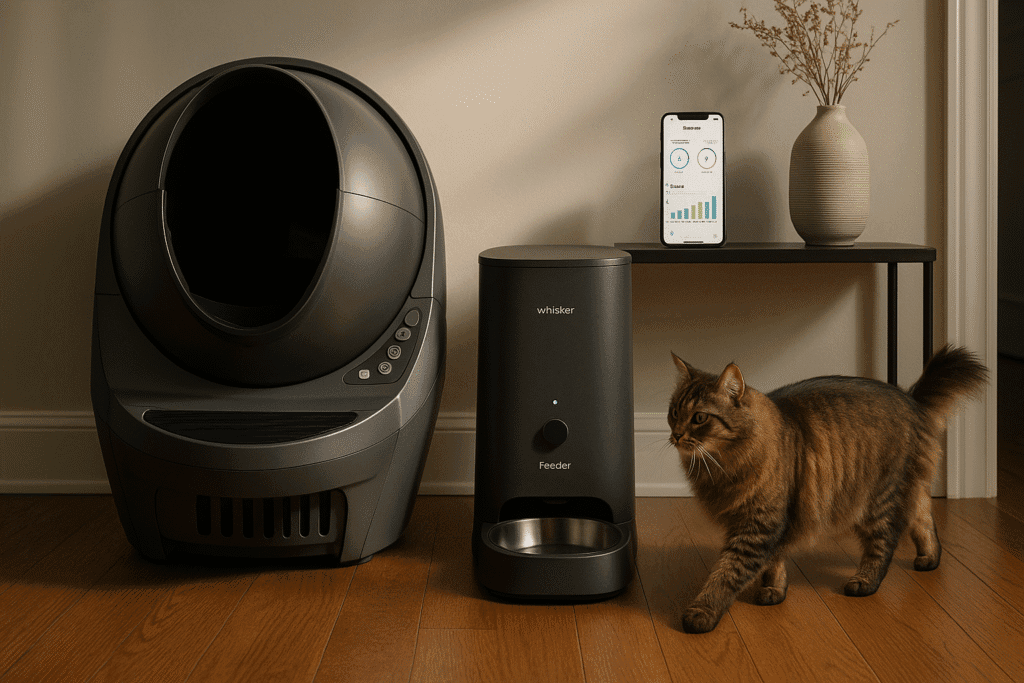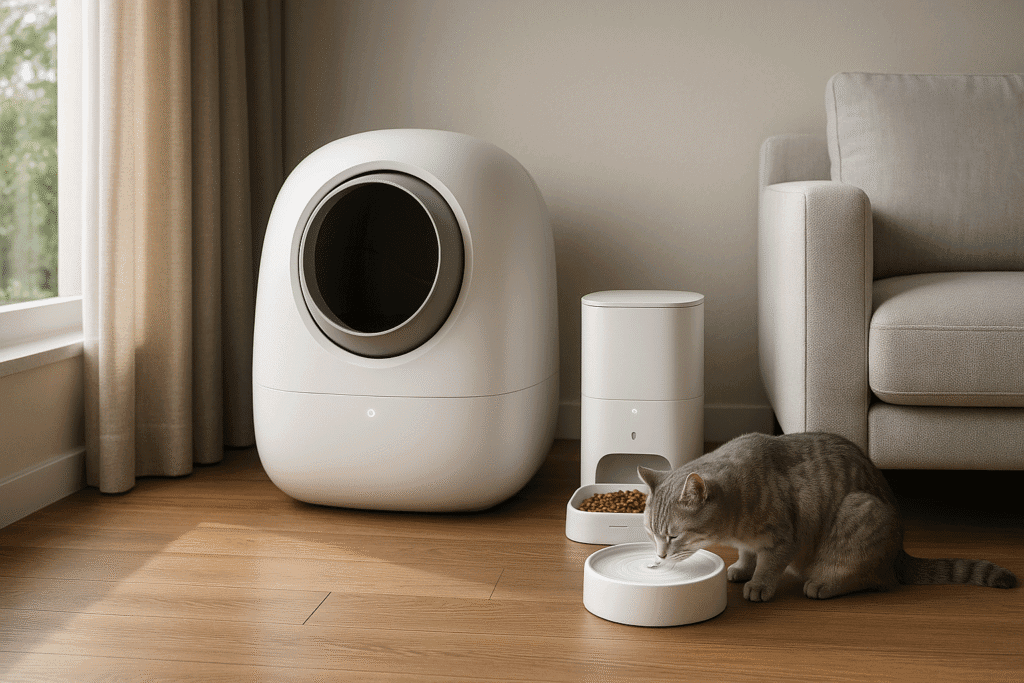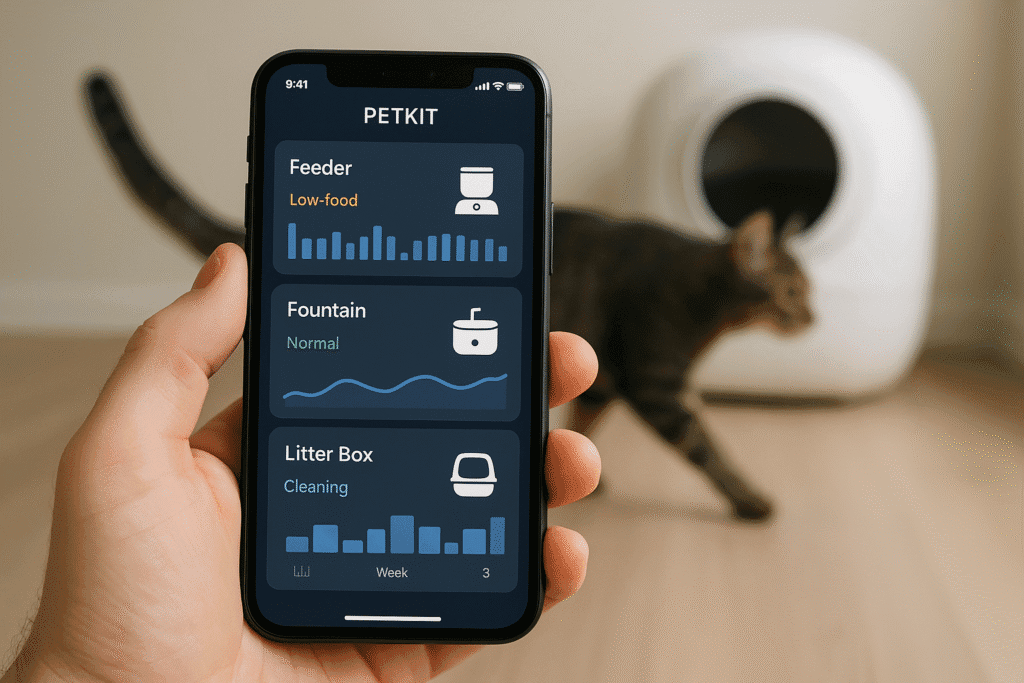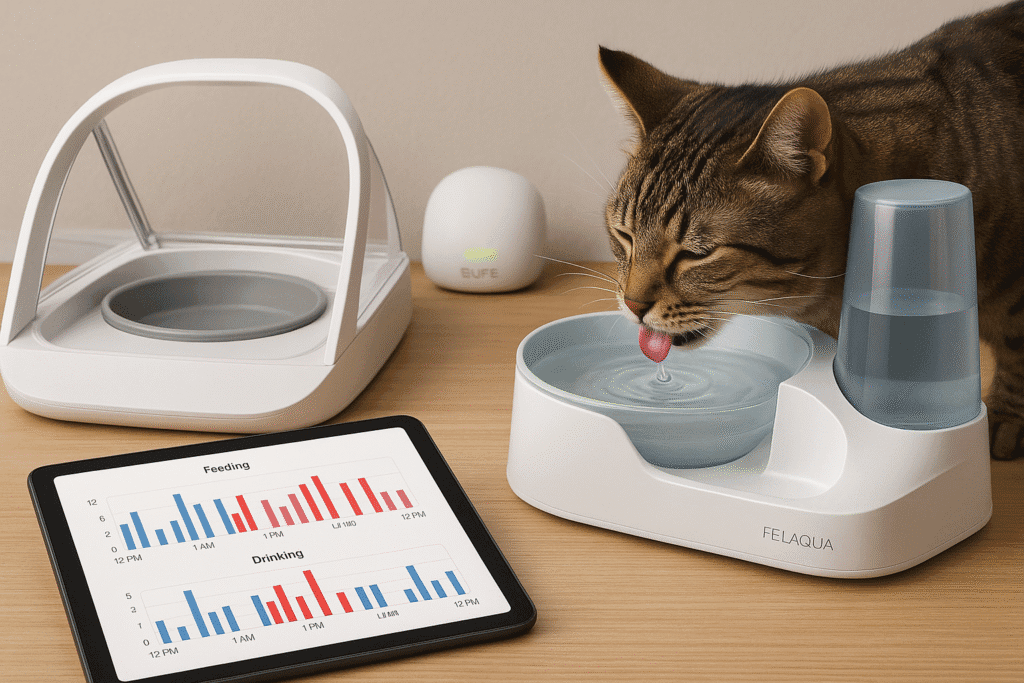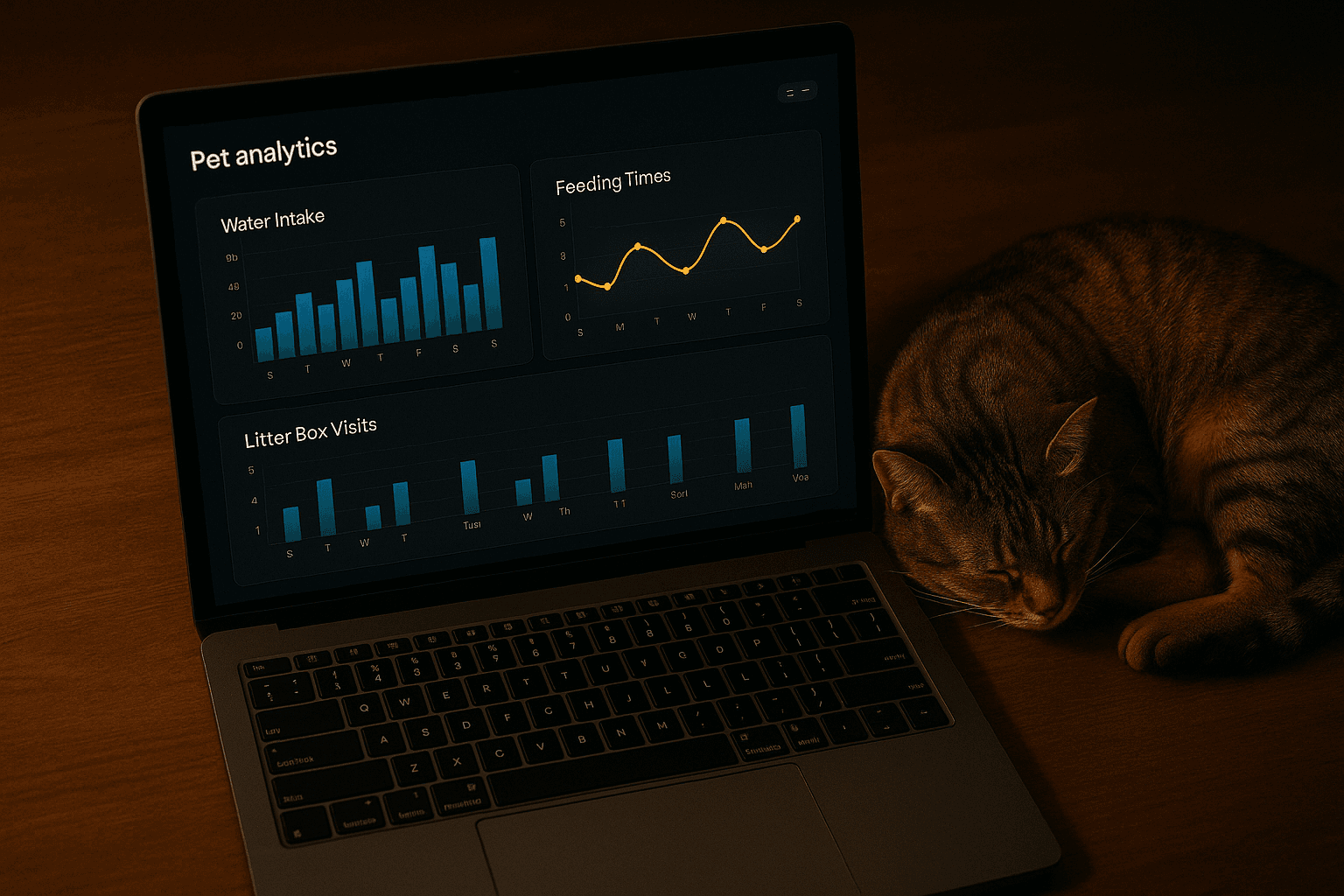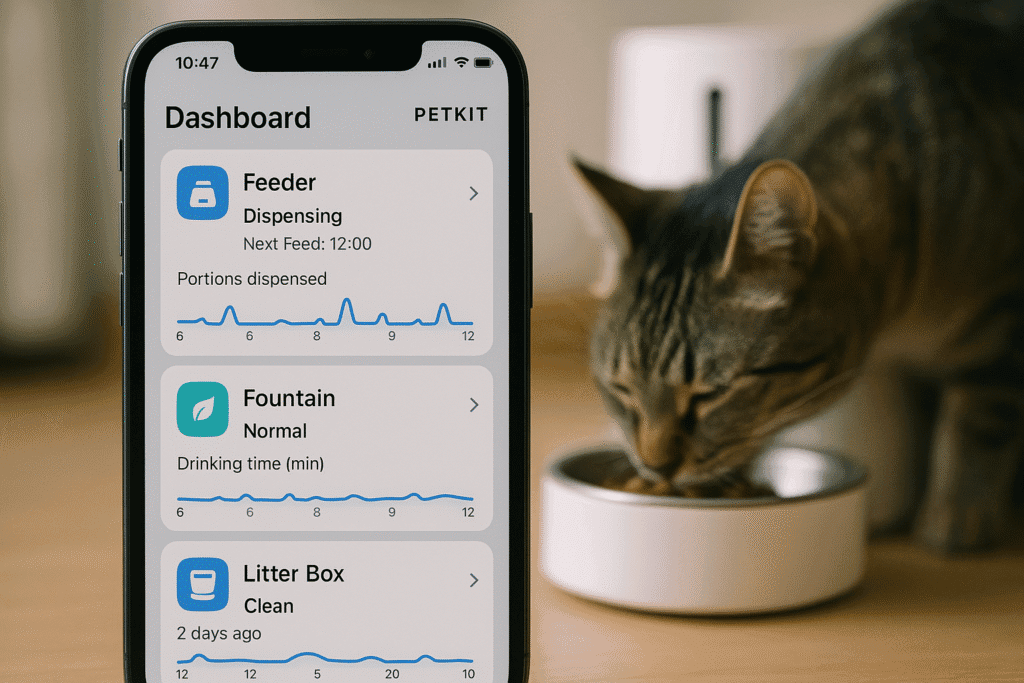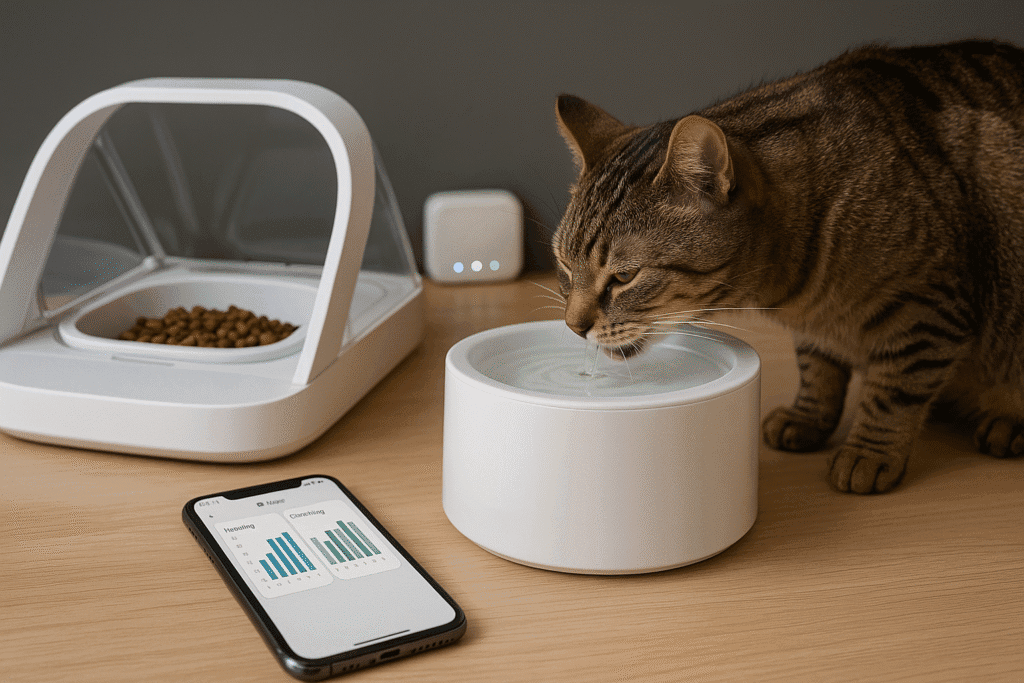
Author: PetTech

  • Indoor Cat Enrichment in 2025: What Science Really Says About Stress, Play, and Smart Living

    Indoor Cat Enrichment in 2025: What Science Really Says About Stress, Play, and Smart Living

    Abstract

    Keeping cats indoors protects them from cars, disease, and wildlife—but the science is now brutally clear: physical safety alone is not enough. Indoor cats with poor enrichment are more likely to develop obesity, stress-related disease, and behavior problems such as inappropriate elimination and overgrooming.

    This whitepaper synthesizes current guidelines from Cornell, AVMA, VCA, and feline behavior literature into a practical framework you can actually use at home. We’ll break down the five core environmental systems (physical, nutritional, social, elimination, behavioral) and map them to real-world design choices, including where modern smart devices genuinely help—and where they’re just expensive distractions.


    1. Why Indoor Cats Need More Than “Safety”

    Most major veterinary bodies now tell owners to keep cats indoors or in protected outdoor spaces. Lifespan data backs that up: indoor cats live significantly longer than free-roaming cats and face fewer risks from trauma, infectious disease, and wildlife.

    The problem: a growing body of research shows that an indoor life without adequate enrichment can create a different set of welfare problems:

    • Boredom and obesity are described as “very common” in indoor cats and linked to medical and behavioral issues.
    • A 2019 systematic review concluded that the impact of an indoor lifestyle on feline welfare is under-recognized and that many behavior disorders stem from environmental deficits.
    • AVMA notes that indoor cats without sufficient enrichment may develop distress, defined as an inability to cope, which can manifest as aggression, inappropriate urination, overgrooming, or withdrawal.

    In other words:

    “Safe but boring” is not an upgrade—it’s just a different kind of problem.

    The answer is environmental enrichment: deliberately designing the cat’s living space and routines so they can express natural behaviors—hunt, climb, hide, explore, scratch, and rest—without being exposed to outdoor dangers.


    2. Scientific Frameworks: Five Systems and Five Pillars

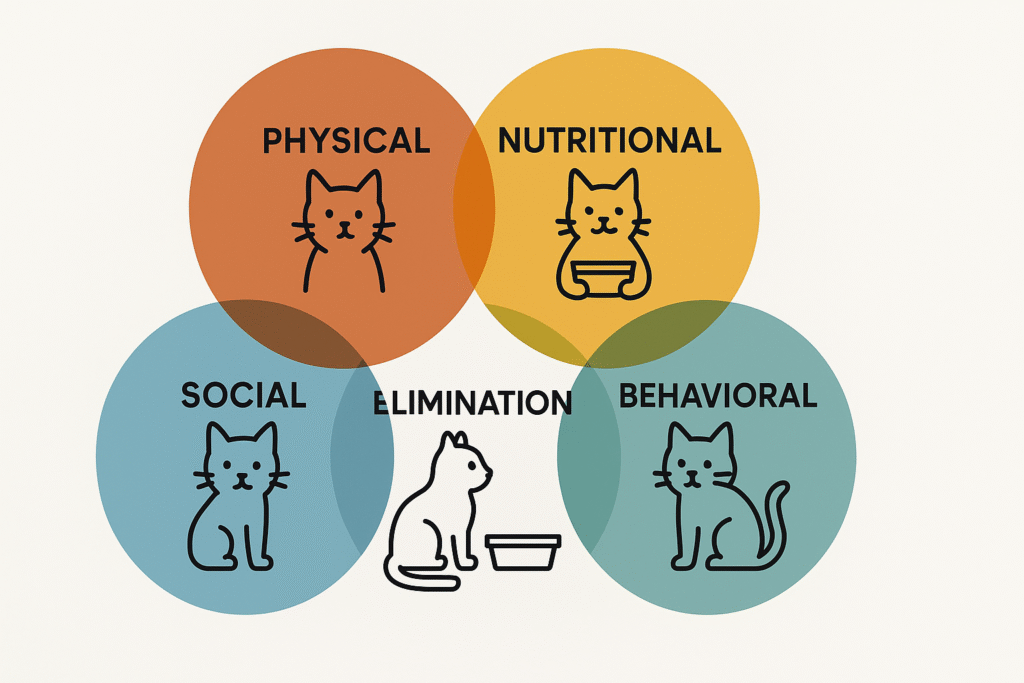
    Infographic of the five environmental systems for indoor cats

    Two frameworks show up again and again in the literature:

    2.1 The Five Environmental Systems

    Herron & Buffington’s work on indoor cat environments organizes the cat’s world into five systems:

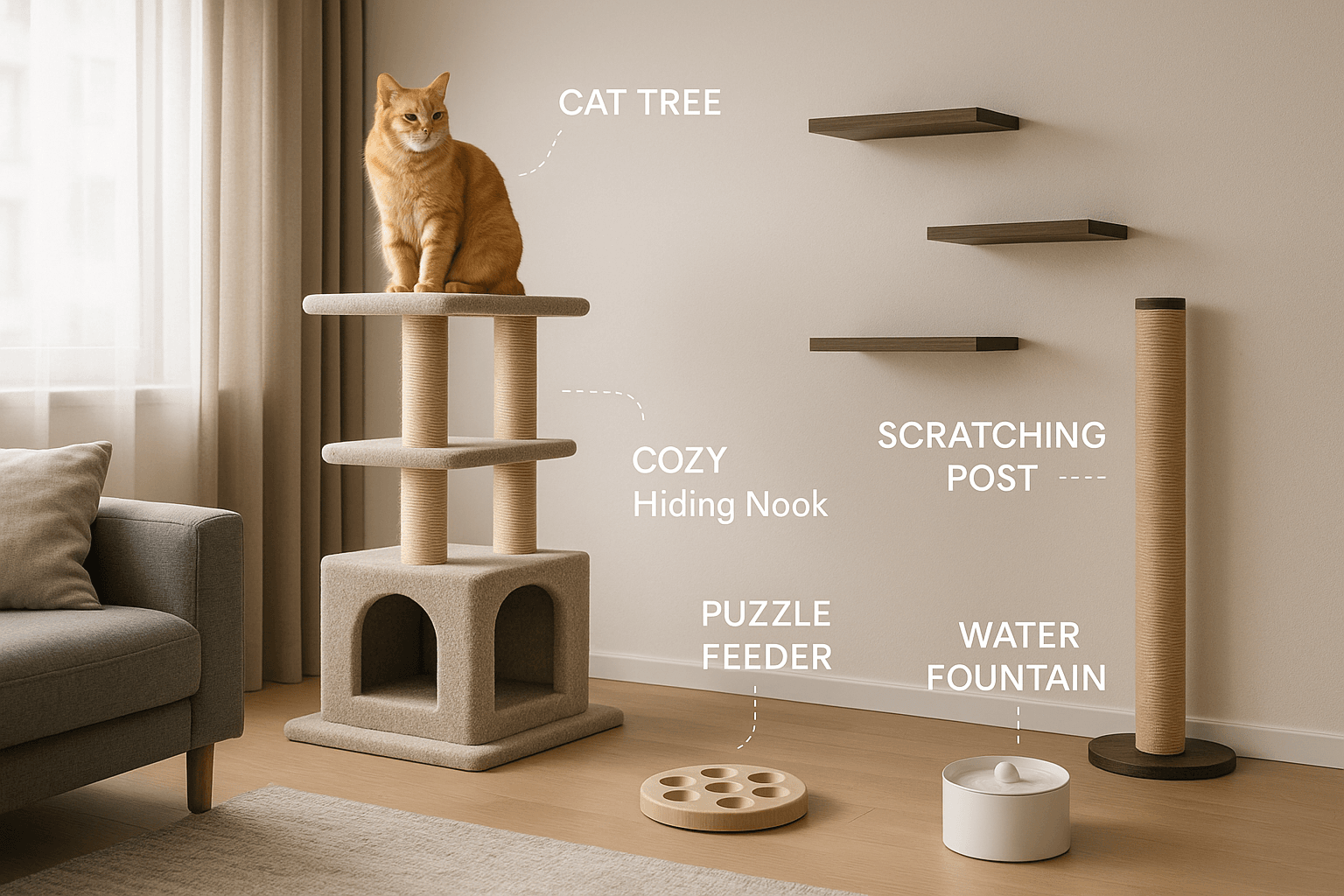
    1. Physical – space, structures, hiding places, vertical territory
    2. Nutritional – how and where food is delivered, not just what is fed
    3. Social – interactions with humans and other animals
    4. Elimination – litter boxes, location, cleanliness, substrate
    5. Behavioral – opportunities for play, predation, exploration, and choice

    Weakness in any system can contribute to stress and disease. Behavior consultations often start by walking through each system and asking: “Where is this cat’s environment failing them?”

    2.2 The Five Pillars of a Healthy Feline Environment

    The AAFP/ISFM Feline Environmental Needs Guidelines and related resources describe five “pillars” indoor cats need:

    1. Safe places (hiding spots, elevated vantage points)
    2. Multiple and separated key resources (food, water, litter, scratching, resting areas)
    3. Opportunity for play and predatory behavior
    4. Positive, predictable human–cat interaction
    5. An environment that respects the cat’s sense of smell

    Viewed together, these frameworks give you a blueprint:

    A good indoor home isn’t just four walls—it’s a system that meets physical, emotional, and behavioral needs at the same time.


    3. The Physical System: Space, Verticality, and Safety

    3.1 What Goes Wrong

    Common failures in the physical environment:

    • No vertical space (no shelves, no cat trees, nothing to climb)
    • No hiding places that feel safe and quiet
    • Overstimulating layouts (busy windows with constant noise, no retreat zones)
    • “Dead” rooms with nothing interesting to explore

    Multiple clinical guidelines emphasize that vertical space and safe hiding spots directly reduce stress.

    3.2 Design Principles

    Evidence-based adjustments that improve the physical system:

    • Vertical territory: cat trees, sturdy shelves, or cleared tops of furniture at different heights (low perches for seniors, higher for confident cats).
    • Hiding spots: boxes, covered beds, carriers left open, quiet corners—with at least one safe resting/hiding area for each cat in each key room.
    • Scratch zones: vertical and horizontal scratching options, placed where the cat actually wants to be (near human spaces, doors, transitions), not banished to a hallway.

    Smart devices here play a supporting role at best (e.g., cameras to check how spaces are actually used), but they do not replace the need for physical structures.


    4. The Nutritional System: How You Feed Matters as Much as What You Feed

    4.1 Free-Feeding and Obesity

    Static bowls filled all day are convenient—but they remove one of the cat’s most important jobs: working for food. Many sources highlight that boredom and obesity are tightly linked, and that feeding style is a major driver of both.

    4.2 Enrichment Through Feeding

    VCA and other veterinary resources emphasize using food puzzles, foraging, and varied delivery to add both physical and mental exercise:

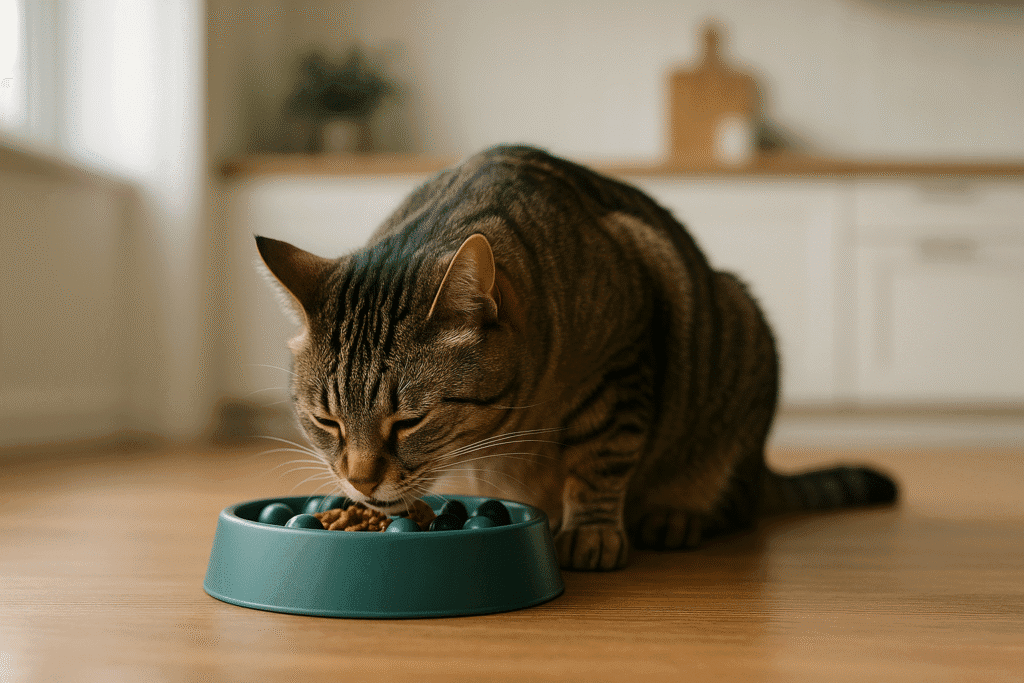
    • Puzzle feeders and slow feeders
    • Scatter feeding/hiding small amounts of kibble in safe spots
    • Rotating locations of bowls or puzzles (while keeping litter and water predictable)

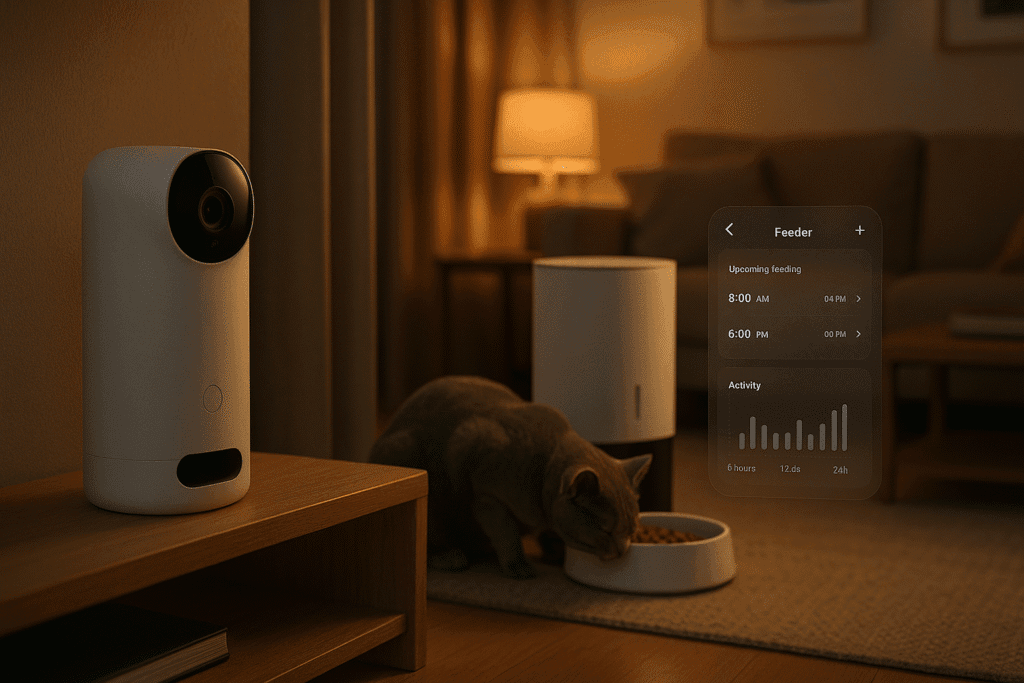
    Smart feeders can help with:

    • Portion control and schedule consistency (useful for weight management)
    • Night feeds without disturbing humans
    • Data on portions and compliance

    But:

    A smart feeder that always drops food in the same bowl, in the same spot, with no puzzle aspect is not enrichment. It’s just automation.

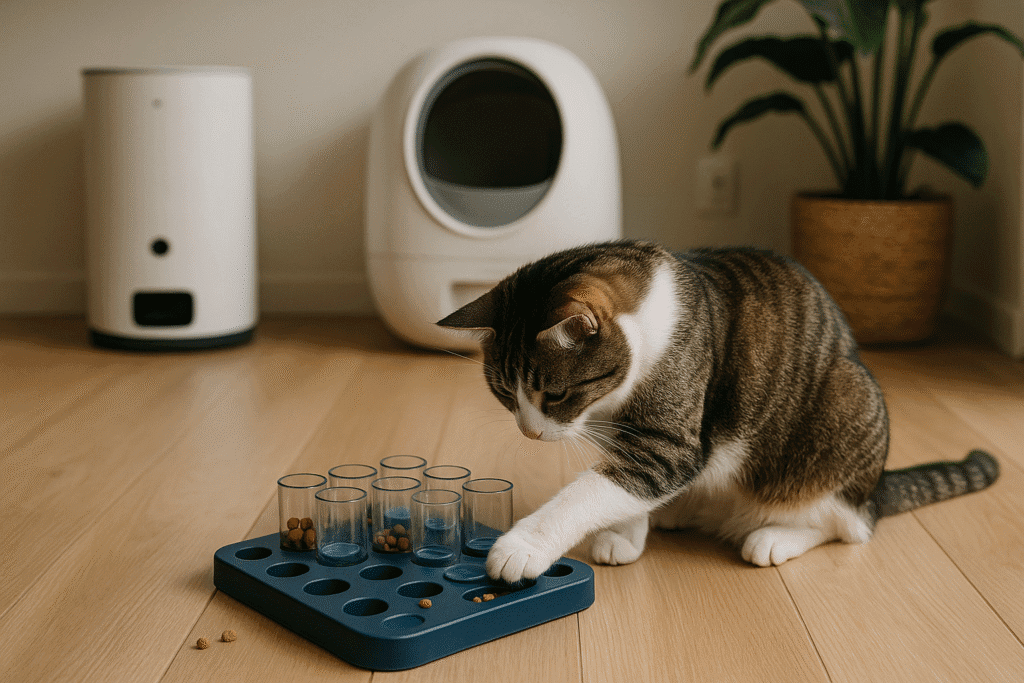
    The highest-impact approach is often a hybrid: a smart feeder controlling total intake plus 1–2 daily meals delivered via puzzle or foraging setups.


    5. The Social System: Predictability Over Constant Attention

    5.1 Social Stress and “Invisible” Problems

    Indoor cats face social stressors that outdoor cats can escape:

    • Crowded multi-cat homes
    • Dogs or children with unrestricted access
    • Humans who overschedule cuddles or handle roughly

    Behavior literature notes that many aggression, fear, and elimination problems trace back to social and environmental mismatches, not “bad cats.”

    5.2 Evidence-Based Social Design

    Key principles from guidelines:

    • Choice and control: give cats the ability to approach or retreat from humans and other animals.
    • Predictable interactions: short, consistent sessions of play, grooming, or petting are better than random bursts of intense attention.
    • Separated resources: multiple feeding stations, litter boxes, and resting spots reduce competition and bullying.

    Smart cameras and treat-dispensing devices can support remote interaction, but they don’t replace the value of calm, respectful in-person contact that follows the cat’s lead.


    6. The Elimination System: Litter Boxes as a Welfare Indicator

    Litter boxes are often treated as a housekeeping problem. Clinically, they’re a welfare barometer. The environmental guidelines are consistent:

    • Number: at least n+1 boxes for n cats
    • Placement: quiet, accessible, away from food/water
    • Substrate: fine, unscented clumping litter often preferred
    • Cleanliness: scooped daily, fully changed regularly

    Failing this system leads to:

    • House-soiling
    • Urinary tract disease exacerbation
    • Stress-related cystitis (feline idiopathic cystitis)

    Smart litter boxes help with:

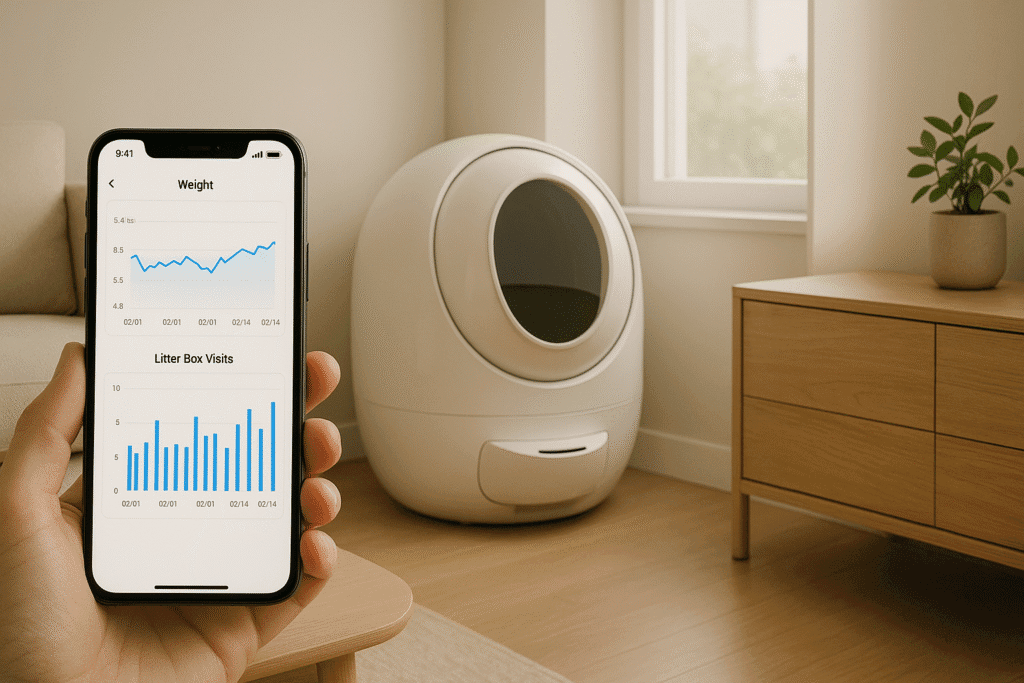
    • Objective data on frequency and volume of visits
    • Early warning of changes in elimination patterns
    • Reducing scooping workload so humans maintain cleanliness standards

    But they can worsen welfare if:

    • noise or cycles scare the cat
    • they’re the only box available and malfunction or misread presence
    • humans rely on “smart” features and ignore obvious environmental issues (privacy, access, substrate)

    The science is clear: smart boxes are tools, not magic. The underlying litter box system design must still respect feline preferences.


    7. The Behavioral System: Play, Predation, and Cognitive Load

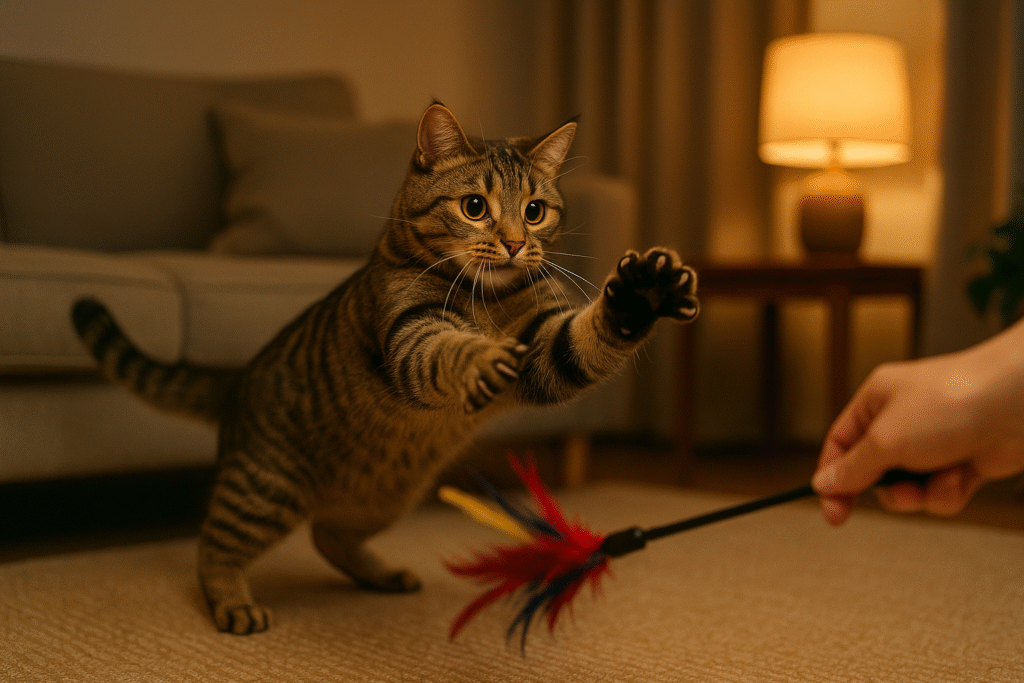
    Indoor cat engaged in predatory play with a wand toy

    7.1 Why Play Is Non-Negotiable

    Multiple guidelines and reviews converge on one point: play and predatory behavior are mandatory, not optional, for indoor cats.

    Without opportunities to stalk, chase, pounce, and “kill”:

    • Energy is redirected into aggression, furniture destruction, or self-injury
    • Obesity and muscle loss progress faster
    • Anxiety and frustration increase

    7.2 Structured vs. Passive Enrichment

    Effective enrichment combines:

    • Structured sessions – human-led play with wand toys and interactive games, ideally 5–10 minutes once or twice daily.
    • Passive enrichment – toys, scratching posts, views, and puzzles available when humans are busy.

    Cornell highlights toys as key tools to encourage exercise and problem-solving while strengthening the human–cat bond, warning that lack of stimulation can lead to obesity and behavior problems.

    Smart toys (motion toys, interactive balls, laser devices) can increase activity, but only if:

    • They match the cat’s play style
    • Sessions are limited and not overwhelming
    • Laser play ends with a “catchable” toy or treat to prevent frustration, as many behavior resources recommend.

    8. Measuring Welfare: How Do You Know It’s Working?

    Most owners underestimate their cat’s stress level. Research and guidelines suggest watching for:

    Positive indicators:

    • Regular play and exploration
    • Normal appetite and grooming
    • Relaxed resting postures in multiple locations
    • Social interactions initiated by the cat

    Warning signs:

    • Hiding most of the day
    • Sudden changes in litter box use
    • Overgrooming, bald patches
    • Aggression toward humans or other pets
    • Hypervigilance (startles easily, constantly on edge)

    If these appear, the literature is clear: you don’t just “discipline” the cat—you re-evaluate the environment across the five systems and, if needed, consult a veterinarian or veterinary behaviorist.

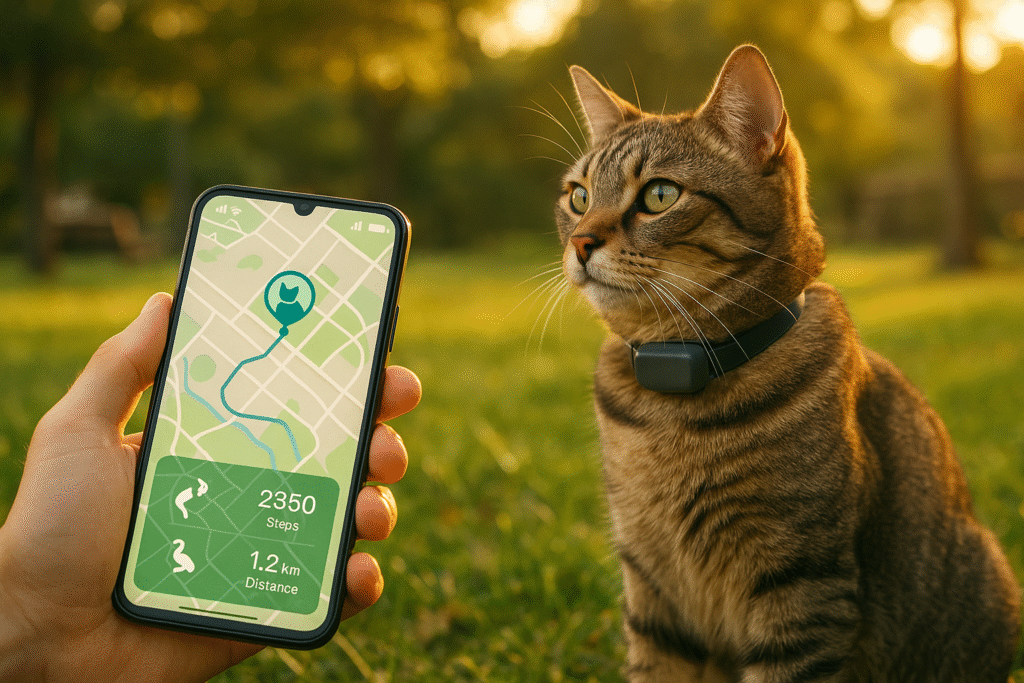
    Smart devices with logging (litter metrics, feeder logs, activity trackers) can help identify trends—sudden drops in activity, changes in elimination frequency—but interpretation still requires clinical judgment.


    9. Where Smart Pet Tech Helps—and Where It Doesn’t

    Indoor cat using puzzle feeder alongside smart pet devices in a modern home

    From a scientific standpoint, smart devices are environmental modifiers, not core needs. The question is not “Do you have gadgets?” but:

    “Does this device help your cat express natural behavior or reduce stress in a measurable way?”

    9.1 Clear Wins

    Based on current guidelines and common clinical scenarios, tech clearly helps when it:

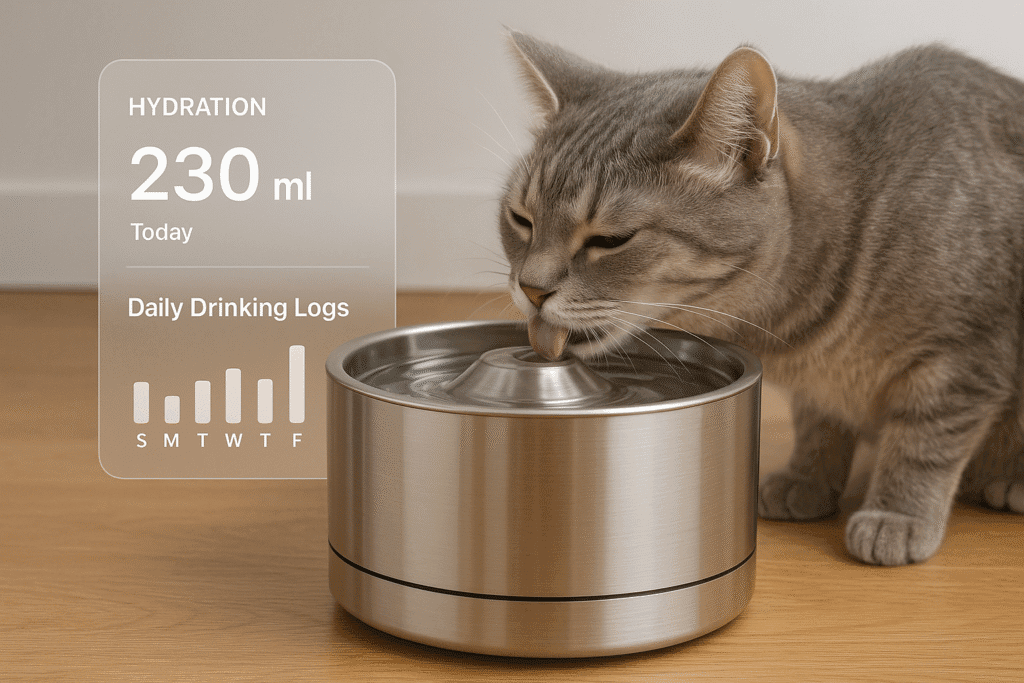
    • Makes it easier to keep resources clean and consistent (smart feeders, automated litter scooping, fountain flow reminders)
    • Provides objective data that can be shared with vets (feeding logs, litter visit frequency, activity trends)
    • Supplements, not replaces, interactive play (e.g., motion toys that run during work hours plus wand sessions at night)

    9.2 Neutral or Risky Uses

    Tech is neutral—or harmful—when it:

    • Adds noise and movement with no escape or choice
    • Overcomplicates basic needs (e.g., complex feeders that malfunction, leaving no backup food)
    • Encourages owners to ignore behavior changes because “the app says everything is fine”

    The literature warns that environmental complexity must still be controllable and predictable from the cat’s perspective. More devices do not automatically mean better welfare.

    For a site like PetTech AI, the responsible framing is:

    • Smart devices are tools to support the five systems and five pillars,
    • not a shortcut to “enrichment without effort.”

    10. Implementation Roadmap: A 30-Day Enrichment Plan

    To translate the science into action, here’s a realistic plan for a typical one- or two-cat indoor home.

    Week 1 – Audit and Fix the Basics

    • Map food, water, litter, scratching, resting, and play areas.
    • Add at least one safe hiding place and one vertical perch in each main living area.
    • Check litter box number, size, and location (n+1 rule; quiet, accessible).

    Week 2 – Upgrade Feeding and Play

    • Convert one meal per day into puzzle or foraging form.
    • Start two 5–10 minute wand-play sessions per day, ideally before meals.
    • Introduce a small rotation of toys; put some away and reintroduce weekly.

    Week 3 – Add Smart Tools Strategically

    • If using a smart feeder: program consistent schedules and portions, but keep at least one meal “earned” via play or puzzle.
    • If considering a smart litter box: keep at least one standard box available while the cat acclimates; monitor usage closely.
    • Use cameras or basic trackers to observe what your cat actually does when you’re away—then adjust the environment accordingly.

    Week 4 – Fine-Tune Social and Sensory Environment

    • Establish predictable daily “contact windows” for petting, grooming, and play—always letting the cat decide how long.
    • Reduce loud, unpredictable stimuli in key cat areas; provide scent stability (avoid heavy room deodorizers; use familiar bedding).
    • Watch for subtle improvements: more relaxed resting, voluntary play, less hiding, fewer minor conflicts.

    If problems persist—especially elimination issues, aggression, or self-harm—guidelines are unequivocal: involve a veterinarian or veterinary behaviorist.


    References


    Disclaimer

    The information in this whitepaper is provided for educational purposes only and does not replace professional veterinary advice, diagnosis, or treatment. Always consult your veterinarian or a qualified veterinary behaviorist before making major changes to your cat’s environment, diet, or activity level—especially if your cat has existing medical or behavioral issues.

    PetTech AI participates in affiliate programs, including Amazon Associates and other partner networks. We may earn a commission when you purchase products through links on our site, at no additional cost to you. Our content and evaluations are based on independent research and expert sources, not paid placement.

  • Best Cat Toys 2025: Vet-Informed Picks to Keep Indoor Cats Moving

    Best Cat Toys 2025: Vet-Informed Picks to Keep Indoor Cats Moving

    Indoor cats are safer than outdoor ones, but they pay a price: boredom, weight gain, and stressy behavior. Good toys are not “extras” – they’re part of basic welfare. Cornell’s Feline Health Center notes that toys help cats exercise, think, and express normal hunting behavior, reducing obesity and destructive habits.Cornell Vet School The best cat toys 2025 are the ones that actually get used, not just the ones that look cute on Instagram.

    This guide cuts out the junk and focuses on nine proven toys: simple, interactive, puzzle, budget, and smart tech – all available on Amazon US, all with real user data behind them.


    How We Chose the Best Cat Toys 2025

    To decide what deserved to be called the best cat toys 2025, we combined:

    • Veterinary guidance on enrichment for indoor cats (Cornell, AVMA, VCA, peer-reviewed articles). Cornell Vet School
    • Focus on core needs: hunting, stalking, pouncing, problem-solving, and play that strengthens the bond with the human.
    • Safety filters: no loose strings to swallow, no tiny detachable parts, no sketchy materials – fully aligned with Cornell’s “safe toys and gifts” guidance. Cornell Vet School
    • Real-world performance: strong review profiles and long-term popularity, not just sponsored launches.
    • Coverage of different play styles: aerial hunters, ground chasers, chewers/kickers, tech-friendly households.

    You’ll see the focus keyword best cat toys 2025 in headings and text because we’re playing this for SEO too – but every recommendation is grounded in actual product data and feline behavior science.


    Best Overall Cat Toys 2025

    These are the best cat toys 2025 to buy if you want maximum impact with minimal overthinking. They work for most cats, including older indoor cats who haven’t played in a while.

    Cat Dancer 101 – Original Cat Dancer Toy

    Best for: almost any cat, especially those who like quick, jerky movements.

    The Cat Dancer 101 is brutally simple: a 35″ spring-steel wire with rolled cardboard twists at the end. That’s it. And that’s why it works. The wire flexes in unpredictable ways, mimicking a flying or skittering insect.Cat Dancer Products Amazon

    Why it earns a place among the best cat toys 2025

    • The movement is “alive” without batteries or motors.
    • It forces true interactive play – you move it, your cat hunts it, which is exactly what behaviorists want people to do. Facebook
    • It’s one of the few toys that consistently works even with picky or older cats.

    Pros

    • Extremely cheap but insanely effective
    • Great for short, intense sessions that actually tire the cat out
    • No electronics to break

    Cons

    • Must be put away after play (wire + cardboard = supervision only)
    • Heavy chewers may shred the cardboard tips quickly

    CTA:

    Start with a Cat Dancer, then watch how your cat moves. That will tell you which other best cat toys 2025 you should add next.


    Jackson Galaxy Air Prey Wand

    Best for: high-energy cats that love to jump and chase “birds.”

    Jackson Galaxy’s Air Prey wand uses a telescoping rod with a lightweight attachment designed to simulate flying prey. The whole idea is to move it through the air like a bird, not just wiggle it in place. Jackson Galaxy Amazon

    Why it belongs in a best cat toys 2025 list

    • It’s made to follow the classic “hunt, catch, kill, eat” cycle: move like prey, let the cat catch it sometimes, then feed. Jackson Galaxy Amazon
    • The telescoping wand gives you reach in small apartments and lets you adjust intensity for kittens vs seniors.

    Pros

    • Excellent for burning off energy in 5–10 minutes
    • Can be used as “air prey” or dragged as “ground prey”
    • Great bond-building tool

    Cons

    • Needs human time and energy
    • Feathers/attachments may need replacement over time

    CTA:

    If your cat is still bouncing off walls at night, add one structured Air Prey session before bedtime and see what happens over a week.


    Best Interactive & Motion Cat Toys 2025

    These best cat toys 2025 move on their own, giving your cat something to chase while you’re working, on calls, or out of the house.

    SmartyKat Hot Pursuit – Concealed Motion Toy

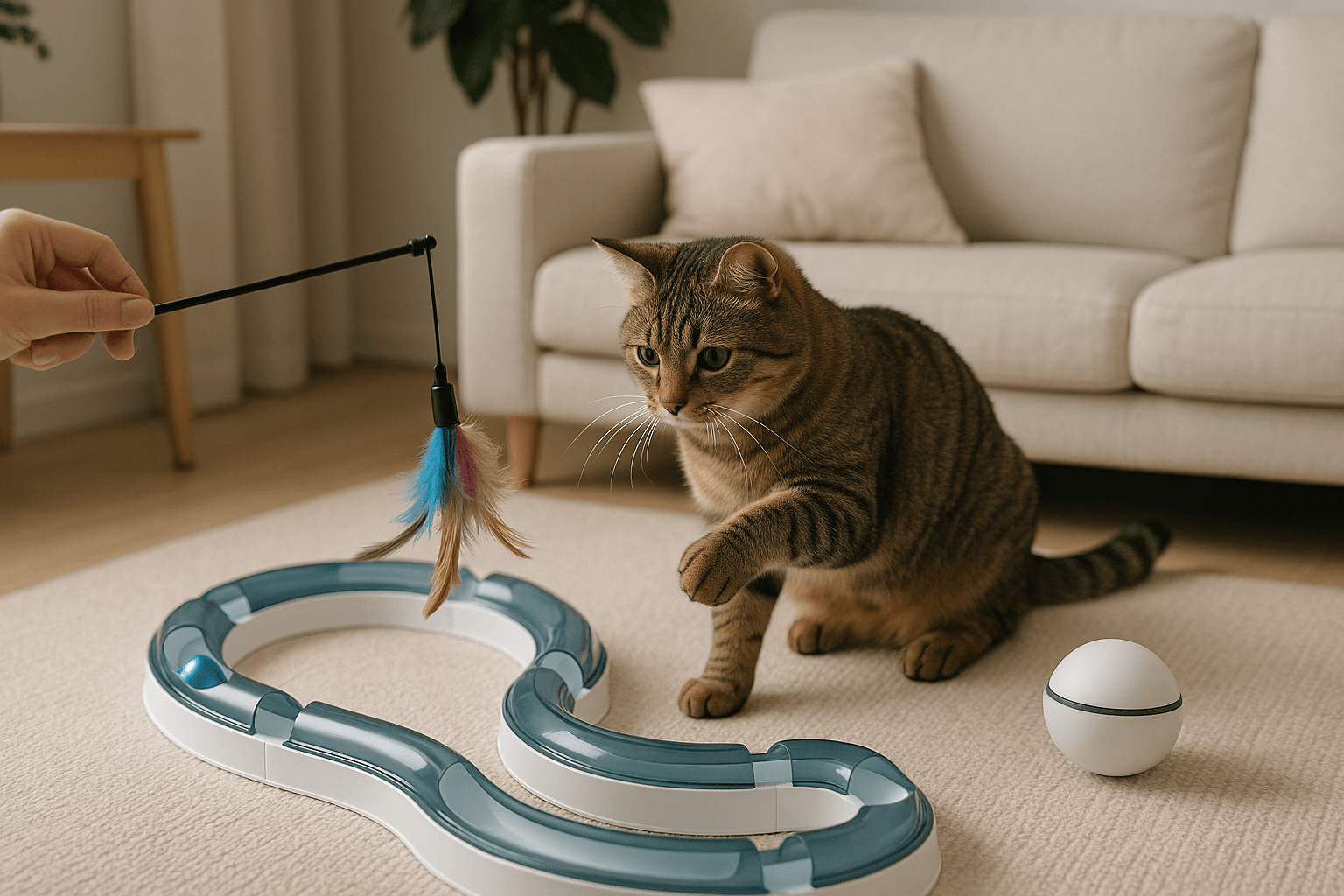
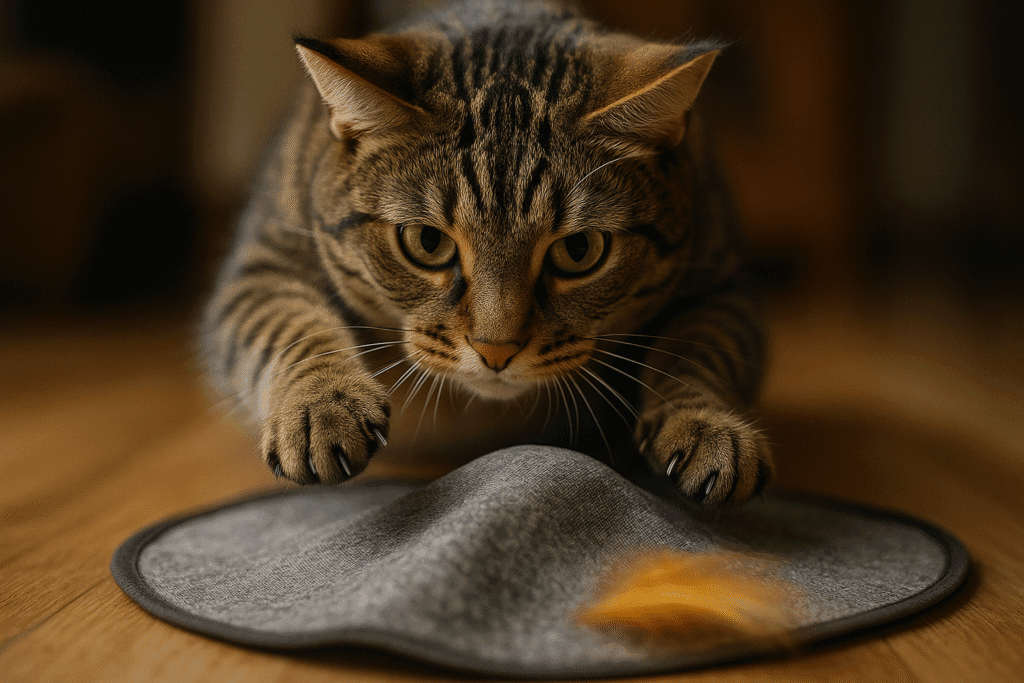
    Tabby cat pouncing on a concealed motion interactive cat toy

    Best for: ground hunters who love “mysterious movement under the blanket.”

    Hot Pursuit hides a rotating wand under a fabric cover. The feather/tail spins with sudden direction changes and built-in lights, mimicking prey moving under something. Smartykat Amazon

    Why it’s one of the best cat toys 2025

    • The prey is hidden, which taps into the “there’s something under there” instinct.
    • Two speed settings let you tune it for lazy or hyper cats.
    • It directly addresses the “inactive indoor cat” problem by turning play into exercise. Smartykat Amazon

    Pros

    • More autonomous than a wand but still very stimulating
    • Simple on/off use – no app
    • Good option for multi-cat households

    Cons

    • Fabric and wand are consumables; they will eventually wear
    • Some very timid cats may need gradual introduction to the noise

    CTA:

    Set Hot Pursuit up in a quiet room, start on the slower speed, and let your cat discover it without pressure.


    Cheerble Interactive Ball (Wicked-Style Smart Ball)

    Best for: bored apartment cats with limited floor space.

    Cheerble’s interactive balls are self-moving toys with three modes (usually gentle/normal/active), LED lights, and obstacle avoidance. They roll and bounce unpredictably for a few minutes, then pause, then restart when touched. Cheerble Amazon

    Why it deserves a slot in the best cat toys 2025

    • Designed specifically to keep indoor cats moving without needing giant cat trees or tracks.nypost.com
    • Smart play–rest cycles (e.g., 10 minutes on, 30 off) encourage bursts of activity without overstimulation. Cheerble Amazon

    Pros

    • Great for solo play while you’re working
    • Textured exterior and lights increase engagement
    • Rechargeable – no battery waste

    Cons

    • Works best on hard floors or low-pile carpet
    • Noise + LEDs might overwhelm very shy cats

    CTA:

    If your cat ignores static balls, try one Cheerble ball plus one classic wand toy – it’s a powerful combo for daily enrichment.


    Best Puzzle & Enrichment Toys 2025

    Puzzle-style best cat toys 2025 make cats think as well as move, which is key for indoor welfare. PMC

    Petstages Tower of Tracks

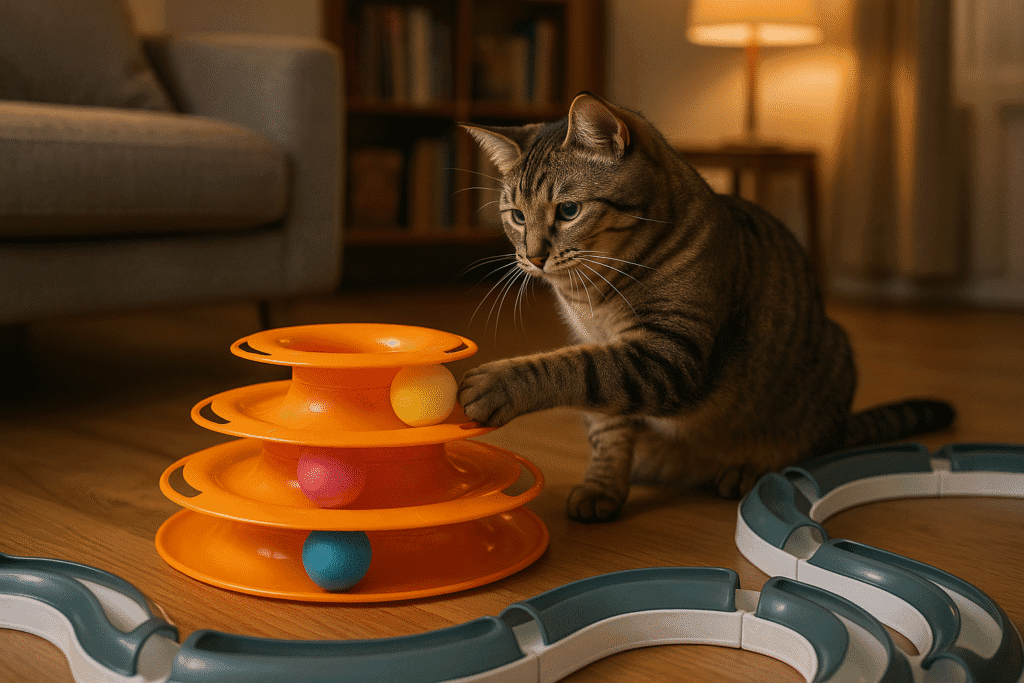
    Indoor cat using tower and track puzzle toys for enrichment

    Best for: curious cats and multi-cat homes.

    Tower of Tracks is a three-tier circular tower with a ball in each track. Cats bat at the balls and they keep circling around. Many households report multiple cats playing at once. Amazon
    Why it’s among the best cat toys 2025

    • Encourages repeated batting and tracking – low-impact but high repetition.
    • Works even when you’re not actively “playing” with the cat.

    Pros

    • Very stable compared to cheap knock-offs
    • Good for kittens, adults, and seniors
    • Easy to leave out as background enrichment

    Cons

    • Some cats will get bored if it always stays in the same spot – rotation helps. Facebook
    • No sound or scent component unless you pair it with other toys.

    CTA:

    Place Tower of Tracks in a “cat zone” with a scratching post and bed, and rotate it to a different room every week to keep interest high.


    Catit Senses 2.0 Super Circuit

    Best for: cats that love to chase moving objects along a track.
    The Catit Senses 2.0 Super Circuit is a modular track system with a ball inside enclosed rails and “peek-a-boo” openings. You can reconfigure the pieces into dozens of layouts.Catit Amazon

    Why it’s one of the best cat toys 2025

    • Modular design lets you keep changing the track shape, which is exactly what enrichment experts recommend: change the environment, not just the toy. PMC
    • Good bridge between full-on puzzle feeders and pure motion toys.

    Pros

    • Big long-term value because you can rebuild it in new patterns
    • Safe enclosed ball – no choking risk from loose balls rolling under furniture
    • Works alone or with you nudging the ball to kick-start play

    Cons

    • Needs some floor space
    • Some cats prefer balls that rattle or include catnip

    CTA:

    Build one simple loop layout first. Once your cat is hooked, expand to more pieces and complex shapes to extend engagement.


    Best Budget Cat Toy 2025

    Yeowww! Organic Catnip Banana

    Best for: cats that love to grab and bunny-kick.

    The Yeowww! banana is a curved fabric kicker stuffed with 100% organically grown catnip in a durable cotton twill shell. No fillers, no foam, just dense catnip.Yeowww! Amazon

    Why it belongs in any best cat toys 2025 list

    • Behaviorists and experienced cat guardians recommend high-quality catnip toys as an easy way to trigger play in otherwise lazy cats. IAABC FOUNDATION JOURNAL
    • The banana shape is perfect for hugging and kicking, which relieves tension and satisfies predatory patterns.

    Pros

    • Super simple and extremely cat-appealing if your cat responds to catnip
    • No electronics to fail
    • Great price-to-engagement ratio

    Cons

    • Around 30% of cats don’t react to catnip at all (genetic).
    • Over time the scent fades; you’ll eventually need to replace it.

    CTA:

    If your budget is tight, grab a Yeowww! banana plus one wand toy – it’s the cheapest “starter kit” for meaningful enrichment.


    Best Smart Tech & Laser Cat Toys 2025

    Smart devices won’t replace you, but used strategically they can support the best cat toys 2025 core lineup.

    Enabot EBO SE – Mobile Pet Robot Camera

    Best for: tech-friendly homes, guardians who travel or work long hours.

    Enabot EBO SE is a small robot on wheels with a 1080p camera, app control, two-way audio, and motion capabilities. It can patrol your home, stream video to your phone, and roll around near your cat like a moving companion.Enabot Amazon

    Why it makes the best cat toys 2025 short list

    • It’s not just a camera: many cats actually chase or stalk it, turning “monitoring” into low-key play.
    • You can log in from work, drive it around, and deliberately create micro play sessions.

    Pros

    • Combines welfare monitoring and enrichment
    • Great fit if you already use smart feeders, fountains, or cameras
    • App control lets you tailor speed and movement to your cat

    Cons

    • Not cheap compared with classic toys
    • Some nervous cats may need a slow, reward-based introduction

    CTA:

    Don’t buy EBO SE as your first toy. Use it to upgrade an already healthy play routine, not as a substitute for it.


    PetSafe Dancing Dot – Automatic Laser Toy

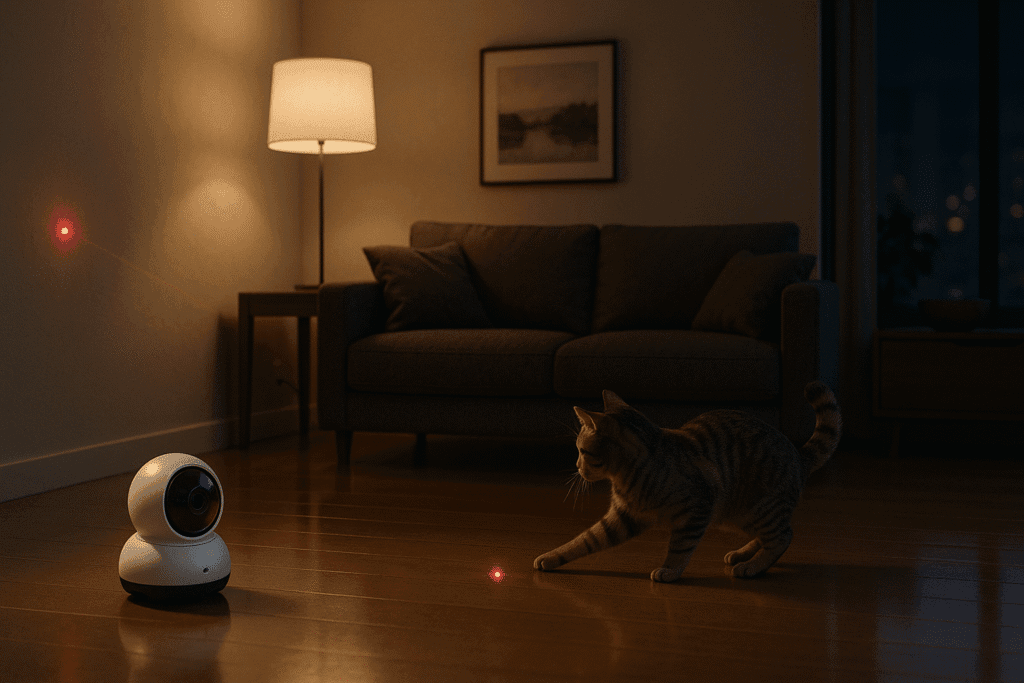
    Cat interacting with smart robot and laser toy in a modern home

    Best for: cats that are obsessed with laser dots, with boundaries.

    The Dancing Dot laser toy has two modes: One-Time-Play (about 15 minutes) and Play-All-Day, which runs 15-minute sessions every 2 hours for up to 6 hours. It uses a certified Class 1 laser and random patterns to stimulate chasing and pouncing.PetSafe Amazon

    Why it’s in the best cat toys 2025 list

    • Built-in timers reduce the risk of overdoing laser play.
    • The scheduled breaks align with enrichment guidance that favors short, intense play sessions over marathon chases. veterinarypartner.vin.com

    Pros

    • Set-and-forget sessions while you cook or work
    • Flexible placement (flat surface or door handle) for different room layouts
    • Good for high-energy cats with strong chase drives

    Cons

    • Laser toys can frustrate some cats if you never let them “catch” anything
    • Requires batteries and responsible use (follow manufacturer warnings)

    CTA:

    Always end a laser session by tossing a physical toy or treat your cat can actually catch. That single habit prevents a lot of built-up frustration.


    How to Use the Best Cat Toys 2025 in a Daily Routine

    Enrichment research on indoor cats is clear: short, regular, varied play is far more effective than infrequent long sessions.PMC

    A simple, realistic daily plan using the best cat toys 2025:

    • Morning (5–10 minutes):
      • Fast wand session (Cat Dancer or Air Prey) before breakfast.
    • Daytime:
      • Hot Pursuit, Cheerble ball, Tower of Tracks, or Catit circuit left accessible for autonomous play.
    • Evening (5–10 minutes):
      • Another wand session, then Yeowww! banana kicker for comedown.
    • Optional smart layer:
      • EBO SE patrol + occasional Dancing Dot session when you’re busy, never as a replacement for interactive play.

    Rotate toys weekly and move them around the home to keep things novel – Cornell explicitly recommends rotating and refreshing toys rather than dumping everything in one corner. Cornell Vet School Facebook


    Verdict: Which Best Cat Toys 2025 Should You Buy First?

    If you want a brutally honest hierarchy:

    • On a tight budget:
      • Cat Dancer 101 + Yeowww! catnip banana
    • For a bored indoor cat in a small apartment:
      • Cheerble ball + Petstages Tower of Tracks + 1 wand toy
    • For a tech-heavy smart home:
      • Build the basics first (wand, puzzle, kicker), then add Enabot EBO SE + Dancing Dot as your “remote engagement” layer.

    The best cat toys 2025 aren’t the fanciest ones. They’re the ones that match your cat’s instincts, your schedule, and your space – and that you actually use every single day.


    FAQ – Best Cat Toys 2025

    1. How often should I play with my indoor cat?

    Behavior and enrichment guidelines suggest multiple short sessions are ideal – think 5–10 minutes of focused play once or twice a day, plus access to passive toys like towers and circuits. veterinarypartner.vin.com

    2. Are laser toys like Dancing Dot safe for cats?

    Class 1 lasers used in pet toys are designed to be safe when used as directed (no direct eye exposure). The bigger risk is psychological: always follow laser play with a catchable toy or treat so your cat’s “hunt” cycle ends in a win.

    3. What if my cat ignores new toys?

    Common fixes: introduce toys in a quiet room, combine them with treats, and move them in a way that mimics real prey (fast, then slow, then “hide”). If a toy still fails after several attempts and variations, park it and try a different category – some cats are pure ground hunters, others are aerial.PMC

    4. Do I really need smart pet robots and lasers?

    No. Research on indoor cat enrichment focuses on play, vertical space, hiding spots and predictable routines – not on gadgets.PMC Smart toys are optional upgrades, not foundations.

    5. How do these toys fit in a bigger smart cat ecosystem?

    You can sync them with:

    • Smart feeders (snack after play)
    • Smart fountains (fresh water following intense activity)
    • Pet cameras (to see which toys actually get used when you’re away)

    For a deeper dive, link to your existing PetTech AI pillars on smart homes, GPS trackers, and smart litter boxes.


    References

    • Cornell Feline Health Center – Safe toys and gifts; benefits of play for exercise and cognition. Cornell Vet School
    • AVMA – Indoor cats: wellbeing requires more than physical safety; need for enrichment to prevent distress. American Veterinary Medical Association
    • Herron, M.E. Environmental Enrichment for Indoor Cats. Journal of Feline Medicine and Surgery / PMC. PMC
    • VCA Animal Hospitals – Cat Behavior and Training – Enrichment for Indoor Cats. Vca
    • VeterinaryPartner (VIN) – Feline Enrichment: Meeting the Essential Needs of Cats. veterinarypartner.vin.com
    • Product manufacturers and retailers for specific toy design details: Cat Dancer, Jackson Galaxy, SmartyKat, Cheerble, Catit, Yeowww!, Enabot, PetSafe.

    Disclaimer

    The information in this article is provided for educational purposes only and is not a substitute for professional veterinary advice, diagnosis, or treatment. Always consult your veterinarian before changing your cat’s activity level, especially if your cat has medical, mobility, or behavioral issues.

    PetTech AI participates in affiliate programs, including Amazon Associates and other partner networks. This means we may earn a commission when you purchase products through links on this page, at no additional cost to you. Our reviews and rankings are based on independent research, product specifications, and user feedback, not paid placement or sponsorship.


    Internal Links (PetTech AI)

  • Litter-Robot EVO Review 2025: Compact Self-Cleaning Litter Box for 1–2 Cat Homes

    Litter-Robot EVO Review 2025: Compact Self-Cleaning Litter Box for 1–2 Cat Homes

    If we strip away all the launch hype, Litter-Robot EVO is Whisker’s attempt to build a smaller, cheaper, simpler robot for cat owners who want to stop scooping without paying for every premium feature in the new Litter-Robot 5 lineup. It targets a very specific user:
    1–2 cats, smaller homes, and people who care more about reliability than AI gimmicks. Litter-Robot – Self-Cleaning Litter Box

    In this Litter-Robot EVO review 2025, we’ll look at what Whisker actually changed, how the EVO compares to Litter-Robot 5 and 5 Pro, what you gain and what you lose, and whether it’s realistically worth the $599 price tag. Litter-Robot – Self-Cleaning Litter Box

    Ready to see Litter-Robot EVO in action?
    Check current pricing, bundles, and reviews on the official Whisker store or Amazon before you decide — promos and stock tend to move fast.


    What Is Litter-Robot EVO in the 2025 Lineup?

    Whisker’s October 2025 refresh introduced three main robots: Litter-Robot 5 Pro, Litter-Robot 5, and Litter-Robot EVO, plus the older Litter-Robot 4 staying in the lineup.

    According to Whisker’s own comparison chart and product pages:

    • Litter-Robot EVO ($599):
      • Most compact, streamlined model
      • Designed for 1–2 cats (3–19 lbs)
      • Basic app insights, optional Whisker+ for deeper data
      • Lower price, fewer advanced sensors/features
    • Litter-Robot 5 ($799):
    • Litter-Robot 5 Pro ($899):
      • Adds dual cameras, facial recognition, and advanced AI analytics via Whisker+ The Verge

    Positioning is very clear: EVO is the “entry” Litter-Robot — not in build quality, but in footprint and feature set.


    Design & Footprint: Built for Small Spaces

    Whisker’s official EVO page calls it “the most streamlined way to never scoop again” and highlights that it has a similar footprint to a traditional litter box while still offering a roomy interior for most cats.

    Key points:

    • Works for cats 3–19 lbs, including many large breeds
    • Designed for apartments, condos, or tight laundry rooms
    • Globe interior height around 14.5″ with a wide entry, so most average-sized cats fit comfortably

    EVO also brings Whisker’s new design language:

    • QuietSift® technology for quieter cycles
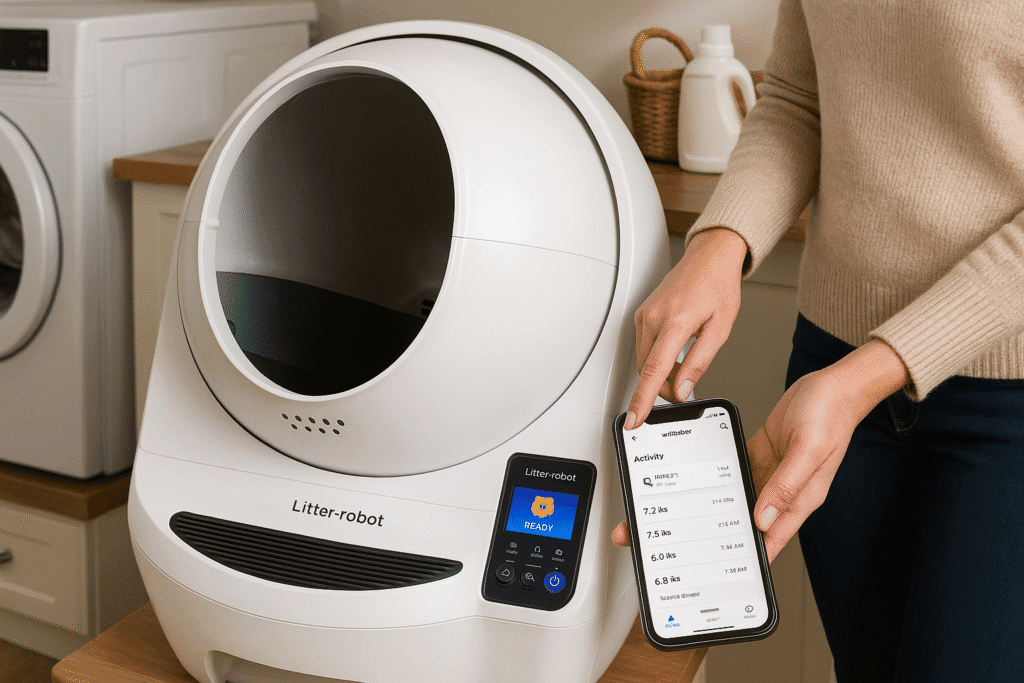
    • Brilliant full-color LCD display on the control panel
    • EasyClean™ modular design, with removable globe liner and easier access for cleaning

    If you’re coming from an enormous covered litter box that dominates a room, EVO is appealing because it doesn’t take over the space the way some larger robots do.


    Setup & Daily Use

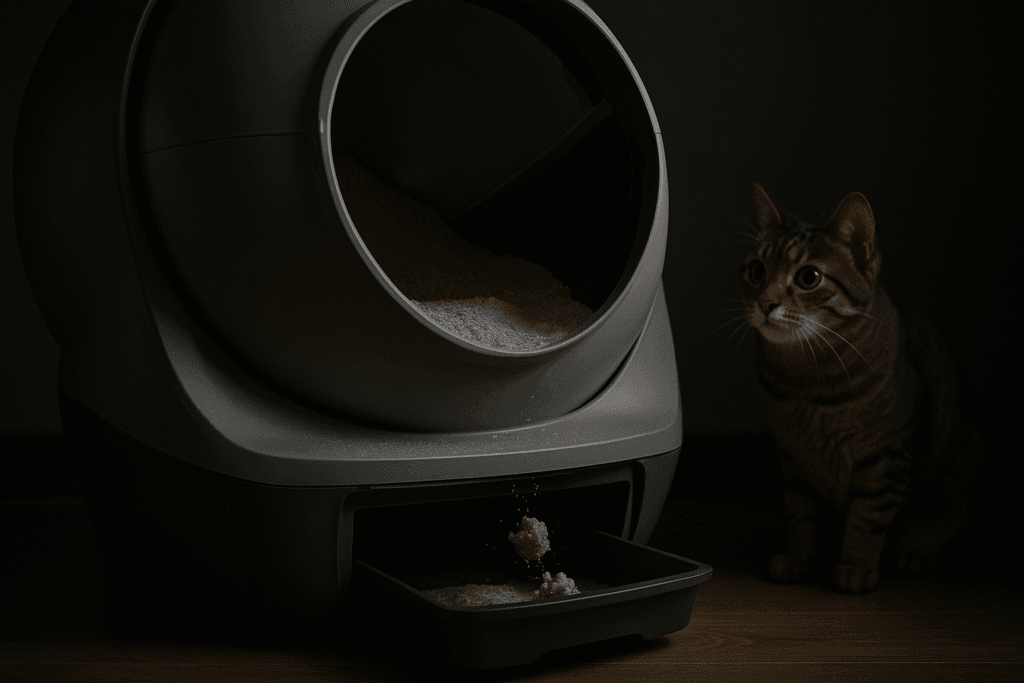
    Litter-Robot EVO QuietSift cleaning cycle with cat observing

    Setup is broadly similar to other Litter-Robot models:

    1. Unbox and assemble step, fence, and carbon filter (some bundles include these out of the box). Accessories
    2. Fill with a compatible clumping clay litter (no pellets or non-clumping litters). Tidy Cats
    3. Connect EVO to Wi-Fi and pair it with the Whisker app.
    4. Set your preferred cycle delay (e.g., 3–30 minutes after use).

    Independent hands-on reviews describe the initial setup as straightforward, with the LCD panel making onboarding less cryptic than older “blinky light” robots.

    Once configured, day-to-day use looks like this:

    • Cat uses the EVO as a normal covered box
    • After the delay, EVO rotates to sift clumps into the sealed waste drawer
    • You empty the drawer roughly once every ~7 days for a single cat, more often for two cats
    • The Whisker app logs cycles, visits, and weight readings

    If this workflow matches how you imagine using a robot litter box, it’s worth opening the EVO product page in a new tab.
    Check the latest real-world user photos and Q&A while you read — they usually reveal issues that spec sheets don’t.


    Noise & Odor Control

    Noise and odor are the two reasons many people regret buying cheaper self-cleaning boxes. EVO tries to tackle both:

    Noise

    Whisker’s marketing emphasizes QuietSift®, which dramatically reduces motor noise compared to older mechanical designs.

    Third-party reviewers describe:

    • Smooth, consistent rotation
    • Noticeably quieter cycles than older-gen robots
    • No sudden clunking or grinding under normal operation

    For skittish cats, the combination of a covered globe and quiet operation is important: you want the robot to be “boring” enough that the cat doesn’t abandon it.

    Odor

    Odor control on EVO is handled by:

    • A sealed waste drawer
    • Carbon filter in the drawer
    • Optional OdorTrap® packs to boost odor-neutralizing if needed Accessories

    Hands-on reviewers note significantly reduced day-to-day litter smell, assuming:

    • You use a decent clumping litter
    • You empty the drawer on schedule
    • You replace filters/OdorTrap packs every 2–4 weeks as recommended Accessories

    If odor is your main pain point and your home is small, EVO’s sealed drawer + rapid waste separation are real upgrades over an open tray or covered manual box.


    App & Whisker+ Insights: What EVO Actually Tracks

    Litter-Robot EVO LCD display and Whisker app showing litter box usage data

    All modern Litter-Robot models, including EVO, connect to the Whisker app to provide remote control and basic analytics. Litter-Robot – Self-Cleaning Litter Box+2The Verge+2

    With EVO alone (no subscription), you get:

    • Up to 7 days of robot event history
    • Logs of cycles, visits, and weight recordings
    • Status alerts (errors, drawer full, etc.)

    If you add a Whisker+ membership, you unlock:

    • Multi-cat monitoring of weight and visits
    • Daily recap reports and device notifications
    • Up to 2 years of trends: weight, visits, and duration tracking
    • Weight-based identification and deeper historical data

    The value here is in behavior tracking. Changes in visit frequency, time spent in the box, or weight can be early signals of problems like urinary disease or constipation — but only if you and your vet actually look at the patterns.

    EVO doesn’t go as far as the Litter-Robot 5 Pro’s cameras and AI WasteID™, but for a 1–2 cat home, the data you get via Whisker+ is already enough to see basic trends.


    Cat Comfort & Acclimation

    Whisker states that over 95% of cats acclimate to Litter-Robot based on return data for earlier models. EVO is designed to keep that trend:

    • Wide entry and spacious interior for most cats
    • Quiet cycles to avoid startling skittish cats
    • Suitable for kittens above 3 lbs (below that you should use “semi-automatic” mode with manual cycling)

    Their recommended acclimation steps are sensible:

    • Place EVO where the old box was
    • Keep the old box nearby briefly, then remove it
    • Mix a cup of used litter into the EVO to transfer scent
    • Start with EVO turned off, then enable auto-clean once the cat is using it

    If your cat already tolerates covered boxes or enclosed carriers, EVO’s shape and entry style will feel familiar.


    Litter, Maintenance & Running Costs

    EVO doesn’t require proprietary litter, but it is picky about type:

    • Best with clumping clay litter of standard weight
    • Some silica litters can work if they pass through the screen
    • Avoid non-clumping, pellet, newspaper, or plant-based litters — they won’t sift correctly

    Maintenance breakdown:

    • Waste drawer liners: Replace whenever you empty the drawer (every few days to a week).
    • Carbon filters / OdorTrap: Replace every 2–4 weeks for optimal odor control.
    • Deep cleaning: Periodic wipe-down and occasional full clean of the globe and liner, made easier by EVO’s modular components and removable liner.

    This means EVO’s real cost is:

    • Upfront $599
    • Ongoing liners + filters + whichever litter you already use

    Compared to scoopable manual boxes, you’re paying for automation, not lower running costs.


    Litter-Robot EVO vs Litter-Robot 5 vs 5 Pro

    Whisker’s own comparison chart is blunt:

    • EVO
      • Best for 1–2 cats
      • Most compact, lowest price
      • Basic app insights (7-day history)
      • Advanced insights require Whisker+
    • Litter-Robot 5
      • Better choice for multi-cat homes
      • More advanced built-in sensing (litter/waste level, etc.)
      • Designed as the core 2025 platform
    • Litter-Robot 5 Pro
      • Adds facial recognition, WasteID™, and dual cameras
      • Strongest option for deep behavior tracking (with Whisker+)

    Still torn between EVO and the 5/5 Pro?
    Open the official comparison chart and the EVO page side by side while you read. Seeing the exact price and feature differences next to your own situation (cats, space, budget) usually makes the choice obvious in a few minutes.

    In short:

    • Choose EVO if you have 1–2 cats, limited space, and want the lowest price while still getting a premium robot.
    • Choose 5 / 5 Pro if you have more cats, want full built-in insights or AI features, and you’re willing to pay for them.

    Pros & Cons of Litter-Robot EVO (2025)

    Pros

    • Compact footprint with a roomy interior for most cats
    • QuietSift® cycles are far less disruptive than older mechanical designs
    • Sealed, carbon-filtered waste drawer noticeably reduces odor Accessories
    • Full-color LCD panel makes setup and status checks much clearer than “blinking light” UIs
    • Whisker app support with optional Whisker+ for deeper data and long-term trends
    • Designed and assembled in the USA, with 90-day in-home trial and support infrastructure behind it

    Cons

    • Still expensive at $599 compared to manual boxes
    • Fewer built-in insights than Litter-Robot 5/5 Pro — you rely more on Whisker+ for serious data
    • Ongoing costs (liners, filters, OdorTrap) add up over time
    • Not ideal for households with more than two cats; scaling beyond that stretches its design brief

    Verdict: Who Should Actually Buy Litter-Robot EVO?

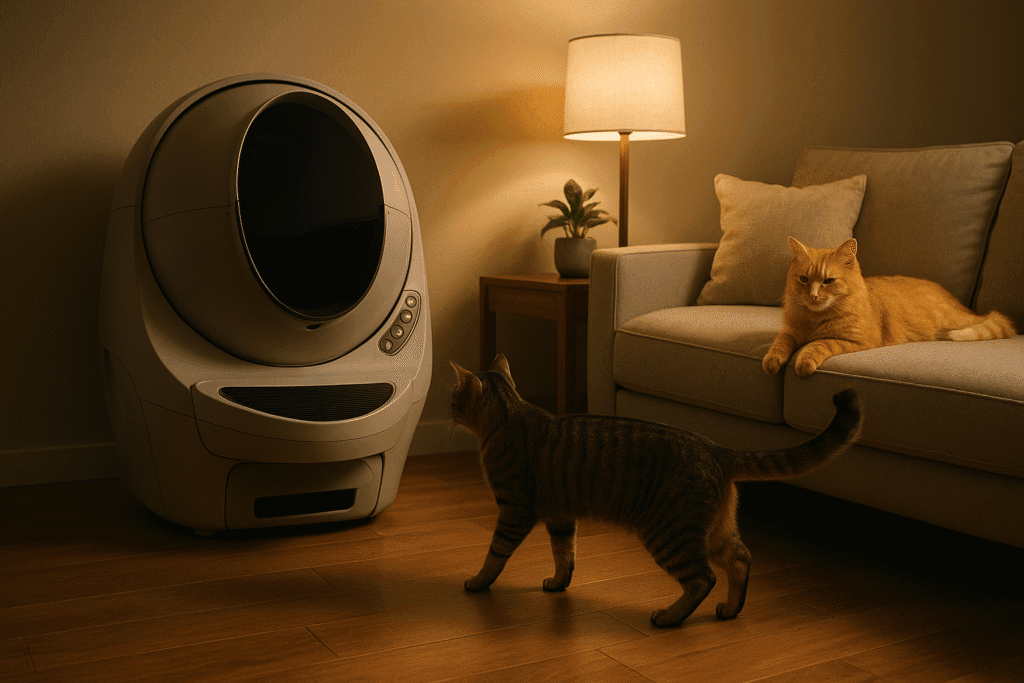
    Two cats sharing a Litter-Robot EVO automatic litter box in a modern home

    If you’re looking for a starter Litter-Robot that doesn’t dominate your floor plan and you live with one or two cats, EVO is very clearly positioned for you:

    • It removes scooping from your daily routine.
    • It contains odor better than most manual boxes if maintained properly.
    • It plugs into the Whisker app, giving you baseline insight into bathroom habits, and offers upgradeable analytics via Whisker+.

    Where EVO shines is simplicity: it’s not trying to be the AI flagship. It’s built to do the basics — clean, contain, and report — in a smaller footprint at a lower price.

    If your reality is a small apartment, 1–2 cats, and you’re sick of scooping, the next rational step is to check live pricing and bundle offers for EVO.
    If the total cost (including filters and liners) fits your budget, it’s one of the safer upgrades you can make to your litter setup in 2025.

    If you have more cats, want deeper analytics without subscriptions, or you already know you’re a “max tech” person, you’ll likely be happier jumping straight to Litter-Robot 5 or 5 Pro instead.

    As a standalone product, EVO only tells part of the story. Its strengths and limits make more sense when viewed against competing ecosystems, especially in a CATLINK vs PETKIT vs Whisker comparison.


    FAQ — Litter-Robot EVO (2025)

    1. Is Litter-Robot EVO worth it over a normal litter box?

    Purely on cost, no manual box can compete. But if you factor in time saved, odor control, and the ability to see usage patterns through the app, EVO can be worth it for 1–2 cat homes that value convenience and early warning signals around litter box behavior.

    2. How many cats can safely use Litter-Robot EVO?

    Whisker recommends EVO for up to two cats (3–19 lbs). More than that and you risk overloading the robot, filling the drawer too quickly, and losing the main benefit of having a compact, low-friction setup.

    3. Does Litter-Robot EVO work without a Whisker+ subscription?

    Yes. EVO works fully as a self-cleaning litter box without any subscription. The Whisker app still provides basic event history and alerts. You only need Whisker+ if you want multi-cat analytics, deeper trends, and long-term historical data.

    4. Is EVO harder to clean than a regular box?

    Deep cleaning is more involved than tipping out a plastic tray, but EVO’s EasyClean™ modular design and removable globe liner are specifically built to make full cleanings less painful. The trade-off is that you clean less often but more thoroughly when you do.

    5. Should I choose EVO or Litter-Robot 5 for my first robot?

    If you have one or two cats, limited space, and a tighter budget, EVO is usually the smarter first step. If you know you’ll end up with more cats, want more built-in sensing, or care about long-term feature upgrades, Litter-Robot 5 is the more future-proof option.


    Internal Links (PetTech AI)


    References

    1. Whisker – Official Litter-Robot EVO product page (features, specs, app integration, recommended cat weight range, acclimation guidance). Litter-Robot – Self-Cleaning Litter Box
    2. Whisker – Litter-Robot comparison chart (EVO vs Litter-Robot 4 vs Litter-Robot 5 vs 5 Pro; feature and use-case differences). Litter-Robot – Self-Cleaning Litter Box
    3. PR Newswire – “Whisker Launches Next-Generation Litter-Robot Line…” (launch announcement, pricing, and feature positioning for EVO, 5, and 5 Pro). PR Newswire
    4. Litter-Robot / Whisker product documentation (QuietSift®, EasyClean™, carbon-filtered waste drawer, recommended litter types, odor control recommendations). Litter-Robot – Self-Cleaning Litter Box
    5. Independent review of Litter-Robot EVO (cycle smoothness, noise, odor performance, tracking, and day-to-day usability). Hello Subscription

    EVO’s strengths and limitations make the most sense when viewed alongside other current models. The broader context is covered in the Litter-Robot 5 vs 5 Pro vs EVO comparison, where usage patterns matter more than specs.


    Disclaimer

    This Litter-Robot EVO review 2025 is for educational and informational purposes only and does not replace professional veterinary advice, diagnosis, or treatment. Always consult your veterinarian if you notice changes in your cat’s litter box habits, weight, or behavior, or before making health decisions based on data from connected devices. Automatic litter boxes can help you maintain a cleaner environment and spot trends, but they cannot diagnose disease or determine appropriate medical care. PetTech AI participates in affiliate programs such as Amazon Associates and CJ. We may earn a commission if you purchase products through links on our site, at no additional cost to you.

  • PETKIT Ecosystem 2025: Should You Build Your Cat’s Smart Home Around One App?

    PETKIT Ecosystem 2025: Should You Build Your Cat’s Smart Home Around One App?

    If we’re being honest, in 2025 there’s one brand that quietly did the homework on smart pet devices end-to-end: PETKIT.

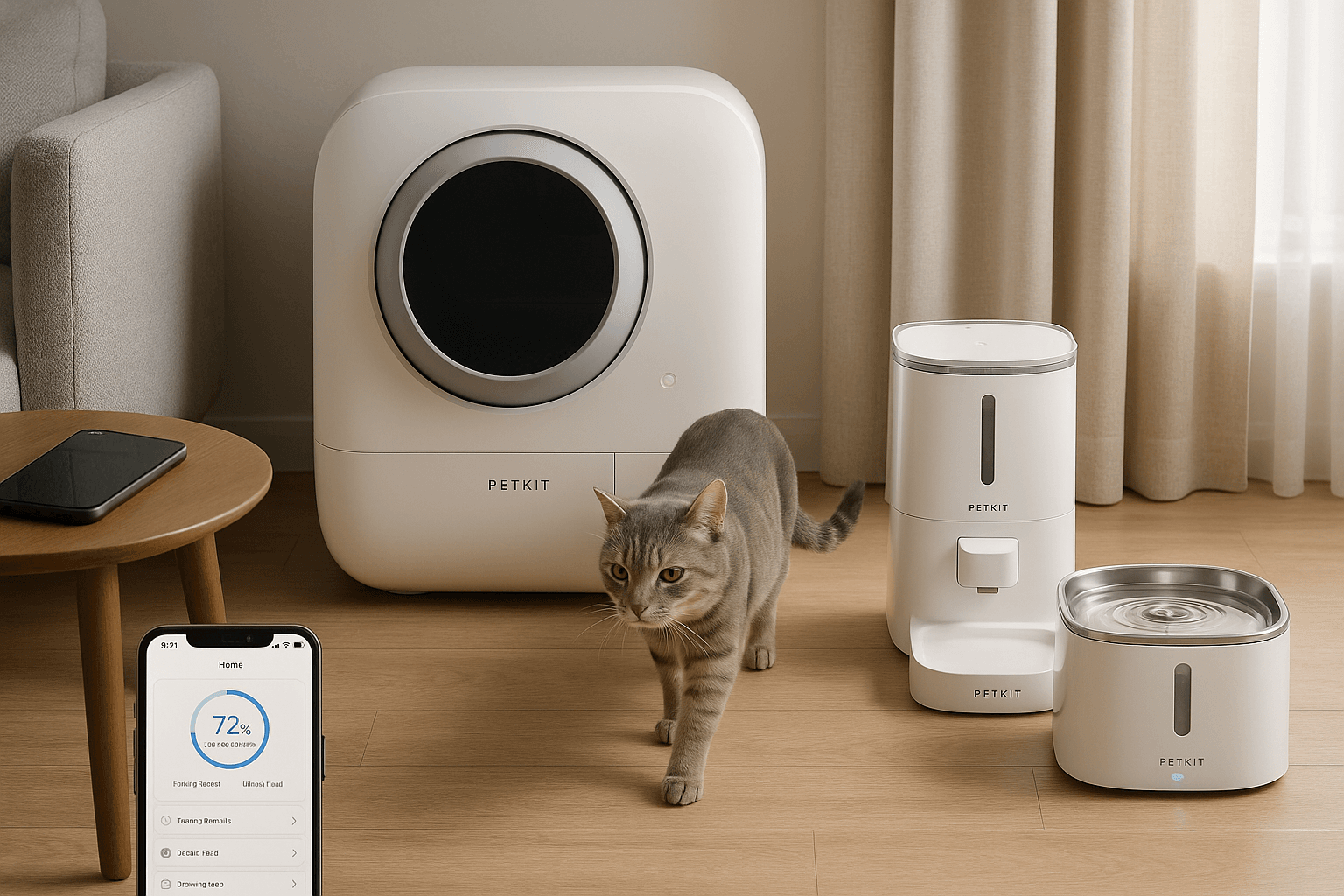
    Not just a random smart feeder here and a fountain there, but a full ecosystem of litter boxes, feeders, and water fountains that all live inside one app, with data tracking layered on top. PETKIT

    This guide looks at the PETKIT Ecosystem 2025 as a whole:
    what it actually does, how it feels to live with, where it shines, where it’s annoying, and whether it makes sense to commit your cat’s daily routines to a single brand.


    What the PETKIT Ecosystem 2025 Actually Is

    PETKIT isn’t just selling gadgets anymore. On the official “Smart Home” pages and ecosystem blog, they describe their goal clearly:

    an interconnected ecosystem where smart devices, software, and services integrate to provide a unified pet care experience. PETKIT

    In practice, that means:

    The pitch is simple:
    one ecosystem to coordinate toilet, food, and water – the same core environmental resources every feline guideline keeps repeating. journals.sagepub.com


    Core Devices in the PETKIT Ecosystem

    1. PUROBOT Self-Cleaning Litter Boxes

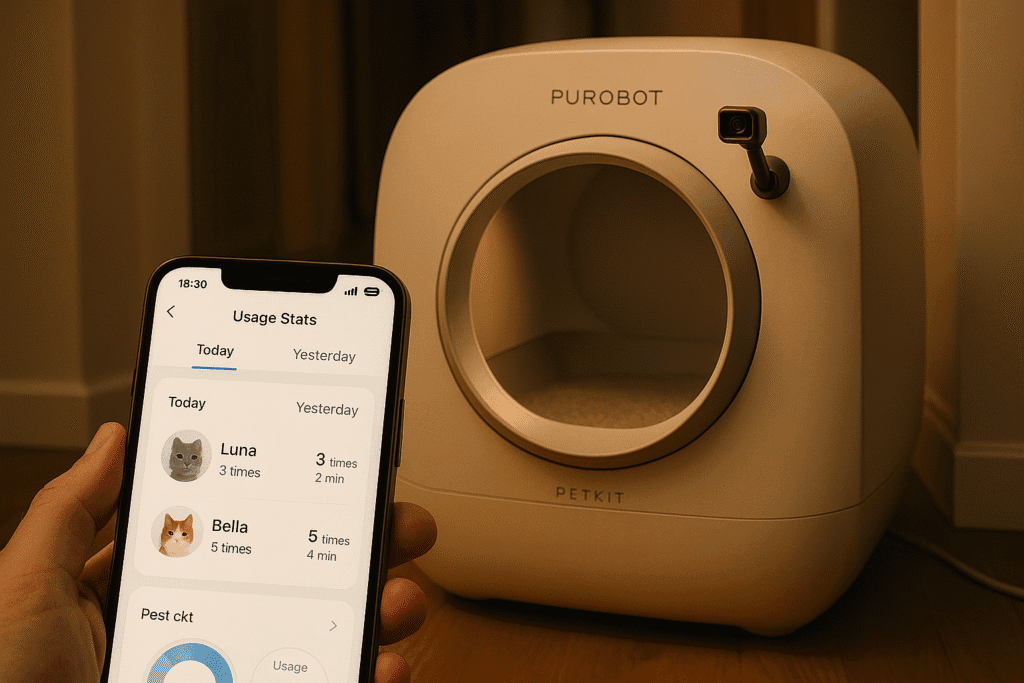
    PETKIT PUROBOT Ultra smart litter box with AI monitoring in the PETKIT app

    The PUROBOT series is PETKIT’s current litter box pillar. The PUROBOT Ultra in particular is the flagship:

    • Fully automatic self-cleaning
    • AI analysis of your cat’s waste and stool consistency
    • Pet recognition (multi-cat)
    • Auto-sealing trash bags and automatic refill of a new bag

    All PUROBOT models integrate with the PETKIT app, letting you monitor usage, start cleaning cycles, and view alerts remotely.

    From a health perspective, this matters:
    litter box habits (frequency, duration, avoiding the box) are among the earliest warning signs for urinary or GI problems. Feline environmental and life-stage guidelines repeatedly highlight litter access and monitoring as core to indoor cat health. journals.sagepub.com

    2. Fresh Element Smart Feeders

    PETKIT Fresh Element smart feeder controlled and monitored via the PETKIT app

    Devices like the Fresh Element Solo automatic feeder are designed around consistent, programmable feeding:

    • Up to 10 meals per day via app scheduling
    • Approx. 12-cup capacity and up to roughly 15 days of feeding (depending on portion sizes)
    • Dual-power protection (adapter + backup)
    • App logging of feeding routines via the PETKIT app

    The idea is not just convenience while you’re out, but tight control over calories and timing – critical if your vet wants your cat on a specific diet or if you’re managing weight.

    3. EverSweet Smart Water Fountains

    PETKIT EverSweet smart water fountain encouraging better cat hydration with app monitoring

    On the hydration side, PETKIT’s EverSweet line is one of the most complete on the market:

    • Stainless steel or food-grade plastic water trays
    • Multi-layer filtration (hair, debris, odors, heavy metals)
    • Wireless pumps in newer models for quieter, safer operation
    • App control via Bluetooth in models like EverSweet 3 Pro, allowing water flow control and status monitoring

    Some fountains (e.g. EverSweet Max / Max 2) are battery-powered and designed to run for weeks, with hydration tracking for multi-cat homes.

    For context: Cornell Feline Health Center and other veterinary sources note that running water can encourage some cats to drink more – especially important given how many indoor cats chronically under-hydrate on dry food. vet.cornell.edu


    The PETKIT App: Where the Ecosystem Actually Comes Together

    All of this hardware would just be expensive clutter without the PETKIT App. That’s where the “ecosystem” turns into something usable.

    From PETKIT’s own app pages:

    • “All-in-one Management. Manage all of your PETKIT devices in one app.”
    • “Free Pet Data Service – get to know your fur-pals better with data tracking over time.” App Store

    Real-world usage (reviews and PETKIT’s own blog) shows the app can:

    • Add multiple device types: litter box, feeder, fountain in a single dashboard
    • Log litter box visits (time, duration, sometimes per-cat if using PUROBOT Ultra)
    • Track feeding schedules and history from Fresh Element feeders
    • Monitor fountain status and tweak water modes for EverSweet models

    So on paper, the PETKIT Ecosystem 2025 gives you a near-continuous picture of three things vets actually care about:

    1. Does the cat use the litter box normally?
    2. Is the cat eating consistently?
    3. Is the cat getting enough water?

    Health & Behavior Insights: What You Really See in the PETKIT Ecosystem

    The ecosystem blog explicitly positions PETKIT as a system that uses IoT + AI to monitor behavior, analyze data, and help catch problems earlier. PETKIT

    In practice, the insights you get look like this:

    • Litter box analytics via PUROBOT Ultra
      • Counts of visits per cat
      • Duration per visit
      • AI assessment of stool consistency (soft, normal)
      • Pattern changes over time, accessible via app logs
    • Feeding logs from Fresh Element feeders
      • Confirming meals were dispensed
      • Ability to adjust schedule or portion size
      • Remote manual feeds if you’re late home
    • Hydration tracking on supported fountains
      • Modes and runtime
      • For some models, estimates of usage and status notifications (low water, filter reminders)

    This isn’t medical data, but it plugs directly into what Cornell and AAFP guidelines flag as key daily indicators: litter habits, resource access, food and water intake.

    Used properly, you can:

    • Spot a cat peeing more often
    • Notice if meals are skipped
    • Connect increased litter visits with reduced water intake or vice-versa
    • Bring actual trend graphs to your vet instead of “it feels like something’s off”

    Living With the PETKIT Ecosystem: Setup & Daily Reality

    In day-to-day use, the PETKIT Ecosystem 2025 feels like this:

    • The PUROBOT handles scooping, bagging, and odor control with minimal intervention, but you still need to top up litter and replace waste bags on schedule.
    • The Fresh Element feeder keeps meals consistent, but you must calibrate portions once with your vet and resist the temptation to “add just one more snack” from the app.
    • The EverSweet fountain reduces daily bowl changes but adds filter and pump maintenance every few weeks.
    • The app consolidates alerts (water low, bin full, error states), so most of your “work” becomes responding to notifications and doing fast physical checks.

    It’s not zero-maintenance, but it absolutely shifts your effort from constant manual chores to periodic, better-timed interventions.


    Where the PETKIT Ecosystem 2025 Really Shines

    1. True multi-device integration
    You genuinely can manage litter box, feeder, and fountain from one app. This is not universal in pet tech; many brands still silo hardware into separate apps.

    2. Strong coverage across the “big three” resources
    Food, water, and toileting are exactly what feline environmental guidelines list as core resources that must be managed and separated for indoor cats. PETKIT hits all three categories with app-connected devices.

    3. PUROBOT Ultra’s health-oriented design
    AI stool analysis, per-cat recognition, and high-detail usage logs put it close to the top of the market in terms of behavioral health monitoring in the litter box category.

    4. Mature app with a large user base
    The PETKIT app has been around for years and is used worldwide. That doesn’t mean it’s perfect, but it’s more battle-tested than many niche-brand apps that ship with a single flagship device.

    5. Reasonable range of price points
    You’re not forced into only ultra-premium gear. There are Solo feeders and mid-range fountains alongside high-end models, so you can scale into the ecosystem over time.


    Where PETKIT Falls Short vs a Perfect Ecosystem

    1. App polish is good, not flawless
    Independent reviews point out that translations and UI fluidity can feel rough at times, especially around newer AI features and subscription prompts.

    2. Subscription creep (Care+ / extra analytics)
    Advanced services (like Care+ style features, video recordings, extended analytics) may sit behind subscriptions. The hardware is already a premium purchase, so ongoing costs are a real factor.

    3. Ecosystem lock-in is very real
    Once you have a PUROBOT, a PETKIT feeder, and an EverSweet fountain, switching out a single device for another brand means losing part of your data picture. This is not unique to PETKIT, but it’s a strategic downside of any closed ecosystem.

    4. Not a replacement for actual observation
    No matter how good the analytics get, you still need to watch your cat, check body condition, and schedule regular vet visits. The ecosystem can highlight trends – it cannot tell you what disease is behind them.


    Who the PETKIT Ecosystem 2025 Is Actually For

    Ideal matches:

    • Data-driven cat guardians
      People who like checking dashboards, spotting trends, and acting early when something looks off.
    • Multi-cat households
      PUROBOT Ultra’s per-cat recognition and the ability to track usage patterns per individual are a genuine advantage here.
    • Owners with demanding schedules
      If you’re out of the house a lot, having the litter, feeding, and water status visible in one app adds a real layer of peace of mind.
    • Guardians managing specific health risks
      For cats predisposed to urinary issues, obesity, or under-hydration, the combination of consistent feeding, running water, and litter analytics lines up with most vets’ basic recommendations.

    Not ideal for:

    • People who hate subscriptions on principle
    • Guardians who prefer low-tech solutions and don’t want to manage apps
    • Homes where Wi-Fi, Bluetooth, or phone access are unreliable

    Verdict: Is the PETKIT Ecosystem 2025 Worth It?

    If we strip away marketing and look at the fundamentals, the PETKIT Ecosystem 2025 does three things right:

    1. It covers the core environmental resources for cats: litter, food, water.
    2. It unifies those devices under a single, reasonably mature app.
    3. It adds behavioral data over time, which you can actually use in conversations with your vet.

    It is not magic, and it won’t keep your cat healthy on its own. But as a framework for consistent routines + better visibility, it’s currently one of the most convincing smart ecosystems available for cat households.

    If your goal is to build a connected setup around a single brand, PETKIT is a logical, defensible ecosystem to choose in 2025 – especially if you pair it with regular veterinary care and a realistic understanding of what the data can and cannot tell you.


    FAQ

    1. Does the PETKIT Ecosystem 2025 replace vet checkups?

    No. The PETKIT Ecosystem 2025 tracks behavior and routines: when your cat eats, drinks, and uses the litter box. That information can help you and your vet spot patterns, but it doesn’t replace physical exams, lab tests, or treatment plans.

    2. Can I mix PETKIT devices with other brands?

    Yes, but you lose part of the unified view. A non-PETKIT fountain or feeder will work fine for your cat, but it won’t appear in the PETKIT app. If your main reason for buying into PETKIT is ecosystem-level data, mixing brands dilutes that benefit.

    3. Is the PETKIT Ecosystem 2025 overkill for a healthy young cat?

    It depends on your tolerance for automation. For a healthy young cat, a PUROBOT, smart feeder, and fountain are more about convenience and prevention than urgent need. But building habits and baselines early can pay off later when the cat ages and you start seeing subtle changes.

    4. What’s the best device to start with?

    Most cat-focused guidelines put litter boxes and water at the top of the list for environmental health. Practically, that means starting with either a PUROBOT litter box or an EverSweet fountain, then adding a smart feeder later if you like the system.

    5. Do I need the most expensive PUROBOT to benefit from the ecosystem?

    Not necessarily. All PUROBOT models integrate with the PETKIT app for remote control and basic monitoring. The Ultra adds AI stool analysis and advanced multi-cat tracking; those features are useful, but not mandatory for every household.


    Internal Links (PetTech AI)


    References

    1. PETKIT – Smart Home & Ecosystem overview (self-cleaning litter box, smart feeder, smart fountain, app ecosystem).
    2. PETKIT PUROBOT Ultra product page and ecosystem/PUROBOT series blog posts (AI stool analysis, multi-cat recognition, auto-sealing, app integration).
    3. PETKIT Fresh Element Solo and related feeder documentation (app scheduling, Wi-Fi control, capacity).
    4. PETKIT EverSweet water fountain lineup (app-enabled models, filtration, wireless pumps, battery operation). See also Amazon
    5. Cornell Feline Health Center – Hydration and heat safety resources (fountains and running water as tools to support feline hydration).
    6. AAFP/ISFM Feline Environmental Needs Guidelines and related feline environment resources (importance of separate, adequate resources: food, water, litter box, resting areas).
    7. PetKit Amazon

    Disclaimer

    This article is for educational purposes only and does not replace professional veterinary advice, diagnosis, or treatment. Always consult your veterinarian if you notice changes in your cat’s eating, drinking, or litter box habits, or before making health decisions based on data from smart devices. Connected feeders, fountains, and litter boxes can help you monitor trends and support daily care but cannot diagnose diseases or determine appropriate medical treatment. PetTech AI participates in affiliate programs such as Amazon Associates and CJ. We may earn a commission if you purchase products through links on our site, at no additional cost to you.

  • CATLINK vs PETKIT vs Whisker (2025): Which Smart Cat Ecosystem Actually Works Best?

    CATLINK vs PETKIT vs Whisker (2025): Which Smart Cat Ecosystem Actually Works Best?

    Most ecosystem comparisons treat CATLINK, PETKIT, and Whisker as interchangeable “smart pet brands.”
    They aren’t.

    What separates these ecosystems isn’t feature count or app polish on day one. It’s how each system behaves over time—how much maintenance it quietly demands, how predictable automation remains, and how well the ecosystem adapts as usage scales.

    This comparison isn’t about picking the most advanced platform.
    It’s about choosing the ecosystem whose compromises align with how you actually live with your cat tech.


    Why Ecosystems Matter for Cat Health (Not Just Convenience)

    Veterinary sources are very clear about one thing: a cat’s basic needs are food, water, and litter – plus safe rest and enrichment. The AAFP/ISFM Feline Environmental Needs Guidelines and similar documents define these as core “environmental resources” that must be well managed for indoor cats to thrive. SAGE Journals

    Cornell Feline Health Center and other feline health resources repeatedly stress:

    • Many cats don’t drink enough, especially on dry food
    • Hydration is critical in preventing and managing kidney disease
    • Changes in eating, drinking, and litter box habits are often the first visible signs of illness

    A good ecosystem doesn’t replace a vet, but it does help you:

    • See when your cat ate, drank, and used the box
    • Spot trends (drinking less, skipping meals, visiting the box more often)
    • React earlier and bring hard data to your vet

    That’s the lens we’ll use to compare CATLINK vs PETKIT vs Whisker – not just “which robot is prettier,” but which ecosystem genuinely supports healthier routines.


    Quick Snapshot: CATLINK vs PETKIT vs Whisker

    CATLINK

    • Devices: self-cleaning litter boxes, automatic feeders, smart water fountains Amazon
    • App: CATLINK App – toilet, feeding, and drinking logs + health monitoring App Store
    • Ecosystem style: “Input & output” health tracking across devices
    • Best for: data-driven guardians who want the full triad (litter + feeder + fountain)

    PETKIT

    • Devices: Pura/Purobot litter boxes, Fresh Element feeders, multiple smart fountains PetKit Store / Amazon
    • App: PETKIT App – all devices managed in one place, millions of users PETKIT App
    • Ecosystem style: polished UX, automation first, health insights mostly via litter box
    • Best for: people who want a smooth app experience and reliable hardware more than explicit “health reports”

    Whisker (Litter-Robot + Feeder-Robot)

    • Devices: Litter-Robot (3/4/5/Evo) + Feeder-Robot; water products are in development but not mainstream yet Amazon
    • App: Whisker App – central hub for all robots, with growing AI analytics Whisker App
    • Ecosystem style: premium litter automation + high-end feeding, moving toward “input & output” insights
    • Best for: people who care most about rock-solid litter automation and long-term durability

    CATLINK: Most Complete “Input & Output” Ecosystem

    CATLINK smart cat ecosystem with litter box, feeder, and fountain connected to a mobile app

    If you want the closest thing to a true smart cat ecosystem in 2025, CATLINK is the one leaning hardest into the concept.

    Hardware & Ecosystem

    CATLINK’s EcoSystem Set bundles a self-cleaning litter box, automatic feeder, and smart water fountain. The official product pages state:

    “Connect scooper, feeder, and water fountain to the CATLINK App to monitor your pet’s toilet, eating, and drinking habits.”

    That’s not marketing fluff – it’s exactly the combo you want: litter + food + water in a single app.

    The CATLINK App adds:

    • Litter usage tracking and waste drawer level
    • Cat toilet behavior monitoring and health insights
    • Logs for feeding and – depending on model – drinking habits

    Data & Health Perspective

    CATLINK frames its ecosystem as “better pet care” via input/output monitoring, and that framing is actually aligned with what vets care about: how much is going in (food/water) and what’s coming out (urine/feces).

    Used properly, it can help you:

    • Notice if your cat is drinking less across several days
    • Pick up on more frequent or longer litter box visits
    • See feeding consistency when you’re away

    It’s still behavioral data, not lab data, but it’s the most complete integration currently on the market.

    Pros (CATLINK)

    • True triad: litter box + feeder + fountain within one app
    • Health-oriented messaging and features (toilet behavior + health monitoring)
    • Clear “ecosystem” product bundles for one-shot setup
    • Strong fit for multi-cat homes that want hard numbers

    Cons (CATLINK)

    • High upfront cost if you buy the full set
    • App still evolving; UX isn’t as polished as some competitors
    • You’re locked into CATLINK hardware if you want the full functionality

    PETKIT: Best All-Rounder for UX and Everyday Reliability

    PETKIT app managing smart cat feeder, fountain, and litter box in one dashboard

    PETKIT doesn’t shout “ecosystem” quite as loudly as CATLINK, but in practice it delivers one of the smoothest litter + feeder + fountain setups available.

    Hardware & Ecosystem

    PETKIT sells:

    • Fresh Element smart feeders and newer successors
    • Multiple smart fountains, some battery-powered with app-controlled modes and water monitoring PETKIT
    • Pura/Purobot self-cleaning litter boxes with weight and usage sensors PETKIT

    The PETKIT App is advertised as:

    “All-in-one Management. Manage all of your PETKIT devices in one app, and stay connected to what matters most to your pets.” PETKIT

    It’s not a vague claim: the app really does act as a central control panel for feeder, fountain, and litter box.

    Data & Health Perspective

    PETKIT focuses slightly more on automation and convenience:

    • Scheduling and remote feeding
    • Fountain modes and filter/water level monitoring
    • Litter box weight-based waste monitoring and usage notifications App Store

    You can still read the data in a health-focused way (eating/drinking trends + box usage), but the app doesn’t package it as an explicit “health report” the way CATLINK is starting to do.

    Pros (PETKIT)

    • One of the most mature apps in pet tech, with millions of users
    • Good hardware coverage across all three categories
    • Strong everyday reliability; less “beta” feeling than some new ecosystems
    • Good balance of automation, notifications, and manual control

    Cons (PETKIT)

    • Health data is there, but more implicit than explicit
    • Not as aggressively integrated around “input/output” as CATLINK or Whisker’s future roadmap
    • As always, you’re committing to one vendor’s hardware and cloud

    Whisker: Premium Litter + Feeder, Health Analytics Catching Up

    Whisker Litter-Robot and Feeder-Robot connected through the Whisker app for automated litter and feeding

    Whisker (Litter-Robot + Feeder-Robot) is known for premium litter automation. Ecosystem-wise, it’s a strong contender even if it doesn’t yet include a mainstream fountain.

    Hardware & Ecosystem

    Today, Whisker sells:

    The Whisker App connects to multiple robots and provides a dashboard for both litter boxes and feeders. Litter-Robot – Self-Cleaning Litter Box

    The latest Litter-Robot 5 Pro introduces:

    • Facial recognition for individual cats
    • Dual cameras and AI-based waste tracking
    • Optional Whisker Plus subscription for detailed bathroom behavior analytics

    A recent report on Whisker’s roadmap notes that the company is explicitly aiming at “input and output” monitoring – food, water, and waste – to tell a more complete health story. Axios

    The Catch: No Mainstream Fountain Yet

    Whisker is clearly moving toward a full ecosystem, but as of late 2025 the water piece is still emerging rather than established.

    So in a strict CATLINK vs PETKIT vs Whisker comparison:

    • Whisker nails litter + feeding
    • Full litter + feeding + fountain integration is still behind CATLINK and PETKIT

    Pros (Whisker)

    • Arguably the strongest litter automation on the market
    • Feeder-Robot is robust, with app-based scheduling and large capacity Litter-Robot – Self-Cleaning Litter Box
    • New AI features (Litter-Robot 5 Pro + Whisker Plus) push health analytics further than most competitors The Verge
    • Built with durability and long-term support in mind

    Cons (Whisker)

    • No fully integrated smart fountain in the mainstream lineup yet
    • High price point across the board
    • Health analytics partly locked behind a subscription (Whisker Plus)

    CATLINK vs PETKIT vs Whisker: Which Ecosystem Fits Which Cat Household?

    Think of this less as “who wins overall” and more as “who fits your situation.”

    Choose CATLINK If…

    • You want all three pillars (litter, feeder, fountain) under one brand from day one CATLINK
    • You like the idea of health-oriented behavior tracking in the app (toilet behavior, monitoring, activity overview)
    • You’re okay betting on a relatively newer ecosystem in exchange for deeper integration

    Choose PETKIT If…

    • You care about app polish, stability, and everyday UX
    • You want a straightforward ecosystem where everything “just works” across litter box, feeder, and fountain PETKIT
    • You like having multiple fountain and feeder form factors to choose from

    Choose Whisker If…

    • Litter automation is your number one priority
    • You’re ready to pay more for very refined hardware and AI-assisted litter analytics Whisker
    • You can live (for now) without a tightly integrated fountain, or you’re willing to add a separate brand just for water

    Verdict: choosing the right ecosystem, not the flashiest one

    Choose PETKIT if you value compact design, modular products, and flexibility in smaller homes. It works best when you want smart features without committing to a single, rigid automation path.

    Choose CATLINK if your priority is aggressive automation and data-driven control, especially in multi-cat setups. The trade-off is higher sensitivity to maintenance and setup precision.

    Choose Whisker if long-term consistency and ecosystem depth matter more than adaptability. It’s less flexible, but more stable once dialed in.

    If you’re stuck because all three feel “premium,” that’s the point.
    The decision isn’t about which ecosystem is smarter—it’s about which one you’re willing to manage over time.ether you act on them with your vet.


    FAQ

    1. Does any ecosystem replace regular vet checkups?

    No. All three systems in this CATLINK vs PETKIT vs Whisker comparison provide behavioral data only. They can highlight unusual trends (like more litter visits or less drinking), but only a vet can interpret those changes with exams and lab work.

    2. Is it a bad idea to mix brands?

    Technically, you can mix anything you want: CATLINK litter + PETKIT fountain + Whisker Feeder-Robot. You’ll just lose the benefit of having a single app that combines data. If your goal is hard numbers you’ll actually look at, sticking to one ecosystem makes life easier.

    3. Which ecosystem is better for multi-cat households?

    All three support multi-cat use at the hardware level. CATLINK and Whisker push harder on individual cat tracking (weight, behavior, AI recognition), while PETKIT offers a more general multi-cat dashboard. The right choice depends on how much you care about per-cat analytics vs overall convenience.

    4. If I only buy one device now, where should I start?

    From a health perspective, vets often prioritize litter boxes and water:

    • self-cleaning litter boxes improve hygiene and make changes easier to spot
    • fountains can encourage more drinking, especially in cats on dry diets

    Start with the device that solves your biggest pain point, then expand.

    5. Are AI features (like facial recognition) worth paying for?

    AI features in systems like the Litter-Robot 5 Pro are promising, especially for multi-cat homes, but they’re not essential for everyone. Today, the practical gain is better per-cat behavior logs. If you’re budget-constrained, a “non-AI” robot plus a good ecosystem app is still a huge upgrade.


    Internal Links (PetTech AI)


    Authoritative Outbound Links


    Within the Whisker ecosystem itself, model choice still plays a major role. The Litter-Robot 5 vs 5 Pro vs EVO analysis explains how those differences translate into real-world friction.


    Disclaimer

    This article is for educational purposes only and is not a substitute for professional veterinary diagnosis or treatment. Always consult your veterinarian if you notice changes in your cat’s drinking, eating, or litter box habits, or before making health decisions based on data from connected devices. Smart feeders, fountains, and litter boxes can help you track trends but cannot replace physical exams, diagnostic tests, or prescribed therapies. PetTech AI participates in affiliate programs such as Amazon Associates and CJ. We may earn a commission if you purchase products through links on our site, at no extra cost to you.

  • Who Really Sells Smart Cat Ecosystems in 2025? Brands That Actually Connect Litter, Feeding, and Hydration

    Who Really Sells Smart Cat Ecosystems in 2025? Brands That Actually Connect Litter, Feeding, and Hydration

    Most brands love to throw around words like “ecosystem,” “platform,” and “all-in-one care.” But if you strip away the marketing, very few companies in smart cat ecosystems 2025 actually connect litter boxes, feeders, and water fountains into a real, data-driven system.

    If you’re already seeing queries like “who sells ecosystems that connect litter, feeding, and hydration devices?” in Search Console, you’re dealing with high-intent users: people ready to spend serious money if they can get something that truly works together.

    This guide answers that question brutally and clearly:

    • Which brands really sell smart cat ecosystems 2025
    • What they integrate (and what they don’t)
    • Where the health data is useful vs pure fluff
    • Which ecosystem fits different types of cat households

    What Counts as a “Smart Cat Ecosystem” in 2025?

    For this article, a brand only qualifies as part of smart cat ecosystems 2025 if it meets all three conditions:

    1. Sells at least two of the three core devices:
      • Smart feeder
      • Smart water fountain
      • Smart litter box
    2. Offers a single app that controls and monitors those devices together
    3. Provides behavioral data (not just remote on/off), ideally around:
      • Eating patterns
      • Drinking patterns
      • Litter box usage

    Anything less is just a product line, not a smart cat ecosystem.

    Veterinary sources make it very clear why these three pillars matter. Cornell Feline Health Center notes that cats should consume roughly 4 ounces of water per 5 pounds of lean body weight per day, and that many cats drink more from flowing water or fountains, especially when they’re on dry food. Cornell Vet School. In cats with chronic kidney disease, maintaining hydration and monitoring intake is critical because dehydration accelerates kidney damage. Cornell Vet School

    At the same time, guidelines from AVMA and other veterinary bodies emphasize scheduled feeding, portion control, and environmental enrichment — including good litter box management — as key tools for preventing obesity and behavior problems. AVMA

    In other words: food, water, and litter are the three core data streams you actually care about in smart cat ecosystems 2025.


    The Short Answer: Who Really Sells Smart Cat Ecosystems 2025?

    If we’re being completely honest, there are only four real players in 2025:

    • CATLINK – Full ecosystem: smart feeder, smart fountain, smart litter box, one app, health monitoring. Amazon
    • PETKIT – Mature ecosystem: smart feeders, fountains, and litter boxes tied together in the PETKIT App.
    • Whisker (Litter-Robot + Feeder-Robot) – Feeder + litter ecosystem via the Whisker app, but no fountain.
    • Sure Petcare – Feeder + fountain via Hub and app, but no smart litter box.

    Everyone else either:

    • sells only one category (just fountains, or just feeders), or
    • uses “ecosystem” to mean “we sell several unrelated products.”

    If you want real smart cat ecosystems 2025, your choice is essentially which of these four limitations ti va meno stretto.


    CATLINK: The Most Complete All-in-One Ecosystem

    Cat drinking from smart fountain next to integrated feeder and litter box in a CATLINK-style ecosystem

    CATLINK is the closest thing to what people imagine when they search for smart cat ecosystems 2025.

    What CATLINK Actually Sells as an Ecosystem

    CATLINK’s EcoSystem Set SE and EcoSystem Pro Set literally bundle:

    and connect all three to the CATLINK App. Product pages explicitly say:

    “Connect scooper, feeder, and water fountain to the CATLINK App to monitor your pet’s toilet, eating and drinking habits.”

    That is exactly what users mean when they search for smart cat ecosystems 2025: one brand, three devices, one dashboard.

    Health Monitoring and “Holistic” Data

    CATLINK pushes the health angle in a way few others do. Their site describes a holistic health monitoring system that tracks usage across all CATLINK appliances to follow “input & output” behavior.

    In practical terms, this means:

    • Drinking frequency and pattern from the fountain
    • Feeding schedule and portion logs from the feeder
    • Litter visits, weight trends, and cycle history from the litter box

    That’s not a medical diagnosis engine, but it’s a real early-warning system aligned with what Cornell and other veterinary sources consider critical: noticing changes in water intake, food intake, and litter behavior as early signs of disease.

    Pros

    • True triad: feeder, fountain, and litter box in one ecosystem
    • App explicitly built around “toilet, eating and drinking habits”
    • Ecosystem bundles make it easy to go all-in
    • Strong fit for data-driven guardians and multi-cat homes

    Cons

    • Higher upfront cost than most “single device” setups
    • Requires you to commit fully to CATLINK hardware
    • “Health monitoring” still needs vet interpretation

    Bottom line: Among all smart cat ecosystems 2025, CATLINK is the only one that truly covers all three pillars (feeding, hydration, litter) and markets them explicitly as a health-oriented ecosystem.


    PETKIT: Polished Ecosystem, Strong Hardware, Softer Health Claims

    PETKIT app showing connected feeder, fountain, and litter box in a smart cat ecosystem

    PETKIT is the other big name that realistically belongs in any discussion of smart cat ecosystems 2025.

    What PETKIT Offers as an Ecosystem

    The PETKIT lineup includes:

    • Smart feeders (Fresh Element line and newer models) / CHeck Current Deal On PetKit Store / Amazon
    • Smart fountains with app-controlled modes and drinking monitoring / Check Current Deal On PetKit Store / Amazon
    • Smart litter boxes (PUROBOT series and related models) / Check Current Deal On PetKit Store / Amazon

    Their own app marketing page spells it out:

    “All-in-one Management. Manage all of your PETKIT devices in one app, and stay connected to what matters most to your pets.” PETKIT

    This is exactly what people expect from smart cat ecosystems 2025: one PETKIT account, one PETKIT App, full access to feeders, fountains, and litter boxes.

    Recent updates to the ecosystem are also positioned as a more seamless cross-device experience, with a single account across the PETKIT App and website.

    Data and Insights

    PETKIT’s app:

    • Tracks litter box usage using weight and sensors App Store
    • Monitors water fountain status and filter condition, and can log drinking behavior depending on the model
    • Manages timed feeding schedules and feeding events

    Compared to CATLINK, PETKIT is less aggressive in marketing the data layer as a “health report,” but the raw data that matters in smart cat ecosystems 2025 is there.

    Pros

    • Large, established user base and mature app UX
    • Full product coverage: feeders, fountains, litter boxes connected in one place PETKIT
    • Strong hardware build quality and design

    Cons

    • Less explicit about health analytics, more about convenience and automation
    • Like CATLINK, keeps you inside its ecosystem
    • Some models and features vary by region

    Bottom line: PETKIT is one of the most realistic and user-friendly smart cat ecosystems 2025, especially for people who care more about reliability and UX than about explicit “health scoring” features.


    Whisker (Litter-Robot + Feeder-Robot): Strong Duo, Missing Fountain

    Whisker Litter-Robot and Feeder-Robot connected through a single app

    Whisker is a major player in the autonomous litter box space and does qualify as a partial member of smart cat ecosystems 2025.

    What Whisker Integrates

    Whisker sells:

    The Whisker app connects both devices and is explicitly marketed as:

    “One app for every Whisker device. Monitor, control, and get insights from your Whisker devices—including Litter-Robot and Feeder-Robot—anytime, anywhere.”

    The newest Litter-Robot 5 Pro even brings facial recognition and detailed waste monitoring through the Whisker Plus subscription, pushing the analytics side closer to health trend tracking. (See also Litter-Robot 5 vs 5 Pro vs EVO (2025): The Definitive Guide to Whisker’s New Lineup)

    The Limitation

    Whisker does not currently sell a smart water fountain. So even though its app is one of the most advanced in terms of litter analytics, the ecosystem remains:

    • Feeder + litter → yes
    • Fountain integration → no

    In strict terms, that means Whisker sits just below CATLINK and PETKIT in the smart cat ecosystems 2025 hierarchy: excellent data on feeding and elimination, but hydration tracking is left to third-party fountains or manual observation.

    Bottom line: great if your priority is litter and feeding automation; not a full three-pillar ecosystem.


    Sure Petcare: Microchip Control + Hydration Data, No Litter Box

    Sure Petcare microchip feeder and smart fountain linked through a hub for per-cat feeding and hydration data

    Sure Petcare takes a different approach to smart cat ecosystems 2025: instead of building a self-cleaning litter box, they focus on access control and per-cat data.

    The Sure Petcare Stack

    Key components:

    • Felaqua Connect – smart fountain that monitors each cat’s drinking behavior, designed with veterinary behaviorists to highlight changes that might otherwise go unnoticed.
    • SureFeed Microchip Pet Feeder Connect – microchip- or tag-controlled feeder that logs which cat eats what and when, connecting via the Hub to the Sure Petcare App.
    • Sure Petcare Hub – connects up to ten devices to the app.

    Within that ecosystem, you get accurate per-cat data for feeding and drinking, which is extremely valuable in multi-cat homes or when managing prescription diets and hydration-sensitive conditions.

    The Missing Piece

    What Sure Petcare does not provide is a smart litter box. That means:

    • Strong feeding + hydration ecosystem
    • No integrated litter behavior data

    For many households, especially those dealing with diet splitting or hydration monitoring, this still qualifies as a meaningful part of smart cat ecosystems 2025. But it is not the complete three-pillar package.

    Bottom line: ideal if you care most about who eats and drinks what, but you will need a separate plan for litter box automation and data.


    How to Choose Between These Smart Cat Ecosystems 2025

    Choosing an ecosystem is less about specs and more about your use case.

    Choose CATLINK if:

    • You want the most complete three-pillar ecosystem (feeder + fountain + litter)
    • You like the idea of a holistic input/output health view
    • You’re willing to commit financially and technically to one brand

    Choose PETKIT if:

    • You want a polished, mainstream ecosystem with strong app UX
    • You care about feeders, fountains, and litter boxes working together without too much complexity
    • You prefer clear automation over heavy health analytics

    Choose Whisker if:

    • Litter automation is your top priority
    • You want detailed litter + feeding analytics, and you can handle hydration separately

    Choose Sure Petcare if:

    • You need per-cat diet and hydration control
    • You don’t mind scooping a “dumb” litter box or using another brand for that piece

    FAQ

    1. Is there any brand-neutral platform that connects all devices from all brands?
    No. In 2025, all smart cat ecosystems 2025 are brand-locked. Advanced users can hack together dashboards with smart home platforms, but there is no official, consumer-ready multi-brand health platform.

    2. Do these ecosystems replace veterinary checkups?
    Absolutely not. At best, they provide early-warning trends in eating, drinking, and litter habits, which should prompt faster vet visits — not replace them.

    3. Which ecosystem is best for a single young healthy cat?
    Often, none. A good non-smart fountain, a quality litter box, and scheduled feeding may be enough. Smart cat ecosystems 2025 make more sense for multi-cat homes, medical cases, or very data-driven guardians.

    4. What’s the biggest hidden cost of going “all-in” on an ecosystem?
    Lock-in. Once you commit to CATLINK, PETKIT, Whisker, or Sure Petcare, switching later often means replacing multiple expensive devices, not just one.

    5. Can I start with one device and expand later?
    Yes, and it’s usually the smartest approach. Start with the device that solves your biggest pain point (litter, feeding, or hydration), then expand into full smart cat ecosystems 2025 only if you actually use and value the data.


    Internal Links (PetTech AI)

    From this article, you should link internally to:


    Authoritative Outbound Links

    • Cornell Feline Health Center – Hydration (water needs, fountains, and kidney disease) Cornell Vet School
    • AAFP / AVMA-backed feeding and enrichment guidance via JAVMA/AAFP statements on feeding behavior and environmental enrichment. AVMA

    Disclaimer

    This article is for educational purposes only and is not a substitute for professional veterinary diagnosis or treatment. Always consult your veterinarian if you notice changes in your cat’s drinking, eating, or litter box habits, or before making health decisions based on data from connected devices. Smart feeders, fountains, and litter boxes can help you track trends but cannot replace physical exams, diagnostic tests, or prescribed treatment plans. PetTech AI participates in affiliate programs such as Amazon Associates and CJ. We may earn a commission if you purchase products through links on our site, at no extra cost to you.

  • Smart Cat Fountain Integration 2025: What Really Works With Feeders and Litter Boxes?

    Smart Cat Fountain Integration 2025: What Really Works With Feeders and Litter Boxes?

    Smart pet brands love to sell the fantasy: one app, one dashboard, one “health report” that combines your cat’s drinking, eating, and litter box data into a neat little score. In practice, smart cat fountain integration 2025 is rare, ecosystem-locked, and much less advanced than the marketing suggests.

    The idea is powerful, though. Hydration, food intake, and litter box habits are three of the most important behavioral signals for kidney disease, urinary issues, and general wellness. Cornell Feline Health Center notes that cats should consume roughly 4 ounces of water per 5 pounds of body weight per day, and that many drink more from flowing water sources, especially when they eat dry food. vet.cornell.edu In cats with chronic kidney disease, maintaining good hydration is explicitly called out as critical to slowing progression and avoiding crises. vet.cornell.edu

    So yes, integrating a smart fountain, smart feeder, and smart litter box into a single system makes sense. The key question is: who actually does it in 2025, and how well?

    This article answers that directly: which products support real smart cat fountain integration 2025, what “health reports” really are, and where the tech still falls short.


    What “Integration” Really Means in 2025 (Strict Definition)

    Brands throw around words like ecosystem, platform, and connected, but for this guide, smart cat fountain integration 2025 means all three of these are true:

    1. One app controls the fountain, feeder, and litter box
    2. The app shows combined behavioral data – drinking, eating, and litter use on the same timeline
    3. The system offers some kind of trend-based “health insight” or report, even if it’s basic

    Anything less (for example, “works with Alexa” or “supports Bluetooth”) is not real integration. With that definition, only three consumer brands matter in 2025:

    • CATLINK – full tri-device ecosystem + “health report”
    • PETKIT – strong ecosystem, behavior insights, but softer on fountain-specific “health reports”
    • Sure Petcare – solid feeding + hydration integration, no smart litter box

    There is no official cross-brand integration. If you want smart cat fountain integration 2025 today, you choose one ecosystem and live inside it.


    Why Combining Water, Food, and Litter Data Matters

    This is not about gadgets for the sake of it. It’s about catching subtle changes early.

    Vets and feline health centers repeatedly emphasize:

    • Hydration: Cats with kidney disease are prone to dehydration; encouraging water intake and monitoring changes over time is a core part of management. vet.cornell.edu
    • Feeding patterns: Therapeutic diets for CKD and obesity rely on controlled intake; feeding logs help ensure cats actually eat what they’re prescribed. Heartland Veterinary Hospital
    • Litter box behavior: Increasing or decreasing urine output, straining, or avoiding the box can all point to urinary or kidney problems.

    A good smart cat fountain integration 2025 setup can’t diagnose illness, but it can:

    • Flag that your cat is drinking less than usual
    • Show that they’re eating less or more often
    • Reveal changes in litter visits and weight trends at the box

    Used properly, this data gives you and your vet a much clearer picture of what’s going on between annual checkups.


    Brand 1: CATLINK – The Only True Tri-Device Health Ecosystem

    Cat drinking from smart fountain next to integrated feeder and litter box in a CATLINK-style ecosystem

    If you’re looking for the closest thing to full smart cat fountain integration 2025, CATLINK is the current benchmark.

    What the CATLINK EcoSystem Actually Does

    CATLINK’s EcoSystem bundles combine:

    All three connect to the CATLINK App, which explicitly states that you can monitor your cat’s toilet, eating, and drinking habits from one place. CATLINK

    On top of that, specific fountains such as the CATLINK W03 Wireless Cat Water Fountain are marketed with:

    • App control over modes and status
    • A 5000 mAh battery and 2300 ml capacity
    • A built-in “Health Report” feature that analyzes drinking patterns

    The litter boxes use weight sensors and pattern recognition to track usage per cat and support early detection of changes.

    What “Health Report” Means in Real Life

    In practice, CATLINK’s health report is:

    • A behavioral analytics layer, not labwork
    • Trend-based (more or less drinking, more or fewer bathroom visits, time spent)
    • Designed to highlight outliers so you can act earlier

    It doesn’t tell you creatinine, SDMA, or urine specific gravity – but it does show that over the past week your CKD cat drank 30% less and is visiting the box less often, which is exactly the kind of red flag vets want you to notice sooner rather than later.

    Pros and Cons of CATLINK Integration

    Pros

    • True tri-device smart cat fountain integration 2025 – feeder, fountain, litter box in one app
    • Behavior-focused health reports based on combined data
    • Multi-cat support via weight and behavior profiling
    • EcoSystem bundles simplify “go all-in” purchases

    Cons

    • Full ecosystem is expensive up front
    • Locked into CATLINK’s hardware and app
    • Health reports still require vet interpretation to be meaningful

    Best suited for:
    Multi-cat households, guardians managing urinary or kidney issues, and people who genuinely use data and are willing to share charts with their vet.


    Brand 2: PETKIT – Mature Ecosystem, Cleaner App, Softer Analytics

    PETKIT app dashboard controlling a connected cat feeder, fountain, and litter box

    PETKIT is often the first name people encounter when they think of smart feeders and fountains. It also offers an ecosystem that is closer than most to smart cat fountain integration 2025, even if it doesn’t brand the fountain as a “health report” device.

    PETKIT App and Device Integration

    PETKIT’s own materials describe its app as an “all-in-one management” tool that lets you manage all PETKIT devices in a single place and “stay connected to what matters most to your pets.” A 2024 blog post about the PUROBOT litter box series makes it explicit: through the PETKIT App, users can manage feeders, water fountains, and litter boxes in one platform.

    In other words:

    …all sit inside the same app, with unified status, alerts, and history.

    What You Actually Get

    PETKIT focuses on:

    • Device control and automation – feeding schedules, fountain modes, litter cleaning cycles
    • Activity logs – when the litter box cycles, when feeding happens, when the fountain is low
    • AI features in the litter box – weight tracking and usage patterns per cat in some models

    You effectively get a full-stack smart cat fountain integration 2025 experience, but the “health insight” layer is more subtle and less marketed as a fountain health report than CATLINK.

    Pros and Cons of PETKIT Integration

    Pros

    • Polished app with millions of users and proven device support
    • Strong hardware lineup across all three categories (feeders, fountains, litter boxes)
    • Real-world feedback confirms that the system reliably tracks litter box events and distinguishes cats by weight in multi-cat homes

    Cons

    • No explicit “health report” feature on fountains
    • Data is there, but you have to interpret it more manually
    • Same brand lock-in problem as CATLINK

    Best suited for:
    Guardians who want reliable, integrated smart hardware with a cleaner UX, and who don’t need a big “health score” label to look at trends.


    Brand 3: Sure Petcare – Strong Feeding + Hydration, No Litter Box

    Sure Petcare microchip feeder and smart fountain connected through a hub for feeding and hydration tracking

    Sure Petcare approaches smart cat fountain integration 2025 from the access-control angle rather than the self-cleaning litter angle.

    How Sure Petcare Connect Works

    The Sure Petcare Hub plugs into your router and connects up to 10 “Connect” devices – including the Felaqua Connect smart fountain and the SureFeed Microchip Pet Feeder Connect – to the Sure Petcare App.

    • Felaqua Connect is a smart drinking solution that logs how often and how much your cat drinks, designed specifically to support hydration monitoring. App Store
    • SureFeed Microchip Feeder Connect uses microchip or tag ID to ensure the right cat gets the right food and builds a detailed record of feeding habits.

    The app then lets you review individual cats’ eating and drinking patterns over time.

    The Limitation: No Smart Litter Box

    Sure Petcare does not currently offer a self-cleaning smart litter box that joins this ecosystem. So you get:

    • Feeding + drinking integration / Check current deal on Amazon
    • Per-cat data via microchip ID
    • Hydration trends that are very relevant for kidney risk

    …but you do not get the full triad of smart cat fountain integration 2025 with litter behavior included.

    Best suited for:
    Households with strict prescription diets, food guarding, or medical hydration concerns where per-cat intake really matters – but that are willing to keep litter box tracking manual for now.


    Cross-Brand Smart Cat Fountain Integration 2025: Does It Exist?

    Short answer: no.

    • CATLINK, PETKIT, and Sure Petcare each run their own cloud, protocols, and apps
    • None provide official APIs designed to merge their data into a competitor’s app
    • There is no vendor-neutral “pet health data hub” for consumer use today

    Tech-savvy users sometimes integrate devices into Home Assistant or other smart home platforms, creating dashboards that show feeding, drinking, and litter events together. But:

    • These setups are unofficial and fragile
    • They require technical skills and time
    • They do not generate medically meaningful health reports by themselves

    For 99% of people genuinely interested in smart cat fountain integration 2025, the realistic path is:

    pick an ecosystem → lean into it → use the data with your vet.


    Who Actually Needs Smart Cat Fountain Integration 2025?

    Not everyone needs to wire their cat’s life into an app. But some situations benefit a lot:

    1. Cats with Kidney Disease or High Renal Risk

    Hydration is central to kidney management; multiple veterinary sources stress that dehydrated CKD cats worsen faster and suffer more.
    A system that shows drinking trends + litter output on the same screen is not a gimmick at that point – it’s a monitoring tool.

    2. Multi-Cat Households with Diet Conflicts

    If one cat needs a prescription diet and the other doesn’t, or one tends to steal food, per-cat feeder and fountain logs help prevent cheating. Sure Petcare shines here; CATLINK and PETKIT also support multi-cat tracking, especially around the litter box.

    3. Guardians Who Travel or Work Long Hours

    When you’re not home to watch behavior directly, a tightly integrated ecosystem lets you:

    • Confirm that water, food, and litter are all in normal usage ranges
    • Catch drops in eating or drinking before your cat crashes
    • Decide whether a pet sitter needs to check in sooner than planned

    4. Data-Driven People Working With a Vet

    If your vet is open to reviewing trend graphs from your apps, smart cat fountain integration 2025 gives them more signal than “he seems thirstier lately.” That doesn’t replace lab work, but it can influence when to run it.


    How to Choose the Right Ecosystem: A Brutal Checklist

    Before you let any marketing copy convince you that a product “integrates,” run through this:

    1. Can one app control fountain, feeder, and litter box?
      • If the answer isn’t a clear “yes,” it’s not real smart cat fountain integration 2025.
    2. Does the system log drinking, feeding, and litter use with time stamps?
      • If it can’t show you a timeline, integration is superficial.
    3. Is there any kind of health insight or report?
      • CATLINK explicitly offers “Health Report” on certain fountains and health-monitoring for litter boxes.
    4. Do you realistically see yourself checking the data?
      • If not, you’re paying for complexity instead of utility.
    5. Is your vet willing to work with this data?
      • A data dump with no interpretation is just noise.

    Verdict: What Works Today, and What’s Still Hype

    If we strip out the fluff and look only at reality:

    • CATLINK is the only ecosystem that currently delivers full smart cat fountain integration 2025 across fountain, feeder, and litter box, with a named “health report” built into the fountain and health-monitoring behavior analytics in the litter box.
    • PETKIT offers one of the most stable and polished ecosystems, with feeders, fountains, and litter boxes all controlled through a single app and AI-assisted monitoring on the litter side, but without an explicit “health report” label for the fountain.
    • Sure Petcare tightly integrates feeding and hydration monitoring (Felaqua Connect + SureFeed Microchip Feeder Connect via Hub), but you’ll need a separate solution for litter behavior.
    • No brand currently offers a cross-vendor health dashboard that merges data from multiple ecosystems.

    For many cats, a single good fountain plus regular vet care is enough. For seniors, CKD patients, multi-cat diet battles, and anxious guardians who will actually use the data, a well-chosen smart cat fountain integration 2025 system can be a rational, evidence-aligned upgrade — as long as you remember it’s a monitoring tool, not a diagnosis engine.


    FAQ

    1. Do any smart cat fountains integrate with third-party feeders and litter boxes?
    No. All current smart cat fountain integration 2025 options are brand-exclusive. CATLINK, PETKIT, and Sure Petcare only integrate with their own hardware.

    2. Are “health reports” from fountains accurate?
    They are behaviorally accurate (when and how often your cat drinks) but medically incomplete. Use them to spot trends and bring those trends to your vet, not to self-diagnose.

    3. Is it overkill to buy a full ecosystem for a healthy young cat?
    Often, yes. You may be better off starting with a single high-quality fountain and solid litter hygiene, then adding more devices only if you have a specific health or behavioral goal.

    4. Does integration reduce vet visits?
    It shouldn’t. The best use of smart cat fountain integration 2025 is to prompt earlier visits, not fewer. Hydration and litter changes are reasons to see a vet, not reasons to delay it.

    5. If I start with one device now, which brand gives me the safest upgrade path later?
    If you want a full tri-device ecosystem with health reports, start with a CATLINK fountain or litter box. If you care more about UX and app maturity, PETKIT is a strong starting point. For per-cat feeding and drinking, Sure Petcare is hard to beat.


    Internal Link (PetTech AI)


    Outbound Authoritative Links

    • Cornell Feline Health Center – Hydration and Chronic Kidney Disease pages, for medical context on why water intake matters. vet.cornell.edu
    • A veterinary resource on managing feline CKD that emphasizes hydration and environmental support. Lewiston Veterinary Clinic

    Disclaimer

    This article is for educational purposes only and is not a substitute for professional veterinary diagnosis or treatment. Always consult your veterinarian if you notice changes in your cat’s drinking, eating, or litter box habits, or before making health decisions based on data from connected devices. Smart feeders, fountains, and litter boxes can help you track trends but do not replace exams, bloodwork, or imaging. PetTech AI participates in affiliate programs such as Amazon Associates and CJ. We may earn a commission if you purchase products through links on our site, at no extra cost to you.

  • Smart Cat Ecosystems 2025: How Connected Feeders, Fountains & Litter Boxes Really Work

    Smart Cat Ecosystems 2025: How Connected Feeders, Fountains & Litter Boxes Really Work

    Indoor cat care in 2025 is starting to look a lot like building a tiny “smart home” just for your cat. Brands now push complete smart cat ecosystems 2025: a feeder, fountain, and litter box that all talk to the same app and generate health reports on eating, drinking, and toilet habits.

    The problem: marketing promises a kind of feline Apple ecosystem. Real life is messier. This guide strips out the hype and looks at what these systems actually do today, where PETKIT and CATLINK are ahead, how cameras like Furbo and Petcube fit in, and when a smart cat ecosystem 2025 makes clinical sense versus being just expensive gadgetry.


    What Is a “Smart Cat Ecosystem 2025” in Practice?

    For this article, a smart cat ecosystem 2025 is not just “owning three gadgets.” It has three key components:

    1. Smart feeder – portion-controlled, app-managed, scheduled feeding.
    2. Smart water fountain – filtered, often battery-backed, with app monitoring of water level and filter status.
    3. Smart litter box – self-cleaning with weight sensors, usage logs, and sometimes health insights.

    The ecosystem part comes from one unified app that:

    • Controls all devices from a single dashboard
    • Logs intake (food/water) and output (litter box visits, weight)
    • Sends alerts if something changes (e.g., fewer litter visits, less drinking)

    PETKIT explicitly markets this idea: its app is designed to manage all Petkit devices in one place and “link everything for pet’s life.” Similarly, CATLINK sells complete “EcoSystem” bundles – litter box, feeder, and fountain – designed to work together through the CATLINK app.


    Do Cats Actually Benefit From Smart Ecosystems? (What the Science Says)

    Smartphone app dashboard showing connected cat feeder, fountain, and litter box data

    The tech exists; the question is whether a smart cat ecosystem 2025 solves real feline problems. Veterinary and behavior research gives you the baseline:

    • Environmental enrichment is critical for indoor cats. Cornell notes that toys and interactive environments reduce obesity, destructive scratching, and inappropriate elimination by allowing natural behaviors like stalking and problem-solving. vet.cornell.edu
    • Consistent feeding routines and portion control help prevent weight gain and obesity-linked disease. Veterinary guidelines emphasize small, predictable meals for many cats rather than free-feeding large amounts.
    • Adequate hydration is a core pillar of urinary and kidney health; fountains with flowing water can increase drinking for some cats, which is why multiple veterinary sources recommend them as part of environmental enhancement. Dr. Judy Morgan’s Naturally Healthy Pets

    A smart cat ecosystem 2025 doesn’t magically make your cat healthier, but it does give you tools to:

    • Keep feeding schedules and portions consistent
    • Encourage more drinking with flowing water
    • Track litter box usage and weight trends

    In other words: it’s not medicine, but it can support earlier detection of problems and reduce some day-to-day risks if you actually look at the data.


    Ecosystem #1 – PETKIT: App-First Feeders, Fountains & Litter Boxes

    PETKIT is one of the few brands already fairly close to a real smart cat ecosystem 2025.

    How PETKIT’s Ecosystem Works

    • PETKIT App – one app manages feeders, fountains, and litter products, with remote control and status monitoring. App Store
    • Smart feeders (e.g., Fresh Element series) – app-scheduled meals, portion control, and remote dispensing. User reviews highlight the ability to set complex feeding plans and trigger extra meals when away. PetKit Store / Amazon
    • Eversweet fountains – monitor filter status, water level, and switch between smart and normal modes via the app. PetKit Store / Amazon
    • Auto litter boxes (Pura series) – self-cleaning units that sync with the app for usage and maintenance alerts (details vary by model, but the pattern is consistent across PETKIT’s litter products). PetKit Store / Amazon

    Together, you get a smart cat ecosystem 2025 that can log how much your cat eats, how often they drink, and how frequently they use the box.

    PETKIT Ecosystem – Pros

    • Single app for feeder, fountain, and litter box (less app clutter).
    • Feeders support fine-grained portion control and scheduled meals, useful for overweight or insulin-timed cats.
    • Fountains offer smart vs normal modes and remote monitoring of water level and filter changes.
    • Ecosystem logic: food, water, and litter behavior all live within the same app view.

    PETKIT Ecosystem – Cons

    • Real “health insight” is limited – you still have to interpret data and bring it to your vet.
    • Setup is more complex than buying a single plug-and-play device.
    • You’re effectively committing to one brand’s ecosystem (lock-in), which matters if you later prefer another feeder or fountain.

    For many readers of PetTech AI, PETKIT is currently one of the most realistic ways to build a smart cat ecosystem 2025 with a coherent app experience.


    Ecosystem #2 – CATLINK EcoSystem: Input/Output Monitoring in One App

    Smart litter box, feeder, and fountain with overlay showing toilet, feeding, and drinking stats

    CATLINK pushes the ecosystem idea even more explicitly. Their EcoSystem bundles combine a self-cleaning litter box, automatic feeder, and AI water fountain, all linked to the CATLINK app.

    Key Components

    • Self-cleaning litter boxes (Scooper series) – app control, automatic/manual cleaning, litter usage tracking, waste level monitoring, and health insights based on toilet behavior.
    • Automatic feeders – app-controlled, portioned, and scheduled feeding; some models offer multi-cat recognition.
    • AI water fountains – wired or wireless models with app control and monitoring.
    • EcoSystem sets – bundled kits (e.g., EcoSystem Pro or SE) specifically marketed as “connect scooper, feeder, and water fountain to the CATLINK app to monitor toilet, eating, and drinking habits.”

    This is a textbook smart cat ecosystems 2025 pitch: one vendor, three devices, one app, and health monitoring over time.

    CATLINK EcoSystem – Pros

    • App explicitly focuses on health monitoring and insights for cat toilet behavior and overall activity.
    • EcoSystem bundles make it straightforward for someone who wants everything from one brand.
    • Multi-cat features (feeder facial recognition, multi-cat-friendly designs) are built with modern multi-cat households in mind.

    CATLINK EcoSystem – Cons

    • Even more ecosystem lock-in than PETKIT; the whole selling point is staying inside CATLINK.
    • Health metrics are still early-stage analytics; no device can replace a vet exam or lab work.
    • Initial cost of a full CATLINK smart cat ecosystem 2025 bundle is high, especially if you don’t need all three components immediately.

    If you want maximum automation and you’re comfortable with a single-brand setup, CATLINK is one of the clearest implementations of a smart cat ecosystem 2025 currently available.


    Adding Vision: Furbo, Petcube & the “Overwatch” Layer

    Smart litter box, feeder, and fountain with overlay showing toilet, feeding, and drinking stats

    Feeders, fountains, and litter boxes tell you what your cat does with food, water, and waste. Cameras add behavioral context.

    • Furbo 360° Cat Camera – offers a rotating 360° view, treat tossing, two-way audio, and AI-based smart alerts for meowing, vomiting, or “out of the ordinary” behavior.
    • Furbo Smart Alerts can notify you when your pet is active, when someone is detected, and when the camera captures notable moments. help.furbo.com
    • Petcube cameras integrate with Alexa for hands-free voice control and were early to link pet camera features with smart home platforms. Petcube web-site

    These devices don’t technically make a smart cat ecosystem 2025 on their own, but they give you:

    • Visual confirmation when your litter box data spikes
    • The ability to check if “vomit alert” correlates with actual GI issues
    • Extra enrichment (treat tossing, interactive play) when paired with smart feeders and toys

    For PetTech AI readers, a realistic stack is: PETKIT or CATLINK ecosystem + Furbo or Petcube camera → genuine multi-layer monitoring of your cat’s environment and behavior.


    When a Smart Cat Ecosystem 2025 Makes Sense

    A full smart cat ecosystem 2025 is justified in a few clear scenarios:

    1. Cats with medical risks
      • History of urinary issues, early kidney disease, or obesity
      • You and your vet need accurate logs of food, water, and litter data over time
    2. Multi-cat households
      • Automatic cleaning and usage tracking reduce conflict and guesswork, especially with multi-cat feeders and smart litter boxes.
    3. Owners who travel or work long hours
      • Automatic backup feeding + fountains + litter cycling + camera alerts meaningfully reduce risk when you’re not home.
    4. Data-driven owners working closely with a vet
      • If your vet is willing to look at app logs and correlate them with clinical signs, these ecosystems can contribute to earlier diagnosis.

    In those contexts, investing in a smart cat ecosystem 2025 is not just a toy: it’s a monitoring and management tool.


    When It’s Overkill (or Even Counterproductive)

    There are also cases where you probably don’t need a fully integrated smart cat ecosystem 2025:

    • Healthy, low-risk young cats in small apartments, with owners who are home a lot and already feeding measured meals.
    • Anxious guardians who will obsessively check apps and alerts, potentially increasing their own stress without clear clinical benefit.
    • Situations where household Wi-Fi is unstable or power cuts are frequent; any smart setup must have safe fail-safes.

    The real risk isn’t “too much tech” for your cat; it’s too much tech instead of veterinary care. No ecosystem can replace exams, diagnostics, or treatment.


    How to Build a Smarter Setup Without Going All-In

    You don’t have to buy a bundled smart cat ecosystem 2025 on day one. A more rational approach:

    1. Start with priority #1 – litter or hydration
      • If urinary health is a concern, prioritize a reliable self-cleaning litter box with basic data logging.
      • If your cat drinks poorly, start with a good smart fountain.
    2. Add a smart feeder when you’re ready
      • Choose one with precise portioning, app control, and a reputable brand (PETKIT fits here for most readers).
    3. Layer in a camera
      • A Furbo 360 or Petcube gives context and lets you verify what the devices report.
    4. Keep it brand-agnostic at first
      • You can still get 80% of the benefit of a smart cat ecosystem 2025 by mixing brands, then consolidating later if a single app becomes more important to you.

    This staged approach keeps costs under control while you learn which parts of the ecosystem you actually use.


    Buying Checklist for Any Smart Cat Ecosystem 2025

    Before committing to PETKIT, CATLINK, or a mixed stack, run through this list:

    • App quality & stability – look at recent app store reviews, not just product pages.
    • Fail-safes – dual power (mains + battery), safe behavior on Wi-Fi outages, and manual override for feeding and litter cleaning.
    • Data you actually use – will you look at drinking trends, litter visits, or weight logs, or will they just sit in the app?
    • Noise & footprint – some cats hate loud motors; automatic units also take more space than manual ones.
    • Support & firmware updates – you’re buying an IoT system, not just hardware. Brand support matters.

    If a device fails any of these for your home, it doesn’t matter how nicely it fits into a smart cat ecosystems 2025 marketing diagram.


    Verdict: Is a Smart Cat Ecosystem 2025 Worth It?

    A smart cat ecosystem 2025 can be a serious upgrade if:

    • You want structured data on your cat’s intake and output
    • You’re ready to coordinate that data with your vet
    • You value automation and are comfortable with app-driven devices

    PETKIT is currently one of the cleanest “light ecosystem” choices, with a mature app and feeders/fountains that already work well together. CATLINK goes further with its EcoSystem bundles and health-monitoring focus, especially for multi-cat households that want a single-brand stack.

    If you’re expecting full “Apple-style” plug-and-play medicine for your cat, you’ll be disappointed. But if you treat a smart cat ecosystem 2025 as an early-warning and convenience system wrapped around proper veterinary care, it can be one of the most rational investments you make in your indoor cat’s long-term health.


    FAQ: Smart Cat Ecosystems 2025

    1. Do these ecosystems really integrate, or just share one app?

    Today, most smart cat ecosystems 2025 are more “shared app” than deep cross-device automation. PETKIT and CATLINK let you view and control multiple devices from one app and see a combined history of eating, drinking, and litter use, but direct device-to-device logic (e.g., litter box changing feeder behavior automatically) is limited.

    2. How reliable are the health insights from these apps?

    They’re useful trend trackers, not diagnostic tools. Changes in water intake, litter visits, or feeding patterns can flag issues earlier, but only a vet can interpret these changes in the context of exams, blood work, and imaging. Veterinary enrichment literature supports monitoring and environmental optimization, but no ecosystem replaces clinical medicine. Dr. Judy Morgan’s Naturally Healthy Pets

    3. Can I mix brands and still get value?

    Yes. A mixed stack (e.g., PETKIT feeder, third-party fountain, manual or separate smart litter box, plus a Furbo or Petcube camera) still gives you most of the benefits of a smart cat ecosystem 2025: automation, trend tracking, and remote visibility. You just lose the convenience of a single app dashboard.

    4. Are smart litter boxes safe for kittens and senior cats?

    Most smart litter box manufacturers provide minimum weight guidelines and caution against use in very small kittens or extremely frail seniors without supervision. Always follow the brand’s safety instructions and speak with your vet, especially if your cat has mobility or balance issues.

    5. If I can only afford one device, what should I prioritize?

    For most indoor cats, a high-quality litter box setup or a smart fountain is the best first step: urinary health and hydration are core. For overweight cats, a precise smart feeder may be the logical priority. Cameras, full smart cat ecosystems 2025, and extra gadgets come after those basics.


    Internal Link(PetTech AI)


    Outbound Links (Authoritative)

    • Cornell Feline Health Center – Safe Toys and Gifts (for enrichment context) vet.cornell.edu
    • Indoor cat environmental enrichment. pmc

    Disclosure

    This article is for educational purposes only and does not replace professional veterinary advice, diagnosis, or treatment. Always consult your veterinarian about any changes in your cat’s health, behavior, or routine, and before making decisions based solely on connected device data. PetTech AI participates in affiliate programs such as Amazon Associates and CJ; we may earn a commission if you purchase products through links on our site, at no additional cost to you. These commissions help support our work creating evidence-based guides for cat guardians.

  • Why Do Cats Throw Up After Eating? Science-Backed Causes & How to Help

    Why Do Cats Throw Up After Eating? Science-Backed Causes & How to Help

    Watching your cat eat, walk away, and then immediately vomit is stressful as hell. It’s also confusing: is this “just hairballs,” eating too fast, or a sign of something serious? Cornell’s Feline Health Center is very clear: occasional vomiting can be normal, but frequent or persistent episodes are a clinical red flag, not just a quirky cat trait. vet.cornell.edu

    In this guide we’ll unpack why do cats throw up after eating, when you can monitor at home, when you should call your vet, and how smarter feeding setups and tech can actually reduce post-meal vomiting over time.


    Vomiting vs. Regurgitation: First, Know What You’re Looking At

    Before you answer why do cats throw up after eating, you need to be sure your cat is actually vomiting and not regurgitating.

    • Vomiting = active process
      • Nausea, licking lips, drooling
      • Retching, abdominal heaving
      • Contents may include partially digested food, bile, hair, foam Merck Veterinary Manual
    • Regurgitation = more passive
      • Often happens soon after eating
      • Food comes up in a tubular, undigested form
      • Less effort, minimal heaving

    Owners often describe both as “throwing up,” but the distinction matters. Regurgitation points more toward esophageal issues or eating too fast, while true vomiting can involve the stomach, intestines, or systemic disease. Merck Veterinary Manual


    Infographic comparing a cat hairball with typical vomit after eating

    When “Why Do Cats Throw Up After Eating” Might Be Mild

    Not every post-meal episode means an emergency. There are a few scenarios where why do cats throw up after eating may have a relatively benign explanation—provided it’s infrequent and your cat is otherwise normal.

    1. Hairballs

    Cornell notes that one of the most common benign causes of feline vomiting is expelling hairballs: damp, cylindrical masses of fur mixed with bile. vet.cornell.edu

    • Occasional hairball every week or two can be normal. vet.cornell.edu
    • If your cat otherwise eats, drinks, and plays normally, it’s likely low risk.

    However, newer AAFP guidance suggests that cats vomiting hairballs more than once per week likely have underlying nausea or GI issues, not just “normal grooming.” catvets.com

    2. Eating Too Fast (“Scarf and Barf”)

    Some cats inhale their food, then promptly bring it back up. Many clinics now explicitly link rapid eating and post-meal vomiting, and even mention that puzzle or slow-feeder bowls can reduce this behavior. Northeast Veterinary Referral Hospital

    Clues it’s speed-related:

    • Vomit appears quickly after eating (minutes)
    • Food is mostly undigested
    • Cat seems normal before and after

    3. Minor Diet Upset

    A sudden brand change, new treats, or access to rich human food can trigger temporary GI irritation. If your cat vomits once, then returns to normal appetite and energy, why do cats throw up after eating might be answered by “abrupt diet change” rather than disease.


    When Vomiting After Eating Is a Red Flag

    Cornell emphasizes that frequent vomiting—especially more than once per week or associated with other signs like lethargy, decreased appetite, increased thirst, or diarrhea—warrants veterinary attention. vet.cornell.edu

    You should stop asking why do cats throw up after eating and start calling your vet if you see:

    • Vomiting more than 2–3 times in 24 hours or more than three times overall per episode Best Friends Animal Society
    • Vomiting after meals persisting beyond a day or two Maddie’s Fund
    • Blood in the vomit, coffee-ground material, or dark brown fluid
    • Weight loss, weakness, hiding, or behavior change
    • Increased thirst and urination (possible kidney or endocrine disease) vet.cornell.edu
    • Painful abdomen, bloating, or straining to vomit with nothing coming up
    • Known or suspected toxin exposure (lilies, human meds, household chemicals) vet.cornell.edu

    Those scenarios are “call your vet now” territory, not “wait and see.”


    Main Science-Backed Causes of Post-Meal Vomiting in Cats

    There isn’t a single answer to why do cats throw up after eating. Vomiting is a symptom, not a diagnosis. Major categories include:

    1. Dietary Causes

    • Eating too fast – “scarf and barf” behavior
    • Sudden diet changes
    • Food intolerance or sensitivity to specific proteins or ingredients
    • Spoiled food or trash-raiding

    These often cause acute vomiting, sometimes right after meals, and may resolve once the trigger is removed.

    2. Hairballs & GI Motility Issues

    Hair ingestion during grooming is normal, but if GI motility is altered, hairballs may accumulate and trigger vomiting soon after eating. Cornell warns that if a hairball passes into the intestines and isn’t expelled, it can cause life-threatening obstruction. vet.cornell.edu

    AAFP material also notes that cats vomiting hairballs more than once weekly likely have an underlying nausea problem that needs investigation. catvets.com

    3. Gastrointestinal Disease

    Merck’s Veterinary Manual and AVMA-linked research list a broad range of GI disorders that cause vomiting—often chronic or recurrent and not limited to meals: Merck Veterinary Manual

    • Chronic small bowel disease / inflammatory bowel disease (IBD)
    • Intestinal lymphoma or other cancers
    • Constipation and megacolon
    • Ulcers or gastritis
    • GI parasites (roundworms, hookworms, etc.)

    In these cases, why do cats throw up after eating is often answered by “chronic intestinal disease” rather than simple dietary indiscretion.

    4. Systemic Disease

    Cornell lists multiple metabolic diseases that can present with vomiting: diabetes, chronic kidney disease (CKD), and hyperthyroidism among them. vet.cornell.edu

    Here, vomiting may not always be meal-linked, but owners often notice it shortly after eating because that’s when they’re watching the cat.

    5. Toxins and Foreign Bodies

    • Toxic plants, human medications, antifreeze, and certain foods (like onions or chocolate) are classic causes. vet.cornell.edu
    • Foreign objects (string, rubber bands, small toys) can lodge in the stomach or intestines, causing vomiting, often worsened after meals.

    These scenarios can escalate fast and often require emergency care.


    How Vets Work Up a Cat That Throws Up After Eating

    When you bring in a cat because “why do cats throw up after eating?”, your vet isn’t guessing—they’re running a structured workup.

    According to Cornell and major veterinary references, the process often includes: vet.cornell.edu

    1. Detailed history
      • When vomiting started
      • Relation to meals (immediately, 30 minutes, hours later)
      • Diet type, any recent changes, treats, access to toxins
      • Frequency, appearance of vomit (food, bile, hair, blood)
    2. Physical exam
      • Dehydration, weight, body condition
      • Abdominal pain or masses
      • Thyroid enlargement in older cats
      • Oral exam (foreign bodies, ulcers)
    3. Baseline tests
      • CBC, biochemistry, electrolytes
      • Urinalysis
      • Fecal exam for parasites
    4. Imaging
      • X-rays for foreign objects, obstruction, constipation
      • Ultrasound to evaluate intestinal wall, pancreas, liver
    5. Advanced diagnostics
      • Endoscopy for foreign bodies or biopsy
      • Surgical exploration and biopsy in chronic or severe cases

    Treatment is then targeted: dewormers for parasites, diet change for IBD, specific therapy for CKD, hyperthyroidism, diabetes, or surgery for obstructions. vet.cornell.edu


    Evidence-Based Ways to Help at Home (When It’s Appropriate)

    Tabby cat eating slowly from a modern slow-feeder bowl to reduce vomiting after meals

    If your cat has had a single mild episode of vomiting after eating, is bright, hydrated, and otherwise normal, you can often monitor at home. Veterinary guidelines and AAFP resources suggest: catvets.com

    • Pause food briefly (not water) for a few hours, then offer a small, bland meal if your vet agrees.
    • Switch to smaller, more frequent meals rather than one or two large ones.
    • Transition diets slowly over 7–10 days when changing food.
    • Brush regularly and consider hairball-control diets for long-haired cats.
    • Monitor hydration (skin turgor, gum moisture, urine output).

    If anything worsens or vomiting continues, you’re done with home care: it’s vet time.


    When to Call the Vet or Head to Emergency

    You shouldn’t stay in “Google mode” on why do cats throw up after eating if any of these apply:

    Call your regular vet ASAP if:

    • Vomiting happens more than once per week or more than 2–3 times in a day vet.cornell.edu
    • Your cat starts refusing food or water
    • You notice weight loss, chronic loose stools, or coat decline
    • Vomiting is chronic but your cat “seems ok” (this still needs workup)

    Seek emergency care if:

    • Repeated vomiting and nothing staying down
    • Vomit with blood or “coffee-grounds” material GSVS
    • Distended, painful belly, or straining without producing anything
    • Severe lethargy, pale gums, trouble breathing, collapse
    • Known ingestion of lily, rodenticide, or human medications

    AVMA-aligned first-aid guidance also stresses: never induce vomiting at home without direct veterinary or poison-control instructions, especially in cats. AVMA


    How PetTech Tools Can Reduce Vomiting After Meals

    Smart pet camera and automatic feeder monitoring a cat prone to vomiting after eating

    Here è where PetTech AI comes in. Tech won’t cure IBD or kidney disease, but it can help with some mechanical and behavioral causes of why do cats throw up after eating.

    1. Smart Feeders & Slow-Feed Bowls

    Studies and case reports in veterinary behavior literature show that food puzzles and foraging toys can slow rapid eating and reduce post-meal vomiting in some cats. AVMA Journals

    Practical picks you can link to:

    • Smart automatic feeders with:
      • Small, scheduled portions
      • Multiple small meals per day
      • App-controlled feeding logs
    • Slow-feeder bowls / puzzle feeders that:
      • Force the cat to work for each bite
      • Reduce “scarf and barf” events
      • Provide mental enrichment

    2. Smart Water Fountains

    Chronic vomiting can worsen dehydration. Smart fountains encourage drinking with:

    • Constantly circulated, filtered water
    • App alerts when the reservoir is low
    • Some models track usage trends

    3. Cat Cameras & Activity Trackers

    If you’re not home when it happens, you don’t really know how often your cat vomits or what happens right before.

    • Smart pet cameras let you replay episodes, see posture, and note timing relative to meals.
    • Wearable trackers can reveal subtle activity drops that match periods of nausea or GI flare-ups.

    These tools don’t replace your vet, but they give better data, which directly improves diagnosis and treatment decisions.


    Verdict: Vomiting After Eating Is a Symptom, Not a Personality Trait

    If you came to this article asking why do cats throw up after eating, the hard truth is:

    • Occasional, isolated episodes can be benign (hairballs, mild diet errors).
    • Recurrent or persistent vomiting is never “just normal” for cats. Mallard Creek Animal Hospital
    • The underlying cause can range from simple to life-threatening—and only a vet can sort that out.

    Your job as a cat guardian is to track patterns, intervene early, and use tools—like smart feeders, slow-feed bowls, and cameras—to reduce avoidable triggers and give your vet the best possible information.


    Disclosure

    This article is for educational purposes only and is not a substitute for professional veterinary diagnosis or treatment. Always consult your veterinarian if your cat is vomiting, seems unwell, or if you have any concerns about their health. Do not start, stop, or change medications or diets based solely on online content. PetTech AI participates in affiliate programs such as Amazon Associates and CJ; this means we may earn a commission if you purchase products through links on our site, at no additional cost to you. These commissions help us keep producing evidence-based content.

  • Smart Cat Gifts 2025: Holiday Tech & Cozy Accessories Your Cat Will Actually Use 🎁

    Smart Cat Gifts 2025: Holiday Tech & Cozy Accessories Your Cat Will Actually Use 🎁

    If you’re hunting for smart cat gifts 2025 that aren’t just “cute for Instagram” but genuinely useful for your cat’s health, safety, and daily life, you’re in the right place. In this guide we’ll mix proper pet tech (GPS trackers, smart feeders, heated beds) with festive wearables and Christmas toy bundles that still align with what vets call enrichment and welfare, not just pure cosplay.Cornell Vet College

    Below you’ll find a curated list of smart cat gifts 2025 that are all available on Amazon right now, split into logical categories so you can pick one “hero” gift or build a full ecosystem around your feline.


    Why “Smart Cat Gifts 2025” Are Different From Random Cat Stuff

    There’s a big gap between a novelty toy your cat ignores after two days and smart cat gifts 2025 that actually change daily life:

    • They integrate with apps, data, or automation (feeding, GPS, camera, temperature).
    • They support real feline needs: hunting, climbing, hiding, scratching, resting.
    • They help you monitor health (weight, activity, litter box patterns) or safety (location, cold/heat risks).Cornell Vet College

    If you choose well, these smart cat gifts don’t just look cool under the Christmas tree – they quietly reduce risk, vet bills and owner stress for the whole of 2025.


    How to Choose the Best Smart Cat Gifts 2025

    Before you click “Buy now”, filter smart cat gifts 2025 with three questions:

    1. Does it solve a real problem?
      • Cat goes missing? GPS tracker.
      • Vomits when free-fed? Smart feeder with slow feed and portion control.
      • Hogs the radiator or hides in cold corners? Heated bed with proper safety.
    2. Is it compatible with your existing ecosystem?
      Whenever possible, stay inside one app (e.g. PETKIT or Tractive) so automations, notifications and updates live in one place instead of three different logins.
    3. Is it safe and evidence-aligned?
      • Vets and organizations like the Cornell Feline Health Center and AVMA stress safe toys, safe environments and temperature control over “cute but risky” gear.
      • Avoid sharp edges, strangulation risks, and uncontrolled heat sources.

    With that in mind, let’s dive into specific smart cat gifts 2025 you can put into your Amazon cart.


    Smart Tech Gifts: Feeders, GPS & Comfort Devices

    PETKIT Automatic Cat Feeder with Camera (YumShare / Camera Series)

    YumShare Solo Automatic Feeder with Camera

    This PETKIT automatic feeder with 1080p HD camera, night vision, 2-way audio and Wi-Fi is basically a monitoring hub plus smart feeder in one device. Amazon / PetKit

    Why it’s a smart cat gift 2025:

    • App-controlled feeding: Schedule meals, adjust portions, and trigger manual feeds from your phone – ideal for weight control and consistent routines.
    • Built-in camera: 1080p wide-angle video plus IR night vision lets you see if your cat actually eats or if another pet steals the food.
    • 2-way audio & AI motion capture: Talk to your cat, record clips, and let the AI auto-capture highlight moments for you.

    Perfect for: Busy owners, multi-cat households, and anyone turning feeding into part of their smart home system. Among smart cat gifts 2025, this is one that pays for itself in peace of mind.


    PetSafe Smart Feed Automatic Pet Feeder (2nd Gen)

    PetSafe’s Smart Feed is one of the most established connected feeders on the US market. It connects to Wi-Fi and works with the My PetSafe app to schedule up to 12 meals per day. Amazon

    Key smart features:

    • App + Alexa control: Start “Feed Now”, pause or adjust schedules from your phone, or use voice control via Alexa.
    • Slow Feed option: Spreads a meal over 15 minutes to reduce gobbling and vomiting.
    • Low-food alerts: Sensors ping your phone when the hopper is running low or empty.

    If you already use PetSafe gear, this is one of the most logical smart cat gifts 2025 you can add, especially for cats with strict feeding plans or prone to scarf-and-barf behavior.


    Tractive Smart Cat GPS Tracker

    Grey cat wearing a GPS tracker collar with activity stats overlay

    Tractive’s cat-specific tracker offers real-time GPS with unlimited range plus health and sleep monitoring, territory maps, and virtual fences. Amazon

    Why it stands out:

    • Live tracking every 2–3 seconds instead of once per minute – huge difference when you’re actually searching.
    • Health & sleep insights help you spot unusual inactivity or restlessness that might signal illness.
    • Virtual fences send alerts if your cat leaves your yard or “safe zone”.

    Yes, Tractive requires a subscription, but as smart cat gifts 2025 go, this is arguably the highest-impact choice if your cat has outdoor access.


    Thermotex Far Infrared Heated Pet Bed

    Cat sleeping in a smart heated bed.

    If you’re looking for smart cat gifts 2025 that genuinely improve your cat’s wellbeing—not just seasonal décor—this Thermotex infrared bed is one of the most functional comfort upgrades you can buy. Unlike standard heated beds that warm only the surface, Thermotex uses far-infrared technology to deliver deep, penetrating heat that reaches up to 10× deeper into joints and soft tissue. This makes a noticeable difference for elderly cats, pets with arthritis, post-injury recovery, or those who struggle to maintain body temperature in winter. Amazon

    What makes it “smart”:

    • The bed reaches a safe therapeutic range of 42–48°C
    • Targeted, time-limited use (e.g. heating mode up to 48 hours) aligns with safety guidance around heat exposure.American Veterinary Medical Association

    Among smart cat gifts 2025, this one is particularly useful for senior cats, arthritic cats, or breeds sensitive to temperature swings.


    Smart & Wearable Gifts for Cats

    You also wanted a category specifically focused on “wearables.” These smart cat gifts 2025 sit on your cat’s body or are directly worn, so fit, safety, and comfort matter.

    Tractive Smart Cat GPS Tracker (as a Wearable)

    We’ve already covered the features, but from a wearable perspective:

    • It’s lightweight (about 0.9 oz), designed specifically for cats 6.5 lbs and up.Amazon
    • Breakaway collar included, which is crucial for outdoor safety.
    • Rated waterproof and rugged, so it survives rain and rolling in the dirt.

    If you’re choosing just one wearable from your shortlist of smart cat gifts 2025, this is the data-driven, safety-oriented pick.


    Festive Yet Practical Wearable Gifts (Non-Tech but Smart Choices)

    These aren’t electronics, but they still count as “smart” choices because they respect feline comfort and safety while delivering holiday vibes.

    Azuza Christmas Cat Collars (2-Pack, Breakaway)

    • Adjustable from 8″–12″, with a breakaway buckle and metal D-ring.
    • Includes removable bowtie with Christmas tree and glitter antler.
    • Polyester strap, lightweight, and designed for everyday comfort.

    This sits in the “wearable” slice of smart cat gifts 2025 because it’s festive but still built around safe, breakaway hardware instead of rigid costume pieces.

    Vehomy Christmas Sweater for Cats & Small Dogs

    • Multiple sizes (XS–XL) with detailed weight guidance, which is critical to avoid restricting movement.
    • 100% acrylic, soft and warm, easy to put on and machine washable.
    • Classic red reindeer/snowflake pattern for holiday photos and chilly apartments.

    Use it sparingly and always watch your cat’s body language; AVMA reminds owners not to overdress pets in ways that restrict movement or cause overheating. American Veterinary Medical Association


    “Non-Tech” Smart Gifts – Enrichment & Holiday Bundles

    Not every item in smart cat gifts 2025 needs Bluetooth. Some are “smart” because they align with what enrichment research says cats actually need. Cornell Vet College

    Calibonbon Christmas Cat Toy Set (5-Piece Gift Bundle)

    This bundle includes:

    • Interactive feather wand with bells
    • Chirping robin toy
    • Plush Santa truck stuffed with catnip and a squeaker
    • Reindeer antler cape
    • Reusable Christmas gift bag

    Why it belongs in a smart cat gifts 2025 list:

    • Combines prey-like motion (wand) and sound (chirping bird), which fits the stalk–pounce–grab–kill sequence Cornell highlights when talking about “good toys.”Cornell Vet College
    • The gift bag makes it ready-to-give for another cat parent.

    Christmas Cat Trees & Towers: Built-In Play + Decor

    If you want a gift that’s both furniture and decoration, these three Christmas-themed towers work as enriched vertical space plus festive centerpiece.

    PuzzlePaw Christmas Cat Tree Tower

    • 36″ tall, with spacious Christmas-tree-shaped nest, sisal scratching post, and handmade toys (sock + spring gift box).
    • Faux fur + sisal, floor-mounted – simple, stable design.

    Great starter pick if you want smart cat gifts 2025 under $40 that still add a full “zone” of vertical space.

    LUCKLIFE 52″ Christmas Cat Tree

    • Taller (about 50″ high), with cozy hideouts shaped like ornaments, plush perches and anti-tip kit for wall anchoring.
    • Designed like a full Christmas tree with felt ornaments and star topper.

    From an enrichment angle this is stronger: multiple levels, hideouts and perches tick the Cornell boxes on climbing and resting.Cornell Vet College

    YARUOMY Christmas Cat Tree with LED Lights

    • Multi-level tower with two condos, top perch and thickened sisal posts.
    • Comes with DIY Christmas stickers and LED string lights (use only when supervised).

    This is a good candidate when you want smart cat gifts 2025 that serve as both cat playground and holiday décor, as long as you manage cable and light strip safety.


    How to Combine These Smart Cat Gifts 2025 into a Coherent Setup

    Instead of buying random stuff, build a small “ecosystem”:

    • Core tech trio:
      • PETKIT feeder with camera
      • Tractive GPS tracker
      • Thermotex cat bed
    • Festive add-ons:
      • One Christmas cat tree (LUCKLIFE if you have jumpy climbers)
      • One wearable set (Azuza collar + Vehomy sweater)
      • Calibonbon toy bundle for active play sessions

    That gives you a complete smart cat gifts 2025 package that covers feeding, safety, rest and play – exactly what vet-aligned enrichment frameworks recommend. Cornell Vet College


    Verdict: Which Smart Cat Gifts 2025 Should You Prioritize?

    If you’re on a budget, prioritize function over festive:

    1. Tractive Smart Cat GPS Tracker – safety first, especially for outdoor cats.
    2. PETKIT or PetSafe smart feeder – daily automation and better nutrition control.
    3. One enriched vertical space (LUCKLIFE or YARUOMY tree) – climbing + scratching + resting.

    Then layer in the more aesthetic smart cat gifts 2025 like sweaters, collars and themed toy sets once the essentials are covered.


    FAQ – Smart Cat Gifts 2025

    Are smart cat gifts 2025 safe to leave running when I’m not home?

    Most reputable smart cat gifts 2025 (feeders, GPS trackers, heated beds) are tested for continuous use, but you should still follow manufacturer instructions, avoid DIY modifications, and periodically check cables and housings for wear. For heated items, AVMA and other vet sources recommend using them intermittently and providing a non-heated alternative bed nearby. American Veterinary Medical Association


    Do cats actually benefit from tech, or is it just for humans?

    When aligned with science-based enrichment, smart cat gifts 2025 can absolutely help cats: safe outdoor access via GPS, more stable feeding routines, consistent access to comfortable temperatures, and well-designed toys that promote hunting behaviors and exercise.


    Should I worry about data subscriptions (e.g. Tractive) and app lock-in?

    Yes, factor in subscriptions for GPS trackers and premium cloud features on feeders. The “smart” move is to choose smart cat gifts 2025 from brands you’re comfortable committing to for several years so your ecosystem doesn’t feel fragmented.


    Are Christmas trees and lights safe around cats?

    Holiday safety guidelines from AVMA and other vet organizations warn about electrical cords, tinsel and fragile ornaments. Secure your tree, use shatter-resistant ornaments, avoid tinsel, and only use LED light strings on cat trees when supervised to prevent chewing or entanglement.


    Internal & External Links

    Suggested external links:


    Disclaimer

    The information in this smart cat gifts 2025 guide is for educational purposes only and is not a substitute for professional veterinary advice, diagnosis or treatment. Always consult your veterinarian before introducing new products, especially for cats with medical conditions, mobility issues or behavioral concerns. Product availability, pricing and features may change at any time on Amazon or brand websites, and we cannot guarantee stock status or current discounts. PetTech AI participates in affiliate programs, which means we may earn a small commission if you purchase through links on this page, at no extra cost to you.