Author: PetTech

  • AI Nutrition Apps for Cats 2025: How They Personalize Feeding, Reduce Guesswork, and Keep Weight on Track

    AI Nutrition Apps for Cats 2025: How They Personalize Feeding, Reduce Guesswork, and Keep Weight on Track

    AI nutrition apps for cats 2025 are turning daily feeding into data-driven care. Instead of guessing portions or hoping a new diet works, these tools analyze weight trends, meal timing, and treat intake to recommend small, safe adjustments. Used well, AI nutrition apps for cats 2025 help you stabilize weight, prevent overfeeding, and bring clearer info to your veterinarian.


    Why This Matters Now

    Cats mask discomfort, and weight drift is often the first warning sign. AI nutrition apps for cats 2025 pair routine logs with device data (smart feeders, scales, and litter analytics) to highlight meaningful change—not just single “blip” readings. That means you can react earlier, adjust portions thoughtfully, and keep a clean record to share at wellness exams. In multi-cat homes, these apps also reduce confusion about who ate what and when.


    How AI Nutrition Apps Work

    AI nutrition app dashboard showing weight trend and daily calories.

    Most AI nutrition apps for cats 2025 blend three layers:

    1. Inputs: weight entries (manual or from a smart scale), meal sizes/times from connected feeders, treat counts, and notes (hairball day, meds, travel).
    2. Models: simple baselines + machine-learning signals trained on patterns like slow weight gain, “treat creep,” or irregular meal spacing.
    3. Outputs: gentle, reversible suggestions—e.g., “reduce dinner by 6–8 kCal,” “shift the PM meal 30 minutes earlier,” or “treats exceeded 10% today.”

    Because the best AI nutrition apps for cats 2025 focus on trends, you’ll see nudges over weeks, not whiplash changes overnight.


    What to Look For Before You Download

    • Evidence-based targets: daily kCal estimates by age/condition, and guidance that respects veterinary standards.
    • Device integrations: smart feeders (portion + schedule), scales (weekly “truth check”), and—optionally—litter/health trackers for context.
    • Clear levers you control: portion size, schedule windows, treat caps, hydration prompts.
    • Data exports: graphs you can email or show at the clinic.
    • Privacy basics: what’s stored locally vs. cloud; easy data deletion.
    • Fail-safe UX: if devices go offline, the app should still log and coach. The better AI nutrition apps for cats 2025 degrade gracefully when Wi-Fi doesn’t.

    The Daily Routine That Actually Works

    Start simple: weigh your cat weekly before breakfast, log the number, and let the app project a 4–6 week trend. Pair that with two predictable meals plus tiny, scheduled treat windows. The point isn’t to micromanage; it’s to make nutrition boring and repeatable. With AI nutrition apps for cats 2025, you’ll get small, data-based adjustments that keep weight steady without drama.


    App Snapshots (Capabilities You’ll See in the Wild)

    • Feeder-linked apps: Pair a connected feeder to enforce portions, set weekday/weekend schedules, and auto-log what was actually dispensed. Many AI nutrition apps for cats 2025 will then suggest fine-tuning (e.g., “move 10% of breakfast to lunch to reduce late-day begging”).
    • Scale-aware apps: A weekly weigh-in populates a rolling average; the app flags when a trend line crosses ±5% from baseline and reminds you to check treats/hydration.
    • Ecosystem dashboards: If you run an all-in-one brand, you’ll see feeding, weight, and sometimes litter patterns in one timeline. That’s where AI nutrition apps for cats 2025 shine—one place to read the whole story.

    Healthy Rules of Thumb (Vetted by Vets)

    • Treats ≤10–15% of daily calories for healthy adults; subtract a little from meals when you train.
    • Annual wellness exams at minimum (semiannual for seniors/at-risk). Bring your app graphs—trend lines make clinical conversations faster and clearer.
    • Act on patterns, not one-offs. If the app shows two to three weeks of loss or gain, or if appetite and litter habits change together, call your vet.

    These principles anchor the recommendations most AI nutrition apps for cats 2025 will generate—and keep the tech honest.


    Pros & Cons

    Pros

    • Turns vague routines into measurable plans you can adjust gradually.
    • Works with feeders/scales to reduce human error.
    • Exports help your veterinarian see the real-life picture, not a memory guess.

    Cons

    • Subscriptions and device ecosystems can add cost.
    • Over-nudging can cause alert fatigue—mute low-priority tips.
    • Not a diagnosis tool: even the smartest AI nutrition apps for cats 2025 can only flag trends, not tell you why they happen.

    Setup Checklist (5 Steps, 15 Minutes)

    1. Define a calorie target (per your vet or app’s calculator).
    2. Fix meal windows (AM/PM), then let treats live in tiny, scheduled micro-windows.
    3. Choose one metric to start (weight). Add hydration or treat caps later.
    4. Connect devices if you have them; if not, manual logs still work.
    5. Review weekly, not hourly. That’s how AI nutrition apps for cats 2025 add signal without stress.

    Privacy & Data: What’s Worth Asking

    • Can you export or delete everything with one tap?
    • Is video or exact location collected (usually not needed for nutrition)?
    • If the app uses AI, what’s trained locally vs. cloud?
      Good AI nutrition apps for cats 2025 are transparent: you own the data, and audits/logs are easy to find.

    Real-World Use Cases

    Owner sharing AI nutrition app charts with a veterinarian.
    • Weight plateau: the app suggests moving 5–8% of breakfast to a small mid-day snack to curb evening overeating.
    • Treat creep: you get a weekly digest: “Treats averaged 13% of calories; consider 2 g less at dinner.”
    • Senior cat: weight dips 4% across 3 weeks; the app flags yellow, and you schedule a checkup—with charts in hand.

    These small, boring moves—exactly what AI nutrition apps for cats 2025 are good at—prevent big swings later.


    Verdict: Should You Use One?

    Yes—if you’re willing to log weekly weight and follow small, consistent changes. AI nutrition apps for cats 2025 won’t replace your veterinarian or treat underlying disease. But they do remove guesswork, reinforce routine, and make it easier to keep calories honest—especially when paired with a smart feeder and a simple, weekly scale ritual.


    FAQs

    Do I need smart devices for the app to help?
    No. Manual weight + meal logs are enough to start; devices just automate the boring parts.

    What if my cat free-feeds?
    Transition to time-boxed, portioned meals. AI nutrition apps for cats 2025 work best when the schedule is predictable.

    Are these apps safe for cats with medical diets?
    Ask your vet for calorie targets and approved foods; the app can track and visualize, but your vet sets the medical plan.

    How soon will I see results?
    Expect gentle trends across 4–6 weeks. Fast drops or gains are a reason to call your vet, not a “win.”


    Internal Links (PetTech AI)


    Authoritative Outbound Links


    Disclaimer

    The content on PetTech AI is for educational purposes only and does not replace professional veterinary advice. AI nutrition apps for cats 2025 can help you track calories, weight, and schedules, but they cannot diagnose disease. If your cat shows weight loss or gain, appetite changes, vomiting, diarrhea, excessive thirst, painful or frequent urination, lethargy, or behavior shifts, contact your veterinarian promptly. Some links in this article may be affiliate links, meaning PetTech AI could earn a commission at no extra cost to you. This supports rigorous testing and allows us to maintain independent, evidence-based reviews.

  • PetTech Ecosystem 2025: How Your Cat’s Devices Work Together (And Why It Matters)

    PetTech Ecosystem 2025: How Your Cat’s Devices Work Together (And Why It Matters)

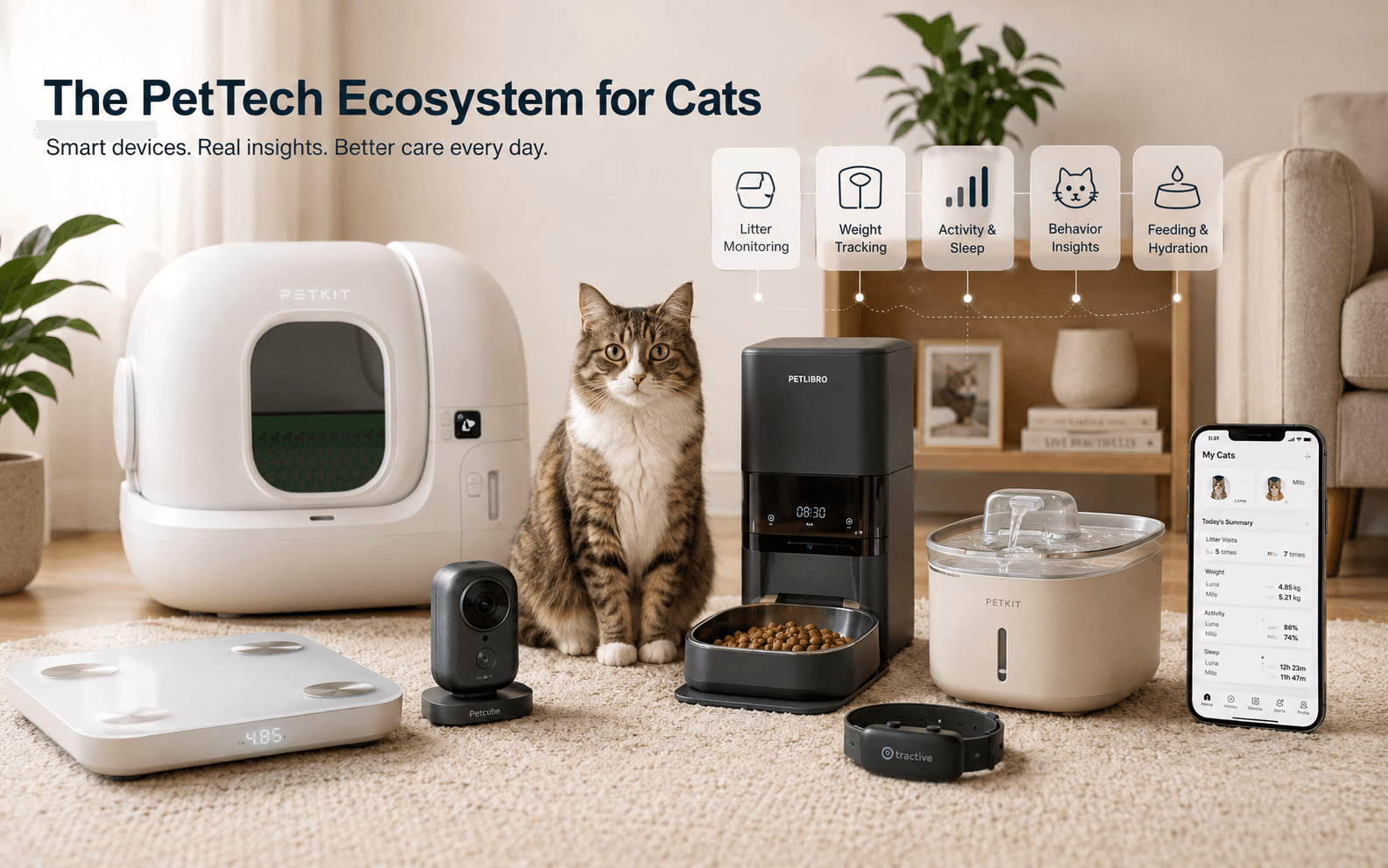
    PetTech Ecosystem 2025 isn’t a single gadget—it’s the way smart feeders, litter boxes, scales, cameras, and trackers share data to catch health issues early and make daily care easier. PetTech Ecosystem 2025 turns scattered signals (weight drift, litter-box frequency, restless nights) into one picture you and your vet can act on.


    What Belongs in the PetTech Ecosystem 2025

    A complete PetTech Ecosystem 2025 typically combines:

    • Litter analytics (self-cleaning or under-box sensors) logging per-cat visits, pee/poop events, and weight. PETKIT’s app, for example, flags urinary concerns from usage + weight trends; CATLINK adds multi-cat insights. PETKIT
    • Scales (standalone or built-in) to baseline body weight—your most sensitive illness signal.
    • Cameras (Petcube, Furbo, Owlet): AI meow/sound + motion alerts for behavior changes when you’re away. PetCube / Furbo
    • GPS/activity trackers (Tractive) surfacing sleep and activity alerts across weeks/months. Tractive
    • Feeding automation to stabilize calories and hydration, tying weigh-ins to portions.

    Why the PetTech Ecosystem 2025 Matters for Preventive Care

    Cats hide pain. Medical problems often drive litter-box changes (frequency, straining, painful urination) and “accidents.” Catching those patterns early is the point. Cornell documents how medical causes underlie house soiling; interpreting litter changes in context is essential. vet.cornell.edu And even with smart data, AVMA guidelines still recommend at least annual wellness exams (more often for seniors/at-risk). avma.org

    In short: devices find change; your veterinarian explains why.


    The Data Flow: From Sensors to Decisions

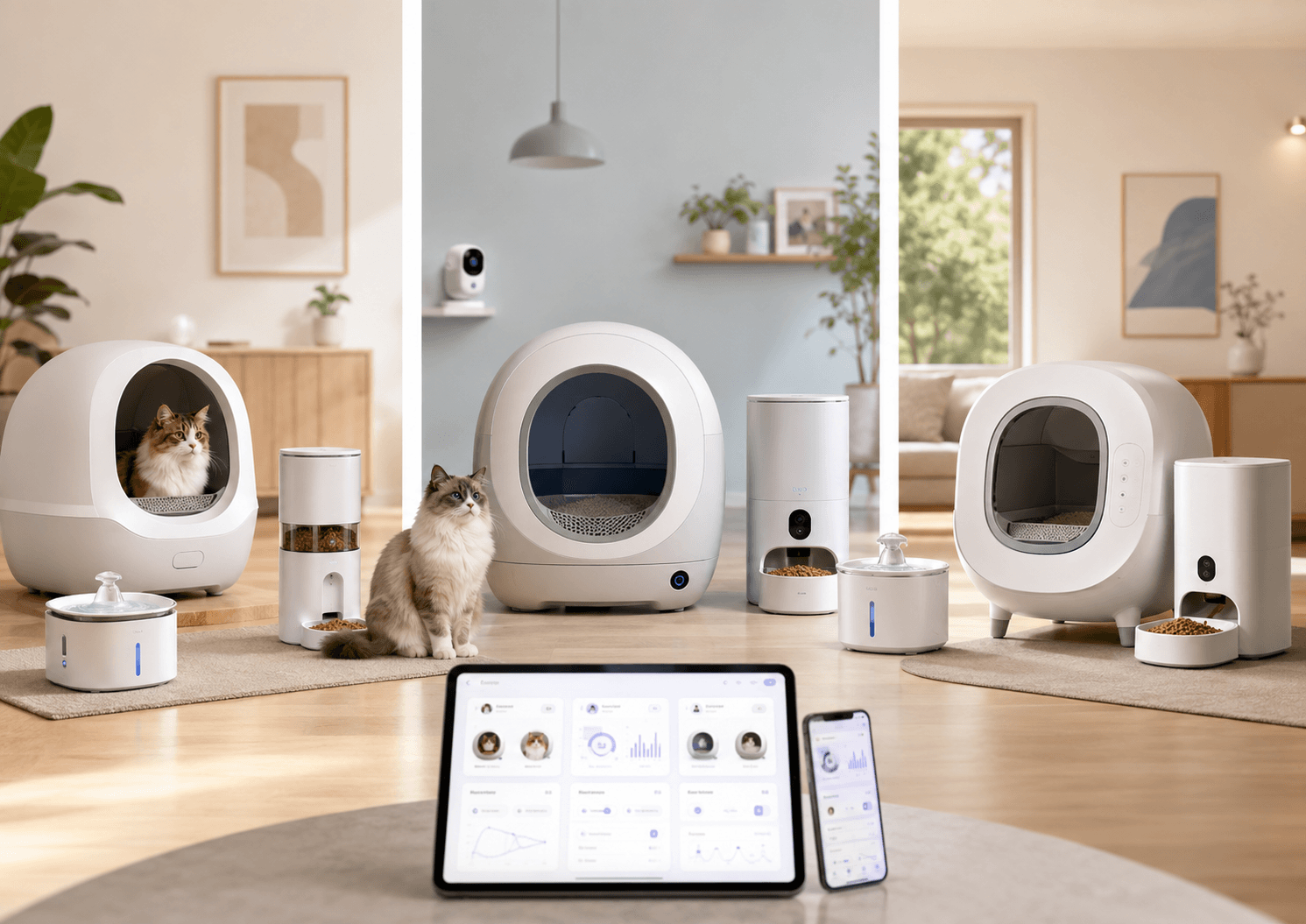
    Home setup of a PetTech ecosystem 2025 with live data on phone

    The PetTech Ecosystem 2025 works when each device contributes a clean, specific signal:

    • Litter box + under-box monitors (e.g., PETKIT Pura Max 2; Petivity; CATLINK) → per-cat events, weight, and alerts when routines deviate.
    • Camera (Petcube/Furbo) → AI meow or motion events that correlate with strain, anxiety, or nocturnal restlessness.
    • Tracker (Tractive) → multi-week activity/sleep change alerts; great to confirm lethargy patterns you’d otherwise miss.
    • Scale → weekly “gold-standard” weight to verify litter-sensor readings and close the loop.

    Integration Map: The Core Building Blocks

    Think of the PetTech Ecosystem 2025 like this:

    1. Baseline (Weight): a weekly platform scale reading.
    2. High-resolution daily signals: litter visits + per-cat weights from a smart box/monitor.
    3. Context when you’re away: camera AI alerts (meow/sound/motion) and tracker sleep/activity.
    4. Nutrition control: smart feeder portions tied to trends (tweak calories if weight drifts).

    When two or more signals change together (e.g., frequent tiny pees + yowling alert + restless nights), escalate quickly.


    Real-World Flow: A Two-Cat Household

    You deploy a smart litter box that logs per-cat visits and weight, plus a weekly platform scale. The camera pings a “meowing” alert at 3 a.m.; Tractive shows sleep fragmentation. Over 10 days, Cat A’s litter visits increase and average urine volume drops; weight trends slightly down. In a PetTech Ecosystem 2025 that combination is a yellow flag—book a checkup and bring app graphs. Cornell’s guidance on painful/frequent urination supports fast action; FLUTD can become urgent. vet.cornell.edu


    Brand Snapshots (How They Fit the Ecosystem)

    • PETKIT (Pura Max 2 / Purobot Ultra): litter events, per-cat weights, urinary alerts; Ultra adds AI camera context. PETKIT
    • Purina Petivity (under-box monitor): AI visit type + weight under any standard box; strong reports and trend charts. Purina (amazon)
    • CATLINK: multi-cat litter insights via app (usage, weight, health view).
    • Petcube / Furbo / Owlet: AI sound/motion, meowing alerts, night vision—behavior context beyond the box. PetCube / Furbo
    • Tractive: activity & sleep health alerts over weeks/months; GPS + virtual fences for outdoor cats. Tractive

    (Note: Whistle devices are being sunset after the Tractive acquisition; plan accordingly.)


    Buying Guide: Building Your PetTech Ecosystem 2025 on Any Budget

    • Starter (most signal per €/$): Petivity under-box monitor + weekly platform scale. Add Petcube Cam for low-cost behavior context.
    • Balanced: PETKIT Pura Max 2 for passive daily data + tracker (Tractive) for routines/sleep; camera optional.
    • Premium: Purobot Ultra (camera + face ID) + platform scale + Tractive. This PetTech Ecosystem 2025 delivers the richest early-warning picture.

    Setup Checklist (Friction Kills Data)

    To get reliable trends in a PetTech Ecosystem 2025:

    1. Stabilize hardware: level floor; don’t move the litter base once calibrated.
    2. Profile each cat: photos/weights in the app for per-cat accuracy.
    3. Weigh weekly: same day/time, before breakfast.
    4. Name your metrics: pick 3 KPIs (weight, pee frequency, sleep) and track them monthly.
    5. Baseline first: give the system 10–14 days to learn routines before judging alerts.

    Data Hygiene & Alerts: How to React (Without Overreacting)

    Treat the PetTech Ecosystem 2025 like a dashboard:

    • Red flags now: painful/frequent urination, blood, straining → vet ASAP (Cornell). vet.cornell.edu
    • Yellow flags: 2–3 weeks of weight loss, more night waking, smaller/more frequent pees → book a wellness check; bring exports. AVMA backs routine exams even when cats seem “fine.” avma.org
    • Green checks: one-day blips—note them, don’t panic. Look for trends.

    Pros & Cons of a Connected Setup

    Pros

    • Earlier detection from multi-signal correlations (litter + weight + sleep).
    • Objective charts your vet can read fast (saves time in consults).
    • Better daily convenience (self-cleaning, notifications, remote checks).

    Cons

    • Costs (devices + optional subscriptions).
    • Ecosystem lock-in; features vary by brand/SKU. CATLINK
    • Data overload—solve with a simple KPI ritual (weekly review).

    🧩 Unified Control: Why One App Makes the PetTech Ecosystem 2025 Work Better

    The smartest PetTech Ecosystem 2025 isn’t always the one with the most gadgets—it’s the one that runs smoothly under a single app. Managing every device through different logins and dashboards quickly becomes a chore, and fragmented data means you lose the bigger picture.

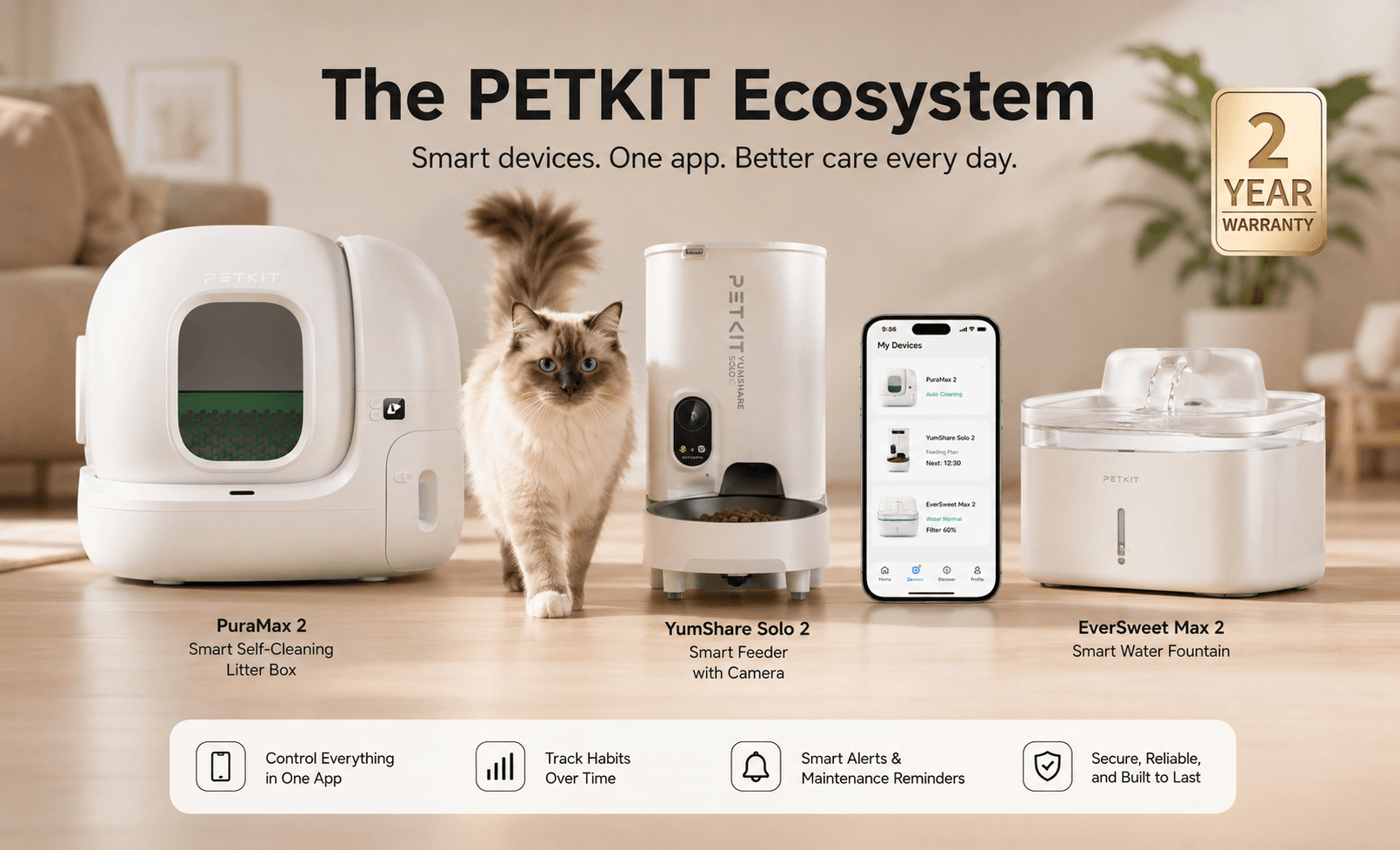
    Ecosystems like PETKIT solve that problem by connecting feeders, litter boxes, scales, and fountains into one synchronized interface. Each product talks to the same cloud, so when your cat’s weight drops or feeding patterns change, the system can adjust portions, send alerts, or sync data to the vet-ready report automatically.

    A unified app also reduces notification fatigue and setup friction: you get one timeline, one set of alerts, and one analytics dashboard instead of juggling five. If you’re building a PetTech Ecosystem 2025 from scratch, starting within a single-brand environment—like PETKIT or CATLINK—offers the most seamless integration and lowest maintenance overhead over time. Check PetTech Apps 2025: The Best Smart Apps to Track, Train, and Care for Your Cat for more info.


    Verdict: Is a PetTech Ecosystem 2025 Worth It?

    Nutrition + weight integration inside a PetTech ecosystem.

    For multi-cat homes, seniors, or any cat with a history of urinary/GI issues, PetTech Ecosystem 2025 delivers real value by surfacing patterns you’d miss. If budget is tight, start with litter analytics + a weekly scale, then add a camera or tracker. If convenience and early warnings matter most, the premium route pays for itself the first time you dodge an emergency.


    🧩 The Future of Cat-Centric Data Integration

    The next step for the PetTech Ecosystem 2025 is full data convergence—where every connected device in your home shares health insights through a unified AI hub. Within a few years, your cat’s litter box will automatically sync with the feeder to adjust calorie intake when it detects reduced activity or hydration. Smart collars and cameras will contribute behavioral cues, refining how the system interprets stress, sleep, and appetite.

    Brands like PETKIT are already pushing this direction: their unified app can link feeders, scales, litter boxes, and fountains, building a complete health timeline across weight, nutrition, and bathroom behavior. As machine learning evolves, we’ll move from reactive alerts (“your cat’s using the box more often”) to preventive forecasting (“this pattern may signal early kidney stress—book a check-up”).

    Ultimately, the PetTech Ecosystem 2025 is just the start of a broader shift toward AI-supported veterinary care. The goal isn’t replacing the vet—it’s giving them better, cleaner data to keep cats healthy longer.


    FAQs

    Does a PetTech Ecosystem 2025 replace vet visits?
    No. It highlights changes so you book smarter appointments; AVMA still advises regular wellness exams.

    Which device should I buy first for a PetTech Ecosystem 2025?
    Start with litter analytics (under-box monitor or self-cleaning with data). Add a weekly scale, then camera/tracker for context.

    Are camera “meowing alerts” or motion alerts useful for health?
    They add context—yowling/overnight restlessness alongside litter changes strengthens a case to call your vet.

    What about app subscriptions?
    Core features often work free; cloud video/history or advanced AI may be paid. Check tiers before you buy.


    Internal Links (PetTech AI)


    Authoritative Outbound Links

    • Cornell Feline Health Center — House Soiling & Urinary Problems (medical reasons behind litter-box changes). vet.cornell.edu
    • AAHA-AVMA Feline Preventive Healthcare Guidelines (exam frequency; preventive roadmap). avma.org

    Disclaimer

    This guide is for educational purposes only and does not replace professional veterinary care. A PetTech Ecosystem 2025 can reveal meaningful trends (changes in litter use, weight, sleep/activity), but it cannot diagnose disease. If your cat shows painful or frequent urination, blood in urine or stool, vomiting, diarrhea, lethargy, weight loss, or behavioral changes, contact your veterinarian promptly. Some of the products mentioned may include affiliate links. If you purchase through these links, PetTech AI may earn a small commission at no extra cost to you. This helps us fund rigorous testing and maintain independent, evidence-based reviews.

  • Purobot Ultra Automatic Cat Litter Box 2025: Hands-On Review, Real Costs, and Who Should Buy It

    Purobot Ultra Automatic Cat Litter Box 2025: Hands-On Review, Real Costs, and Who Should Buy It

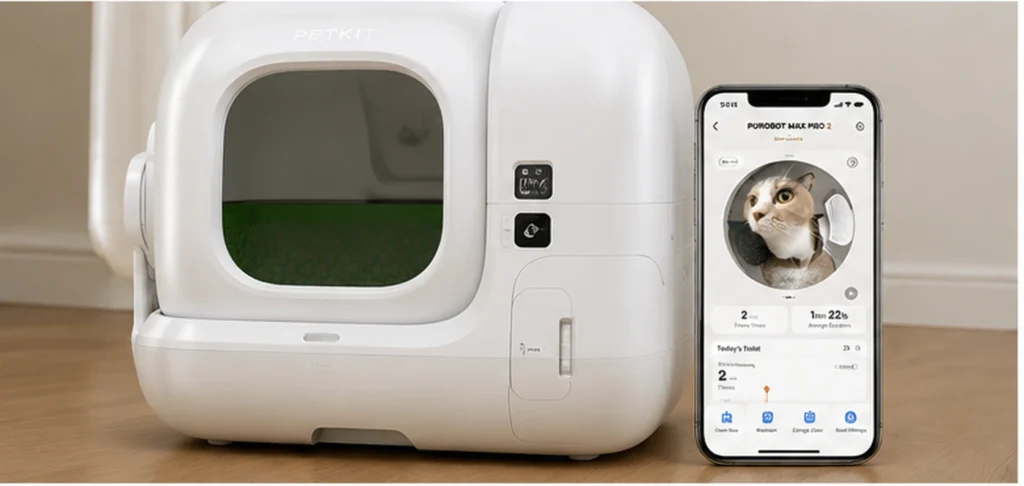
    The Purobot Ultra Automatic Cat Litter Box 2025 is PETKIT’s flagship robo-box with a rotating AI camera, multi-cat facial recognition, auto-packing waste bags, and app-based health alerts. In this review, we cover what the Purobot Ultra actually does, how it compares, the real ongoing costs, and whether it fits your home and cats.


    At-a-Glance (What’s New in 2025)

    • AI camera + facial recognition to identify each cat, log visits, and flag issues (e.g., yowling that may indicate urinary pain). Requires uploading cat photos in the PETKIT app.
    • Auto-packing waste system that seals the bag for easier, cleaner disposals.
    • PETKIT app control, usage history, weight/visit tracking, and cloud video features (with optional Care+ subscription after a 30-day free trial; plans noted between roughly $4–$12/month).
    • Street pricing right now: PETKIT site $899.99 list, $739.99 sale; Amazon $999.99 list, $849.99 current. PetKit / Amazon
    • Key specs (manufacturer pages): about 20.9″W × 32.2″D × 24.1″H, weight ~14.6 kg (~32 lb); designed for clumping litters; “ultra-quiet” around 35 dB claim (regional page).

    Design & Setup

    The Purobot Ultra Automatic Cat Litter Box 2025 is large—plan floor space depth first. The rotating arm with a front opening makes entry straightforward for most cats, and the camera sits on a boom that can swivel to see inside or outside the drum. PETKIT’s multi-cat AI asks you to upload face photos of each cat; once trained, the box attributes visits and compiles per-cat timelines. The app also pushes alerts for behaviors that may matter clinically (e.g., yowling in box).

    Setup notes: You’ll connect the unit to Wi-Fi, pair in the PETKIT app, add your cats with head-shot photos, and run a few initial cycles so the device calibrates. If you’re upgrading from a standard box, allow a few days of acclimation.


    Cleaning Performance

    Auto-packing waste system of the Purobot Ultra Automatic Cat Litter Box 2025.

    Core cleaning is automatic and consistent: after the cat exits and a short delay, the drum cycles, separating clumps into the waste liner. The auto-packing system gathers and seals the bag so odor stays contained—useful if the bin sits near shared living areas. Reviewers consistently praise odor control; the flip side is that refilling litter is a bit more fiddly than a plain tray.

    Noise: PETKIT literature in regional product pages claims ~35 dB “ultra-quiet,” which is library-level. Real-world noise varies by room acoustics and floor resonance.


    Health Tracking & AI Camera

    This is where the Purobot Ultra Automatic Cat Litter Box 2025 stands out. The AI camera and sensors work together to:

    • Identify each cat (facial recognition) and log visits.
    • Track patterns (frequency/duration) and surface alerts when behavior deviates, including yowling detection as a potential urinary pain signal.
    • Provide video clips of sessions you can review in the app (clips and playback are tied to the PETKIT Care+ subscription after the trial).

    A note on accuracy: camera quality is serviceable for monitoring, not cinematic; some reviewers wish the image were sharper. Face ID works best after training photos and with good ambient light.


    App, Subscription, and Data

    PETKIT app with facial recognition and yowling alerts for the Purobot Ultra.

    You can use the Purobot Ultra Automatic Cat Litter Box 2025 without paying monthly, but video playback and certain cloud features roll under PETKIT Care+ after a 30-day free trial (tiers reported around $4–$12/month). For many owners, alerts + logs are sufficient; power users who want clip history or multi-device ecosystems may keep Care+.


    Dimensions, Placement & Litter Compatibility

    Manufacturer specs cite roughly 20.9″W × 32.2″D × 24.1″H and ~32 lb weight (varies by bundle page). Plan a solid, level surface and easy access to an outlet; most clumping litters are supported, with guidance to avoid extra-long pellets.


    Real Costs: Purchase Price & Consumables

    • Box price: PETKIT site list $899.99 ($739.99 sale at the time of writing); Amazon list $999.99 ($849.99 current). Pricing fluctuates with promos. PetKit / Amazon
    • Refill Ring (3 pcs): about $35.99; PETKIT mixed clumping litter 3-bag bundle $44.99–$49.99. PetKit / Amazon
    • Subscription (optional): PETKIT Care+ $4–$12/mo after 30-day free trial (for video/cloud features).

    Budgeting tip: if you already like your current litter brand, start there; switch only if clump integrity or tracking alerts suffer.


    Compared to Other Premium Robo-Boxes

    • Versus PETKIT Pura Max 2: Pura Max 2 is cheaper and tracks weight/visits, but Purobot Ultra Automatic Cat Litter Box 2025 adds the AI camera and face recognition plus auto-packing waste. Choose Ultra if you want camera-based health context; choose Pura Max 2 if you want value with rich app data and no camera. PetKit
    • Versus Litter-Robot 4: LR4 has a massive user base and strong app analytics; the Purobot Ultra answers with camera-assisted ID, yowling alerts, and auto-sealing. LR4 lacks built-in video but has mature parts/accessories. (General LR4 reference article notes “one of the priciest” class; Ultra sits at the top end as well.)

    Pros and Cons

    Pros

    • Multi-cat facial recognition + yowling detection for earlier urinary-type flags.
    • Auto-packing waste system improves odor control and convenience.
    • App logs of visits and trends; optional video history via subscription.
    • Broad litter compatibility; quiet operation claims (~35 dB).

    Cons

    • Large footprint and heavy; requires thoughtful placement.
    • Refilling litter can be fiddly; camera image quality is only okay.
    • Ongoing costs: refill rings, bags, litter, and Care+ if you want clip history.

    Who Should Buy the Purobot Ultra Automatic Cat Litter Box 2025?

    Choose it if you want the most information from a litter box—especially in multi-cat homes, senior-cat households, or when you’ve had urinary issues before. The Purobot Ultra Automatic Cat Litter Box 2025 is also compelling if you value video context for odd behaviors and you’re okay with a premium price plus some consumables.

    Skip it if you have very tight space, you dislike cameras, or you want a lower-maintenance cost structure (in that case, consider PETKIT Pura Max 2 or a smart add-on monitor).


    Setup & Best Practices

    1. Train the AI: upload clear face photos; add each cat’s weight. Accuracy improves after a few days.
    2. Stabilize placement: level floor; avoid rocking surfaces for consistent sensors.
    3. Test litter: start with your usual clumping brand; switch only if clumps break mid-cycle.
    4. Watch trends, not blips: sudden vocalization (yowling), frequent tiny visits, or straining are red flags—call your vet.

    For medical context on litter-box changes and why they matter, see Cornell’s guidance on house soiling and urinary problems; preventive-care schedules remain essential even with smart boxes.


    Verdict

    Purobot Ultra Automatic Cat Litter Box 2025 monitoring a multi-cat home.

    As a premium device, the Purobot Ultra Automatic Cat Litter Box 2025 justifies its price for owners who want multi-cat identification, proactive alerts, and video-level context on top of reliable self-cleaning. It’s big, not cheap, and benefits from PETKIT’s ecosystem—yet for homes where catching problems early matters, it’s among the most feature-complete options available.


    FAQs

    Does the Purobot Ultra work without a subscription?
    Yes. Core cleaning and basic logging work. Video playback/cloud features move to PETKIT Care+ after the 30-day trial.

    What litter should I use?
    Clumping litters are supported (avoid extra-long pellets). PETKIT literature references multiple litters and notes general compatibility.

    How loud is it?
    PETKIT cites around 35 dB (very quiet). Perception varies by room and placement.

    How big is it? Will my cat fit?
    Plan roughly 20.9″W × 32.2″D × 24.1″H and ~32 lb weight. Most adult cats fit; give nervous cats a slow intro.

    What does it actually cost to run?
    Expect refill rings ($35.99 / 3 pcs), plus litter ($44.99–$49.99 / 3 bags). Subscription is optional.


    Internal Links (PetTech AI)


    Authoritative Outbound Links

    • Cornell Feline Health Center — House Soiling & Urinary Issues (medical causes behind litter-box changes).
    • AVMA/Preventive Care — why annual wellness exams still matter in the AI era.

    Disclaimer

    The information in this review is for educational purposes only and does not replace professional veterinary advice. The Purobot Ultra Automatic Cat Litter Box 2025 can surface behavior changes (visit frequency, yowling, unusual patterns) but cannot diagnose disease. If your cat shows painful or frequent urination, blood in urine or stool, vomiting, diarrhea, weight loss, lethargy, or other concerning signs, contact your veterinarian promptly. This article may contain affiliate links. If you purchase through them, PetTech AI may earn a small commission at no extra cost to you, which supports our independent testing and editorial standards.

  • Smart Cat Weight Scales 2025: The Complete Buyer’s Guide to Standalone & Built-In Options

    Smart Cat Weight Scales 2025: The Complete Buyer’s Guide to Standalone & Built-In Options

    Smart cat weight scales 2025 aren’t just bathroom scales in pet clothing—they’re the backbone of early health detection. Whether you choose a standalone scale or a litter box with integrated weighing, consistent data lets you flag gradual loss, sudden gain, or subtle changes tied to hydration, GI issues, or endocrine disease. This guide compares the best approaches, what data really matters, and how to use it with your veterinarian.


    Why Weight Trends Matter (More Than Single Readings)

    Cats hide discomfort. Small, sustained drifts in weight often precede visible illness. Litter-box changes (frequency, straining, painful urination) can also signal medical problems, and cats may avoid the box if they associate it with pain. Cornell summarizes this clearly: medical issues commonly drive litter-box problems, including painful and more frequent urination. vet.cornell.edu Regular checkups remain essential—guidelines indicate at least annual wellness exams, with more frequent visits based on age and risk. avma.org

    Key idea: use smart cat weight scales 2025 to establish a baseline and watch the trend, then bring charts to the vet.


    The Two Paths: Standalone Scales vs. Built-In Litter-Box Scales

    1) Standalone “Platform” Scales (Bluetooth/App)

    Standalone pet scales give you deliberate, repeatable weigh-ins you can schedule (e.g., weekly). Models like Healthy Pet Connect’s Smart Pet Body Weight Scale pair via Bluetooth to log readings up to 20 kg with a low, stable platform. You’ll also find “baby/pet” smart scales with companion apps (example: GROWNSY) that track trends across time. amazon.com

    Pros

    • Controlled, repeatable environment; easy to verify accuracy
    • Works with any litter setup; no ecosystem lock-in
    • Useful when you need frequent weigh-ins (e.g., diet, recovery)

    Cons

    • Manual routine (you must place the cat)
    • Some cats resist standing still—use a carrier or weigh-subtract method

    Who should start here: owners focused on pure weight accuracy and multi-cat homes that want per-cat logs without changing litter boxes.


    2) Built-In Scales Inside Smart Litter Boxes

    Litter box with built-in scale tracking weight and events.

    Modern litter robots weigh the cat every visit and combine that with AI event detection. The Purina Petivity Smart Litter Box Monitor (a scale placed under your existing box) tracks weight plus urination/defecation events and sends AI alerts when patterns deviate (Check on Amazon). The PETKIT Pura Max 2 adds per-cat usage, weight trends, and notifications for potential urinary issues (PETKIT / Amazon) CATLINK’s 2025 Ultra models layer in AI camera features on top of health monitoring and 5 GHz connectivity. (Amazon)

    Pros

    • Automatic, high-frequency data (every litter visit)
    • Behavior context (frequency, duration, pee/poop classification with some systems)
    • Great for trend detection across weeks/months

    Cons

    • Ecosystem commitment; features vary by exact SKU
    • Requires steady placement and calibration discipline
    • Some cats need acclimation time to enclosed drums

    Who should start here: busy households that want passive, high-resolution trends or already shopping for a self-cleaning box.


    What to Look For in Smart Cat Weight Scales 2025

    • Accuracy & Resolution: Aim for ±10–20 g resolution if listed; if not, verify consistency with repeat tests.
    • Per-Cat Differentiation: Multi-cat homes need profiles; systems like Petivity learn patterns over time.
    • Data Access: App charts, CSV/PDF export, monthly reports (Petivity emails summaries).
    • Health Context: Visit type (urination/defecation), frequency, and time-of-day add meaning to weight trends.
    • Support & Updates: Check firmware/app cadence, Wi-Fi stability (5 GHz on newer CATLINK), and warranty (PETKIT Pura Max 2 lists a 1-year warranty). Amazon.com

    This is where smart cat weight scales 2025 separate into basic “weight-only” devices and full analytics platforms.


    How Weight Data Connects to Nutrition and Feeding Habits

    Smart cat weight scales 2025 become even more powerful when paired with automated feeders. Small fluctuations often reflect changes in calorie intake or hydration, not just illness. By syncing your scale data with a smart feeder app—like PETKIT or Catlink—you can track how feeding schedules influence weight stability. Gradual weight gain might mean your cat’s portion size is too generous, while steady loss could signal underfeeding or absorption problems. Reviewing these graphs weekly helps you fine-tune nutrition plans and detect imbalances early, long before clinical symptoms appear.


    Editor’s Picks (Standalone & Built-In)

    Best Overall (Standalone): Healthy Pet Connect Smart Pet Scale

    Low deck for feline stability, Bluetooth logging, and app trend graphs up to 20 kg. A pragmatic choice if you want simple, reliable weight data without changing litter habits.

    Best Litter-Box Add-On: Purina Petivity Smart Litter Box Monitor

    AI classification of weight, urination, defecation, app charts + monthly reports and alerts for deviations. Because it fits under a normal box, you keep your substrate and routine. Amazon

    Best Self-Cleaning with Health Trends: PETKIT Pura Max 2

    Self-cleaning convenience plus per-cat usage and weight tracking with notifications for abnormal patterns, like potential urinary blockage. PETKIT / Amazon

    Most Feature-Rich Ecosystem: CATLINK Ultra (with AI Camera)

    Self-cleaning, health monitoring, AI camera clips, 5 GHz Wi-Fi—confirm model to ensure you get the camera/analytics combo. Amazon

    If you’re short on time: start with smart cat weight scales 2025 that are automatic (Petivity or a self-cleaning box). You’ll get more data with less effort.


    How to Weigh Correctly (and Get Trustworthy Trends)

    Weighing a cat using carrier minus tare for accuracy. Smart cat weight scales 2025.
    1. Fix the schedule. Weigh weekly—same day, same time, ideally before breakfast.
    2. Stabilize the setup. Flat surface; avoid moving platforms or litter robots mid-baseline (they recalibrate).
    3. Use the carrier trick. Weigh the carrier, then the cat + carrier; subtract. This improves compliance.
    4. Baseline first. Give built-in systems 10–14 days to learn patterns per cat.
    5. Track the trend. A single odd reading? Ignore. A 2–3 week drift? Call your vet.

    Pair smart cat weight scales 2025 with elimination data: more frequent tiny pees + weight loss = time-sensitive vet consult.


    Interpreting Changes (When to Worry)

    • Slow weight loss (even 5–10% over weeks) can indicate systemic disease—bring logs to the exam.
    • Frequent, painful, or bloody urination is urgent; male cats can obstruct—seek care immediately.
    • Diarrhea/constipation patterns alongside weight change deserve prompt attention.
    • Senior cats: consider twice-yearly vet checks; bring graphs from your app.

    Smart cat weight scales 2025 give you the signal; your veterinarian provides the diagnosis.


    Product Snapshots (Specs & Notable Details)

    Purina Petivity Smart Litter Box Monitor — AI tracks weight + urination + defecation, app charts, monthly email reports, deviation alerts. Works under a standard litter box for multi-cat homes.

    PETKIT Pura Max 2 — Self-cleaning drum; app monitors per-cat visits and weight, with real-time notifications and urinary-health warnings; 1-year warranty listed on retail pages.

    CATLINK Ultra (AI Camera variants) — Self-cleaning with health monitoring, AI camera, and 5 GHz Wi-Fi; verify exact model/kit for camera inclusion.

    Healthy Pet Connect Smart Pet Scale (Standalone) — Low platform, up to 20 kg, Bluetooth app logging for trend tracking and sharing.

    PETKIT “Fresh” Smart Bowl (Built-In Food Scale) — Not a body-weight scale, but useful to control portion size with a built-in digital scale integrated with the PETKIT app—great companion to smart cat weight scales 2025. Amazon


    Pros & Cons Summary

    Pros

    • Passive, frequent measurements (built-in) or controlled accuracy (standalone)
    • App charts, monthly reports, and multi-cat learning (on some systems)
    • Strong preventive-care value when paired with regular vet checks

    Cons

    • Ecosystem lock-in; features differ by SKU (camera, 5 GHz, etc.)
    • Some cats resist enclosed drums; allow acclimation time
    • Standalone scales require a human routine (schedule + handling)

    Verdict: Which Path Fits Your Home?

    If you want maximum signal with minimum effort, choose a litter-box solution (Petivity add-on or a self-cleaner). If you need deliberate accuracy and direct control, pick a Bluetooth standalone scale. Many households do both: a self-cleaning box for passive data plus a weekly check on a platform scale to confirm trends. Either way, smart cat weight scales 2025 turn vague hunches into actionable charts your vet can use.


    FAQs

    Do I need both a platform scale and a smart litter box?
    Not required, but the combo improves confidence: passive daily data + a weekly “gold-standard” weigh-in.

    Will a built-in scale work in a multi-cat home?
    Yes—systems learn patterns and weights over time; create separate profiles to accelerate accuracy.

    How often should I weigh a healthy adult cat?
    Weekly at home is great; at least annual vet exams (twice-yearly for seniors) for physical checks and labs.

    Can these devices diagnose disease?
    No. They flag changes. Diagnosis belongs to your veterinarian.


    Internal Links (PetTech AI)


    Authoritative Outbound Links

    • Cornell Feline Health Center — House Soiling/Litter-Box Problems (medical causes, painful/frequent urination). vet.cornell.edu
    • AAHA-AVMA Feline Preventive Healthcare Guidelines (exam frequency; baseline care). avma.org

    Disclaimer

    This article is for educational purposes only and does not replace professional veterinary advice. Smart cat weight scales 2025 can reveal trends in your cat’s weight and litter-box behavior, but they cannot diagnose disease. If you notice persistent weight loss or gain, painful or frequent urination, blood in urine or stool, vomiting, diarrhea, lethargy, or behavior changes, contact your veterinarian promptly. Some links in this post are affiliate links. If you purchase through them, PetTech AI may earn a small commission at no extra cost to you, helping us maintain independent testing and in-depth, unbiased guides.

  • AI Cat Health Trackers 2025: What to Buy, What They Track, and How to Use the Data

    AI Cat Health Trackers 2025: What to Buy, What They Track, and How to Use the Data

    AI cat health trackers 2025 went from “nice-to-have gadgets” to practical early-warning systems. In 2025, the best tools don’t just count steps—they analyze litter-box patterns, weight trends, sleep/activity changes, and even vital signs to flag subtle shifts you’d likely miss. Below, you’ll find a field-tested guide to the most useful categories, the standout products, what they really measure, and how to turn notifications into better veterinary care.


    Why AI Cat Health Trackers 2025 Matters (and What It Can—and Can’t—Do)

    Cats are notoriously good at hiding discomfort. Changes in urination/defecation, litter-box avoidance, or frequency/strain can signal urinary, kidney, thyroid, or GI issues—long before obvious symptoms show up. Cornell notes that medical problems commonly drive litter-box changes; increased drinking/urination is associated with kidney or thyroid disease and diabetes, and pain can lead to out-of-box accidents. vet.cornell.edu Likewise, hallmark signs of feline lower urinary tract disease (FLUTD) include painful, frequent urination and crying while urinating—red flags you must not ignore. vet.cornell.edu

    AI trackers don’t diagnose; they surface patterns (e.g., weight trending down, nighttime restlessness, more frequent, smaller pees) so you can consult your veterinarian sooner. AVMA-endorsed preventive care guidance is clear: every cat needs regular wellness exams, and many benefit from more frequent visits based on risk. avma.org

    Bottom line: AI health data helps you notice change. Your vet still interprets meaning.


    The Main Types of AI Cat Health Trackers 2025

    1) Litter-Box Analytics (Weight + Pee/Poop Recognition)

    These platforms place a smart scale under/inside the box or integrate with a self-cleaning unit, then use algorithms to distinguish events and cats.

    • Purina Petivity Smart Litter Box Monitor – Uses AI to identify your cat’s weight plus urination and defecation events at each visit, visualizes trends in the app, and sends alerts when behavior deviates from baseline. Amazon
    • Catlink Scooper/Ultra Series – Catlink’s app tracks per-cat litter-box habits and weight with long-term health insights and instant alerts (select models add 5 GHz Wi-Fi and even an AI camera in the newest “2025 Ultra” SKU). Amazon

    What they’re best at: spotting weight drift, constipation/diarrhea patterns, increased frequency/strain, and multi-cat comparisons.


    2) Wearable Vital-Sign & Behavior Collars

    Cat wearing an AI health collar tracking vital signs

    Collars (or pendants) collect movement, posture, and in advanced cases, vital signs—then apply AI to classify behavior and risk.

    • PetPace AI Smart Collar (Cats & Dogs) – Tracks temperature, pulse, respiration, posture/behavior, and HRV-based “stress,” with near real-time alerts and telehealth integrations for sharing data with your vet; PetPace announced an AI telehealth/telemedicine platform expansion in 2025. Amazon

    What they’re best at: continuous trending of vitals and behavior (lethargy, restlessness, pain-like postures). Requires cat-sized fit and tolerance for collars.


    3) GPS Activity Trackers with Health Insights

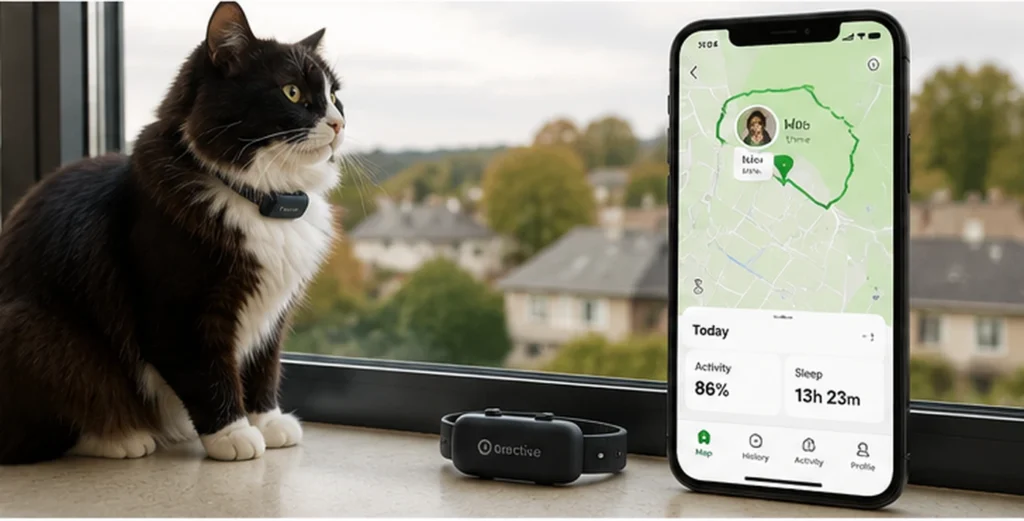
    GPS cat tracker app showing activity, sleep, and health alerts.

    Not strictly “medical,” but modern GPS tags now layer in AI-driven wellness alerts.

    • Tractive for Cats – Provides activity/sleep dashboards and sends “Health Alerts” when routine changes are detected over weeks or months (e.g., declining activity, disrupted sleep). Amazon
    • Fi Mini (2025) – A very small GPS tracker sized for cats and toy breeds; tracks activity/sleep and is rolling out AI behavior detection (barking/scratching first, with broader behavior insights on the roadmap). The Verge Industry note: Tractive acquired Whistle and is shutting down the Whistle platform as of August 31, 2025; migration options exist for former Whistle users. The Verge

    What they’re best at: macro trends (more/less active, restless nights), escape alerts, and outdoor cats where location + wellness context matters.


    Quick Picks: Best AI Cat Health Trackers by Use-Case

    • Best for Multi-Cat Litter-Box Insights: Purina Petivity if you want a brand-agnostic scale solution with AI event detection; Catlink Scooper/Ultra if you prefer a self-cleaning ecosystem with per-cat profiles and alerts.
    • Best for Deep Health/Vitals: PetPace for continuous vitals + posture and vet-shareable analytics.
    • Best Lightweight GPS + Routines: Tractive Cat for proven sleep/activity & health alerts; Fi Mini if you want a tiny form factor and Apple Watch roadmap.

    How to Read the Data (Without Overreacting)

    Using AI Cat Health trackers 2025 trends during a veterinary consultation.
    • Watch the baseline, not a single spike. Algorithms are most reliable when they compare your cat to your cat over time. A one-day blip is less meaningful than a 7- to 14-day trend.
    • Prioritize changes tied to vet-relevant systems:
      • Urination – more frequent, straining, vocalizing, blood → call your vet promptly; FLUTD can be emergent, especially in males. vet.cornell.edu
      • Defecation – hard stools/constipation or diarrhea trends (frequency/volume) merit attention. vet.cornell.edu
      • Weight – steady loss (even small) is concerning; trends matter more than single readings. Petivity
      • Sleep & activity – persistent lethargy or disrupted nights can be early illness signs. Tractive
    • Always pair data with clinical judgment. AVMA guidelines emphasize routine wellness exams; bring your tracker reports to visits. avma.org

    Product Snapshots (Specs & Notable Features)

    Purina Petivity Smart Litter Box Monitor

    • Core: Under-box smart scale detects weight, pee/poop, visit timing; AI classifies events and flags deviations; app charts and monthly reports. Petivity
    • Good for: Any standard litter box, multi-cat homes (with pattern learning).
    • Considerations: Requires stable placement and some acclimation; per-cat accuracy improves over time as the model learns your household.

    Catlink Scooper/Ultra with Health Insights (select models)

    • Core: Self-cleaning drum plus weight sensor; app shows per-cat usage and long-term insights; newer “2025 Ultra” mentions AI camera + 5 GHz Wi-Fi (model-specific). CATLINK
    • Good for: Hands-off waste management + health flags in one unit.
    • Considerations: Ecosystem lock-in; ensure the exact SKU has the features you expect (app health insights are standard; AI camera varies).

    PetPace AI Smart Collar

    • Core: Tracks pulse, temperature, respiration, posture/behavior, HRV; near real-time alerts; data share + telehealth. PetPace
    • Good for: Senior cats, chronic conditions, or owners who want continuous vitals.
    • Considerations: Collar acceptance, charging cadence, subscription/services; confirm cat-appropriate size and weight.

    Tractive Cat GPS + Wellness

    • Core: Live GPS plus activity/sleep insights; “Health Alerts” when routines shift across weeks/months. Tractive
    • Good for: Outdoor cats or door-dashers; owners who want both safety and trend-level wellness.
    • Considerations: Requires subscription/cellular coverage; collar/harness fit; alerts are trend-based (not medical diagnostics).

    Fi Mini (2025)

    • Core: Tiny GPS for small pets, activity/sleep, planned AI behavior detection; IP68; up to ~3 weeks battery (longer with base); annual plan. The Verge
    • Good for: Cats that won’t tolerate larger devices.
    • Considerations: New product ramp; confirm ship dates and feature rollouts.

    Pros and Cons of AI Health Trackers for Cats

    Pros

    • Early detection of meaningful changes (weight, elimination, sleep/activity).
    • Objective logs you can share with your veterinarian for context during exams.
    • Multi-cat differentiation (on litter systems) and habit baselining reduce guesswork.

    Cons

    • False positives/notification fatigue if you react to every blip; trends matter.
    • Hardware acceptance (collars) and fit can be challenging for some cats.
    • Ecosystem lock-in and subscriptions; feature sets vary by model and SKU.

    Set-Up & Best Practices (Retention-Friendly, Real-World Tips)

    1. Baseline first. Give your tracker 10–14 days to learn your cat(s) before you draw conclusions.
    2. Optimize placement. For scales/monitors, keep the box on a flat, stable surface; avoid shifting the unit during calibration.
    3. Label the cats. If your ecosystem supports per-cat IDs, complete profiles with photos/weights to speed up model learning.
    4. Sync with vet cadence. Export monthly charts and bring them to wellness exams (AVMA recommends at least annual visits). avma.org
    5. Know your red flags. Painful/frequent urination, blood, straining, or inability to pass urine is urgent—seek veterinary care immediately. vet.cornell.edu

    Verdict: Who Should Buy What in 2025

    • Apartment or multi-cat households: Start with a litter-box AI system (Petivity or Catlink). You’ll get the highest clinical signal-to-noise for cats, where elimination and weight trends are gold.
    • Senior cats or chronic conditions: Add PetPace for vitals/behavior and sharable analytics.
    • Outdoor cats/flight risks: Pair a GPS wellness tracker (Tractive or Fi Mini) with a litter monitor to connect activity and elimination data.

    Among all AI cat health trackers 2025, litter-box monitors remain the most actionable tools for daily health tracking.


    FAQs

    Are AI trackers accurate for multi-cat homes?
    They improve as the model learns patterns (visit times, body weight). For the cleanest data, keep the setup stable and maintain profiles for each cat.

    Do I still need vet visits if I’m tracking data?
    Yes. Trackers surface changes; veterinarians diagnose and treat. Annual (or more frequent) wellness checks remain essential. avma.org

    Which metric matters most?
    For cats: elimination patterns and weight trends, followed by persistent sleep/activity changes. Painful/frequent urination or straining is urgent. vet.cornell.edu

    Are GPS wellness features useful for indoor-only cats?
    Yes—escape alerts aside, sleep/activity and routine-change alerts still provide value for indoor cats.


    Internal Links

    (Use your standard internal URLs/taxonomy when publishing.)


    Authoritative Outbound Links

    • Cornell Feline Health Center — litter-box problems & medical causes (FLUTD, endocrine, GI): early signs to watch. vet.cornell.edu
    • AVMA Preventive Healthcare Guidelines — why routine exams and baseline tracking matter. avma.org

    Disclaimer

    The information in this article is for educational purposes only and is not a substitute for professional veterinary diagnosis or treatment. AI cat health trackers can help you recognize patterns and changes in your cat’s routine, but they cannot diagnose disease. If you notice signs of illness—such as painful or frequent urination, blood in urine or stool, lethargy, vomiting, diarrhea, weight loss, or behavior changes—contact your veterinarian promptly. This post may contain affiliate links. If you purchase through these links, PetTech AI may earn a small commission at no extra cost to you, which helps us keep producing in-depth, unbiased reviews.

  • AI Cat Care 2025: The Future of Everyday Feline Wellness

    AI Cat Care 2025: The Future of Everyday Feline Wellness

    Why this matters now

    If you live with a cat, you already juggle routines: feeding, litter, enrichment, safety checks, vet follow-ups. AI cat care 2025 turns that chaos into a quiet, measurable system. Instead of guessing, you’ll see trends: appetite dips before they’re obvious, litter habits that flag urinary issues early, restless nights that correlate with under-stimulation, GPS routes that reveal risky hotspots outside. Used well, AI doesn’t replace intuition—it turbocharges it.

    Key takeaways:

    • AI cat care 2025 = data-assisted habits: healthier feeding, earlier health signals, safer micro-adventures, calmer behavior.
    • You don’t need to “go all in.” Start with one use-case (e.g., litter/health or feeding) and stack from there.
    • Focus on reliability, noise-free alerts, and exportable data you can share with your vet.

    What “AI” actually does (for cats)

    Most consumer “AI” in pet tech blends three layers:

    1. Sensing: cameras, weight scales (bowls/litter), accelerometers (collars/tags), GPS/BT beacons, environment (temp/air).
    2. Signal processing: filters raw data into events (ate 32 g; used litter twice; active 3 h).
    3. Inference & guidance: turns events into insights (early constipation risk; portion tweak; boredom indicators) and action (auto-portioning, adaptive routines, smarter notifications).

    AI cat care 2025 is less about sci-fi robots and more about pattern recognition that catches subtle changes early and nudges you toward the next best action.


    Core applications that actually move the needle

    1) Health monitoring you’ll actually use

    Close-up of a smart cat bed showing holographic health data like heart rate, sleep score, and temperature, symbolizing AI-driven feline wellness tracking.
    • Litter analytics: Weight sensors and usage detection track frequency, clump weight, and timing. AI highlights deviations from your cat’s baseline (e.g., more frequent, lower-volume pees; long intervals without a bowel movement). In AI cat care 2025, this is the single most valuable early-warning channel for UTI, constipation, or kidney concerns.
    • Weight & appetite: Smart bowls and feeders log grams per meal/day; AI correlates intake with activity and flags gradual loss or gain.
    • Activity & rest: Collars/camera-free room sensors detect sleep fragmentation, nocturnal zoomies, or pacing—often a signal to adjust enrichment or check pain.

    What good looks like: high-precision sensors, sticky yet minimal alerts (no spam), clear trend visualizations, and easy CSV/PDF export for your vet.

    2) Precision feeding without obsession

    • Portion automation: Auto-dispensing adjusts by schedule and goal weight; AI adapts portions after missed meals or unusual activity days.
    • Dual-cat fairness: Photo/microchip access control keeps the “food pirate” out, ensuring the shy eater finishes.
    • Diet transitions: AI stages gradual mix-ins and watches for intake drops or GI upset.

    You’ll see AI cat care 2025 turn feeding into a closed loop: goal → plan → measure → micro-adjust → goal.

    3) Behavior & enrichment that prevents problems

    • Boredom signatures: Under-stimulation shows up as nocturnal restlessness, door scratching, or “cursor hunting.” AI spots the pattern and prescribes targeted play windows (type, length) and puzzle rotations.
    • Stress mapping: Correlates visitors, appliance noise, or construction with hiding, excessive grooming, or litter misses—then suggests mitigation (safe rooms, white noise, scent routines).
    • Training assists: Timed treat cues, clicker-style reinforcement from a dispenser, and session logs keep you consistent.

    In AI cat care 2025, you don’t guess which toy to use—you follow a plan, then adjust based on results.

    4) Safety, travel, and controlled outdoor time

    • Virtual fences: GPS trackers create geofences; AI reduces false alerts by learning the cat’s regular routes and “worry zones.”
    • Travel readiness: Pre-trip routines adjust feeding/box timing, carrier conditioning, and calming protocols based on previous trip data.
    • Home alone mode: Cameras/door sensors escalate from motion → person → “cat on counter” specificity; you only get pings that matter.

    Again, the thread: AI cat care 2025 compresses noise and surfaces signals.

    5) A smarter home, quietly running in the background

    • Automations: Litter cycle after the last morning use, warm a favorite sleeping spot before bedtime zoomies, dim lights to align with play → feed → sleep.
    • Energy & noise: Night vision only when needed, low-noise cycles in sleep windows, quiet air filtration during naps.
    • Household harmony: If you live in an apartment, AI staggers loud cycles, avoids guest hours, and keeps routines kid-proof.

    These micro-touches are where quality of life jumps.


    How vets fit into the loop

    A veterinarian reviewing an AI-generated cat health report on a tablet, with digital charts showing data-driven insights for feline care.

    Bringing real data changes the appointment:

    • Objective baselines: “Here’s 60 days of litter frequency and clump weight” beats guesswork.
    • Faster differential: Appetite drop + lower activity + smaller clumps = a different workup than “he’s been weird lately.”
    • Post-visit plans: You’ll implement dosing windows or food trials with automations and verify adherence via logs.

    In AI cat care 2025, your vet becomes a data-guided partner, and follow-ups become clearer and shorter.


    Limits, ethics, and privacy (read this)

    • AI ≠ diagnosis. It’s an early-signal assistant; veterinarians diagnose.
    • False positives happen. Prefer systems that learn your cat’s baseline instead of generic thresholds.
    • Privacy: Choose vendors with local processing where possible, end-to-end encryption, and fine-grained sharing controls.
    • Fail-safe design: Devices should degrade gracefully (manual mode for feeders, scoop-ready litter plans), and never block access or create hazards.

    AI cat care 2025 works best when you remain the decision-maker and set conservative guardrails.


    Buyer’s checklist (save this before you shop)

    1. Accuracy over hype: Look for validated sensing (weigh scales that don’t drift, motion detection that handles low light, GPS that holds signal).
    2. Clear, minimal alerts: If you muted notifications in week one, the system failed.
    3. Baseline learning: The cat is the baseline—not a population average.
    4. Multi-cat logic: Identity control (camera, microchip, tag) to separate data and calories.
    5. Interoperability: CSV/PDF export, API/integrations, and routines with your smart home.
    6. Quiet & safe hardware: Rounded edges, safe clearances, low noise, child-safe locks.
    7. Support & warranties: Real chat/email support and visible firmware updates.
    8. Total cost of ownership: Subscriptions, filters/liners, desiccants, batteries.

    Checklist goal: reduce returns and make AI cat care 2025 a step up from day one.


    Your 90-day rollout plan (no overwhelm)

    A cat owner using an AI wellness app on a tablet to monitor her cat’s health and behavior, illustrating modern connected pet care. AI cat care 2025.

    Days 1–7 — Pick one wedge
    Choose the highest-leverage start: litter analytics or precision feeding. Set conservative alerts. Place devices where cats naturally go—don’t force novelty. Mention in your notes that you’re starting AI cat care 2025 with one core routine.

    Weeks 2–4 — Stabilize the baseline
    Do nothing fancy; just collect data. Keep manual notes on appetite, stool quality, play time, and any stressors. Conduct one small experiment (e.g., move play before dinner) and watch what changes.

    Weeks 5–8 — Add the second wedge
    Layer behavior/enrichment coaching or activity tracking. Create two automations:

    • Play → Feed → Sleep evening cadence.
    • Litter cycle timed to avoid the “right after use” frustration.

    Weeks 9–12 — Safety & sharing
    Enable one geofence (or home-alone camera mode) with minimal alerts. Export a 30–60 day report for your vet to review at your next checkup.

    By the end of this window, AI cat care 2025 should feel like fewer pings, better timing, clearer choices—and a calmer home.


    Common mistakes (and easy fixes)

    • Over-alerting. Fix: tighten to behavior-changing events only (appetite −15% week-over-week, >24h no stool, nighttime sorties beyond boundary).
    • Rushing multi-cat setups. Fix: identity first (microchip/camera/tag), then schedules.
    • No manual context. Fix: annotate vet visits, food changes, renovations, visitors. AI learns faster with labels.
    • Ignoring the cat’s agency. Fix: gradual introductions, escape routes, predictable routines.

    FAQ quick hits

    Isn’t this surveillance?
    It’s observation with a purpose: better welfare, earlier care, less stress. Keep cameras out of private rooms, use local processing where possible, and share only what’s useful. This is the humane version of AI cat care 2025, not “always-on” snooping.

    What if the power/internet fails?
    Choose devices with manual overrides, cached schedules, and safe defaults. Part of AI cat care 2025 is resilient design.

    Will AI replace my vet?
    No. It helps you notice early and present clean data. The vet relationship becomes stronger, not weaker.


    Internal interlinks to deepen the journey

    👉 Best Smart Litter Boxes 2025 — Hassle-Free Solutions for Cat Owners
    👉 The Best Automatic Cat Feeders of 2025: Smart Solutions for Every Cat Lover
    👉 Smart Outdoor Safety for Cats: How Tech Makes Every Adventure Safer
    👉 Smart Living: Building a Connected Home for You and Your Cat
    👉 Best Smart Cat Cameras 2025 — Watch, Talk & Train Remotely

    (These guides extend AI cat care 2025 into concrete product choices and setups.)


    Conclusion: Calm, clarity, and kinder care

    The promise of AI cat care 2025 is simple: less guesswork, more confidence. You’ll catch issues earlier, fine-tune meals without micromanaging, prevent problem behaviors by removing their causes, and make outdoor time safer. Start small, measure honestly, and let routines click into place. Your cat gets a quieter, safer life—and you get the peace of mind you’ve been chasing.

    Next step: Pick your first wedge (litter or feeding), set two meaningful alerts, and revisit in two weeks. That’s the most honest way to begin AI cat care 2025.


    Expert-backed insights 🧬

    Both the Cornell Feline Health Center and the American Veterinary Medical Association (AVMA) emphasize the importance of early observation and data-driven prevention in feline care. Cornell researchers highlight how behavioral tracking and subtle pattern changes often reveal health issues weeks before clinical symptoms appear. Meanwhile, the AVMA supports the responsible use of AI and smart monitoring tools, stressing that these technologies—when used ethically—can “enhance welfare by improving decision accuracy and response speed.”
    In short, AI cat care 2025 aligns with the veterinary gold standard: informed, preventive, compassionate care.

    Sources:

    American Veterinary Medical Association – AI and Emerging Technologies

    Cornell Feline Health Center – Behavior and Health Monitoring

  • PetTech Apps 2025: The Best Smart Apps to Track, Train, and Care for Your Cat

    PetTech Apps 2025: The Best Smart Apps to Track, Train, and Care for Your Cat

    Affiliate disclosure: This guide contains affiliate suggestions for products and apps we trust. If you purchase through our links, we may earn a small commission at no extra cost to you. This helps keep PetTech AI independent and ad-light.

    Meet the quiet revolution in cat care: pettech apps 2025. A few years ago, “smart” meant checking a camera once in a while. Today, pettech apps 2025 can log litter box cycles, detect pain from a selfie, auto-portion meals based on weight trends, and ping you if your cat hasn’t moved in two hours. It’s not about replacing your vet or your instincts—it’s about seeing patterns sooner. In this guide, we hand-pick the most useful pettech apps 2025 for health, training, safety, and travel, and show how to connect them into a simple daily routine you’ll actually use.

    Vet note: Apps are great for monitoring, not diagnosing. If data looks off—less eating, fewer litter visits, changes in activity—call your vet. For trusted, evidence-based cat health info, see the Cornell Feline Health Center and AVMA resources linked below.


    Why smart apps matter in 2025

    The best pettech apps 2025 do three things well:

    • Integrate with hardware (feeders, litter boxes, doors, trackers, cameras) so you get context, not isolated notifications.
    • Summarize trends—weight, bathroom habits, activity—so you can spot changes early.
    • Automate low-value tasks (refill reminders, feeding schedules, travel checklists) so you focus on the cat, not the chores.

    For indoor cats, pettech apps 2025 reduce boredom and overeating by turning routine into enrichment: timed treat games, camera-guided play, and feeder schedules adapted to activity. For outdoor adventures, pettech apps 2025 add geofencing and escape alerts so “explore” doesn’t become “panic.”


    Best PetTech Apps 2025 — Our Top Picks by Category

    Infographic of a cat care app connecting feeder, litter box, camera, and GPS. PetTech apps 2025.

    Below are standout pettech apps 2025 we like for reliability, clarity in the app UI, and useful alerts. Where possible, we connect picks to gear you can actually buy via PETKIT, Amazon, or Whisker ecosystems you already know from our other guides.

    Best overall ecosystem: PETKIT App

    If your home already runs on PETKIT (PuraMax litter boxes, Fresh bowls, Breezy Dome, feeders, stroller), the PETKIT App is the control room. You get:

    • Feeding automation & logs: schedule portions, track grams eaten; pair with Fresh bowls for weight-aware feeding.
    • Litter insights: usage frequency, timing patterns; useful for spotting urinary changes early.
    • Daily routine hub: reminders for water refills, filter changes, nail trims, and flea/tick plans.

    Already using PETKIT gear? Open the PETKIT App and connect all devices in one dashboard. New to PETKIT?Shop PETKIT: [PETKIT Store] / [Amazon].

    Best AI pain & stress screening: Tably by Sylvester.AI

    Tably uses computer vision to estimate feline pain or stress from facial cues. It’s not a diagnosis, but it’s a helpful nudge to look closer or contact your vet—especially for dental pain or post-surgery monitoring. Among pettech apps 2025, Tably stands out for clinical focus.

    Good for: senior cats, chronic conditions, recovery check-ins.
    Tip: Pair with a health log inside your main app so one concern doesn’t get lost.

    Best camera control & smart alerts: Petcube App

    If you rely on live check-ins, Petcube App supports multi-camera viewing, two-way audio, motion/sound alerts, and night vision with supported Petcube cameras. For play-motivated cats, select models add laser play so you can schedule quick enrichment sprints.

    Want easy check-ins from the office? → Shop Petcube on Amazon.

    Best microchip/health ecosystem: Sure Petcare App

    Sure Petcare ties microchip feeders, activity trackers, and microchip doors into one app. You’ll see who ate, how much, and when—ideal for multi-cat homes with special diets. Among pettech apps 2025, this is the go-to to prevent food stealing and to correlate eating + activity + door usage.

    Multi-cat household with diet rules? → Find Sure Petcare feeders on Amazon.

    Best GPS/virtual fence & safety layer: Tractive (Cat)

    Tractive’s cat-specific app offers real-time GPS, virtual fences, and activity/sleep insights. If you loved our “Virtual Fences for Cats 2025” guide, Tractive is a natural match to keep outdoor time structured.

    Ready for safer roam time? → See Tractive Cat GPS on Amazon.

    Best behavior/training companion: Cat School / kitten-friendly training apps

    Clicker timing, short sessions, and logs matter more than fancy tricks. We like training apps with step-by-step modules, reminders, and quick wins (targeting, crate acclimation, carrier confidence). As pettech apps 2025 go, these excel at consistency—and consistency beats intensity for cats.

    Pro tip: Pair app reminders with treat dispenser time windows so trained behaviors pay off immediately.


    How to build a simple, low-friction daily routine

    Cat owner using a smartphone app to check her cat’s feeding and activity data.

    Here’s a sample day that uses pettech apps 2025 without overwhelming you:

    • Morning (2 minutes):
      Open PETKIT → check last night’s litter/feeding logs. If you see fewer litter visits or less food eaten, flag it.
      Tractive → confirm your virtual fence is on for later balcony/yard time.
    • Midday (1 minute):
      Petcube → 30-second check-in, optional quick laser session for enrichment.
      Training app → tiny “touch/target” rep; reinforce with a single healthy treat.
    • Evening (3 minutes):
      PETKIT → adjust tomorrow’s feeder schedule (e.g., split a larger portion into two smaller ones).
      Training app → carrier confidence reps (one step at a time).
      Log anything unusual (vomit/hairball, soft stool, sneezing) so patterns don’t hide.

    This micro-routine keeps pettech apps 2025 practical. The point isn’t more screen time—it’s better decisions with less guesswork.


    Data privacy & app safety (read this before connecting everything)

    • Account security: Use unique passwords and enable 2FA where available.
    • Camera hygiene: Disable audio/stream when not needed; keep firmware updated; place cameras inside, never aiming at public areas.
    • Minimal permissions: Share only what’s required. If an app asks for location but doesn’t need it (e.g., feeder only), say no.
    • Veterinary guidance: Use trend alerts as conversation starters with your vet, not as conclusions. (See AVMA & Cornell links below for practical baseline guidance.)

    The future: where pettech apps are heading next

    Smartphone screen showing AI analytics about a cat’s health with reflection of the cat’s face.

    The most exciting trend in pettech apps 2025 is predictive modeling. We’re seeing apps move from “you missed a meal” to “your cat’s pattern over 14 days suggests a urinary issue risk—call your vet.” Expect:

    • Cross-device intelligence: feeder + litter + camera + door + GPS = contextual alerts (e.g., “less eating + more small litter visits” is a stronger UTI flag than either alone).
    • Owner coaching: behavior apps that adapt plans based on success rate and cat temperament (confident vs cautious).
    • Telehealth hand-offs: faster ways to share structured logs with your vet so you skip the “try to remember the last week” scramble.
    • More pet-first privacy: on-device inference (fewer cloud uploads), clearer permission controls, and better export tools for your data.

    If you keep your setup simple and consistent, you’ll benefit from these upgrades automatically—no rebuild required.


    Buyer’s guide: how to pick the right app combo (and avoid app fatigue)

    1. Pick the ecosystem you already own. If your litter box and feeder are PETKIT, start with PETKIT App. Add Tractive or Petcube only if you need GPS or camera features.
    2. One dashboard to rule them all. Choose the app that sees the most daily action (usually feeder+litter). Everything else should be optional add-ons.
    3. Look for trend clarity. A great pettech apps 2025 UI shows graphs you can read in five seconds, not a pile of raw logs.
    4. Start tiny. One habit at a time. Connect the feeder first, then add litter insights the next week, then camera.
    5. Plan for travel. If you travel even once a quarter, prioritize remote schedule edits, backup notifications, and a camera for 30-second peace-of-mind checks.

    Quick compare (at-a-glance)

    • Most complete home hub: PETKIT App (feeding + litter + routines).
    • Best health flagging adjunct: Tably (pain/stress signal to discuss with vet).
    • Best remote eyes/ears: Petcube App (alerts + two-way audio + night vision).
    • Best for multi-cat diet control: Sure Petcare App (microchip feeder logs).
    • Best outdoor safety layer: Tractive (real-time GPS + virtual fences).

    Common mistakes (and easy fixes)

    • Too many apps at once: Start with the hub app, then add one specialty app if there’s a clear need.
    • Ignoring trends: One weird day is noise. A week of lower eating? Call your vet.
    • Confusing boredom with hunger: Use training/treat apps to earn snacks; schedule play before dinner to avoid “I’m bored, so I beg.”

    Final thoughts

    The promise of pettech apps 2025 isn’t shinier graphs—it’s earlier clarity. When the app tells you your cat ate 15% less this week and used the box more often, you don’t panic—you act. Start with the ecosystem you already have, add only what solves a real problem, and let the data work quietly in the background.

    Want a simple, proven setup?

    • Home hub: PETKIT App + connected feeder/litter: [PETKIT Store] / [Amazon])
    • Eyes on home: Petcube App + indoor camera: [Amazon]
    • Outdoor safety: Tractive Cat GPS: [Amazon]

    Internal Interlinks

    External Authoritative Links

    Compliance & disclaimer block

    Information in this guide is educational and not a substitute for veterinary advice. If your cat’s eating, litter, or activity patterns change, consult your veterinarian promptly. App data can help you and your vet make better decisions, but it cannot diagnose conditions.
  • Kitty Training Recommendations 2025: Expert Tips to Raise a Well-Behaved Cat

    Kitty Training Recommendations 2025: Expert Tips to Raise a Well-Behaved Cat

    Affiliate Disclaimer: PetTech AI participates in the Amazon Associates, Petkit, and Whisker affiliate programs. We may earn a small commission from qualifying purchases at no extra cost to you. We only recommend products that support feline wellbeing and safety.

    Training a cat isn’t about obedience for its own sake—it’s about safety, confidence, and reducing stress for your kitty and your household. With the right plan, your cat can learn reliable litter habits, scratch in the right places, accept handling and grooming, enjoy carrier time, and come when called. This guide distills proven behavior science into clear, gentle steps—designed for busy people and curious cats. If you’re looking for kitty training recommendations 2025, you’re in the right place.


    1) The science behind success: reinforcement beats punishment

    Cats repeat what works for them. That means positively reinforcing the behaviors you want (with food, play, or praise) and making unwanted options less rewarding. Punishment creates fear and avoidance; it does not teach what to do instead. The Cornell Feline Health Center and the AVMA both emphasize routine, predictable environments, and low-stress handling as pillars of feline behavior care—exactly the basis for kitty training recommendations 2025.

    Why it works

    • Rewards build clear associations faster than corrections.
    • Short, frequent sessions prevent frustration.
    • Consistent cues + consistent timing = reliable habits.

    2) House rules that keep training on track

    Before “tricks,” lock in the basics: stable meal times, environmental layout, and a daily play cadence. Many problems vanish when your cat knows what to expect and where.

    Your checklist

    • Feed at the same times daily.
    • structured play (10–15 minutes) using a wand toy; end with a small snack.
    • Keep food, water, litter in distinct zones (cats prefer separation).
    • Add vertical choices (shelves/perches) so your cat feels in control.

    If you only remember one line from these kitty training recommendations 2025: consistency teaches faster than correction.


    3) Litter habits that stick (and stay)

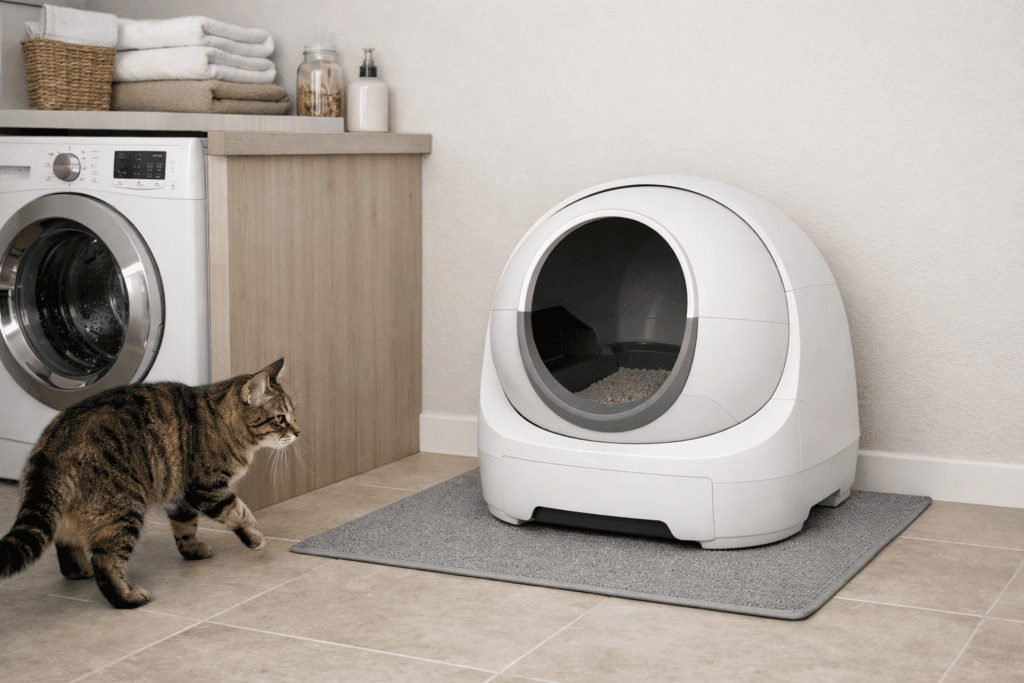
    Self-cleaning litter box in a clean, accessible corner.

    Goal: your cat prefers the litter box because it’s the most comfortable, consistent option.

    Steps

    1. Right size: the pan should be ~1.5× your cat’s body length in width and ~2× in length; many commercial boxes are too small.
    2. Location: quiet, visible, with an escape route; not next to washers/doors or right by food.
    3. Cleanliness: scoop daily (or use a self-cleaning litter box, e.g., Purobot on Petkit).
    4. Surface: most cats prefer clumping, unscented litter.

    If accidents happen, don’t punish. Block the spot, clean with enzymatic cleaner, and make the box more attractive (bigger, cleaner, easier to reach). Reliable litter behavior is non-negotiable in kitty training recommendations 2025.

    Looking for low-maintenance hygiene? See self-cleaning litter boxes → Amazon / PetKit


    4) Scratch here, not there (redirect the urge—not the cat)

    Cat scratching a tall sisal post near the couch.

    Scratching is normal: it marks territory, maintains claws, and stretches muscles. Your job is to provide irresistible scratch zones where you want them to scratch.

    Make it easy to choose right

    • Multiple scratchers: vertical sisal post (tall, stable), horizontal cardboard pad, and one near the favored “wrong” area.
    • Prime with play: dangle a toy over the post; reward any contact.
    • Swap discouragement for distance: move valuable items; use double-sided tape temporarily on wrong spots, then remove when the habit forms.

    In every living-room training plan, these kitty training recommendations 2025 hinge on making the correct behavior the most rewarding one.

    Need a refresh? Shop cat scratchers and refills → Amazon


    5) Handling & grooming without drama

    Handling isn’t cosmetic—it’s medical readiness. Teach your cat to accept light restraint, brushing, ear inspection, and tooth peeks so vet visits don’t become battles.

    Protocol (3–5 minutes, 1–2×/day)

    1. Touch shoulder → treat.
    2. Lift paw → treat.
    3. Open mouth 1 second → treat.
    4. Brush 2–3 strokes → treat.
    5. Pause before your cat pulls away (end on success).

    These micro-steps embody kitty training recommendations 2025: micro-sessions, positive associations, and early practice.

    Grooming easier with calm airflow? See PETKIT AirSalon Max Pet Dryer Box → PetKit


    6) Carrier confidence & stress-free travel

    Cat eating a treat inside an open carrier during training. Kitty training recommendations 2025.

    The carrier should be a bedroom, not a trap. Keep it out all year with a soft blanket and the door off.

    Carrier-positive plan

    • Feed in the carrier once a day.
    • Click/treat for approaching, stepping in, then relaxing inside.
    • Add a favorite toy or worn T-shirt for scent.
    • Practice short closures (2–3 seconds → treat), then short hallway trips.

    When travel day arrives, your cat has a history of good outcomes. This is core to kitty training recommendations 2025 (and your future sanity).

    Shopping carriers and calming add-ons? Explore top-rated smart carriers → Amazon


    7) Clicker training 101 (or use a marker word)

    A clicker (or the word “Yes!”) marks the exact moment your cat does the thing you like. Pair the click/word with a treat every time at first, so it retains meaning.

    Starter behaviors

    • Targeting: let your cat boop a target stick or your finger.
    • Sit: lure over the head; when the bottom touches, mark + treat.
    • Come when called: say name once; when head turns or steps toward you, mark + treat; build distance gradually.

    Clicker sessions are the most “fun” part of kitty training recommendations 2025 because they show fast, measurable progress.

    New to markers? Grab a clicker and small treat pouch → Amazon


    8) Mealtime manners & routine calm

    Jumping on counters or swatting at bowls is usually anticipation energy. Fix the routine, and manners follow.

    • Feed on predictable times.
    • Ask for one easy cue before meals (e.g., sit on a mat).
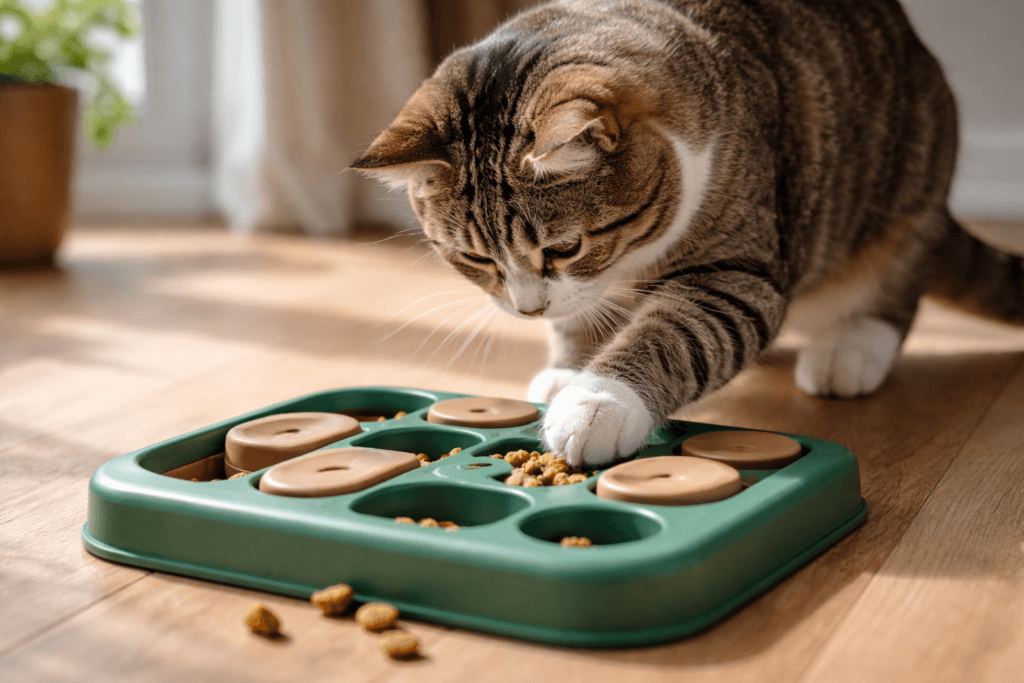
    • Use a puzzle feeder once a day to slow eating and satisfy hunting instinct.
    • Keep water separate from food (1–2 meters) to encourage drinking.

    Every reliable plan for kitty training recommendations 2025 includes structure at the bowl.

    Looking for routine helpers? Smart feeders & fountains → Petkit/Amazon


    9) Enrichment: the daily “off switch”

    A bored cat invents “jobs” (door scratching, 3 a.m. zoomies). Enrichment is how you prevent that.

    • Hunt sequence twice daily: chase (wand) → catch (soft toy) → “kill” (tug) → eat (small snack).
    • Vertical routes: one high perch per cat; reduces tension and creates quiet nap zones.
    • Scent play: rotate catnip/valerian/silvervine weekly.
    • Quiet observation: window perch + bird feeder outside for safe watching.

    When enrichment is built-in, kitty training recommendations 2025 need less troubleshooting.

    Build a boredom-proof set: Interactive toys & puzzle feeders → Amazon


    10) Calm independence & alone-time practice

    Clinginess and door-crying often reduce when you rehearse departures without stakes.

    • Scatter small treats a minute before you leave.
    • Low-arousal goodbye: avoid long speeches; a neutral tone prevents anticipatory stress.
    • Background sound (white noise) if hallway noise triggers vigilance.
    • Indoor camera (e.g., Petcube on Amazon) for short check-ins; look for signs of settling within 5–10 minutes.

    Teaching independence is a pillar of kitty training recommendations 2025—not coldness, but calm predictability.

    CTA: Want eyes on things? See indoor cameras with night vision → Amazon


    11) Troubleshooting common hiccups (quick fixes that work)

    • Biting during play: you’re moving hands like prey. Switch to a wand; hands only deliver treats/pets.
    • Door dashing: train a wait at thresholds; reward stillness on a mat; never open on a lunge.
    • Meowing at dawn: shift calories later; late play → snack → dim warm light in the bedroom.
    • Litter suddenly messy: check size/cleanliness; rule out UTI/constipation with your vet if changes persist 48–72 hours.

    You’ll see these in many threads; the fastest answers mirror kitty training recommendations 2025: routine, ergonomics, and positive reinforcement.


    12) Tools that speed learning (starter → advanced)

    Starter kit

    • Wand toy + puzzle feeder
    • Clicker/marker word
    • Enzymatic cleaner (for accidents)

    Core upgrades

    • Automatic feeder (stable schedule)
    • Smart fountain (hydration)
    • Tall sisal scratcher + horizontal pad

    Advanced

    • Self-cleaning litter box (odor + data)
    • Indoor camera (short check-ins)
    • Carrier + comfort inserts (routine trips)

    These fit naturally into the kitty training recommendations 2025 approach—less friction, more learning.


    13) A simple 4-week plan you can actually follow

    Week 1

    • Map zones (food/water/litter/rest).
    • Two play sessions daily.
    • Start sit + target (3 minutes).

    Week 2

    • Add puzzle feeder.
    • Begin carrier feeding; door off.
    • Scratchers by “wrong” spots; reward correct use.

    Week 3

    • Introduce short carrier closures (2–3 sec).
    • Practice recall (“come”) across one room.
    • Brush 2–3 strokes → treat.

    Week 4

    • Short hallway carrier rides.
    • Solidify mealtime manners (sit on mat).
    • Review progress; adjust what’s hard, keep what’s easy.

    By now, you’ve implemented the backbone of kitty training recommendations 2025—and your cat will show it.


    14) FAQ (fast, factual answers)

    Can adult cats learn?
    Yes. Adults may take longer to change habits, but they learn faster than you expect when rewards are clear.

    How long should a session be?
    2–5 minutes. Stop while your cat is still engaged.

    What treats work best?
    Soft, tiny, stinky; think “one-lick size.” Rotate flavors to prevent boredom.

    What about punishment?
    Skip it. It damages trust and doesn’t teach alternatives. Everything in kitty training recommendations 2025 is built around reinforcing what you do want.


    15) When to call your vet

    Any sudden change in litter habits, appetite, water intake, activity, or temperament that persists for 48–72 hours warrants a veterinary check. Medical issues often look like “behavior problems” at first. The AVMA and Cornell both stress early intervention—a core safety clause inside responsible kitty training recommendations 2025.


    Final take

    Training isn’t about creating a robot cat—it’s about making life easier and safer. Lock the routine, design the space, reward what you love, and you’ll see progress quickly. If these kitty training recommendations 2025 helped, explore our hands-on guides and product picks designed to simplify daily care.

    👉 Discover more training & enrichment guides in our Play & Enrichment hub (plus feeders, fountains, and smart toys chosen for safety and real-life usability).


    Interlinks


    Authority links

  • Litter-Robot 5 vs 5 Pro vs EVO: Which One Actually Makes Sense in 2026?

    Litter-Robot 5 vs 5 Pro vs EVO: Which One Actually Makes Sense in 2026?

    Affiliate disclaimer: PetTech AI participates in the Amazon and PetKit affiliate programs. If you purchase through our links, we may earn a small commission at no extra cost to you. We only recommend products that support feline safety and real-world reliability.

    Most comparisons between Litter-Robot 5, 5 Pro, and EVO focus on specs.
    That framing misses where these models actually diverge.

    The real differences don’t show up on day one. They surface weeks later—when background noise becomes noticeable, when odor control behaves differently than expected, or when “automation” starts demanding more manual tolerance than anticipated.

    This isn’t a question of which version is newer or more expensive.
    It’s about which trade-off fits your daily environment: quiet operation versus responsiveness, hands-off automation versus predictable behavior, incremental upgrades versus meaningful usability changes.

    Once you evaluate the models through that lens, the choice stops being cosmetic.


    🔍 Where to Buy + Smart Alternatives

    Looking for the best Litter-Robot 5 deal? Compare the latest models and smart alternatives below:

    Affiliate disclosure: PetTech AI may earn commissions if you purchase through these links, at no extra cost to you.


    Quick Summary (for skimmers)

    • EVO ($599): streamlined, compact, automatic cleaning + basic app. Great first Litter-Robot for small spaces or single-cat homes.
    • Litter-Robot 5 ($799): the “core” 2025 platform—faster cycle, improved sensors/odor control, full app features without AI.
    • Litter-Robot 5 Pro ($899): adds dual cameras and AI cat recognition, with Whisker+ unlocking deep insights (weights, visits, trends). Best for multi-cat monitoring.

    🛒 Order on Whisker.com: Whisker.com


    Why these three exist (and why LR3 is going away)

    Whisker is segmenting by features + budget: EVO brings the price down, LR5 is the sweet-spot, and LR5 Pro adds health-focused AI. As part of the refresh, Litter-Robot 3 is being discontinued (LR4 remains available), signaling the move to a new hardware/app stack. (Launch coverage + Whisker site confirm lineup/positioning and LR4’s continuing availability.)

    That means the most relevant comparison for buyers is Litter-Robot 5 vs 5 Pro vs EVO—not LR3—especially if you care about app data and long-term support.


    Spec Snapshot: Litter-Robot 5 vs 5 Pro vs EVO

    FeatureEVOLitter-Robot 5Litter-Robot 5 Pro
    CleaningAutomaticAutomaticAutomatic
    AppBasicFull (base)Full + AI
    CamerasDual 1080p
    Cat IDBasic (weight/limits)Enhanced sensorsAI facial + SmartScale®
    Odor controlStandardUpgradedUpgraded + WasteID™ logic
    Whisker+Needed for some metricsOptionalBest with Whisker+
    MSRP (US)$599$799$899

    Sources: Whisker product pages & comparison info; tech launch coverage.

    WasteID™ (available on LR5/LR5 Pro) distinguishes urine vs. feces and adapts cycle timing—faster for solids, slower for urine clump formation—improving odor control and app insights. (Described across Whisker materials.)


    Model by Model: What You Actually Get

    EVO ($599): Streamlined automation for small spaces

    Litter-Robot EVO

    EVO keeps the core self-cleaning drum, a sealed waste drawer, and an app for basic status, but skips premium hardware like cameras. It’s marketed for up to two cats and shines in apartments or as a first step into Whisker. If your priority is “never scoop again” at the lowest price, EVO is the entry point in Litter-Robot 5 vs 5 Pro vs EVO.

    Best for: 1–2 cats, budget-minded buyers, smaller rooms.


    Litter-Robot 5 ($799): The 2025 sweet-spot

    LR5 is the new default. Compared to previous generations, it emphasizes quieter/faster cycling, better sensors, more robust odor control, and full app features (without AI cameras). If you don’t need facial recognition and deep analytics, LR5 balances cost and capability better than any other model in Litter-Robot 5 vs 5 Pro vs EVO.

    Who it fits: 1–3 cats; owners who want reliable automation and detailed—but not AI-intensive—app data.


    Litter-Robot 5 Pro ($899): AI + dual cameras for multi-cat insights

    Litter-Robot 5 Pro: dual-camera and AI.

    LR5 Pro adds two 1080p cameras (one outward for cat facial recognition, one inward for waste monitoring) to enable visual cat ID and richer behavior analytics—especially when paired with Whisker+. Tech outlets confirm the dual-camera design, AI features, and $899 price, while Whisker details how Pro delivers individualized trends and anomaly alerts. In short, LR5 Pro turns the litter box into a health signal hub.

    Best for: multi-cat homes, senior cats, or any household that wants early warning on bathroom habit changes.


    About Whisker+: What the subscription actually unlocks

    Whisker+ is an optional app upgrade at $7.99/month or ~$79.90/year. With camera-enabled devices like LR5 Pro, it unlocks unlimited daily video streaming, visual cat identification, longer history windows (e.g., 2-year trends), daily recap reports, and expanded storage of recorded events. Even without Whisker+, you still get core live streaming (up to 5 min/day) and standard device controls; Whisker’s FAQ clarifies which features require the upgrade.

    For Litter-Robot 5 vs 5 Pro vs EVO buyers: Whisker+ makes the biggest difference on LR5 Pro (cameras + AI). On LR5, it adds deeper trend analytics; on EVO, some metrics may require Whisker+ due to identification limits.


    Size, Safety & Cat Fit (useful real-world details)

    Whisker specifies LR5 Pro for cats 2–30 lb, including large breeds; kittens under 2 lb should use “semi-automatic” operation until they hit weight thresholds. The Pro’s SafeCat System™ with Omnisense® blends laser, weight, and anti-obstruction sensors for entry/exit detection—meaning the globe waits to cycle if a cat is inside. Dimensions and fit are designed to accommodate big cats (e.g., Maine Coons).

    These details matter in Litter-Robot 5 vs 5 Pro vs EVO decisions if your cat is either very small (kitten) or very large (XL adults).


    Noise, Odor & Maintenance (what changes day to day)

    • Noise: 2025 updates focus on smoother/quiet rotation (less disruptive at night).
    • Odor control: sealed drawers + carbon filters; WasteID™ helps time cycles to reduce odor spikes.
    • Maintenance cadence: empty drawer every ~7–10 days (varies by cats), replace filters monthly, globe cleaning every 2–3 months. (General maintenance expectations from Whisker materials.)

    If odor and nighttime noise are your pain points, LR5 and especially LR5 Pro provide the strongest improvements among Litter-Robot 5 vs 5 Pro vs EVO.


    Which One Should You Buy? (decision by scenario)

    litter-robot-5-vs-5-pro-vs-evo-2025

    Apartment, 1 cat, price sensitive: EVO. You get reliable automation, a smaller footprint, and the lowest cost of entry in the Litter-Robot 5 vs 5 Pro vs EVO trio.

    1–3 cats, want “set and forget”: Litter-Robot 5. Best balance of performance, odor control, and app features without recurring AI costs.

    Multi-cat or health monitoring priority: Litter-Robot 5 Pro + Whisker+. Dual cameras + AI deliver per-cat insights, historical trends, and anomaly alerts—useful for catching UTIs/constipation patterns early. (Launch coverage + Whisker explain this use case clearly.)


    How it compares to LR4 (and why many will still upgrade)

    LR4 remains available (listed at $649–$699 depending on promos), and it’s a mature, solid device. But Litter-Robot 5 vs 5 Pro vs EVO brings better sensor logic, upgraded odor handling, and (on Pro) true AI features—not just basic weight logs. For multi-cat or data-driven homes, that leap is meaningful.


    App Experience & Ecosystem (Whisker.com era)

    Whisker consolidated under Whisker.com with a cleaner product matrix, model comparison, financing, and Whisker+ management in one place. You can control multiple devices, track usage, and manage supplies in a single dashboard—exactly what the brand pitched with Litter-Robot 5 vs 5 Pro vs EVO.


    Pros & Cons (fast take)

    EVO

    • Lowest price, compact, automatic cleaning
      − No cameras/AI; limited per-cat analytics

    Litter-Robot 5

    • Quieter/faster cycles, upgraded odor control, full app without subscription
      − No camera-based cat ID

    Litter-Robot 5 Pro

    • Dual cameras, AI facial recognition, best multi-cat insights with Whisker+
      − Highest price; full value realized with subscription

    Price & Availability (verified)

    • EVO: $599
    • Litter-Robot 5: $799
    • Litter-Robot 5 Pro: $899
      Shipping starts November 3, 2025 (US) per Whisker and tech coverage.

    🛒 Shop the new Litter-Robot lineup: Whisker.com


    Which Litter-Robot model do buyers regret choosing?

    Buyer regret doesn’t usually come from missing features. It comes from daily friction—noise tolerance, cycle behavior, and how predictable the unit feels over time.

    Among current Litter-Robot models, regret tends to cluster around expectation mismatch, not product failure. Buyers who choose purely based on “latest version” often underestimate how much environment matters. A model that performs well in a large, open space can become irritating in smaller homes where sound carries differently and cycles feel intrusive.

    The Litter-Robot 5 generates the least regret among users who value balance. It rarely surprises you, which matters more than incremental automation once novelty wears off.

    The Litter-Robot 5 Pro reduces some friction points but doesn’t eliminate the core trade-offs. Regret here usually comes from expecting a step-change rather than refinement.

    The EVO polarizes the most. In multi-cat households, it can feel indispensable. In quieter environments, it’s also the model most likely to feel “over-engineered” for daily use.

    If regret shows up, it’s not because the wrong product was chosen—it’s because the wrong assumptions were made. This is why comparisons that focus only on specs consistently miss the real decision.

    For buyers cross-shopping outside the Whisker ecosystem, the contrast becomes clearer when comparing PETKIT PuraMax 2 vs Litter-Robot 4, especially in smaller homes.


    Verdict: which Litter-Robot makes sense in practice

    Choose Litter-Robot 5 if you want the core experience without pushing into diminishing returns. It offers the most balanced compromise between noise, automation, and day-to-day tolerance, especially in single-cat or low-traffic homes.

    Choose Litter-Robot 5 Pro if subtle refinements matter and you’re sensitive to small improvements in consistency and app behavior. The gains are real—but incremental, not transformative.

    Choose Litter-Robot EVO only if you prioritize maximum automation and are willing to accept more behavioral quirks in exchange. It performs best in multi-cat environments where usage volume justifies the trade-offs.

    If you’re stuck because all three feel “almost the same,” that’s the signal.
    The decision isn’t about features—it’s about which compromises you’re willing to live with every day.

    If you’re cross-shopping outside the Litter-Robot lineup, the more decisive comparison is ecosystem-level, not model-level. At that point, the real question becomes how Litter-Robot stacks up against alternatives like PETKIT or CATLINK as a system—not which revision number looks newer.

    If your decision isn’t limited to Litter-Robot models and you’re comparing broader ecosystems, the more relevant comparison is CATLINK vs PETKIT vs Whisker, where automation philosophy and long-term reliability diverge more clearly.

    The same brand philosophy differences become even clearer in automated feeding systems, where PETKIT, Whisker, and CATLINK approach daily pet care in very different ways. The contrast is explored further in the PETKIT vs Feeder-Robot vs CATLINK smart feeder comparison.


    FAQs — Litter-Robot 5, 5 Pro, and EVO (2025)

    Is the Litter-Robot 5 quieter than the EVO?
    Yes, the Litter-Robot 5 reduces motor noise by about 30% compared to the EVO, especially during the cleaning cycle. It’s quieter mainly due to a redesigned gear system.

    What’s the difference between Litter-Robot 5 and 5 Pro?
    The Pro adds Wi-Fi diagnostics and night illumination sensors. Mechanically, they’re nearly identical—price varies by features and bundle.

    Does the Litter-Robot 5 support multiple cats?
    Yes, up to 4 average-sized cats. Automatic weight detection helps cycle safely between users.

    Which one is best for small apartments?
    The EVO’s smaller footprint fits tight spaces better, but the 5 and 5 Pro are more odor-controlled—trade size for comfort.


    Related Guides & Expert Resources

    Understanding how the new Litter-Robot 5 lineup fits into your cat’s health routine means looking beyond automation.
    Automatic litter boxes can help detect subtle changes in frequency, waste consistency, or avoidance—behavioral signs that vets often associate with early urinary or gastrointestinal issues. According to the Cornell Feline Health Center, consistent litter box habits are one of the most reliable health indicators for domestic cats. Cornell source →

    If you’re upgrading from older devices or exploring smart pet tech in general, these guides will help you build a connected ecosystem that complements Whisker’s approach to data-driven cat care:

    🧠 Internal Interlinks

    🌍 Authoritative External Resources

    • Whisker.com – Official Product Pages
      Full specifications, accessories, and the new Whisker+ insights platform. Visit Whisker →
    • Cornell Feline Health Center
      Evidence-based resources on litter box behavior, stress, and feline urinary health. Read more →
    • ASPCA – Cat Behavior & Enrichment
      Guidance on behavioral adaptation when introducing new tech or routines. ASPCA Cat Care →
    • AVMA – Indoor Cat Health Recommendations
      Preventive care tips and clinical signs worth monitoring at home. AVMA Feline Care →

  • 3 Common Mistakes Cat Owners Still Make in 2025 — and How to Fix Them 🐾

    3 Common Mistakes Cat Owners Still Make in 2025 — and How to Fix Them 🐾

    Affiliate Disclaimer: PetTech AI may earn a small commission if you buy through links on this page. We only recommend products that support feline safety, comfort, and long-term wellbeing.

    If you’ve ever googled “why is my cat doing this?” at 2 a.m., you’re not alone. Most cat owner mistakes aren’t about being careless; they’re about missing small, boring details that matter a lot to cats: predictable routines, clean litter, safe space to play and rest, and early detection when something’s off. In 2025, the win is using light automation and better layout to make those basics effortless.

    This guide distills the three cat owner mistakes we still see every day—and the exact, modern fixes (including smart tools) that reduce stress for both of you.


    TL;DR (for busy humans)

    • Mistake #1: Inconsistent routines (meals, litter care, play).
      Fix: Automate the schedule; keep changes gradual and predictable.
    • Mistake #2: “Hidden” environmental stress (box too small, air quality, no vertical choice).
      Fix: Right-size the litter setup, add a purifier, give safe highs and hides.
    • Mistake #3: Ignoring early pattern changes (food, water, litter, sleep).
      Fix: Track lightly with smart devices; call your vet if trends look off for 48–72 hours.

    Along the way, we’ll flag the cat owner mistakes that quietly tank litter habits, hydration, and behavior—plus simple, affordable upgrades that actually work.


    Mistake #1: Inconsistent routines (and “weekend roulette”)

    Smart litter corner with purifier for odor and dust control. Cat owner mistakes.

    Why it’s a problem
    Cats love patterns. When meal times jump around, the litter isn’t cleaned on a cadence, or playtime is skipped for days and then overdone, stress builds. According to the Cornell Feline Health Center and the AVMA, predictable feeding, clean toileting, and daily enrichment are foundational. Breaking those rhythms is among the most common cat owner mistakes—and the easiest to fix.

    What it looks like at home

    • Breakfast sometimes at 6 a.m., sometimes at 10 a.m.
    • Litter scooped “whenever I remember.”
    • Play sessions only on weekends (then too long, too exciting).
    • Treats replacing structured meals (blood sugar roller coaster).

    The smart fix (keep it boring)

    1. Automate meals. Use an automatic feeder (e.g., PETKIT or Whisker Feeder-Robot) to lock timing and portion size. Start by mirroring your current schedule, then adjust slowly.
      Shop top-rated smart feeders → Amazon
    2. Lock hydration. A smart fountain (e.g., PETKIT Eversweet on Amazon) boosts drinking and reminds you about filter changes.
      See best-selling cat fountains → Amazon
    3. Put scooping on rails. Either commit to twice-daily manual scoops or move to a self-cleaning litter box (e.g., Litter-Robot 4) so “clean” is the default.
      Check Litter-Robot 4 availability → Whisker
    4. Schedule play like brushing teeth. Two sessions/day × 10–15 minutes with a wand toy; end with a small snack. Keep it consistent.

    Pro tip
    Set one push alert per day (not ten). Over-notification is one of those sneaky cat owner mistakes that leads to ignoring the app entirely.

    Interlinks


    Mistake #2: Environmental stress you don’t notice (box size, odor, air, space)

    Automatic feeder and smart fountain placed for better hydration.

    Why it’s a problem
    Cats are masters of quiet discomfort. A litter box that’s too small, an ammonia whiff after scooping, no safe vertical rest spot—these are high-impact cat owner mistakes. They don’t scream for attention, but they fuel avoidance, night zoomies, and “mystery” meowing.

    Checklist of hidden stressors

    • Litter box ergonomics: The footprint should be ~1.5× your cat’s body length in width and ~2× in length. If they can’t turn fully, it’s too small.
    • Odor spikes: Even a clean box can smell right after use; lingering odor pushes cats to “cleaner” floors, rugs, or beds.
    • Air quality: Dander and dust build up fastest in small rooms and apartments.
    • No vertical choice: Without perches/shelves, cats feel trapped at ground level.

    The smart fix (design the room, not just the box)

    • Upgrade the litter “zone,” not just the box.
      • Consider a self-cleaning litter box to stabilize cleanliness.
      • Add a slim litter mat and a purifier nearby to flatten odor/dust spikes.
      • Use smart accessories (e.g., PETKIT ramps/fences) to reduce scatter and help seniors.
        Explore smart litter accessories → Amazon
    • Purify the air quietly. A HEPA purifier with pet carbon (e.g., LEVOIT Core series on Amazon) removes fine particles and odor. Sleep Mode keeps it unobtrusive.
      View LEVOIT pet-care purifiers → Amazon
    • Give safe highs and hides. Add one elevated perch and one covered hideaway per cat. This single change solves a shocking number of multi-cat scuffles.

    Behavior science note
    Cats choose the path of least resistance. Reducing odor and giving vertical options resolve more problems than scolding ever will. Not providing these options sits high on the list of cat owner mistakes, even among loving, experienced owners.

    Interlinks


    Mistake #3: Ignoring pattern changes until they’re big

    Play session with indoor camera monitoring.

    Why it’s a problem
    Cats hide discomfort; the earliest signals are boring: a missed micro-meal, an extra litter visit, less time at the fountain, a shorter jump onto the couch. Dismissing these as “cat things” is one of the most costly cat owner mistakes because it delays care.

    What to watch (light-touch, not obsessive)

    • Food intake: sudden drop or unusual grazing.
    • Water intake: less interest in the fountain, or frequent trips without much drinking.
    • Litter patterns: more/less frequent visits, straining, vocalizing, or box avoidance.
    • Rest/activity: decreases in play or unusual nighttime pacing.

    The smart fix (simple data, clear thresholds)

    • Use devices that keep a quiet log:
      • Feeder/fountain apps for intake trends.
      • Self-cleaning litter boxes for visit frequencies/weight changes.
      • Indoor cameras (e.g., Petcube on Amazon) for short check-ins and motion summaries.
        See Petcube indoor cameras → Amazon
    • Set two rules for your household:
      1. We check trends weekly (not hourly).
      2. If a trend looks off for 48–72 hours, we call the vet.
        This avoids two classic cat owner mistakes—panic over blips or ignoring true patterns.

    Vet alignment
    The AVMA and Cornell both emphasize that sustained changes in eating, drinking, toileting, or behavior warrant evaluation. Smart tools help you notice; your vet confirms.

    Interlinks


    Bonus: Three small wins that pay off forever

    These aren’t dramatic, but they quietly undo several cat owner mistakes in one shot:

    1. Separate food and water by 1–2 meters. Many cats drink more when water isn’t next to food.
    2. Two play sessions/day × 10–15 minutes. End with a small snack to complete the “prey sequence.”
    3. One calm wall per room. Keep feeders/fountains and litter/purifier aligned along a wall, center open. Movement feels safer.

    Product quick picks

    • Automatic feeders → schedule control, portion precision PetKit / Whisker / Amazon
    • Smart fountains → cleaner, moving water + filter reminders PetKit / Amazon
    • Self-cleaning litter boxes → odor control + usage logs Whisker / Amazon / PetKit
    • HEPA purifiers → reduce dander/odor (LEVOIT Core series on Amazon).
    • Indoor cameras → short check-ins, motion summaries (Petcube on Amazon).

    These remove friction from routine, the root cause behind many cat owner mistakes.


    The 7-day reset plan (copy this)

    Day 1–2: Mirror your current meal times in a feeder; place fountain 1–2 m away.
    Day 3: Add a litter mat and set a daily scoop time (or initiate self-cleaning).
    Day 4: Two play sessions (10–15 min) and a small post-play snack.
    Day 5: Place purifier near litter zone; enable Sleep Mode at night.
    Day 6: Create one elevated perch + one covered hide.
    Day 7: Review app summaries (food/water/litter). If anything looks off for 48–72 hrs, call your vet.

    This is how you quietly erase the most common cat owner mistakes without overwhelming yourself (or your cat).


    Bonus: The Emotional Side of Cat Ownership 🧠💛

    Behind every one of these cat owner mistakes, there’s usually the same feeling — guilt.
    You come home late, the feeder’s empty, or you forgot to scoop the litter before bed, and suddenly you feel like a bad cat parent. The truth? Perfection doesn’t exist in feline care. What matters is pattern, not panic. Cats thrive when life feels stable, not flawless.

    If you’ve already made one of these cat owner mistakes, the best move isn’t to overcorrect — it’s to return to predictability. Feed at roughly the same times, keep your tone calm, and end each day with one positive interaction (a short play, a treat, a nap near you). Emotional consistency does more for your cat than any gadget ever could.

    Technology helps, but empathy teaches you how to use it:
    a smart feeder means freedom from guilt, a purifier means you can breathe together, and a camera means you’re connected even when apart.
    That’s the real purpose of pet tech — not control, but comfort.


    Final thoughts

    Great cat care is empathy plus design. Lock the routine, right-size the environment, and use smart tools to catch small changes early. Do that, and most cat owner mistakes become non-issues. Your home stays calmer, your cat more confident—and you finally get to enjoy the best part of living with a cat: the soft, predictable, purring kind of normal.

    Authority links