Tag: pet camera

  • Cat Separation Anxiety 2026: How to Reduce Stress Without Making It Worse

    Cat Separation Anxiety 2026: How to Reduce Stress Without Making It Worse

    “Cat separation anxiety” is one of those labels people throw at any distress behavior that happens when they leave the house. In 2026, that’s a mistake. Most cats aren’t panicking because they “miss you” like a dog might. They’re stressed because their environment stops feeling predictable—and in a cat’s brain, unpredictability inside their territory equals risk.

    This guide on cat separation anxiety 2026 is built around what actually changes outcomes: stable routines, environmental control, and enrichment that supports feline agency. We’ll cover the real signs, the most common “fixes” that backfire, and the specific kinds of smart tech that can help—without turning your home into a chaos machine.


    Cat Separation Anxiety 2026: What It Really Is (and What It Isn’t)

    In cat separation anxiety 2026, the most useful model isn’t “attachment” first—it’s stress physiology + territorial control. Cats are wired to scan their environment for predictability: food access, safe resting spots, escape routes, social friction, noise, smells, and resource stability.

    Separation-related stress tends to show up when:

    • your schedule changes (remote work → travel → remote again)
    • resources feel “owned” by the human (food appears only when you’re present)
    • the environment suddenly flips from active to silent, then back again
    • the cat has limited agency (boring indoor life, no hunting/foraging outlets)

    The AAFP / ISFM environmental needs guidelines are blunt about it: a cat’s comfort with its environment is linked to physical health, emotional wellbeing, and behavior, and meeting environmental needs isn’t optional. CVMA

    That’s the framework for cat separation anxiety 2026: reduce uncertainty, increase agency.


    Signs of Cat Separation Anxiety 2026 You Should Take Seriously

    Not every “weird behavior” is separation anxiety. But these patterns—especially if they cluster—deserve attention:

    • Vocalization that’s time-linked to departure (not random chatting)
    • Pacing / restlessness / inability to settle
    • Overgrooming or sudden “licking too much” patterns
    • Appetite swings (skipping meals or frantic eating)
    • House soiling (after medical causes are ruled out)
    • Destruction near doors/windows (escape attempts or barrier frustration)

    VCA’s anxiety overview aligns with the body-language side of this: pacing, fidgeting, freezing, hiding, and other fear signals are common when animals feel unsafe or aroused. Vca

    Important: sudden behavior changes can be medical. If the change is abrupt, your first stop is a vet, not a shopping cart.


    Interpreting Separation-Related Stress Behaviors in Cats

    To make these patterns easier to interpret, the table below links common separation-related behaviors to their most likely underlying drivers and the most effective interventions.

    Observed BehaviorMost Likely Underlying DriverWhat’s Actually HappeningWhat Helps (and What Doesn’t)
    Persistent vocalization after you leaveLoss of routine predictabilityThe cat is scanning for environmental confirmation that “normal time” is still happening✔ Fixed feeding times and consistent daily cues
    ✘ Talking randomly through cameras
    Pacing or inability to settleExcess arousal + lack of agencyEnergy has no structured outlet, leading to vigilance loops✔ Scheduled play + independent enrichment
    ✘ Leaving noisy toys running all day
    Overgrooming or sudden hair thinningChronic low-grade stressSelf-soothing behavior triggered by prolonged uncertainty✔ Stable routines + environmental simplification
    ✘ Increasing stimulation
    Sudden changes in appetiteAnticipatory anxiety around food accessFood has become a variable resource tied to human presence✔ Automated feeding with fixed timing
    ✘ Hand-feeding before leaving
    Scratching or destructive behavior near doors/windowsBarrier frustrationThe cat is focused on the exit as a perceived “solution”✔ Redirected enrichment + vertical territory
    ✘ Punishment or deterrent sprays
    Litter box avoidance with no medical causeStress-related elimination behaviorThe litter box is no longer perceived as a safe, neutral resource✔ Environmental stability + location review
    ✘ Changing litter type repeatedly
    Hyper-attachment when you returnRebound arousal, not affectionStress accumulates during absence and discharges on reunion✔ Calm, low-key arrivals
    ✘ Overexcited greetings
    Increased tension in multi-cat homesSocial instability when supervision disappearsHuman presence was masking unresolved social stress✔ Resource duplication + space separation
    ✘ Forcing shared spaces

    The #1 Mistake in Cat Separation Anxiety 2026: “Remote Reassurance”

    People buy a camera, then talk to their cat all day. It feels caring. For many cats, it’s not.

    Why it can backfire in cat separation anxiety 2026:

    • A disembodied voice is an unpredictable stimulus
    • The cat hears “you,” but can’t complete the social loop
    • Random interaction spikes arousal (alert → search → frustration → stress)

    If you use a camera, treat it like a diagnostic tool, not a relationship simulator. Use it to observe patterns (pacing, door fixation, conflict with other pets), not to inject noise into the environment.


    The Core Fix for Cat Separation Anxiety 2026: Predictable Routines

    Cats don’t need constant attention. They need repeatable outcomes.

    In cat separation anxiety 2026, routines matter most in four areas:

    1. Feeding schedule (time + portion consistency)
    2. Play schedule (short, predatory-style sessions)
    3. Resource layout (multiple key resources, separated)
    4. Quiet safety zones (resting spots, hideouts, vertical space)

    The AVMA has explicitly emphasized that indoor cats need more than physical safety—without adequate enrichment, distress can develop and contribute to behavioral disorders. AVMA

    Translation: your cat can be “safe” and still be psychologically unstable.


    Smart Tech That Actually Helps Cat Separation Anxiety 2026

    This is where most articles become product spam. We’re not doing that. The only tech that belongs in cat separation anxiety 2026 is tech that improves predictability or agency.

    1) Smart Feeders: Routine Anchors (High ROI)
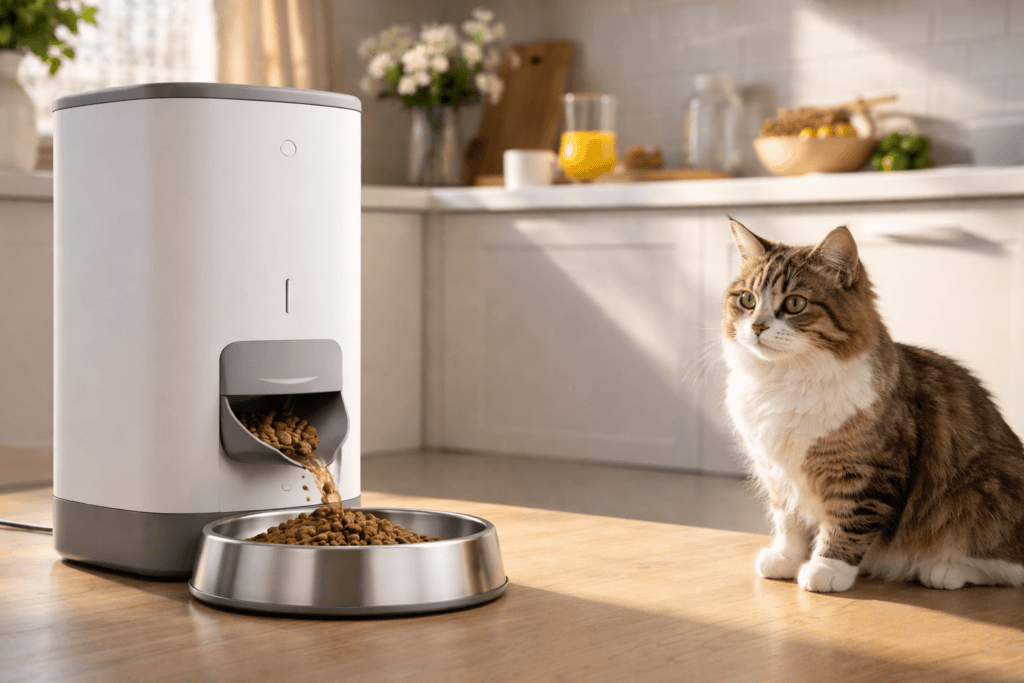
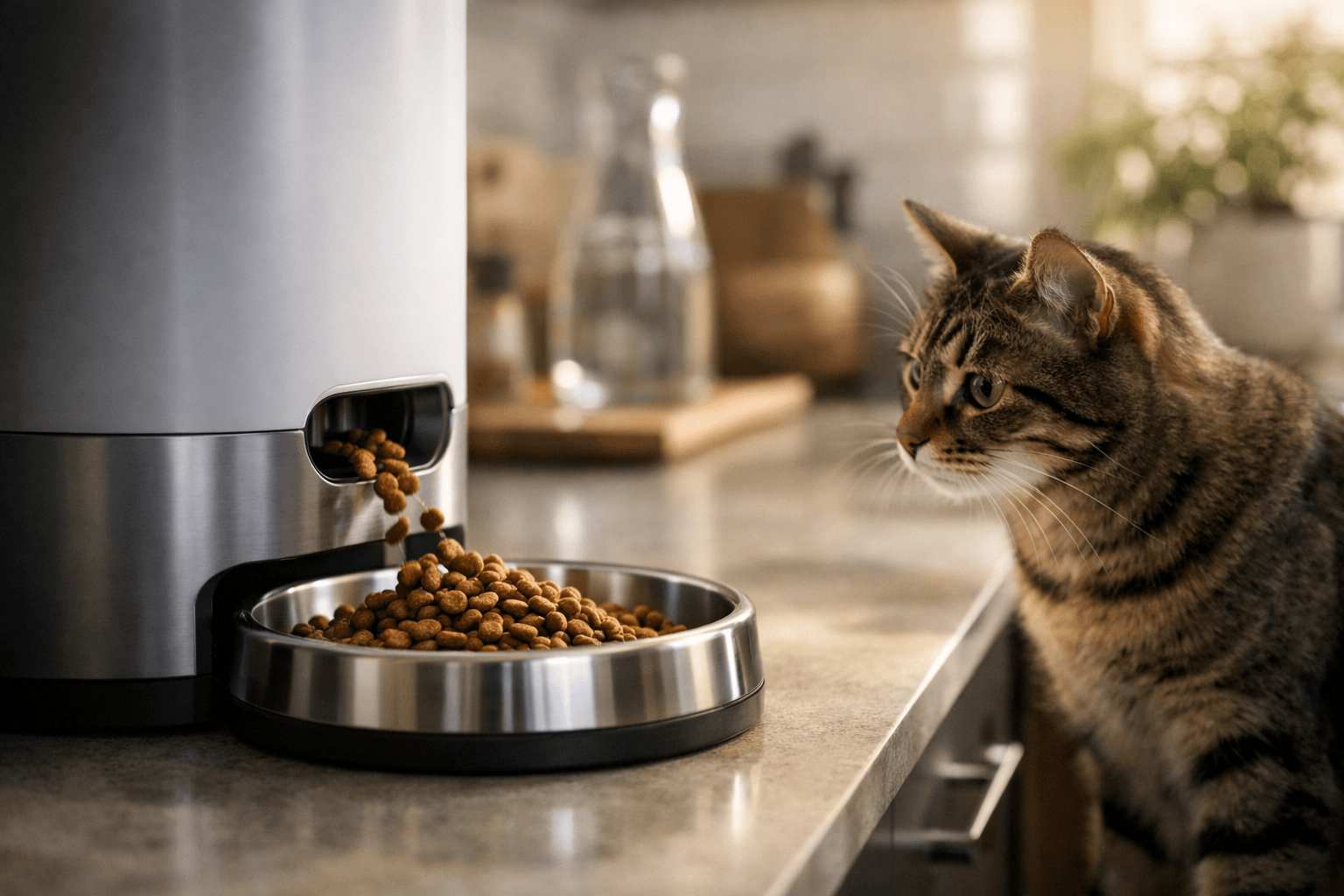
    Smart feeder delivering consistent portions to support a predictable routine

    A smart feeder is one of the cleanest behavioral tools because it removes human variability. If breakfast appears at random times, your cat learns to stay on alert. If meals are predictable, vigilance drops.

    PETKIT feeders
    PETKIT’s feeder lineup is available on Amazon via its official store pages, including automatic feeders with camera options. Amazon

    Pros

    • Strong routine support (consistent timing reduces anticipatory stress)
    • Portioning reduces “panic eating” patterns in some cats

    Cons

    • Doesn’t fix boredom on its own
    • If portions are wrong, automation just repeats the mistake

    If feeding chaos is part of the problem, start with PETKIT Fresh Element Infinity Review 2025 (portion logic + routine setup), then compare models in Best Smart Cat Feeders 2025.

    2) 360 Cameras: Pattern Detection, Not Noise
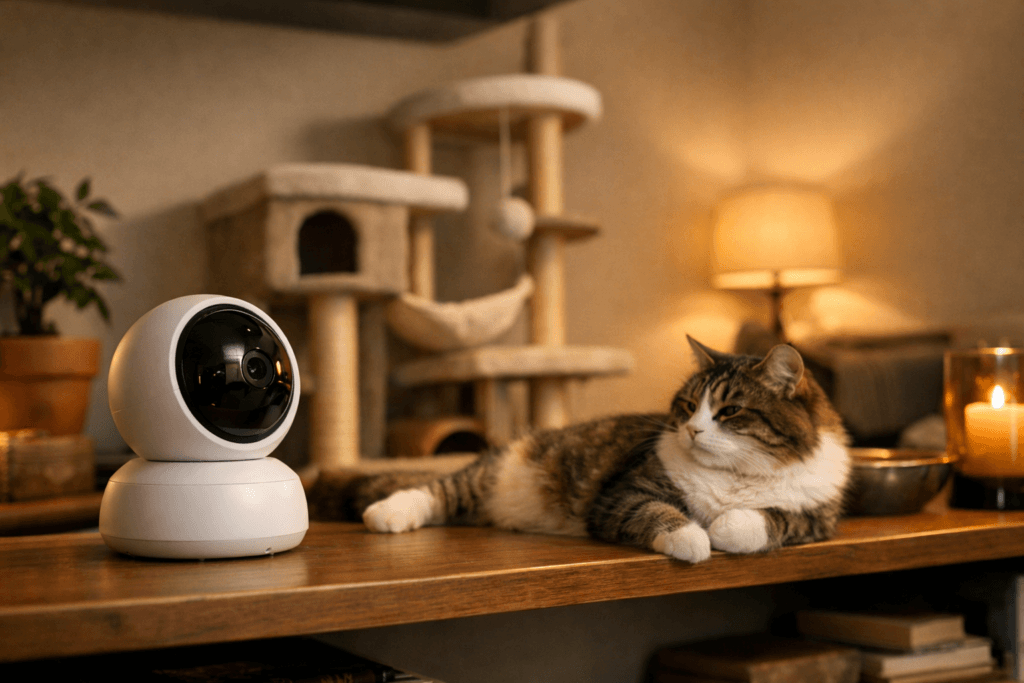
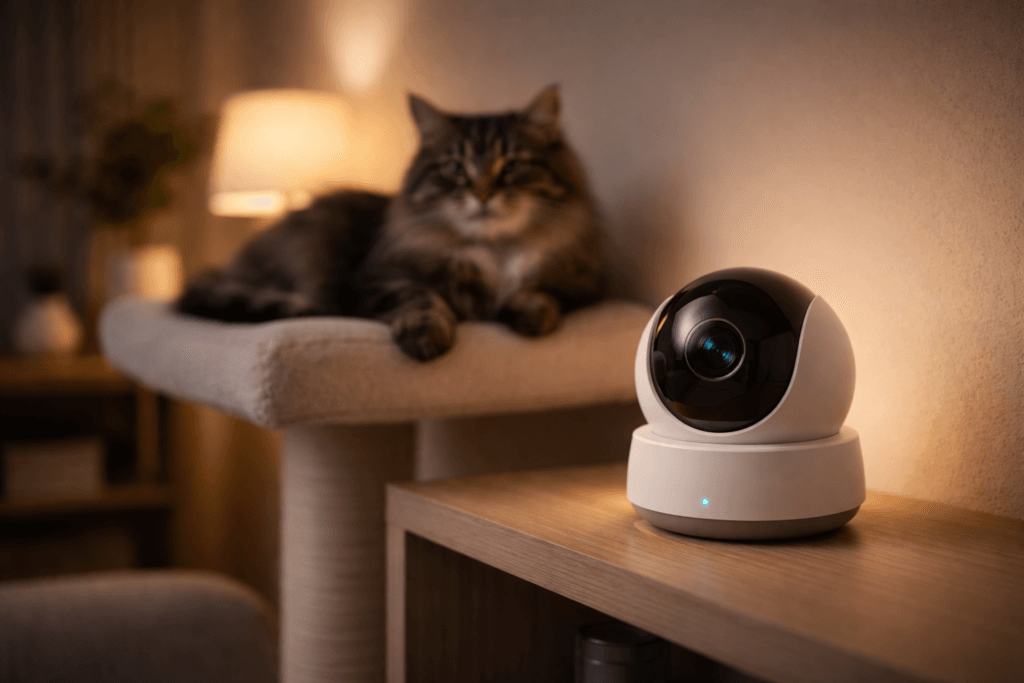
    Pet camera used to observe a cat’s behavior patterns while home alone

    A camera can help you spot triggers you miss: door fixation, conflict with another pet, or pacing loops.

    Petcube Cam 360
    Petcube’s Cam 360 is actively listed on Amazon US, with 1080p video and pan/tilt coverage. Amazon+1

    Pros

    • Great for full-room coverage and behavior monitoring
    • Helps you confirm whether “anxiety” is actually boredom + restless energy

    Cons

    • Two-way audio is easy to misuse (don’t create random stimuli)
    • Many “smart” features may require a plan (check the listing)

    3) Interactive Cameras (Treat Toss): Use Like a Training Tool

    Treat-toss cameras can be useful if you use them predictably, not randomly.

    Furbo 360° Cat Camera
    Furbo’s 360° Cat Camera is listed on Amazon US. Amazon

    Pros

    • Can reinforce calm alone-time routines (when scheduled)
    • Useful for controlled enrichment

    Cons

    • Random treat tossing can worsen food obsession
    • Some models may require a paid setup plan—verify the exact model before buying Amazon

    Enrichment That Reduces Cat Separation Anxiety 2026 (Without Overstimulation)
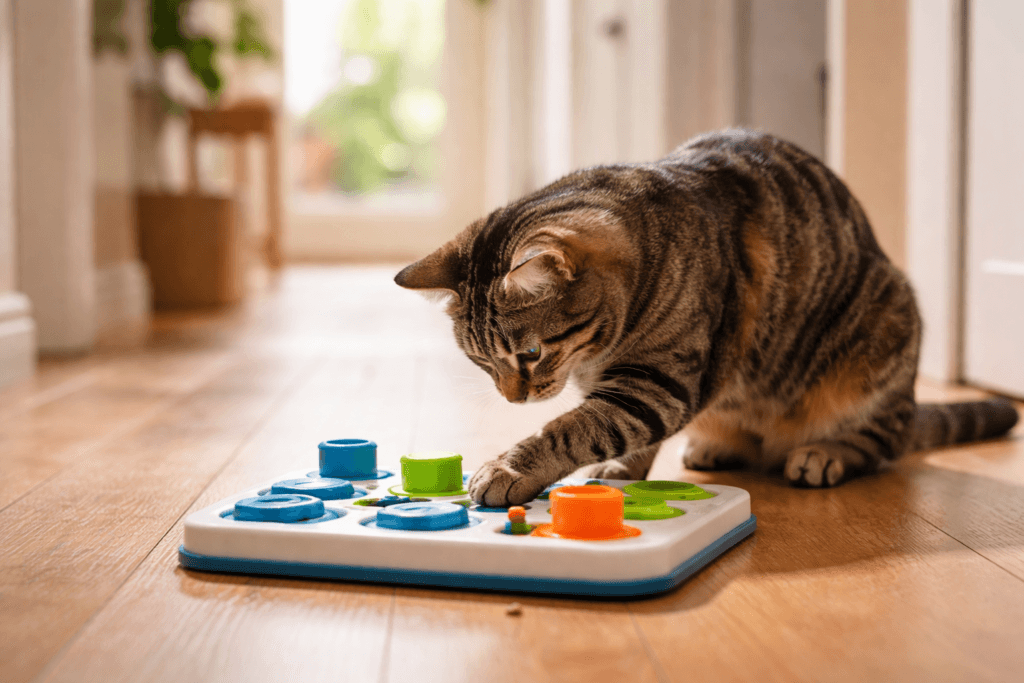
    Foraging enrichment activity that supports independent engagement

    A huge chunk of cat separation anxiety 2026 is “I have nothing to do, so I scan the door and spiral.”

    The stress-in-owned-cats literature supports environmental enrichment as a major strategy to reduce stress-related behavior problems. PMC
    The AAFP also has position statements on environmental enrichment emphasizing its role in physical and mental health. catvets.com

    Practical enrichment that works:

    • Foraging / puzzle feeding (hunting substitute)
    • Toy rotation (not “more toys,” better novelty cycles)
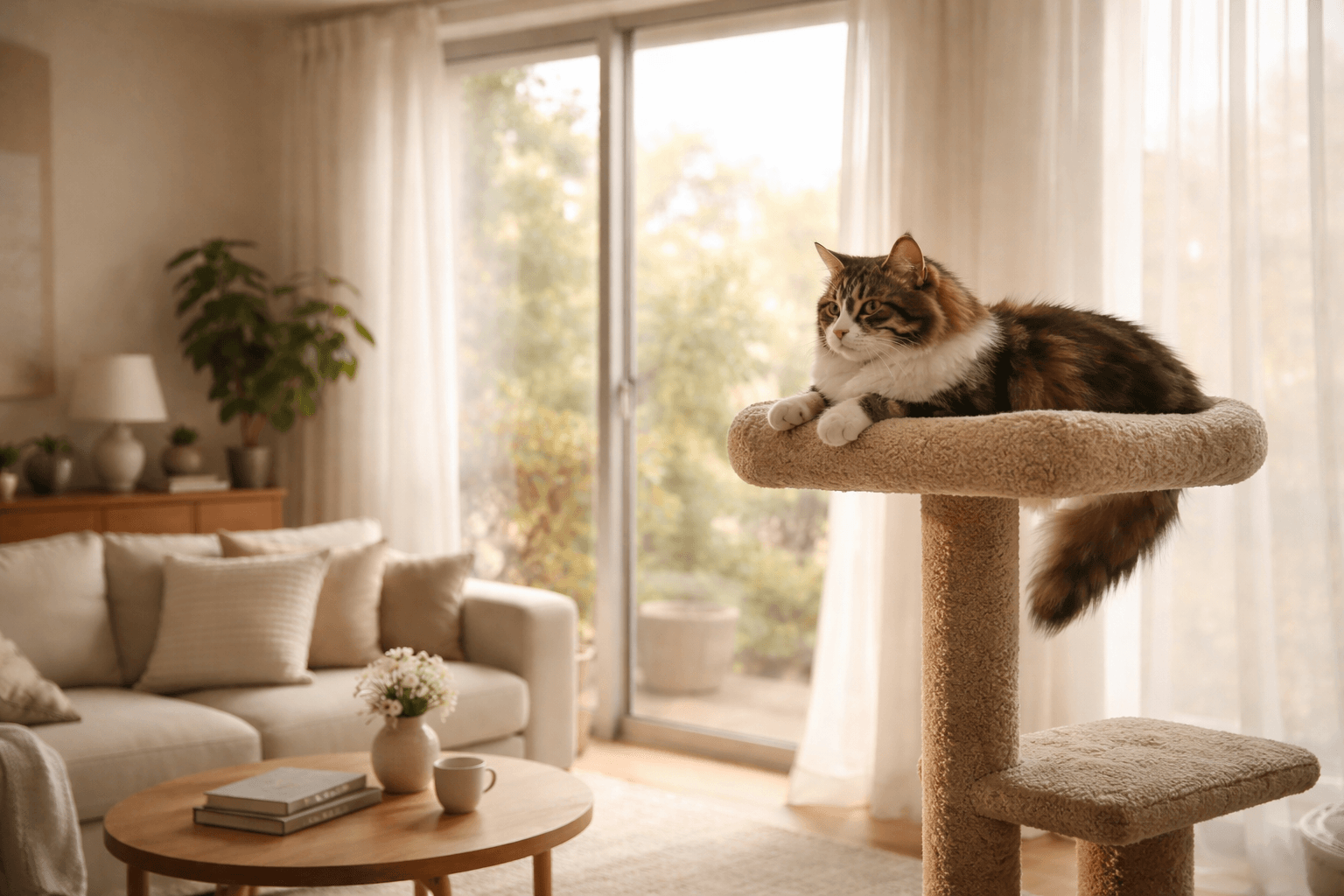
    • Vertical territory (perches, shelves, window views)
    • Predictable play windows (10–15 minutes, 1–2x/day)

    Avoid: leaving a cat in constant stimulation mode (noisy toys all day). That’s not enrichment—it’s fatigue.

    For curated solo-play options, see the Best Interactive Cat Toys 2025. For the behavioral “why,” Indoor Cat Enrichment 2025.


    Multi-Cat Homes: The Hidden Driver of “Separation Anxiety”

    A lot of “my cat panics when I leave” is really “my cat feels unsafe when supervision disappears.”

    When humans are home, cats often keep distance or rely on human presence as a buffer. When humans leave, tension can surface.

    AAHA guidance on tension among cats highlights how unresolved conflict can escalate and affect household peace. AAHA

    If you suspect this:

    • add duplicate resources (multiple food/water/litter stations)
    • increase vertical separation
    • monitor camera footage for blocking/guarding behaviors

    When Cat Separation Anxiety 2026 Is Not the Right Label

    Even strong routines won’t fix:

    • pain
    • GI discomfort
    • urinary issues
    • cognitive dysfunction in seniors

    If the anxiety appears abruptly, or if you see house soiling or appetite changes, rule out medical causes first. This is non-negotiable.


    Verdict: A Practical Plan for Cat Separation Anxiety 2026

    If you want the simplest plan that actually works:

    1. Lock a feeding routine (same times daily; smart feeder if needed)
    2. Schedule predictable play before departure (short, prey-style)
    3. Build agency (foraging + vertical territory + safe hideouts)
    4. Use cameras to observe, not to “talk”
    5. If multi-cat, assume tension exists until proven otherwise

    That’s cat separation anxiety 2026 handled like a systems problem, not a feelings problem.


    FAQ: Cat Separation Anxiety 2026

    1) Do cats really get separation anxiety?

    Yes, some cats develop separation-related distress, but in cat separation anxiety 2026 the more accurate lens is environmental stress: unpredictability, low agency, and unstable cues. PubMed

    2) Should I talk to my cat through a pet camera?

    Usually: no, or at least not randomly. If you use audio, keep it consistent and rare. Random voice events can increase vigilance and frustration. Vca

    3) What’s the best smart tech to start with?

    A smart feeder—because it stabilizes the strongest daily cue: food timing and portion predictability. PETKIT’s feeder lineup is available on Amazon US. Amazon

    4) Can boredom look like separation anxiety?

    Absolutely. Under-enrichment is a major driver of stress behaviors in indoor cats, and enrichment is consistently recommended as prevention/management. AVMA

    5) When should I see a vet?

    If signs appear suddenly, intensify rapidly, include house soiling, vomiting, appetite changes, or if your cat seems physically uncomfortable.


    Internal Links

    If unpredictable meals are fueling stress or frantic behavior, read our “PETKIT Fresh Element Infinity Review 2025 to see how structured feeding can stabilize routines and reduce “anticipation spirals.” If you’re still comparing models, open “Best Smart Cat Feeders 2025 to pick the right feeder for your home and your cat’s eating style.

    If your cat’s anxiety looks like restless energy or destructive boredom, check “Best Interactive Cat Toys 2025 for independent-play options that don’t overstimulate. For the deeper, science-based framework that connects environment to stress and behavior, visit “Indoor Cat Enrichment 2025.


    References

    AAFP / ISFM Feline Environmental Needs Guidelines — foundational framework linking environmental comfort to physical health, emotional wellbeing, and behavior; emphasizes environmental needs as essential. CVMA

    AVMA — Indoor cats require more than physical safety; without adequate enrichment, distress may develop and contribute to behavioral disorders. AVMA

    Amat et al. (2015) — review on stress in owned cats; highlights environmental enrichment and management strategies as key to preventing/reducing stress-related behavioral problems. PMC

    VCA Hospitals — overview of fear/anxiety signals (pacing, freezing, hiding, subtle stress body language) useful for interpreting feline distress behaviors. Vca

    AAHA — guidance on addressing tension among cats; relevant when separation-related distress is actually conflict triggered by unsupervised social dynamics. AAHA


    Disclaimer

    PetTech AI publishes educational content to help cat owners make informed decisions about feline care, behavior, and pet technology. Some articles include affiliate links, including Amazon Associate links and other affiliate partnerships. If you click a link and make a qualifying purchase, PetTech AI may earn a small commission at no extra cost to you. These commissions help support research, testing time, and ongoing site maintenance. Product availability and features can change, so always confirm current details on the retailer’s listing before buying. Nothing on this website replaces veterinary diagnosis or treatment for medical or behavioral conditions.
  • Best Smart Cat Tech 2026: What’s Actually Worth Buying (and What Isn’t)

    Best Smart Cat Tech 2026: What’s Actually Worth Buying (and What Isn’t)

    Smart gadgets don’t automatically equal a better life for a cat. In 2026, the best products are the ones that reduce friction for humans without breaking a cat’s routine, safety, or sense of control. That means fewer “cute” features, more boring (but meaningful) ones: reliable portioning, safer litter cycles, cleaner water, better monitoring, and enrichment that doesn’t overstimulate.

    This guide to best smart cat tech 2026 focuses on real, buyable gear on Amazon US, with a simple filter: does it measurably improve daily care—or just add noise to your home? If you want one page to plan a smart setup that actually makes sense, start here. Best smart cat tech 2026 is about building a system, not stacking gadgets.


    What “Best” Means in Best Smart Cat Tech 2026 (My Non-Negotiables)

    Before products, standards. Best smart cat tech 2026 should hit at least three of these:

    • Safety-first design (sensors, lockouts, stable materials, predictable behavior)
    • Routine support (consistent meal timing, cleaner litter, quieter operation)
    • Low-maintenance hygiene (stainless where it matters, easy disassembly, washable parts)
    • Useful data (not “AI” fluff—actual behavior insights you can act on)
    • No forced subscription for basic functionality (alerts and advanced features can be paid, but core use should stand)

    Feeding: The Smart Upgrade That Actually Changes Outcomes

    Overfeeding is one of the most common, most expensive mistakes in cat care long-term. A solid feeder is core best smart cat tech 2026 because it controls the thing humans routinely mess up: portions and consistency.

    PETKIT Fresh Element Infinity (Smart Feeder)
    Amazon (Solo)/ Amazon (Dual Hopper) / Amazon (Camera) / PetKit Store

    A strong pick if you want a feeder that’s built like a real appliance, not a toy. It’s designed for scheduled meals and controlled portions, which is where most “my cat is always hungry” problems begin.

    Why it belongs in best smart cat tech 2026

    • Scheduled feeding helps reduce chaotic begging loops.
    • Better portion control beats willpower every time.

    Quick pros

    • Great for routine feeding and portion discipline
    • Feels like a premium build in day-to-day use

    Quick cons

    • Still requires you to choose sensible portions (no device fixes math you won’t do)

    Want a deeper, hands-on breakdown before you buy? Read PETKIT Fresh Element Infinity Review 2025 | Smart Feeder Tested by PetTech AI.
    If you’re comparing brands first, use Best Smart Cat Feeders 2025 to shortlist models by use-case.

    (And yes: best smart cat tech 2026 for feeding is mostly about consistency, not “features.”)


    Litter Boxes: Where “Smart” Is Worth Paying For (If You Choose Carefully)

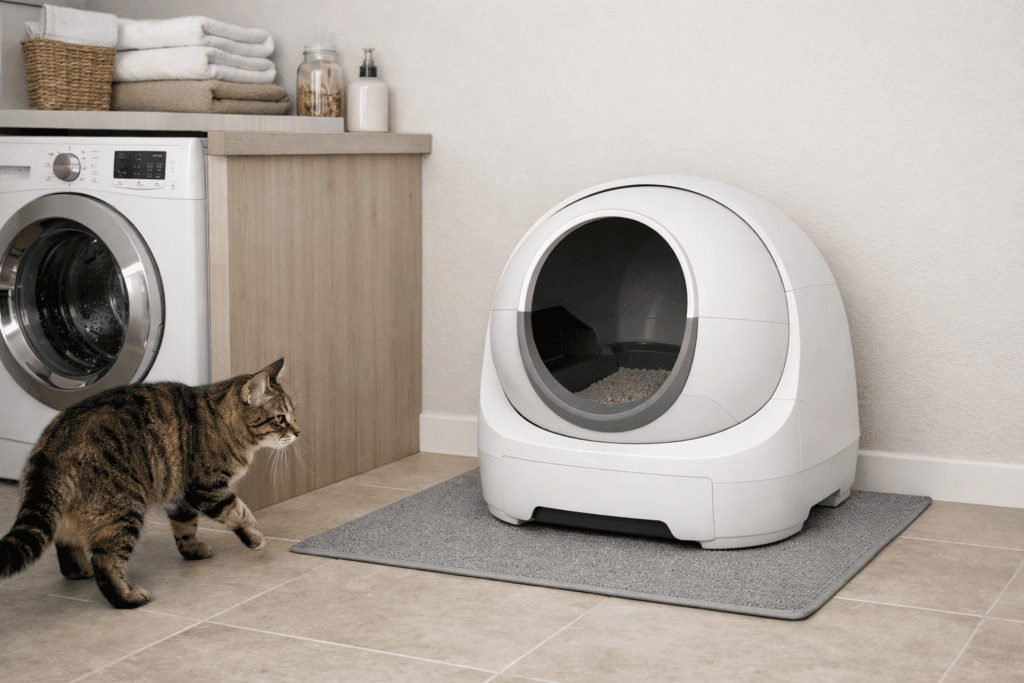
    Self-cleaning litter box setup designed for cleanliness and safety

    Self-cleaning litter is the most expensive category—and also where the difference between “smart” and “dangerous” matters. For best smart cat tech 2026, the bar is: redundant safety sensors, stable cycling behavior, and reasonable maintenance.

    PETKIT PuraMax 2 (Self-Cleaning Litter Box)

    This model is popular because it blends hands-off cleaning with the kind of sensor safety modern boxes need. It’s not “set and forget”—it’s “set and maintain.”

    Why it belongs in best smart cat tech 2026

    • More consistent cleanliness typically reduces litter avoidance.
    • App control is useful only if the hardware is safe and stable.

    Quick pros

    • Self-cleaning reduces human lag time (the #1 reason boxes get gross)
    • Designed around safety sensors (a baseline requirement)

    Quick cons

    • You still have to manage litter choice, waste bags, and cleaning cycles
    • Not every cat tolerates automated motion—slow introductions matter

    PETKIT N50 Odor Eliminator 2.0 (Accessory)

    Not a magic wand, but a practical add-on if odor is the limiting factor for where the box can live.

    Why it belongs in best smart cat tech 2026

    • Odor control affects box placement. Box placement affects usage. Usage affects everything.

    Quick pros

    • Straightforward, targeted odor support for compatible PETKIT units
      Quick cons
    • Doesn’t replace basic hygiene (regular bin changes still win)

    See also PuraMax vs Litter-Robot

    If you only buy one “big” product from this entire best smart cat tech 2026 list, it’s usually either a feeder or a litter box—because those are the two friction points that destroy consistency.


    Hydration: The Quiet Health Lever Most People Ignore

    Cats are famously under-hydrated. A fountain can help, but only if it’s clean, stable, and easy to maintain. In best smart cat tech 2026, a fountain’s “smart” value is mostly: reminders, modes, and build choices that make cleaning more likely.

    PETKIT EVERSWEET (Solo 2 / MAX variants)

    PETKIT’s fountain line is popular for a reason: these are designed as real home devices with usability in mind.

    Why it belongs in best smart cat tech 2026

    • Better hydration habits can support urinary health and overall well-being.
    • Easier cleaning = higher chance you’ll actually maintain it.

    Quick pros

    • Multiple operating modes (helpful for night + noise control)
    • Practical for multi-cat homes if you stay on cleaning schedule

    Quick cons

    • Any fountain becomes a bacteria project if you “forget” maintenance
    • Filters and parts are ongoing costs (that’s normal)

    Cameras: Not for Spying—For Behavior Signals You’d Otherwise Miss

    360-degree pet camera monitoring a cat’s behavior at home

    A camera is only part of best smart cat tech 2026 if it does one thing well: gives you actionable visibility (activity changes, stress behaviors, conflicts in multi-cat homes). The rest is entertainment.

    Petcube Cam 360 (Pan/Tilt Pet Camera)

    A strong option if you want full-room coverage and simple check-ins. The 360-style coverage is practical in real spaces where cats move vertically and hide.

    Why it belongs in best smart cat tech 2026

    • Helps you see patterns: when they eat, where they rest, what triggers stress.
    • Useful for separation anxiety monitoring without disrupting the cat.

    Quick pros

    • 360° coverage reduces blind spots
    • Helpful for multi-room “spot checking” behaviors

    Quick cons

    • A camera doesn’t fix behavior; it only shows it
    • Over-monitoring can make owners anxious and reactive (don’t do that)

    Furbo 360° Cat Camera (Treat + Interaction)

    This category can be useful if treats are part of your training/enrichment. But the value depends on whether the camera works well without forcing a subscription for basic use (models vary—check the exact listing).

    Why it belongs in best smart cat tech 2026

    • Treat interaction can support remote enrichment in small doses.

    Quick pros

    • Interactive engagement when used sparingly
      Quick cons
    • Treat tossing can encourage overeating if you’re not disciplined

    GPS Tracking: Real Safety, Real Tradeoffs

    GPS trackers are part of best smart cat tech 2026 if your cat goes outdoors or has any escape risk. The tradeoffs are subscription and collar tolerance. Still, if your cat disappears, you will not care about subscription fees.

    Tractive GPS Cat Tracker

    A well-known option for real-time tracking and location history—useful for escape alerts and “where do they actually go?” reality checks.

    Why it belongs in best smart cat tech 2026

    • Escape alerts + location history are practical, not gimmicky.
    • Helps you make smarter decisions about outdoor time.

    Quick pros

    • Real-time tracking + history features are genuinely useful
      Quick cons
    • Subscription is part of the model
    • Collar acceptance varies—some cats hate it

    Enrichment: Smart Toys That Don’t Turn Your House Into a Casino

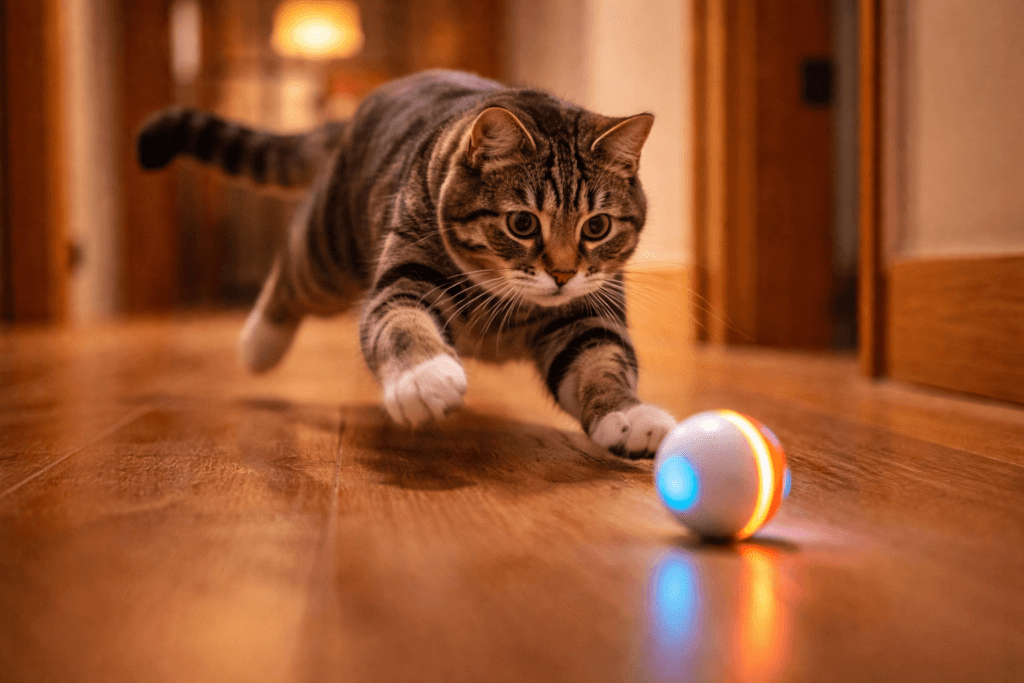
    Cat playing with an interactive toy for indoor enrichment and exercise

    Cats need play and problem-solving. Cornell’s feline health resources point out that safe toys and enrichment help support natural behaviors and can reduce boredom-related issues. Cornell Vet Med In best smart cat tech 2026, “smart enrichment” should be simple: movement, novelty rotation, and predator-style play—not constant stimulation.

    Cheerble Interactive Cat Ball (Automatic Moving Toy)

    Great for many indoor cats—especially if you use it like a tool, not a babysitter.

    Why it belongs in best smart cat tech 2026

    • Gets cats moving when owners are busy.
    • Works best in short, controlled sessions.

    Quick pros

    • Automatic motion can trigger chase behavior
      Quick cons
    • Some cats get overstimulated—limit session length

    Catit Senses 2.0 Super Circuit (Track Toy)

    Not “smart” in the Wi-Fi sense, but it’s one of the most reliable boredom tools because it’s modular, predictable, and easy to rotate.

    Why it belongs in best smart cat tech 2026

    • Rotation matters more than novelty. A simple toy that’s easy to reconfigure stays useful longer.

    Quick pros

    • Great for multi-cat and kitten energy
      Quick cons
    • Not every cat is a track-toy cat (some prefer wand play)

    Want to pick enrichment that matches your cat’s play style (not your taste)? Read Best Interactive Cat Toys 2025: Vet-Informed Picks to Bust Boredom & Boost Play.
    For the “why this works” science, see Indoor Cat Enrichment 2025: Science-Based Guide to Stress, Play & Smart Living.


    The Ecosystem Reality Check: The Best Smart Cat Tech 2026 Isn’t One Brand

    People want one app to control everything. Reality: you’ll probably mix brands. That’s fine—just choose a “spine” for the setup:

    • Feeding spine: PETKIT feeder (routine + portions)
    • Hygiene spine: PETKIT litter box (cleanliness + safety)
    • Visibility spine: Petcube (behavior insight)
    • Safety spine: Tractive (escape protection)
    • Enrichment spine: rotate Cheerble + Catit + human-led play

    That stack is what best smart cat tech 2026 looks like in real homes: a few high-impact anchors, not a drawer full of gadgets.


    What’s Overhyped in 2026 (Spend Less, Win More)

    If you’re trying to buy “future” vibes, here are common mistakes:

    • Buying a camera instead of fixing routines (feeding/litter first)
    • Over-automating play and accidentally creating frustration or overstimulation
    • Chasing “AI health claims” without clear, validated, actionable outputs
    • Ignoring maintenance reality (fountains and litter boxes don’t stay clean by optimism)

    The best best smart cat tech 2026 purchase is the one you’ll actually maintain.


    Verdict: My Shortlist for Best Smart Cat Tech 2026

    If you want a clean, defensible setup:

    • Start with feeding: PETKIT Fresh Element Infinity (portion control + routine)
    • Then litter: PETKIT PuraMax 2 (cleanliness + safety sensor approach)
    • Add hydration: PETKIT EVERSWEET (if you’ll clean it consistently)
    • Add visibility: Petcube Cam 360 (behavior patterns, multi-cat dynamics)
    • Add safety: Tractive GPS Cat Tracker (if outdoors/escape risk exists)
    • Add enrichment: Cheerble ball + Catit Super Circuit (rotate, don’t spam)

    That’s best smart cat tech 2026 in one sentence: control the basics, reduce friction, and use data only when it changes decisions.


    FAQ: Best Smart Cat Tech 2026

    1) What’s the single best smart cat tech 2026 upgrade for most homes?

    A smart feeder with reliable portion control—because consistent feeding routines directly reduce overeating patterns and begging spirals. For many households, that’s the highest ROI “smart” purchase in best smart cat tech 2026.

    2) Are self-cleaning litter boxes safe?

    Some are, some aren’t. For best smart cat tech 2026, choose models with multiple safety sensors and predictable cycling behavior, and introduce them slowly. Automated motion can stress certain cats, even when hardware is safe.

    3) Do fountains actually help cats drink more?

    They can, especially for cats attracted to moving water—but only if the fountain is kept clean. Maintenance is the difference between “health support” and “biofilm machine.” Vca

    4) Is a pet camera worth it if I’m home most of the time?

    Sometimes yes—because it shows behavior you don’t notice (night activity, multi-cat conflict, changes in routine). But it’s not a substitute for enrichment and consistent care.

    5) Do GPS trackers work for cats?

    Yes, with tradeoffs: subscription, collar tolerance, and battery management. If your cat can escape or goes outdoors, GPS can be one of the most practical safety buys inside best smart cat tech 2026.


    Internal Links


    References

    • Cornell Feline Health Center — “Safe Toys and Gifts” (why structured play and safe toys matter for natural behaviors and preventing boredom-related issues). Cornell Vet Med
    • AAFP (via AVMA news) — consensus framing on feeding cats, including the need to consider play/predation needs as part of feeding programs. AVMA
    • AAFP/ISFM Feline Environmental Needs Guidelines — core framework (“pillars”) connecting environment to feline wellbeing and behavior. SAGE Journals

    Disclaimer

    PetTech AI publishes educational content to help cat owners make safer, more informed decisions about everyday care, behavior, and pet technology. Some articles contain affiliate links, including Amazon Associate links and other affiliate partnerships. If you click a link and make a qualifying purchase, PetTech AI may earn a small commission at no extra cost to you. These commissions help support testing time, research, and ongoing site maintenance. Product availability and features can change over time, so always confirm the latest details on the retailer’s page. Nothing on this site replaces veterinary advice for medical concerns.

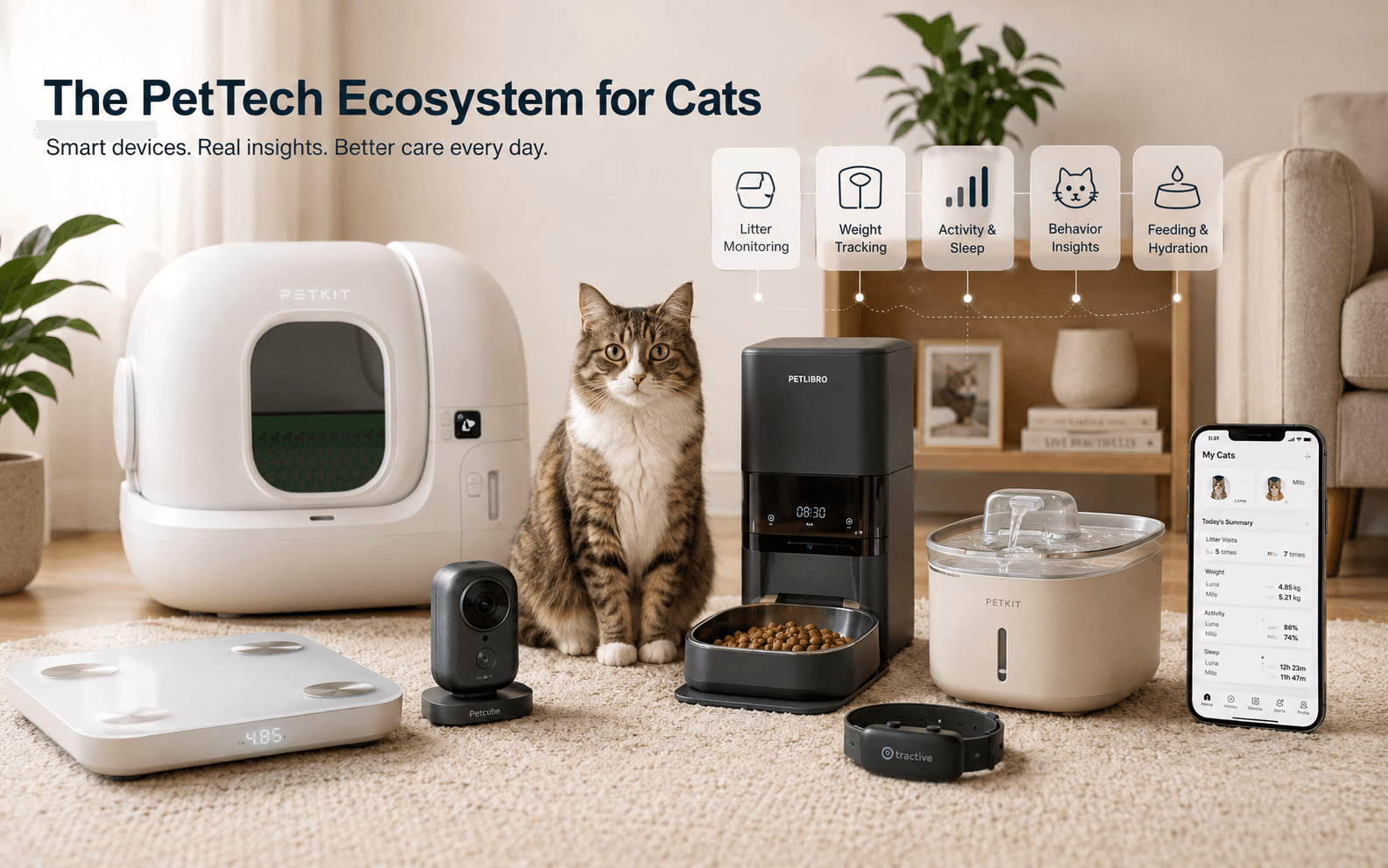
  • PetTech Ecosystem for Cats: Useful Signals or Data Theater?

    PetTech Ecosystem for Cats: Useful Signals or Data Theater?

    A smart litter monitor can record bathroom habits.

    A tracker can record activity and sleep.

    A camera can hear Gerald shouting at 3:12 a.m. because a door has committed the crime of being closed.

    What these devices usually cannot do is combine every signal into one clinically meaningful diagnosis.

    The “ecosystem” often exists less in the cloud than in the owner’s workflow:

    1. establish what is normal;
    2. notice a repeated change;
    3. verify it directly;
    4. contact a veterinarian when appropriate.

    That can be useful.

    Buying five devices and admiring five unrelated graphs is not preventive medicine.

    It is data theater with excellent push notifications.

    Quick Verdict

    Monitoring goalBest starting pointPetTech AI verdictMain limitation
    Track weight and litter habits without replacing the boxPurina PetivityRecommended with ConditionsDoes not work with self-cleaning boxes
    Combine automatic cleaning with visual identificationPETKIT Purobot Max Pro 2Recommended with ConditionsCamera value depends on review habits and software
    Monitor outdoor location, activity and sleepTractive cat trackerConditional RecommendationCollar acceptance, subscription and charging
    Add visual context while awayPetcube Cam 360Conditional RecommendationAlerts and useful history may require Petcube Care
    Verify long-term weight trendsA reliable standalone scaleRecommendedRequires consistent manual weighing
    Build a complete monitoring stackOne primary signal plus one contextual deviceRecommendedMore devices often add noise before they add insight

    For most monitoring-first households, start with litter activity and weight.

    Those are frequent, measurable signals that can establish a useful baseline without requiring the cat to wear anything.

    Add a camera when visual context would answer an unresolved question.

    Add a tracker when the cat spends time outdoors or activity and sleep changes are genuinely relevant.

    Do not build the complete stack because the dashboard looks lonely.

    Still deciding whether you need labor-saving automation or deeper behavioral evidence? Read our Smart Cat Monitoring vs Automation guide before adding another device.

    Research Note

    This is a research-led guide based on current official product documentation, feline veterinary guidance and PetTech AI’s individual product audits.

    PetTech AI has not conducted long-term hands-on testing of every device discussed.

    These tools can reveal observable changes. They cannot diagnose medical conditions or replace veterinary examinations.

    PetTech AI may earn a commission from qualifying purchases. As an Amazon Associate I earn from qualifying purchases.

    Start With a Baseline, Not an Alert

    A device cannot identify a meaningful change until it has some idea of what normal looks like.

    Useful baseline information may include:

    • body weight;
    • litter-box visit frequency;
    • approximate elimination patterns;
    • appetite and meal completion;
    • sleep and activity;
    • normal vocalization and movement.

    The baseline does not need to become a daily research project.

    For many cats, a weekly or monthly review is enough unless a veterinarian has recommended closer monitoring.

    Cornell notes that unintended weight loss can be difficult to notice when owners see their cat every day and recommends regular weighing. FelineVMA recommends full physical examinations at least annually for cats of every life stage, with more frequent examinations for senior cats.

    The device supplies trend data.

    The veterinarian still supplies medicine.

    Best Low-Friction Starting Point: Purina Petivity

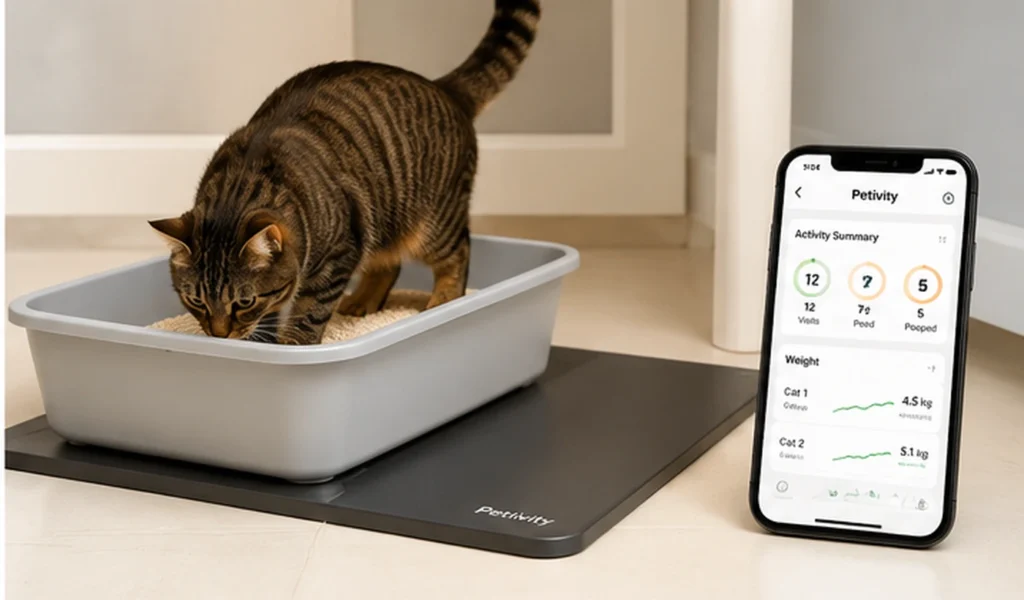
    Cat using a conventional litter box placed on a smart under-box monitoring platform
    An under-box monitor can track litter visits and weight without requiring the cat to adopt an automatic litter box. AI-generated editorial illustration.

    Verdict: Recommended with Conditions

    Petivity sits beneath an existing conventional litter box and records weight, visits, urination and defecation events.

    Purina says the system can track as many as five cats and organize their activity inside the Petivity app. It can also alert owners when the recorded baseline changes in a way that may deserve closer attention.

    Its main advantage is that the cat can keep using a familiar litter box.

    That makes Petivity especially relevant when:

    • the cat rejects automatic boxes;
    • manual scooping is acceptable;
    • weight and elimination trends matter more than automation;
    • several cats have distinguishable behavioral or weight profiles;
    • a relatively low-complexity starting point is preferable.

    The conditions are important.

    Petivity does not work with self-cleaning litter boxes and is designed for conventional boxes no larger than approximately 16 by 21 inches. It must also sit on a hard, level surface.

    In homes with several litter locations, incomplete coverage can create incomplete data. Petivity recommends using a monitor beneath every regularly used box when owners want the most complete record.

    That can quickly transform a modest purchase into an infrastructure program.

    Still, Petivity is one of the clearest ways to add useful monitoring without asking the cat to adopt an entirely new toilet.

    Want litter and weight tracking beneath a familiar box? Check Purina Petivity on Amazon.

    Best All-in-One Litter Upgrade: PETKIT Purobot Max Pro 2

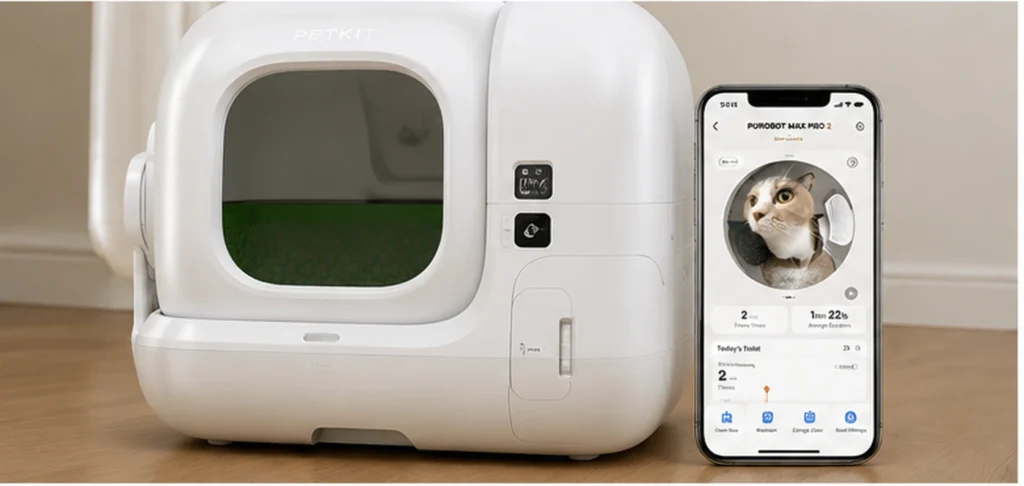
    Camera-equipped automatic litter box shown beside a smartphone with individual cat visit records
    Camera-assisted litter monitoring can add individual-cat context when weight-only records are difficult to interpret. AI-generated editorial illustration; not an exact product representation.

    Verdict: Recommended with Conditions

    Purobot Max Pro 2 combines automatic waste separation with a camera and weight sensors.

    PETKIT positions the camera as a way to identify individual cats and add visual context to litter-box visits, particularly when several cats share similar weights.

    This provides two different benefits:

    • automation removes routine scooping;
    • monitoring helps establish which cat generated the record.

    The product makes sense when:

    • several cats share the box;
    • weight-only identification is ambiguous;
    • visual context would change how the owner responds;
    • automatic cleaning is already part of the buying decision;
    • the owner will review flagged events.

    It is much harder to justify when one cat uses the box and the only objective is reducing scooping.

    A camera does not improve clump separation.

    It simply ensures the clump has appropriate supporting documentation.

    The deepest video-history features may also involve PETKIT Care+, making the software layer part of the real ownership decision.

    Would visual identification solve an existing multi-cat uncertainty? Check Purobot Max Pro 2 through PETKIT.

    Prefer Amazon checkout? Check Purobot Max Pro 2 availability on Amazon.

    For the complete decision, read our PETKIT Purobot Max Pro 2 Review.

    Activity and Sleep: Add a Tracker Only When It Fits the Cat

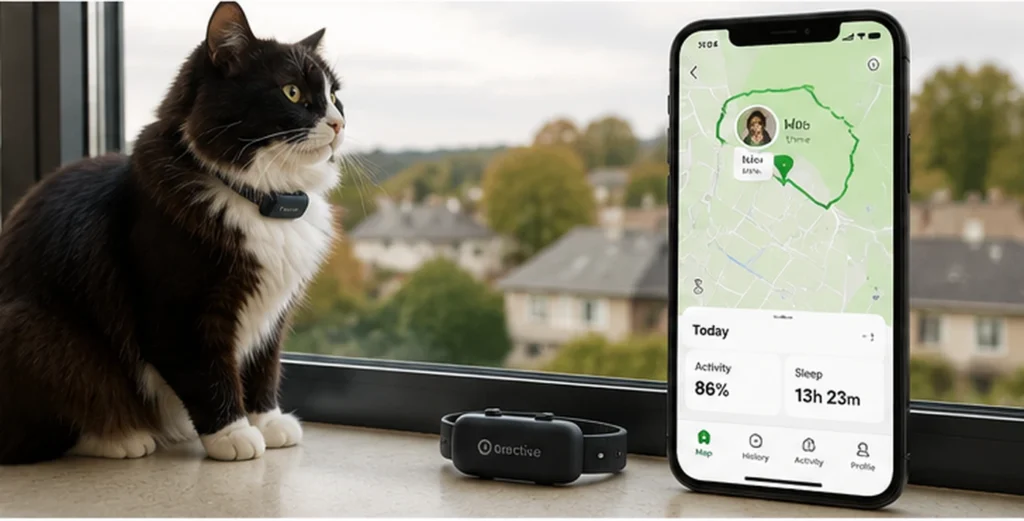
    Cat wearing a GPS activity tracker beside a smartphone displaying location and sleep data
    A wearable tracker can add location, activity and sleep context when the cat tolerates the collar and the data changes a real decision. AI-generated editorial illustration.

    A collar tracker can add information that litter devices cannot provide:

    • outdoor location;
    • daily movement;
    • sleep duration;
    • changes in habitual activity;
    • escape alerts.

    Tractive’s current cat tracker records activity and sleep, while supported plans and hardware can add further wellness information. GPS and health functions require an active subscription.

    That can be useful for:

    • outdoor or escape-prone cats;
    • cats whose activity changes are difficult to observe;
    • owners wanting location and routine data from one collar;
    • households prepared to maintain charging and subscription service.

    It is a poor fit when:

    • the cat refuses collars;
    • the device is too large for comfortable wear;
    • the cat remains entirely indoors and activity data would not change anything;
    • charging gaps make the history inconsistent.

    A tracker should first be comfortable and safe.

    The most detailed sleep graph in the world is not useful when Napoleon has removed the collar and hidden it beneath a hedge.

    For product-level options and fit limitations, read our Best Cat GPS Trackers guide.

    Cameras Add Context, Not a Complete Health Record

    Verdict: Conditional Recommendation

    A camera can help answer questions other devices cannot:

    • Did the cat approach the feeder but refuse the meal?
    • Was vocalization associated with pacing or conflict?
    • Is one cat blocking a resource?
    • Did a mobility change become visible while nobody was home?

    Petcube Cam 360 provides pan-and-tilt viewing, night vision and recognition of pets, people, barking and meowing. Several smart alerts and extended cloud-video functions are connected to Petcube Care.

    A camera becomes useful when visual evidence would change the response.

    It becomes decorative surveillance when owners receive twenty motion alerts and eventually train themselves to ignore all twenty.

    Cameras are weakest as primary health monitors because they depend on:

    • placement;
    • field of view;
    • lighting;
    • whether the cat enters the room;
    • whether someone reviews the footage;
    • subscription features.

    Use them to clarify a question created by another signal.

    Do not expect a camera to independently discover a coherent medical pattern while Gerald sleeps behind the sofa.

    Would room-level video clarify feeding, mobility or resource conflict? Check Petcube Cam 360 on Amazon.

    For broader camera choices, read our Best Smart Cat Cameras guide.

    Feeding Data Is Usually Automation Before Monitoring

    Smart feeders are excellent at:

    • maintaining schedules;
    • controlling portions;
    • recording dispensing events;
    • reducing early-morning negotiations.

    They are less reliable at proving exact consumption unless they include a camera, bowl sensor or individual-access system.

    Even then:

    • another cat may steal food;
    • food may remain uneaten;
    • recognition may be imperfect;
    • dispensing is not the same as digestion.

    Do not automatically adjust calories because one device reported a dramatic afternoon.

    Repeated weight change should be confirmed and discussed with a veterinarian before making substantial dietary changes. Cornell warns that sudden or inappropriate calorie restriction can be dangerous for cats.

    For the distinction between scheduled automation, camera monitoring and RFID access, read our Best Automatic Cat Feeders guide.

    The Two-Signal Rule

    A practical monitoring system does not need every available device.

    Use:

    one primary signal and one contextual signal.

    Examples:

    Senior indoor cat

    Primary signal:

    • litter activity and weight through Petivity or a smart litter box.

    Context:

    • regular manual weighing or a room camera when mobility is difficult to observe.

    Multi-cat household

    Primary signal:

    • camera-equipped or reliably identified litter records.

    Context:

    • feeding access data when diet theft is also a concern.

    Outdoor cat

    Primary signal:

    • GPS, activity and sleep tracker.

    Context:

    • monthly weight and direct observation at home.

    Cat with a previous urinary concern

    Primary signal:

    • litter-box frequency and elimination patterns.

    Context:

    • camera evidence only when it helps verify straining, repeated visits or unusual behavior.

    Frequent attempts to urinate, prolonged straining or producing little to no urine can indicate a serious urinary problem and require prompt veterinary attention.

    Do not wait for the dashboard to achieve statistical confidence while the cat is visibly distressed.

    Why One App Is Not Always Better

    A unified app is convenient.

    It does not automatically create better evidence.

    Within one brand, devices may share:

    • profiles;
    • maintenance alerts;
    • routine histories;
    • account access.

    But even then, the app may display several separate timelines rather than clinically interpreting them together.

    Across different brands, the information is usually even more fragmented.

    The owner still needs to notice:

    • weight moved;
    • litter visits increased;
    • appetite changed;
    • activity declined.

    The fact that all four graphs use attractive pastel colors does not make them a medical team.

    Choose one ecosystem when its products independently fit the household.

    Mix brands when a better product solves the problem more directly.

    For the strategic difference, read our PETKIT Ecosystem Review and PETKIT vs Litter-Robot Ecosystem comparison.

    Buyer-Regret Risk

    Monitoring-stack regret usually comes from collecting more information than the owner can interpret or use.

    Common failures include:

    • buying several devices before establishing a baseline;
    • subscribing to histories nobody reviews;
    • mistaking one unusual day for a trend;
    • assuming alerts identify a cause;
    • using a camera when access control was needed;
    • replacing direct observation with notifications.

    The safest question is:

    What decision will this device help me make?

    When the answer is unclear, the device is probably not ready to enter the ecosystem.

    Final Verdict

    A PetTech ecosystem can be useful when it turns a vague concern into a clear, verifiable pattern.

    The strongest starting signals are usually:

    • litter-box activity;
    • body weight;
    • appetite;
    • activity and sleep when relevant.

    Choose Petivity when you want monitoring beneath an existing conventional litter box.

    Choose Purobot Max Pro 2 when automatic cleaning and visual multi-cat identification both matter.

    Add Tractive when outdoor location, activity and sleep genuinely change the care plan.

    Add Petcube Cam 360 when visual context resolves a specific uncertainty.

    Do not build the full stack immediately.

    Start with one signal.

    Learn what normal looks like.

    Add another device only when the first one leaves an important question unanswered.

    The goal is not to know everything Baron did today.

    It is to notice when something meaningful changed—and know what to do next.

    Frequently Asked Questions

    Can smart pet devices diagnose health problems?

    No. They can record changes in weight, activity, appetite or litter-box behavior. A veterinarian must determine the cause.

    Which device should I buy first?

    For many indoor cats, litter and weight monitoring provide the most frequent baseline signals. Choose Petivity when keeping a conventional box or a compatible smart litter box when automation also matters.

    Do all devices need to use one app?

    No. One app reduces digital clutter, but product fit and signal quality matter more than brand consistency.

    How many alerts should trigger concern?

    There is no universal number. Look for repeated changes, multiple related signals or visible symptoms. Straining, painful urination or little to no urine requires prompt veterinary attention.

    Can feeding and weight data automatically control portions?

    Most consumer systems do not safely create a complete automatic nutrition plan. Substantial feeding changes should be based on measured portions and veterinary guidance.

    References

    • Purina Petivity — Smart Litter Box Monitor documentation
    • PETKIT — Purobot Max Pro 2 product documentation
    • Tractive — Cat tracker and health-monitoring documentation
    • Petcube — Cam 360 and Petcube Care documentation
    • Cornell Feline Health Center — Weight, urinary and nutrition guidance
    • Feline Veterinary Medical Association — Life-stage and senior-care guidance

    Image Disclosure

    Official manufacturer images are used when available and authorized.

    AI-generated images may also be used as editorial illustrations. They should not be treated as exact representations of product dimensions, controls or physical features. Always verify current official specifications before purchasing.

    Editorial Disclosure

    PetTech AI may earn a commission from qualifying purchases. This does not influence our recommendations, comparisons or editorial judgments.