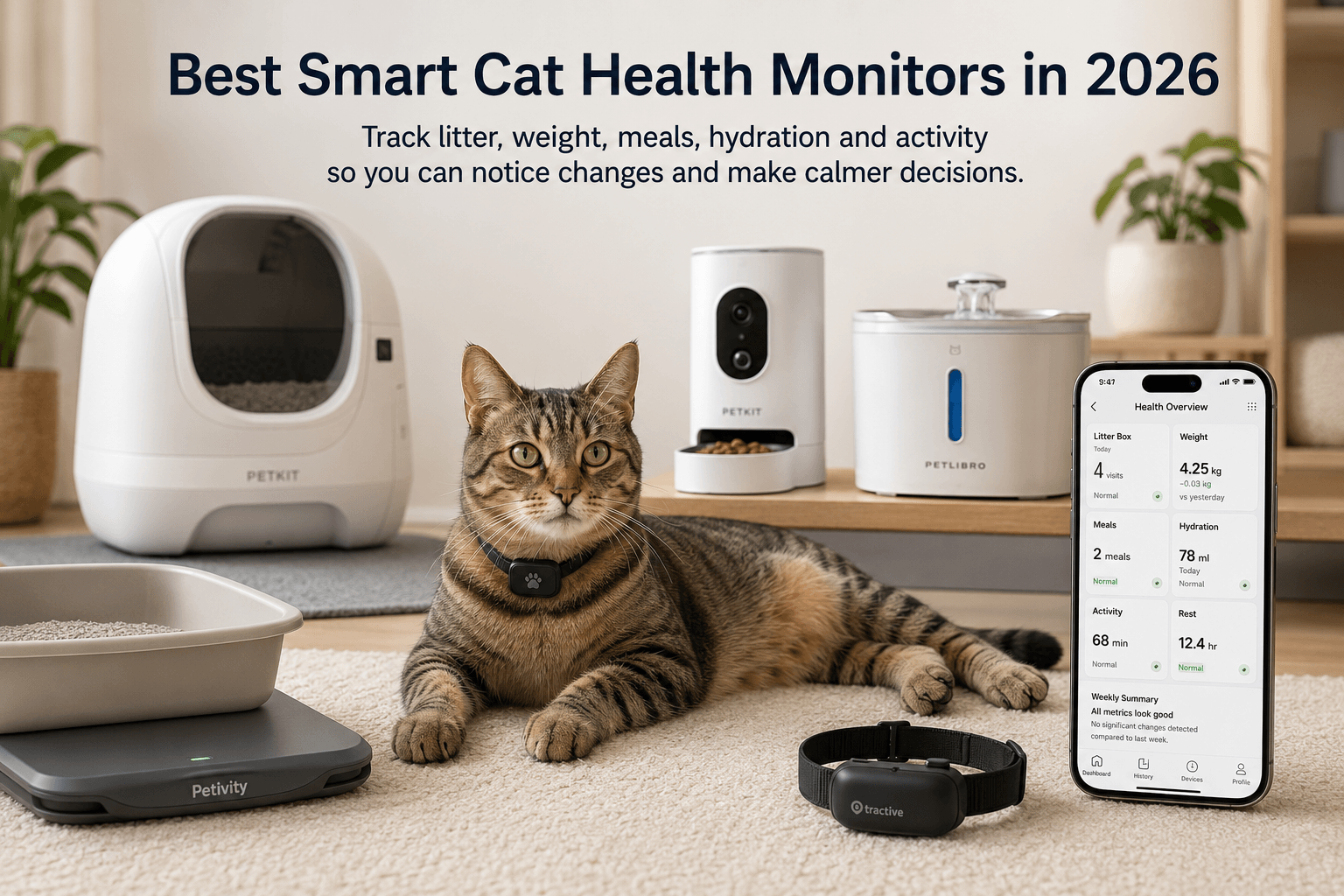
Tag: Smart Cat Health Monitors

  • Petivity Smart Litter Box Monitor Review 2026: Monitoring Without a Litter Robot

    Petivity Smart Litter Box Monitor Review 2026: Monitoring Without a Litter Robot

    The Petivity Smart Litter Box Monitor is not a self-cleaning litter box.

    That is the whole point.

    It does not scoop.
    It does not rotate.
    It does not replace your cat’s litter box.
    It does not turn your litter area into a large automatic robot.

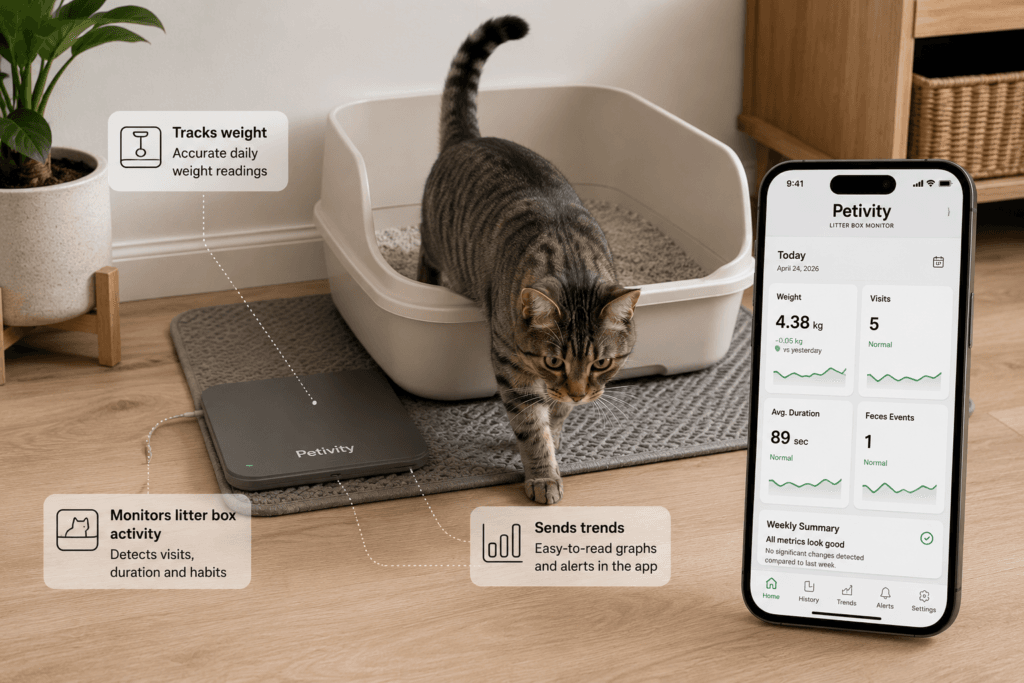
    Instead, Petivity sits underneath a litter box your cat already uses and tracks litter-box behavior, weight trends, urination events, defecation events, visit timing, and routine changes through the Petivity app.

    That makes it one of the clearest examples of monitoring without automation.

    For some cat owners, that is exactly the right trade-off.

    For others, it will feel incomplete because the daily scooping still remains.

    This review explains who should buy Petivity, who should skip it, and how it compares with smart litter boxes like Litter-Robot, PETKIT Purobot, CATLINK, and other self-cleaning systems.

    Quick Verdict

    The Petivity Smart Litter Box Monitor is best for cat owners who want litter-box and weight data without forcing their cat into a new automatic litter box.

    It is strongest when:

    • your cat already uses a regular litter box reliably;
    • you want weight and litter routine tracking;
    • you do not want to disrupt your cat’s setup;
    • you have a cautious, senior, or routine-sensitive cat;
    • you want monitoring but not automation;
    • you are comfortable continuing normal scooping.

    It is not the best fit if:

    • you want automatic cleaning;
    • your main problem is scooping;
    • your litter box is too large or incompatible;
    • you have several litter boxes and do not want multiple monitors;
    • you live outside supported app regions;
    • you want camera-based monitoring or video context.

    Verdict: Best smart litter monitor for owners who want weight and litter-box routine data without replacing the litter box itself.

    Check Petivity Smart Litter Box Monitor on Amazon

    What Petivity Actually Is

    A regular cat litter box on a smart monitoring platform with an app showing weight and litter box activity data
    Petivity is a monitoring-first product: it tracks litter behavior and weight trends, but you still scoop and maintain the box yourself.

    Petivity is a thin monitoring platform that sits underneath an existing litter box.

    Your cat keeps using the box normally. The monitor records weight and litter-box events, then sends that information to the Petivity app.

    The key difference is this:

    Petivity monitors the routine. It does not automate the chore.

    That makes it different from a self-cleaning litter box.

    A Litter-Robot, PETKIT Purobot, CATLINK or PetSafe SmartSpin tries to reduce scooping by changing the litter system itself.

    Petivity tries to preserve the familiar litter box while adding data underneath it.

    That is a softer upgrade.

    For cats that dislike change, that matters.

    What Petivity Tracks

    Petivity is designed to track:

    • weight;
    • litter box visits;
    • urination events;
    • defecation events;
    • visit duration;
    • time of day;
    • scooping activity;
    • changes from normal patterns.

    In the app, those signals are organized into charts, alerts, reports and routine summaries.

    The value is not that every single event is perfect.

    The value is that Petivity can help create a clearer timeline of litter-box behavior and weight trends over time.

    That can be useful when you are trying to answer questions like:

    • Did my cat visit the box more often this week?
    • Has weight changed gradually?
    • Did the litter routine shift after a diet change?
    • Is one cat using the box differently?
    • Do I have data to discuss with my veterinarian?

    That last point matters.

    Petivity can help document patterns.

    It cannot diagnose disease.

    Petivity Is Monitoring, Not Diagnosis

    This needs to be clear.

    Petivity can alert you to changes that may be worth discussing with a veterinarian.

    It cannot tell you what the change means.

    More litter-box visits may be important.
    Less litter-box activity may be important.
    Weight change may be important.
    A different pattern may be important.

    But a device cannot determine the cause.

    Litter behavior can change for many reasons, including stress, diet, environment, litter preference, pain, urinary issues, digestive changes, territorial conflict, aging, or changes in the household.

    Use Petivity as a record.

    Not as a diagnosis.

    If your cat strains, cries, avoids the box, produces little or no urine, has blood in urine or stool, loses weight, stops eating, drinks unusually, hides, or changes behavior suddenly, contact a veterinarian.

    For broader routine-signal context, see our Best Smart Cat Health Monitors guide.

    Who Should Buy Petivity?

    1. Owners who want monitoring without changing the box

    This is the strongest use case.

    Some cats are deeply attached to their current litter setup. Changing the box can create avoidance, stress, or accidents.

    Petivity is useful because it lets you add monitoring to the litter box your cat already understands.

    That makes it a good fit for:

    • cautious cats;
    • senior cats;
    • cats with past litter-box issues;
    • homes where the current box works well;
    • owners who want data without changing the routine.

    2. Owners who care about weight trends

    Weight is one of the most useful long-term signals in cat care.

    But many owners do not weigh their cats consistently.

    Petivity makes weight tracking more passive because the cat is weighed during normal litter-box use.

    That can be useful for:

    • multi-cat homes;
    • senior cats;
    • cats on weight-management plans;
    • cats with appetite changes;
    • owners who want better routine records.

    The important word is trend.

    Do not obsess over one reading.

    Look for repeated patterns over time.

    3. Multi-cat homes that need more visibility

    Two cats near a regular litter box while a phone displays cat weight and litter routine trends
    Petivity can be useful in multi-cat homes, but owners should treat the data as trends to interpret calmly, not as a diagnosis.

    Petivity can track multiple cats, but multi-cat use is also where expectations should be realistic.

    The system learns cat profiles and tries to identify which cat used the box based on patterns and data.

    That can be useful when cats are different enough for the system to separate.

    But if multiple cats are very similar in weight and behavior, some events may need correction or confirmation in the app.

    Petivity is best for multi-cat homes where the owner is willing to help train the system and interpret trends calmly.

    4. Owners who are not ready for a litter robot

    A self-cleaning litter box can be a major upgrade, but it is also a major change.

    It changes the box shape, sound, entry, cleaning behavior, and sometimes the entire litter area.

    Petivity is less disruptive.

    If your hesitation is:

    “I want litter data, but I do not want to force my cat into a robot,”

    Petivity is exactly the product category to consider.

    Who Should Skip Petivity?

    Skip Petivity if you want less scooping

    Petivity does not clean the box.

    If your main problem is daily scooping, odor containment, or litter maintenance, this is not the right first purchase.

    You should compare self-cleaning litter boxes instead.

    For that path, see our Best Smart Litter Boxes guide.

    Skip Petivity if your litter box is incompatible

    Petivity does not work with every litter box.

    It is designed for most standard litter boxes and litter pans, but not for triangular boxes, self-cleaning boxes, or boxes larger than the supported size range.

    If your cat uses an oversized box, a special senior box, a large high-sided pan, or a nonstandard shape, check compatibility before buying.

    Skip Petivity if you want camera context

    Petivity does not provide video.

    If you want to see what happened inside or around the litter box, a camera-enabled litter system like PETKIT Purobot Max Pro 2 or Litter-Robot 5 Pro may be a better fit.

    That is a different category.

    Petivity gives you weight and event data.

    It does not give you visual context.

    Skip Petivity if the app is not supported in your country

    This is important for international readers.

    Petivity is especially relevant for U.S. buyers. If you are outside the United States, check app availability and support before buying.

    A monitor that depends on an app is only useful if the app works in your region.

    Setup and Compatibility

    Petivity setup is conceptually simple:

    1. Place the monitor on a hard, flat, level surface.
    2. Extend and adjust the feet.
    3. Center a compatible litter box on top.
    4. Connect the monitor to Wi-Fi.
    5. Download the Petivity app.
    6. Create cat profiles.
    7. Let the system learn your cats’ patterns.

    The most important setup detail is stability.

    A monitor under a litter box is only as useful as the surface it sits on.

    If the floor is uneven, soft, carpeted, or unstable, readings can become less reliable.

    Petivity also requires Wi-Fi, so placement matters. The litter area needs to be within a reasonable range of the router.

    Power Options

    Petivity can be powered by batteries or a wall charger.

    That gives owners flexibility.

    Battery power may be cleaner if your cat chews cords or if the litter area is not near an outlet.

    A wall charger may be better if you do not want to manage battery changes.

    The safety point is obvious but important:

    If your cat chews cords, use batteries.

    Do not create a new hazard in the litter area just to power a monitor.

    Petivity vs Litter-Robot

    A cat owner comparing a regular litter box monitor and a self-cleaning litter robot on a laptop
    Petivity and Litter-Robot solve different problems: Petivity preserves the existing box and adds data, while Litter-Robot changes the setup to reduce scooping.

    Petivity and Litter-Robot solve different problems.

    Petivity answers:

    “Can I monitor litter behavior and weight without changing the box?”

    Litter-Robot answers:

    “Can I reduce scooping and automate litter cleaning?”

    That means they are not direct substitutes.

    FeaturePetivityLitter-Robot
    Cleans automaticallyNoYes
    Uses existing litter boxYesNo
    Tracks weightYesYes, depending on model/app features
    Tracks litter behaviorYesYes
    Changes cat’s litter setupMinimalSignificant
    Best forMonitoring without disruptionAutomation and waste handling
    Main trade-offStill requires scoopingLarger, more expensive, bigger transition

    Choose Petivity if your cat already likes the current litter box and you mainly want data.

    Choose Litter-Robot if your main goal is reducing daily scooping and waste handling.

    For Whisker’s current lineup, see our Litter-Robot 5 vs 5 Pro vs EVO guide.

    Petivity vs PETKIT Purobot Max Pro 2

    This comparison is even clearer.

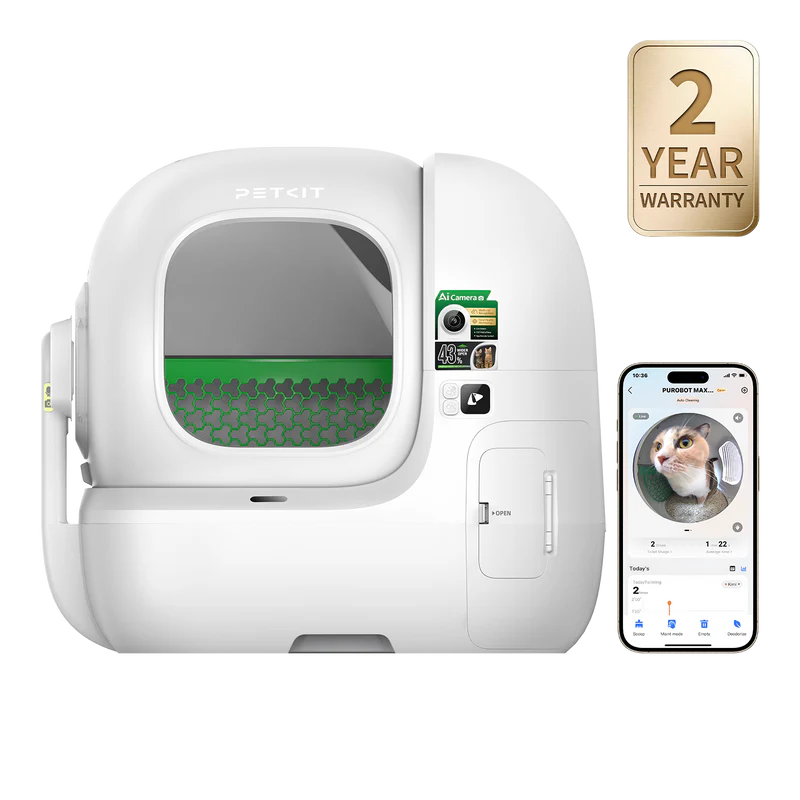
    PETKIT Purobot Max Pro 2 is a premium smart litter box with self-cleaning automation and deeper monitoring.

    Petivity is a monitor that works under a regular box.

    Choose Petivity if:

    • you want minimal disruption;
    • you want to keep your current litter box;
    • you do not want a camera in the litter area;
    • you do not need self-cleaning;
    • you want a lower-friction monitoring layer.

    Choose Purobot Max Pro 2 if:

    • you want self-cleaning;
    • you want camera context;
    • you want a premium integrated system;
    • you are comfortable changing the litter setup;
    • you want automation and monitoring together.

    Petivity is simpler.

    Purobot is more complete.

    The better choice depends on whether automation is part of the problem.

    Petivity vs Smart Cat Health Monitors

    Petivity fits into the broader smart health monitoring category as a litter-and-weight signal.

    It does not track meals.
    It does not track hydration.
    It does not track GPS location.
    It does not track activity outside the litter area.

    That makes it narrow, but useful.

    Litter behavior and weight are two of the most practical routine signals a cat owner can track.

    Petivity is strongest when you want those signals without building a full smart cat ecosystem.

    For a broader comparison of litter, feeding, hydration, activity and location signals, see our Best Smart Cat Health Monitors guide.

    What Petivity Gets Right

    Minimal behavior disruption

    This is the biggest strength.

    Your cat does not need to learn a new robot, entry shape, rotating globe, or covered automatic system.

    The box stays familiar.

    Useful routine data

    Weight and litter activity are meaningful signals when tracked consistently over time.

    Petivity gives owners a clearer record than memory alone.

    No collar or microchip requirement

    Petivity does not require RFID tags, collars, or implanted microchip reading.

    That helps if your cats do not tolerate collars.

    Better fit for cautious cats

    For some cats, a self-cleaning litter box may be too big a change.

    Petivity is a gentler upgrade.

    Lower complexity than a robot

    There are fewer mechanical cleaning parts because Petivity is not trying to scoop or rotate anything.

    That does not mean zero setup, but the product is simpler than a full automatic litter box.

    What Petivity Gets Wrong or Cannot Solve

    It does not reduce scooping

    This is the main limitation.

    If the daily pain point is manual litter maintenance, Petivity does not solve it.

    It depends on compatibility

    Large, unusual, triangular, self-cleaning, or oversized boxes may not work.

    This matters because many cat owners deliberately choose large litter boxes for comfort.

    Multi-cat identification may need help

    In multi-cat homes, the system may need user corrections or training, especially when cats are similar.

    That is normal for many monitoring systems, but buyers should expect some app involvement.

    App support matters

    Because Petivity depends on the app, regional support is not a small detail.

    International readers should check app availability before buying.

    It can create over-monitoring

    More data is not always better.

    If you are prone to checking every event anxiously, Petivity may create stress unless you treat it as trend data rather than minute-by-minute diagnosis.

    Is Petivity Worth It?

    Petivity is worth it if your real problem is uncertainty.

    It makes sense if you want to know:

    • whether your cat’s litter pattern changed;
    • whether weight is trending up or down;
    • whether one cat is using the box differently;
    • whether there is a clearer timeline to discuss with your vet.

    It is less worth it if your real problem is labor.

    If you hate scooping, buy a self-cleaning litter box.

    If you want visual context, buy a camera-enabled system.

    If you want whole-home monitoring, look at cameras, feeders, fountains, and trackers.

    Petivity is not a complete smart cat ecosystem.

    It is a focused litter and weight monitor.

    That is its strength.

    Final Verdict

    The Petivity Smart Litter Box Monitor is one of the cleanest examples of monitoring-first cat technology.

    It does not try to be a robot.

    It does not try to automate cleaning.

    It does not try to replace your cat’s current litter box.

    Instead, it adds weight and litter routine data to a setup your cat already accepts.

    That makes it especially useful for cautious cats, senior cats, multi-cat homes, and owners who want better visibility without disrupting the litter routine.

    Choose Petivity if your main question is:

    “Can I understand litter and weight patterns without changing my cat’s box?”

    Skip it if your main question is:

    “Can I stop scooping?”

    For that, you need a self-cleaning litter box.

    Petivity is not automation.

    It is monitoring with minimal disruption.

    For the right home, that may be exactly the smarter choice.

    Quick Shop

    Frequently Asked Questions

    Is Petivity a litter box?

    No.

    Petivity is a monitor that sits underneath a compatible existing litter box. It does not replace the litter box and does not clean it.

    Does Petivity clean the litter box?

    No.

    You still need to scoop, clean, refill litter, and maintain the box normally.

    What does Petivity track?

    Petivity tracks weight, litter-box visits, urination events, defecation events, visit timing, visit duration, and changes from normal patterns.

    Can Petivity diagnose health problems?

    No.

    Petivity can show routine changes that may deserve attention, but it cannot diagnose illness or determine treatment. Contact a veterinarian if your cat’s litter-box behavior, weight, appetite, drinking, activity, or general condition changes suddenly or persistently.

    Does Petivity work for multiple cats?

    Yes, Petivity is designed to support multiple cat profiles, but multi-cat identification may require setup, training, and occasional correction in the app.

    Does Petivity work with every litter box?

    No.

    It works with many standard litter boxes, but not triangular boxes, self-cleaning boxes, or boxes that exceed the supported size range. Always check compatibility before buying.

    Does Petivity need Wi-Fi?

    Yes.

    Petivity requires Wi-Fi and app connectivity to send data to your phone.

    Is Petivity good for senior cats?

    It can be, especially if the senior cat already uses a familiar litter box and you want weight and litter routine data without forcing a major setup change.

    Is Petivity better than Litter-Robot?

    Not better — different.

    Petivity is better for low-disruption monitoring. Litter-Robot is better for self-cleaning automation.

    References

    • Petivity — Smart Litter Box Monitor official product information
    • Purina — Petivity Smart Litterbox Monitor System information
    • Petivity — Smart Litter Box Monitor setup, compatibility and support documentation
    • PetTech AI — Smart Cat Monitoring vs Automation guide
    • PetTech AI — Best Smart Cat Health Monitors guide
    • PetTech AI — Best Smart Litter Boxes guide
    • PetTech AI — Litter-Robot 5 vs 5 Pro vs EVO guide

    Image Disclosure

    Some images in this article may be created with AI for illustrative purposes. They do not show the exact product reviewed and should not be used to evaluate product size, fit, design, or features. Always check the current official product listing before purchasing.

    Disclosure

    PetTech AI may earn a commission when readers purchase through affiliate links. That does not change how products are framed or compared. Petivity can support routine awareness by tracking litter-box behavior and weight trends, but it does not diagnose illness, replace veterinary care, or eliminate normal litter-box maintenance. Always consult a licensed veterinarian about significant, sudden, or persistent changes in your cat’s litter-box behavior, weight, appetite, drinking, activity, or general condition.

  • Smart Cat Monitoring vs Automation: What Should You Actually Pay For in 2026?

    Smart Cat Monitoring vs Automation: What Should You Actually Pay For in 2026?

    For years, smart cat products had a simple promise:

    Scoop less.
    Feed on schedule.
    Keep water moving.
    Get an app alert when something needs attention.

    That was automation.

    In 2026, the category is moving somewhere more complicated.

    Smart cat brands are no longer selling only devices that perform tasks. They are selling visibility: cameras, app dashboards, behavior tracking, weight trends, litter activity, feeding identity, hydration records, location data, and multi-cat recognition.

    That sounds exciting.

    It also creates a new buying problem.

    Most cat owners do not need the smartest possible system. They need the system that removes the most friction without turning daily pet care into another dashboard to manage.

    The key question is not:

    “Which product has the most features?”

    It is:

    “Am I paying for automation that removes work, or monitoring that reduces uncertainty?”

    That distinction matters more than any spec sheet.

    Quick Verdict

    Choose automation-first products when your main problem is repetitive work.

    That usually means:

    • scooping litter;
    • feeding at consistent times;
    • keeping water fresh;
    • reducing routine maintenance;
    • getting simple alerts when something needs attention.

    Choose monitoring-first products when your main problem is uncertainty.

    That usually means:

    • knowing which cat ate;
    • noticing drinking changes;
    • tracking litter box visits;
    • understanding weight trends;
    • managing multi-cat households;
    • checking what happens while you are away.

    For most single-cat homes, automation is usually the better first upgrade.

    For multi-cat homes, senior cats, remote-care situations, or households with routine changes, monitoring can be worth paying for.

    The mistake is paying for monitoring when automation was enough — or avoiding monitoring when the household actually needs visibility.

    Automation vs Monitoring: The Simple Difference

    QuestionAutomationMonitoring
    Main promiseRemoves repetitive workReduces uncertainty
    Best forScooping, feeding, water flow, routine maintenanceWeight, visits, drinking, meals, identity, activity
    Typical buyer need“Make this chore easier.”“Help me understand what changed.”
    Main riskBuying a device your cat will not acceptPaying for data you will not use
    Best household fitSimple routines, one-cat homes, busy ownersMulti-cat homes, senior cats, travel, behavior changes
    Example productsSelf-cleaning litter boxes, automatic feeders, smart fountainsCamera feeders, RFID fountains, litter monitors, GPS trackers

    Automation gives you less work.

    Monitoring gives you more information.

    The best smart cat product is the one that matches the problem you actually have.

    What Automation Solves

    A clean smart cat care setup with an automatic feeder, smart fountain and self-cleaning litter box focused on reducing daily chores
    Automation-first products are worth paying for when they reduce scooping, feeding stress, water maintenance or other repetitive daily chores.

    Automation is valuable when the problem is physical and repetitive.

    A self-cleaning litter box reduces scooping.

    An automatic feeder reduces schedule stress.

    A smart fountain keeps water moving and can reduce the friction of maintaining a clean drinking station.

    These are practical benefits. They do not require the owner to become a data analyst.

    Automation works best when the value proposition is obvious:

    • the box cleans after use;
    • the feeder dispenses meals on schedule;
    • the fountain keeps water circulating;
    • the app tells you when the drawer, tank, or feeder needs attention.

    That is why automation should still be the foundation of smart cat care.

    If a product does not reliably perform the basic task, no amount of monitoring makes it a good purchase.

    What Monitoring Solves

    A phone showing cat routine data beside smart cat products for litter, feeding, hydration and activity monitoring
    Monitoring-first products are useful when the data changes what you do next — especially in multi-cat homes or remote-care situations.

    Monitoring changes the promise.

    Instead of asking:

    “Can this product do the task for me?”

    you are asking:

    “Can this product tell me something useful about my cat?”

    That is where smart cat tech is moving.

    Monitoring can track signals like:

    • litter box visits;
    • visit duration;
    • weight trends;
    • meal patterns;
    • feeder visits;
    • drinking amount;
    • drinking frequency;
    • activity;
    • sleep;
    • location;
    • which cat used which device.

    This can be genuinely useful.

    Cats often show changes through patterns before the owner notices anything obvious. But the device still does not diagnose illness, explain the cause, or replace a veterinarian.

    Smart monitoring is useful when it helps you notice a change, document the pattern, and decide whether the change deserves closer attention.

    For a broader product-level comparison of litter, weight, feeding, hydration, activity, and location signals, see our Best Smart Cat Health Monitors guide.

    The Buyer Mistake: Paying for Data You Will Not Use

    A cat owner comparing smart cat product data on a laptop while deciding whether monitoring features are actually useful
    The biggest mistake is paying for more data when the data does not change any real decision.

    The most common mistake in smart cat tech is buying monitoring because it sounds advanced.

    A product has:

    • AI camera tracking;
    • facial recognition;
    • live video;
    • behavior reports;
    • multi-cat identity;
    • long-term trends;
    • health-style alerts.

    So it feels like the rational purchase.

    But the real question is colder:

    Will this data change what you do?

    If the answer is no, monitoring may not be worth paying for.

    A camera feeder is valuable when it helps manage meal identity, remote feeding, multi-pet routines, or anxiety while away.

    It is less valuable when your cat eats normally and you only need consistent portions.

    A camera-enabled litter box is valuable when cat identification, visit changes, or behavior context matter.

    It is less valuable when the household just wants less scooping.

    A smart fountain with individual hydration tracking is valuable when you need to know which cat is drinking.

    It is less valuable when the real need is simply cleaner, moving water.

    Monitoring should change decisions.

    If it only creates curiosity, it may not justify the premium.

    The Opposite Mistake: Avoiding Monitoring When You Need It

    There is also a second mistake.

    Some owners avoid monitoring because it feels excessive.

    Sometimes they are right.

    Sometimes they are not.

    Multi-cat homes are the clearest exception.

    When several cats share products, basic automation can hide the real problem.

    A feeder may dispense perfectly while one cat eats more than the others.

    A litter box may cycle correctly while one cat’s visit pattern changes.

    A fountain may run normally while one cat stops drinking as much.

    That is where monitoring becomes useful.

    The goal is not to turn cat care into constant surveillance.

    The goal is to answer practical questions:

    • Which cat ate?
    • Which cat used the litter box?
    • Is one cat drinking less?
    • Did activity drop?
    • Is the change repeated?
    • Do I have a clearer timeline to discuss with a veterinarian?

    In those homes, paying for better visibility is not overbuying.

    It is buying the real feature.

    PETKIT: Camera-Led Smart Care

    PETKIT is pushing strongly toward visual, camera-led smart care.

    That is especially clear in products like YumShare Solo 2 with Camera and EverSweet Ultra with Camera.

    The logic is simple:

    feeding and hydration are not just automated routines; they are events you may want to see, identify, and understand.

    A camera feeder can show who approached the food station.

    A camera fountain can add context around drinking behavior.

    That makes PETKIT’s newer direction broader than simple automation.

    PETKIT is not only asking:

    “Can the feeder dispense meals?”

    It is asking:

    “Can the system help you see who ate, who drank, and what changed?”

    That is a smart ecosystem move because it lets PETKIT compete beyond litter boxes.

    Instead of fighting only on self-cleaning litter performance, PETKIT can build a broader care environment around feeding, hydration, litter, cameras, and app-based routines.

    The weakness is also obvious.

    Camera-led care matters only if the owner actually uses the camera layer.

    If the buyer checks the app during the first week and then ignores it, the product becomes expensive automation with unused monitoring features.

    Choose PETKIT-style camera monitoring when visual context actually changes the way you manage feeding, hydration, or multi-cat routines.

    Whisker: Routine Insight Around Litter and Feeding

    Whisker’s approach is narrower but more focused.

    The Whisker ecosystem is strongest when litter and feeding routines are the center of the smart-care setup.

    The Whisker app emphasizes litter box usage, cat weight, drawer alerts, feeding schedules, feeding activity, and routine insights across connected devices.

    That makes Whisker especially strong when the main problem is:

    • litter maintenance;
    • waste containment;
    • app-connected litter routines;
    • weight and usage trends;
    • deciding how much monitoring a litter box should provide.

    The newer Litter-Robot lineup makes this distinction clearer.

    Litter-Robot EVO is the entry point for buyers who mainly want self-cleaning automation.

    Litter-Robot 5 is the balanced premium model.

    Litter-Robot 5 Pro adds the deeper monitoring layer with built-in cameras and stronger cat-level visibility.

    For the full lineup breakdown, see our Litter-Robot 5 vs 5 Pro vs EVO guide.

    If you already know you are deciding between the two premium monitoring tiers, see our Litter-Robot 5 vs 5 Pro comparison.

    If your real hesitation is compactness, price, or whether you need the premium platform at all, see our Litter-Robot EVO Review.

    Whisker’s strongest positioning is not “everything in the home.”

    It is:

    understand the core routines better.

    That is different from PETKIT’s broader camera-led ecosystem logic.

    PETKIT says: see more of the care environment.
    Whisker says: understand the litter and feeding routine more clearly.

    CATLINK: Multi-Cat Data Control

    CATLINK’s strongest positioning is multi-cat differentiation.

    That makes sense because multi-cat homes are where monitoring has the clearest purpose.

    The more cats share the same litter box, feeder, or fountain, the harder it becomes to know which cat did what.

    CATLINK leans into that problem with app-based tracking, multi-cat recognition, separate habit records, and household-level device control.

    That makes CATLINK especially relevant when the question is not only:

    “Can I automate this chore?”

    but:

    “Can I separate the behavior of one cat from the others?”

    That matters when:

    • one cat eats too much;
    • one cat avoids the litter box;
    • one cat drinks less;
    • one cat’s weight trend matters;
    • multiple cats share the same devices.

    The trade-off is complexity.

    CATLINK makes the most sense when the household is complex enough to justify the data layer.

    In simpler homes, it may become more system than the owner needs.

    That is why CATLINK should not be framed as universally better or worse than PETKIT or Whisker.

    If you are comparing full smart cat ecosystems rather than single products, see our CATLINK vs PETKIT vs Whisker comparison.

    It is best for owners whose real problem is separated multi-cat visibility.

    Where Petivity Fits

    Petivity fits this decision framework in a very different way.

    It is not a self-cleaning litter box.

    It does not automate scooping.

    It does not replace the litter box your cat already uses.

    Instead, Petivity adds monitoring underneath an existing litter box.

    That makes it almost the opposite of a Litter-Robot or PETKIT Purobot-style product.

    A self-cleaning robot says:

    “Change the litter box and reduce the chore.”

    Petivity says:

    “Keep the litter box your cat already accepts, but add weight and litter routine data.”

    That is a valuable distinction.

    For cautious cats, senior cats, or households that do not want to disrupt a stable litter setup, a monitor under the existing box can be a softer upgrade than a full automatic litter robot.

    Petivity is most interesting when the owner’s real question is:

    “Can I see litter and weight patterns without changing my cat’s box?”

    For the full product-level breakdown, see our Petivity Smart Litter Box Monitor Review.

    That makes it a clean bridge between ordinary litter care and smart health monitoring.

    It is not automation.

    It is monitoring with minimal behavior disruption.

    Automation-First Examples

    Choose automation-first products when the main benefit is removing repetitive work.

    Examples include:

    • self-cleaning litter boxes for scooping reduction;
    • automatic feeders for consistent dry-food schedules;
    • smart fountains for moving water and refill reminders;
    • app-controlled cat doors for access routines;
    • air purifiers with Auto Mode for room-level filtration.

    Automation is best when the product makes a routine easier even if you rarely check the app.

    That is the test.

    If the app disappeared tomorrow, would the product still solve your main problem?

    If yes, you are probably buying automation.

    For broader litter automation options, see our Best Smart Litter Boxes guide.

    For feeding automation, see our Best Automatic Cat Feeders guide.

    For hydration setup decisions, see our Best Smart Cat Water Fountains guide.

    Monitoring-First Examples

    Choose monitoring-first products when the main value is information.

    Examples include:

    • litter monitors that track weight and visits;
    • camera litter boxes that add visual context;
    • camera feeders that identify who approached the bowl;
    • RFID fountains that separate drinking activity by cat;
    • GPS trackers that show movement, sleep, and location patterns.

    Monitoring is best when the data changes what you do next.

    If you never review the data, or if the data does not affect your decisions, the monitoring layer is probably not worth much.

    For indoor visibility and camera feeder trade-offs, see our Best Smart Cat Cameras guide.

    For activity and location boundaries, see our Best Virtual Fence GPS Trackers for Cats guide.

    For a feeder-specific version of this decision, see our PETKIT vs Feeder-Robot vs CATLINK smart feeder comparison, where routine meals, camera monitoring and access-controlled feeding are separated by use case.

    For a direct look at how this plays out between two broad smart cat ecosystems, see our CATLINK vs PETKIT ecosystem comparison, where PETKIT’s lighter connected-care approach is compared with CATLINK’s more control-heavy monitoring logic.

    Decision Matrix: Automation or Monitoring?

    Your main problemBetter starting point
    I hate scoopingAutomation-first litter box
    I need consistent mealsAutomatic feeder
    I want cleaner water with less effortSmart fountain
    I need to know which cat ateCamera or RFID feeding setup
    I need to know which cat drankRFID or identity-aware fountain
    I need litter and weight trendsLitter monitor or smart litter box
    I have one predictable catAutomation first
    I have several cats sharing devicesMonitoring becomes more valuable
    I travel oftenMonitoring and remote alerts matter more
    My cat is cautious or seniorMinimal-disruption monitoring may be safer

    When Monitoring Is Actually Worth Paying For

    Monitoring is worth paying for when at least one of these is true:

    • you have multiple cats;
    • cats have different diets;
    • one cat has a routine that needs closer observation;
    • you travel often;
    • a caretaker needs clearer information;
    • you need to separate one cat’s behavior from another’s;
    • the data would help you notice repeated changes;
    • app history would help you explain a timeline to your veterinarian.

    Monitoring is less worth paying for when:

    • you have one healthy cat with a predictable routine;
    • you do not plan to check the app;
    • the product already solves the chore without extra data;
    • you are buying features because they sound impressive;
    • the data would create anxiety rather than useful action.

    The goal is not more information.

    The goal is better decisions.

    Where the Category Is Going Next

    Smart cat tech is moving toward systems that combine:

    • automation;
    • identity recognition;
    • camera monitoring;
    • app-based behavior trends;
    • multi-cat differentiation;
    • ecosystem-level decision making.

    PETKIT is moving toward camera-led care across feeding and hydration.

    Whisker is deepening routine insight around litter and feeding.

    If you are deciding between PETKIT and Whisker as complete smart cat ecosystems, see our PETKIT vs Litter-Robot Ecosystem comparison.

    CATLINK is emphasizing multi-cat recognition and separated behavior data.

    Petivity shows a different path: add litter and weight monitoring without forcing the cat into a new automatic box.

    The winners will not simply be the brands with the most features.

    The winners will be the brands that make the data feel useful instead of exhausting.

    A product that gives ten alerts and no clear action is not smarter.

    It is just noisier.

    A product that quietly removes a chore and gives one meaningful signal at the right time may be much more valuable.

    Final Verdict

    Most smart cat owners still need automation first.

    That is the foundation.

    A product that does not reliably feed, clean, hydrate, or control access is not saved by better monitoring.

    But once the automation layer works, monitoring becomes the next real differentiator — especially in multi-cat homes, senior-cat households, remote-care situations, and homes where routine changes matter.

    Choose automation when the problem is labor.

    Choose monitoring when the problem is uncertainty.

    Choose PETKIT if you want broader camera-led care across feeding, hydration, and app-connected routines.

    Choose Whisker if litter and feeding routines are the center of your smart-care setup.

    Choose CATLINK if the real issue is multi-cat control and separated tracking.

    Choose Petivity if you want litter and weight monitoring without replacing the litter box your cat already accepts.

    The right question is not:

    “How smart is this product?”

    It is:

    “What decision will this product help me make?”

    If there is no clear answer, you may not need more monitoring.

    You may just need better automation.

    Quick Next Reads

    Frequently Asked Questions

    What is the difference between smart cat automation and monitoring?

    Automation performs a task for you, such as scooping, feeding, filtering water, or controlling access.

    Monitoring collects information, such as visits, weight, eating activity, drinking behavior, video, identity, activity, or location.

    Should I buy automation or monitoring first?

    Most cat owners should start with automation if the main problem is a repetitive chore.

    Choose monitoring first if the main problem is uncertainty, especially in multi-cat homes or situations where you need to know which cat did what.

    Is camera monitoring worth it for cats?

    Camera monitoring is worth it when visual context changes your decisions.

    It can be useful around meals, hydration, litter behavior, or remote check-ins. It is less useful if you only need basic automation and do not plan to review the footage or app events.

    Is smart monitoring useful for one cat?

    Sometimes, but the value is usually lower than in multi-cat homes.

    With one cat, you already know who ate, drank, or used the litter box. Monitoring may still help with weight, activity, litter routine, or remote care, but it is easier to overbuy.

    Why is monitoring more useful in multi-cat homes?

    Because shared devices hide individual behavior.

    A feeder can dispense normally while one cat steals food. A fountain can show total drinking while one cat drinks less. A litter box can cycle properly while one cat’s routine changes.

    Monitoring helps separate those signals.

    Can smart cat monitoring detect illness?

    No.

    Smart monitors can show routine changes, but they cannot diagnose illness or determine treatment. Contact a veterinarian if your cat’s litter box behavior, weight, appetite, drinking, activity, or general condition changes suddenly, significantly, or persistently.

    Is Petivity automation or monitoring?

    Petivity is monitoring.

    It adds litter and weight tracking to an existing litter box. It does not scoop, clean, or replace the litter box itself.

    References

    • PETKIT — EverSweet Ultra with Camera Pet Water Fountain official product information
    • PETKIT — YumShare Solo 2 Automatic Feeder with Camera official product information
    • Whisker — Whisker app official product information
    • CATLINK — CATLINK app and multi-cat recognition information
    • PetTech AI — Best Smart Cat Health Monitors guide
    • PetTech AI — Litter-Robot 5 vs 5 Pro vs EVO guide
    • PetTech AI — Litter-Robot 5 vs 5 Pro comparison
    • PetTech AI — Litter-Robot EVO Review
    • PetTech AI — Best Smart Litter Boxes guide

    Image Disclosure

    Some images in this article may be created with AI for illustrative purposes. They do not show the exact products reviewed and should not be used to evaluate product size, fit, design, or features. Always check the current official product listing before purchasing.

    Disclosure

    PetTech AI may earn a commission when readers buy through affiliate links. That does not change how products are framed or compared. This article is an editorial decision framework, not a veterinary guide or a brand endorsement. Smart cat products can support cleaner routines and better visibility, but they do not replace regular care, cat-specific setup, or veterinary advice when behavior changes. Product features, pricing, subscriptions, app functions, and availability can change over time, so always verify current details with the manufacturer before purchasing.

  • Best Smart Cat Health Monitors in 2026: Litter, Weight, Meals, Hydration and Activity Data Explained

    Best Smart Cat Health Monitors in 2026: Litter, Weight, Meals, Hydration and Activity Data Explained

    Smart cat health monitors are useful only when they help you notice a routine change and decide what to do next.

    They do not diagnose illness. They do not replace a veterinarian. And they should not turn normal cat care into a daily anxiety dashboard.

    What they can do is track patterns that are easy to miss: litter box visits, body weight, eating routines, drinking activity, sleep, movement, and location. That data becomes valuable when it answers a practical question.

    Did my cat use the litter box differently this week?
    Has the feeding routine changed?
    Is one cat drinking less than the others?
    Is an outdoor cat moving normally?
    Do I have enough information to discuss a change with my veterinarian?

    This guide compares five different types of smart cat health monitoring:

    • Petivity Smart Litter Box Monitor for existing litter boxes.
    • PETKIT Purobot Max Pro 2 for premium AI-assisted litter monitoring.
    • Tractive Smart Cat GPS Tracker for activity, sleep, and location context.
    • PETKIT YumShare Solo 2 for feeding identity and meal routine data.
    • PETLIBRO Dockstream RFID for individual hydration tracking in multi-cat homes.

    The goal is not to buy every sensor.

    The goal is to choose the signal that actually matters in your home.

    Quick Verdict: Which Smart Cat Health Monitor Fits Your Home?

    Best forProductWhat it tracksMain trade-off
    Existing litter box monitoringPetivity Smart Litter Box MonitorWeight and litter box activity under a regular litter boxIt adds monitoring but does not clean the box
    Premium AI litter monitoringPETKIT Purobot Max Pro 2Litter usage, weight, camera context, and app-based insightsExpensive and more complex than a standalone monitor
    Activity and location contextTractive Smart Cat GPS TrackerGPS location, activity, sleep, and wellness-style routine dataWearable tracker, charging, and plan requirements
    Feeding identity signalPETKIT YumShare Solo 2Scheduled meals, live video, facial recognition, and eating habitsFeeding-station data only, not whole-home health monitoring
    Multi-cat hydration trackingPETLIBRO Dockstream RFIDDrinking amount, frequency, duration, and cat identity via RFID tagRequires collar tags and does not read implanted microchips

    What Smart Cat Health Monitors Can—and Cannot—Do

    Smart monitors can help you track routine signals.

    That matters because cats often show changes through patterns rather than dramatic symptoms. Appetite, water intake, litter habits, activity, weight, grooming, and behavior can all shift for many different reasons.

    But a device cannot tell you the cause.

    A litter monitor may show more or fewer visits. A feeder may show a missed meal. A fountain may show less drinking. A tracker may show lower activity. Those are useful observations, not diagnoses.

    Use smart monitoring as a record of what changed.

    Then use judgment.

    If a change is sudden, repeated, significant, or paired with other concerning signs, contact a veterinarian.

    The Five Signals That Matter Most

    A cat in a modern home with a smart feeder, water fountain and wearable tracker represented as simple routine data signals
    Meals, hydration and activity data are most useful when they answer a specific question—not when they become another app full of noise.

    1. Litter box routine

    Litter data can be useful because the litter box is one of the few places where a cat’s routine leaves repeated, measurable events.

    Useful signals may include:

    • visit frequency;
    • visit duration;
    • weight trend;
    • unusual changes from baseline;
    • which cat used the box, when supported.

    This is the strongest category for true “health monitoring,” but it is also the category where you must be most careful. More data does not mean self-diagnosis.

    For owners comparing monitoring across full ecosystems rather than single devices, PETKIT and CATLINK ecosystem monitoring explains the trade-off between lighter connected care and more control-heavy multi-cat tracking.

    2. Weight

    Weight is one of the clearest long-term routine signals.

    Small changes can be hard to see visually, especially in fluffy cats or multi-cat homes. A monitor that repeatedly captures weight can create a more objective trend than memory alone.

    The key is consistency. A noisy or inconsistent setup creates noisy data.

    3. Meals

    Feeding data is useful when the real question is not just “Did the feeder dispense?” but “Who approached the food, when, and how consistently?”

    This matters most in:

    • multi-cat homes;
    • homes with different diets;
    • cats with changing appetite;
    • owners who travel or work long hours;
    • households where one cat may steal food from another.

    For the broader feeder decision, see our Best Automatic Cat Feeders guide.

    4. Hydration

    Hydration monitoring becomes more useful when it is tied to identity.

    A basic smart fountain may show total drinking activity. That can help in a one-cat home. But in a multi-cat home, total water usage may hide individual changes.

    For a one-cat hydration-tracking setup without RFID or camera monitoring, see our PETLIBRO Dockstream 2 Review.

    That is where RFID or camera-supported identification becomes more relevant.

    For a deeper fountain comparison, see our Best Smart Cat Water Fountains guide.

    5. Activity, sleep, and location

    Wearable trackers add a different layer.

    They do not measure litter use, food intake, or water intake. Instead, they help show movement, sleep/rest, and location patterns.

    That makes them more useful for cats that go outdoors, cats with predictable territory, or owners who want activity context beyond the home.

    For a broader brand-level view of smart cat ecosystems, see our CATLINK vs PETKIT vs Whisker comparison.

    Best for Existing Litter Boxes: Petivity Smart Litter Box Monitor

    A cat stepping near a regular litter box with a discreet smart monitoring pad underneath in a clean home setting
    Litter and weight data are useful because they turn repeated daily routines into clearer long-term patterns.

    The Petivity Smart Litter Box Monitor is the cleanest starting point for owners who want litter and weight data without replacing their existing litter box.

    It sits under a regular litter box and tracks patterns around weight and litter box activity through the Petivity app. Its role is simple: add monitoring to a setup your cat already understands.

    That makes it very different from a self-cleaning litter robot.

    Petivity does not scoop for you. It does not change the litter experience dramatically. It watches the routine around the box and helps turn repeated events into a clearer record.

    Why it stands out

    Petivity is useful because it avoids the biggest barrier in smart litter tech: changing the entire litter box.

    For some cats, especially cautious or older cats, switching to a large automatic box can be a bigger change than the household wants. A monitor under a familiar box is a softer upgrade.

    It is also a good fit when your main question is not “How do I automate scooping?” but:

    “Can I get a clearer trend of weight and litter box behavior over time?”

    Choose Petivity if:

    • Your cat already uses a regular litter box reliably.
    • You want weight and litter routine tracking.
    • You do not want to switch to a self-cleaning unit.
    • You want a lower-friction monitoring layer.
    • You are comfortable continuing normal scooping and cleaning.

    It may not be the best fit if:

    • You want automatic cleaning.
    • Your litter box setup is unstable or moved frequently.
    • Multiple cats have very similar weight and the system struggles to distinguish them.
    • You want camera context or visual review.
    • You want one device that tracks litter, meals, water, and activity.

    Verdict: Best smart health monitor for owners who want weight and litter box pattern data without replacing the litter box itself.

    For a deeper look at setup, compatibility, limitations and whether it is worth buying, see our Petivity Smart Litter Box Monitor Review.

    Check Petivity Smart Litter Box Monitor on Amazon

    Best Premium AI Litter Monitor: PETKIT Purobot Max Pro 2

    PETKIT Purobot Max Pro 2 automatic cat litter box with AI camera and app-based monitoring features
    PETKIT Purobot Max Pro 2 combines self-cleaning litter automation with camera-supported routine monitoring.

    The PETKIT Purobot Max Pro 2 is the premium choice when litter monitoring, automation, camera context, and app-based insight all matter together.

    This is not just a health monitor. It is a self-cleaning litter box with a monitoring layer built around litter usage, cat identification, weight data, and camera-supported context.

    That makes it more powerful than Petivity, but also more expensive and more complex.

    Why it stands out

    Purobot Max Pro 2 makes sense when the litter box is the central routine you want to understand.

    It can combine several signals in one place:

    • litter box visits;
    • visit timing;
    • weight-related data;
    • camera-supported context;
    • smart cleaning and waste management;
    • individual monitoring when identification works properly.

    This is the direction premium smart litter boxes are moving: not just removing waste, but adding visibility around one of the most important routines in a cat’s day.

    Choose Purobot Max Pro 2 if:

    • You want a premium automatic litter box.
    • You value litter data and visual context.
    • You have a multi-cat home where individual use matters.
    • You are already interested in PETKIT’s ecosystem.
    • You are willing to manage app setup, cleaning, and smart features.

    It may not be the best fit if:

    • You only want simple weight/litter tracking.
    • Your cat dislikes enclosed or automatic boxes.
    • You want the lowest-maintenance possible setup.
    • You are not comfortable with a camera inside the litter area.
    • You do not want to pay for premium litter automation.

    Verdict: Best premium AI litter monitor for owners who want self-cleaning convenience and deeper litter routine visibility in one device.

    Check PETKIT Purobot Max Pro 2

    For a broader litter-box buying framework, see our Best Smart Litter Boxes guide.

    If you are deciding between PETKIT’s more compact litter ecosystem and Whisker’s established platform, see our PETKIT PuraMax 2 vs Litter-Robot 4 comparison.

    If you are comparing Whisker’s own premium monitoring tiers rather than PETKIT, see our Litter-Robot 5 vs 5 Pro comparison to decide whether camera-based monitoring is actually worth the upgrade.

    Best Activity and Location Monitor: Tractive Smart Cat GPS Tracker

    The Tractive Smart Cat GPS Tracker is the best choice when health monitoring is not only about what happens at the litter box or food bowl.

    Its value is movement context.

    A wearable tracker can help you understand where an outdoor or indoor-outdoor cat goes, how active they are, and whether their sleep or activity routine changes over time.

    That is a different signal from litter, food, or hydration data.

    Why it stands out

    Tractive is strongest when location and movement matter.

    For an indoor-only cat, a wearable may be optional unless you specifically want activity and sleep information. For a cat that goes outside, escapes, or has a regular territory, location data becomes far more meaningful.

    The health-monitoring layer should be interpreted carefully. Activity and sleep changes can matter, but they do not explain themselves. Lower activity could reflect weather, routine disruption, aging, stress, discomfort, or simply a quieter day.

    Choose Tractive if:

    • Your cat goes outdoors or has escape risk.
    • You want GPS location and activity in one device.
    • You care about sleep and movement trends.
    • You want a brand-agnostic signal outside litter, food, and water.
    • Your cat tolerates a collar or tracker attachment.

    It may not be the best fit if:

    • Your cat will not wear a collar.
    • You only need litter or feeding information.
    • You do not want to manage charging.
    • You do not want to check plan or subscription requirements.
    • You need precise food, water, or litter data.

    Verdict: Best wearable monitor for activity, sleep, and location context—especially for cats whose routine extends beyond one room.

    Check Tractive Smart Cat GPS Tracker on Amazon

    For escape risk and outdoor boundaries, see our Best Virtual Fence GPS Trackers for Cats guide.

    Best Feeding Identity Signal: PETKIT YumShare Solo 2

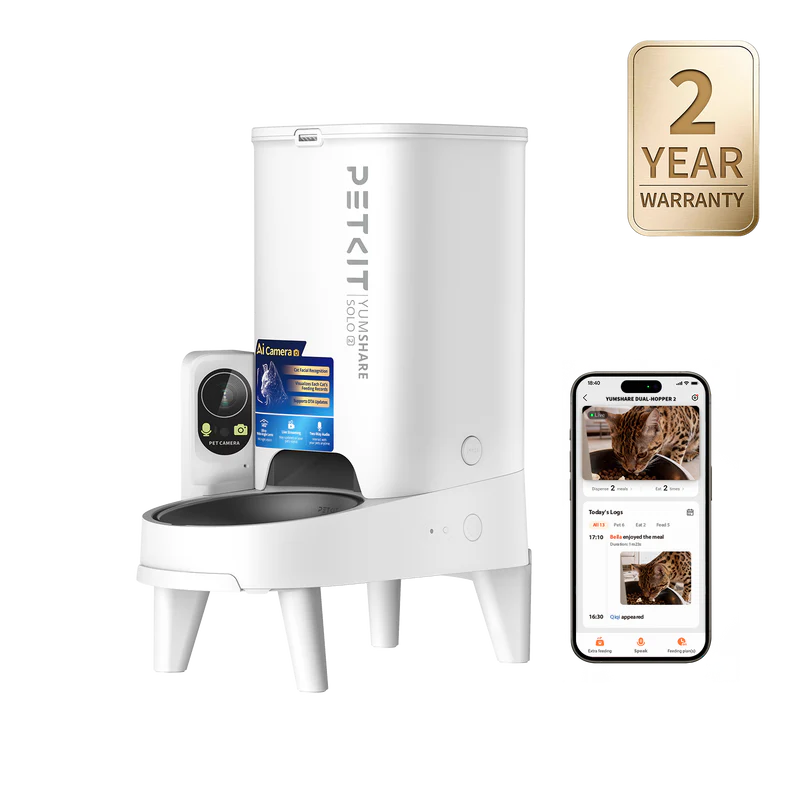
    PETKIT YumShare Solo 2 automatic cat feeder with built-in camera and app-based feeding records
    YumShare Solo 2 adds feeding context by connecting scheduled meals, live video and pet recognition.

    The PETKIT YumShare Solo 2 is not a full health monitor.

    It is a feeder with a camera, and its monitoring value comes from feeding identity.

    PETKIT positions YumShare Solo 2 around scheduled meals, live video, facial recognition, and eating habit tracking for multiple pets. That makes it useful when the feeding station is the routine you need to understand.

    Why it stands out

    A regular automatic feeder can tell you that food was dispensed.

    That is not always enough.

    In a multi-cat home, the more important question may be:

    • Which cat approached the feeder?
    • Did the same cat keep coming back?
    • Did one cat skip a normal meal?
    • Did another cat interfere?
    • Did the feeding schedule fit the actual routine?

    That is where a camera feeder becomes more than a convenience product.

    It becomes a context device.

    Choose YumShare Solo 2 if:

    • Feeding routine is your main concern.
    • You want scheduled dry-food meals and video context.
    • Individual recognition would change how you manage meals.
    • You already use or want PETKIT ecosystem products.
    • You want more than a basic portion dispenser.

    It may not be the best fit if:

    • Your cats need physically separated feeding.
    • You feed mostly wet food.
    • You only need a simple schedule feeder.
    • You want whole-room monitoring.
    • You do not plan to review the app data.

    Verdict: Best feeding monitor when the useful signal is not simply “food dispensed,” but which cat appeared at the meal and how the routine changed.

    Check PETKIT YumShare Solo 2

    For feeder types, wet-food options, RFID access, and camera feeder trade-offs, see our Best Automatic Cat Feeders guide.

    Best Multi-Cat Hydration Monitor: PETLIBRO Dockstream RFID

    The PETLIBRO Dockstream RFID is the most relevant hydration monitor for multi-cat homes because it adds identity to drinking data.

    A standard smart fountain can show total water activity.

    That may be enough for one cat. But in a multi-cat home, total drinking can be misleading. One cat may drink more while another drinks less, and the household-level number can look normal.

    Dockstream RFID is designed to track drinking amount, frequency, and duration for up to five cats using RFID collar tags.

    The limitation is important:

    It does not read implanted microchips.

    It uses PETLIBRO RFID tags, so it is best for cats that can safely and comfortably wear compatible breakaway collars.

    Why it stands out

    Hydration tracking is much more useful when it answers “which cat?” instead of only “how much total water moved?”

    That is why Dockstream RFID fits this page better than a standard app fountain.

    Its value is not simply that it is smart. Its value is individual routine visibility.

    Choose Dockstream RFID if:

    • You have two or more cats.
    • Individual hydration patterns matter.
    • Your cats tolerate collar tags.
    • You want app-based drinking records.
    • You need a hydration signal to complement litter or feeding data.

    It may not be the best fit if:

    • Your cats refuse collars.
    • You need implanted microchip recognition.
    • You only have one cat and do not need identity tracking.
    • You want a camera fountain instead.
    • You prefer a non-smart high-capacity water station.

    Verdict: Best hydration monitor for multi-cat homes where individual drinking patterns are useful enough to justify RFID tags.

    Check PETLIBRO Dockstream RFID on Amazon

    Which Signal Should You Monitor First?

    Do not start by buying five devices.

    Start with the uncertainty you actually have.

    Your concernStart here
    Litter box changes, weight trend, existing boxPetivity
    Litter automation plus deeper monitoringPETKIT Purobot Max Pro 2
    Outdoor movement, escape risk, activity, sleepTractive
    Meal routine and identity at the feederPETKIT YumShare Solo 2
    Multi-cat drinking patternsPETLIBRO Dockstream RFID

    A single-cat home with a stable routine may not need much monitoring.

    A multi-cat home with shared resources can benefit more, because shared bowls, shared litter boxes, and shared spaces make it harder to know which cat did what.

    How to Read Smart Health Data Without Overreacting

    Look for patterns, not one-off events

    One strange day does not always mean something is wrong.

    Heat, stress, guests, travel, food changes, cleaning routines, medication, new furniture, or another pet can all affect behavior.

    Repeated changes matter more.

    Combine signals carefully

    Data becomes more useful when signals line up.

    For example:

    • lower food visits plus lower activity;
    • more litter visits plus changed drinking;
    • weight trend change plus altered appetite;
    • reduced movement plus unusual hiding.

    Even then, the monitor is not diagnosing anything. It is giving you a reason to observe more carefully or speak with a veterinarian.

    Keep screenshots or summaries

    If a change persists, app screenshots or exported summaries may help you describe the timeline more clearly.

    Instead of saying “I think something changed,” you can say:

    • “The app shows fewer feeding visits this week.”
    • “Weight readings changed over several days.”
    • “Drinking visits dropped for this cat compared with normal.”
    • “Activity has been lower than usual.”

    That is the useful role of smart monitoring: better history, not self-diagnosis.

    Privacy, Subscriptions and Data Ownership

    Smart health monitors can collect sensitive household data: video, location, routines, feeding patterns, and app histories.

    Before buying, check:

    • whether video is stored locally or in the cloud;
    • whether advanced history requires a subscription;
    • whether multiple users can access the account;
    • whether you can export data;
    • how the company handles privacy and app permissions;
    • whether the device still works in a limited way without paid features.

    The best monitor is not the one with the most alerts.

    It is the one you can trust, maintain, and interpret calmly.

    For room monitoring and camera feeder differences, see our Best Smart Cat Cameras guide.

    Frequently Asked Questions

    Are smart cat health monitors worth it?

    They are worth it when the data changes what you do.

    If a monitor helps you maintain a routine, notice a repeated change, separate one cat’s behavior from another’s, or bring clearer history to a vet visit, it can be useful.

    If you will not check the data or act on it, the premium may not be justified.

    Can smart cat health monitors diagnose illness?

    No.

    They can show changes in routine signals, but they cannot explain the cause. Diagnosis and treatment decisions belong with a licensed veterinarian.

    What is the best first monitor for most cat owners?

    For many homes, litter and weight data are the most practical starting points because they are repeated, measurable, and relevant to daily routine.

    That makes Petivity a sensible first step if you want monitoring without replacing the litter box.

    Is PETKIT Purobot Max Pro 2 better than Petivity?

    Not automatically.

    Purobot Max Pro 2 is more advanced and adds self-cleaning plus camera-supported monitoring. Petivity is simpler and works with an existing litter box. The better choice depends on whether you want automation or monitoring with minimal setup change.

    Is Tractive a health monitor or a GPS tracker?

    It is primarily a GPS and activity tracker. Its health-monitoring value comes from movement, sleep, and routine context, not from food, water, or litter data.

    Is Dockstream RFID the same as a microchip fountain?

    No.

    PETLIBRO Dockstream RFID uses collar tags. It does not read implanted microchips.

    Final Verdict

    The best smart cat health monitor is the one that tracks the signal your home actually needs.

    Choose Petivity Smart Litter Box Monitor if you want weight and litter activity data without replacing your existing litter box.

    Choose PETKIT Purobot Max Pro 2 if you want a premium self-cleaning litter box with AI-assisted monitoring and camera context.

    Choose Tractive Smart Cat GPS Tracker if activity, sleep, escape risk, and location are the missing signals.

    Choose PETKIT YumShare Solo 2 if feeding identity and meal routine data matter more than general room monitoring.

    Choose PETLIBRO Dockstream RFID if you have multiple cats and individual hydration tracking is worth the extra setup.

    Smart cat health monitors are not magic.

    They are routine sensors.

    Used well, they can help you notice changes, document patterns, and make calmer decisions. Used poorly, they become just another app full of noise.

    The right question is not “How much data can I collect?”

    It is:

    “Which signal would actually change what I do next?”

    Quick Shop

    References

    • Petivity / Purina — Smart Litter Box Monitor specifications and litter/weight monitoring features
    • PETKIT — PETKIT app and AI camera-equipped device monitoring features
    • PETKIT — YumShare Solo 2 feeder camera, facial recognition, live video, and eating habit tracking
    • Tractive — cat GPS tracking, activity, sleep, and wellness insight features
    • PETLIBRO — Dockstream RFID hydration tracking, RFID collar tags, and multi-cat drinking records
    • Cornell Feline Health Center — cat health, senior cat care, hydration, appetite, and routine-change guidance
    • Feline Veterinary Medical Association / cat-friendly veterinary guidance — routine observation and veterinary consultation principles

    Image Disclosure

    Some images in this article may be created with AI for illustrative purposes. They do not show the exact products reviewed and should not be used to evaluate product size, fit, design, or features. Always check the current official product listing before purchasing.

    Disclosure

    PetTech AI may earn a commission when readers purchase through affiliate links. That does not change how products are framed or compared. Smart cat health monitors can support routine awareness, but they do not diagnose illness, replace veterinary care, or guarantee early detection of health problems. Always consult a licensed veterinarian about significant, sudden, or persistent changes in your cat’s behavior, appetite, drinking, litter box use, weight, activity, or general condition.