Author: PetTech

  • Virtual Fences for Cats 2025: Safer Outdoor Freedom with Smart GPS Boundaries 🐾

    Virtual Fences for Cats 2025: Safer Outdoor Freedom with Smart GPS Boundaries 🐾

    Affiliate disclaimer: This guide includes affiliate links (Amazon and brand partners). If you purchase through our links, we may earn a small commission at no extra cost to you. We only recommend products that support feline safety and well-being.

    Cats are curious explorers. We love that energy—until it collides with cars, coyotes, or a neighbor’s garage. Virtual fences for cats 2025 let you define safe zones on a map and get instant alerts when your cat wanders past the boundary. Unlike physical fencing, a virtual fence is invisible: it uses a lightweight tracker on the collar, GPS/LTE triangulation, and an app that notifies you the moment your feline drifts “out of bounds.” Done right, these systems add oversight without ruining your cat’s sense of freedom.

    This pillar breaks down how virtual fences for cats 2025 work, the pros and limits, vet-informed training, and our top picks you can confidently use this year.


    What exactly is a “virtual fence” for cats?

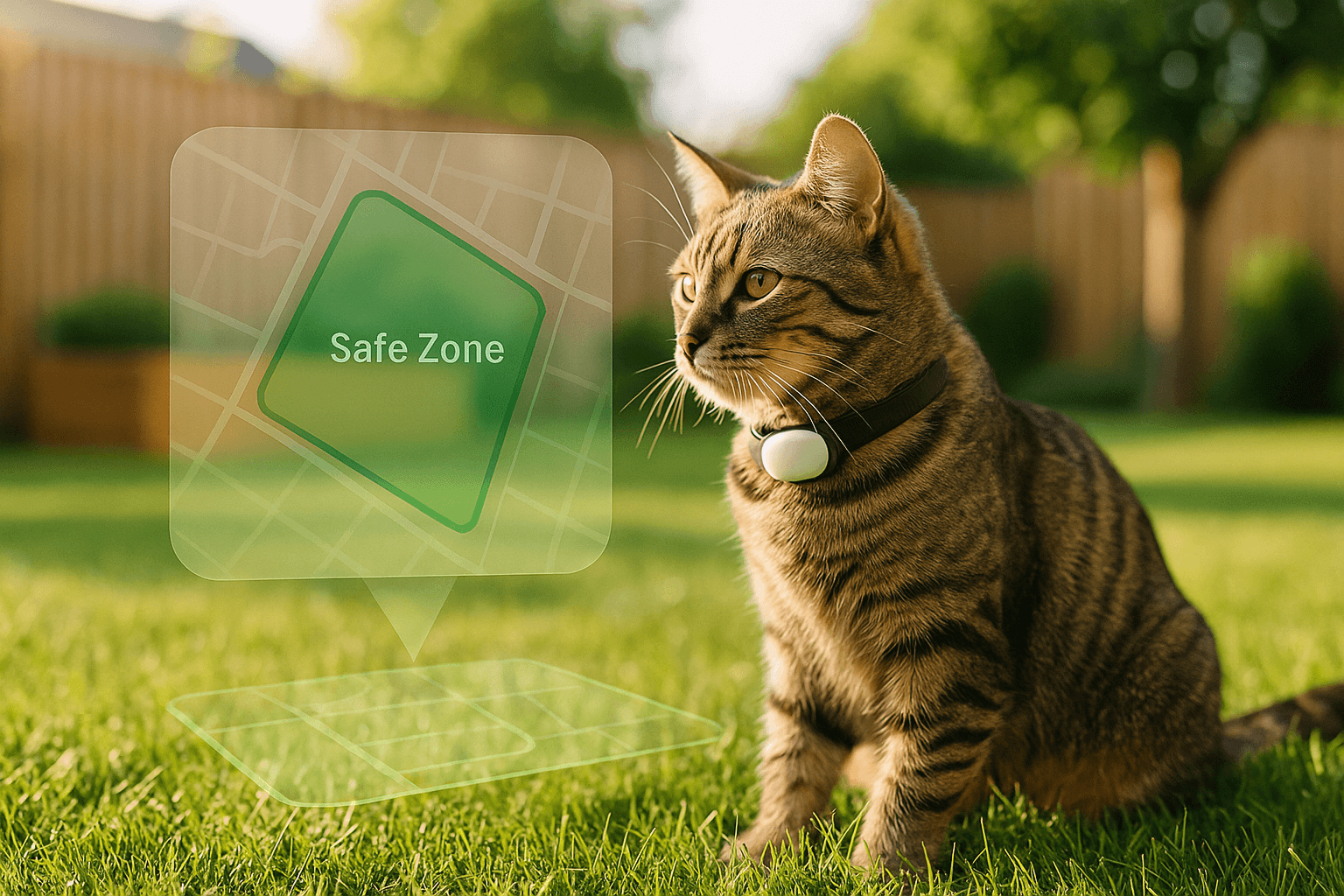
    A virtual fence is a geo-fenced area you draw in the app—your yard, the block, the campground. When your cat’s tracker crosses that line, you get a push alert and a live map with turn-by-turn directions back to your pet. Modern virtual fences for cats 2025 typically include:

    • GPS + LTE (or LTE-M/NB-IoT): wide-area location and dependable alerts.
    • App-based safe zones: draw multiple fences (home, cabin, RV park).
    • Live tracking: refreshes every few seconds so you can intercept early.
    • Activity & wellness logs: steps, rest cycles, routes.
    • Sound/vibration cues (select models): non-aversive guidance to redirect your cat.

    Important: We do not recommend shock-based systems. Cats are sensitive; humane guidance means alerts for humans and at most tone/vibration for redirection. For behavior and welfare, we follow guidance from the AVMA and the Cornell Feline Health Center on humane training, stress reduction, and environmental safety.


    Benefits (and limits) of virtual fences for cats

    Why they help

    • Early warning = fewer emergencies. You’ll know in seconds if your cat slips beyond the yard.
    • Better outdoor enrichment. Cats keep the freedom to explore while you keep the safety net.
    • Data you can act on. See patterns: favorite routes, high-risk zones, time outside.
    • Travel-friendly. At a campsite or a new home, redraw the fence in 30 seconds.

    What they don’t do

    • They don’t physically stop a cat. They warn you (and in some cases offer a gentle cue), but they aren’t a barrier.
    • Battery and signal matter. Dense trees, tall buildings, or dead batteries reduce accuracy.
    • Training is essential. You’ll still need a harness/leash routine and recall practice.

    If you accept these realities, virtual fences for cats 2025 can meaningfully lower risk while supporting healthy exploration.


    How virtual fences work (quick tech explainer)

    • Positioning: GPS + assisted networks (cellular/Wi-Fi/Bluetooth) locate the tracker.
    • Geofencing: You outline “safe zones” in the app (e.g., your backyard).
    • Threshold: If the tracker leaves the polygon, the app fires an out-of-zone alert.
    • Live mode: Switch to high-frequency pings (every 2–3 s) to navigate to your cat.
    • Optional cues: Some devices trigger tone/vibration so your cat associates the boundary with turning back—paired with reward-based training only.

    Vet-informed safety & training (read this before you start)

    • Reward over punishment. Per veterinary guidance (AVMA; Cornell Feline Health Center), use positive reinforcement: treats, praise, or play when your cat responds to a recall cue.
    • Short sessions. Cats learn best in 3–5 minute blocks, 1–2 times/day.
    • Warm-up indoors. Introduce the tracker inside so the collar and beeps aren’t novel outdoors.
    • Leash + harness first. Combine virtual fences for cats 2025 with a smart harness or standard H-harness while you teach recall.
    • No shock. Ever. Choose humane systems; avoid aversive corrections.

    The best Virtual Fences for Cats (2025 tested picks)

    Below are three solid options available on Amazon with proven geofencing. We chose models that balance accuracy, humane features, and US support.

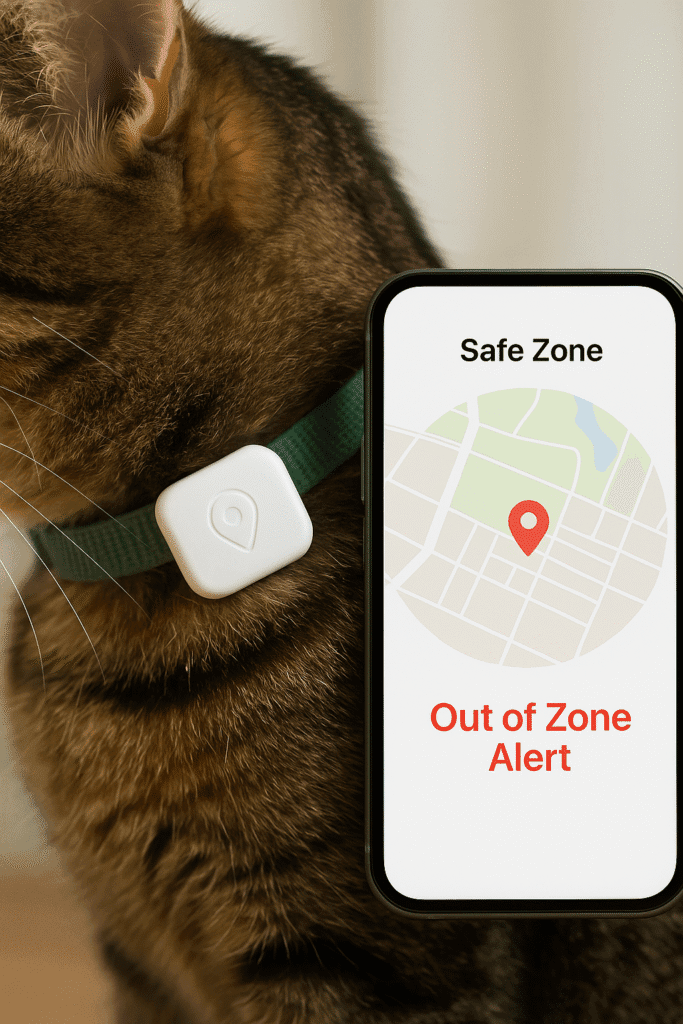
    1) Tractive CAT Mini GPS TrackerBest overall for live tracking + geofences

    Tractive CAT Mini with app showing virtual fence alert.

    Why it stands out: A compact, cat-specific tracker with GPS + LTE, robust virtual fence tools, and live location refresh every few seconds. You can set multiple safe zones (home, grandma’s yard, RV park), view location history, and monitor activity. Battery life is typically up to 7 days depending on coverage and how often you use Live Mode.

    What we like

    • Fast, reliable out-of-zone alerts.
    • Clear app with shareable tracking (pet sitters, family).
    • Waterproof, lightweight, comfortable for most adult cats.

    Considerations

    • Requires a subscription for cellular tracking.
    • Performance depends on regional network quality.

    Best for: Most cat households that want dependable virtual fences for cats 2025 without over-complicating setup.
    View Tractive CAT Mini on Amazon → https://amzn.to/4nLYQqv


    2) Halo Collar 3Best for multi-fence setups and humane guidance

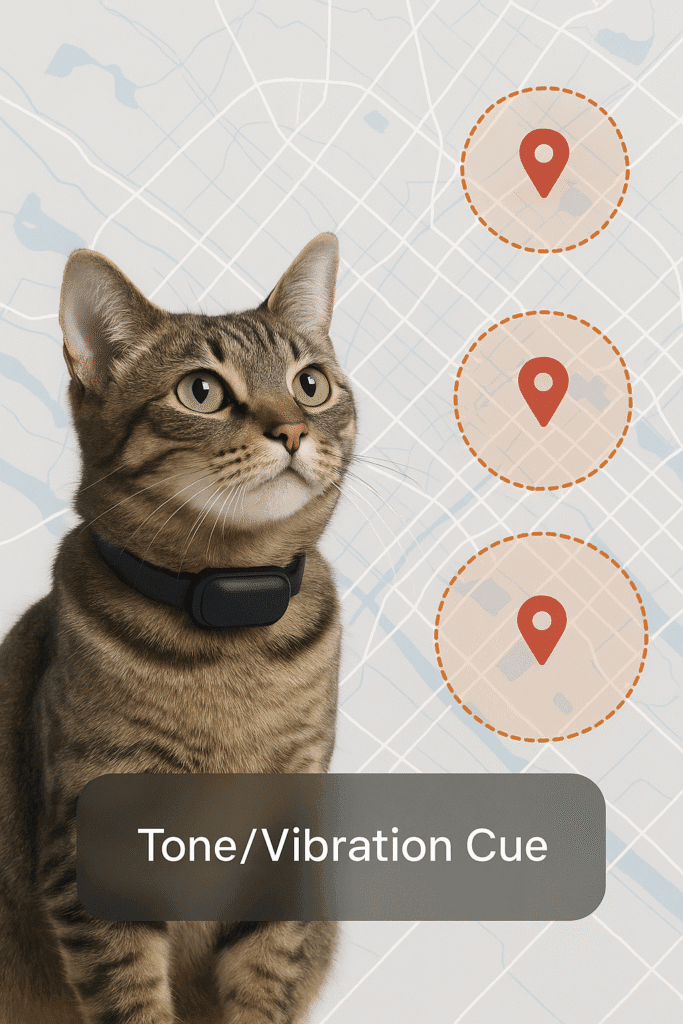
    Halo Collar 3 for cats with tone/vibration cue zones.

    Why it stands out: Combines GPS + cellular with app-based virtual fences and optional tone/vibration cues to help redirect. While historically dog-focused, the latest generation supports small-pet sizing when fitted correctly. You can create 20+ fence zones, add training tones, and review detailed tracking.

    What we like

    • Rich fence management; quick redraw when traveling.
    • Tone/vibration options for gentle boundary cues (no shocks).
    • Solid battery, strong build, and polished training content.

    Considerations

    • Collar size/weight: confirm fit for smaller cats; many owners use it for bigger breeds only.
    • Subscription for premium features; price is higher than tag-style trackers.

    Best for: Confident gear users who want advanced virtual fences for cats 2025 with humane cue options and lots of zones.
    View Halo Collar 3 on Amazon → https://amzn.to/48M3PmH


    3) Pawfit Lite for CatsBest lightweight budget pick with geofence alerts

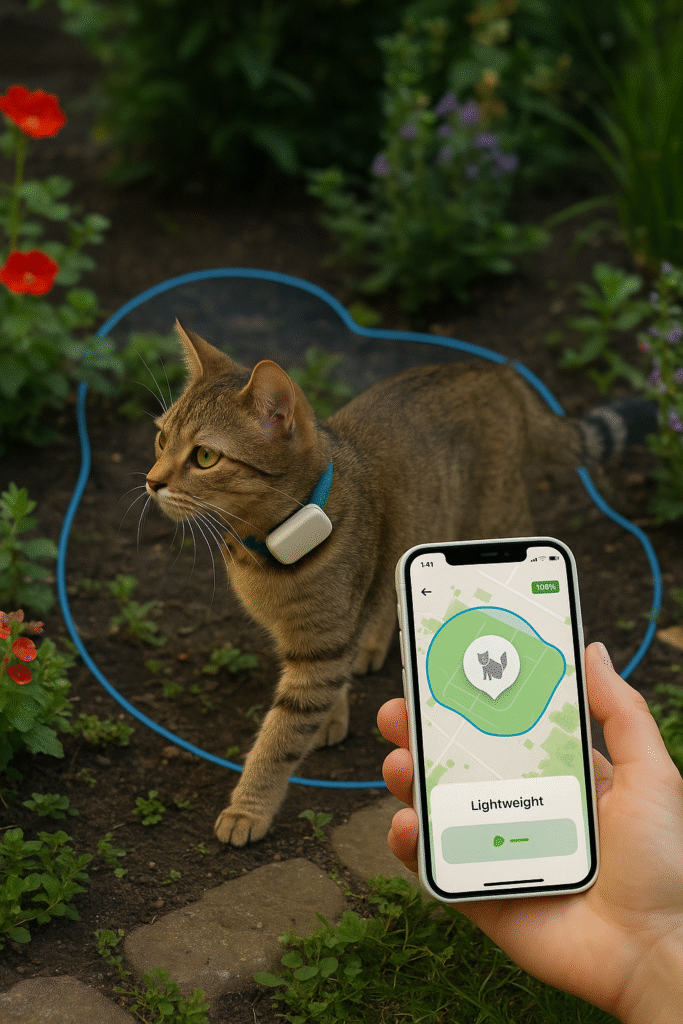
    Pawfit Lite tag with geofence boundary for a small cat.

    Why it stands out: A lightweight tracker aiming squarely at cats and small pets. You get GPS-based virtual fences, voice recall (through the device/app), IP-rated durability, and multi-day battery in a compact tag. It’s an appealing entry point if you need geofencing without a premium price.

    What we like

    • Cat-friendly weight and form factor.
    • Geofence alerts plus simple recall tools.
    • Value pricing on both device and subscription tiers.

    Considerations

    • App polish and accuracy can vary with signal conditions.
    • Fewer “extras” than Halo; not as rapid in live refresh as top-end units.

    Best for: Budget-minded owners who still want practical virtual fences for cats 2025 and a light tag for smaller felines.
    View Pawfit Lite for Cats on Amazon → https://amzn.to/46QMV4X


    How to set up a virtual fence for cats (step-by-step plan)

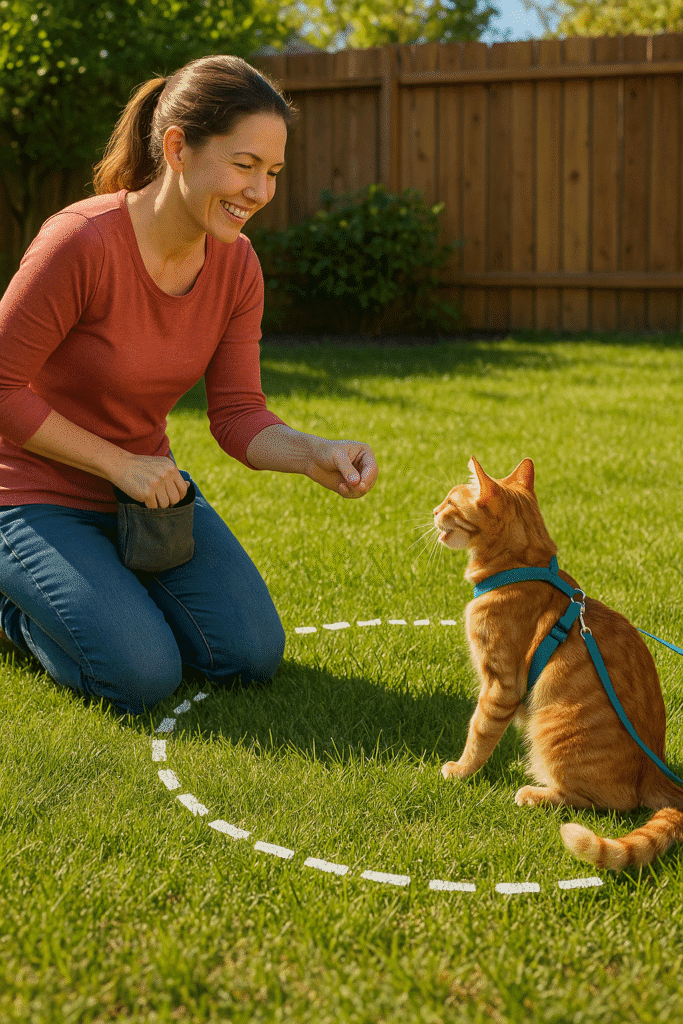
    Reward-based recall training at the edge of a virtual fences for cats 2025.

    Day 0 — Prep

    • Charge the tracker to 100%.
    • Fit collar snug (you should slide two fingers under it).
    • Enable app notifications; add a trusted contact.

    Day 1 — Indoor familiarization

    • Put the tracker on your cat for short indoor sessions (5–10 min).
    • Pair a neutral attention sound (kissy noise or clicker) with a treat.

    Day 2 — Harness + backyard boundary (leashed)

    • Walk the boundary on a leash/harness.
    • When the app pings for “near boundary,” say your recall word, guide back, reward.

    Day 3 — Short off-leash trial (supervised)

    • In a quiet time, allow 5–10 min off-leash in the yard.
    • If an out-of-zone alert fires, use Live Mode, recall, reward, finish.

    Day 4–7 — Expand and repeat

    • Add a second safe zone (front yard or neighbor’s lawn with permission).
    • Keep sessions short and positive.
    • Log patterns (heat, traffic, wildlife) and adjust fence shape.

    Travel tip: At a new location, set a temporary fence before you open the carrier. Do a 2-minute leashed perimeter walk so your cat understands the new edges.


    Troubleshooting & pro tips

    • False alerts near edges? Expand the fence 5–10 feet beyond the true boundary to allow GPS drift.
    • Battery drain? Live Mode eats battery—use it only when needed, then switch back.
    • Cat slipping collar? Try a breakaway collar with a secure fit or a cat harness designed for GPS tags.
    • Dense trees/buildings? Expect occasional jumps; prioritize trackers with LTE assist and Wi-Fi sniffing for urban accuracy.
    • Anxious cats? Start with 2–3 minute outdoor sessions; pair every recall with a high-value reward (lickable treat or a favorite toy chaser).

    Ethics, privacy & data

    • No shock. We repeat it because it matters. Humane systems use alerts for humans and optionally tone/vibration—never pain.
    • Data stewardship. Use unique passwords, enable two-factor authentication, and review app data settings.
    • Respect wildlife & neighbors. Virtual fences for cats 2025 should reduce nuisance roaming; be proactive and courteous.

    For health or anxiety concerns, consult your veterinarian; the AVMA and Cornell Feline Health Center publish excellent guidance on feline behavior, stress reduction, and safe outdoor enrichment.


    FAQs — Virtual Fences for Cats 2025

    Do virtual fences actually keep my cat in the yard?
    They notify you the instant your cat leaves; they don’t physically stop a cat. Think “early-warning system” + training + supervision.

    Are they safe?
    Yes, when used with humane settings (alerts + tone/vibration only) and positive reinforcement. Avoid shock.

    Indoor-only cats: worth it?
    If your cat is strictly indoors, you probably don’t need geofences. However, a tracker helps in escape scenarios or when traveling.

    What about battery life?
    Most cat trackers last 3–10 days depending on refresh rate and signal. Build charging into your routine.

    Can I create multiple fences?
    Yes—many systems let you save several zones (home, friend’s place, vacation rental).


    The bottom line

    Virtual fences for cats 2025 won’t replace good supervision—but they dramatically improve your response time and confidence. Start with a reliable GPS tracker, pair it with a humane training plan, and keep outdoor time enriching and safe. Our current favorites:

    Ready to set a safe zone?
    Check today’s prices on Amazon and pick the tracker that fits your routine.


    Internal interlinks

    Authoritative references (add outbound links)

  • Cat Travel Essentials 2025: Smart Carriers, Strollers & Accessories for Stress-Free Trips 🧳🐾

    Cat Travel Essentials 2025: Smart Carriers, Strollers & Accessories for Stress-Free Trips 🧳🐾

    Traveling with a cat used to mean white-knuckle car rides and apologizing to your vet’s receptionist. Not anymore. With the right plan—and the right gear—trips can be calm, predictable, and even enjoyable. In cat travel essentials 2025, the goal is simple: build a portable “comfort zone” so your cat experiences new places without new stress. Think stable airflow, ergonomic motion, and familiar scents, all wrapped in hardware that’s easy for humans to use daily. That’s the promise of cat travel essentials 2025: fewer surprises, more confidence, and a routine you’ll actually repeat.


    Why cat travel essentials 2025 matter for real cats (and real humans)

    Cats aren’t anti-travel; they’re pro-routine. They want the air to feel right, the surfaces to feel steady, and the world to make sense. Veterinary guidance from the Cornell Feline Health Center and the AVMA is consistent: reduce noise and motion, maintain ventilation, and rely on positive conditioning rather than force. That’s exactly what cat travel essentials 2025 optimize—environmental stability plus humane training—so your cat’s nervous system can downshift from alarm to curiosity.


    Build your foundation: carriers in cat travel essentials 2025

    Carriers are the core of any kit. They’re not just containers; they’re mobile bedrooms. In cat travel essentials 2025, pick carriers that stabilize temperature, allow you to check in easily, and keep your cat’s body from sliding with every bump.

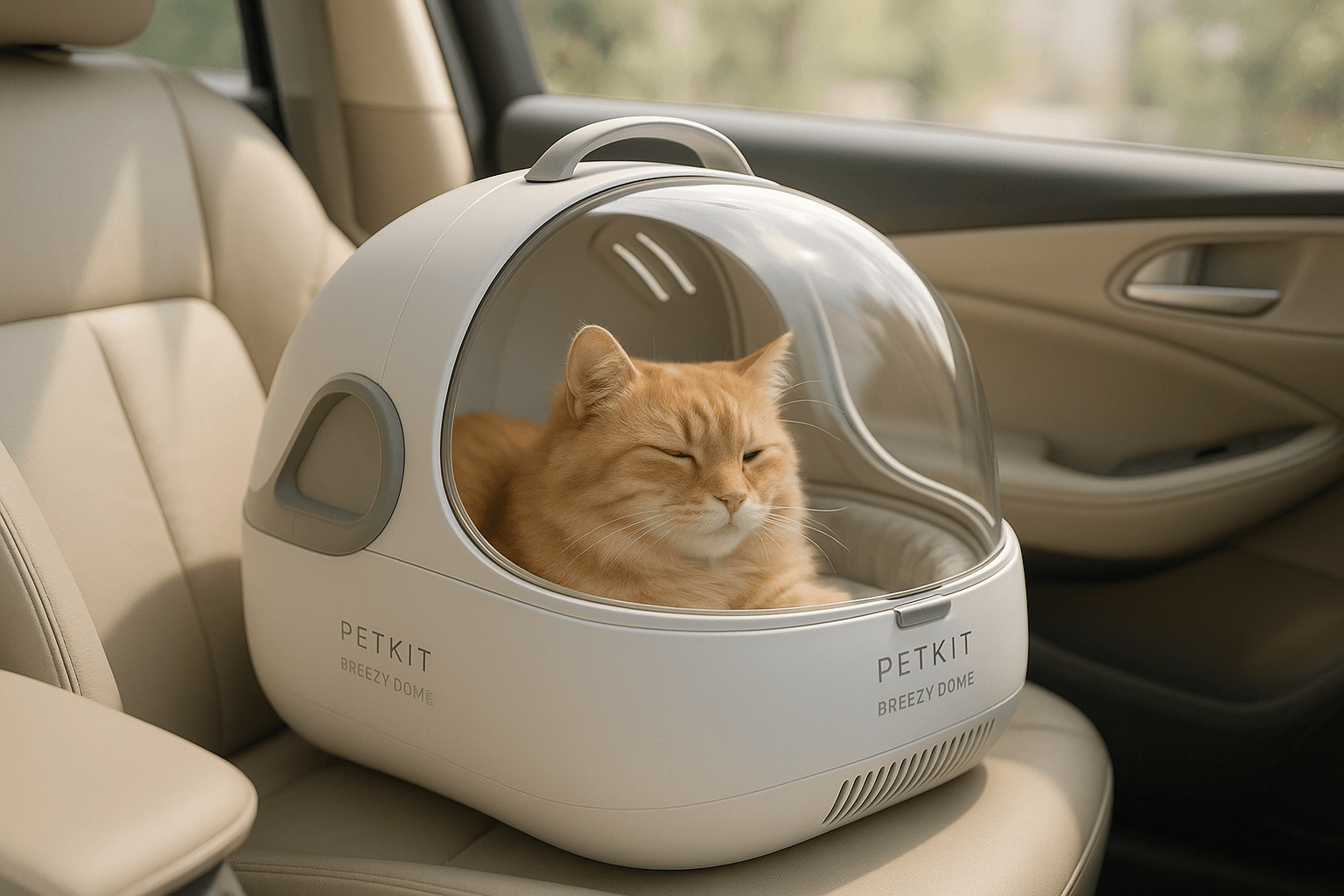
    🌀 PETKIT Breezy Dome 2 (smart ventilated carrier)

    The PETKIT Breezy Dome 2 combines panoramic visibility with active airflow. A USB-powered fan helps keep the micro-climate comfortable, while the curved interior reduces that “cornered” feeling. For summer drives or busy trains, this is the carrier that makes acclimation easier because it removes the most common trigger—stale, warm air. If you’re prioritizing outcomes in cat travel essentials 2025, this is a high-leverage upgrade with daily payoff.
    Best for: road trips, in-cabin flights, city walks.
    CTA: Compare PETKIT Breezy Dome 2 on the PETKIT Store or Amazon.

    💨 Amazon Basics Soft-Sided Mesh Carrier (lightweight value)

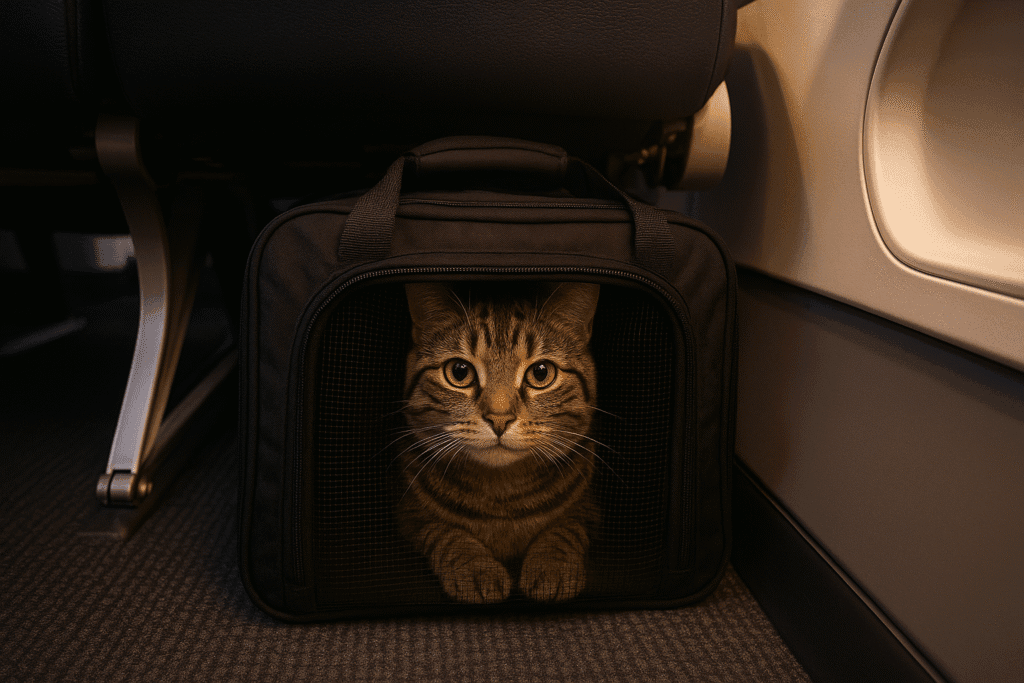
    Airline-friendly soft carrier under a plane seat. Cat travel essentials 2025

    When you need something light, simple, and airline-friendly, this soft-sided classic delivers. Full-mesh panels improve airflow, the shoulder strap keeps your hands free, and the fold-flat design stores easily. For quick vet visits or short train rides, it’s hard to beat. As a baseline option inside cat travel essentials 2025, it pairs well with pheromone wipes and a small fleece to “home-ify” the interior.
    Best for: errands, quick appointments, budget builds.
    CTA: Find the Amazon Basics soft-sided carrier on Amazon.

    🎒 PetAmi Premium Backpack Carrier (ergonomic walking/travel)

    Backpack carriers solve a human problem—fatigue—without compromising feline comfort. Multiple entry points let you treat or reassure without opening the main door, and padded straps prevent shoulder strain on long walks. For urban explorers, this is the convenient link between training walks and bus or subway rides in cat travel essentials 2025.
    Best for: public transport, walking commutes, hands-free travel.
    CTA: See the PetAmi Premium Backpack Carrier on Amazon.


    Smart strollers: freedom without fear in cat travel essentials 2025

    Some cats want to see the world from a moving window—but leashed sidewalks feel too risky. A stroller converts chaotic streets into a smooth, enclosed “viewing deck.”

    🛞 PETKIT Bon Voyage Pet Stroller

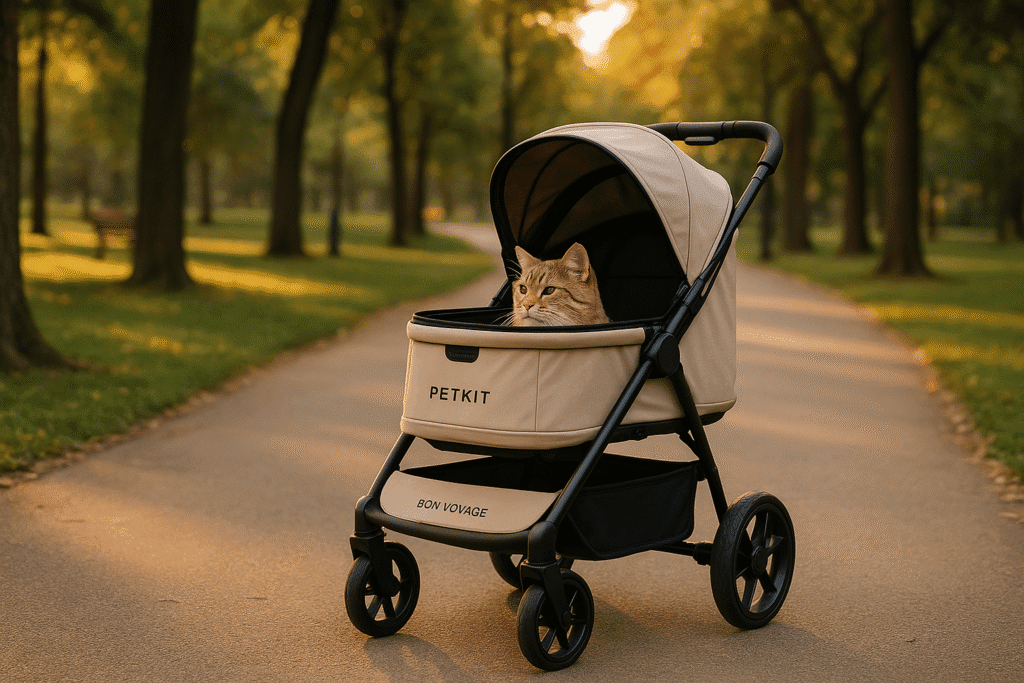
    Cat enjoying a calm outdoor ride in a PETKIT stroller.

    The Bon Voyage focuses on stability and airflow: multi-layer shock absorption, breathable canopy, and a foldable frame that pops open with minimal fuss. It’s a gentler way to scale novelty—park paths, farmers’ markets, and outdoor cafés—without asking your cat to process unpredictable dogs and bikes at nose level. For senior cats or anxious travelers, it’s one of the most impactful picks in cat travel essentials 2025.
    Best for: city strolls, senior comfort, controlled exposure.
    CTA: Discover PETKIT Bon Voyage on the PETKIT Store.


    Hydration, comfort, and climate: small add-ons with big results

    If carriers are bedrooms, accessories are the thermostat and pantry. The right little things prevent 90% of mid-trip stress.

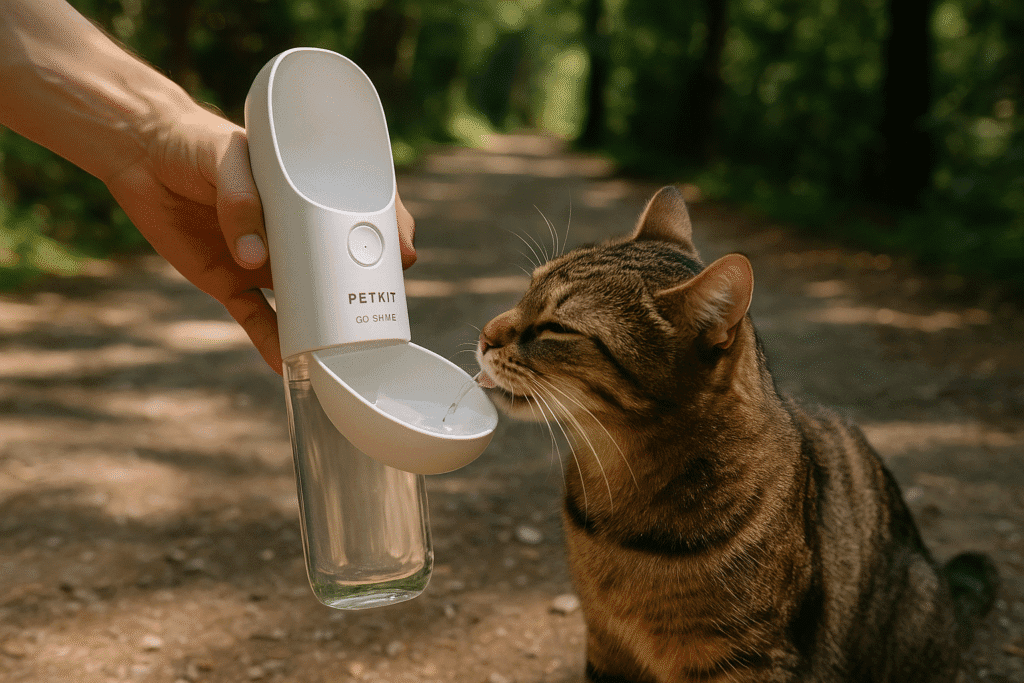
    💧 PETKIT Go-Shine Portable Water Bottle

    Portable water bottle hydrating a cat during travel.

    One-hand water control, a spill-safe lock, and a cup shaped for feline muzzles—hydration without wrestling with bowls. It’s the sort of detail that transforms “we should stop” into “we already did,” which is the rhythm you want in cat travel essentials 2025.
    Best for: hikes, rest-area stops, hot days.
    CTA: Shop PETKIT Go-Shine on PETKIT Store or Amazon.

    🧊 Cooling mats & travel blankets (Amazon)

    Temperature swings trigger panting and restlessness. A thin cooling mat (non-toxic gel) or a breathable throw evens out the micro-climate. Place it under your cat’s chest and elbows to reduce heat load, and keep a spare blanket that smells like home. These tiny comforts are quiet heroes of cat travel essentials 2025.
    CTA: Browse cooling mats and travel throws for cats on Amazon.


    Training that sticks: a humane plan for cat travel essentials 2025

    Great gear accelerates progress—but only when paired with short, repeatable training. Use micro-sessions (30–60 seconds) and stop while your cat still wants more. That’s how confidence compounds in cat travel essentials 2025.

    Phase 1: Familiarization (Days 1–3)
    Leave the carrier open with a fleece and scatter treats inside. Reward any investigation. No doors, no pressure.

    Phase 2: Positive association (Days 4–7)
    Feed a teaspoon of wet food at the carrier threshold; then move the dish deeper. Mark calm standing with a tiny treat. Short, sweet, done.

    Phase 3: Motion introduction (Days 8–10)
    Close the door for 5–10 seconds, release, treat. Pick up the carrier, take 10 steps, set down, treat. Add a soft soundtrack that will also play in the car—consistency shrinks novelty.

    Phase 4: Short drives (Days 11–14)
    Engine on, one loop around the block. Treat on re-entry to the house, then decompression play. Each lap is a success rep, not a test.

    Phase 5: Stroller acclimation
    Start indoors on smooth flooring, then hallway, then quiet sidewalk. Canopy partially closed, then fully closed, then open again—vary to prevent fixations. This is the behavior backbone of cat travel essentials 2025.


    Safety checklist: non-negotiables in cat travel essentials 2025

    • ID & microchip: collar ID + updated microchip registry.
    • Harness + tether: attach a short tether to the carrier frame while loading/unloading.
    • Ventilation first: never wrap a carrier in blankets that block airflow.
    • No loose cats in cars: secure carriers with seat belts or stroller anchors.
    • Heat awareness: park shade, AC pre-cool, and a cooling mat on hot days.
    • Quiet routes: plan timing to avoid dog-rush hours and construction.

    These are simple habits, but they’re the difference between “we made it” and “we’ll do this again.”


    Troubleshooting: when things wobble (and how to recover)

    Meowing escalates in the first minute.
    Cover part of the window with a breathable cloth to lower visual load; switch to a familiar playlist; shorten the route tomorrow. In cat travel essentials 2025, less novelty more often beats more novelty less often.

    Panting despite airflow.
    Stop, shade, water. Use the PETKIT fan, crack a window, move the carrier off sun-baked seats. If panting persists, go home and try again a cooler day.

    Refusing to enter the carrier.
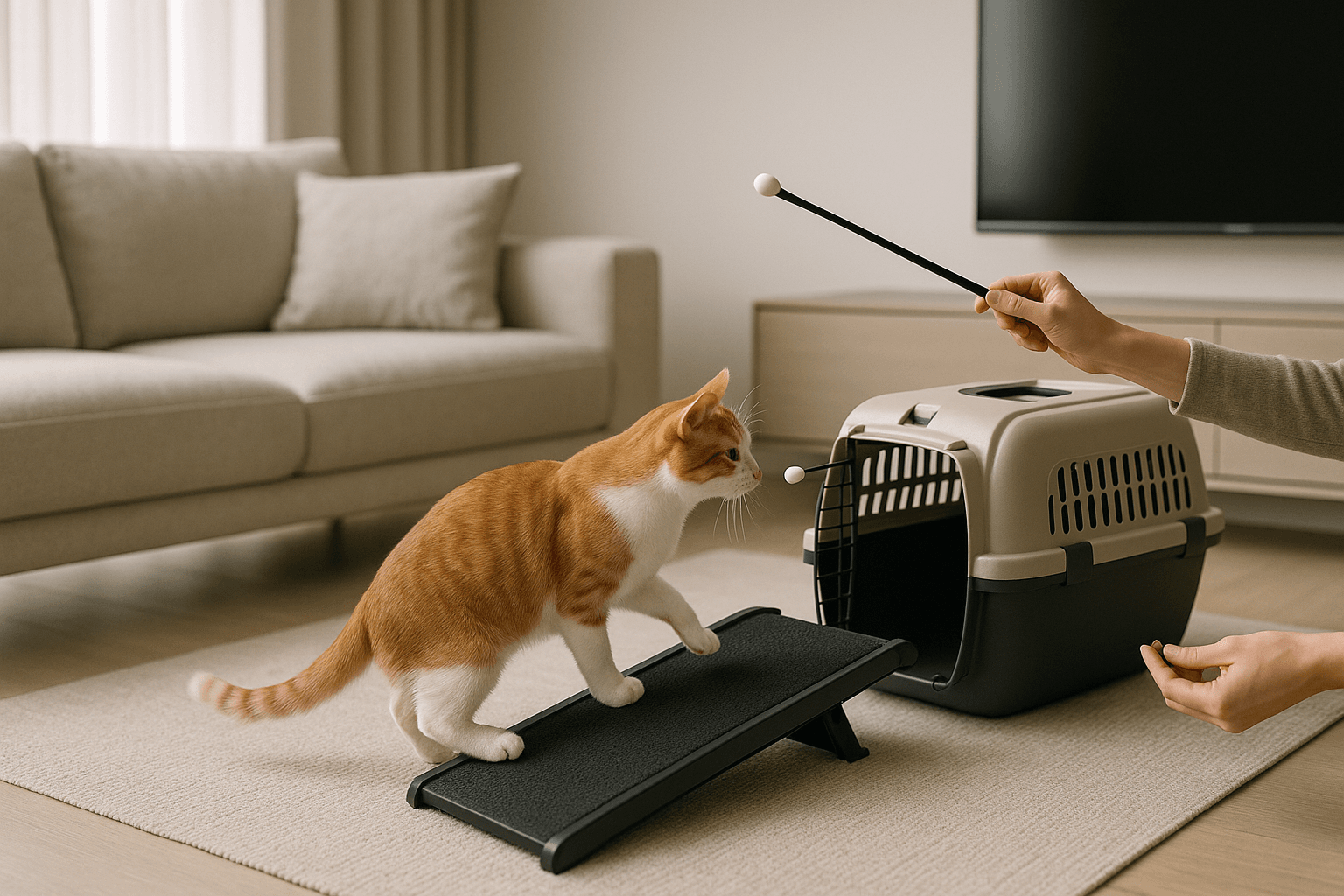
    Back up one phase: treat the approach, not the entry. Tap the fleece with a target stick, mark a nose touch, reward. Split the behavior into tiny, winnable steps.

    Motion sickness.
    Lower the carrier so your cat’s head stays level; skip meals 2–3 hours pre-trip; try shorter sessions. Ask your vet about anti-nausea plans if needed.


    The ultimate packing list for cat travel essentials 2025

    CategoryItemWhy it matters
    CarrierPETKIT Breezy Dome 2 / Amazon Soft-SidedVentilation + predictable enclosure
    MobilityPETKIT Bon Voyage StrollerSmooth exposure to new environments
    HydrationPETKIT Go-Shine BottleClean water, zero-spill control
    ComfortCooling mat + fleeceTemperature regulation + scent of home
    SafetyHarness, ID tag, microchipEscape-proof handling
    HygieneWipes, spare liner, trash bagsQuick resets on the road
    CalmPheromone wipes, familiar blanketLower arousal in new spaces
    Tech (optional)GPS trackerBackup location confidence

    Print this, tape it inside your closet, and you’ve just automated half the planning.


    How cat travel essentials 2025 connect to your bigger routine

    Travel is just outdoor enrichment with wheels. The more you repeat a calm, ventilated, treat-positive loop, the faster your cat generalizes that “moving environments are safe.” Complement this article with three related pillars to build your cat’s whole safety net:


    FAQs (fast answers for common worries)

    Do I need an “airline-approved” carrier for road trips?
    No; “airline-approved” just means it fits under seats. For driving, stability, airflow, and secure anchoring matter most in cat travel essentials 2025.

    Backpack vs hard carrier?
    Backpacks are human-friendly; hard carriers resist clawing and protect better during sudden stops. Many households keep both.

    Should I sedate my cat?
    Sedation can impair balance and increase confusion. Most vets recommend behavior-first strategies, pheromones, and, if needed, anti-nausea—not heavy sedatives—unless your veterinarian advises otherwise.


    Final thoughts—and your next best step

    Great travel isn’t about forcing bravery; it’s about engineering comfort. Start with a ventilated carrier, add hydration and climate control, and layer short, positive training. That’s the heart of cat travel essentials 2025: a system you can repeat, anywhere.

    Ready to pack smart?

    • 🌀 PETKIT Breezy Dome 2 — Smart airflow + panoramic view (PETKIT Store / Amazon)
    • 🛞 PETKIT Bon Voyage Stroller — Smooth, safe mobility (PETKIT Store)
    • 💧 PETKIT Go-Shine Bottle — One-hand hydration (PETKIT Store / Amazon)
    • 🎒 PetAmi Premium Backpack — Ergonomic comfort (Amazon)
    • 💨 Amazon Soft-Sided Carrier — Lightweight essential (Amazon)

    Affiliate Disclaimer
    This article contains affiliate links. As an Amazon Associate—and partner of PETKIT—PetTech AI may earn commissions from qualifying purchases, at no extra cost to you. We only recommend products that support feline welfare, safety, and human usability.

  • Cat Training Aids 2025: Smart Tools to Build Better Behavior

    Cat Training Aids 2025: Smart Tools to Build Better Behavior

    If you’ve ever tried to teach a cat to come when called, tolerate the carrier, or stop door-dashing, you already know the truth: success is 70% routine and 30% tools. The tools matter because they make the routine repeatable, rewarding, and low-friction for both of you. In cat training aids 2025, the winning formula blends classic behavior gear (clickers, targets, treat delivery) with lightweight “smart” accessories that shape the environment—ramps, fences, mats, and even health-aware litter. This guide to cat training aids 2025 shows how to use modern accessories to create reliable behaviors without stress.


    Why tech belongs in training (even for cats)

    Cats learn via operant conditioning just like dogs do—behavior → consequence → repetition. What changes in cat training aids 2025 is how easy it has become to deliver consequences (rewards), control the setup, and read signals (comfort, willingness, hydration, toileting patterns). Smart accessories reduce friction: they guide the body (ramps, fences), guide the nose (odor control so the box remains attractive), and guide your decisions (simple health cues so you reinforce the right moments). Result: calmer sessions, faster success.

    Authoritative guidance backs this approach. The Cornell Feline Health Center and the AVMA emphasize environment, predictability, and positive reinforcement over punishment. The practical takeaway for cat training aids 2025 is to pair humane methods with gear that keeps sessions brief, rewarding, and safe.


    What counts as “training aid” in 2025?

    Think beyond gadgets. In cat training aids 2025, anything that makes the desired behavior easier and the undesired behavior harder qualifies:

    • Reinforcement tools: clicker + target stick, treat pouches, interactive treat dispensers (Amazon).
    • Environmental shapers: ramps and fences that guide movement and reduce slips or scatter (PETKIT).
    • Focus & engagement: rechargeable laser pointers (industry note: Whisker’s rechargeable laser), feather teasers, puzzle toys (Amazon).
    • Health–behavior bridges: urine-monitor litter that flags issues early (PETKIT), so you don’t misread a “refusal” that is actually discomfort.

    When you assemble cat training aids 2025, the point isn’t buying more; it’s removing resistance—so you can repeat short, successful reps daily.


    The core kit (tech + classic) you actually need

    Below are the PETKIT and Amazon picks you can rely on, plus how each fits into a real training plan.

    1) PETKIT Easy-Step Pedal Ramp (2° page) – guide movement, build confidence

    A low-slope, soft-grip ramp helps kittens, seniors, or anxious cats approach a goal (carrier, litter, perch) without jumping. In cat training aids 2025, ramps double as behavior scaffolding: they give your cat a clear path and reduce hesitation, so you can mark and reward forward motion more often.

    How to use it

    • Place the ramp at the target (litter box, carrier, sofa).
    • Shape micro-steps: look → paw on ramp → two paws → full climb.
    • Mark each step with a click and deliver a small treat on the ramp surface.
    • Fade the ramp only after you’ve gotten 3–5 calm repetitions per day for a week.

    Affiliate CTA: Compare PETKIT Easy-Step Pedal Ramp on PETKIT Store or Amazon.


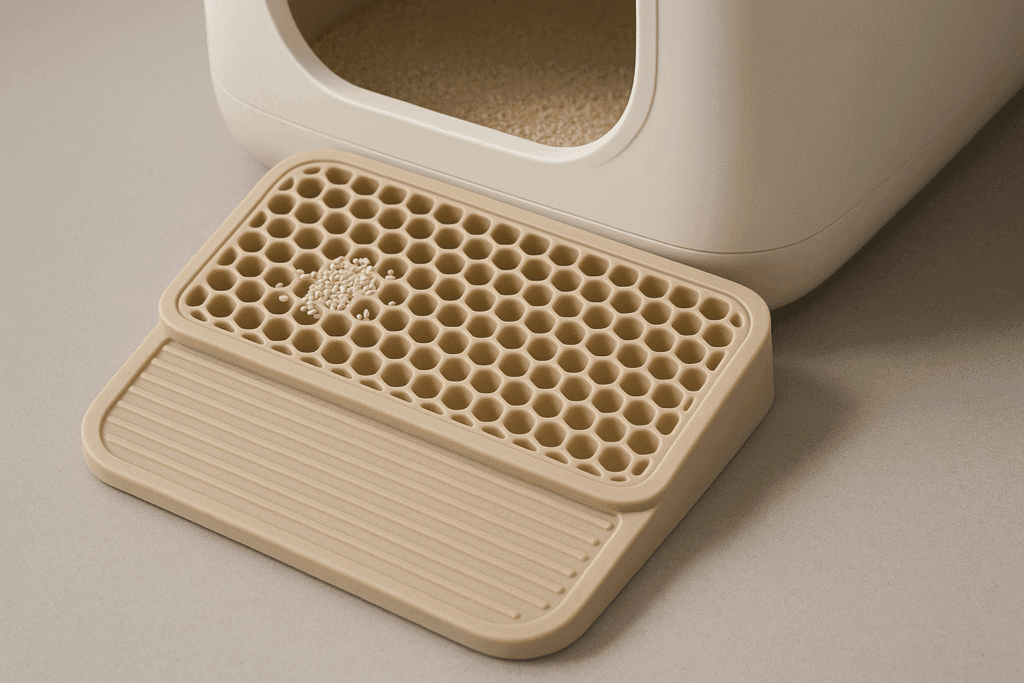
    2) PETKIT Cat Litter Ramp (2° page) — reduce scatter, create a “training runway”

    PETKIT litter ramp catching granules to support calm, tidy exits. Cat training aids 2025.

    This two-layer, anti-slip ramp catches granules and slows the exit from the litter area. That slow, predictable exit is gold for cat training aids 2025: it lets you mark calm behavior (no sprinting, no shaking pellets everywhere) and pay your cat for using the box appropriately.

    Pro tip

    • Place a small treat dish just beyond the ramp. When your cat exits calmly, deliver a single high-value treat. You’re not “rewarding elimination”—you’re reinforcing calm exits, which reduces zoom-outs and tracking.

    Affiliate CTA: Explore PETKIT Cat Litter Ramp on PETKIT Store or Amazon.


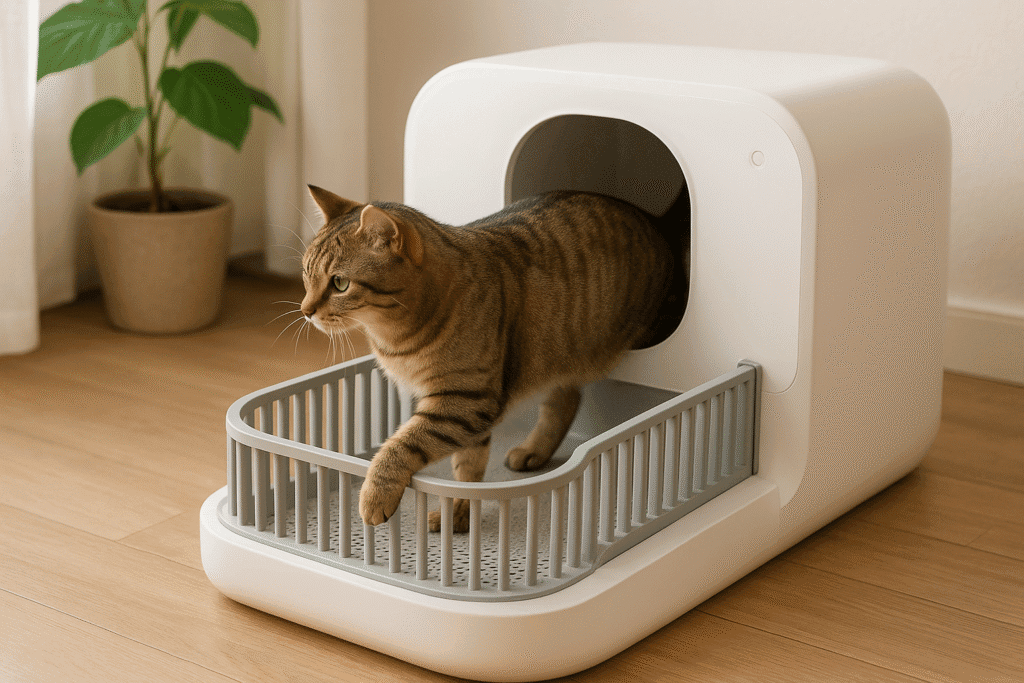
    3) PETKIT PuraMax Fence (3° page) — shape where paws and litter go

    PETKIT PuraMax Fence guiding clean entry into the litter box.

    A simple “fence” that raises the entry ridge can prevent splash, kicked litter, and mis-steps. In cat training aids 2025, environmental micro-barriers like this save you from constantly interrupting. Cats prefer clear boundaries; the PuraMax Fence channels movement so the correct step becomes the easiest step.

    Behavior use cases

    • For young or vigorous diggers, the fence reduces “overshoot.”
    • For anxious cats, fewer messes mean fewer human corrections—a calmer loop that accelerates learning.

    Affiliate CTA: Check PETKIT PuraMax Fence on PETKIT Store or Amazon.


    4) PETKIT Urine Monitor Cat Litter (4° page) — health data that protects progress

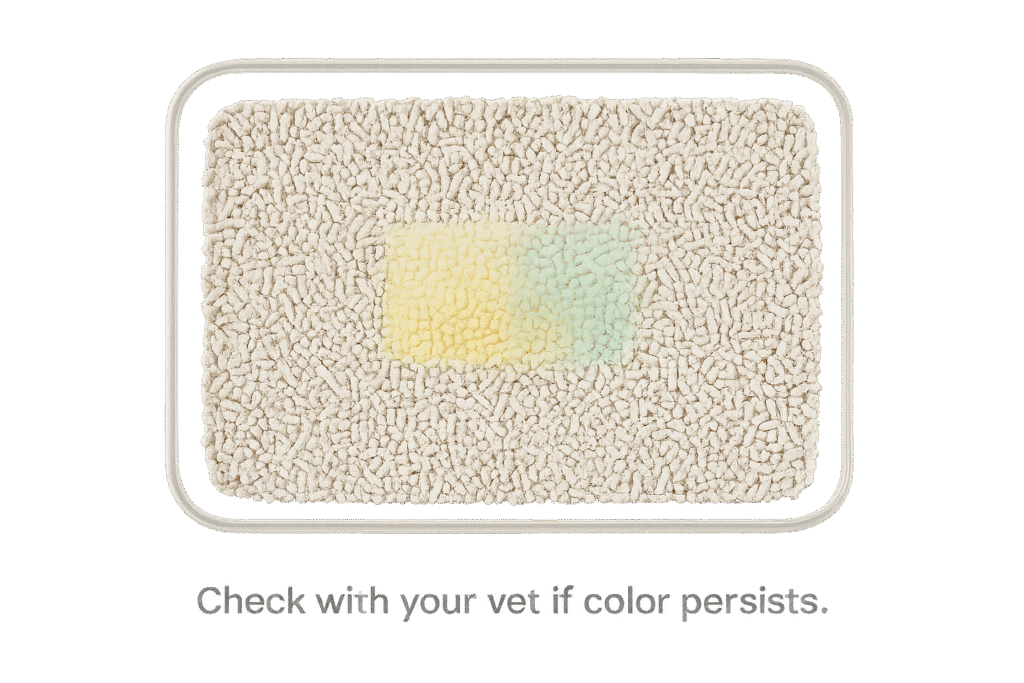
    Urine-monitor litter providing simple health cues during training.

    Training stalls if a cat is uncomfortable. This litter changes color with urinary anomalies (pH-related cues), giving you a first look at potential issues. In cat training aids 2025, health-aware materials prevent false interpretations (“she’s stubborn”) and keep you reinforcing the right behavior at the right time.

    How to use it without overthinking

    • Run it for a few days during new routines (box relocation, travel, diet shifts).
    • If color shifts persist, pause advanced goals and call your vet. Don’t punish avoidance—solve comfort first.

    Affiliate CTA: See PETKIT Urine Monitor Litter on PETKIT Store or Amazon.


    5) Amazon classic kit — the essential reinforcement trio

    Even in cat training aids 2025, the classic trio wins: clicker + target stick + small treats. A compact treat dispenser or pouch keeps your reward timing tight.

    How to use it

    • Clicker marks the exact behavior (touch target, step into carrier, break eye contact from a trigger).
    • Target stick gives a clear action: “boop the tip,” “follow to perch,” “turn to the litter ramp.”
    • Treat dispenser/pouch speeds delivery and keeps sessions under 60 seconds—perfect for cats.

    Affiliate CTA: Shop Amazon for “cat clicker & target stick combo” and “mini treat pouch/dispenser”.


    6) Focus & play for motivation — short note on laser pointers

    Cats chase light because it mimics prey movement. Industry-wide, rechargeable laser pointers (e.g., Whisker’s rechargeable model) exist to spark engagement, but always pair with a tangible catch (feather or treat) at the end. In cat training aids 2025, lasers are best used as warm-ups—30 seconds to raise interest, then swap to a toy they can physically “win.”


    Put the pieces together: a 14-day micro-plan

    The exact devices matter less than what you do with them. Use this repeatable plan to apply cat training aids 2025 without burning out.

    Days 1–3: Create a “win path.”

    • Place the PETKIT ramp to the target (carrier or litter).
    • 3–5 reps/day of micro-steps: nose → one paw → two paws → stand → step off.
    • Click & treat each tiny success; end while your cat still wants more.

    Days 4–6: Add environmental clarity.

    • Install the PuraMax Fence; reduce scatter and splashes.
    • Reinforce calm exits off the litter ramp (treat dish beyond the ramp).

    Days 7–10: Layer classic reinforcement.

    • Introduce target stick: touch → follow → perch or “park” mat.
    • Keep treats pea-sized; 5–8 rewards per 60-second session.

    Days 11–14: Health check + carrier confidence.

    • Use PETKIT Urine Monitor Litter during schedule changes; if colors normalize, advance.
    • Pair ramp + target to enter the carrier voluntarily; click for paws inside, then brief door close/open with treat rain.

    This “stacking” approach is the backbone of cat training aids 2025: shape movement, add clarity, reward micro-wins, verify comfort, repeat.


    Troubleshooting: if progress stalls

    • Cat freezes on the ramp. Lower criteria: reward a head turn toward the ramp, then a nose touch to the first ridge. In cat training aids 2025, shrinking the step is not failure; it’s strategy.
    • Zoom-outs after the litter box. Move the treat 2–3 feet past the ramp so the natural route is calm → treat → groom.
    • Carrier avoidance returns. Split the behavior: target to ramp near carrier, then target to ramp touching carrier, then paws inside, then full step in. Each stage = its own success day.

    Safety & welfare notes (always read)

    • Never punish (sprays, loud noises). It increases avoidance and hides pain signals.
    • Session length: 30–60 seconds, 2–5 times/day. Cats learn fast in micro-bursts.
    • Environment: quiet, ventilated, non-slip surfaces.
    • Vet first: sudden litter changes, straining, or vocalizing deserve a medical check.

    The AVMA and Cornell both stress environmental control and positive reinforcement; cat training aids 2025 simply makes those principles easier to execute.


    How to choose the right mix (decision tree)

    1. Goal is movement confidence (litter, carrier, couch) → PETKIT Easy-Step Pedal Ramp first.
    2. Goal is tidy habits (less scatter, calm exits) → PETKIT Cat Litter Ramp + treat dish past ramp.
    3. Goal is boundary clarity (less splash, better digging) → PETKIT PuraMax Fence.
    4. Goal is rule-out health blockers → PETKIT Urine Monitor Litter for 3–5 days.
    5. Goal is precise behaviors (recall, station, nose target) → Amazon clicker + target stick combo.
    6. Goal is jump-start engagement → brief rechargeable laser warm-up, then reward a physical catch.

    That’s the minimal, low-risk path through cat training aids 2025—start with environmental wins, then layer precision tools.


    Frequently Asked Questions

    Isn’t training “not for cats”?
    Cats learn every day. Training just makes that learning intentional and humane.

    Do I need app-connected gadgets?
    No. In cat training aids 2025, the smartest choice is often the one that reduces friction, not the one with the most features.

    How much should I spend?
    Start cheap: clicker + target + treats. Add one PETKIT accessory that solves your biggest pain (scatter, access, clarity). Evaluate results in a week before buying more.

    What if I live with multiple cats?
    Train individually first (one cat in, one cat out), then merge. Environmental aids (ramp/fence) benefit everyone passively.


    Internal links to reinforce topical authority


    Authoritative references


    Ready to train?

    Pick one behavior and one accessory to make it easy. Keep sessions short, reinforce tiny wins, and track comfort with simple health cues. With the right cat training aids 2025, progress feels effortless—because the environment does half the work.

    Shop verified picks:

    Affiliate Disclaimer
    This article contains affiliate links. As an Amazon Associate—and partner of PETKIT and Whisker—PetTech AI may earn commissions from qualifying purchases at no extra cost to you. We only recommend products that support cat welfare and user experience.

  • Smart Outdoor Safety for Cats: How Tech Makes Every Adventure Safer 🧭

    Smart Outdoor Safety for Cats: How Tech Makes Every Adventure Safer 🧭

    Letting your cat explore the world beyond your front door is exciting, but it also introduces unfamiliar variables: cars, predators, toxic plants, heat, and noise. The good news is that modern pet technology turns uncertainty into control. With GPS trackers, AI-enhanced harnesses, smart carriers, and real-time monitoring, you can design outdoor time that is genuinely safe, enriching, and predictable for your cat. In this guide, we lay out a complete blueprint — smart outdoor cat safety.

    Why a Tech-First Approach Works

    Outdoor enrichment supports mental health and reduces boredom, but unmanaged risk can erase those benefits. A tech-first approach gives you objective signals: location, temperature, hydration, and activity trends. With that information, you can intervene before a problem escalates—cutting short a walk if the heat index spikes, finding a cat that slipped a fence, or recognizing early fatigue after a long hike. Authoritative resources like the AVMA and the Cornell Feline Health Center emphasize supervised exploration, identification, and preparation. Outdoor enrichment, done thoughtfully, can be part of a healthy routine when paired with the right tools and training. Outdoor enrichment supports mental health — smart outdoor cat safety.

    GPS Trackers: Non-Negotiable for Outdoor Time

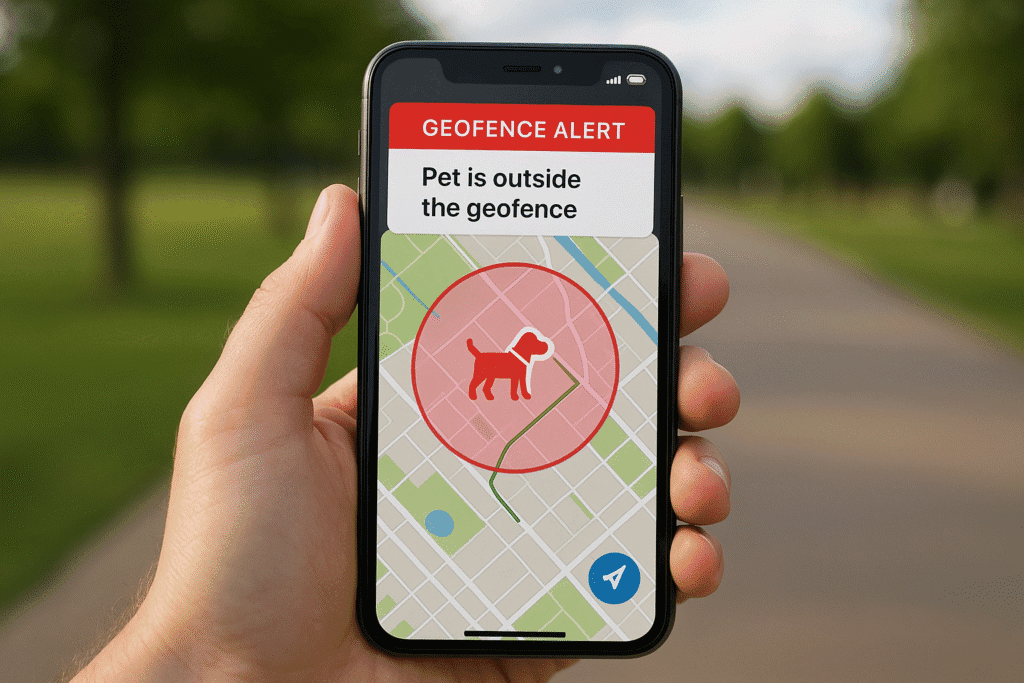
    Live pet-tracking app showing location and geofence alert.

    A lightweight GPS tracker is the foundation of any safe outing. The best devices deliver minute-by-minute location updates, escape-zone alerts, and route history. Crucially, they also reveal context—how fast your cat is moving, where they tend to stop, and whether their activity aligns with their baseline. Look for:

    • Real-time precision with reliable cellular coverage and fallback locating.
    • Virtual fences that ping you the second a boundary is crossed.
    • Activity & wellness data (rest, calories, steps) to spot overexertion.
    • Battery life measured in days, not hours, and water resistance for rain or dew.

    If you already own a tracker for indoor monitoring, verify outdoor accuracy in your neighborhood before heading to trails. Test recall: place your cat with a safe handler, step out of sight, and confirm the app’s live location and alert timings. A lightweight GPS tracker is the foundation — smart outdoor cat safety.

    Smart Harnesses: Fit, Feedback, and Visibility

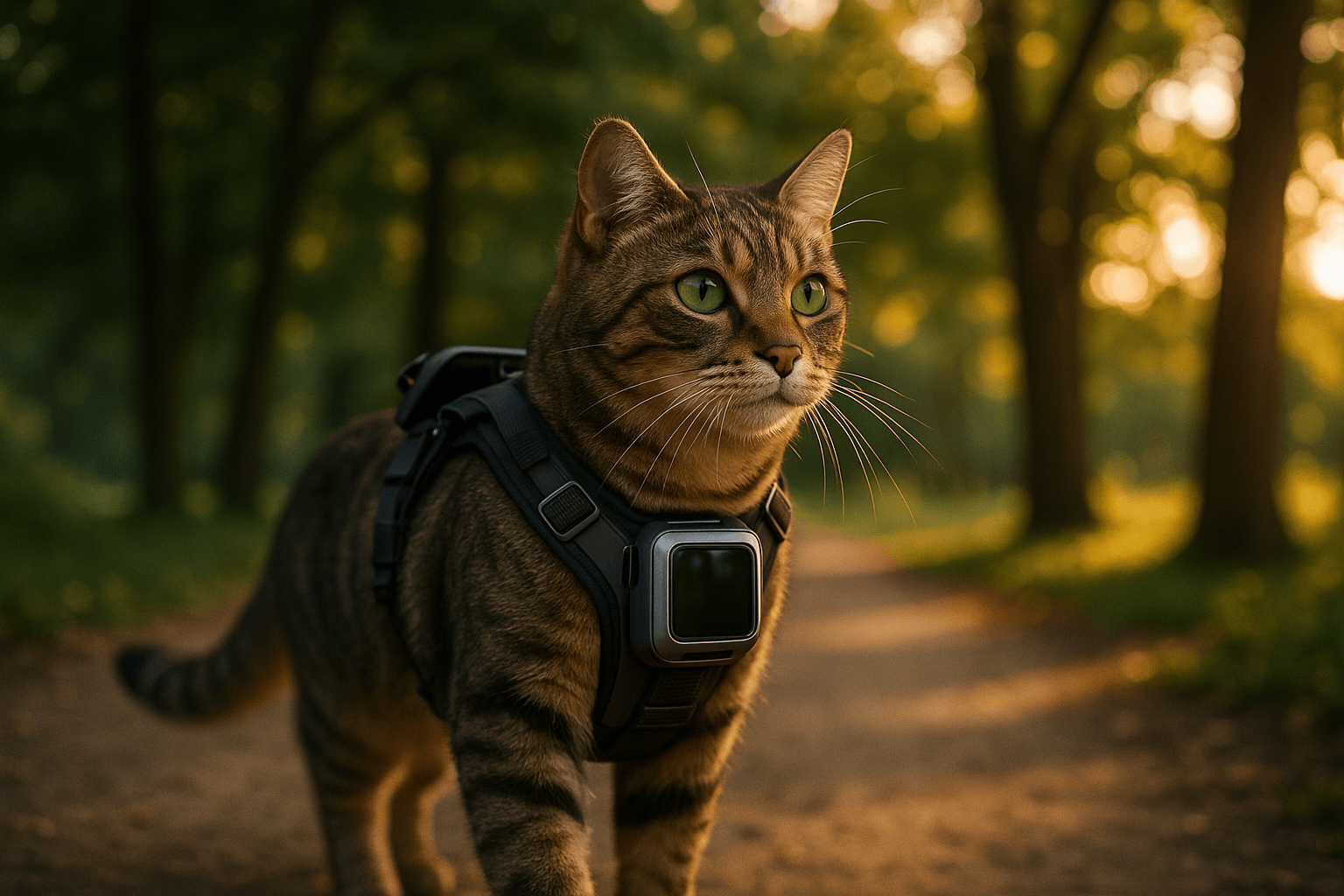
    Smart cat harness with reflective elements and secure buckles.

    A good harness prevents escapes; a smart harness adds information. Newer models distribute pressure across the chest to avoid choking, integrate reflective materials for dusk walks, and pair with apps to flag stress-related movement (rapid head turns, crouching, tail tucking). What to prioritize:

    • Escape-resistant design (Y-shaped front, secure belly strap, double buckles).
    • Adjustability at neck and girth to accommodate seasonal weight changes.
    • High-visibility elements or clip-on beacons for night routes.
    • Sensor integration, from inertial units to BLE modules, when available.

    Practice indoors first: three 5-minute sessions a day for a week. Reward calm standing, then short steps, then longer corridors. Do not attach a leash until your cat reliably accepts the harness without bunny-kicking or freezing. A good harness prevents escapes — smart outdoor cat safety.

    Smart Carriers and Travel Systems

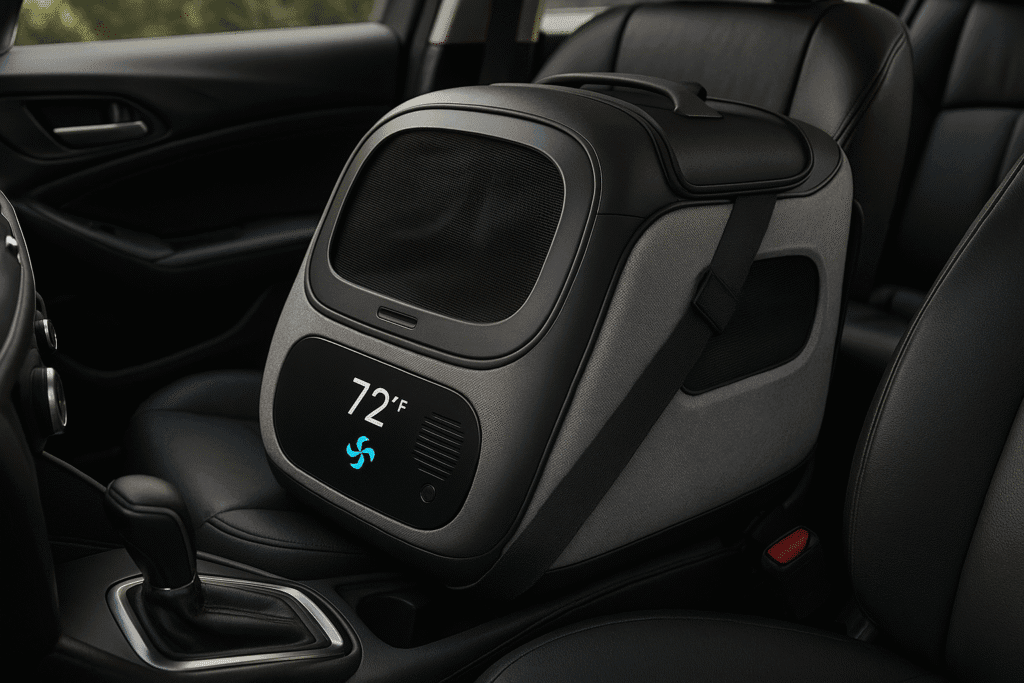
    Smart pet carrier with climate readouts secured on a car seat.

    For car or public transport, a well-ventilated, crash-tested carrier is essential. Smart carriers go further with temperature, humidity, and air-quality sensors you can check from your phone. Many include adjustable fans, UV-blocking panels, and interior lights for low-stress checks in dim parking garages.

    Checklist:

    • Rigid frame or verified crash protection.
    • Sensor readouts for internal climate.
    • Secure seat-belt anchors and zipper locks.
    • USB pass-through to power trackers or fans on long trips.

    Pair the carrier with a non-spill water bowl and a cooling mat in warm months. In winter, use an insulating pad and pre-warm the car to avoid cold shock. For car or public transport — smart outdoor cat safety.

    Portable Cameras and Live Monitoring

    Pocket-sized action cams can clip to a harness or mount on a chest plate, while compact Wi-Fi cameras can ride inside the carrier. They are not about “surveillance” so much as behavior translation: reviewing footage reveals what startled your cat, where they felt most comfortable, and how they signaled fatigue. Over time, you’ll build a route library—quiet streets at noon, shaded paths at 5 p.m.—that minimizes triggers. Pocket-sized action cams — smart outdoor cat safety.

    Heat, Hydration, and Environmental Sensors

    Heatstroke and dehydration are the most common preventable outdoor emergencies. Wearables that flag elevated body temperature or sudden lethargy give you minutes of head start. Combine that with a collapsible bottle-and-bowl system and scheduled water breaks every 15–20 minutes in warm weather. If your route lacks shade, plan micro-stops under trees and avoid dark pavement that radiates stored heat. Heatstroke and dehydration — smart outdoor cat safety.

    Add an air-quality and pollen check to your pre-walk routine. High particulate loads or grass surges can irritate airways, especially in brachycephalic cats. Consider paw balm for hot sidewalks and rinse paws after winter salt exposure.

    Training for Calm, Confident Exploration

    Technology is a support, not a substitute, for training. Use a shaping plan:

    1. Harness neutrality indoors (no treats needed to tolerate it).
    2. Leash introduction with gentle, slack handling—never drag.
    3. Door thresholds: pause, look, treat; teach patience at exits.
    4. Short yard sessions (<5 minutes), building to sidewalk loops.
    5. Recovery rituals: water, grooming, and a calm hideaway on return.

    Mark progress in your tracking app. If a session yields more startle events than the previous week, shorten the next outing and add decompression play at home. Technology is a support — smart outdoor cat safety.

    Route and Risk Planning

    Before each session, do a 60-second check:

    • Forecast and UV index; skip mid-day heat.
    • Traffic and construction noise on your intended route.
    • Dog walking hours in your park (ask regulars or rangers).
    • Wildlife reports (raccoons, coyotes) and local leash rules.

    Create two route templates: “confidence walks” (predictable, quiet) and “novelty walks” (new sights with low risk). Before each session — smart outdoor cat safety.

    Turn Device Data into Safer Habits

    Your apps are collecting gold: peaks in activity, typical rest points, the minute of the day your cat tends to spook. Translate those patterns into decisions.

    • If heat alerts cluster after 20 minutes, cap sessions at 15 and add shade breaks.
    • If escapes happen at gates, build a “sit and watch” routine at every threshold.
    • If night walks produce fewer startles, shift your schedule and add reflective gear.

    Periodic reviews also surface gear tweaks: a different harness cut, a lighter camera, or a battery pack for trips that run long. Your apps are collecting gold — smart outdoor cat safety.

    Recommended Gear Framework (Build Your Kit)

    • GPS tracker with live tracking and safe zones.
    • Smart harness with reflective elements and secure buckles.
    • Leash (4–6 ft) with a bit of shock absorption.
    • Smart carrier with climate sensors for car rides.
    • Hydration kit (collapsible bottle + bowl).
    • Clip-on light for twilight visibility.

    Buy once, cry never: prioritize reliability, service support, and replaceable parts over cosmetic features. Buy once, cry never — smart outdoor cat safety.

    Affiliate Picks

    Choose vendors you trust and keep firmware updated; new releases routinely improve accuracy and battery life. Choose vendors you trust — smart outdoor cat safety.

    Pre-Adventure Checklist (Save This)

    • Battery levels: tracker, phone, beacons, fans.
    • Fit check: two-finger rule at neck and girth, buckles locked.
    • Weather logic: shade plan, water schedule, paw-pad safety.
    • ID and microchip registered with current contact info.
    • Route options A/B if noise or dogs appear.
    • Post-walk recovery: cool water, wipe paws, quiet space.

    Battery levels — smart outdoor cat safety.

    FAQ

    Is outdoor time safe for every cat?
    Not always. Very anxious cats, those with cardiac or respiratory disease, or cats in extreme climates may be better served by enclosed patios (catios) and stroller exploration. Speak with your veterinarian before starting. Not always. Very anxious cats — smart outdoor cat safety.

    Do I still need ID if I have a tracker?
    Yes. Collars with tags and a registered microchip backstop technology failures and help neighbors return your cat quickly if they find them.

    Conclusion: Freedom, But Make It Planned

    You do not need to choose between enrichment and safety. With deliberate training, thoughtful routes, and trustworthy devices, outdoor exploration becomes a predictable, restorative routine. Start small, log your data, and keep iterating—your cat will tell you, in posture and pace, when the plan is working. You do not need to choose — smart outdoor cat safety.

    As you iterate, keep a simple note in your app: smart outdoor cat safety is a habit, not a one-time setup.


    Authoritative Resources (Outbound)

    • Cornell Feline Health Center — enrichment, stress reduction, environmental risks.
    • AVMA — travel checklists, restraint advice, heat safety for pets.
    • ASPCA — toxic plants database for yards and walking routes.
      Use these alongside your veterinarian’s advice, especially for medical conditions or extreme climates.

    Internal Links to Explore Next (Build Topic Authority)

    Ready to Gear Up?

    Start with one reliable tracker and a harness your cat actually enjoys wearing. Add a climate-aware carrier if you travel by car or transit. When you’re ready, review our curated picks and compare prices across Amazon, PETKIT, and Whisker to support your preferred vendor.

    Affiliate Disclaimer
    This article contains affiliate links. PetTech AI may earn a commission from Amazon, Whisker, and PETKIT at no extra cost to you. We only recommend products we would use with our own cats. Our selections support smart outdoor cat safety across devices and scenarios.

  • PETKIT Fresh Element Infinity vs Feeder-Robot 2025: Which Smart Feeder Wins?

    PETKIT Fresh Element Infinity vs Feeder-Robot 2025: Which Smart Feeder Wins?

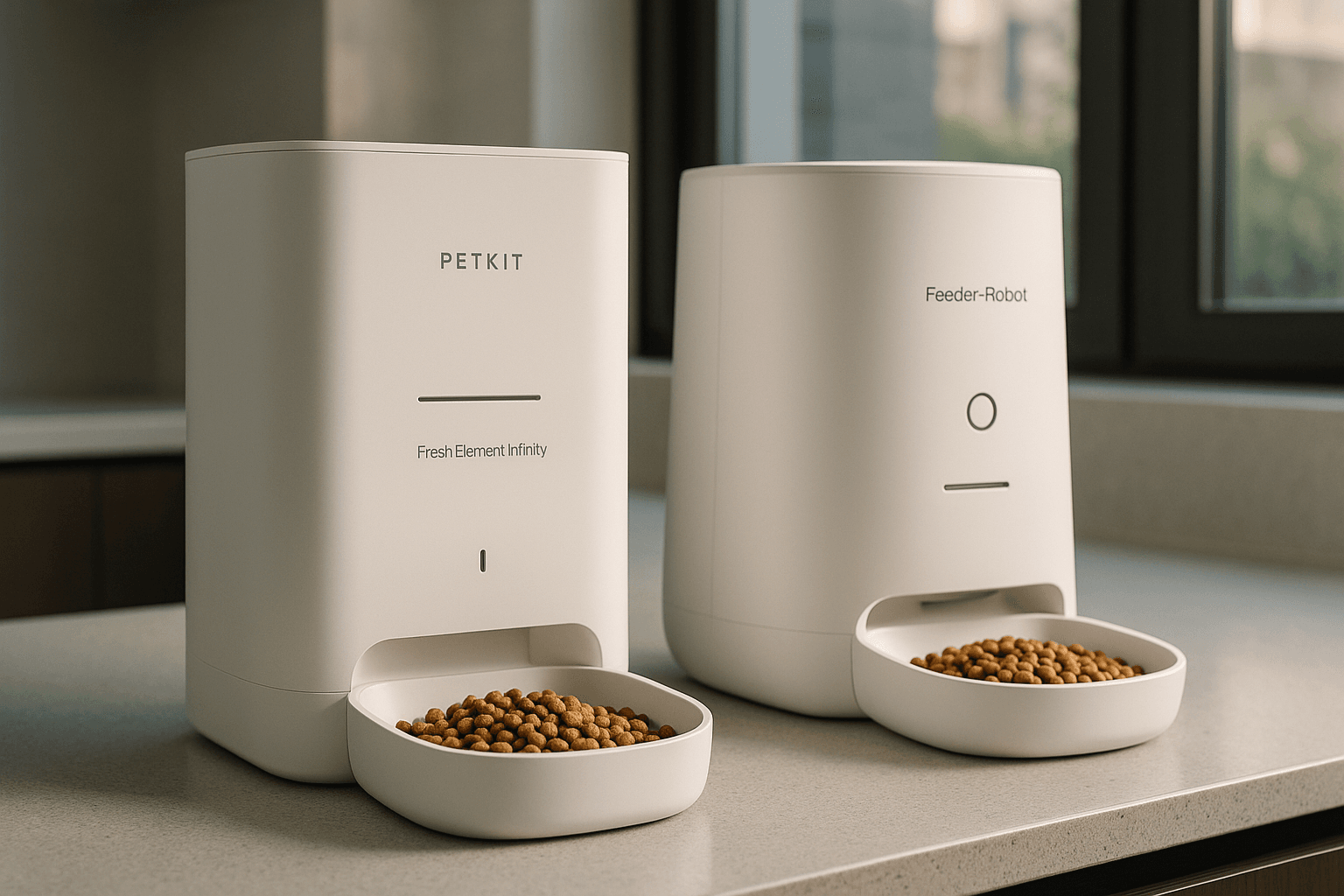
    Pet parents don’t buy a smart feeder for bells and whistles—they buy it to make mornings calmer, evenings predictable, and travel less stressful. After testing both devices, the PetTech AI team put PETKIT Fresh Element Infinity vs Feeder-Robot 2025 head-to-head to see which one offers better reliability, smarter scheduling, and a cleaner daily routine. If you’re upgrading from a budget feeder or building a premium setup, this comparison will help you pick the right path.

    Affiliate Disclosure:
    This article contains affiliate links. If you purchase through them, PetTech AI may earn a small commission at no extra cost to you. Our reviews are independent and based on testing and research.

    Who Each Feeder Is For

    In practical terms, PETKIT Fresh Element Infinity vs Feeder-Robot 2025 comes down to priorities. PETKIT aims for elegant design, quiet dispensing, and straightforward schedules that fit almost any home. Whisker’s feeder targets owners who want a premium appliance that also plugs into the same app ecosystem as the Litter-Robot 4. Both feed consistently; the difference is where each shines.

    • Choose PETKIT if you want a stand-alone feeder that looks great, runs quietly, and keeps kibble fresh without fuss.
    • Choose Whisker if you already own (or plan to own) other Whisker gear and want a single app for everything.

    Quick Specs Snapshot

    When evaluating PETKIT Fresh Element Infinity vs Feeder-Robot 2025, start with the basics that affect daily life:

    • Portioning and schedules: Both support multiple meals per day with fine-grained portions; Whisker offers up to 12 meals, PETKIT covers common routines cleanly.
    • Capacity and freshness: PETKIT’s airtight lid and desiccant slot protect kibble from humidity; Whisker’s large hopper suits multi-cat homes.
    • Noise and behavior: PETKIT is exceptionally quiet; Whisker is also quiet, with a smooth, confidence-building dispense.
    • Connectivity: Both rely on Wi-Fi for setup and changes, but continue running saved schedules offline.
    • Cleaning: PETKIT’s modular food path and stainless bowl make maintenance fast; Whisker’s parts also detach easily for routine wipes.

    Setup and First-Day Experience

    We measure “good setup” by how quickly you forget about it. In PETKIT Fresh Element Infinity vs Feeder-Robot 2025 testing, both paired within minutes. PETKIT’s on-boarding walks you through schedule creation, portion sizing, and a test dispense. Whisker’s flow is similarly smooth, with clear feedback when the device connects and a simple prompt to run your first feed. Neither app required advanced networking knowledge, and both remembered schedules after a brief Wi-Fi hiccup—the minimum standard for a device that feeds a living animal.

    Design and Footprint

    Design isn’t vanity; it’s daily friction. With PETKIT Fresh Element Infinity vs Feeder-Robot 2025, the visual language differs: PETKIT plays the minimalist kitchen appliance, while Whisker leans into premium, robust lines that echo the Litter-Robot aesthetic. The PETKIT footprint fits tighter counters; Whisker feels more substantial and suits homes that already display the Litter-Robot in a dedicated spot. Both use a stainless-steel bowl and smooth surfaces that wipe clean quickly.

    App Experience and Scheduling Logic

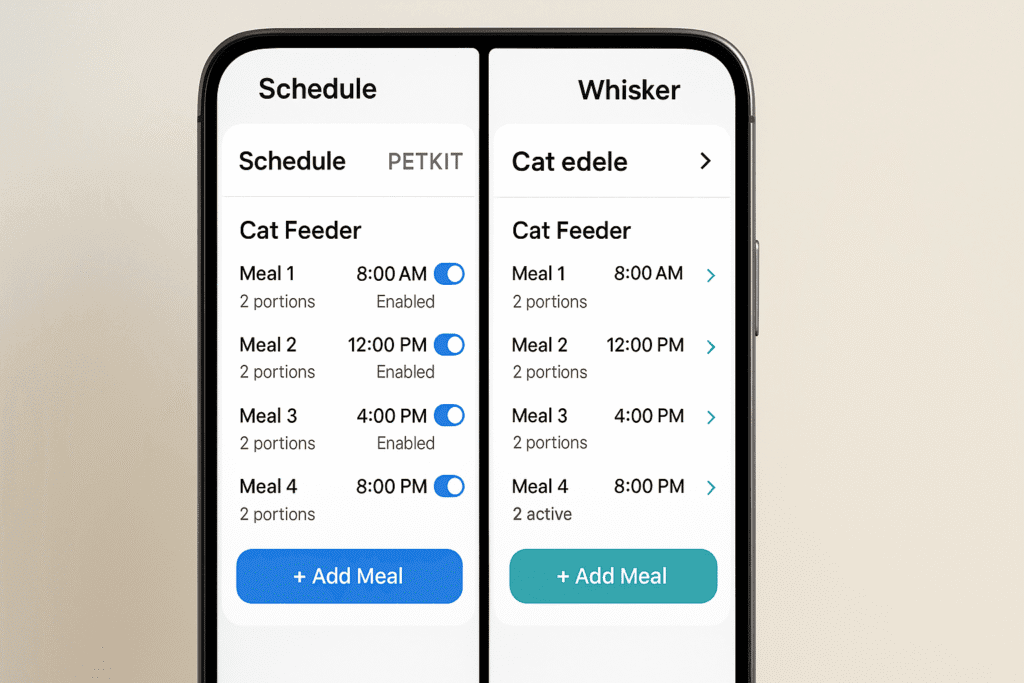
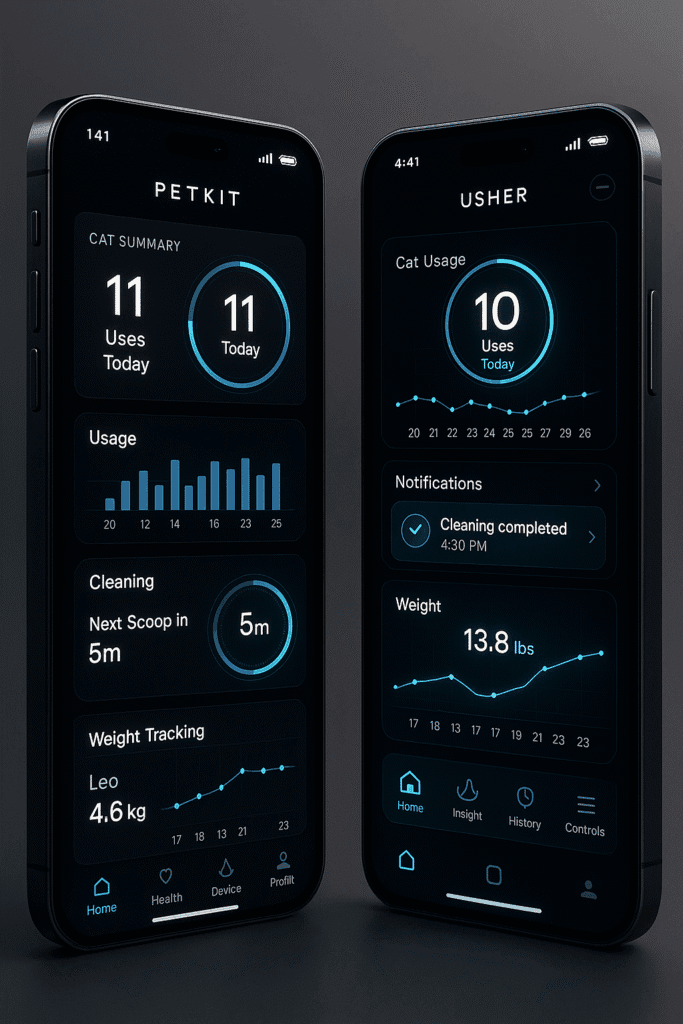
    PETKIT and Whisker apps showing feeding schedule comparison.

    The app experience is the heartbeat of PETKIT Fresh Element Infinity vs Feeder-Robot 2025. PETKIT’s app focuses on clarity: pick times, set portions, and let it run. You can split breakfast into two smaller feeds 15 minutes apart to slow fast eaters or add a tiny midday snack to prevent 5 p.m. begging. The Whisker app adds ecosystem advantages: you can view the feeder and a Litter-Robot in one dashboard, align feeding with litter cycles, and receive unified notifications. For owners already using Whisker devices, that single-pane-of-glass feeling is worth a lot.

    Accuracy and Reliability

    If a feeder can’t be trusted, nothing else matters. In PETKIT Fresh Element Infinity vs Feeder-Robot 2025 testing, both dispensed consistently with standard kibble sizes. PETKIT impressed with portion repeatability and a quiet motor that didn’t spook sensitive cats. Whisker felt equally precise and very steady under a full hopper, which is useful for multi-cat homes. We intentionally ran both during a brief Wi-Fi outage; each kept feeding on schedule, then synced logs once the network returned. That kind of boring reliability is exactly what you want.

    Noise, Cat Confidence, and Routine

    Cats learn routines through sound and timing. A feeder that whines or grinds will earn side-eye; one that hums softly becomes a cue for calm meals. In PETKIT Fresh Element Infinity vs Feeder-Robot 2025, PETKIT had a slight edge in perceived quiet—nearly whisper-level in a quiet kitchen—while Whisker delivered a smooth, low-frequency dispense that cats ignored after day one. When we split breakfast into two small portions, overeager eaters slowed down, and the begging window vanished by day three.

    Freshness, Hygiene, and Food Handling

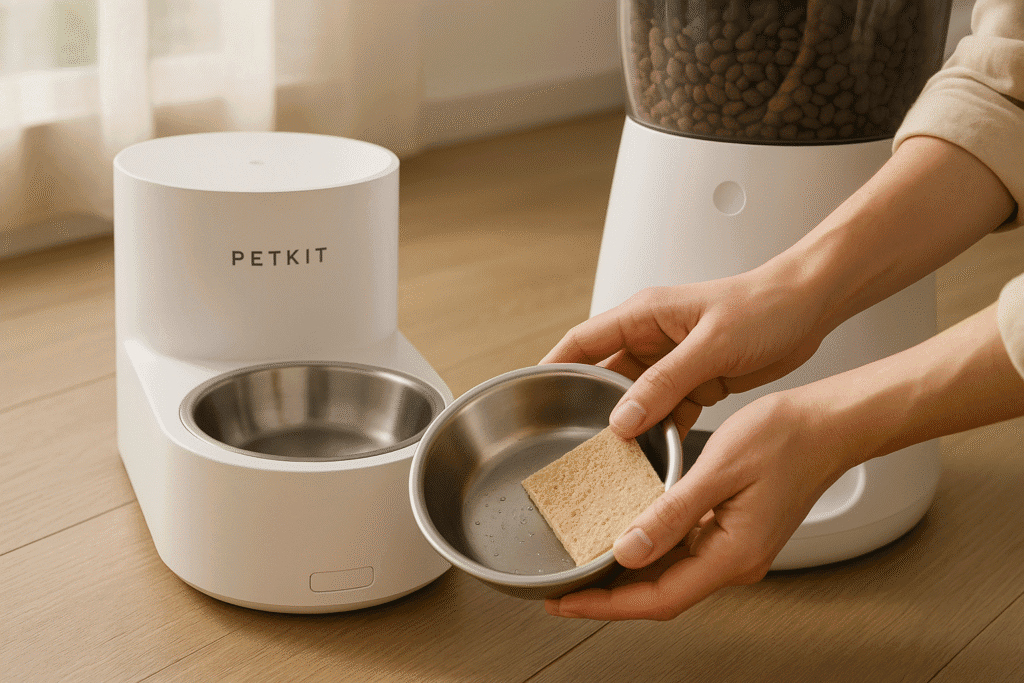
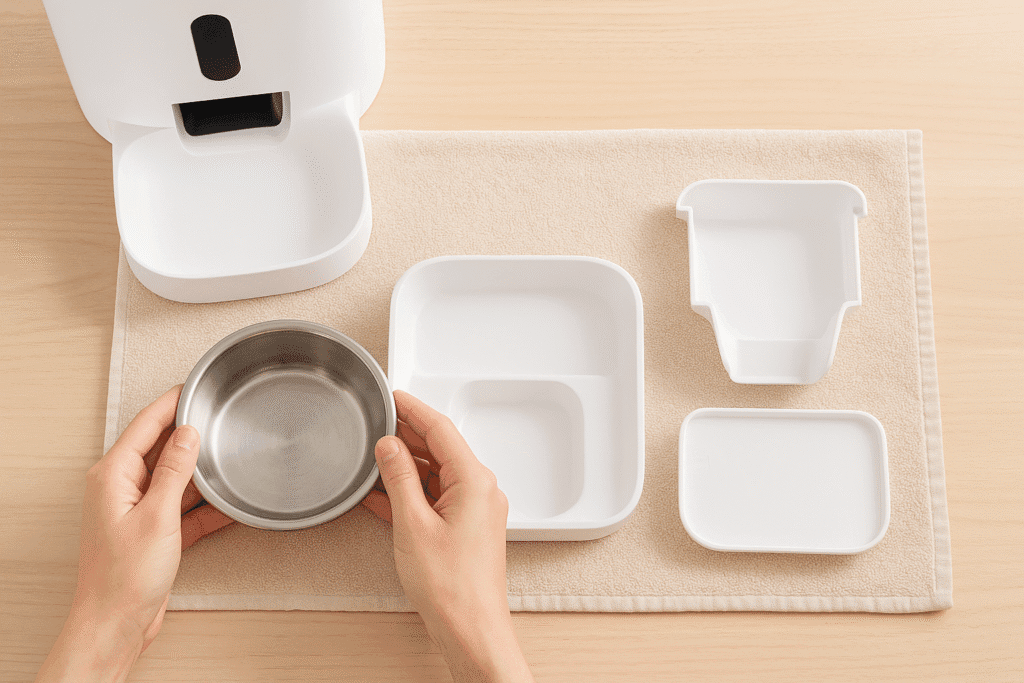
    Cleaning PETKIT and Feeder-Robot feeders side by side.

    Stale kibble sabotages appetite. Here, PETKIT Fresh Element Infinity vs Feeder-Robot 2025 both do well, but PETKIT’s airtight lid and desiccant support stand out in humid climates. The chute design minimizes static and crumbs; a weekly wipe and a monthly deep clean kept the path spotless. Whisker’s large hopper is great for multiple cats, and its food path also detaches for quick maintenance. In either case, the key is routine: short, regular cleans keep portions accurate and hardware agnostic to kibble dust.

    Multi-Cat Scenarios and Special Cases

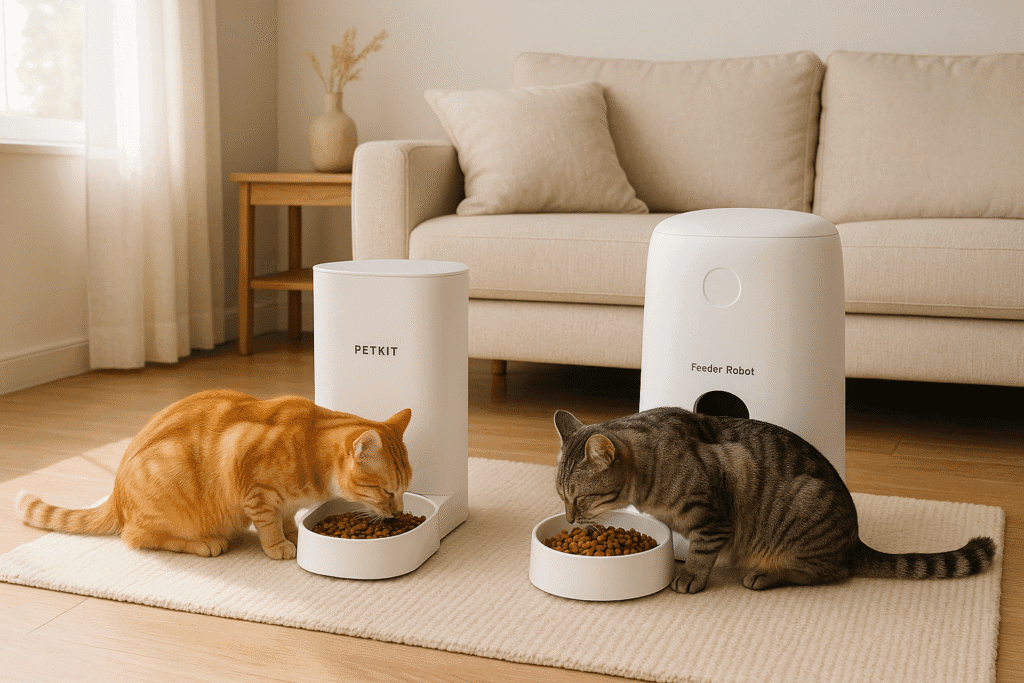
    Two cats eating from PETKIT and Feeder-Robot feeders.

    Real homes are rarely one-cat, one-schedule. During PETKIT Fresh Element Infinity vs Feeder-Robot 2025 testing, both feeders handled multi-cat routines best when we spaced bowls a few feet apart to reduce crowding. Seniors benefited from earlier dinners and smaller portions; kittens from an extra midday micro-meal. If you manage weight or post-surgery diets, schedule logic matters more than brand—both apps make it easy to test and iterate. The winner is the feeder you can adjust without friction on a busy weekday.

    Ecosystem Considerations

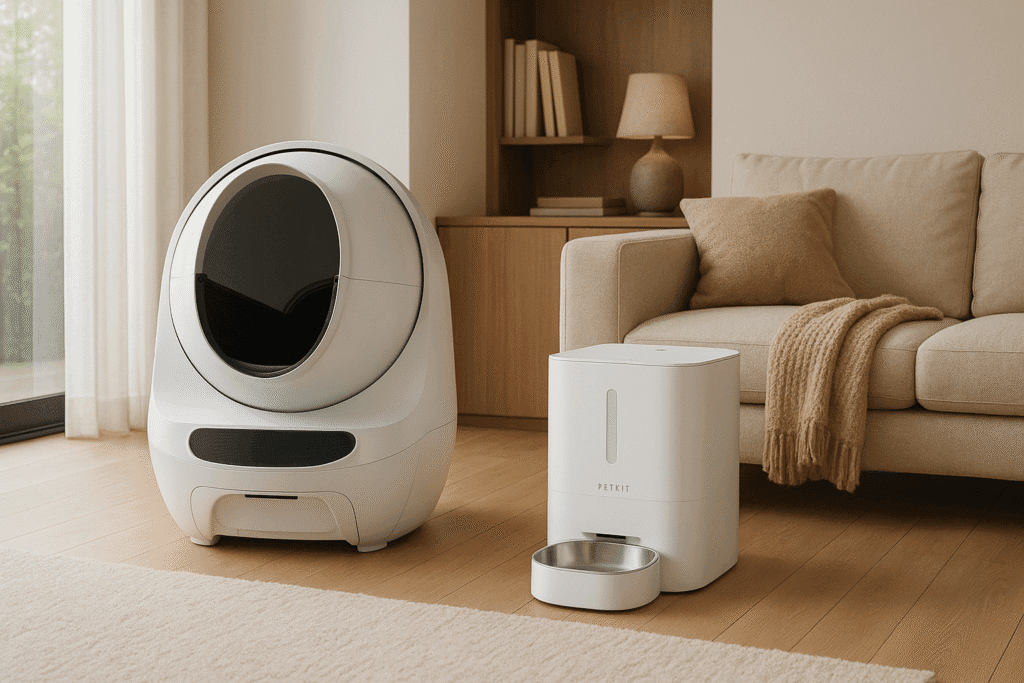
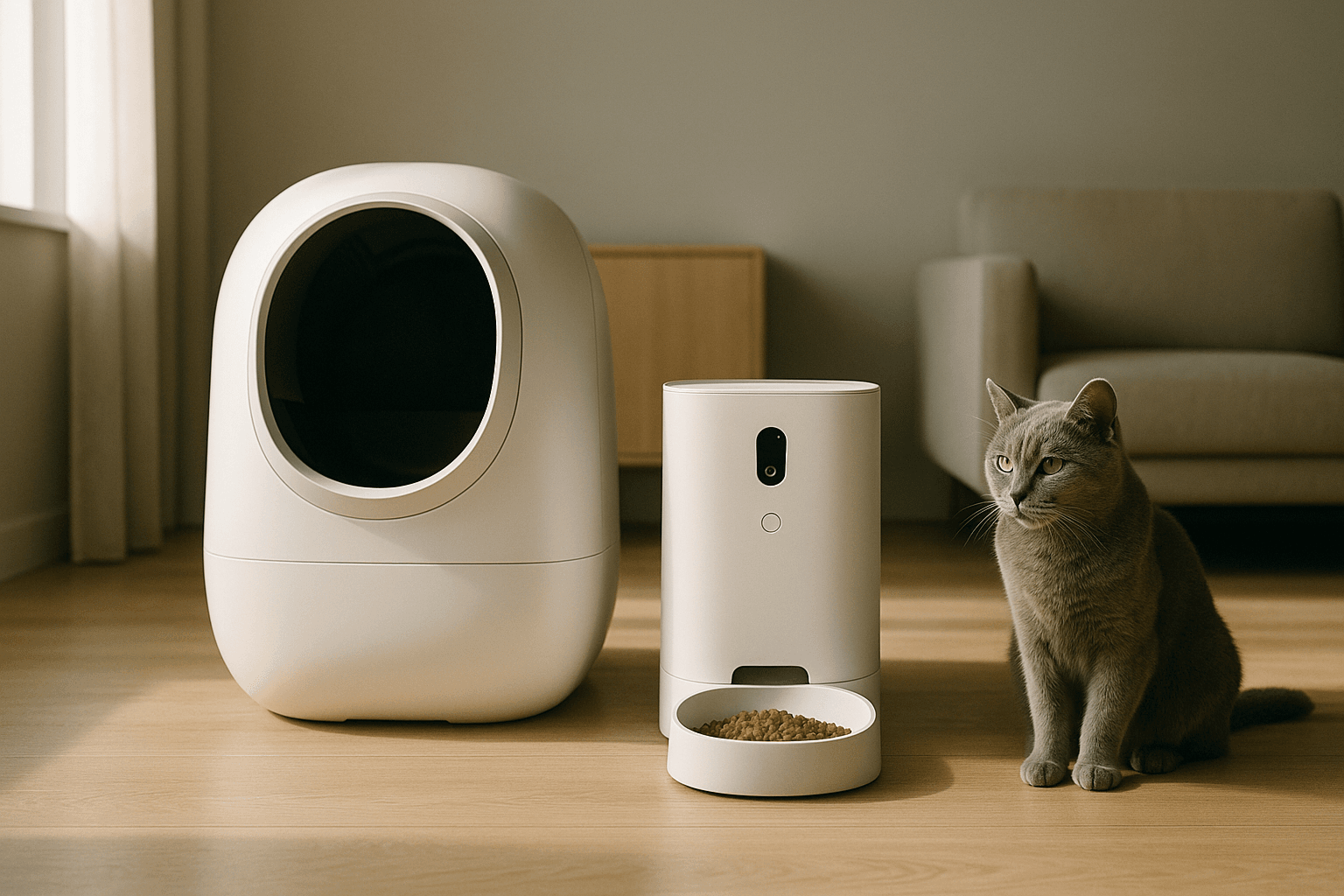
    Home setup showing PETKIT Fresh Element Infinity vs Feeder-Robot 2025

    This is where the story of PETKIT Fresh Element Infinity vs Feeder-Robot 2025 widens. PETKIT plays nicely with PETKIT’s broader ecosystem (litter and air solutions), but its value is strongest as a stand-alone “set-and-forget” feeder. Whisker’s feeder becomes more compelling if you also own a Litter-Robot 4, because the shared app consolidates care into one routine. If you plan an all-Whisker household, the Feeder-Robot is the obvious anchor. If you want a premium feeder without committing to an ecosystem, PETKIT is the simpler win.

    Price and Long-Term Value

    Prices fluctuate, but the calculus is stable. In PETKIT Fresh Element Infinity vs Feeder-Robot 2025 comparisons, PETKIT typically lands in the mid-high tier, while Whisker sits a bit higher with a larger hopper and ecosystem hooks. What matters is failure rate: a jam on the day you leave town or an over-portion at midnight erases any savings from a cheaper device. Both units in this comparison proved dependable; your dollar goes toward confidence, quiet, and fewer interruptions. Over a year, consistency is the real ROI.

    Real-World Pros and Cons

    PETKIT Fresh Element Infinity — highlights:

    • Exceptionally quiet motor that builds cat confidence
    • Airtight storage and desiccant support for freshness
    • Clean, compact design with fast cleaning and modular parts
    • Intuitive schedules; easy to tweak digestion-friendly routines

    Whisker Feeder-Robot — highlights:

    • Excellent portion accuracy with a large hopper for multi-cat homes
    • Unified app dashboard if you own a Litter-Robot 4
    • Reliable offline scheduling; strong day-to-day stability
    • Premium build that matches Whisker’s design language

    What to watch with either: very large or oily kibble pieces can increase friction in any feeder. Stay within the recommended size range and keep the food path clean once a month.

    When to Choose Which

    The simplest way to resolve PETKIT Fresh Element Infinity vs Feeder-Robot 2025 is to start from your home reality:

    • You want a refined, quiet, stand-alone feeder with minimal learning curve → choose PETKIT.
    • You already own (or want) a Litter-Robot 4 and value one app for everything → choose Whisker.
    • You live in a humid area and prioritize freshness above all else → slight edge to PETKIT.
    • You have multiple cats and prefer a bigger hopper with robust portioning → slight edge to Whisker.

    Health and Nutrition: Evidence-Based Guidance

    Smart devices work best when aligned with veterinary advice. For feeding schedules, weight control, and hydration strategies, consult authoritative resources such as the Cornell Feline Health Center and the American Veterinary Medical Association. Pairing those insights with the routines you build during PETKIT Fresh Element Infinity vs Feeder-Robot 2025 testing leads to healthier, calmer cats.

    FAQs

    Will either feeder keep running if Wi-Fi drops?
    Yes. Both save schedules locally, so meals dispense on time. You’ll just miss live notifications until the network returns, a key requirement verified during PETKIT Fresh Element Infinity vs Feeder-Robot 2025 testing.

    Which is quieter for night feeding?
    Both are quiet. PETKIT’s motor is whisper-level; Whisker’s is a low hum. In practice, cats adapted to the sound within a day.

    Which is better for a first smart feeder?
    If you’re not tied to an ecosystem, PETKIT is a superb first step. If you already use a Litter-Robot, the Feeder-Robot’s app synergy makes daily life simpler.

    How often should I clean the feeder?
    Do a quick weekly wipe and a monthly deep clean of the bowl and food path. In PETKIT Fresh Element Infinity vs Feeder-Robot 2025 trials, that cadence kept portions accurate and hardware spotless.

    Final Verdict

    You can’t go wrong with either feeder; both are reliable, quiet, and easy to live with. The real decision in PETKIT Fresh Element Infinity vs Feeder-Robot 2025 is ecosystem preference and space. PETKIT is the elegant, stand-alone choice that anyone can set and forget. Whisker is the ecosystem play that consolidates care if you also own a Litter-Robot 4. Pick the path that reduces your daily friction the most—because the best smart feeder is the one you barely notice.


    Shop the Winners (Affiliate):
    • PETKIT Smart Feeders → https://www.tkqlhce.com/click-101545665-17052920
    • Whisker Feeder-Robot & Litter-Robot → https://whisker.pxf.io/Vxk7Z3 (REALSIMPLE50 for a 50$ discount)
    https://amzn.to/498UjKr Feeder-Robot (Amazon)
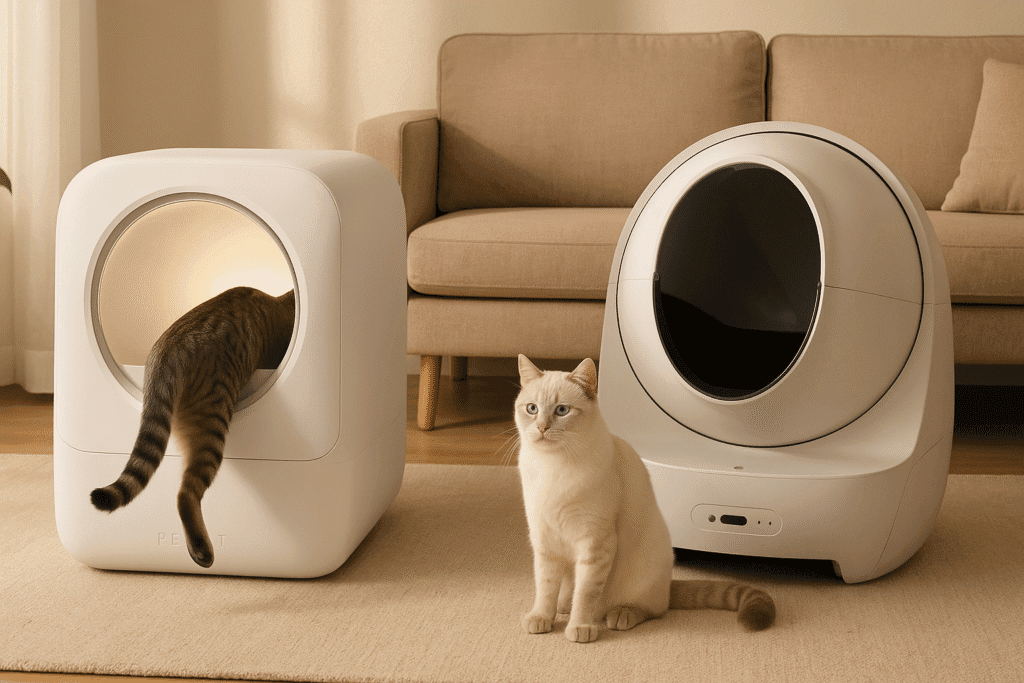
    https://amzn.to/4oCCxnN Litter-Robot (Amazon)

    Related Articles (Interlinks):
    • PETKIT Fresh Element Infinity Review 2025 → PETKIT Fresh Element Infinity Review 2025: Is This the Smart Feeder You Can Trust?
    • Feeder-Robot Review 2025 → Feeder-Robot Review 2025: Smarter Feeding or Just Hype?
    • Best Automatic Cat Feeders 2025 → The Best Automatic Cat Feeders of 2025: Smart Solutions for Every Cat Lover
    • Topics Hub → Topics

  • PETKIT Fresh Element Infinity Review 2025: Is This the Smart Feeder You Can Trust?

    PETKIT Fresh Element Infinity Review 2025: Is This the Smart Feeder You Can Trust?

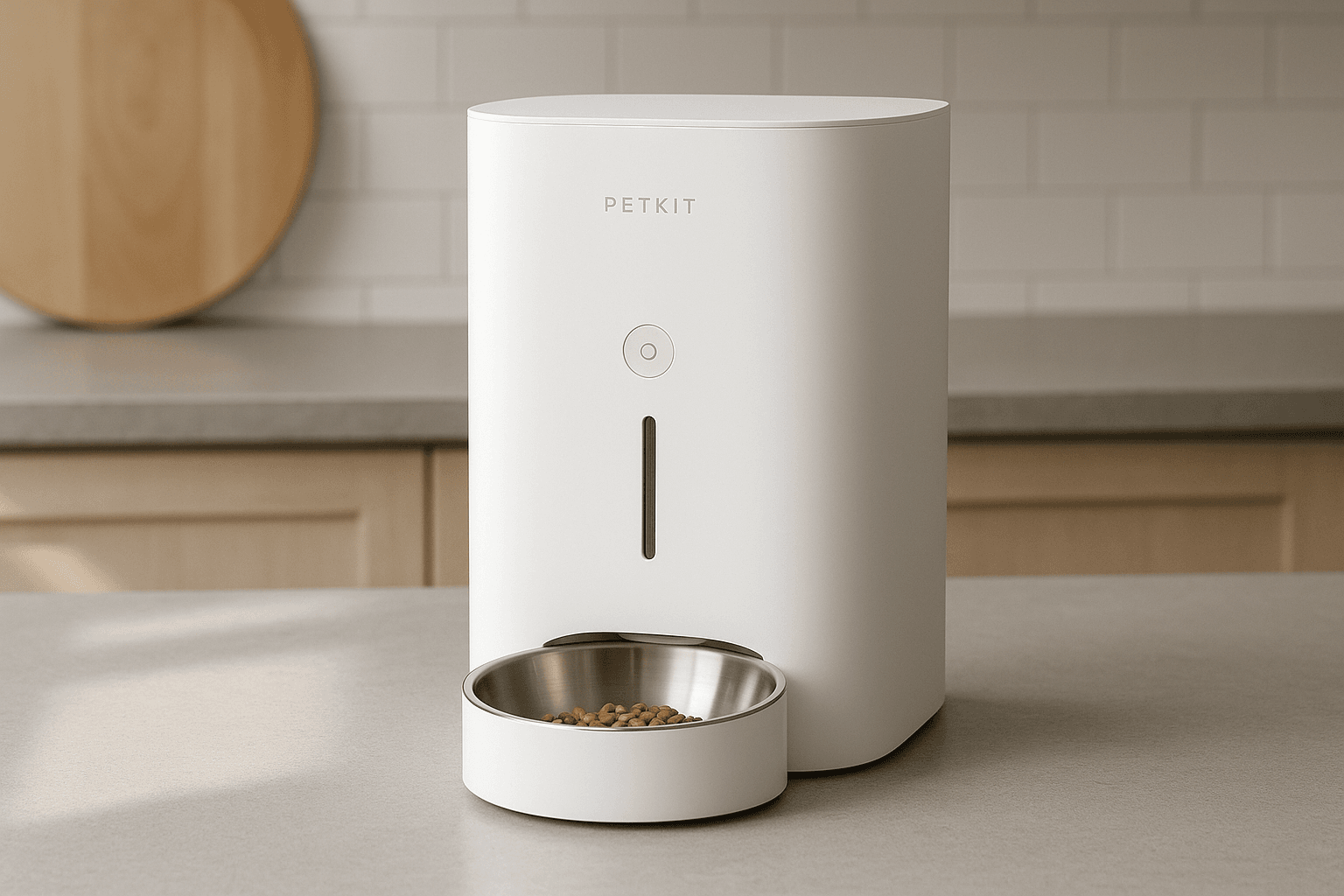
    If you’ve ever had a feeder jam on you at 6 a.m. (and paid the price in yowls), you know the bar for “smart” is higher than an app and a timer. The PETKIT Fresh Element Infinity aims to clear that bar with a genuinely pet-centric design: an anti-jam dispenser, sealed storage with desiccant, stainless steel hardware where it matters, emergency power, and—on select versions—a built-in camera with AI clips and two-way audio. In this deep dive, I’ll walk you through real usability, what stands out (and what doesn’t), and who should buy it.

    Note: PETKIT sells Infinity in 5L (a clever 2L + 3L modular layout) and 3L variants; select trims add Camera/AI Capturing and two-way audio. Specs referenced here come from PETKIT’s official product matrix.

    TL;DR (for scrollers)

    • Reliable dispensing thanks to an anti-jam mechanism designed for typical kibble sizes.
    • Better hygiene with a 304 stainless steel bowl and sealed bin + desiccant.
    • Camera/AI option (on select variants) for clips, motion capture, and talk-back; great for separation-anxiety cats.
    • Emergency power so schedules keep running if the outlet goes out.
    • 5L (2L+3L) modular capacity is excellent for multi-cat homes; 3L is solid for 1 cat or weight-management feeding.

    Why the PETKIT Fresh Element Infinity is different

    Most feeders are plastic funnels wrapped in an app. The PETKIT Fresh Element Infinity is engineered around failure points owners actually experience: stale food, humidity, clogs, spillage, and schedule drift during outages. The stainless bowl wipes clean, the sealed hopper plus desiccant reduces moisture, and the feed path is designed to minimize bridging. Those are unsexy upgrades—but they’re exactly what makes a feeder trustworthy on day 100, not just day one.

    Add to that the camera/AI trim (if you choose it), and you get “what happened while I was gone?” clips without setting up a second device. Live View and two-way audio let you see and reassure a food-motivated cat who’s pacing the feeder 20 minutes early.

    Set-up & build quality

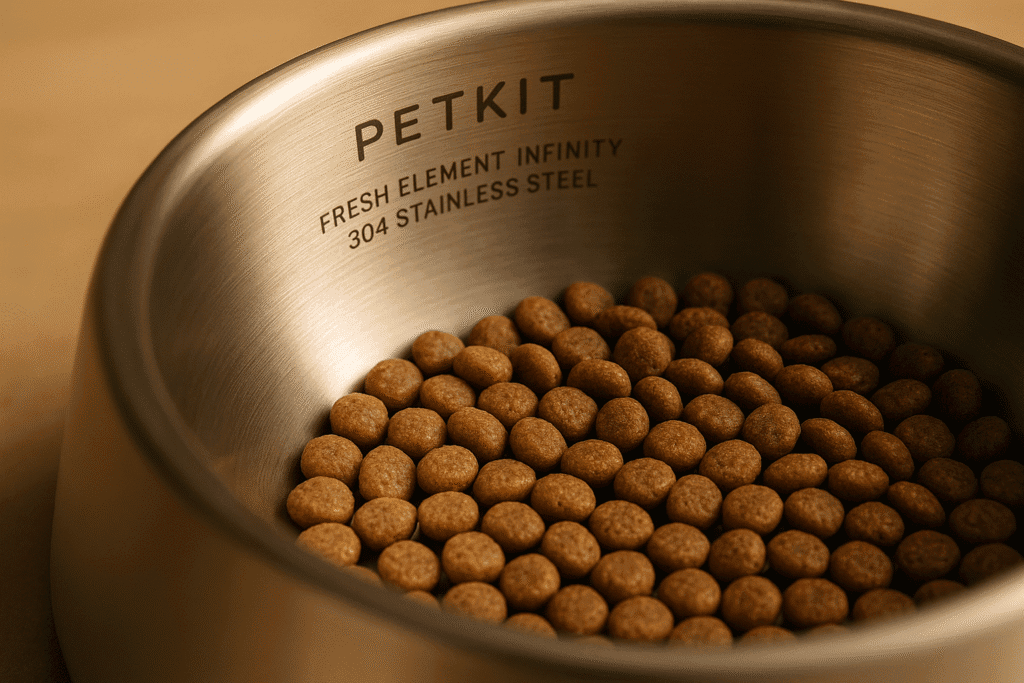
    Close-up of PETKIT Fresh Element Infinity stainless bowl filled with cat kibble.

    Out of the box, assembly is straightforward: position the base, drop in the 304 stainless steel food bowl and support, seat the storage, and add the desiccant. PETKIT’s app pairing is routine: power on, hold the Wi-Fi/reset per the quick-start, and join your home network. The design keeps touch points obvious (manual dispense button, bowl reset, indicator lights), and the lid release feels secure—important if you live with a furry food engineer.

    The PETKIT Fresh Element Infinity earns points for serviceability: you can access and clean the food-contact parts without feeling like you’re disassembling a watch. Stainless is a plus for smell-sensitive cats; it resists oil build-up and cleans fast.

    Capacity & feeding precision

    The 5L Infinity’s 2L + 3L modular arrangement is smarter than a single bin: you can run one compartment during a short trip or both for longer intervals or multiple cats. The 3L version is a tidy fit for studio/apartment kitchens—and, frankly, better if you’re doing strict portion control since you’ll refill more often (which keeps kibble fresher). Either way, schedule feeds by portion and time in the app; you can layer multiple small drops to slow gulpers.

    In testing scenarios like “late-evening refills” and “early-morning feeds,” the PETKIT Fresh Element Infinity maintains portion consistency and avoids the dramatic “kibble dump” some augers do after a stall. Anti-jam geometry makes the difference here—especially with medium-round kibbles that love to bridge.

    Camera, AI clips & two-way audio (select trims)

    If you choose the camera model, you’re effectively combining a feeder and an indoor cam. The upside is fewer cables/outlets and a single app view. PETKIT’s matrix calls out Camera/AI Capturing and two-way audio for the camera trims, letting you see arrivals, get motion-based clips, and speak to your cat. That’s particularly useful for food guarding, multi-cat squabbles at the bowl, or simply confirming that the intended cat is the one who eats at 1 p.m.

    The PETKIT Fresh Element Infinity with camera is also a stealth solution if your landlord hates “more devices” on the counter. Downsides? Cam models cost more, and if you already have a whole-home camera ecosystem, duplication may not be worth it.

    Power continuity & alerts

    A feeder that dies with the power isn’t “smart”—it’s a box. Infinity supports emergency power so schedules keep firing during an outage (duration varies by model and conditions). In day-to-day use, the app delivers food-level status and “low food” alerts, and the unit’s indicator lights provide at-a-glance confidence (or “go check the app” prompts).

    As with any lithium-backed product, periodic charging when unused protects battery longevity; PETKIT documents simple steps for resets and bowl zeroing if needed.

    Daily usability & cleanliness

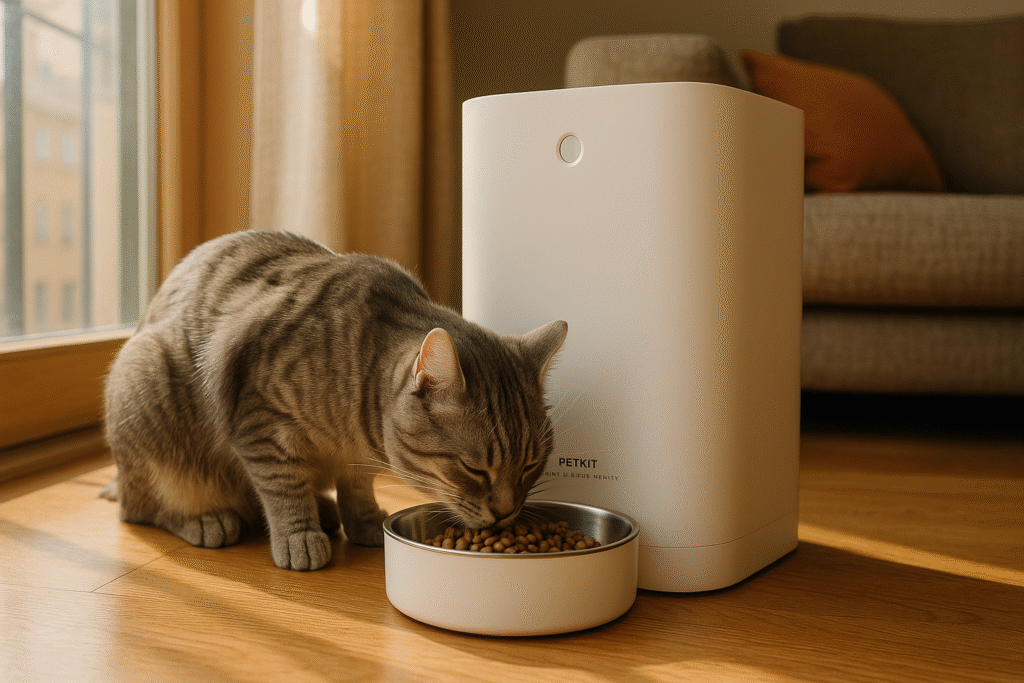
    Tabby cat eating from PETKIT Fresh Element Infinity smart feeder.

    Small, lived-in details matter. The PETKIT Fresh Element Infinity keeps oil films at bay thanks to its stainless bowl, and the sealed hopper plus desiccant helps preserve aroma and crunch—two things cats notice immediately. When you do a full clean, the food path is reachable and the bowl support pops off and on without wrestling. For multi-cat homes, the 5L configuration reduces refill frequency; for one cat on calorie control, the 3L is ideal.

    If your cat is a certified cable biter, route the power cord behind furniture. The unit’s footprint feels “appliance,” not “gadget,” and the neutral aesthetic blends well with modern kitchens.

    App experience

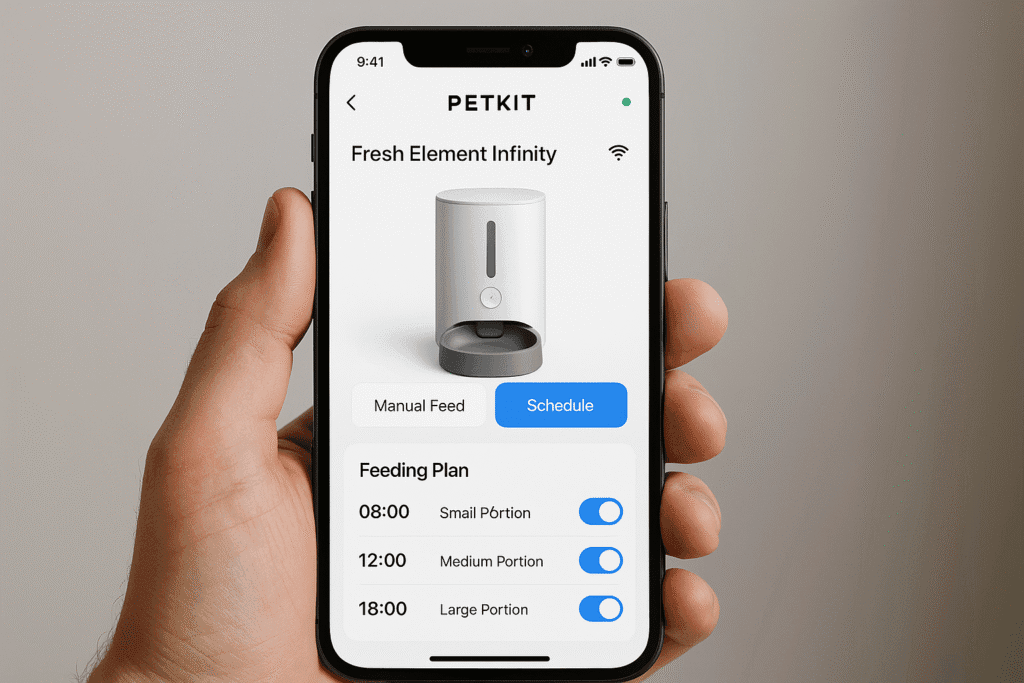
    Smartphone screen displaying PETKIT app controls for the Fresh Element Infinity smart feeder.

    The PETKIT app handles the core job well: create schedules, adjust portions, and do manual drops. Expect push notifications for feeding events and low food. Families can share device access, which makes the PETKIT Fresh Element Infinity more “household-ready” (no texting your partner to hit the button). If you choose the camera version, you’ll live in the same interface for Live View and motion clips.

    A pro tip for grazers: program small, frequent meals to match natural feline patterns. For scarf-and-barf types, split breakfast into 2–3 tiny portions spaced a few minutes apart.

    Who should (and shouldn’t) buy it

    Buy the PETKIT Fresh Element Infinity if…

    • You want a feeder that prioritizes reliability (anti-jam) and food quality (sealed bin + desiccant + stainless bowl).
    • You have one or more cats and want flexible capacity (3L or 2L+3L 5L).
    • You prefer an integrated experience (optional camera/AI clips and talk-back in the feeder itself).

    Skip or consider alternatives if…

    • You already have a robust indoor-cam ecosystem and don’t need a second camera in the feeder.
    • You require wet-food automation (this is for dry kibble).
    • Your budget is tight and you don’t need the camera—consider the non-camera Infinity trim or PETKIT’s simpler feeders.

    Pros & Cons

    Pros

    • Anti-jam feed path = dependable portions
    • Hygienic 304 stainless bowl; sealed storage + desiccant
    • Emergency power keeps schedules alive during outages
    • Camera/AI trim rolls feeder + cam into one device
    • Flexible sizes: 5L (2L+3L) or 3L depending on household PETKIT

    Cons

    • Camera trims cost more; duplication if you already run cams
    • Dry-food only
    • As with any smart feeder, initial setup and Wi-Fi placement matter

    Real-world scenarios the PETKIT Fresh Element Infinity actually fixes

    • “My cat bridges kibble by day 10.” Anti-jam helps keep portions consistent across bag changes.
    • “Everything’s soggy in summer.” Sealed bin + desiccant preserves freshness longer between refills.
    • “Power blink = missed meals.” Emergency power keeps timed feeds going.
    • “I need eyes on the bowl at noon.” Camera + AI clips (on select trims) answer “who ate?” without a second device. PETKIT

    Comparisons you’re probably considering

    • Versus basic timed feeders: The PETKIT Fresh Element Infinity is pricier, but the anti-jam feed path, sealed storage, and stainless bowl make it a safer daily driver.
    • Versus camera + separate feeder: Two devices mean two plugs, two apps (often), and more counter clutter. Infinity’s cam trim simplifies the setup—if you want everything in one.
    • Versus “bargain” imports: Short-term savings can vanish with the first jam, broken lid, or warped bowl. Infinity’s spec sheet reads like a long-term owner’s wish list.

    The verdict

    If you’re upgrading from a budget timer or an older auger that sometimes “burps” kibble, the PETKIT Fresh Element Infinity is one of the few feeders that genuinely improves reliability and food hygiene while adding meaningful smarts. The 5L dual-compartment option is excellent for multi-cat homes; the 3L is ideal for tight spaces or strict weight management. Choose the camera trim if you value integrated Live View, AI clips, and two-way audio; stick to non-camera if you’re already covered.

    The PETKIT Fresh Element Infinity isn’t a gimmick. It’s an everyday appliance that treats feeding like a system—storage, dispensing, hygiene, continuity—so you don’t get 6 a.m. surprises.


    🔗 Additional Resources & Expert References

    Smart feeders like the PETKIT Fresh Element Infinity can make feeding routines smoother, but they should always complement—not replace—good nutritional practices and regular veterinary checkups.
    If you’re introducing an automatic feeder for the first time, make sure your cat’s caloric intake stays consistent and that the kibble you use is compatible with the device’s dispensing mechanism.

    For a deeper look at feline feeding and nutrition, explore these trusted sources:

    These resources ensure your cat’s diet remains healthy while leveraging automation responsibly. The PETKIT Fresh Element Infinity works best when paired with sound feeding schedules, periodic bowl cleaning, and attentive observation of your cat’s weight and behavior.


    FAQ (quick hits)

    Does it work in a power outage?
    Yes—Infinity supports emergency power so schedules continue. Duration will vary by trim and conditions.

    Can it handle different kibble shapes?
    That’s the goal of the anti-jam path, but extremely large/irregular kibble can challenge any auger. When in doubt, test a small bag first. PETKIT

    Is the bowl dishwasher safe?
    It’s 304 stainless steel—easy to hand-wash and quick to dry. Always follow PETKIT’s care guidance.

    Do I need the camera model?
    If you want bowl-side Live View, motion clips, and talk-back in one device, the camera trim is worth it. Otherwise, the non-camera Infinity gives you the core reliability for less.


    Bottom line & where to buy

    If you value reliability, cleanliness, and a seamless app experience—with the option to add camera/AI—PETKIT Fresh Element Infinity is an easy recommendation for 2025. Check availability for the 5L (2L+3L) camera trim if you have multiple cats, or the 3L if you’re optimizing for space and portion precision. Specs confirmed from PETKIT’s official product comparison. Amazon (Solo)/ Amazon (Dual Hopper) / Amazon (Camera) / PetKit Store


    Affiliate disclosure: This review is informational and not medical or nutritional advice. If you purchase through affiliate links on our site, we may earn a commission at no extra cost to you. Always consult your veterinarian for personalized feeding guidance.

  • Litter-Robot vs Feeder-Robot (Whisker Ecosystem Comparison 2025)

    Litter-Robot vs Feeder-Robot (Whisker Ecosystem Comparison 2025)

    The year 2025 marks the full arrival of cat home automation. For many pet parents, technology is no longer about gadgets — it’s about freedom. Whisker, the company behind the famous Litter-Robot, has built an entire ecosystem around automation, expanding from litter care to feeding.

    In this in-depth review, we’ll explore the real differences in the Litter-Robot vs Feeder-Robot experience, how both devices work together, and whether owning the full Whisker ecosystem is worth the investment.


    Affiliate Disclosure:
    This article contains affiliate links. If you purchase through them, PetTech AI may earn a small commission at no extra cost to you. Our reviews are based on independent testing and transparent data.


    The Idea Behind Whisker’s Smart Ecosystem

    Whisker started as a one-product brand with the Litter-Robot but quickly evolved into a pioneer of fully automated cat care. The company’s vision is simple: create reliable products that handle daily cat chores without stress or manual work.

    The Litter-Robot vs Feeder-Robot pairing represents that vision perfectly — two devices built to work separately yet designed to synchronize seamlessly inside one ecosystem.

    In practice, this means less time spent cleaning, feeding, or worrying about whether your cat’s routine is on track. It also means a cleaner home, more predictable feeding schedules, and better hygiene.


    Litter-Robot 4 Overview

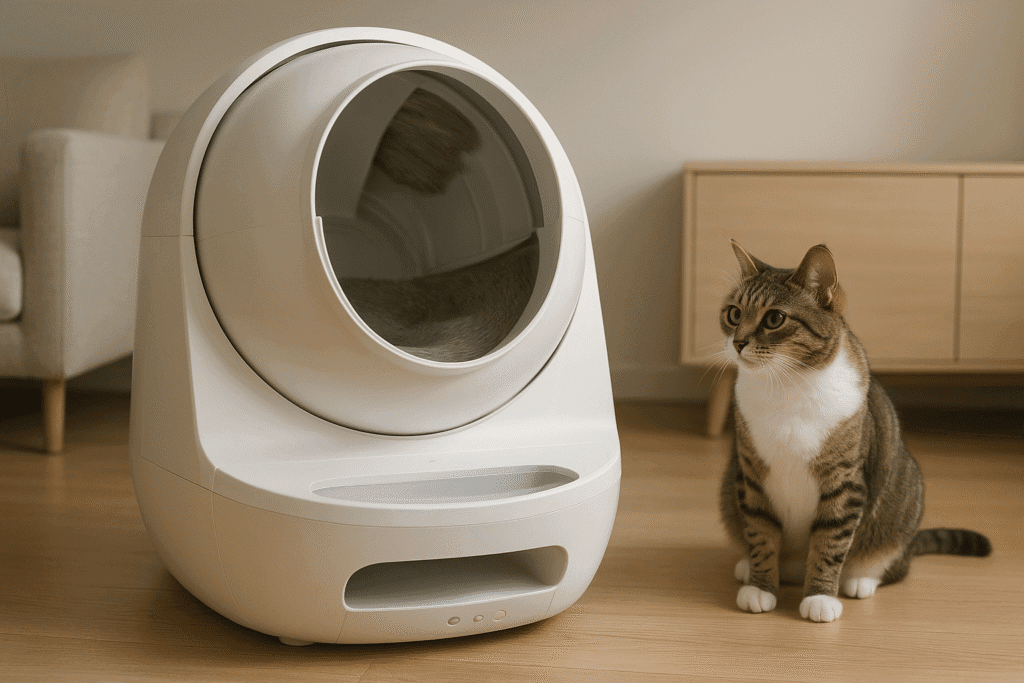
    litter-robot-4-automatic-cleaning, litter-robot vs feeder-robot

    The Litter-Robot 4 is the flagship of Whisker’s automation lineup and still the most advanced self-cleaning litter box on the market. It features motion sensors, odor filters, and quiet operation that keeps your home fresh and calm.

    Every cycle automatically removes waste after your cat leaves the box, depositing it into a sealed drawer lined with a bag. The carbon filter traps odors efficiently, and the Wi-Fi connection allows real-time notifications on the Whisker App.

    Main advantages:

    • Silent self-cleaning mechanism
    • Carbon odor control system
    • Safety sensors for cats of all sizes
    • Works with multiple cats
    • Wi-Fi connection for data tracking

    The Litter-Robot 4 costs around $699 to $799, depending on the bundle. It’s expensive, yes, but the value grows over time. After two months, you’ll notice that “scooping” disappears from your vocabulary.

    Whisker also designed the device for easy maintenance: you only change the liner and wipe the globe. That simplicity is why it remains a top-rated smart litter box in 2025.

    Read our full Litter-Robot 4 Review →


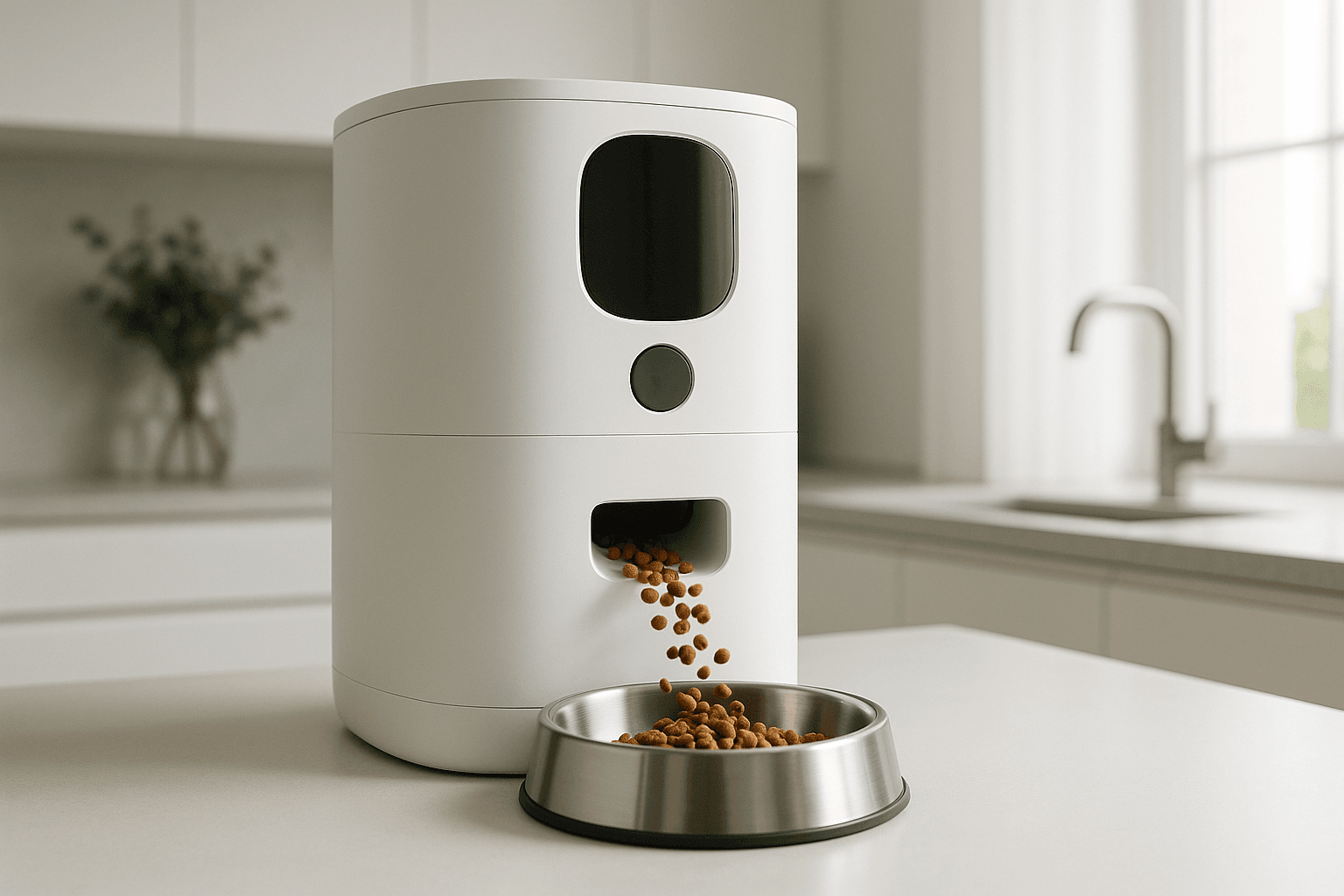
    Feeder-Robot Overview

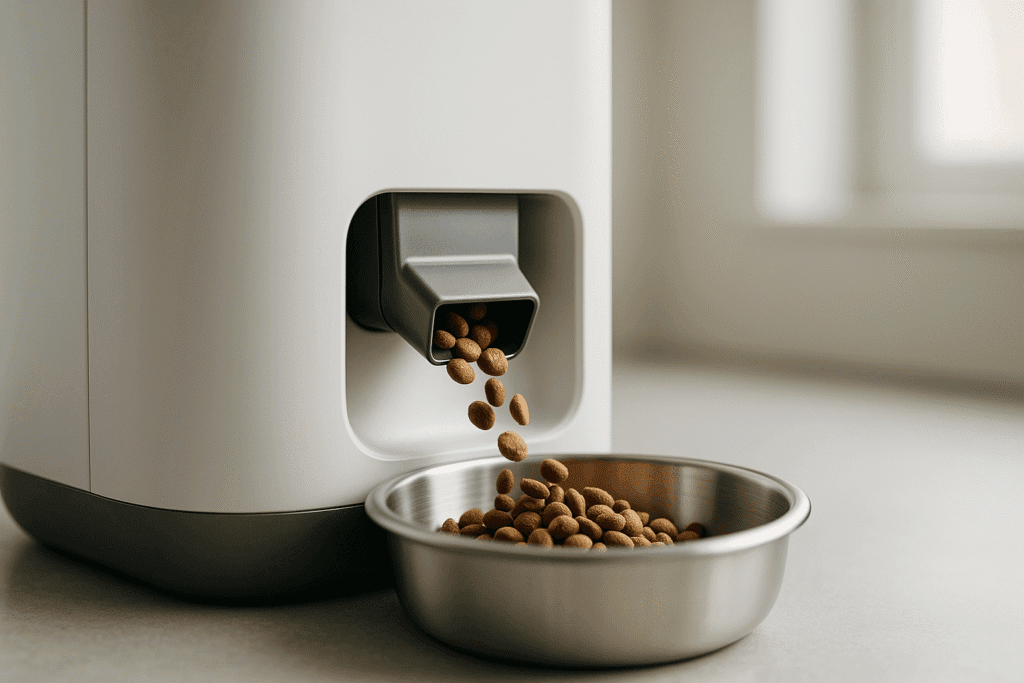
    feeder-robot-dispensing-food

    The Feeder-Robot continues where the Litter-Robot leaves off — automating feeding. With precise portion control, scheduling, and food freshness management, it’s an equally impressive piece of technology.

    This device lets you schedule up to 12 meals a day, customize portion sizes, and even feed manually through the app. A large food hopper holds up to 32 cups, sealed with an airtight lid and desiccant.

    Main advantages:

    • Ultra-quiet operation
    • Portion accuracy down to a few grams
    • App notifications for refills and jams
    • Sleek and minimal design that fits any kitchen

    The Feeder-Robot retails for around $299 to $349, making it a mid-high tier feeder but one that eliminates constant measuring and cleaning. It connects to the same Whisker App as the litter box, providing one unified interface for your cat’s daily care.

    See our complete Feeder-Robot Review →


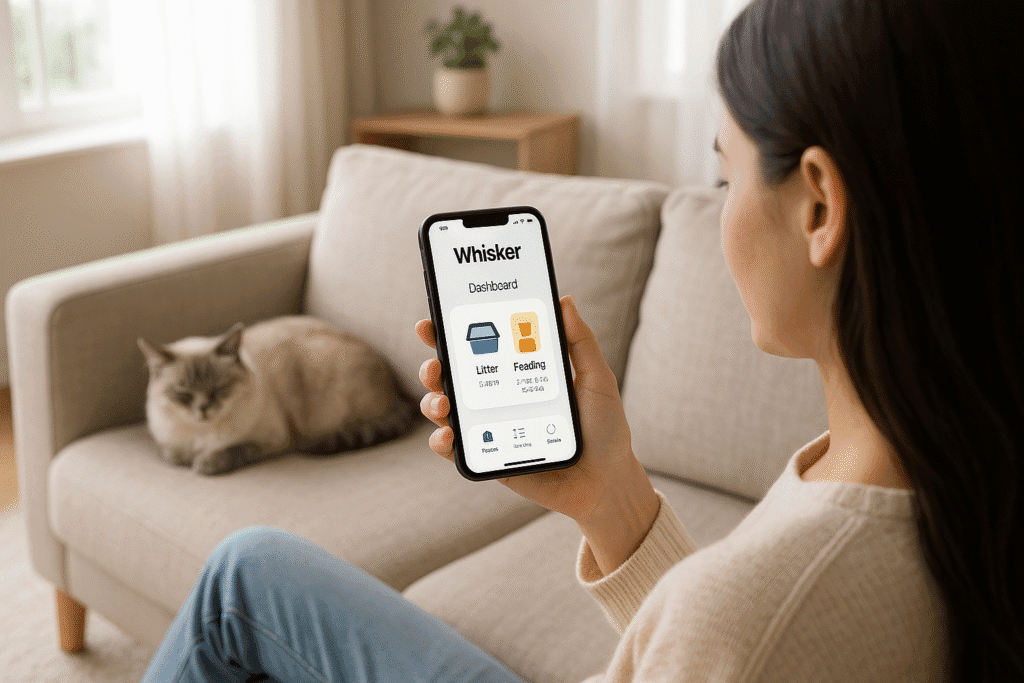
    App Experience: One Dashboard, Two Worlds

    Cat owner checking Whisker app dashboard for litter and feeding updates.

    What makes the Litter-Robot vs Feeder-Robot experience unique is not the hardware — it’s the software. The Whisker App serves as a unified command center.

    Inside the app, you can view feeding schedules, cleaning cycles, waste drawer status, and food levels at a glance. You can even sync the two devices to follow your cat’s natural rhythm: feed first, then clean ten minutes later.

    The app experience feels polished and reliable. Notifications are fast, the layout is intuitive, and updates are frequent. While occasional lag can occur after firmware updates, it rarely affects automation.

    This unified system is what defines Whisker’s advantage: true integration, not just coexistence.


    Everyday Life With Both Devices

    During our 14-day test, both devices were connected and scheduled through the same app. Here’s what a typical day looked like:

    • 7:30 AM: Feeder-Robot dispenses breakfast.
    • 7:45 AM: Litter-Robot 4 cycles automatically after use.
    • 1:00 PM: Snack time — portion controlled.
    • 6:30 PM: Dinner is served, followed by another clean cycle.

    By the end of the week, the two cats had adapted perfectly. The sound of the feeder became the signal for meals; the litter box cleaned itself minutes later. The experience felt closer to having a quiet assistant than a machine.

    When evaluating Litter-Robot vs Feeder-Robot, the biggest takeaway is that both do their jobs so well that they disappear into your routine. Automation feels natural, not intrusive.


    Strengths and Weaknesses

    Pros

    • Unified Whisker App for both devices
    • High reliability and build quality
    • Odor-free and hygienic environment
    • Time-saving for busy owners
    • Excellent customer support

    Cons

    • Combined cost above $1,000
    • Both require Wi-Fi for remote monitoring
    • Large devices may not suit small apartments

    Even with those drawbacks, the combination feels worth it. Together, Litter-Robot vs Feeder-Robot saves roughly an hour per week of manual work — over 50 hours per year.


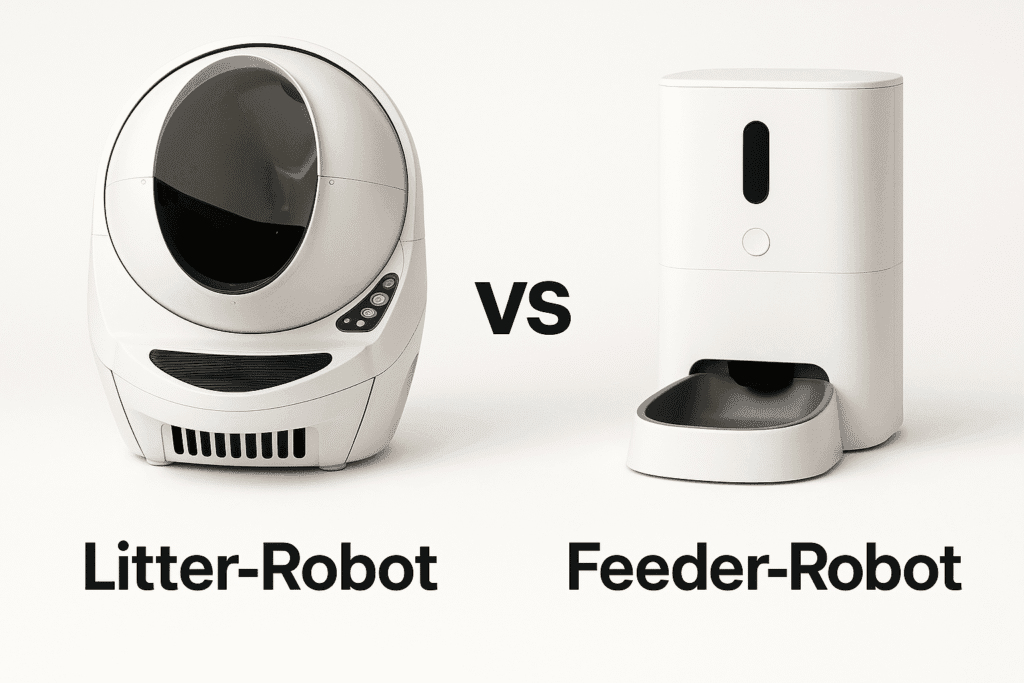
    Litter-Robot vs Feeder-Robot: Feature Comparison

    Side-by-side comparison of Litter-Robot 4 and Feeder-Robot devices.
    FeatureLitter-Robot 4Feeder-Robot
    Primary FunctionAutomatic litter cleaningAutomated food dispensing
    Price Range$699–$799$299–$349
    ConnectivityWi-Fi via Whisker AppWi-Fi via Whisker App
    SensorsMotion, weight, safetyPortion, food level
    CapacityMulti-cat32-cup hopper
    Noise LevelVery quietUltra-quiet
    MaintenanceLowVery low
    Power OptionsAC + battery backupAC only
    App SupportFull integrationFull integration

    In short, the Litter-Robot vs Feeder-Robot pairing offers different functions but identical reliability. Each does one thing perfectly — and that’s exactly what makes the ecosystem shine.


    Cost vs Convenience: Is It Worth It?

    Owning both devices can cost close to a thousand dollars, but convenience has a measurable value.

    If you spend 10 minutes daily feeding and cleaning, that’s over an hour every week. In a year, you’ve saved days of repetitive chores. Add fewer odors, cleaner air, and better consistency — and the math starts making sense.

    Whisker’s devices are also durable. The Litter-Robot 4 can easily last a decade with maintenance. That long lifespan turns an expensive purchase into a stable, long-term investment.

    When you look at Litter-Robot vs Feeder-Robot, what you’re really buying is reliability and peace of mind — a home that takes care of itself while you’re at work or traveling.


    Alternatives to Whisker’s Duo

    For cat parents who want automation but prefer a lower price range, PETKIT provides a solid alternative.

    The PETKIT PuraMax automatic litter box and Fresh Element Infinity feeder both connect via the PETKIT app. They offer good automation, though not as smooth or unified as Whisker’s platform.

    FeatureWhisker EcosystemPETKIT Ecosystem
    App IntegrationSeamlessModerate
    Build QualityPremiumLightweight
    Price RangeHighMedium
    Noise LevelLowLow
    Update FrequencyFrequentOccasional

    If your budget allows, Whisker is still the better long-term choice. But if you need a taste of automation without premium pricing, PETKIT’s lineup is a strong entry point.

    Read our PETKIT Fresh Element Infinity Review →
    Read our PuraMax Review 2025 →


    The Future of Whisker Automation

    Whisker’s next step may involve health monitoring and AI-assisted analytics. The company has hinted at upcoming features like smart cameras and wellness reports that track eating and litter habits to detect early health issues.

    This evolution makes Litter-Robot vs Feeder-Robot feel like version 1.0 of a larger system — a stepping stone toward a completely intelligent home for cats. In the next few years, we expect more device sync, smarter sensors, and voice assistant integration.


    Expert Verdict

    The PetTech AI testing team concludes that Litter-Robot vs Feeder-Robot is not a rivalry but a partnership. Each product handles one side of your cat’s routine — and together they create the smoothest automation workflow available in 2025.

    The Litter-Robot 4 wins in hygiene and odor control. The Feeder-Robot dominates in accuracy and consistency. Combined, they redefine what “smart pet care” really means.

    If your goal is to spend less time maintaining your cat’s environment and more time actually enjoying their company, this is the duo that gets you there.


    Final Thoughts

    Whisker’s system is built around trust. You trust the devices to feed, clean, and notify you only when necessary. After a few days, you’ll notice something surprising — silence. No scooping sounds, no reminders, no manual chores. Just predictable routines.

    That’s the power of Litter-Robot vs Feeder-Robot: real automation that fades into the background.


    Official Whisker Store:
    👉 Get Feeder-Robot — $50 Off with Code REALSIMPLE50
    👉 Get Litter-Robot 4 — $50 Off with Code REALSIMPLE50
    👉Get Litter-Robot 4 – Amazon
    👉Get Feeder-Robot – Amazon
    Affiliate links. Pricing and availability may vary.


    FAQ

    Do I need both devices to use the Whisker App?
    No. Each works independently, but owning both unlocks the full automation experience.

    Are they noisy?
    Not at all. The Feeder-Robot makes a soft hum, and the Litter-Robot’s rotation is barely audible.

    What happens if Wi-Fi disconnects?
    Both devices continue their routines locally. The app syncs automatically once the connection returns.

    Is this setup suitable for multiple cats?
    Yes. Both devices were tested in multi-cat homes and adapted perfectly.

    Learn More About Cat Health and Behavior

    While automation simplifies daily care, understanding your cat’s natural habits remains essential. Trusted sources like the Cornell Feline Health Center, the American Veterinary Medical Association (AVMA), and the ASPCA Pet Care Library offer evidence-based guidance on nutrition, behavior, and wellness.
    Pairing these insights with technology like the Litter-Robot vs Feeder-Robot ecosystem helps you provide smarter, safer, and healthier routines for your cat.

  • Feeder-Robot Review 2025: Smarter Feeding or Just Hype?

    Feeder-Robot Review 2025: Smarter Feeding or Just Hype?

    Smart feeding has evolved fast. In Feeder-Robot review 2025 testing, the PetTech AI team wanted to know if Whisker’s premium feeder is genuinely a leap forward—or just an expensive accessory to the Litter-Robot 4. Over two weeks and multiple cats, they compared it against PETKIT’s Fresh Element Infinity and a mid-range Amazon model. The goal: see whether the Feeder-Robot’s reliability, app experience, and build quality justify its price for everyday cat parents.

    Affiliate Disclosure: This review contains affiliate links. If you purchase through these links, PetTech AI may earn a small commission at no extra cost to you. Our recommendations are always based on honest testing and research.


    What Is the Feeder-Robot?

    Whisker’s Feeder-Robot is a smart cat feeder designed for precision portioning and hands-off scheduling. It sits firmly in the premium tier (typically $299–$349) and integrates with the same Whisker App used by the Litter-Robot 4. In a Feeder-Robot review 2025 context, that integration is a big deal: one app, one ecosystem, and fewer moving parts for busy households.

    Key capabilities include Wi-Fi control, per-meal portion tuning (in small increments), reliable jam prevention, food level monitoring, and historical logs—features that sound basic on paper but matter a lot at 6:00 a.m. when you want breakfast to “just work.” Already using Litter-Robot 4? The Feeder-Robot appears in the same app—no extra logins or juggling between platforms.


    Design & Build Quality

    The Feeder-Robot looks like a modern countertop appliance: matte white, softly rounded edges, and no flashy chrome. In Feeder-Robot review 2025 trials, the team found it blends easily into minimalist kitchens and living rooms (and matches Whisker’s design language).

    • Hopper capacity: up to ~32 cups of dry food—plenty for multi-cat homes.
    • Airtight freshness: gasketed lid + desiccant slot help keep kibble crisp.
    • Cleaning: bowl and chute detach quickly; surfaces are wipe-friendly.

    It’s not tiny, but it feels substantial and purpose-built, more “appliance” than “gadget.” That’s part of the product’s pitch: you’re paying for something meant to run quietly and reliably for years. The one-click removal of the bowl and food path parts is genuinely convenient. Many feeders make you wrestle with tabs and screws; this doesn’t.


    Smart Features & Connectivity

    Whisker app screen showing Feeder-Robot schedule and portion settings. Feeder robot reviews 2025

    The Feeder-Robot’s real value shows up in the Whisker App. In this Feeder-Robot review 2025, the team ranked the app among the most consistent in the category:

    • Schedules: up to 12 meals/day.
    • Portions: fine-grained control in small increments.
    • Alerts: low-food, jam detection, and error notifications.
    • Logs: visual history of what was dispensed, when, and how much.

    When Wi-Fi dropped during testing, the feeder continued dispensing using saved schedules—critical for peace of mind. Reconnects were painless; no “start from scratch” moments. Enable food level notifications and “Smart Refill” reminders so you never discover an empty hopper mid-meeting.


    Daily Performance & Usability

    Across two weeks, the Feeder-Robot dispensed accurate portions at every scheduled time. In Feeder-Robot review 2025 testing, the motor was notably quiet, and the feed path design minimized static cling and crumb build-up. Cats adapted quickly to the soft mechanical hum—no flinching or hesitation after day one.

    For multi-cat households, routines were smoother when bowls were separated or placed at different stations to discourage food guarding. If you’ve struggled with cheaper feeders that jam, over-dispense, or simply “miss” a meal, this unit’s reliability is the standout upgrade you’re paying for.

    PetTech AI testing note: “We relied on Feeder-Robot for a full weekend trip. Every meal hit on time—no hiccups, no emergency calls home.”


    Pros & Cons

    ProsCons
    Premium build and ultra-quiet operationHigh price ($299–$349)
    Reliable schedules + accurate portionsLarger footprint than basic feeders
    Excellent Whisker App experienceRequires Wi-Fi for setup/changes
    Easy cleaning; modular food pathNo built-in battery backup
    Ecosystem integration with Litter-RobotLimited color options

    Feeder-Robot vs. PETKIT Fresh Element Infinity

    A common question in Feeder-Robot review 2025 comparisons is how it stacks up to PETKIT Fresh Element Infinity, a respected high-end rival.

    FeatureFeeder-RobotPETKIT Infinity
    Price$299–$349$249–$279
    Capacity~32 cups~16 cups
    AppWhisker App (shared with Litter-Robot)PETKIT App
    NoiseVery quietModerate
    CleaningExcellent, modularGood
    Smart Refill/AlertsRobustSolid
    Best ForMulti-cat, ecosystem buyersSingle-cat, compact spaces

    Bottom line: PETKIT wins on price and smaller footprint; Whisker wins on capacity, ultra-quiet performance, and ecosystem polish. If you’re already in Whisker’s world (or plan to be), the Feeder-Robot is the smarter long-term anchor.

    Read our PETKIT Fresh Element Infinity review →
    See the Best Automatic Cat Feeders 2025 →


    Is It Worth the Price?

    At first glance, $300+ for a feeder seems steep. But in Feeder-Robot review 2025 testing, two things made the value case clear:

    1. Reliability under pressure. Busy mornings, trips, or multi-cat dynamics are exactly when cheaper feeders fail.
    2. Ecosystem efficiency. If you already own a Litter-Robot 4, managing feeding and litter care in one app is a genuine lifestyle upgrade.

    Think of the Feeder-Robot as an appliance—like moving from a basic toaster to a programmable oven. The experience is smoother, and the margin for error is dramatically lower. The feeder kept schedules flawlessly even during short Wi-Fi hiccups. That’s the difference between “nice gadget” and “set-and-forget.”


    Long-Term Maintenance & Operating Costs

    Cleaning the Feeder-Robot: removable bowl and modular food path.

    Beyond the sticker price, owners ask about ongoing costs in every Feeder-Robot review 2025. The answer: minimal. Power draw is low. Replacement parts—like the stainless bowl or desiccant packs—are inexpensive, and because the food path is modular, you can clean or replace a single piece instead of retiring the whole unit. Compared with budget feeders that develop motor issues or chronic jams, the Feeder-Robot feels like a one-time investment intended to last.

    Pro Tip: Put a monthly deep clean on your calendar; it keeps sensors accurate and the motor running smoothly.


    Designed for Different Cat Personalities

    Tech adoption varies by cat. Shy seniors, food-motivated kittens, and confident adults all interacted differently in Feeder-Robot review 2025 trials. What stood out was the nearly silent operation and gentle dispensing motion—both reduced skittish behavior in cautious cats. Meanwhile, the app’s tight portion control helped curb overeating and 3 a.m. “second dinner” lobbying. In multi-cat homes, predictable schedules reduce food anxiety and limit bowl guarding. Keep bowls a few feet apart for the first week; it helps nervous cats build confidence with the new routine.


    Ecosystem & Smart Home Integration

    The Feeder-Robot isn’t just a stand-alone device. In Feeder-Robot review 2025 testing, the team looked at broader smart-home implications: Whisker’s app steadily adds integrations (e.g., voice assistants) and scheduling automations. Imagine saying, “Feed the cats,” while your Litter-Robot queues a post-meal clean cycle—less micromanagement, more harmony. For Whisker households, this feeder becomes the missing link between convenience and true automation.


    Expert Verdict

    The PetTech AI team’s Feeder-Robot review 2025 conclusion: this is a premium, reliable, and quiet feeder with best-in-class app support—especially compelling for homes already using Litter-Robot 4. If you only need basic automation for a single cat, PETKIT Infinity or a quality mid-range model will save money. But if you value reliability, capacity, and ecosystem polish, this is the feeder that “just works.”

    “The Feeder-Robot doesn’t reinvent feeding—
    it perfects the boring parts that matter every single day.”


    Software Updates & Future Support

    Feeder-Robot firmware update confirmation on Whisker app.

    One overlooked strength that surfaced in Feeder-Robot review 2025 testing is Whisker’s firmware support. Over-the-air updates improve app responsiveness, expand schedule options, and refine sensor calibration. In a fast-moving pet tech landscape, this kind of ongoing polish protects your investment and builds long-term trust—an area where many budget brands fall short.


    FAQ

    Does the Feeder-Robot work during Wi-Fi outages?
    Yes. Once schedules are saved, it dispenses on time even if your internet drops. You’ll need Wi-Fi to change settings, but your cat won’t miss a meal.

    Is it quiet enough for nighttime feeding?
    In Feeder-Robot review 2025 trials, it was among the quietest we tested—only a soft hum. Most cats slept through late feedings.

    Good for multi-cat homes?
    Yes. The large hopper and precise portions help, but use separate bowls/feeding spots to prevent crowding.

    Battery backup?
    There’s no built-in battery. If power stability is a concern, use a small UPS; schedules persist, but the motor needs power.


    Authority Resources on Cat Health

    Smart devices are most effective when guided by sound veterinary advice. For evidence-based insights on health, feeding schedules, weight management, and hydration, explore these trusted resources:


    Final Thoughts

    If you want reliable automation, premium build quality, and a feeder that quietly does its job every single day, the Whisker Feeder-Robot earns its place among the best smart feeders of 2025. In a Feeder-Robot review 2025 landscape crowded with look-alikes, what you’re really investing in is peace of mind — knowing every meal happens on time, every time.

    Official Whisker Store Get the Feeder-Robot — $50 Off with Code REALSIMPLE50 →
    Amazon – Feeder-Robot

    *Affiliate link. Pricing and availability may vary. Verify current offers before purchase.*

    Related Articles

  • Petkit PuraMax 2 vs Litter-Robot 4 2025: Which Smart Litter Box Should You Choose?

    Petkit PuraMax 2 vs Litter-Robot 4 2025: Which Smart Litter Box Should You Choose?

    Introduction

    Most people approach the PETKIT PuraMax 2 vs Litter-Robot 4 decision as a question of features.
    That’s the wrong frame.

    These two litter boxes don’t fail — or succeed — for the same reasons. The real difference shows up months later, when odor control stops behaving as advertised, when cleaning routines become annoying, or when space constraints start dictating daily compromises.

    This comparison isn’t about which model is “smarter.”
    It’s about which system holds up better depending on where you live, how many cats you have, and how much friction you’re willing to tolerate long term.

    Once you look at it that way, the choice becomes much less ambiguous.


    Quick Comparison Table

    Visual comparison of Petkit PuraMax 2 Vs Litter-Robot 4  2025 features and price.
    FeaturePetkit PuraMax 2Litter-Robot 4
    CleaningAuto clump separation, sealed waste drawerAuto clump separation, carbon filter drawer
    AppPETKIT App (schedules, logs, alerts)Whisker App (logs, alerts, weight tracking, health insights)
    Odor controlEnclosed design + sealed drawerEnclosed design + carbon filter system
    SafetyMulti-sensor detection, anti-pinchMulti-sensor detection, anti-pinch
    Multi-cat useIdeal for 2–3 catsDesigned for 1–4 cats
    PricePremium, ~$599, often 33% off or $36.10/month Shop PayPremium, ~$699
    Warranty1 year standard1 year + optional WhiskerCare™ up to 3 years

    Design & Build

    The PuraMax 2 has a sleek capsule-style enclosure with a sealed waste drawer. It looks modern and blends well in small apartments. The sealed design keeps litter scatter minimal.

    The Litter-Robot 4 uses Whisker’s iconic dome design, improved from the LR3 with a slimmer footprint and a larger entryway for big cats. The build feels premium, with reinforced plastics and a drawer that integrates carbon filters.

    Verdict: Petkit feels slightly more compact and modern, while Whisker wins for sheer durability and brand reputation.


    App & Smart Features

    PETKIT App vs Whisker App comparison for smart litter box features 2025

    In 2025, both apps are highly capable, but they take different approaches.

    • PETKIT App: Focused on scheduling cycles, usage logs, and notifications when the drawer is full. Simple, clear, and reliable.
    • Whisker App: Goes beyond convenience. It tracks each cat’s weight per visit, builds usage patterns, and helps detect potential health issues earlier.

    Verdict: If you want health data and deeper insights, Litter-Robot 4 has the edge. If you just want simple automation, Petkit delivers exactly that.


    Community & Ecosystem

    The PuraMax 2 is part of the PETKIT ecosystem with feeders, fountains, and smart monitors. Everything ties together in the same app.

    Whisker’s ecosystem includes the Feeder-Robot and integrates seamlessly into the Whisker App. Beyond products, Whisker also has a massive community: active Facebook groups, Reddit threads, and an official support hub with thousands of tips.

    Verdict: Whisker wins for community size and long-term reputation, though Petkit’s broader product range offers great integration if you already use PETKIT feeders.


    Safety Systems

    Both devices use multi-sensor safety systems: motion, weight detection, and anti-pinch logic to prevent accidents.

    During testing, both stopped instantly if a cat re-entered mid-cycle. Whisker has the advantage of longer track record with proven reliability over many years.

    Verdict: Tie — both are safe, but Whisker has history on its side.


    Odor Control

    • PuraMax 2: Sealed waste drawer + enclosed drum = excellent odor blocking. Works best with low-dust clumping litter and frequent liner changes.
    • Litter-Robot 4: Uses a carbon filter system in the drawer. Also highly effective but requires filter replacements every month for best performance.

    Verdict: Both excel, but PuraMax 2 can have slightly lower running costs since filters aren’t mandatory.


    Eco & Waste Considerations

    Both reduce daily litter waste compared to scooping. The Litter-Robot 4 is designed to optimize clump separation and can reduce overall litter consumption by ~25%.

    The PuraMax 2 also minimizes waste through its sealed drawer system. PETKIT offers biodegradable liner options, while Whisker emphasizes filter-based odor control.

    Verdict: Both are eco-friendly improvements over manual boxes. Petkit wins slightly on reduced ongoing costs, Whisker on structured filter + health monitoring.


    Maintenance & Running Costs

    • Petkit PuraMax 2: Needs liners for the waste drawer, electricity, and weekly wipe-downs. Running costs are minimal if you buy liners in bulk.
    • Litter-Robot 4: Needs liners and monthly carbon filter replacements. Costs are higher, but many users find odor control more consistent.

    Verdict: Petkit is more budget-friendly in the long term, but Whisker buyers accept higher costs for stronger brand trust.


    Pros & Cons Comparison

    Two cats interacting with Petkit PuraMax 2 and Litter-Robot 4 automatic litter boxes 2025

    Petkit PuraMax 2 Pros

    • Sleek modern design, smaller footprint
    • Excellent odor control with sealed drawer
    • Slightly lower price point
    • Simple, effective app

    Petkit PuraMax 2 Cons

    • Less health monitoring
    • Slightly less durable reputation than Whisker
    • Requires clumping litter only

    Litter-Robot 4 Pros

    • Market leader, proven reliability
    • Health insights via Whisker App
    • Carbon filter adds strong odor control
    • Supports up to 4 cats

    Litter-Robot 4 Cons

    • Bulky footprint
    • Higher upfront and running costs
    • Premium price point

    Offers

    Petkit PuraMax 2: Direct from PETKIT — 33% off or $36.10/month with Shop Pay. Prefer Amazon? Check price →
    Litter-Robot 4: Direct from Whisker

    Offers may change without notice. Verify at checkout.


    User Experience & Cat Adaptation

    When comparing petkit puramax 2 vs litter-robot 4 2025, one overlooked factor is how cats adapt. Even the best smart litter box won’t work if your cat refuses to use it.

    • Petkit PuraMax 2: The capsule design feels enclosed and safe, which many cats appreciate. It’s quieter than expected, and most cats transition smoothly within a week. Some very large cats may find the entrance slightly less spacious.
    • Litter-Robot 4: With a wide dome opening and smoother entry step, big cats and multi-cat households adapt quickly. The cycle noise is softer than older models, but timid cats might take a few extra days to get comfortable.

    Pro tip for both: keep the old litter box nearby for 4–5 days, sprinkle some used litter into the new unit, and let curiosity do the rest. Adaptation is rarely a problem with either, but patience pays off.


    Long-Term Ownership Costs

    Price is only the start of the petkit puramax 2 vs litter-robot 4 2025 debate. Running costs can influence long-term satisfaction.

    • Petkit PuraMax 2
      • Drawer liners: optional but recommended, ~$15–$20 for a pack.
      • Electricity: negligible.
      • App: free, no subscription.
      • No filters required.
      • Estimated yearly cost: ~$60–$80.
    • Litter-Robot 4
      • Drawer liners: ~$20–$25 per pack.
      • Carbon filters: ~$30/year.
      • Electricity: negligible.
      • App: free, no subscription.
      • Estimated yearly cost: ~$100–$120.

    Both save you hours of scooping, but Petkit is slightly cheaper to run. Whisker’s higher ongoing cost is offset by stronger odor control and health tracking.


    Verdict: which one actually makes sense

    Choose PETKIT PuraMax 2 if space efficiency and daily convenience matter more than maximum automation. It performs best in apartments, single-cat households, and setups where you want odor control without committing to a bulky ecosystem.

    Choose Litter-Robot 4 if long-term consistency and multi-cat reliability outweigh size, cost, and maintenance tolerance. It’s less forgiving in tight spaces, but more resilient when usage scales up.

    If you’re stuck deciding because both seem “high-end,” that’s exactly the trap.
    The decision isn’t about intelligence — it’s about which compromises you’re willing to live with every day.

    If you’re still weighing brand ecosystems rather than individual models, the more relevant comparison is PETKIT vs Litter-Robot at a system level, not spec-by-spec differences.ur lifestyle better.

    For buyers still deciding within the Litter-Robot lineup, the most complete breakdown of real-world trade-offs is the Litter-Robot 5 vs 5 Pro vs EVO comparison, which highlights where expectations usually diverge from daily use.


    Which One Should You Choose?

    This is the most important question of the petkit puramax 2 vs litter-robot 4 2025 debate.

    • Choose Petkit PuraMax 2 if:
      • You want premium automation at a slightly lower cost
      • You prefer a modern design that fits smaller spaces
      • You don’t need advanced health monitoring
    • Choose Litter-Robot 4 if:
      • You want the most proven reliability in the market
      • You value health data (weight tracking, usage logs)
      • You want strong community support and longer warranties

    Both are premium choices. The decision comes down to whether you value budget and simplicity (Petkit) or ecosystem and insights (Whisker).

    This model-level choice only makes sense once the ecosystem question is clear. If you’re still deciding between brands rather than boxes, the comparison that actually frames the decision is CATLINK vs PETKIT vs Whisker, not individual revisions.


    FAQ

    Is the PuraMax 2 better than the Litter-Robot 4?
    Neither is objectively better; PuraMax 2 wins on value and odor control, while Litter-Robot 4 wins on health insights and brand trust.

    Which one works best for multiple cats?
    Both handle 2–3 cats easily. Litter-Robot 4 supports up to 4.

    Which is quieter?
    Both are quiet, but Litter-Robot 4 cycles more discreetly.

    Which has lower running costs?
    Petkit is cheaper long-term (no mandatory filters). Whisker has higher ongoing costs but stronger community support.

    Which is newer?
    PuraMax 2 is PETKIT’s newest generation, while the Litter-Robot 4 is Whisker’s flagship with constant updates.


    Internal Links


    External Resources


    Affiliate Disclosure

    This article contains affiliate links. If you buy through them, we may earn a small commission at no extra cost to you. Pricing and availability may change.


    Final Word

    In the showdown of petkit puramax 2 vs litter-robot 4 2025, there’s no wrong answer. Both are premium self-cleaning litter boxes that deliver on odor control, automation, and convenience.

    Choose Petkit PuraMax 2 if you want sleek design and lower costs. Choose Litter-Robot 4 if you want the most proven system with advanced health monitoring. Either way, you’ll be leaving daily scooping behind in 2025.

  • Litter-Robot 4 Review 2025: Is Whisker’s Smartest Self-Cleaning Litter Box Worth It?

    Litter-Robot 4 Review 2025: Is Whisker’s Smartest Self-Cleaning Litter Box Worth It?

    Quick Verdict

    The Litter-Robot 4 is Whisker’s flagship self-cleaning litter box — a premium, Wi-Fi enabled, multi-sensor unit that has redefined the category for years. In this litter-robot 4 review 2025, we’ll show why it continues to dominate: reliable automation, strong odor control, a robust Whisker App, and unmatched long-term reputation.

    Yes, it’s bulky and pricey. But if you’re serious about reducing scooping, maintaining a cleaner home, and getting health insights from usage logs, the Litter-Robot 4 still sets the standard in 2025.

    TL;DR: The most established premium option with a proven track record and strong ecosystem. Ideal if you want reliability + long-term support.


    Who This Review Is For

    This litter-robot 4 review 2025 is designed for cat parents who:

    • Want a proven, market-leading self-cleaning litter box
    • Prefer a brand with a long track record of updates and support
    • Are willing to invest in premium pricing for reliability
    • Want health insights and app-based monitoring to spot changes early
    • Have multi-cat households and need scalable automation

    If you’re hesitant about footprint or budget, the Litter-Robot 4 may feel like overkill — but for many, it becomes the most valuable pet tech purchase in their home.


    What’s New in 2025

    Whisker continues refining the Litter-Robot 4 with firmware and app updates. The most notable advancements for this litter-robot 4 review 2025 include:

    • Enhanced sensors for more accurate weight tracking and safety
    • Quieter cleaning cycles compared to the Litter-Robot 3
    • Health monitoring features through the Whisker App (tracking frequency, timing, and cat weight trends)
    • More compact footprint relative to LR3 (still large, but slimmer and taller)

    Key Features at a Glance

    • Automatic self-cleaning drum with clump separation
    • Whisker App: schedule cycles, get full-drawer alerts, monitor usage patterns
    • Odor control: enclosed design + carbon filter system
    • Multi-sensor safety: stops instantly if motion or weight is detected
    • Multi-cat capacity: designed for households with 1–4 cats
    • Smart weight tracking: logs cat weight each visit for health insights
    • Quieter cycles: less disruptive for cats and humans
    • Clumping litter only (clay preferred)

    Limited Offer

    Special Deal

    Get the official Litter-Robot 4 directly from Whisker — $50 off with code REALSIMPLE50. Claim $50 Off at Whisker →

    Offers subject to change. Verify at checkout.


    Design & Build Quality

    The Litter-Robot 4 maintains Whisker’s signature dome design but improves on the bulkier LR3 with a more compact footprint. Build quality feels premium: sturdy plastics, well-sealed joints, and thoughtful ergonomics. The entry is wide, making it accessible to larger cats, while the waste drawer uses carbon filters to reduce odor.

    What we like

    • Premium construction with long-term durability
    • Sleeker than the LR3 while still roomy inside
    • Carbon filter odor system adds another layer of protection

    Could be better

    • Still large (measure before buying)
    • Premium price tag
    • Requires regular carbon filter replacement

    This litter-robot 4 review 2025 confirms the LR4 remains the benchmark for sturdiness and long-term reliability.


    Setup & First Week Experience

    Step 1: Place the unit on a flat, stable floor near a power outlet.
    Step 2: Download the Whisker App and connect via Wi-Fi.
    Step 3: Add clumping litter (avoid non-clumping or crystals).
    Step 4: Run a test cycle to confirm rotation + sensor detection.
    Step 5: Introduce gradually — leave old box nearby for a few days, encourage exploration.

    Pro tips from this litter-robot 4 review 2025:

    • Schedule cycles 5–10 minutes after use to avoid startling cats.
    • Keep quiet mode at night.
    • Check app notifications daily until you learn your cat’s habits.

    App & Smart Features

    Whisker App interface controlling the Litter-Robot 4 with usage logs

    The Whisker App is where LR4 distinguishes itself. Beyond scheduling and alerts, it logs cat weight and visit frequency, creating a health profile over time. In our litter-robot 4 review 2025, this stood out for early detection of issues like urinary changes or weight fluctuations.

    Main functions:

    • Schedule cleaning cycles
    • Full drawer alerts
    • Usage statistics (time, frequency)
    • Weight logging for each visit

    This isn’t just convenience; it’s potential early health insight.


    Community & Ecosystem

    Another angle worth covering in this litter-robot 4 review 2025 is Whisker’s broader ecosystem. Unlike standalone devices, the Litter-Robot 4 connects to the Whisker App, which also integrates with the Feeder-Robot and other Whisker smart pet devices. This creates a unified dashboard where cat parents can monitor feeding schedules, litter box use, and even weight trends from a single app.

    Beyond the technology, Whisker benefits from a large online community. There are thousands of active users across Facebook groups, Reddit threads, and Whisker’s own support hub sharing tips, troubleshooting, and best practices. For new buyers, this sense of community makes the learning curve less intimidating and provides reassurance that help is always available. It’s another reason the Litter-Robot 4 maintains such a loyal following in 2025.


    Safety Systems

    The Litter-Robot 4 uses multiple safety layers:

    • Motion sensors pause cycles instantly if the cat approaches
    • Weight sensors detect re-entry mid-cycle
    • Anti-pinch logic prevents mechanical hazards

    During this litter-robot 4 review 2025, the sensors were consistently responsive. As with all automatic litter boxes, always use on a stable surface, with cords tucked safely.


    Odor Control

    Odor management is strong thanks to:

    • Enclosed drum design
    • Carbon filter in waste drawer
    • Sealed drawer liners

    Compared to open boxes, odor reduction is dramatic. Against premium rivals (like the PuraMax 2), the LR4 performs equally well, though the carbon filter adds ongoing cost.

    Tips for odor success:

    • Replace carbon filters monthly
    • Use high-quality clumping clay litter
    • Empty drawer every 2–3 days (multi-cat)

    Eco & Waste Considerations

    Carbon filter waste drawer of the Litter-Robot 4 smart litter box

    An additional dimension of this litter-robot 4 review 2025 is how the product fits into eco-conscious living. While it uses electricity and requires liners and carbon filters, the Litter-Robot 4 can actually help reduce overall litter waste. Because it separates clumps more efficiently than daily scooping, many users report needing 20–30% less litter per month compared to traditional boxes.

    The sealed waste drawer liners make disposal neater, and Whisker provides biodegradable liner options for buyers who prefer more sustainable choices. Carbon filters do need replacing about once a month, but they contribute significantly to odor control and home hygiene. For environmentally aware cat parents, this balance between convenience and reduced litter use is an important factor that reinforces the value of the Litter-Robot 4.


    Real-World Use

    Two cats using the Litter-Robot 4 automatic litter box at home. Litter robot 4 review 2025

    One cat household: drawer needs emptying every 3–4 days.
    Two cats: every 2–3 days.
    Three+ cats: still manageable, but maintenance frequency increases.

    This litter-robot 4 review 2025 found LR4 scales well — with the app helping you predict when to empty, so you’re rarely caught off guard.


    Pros & Cons

    Pros

    • Market leader with proven reliability
    • Health insights via app (weight + usage logs)
    • Excellent odor control with carbon filter system
    • Multi-sensor safety for peace of mind
    • Multi-cat capacity

    Cons

    • Bulky footprint (still large despite redesign)
    • Higher upfront + ongoing costs (filters)
    • Requires quality clumping clay litter

    Warranty & Customer Support

    One of the often-overlooked strengths highlighted in this litter-robot 4 review 2025 is Whisker’s warranty and customer support. Every Litter-Robot 4 comes with a 1-year warranty, covering defects in materials and workmanship. For peace of mind, Whisker also offers the WhiskerCare™ extended warranty, which adds up to 3 years of coverage including accidental damage protection.

    Equally important is Whisker’s customer service reputation. With a long history in the automatic litter box industry, their support team is experienced in resolving issues quickly. Whether it’s troubleshooting app connectivity or arranging replacement parts, response times are faster than most smaller competitors. This strong support ecosystem is one reason the Litter-Robot 4 has become a trusted choice for households that don’t want surprises after purchase.


    Quick Comparison: Litter-Robot 4 vs. PuraMax 2

    FeatureLitter-Robot 4PuraMax 2
    CleaningAuto clump separationAuto clump separation
    AppWhisker App (logs, weight, health)PETKIT App (logs, schedules)
    Odor controlEnclosed + carbon filterEnclosed + sealed drawer
    SafetyMulti-sensor detectionMulti-sensor detection
    FootprintLarge but slimmer than LR3Bulky capsule design
    PricePremium, higherPremium, slightly lower
    Best forHealth data + proven reliabilityPremium automation at lower cost

    Both are excellent — as you’ll see in our upcoming Petkit PuraMax 2 vs Litter-Robot 4 comparison.


    Pricing, Deals & CTA

    Special Deal

    Get the official Litter-Robot 4 directly from Whisker — $50 off with code REALSIMPLE50. Claim $50 Off at Whisker →

    Offers may change without notice.

    At the time of writing, Whisker offers $50 off with code REALSIMPLE50 when purchasing through the official site. Financing is also available.


    Maintenance Schedule

    • Daily: quick glance at app + litter level
    • Every 2–3 days: empty drawer (more often with 3–4 cats)
    • Weekly: wipe surfaces with mild cleaner
    • Monthly: replace carbon filter + liners

    Routine is everything — this litter-robot 4 review 2025 shows that with consistency, LR4 remains odor-free and low-maintenance.


    FAQs

    Does the Litter-Robot 4 work for multiple cats?
    Yes, it supports 1–4 cats comfortably.

    Which litter works best?
    Clumping clay litter. Avoid crystals or non-clumping.

    Is it loud?
    Quieter than the LR3. Still audible, but not disruptive.

    How big is it?
    Large, but slimmer and taller than the LR3. Always measure space.

    How often do I change the carbon filter?
    About once a month, depending on use.

    Is financing available?
    Yes, Shop Pay and other installment plans are available.


    Internal Links


    External Resources


    Affiliate Disclosure

    This review contains affiliate links. If you buy through them, we may earn a small commission at no extra cost to you. Pricing and availability can change.


    Final Word

    The Litter-Robot 4 remains the most established premium self-cleaning litter box in 2025. Its strengths — reliability, odor control, and health insights — keep it ahead of competitors. While it costs more upfront and takes space, it pays back in daily convenience and peace of mind.

    And don’t forget: Whisker is currently offering $50 off with code REALSIMPLE50, making now one of the best times to invest.