Tag: petkit

  • Smart Cat Ecosystems 2025: How Connected Feeders, Fountains & Litter Boxes Really Work

    Smart Cat Ecosystems 2025: How Connected Feeders, Fountains & Litter Boxes Really Work

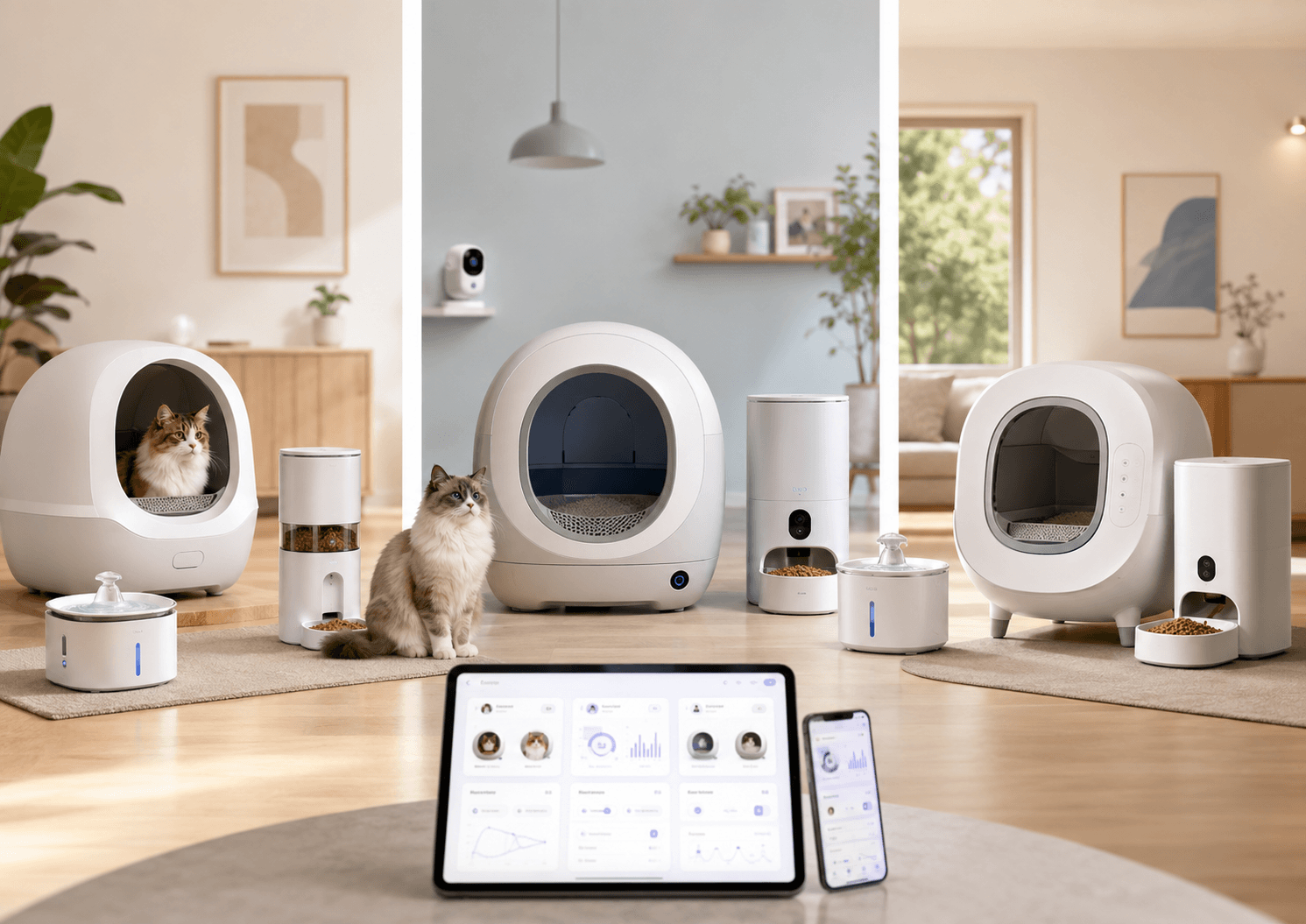
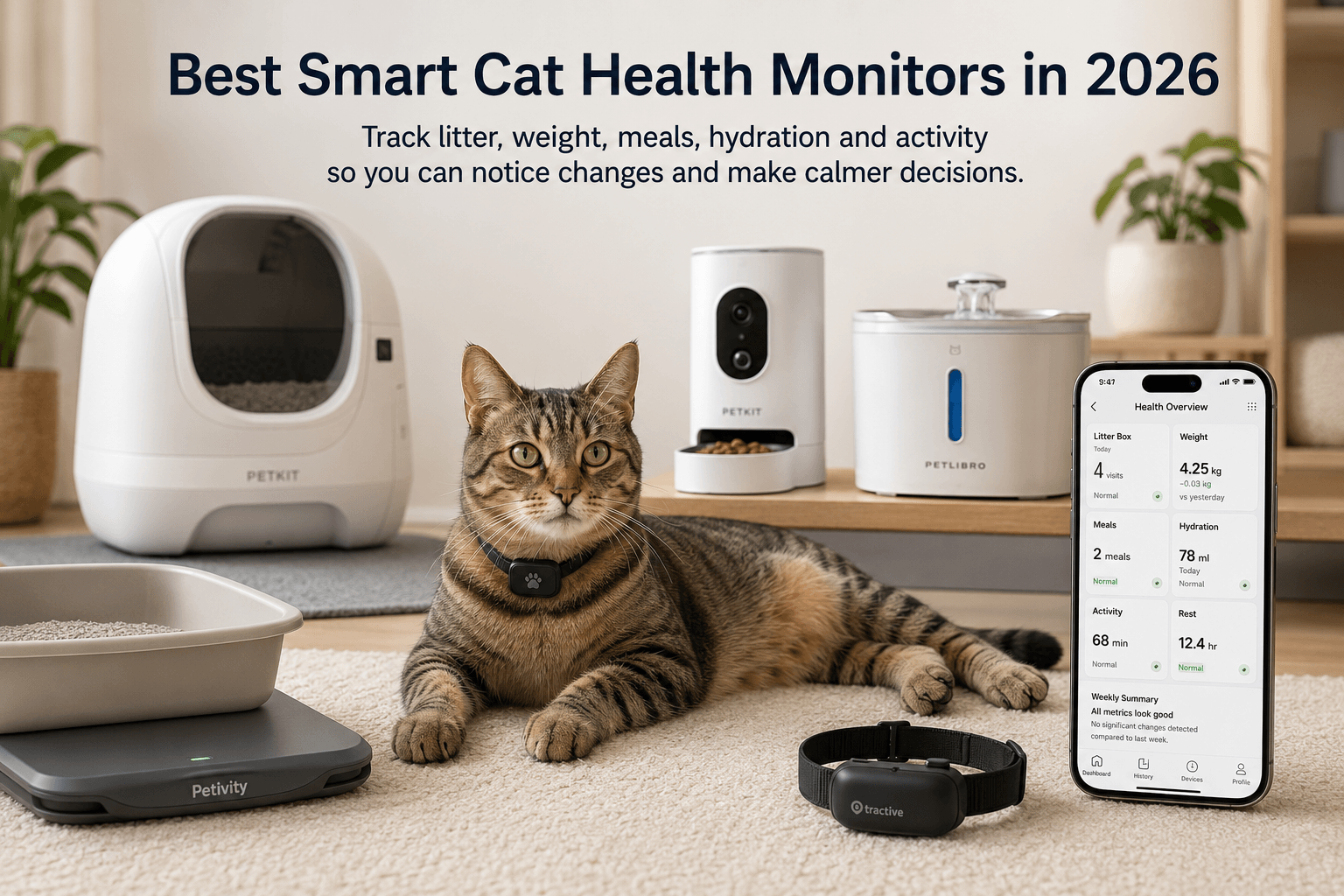
    Indoor cat care in 2025 is starting to look a lot like building a tiny “smart home” just for your cat. Brands now push complete smart cat ecosystems 2025: a feeder, fountain, and litter box that all talk to the same app and generate health reports on eating, drinking, and toilet habits.

    The problem: marketing promises a kind of feline Apple ecosystem. Real life is messier. This guide strips out the hype and looks at what these systems actually do today, where PETKIT and CATLINK are ahead, how cameras like Furbo and Petcube fit in, and when a smart cat ecosystem 2025 makes clinical sense versus being just expensive gadgetry.


    What Is a “Smart Cat Ecosystem 2025” in Practice?

    For this article, a smart cat ecosystem 2025 is not just “owning three gadgets.” It has three key components:

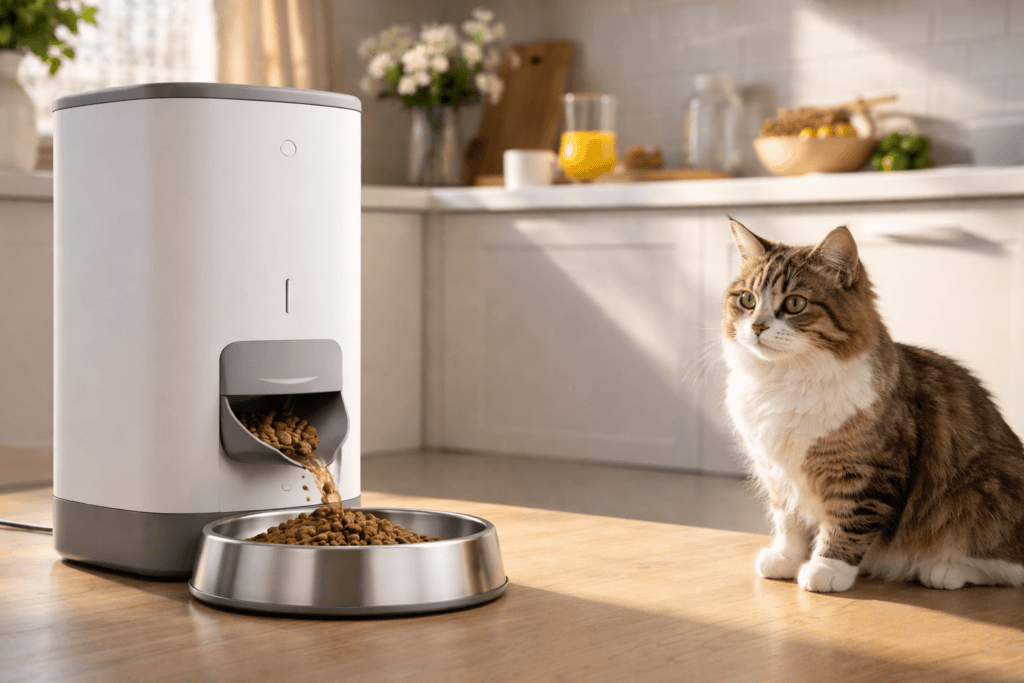
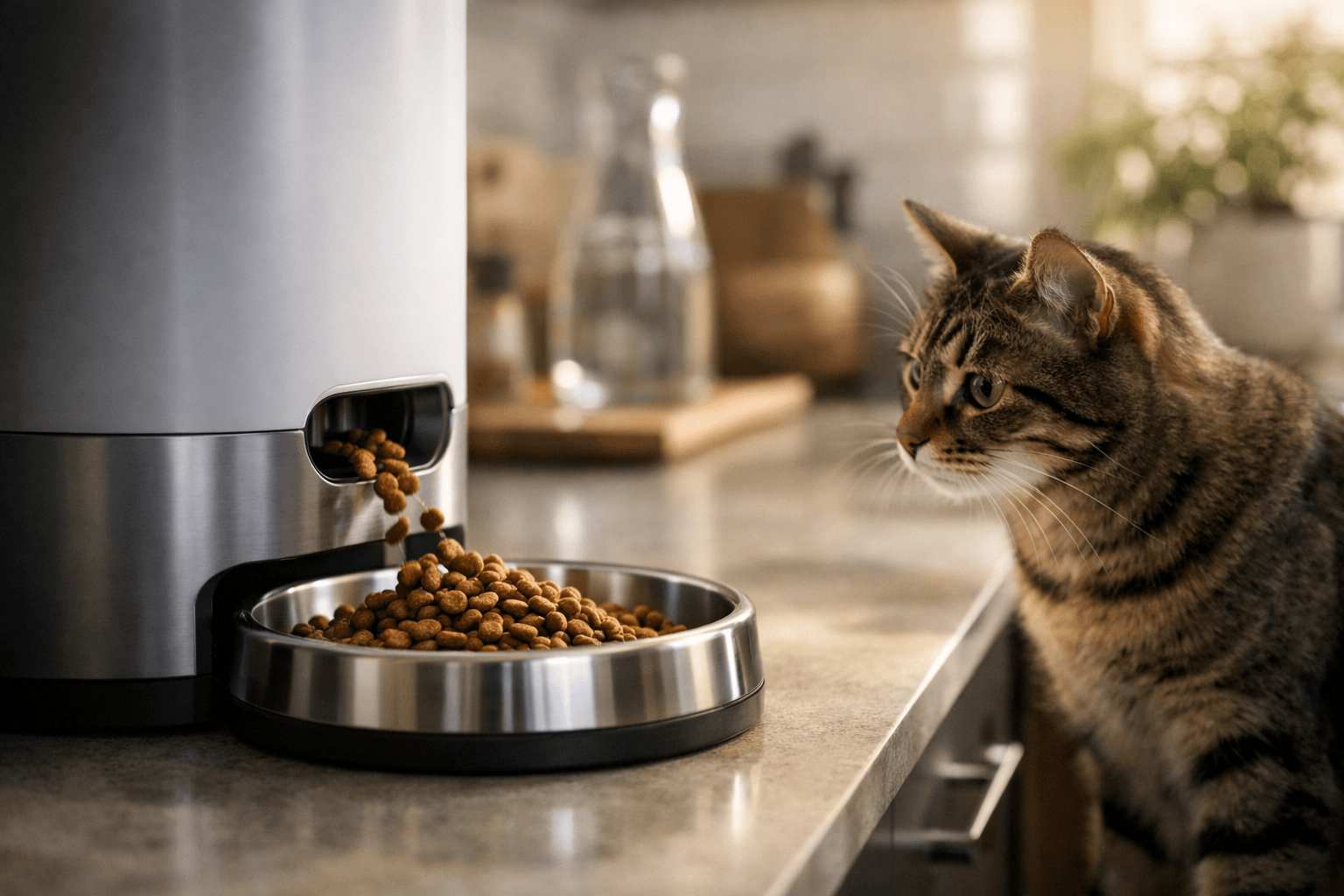
    1. Smart feeder – portion-controlled, app-managed, scheduled feeding.
    2. Smart water fountain – filtered, often battery-backed, with app monitoring of water level and filter status.
    3. Smart litter box – self-cleaning with weight sensors, usage logs, and sometimes health insights.

    The ecosystem part comes from one unified app that:

    • Controls all devices from a single dashboard
    • Logs intake (food/water) and output (litter box visits, weight)
    • Sends alerts if something changes (e.g., fewer litter visits, less drinking)

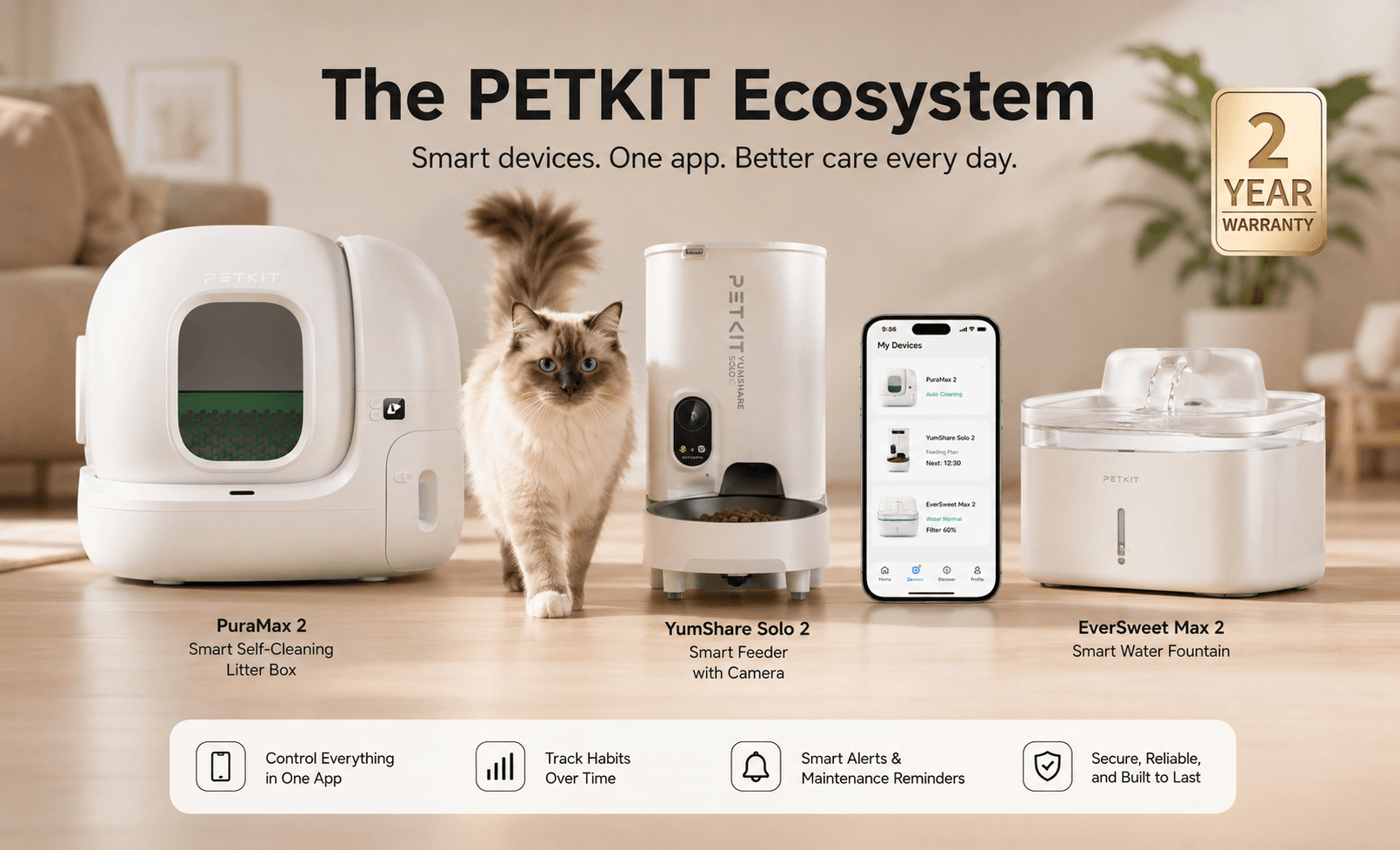
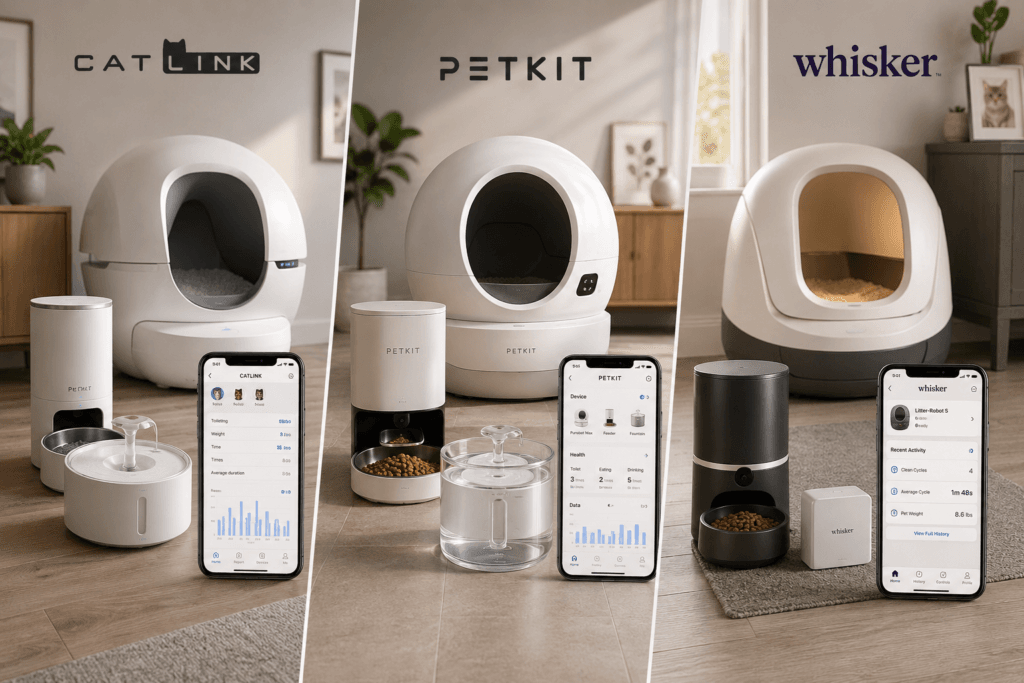
    PETKIT explicitly markets this idea: its app is designed to manage all Petkit devices in one place and “link everything for pet’s life.” Similarly, CATLINK sells complete “EcoSystem” bundles – litter box, feeder, and fountain – designed to work together through the CATLINK app.


    Do Cats Actually Benefit From Smart Ecosystems? (What the Science Says)

    Smartphone app dashboard showing connected cat feeder, fountain, and litter box data

    The tech exists; the question is whether a smart cat ecosystem 2025 solves real feline problems. Veterinary and behavior research gives you the baseline:

    • Environmental enrichment is critical for indoor cats. Cornell notes that toys and interactive environments reduce obesity, destructive scratching, and inappropriate elimination by allowing natural behaviors like stalking and problem-solving. vet.cornell.edu
    • Consistent feeding routines and portion control help prevent weight gain and obesity-linked disease. Veterinary guidelines emphasize small, predictable meals for many cats rather than free-feeding large amounts.
    • Adequate hydration is a core pillar of urinary and kidney health; fountains with flowing water can increase drinking for some cats, which is why multiple veterinary sources recommend them as part of environmental enhancement. Dr. Judy Morgan’s Naturally Healthy Pets

    A smart cat ecosystem 2025 doesn’t magically make your cat healthier, but it does give you tools to:

    • Keep feeding schedules and portions consistent
    • Encourage more drinking with flowing water
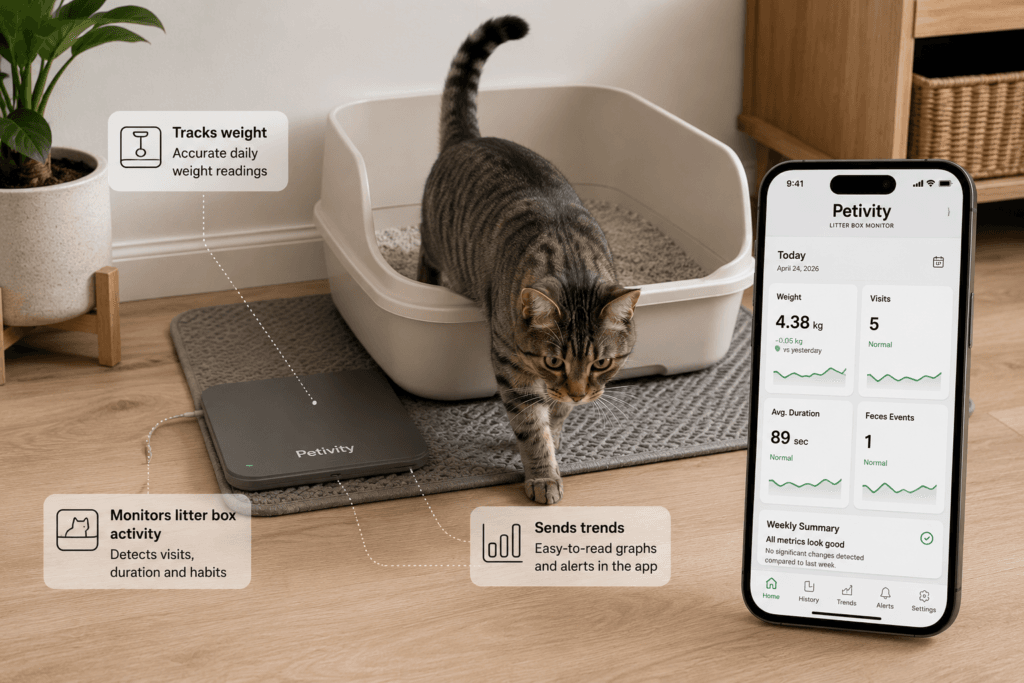
    • Track litter box usage and weight trends

    In other words: it’s not medicine, but it can support earlier detection of problems and reduce some day-to-day risks if you actually look at the data.


    Ecosystem #1 – PETKIT: App-First Feeders, Fountains & Litter Boxes

    PETKIT is one of the few brands already fairly close to a real smart cat ecosystem 2025.

    How PETKIT’s Ecosystem Works

    • PETKIT App – one app manages feeders, fountains, and litter products, with remote control and status monitoring. App Store
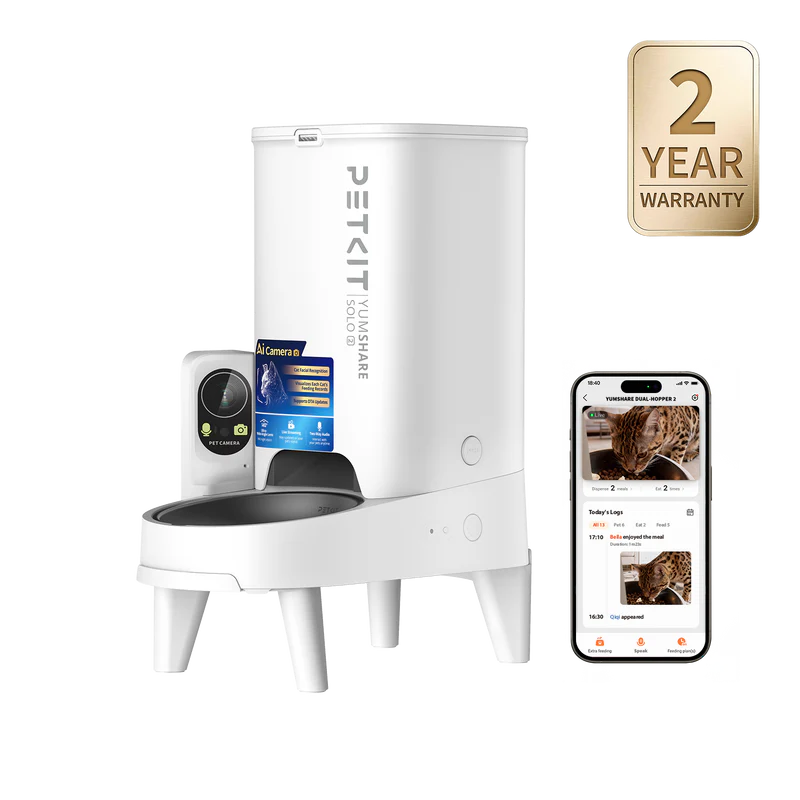
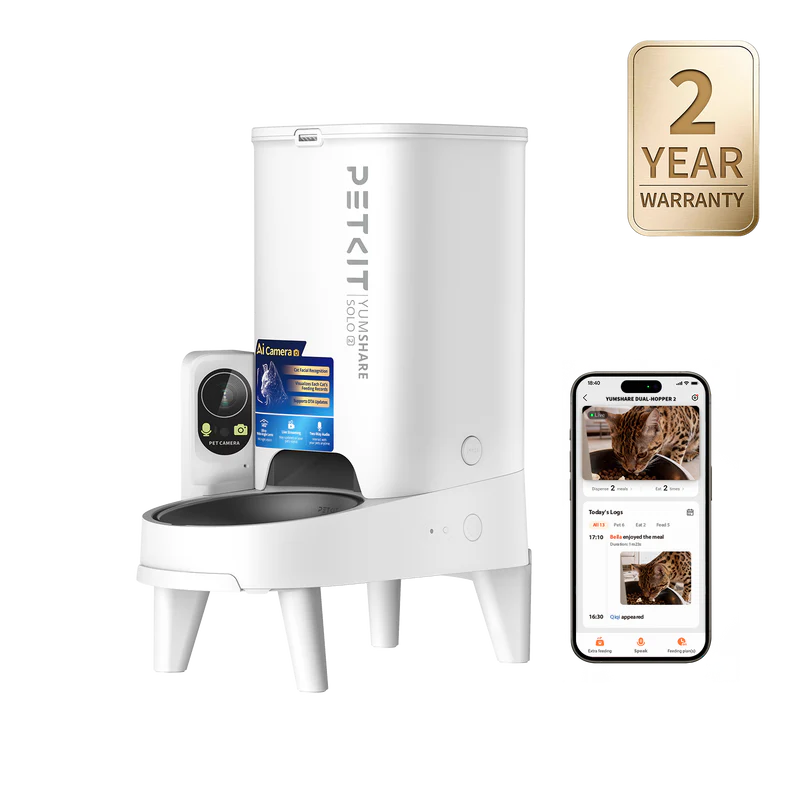
    • Smart feeders (e.g., Fresh Element series) – app-scheduled meals, portion control, and remote dispensing. User reviews highlight the ability to set complex feeding plans and trigger extra meals when away. PetKit Store / Amazon
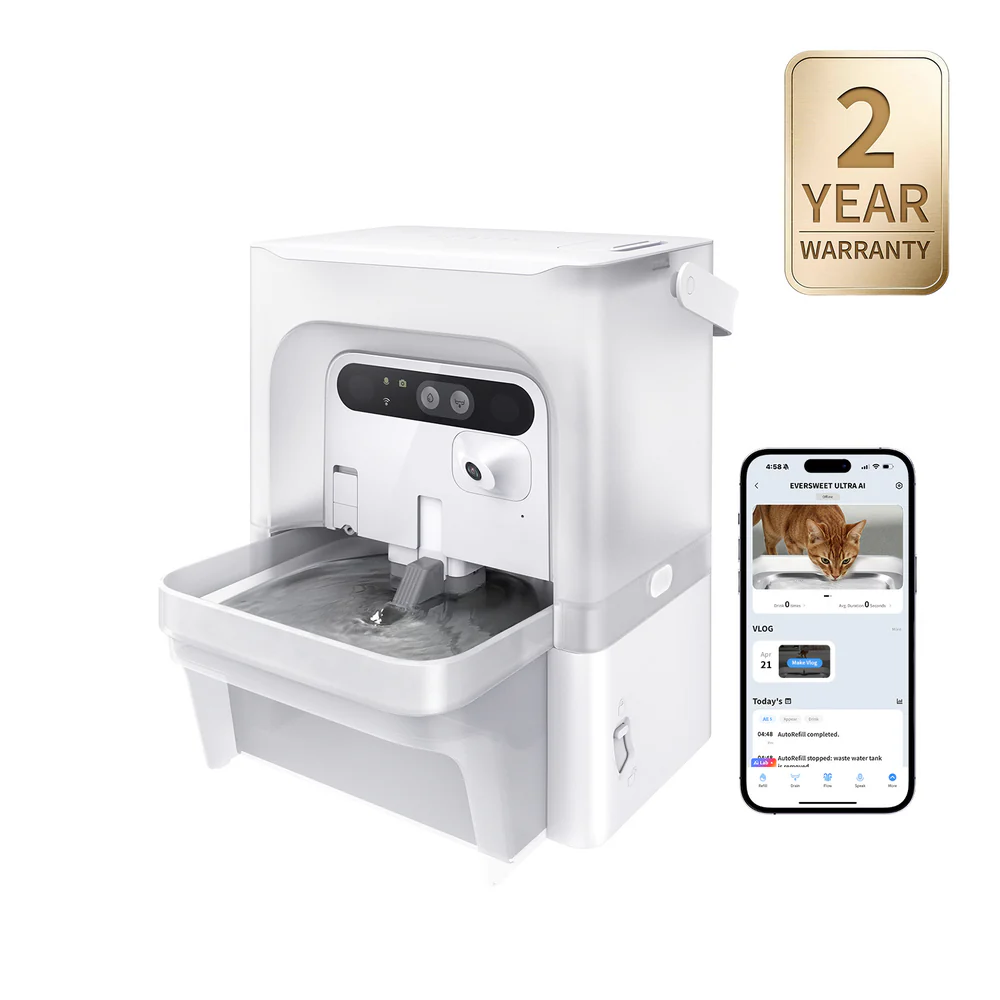
    • Eversweet fountains – monitor filter status, water level, and switch between smart and normal modes via the app. PetKit Store / Amazon
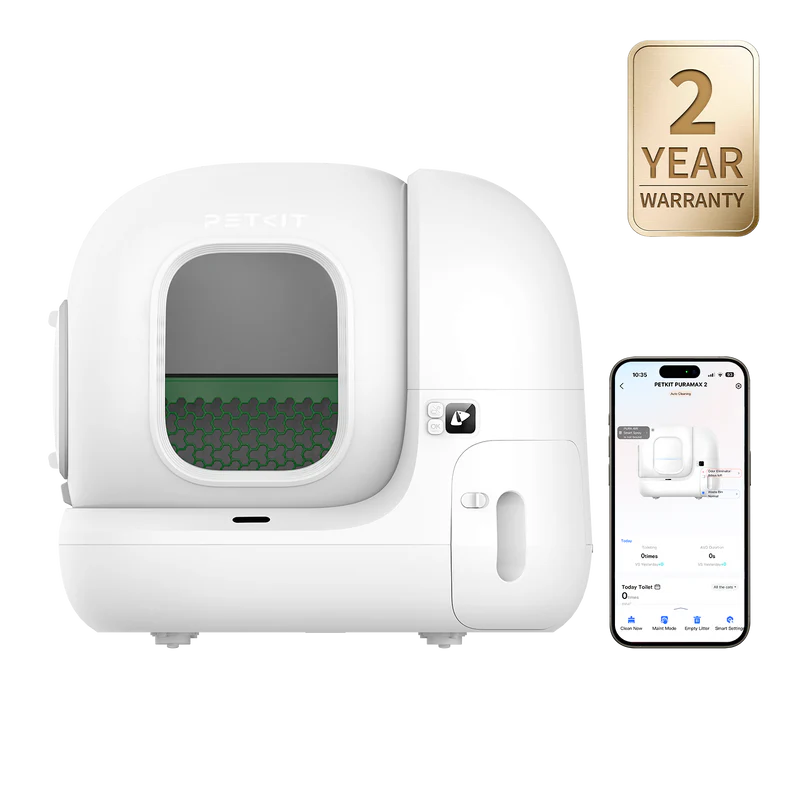
    • Auto litter boxes (Pura series) – self-cleaning units that sync with the app for usage and maintenance alerts (details vary by model, but the pattern is consistent across PETKIT’s litter products). PetKit Store / Amazon

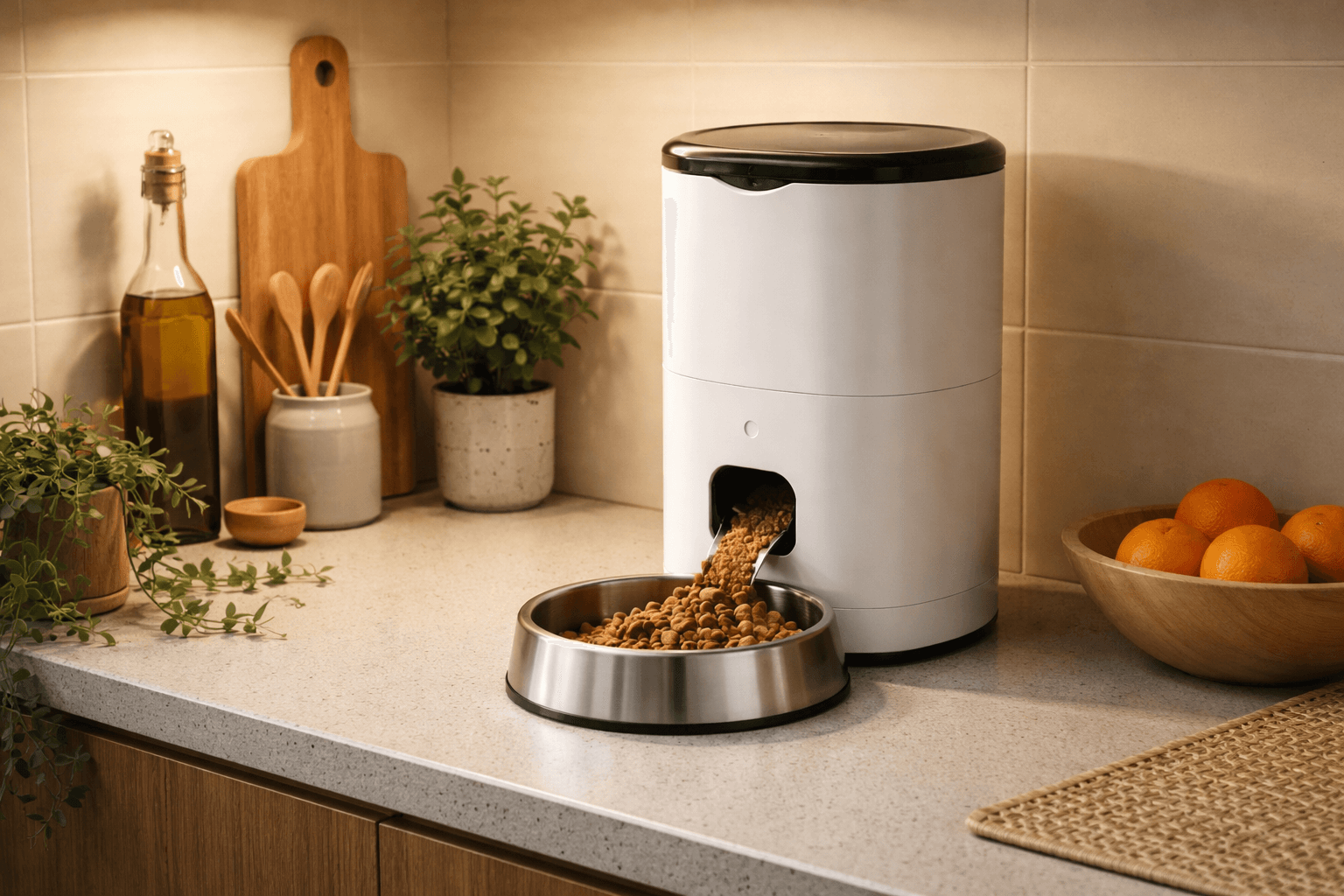
    Together, you get a smart cat ecosystem 2025 that can log how much your cat eats, how often they drink, and how frequently they use the box.

    PETKIT Ecosystem – Pros

    • Single app for feeder, fountain, and litter box (less app clutter).
    • Feeders support fine-grained portion control and scheduled meals, useful for overweight or insulin-timed cats.
    • Fountains offer smart vs normal modes and remote monitoring of water level and filter changes.
    • Ecosystem logic: food, water, and litter behavior all live within the same app view.

    PETKIT Ecosystem – Cons

    • Real “health insight” is limited – you still have to interpret data and bring it to your vet.
    • Setup is more complex than buying a single plug-and-play device.
    • You’re effectively committing to one brand’s ecosystem (lock-in), which matters if you later prefer another feeder or fountain.

    For many readers of PetTech AI, PETKIT is currently one of the most realistic ways to build a smart cat ecosystem 2025 with a coherent app experience.


    Ecosystem #2 – CATLINK EcoSystem: Input/Output Monitoring in One App

    Smart litter box, feeder, and fountain with overlay showing toilet, feeding, and drinking stats

    CATLINK pushes the ecosystem idea even more explicitly. Their EcoSystem bundles combine a self-cleaning litter box, automatic feeder, and AI water fountain, all linked to the CATLINK app.

    Key Components

    • Self-cleaning litter boxes (Scooper series) – app control, automatic/manual cleaning, litter usage tracking, waste level monitoring, and health insights based on toilet behavior.
    • Automatic feeders – app-controlled, portioned, and scheduled feeding; some models offer multi-cat recognition.
    • AI water fountains – wired or wireless models with app control and monitoring.
    • EcoSystem sets – bundled kits (e.g., EcoSystem Pro or SE) specifically marketed as “connect scooper, feeder, and water fountain to the CATLINK app to monitor toilet, eating, and drinking habits.”

    This is a textbook smart cat ecosystems 2025 pitch: one vendor, three devices, one app, and health monitoring over time.

    CATLINK EcoSystem – Pros

    • App explicitly focuses on health monitoring and insights for cat toilet behavior and overall activity.
    • EcoSystem bundles make it straightforward for someone who wants everything from one brand.
    • Multi-cat features (feeder facial recognition, multi-cat-friendly designs) are built with modern multi-cat households in mind.

    CATLINK EcoSystem – Cons

    • Even more ecosystem lock-in than PETKIT; the whole selling point is staying inside CATLINK.
    • Health metrics are still early-stage analytics; no device can replace a vet exam or lab work.
    • Initial cost of a full CATLINK smart cat ecosystem 2025 bundle is high, especially if you don’t need all three components immediately.

    If you want maximum automation and you’re comfortable with a single-brand setup, CATLINK is one of the clearest implementations of a smart cat ecosystem 2025 currently available.


    Adding Vision: Furbo, Petcube & the “Overwatch” Layer

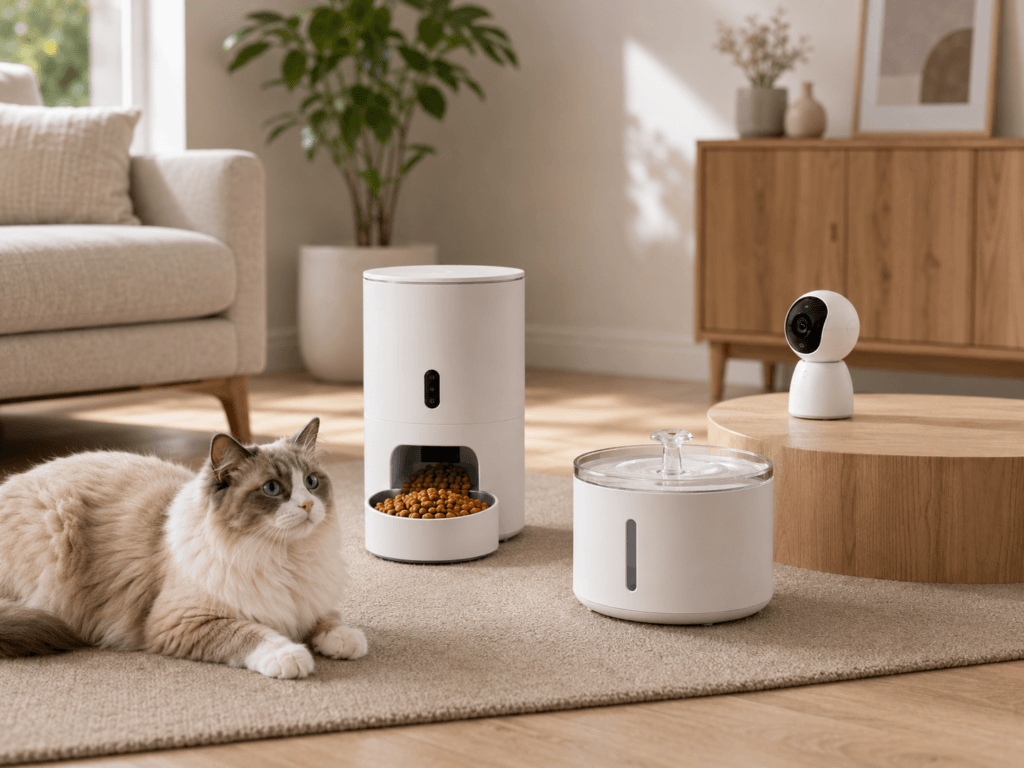
    Smart litter box, feeder, and fountain with overlay showing toilet, feeding, and drinking stats

    Feeders, fountains, and litter boxes tell you what your cat does with food, water, and waste. Cameras add behavioral context.

    • Furbo 360° Cat Camera – offers a rotating 360° view, treat tossing, two-way audio, and AI-based smart alerts for meowing, vomiting, or “out of the ordinary” behavior.
    • Furbo Smart Alerts can notify you when your pet is active, when someone is detected, and when the camera captures notable moments. help.furbo.com
    • Petcube cameras integrate with Alexa for hands-free voice control and were early to link pet camera features with smart home platforms. Petcube web-site

    These devices don’t technically make a smart cat ecosystem 2025 on their own, but they give you:

    • Visual confirmation when your litter box data spikes
    • The ability to check if “vomit alert” correlates with actual GI issues
    • Extra enrichment (treat tossing, interactive play) when paired with smart feeders and toys

    For PetTech AI readers, a realistic stack is: PETKIT or CATLINK ecosystem + Furbo or Petcube camera → genuine multi-layer monitoring of your cat’s environment and behavior.


    When a Smart Cat Ecosystem 2025 Makes Sense

    A full smart cat ecosystem 2025 is justified in a few clear scenarios:

    1. Cats with medical risks
      • History of urinary issues, early kidney disease, or obesity
      • You and your vet need accurate logs of food, water, and litter data over time
    2. Multi-cat households
      • Automatic cleaning and usage tracking reduce conflict and guesswork, especially with multi-cat feeders and smart litter boxes.
    3. Owners who travel or work long hours
      • Automatic backup feeding + fountains + litter cycling + camera alerts meaningfully reduce risk when you’re not home.
    4. Data-driven owners working closely with a vet
      • If your vet is willing to look at app logs and correlate them with clinical signs, these ecosystems can contribute to earlier diagnosis.

    In those contexts, investing in a smart cat ecosystem 2025 is not just a toy: it’s a monitoring and management tool.


    When It’s Overkill (or Even Counterproductive)

    There are also cases where you probably don’t need a fully integrated smart cat ecosystem 2025:

    • Healthy, low-risk young cats in small apartments, with owners who are home a lot and already feeding measured meals.
    • Anxious guardians who will obsessively check apps and alerts, potentially increasing their own stress without clear clinical benefit.
    • Situations where household Wi-Fi is unstable or power cuts are frequent; any smart setup must have safe fail-safes.

    The real risk isn’t “too much tech” for your cat; it’s too much tech instead of veterinary care. No ecosystem can replace exams, diagnostics, or treatment.


    How to Build a Smarter Setup Without Going All-In

    You don’t have to buy a bundled smart cat ecosystem 2025 on day one. A more rational approach:

    1. Start with priority #1 – litter or hydration
      • If urinary health is a concern, prioritize a reliable self-cleaning litter box with basic data logging.
      • If your cat drinks poorly, start with a good smart fountain.
    2. Add a smart feeder when you’re ready
      • Choose one with precise portioning, app control, and a reputable brand (PETKIT fits here for most readers).
    3. Layer in a camera
      • A Furbo 360 or Petcube gives context and lets you verify what the devices report.
    4. Keep it brand-agnostic at first
      • You can still get 80% of the benefit of a smart cat ecosystem 2025 by mixing brands, then consolidating later if a single app becomes more important to you.

    This staged approach keeps costs under control while you learn which parts of the ecosystem you actually use.


    Buying Checklist for Any Smart Cat Ecosystem 2025

    Before committing to PETKIT, CATLINK, or a mixed stack, run through this list:

    • App quality & stability – look at recent app store reviews, not just product pages.
    • Fail-safes – dual power (mains + battery), safe behavior on Wi-Fi outages, and manual override for feeding and litter cleaning.
    • Data you actually use – will you look at drinking trends, litter visits, or weight logs, or will they just sit in the app?
    • Noise & footprint – some cats hate loud motors; automatic units also take more space than manual ones.
    • Support & firmware updates – you’re buying an IoT system, not just hardware. Brand support matters.

    If a device fails any of these for your home, it doesn’t matter how nicely it fits into a smart cat ecosystems 2025 marketing diagram.


    Verdict: Is a Smart Cat Ecosystem 2025 Worth It?

    A smart cat ecosystem 2025 can be a serious upgrade if:

    • You want structured data on your cat’s intake and output
    • You’re ready to coordinate that data with your vet
    • You value automation and are comfortable with app-driven devices

    PETKIT is currently one of the cleanest “light ecosystem” choices, with a mature app and feeders/fountains that already work well together. CATLINK goes further with its EcoSystem bundles and health-monitoring focus, especially for multi-cat households that want a single-brand stack.

    If you’re expecting full “Apple-style” plug-and-play medicine for your cat, you’ll be disappointed. But if you treat a smart cat ecosystem 2025 as an early-warning and convenience system wrapped around proper veterinary care, it can be one of the most rational investments you make in your indoor cat’s long-term health.


    FAQ: Smart Cat Ecosystems 2025

    1. Do these ecosystems really integrate, or just share one app?

    Today, most smart cat ecosystems 2025 are more “shared app” than deep cross-device automation. PETKIT and CATLINK let you view and control multiple devices from one app and see a combined history of eating, drinking, and litter use, but direct device-to-device logic (e.g., litter box changing feeder behavior automatically) is limited.

    2. How reliable are the health insights from these apps?

    They’re useful trend trackers, not diagnostic tools. Changes in water intake, litter visits, or feeding patterns can flag issues earlier, but only a vet can interpret these changes in the context of exams, blood work, and imaging. Veterinary enrichment literature supports monitoring and environmental optimization, but no ecosystem replaces clinical medicine. Dr. Judy Morgan’s Naturally Healthy Pets

    3. Can I mix brands and still get value?

    Yes. A mixed stack (e.g., PETKIT feeder, third-party fountain, manual or separate smart litter box, plus a Furbo or Petcube camera) still gives you most of the benefits of a smart cat ecosystem 2025: automation, trend tracking, and remote visibility. You just lose the convenience of a single app dashboard.

    4. Are smart litter boxes safe for kittens and senior cats?

    Most smart litter box manufacturers provide minimum weight guidelines and caution against use in very small kittens or extremely frail seniors without supervision. Always follow the brand’s safety instructions and speak with your vet, especially if your cat has mobility or balance issues.

    5. If I can only afford one device, what should I prioritize?

    For most indoor cats, a high-quality litter box setup or a smart fountain is the best first step: urinary health and hydration are core. For overweight cats, a precise smart feeder may be the logical priority. Cameras, full smart cat ecosystems 2025, and extra gadgets come after those basics.


    Internal Link(PetTech AI)


    Outbound Links (Authoritative)

    • Cornell Feline Health Center – Safe Toys and Gifts (for enrichment context) vet.cornell.edu
    • Indoor cat environmental enrichment. pmc

    Disclosure

    This article is for educational purposes only and does not replace professional veterinary advice, diagnosis, or treatment. Always consult your veterinarian about any changes in your cat’s health, behavior, or routine, and before making decisions based solely on connected device data. PetTech AI participates in affiliate programs such as Amazon Associates and CJ; we may earn a commission if you purchase products through links on our site, at no additional cost to you. These commissions help support our work creating evidence-based guides for cat guardians.

  • Purobot Ultra Automatic Cat Litter Box 2025: Hands-On Review, Real Costs, and Who Should Buy It

    Purobot Ultra Automatic Cat Litter Box 2025: Hands-On Review, Real Costs, and Who Should Buy It

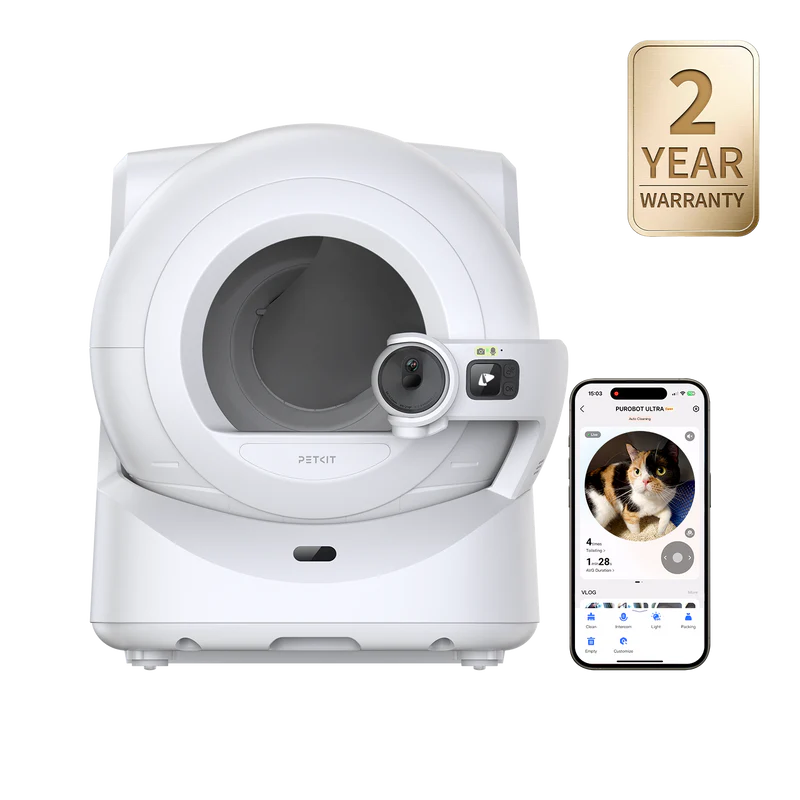
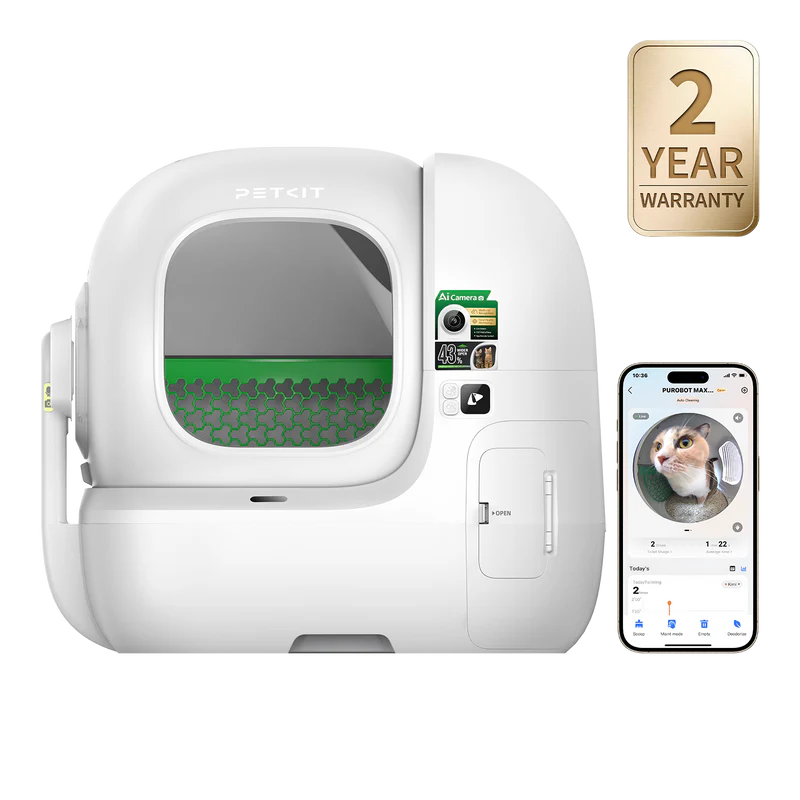
    The Purobot Ultra Automatic Cat Litter Box 2025 is PETKIT’s flagship robo-box with a rotating AI camera, multi-cat facial recognition, auto-packing waste bags, and app-based health alerts. In this review, we cover what the Purobot Ultra actually does, how it compares, the real ongoing costs, and whether it fits your home and cats.


    At-a-Glance (What’s New in 2025)

    • AI camera + facial recognition to identify each cat, log visits, and flag issues (e.g., yowling that may indicate urinary pain). Requires uploading cat photos in the PETKIT app.
    • Auto-packing waste system that seals the bag for easier, cleaner disposals.
    • PETKIT app control, usage history, weight/visit tracking, and cloud video features (with optional Care+ subscription after a 30-day free trial; plans noted between roughly $4–$12/month).
    • Street pricing right now: PETKIT site $899.99 list, $739.99 sale; Amazon $999.99 list, $849.99 current. PetKit / Amazon
    • Key specs (manufacturer pages): about 20.9″W × 32.2″D × 24.1″H, weight ~14.6 kg (~32 lb); designed for clumping litters; “ultra-quiet” around 35 dB claim (regional page).

    Design & Setup

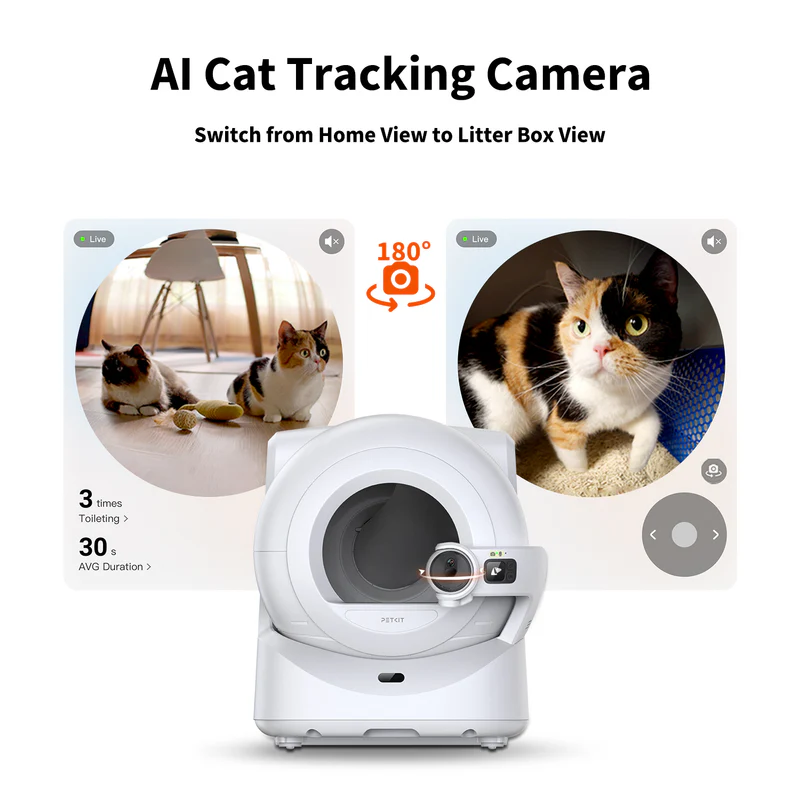
    The Purobot Ultra Automatic Cat Litter Box 2025 is large—plan floor space depth first. The rotating arm with a front opening makes entry straightforward for most cats, and the camera sits on a boom that can swivel to see inside or outside the drum. PETKIT’s multi-cat AI asks you to upload face photos of each cat; once trained, the box attributes visits and compiles per-cat timelines. The app also pushes alerts for behaviors that may matter clinically (e.g., yowling in box).

    Setup notes: You’ll connect the unit to Wi-Fi, pair in the PETKIT app, add your cats with head-shot photos, and run a few initial cycles so the device calibrates. If you’re upgrading from a standard box, allow a few days of acclimation.


    Cleaning Performance

    Auto-packing waste system of the Purobot Ultra Automatic Cat Litter Box 2025.

    Core cleaning is automatic and consistent: after the cat exits and a short delay, the drum cycles, separating clumps into the waste liner. The auto-packing system gathers and seals the bag so odor stays contained—useful if the bin sits near shared living areas. Reviewers consistently praise odor control; the flip side is that refilling litter is a bit more fiddly than a plain tray.

    Noise: PETKIT literature in regional product pages claims ~35 dB “ultra-quiet,” which is library-level. Real-world noise varies by room acoustics and floor resonance.


    Health Tracking & AI Camera

    This is where the Purobot Ultra Automatic Cat Litter Box 2025 stands out. The AI camera and sensors work together to:

    • Identify each cat (facial recognition) and log visits.
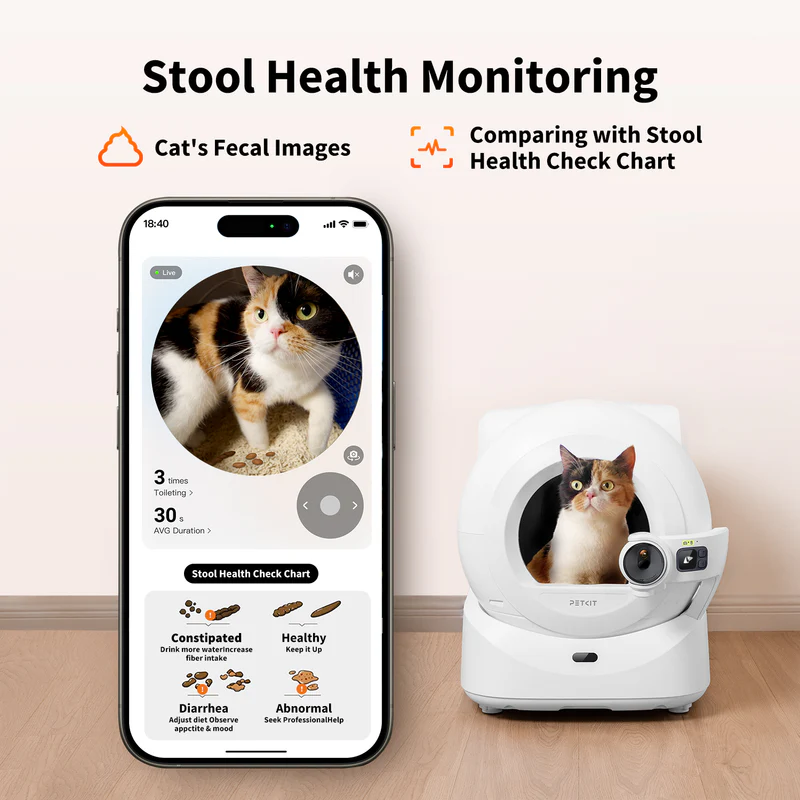
    • Track patterns (frequency/duration) and surface alerts when behavior deviates, including yowling detection as a potential urinary pain signal.
    • Provide video clips of sessions you can review in the app (clips and playback are tied to the PETKIT Care+ subscription after the trial).

    A note on accuracy: camera quality is serviceable for monitoring, not cinematic; some reviewers wish the image were sharper. Face ID works best after training photos and with good ambient light.


    App, Subscription, and Data

    PETKIT app with facial recognition and yowling alerts for the Purobot Ultra.

    You can use the Purobot Ultra Automatic Cat Litter Box 2025 without paying monthly, but video playback and certain cloud features roll under PETKIT Care+ after a 30-day free trial (tiers reported around $4–$12/month). For many owners, alerts + logs are sufficient; power users who want clip history or multi-device ecosystems may keep Care+.


    Dimensions, Placement & Litter Compatibility

    Manufacturer specs cite roughly 20.9″W × 32.2″D × 24.1″H and ~32 lb weight (varies by bundle page). Plan a solid, level surface and easy access to an outlet; most clumping litters are supported, with guidance to avoid extra-long pellets.


    Real Costs: Purchase Price & Consumables

    • Box price: PETKIT site list $899.99 ($739.99 sale at the time of writing); Amazon list $999.99 ($849.99 current). Pricing fluctuates with promos. PetKit / Amazon
    • Refill Ring (3 pcs): about $35.99; PETKIT mixed clumping litter 3-bag bundle $44.99–$49.99. PetKit / Amazon
    • Subscription (optional): PETKIT Care+ $4–$12/mo after 30-day free trial (for video/cloud features).

    Budgeting tip: if you already like your current litter brand, start there; switch only if clump integrity or tracking alerts suffer.


    Compared to Other Premium Robo-Boxes

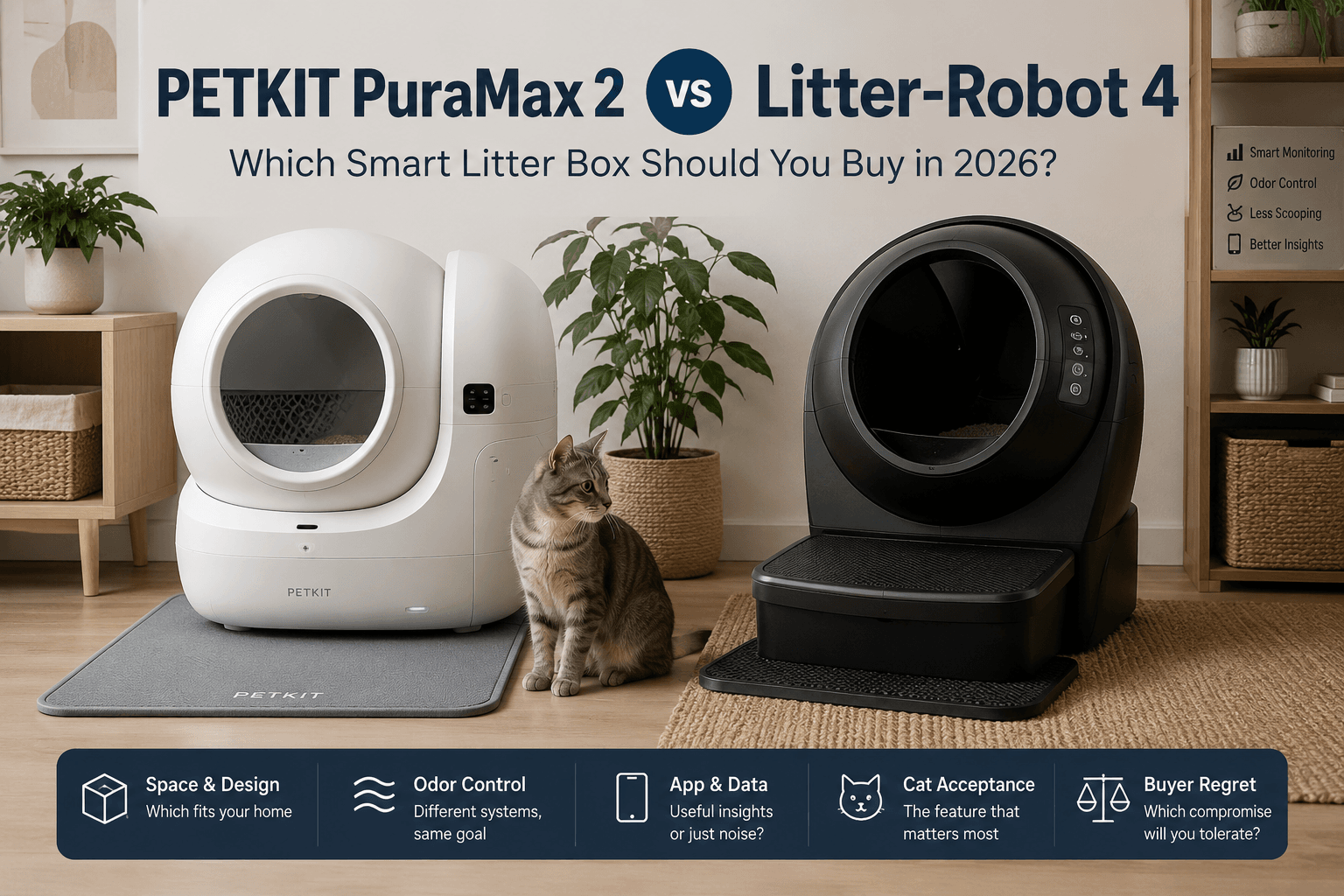
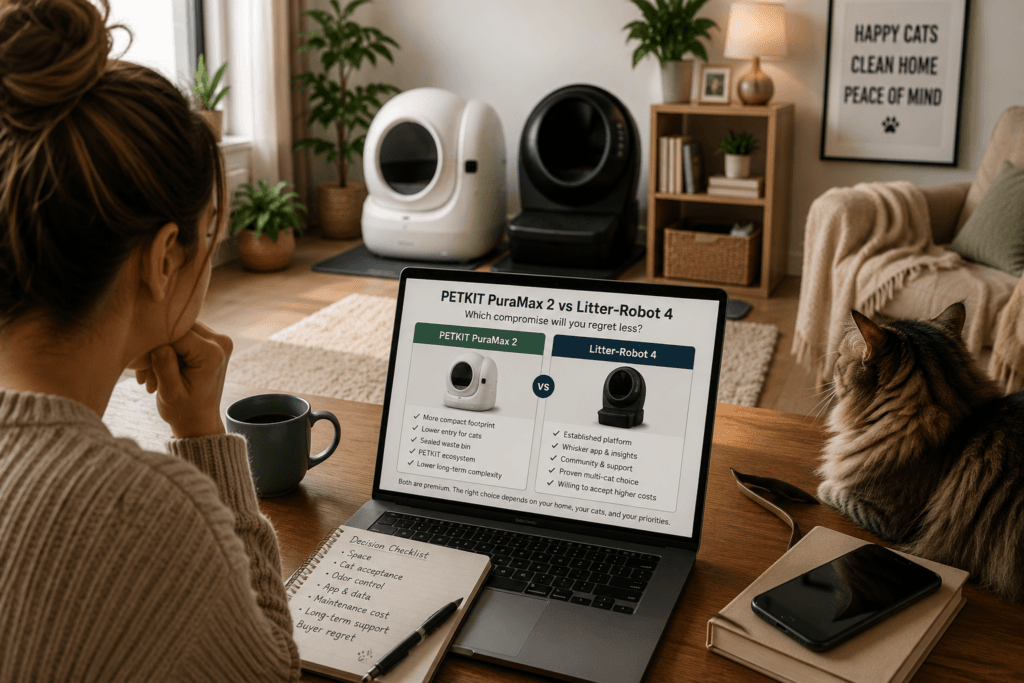
    • Versus PETKIT Pura Max 2: Pura Max 2 is cheaper and tracks weight/visits, but Purobot Ultra Automatic Cat Litter Box 2025 adds the AI camera and face recognition plus auto-packing waste. Choose Ultra if you want camera-based health context; choose Pura Max 2 if you want value with rich app data and no camera. PetKit
    • Versus Litter-Robot 4: LR4 has a massive user base and strong app analytics; the Purobot Ultra answers with camera-assisted ID, yowling alerts, and auto-sealing. LR4 lacks built-in video but has mature parts/accessories. (General LR4 reference article notes “one of the priciest” class; Ultra sits at the top end as well.)

    Pros and Cons

    Pros

    • Multi-cat facial recognition + yowling detection for earlier urinary-type flags.
    • Auto-packing waste system improves odor control and convenience.
    • App logs of visits and trends; optional video history via subscription.
    • Broad litter compatibility; quiet operation claims (~35 dB).

    Cons

    • Large footprint and heavy; requires thoughtful placement.
    • Refilling litter can be fiddly; camera image quality is only okay.
    • Ongoing costs: refill rings, bags, litter, and Care+ if you want clip history.

    Who Should Buy the Purobot Ultra Automatic Cat Litter Box 2025?

    Choose it if you want the most information from a litter box—especially in multi-cat homes, senior-cat households, or when you’ve had urinary issues before. The Purobot Ultra Automatic Cat Litter Box 2025 is also compelling if you value video context for odd behaviors and you’re okay with a premium price plus some consumables.

    Skip it if you have very tight space, you dislike cameras, or you want a lower-maintenance cost structure (in that case, consider PETKIT Pura Max 2 or a smart add-on monitor).


    Setup & Best Practices

    1. Train the AI: upload clear face photos; add each cat’s weight. Accuracy improves after a few days.
    2. Stabilize placement: level floor; avoid rocking surfaces for consistent sensors.
    3. Test litter: start with your usual clumping brand; switch only if clumps break mid-cycle.
    4. Watch trends, not blips: sudden vocalization (yowling), frequent tiny visits, or straining are red flags—call your vet.

    For medical context on litter-box changes and why they matter, see Cornell’s guidance on house soiling and urinary problems; preventive-care schedules remain essential even with smart boxes.


    Verdict

    Purobot Ultra Automatic Cat Litter Box 2025 monitoring a multi-cat home.

    As a premium device, the Purobot Ultra Automatic Cat Litter Box 2025 justifies its price for owners who want multi-cat identification, proactive alerts, and video-level context on top of reliable self-cleaning. It’s big, not cheap, and benefits from PETKIT’s ecosystem—yet for homes where catching problems early matters, it’s among the most feature-complete options available.


    FAQs

    Does the Purobot Ultra work without a subscription?
    Yes. Core cleaning and basic logging work. Video playback/cloud features move to PETKIT Care+ after the 30-day trial.

    What litter should I use?
    Clumping litters are supported (avoid extra-long pellets). PETKIT literature references multiple litters and notes general compatibility.

    How loud is it?
    PETKIT cites around 35 dB (very quiet). Perception varies by room and placement.

    How big is it? Will my cat fit?
    Plan roughly 20.9″W × 32.2″D × 24.1″H and ~32 lb weight. Most adult cats fit; give nervous cats a slow intro.

    What does it actually cost to run?
    Expect refill rings ($35.99 / 3 pcs), plus litter ($44.99–$49.99 / 3 bags). Subscription is optional.


    Internal Links (PetTech AI)


    Authoritative Outbound Links

    • Cornell Feline Health Center — House Soiling & Urinary Issues (medical causes behind litter-box changes).
    • AVMA/Preventive Care — why annual wellness exams still matter in the AI era.

    Disclaimer

    The information in this review is for educational purposes only and does not replace professional veterinary advice. The Purobot Ultra Automatic Cat Litter Box 2025 can surface behavior changes (visit frequency, yowling, unusual patterns) but cannot diagnose disease. If your cat shows painful or frequent urination, blood in urine or stool, vomiting, diarrhea, weight loss, lethargy, or other concerning signs, contact your veterinarian promptly. This article may contain affiliate links. If you purchase through them, PetTech AI may earn a small commission at no extra cost to you, which supports our independent testing and editorial standards.

  • Kitty Training Recommendations 2025: Expert Tips to Raise a Well-Behaved Cat

    Kitty Training Recommendations 2025: Expert Tips to Raise a Well-Behaved Cat

    Affiliate Disclaimer: PetTech AI participates in the Amazon Associates, Petkit, and Whisker affiliate programs. We may earn a small commission from qualifying purchases at no extra cost to you. We only recommend products that support feline wellbeing and safety.

    Training a cat isn’t about obedience for its own sake—it’s about safety, confidence, and reducing stress for your kitty and your household. With the right plan, your cat can learn reliable litter habits, scratch in the right places, accept handling and grooming, enjoy carrier time, and come when called. This guide distills proven behavior science into clear, gentle steps—designed for busy people and curious cats. If you’re looking for kitty training recommendations 2025, you’re in the right place.


    1) The science behind success: reinforcement beats punishment

    Cats repeat what works for them. That means positively reinforcing the behaviors you want (with food, play, or praise) and making unwanted options less rewarding. Punishment creates fear and avoidance; it does not teach what to do instead. The Cornell Feline Health Center and the AVMA both emphasize routine, predictable environments, and low-stress handling as pillars of feline behavior care—exactly the basis for kitty training recommendations 2025.

    Why it works

    • Rewards build clear associations faster than corrections.
    • Short, frequent sessions prevent frustration.
    • Consistent cues + consistent timing = reliable habits.

    2) House rules that keep training on track

    Before “tricks,” lock in the basics: stable meal times, environmental layout, and a daily play cadence. Many problems vanish when your cat knows what to expect and where.

    Your checklist

    • Feed at the same times daily.
    • structured play (10–15 minutes) using a wand toy; end with a small snack.
    • Keep food, water, litter in distinct zones (cats prefer separation).
    • Add vertical choices (shelves/perches) so your cat feels in control.

    If you only remember one line from these kitty training recommendations 2025: consistency teaches faster than correction.


    3) Litter habits that stick (and stay)

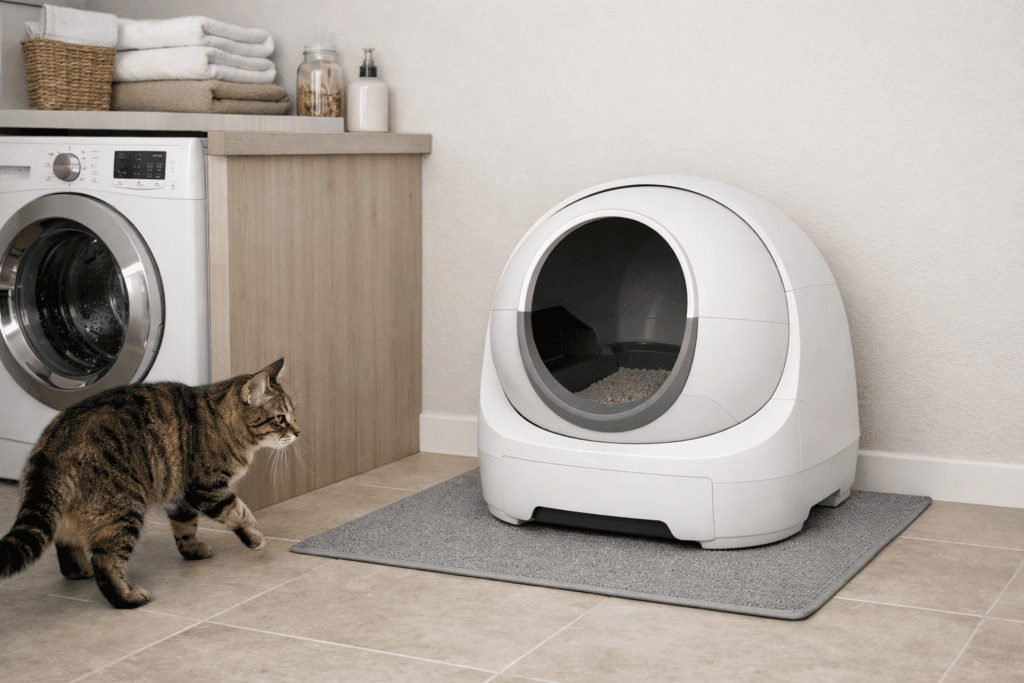
    Self-cleaning litter box in a clean, accessible corner.

    Goal: your cat prefers the litter box because it’s the most comfortable, consistent option.

    Steps

    1. Right size: the pan should be ~1.5× your cat’s body length in width and ~2× in length; many commercial boxes are too small.
    2. Location: quiet, visible, with an escape route; not next to washers/doors or right by food.
    3. Cleanliness: scoop daily (or use a self-cleaning litter box, e.g., Purobot on Petkit).
    4. Surface: most cats prefer clumping, unscented litter.

    If accidents happen, don’t punish. Block the spot, clean with enzymatic cleaner, and make the box more attractive (bigger, cleaner, easier to reach). Reliable litter behavior is non-negotiable in kitty training recommendations 2025.

    Looking for low-maintenance hygiene? See self-cleaning litter boxes → Amazon / PetKit


    4) Scratch here, not there (redirect the urge—not the cat)

    Cat scratching a tall sisal post near the couch.

    Scratching is normal: it marks territory, maintains claws, and stretches muscles. Your job is to provide irresistible scratch zones where you want them to scratch.

    Make it easy to choose right

    • Multiple scratchers: vertical sisal post (tall, stable), horizontal cardboard pad, and one near the favored “wrong” area.
    • Prime with play: dangle a toy over the post; reward any contact.
    • Swap discouragement for distance: move valuable items; use double-sided tape temporarily on wrong spots, then remove when the habit forms.

    In every living-room training plan, these kitty training recommendations 2025 hinge on making the correct behavior the most rewarding one.

    Need a refresh? Shop cat scratchers and refills → Amazon


    5) Handling & grooming without drama

    Handling isn’t cosmetic—it’s medical readiness. Teach your cat to accept light restraint, brushing, ear inspection, and tooth peeks so vet visits don’t become battles.

    Protocol (3–5 minutes, 1–2×/day)

    1. Touch shoulder → treat.
    2. Lift paw → treat.
    3. Open mouth 1 second → treat.
    4. Brush 2–3 strokes → treat.
    5. Pause before your cat pulls away (end on success).

    These micro-steps embody kitty training recommendations 2025: micro-sessions, positive associations, and early practice.

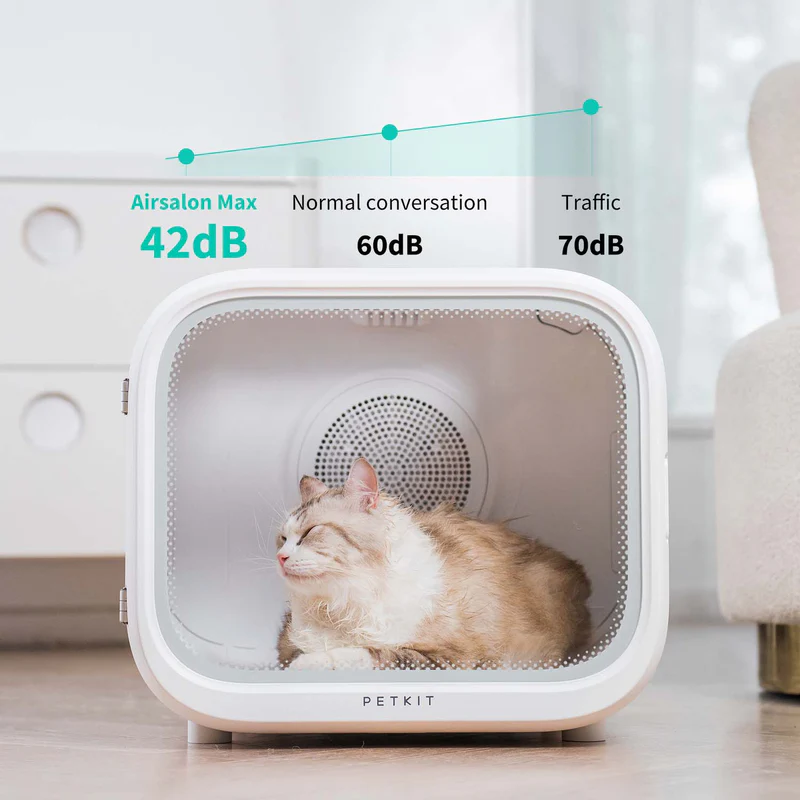
    Grooming easier with calm airflow? See PETKIT AirSalon Max Pet Dryer Box → PetKit


    6) Carrier confidence & stress-free travel

    Cat eating a treat inside an open carrier during training. Kitty training recommendations 2025.

    The carrier should be a bedroom, not a trap. Keep it out all year with a soft blanket and the door off.

    Carrier-positive plan

    • Feed in the carrier once a day.
    • Click/treat for approaching, stepping in, then relaxing inside.
    • Add a favorite toy or worn T-shirt for scent.
    • Practice short closures (2–3 seconds → treat), then short hallway trips.

    When travel day arrives, your cat has a history of good outcomes. This is core to kitty training recommendations 2025 (and your future sanity).

    Shopping carriers and calming add-ons? Explore top-rated smart carriers → Amazon


    7) Clicker training 101 (or use a marker word)

    A clicker (or the word “Yes!”) marks the exact moment your cat does the thing you like. Pair the click/word with a treat every time at first, so it retains meaning.

    Starter behaviors

    • Targeting: let your cat boop a target stick or your finger.
    • Sit: lure over the head; when the bottom touches, mark + treat.
    • Come when called: say name once; when head turns or steps toward you, mark + treat; build distance gradually.

    Clicker sessions are the most “fun” part of kitty training recommendations 2025 because they show fast, measurable progress.

    New to markers? Grab a clicker and small treat pouch → Amazon


    8) Mealtime manners & routine calm

    Jumping on counters or swatting at bowls is usually anticipation energy. Fix the routine, and manners follow.

    • Feed on predictable times.
    • Ask for one easy cue before meals (e.g., sit on a mat).
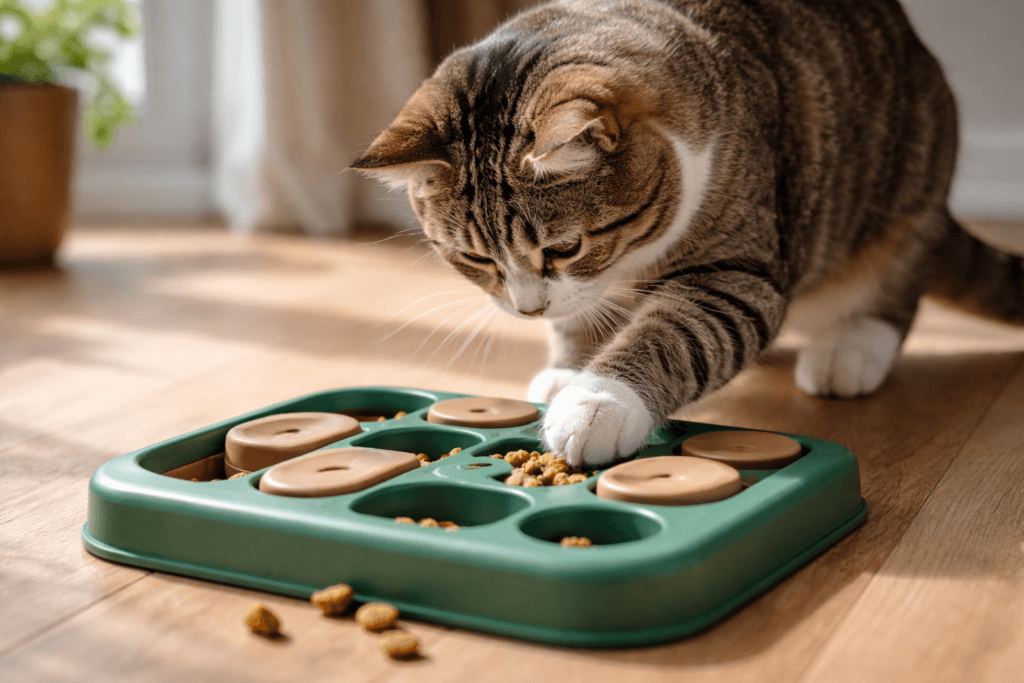
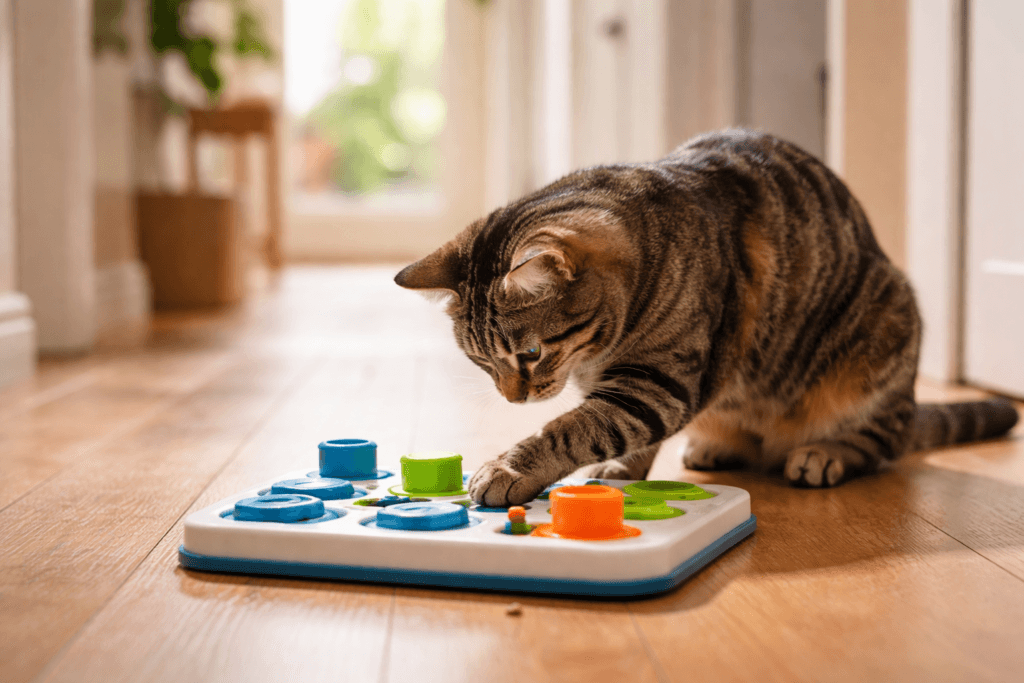
    • Use a puzzle feeder once a day to slow eating and satisfy hunting instinct.
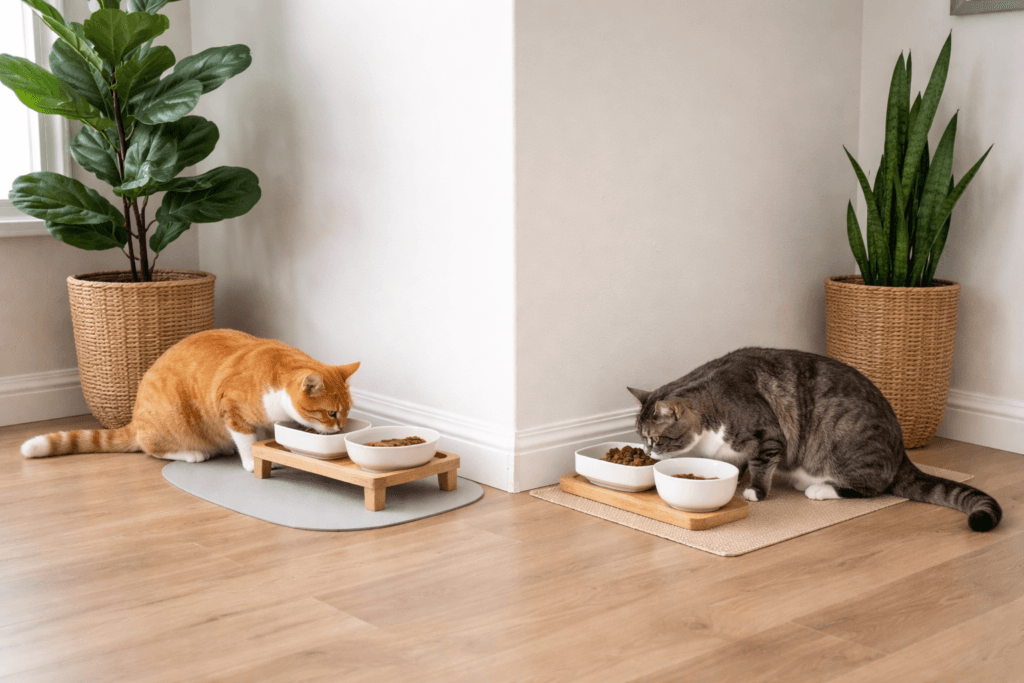
    • Keep water separate from food (1–2 meters) to encourage drinking.

    Every reliable plan for kitty training recommendations 2025 includes structure at the bowl.

    Looking for routine helpers? Smart feeders & fountains → Petkit/Amazon


    9) Enrichment: the daily “off switch”

    A bored cat invents “jobs” (door scratching, 3 a.m. zoomies). Enrichment is how you prevent that.

    • Hunt sequence twice daily: chase (wand) → catch (soft toy) → “kill” (tug) → eat (small snack).
    • Vertical routes: one high perch per cat; reduces tension and creates quiet nap zones.
    • Scent play: rotate catnip/valerian/silvervine weekly.
    • Quiet observation: window perch + bird feeder outside for safe watching.

    When enrichment is built-in, kitty training recommendations 2025 need less troubleshooting.

    Build a boredom-proof set: Interactive toys & puzzle feeders → Amazon


    10) Calm independence & alone-time practice

    Clinginess and door-crying often reduce when you rehearse departures without stakes.

    • Scatter small treats a minute before you leave.
    • Low-arousal goodbye: avoid long speeches; a neutral tone prevents anticipatory stress.
    • Background sound (white noise) if hallway noise triggers vigilance.
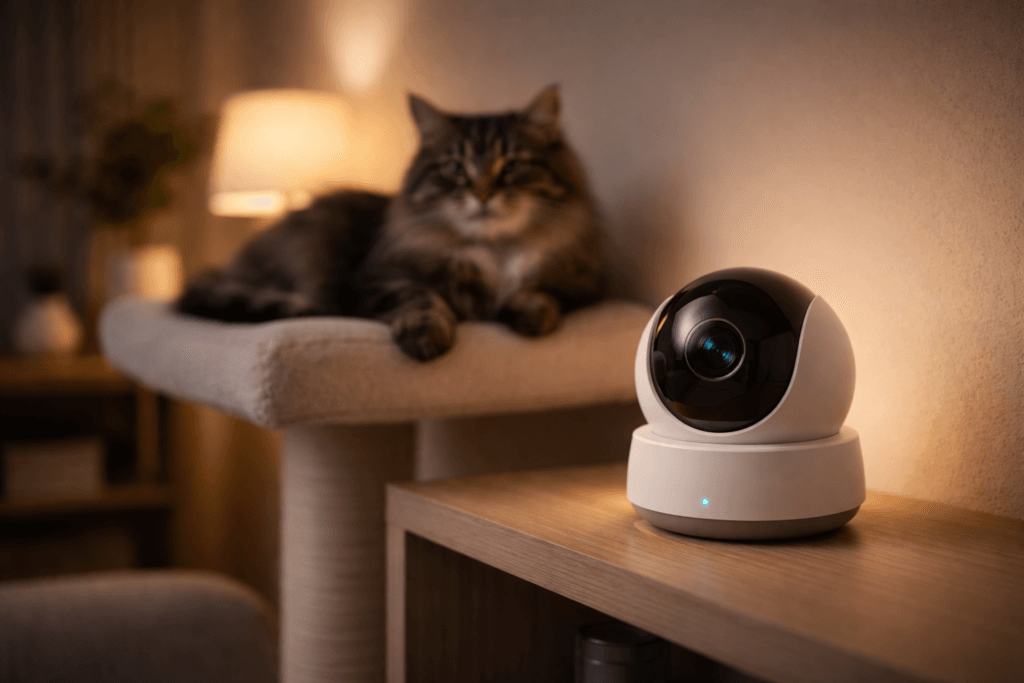
    • Indoor camera (e.g., Petcube on Amazon) for short check-ins; look for signs of settling within 5–10 minutes.

    Teaching independence is a pillar of kitty training recommendations 2025—not coldness, but calm predictability.

    CTA: Want eyes on things? See indoor cameras with night vision → Amazon


    11) Troubleshooting common hiccups (quick fixes that work)

    • Biting during play: you’re moving hands like prey. Switch to a wand; hands only deliver treats/pets.
    • Door dashing: train a wait at thresholds; reward stillness on a mat; never open on a lunge.
    • Meowing at dawn: shift calories later; late play → snack → dim warm light in the bedroom.
    • Litter suddenly messy: check size/cleanliness; rule out UTI/constipation with your vet if changes persist 48–72 hours.

    You’ll see these in many threads; the fastest answers mirror kitty training recommendations 2025: routine, ergonomics, and positive reinforcement.


    12) Tools that speed learning (starter → advanced)

    Starter kit

    • Wand toy + puzzle feeder
    • Clicker/marker word
    • Enzymatic cleaner (for accidents)

    Core upgrades

    • Automatic feeder (stable schedule)
    • Smart fountain (hydration)
    • Tall sisal scratcher + horizontal pad

    Advanced

    • Self-cleaning litter box (odor + data)
    • Indoor camera (short check-ins)
    • Carrier + comfort inserts (routine trips)

    These fit naturally into the kitty training recommendations 2025 approach—less friction, more learning.


    13) A simple 4-week plan you can actually follow

    Week 1

    • Map zones (food/water/litter/rest).
    • Two play sessions daily.
    • Start sit + target (3 minutes).

    Week 2

    • Add puzzle feeder.
    • Begin carrier feeding; door off.
    • Scratchers by “wrong” spots; reward correct use.

    Week 3

    • Introduce short carrier closures (2–3 sec).
    • Practice recall (“come”) across one room.
    • Brush 2–3 strokes → treat.

    Week 4

    • Short hallway carrier rides.
    • Solidify mealtime manners (sit on mat).
    • Review progress; adjust what’s hard, keep what’s easy.

    By now, you’ve implemented the backbone of kitty training recommendations 2025—and your cat will show it.


    14) FAQ (fast, factual answers)

    Can adult cats learn?
    Yes. Adults may take longer to change habits, but they learn faster than you expect when rewards are clear.

    How long should a session be?
    2–5 minutes. Stop while your cat is still engaged.

    What treats work best?
    Soft, tiny, stinky; think “one-lick size.” Rotate flavors to prevent boredom.

    What about punishment?
    Skip it. It damages trust and doesn’t teach alternatives. Everything in kitty training recommendations 2025 is built around reinforcing what you do want.


    15) When to call your vet

    Any sudden change in litter habits, appetite, water intake, activity, or temperament that persists for 48–72 hours warrants a veterinary check. Medical issues often look like “behavior problems” at first. The AVMA and Cornell both stress early intervention—a core safety clause inside responsible kitty training recommendations 2025.


    Final take

    Training isn’t about creating a robot cat—it’s about making life easier and safer. Lock the routine, design the space, reward what you love, and you’ll see progress quickly. If these kitty training recommendations 2025 helped, explore our hands-on guides and product picks designed to simplify daily care.

    👉 Discover more training & enrichment guides in our Play & Enrichment hub (plus feeders, fountains, and smart toys chosen for safety and real-life usability).


    Interlinks


    Authority links

  • 3 Common Mistakes Cat Owners Still Make in 2025 — and How to Fix Them 🐾

    3 Common Mistakes Cat Owners Still Make in 2025 — and How to Fix Them 🐾

    Affiliate Disclaimer: PetTech AI may earn a small commission if you buy through links on this page. We only recommend products that support feline safety, comfort, and long-term wellbeing.

    If you’ve ever googled “why is my cat doing this?” at 2 a.m., you’re not alone. Most cat owner mistakes aren’t about being careless; they’re about missing small, boring details that matter a lot to cats: predictable routines, clean litter, safe space to play and rest, and early detection when something’s off. In 2025, the win is using light automation and better layout to make those basics effortless.

    This guide distills the three cat owner mistakes we still see every day—and the exact, modern fixes (including smart tools) that reduce stress for both of you.


    TL;DR (for busy humans)

    • Mistake #1: Inconsistent routines (meals, litter care, play).
      Fix: Automate the schedule; keep changes gradual and predictable.
    • Mistake #2: “Hidden” environmental stress (box too small, air quality, no vertical choice).
      Fix: Right-size the litter setup, add a purifier, give safe highs and hides.
    • Mistake #3: Ignoring early pattern changes (food, water, litter, sleep).
      Fix: Track lightly with smart devices; call your vet if trends look off for 48–72 hours.

    Along the way, we’ll flag the cat owner mistakes that quietly tank litter habits, hydration, and behavior—plus simple, affordable upgrades that actually work.


    Mistake #1: Inconsistent routines (and “weekend roulette”)

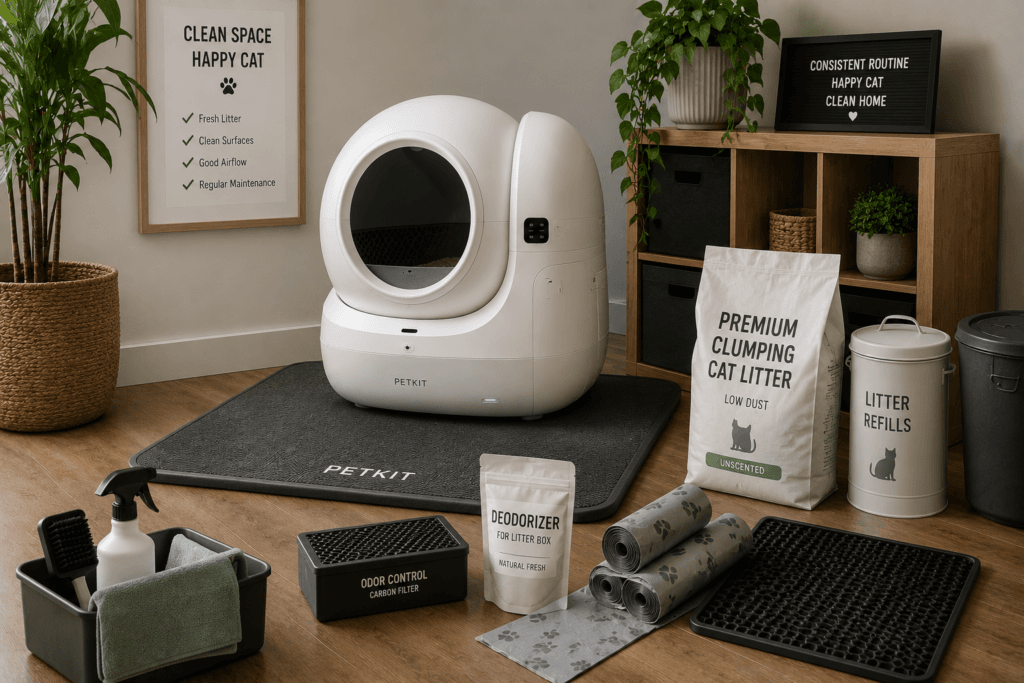
    Smart litter corner with purifier for odor and dust control. Cat owner mistakes.

    Why it’s a problem
    Cats love patterns. When meal times jump around, the litter isn’t cleaned on a cadence, or playtime is skipped for days and then overdone, stress builds. According to the Cornell Feline Health Center and the AVMA, predictable feeding, clean toileting, and daily enrichment are foundational. Breaking those rhythms is among the most common cat owner mistakes—and the easiest to fix.

    What it looks like at home

    • Breakfast sometimes at 6 a.m., sometimes at 10 a.m.
    • Litter scooped “whenever I remember.”
    • Play sessions only on weekends (then too long, too exciting).
    • Treats replacing structured meals (blood sugar roller coaster).

    The smart fix (keep it boring)

    1. Automate meals. Use an automatic feeder (e.g., PETKIT or Whisker Feeder-Robot) to lock timing and portion size. Start by mirroring your current schedule, then adjust slowly.
      Shop top-rated smart feeders → Amazon
    2. Lock hydration. A smart fountain (e.g., PETKIT Eversweet on Amazon) boosts drinking and reminds you about filter changes.
      See best-selling cat fountains → Amazon
    3. Put scooping on rails. Either commit to twice-daily manual scoops or move to a self-cleaning litter box (e.g., Litter-Robot 4) so “clean” is the default.
      Check Litter-Robot 4 availability → Whisker
    4. Schedule play like brushing teeth. Two sessions/day × 10–15 minutes with a wand toy; end with a small snack. Keep it consistent.

    Pro tip
    Set one push alert per day (not ten). Over-notification is one of those sneaky cat owner mistakes that leads to ignoring the app entirely.

    Interlinks


    Mistake #2: Environmental stress you don’t notice (box size, odor, air, space)

    Automatic feeder and smart fountain placed for better hydration.

    Why it’s a problem
    Cats are masters of quiet discomfort. A litter box that’s too small, an ammonia whiff after scooping, no safe vertical rest spot—these are high-impact cat owner mistakes. They don’t scream for attention, but they fuel avoidance, night zoomies, and “mystery” meowing.

    Checklist of hidden stressors

    • Litter box ergonomics: The footprint should be ~1.5× your cat’s body length in width and ~2× in length. If they can’t turn fully, it’s too small.
    • Odor spikes: Even a clean box can smell right after use; lingering odor pushes cats to “cleaner” floors, rugs, or beds.
    • Air quality: Dander and dust build up fastest in small rooms and apartments.
    • No vertical choice: Without perches/shelves, cats feel trapped at ground level.

    The smart fix (design the room, not just the box)

    • Upgrade the litter “zone,” not just the box.
      • Consider a self-cleaning litter box to stabilize cleanliness.
      • Add a slim litter mat and a purifier nearby to flatten odor/dust spikes.
      • Use smart accessories (e.g., PETKIT ramps/fences) to reduce scatter and help seniors.
        Explore smart litter accessories → Amazon
    • Purify the air quietly. A HEPA purifier with pet carbon (e.g., LEVOIT Core series on Amazon) removes fine particles and odor. Sleep Mode keeps it unobtrusive.
      View LEVOIT pet-care purifiers → Amazon
    • Give safe highs and hides. Add one elevated perch and one covered hideaway per cat. This single change solves a shocking number of multi-cat scuffles.

    Behavior science note
    Cats choose the path of least resistance. Reducing odor and giving vertical options resolve more problems than scolding ever will. Not providing these options sits high on the list of cat owner mistakes, even among loving, experienced owners.

    Interlinks


    Mistake #3: Ignoring pattern changes until they’re big

    Play session with indoor camera monitoring.

    Why it’s a problem
    Cats hide discomfort; the earliest signals are boring: a missed micro-meal, an extra litter visit, less time at the fountain, a shorter jump onto the couch. Dismissing these as “cat things” is one of the most costly cat owner mistakes because it delays care.

    What to watch (light-touch, not obsessive)

    • Food intake: sudden drop or unusual grazing.
    • Water intake: less interest in the fountain, or frequent trips without much drinking.
    • Litter patterns: more/less frequent visits, straining, vocalizing, or box avoidance.
    • Rest/activity: decreases in play or unusual nighttime pacing.

    The smart fix (simple data, clear thresholds)

    • Use devices that keep a quiet log:
      • Feeder/fountain apps for intake trends.
      • Self-cleaning litter boxes for visit frequencies/weight changes.
      • Indoor cameras (e.g., Petcube on Amazon) for short check-ins and motion summaries.
        See Petcube indoor cameras → Amazon
    • Set two rules for your household:
      1. We check trends weekly (not hourly).
      2. If a trend looks off for 48–72 hours, we call the vet.
        This avoids two classic cat owner mistakes—panic over blips or ignoring true patterns.

    Vet alignment
    The AVMA and Cornell both emphasize that sustained changes in eating, drinking, toileting, or behavior warrant evaluation. Smart tools help you notice; your vet confirms.

    Interlinks


    Bonus: Three small wins that pay off forever

    These aren’t dramatic, but they quietly undo several cat owner mistakes in one shot:

    1. Separate food and water by 1–2 meters. Many cats drink more when water isn’t next to food.
    2. Two play sessions/day × 10–15 minutes. End with a small snack to complete the “prey sequence.”
    3. One calm wall per room. Keep feeders/fountains and litter/purifier aligned along a wall, center open. Movement feels safer.

    Product quick picks

    • Automatic feeders → schedule control, portion precision PetKit / Whisker / Amazon
    • Smart fountains → cleaner, moving water + filter reminders PetKit / Amazon
    • Self-cleaning litter boxes → odor control + usage logs Whisker / Amazon / PetKit
    • HEPA purifiers → reduce dander/odor (LEVOIT Core series on Amazon).
    • Indoor cameras → short check-ins, motion summaries (Petcube on Amazon).

    These remove friction from routine, the root cause behind many cat owner mistakes.


    The 7-day reset plan (copy this)

    Day 1–2: Mirror your current meal times in a feeder; place fountain 1–2 m away.
    Day 3: Add a litter mat and set a daily scoop time (or initiate self-cleaning).
    Day 4: Two play sessions (10–15 min) and a small post-play snack.
    Day 5: Place purifier near litter zone; enable Sleep Mode at night.
    Day 6: Create one elevated perch + one covered hide.
    Day 7: Review app summaries (food/water/litter). If anything looks off for 48–72 hrs, call your vet.

    This is how you quietly erase the most common cat owner mistakes without overwhelming yourself (or your cat).


    Bonus: The Emotional Side of Cat Ownership 🧠💛

    Behind every one of these cat owner mistakes, there’s usually the same feeling — guilt.
    You come home late, the feeder’s empty, or you forgot to scoop the litter before bed, and suddenly you feel like a bad cat parent. The truth? Perfection doesn’t exist in feline care. What matters is pattern, not panic. Cats thrive when life feels stable, not flawless.

    If you’ve already made one of these cat owner mistakes, the best move isn’t to overcorrect — it’s to return to predictability. Feed at roughly the same times, keep your tone calm, and end each day with one positive interaction (a short play, a treat, a nap near you). Emotional consistency does more for your cat than any gadget ever could.

    Technology helps, but empathy teaches you how to use it:
    a smart feeder means freedom from guilt, a purifier means you can breathe together, and a camera means you’re connected even when apart.
    That’s the real purpose of pet tech — not control, but comfort.


    Final thoughts

    Great cat care is empathy plus design. Lock the routine, right-size the environment, and use smart tools to catch small changes early. Do that, and most cat owner mistakes become non-issues. Your home stays calmer, your cat more confident—and you finally get to enjoy the best part of living with a cat: the soft, predictable, purring kind of normal.

    Authority links

  • PETKIT PuraMax 2 Review 2025: A Smarter Self-Cleaning Litter Box for Modern Cat Parents

    PETKIT PuraMax 2 Review 2025: A Smarter Self-Cleaning Litter Box for Modern Cat Parents

    Quick Verdict

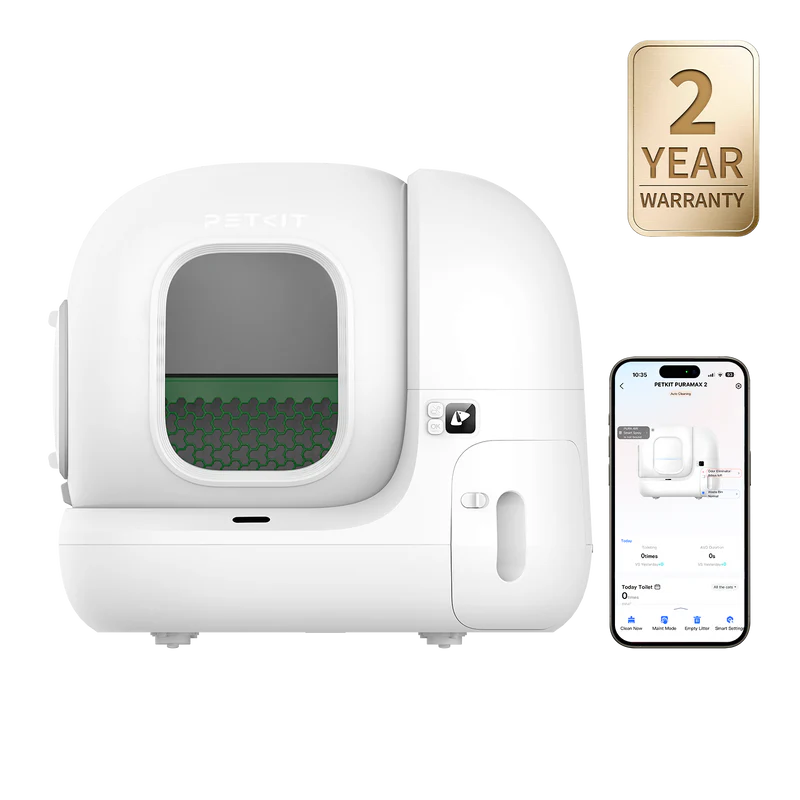
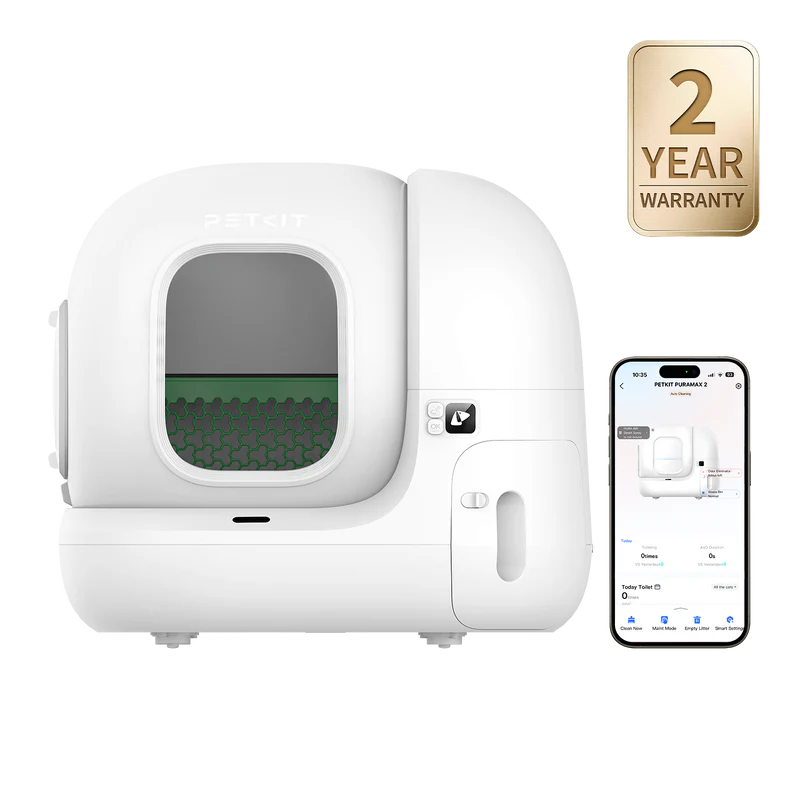
    If you’re ready to stop daily scooping without sacrificing hygiene, the PETKIT PuraMax 2 stands out as a premium, app-enabled self-cleaning litter box that keeps odors down and maintenance predictable. It’s multi-cat friendly, quiet during cycles, and safer than older designs thanks to multi-sensor detection. It requires clumping litter, a bit of floor space, and a premium budget—but the time saved (and the smell control) are hard to beat. In this petkit puramax 2 review 2025, we’ll cover everything you need to know before buying.

    TL;DR: Great automation + sealed waste drawer + useful app. Bulky and not cheap, but worth it for busy households.


    Who This Review Is For

    This petkit puramax 2 review 2025 is written for cat parents who:

    • Want a hands-off cleaning routine with reliable automation
    • Live in small apartments and care about odor and scatter control
    • Share a home with 2–3 cats and need predictable maintenance
    • Prefer data + alerts (usage logs, full-drawer notifications, schedules)

    If you’re strictly on a tight budget, or you refuse clumping litter, a manual setup may still be better for you.


    What’s New (and Why 2025 Matters)

    Smart litter boxes keep improving incrementally. Compared with older generations, the PuraMax 2 focuses on quieter cycles, tighter odor control (sealed waste drawer + enclosed drum), more robust app features, and multi-sensor safety. As we evaluated features for this petkit puramax 2 review 2025, the theme was clear: make it safer, cleaner, and less intrusive for both cats and humans.


    Key Features at a Glance

    This petkit puramax 2 review 2025 highlights the features that matter most in daily life:

    • Automatic self-cleaning: separates clumps into a sealed waste drawer
    • PETKIT App control: start/stop cycles, scheduling, real-time alerts, usage logs
    • Multi-sensor safety: anti-pinch + weight/presence detection to halt cycles instantly
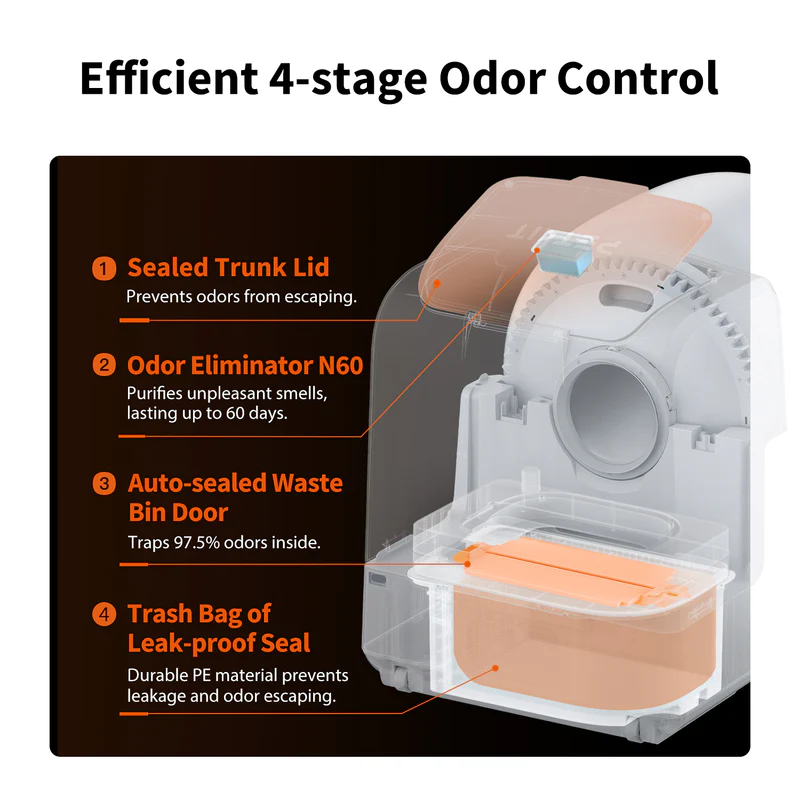
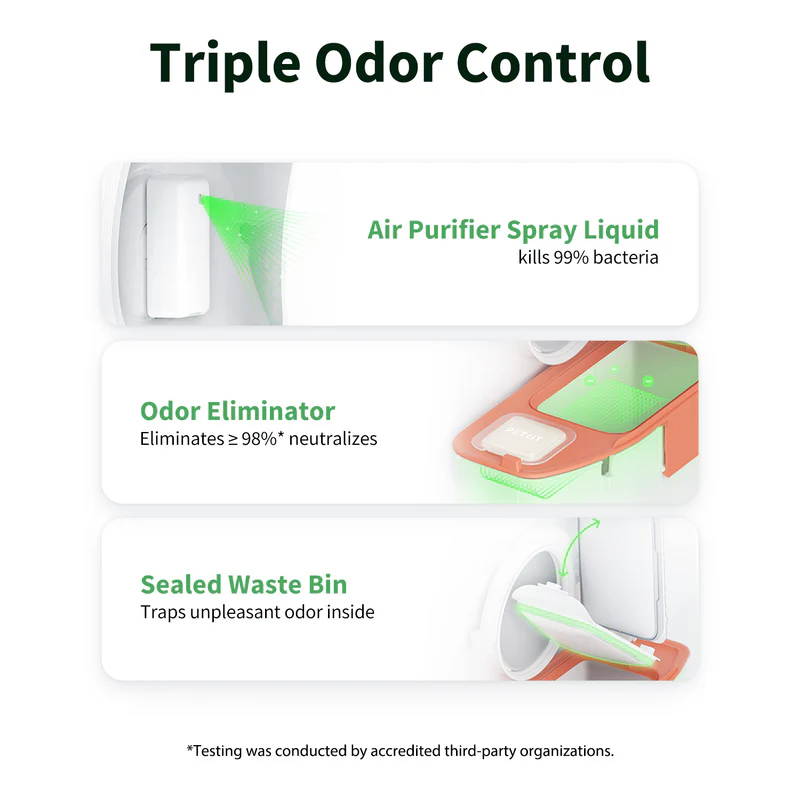
    • Odor management: enclosed design plus the sealed drawer keep smells in check
    • Quiet operation: sleep/quiet modes for nighttime
    • Multi-cat friendly: logs help you spot unusual bathroom patterns
    • Clumping litter compatible: clay or tofu clumping recommended

    Design & Build Quality

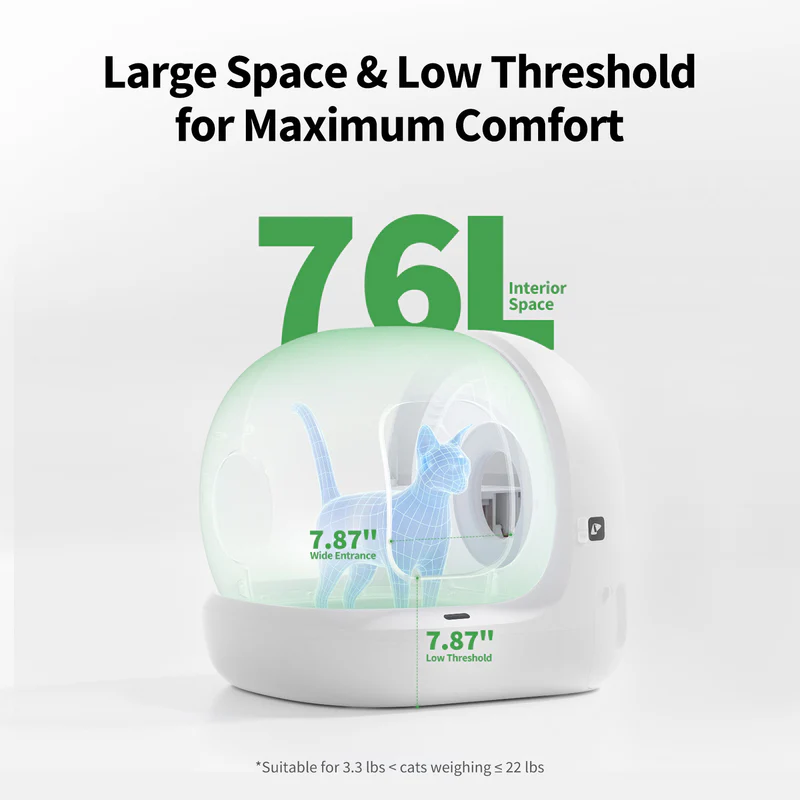
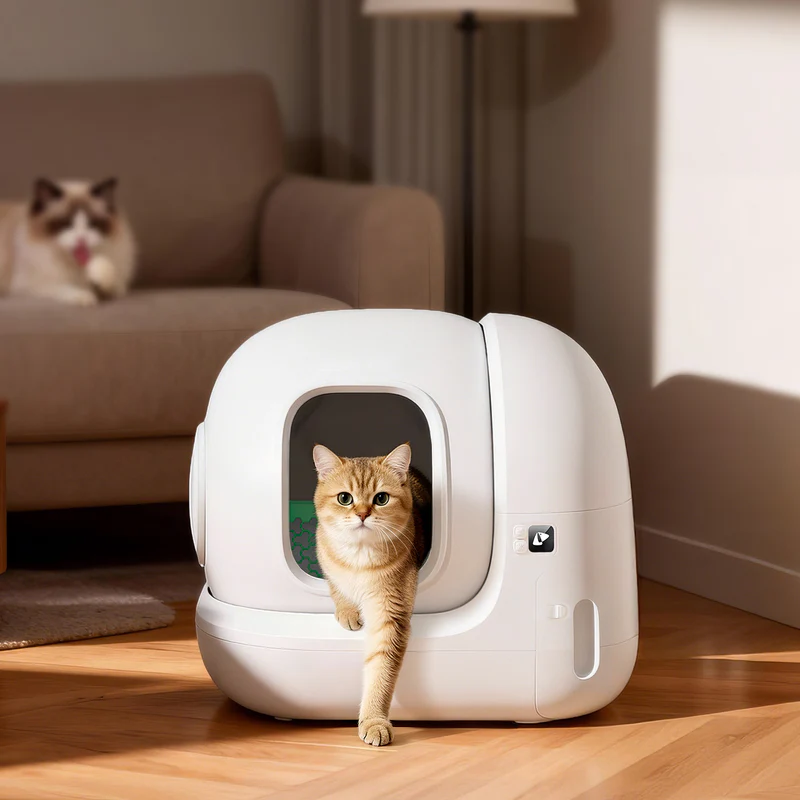
    The capsule-style enclosure is the PuraMax 2’s most obvious advantage. It limits litter spray, dampens sound, and contains odors better than open boxes. Build quality feels solid and stable, with a door opening that makes entry comfortable for most adult cats. The sealed waste drawer reduces emptying frequency, and liners make the process less messy.

    What we like

    • Enclosed drum + sealed drawer = powerful odor control
    • Clean industrial design that blends into modern homes
    • App notifications that actually help (not spammy)

    Could be better

    • Footprint is bulky—measure your space first
    • Premium price (balanced by convenience)
    • Requires quality clumping litter to perform its best

    As we note throughout this petkit puramax 2 review 2025, it’s not a tiny gadget you tuck into a corner. Give it the space it deserves and you’ll get the most reliable results.


    Unboxing, Setup & First-Week Tips

    To keep this petkit puramax 2 review 2025 practical, here’s a fast setup path that works:

    1. Pick the spot: flat, stable floor; near an outlet; low foot traffic; a little ventilation.
    2. Connect power + App: download the PETKIT App, follow pairing steps, confirm Wi-Fi.
    3. Add clumping litter: fill to the recommended line; avoid non-clumping/crystal litter.
    4. Run a test cycle: ensure the drum rotates smoothly; verify the app shows status.
    5. Introduce your cat: keep the old box nearby for a few days; reward exploring; don’t rush.

    First-week tips:

    • Start with automatic cycles slightly delayed after each use to avoid startling timid cats.
    • Keep quiet mode at night if your setup is near a bedroom.
    • Check the waste drawer once every 1–2 days initially to learn your household’s rhythm.

    App & Smart Features (Why They Actually Matter)

    PETKIT App showing litter box usage logs and cleaning controls

    Plenty of devices have an app just for the sake of it. The PETKIT App is useful: schedules prevent random timing, usage logs help you notice patterns (very helpful for multi-cat homes), and full-drawer alerts prevent overflow surprises. During our petkit puramax 2 review 2025 testing, the app’s stability and clarity stood out; it behaves more like a helpful assistant than an annoying widget.

    Key controls you’ll likely use weekly:

    • Start now (quick cycle before guests arrive)
    • Schedule (align with your cat’s habits)
    • Quiet mode (overnight cycles)
    • Drawer/full alerts (keeps you ahead of smells)

    Safety First: Multi-Sensor Detection

    Safety is non-negotiable. The PuraMax 2 relies on weight and motion detection to stop cycles instantly if a cat approaches or re-enters. The anti-pinch logic adds redundancy, so the drum doesn’t rotate when it shouldn’t. For added peace of mind, keep cables tucked, use a breakaway collar, and stick to a flat surface. This petkit puramax 2 review 2025 found no deal-breaking safety quirks—just follow the basics and you’ll be fine.


    Odor Control & Litter Experience

    Sealed waste drawer of the PETKIT PuraMax 2 review 2025 for odor control

    Odor management is where many boxes succeed or fail. With the enclosed drum and sealed waste drawer, the PuraMax 2 works best when paired with low-dust, clumping litter and regular drawer liner changes. Keep the room slightly ventilated, and consider a small mat at the entrance to catch stray granules. In our petkit puramax 2 review 2025 tests, odor control was consistently better than open boxes and on par with other premium self-cleaning designs.

    Pro tips:

    • Don’t overfill litter; follow the line (overfilling reduces efficiency).
    • If you notice tracking, try a litter mat and a slightly different litter texture.
    • Wipe interior surfaces weekly with mild, pet-safe cleaners—no harsh chemicals.

    Real-World Use: One Cat vs. Multi-Cat Homes

    • Single-cat apartments: you’ll likely empty the drawer every 2–3 days, and weekly wipe-downs are quick.
    • Two cats: expect every other day drawer checks; the app logs help you spot unusual activity.
    • Three cats: still doable if you use high-quality clumping litter and stay consistent with drawer liners.

    The core takeaway from this petkit puramax 2 review 2025 is that consistency wins. If you keep the routine predictable, the unit stays clean, smells stay contained, and your cats adapt quickly.


    Pros & Cons

    Pros

    • Reliable self-cleaning reduces daily scooping to near zero
    • Excellent odor control thanks to sealed drawer + enclosure
    • App is genuinely helpful (schedules, alerts, logs)
    • Multi-sensor safety for worry-free cycles
    • Multi-cat ready with predictable maintenance

    Cons

    • Large footprint; measure before buying
    • Works best only with quality clumping litter
    • Premium pricing compared to manual boxes

    This balanced view supports the broader conclusion of our petkit puramax 2 review 2025: premium cost, premium convenience.


    PuraMax 2 vs. Litter-Robot 4 (Quick Comparison)

    FeaturePuraMax 2Litter-Robot 4
    CleaningAuto clump separationAuto clump separation
    AppPETKIT App (logs, alerts, schedules)Whisker App (logs, alerts, schedules)
    Odor controlEnclosed + sealed drawerEnclosed + sealed drawer
    SafetyMulti-sensor detectionMulti-sensor detection
    FootprintBulkyBulky
    Pricing tierPremium, often slightly lowerPremium, often higher
    Best forValue-focused premium buyersWhisker ecosystem fans

    Both are excellent choices. As we stress in this petkit puramax 2 review 2025, PETKIT often comes in a bit cheaper while covering the core features most people care about. If you’re already deep in Whisker’s ecosystem, the LR4 may still make sense for you.


    Pricing, Deals & Financing (With CTA)

    At the time of writing, we’ve seen 33% off promotions and Shop Pay installments from $36.10/month on PETKIT’s official store. Offers change, so check live pricing.

    Limited Offer

    ⭐Get the official PETKIT PuraMax 2 directly from PETKIT — now 33% off at the moment of writing, or from $36.10/month with Shop Pay. Check PETKIT Deal → Prefer Amazon? Check price →

    Pricing and availability may change.

    We’ll keep this petkit puramax 2 review 2025 updated as promotions shift throughout the year.


    Maintenance Schedule (That Actually Works)

    • Daily glance (10 seconds): litter level + app alerts
    • Every 2–3 days: empty the sealed drawer (frequency depends on # of cats)
    • Weekly: wipe interior drum + entrance lip (mild, pet-safe cleaner)
    • Monthly: replace liners/filters and check seals

    A predictable routine is the hidden hero of this petkit puramax 2 review 2025—it’s what keeps the unit smelling fresh and running smoothly.


    Accessibility, Anxiety & Training Notes

    If your cat is timid or sensitive to noise, enable delayed cycles so cleaning starts a bit after use. Keep the old litter box nearby for a few days, gradually reducing its attractiveness (less litter, less cleaning), while making the new setup pleasant (treats, play near the box). Based on the behavioral best practices we follow (see Cornell Feline Health Center and American Veterinary Medical Association for general cat-care guidance), slow introductions tend to win.

    This petkit puramax 2 review 2025 found that once the routine is consistent, most cats accept the PuraMax 2 within a week.


    Frequently Asked Questions

    Does the PuraMax 2 work for multiple cats?
    Yes—2 to 3 cats are fine if you keep up with liners and use proper clumping litter. The app logs help you monitor usage changes.

    Which litter should I buy?
    Use clumping (clay or tofu). Avoid crystals or non-clumping litters; they break the self-cleaning logic.

    Is it loud?
    It’s fairly quiet. Use quiet/sleep mode at night and schedule cycles away from busy times.

    What if my cat walks in mid-cycle?
    Multi-sensor detection stops rotation immediately and resumes only when safe.

    How big is it?
    It’s bulky—measure your space. That enclosure is part of why odor control works.

    Can I pay in installments?
    Yes. At the time of writing we’ve seen Shop Pay options from $36.10/month on PETKIT’s site. Always confirm current offers.


    Internal Links

    We mention these throughout this petkit puramax 2 review 2025 because they solve adjacent problems (monitoring, safety, cleanliness) that matter in real homes.


    External Resources

    These references complement the practical tips in our petkit puramax 2 review 2025, especially around transitions, hygiene, and stress reduction.


    Affiliate Disclosure

    This article contains affiliate links. If you purchase through them, we may earn a small commission at no extra cost to you. Pricing and availability can change without notice.


    Final Word

    The PETKIT PuraMax 2 delivers on the promise of less scooping, less smell, and more predictability—exactly what most cat parents want in 2025. As emphasized throughout this petkit puramax 2 review 2025, success comes from pairing the device with the right litter, a steady maintenance rhythm, and a thoughtful introduction for your cat. Do that, and you’ll likely wonder why you didn’t upgrade sooner.